

Pollinator Post 7/5/23 (2)
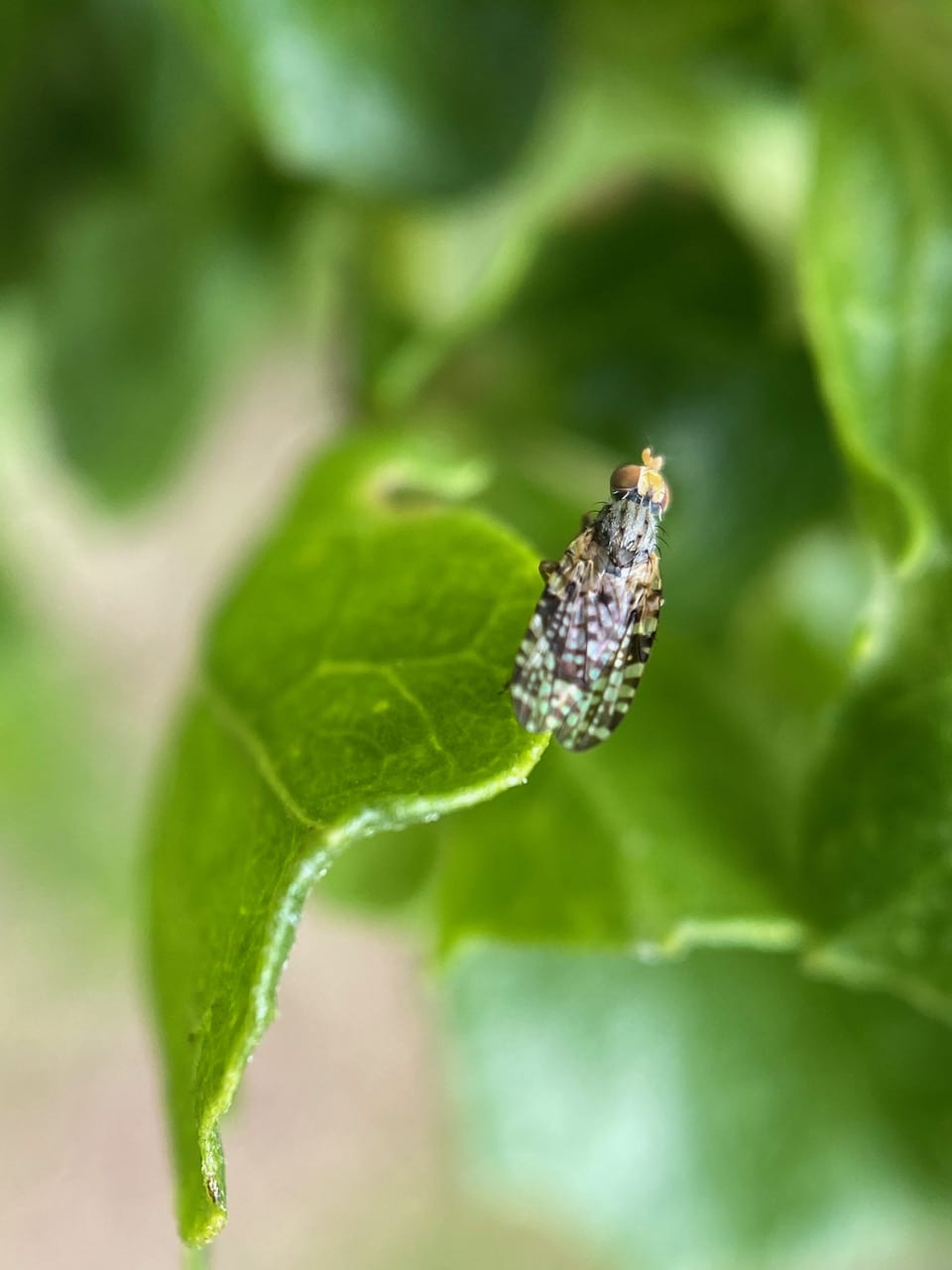
A new Fruit Fly (family Tephritidae) on Coyote Brush! The pattern on its picture wings are so busy it is hard to discern. I snap a series of pictures as it moves around on the foliage, hoping that someone on iNaturalist would be able to identify it.
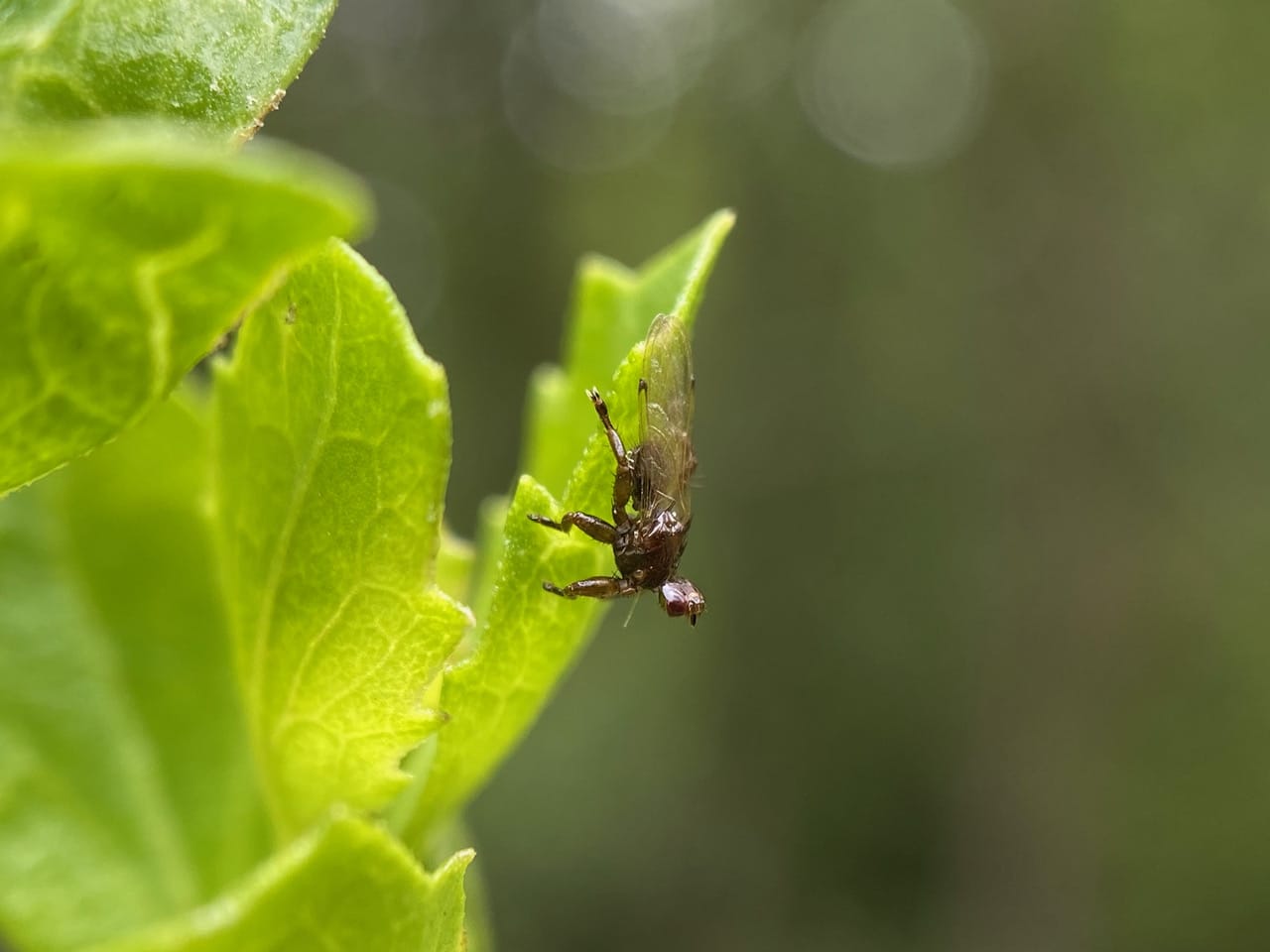
This odd looking creature elicits strange feelings in me. While it looks uncomfortably like a tick at first glance, the way it holds its strange head reminds me of Wall-E, that adorable robot in the 2008 Pixar movie.

It is a Western American Deer Ked, Lipoptena depressa (family Hippoboscidae). Its life history is even more bizarre than the way it looks.
Hippoboscidae, the louse flies or keds are obligate parasites of mammals and birds. The winged species can fly reasonably well, while others with vestigial or no wings are flightless and highly apomorphic. Most of the larval development takes place within the mother’s body, and pupation occurs almost immediately.
The Western American Deer Led, Lipoptena depressa is a blood-feeding parasite of the mule deer, Odocoileus hemionus in the western US and Canada. The female fly will produce a single larva at a time, retaining the larva internally until it is ready to pupate. The larva feeds on the secretions of a milk gland in the uterus of the female. After three larval instars, a white prepupa is deposited which immediately forms a hard dark puparium. The pupa is usually deposited where the deer slept overnight. When the pupa has completed its development, a winged adult emerges and flies in search of a suitable host, upon which the fly sheds its wings and is permanently associated with the same host.
I am happy to learn that Lipoptena depressa does not feed on humans.
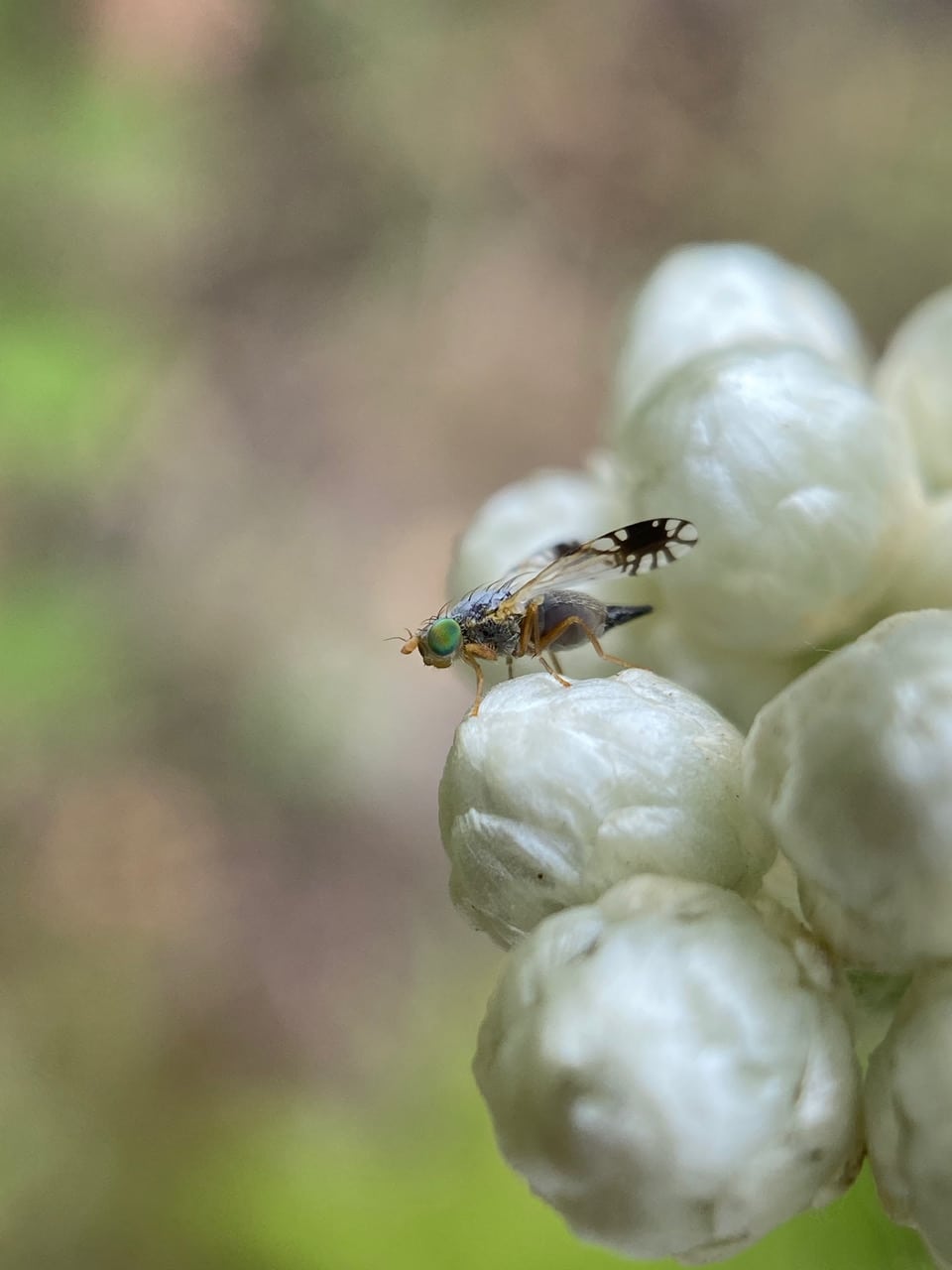
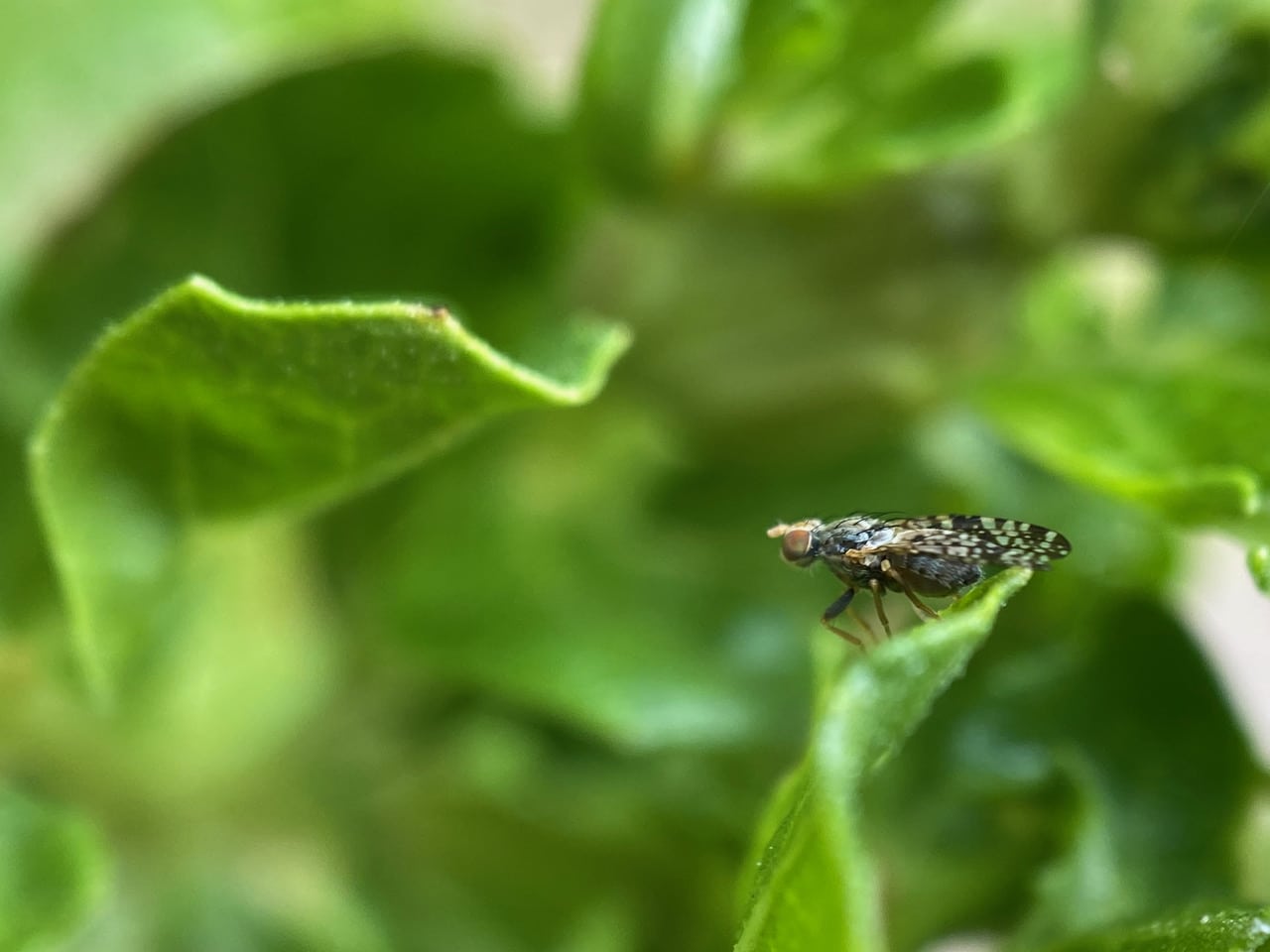
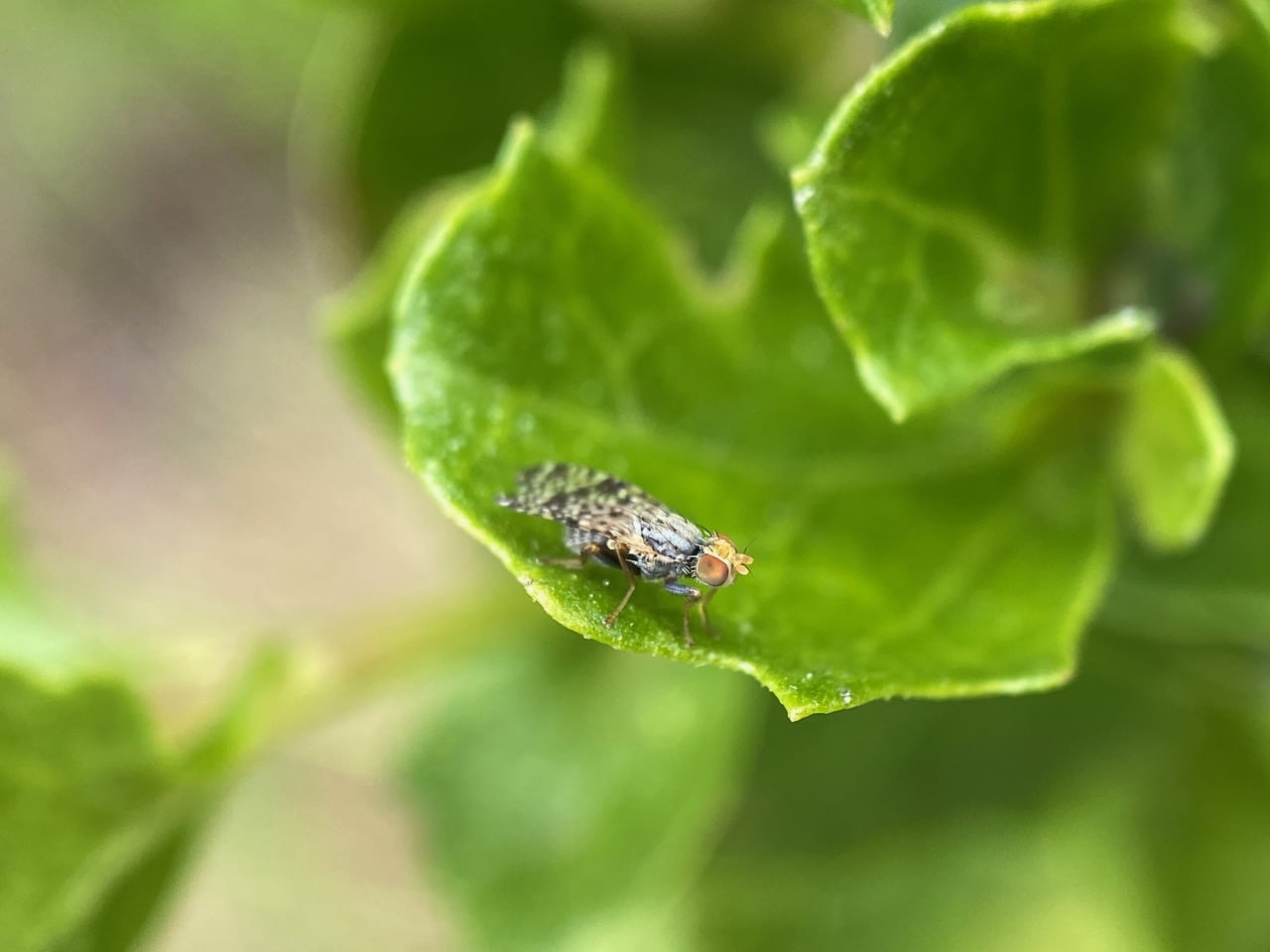
This female Fruit Fly, Trupania sp. (family Tephritidae) is always found on the immature flowerheads of the California Everlasting, Pseudognaphalium californicum. Why? Is she here to lay her eggs?
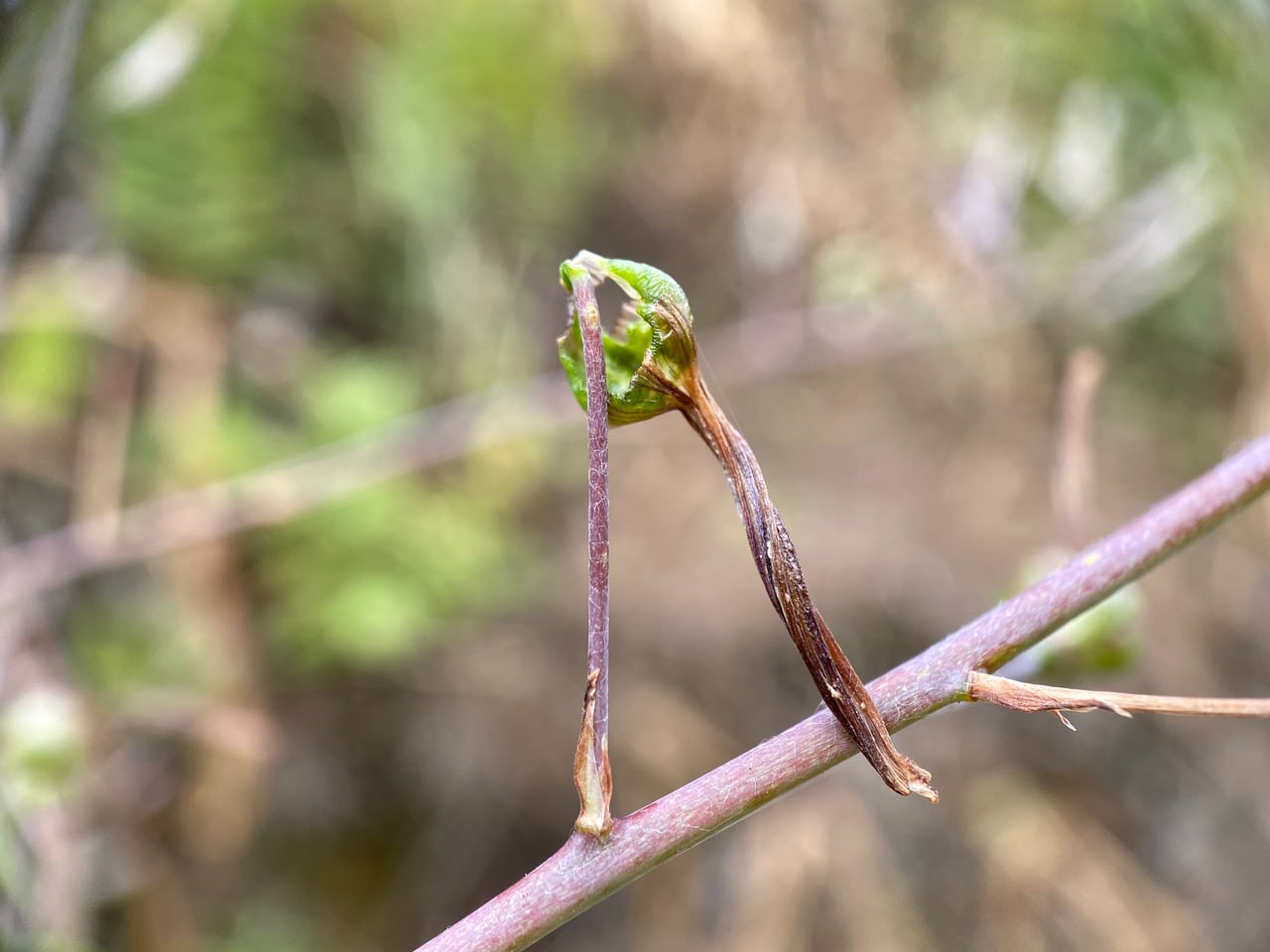
As I pass the Soap Plant that I have marked, I stop to check for the Brown Elfin caterpillar, Callophrys augustinus (family Lycaenidae). It is not on the branch where I found it earlier, but it has left a couple of hollowed out fruits on the branch. Surely the caterpillar must still be on the plant – it couldn’t have gone far. I search the plant thoroughly, branch by branch, flower by flower. Nada! Then I decide to shift my position and view the plant from a different angle.

A fly in the family Lauxaniidae has come to investigate the dead caterpillar.
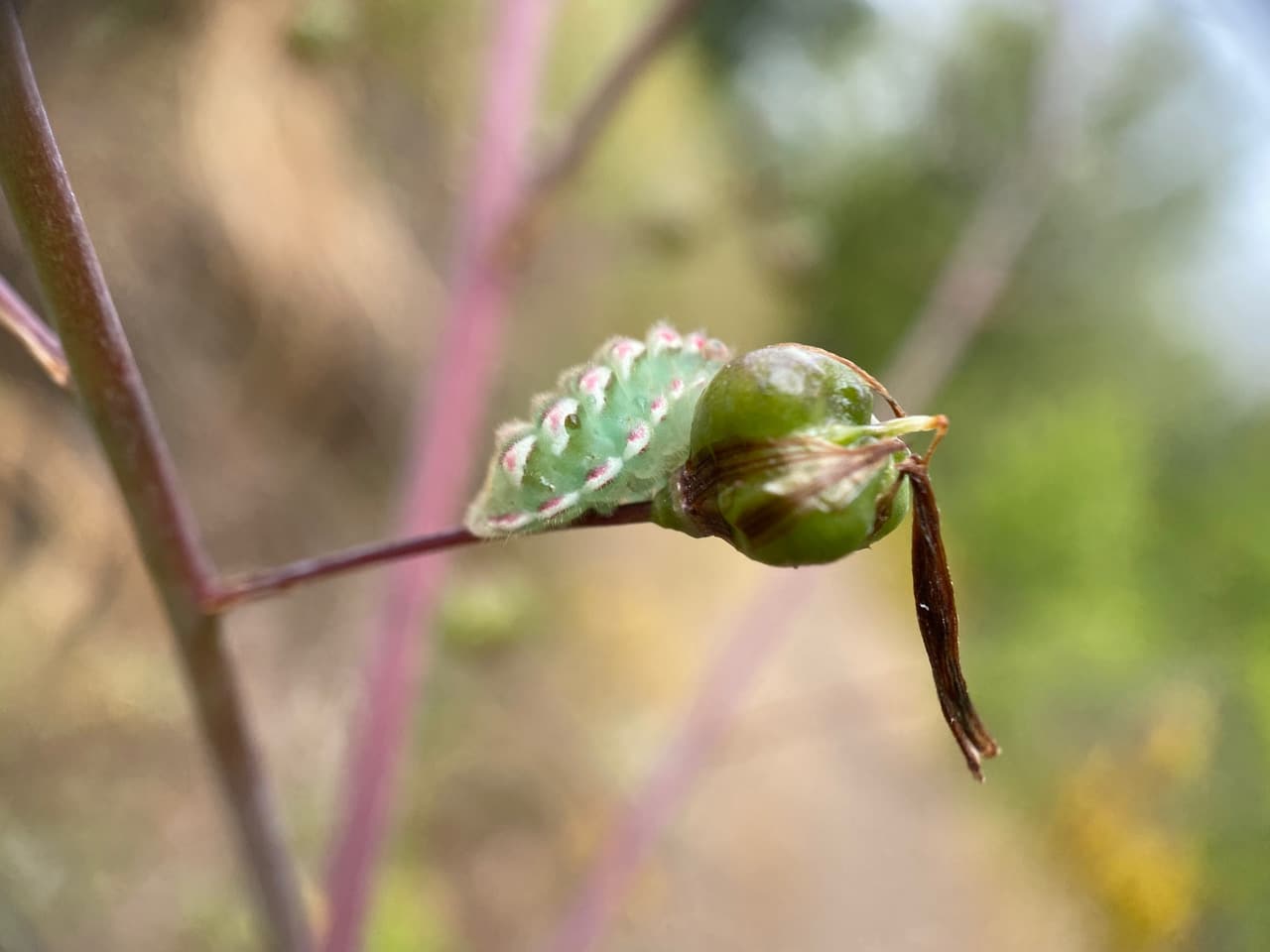
Ah, I finally locate the caterpillar on an adjacent branch, on a developing fruit.
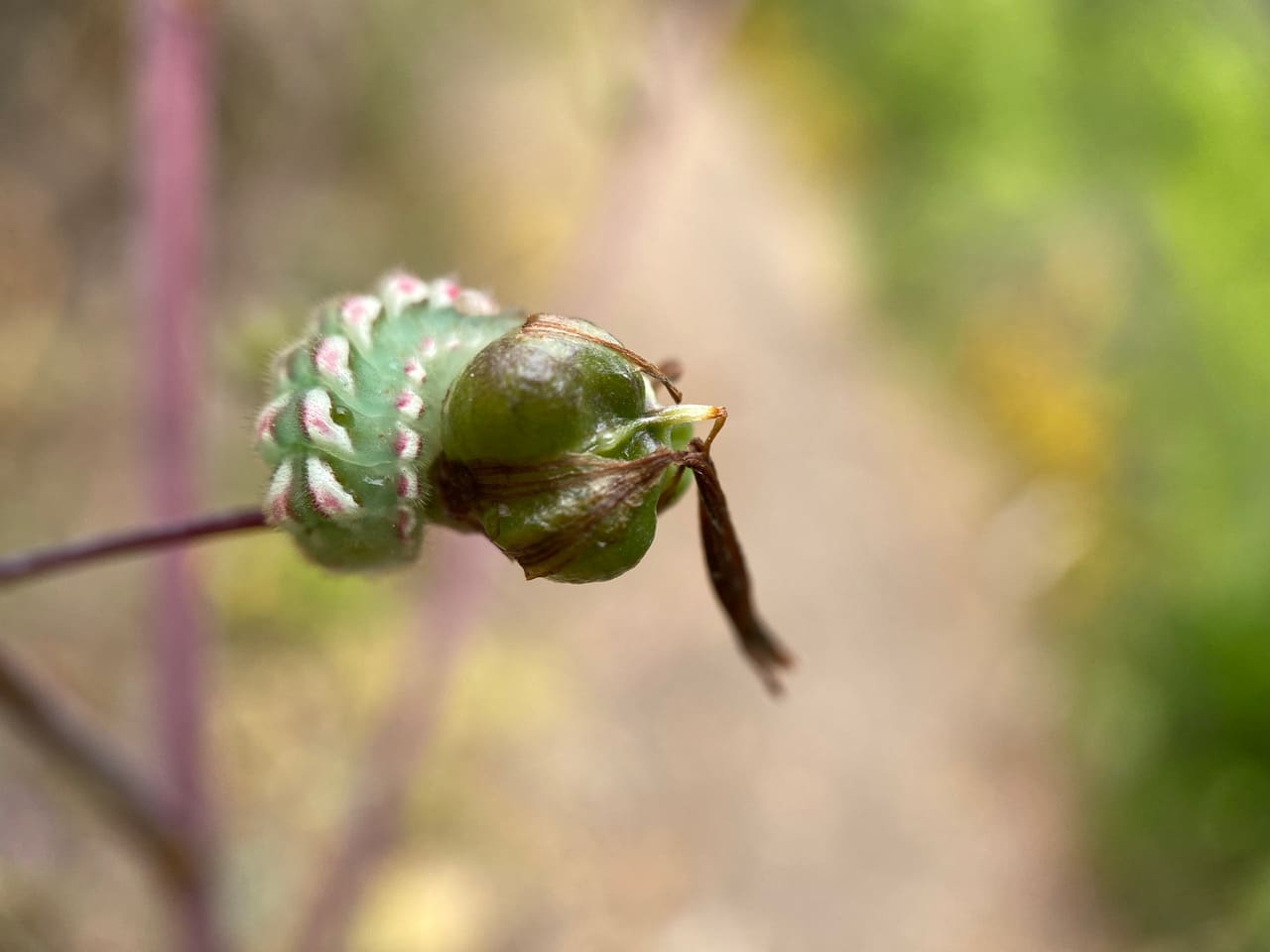
Although the skies are still heavily overcast, I take advantage of the remaining light to photograph the caterpillar. It is now wrapped around the fruit making my task more difficult.


Judging by the direction the caterpillar is moving (almost imperceptibly), this is its front end. What a mystifying critter!
The family Lycaenidae comprises the blues, the coppers, the hairstreaks, and the harvesters. Adults are small, under 5 cm usually, sometimes with a metallic gloss. Larvae are often flattened rather than cylindrical, with glands that may produce secretions that attract/appease ants. The larvae are capable of producing vibrations and low sounds that are transmitted through the substrates they inhabit. They use these sounds to communicate with ants. About 75 % of species associate with ants, a relationship called myrmecophily. In some species, larvae are attended and protected by ants while feeding on the host plant, and the ants receive sugar-rich honeydew from the caterpillars in return.