

Pollinator Post 7/5/23 (1)

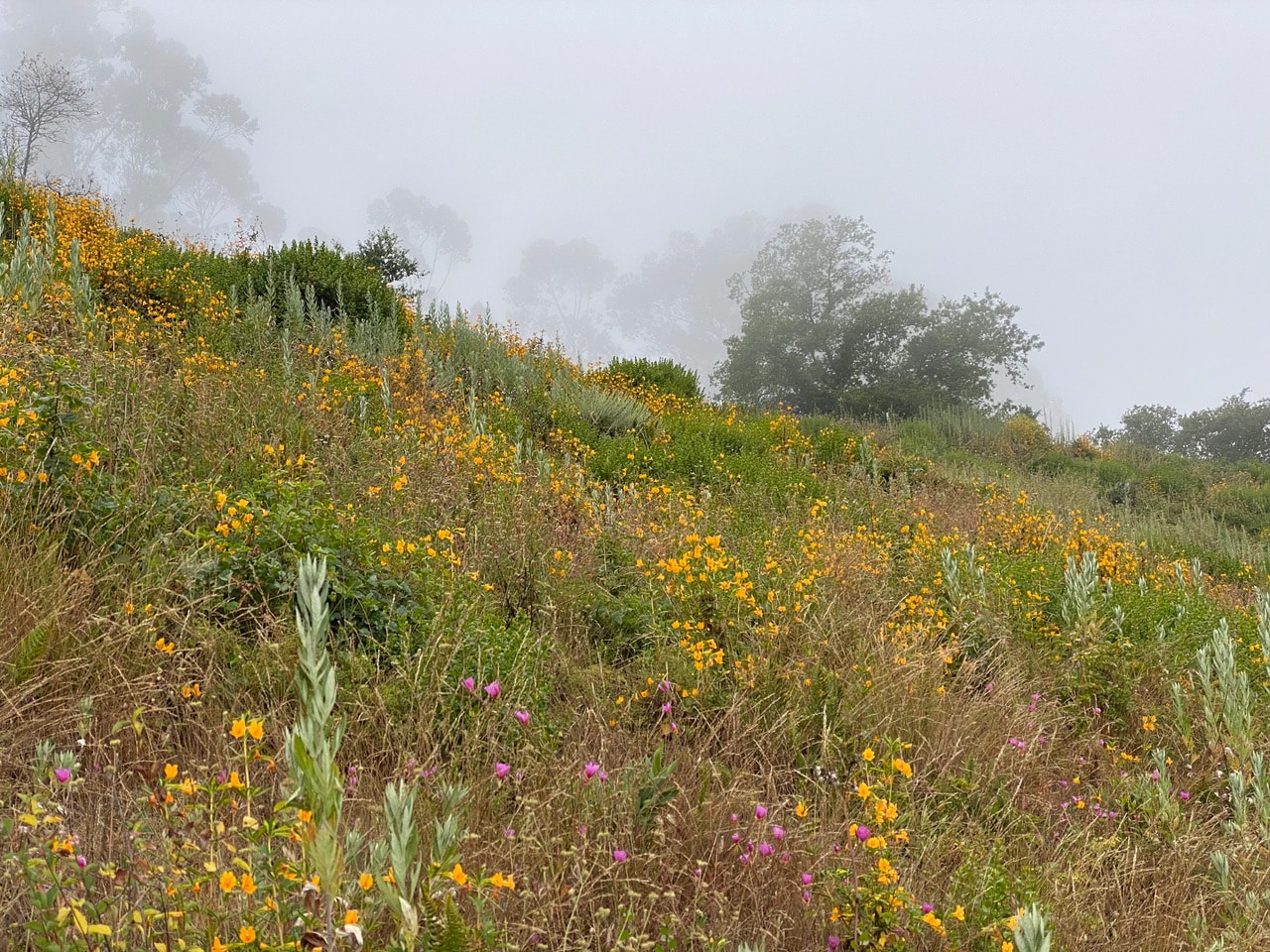
What difference a day makes! I arrive as Siesta Gate at 10 am to find it still shrouded in fog. More of the Tarweeds are in bloom today.
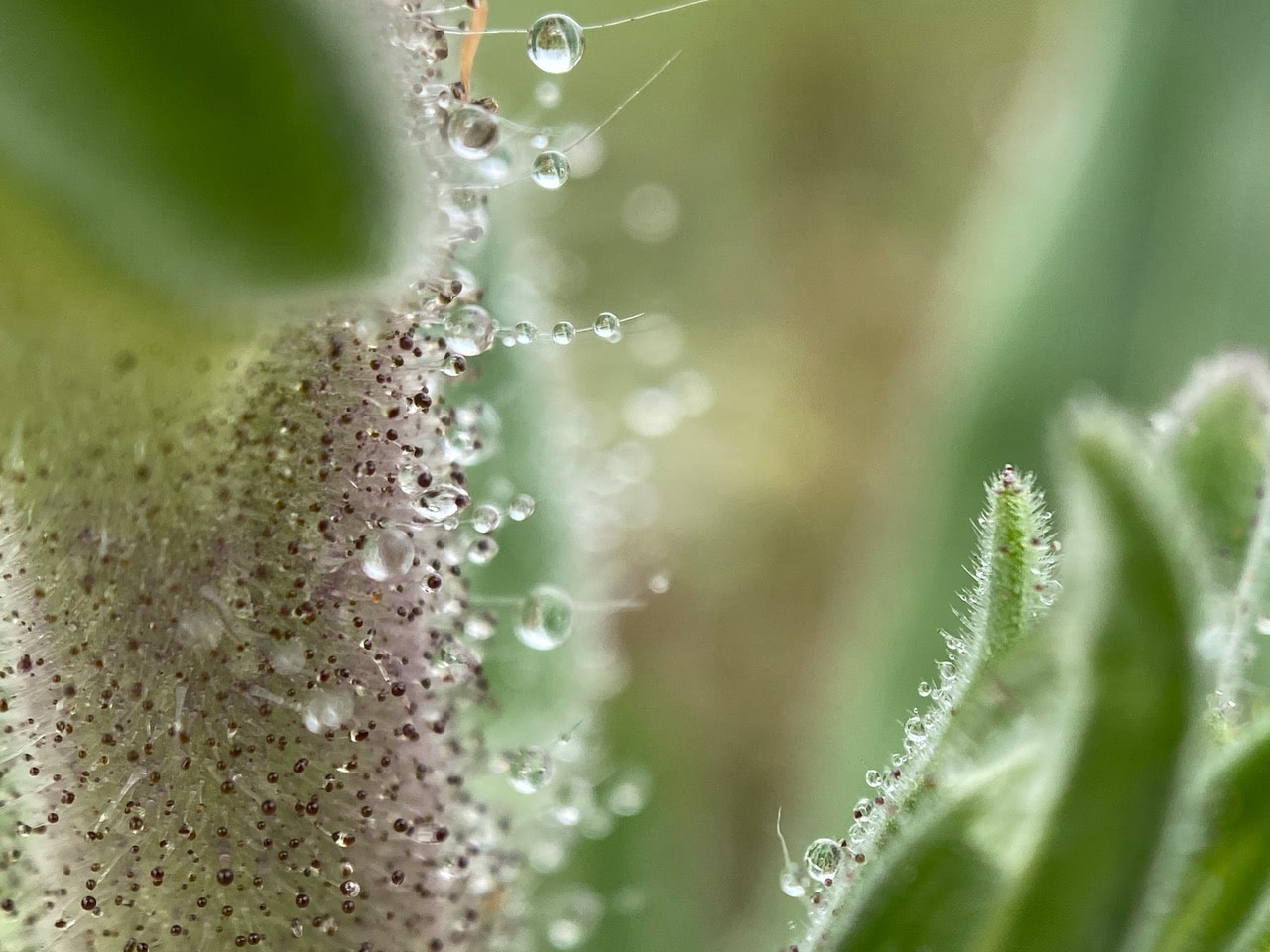






To avoid being mired with the sticky exudates of tarweeds today, I stay on the periphery of the patch to observe the plants. The tarweed leaves and stems sparkle with droplets of water that have condensed on their hairs. On the Elegant Tarweed, Madia elegans, there are two distinct kinds of hairs – the short glandular hairs topped with black globs of sticky, tar-like exudates. Water condenses on the other, longer hairs, sometimes in multiple droplets. Are these specialized for harvesting water from fog?
There are numerous tiny eggs on the unopened flowerheads of Madia elegans. These are most likely laid by the Small Owlet Moths, Heliothodes diminutiva (family Noctuidae). The caterpillars feed on the flowers of Asteraceae.
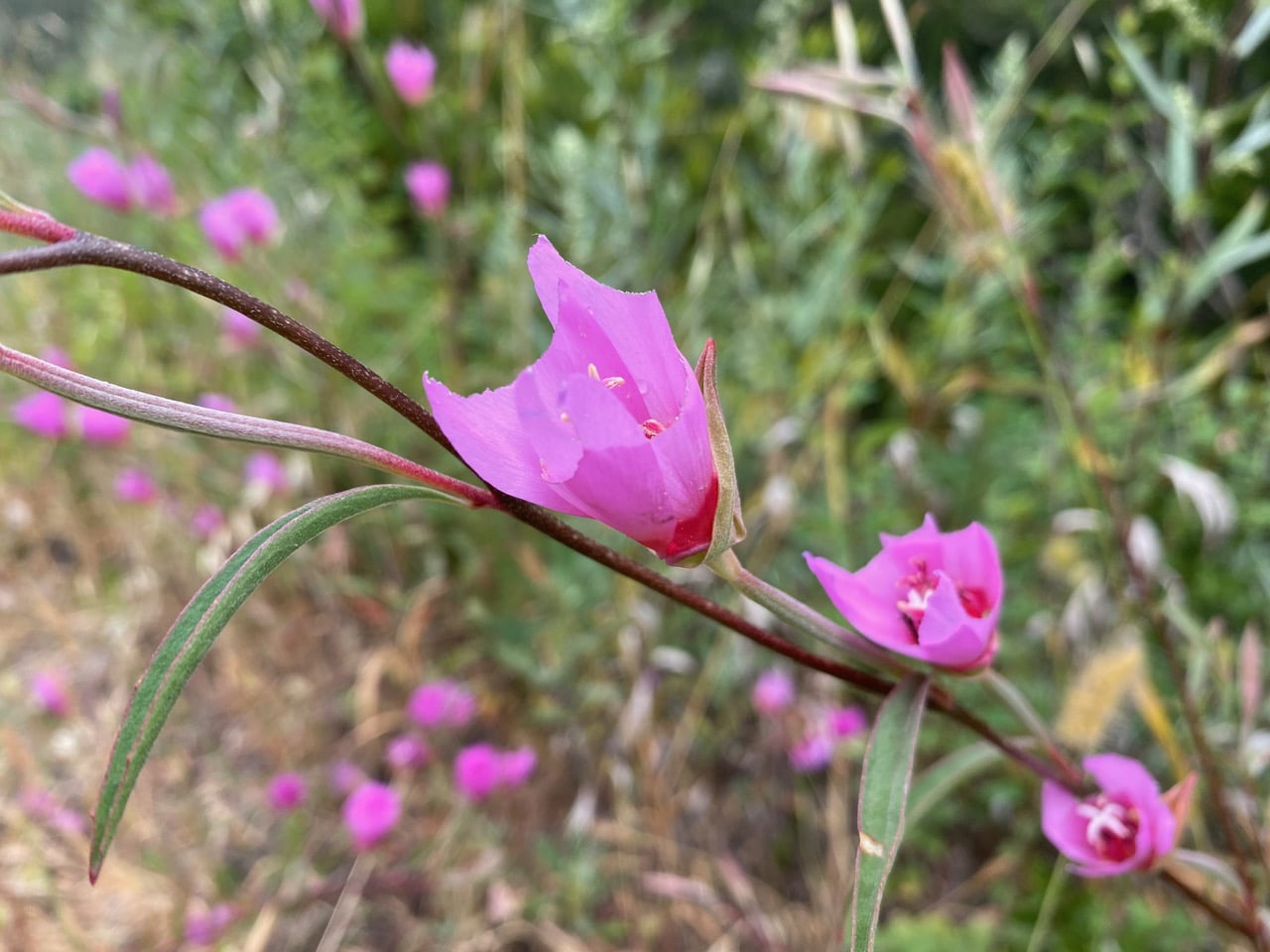
I am tickled to find that the flowers of Farewell-to-Spring, Clarkia rubicunda can still open and close after having their petals cut by the Leaf-cutter Bees, Megachile sp. (family Megachilidae). Clarkia flowers open in the morning with the sun, and close for the night. I wonder if the cut flowers are already pollinated, can they still go on to set seed? The petals are after all accessory, serving only to attract pollinators visually. While the female bees were cutting the petals, they might have served as pollinators too, as they are likely to have come in contact with the reproductive parts of the flowers.
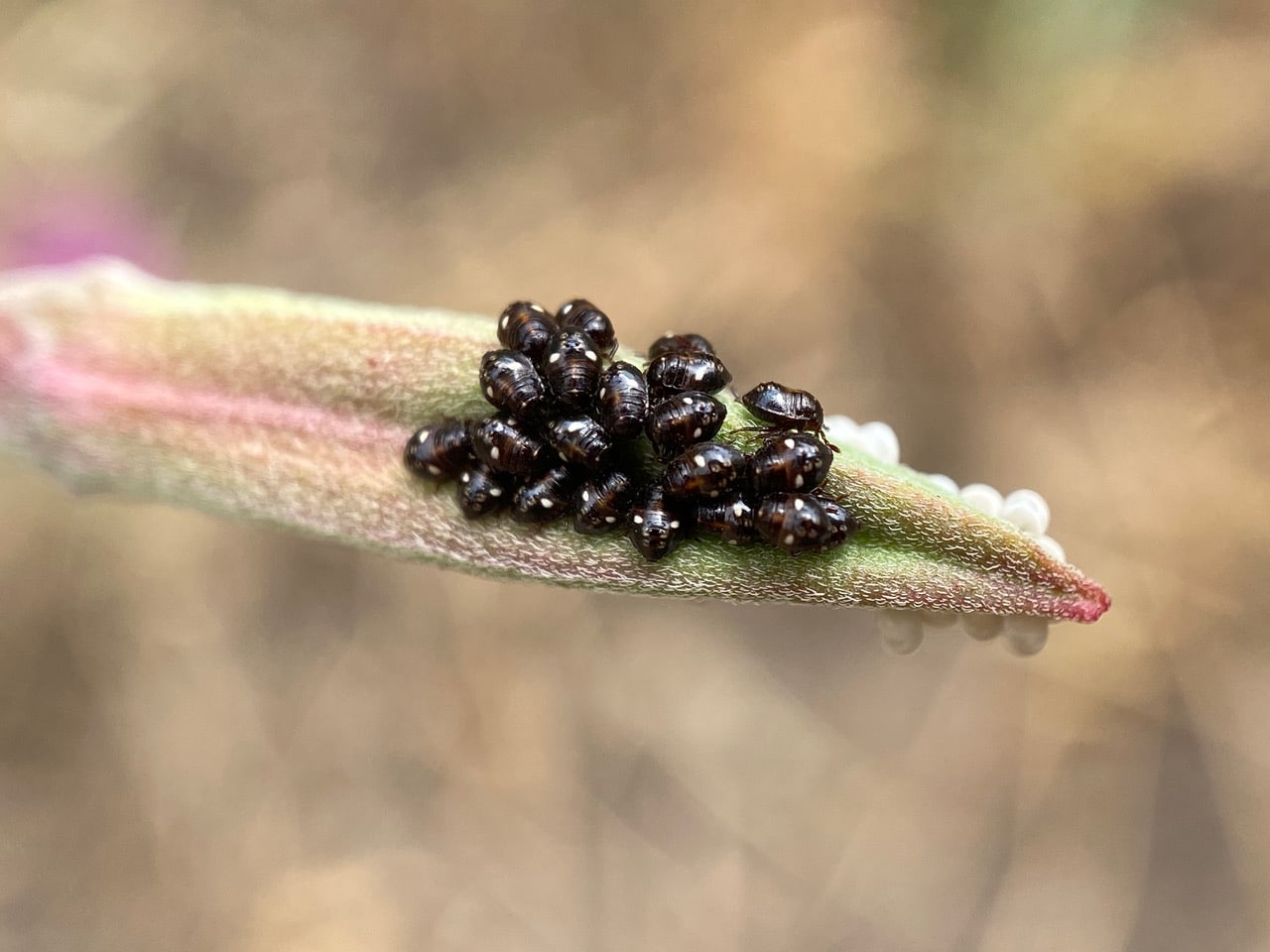
About 20 baby Stink Bugs are clustered on a clarkia flower bud – adorable! They must be freshly hatched. See those white egg shells in the back?
The early nymphs of Stink Bugs tend to look like beetles. I think these are Red-shouldered Stink Bugs, Thyanta custator (family Pentatomidae).
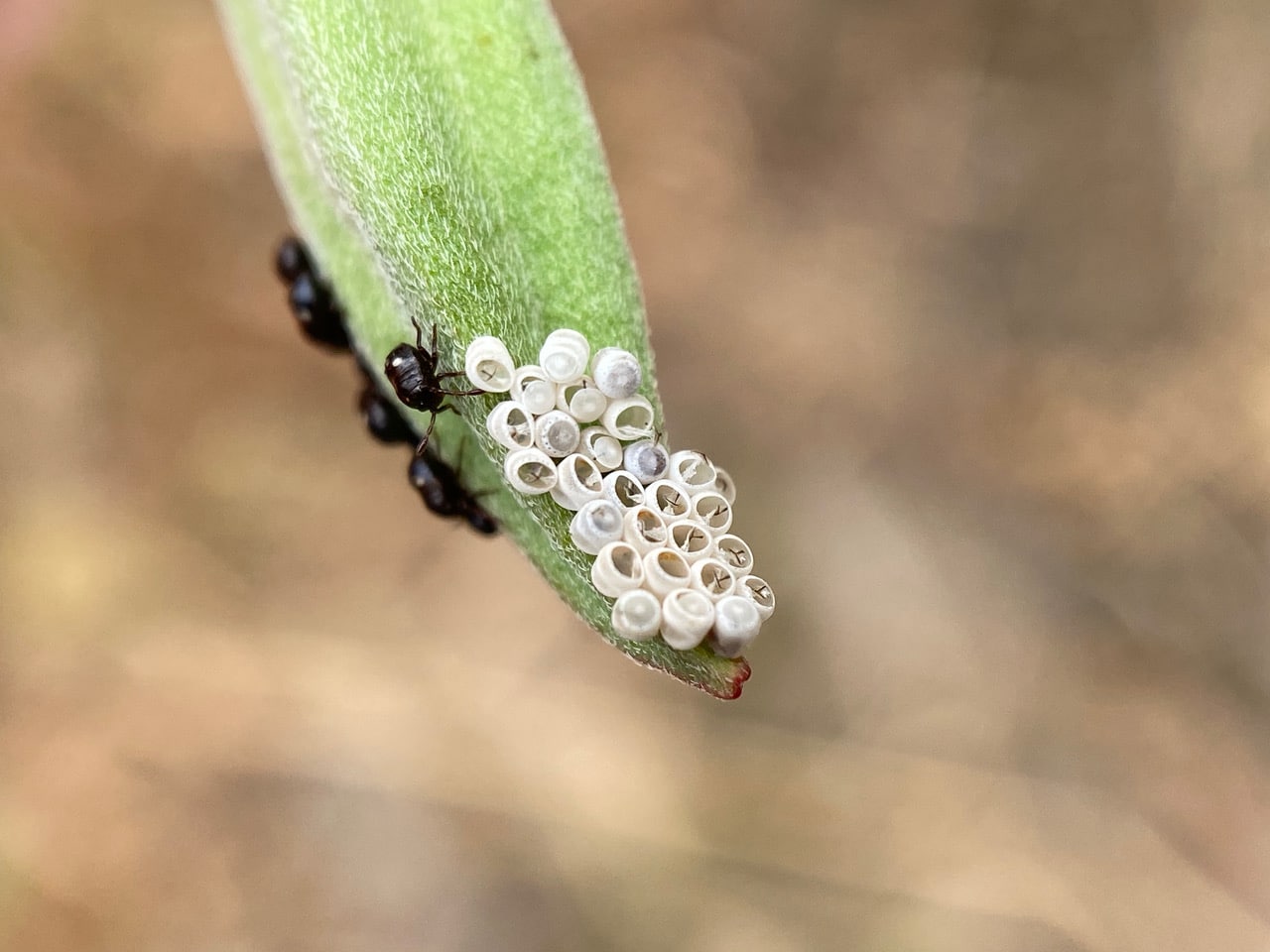
These barrel-shaped eggs with pop tops are characteristic of the Stink Bugs (family Pentatomidae). The eggs hatch synchronously, and the nymphs stay together until their first molt.
It is pleasantly cool today – what a relief from the weekend’s heat wave!
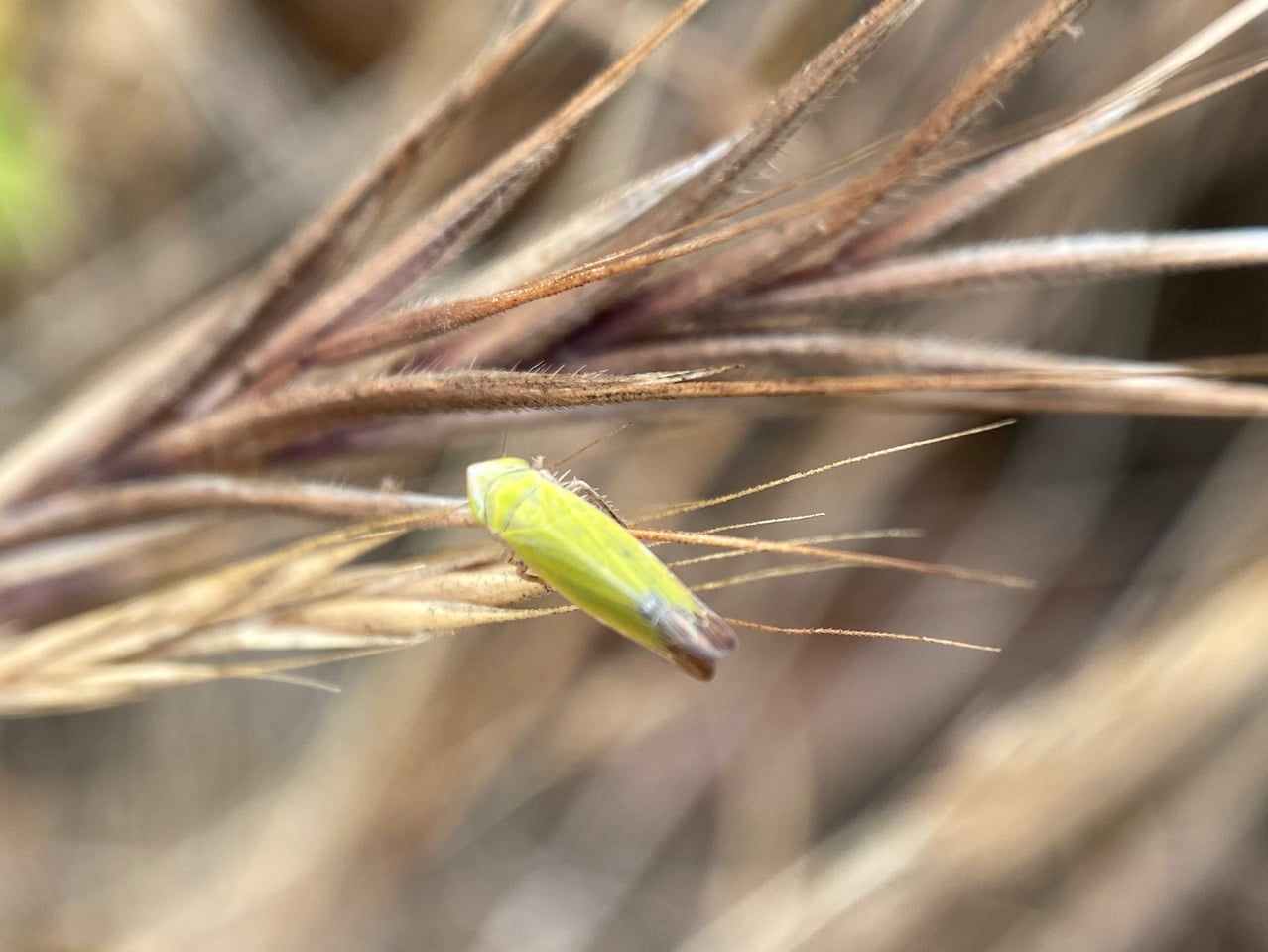
There are numerous green Leafhoppers (family Cicadellidae) in the dried grasses of the undergrowth. They jump as the vegetation is disturbed. Unlike most, this one runs away when I approach for a photo.
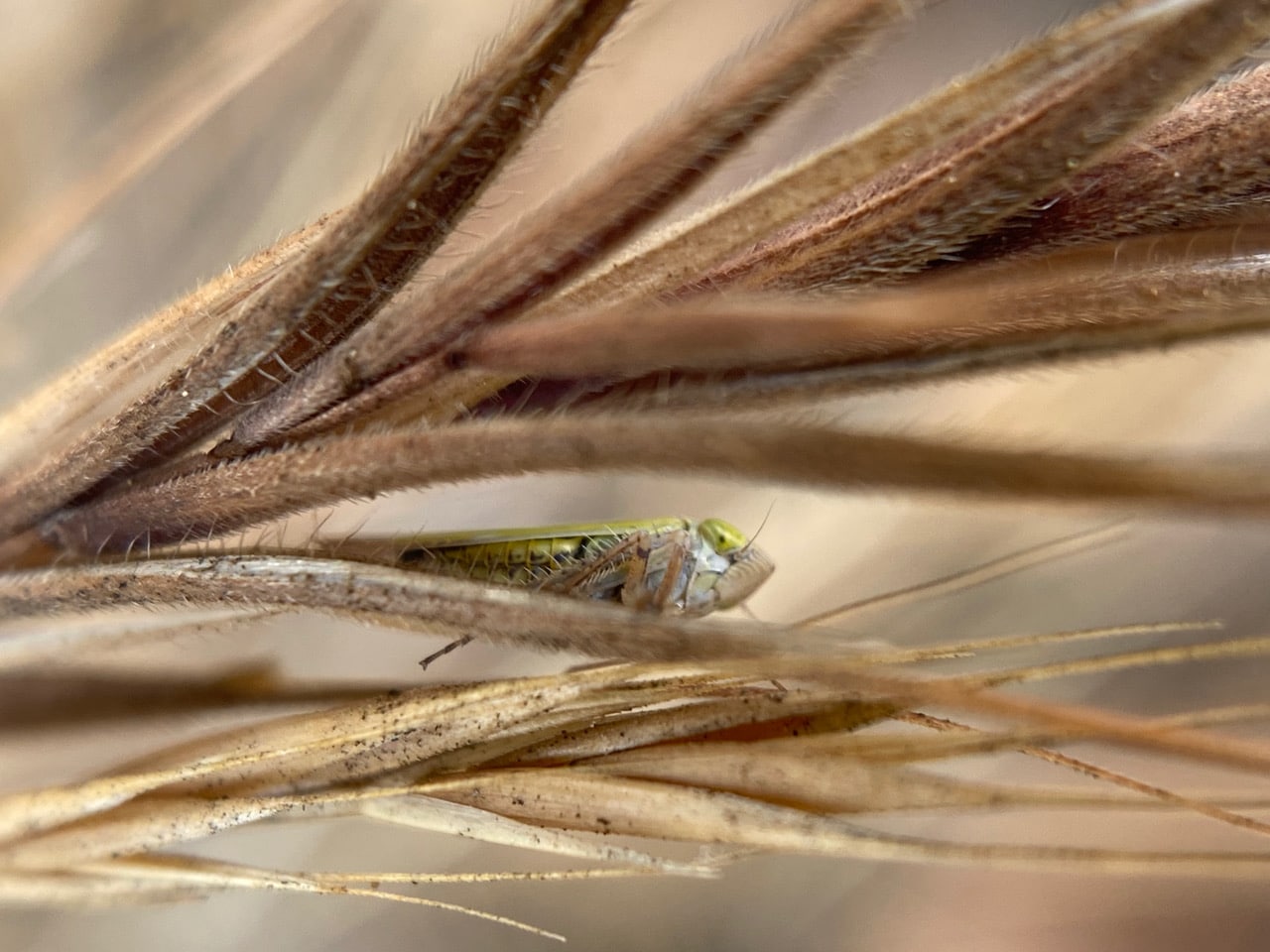
Now the Leafhopper is hiding in a grass seed head. The rows of comb-like spines on its hind legs are clearly visible in this view.
Leafhopper is the common name given to true bugs in the family Cicadellidae. The bugs are plant feeders that suck plant sap from grass, shrubs, or trees. Their hind legs are modified for jumping, and are covered with hairs that facilitate the spreading of a secretion over their bodies that act as a water repellent and carrier of pheromones. They undergo partial metamorphosis, and have various host associations, varying from very generalized to very specific.
While sucking the sap of plants, these insects excrete any extra sugar as a sticky liquid commonly called honeydew. This is a serious hazard for small insects, possibly sticking the insect to a leaf, or gluing its body parts together. Some bugs deal with this problem by shooting the waste away from their bodies at high speed. Leafhoppers have a unique solution – they make brochosomes, a proteinaceous material within a special gland in their guts, and secrete them by the billions in a milky anal fluid, and spread them over their bodies using their legs. When the fluid dries, the brochosomes form a powdery coating, and the leafhoppers spread them even further using comb-like hairs on their legs. The brochosomal coat is superhydrophobic, and acts as a water-repellent, non-stick coating protecting the leafhoppers from their own sticky exudates.
A slender, long-legged Stilt Bug (family Berytidae) is walking on a Sticky Monkeyflower. It is a nymph (immature) as evidenced by its short wing pads.
The Berytidae are extremely gracile insects with legs so long and slender as to suggest common names such as “thread bugs” and “stilt bugs”. In this they resemble the Assassin Bugs in the subfamily Emesinae with which they are easily confused. However, the forelegs of the predatory Emesinae are raptorial, while those of the Berytidae are roughly similar to those of their other legs. What’s more, the antennae of most Berytidae though long, geniculate (elbowed), and in other ways generally similar to Emesinae, tend to have a swelling at the tip. Antennae have 4 segments, the fourth enlarged.
Stilt Bugs occur worldwide and throughout North America. Most are phytophagous (plant-feeders); many may be host-specific, often associated with plants with glandular hairs in Geraniaceae, Onagraceae, Scrophulariaceae, and Solanaceae. Some are occasionally omnivorous, feeding opportunistically on insects entrapped in plant exudates or on lepidopteran eggs or aphids.
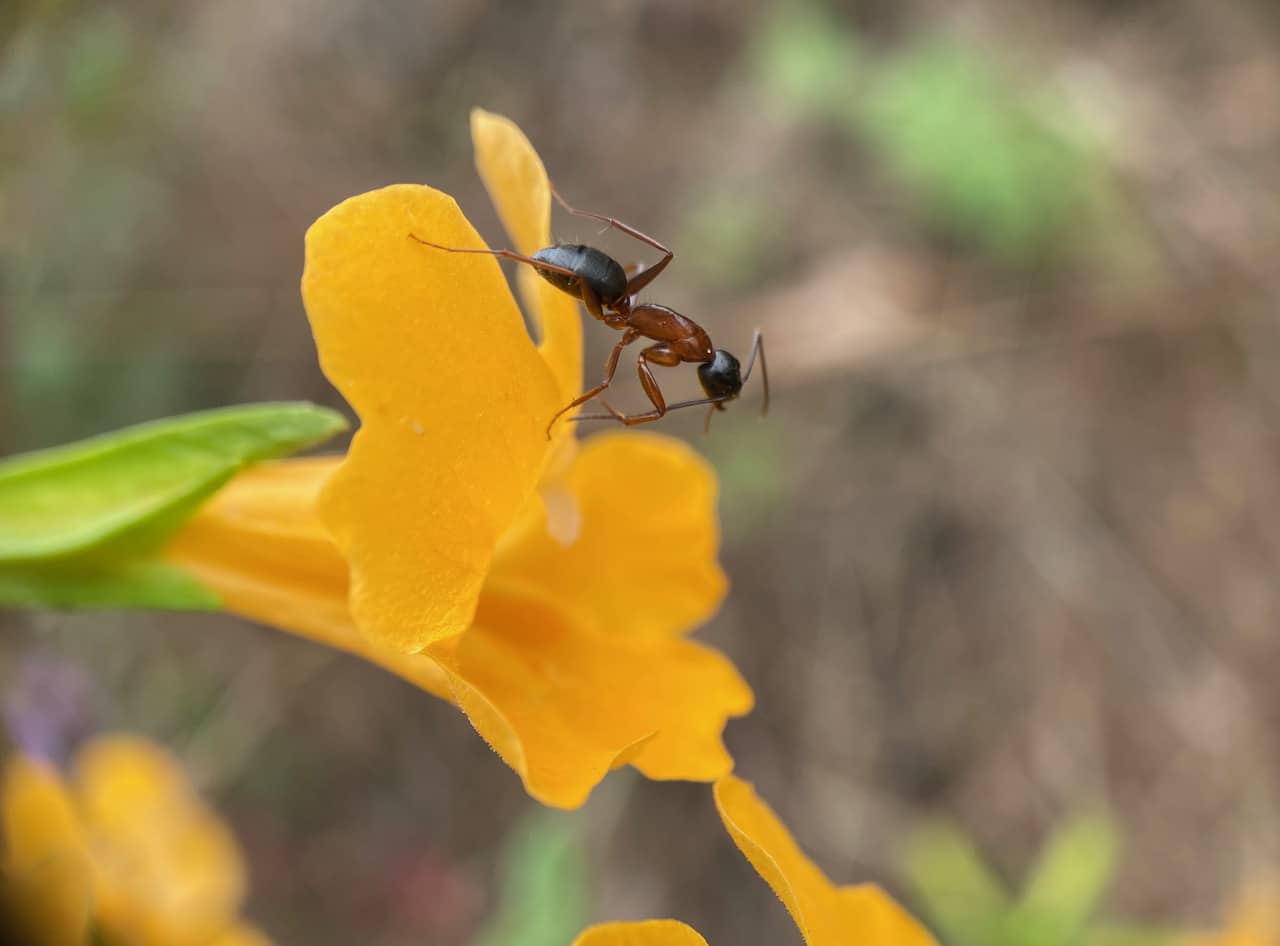
Perched on the upper lip of a Sticky Monkeyflower, a Field Ant, Formica subpolita (family Formicidae) is cleaning its antennae.
During an antenna cleaning movement, the ants lower their head, insert their antenna into a clamp-like cleaning structure on the front leg of the same side, and pull it through. After the actual grooming movement, the antenna cleaner is then cleaned by the ant’s mouthparts (nibbling) in order to allow reuse. The cleaning structure in most ants consists of a curvature on the front tarsus (called the tarsal notch) that faces a spur originating from the tibia. Each side of the clamp bears hair arrays that can be distinguished as “bristles”, “combs”, and “brushes” for removing particles of various sizes.
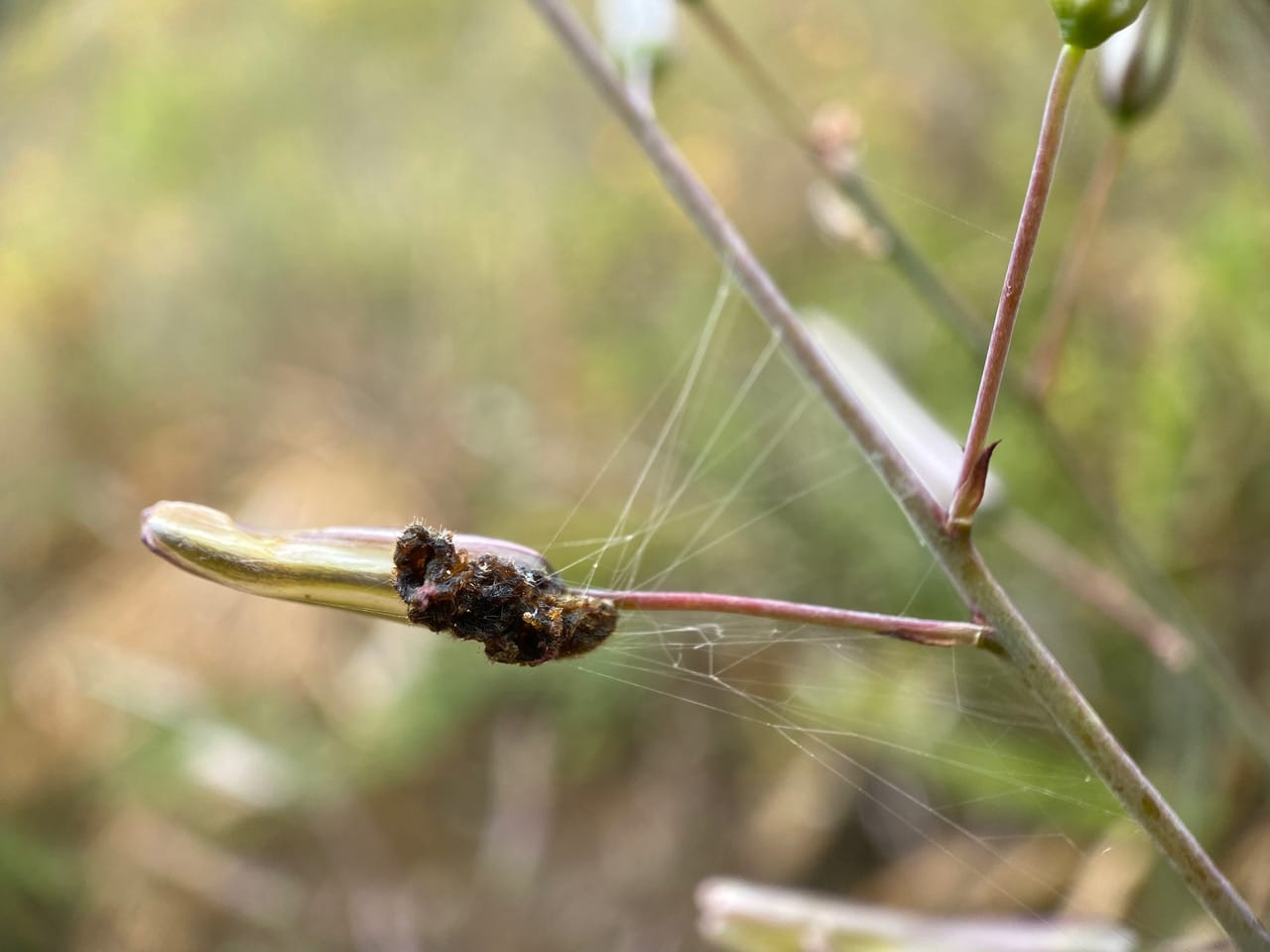
I think that brown blob on a flower bud of Soap Plant, Chlorogalum pomeridianum is a dead caterpillar. Maybe killed by a spider which then secured it with strands of silk? Perhaps there are more of the same caterpillar on the plant?
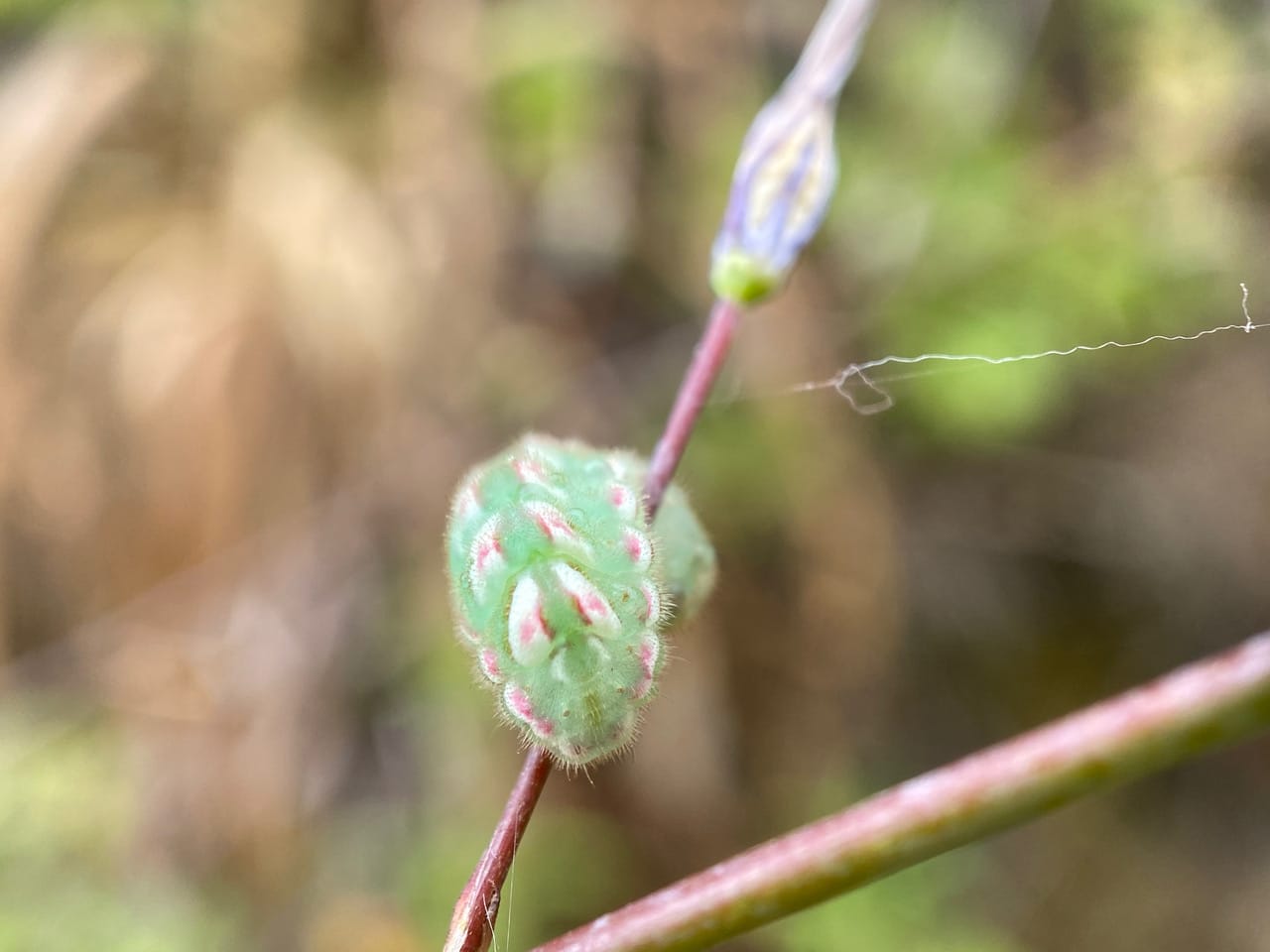
Sure enough, here’s a small slug-like caterpillar on a stalk of a spent flower. The green caterpillar with red and white sculptured pattern is probably a Brown Elfin, Callophrys augustinus (family Lycaenidae). Soap Plant is a known larval food plant for the species.
I think this is the rear end of the caterpillar. I tag the plant to check on the caterpillar later, hopefully in better light when the fog clears.
I also tag this Sticky Monkeyflower, Diplacus aurantiacus with a piece of red yarn. The plant has several of these tarnished and bloated flower buds that do not produce flowers. Last year I discovered that these were galls induced by a gall fly in the family Cecidomyiidae. Maybe we’ll be lucky enough to see the pupa cases on the galls when the flies emerge.
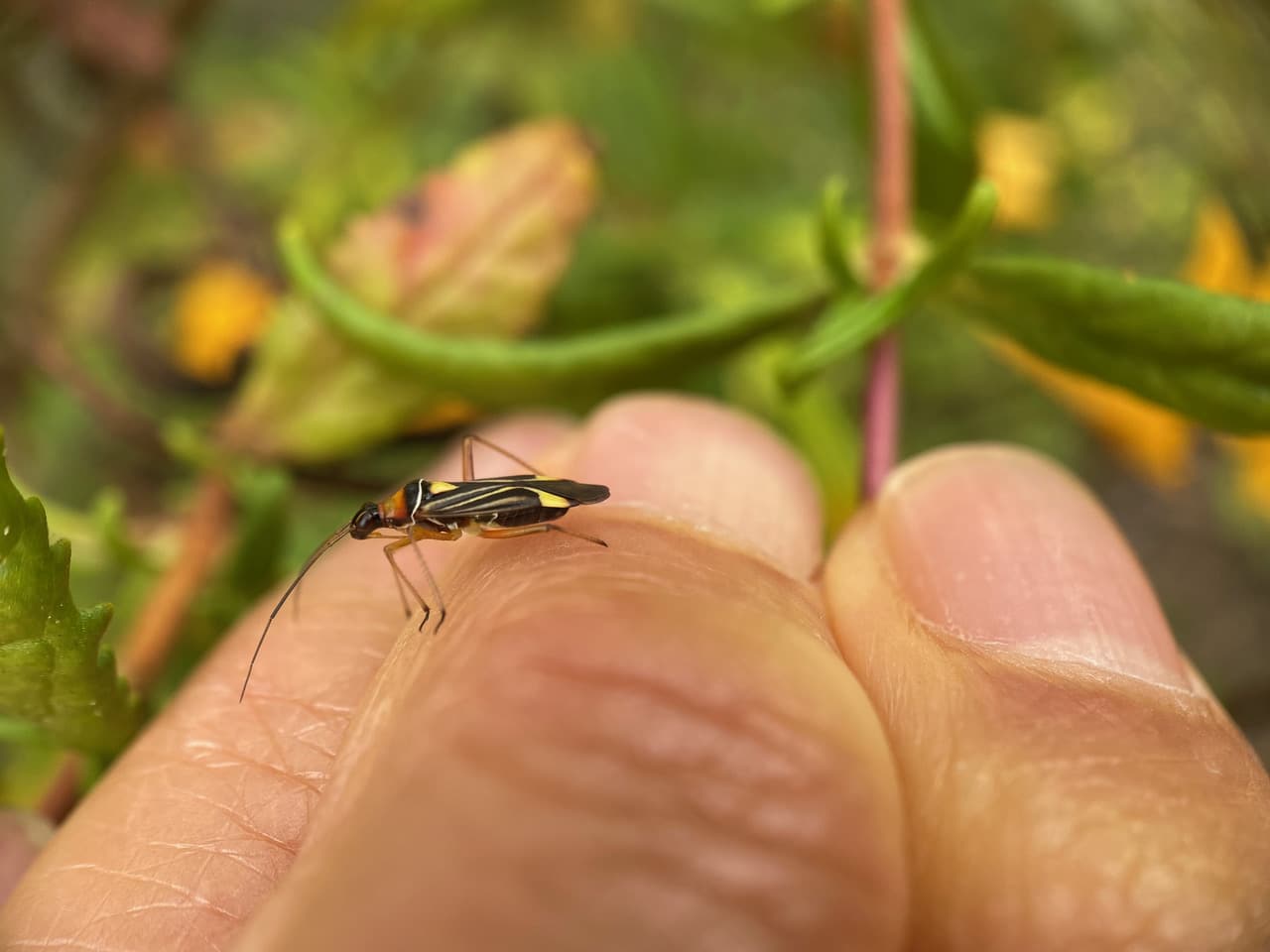
I grip a stem to steady it for a picture of this beautiful Plant Bug, Closterocoris amoenus (family Miridae) on Sticky Monkeyflower. The bug inadvertently climbed onto my fingers! The bug and its nymphs are commonly found on Sticky Monkeyflowers, but I am not sure what role they play in the ecology of the plant. Not even sure if they are herbivorous or predatory.
Mirid bugs are also referred to as plant bugs or leaf bugs. Miridae is one of the largest family of true bugs in the order Hemiptera. Like other Hemipterans, Mirids have piercing, sucking mouthparts to extract plant sap. Some species are predatory.
I don’t see a Bush Katydid nymph (family Tettigoniidae) today, but the herbivores have left plenty of chew marks on these flowers.
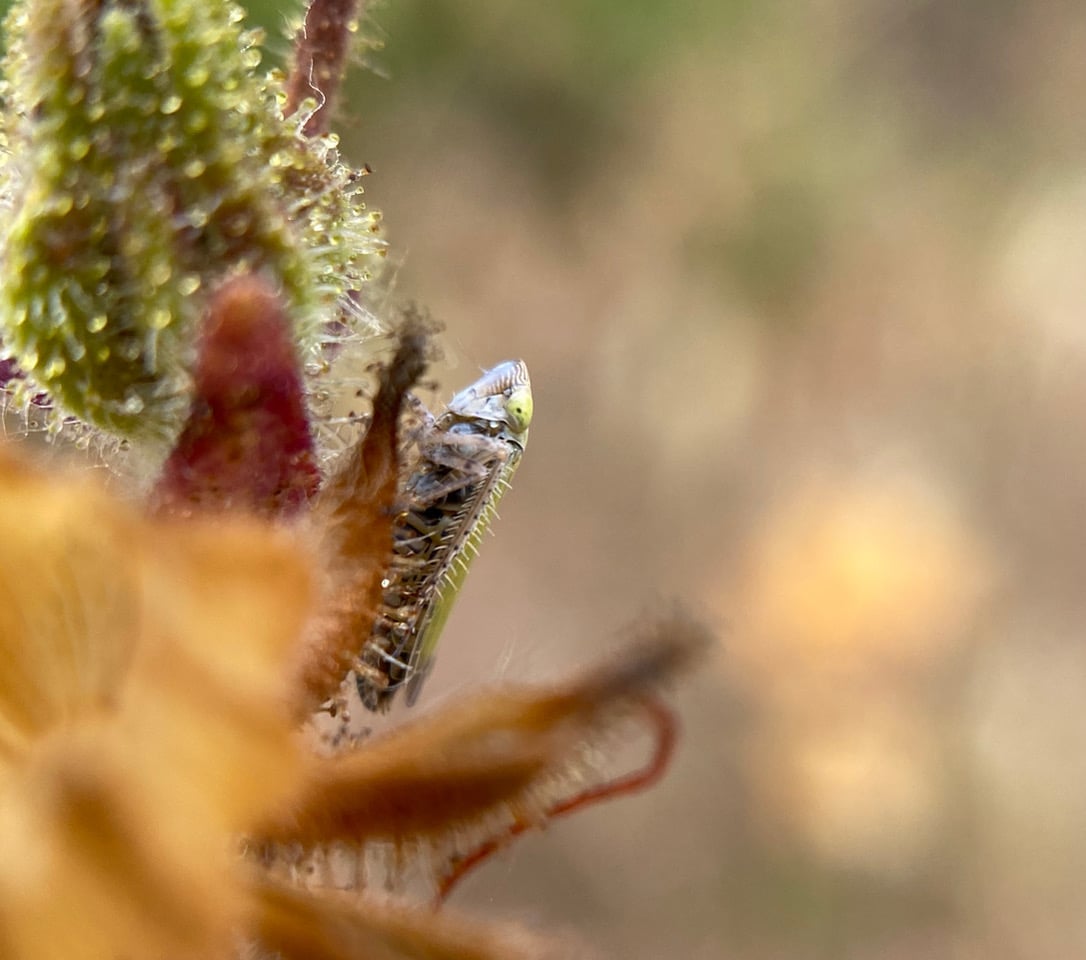
Hey, another Leafhopper (family Cicadellidae)! This one is on a seed head of Gumweed, Madia gracilis. Note the characteristic comb-like spines on its hind leg.
Close-up of the Leafhopper.