

Pollinator Post 7/30/23 (2)
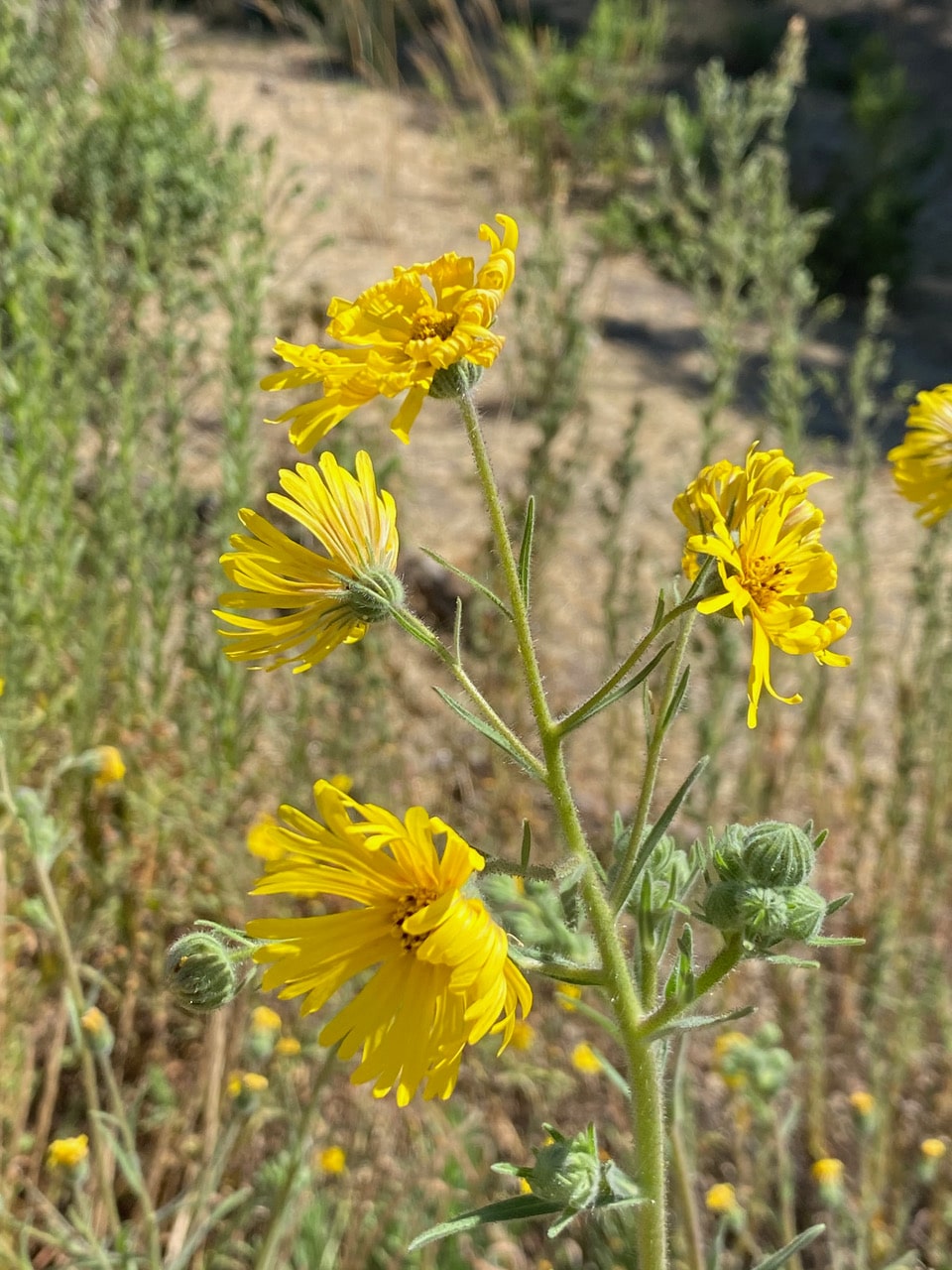
Passing Bypass Trail, I arrive at the patch of Tarweeds under the Water Tank just before 11 am. There is a mixture of Elegant and Coast Tarweeds here interspersed between dried grass and withered California Phacelia. As luck would have it, most of the Madia flowerheads are still open.
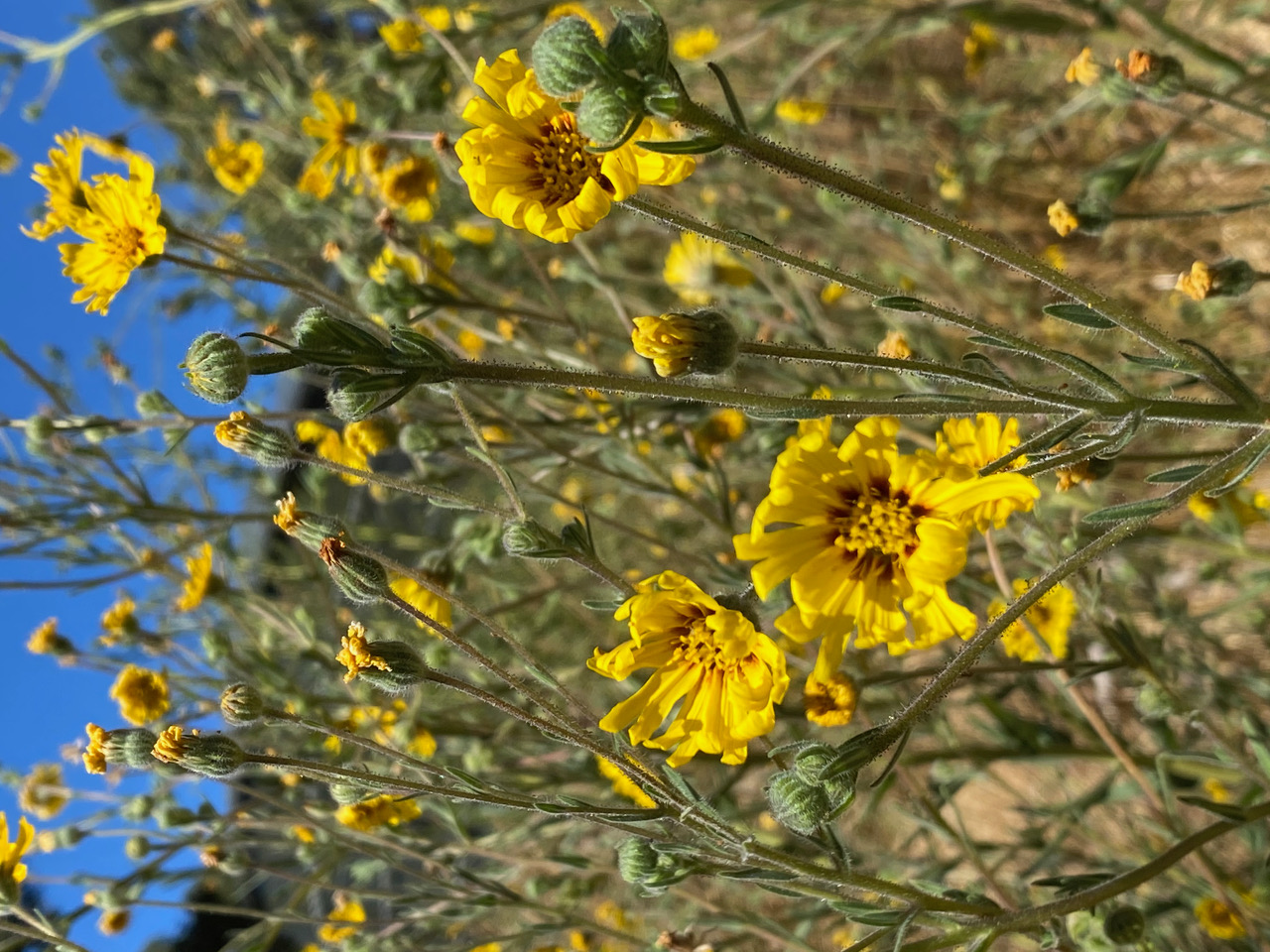
The terrain is uneven but not steep, and I am able to get to most of the tarweeds without much problem. The plants are isolated in clumps, easy to study without getting mired in the sticky exudates.
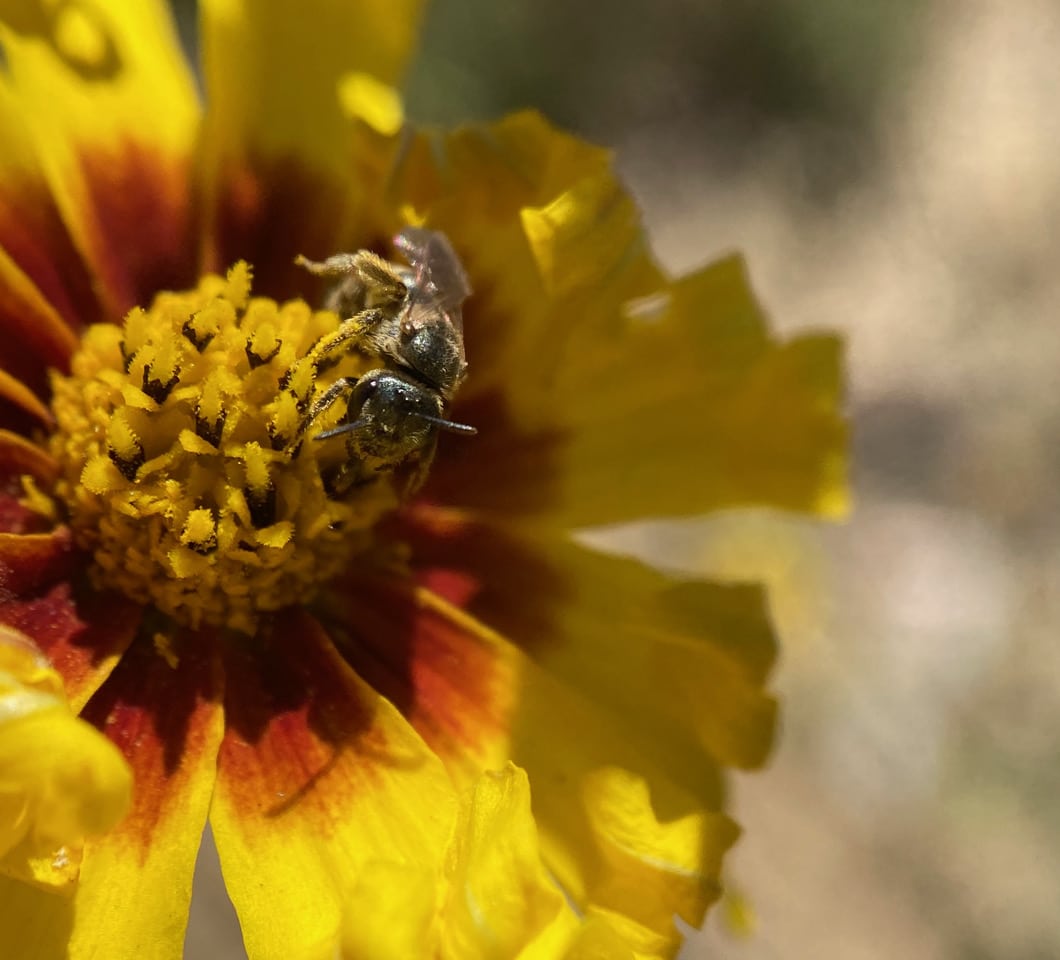
A small bee is foraging on an Elegant Tarweed flowerhead.
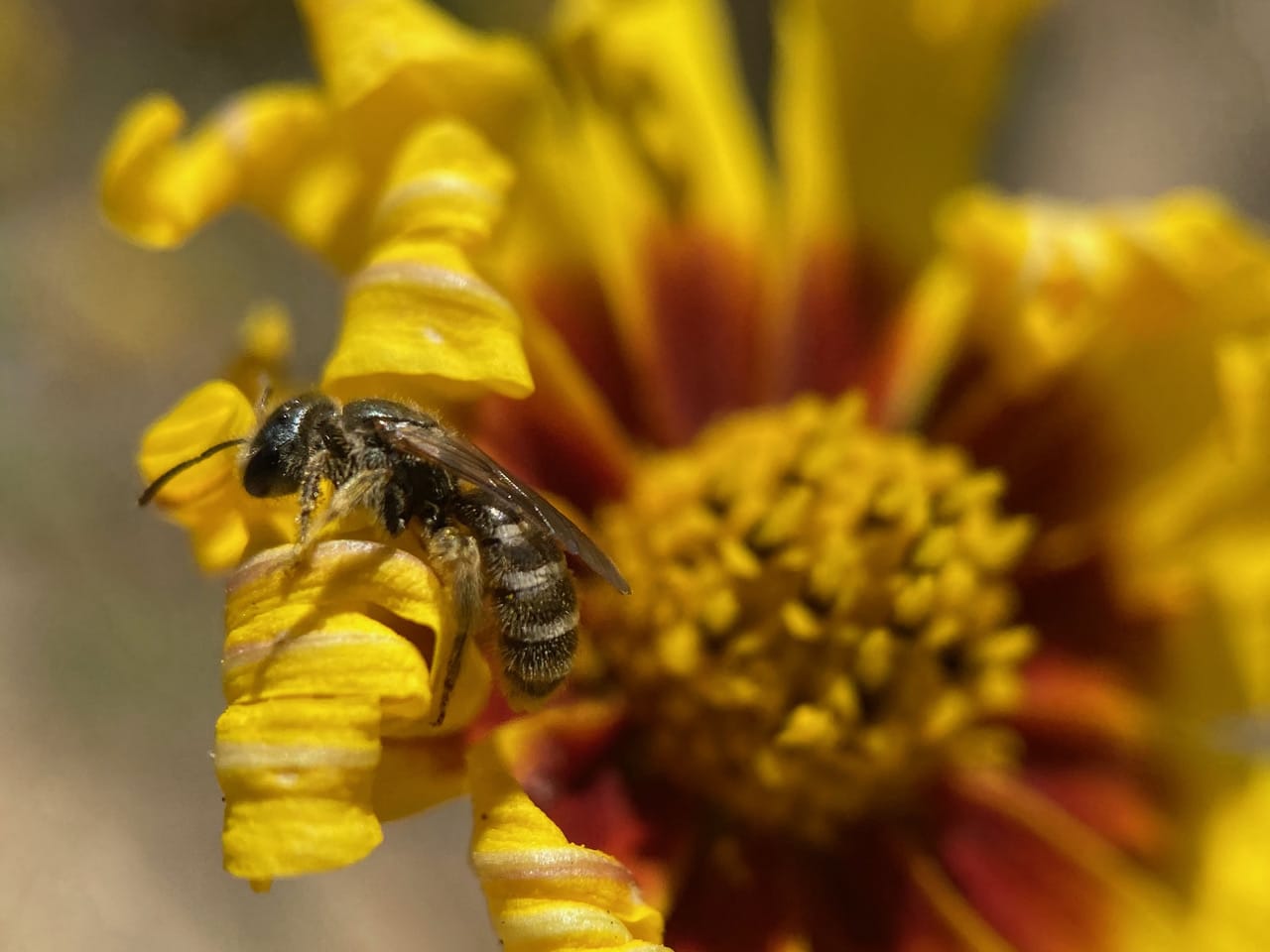
The scopa of the bee spans the entire length of its hind leg, suggestive of Sweat Bees (family Halictidae). There are hairs at the edge of each abdominal segment, indicating that the bee belongs to the genus Halictus, not Lasioglossum. In Lasioglossum, the hairs are found at the base of the segments.
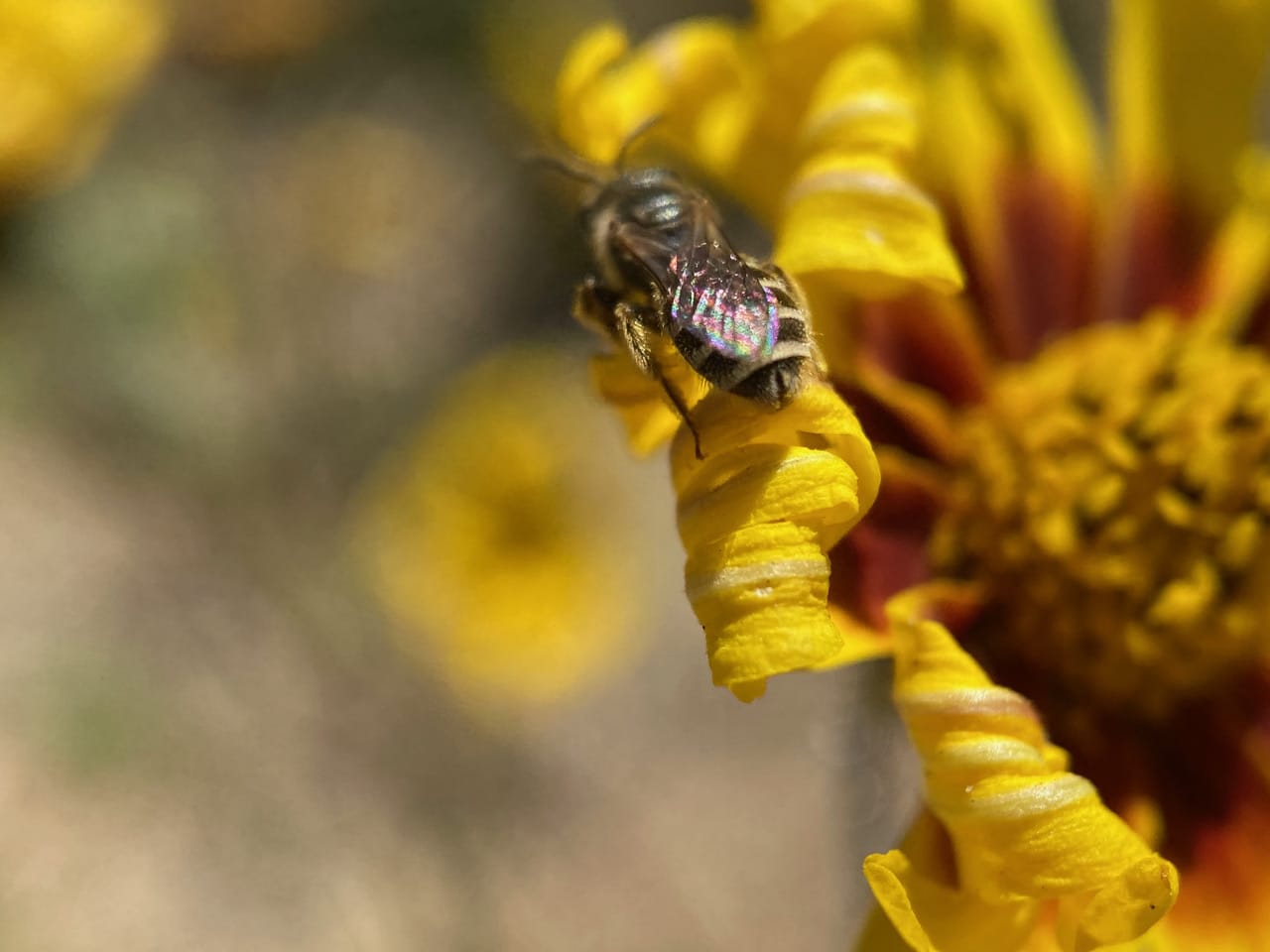
The definitive confirmation for genus Halictus (“Furrow Bees”) – the furrow on the last abdominal segment of the female.
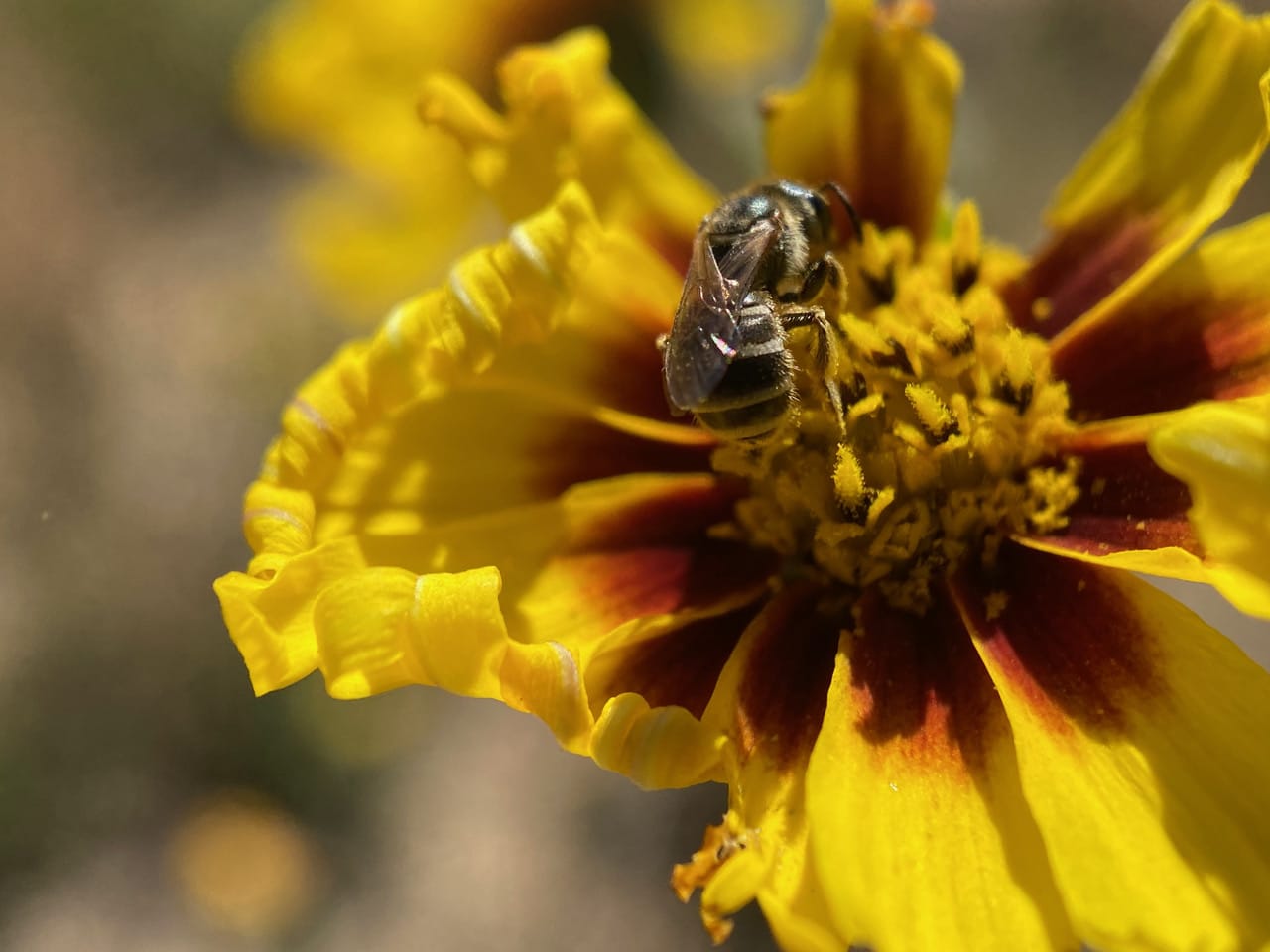
Of course none of these distinctions is possible without good close-up pictures of the bees. The bees are small and they are constantly moving. Macro photography is a blessing, sparing us the necessity of ‘collecting’ the insects for identification.
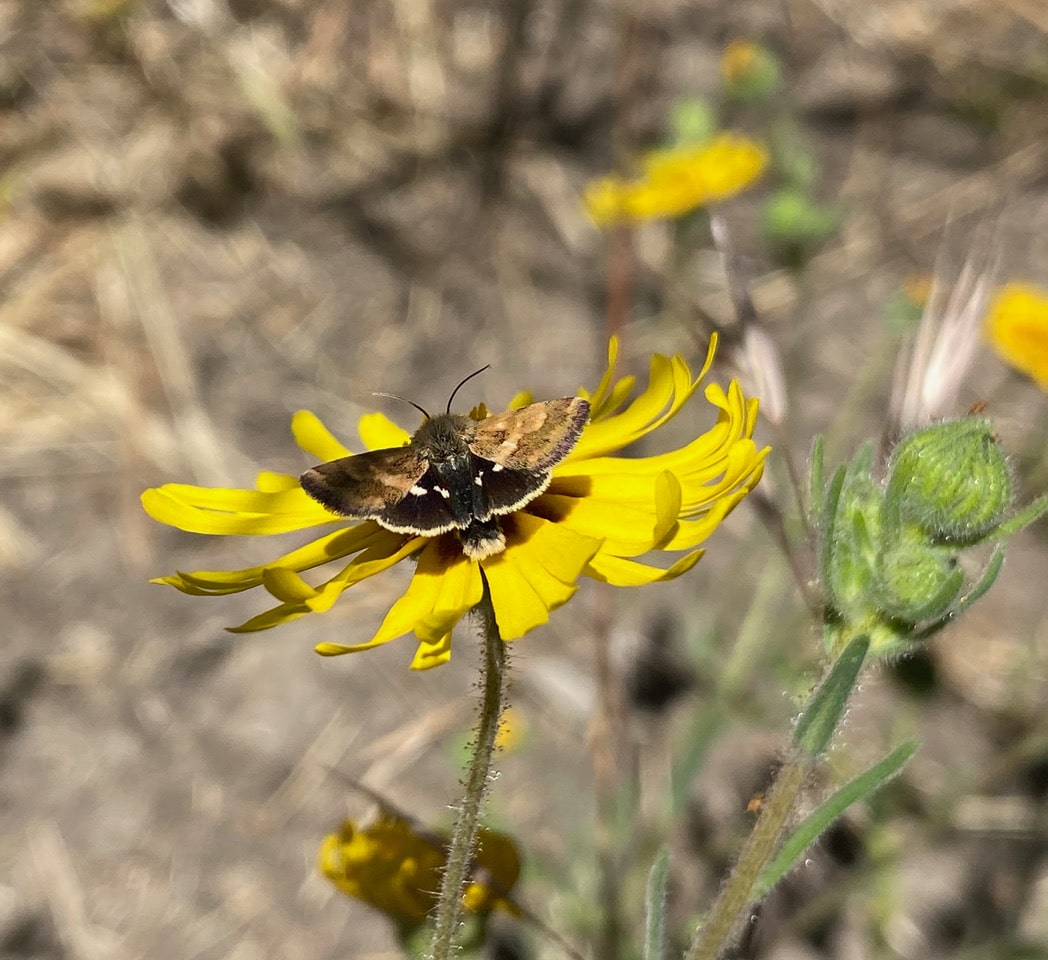
Ooh, a Small Owlet Moth, Heliothodes diminutiva (family Noctuidae) is visiting an Elegant Tarweed flowerhead! I am reminded to look for the caterpillars on the plants. Much to my surprise, I can’t find a single one in this patch of tarweed below the Water Tank, only about 1/2 mile from Siesta Gate. The population of the moth caterpillars at Siesta Gate has reached pestilent proportions, threatening the tarweeds.
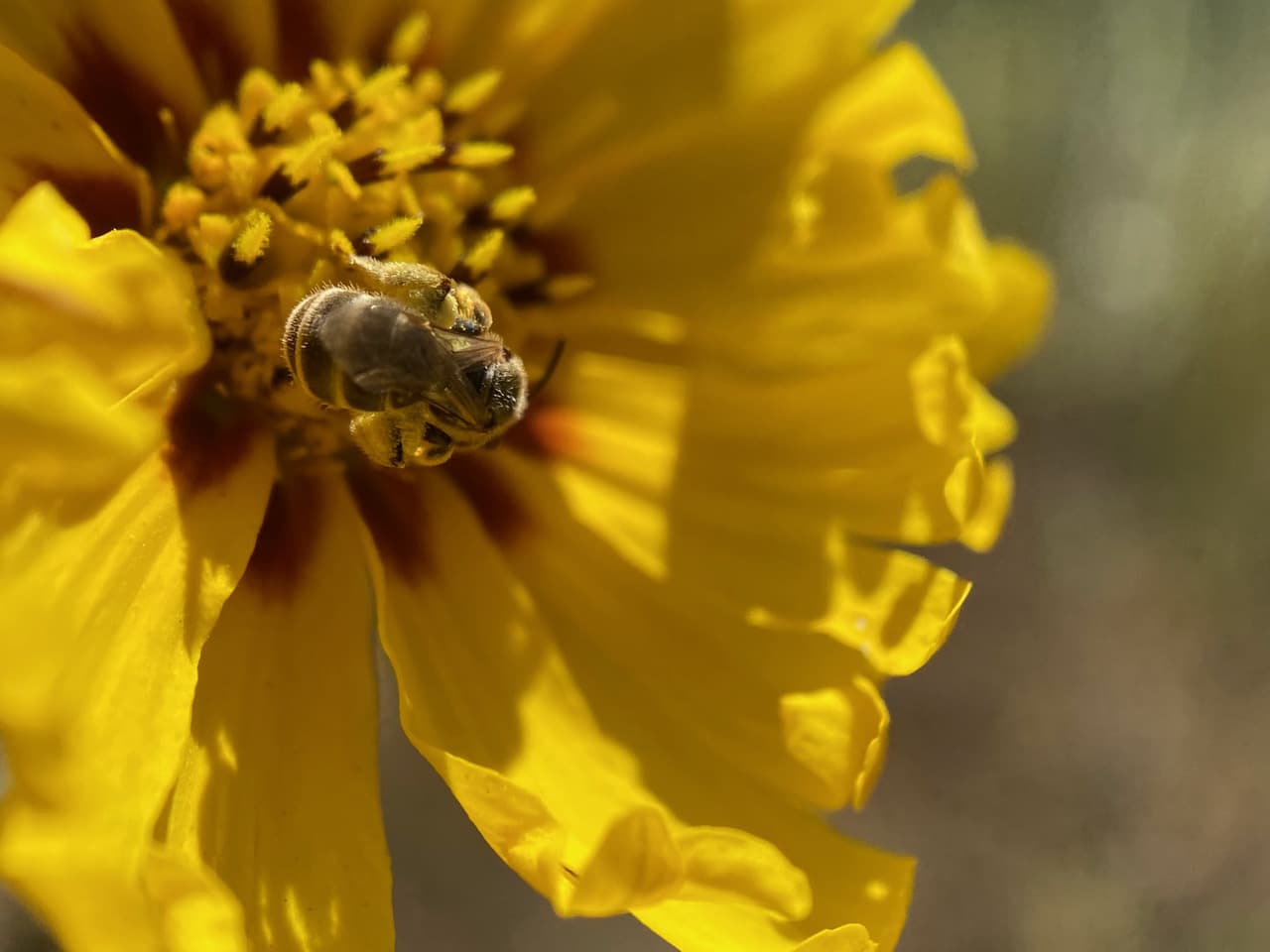
Yet another small bee is foraging on the Elegant Tarweed.
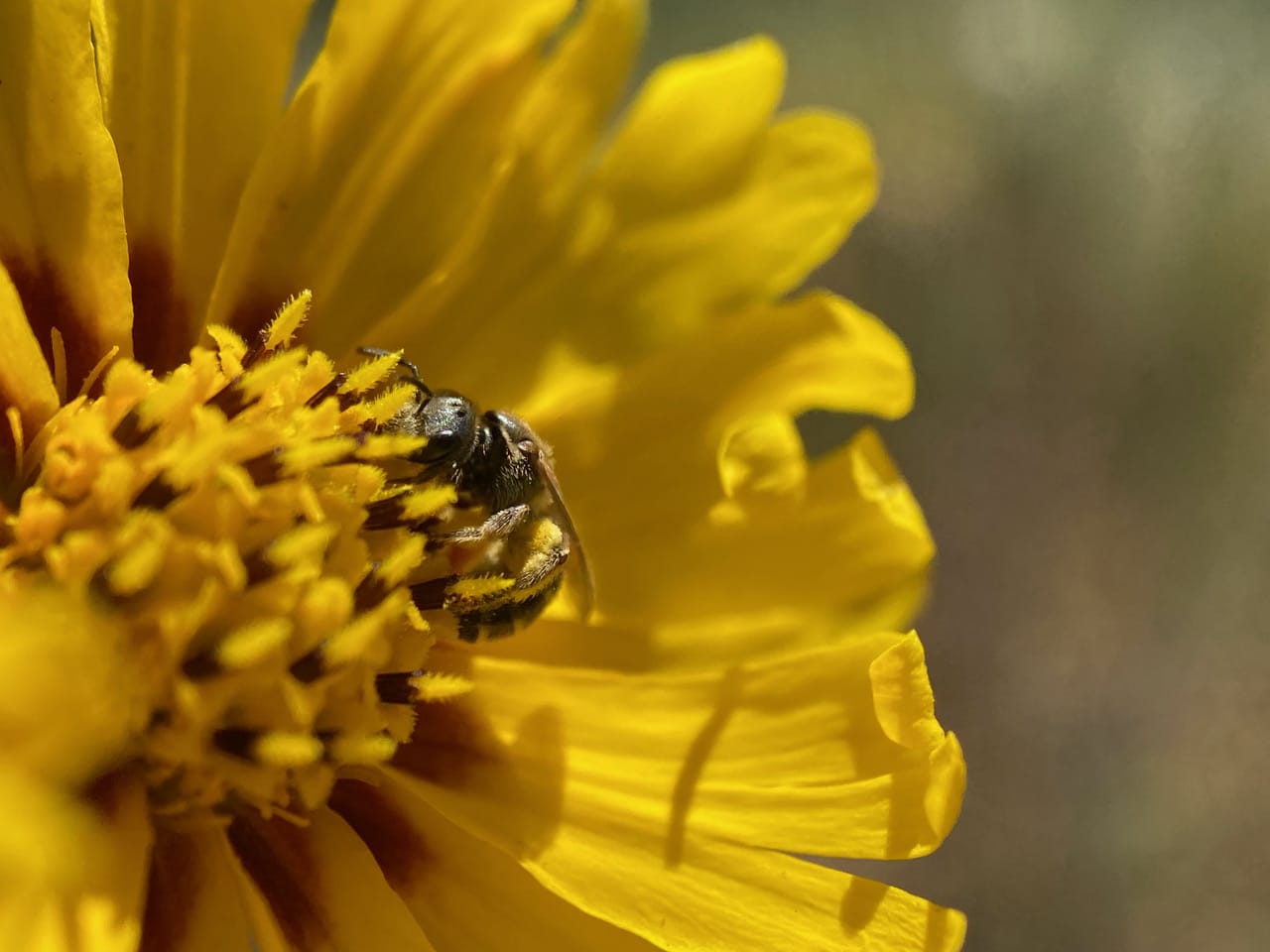
Now you know the drill!
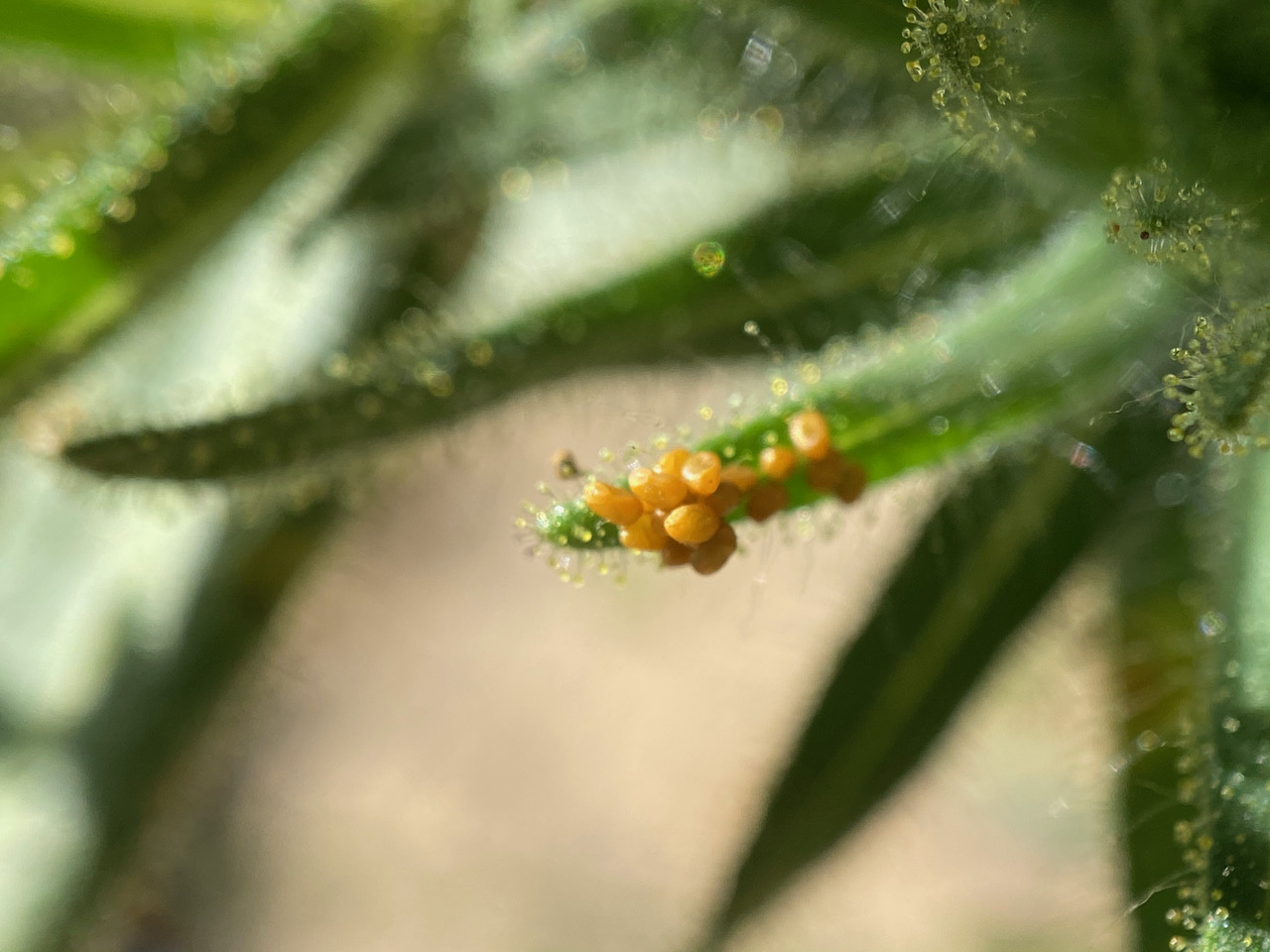
Hey, a cluster of what looks like bug eggs! I look around for Hemipterans (“true bugs”) on the plants, and can hardly find any of the Lygus Bugs, the Mirid Bugs, the Scentless Plant Bugs that swamp the tarweeds at Siesta Gate. It is amazing how a half mile distance makes all the difference to the insect community on the tarweeds. Perhaps the plants at Water Tank were put in later, and the insect community hasn’t had time to assemble?
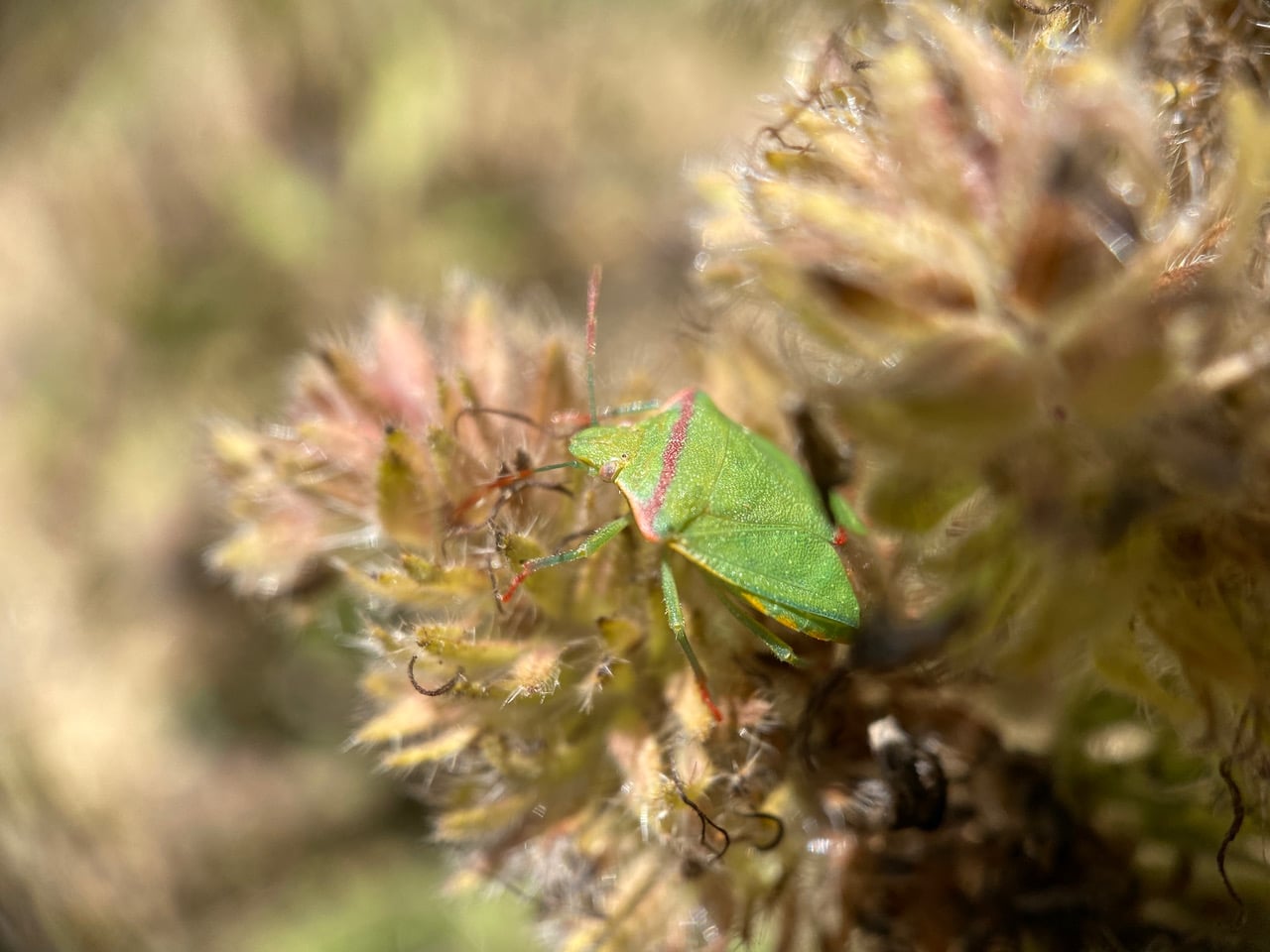
A Red-shouldered Stink Bug, Thyanta custator (family Pentatomidae) peeks cautiously from between the withered inflorescences of California phacelia, Phacelia californica.
Pentatomidae is a family of insects belonging to the order Hemiptera or “true bugs”. As hemipterans, the pentatomids have piercing-sucking mouthparts, and most are phytophagous, including several species that are severe pests on agricultural crops.
All Pentatomids have 5-segmented antennae, and they generally have a large triangular scutellum in the center of the back. The body shape of adults is generally shield-shaped when viewed from above. The common name of Stink Bug refers to their ability to release a pungent defensive spray when threatened, disturbed, or crushed.
The Red-shouldered Stink Bug is a generalist feeder and is reported to be a minor pest on a variety of crops including beans, corn, peaches, and wheat.
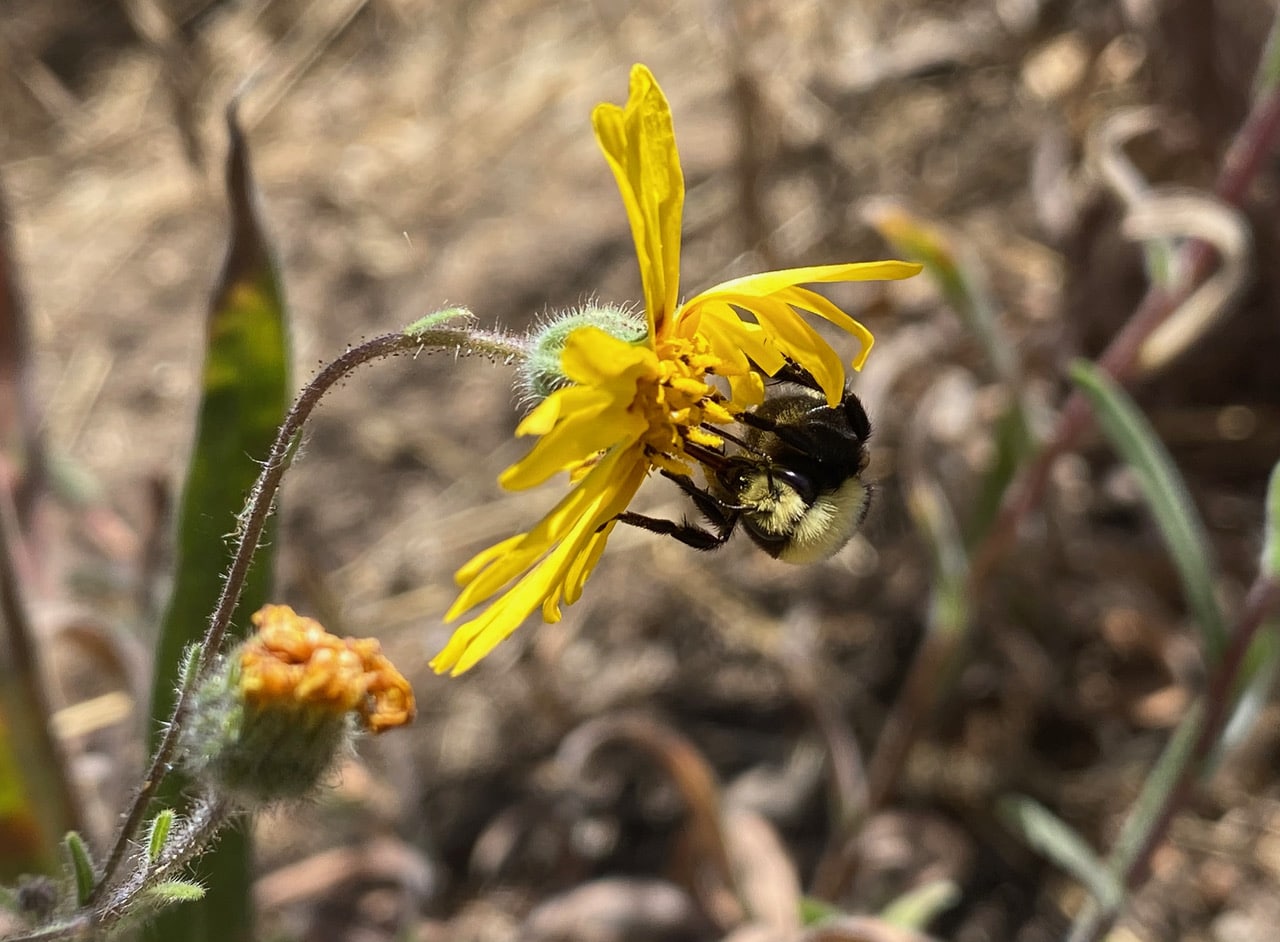
The Elegant Tarweed flowerhead droops from the weight of a Yellow-faced Bumble Bee, Bombus vosnesenskii, when it lands for nectar.
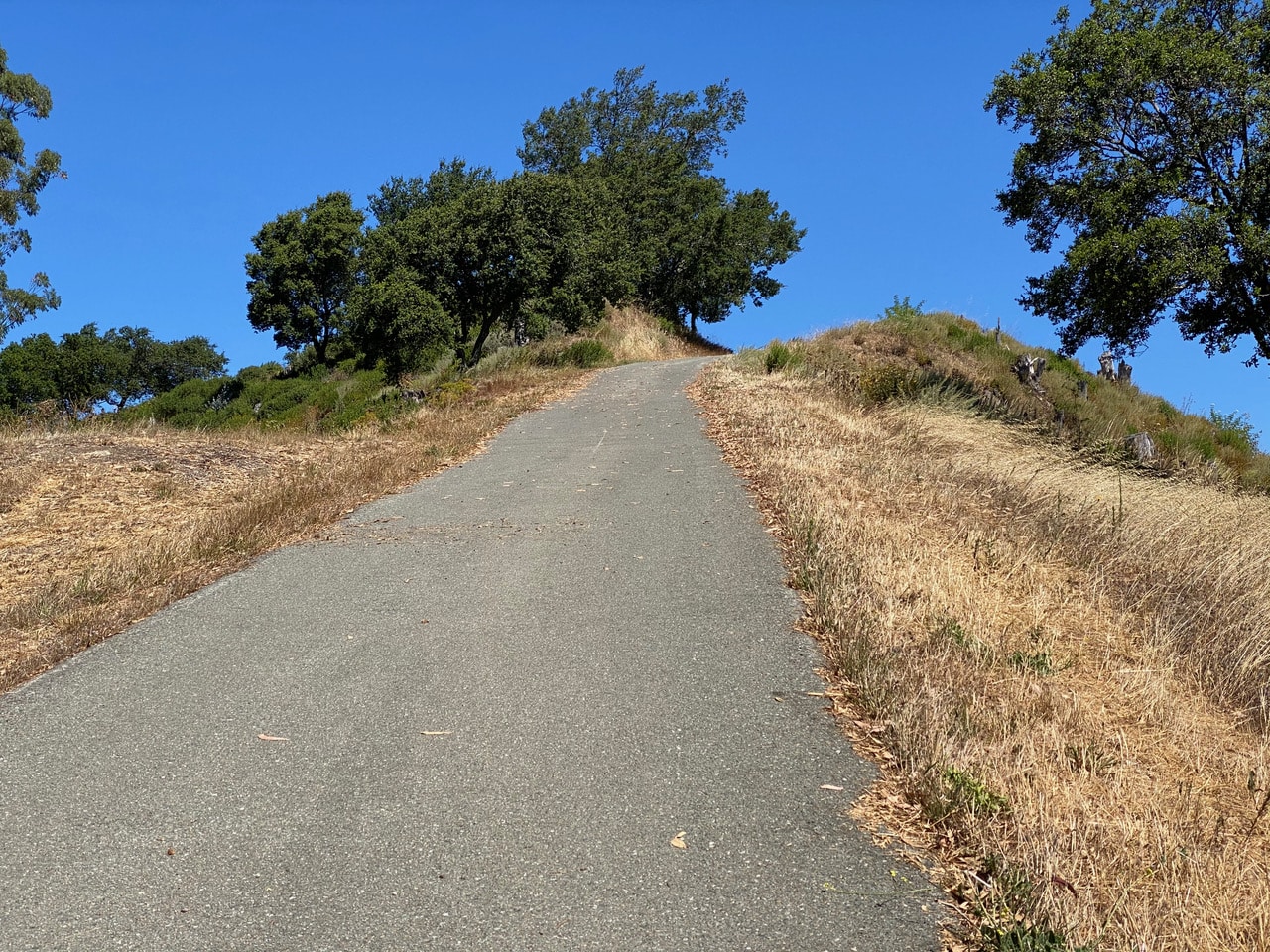
I trudge up the ridge from the Water Tank to Siesta Gate, noticing that the vegetation along the side of the road here has also been cleared for fire break. What has been sacrificed? I recall photographing the caterpillars of Buckeye butterfly feeding on the dense stand of Narrowleaf Plantain along this section of the road. Just then, a Buckeye butterfly materializes, flying low and occasionally stopping to check on the mowed plantains. It must be a female ready to lay her eggs.
As I approach the highest point of the road, I begin to notice large numbers of Dragonflies (order Odonata) swarming. They fly this way and that, seemingly in no particular direction. Although they never stop to perch, I recognize that they are not all the same species; some of them are Darners (family Aeshnidae), and some are Skimmers (family Libellulidae). What I am seeing is probably is what is referred to as static feeding swarms, and not mass migration.
There are basically two different kinds of swarms. In static feeding swarms, the dragonflies fly repeatedly over a well-defined area and fairly close to the ground, usually feeding on clouds of small insects. In migratory swarms, hundreds to millions of dragonflies flying in a single direction in massive groups, often 50-100 feet above the ground.

Perched on the edge of a Cobweb Thistle flowerhead, a Skipper butterfly unrolls its long proboscis in anticipation of a nectar treat.
A tubular sucking organ, the proboscis enables a butterfly to extract sweet nectar from flowers, regardless of the shape of the blossom. When not in use, the proboscis is rolled up out of the way. Unlike caterpillars, adult butterflies do not have any chewing mouthparts, and therefore must obtain their nutrition from sipping liquids. Hydrostatic pressure extends the curled proboscis which is inserted deep into the tubes of flowers. At emergence from the chrysalis, the proboscis initially consists of two parts that appear like a forked tongue. Almost immediately the two tubes are “zipped” together to form the single tube. In addition to flower nectar, butterflies also use the proboscis to suck up moisture from puddles, liquids from fermenting fruits, rotting animal flesh or animal excrements.
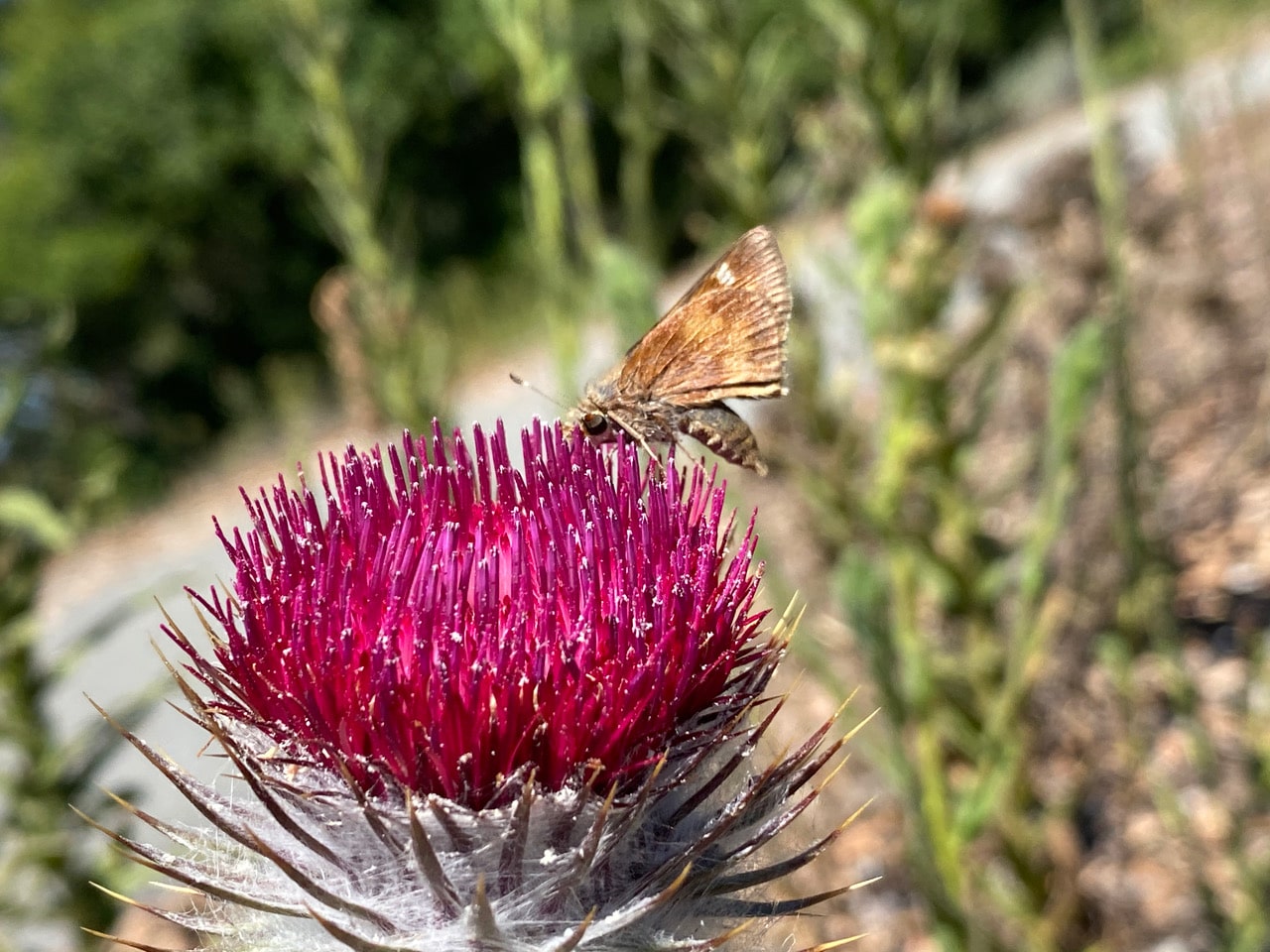
The Skipper has to lower its proboscis way down…
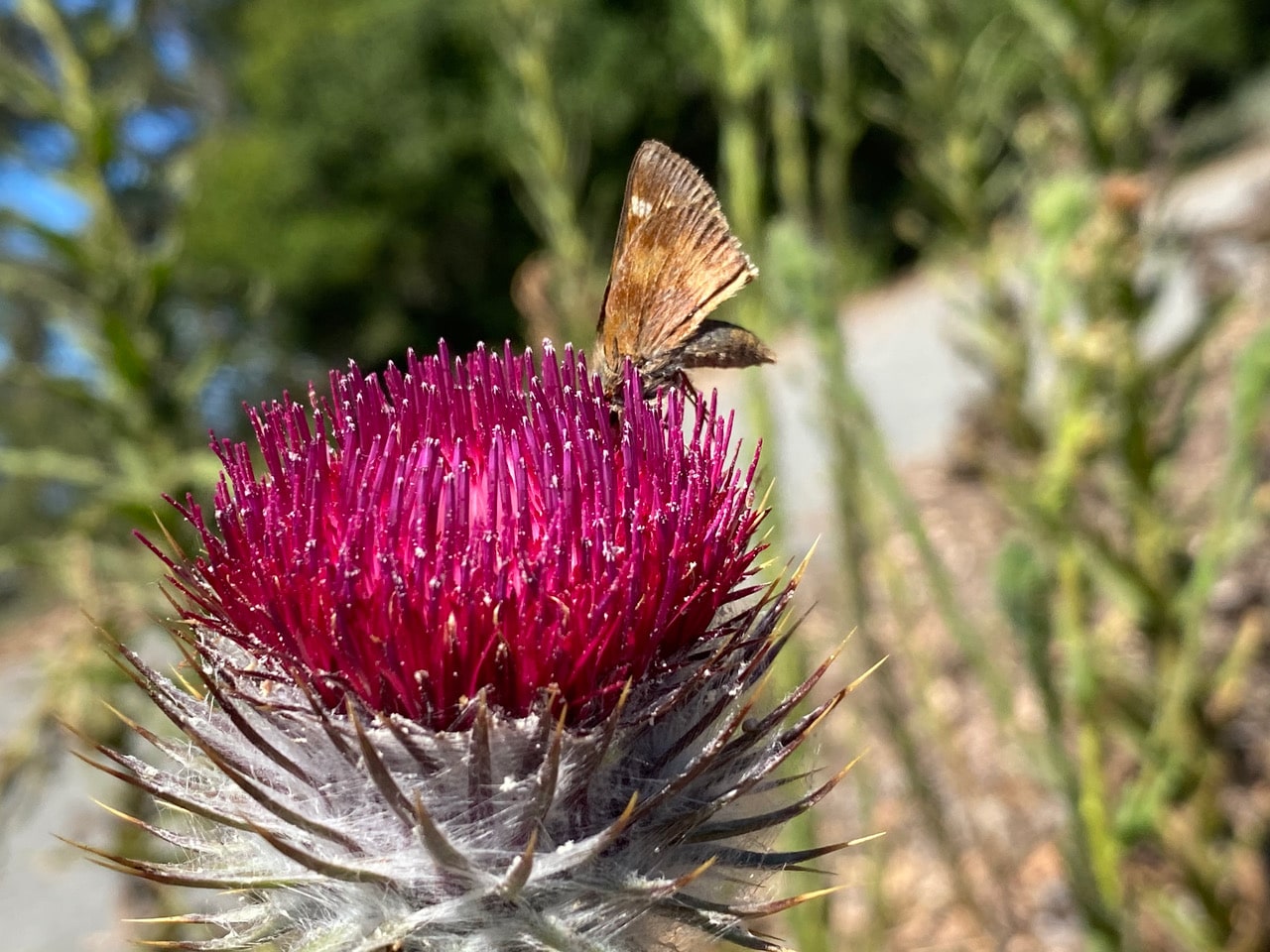
…until its head is buried among the dense florets. It is a long way down to get to the nectar!
Skippers are butterflies in the family Hesperiidae. They are distinct from the typical butterflies in having antennae with clubs that hook backward like a crochet hook; they have generally stockier bodies and larger compound eyes; their wings are usually small in proportion to their bodies. When at rest, skippers keep their wings usually angled upwards or spread out, and only rarely fold them up completely.
Skipper caterpillars are usually green or brown, sometimes yellowish, never brightly colored. They have a distinctive “collar”, a narrow ring around the body right behind the head. Caterpillars are camouflaged and often hide during the day. Many species make nests of leaves and silk for additional protection. Most North American species feed on grasses, but some common species eat shrubs and trees, especially in the bean family. Most species are limited to a single group of food plants. Adult skippers are only active during the day, but Skipper caterpillars feed mainly when it is dark or partly light.

A Heliothis caterpillar (family Noctuidae) is feeding on a Coast Tarweed that has been spared.
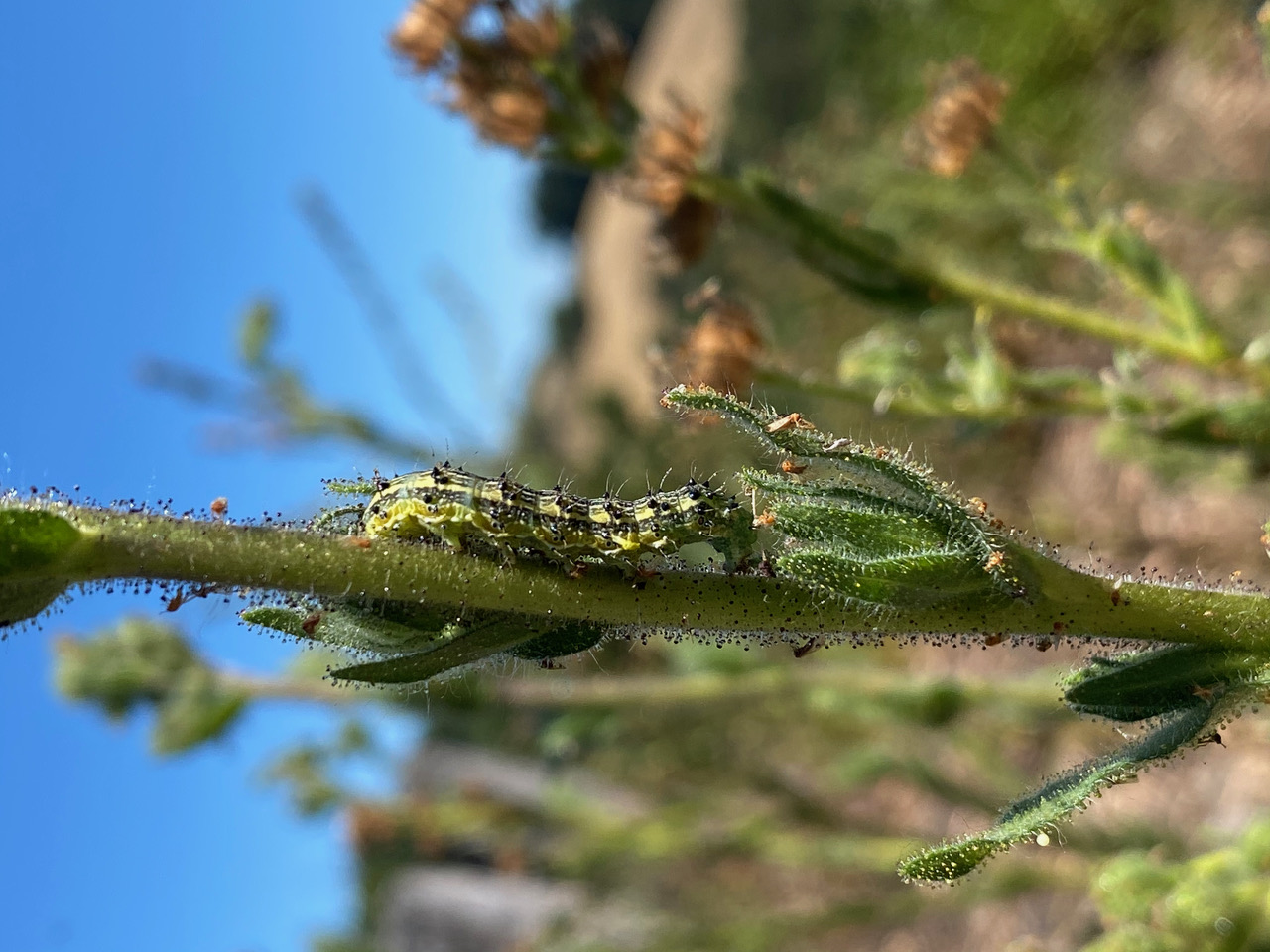
Another lucky caterpillar.
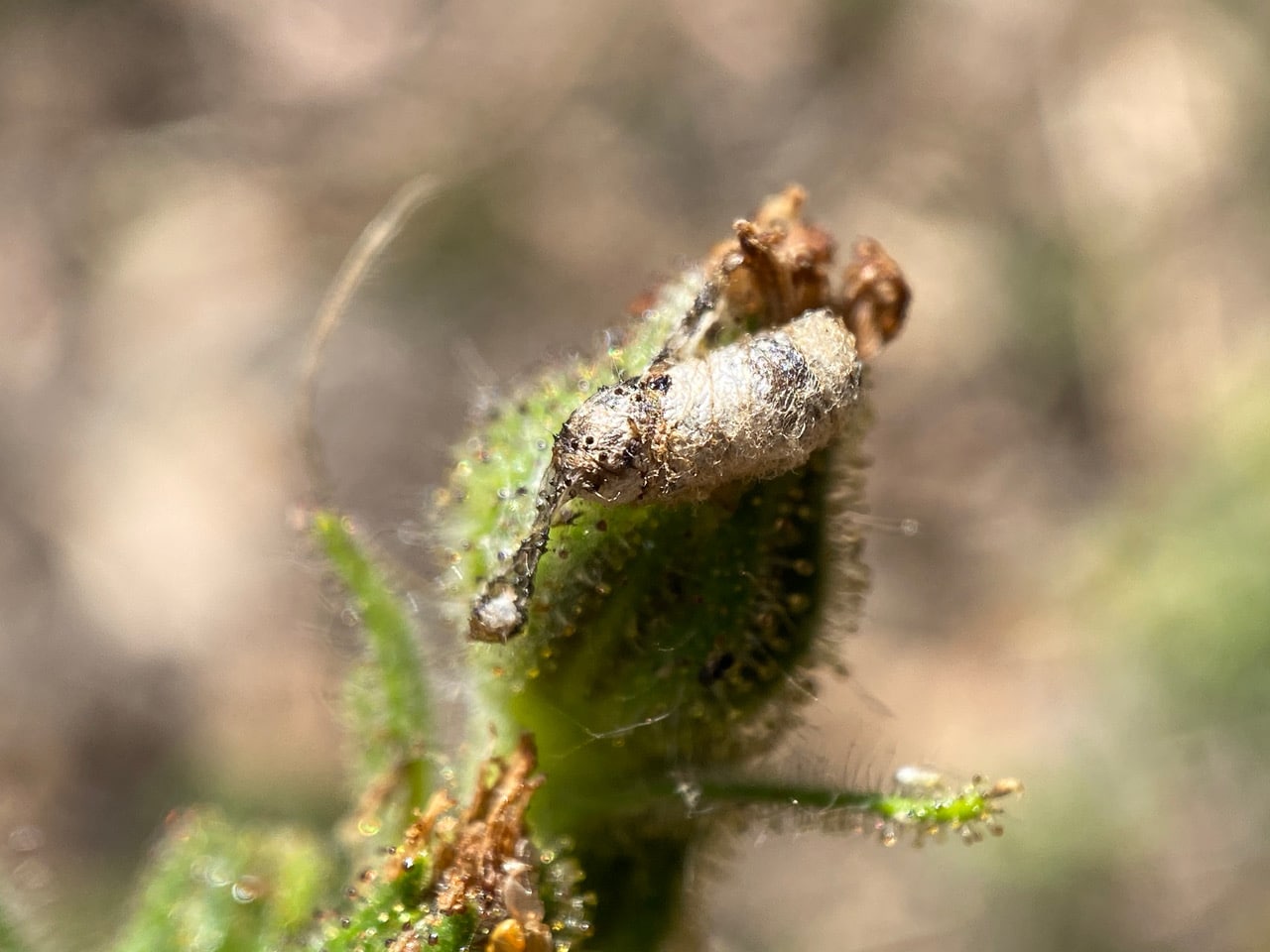
The shriveled body of a caterpillar is draped across the cocoon of a parasitoid wasp, Hyposoter sp. (family Ichneumonidae) that has used it as a host.
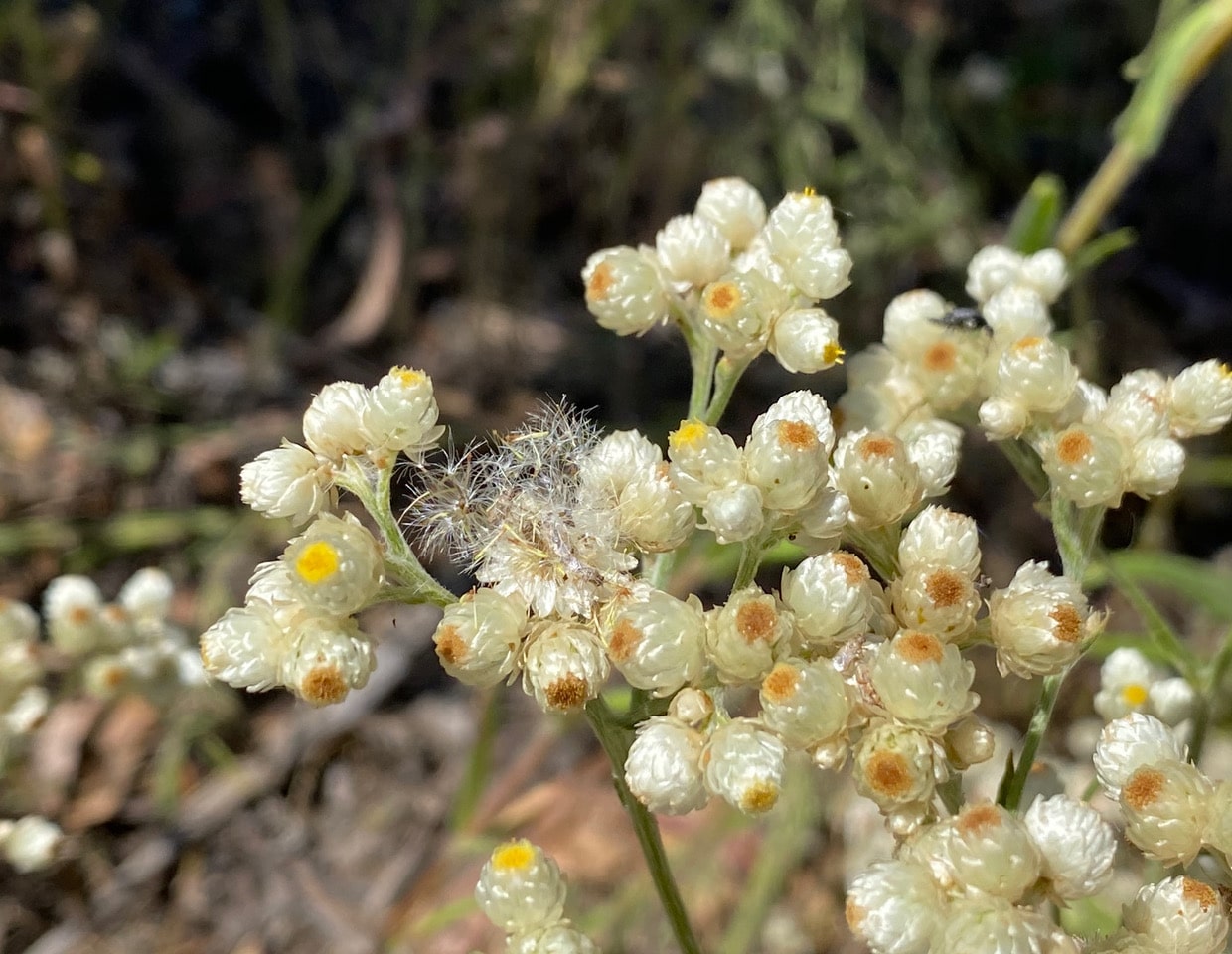
A few California Everlasting, Pseudognaphalium californicum, have escaped destruction along the road. This one is still in bloom with some flowerheads just beginning to disperse their plumed seeds. Some everlastings behave like biannuals/perennials as well as annuals, so hopefully some will come back next year without the seeds from this year. Hope springs eternal!