

Pollinator Post 7/30/23 (1)
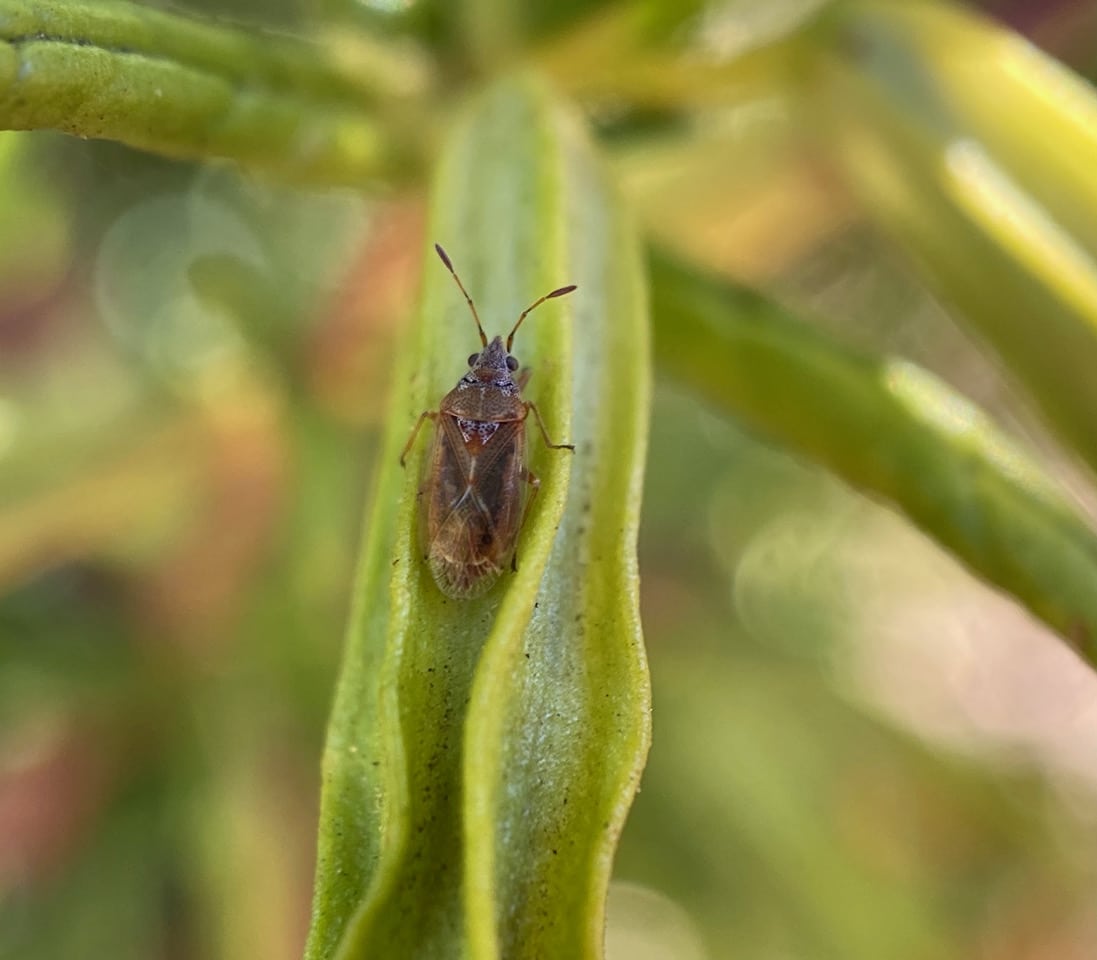
Fitting perfectly between the flanges of a Sticky Monkeyflower calyx, a Seed Bug, Kleidocerys franciscanus (family Lygaeidae) is feeding on the immature seeds within, using its needle-like piercing-sucking mouthparts. Seeds are predigested with injected digestive enzymes, then sucked up through the same mouthparts.
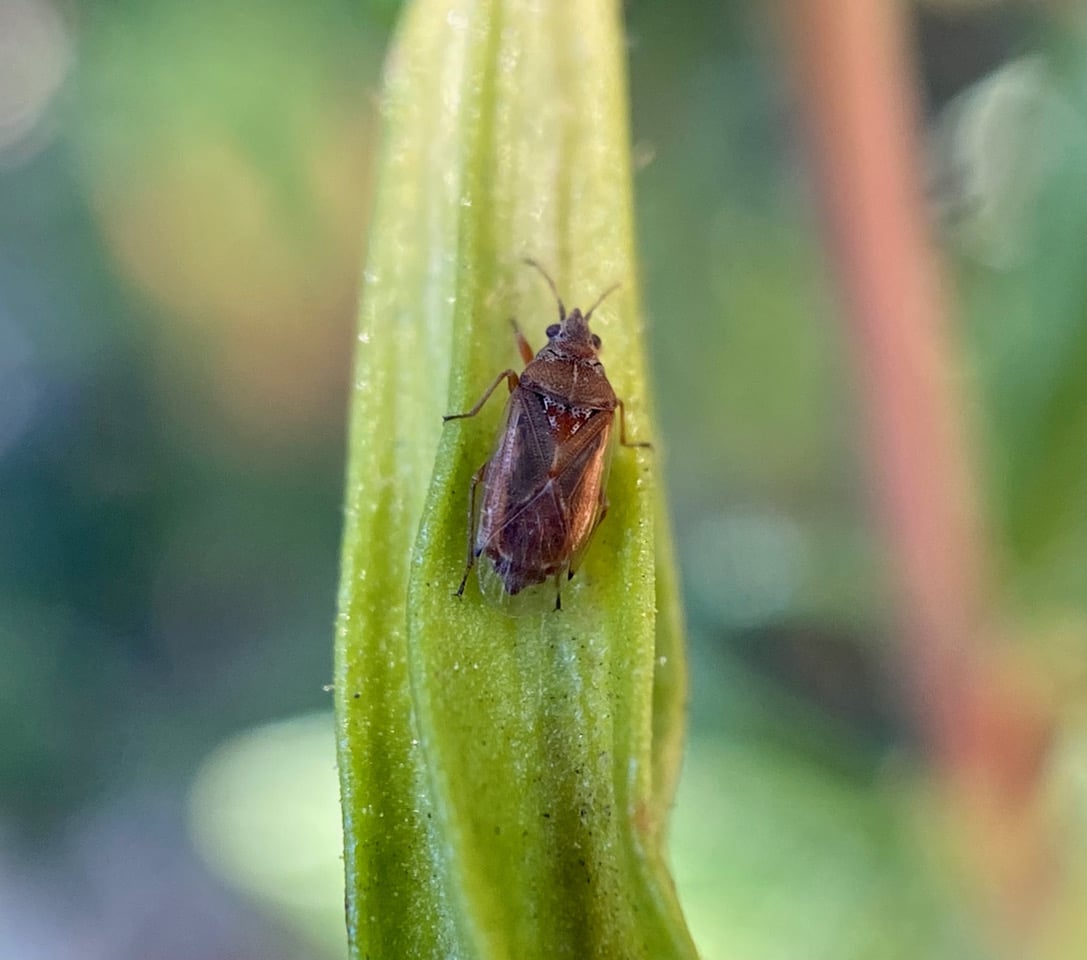
The Lygaeidae are a family in the order Hemiptera (true bugs). Hemiptera means “half-wing”, referring to the unique front pair of wings, which are leathery near their base and membranous towards the tips. Most species hold their wings flat over their backs with the two membranous portions overlapping. This combined with a triangular structure called a scutellum (located between the attachment sites of the two front wings) creates an X-shaped pattern on the back of many species.
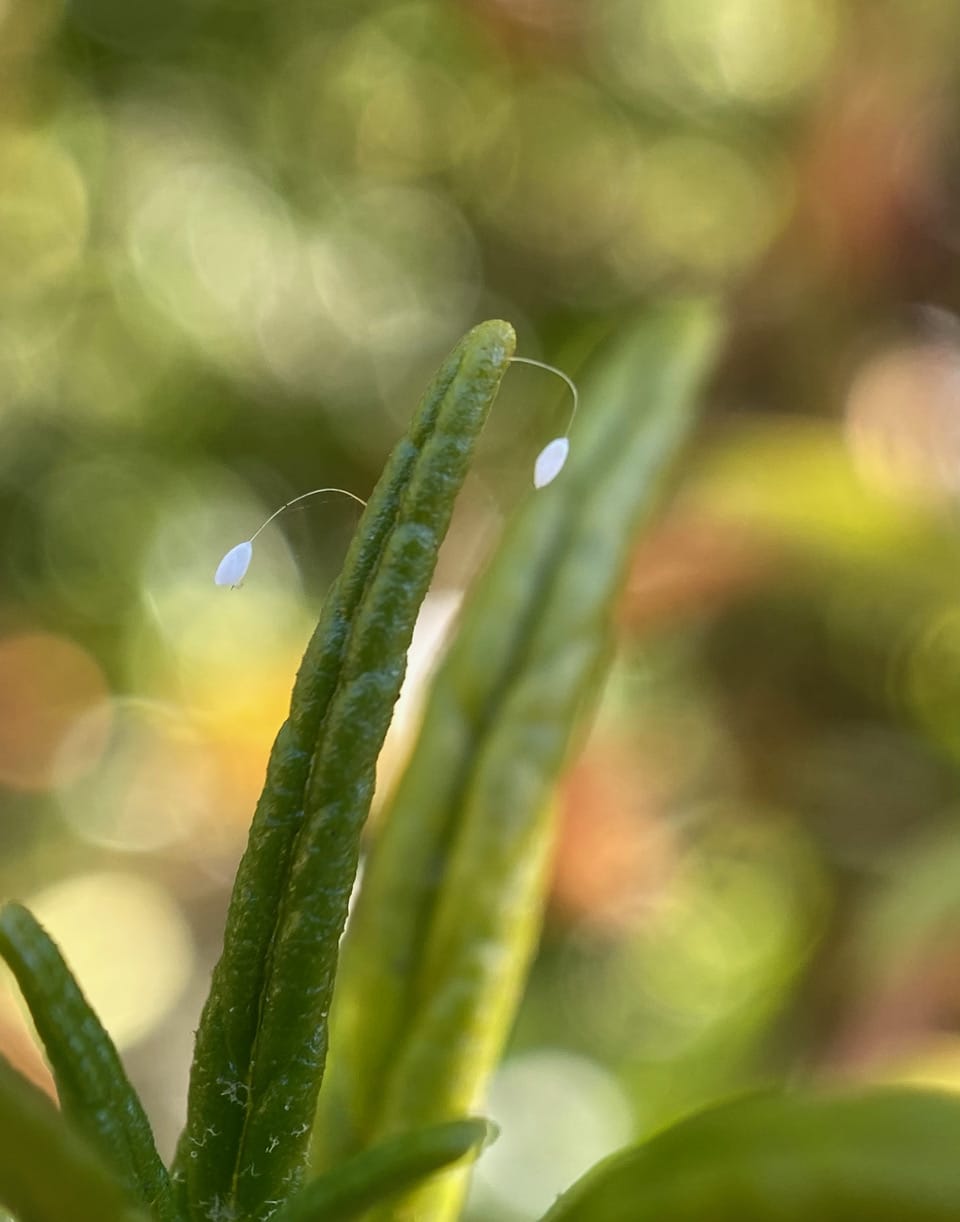
Two Lacewing eggs hang from the same leaf of Sticky Monkeyflower, Diplacus aurantiacus.
Lacewings are insects in the large family Chrysopidae of the order Neuroptera. Adults are crepuscular or nocturnal. They feed on pollen, nectar and honeydew supplemented with mites, aphids and other small arthropods. Eggs are deposited at night, hung on a slender stalk of silk usually on the underside of a leaf. Immediately after hatching, the larvae molt, then descend the egg stalk to feed. They are voracious predators, attacking most insects of suitable size, especially soft-bodied ones (aphids, caterpillars and other insect larvae, insect eggs). Their maxillae are hollow, allowing a digestive secretion to be injected in the prey. Lacewing larvae are commonly known as “aphid lions” or “aphid wolves”. In some countries, Lacewings are reared for sale as biological control agents of insect and mite pests in agriculture and gardens.
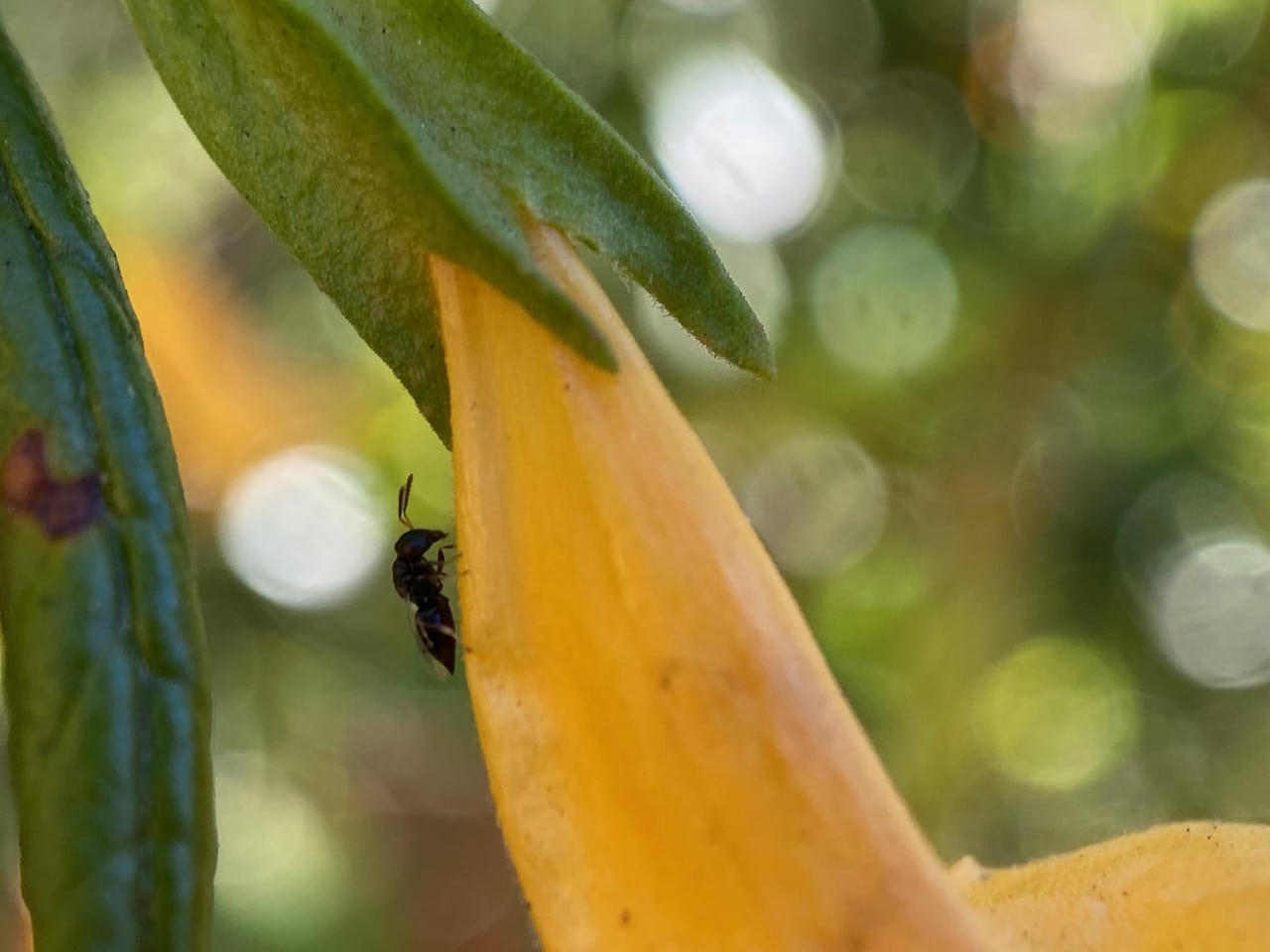
A tiny wasp is crawling up a Sticky Monkeyflower. It is probably a parasitoid wasp in the Superfamily Chalcidoidea.
Most of the species are parasitoids of other insects, attacking the eggs or larval stage of their host, though many other life cycles are known. These hosts are to be found in at least 12 different insect orders including Lepidoptera (butterflies and moths), Diptera (true flies), Coleoptera (beetles), Hemiptera (true bugs), and other Hymenoptera, as well as two orders of Arachnida. When the host is itself a parasitoid, the wasps are referred to as hyperparasitoids. Generally beneficial to humans as a group, chalcidoids help keep various crop pests under control, and many species have been used as biocontrol agents.
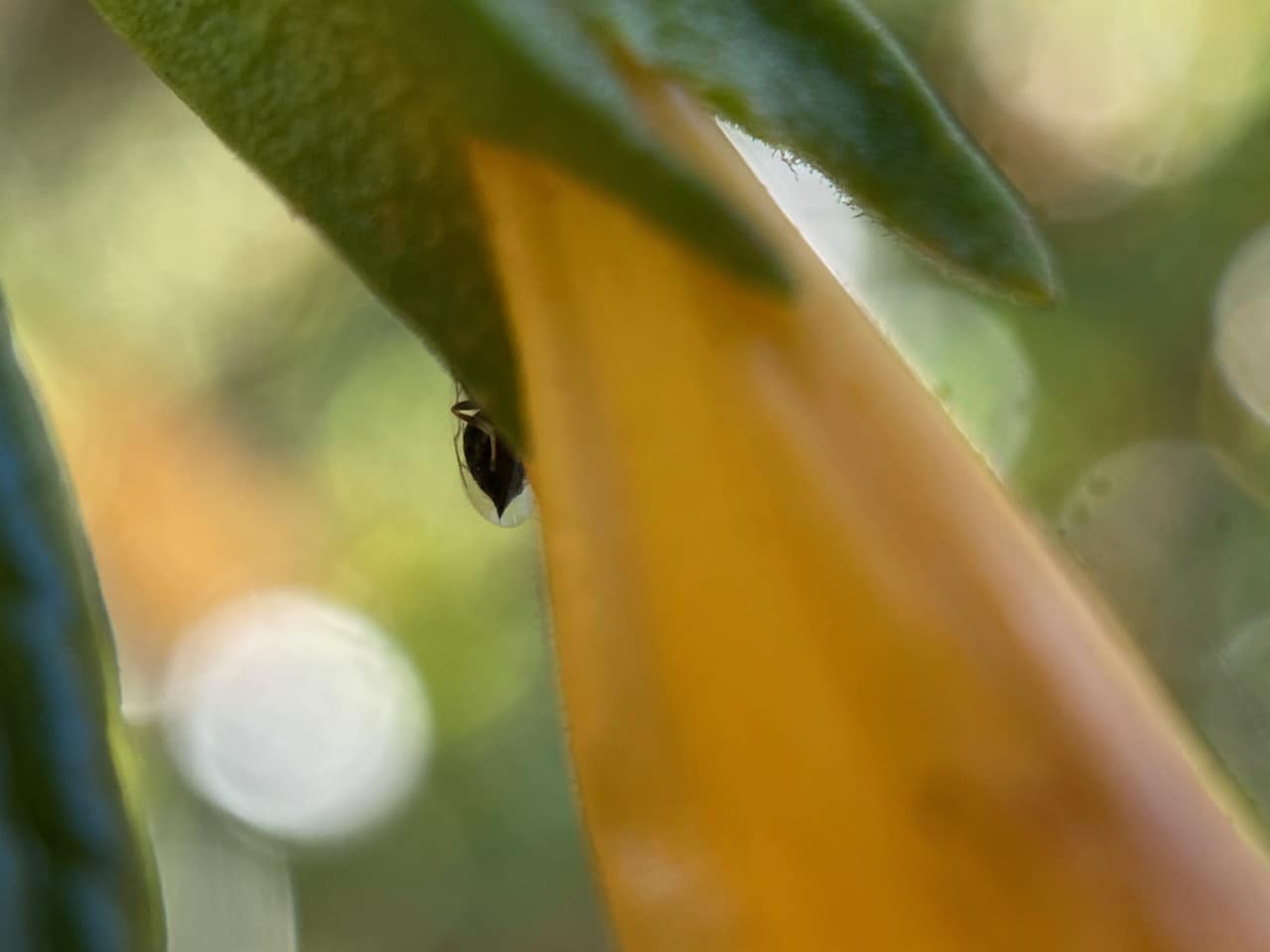
This view shows the business end of the Chalcidoid wasp – the ovipositor used to inject eggs into its host.

As the season progresses, and floral resources dwindle, many insects gravitate to the remaining late bloomers – the Sticky Monkeyflowers,
the Tarweeds, and the Buckwheats. Here two insects are feeding side-by-side on an inflorescence of Nude Buckwheat, Eriogonum nudum.

The insect on the left is a Masked Bee, Hylaeus sp. (family Colletidae); the little gray one on the right is a Soft-winged Flower Beetle (family Melyridae).
Most species of Melyridae are various shades of brown or black, or patterned black/white, and just 2 to 4 mm in length. They are sometimes very abundant in spring when there is an abundance of open flowers, particularly those with an abundance of pollen. In north America, dasytine beetles are hardly represented in the east, but are enormously diverse in the west, especially in California.
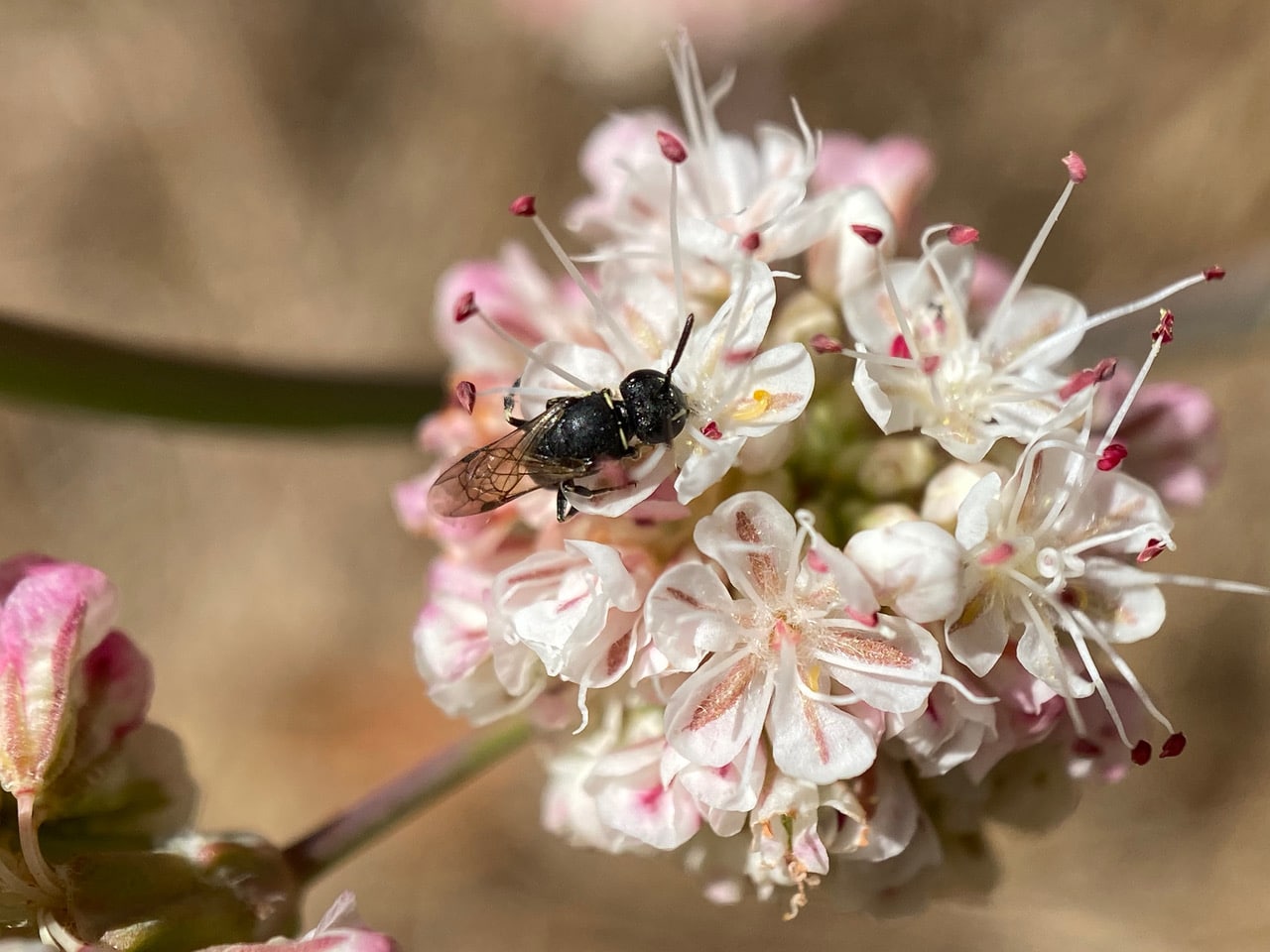
I find the broken yellow line below the neck very useful in identifying the Masked Bee, even if the facial markings are not visible. Hylaeus have short tongues, so they gravitate to the shallow open flowers of the Naked Buckwheat where both nectar and pollen are easily accessible.
Hylaeus (family Colletidae) are shiny, slender, hairless, and superficially wasp-like bees. They are small, 5 to 7 mm long, usually black with bright yellow or white markings on their face and legs. These markings are more pronounced on the males. Hylaeus do not carry pollen and nectar externally, they instead store their food in the crop and regurgitate it upon returning to their nests. They are primarily generalist foragers. Hylaeus are short-tongued, but their small body size enables them to access deep flowers. Hylaeus nest in stems and twigs, lining their brood cells with self-secreted cellophane-like material. They lack strong mandibles and other adaptations for digging, using instead pre-existing cavities made by other insects.

I stop by the Soap Plant, Chlorogalum pomeridianum to check on the aphid colony. All the alates have disappeared, as I have expected. The winged aphids are produced for dispersal purposes when food resources dwindle or deteriorate. Only this small cluster of aphids are left clinging to life on a plant that is going dormant.
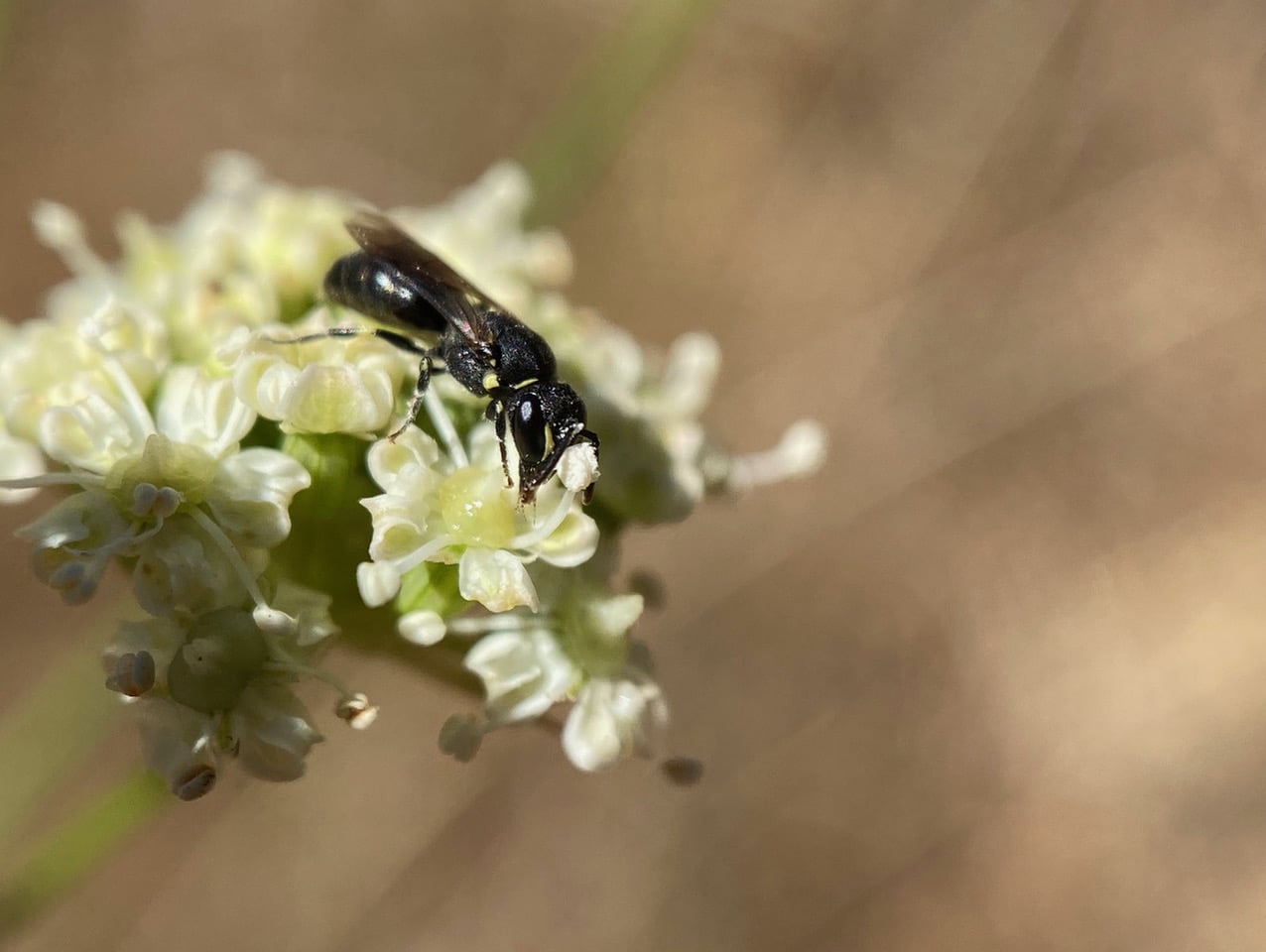
A Masked Bee, Hylaeus sp. (family Colletidae) is using her short tongue to access nectar at the base of a flower of Yampah, Perideridia californica. Like the Buckwheat flowers we saw earlier, the Yampah flowers are just the right size for the little bee, with easily accessible nectar and pollen.
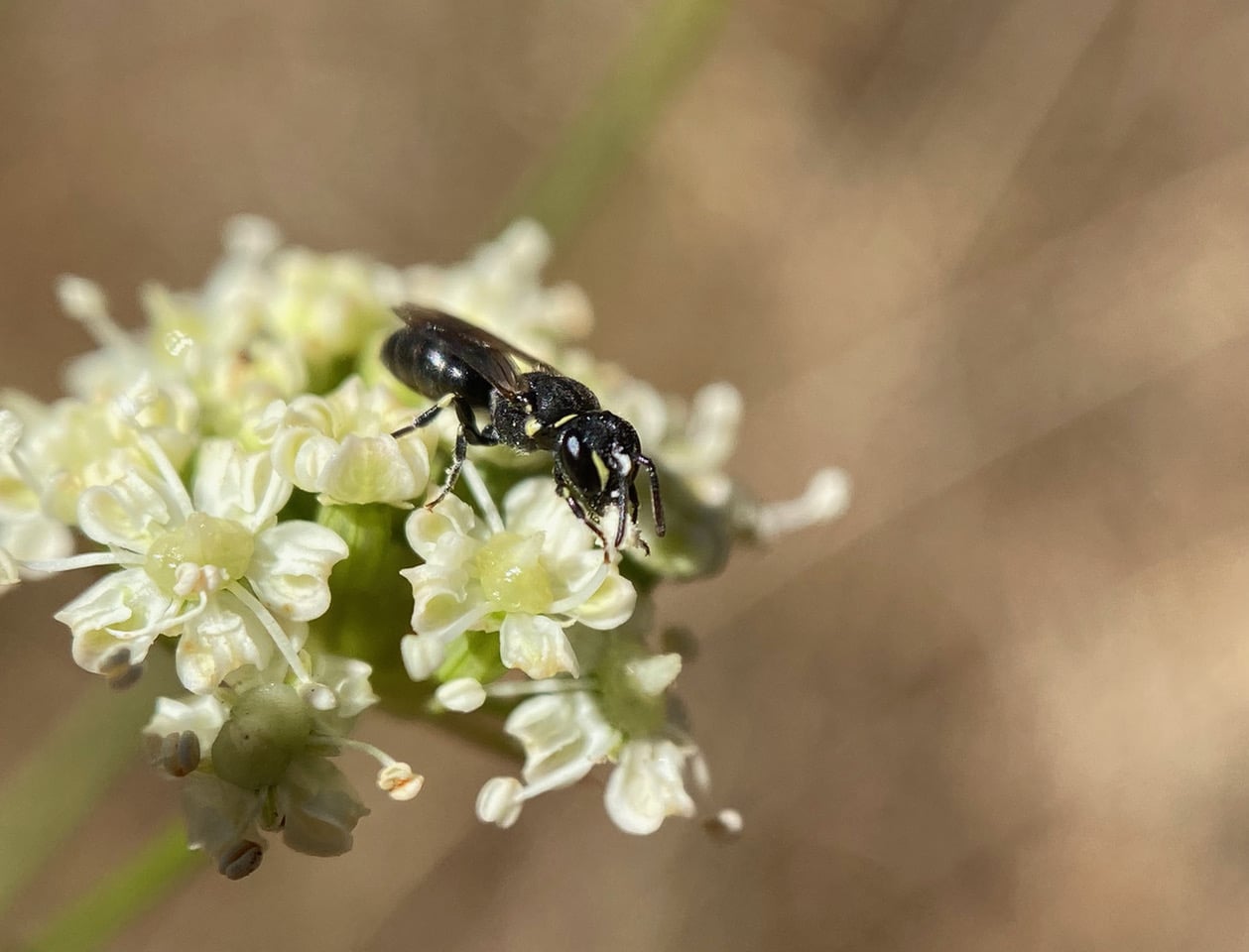
Hylaeus next turns her attention to the anthers to collect pollen. We do not see any of the floral resources she has gathered because she does not carry them externally on her body. The females instead store their food in the crop (part of the gut) and regurgitate it upon returning to their nests. Their young feeds on a semi-liquid diet of nectar and pollen in their nest cells lined with a waterproof cellophane-like material by the mothers.

I am delighted to find the Anise Swallowtail caterpillar on the same Yampah umbel. It is resting head-down on a stalk of a floral umbel that it has devoured. Most of the flower buds on the larger primary umbel are still intact – would they be sufficient food to nourish the caterpillar to adulthood? Growing up on Yampah, the caterpillar has no choice but to feed on flowers. There are few leaves on Yampah, and they are mostly withered by now. Most Anise Swallowtail females now lay eggs on the ubiquitous non-native Fennel, with an abundance of leaves to feed the caterpillars.

The Woodlouse Fly, Stevenia deceptoria (family Rhinophoridae) is a frequent visitor to the Yampah flowers.
These small, slender, black, bristly flies are somewhat related to the Tachinidae. The larvae are mostly parasitoids of woodlice (pill bugs), beetles, spiders and other arthropods, and occasionally snails.
Native to Europe, Stevenia deceptoria is now widespread in the US. The flies are parasitoids of terrestrial woodlice (roly polies) of the order Isopoda (Oniscoidea).


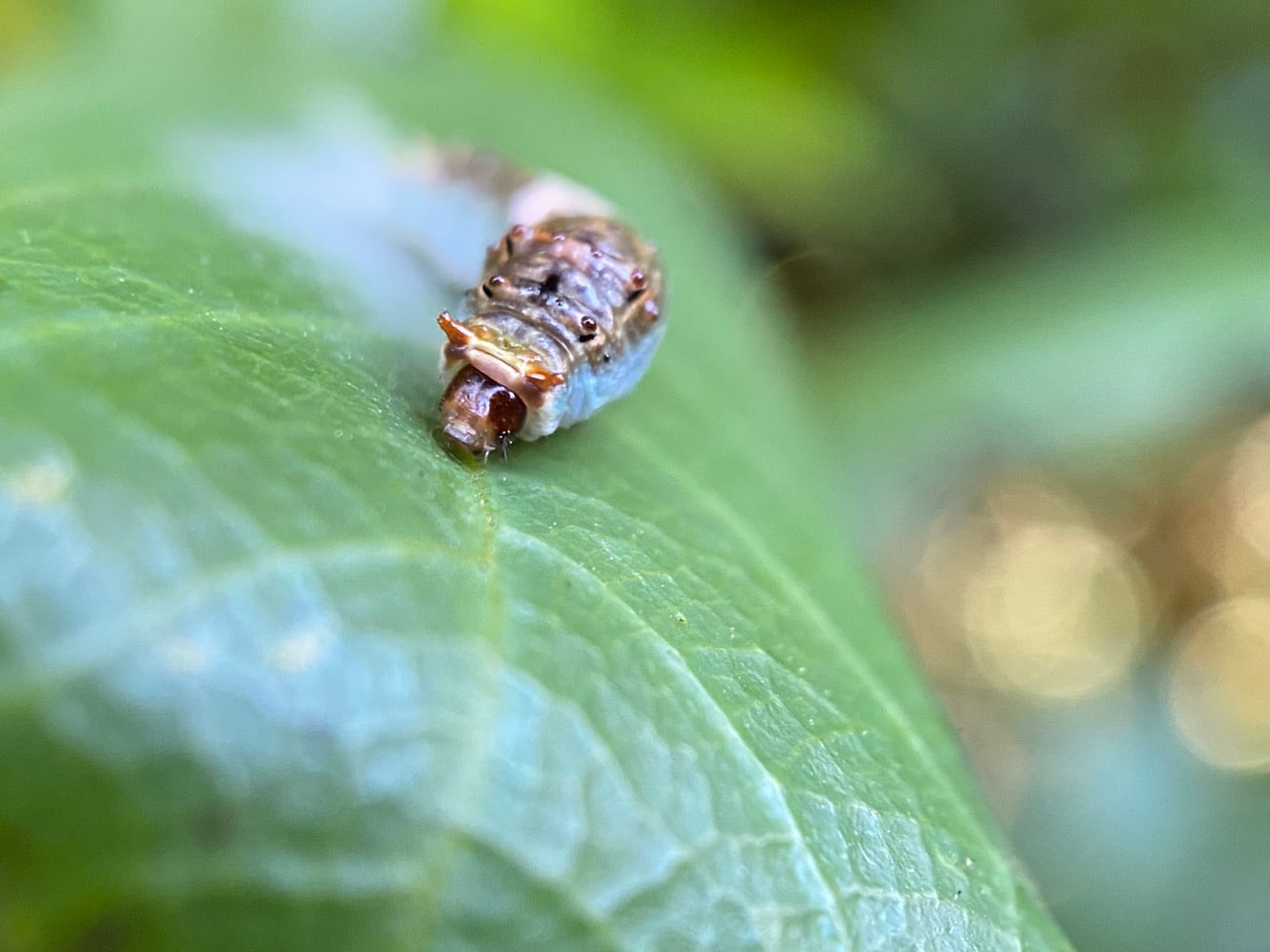
I am delighted to find the two young, bird poop-mimicking Pale Swallowtail caterpillars still on their respective Coffeeberry leaves.
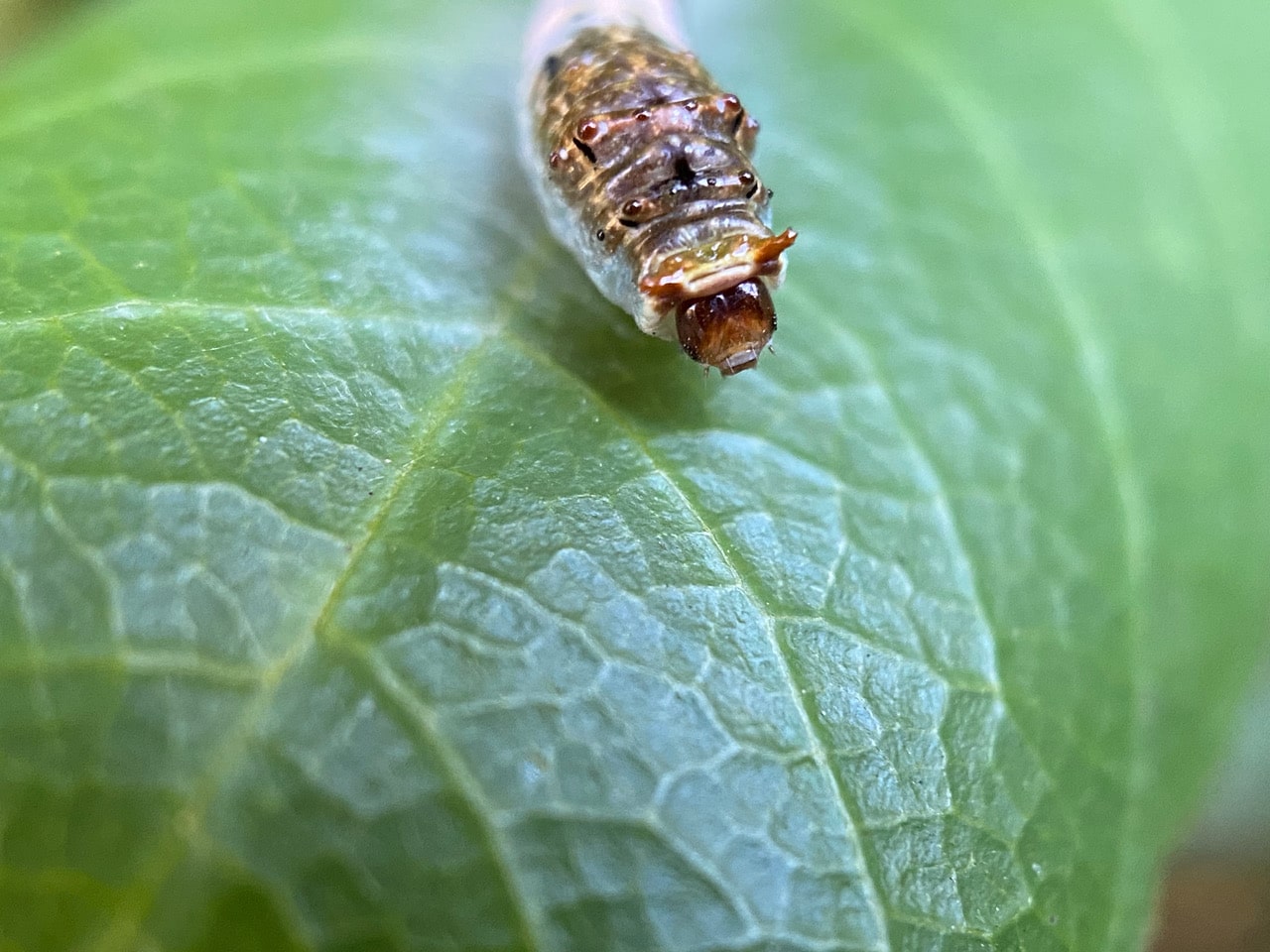
This one is active, moving around slowly on its leaf, its head extruded. Wow, are those large amber-colored structures its eyes?
According Alan the butterfly expert, Swallowtail caterpillars seldom move, especially when they are young. They spin a silk mat on the leaf they are on and “live” there for days or weeks before moving on to a new leaf. To avoid eating their own silk mat, they sometimes feed on adjacent leaves rather than the leaf they are living on, and crawl back once they are done.
The eyes of caterpillars are extremely small and are difficult to see with the naked eye. What we are seeing here are scoli, false eyes. See the shiny little bumps further behind on the thorax? They are scoli too. Scoli are extremely variable in morphology depending on the species. Generally they possess hairs, but in pale swallowtails they are lost starting in the second instar, leaving just a small raised bump. They are found in most caterpillar species and there’s actually a set of them on every segment. They are most prominent on the thorax and rear end of the Pale Swallowtail.

It’s hard to believe that those are not eyes!

See the orange horn-like structures behind the head with a slit in between? Those are parts of the osmeterium, a two-pronged defensive organ which stays hidden under the caterpillar’s skin until the caterpillar feels threatened. When the caterpillar is squeezed, poked, or prodded, out pops the osmeterium! It emerges from the caterpillar’s thorax, just behind the head, and may mimic a forked tongue of a snake. This along with the large false eyes may startle birds and small reptiles. All swallowtail species have an osmeterium. When the osmeterium is everted, it also emits a foul, disagreeable odor which serves to repel ants, small spiders and mantids.
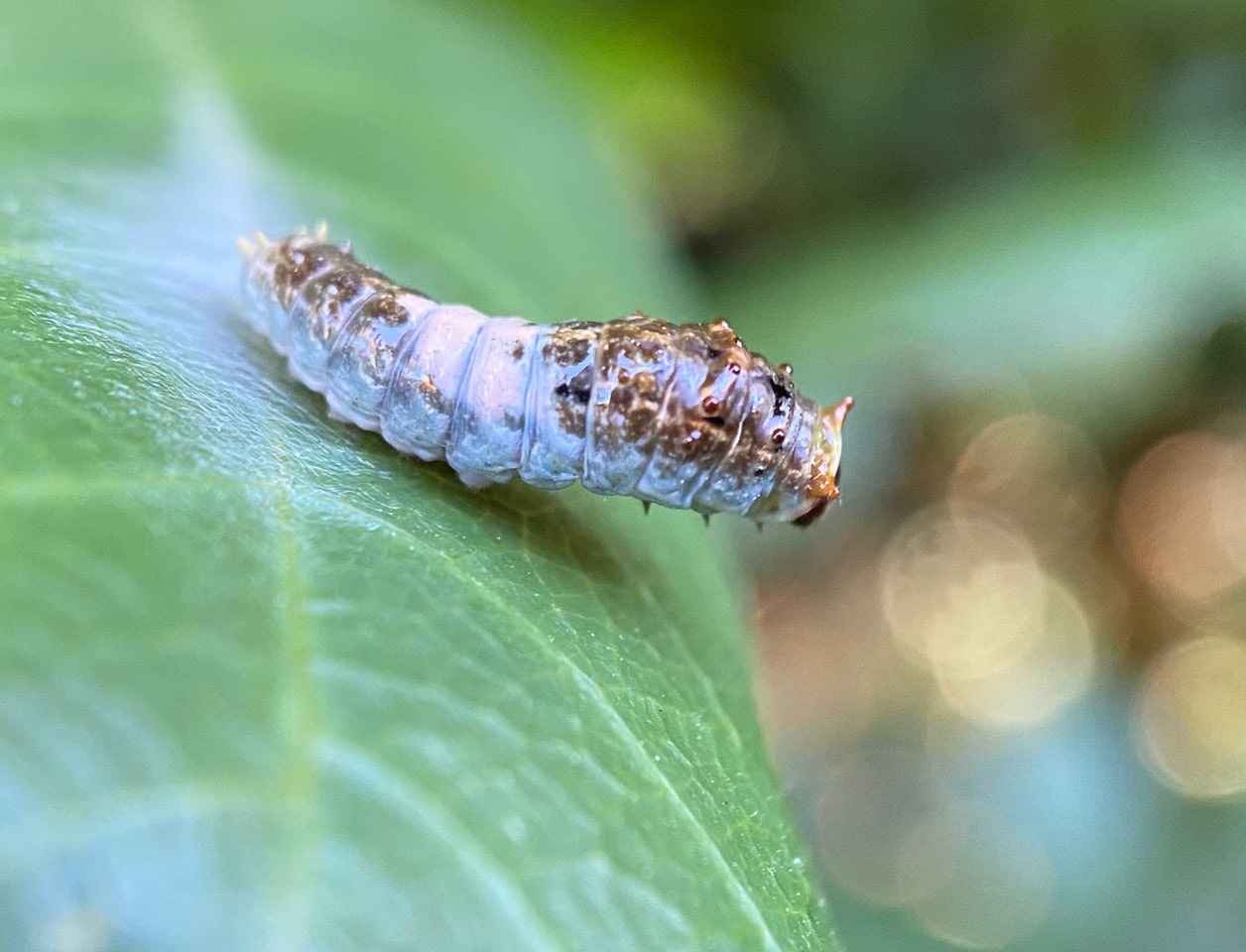
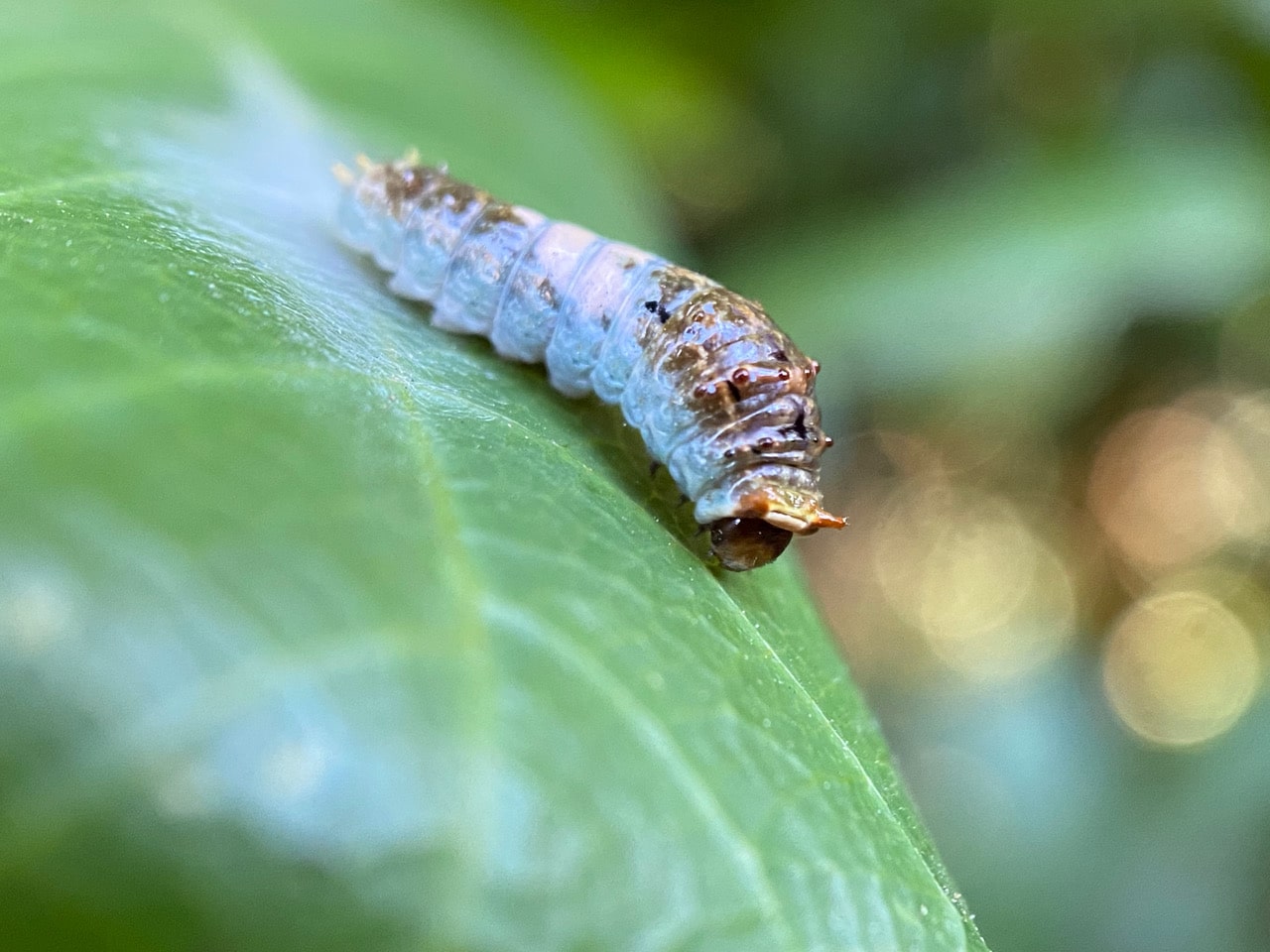
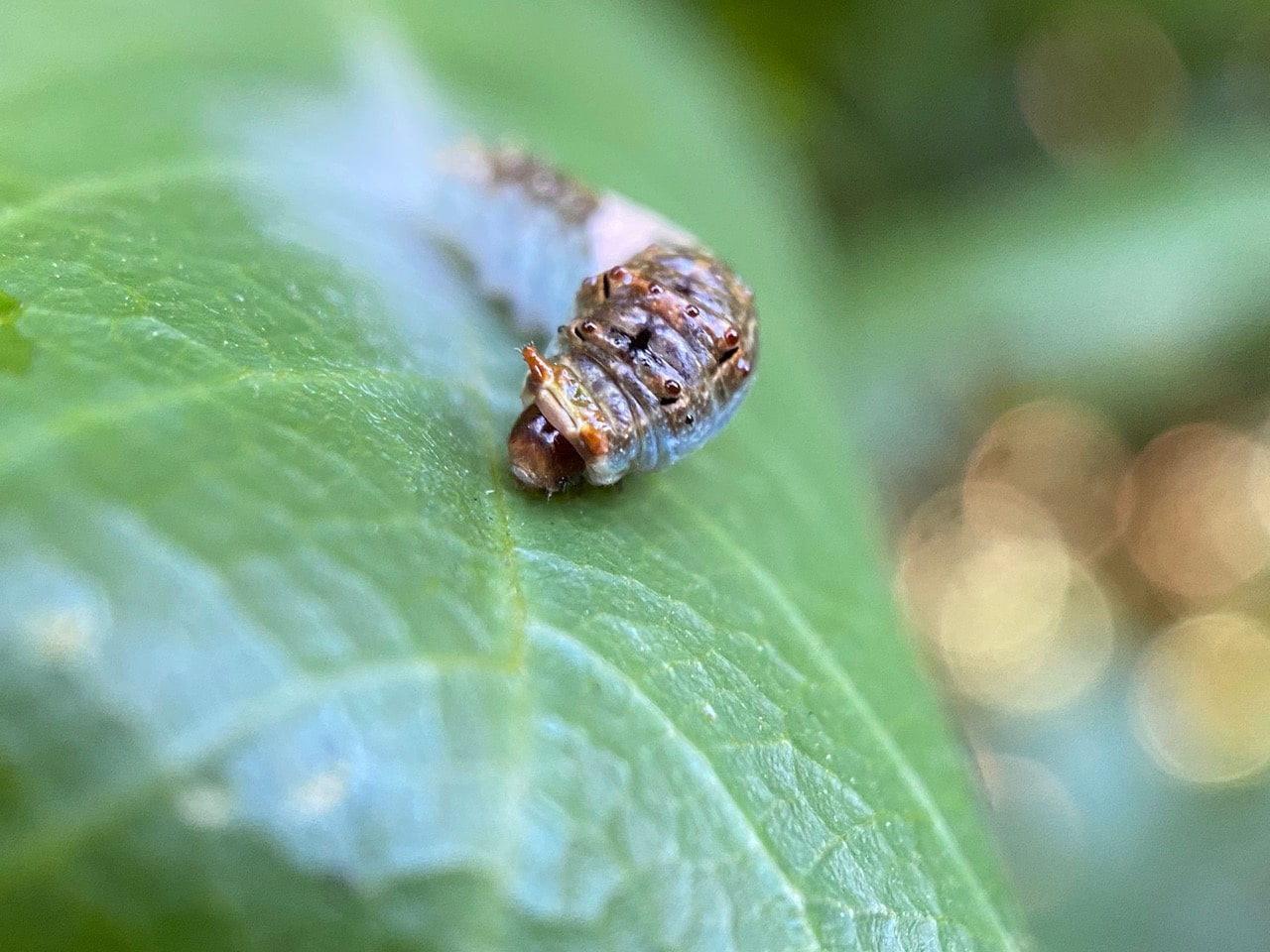

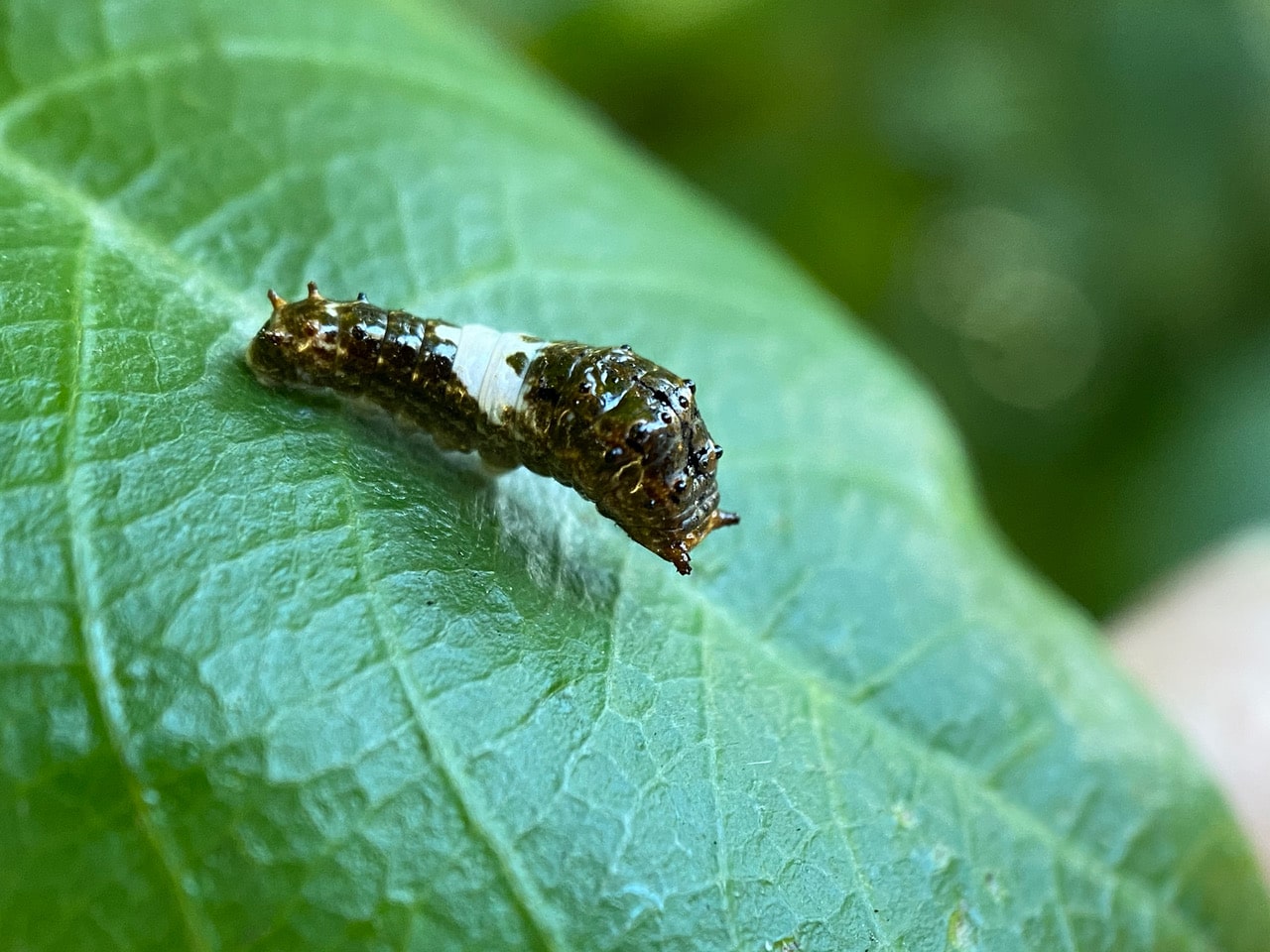
This other Pale Swallowtail caterpillar is stationary on its own Coffeeberry leaf.
The caterpillars of the Pale Swallowtail are almost identical to those of the Western Tiger Swallowtail. The two species can be told apart based on the host plant. Coffeeberry (and other Rhamnaceae, such as Ceanothus) are only used by Pale Swallowtail.