

Pollinator Post 7/28/25 (2)

All the insect activity in the native garden at Crab Cove is concentrated around the buckwheats right now. In the far end of the garden by the Crown Memorial Beach parking lot, I stand by the large patches of the profusely blooming Red-flowered Buckwheat, Eriogonum grande ssp. rubescens, overwhelmed by the number of insects zipping around. Instead of the common Sand Wasps and Honey Bees, I decide to focus on the more unusual species. Look, there’s a Prong-backed Fly Hunter Wasp on that inflorescence.
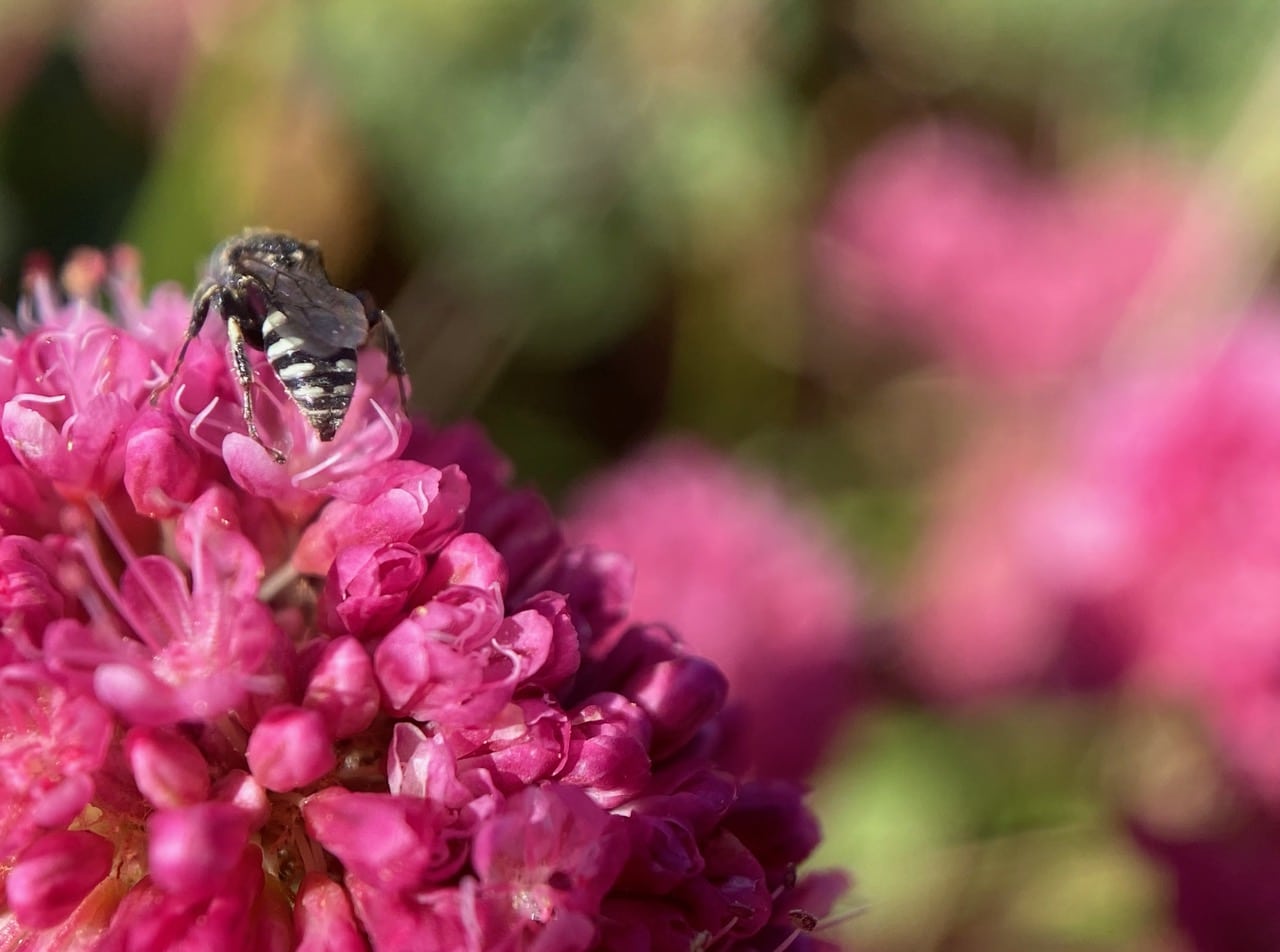
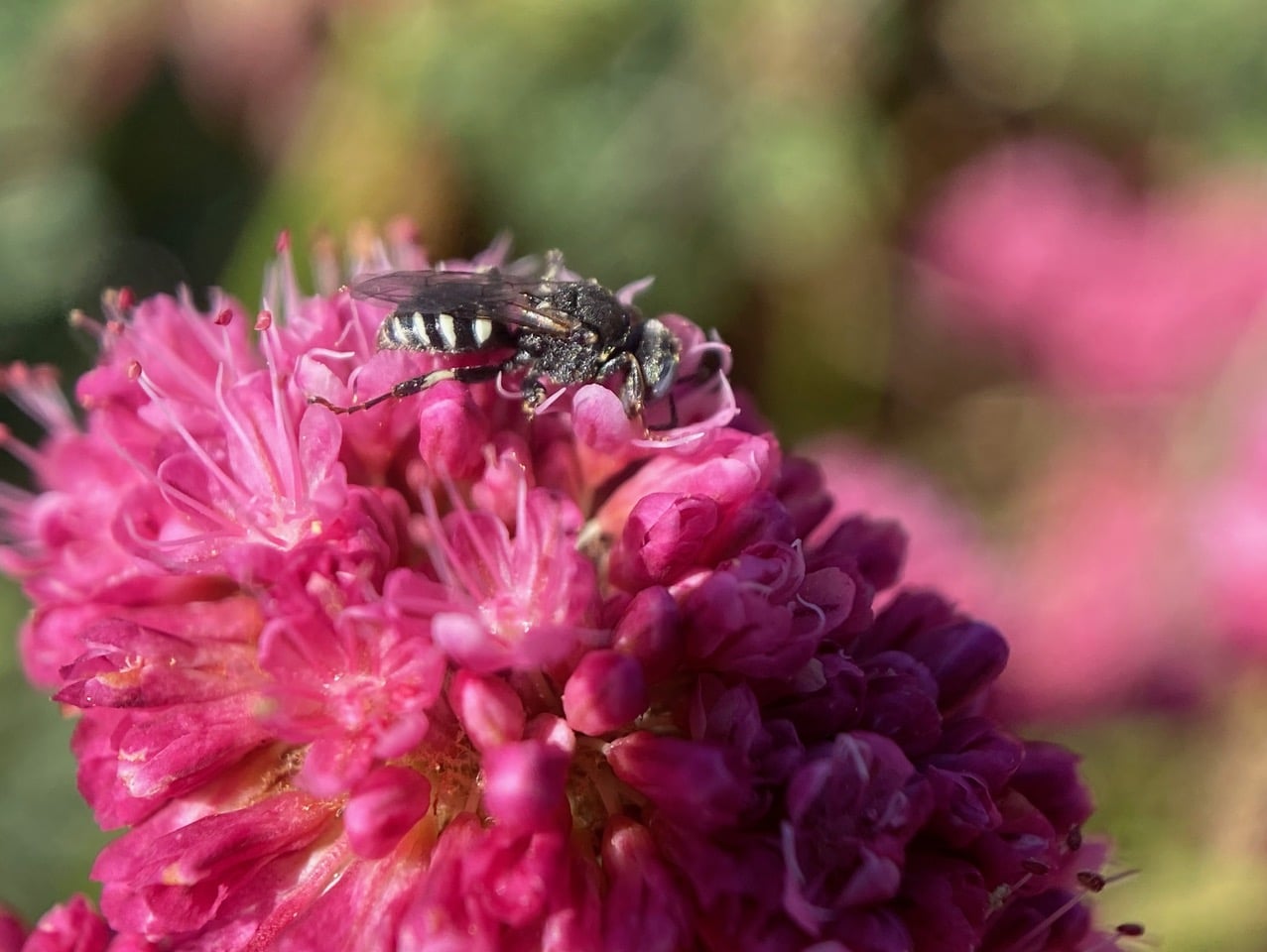



The Prong-backed Fly Hunter Wasp, Oxybelus uniglumis (family Crabronidae) occurs in northeastern North America. Its range also includes California and other western states. It is a small wasp, measuring 5-9 mm. The wasp nests in well-drained, sandy soil in a variety of habitats. A fully provisioned nest has one cell or at most a few cells. The female hunts various kinds of flies on the wing, captures one, then stings it, injecting venom to paralyze it. Rather than transporting the prey clutched beneath her like other small predatory wasps, she instead leaves her sting impaled in the fly while transporting it back to the nest. She lays a single egg on the first fly placed in a nest cell, then adds additional two to nine more flies before backfilling the nest. There is one generation per year, flying between May to early October.
Why the common name of “prong-backed”? The propodeum (the back of the pronotum next to the ‘waist’) has a large spine or prong. In addition, the scutellum has two transparent flanges. If you squint hard enough, you might be able to see these features between the wings in this photo.
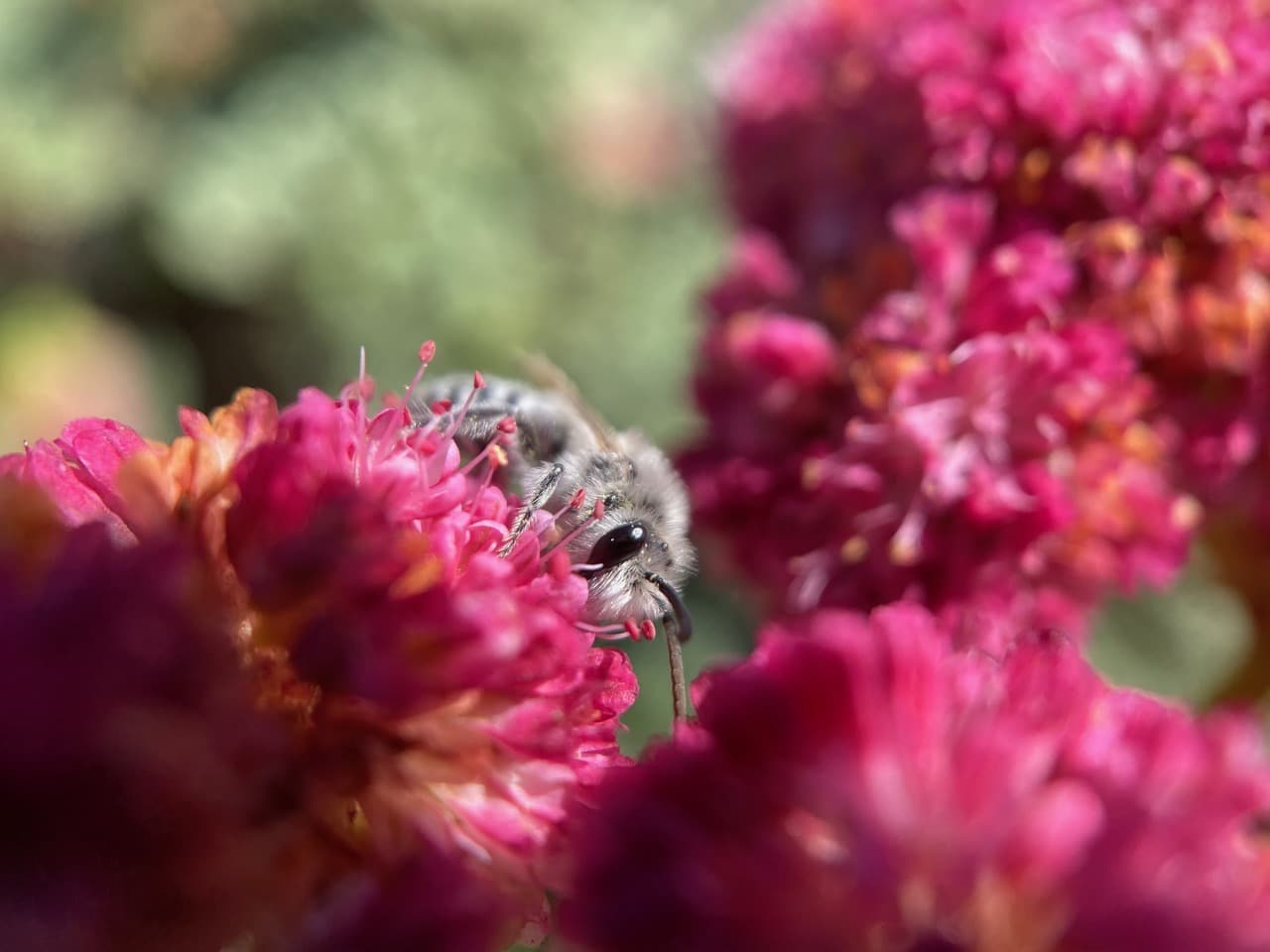
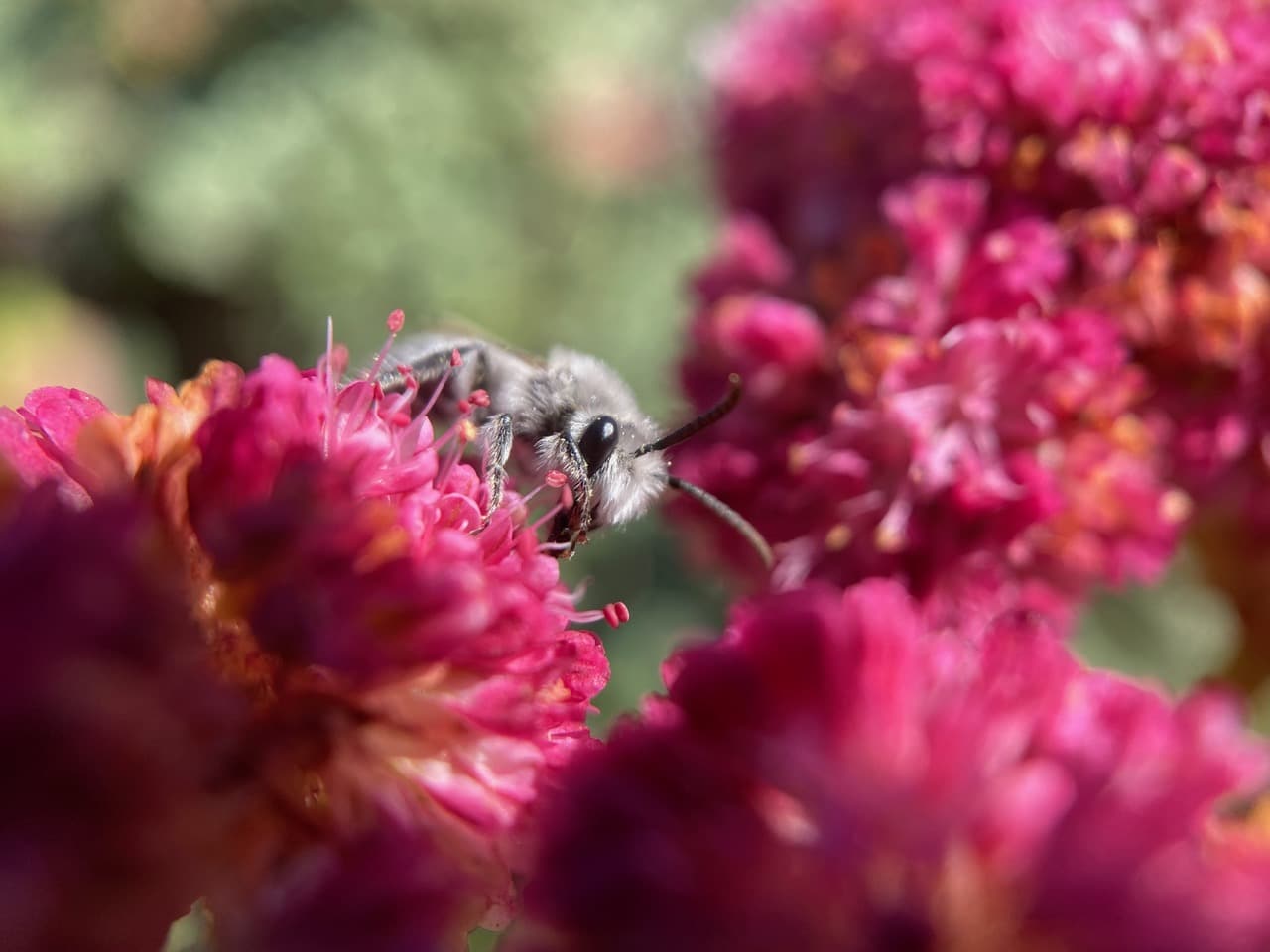
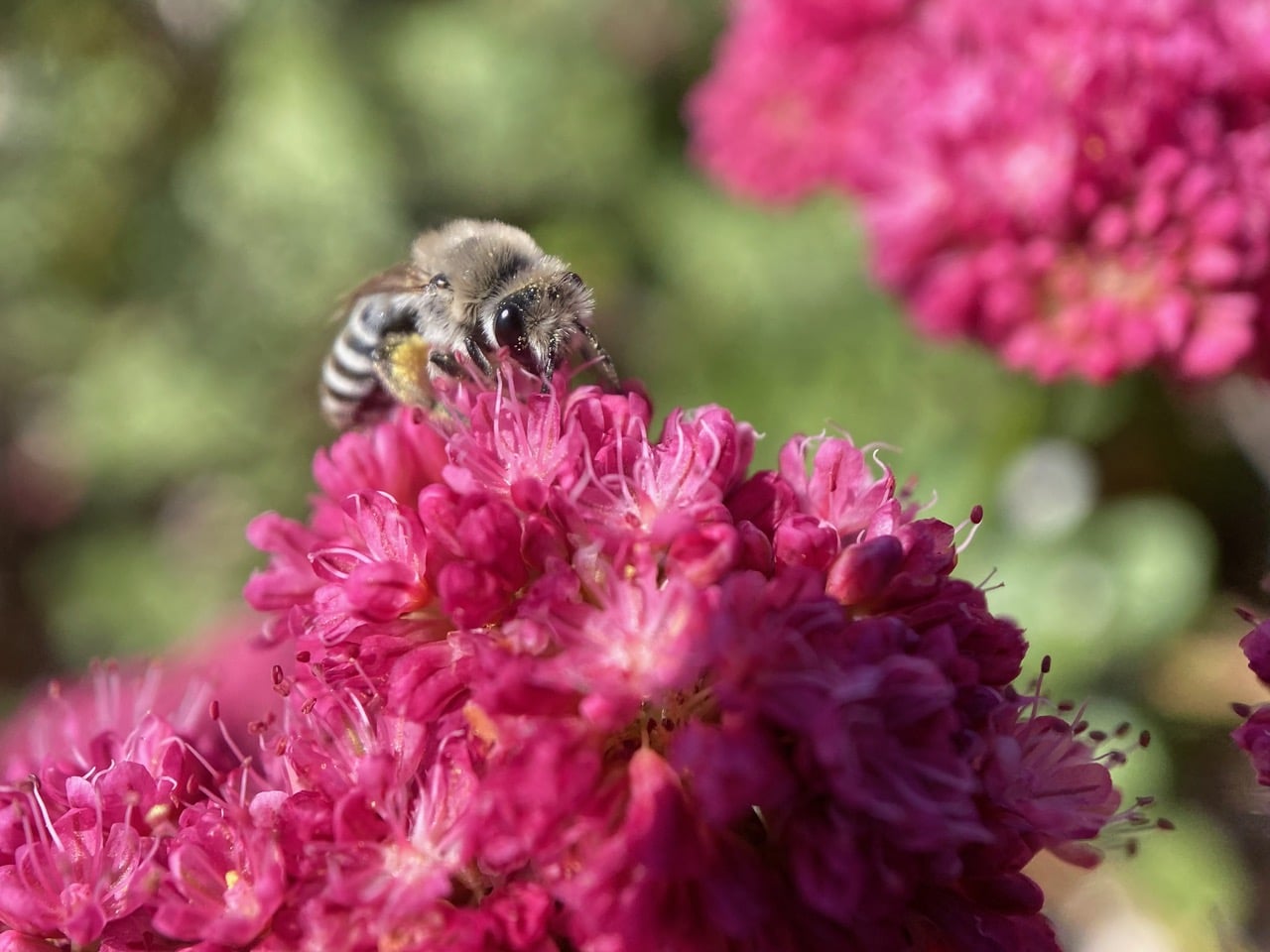
What an adorable fuzzy face! I am looking at a Cellophane Bee, Colletes sp. (family Colletidae).
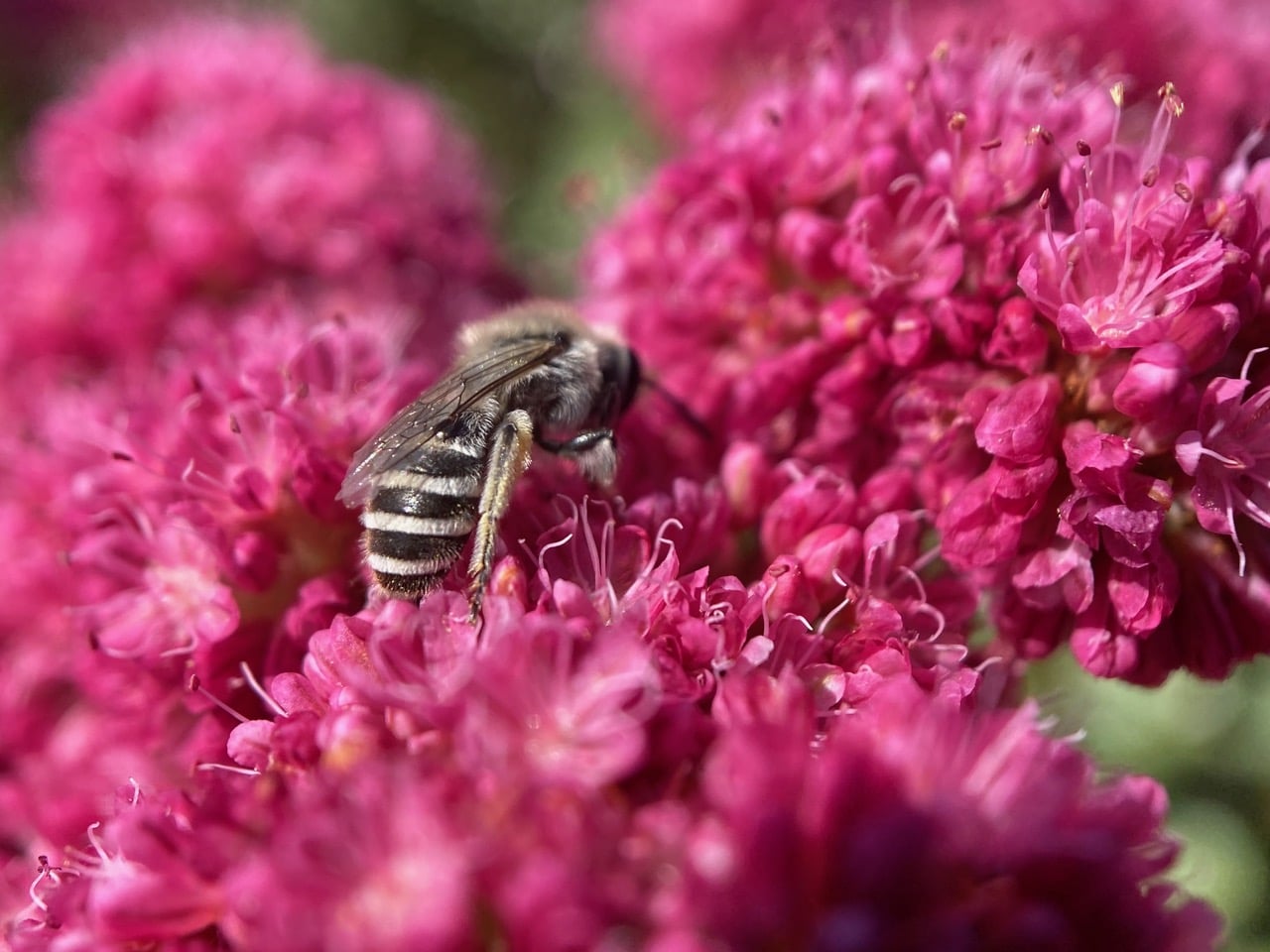
The bee family Colletidae includes generalists and specialists, and they are likely important pollinators of many wildflowers. All Colletidae in North America are solitary ground nesters, but some species nest in large aggregations. There are two major genera of Colletidae in North America: the Masked Bees (genus Hylaeus) and Cellophane Bees (genus Colletes). The most obvious shared characteristics of Colletidae is also the hardest to see: their short tongue. Colletes are moderately hairy, slender bees, ranging in size from 7 to 16 mm. Distinct features include a hairy head and thorax, pale bands of hair on the abdomen, and a heart-shaped head. The eyes of Colletes are angled (rather than being parallel), making the face slightly heart-shaped.
This female Cellophane Bee, Colletes sp. (family Colletidae) has some pollen in the scopae on her hind legs.
Note the pale bands of hairs on the abdomen of the Cellophane Bee, Colletes sp. (family Colletidae).
Female Cellophane Bees are often larger and have a more prominent, pointed abdomen.