

Pollinator Post 7/28/23 (3)
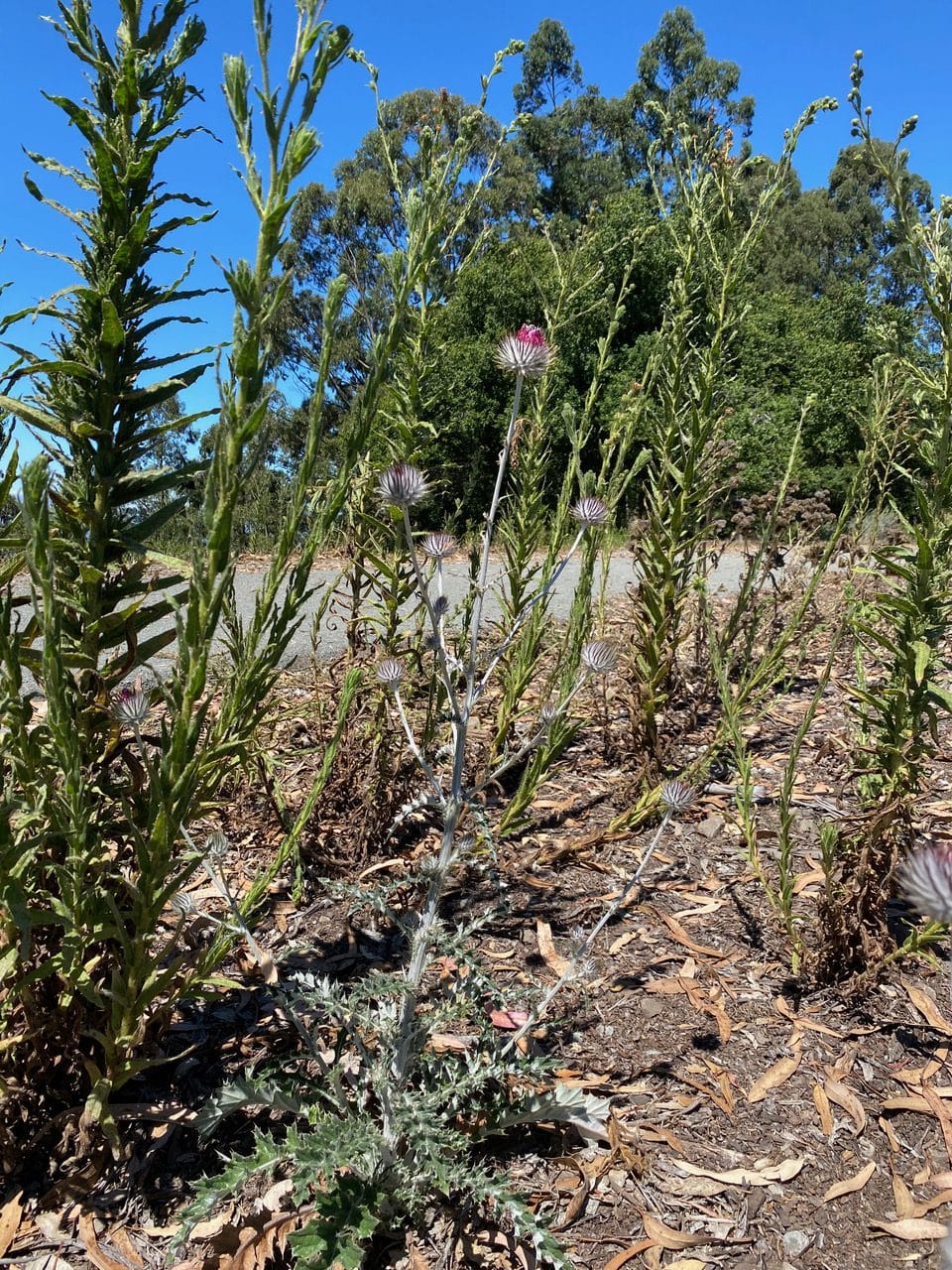
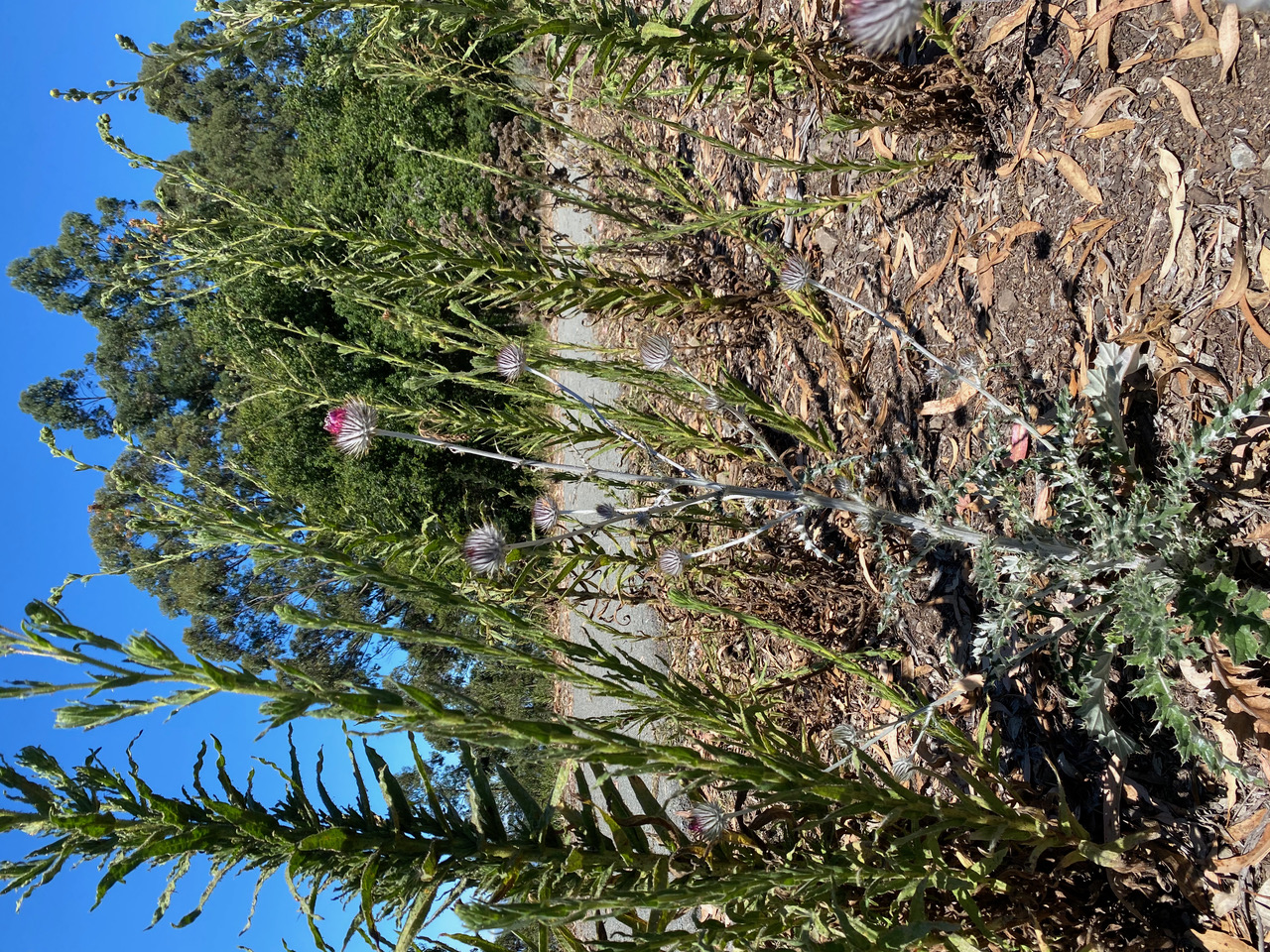
I am relieved to find that the young Cobweb Thistles, Cirsium occidentale on the ridge have been spared the clear-cutting, as well as the Coast Tarweeds that surround it. I stop by this particular plant to check on the Thistle Aphids that I found on it a couple of weeks ago.
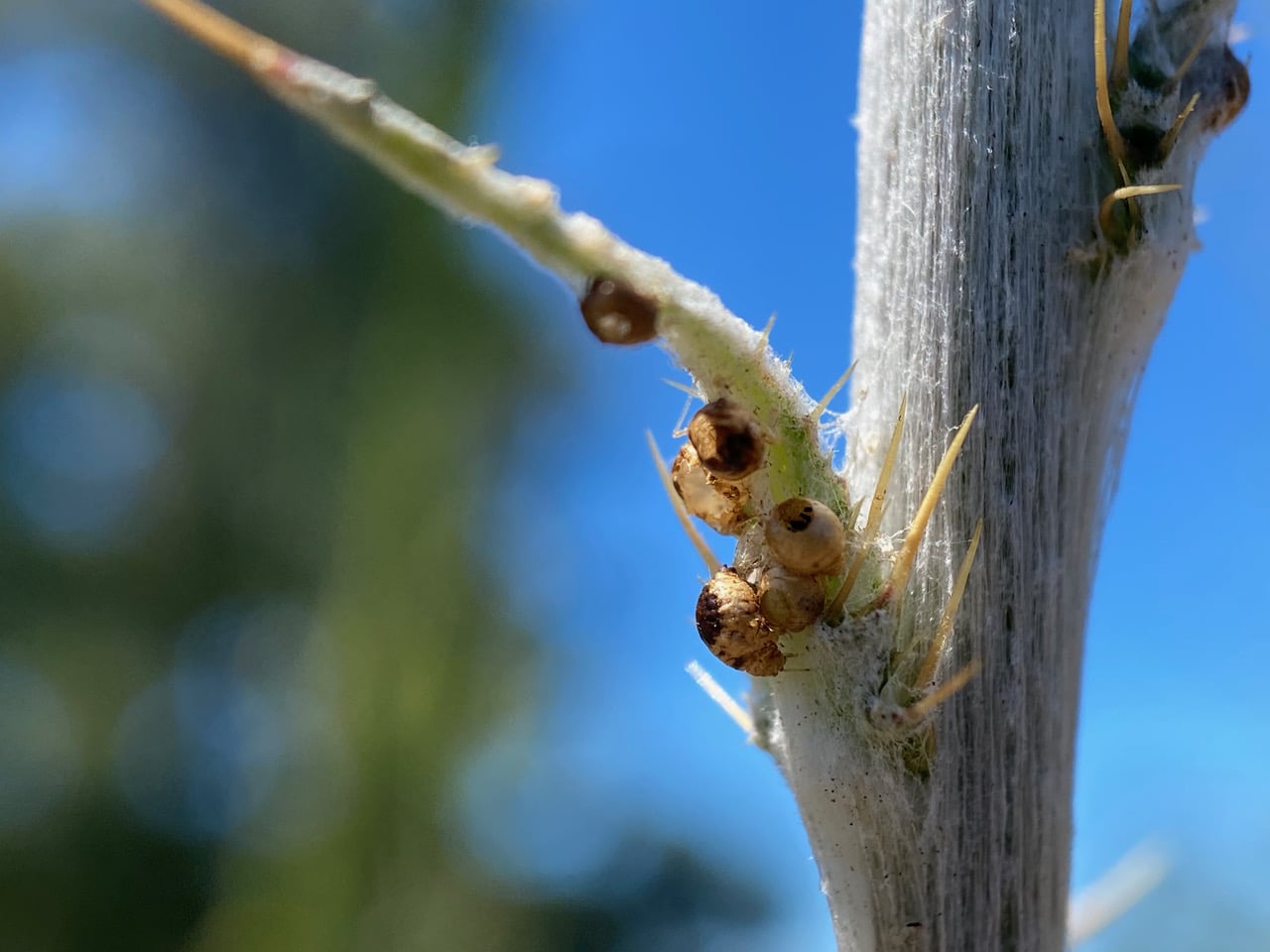
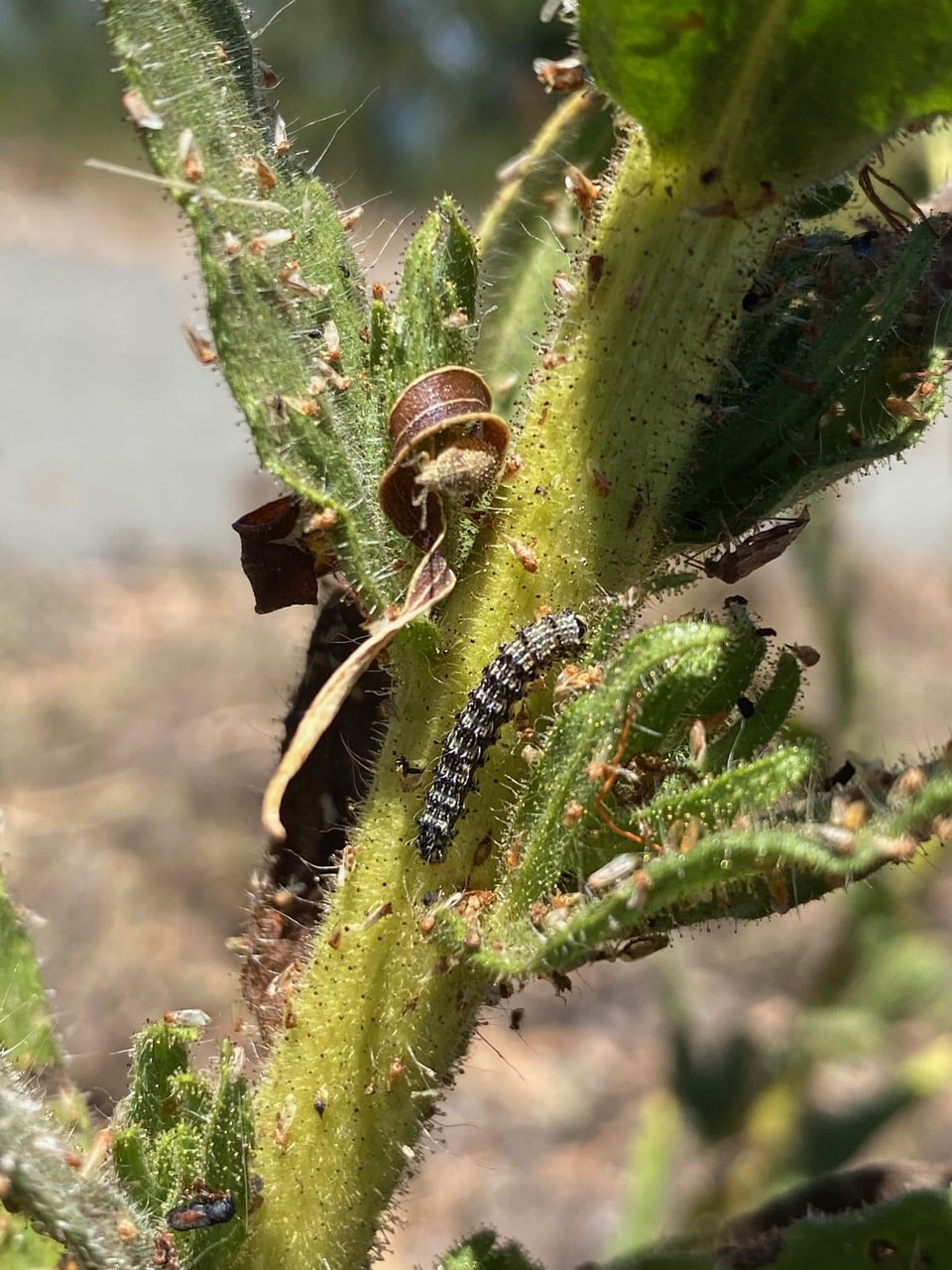
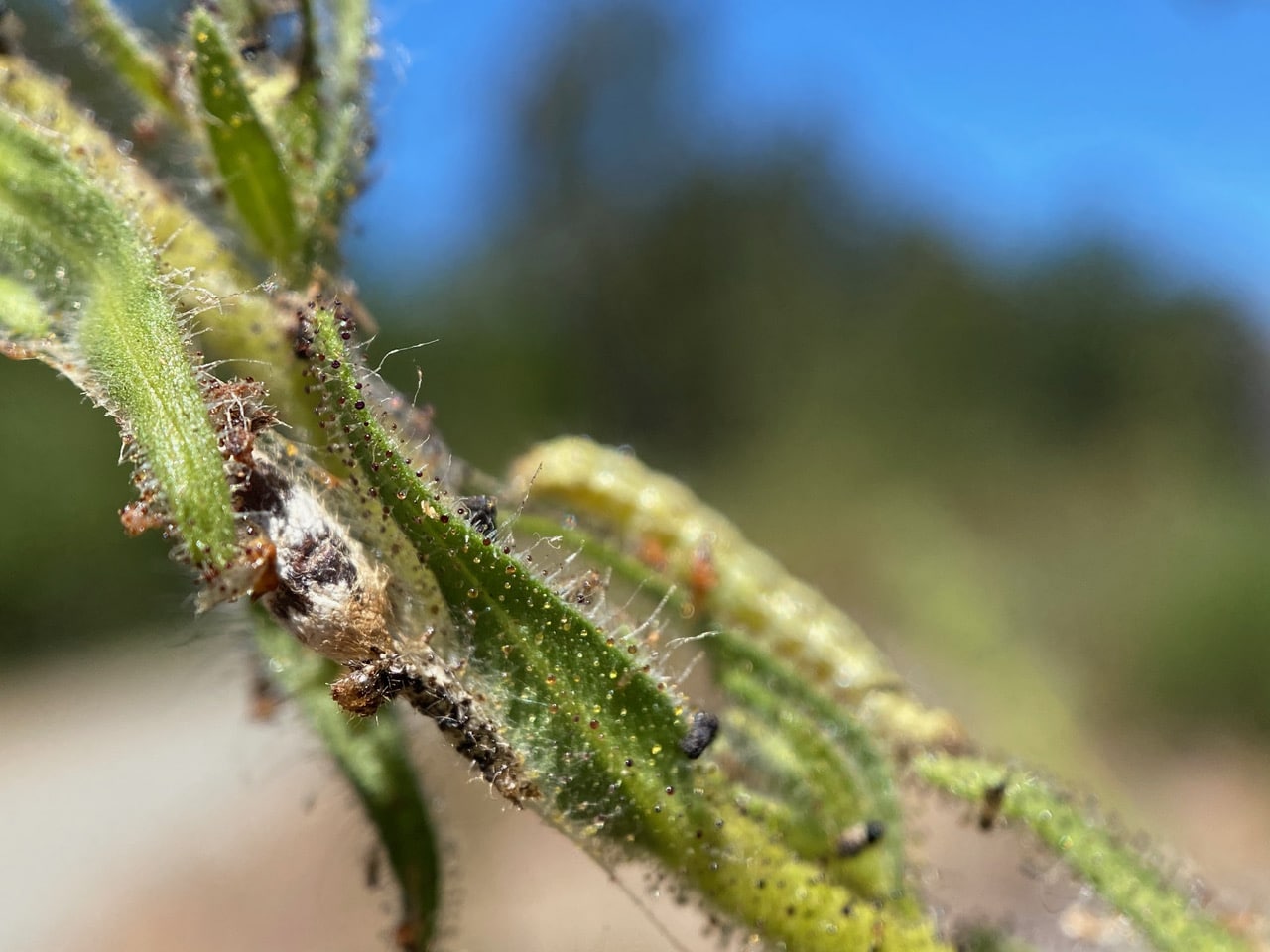 On the sticky foliage of this Coast Tarweed, Madia sativa, do you see the well-hidden black-and-white pupa of the parasitoid wasp, Hyposoter sp. (family Ichneumonidae) and the attached dead caterpillar? In the blurry background, a live green caterpillar can be seen on the next stem.





Other than a few aphid mummies, there is no live aphid activity. The parasitoid wasps have apparently cleared the plant of the infestation!
Aphids are often attacked by a tiny parasitoid wasp, Aphidius sp. (family Broconidae). The female wasp lays an egg in the aphid. When the egg hatches, the wasp larva feeds on the inside of the aphid. As the larva matures, the host dies and becomes slightly enlarged or mummified, often turning browner yellow. Complete metamorphosis occurs within the host. The adult parasite chews its way out of the mummy, leaving a round hole. The Aphidius wasps are often used for biological pest control of aphids on agricultural crops and home gardens.
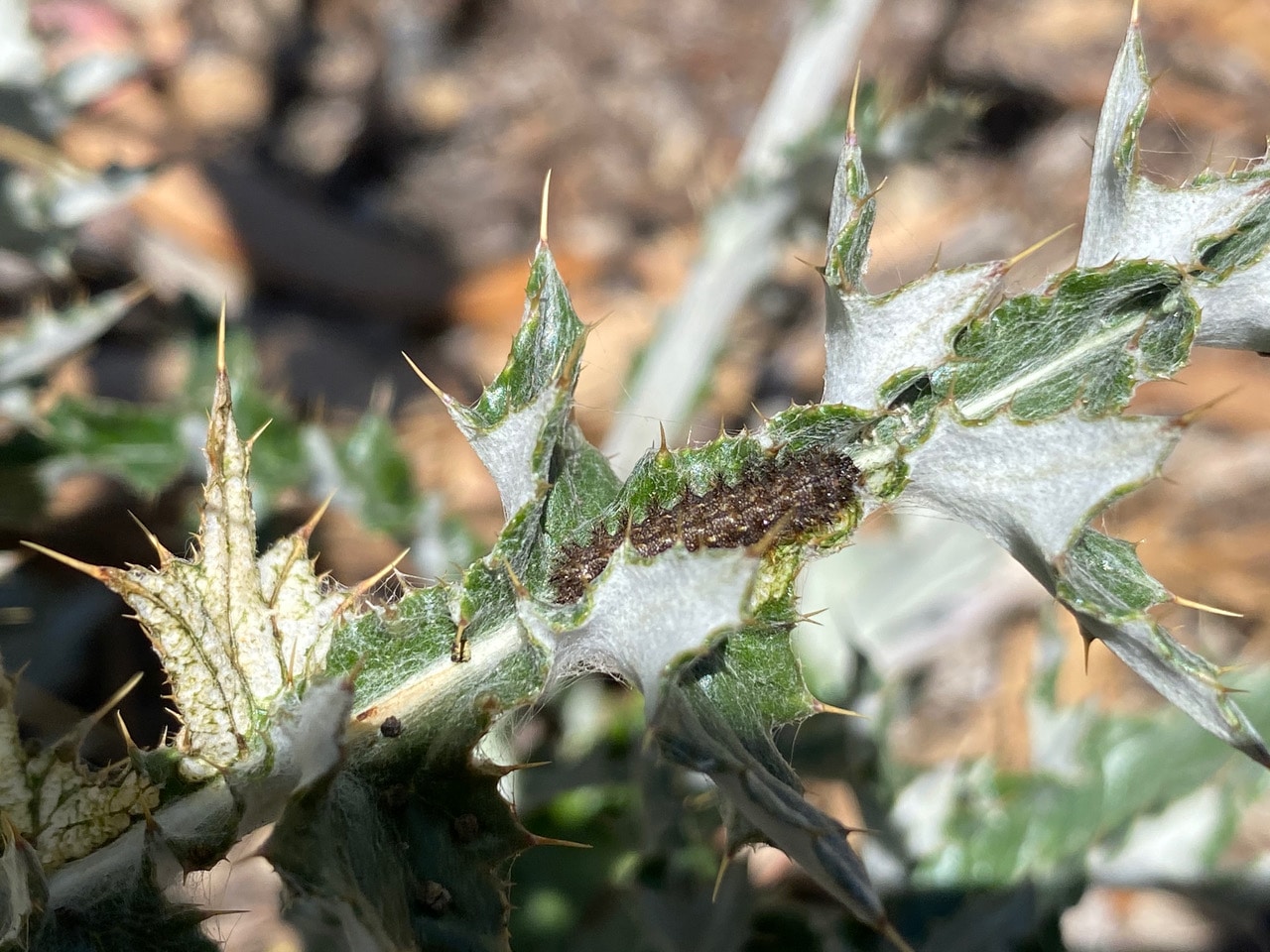
On a lower leaf of the young Cobweb Thistle, a caterpillar of the Painted Lady butterfly is resting in the open, without a tent shelter! Most caterpillars of the species weave a silken tent, sometimes binding the sides of the leaf together, feeding within the safety of the tent.
The Painted Lady, Vanessa cardui (family Nymphalidae) is the most widespread of all butterflies. They are found on every continent except Antarctica and Australia. The butterfly also goes by the name thistle butterfly; its scientific name Vanessa cardui means “butterfly of thistle”. Although more than 100 host plants have been recorded for the species, the caterpillars’ favorites include thistles (Asteraceae), hollyhock and mallow (Malvaceae), and various legumes (Fabaceae).
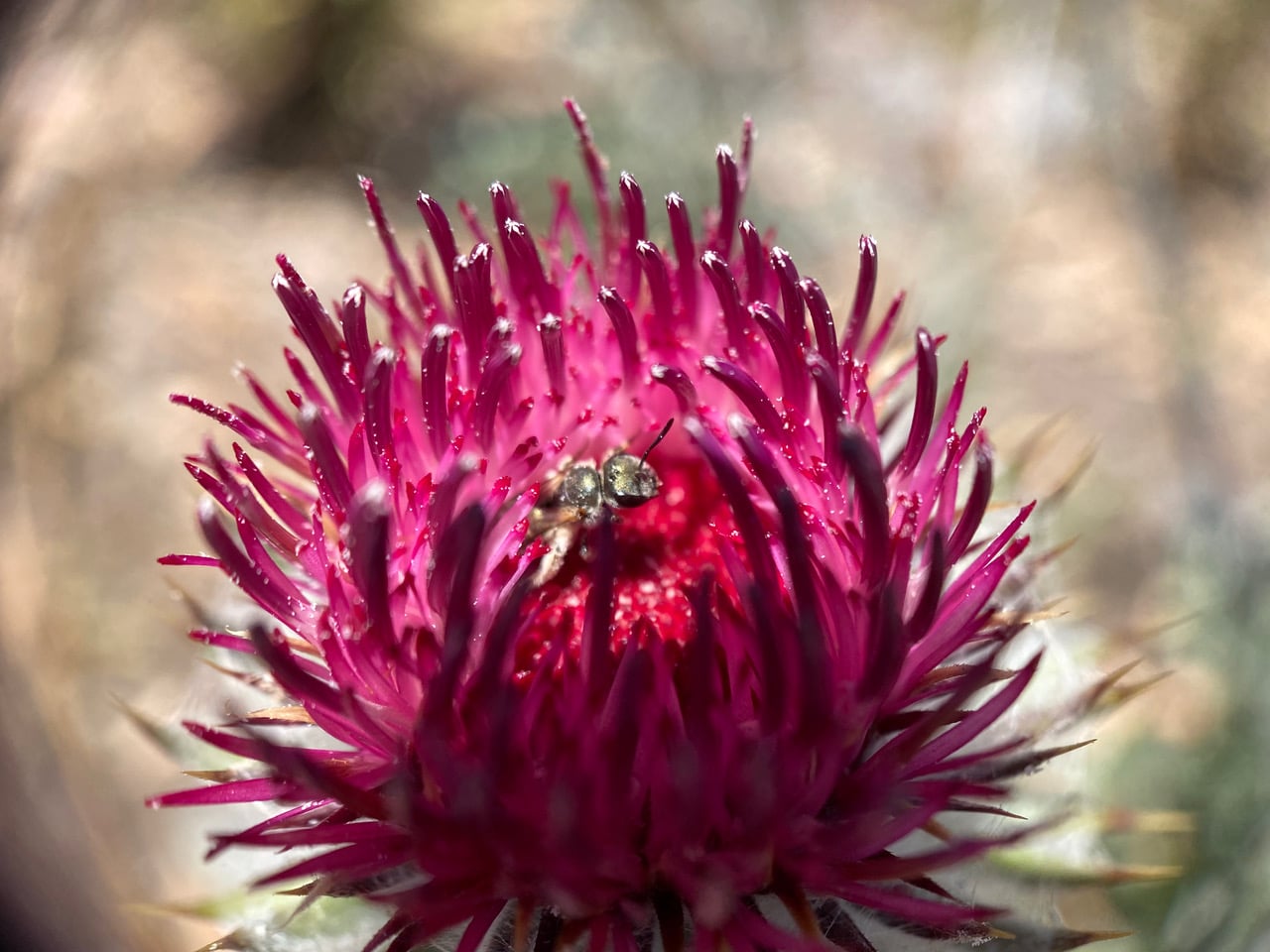
The young Cobweb Thistle is also blooming now. A small Sweat Bee, Halictus sp. (family Halictidae) is foraging within the flowerhead.
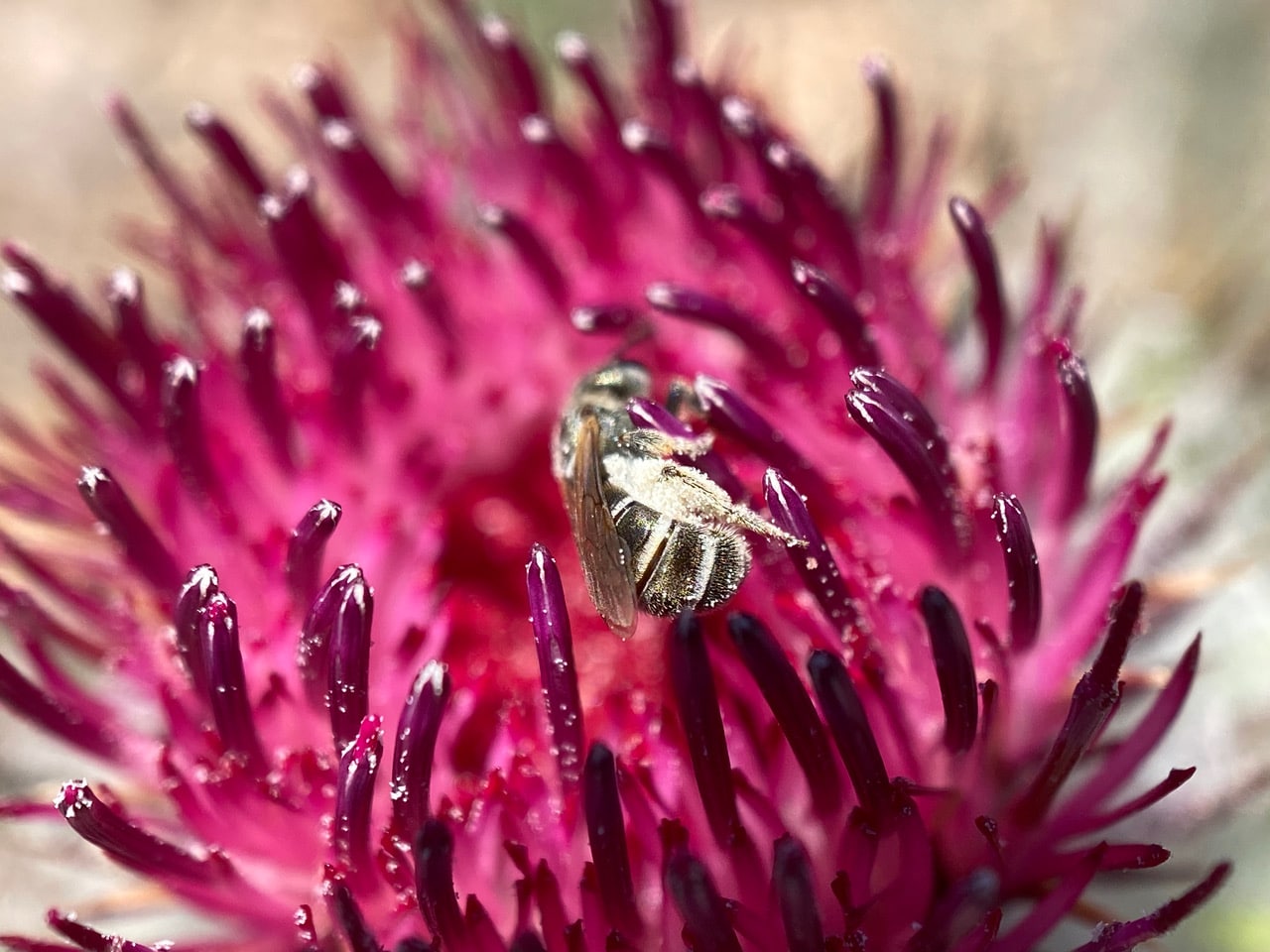
The Sweat Bee also clambers over the stamens to collect pollen.
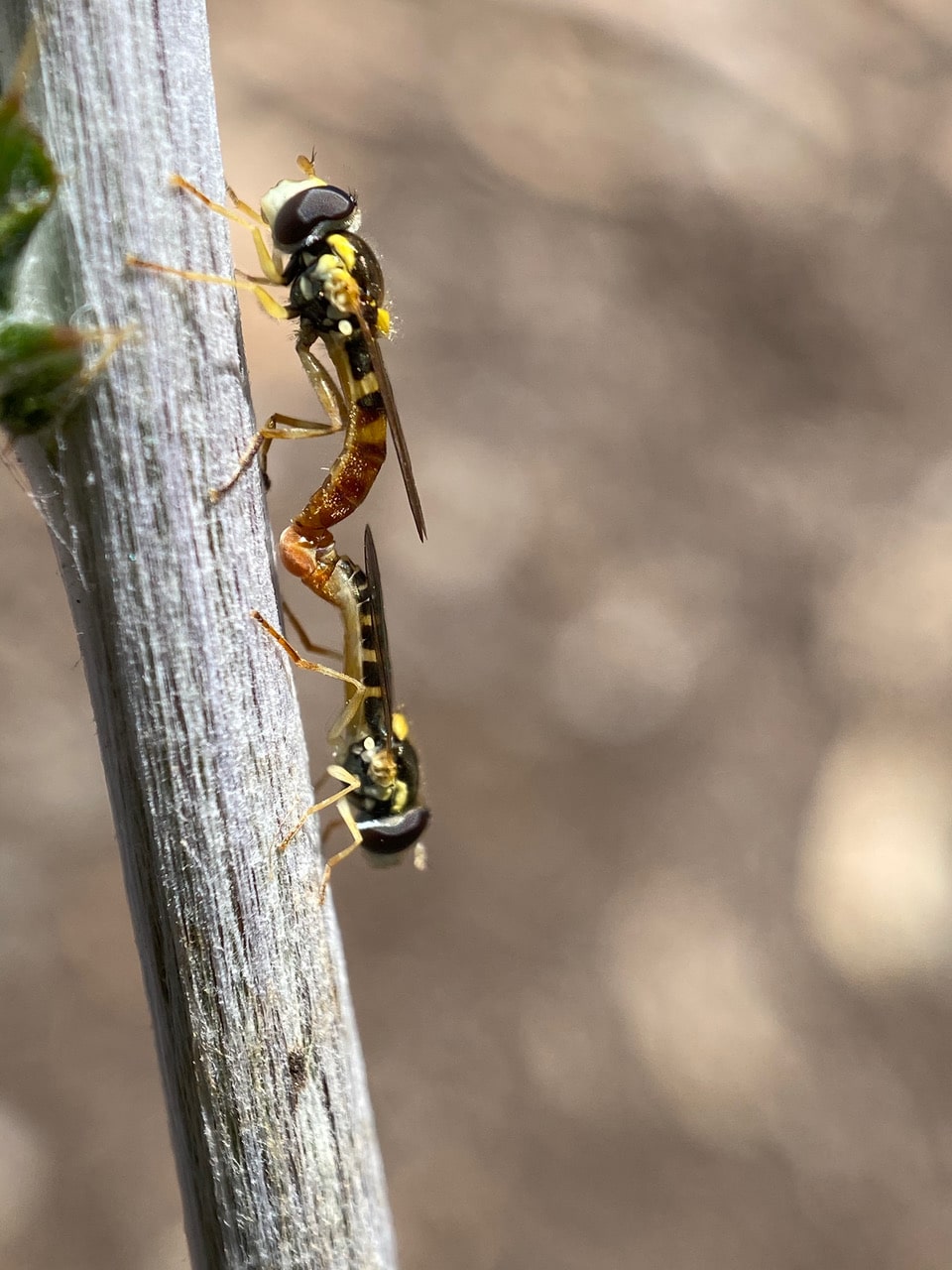
A pair of Forked Globetails, Sphaerophoria sulphuripes (family Syrphidae) is mating on the stem of a Cobweb Thistle. Although I can’t see their faces to tell which is male and which is female, I am almost sure that the one on the top is the male, as females of the species do not have any red on them. Usually curled up under the tip of his abdomen, the male’s red genitalia has been extruded and inserted into the female. Wow, never thought I would see this!
On the sticky foliage of this Coast Tarweed, Madia sativa, do you see the well-hidden black-and-white pupa of the parasitoid wasp, Hyposoter sp. (family Ichneumonidae) and the attached dead caterpillar? In the blurry background, a live green caterpillar can be seen on the next stem.The sticky Coast Tarweed, Madia sativa is a mess of insect life, hard to discern without a macro lens. Some insects, like the Heliothis caterpillar and the Plant Bug (family Miridae), are here because they are well-adapted to deal with the stickiness and have evolved to feed on the plant. Others, like the tiny Psyllids are collateral damage, unable to free themselves once stuck on the glandular hairs.
Ooh, a clutch of eggs on an unopened flowerhead of Coast tarweed! They are fairly large, as insect eggs go. Scentless Plant Bugs, Arhyssus sp. (family Rhopalidae)?
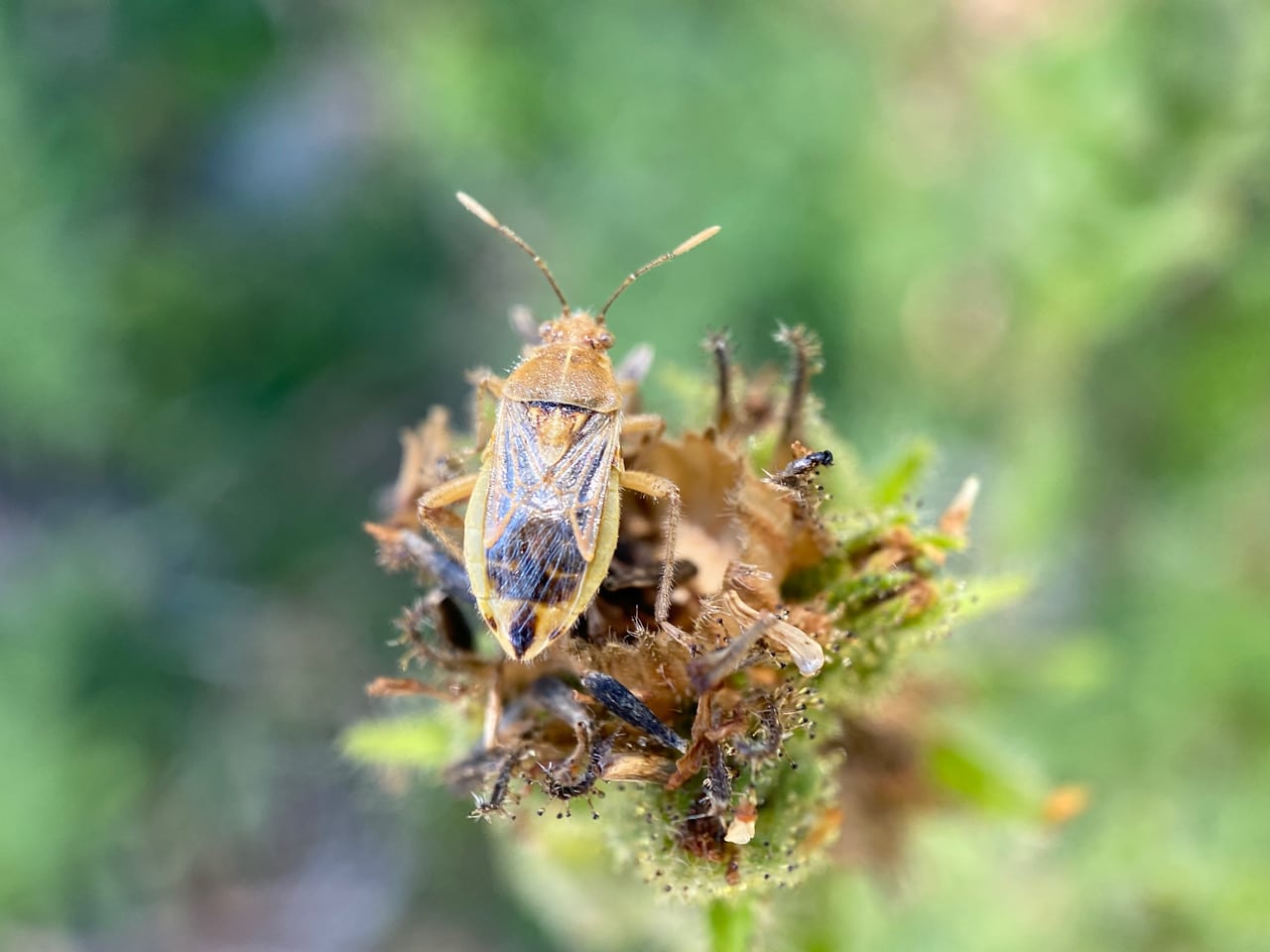
Here’s an adult Scentless Plant Bug, Arhyssus sp. (family Rhopalidae) perched on a Coast Tarweed seed head.
The Rhopalidae are distinguished by many veins on the membranous portion of the forewings. They differ from coreids and other hemipterans in lacking functional scent glands. All are plant-feeders, usually on ripe seeds.
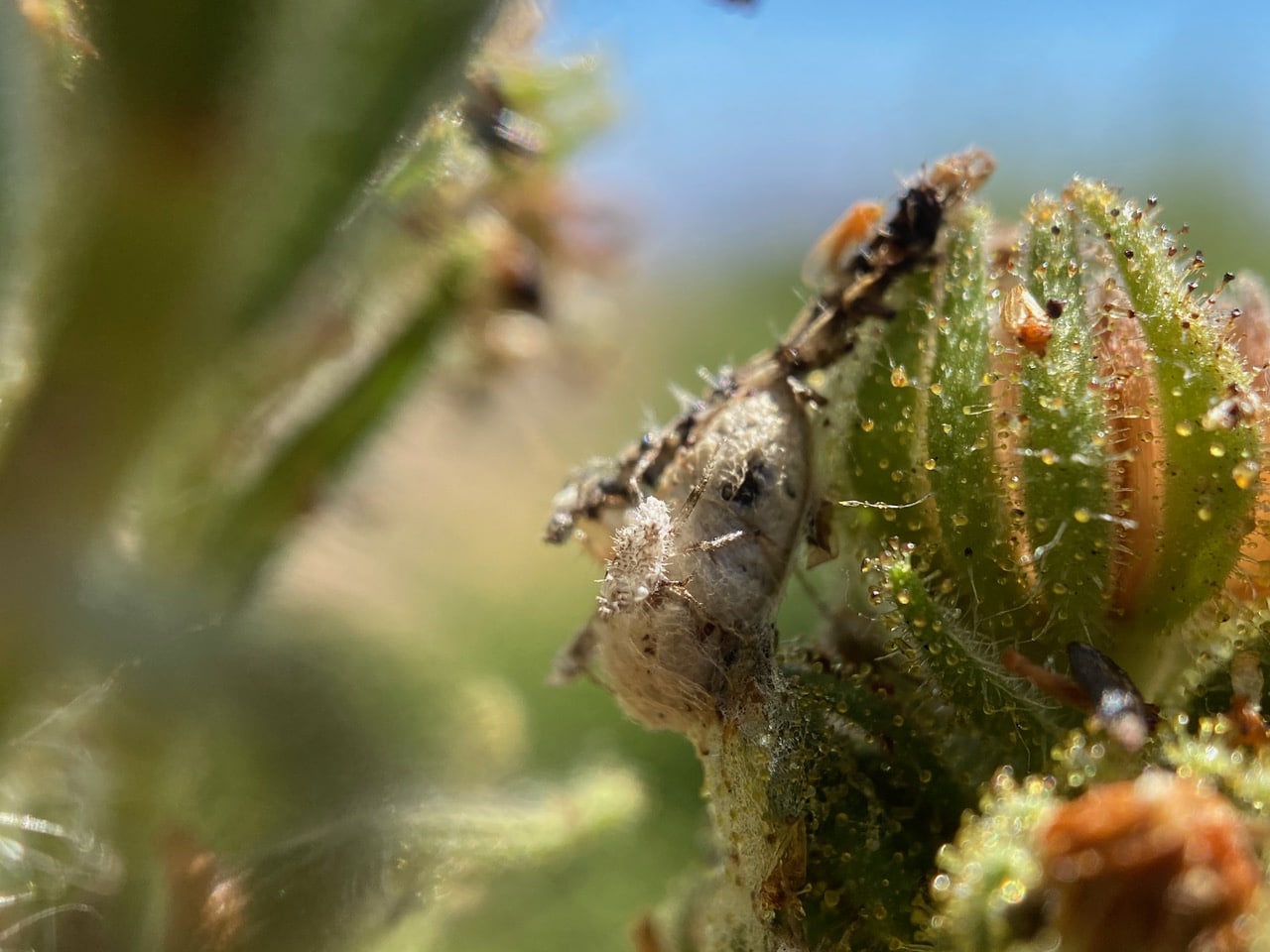
Wow, here’s another Hyposoter wasp pupa hidden among the ripening Coast Tarweed seed heads. The dead caterpillar can be seen on the upper part of the cocoon.
Hyposoter is a large cosmopolitan genus of parasitoid wasps belonging to the family Ichneumonidae. Obvious evidence that Hyposoter is present is its black-and-white pupal cocoon. These commonly occur on foliage attached to the shriveled skin of the caterpillar in which the parasitoid fed during its larval stage.
Hyposoter undergoes complete metamorphosis. The adult wasp lays its egg in the caterpillar. After hatching, the larva feeds inside on the caterpillar’s hemolymph (blood) while developing through three, increasingly larger instars. The wasp larva then feeds on the caterpillar’s tissues consuming the entire body except for the skin and head capsule. The host caterpillar shrinks and becomes a hard and brittle, shriveled skin. The parasitoid emerges from the host skin as a mature third instar (prepupa). The wasp then spins a silken cocoon commonly attached to the dead caterpillar’s skin. The cocoon is about 1/4 in. long, oblong with dense white silk and blackish patches. Parasite development time from oviposition until adult emergence is about one month. There may be several generations per year. Hyposoter is used in the biological control of caterpillars in many crops.
Yet another Hyposoter pupa on the immature flowerheads of Coast Tarweed. Besides the dead caterpillar, there’s a pale, unidentified insect on the cocoon.
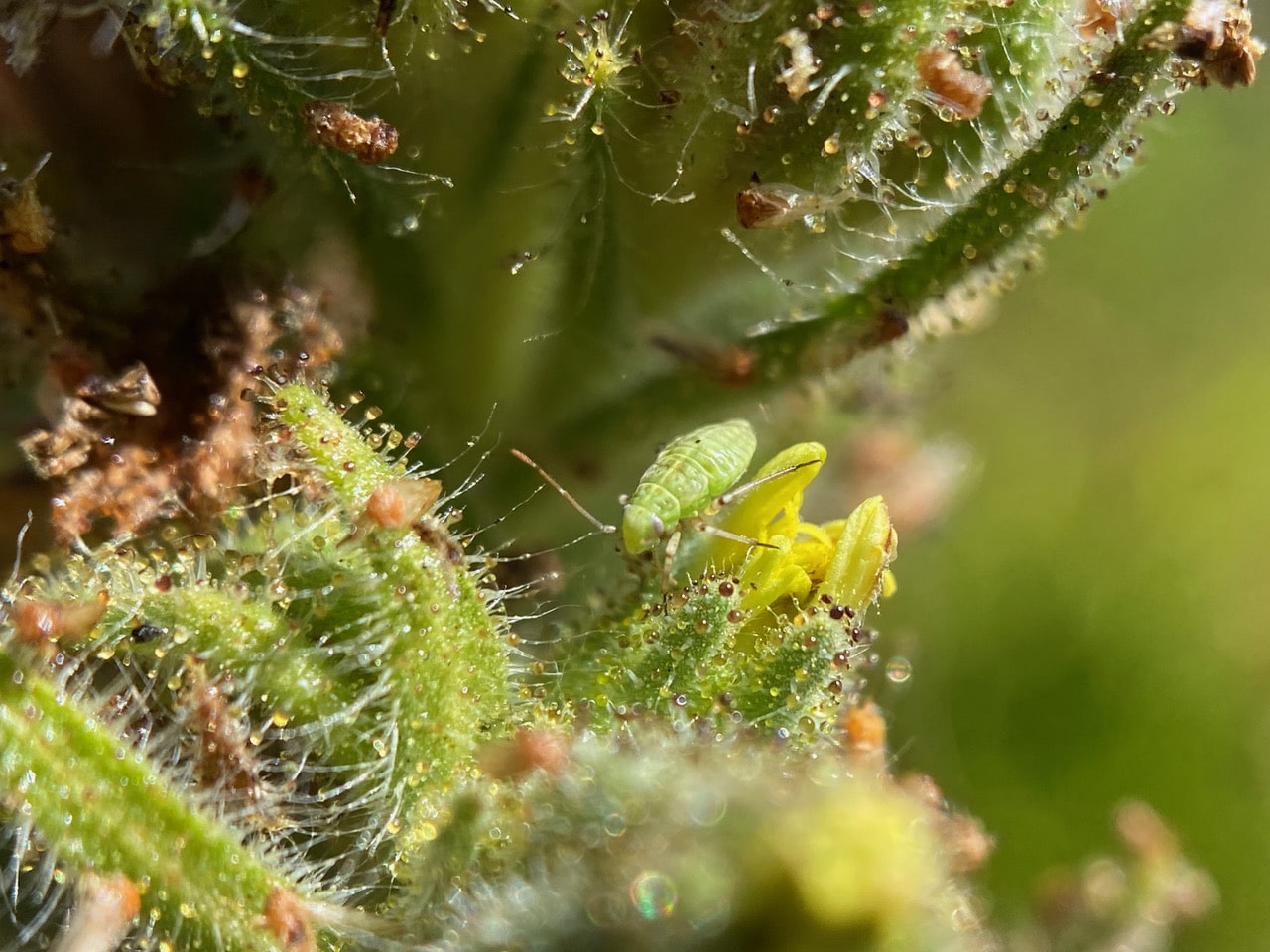
A bug nymph is walking on the a young Coast Tarweed flowerhead about to open. Scentless Plant Bug, Arhyssus sp. (family Rhopalidae)?
“True bugs” in the order Hemiptera undergo incomplete metamorphosis without a pupal stage. The nymphs, which look like adults, develop through a series of molts, each time getting bigger after shedding their old exoskeleton. At the last molt, they transform into adults with functional wings and reproductive parts.
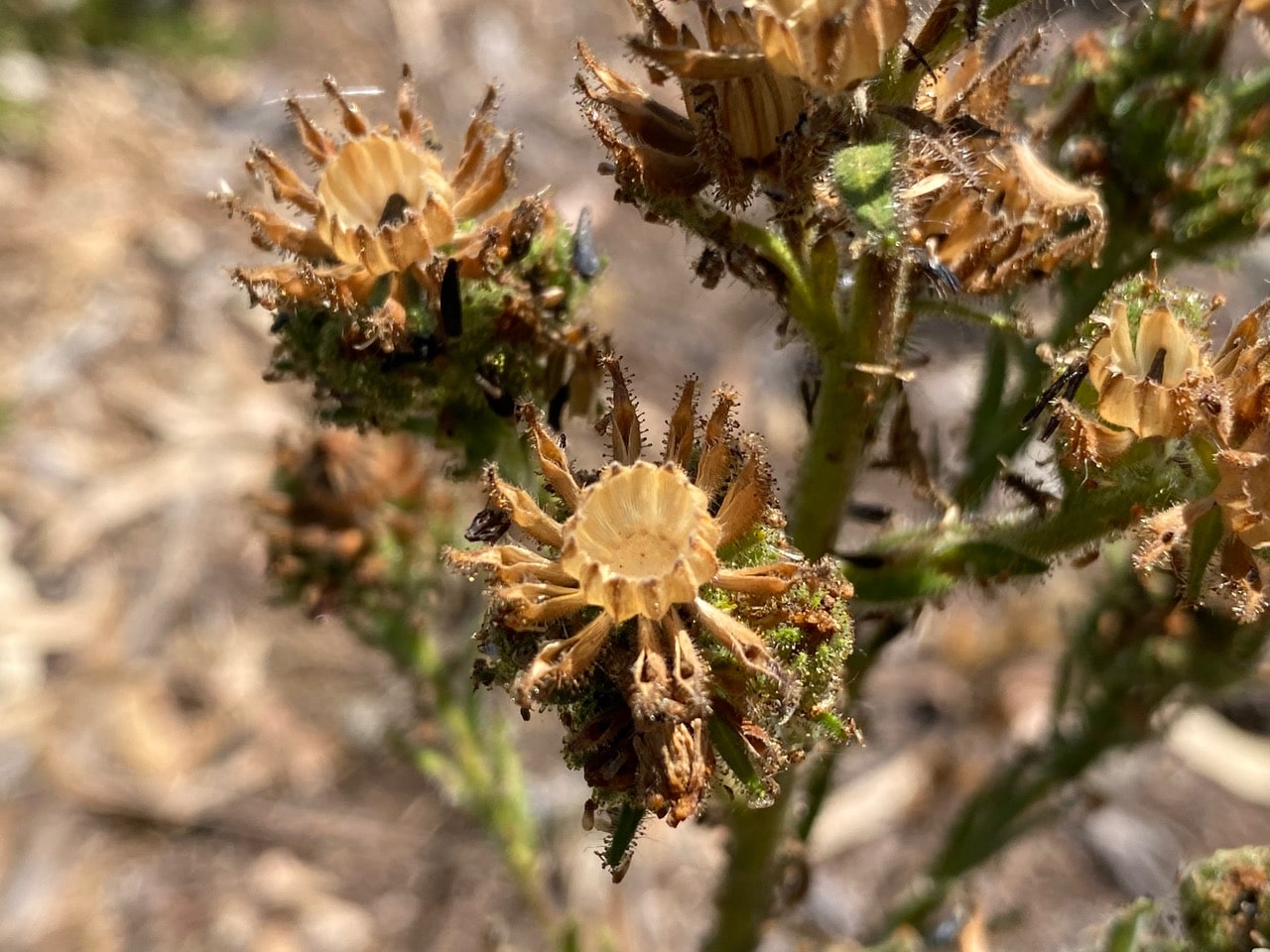
The withered flower parts of a Coast Tarweed flower head is about to fall off to expose the seed “cup” below.
Coast Tarweed is a prolific seeder. Dozens of black, elongate seeds are packed vertically in the central cup of each seed head.
All gone! Most of the seeds of Coast Tarweed are shaken out of the seed heads by the wind.
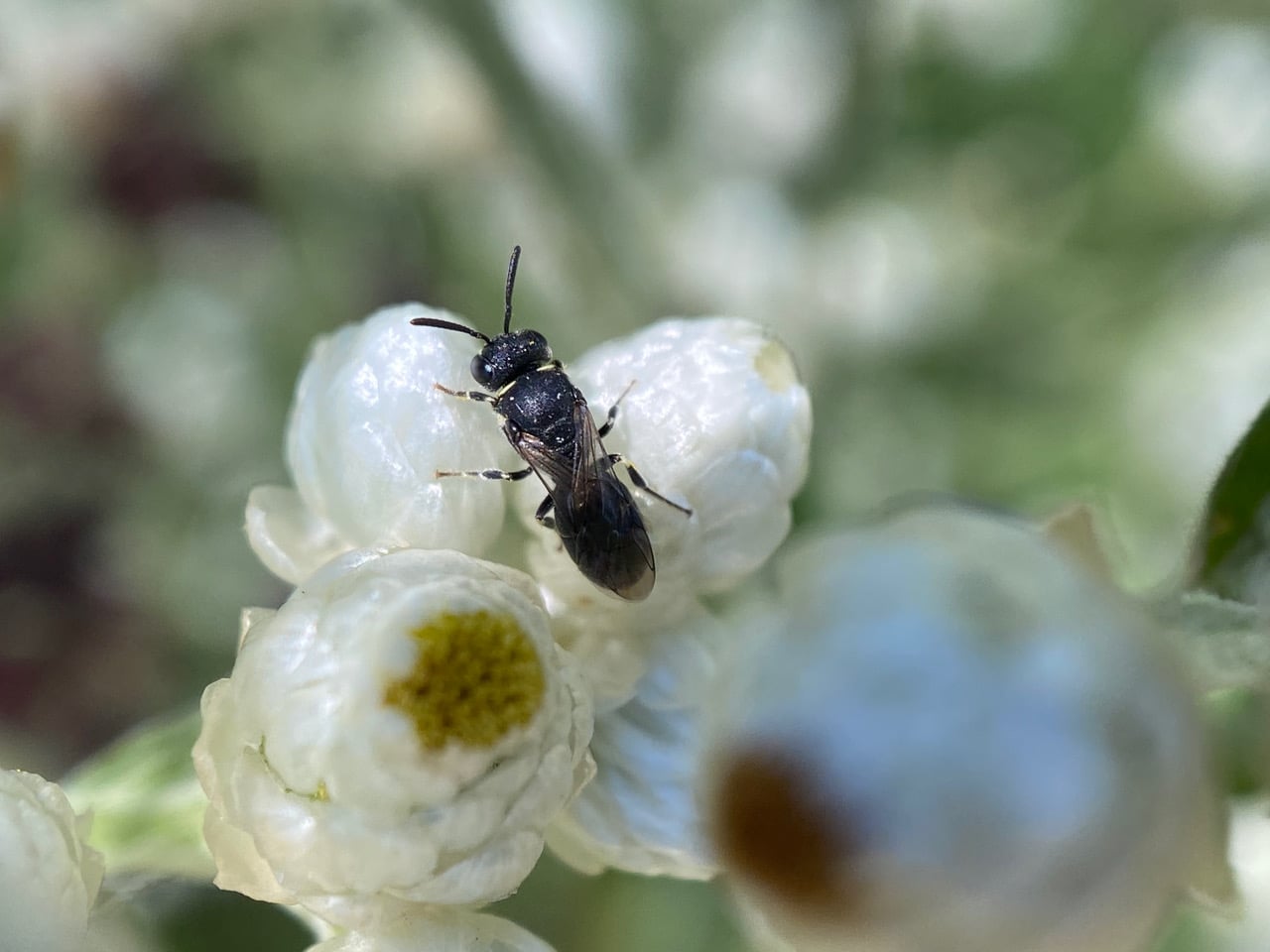
A little bee visits the open flowerheads of Calfornia Everlasting, Pseudognaphalium californicum. Although I can’t see its face, I am almost sure that this is a Masked Bee, Hylaeus sp. (family Colletidae). Note the yellow markings on either side of its neck, as well as the yellow markings on the legs. Masked Bees are some of our smallest bees at Skyline Gardens, about the size of a grain of rice.
Hylaeus (family Colletidae) are shiny, slender, hairless, and superficially wasp-like bees. They are small, 5 to 7 mm long, usually black with bright yellow or white markings on their face and legs. These markings are more pronounced on the males. Hylaeus do not carry pollen and nectar externally, they instead store their food in the crop and regurgitate it upon returning to their nests. They are primarily generalist foragers. Hylaeus are short-tongued, but their small body size enables them to access deep flowers. Hylaeus nest in stems and twigs, lining their brood cells with self-secreted cellophane-like material. They lack strong mandibles and other adaptations for digging, using instead pre-existing cavities made by other insects.
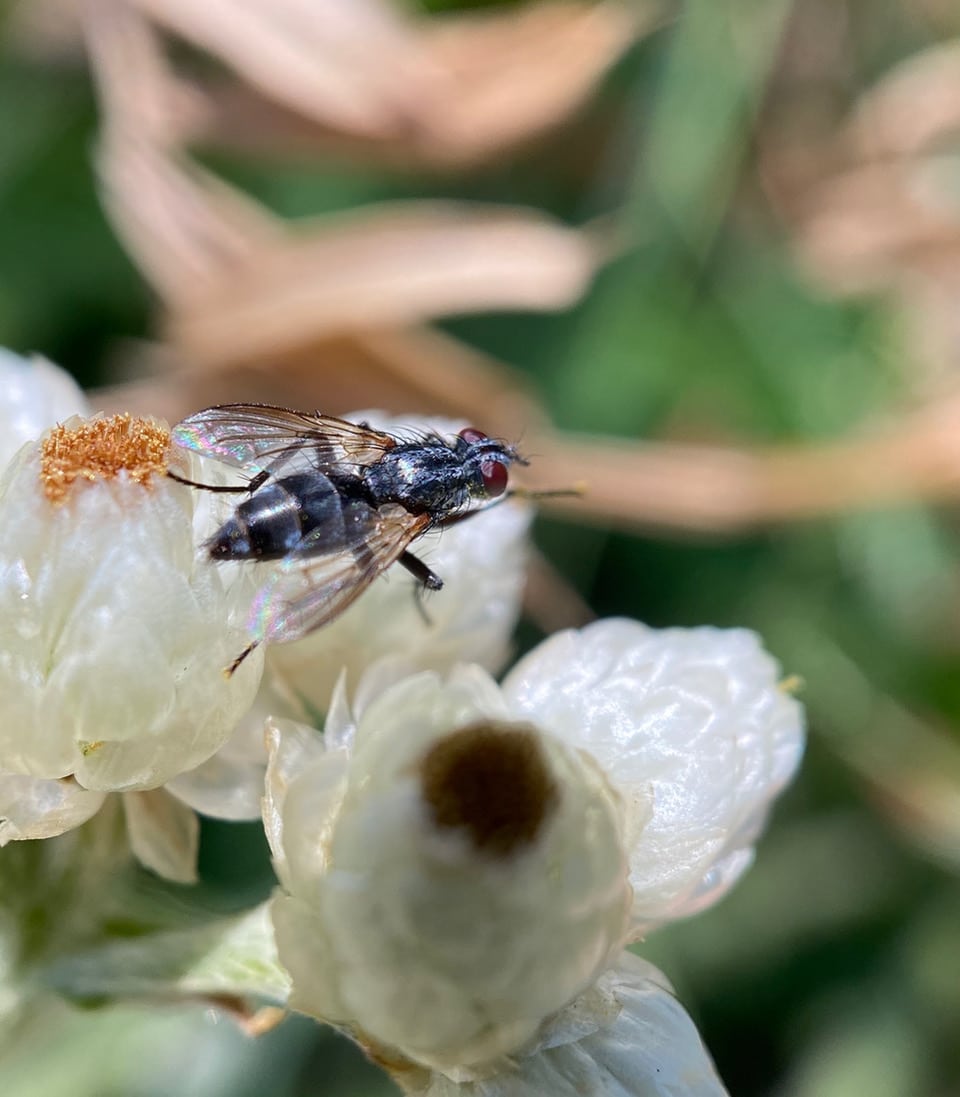
A Woodlouse Fly, Stevenia deceptoria (family Rhinophoridae) is perched on an inflorescence of California Everlasting. These small, slender, black, bristly flies are somewhat related to the Tachinidae. The larvae are mostly parasitoids of woodlice (pill bugs), beetles, spiders and other arthropods, and occasionally snails.
Native to Europe, Stevenia deceptoria is now widespread in the US. The flies are parasitoids of terrestrial woodlice (roly polies) of the order Isopoda (Oniscoidea).

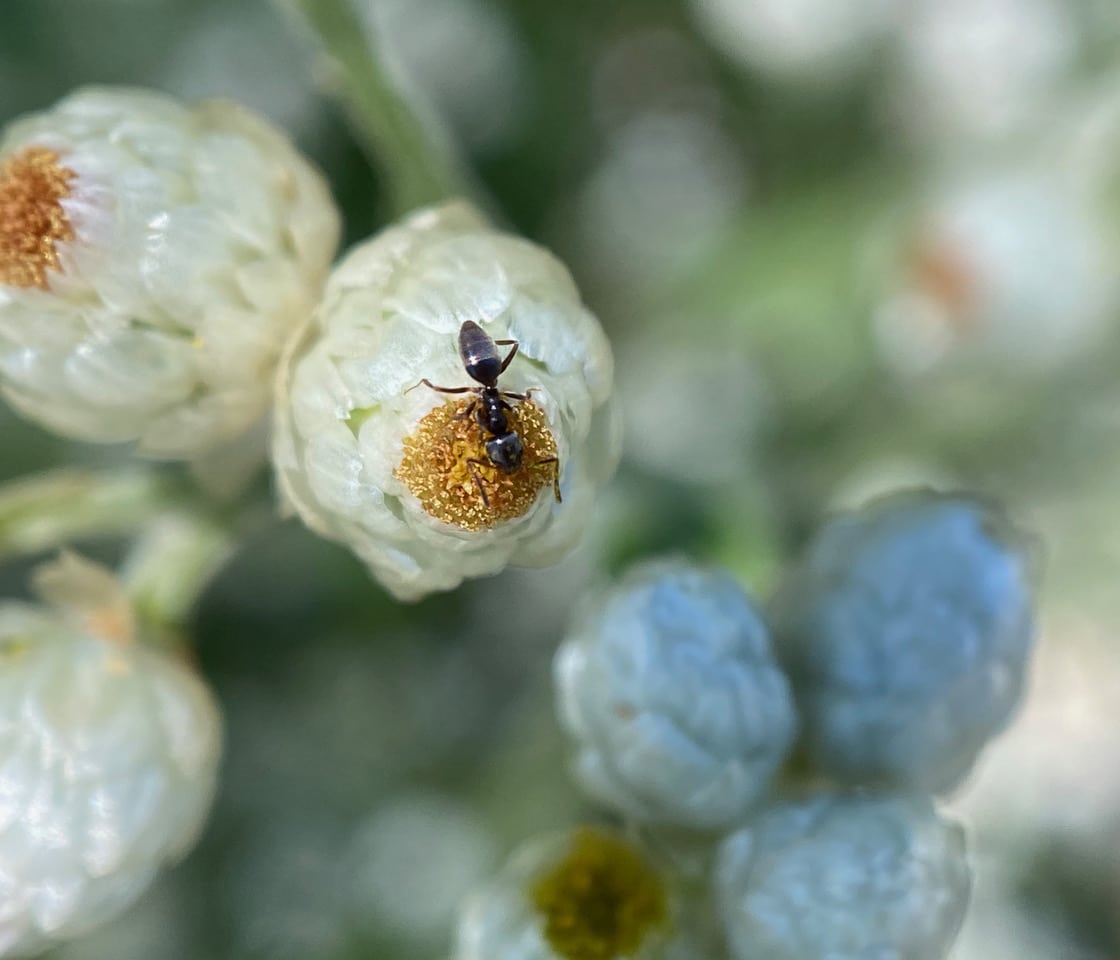
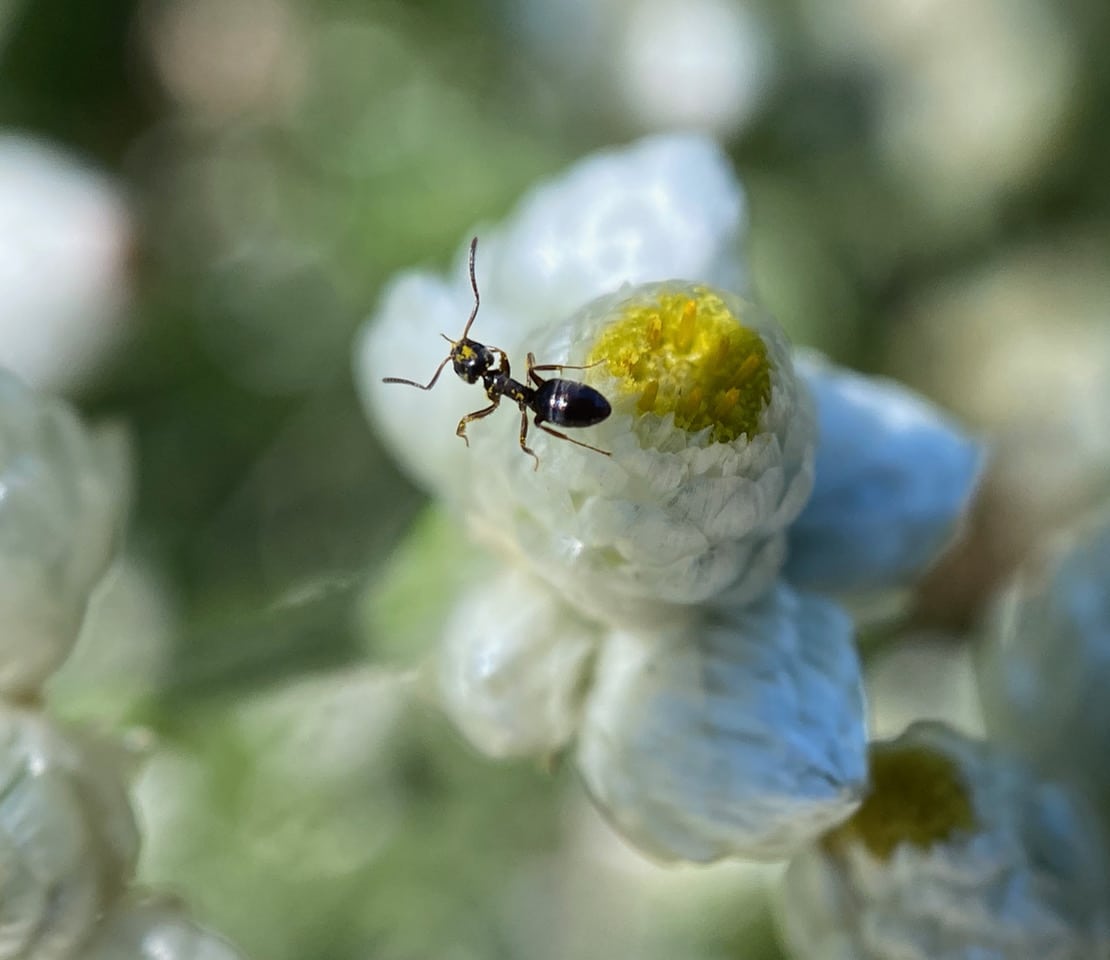
An Odorous House Ant, Tapinoma sessile (subfamily Dolichoderinae) is feeding on an open flowerhead of a California Everlasting, Pseudognaphalium californicum.
Just finished feeding, this ant is frantically grooming the pollen off its antennae.
The Odorous House Ant, Tapinoma sessile (subfamily Dolichoderinae) is native to North America, ranging from southern Canada to northern Mexico. The species is found in a vast diversity of habitats, including within houses. The ants mainly feed on floral nectar and other sugary food. They also forage for honeydew produced by aphids and scale insects that they guard and tend.
Odorous House Ants are small ants, the workers measuring 2-3 mm. As in all members of the subfamily Dolichoderinae (odorous ants), this species does not possess a sting, instead relying on the chemical defense compounds produced from the anal gland. Such compounds are responsible for the smell given off by the ants when crushed or disturbed.
T. sessile colonies are polydomous (consist of multiple nests) and polygynous (contain multiple reproductive queens). The species practices seasonal polydomy – the colony overwinters in a single nest, and forms multiple nests during spring and summer when resources are more abundant and spread out.
The Odorous House Ants are rather docile, with little propensity for attack, preferring to use chemical secretions instead of biting. For this reason they are vulnerable to the invasion of the aggressive Argentine Ants, Linepithema humile.