

Pollinator Post 7/28/23 (2)
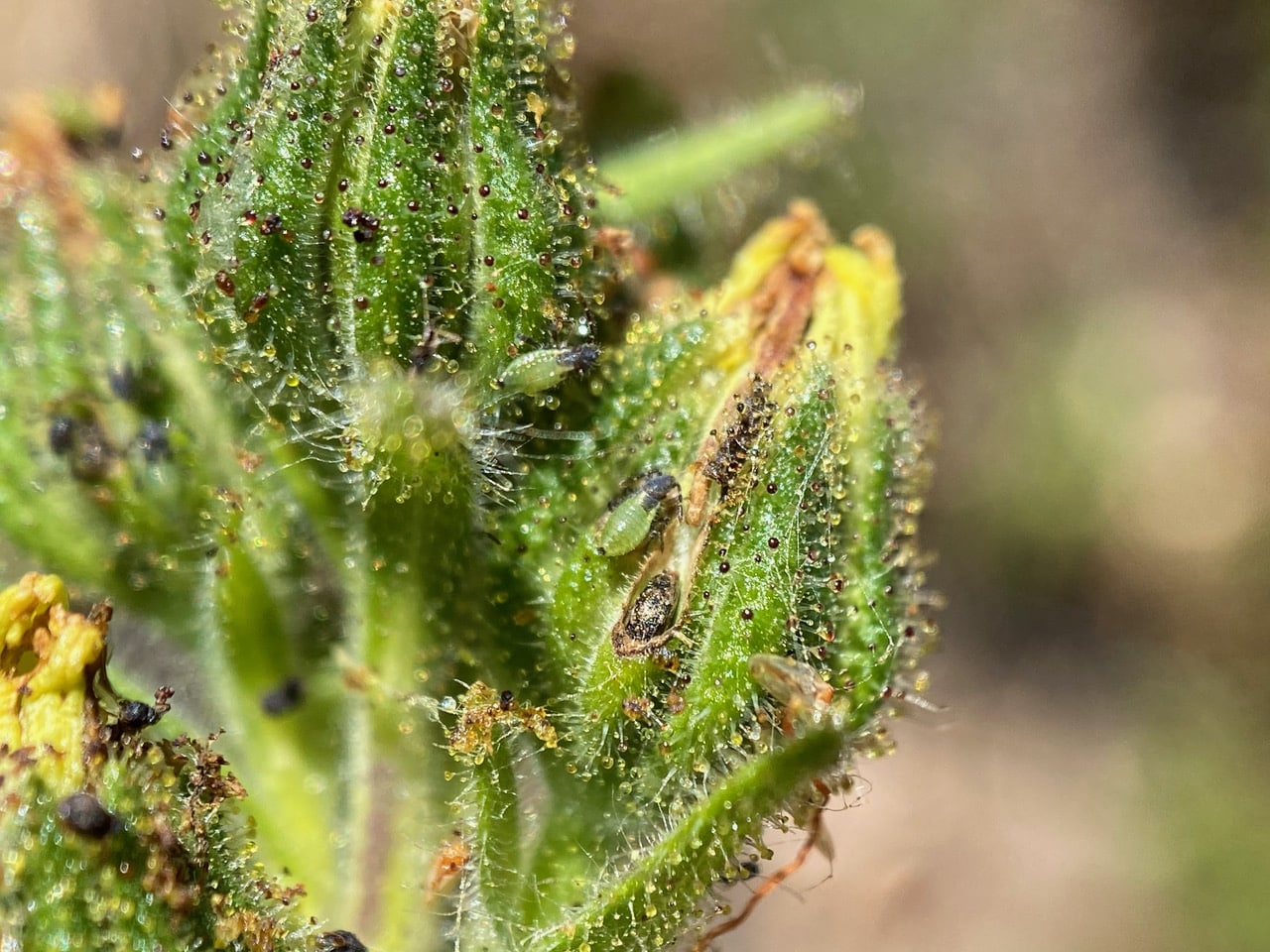
It is much easier to observe insects on the Coast Tarweed along the paved road, in contrast to the impossibly dense stand at Siesta Gate. I don’t have to risk getting the sticky exudates on me, my camera and lens. It is by far the hardest plant to photograph at close range! I can’t even touch the plant to steady it from the wind to take a picture. The tar sticks to my fingers and everything else I touch afterward.
Hey, who are these tiny green insects? At first I thought they were aphids, but they lack the cornicles (“tail pipes”) of aphids. Rather they look like the young nymphs of some bugs. The green-and-black color combination is suggestive of the Plant Bug, Macrotylus essigi (family Miridae). Come to think of it, I haven’t seen the adults for a while. They were all over the flowerheads of Coast Tarweed in the beginning of summer. What happened to them all??
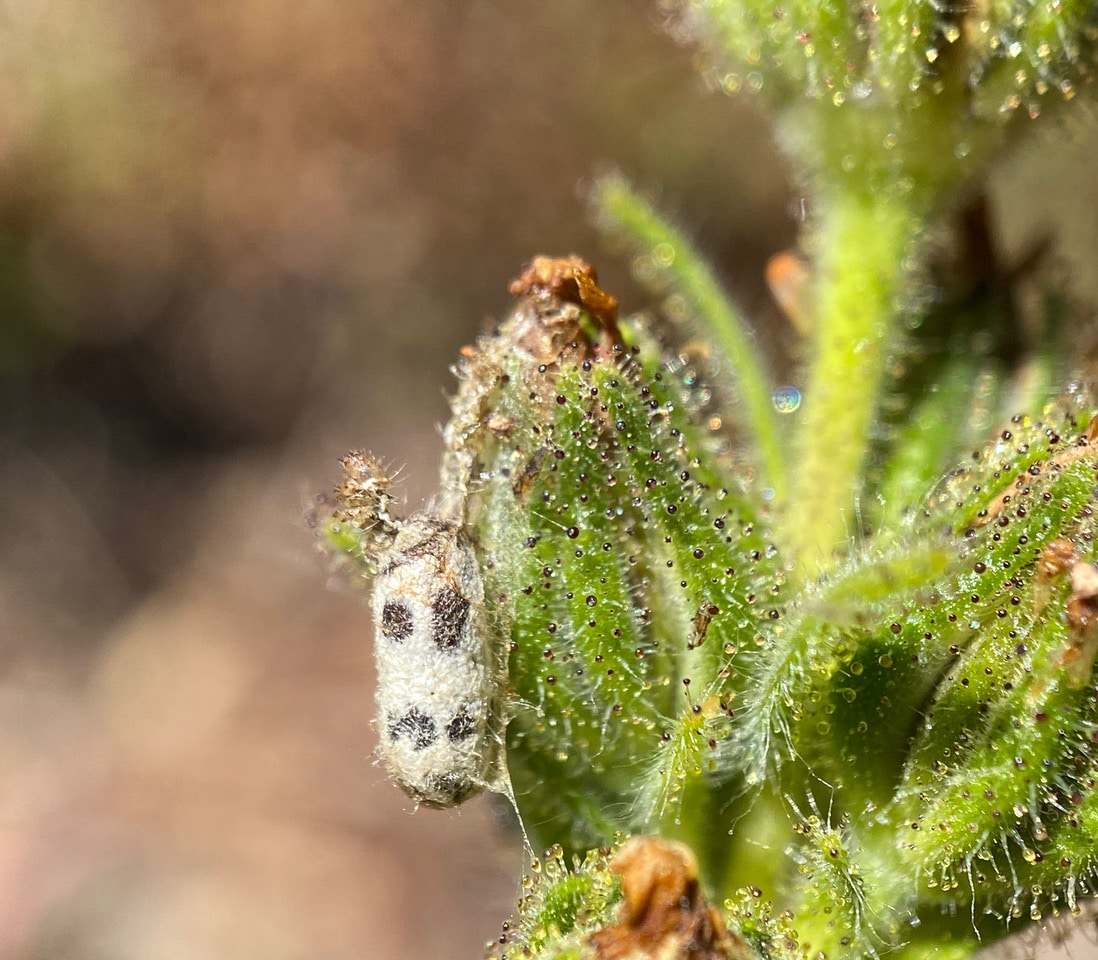



Look, a Hyposoter wasp pupa on an unopened flowerhead of Coast Tarweed! Obviously, the wasp targets the young caterpillars of both the Heliothis ( Straw Moths) and Heliothodes moths. Both moths belong to the family Noctuidae. The much larger caterpillars of Heliothis tend to be found on Coast Tarweed, while the smaller Heliothodes caterpillars develop on the Elegant Tarweed.
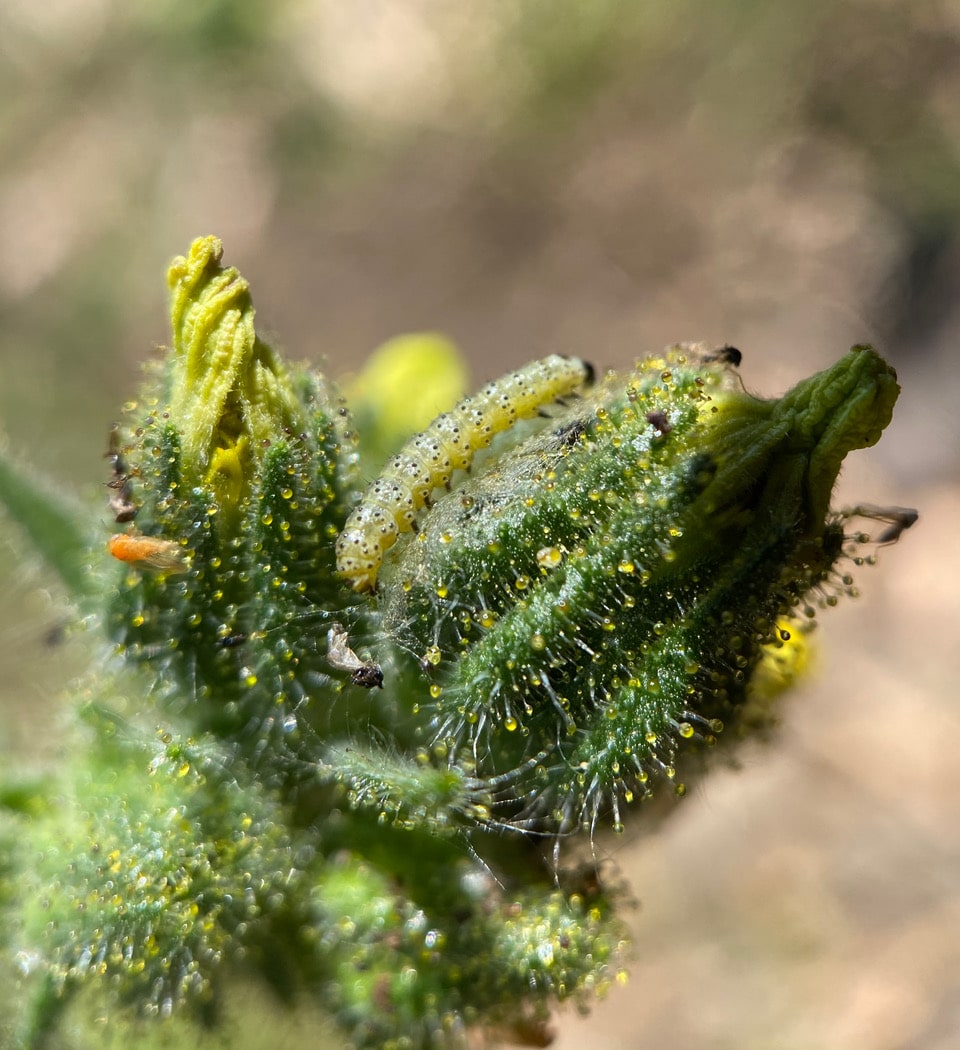
Here’s a young caterpillar of either the Heliothis or Heliothodes moths. It is impossible to tell them apart at this stage.
A Tumbling Flower Beetle (family Mordellidae) is roaming the flowerheads of a California Everlasting, Pseudognaphalium californicum.
The Tumbling Flower Beetles (family Mordellidae) are named for the characteristic irregular movements they make when escaping predators. They are also sometimes called Pintail Beetles for their abdominal tip which aids them in performing these tumbling movements. Mordellids are small, wedge-shaped, hump-backed beetles with head bent downward. The body is densely covered with fine silky hairs, usually black, but often very prettily spotted or banded with silvery hues. The adults feed on pollen, occurring on flowers or on dead trees, flying or running with rapidity. The larvae live in old wood or in the pith of plants, and those of some species are said to be carnivorous, feeding on the young of Lepidopterans and Diptera which they find in the plant stems.
One usually doesn’t get to see the head of the Tumbling Flower Beetle from this angle.
The Tumbling Flower Beetle lifts off into the air while I am taking its picture. The black elytra are lifted out to the way to allow the membranous hind wings to unfold and flap. The elytra are the tough fore wings of beetles that are not used in flight but are used to protect the more delicate hind wings. The elytra are often colored or decorated with pits and grooves.
A winged aphid visits an opened flowerhead of California Everlasting. Aphids are easily recognizable from the presence of cornicles (“tail pipes”) on their abdomen.
A Lacewing egg (family Chrysopidae) is suspended on a fine silk stalk attached to the California Everlasting. The larva might have already hatched from the egg.
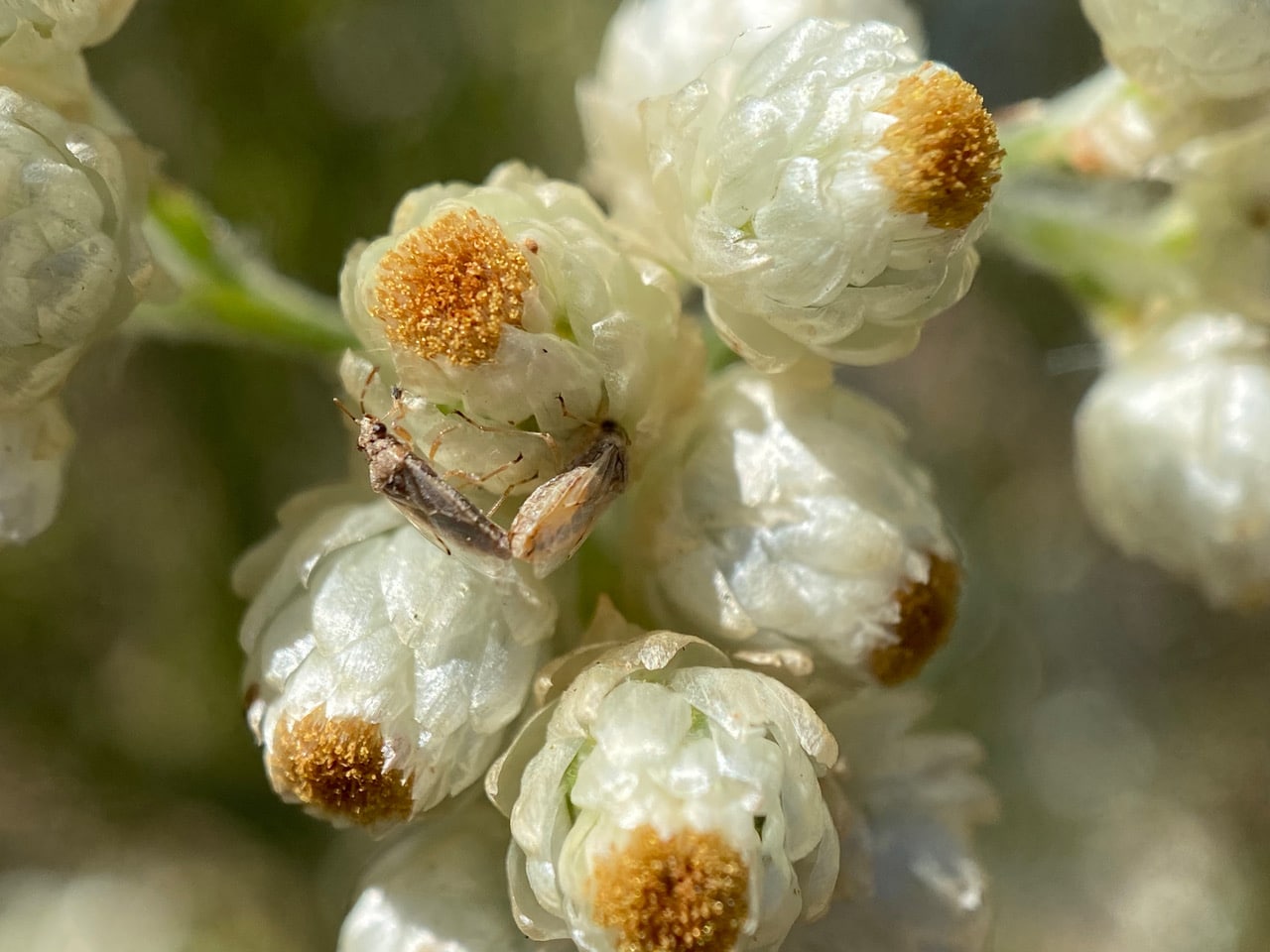
More often found in copula than not, the False Cinch Bugs, Nysius raphanus (family Lygaeidae or seed bugs) are reproducing at an explosive rate on the California Everlasting.
Adults are grayish-brown, slender, and about 1/8 to 1/6 in. long. Like many other insects in the order Hemiptera, their forewings are partly thickened and partly membranous so when folded, the tips of the wings overlap, forming a fairly well-defined X on the back of the body.
Nysius raphanus is commonly found within grassy or weedy fields, pastures, and foothills. Each spring, once the plants in these areas dry up, the False Cinch Bug migrates to find new places to feed. When populations are high in wet years, the bugs can become a nuisance for gardeners and farmers.
False Cinch Bugs spend the winter as nymphs and adults, usually in uncultivated areas beneath debris or in plants, often feeding on mustards or other winter annual plants. As new spring plant growth increases, so do the populations of False Cinch Bugs. Adults lay eggs in soil cracks or loose soil around plants. After hatching, nymphs feed on weeds, especially mustards, molt three times, and develop into adults in about three weeks. There can be several generations a year.
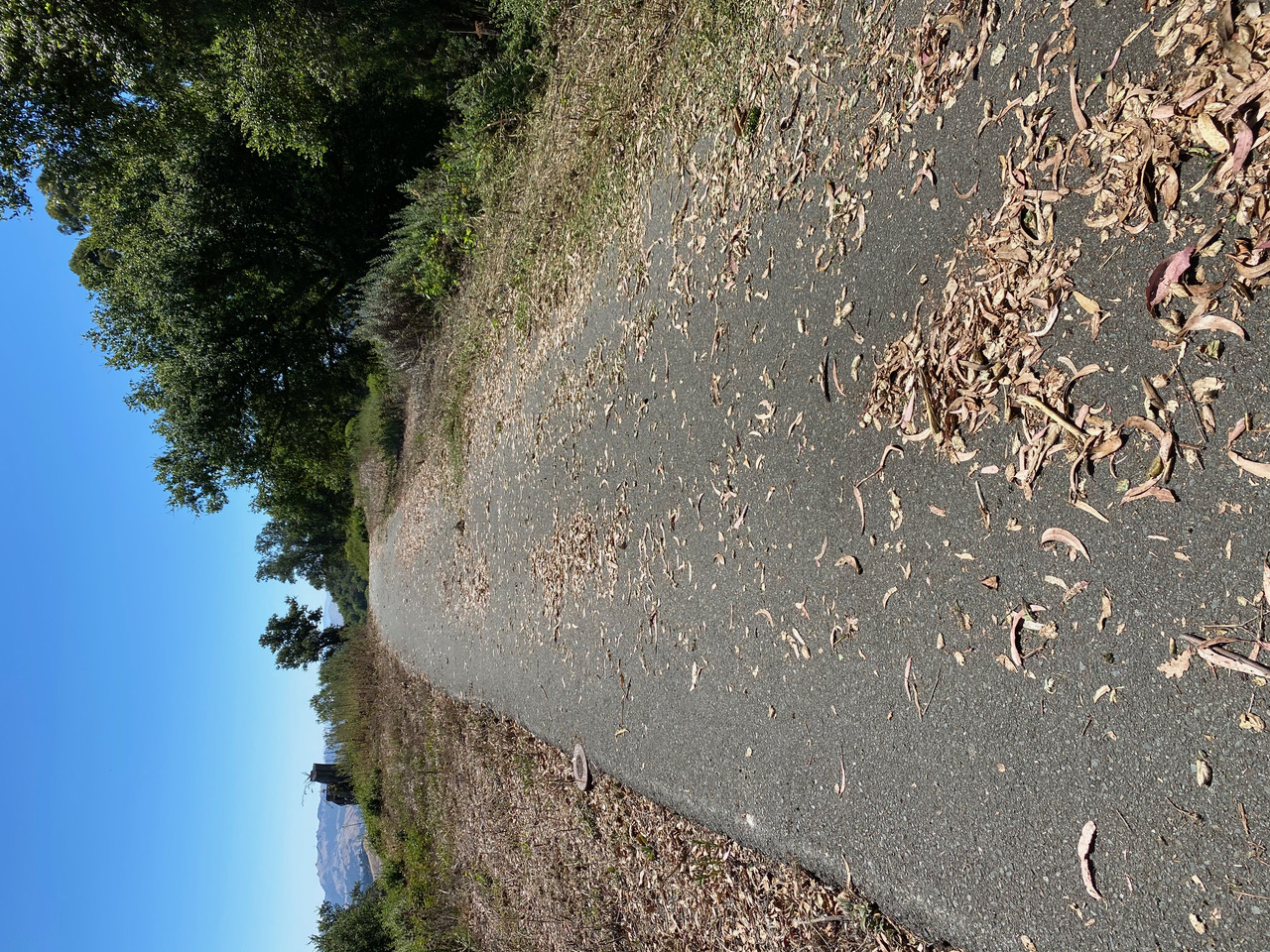
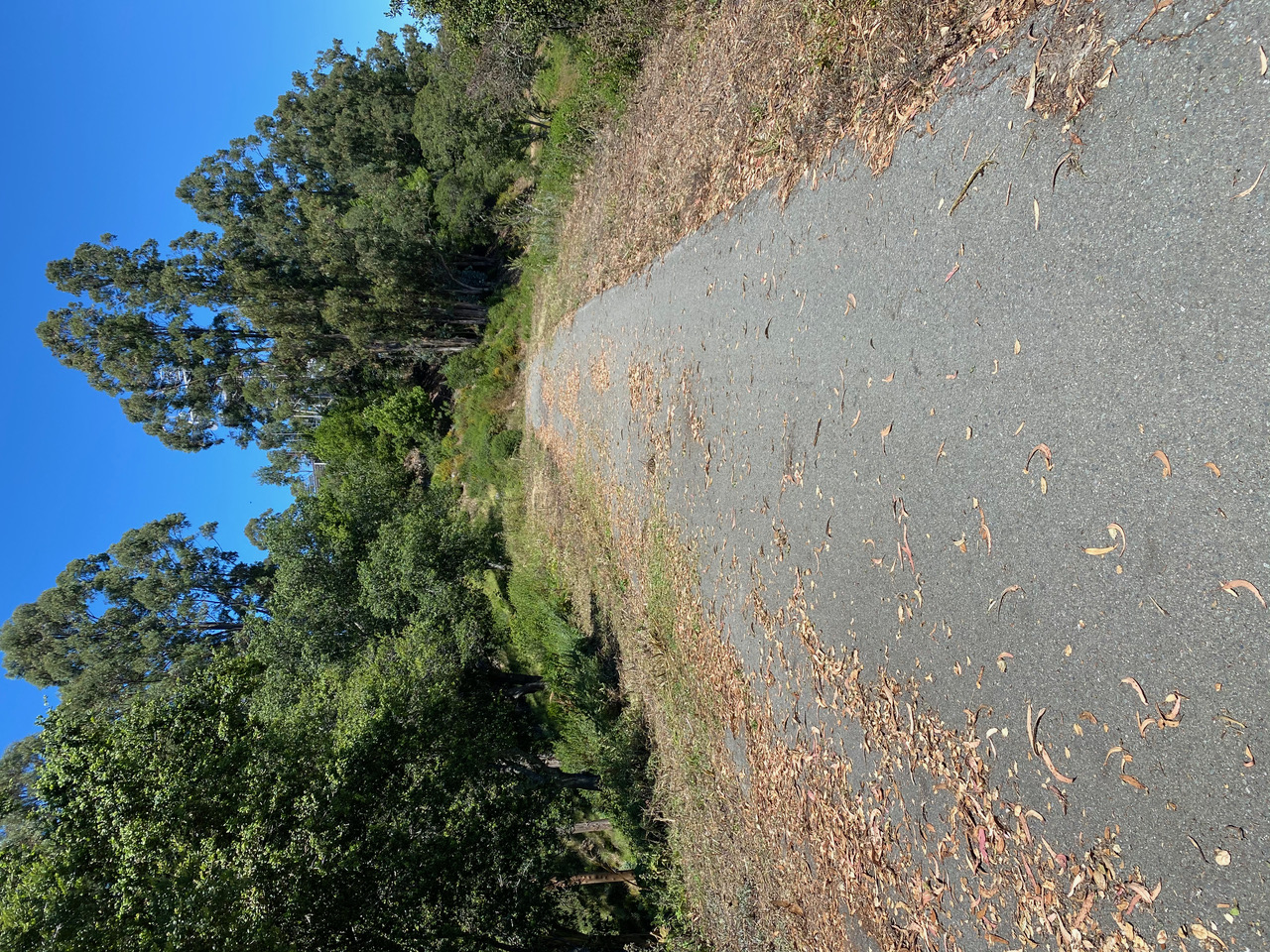
As I approach the top of the hill, I discover that the vegetation on both sides of the road has been clear-cut. While I understand the logic of creating a fire-break to protect the watershed, it is still a shocking and heart-breaking sight. Gone are the Everlastings with their American Lady caterpillars and ladybeetles; gone are the Phacelias that have fed the bees and other insects; gone are the young Coyote Brush on which I have been observing all kinds of flies, gall insects and associated parasitoid wasps. Gone also are the thick stands of Coast Tarweed. All gone in one fell swoop!
View in the other direction.
Now I think I know why I had that unfortunate encounter with mama turkey down the hill at Siesta Gate. This stretch of the road near the radio tower is frequented by a flock of turkeys. I see them almost every time I am up here by myself. They are never bothered by my presence, even at close range, and I have never been afraid of them. It’s a peaceful, mutually respectful co-existence. Perhaps the brush-clearing disturbance up here had scattered the birds. Mama turkey might have fled down the hill with her brood, only to be startled by me at Siesta Gate. I have never seen turkeys down there before.
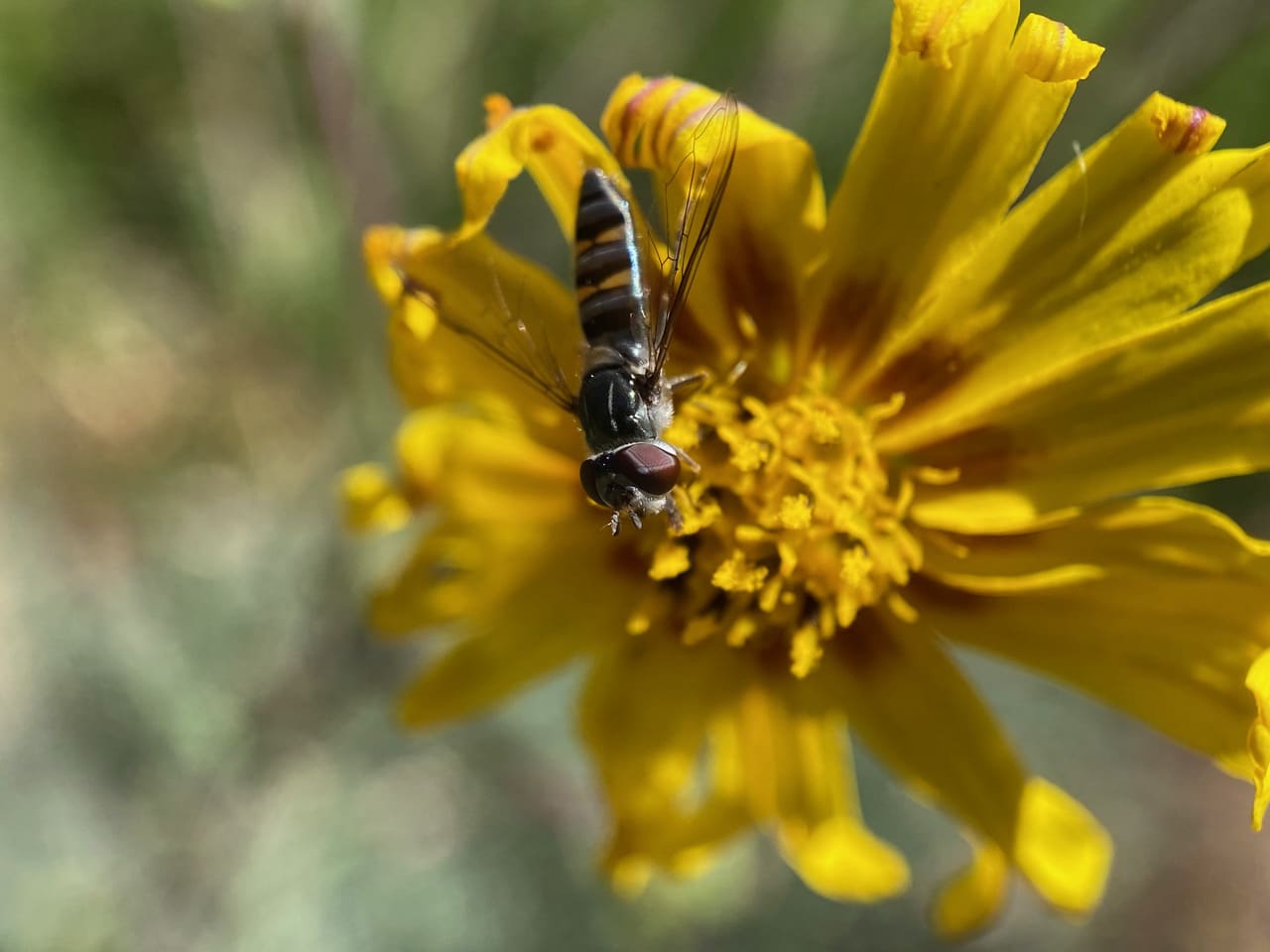
I am relieved that the lone Elegant Tarweed here has been spared. A Silver-banded Hover Fly, Pseudoscaeva diversifasciata (family Syrphidae) is foraging on one of the flowerheads.
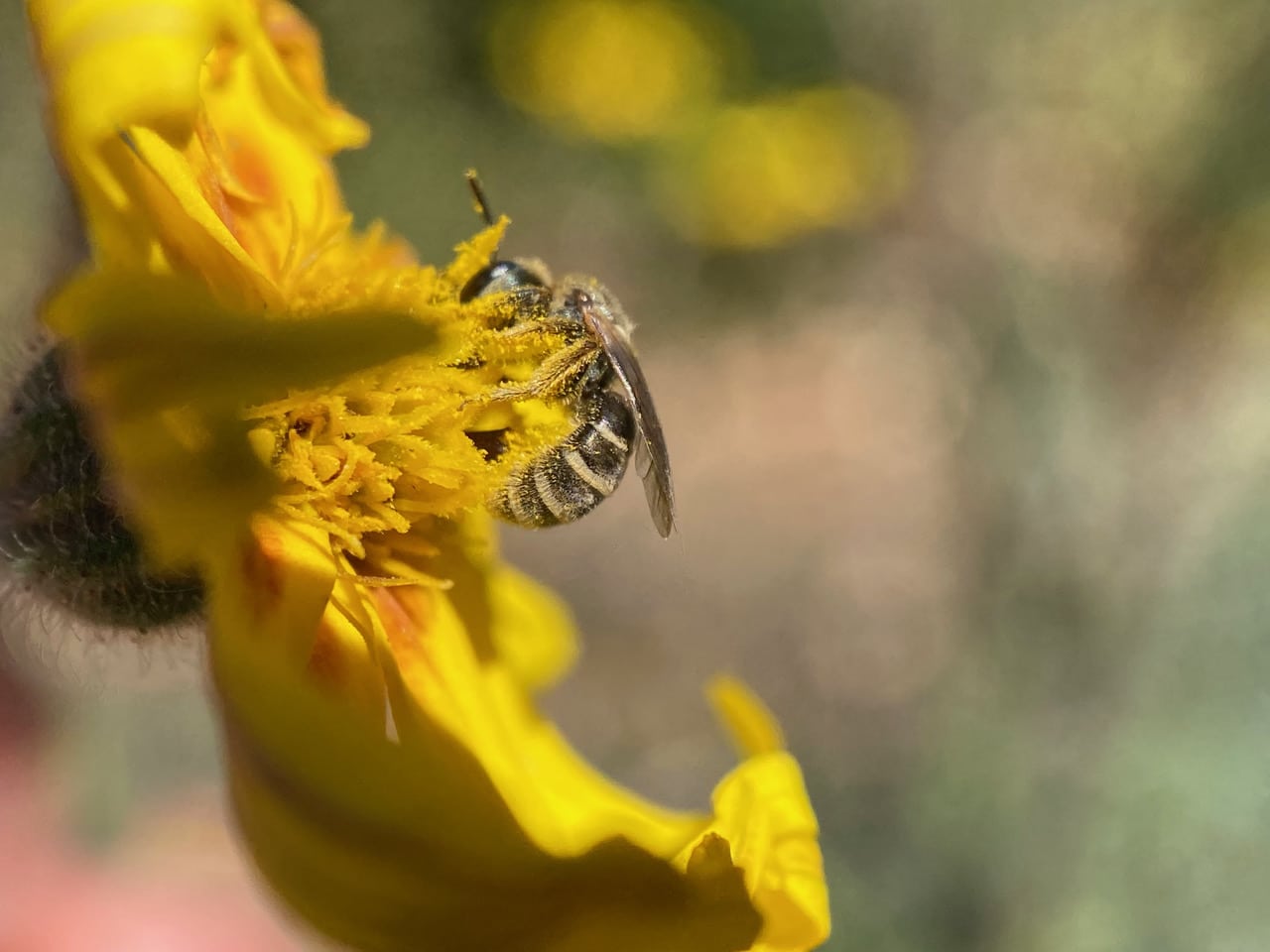
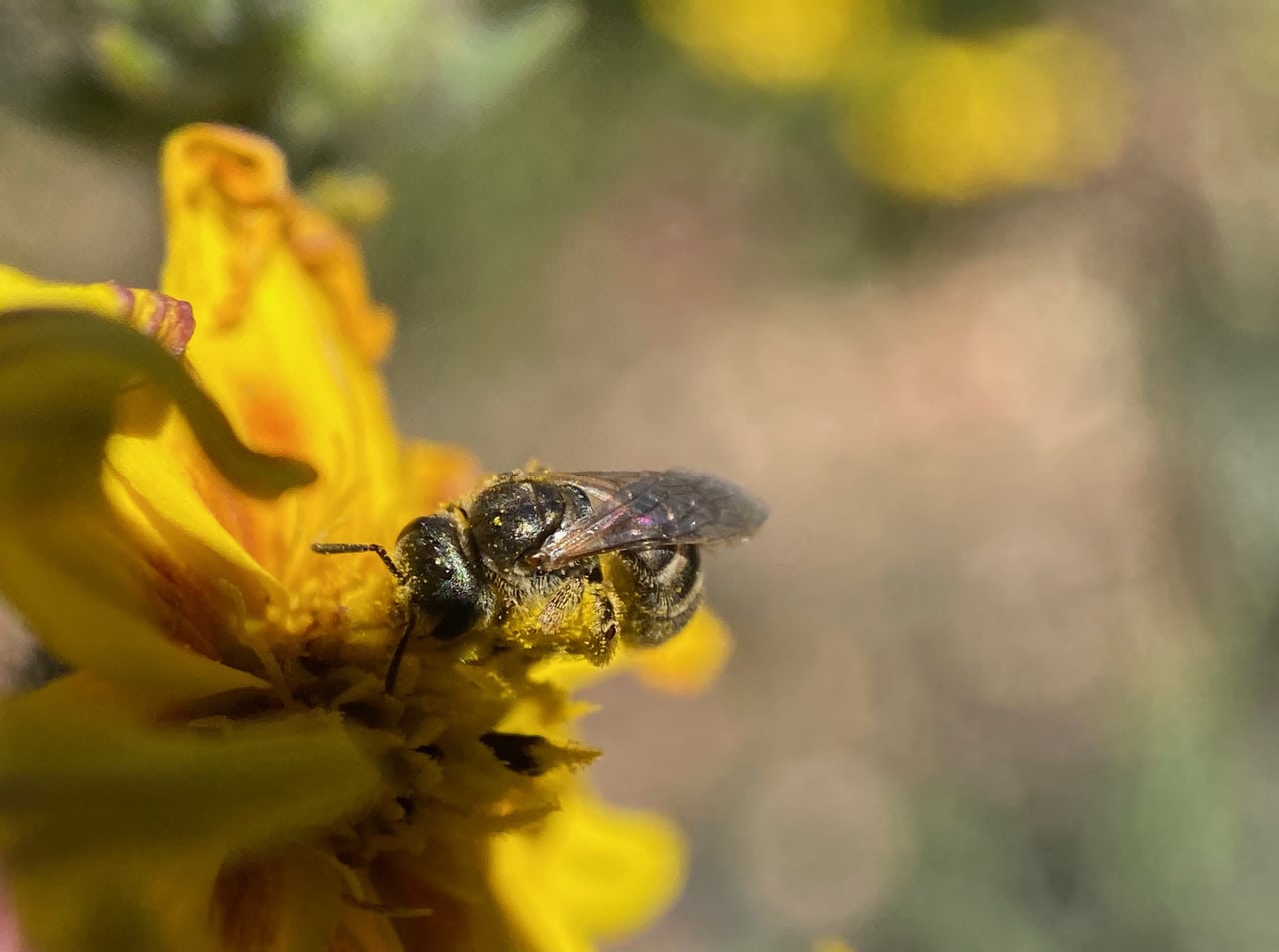
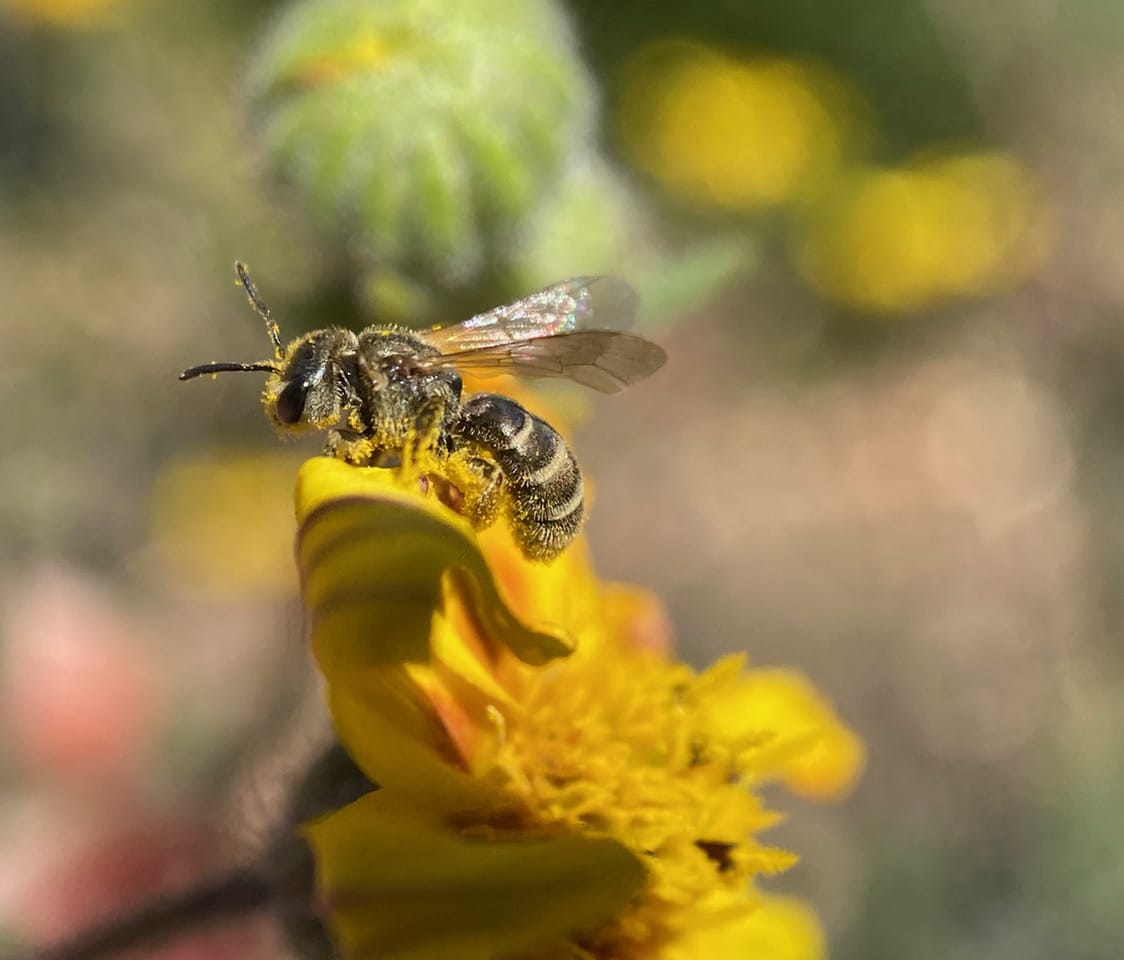
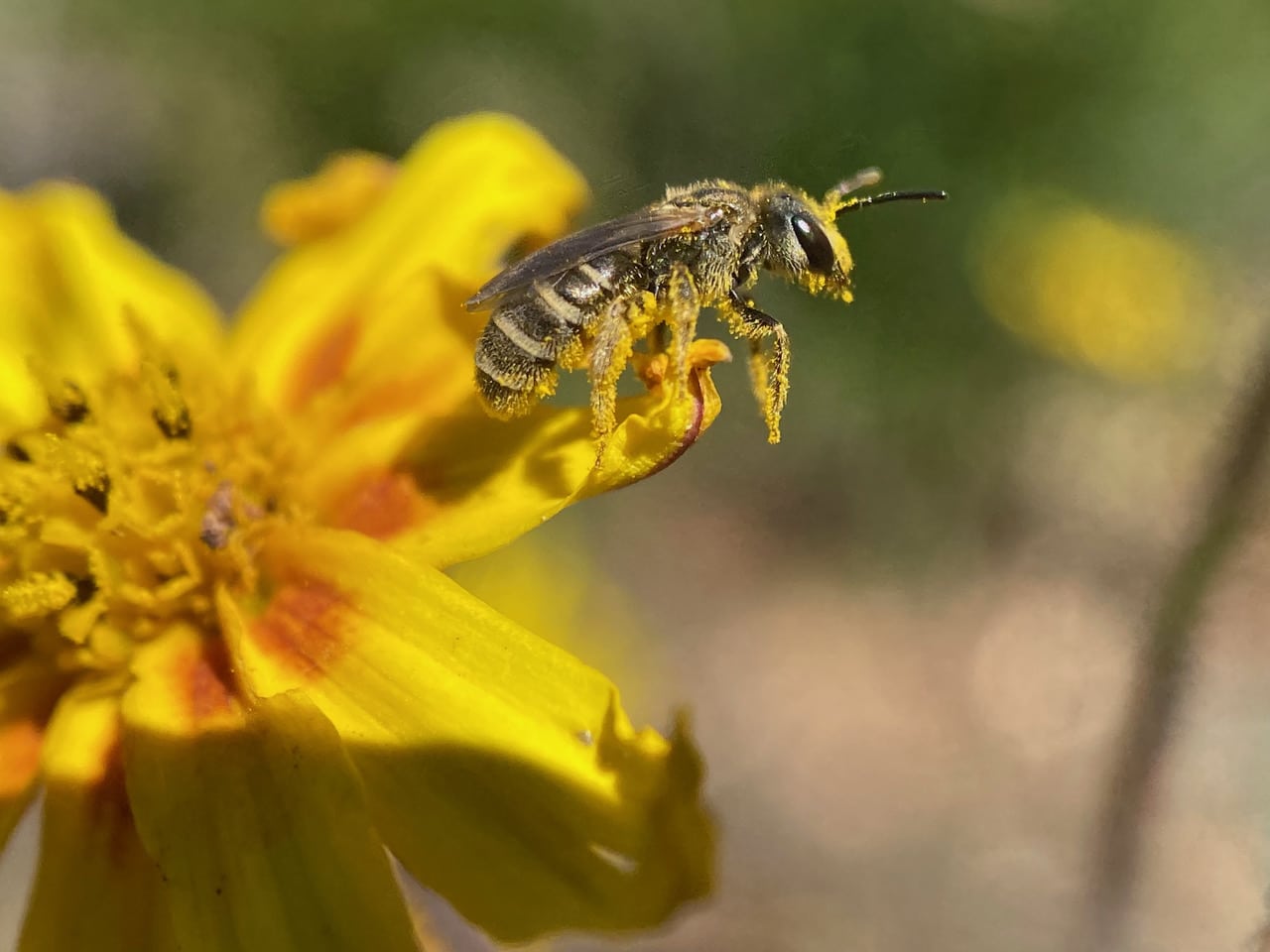
A little bee is foraging on another flowerhead of Madia elegans. The scopae (pollen collecting hairs) of the bee seem to cover the entire length of its hind leg as well as the underside of its abdomen. This is suggestive of a female Sweat Bee (family Halictidae).
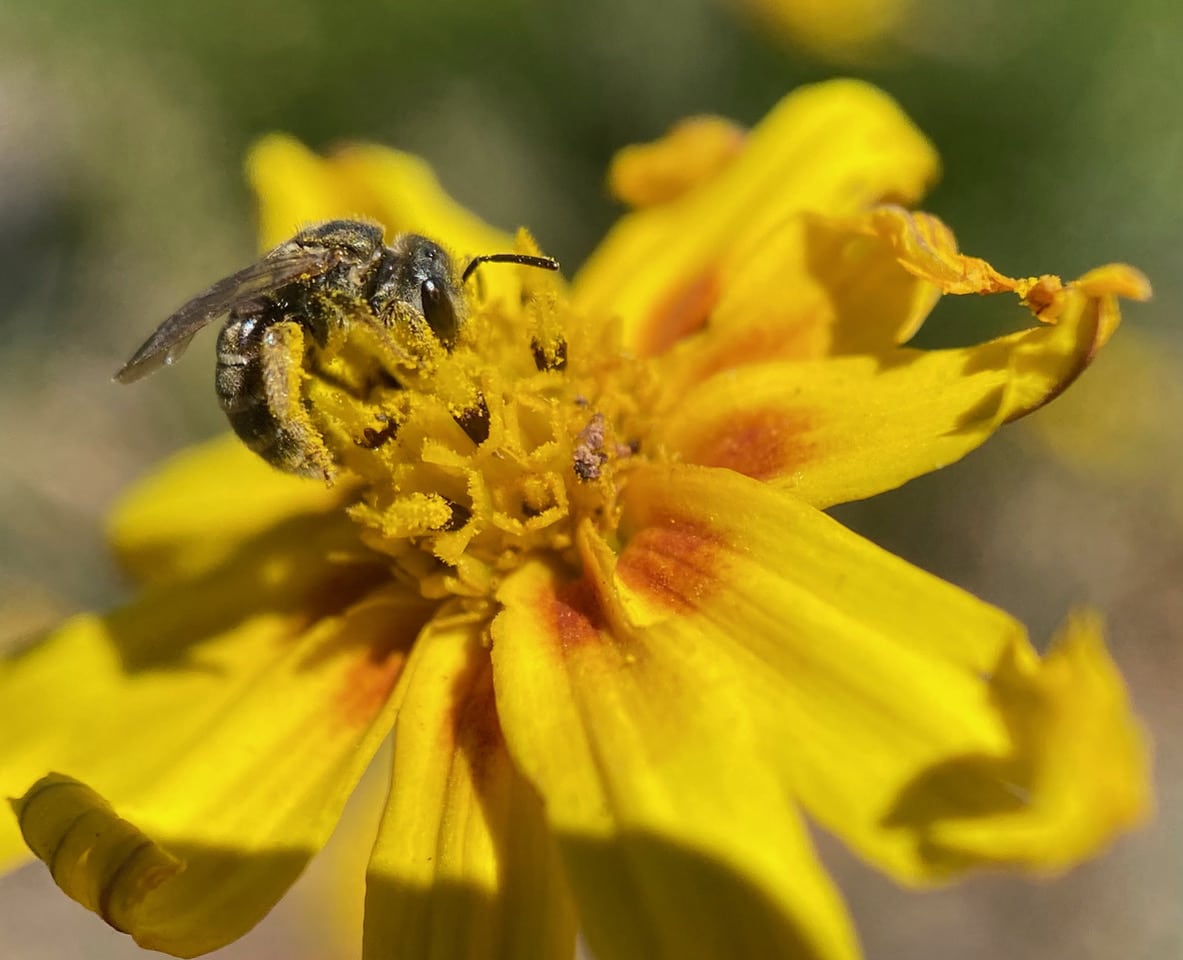
This is a typical pollen gathering posture. The bee embraces the stamens, scraping pollen off the anthers of the florets with her legs.
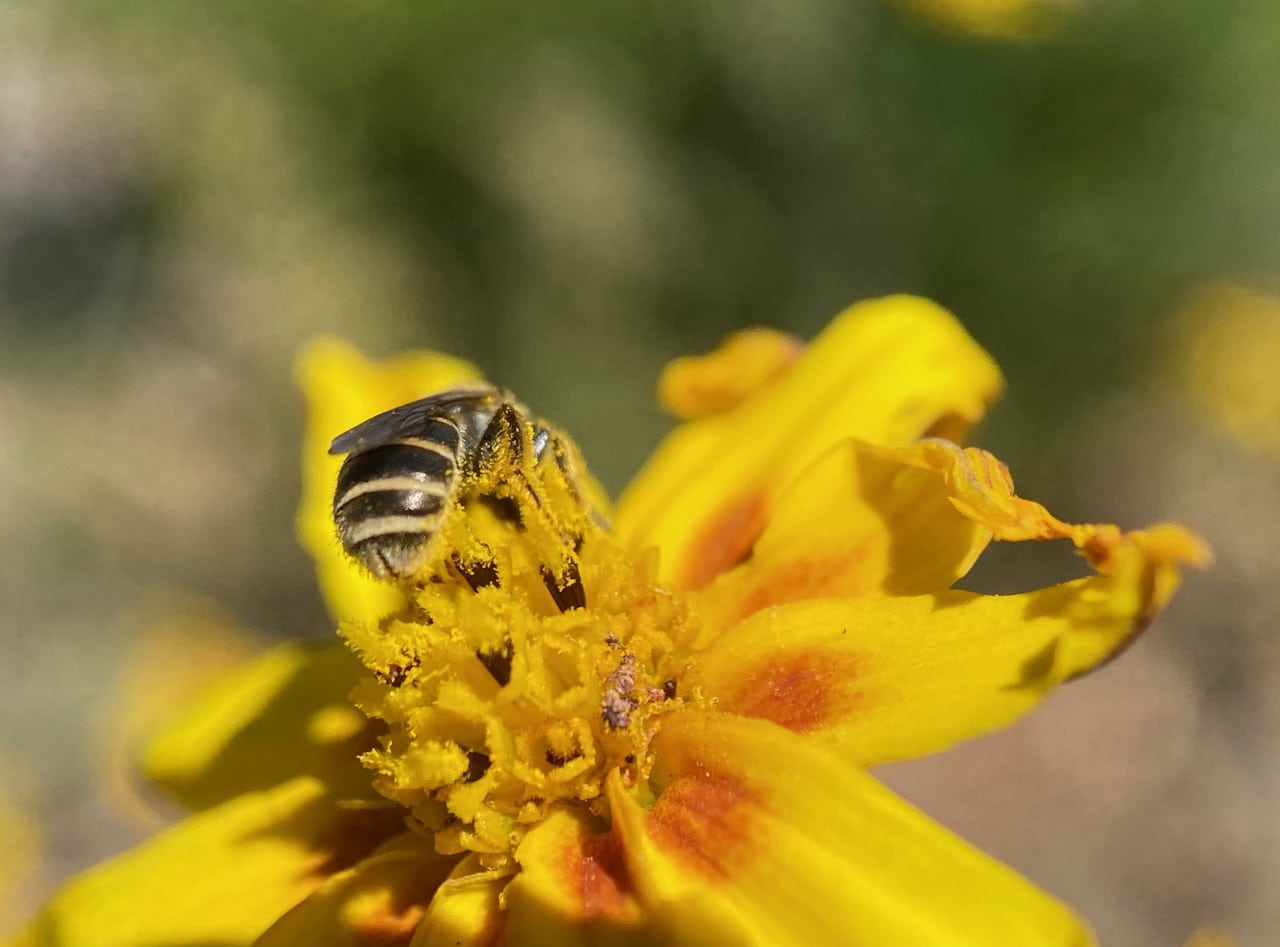
A good look at the hairs on the abdomen is useful in distinguishing between the genus Halictus and the genus Lasioglossum. Halictus bees have hairs at the edge of each tergite as opposed to the base of the tergite, as in Lasioglossum. From this morphological distinction, the bee is identified as a member of the genus Halictus.
The bee is filling the scopa along the entire length of her hind leg nicely.
Ah, this view confirms the case for Halictus! See that “furrow” near the tip of the bee’s abdomen? The feature, only present in females, distinguishes the genus Halictus from the related and similar genus Lasioglossum. This is the reason why Halictus are sometimes called Furrow Bees. The furrow on the last tergite (top segment of the abdomen) is referred to as a ‘rima’. The purpose of this feature is unknown.
Time for some grooming? Asteraceae pollen tends to be very sticky and clumpy, adhering to insect visitors readily.
Pollenkitt is a sticky covering found on the surface of pollen grains. It is also sometimes called “pollen coat”. It is found in some plant families more often than others, but it is especially common in plants that are pollinated by insects. Because of this scientists believe that one of the major functions of pollenkitt is to help the pollen stick to the insect pollinators. The pollen from many wind-pollinated plants, such as grass, is much drier and not nearly so sticky. The insects benefit from lots of pollen that is easy to carry home. What’s more, pollenkitt contains lipids, proteins, and phenolic compounds that are important to bee health. For the plant, pollenkitt may prevent the pollen from blowing away or drying out, or it may protect the pollen from ultra-violet radiation and certain pathogens.