

Pollinator Post 7/26/23 (2)
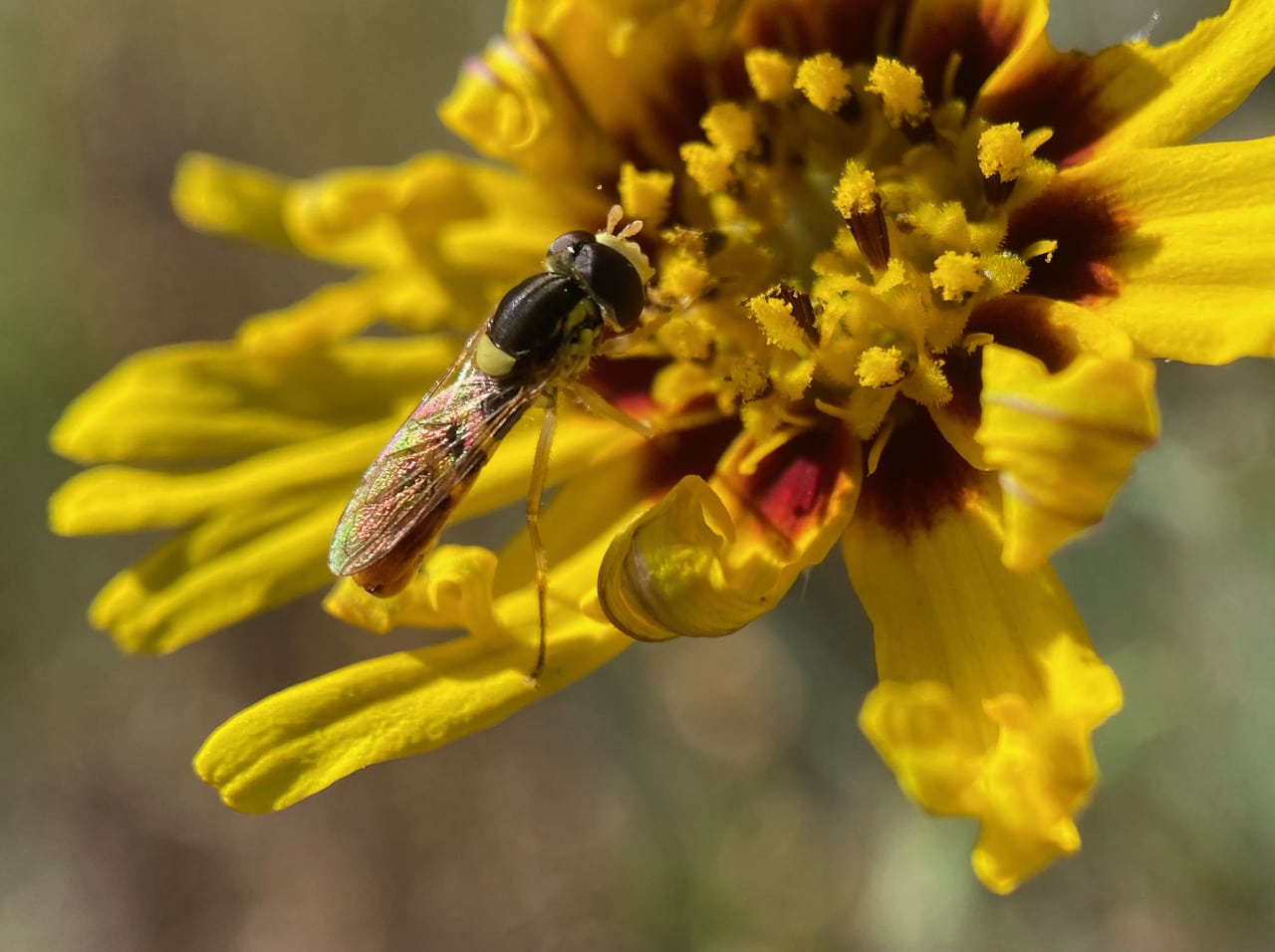
A male Forked Globetail, Sphaerophoria sulphuripes (family Syrphidae) is foraging on an Elegant Tarweed, Madia elegans flowerhead.
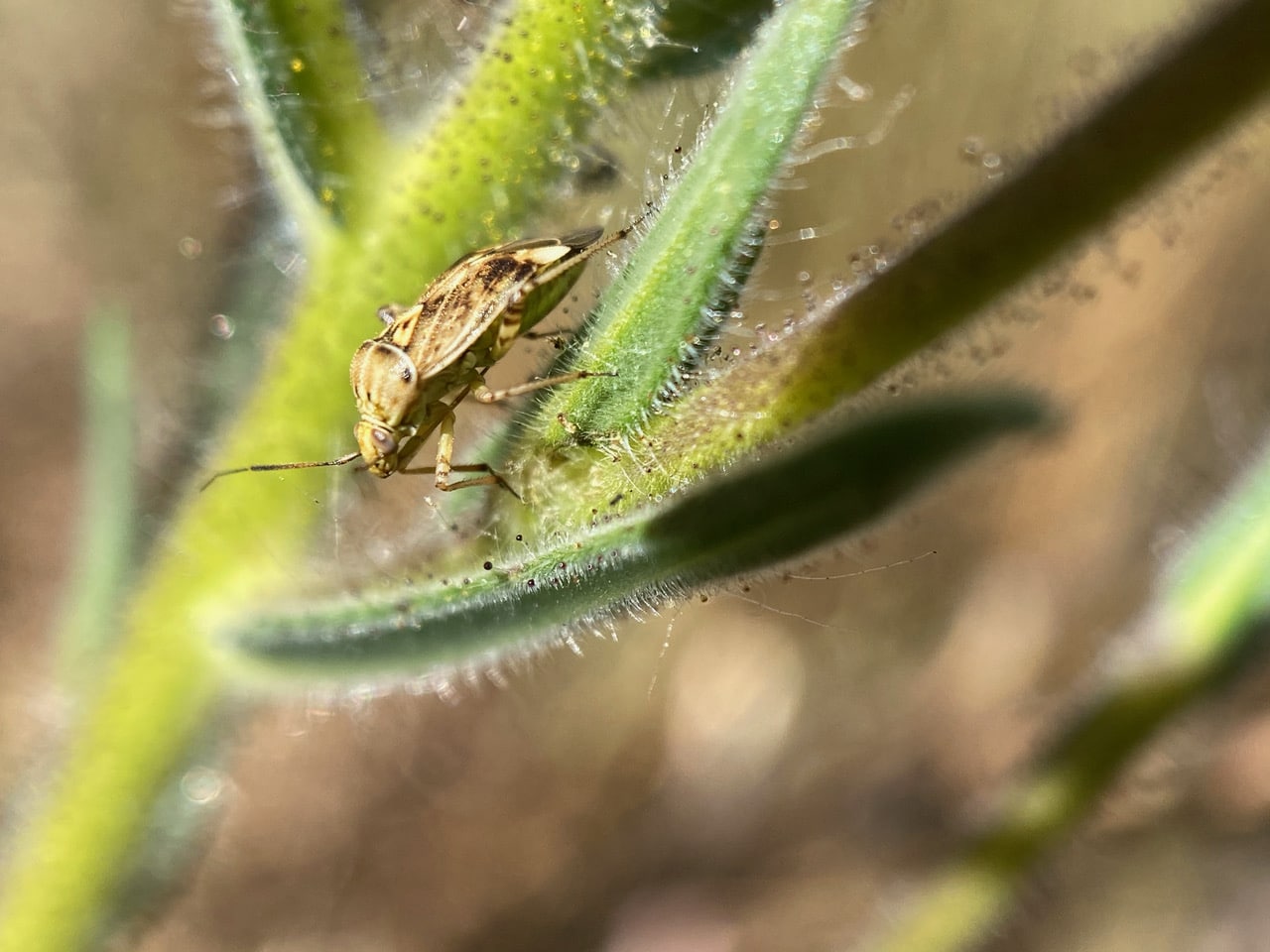 A Lygus Bug seems to be enjoying the morning sun. It is not feeding, as its rostrum (piercing-sucking mouthparts) is folded under its body.




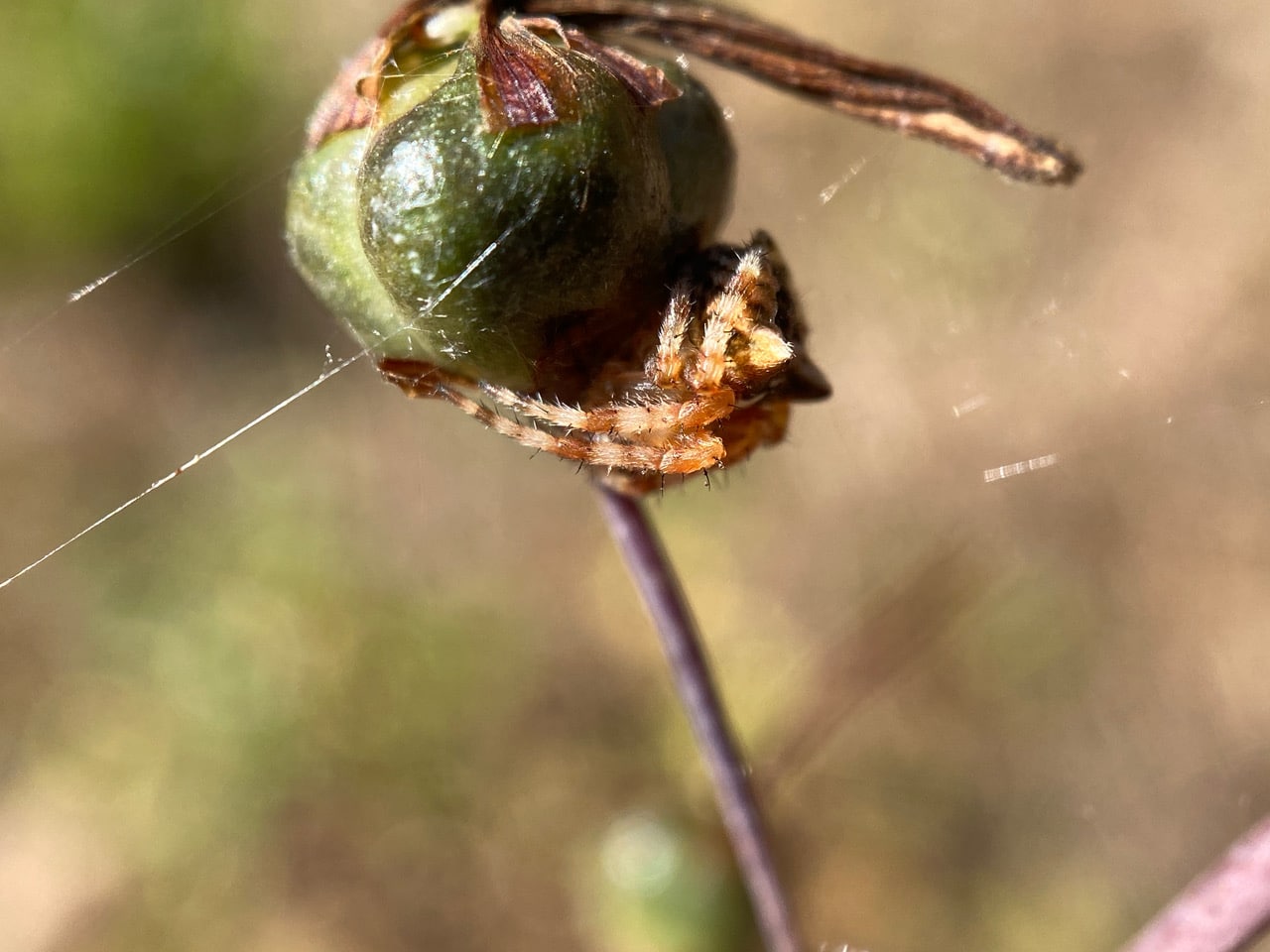 The Two-tubercled Orb-weaver, Gibbaranea bituberculata (family Araneidae) that I found on 7/23 is still in the same position under an immature fruit of Soap Plant, Chlorogalum pomeridianum.


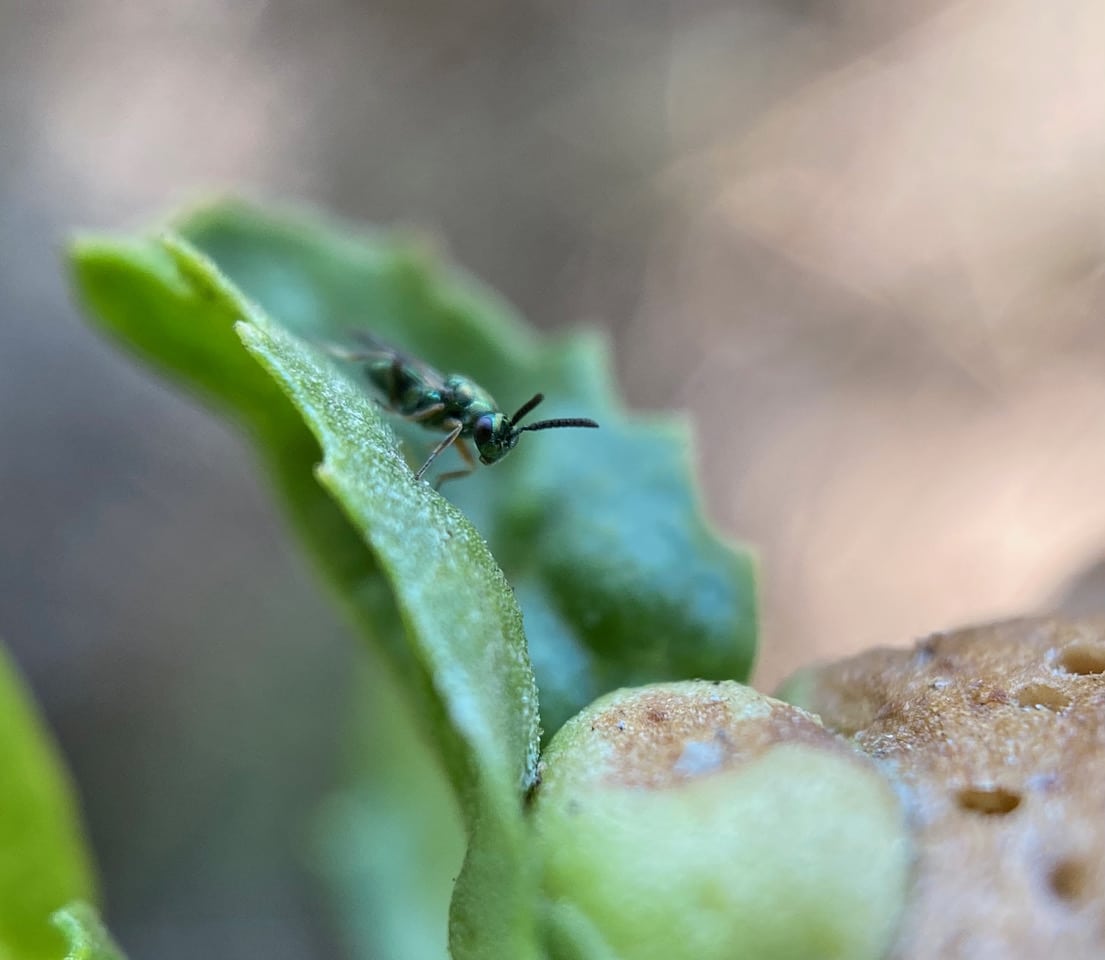


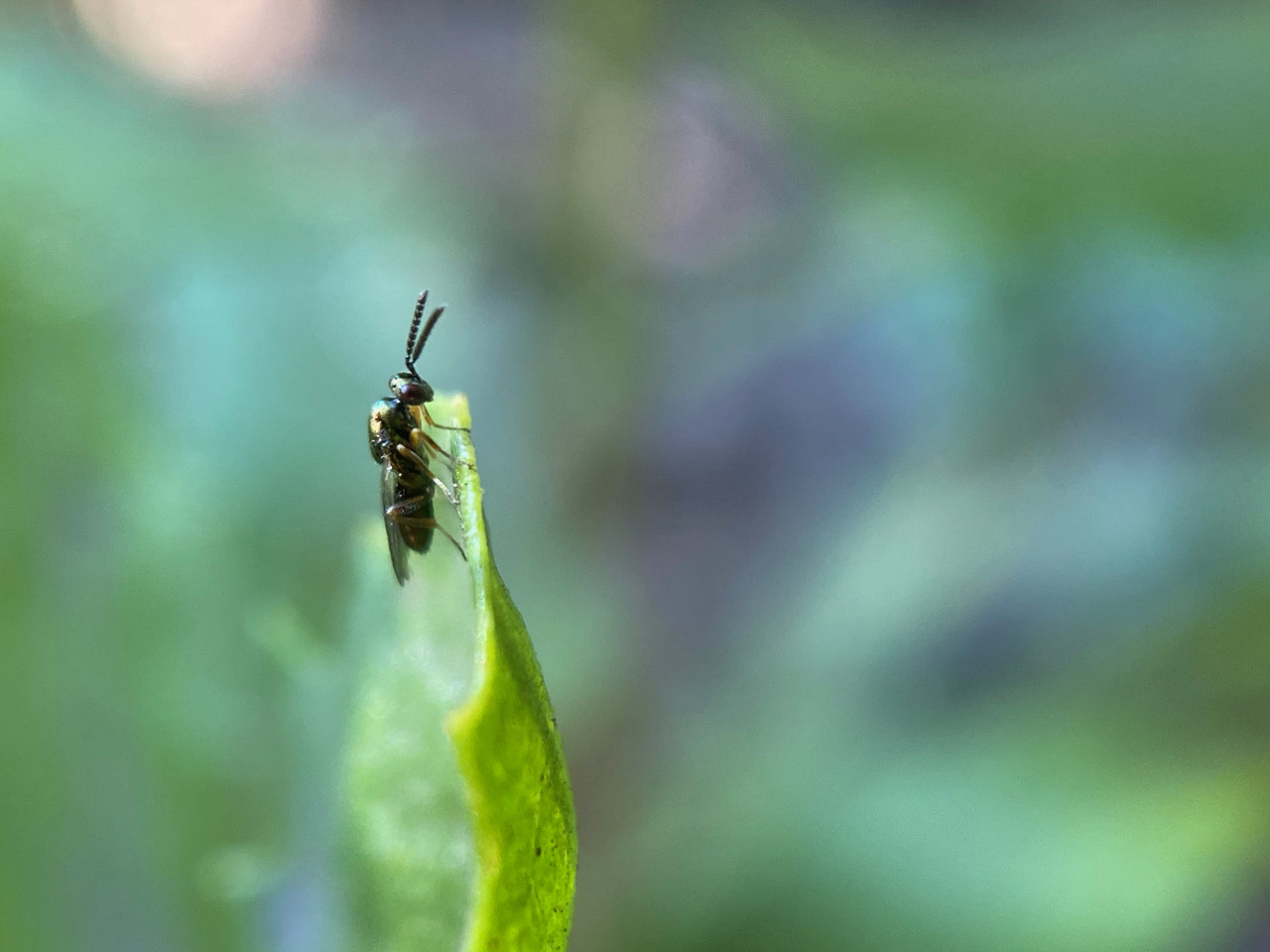

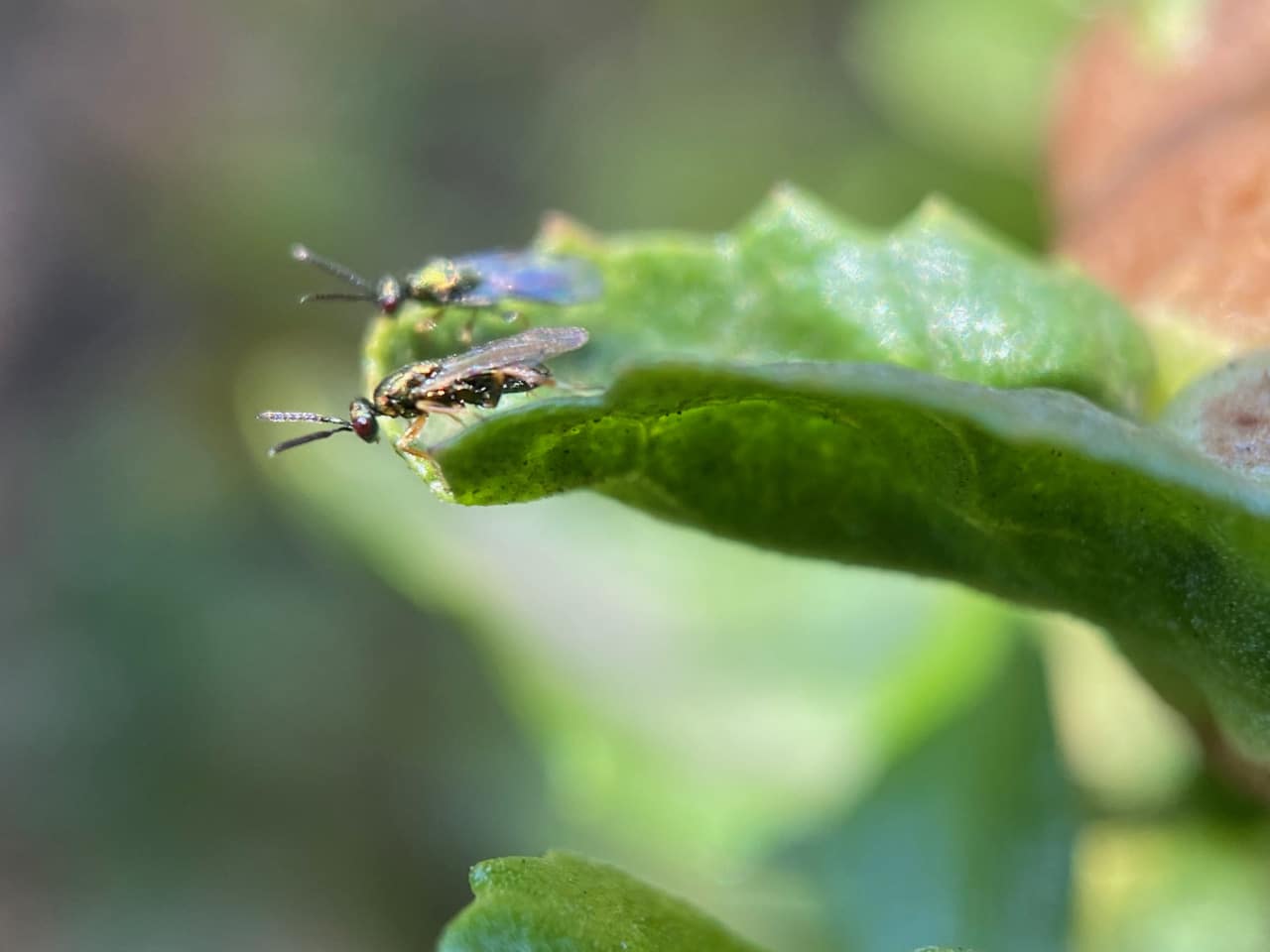
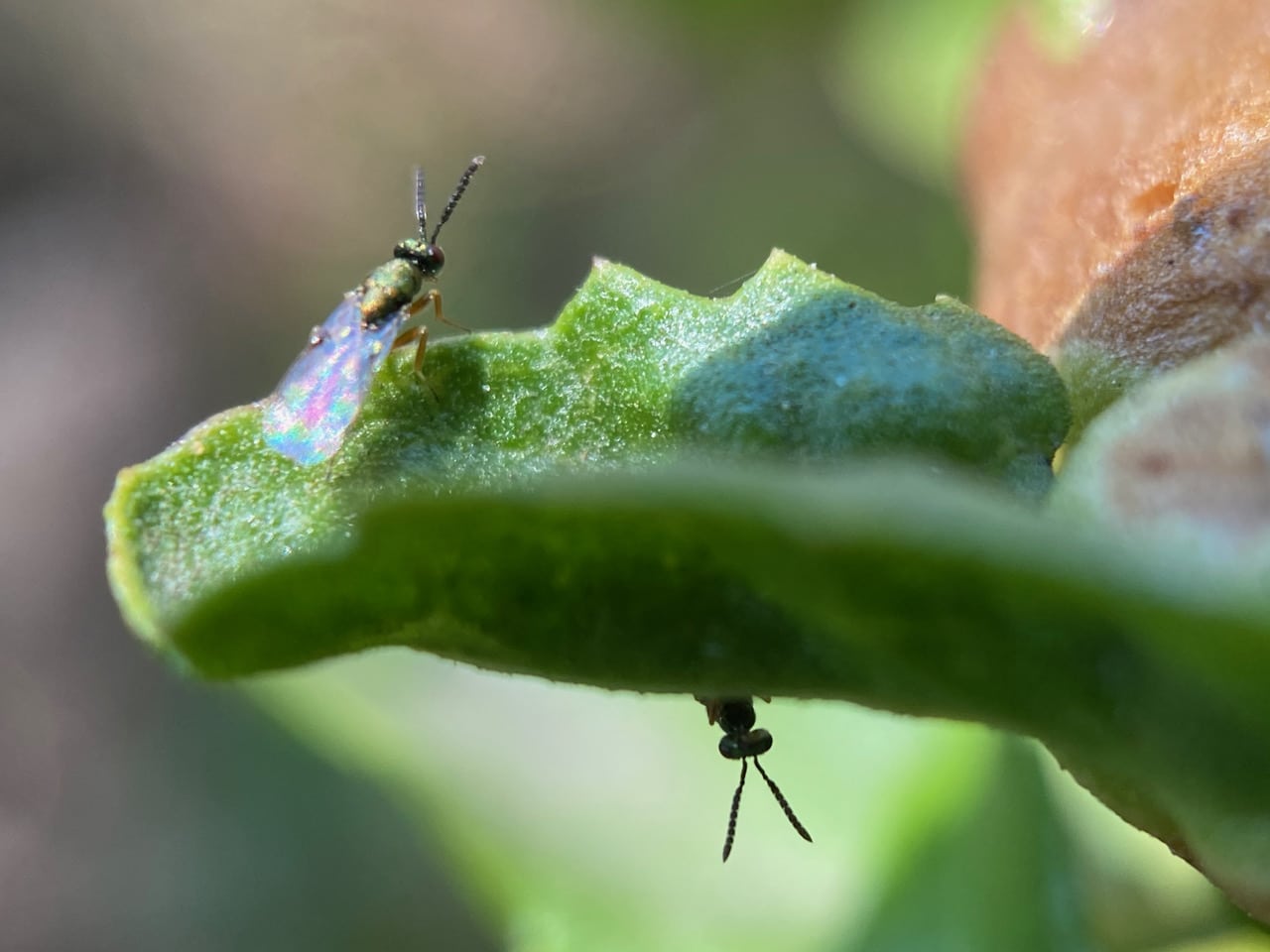 The wasps seem to enjoy their chasing game and playing hide-and-seek. Adorable! Are these young wasps freshly emerged from the gall, or are they here to mate and lay eggs in the gall?


A Lygus Bug seems to be enjoying the morning sun. It is not feeding, as its rostrum (piercing-sucking mouthparts) is folded under its body.Its tongue extended, a Sedgesitter, Platycheirus sp. (family Syrphidae) is feeding on Madia elegans pollen. The sticky, clumpy pollen has adhered to the fly’s face and legs.
Their fondness for nectar and pollen has made the hover flies (family Syrphidae) great pollinators, second only to bees. Unlike the bees, the adult hover flies consume the floral resources themselves. Their larvae, depending on the species, feed on other food sources. Some species have larvae that feed on aphids and other soft-bodied insects. Others have semi-aquatic larvae that feed on rotting plant materials and the bacteria found on them.
The the yellow-and-red male Globetails are well matched for the Elegant Tarweed flowerheads they forage on. The hoverfly is one of the most common species found on Madia flowers.
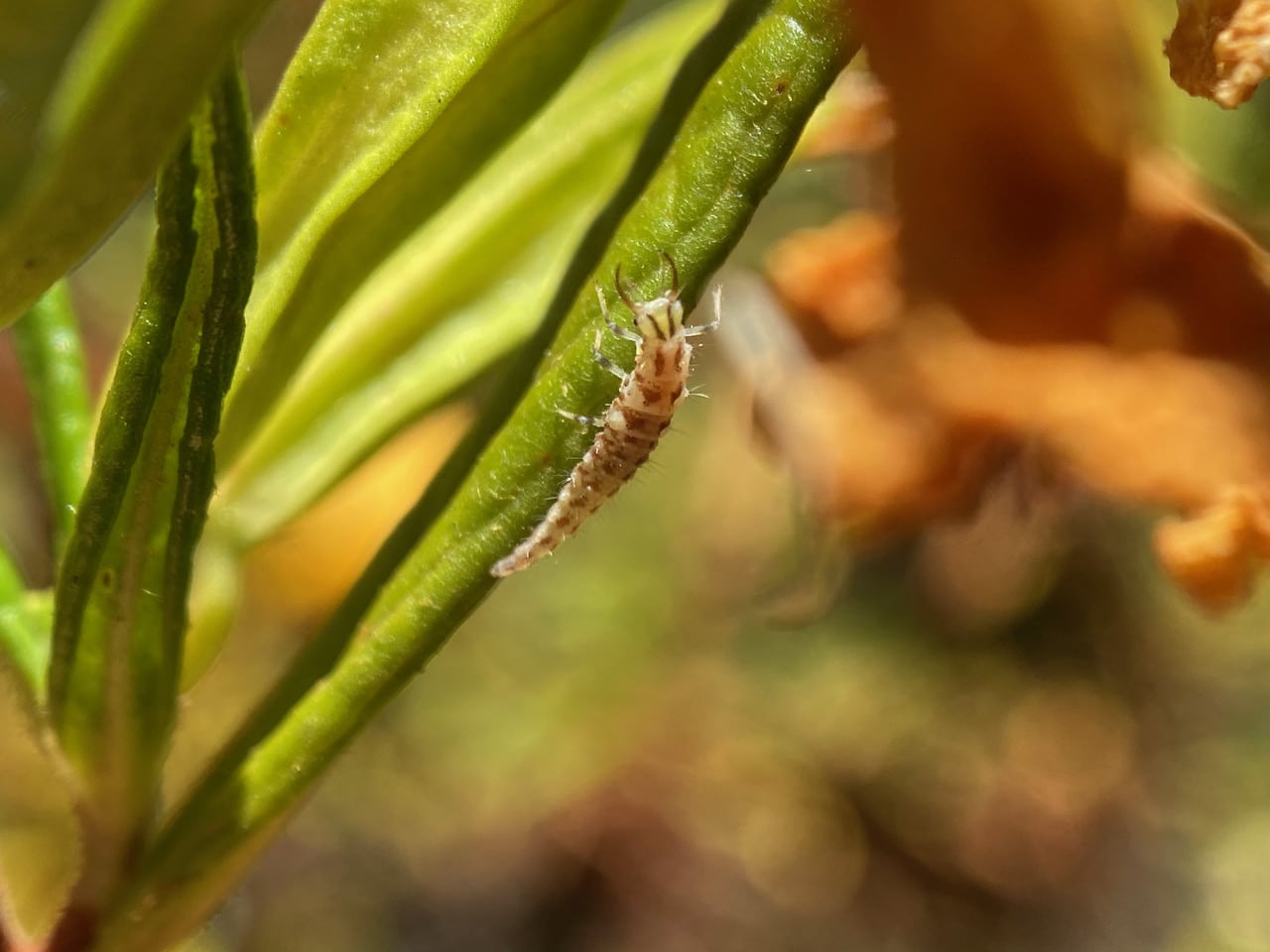
Boy, there sure is a lot of Lacewing activity on the plants lately! This tiny Lacewing larva is hunting on a leaf of Sticky Monkeyflower, Diplacus aurantiacus.
Lacewings are insects in the large family Chrysopidae of the order Neuroptera. Adults are crepuscular or nocturnal. They feed on pollen, nectar and honeydew supplemented with mites, aphids and other small arthropods. Eggs are deposited at night, hung on a slender stalk of silk usually on the underside of a leaf. Immediately after hatching, the larvae molt, then descend the egg stalk to feed. They are voracious predators, attacking most insects of suitable size, especially soft-bodied ones (aphids, caterpillars and other insect larvae, insect eggs). Their maxillae are hollow, allowing a digestive secretion to be injected in the prey. Lacewing larvae are commonly known as “aphid lions” or “aphid wolves”. In some countries, Lacewings are reared for sale as biological control agents of insect and mite pests in agriculture and gardens.
The Lacewing larva eventually ends up on a withered Monkeyflower. Note its formidable sickle-shaped maxillae.
A pair of Seed Bugs, Kleidocerys franciscanus (family Lygaeidae) is mating on the calyx of a withered Sticky Monkeyflower. The larger one on the left, probably the female, is actually feeding with its rostrum piercing the calyx.
The defining feature of Hemipterans or “true bugs” is their “beak” or rostrum in which the modified mandibles and maxillae form a “stylet” which is sheathed within a modified labium. The stylet is capable of piercing tissues and sucking liquids, while the labium supports it. The stylet contains a channel for outward movement of saliva and digestive enzymes, and another channel for the inward movement of pre-digested liquid food. The rostrum is usually folded under the body when not in use. Seed bugs are able to feed on seeds by injecting digestive juices into the seeds and sucking up the digested contents as a liquid.
 The Two-tubercled Orb-weaver, Gibbaranea bituberculata (family Araneidae) that I found on 7/23 is still in the same position under an immature fruit of Soap Plant, Chlorogalum pomeridianum.
 Gibbaranea bituberculata is a species of ‘orbweavers’ belonging to the family Araneidae. They are found in sunny habitats on shrubs, edges and low plants, where they can make their webs near the ground. Their basic color is very variable, but usually it is brownish, with whitish shades. The cephalothorax is covered with lying down hairs.
Orb-weaver spiders are members of the spider family Araneidae. They are the most common group of builders of spiral wheel-shaped webs often found in gardens, fields, and forests. Generally, orb-weavers are three-clawed builders of flat webs with sticky spiral capture silk. The third claw is used to walk on the non-sticky part of the web. Typically, the prey insect that blunders into the sticky lines is stunned by a quick bite, and then wrapped in silk.
Curious to see what the rest of the spider looks like, I gently tilt the branch to get her into the light. The spider moves a little, showing me her abdomen with the two cone-shaped tubercles, and her head between the front legs. Thank you, Beautiful!
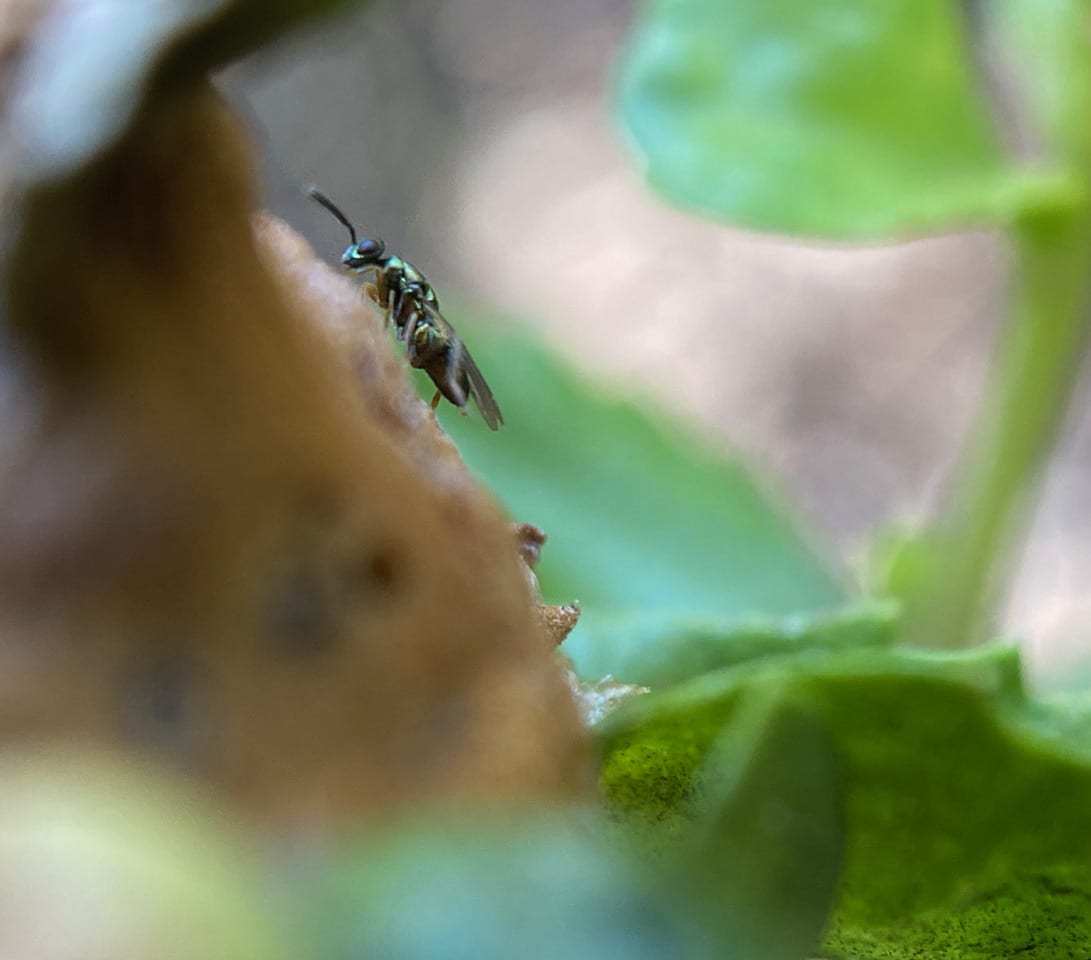
Do you see the tiny green insect on the bract of this Coyote Brush Bud Gall?
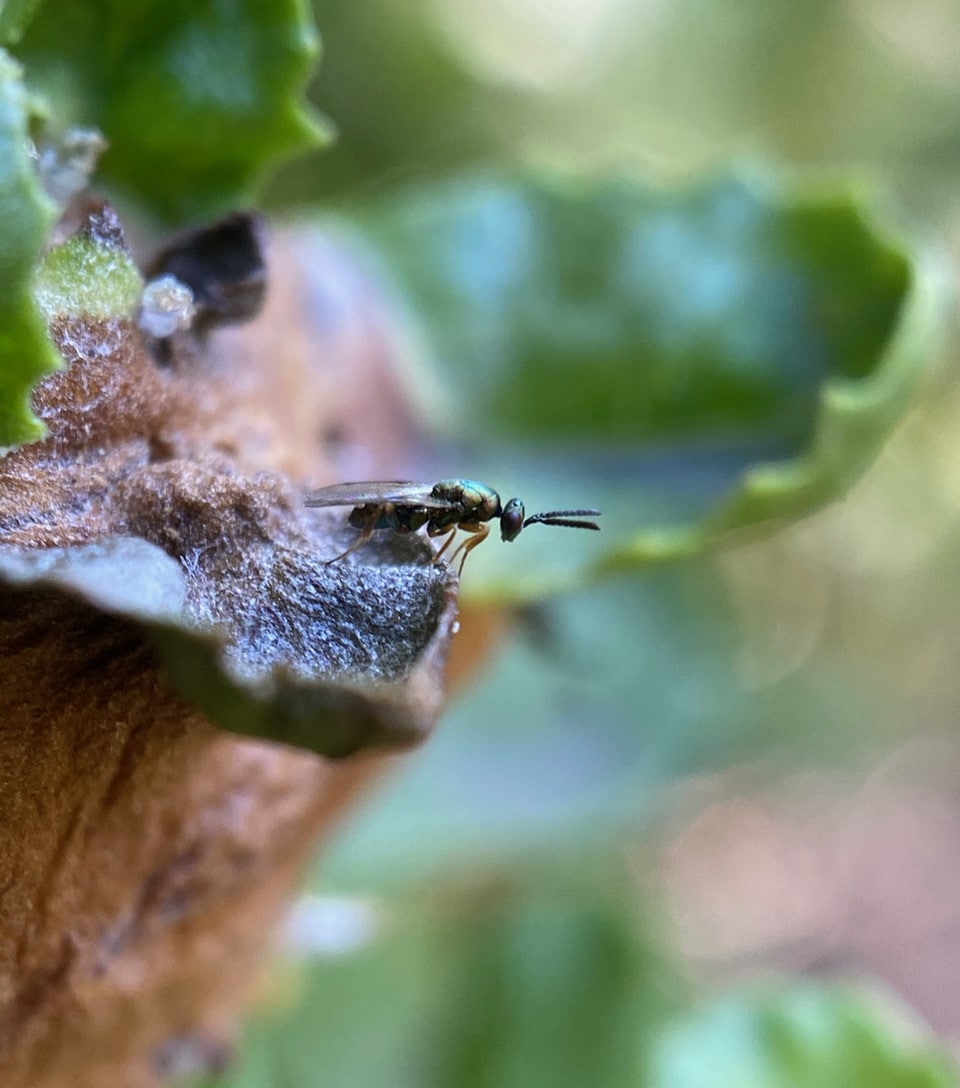
Up close, this is what the wasp look like. Ooh! It’s a female with a long ovipositor!
The wasp is a member of the family Torymidae, in the superfamily Chalcidoidea. Most species in this family are small with attractive metallic coloration, and females generally have long ovipositors. Many are parasitoids on gall-forming insects, and some are phytophagous (plant-eating) species, sometimes using the galls formed by other insects. Over 960 species in about 70 genera are found worldwide. They are best recognized in that they are one of the few groups of chalcidoidea in which the cerci are visible.”
This one without an ovipositor must be a male.
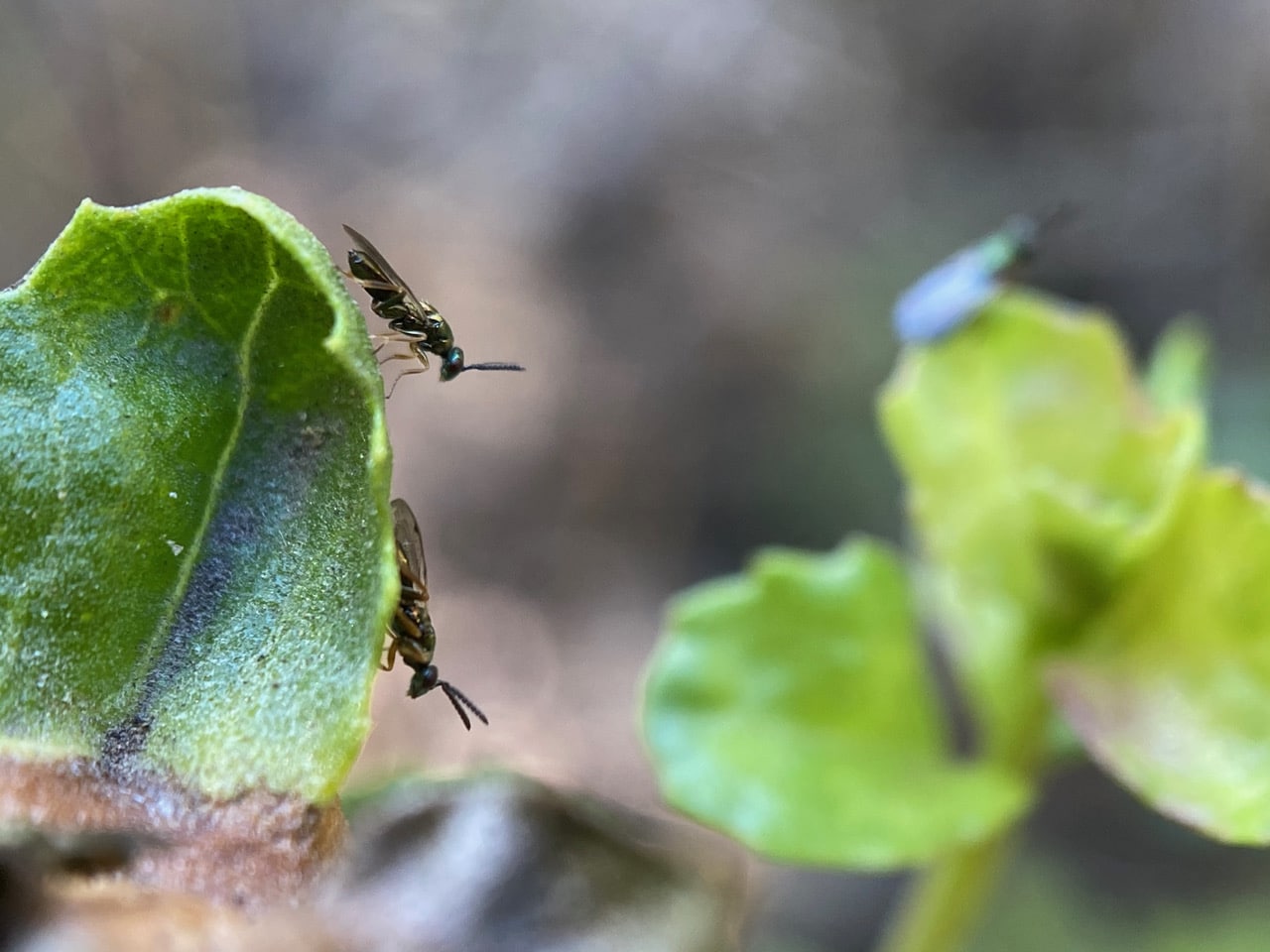
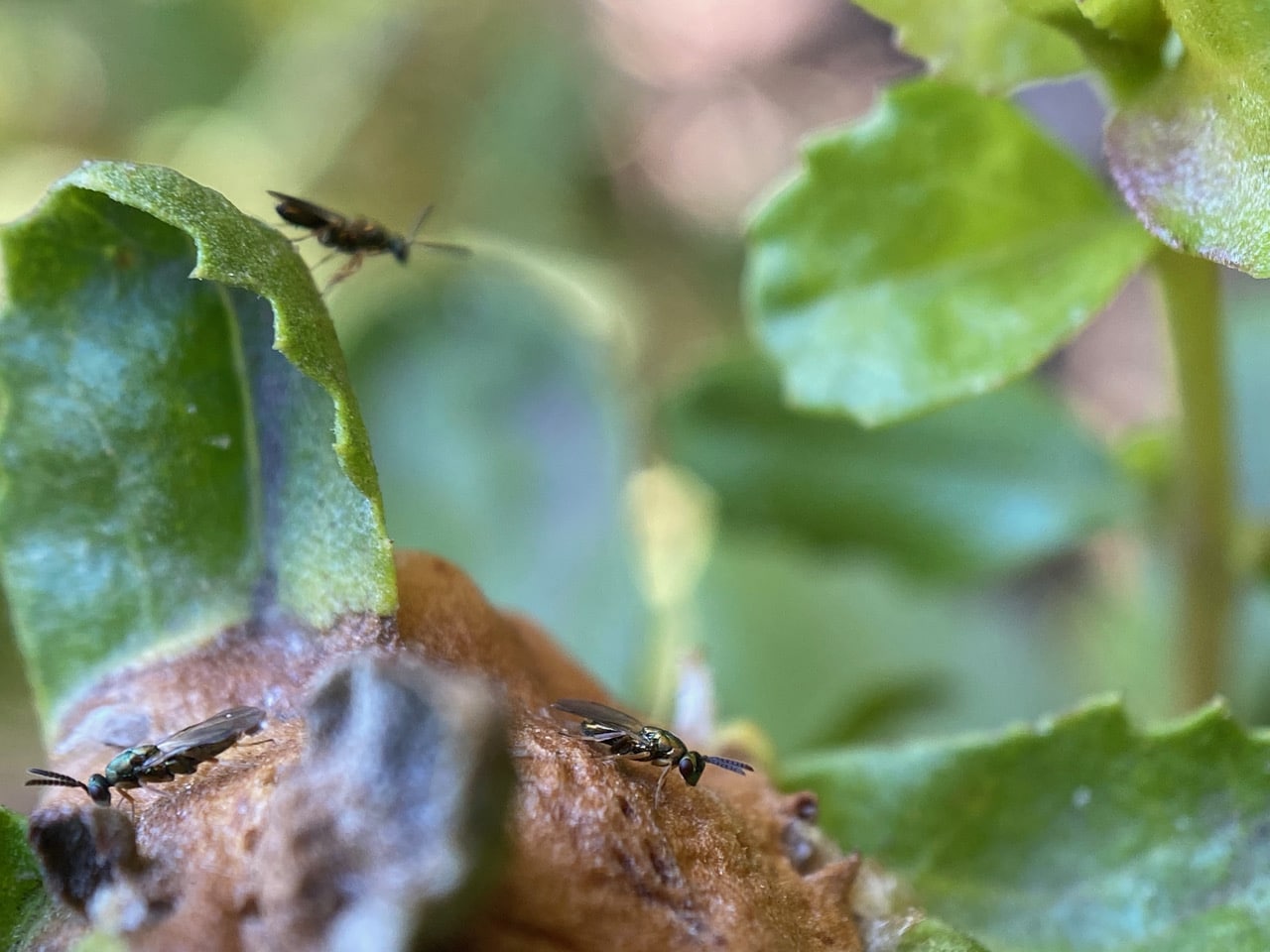
There are all together four of these metallic green wasps running around on the gall and its bracts.
Sometimes the wasps would chase each other, but in an apparently harmless, playful way.
The Coyote Brush Bud Gall seems to be a playground for these wasps.
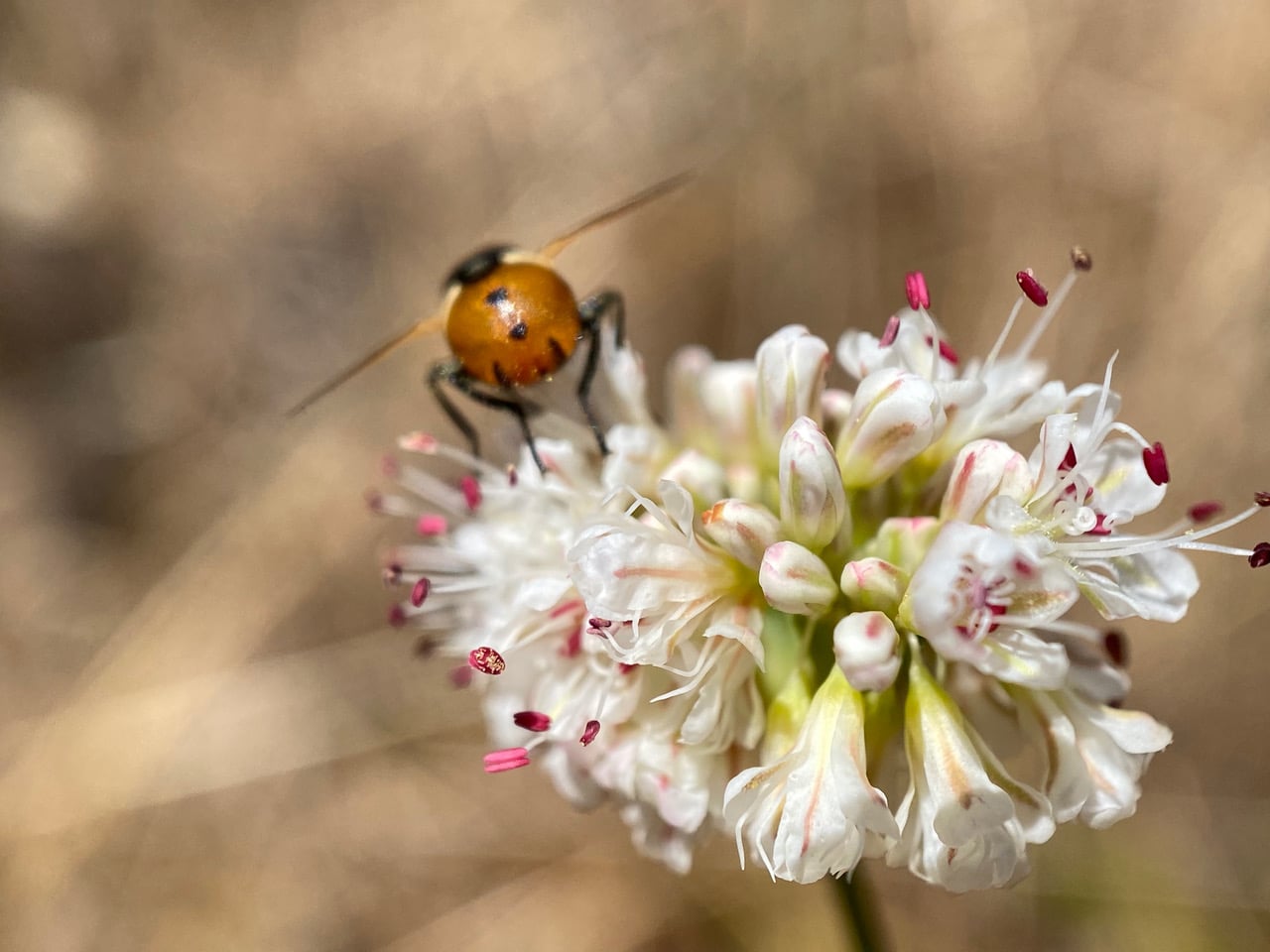
The wasps seem to enjoy their chasing game and playing hide-and-seek. Adorable! Are these young wasps freshly emerged from the gall, or are they here to mate and lay eggs in the gall? Passing a small patch of Naked Buckwheat, Eriogonum nudum along Skyline Trail, I notice a small rambunctious insect roaming the surface of an inflorescence. Under the macro lens, I recognize it as the Ladybird Fly, Gymnosoma sp. (family Tachinidae).
With no visible bristles on its abdomen, Gymnosoma is not a typical Bristle Fly in the family Tachinidae. The name “Gymnosoma” literally translates as “naked body”, and refers to the fact that the fly is less bristly than most Tachinids. In fact, with its rounded appearance, and orange-red abdomen decorated with black spots, the parasitoid fly is reminiscent of a Ladybird beetle, hence the common name.
Gymnosoma is a small 5-6 mm long fly. It has a dark thorax, golden in males, and a globular orange-red abdomen decorated with dark round markings along the midline. The base of the wings are yellow-brown.
Despite the whimsical appearance of the adults, Gymnosoma larvae grow as parasitoids of stink bugs in the family Pentatomidae. The adults visit a range of open shallow flowers.