

Pollinator Post 7/25/23 (1)
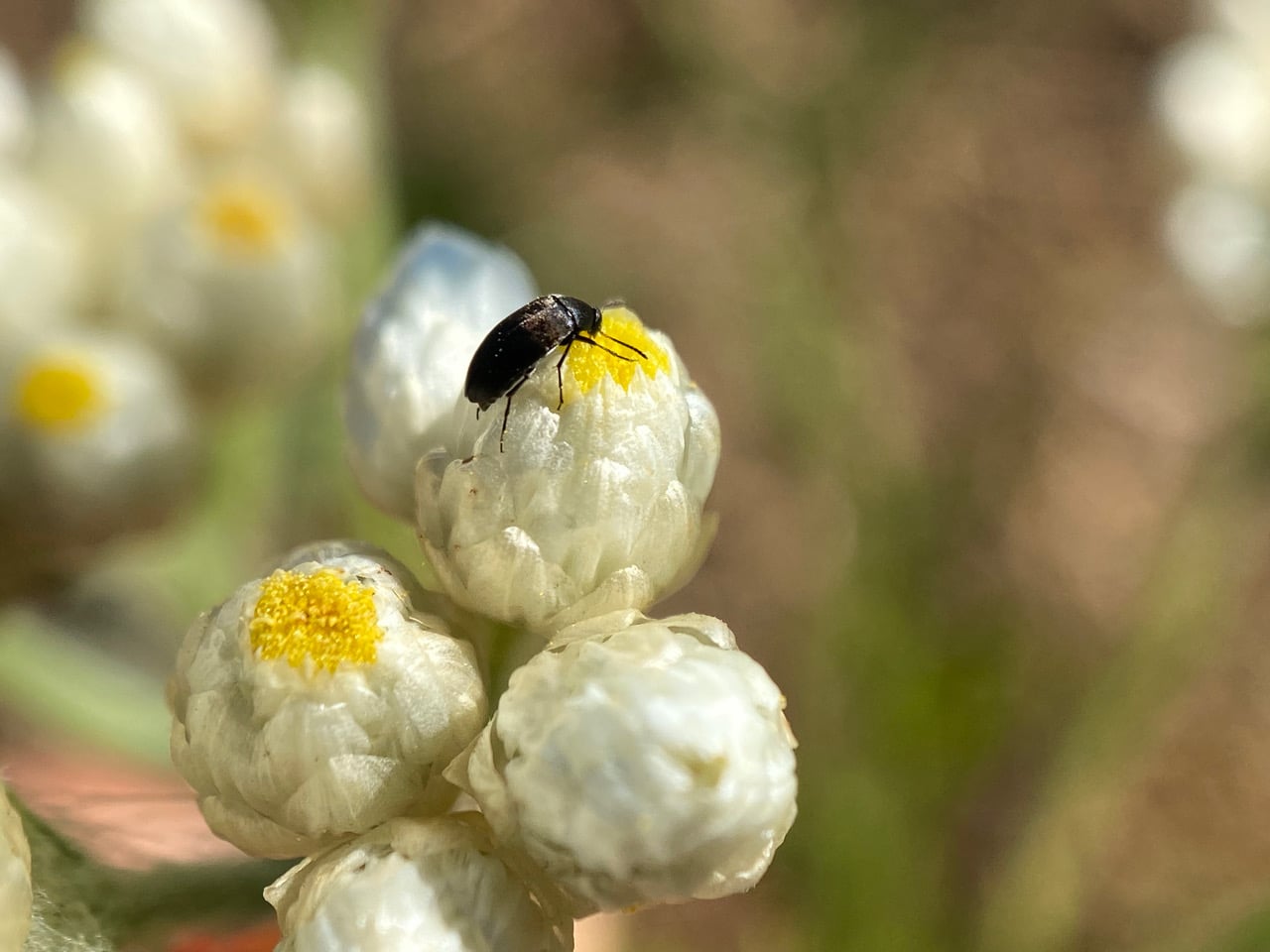
A False Flower Beetle, Anaspis atrata (family Scraptiidae) is feeding on the exposed flowers of California Everlasting, Pseudognaphalium californicum.
False Flower Beetles, Anaspis atrata (family Scraptiidae) are commonly found in western North America. The adults are found on flowers, sometimes in large numbers, but are also found on foliage. The larvae are typically found under the bark of dead trees.

A female Fruit Fly, Trupanea californica (family Tephritidae) is roaming the flowerheads of California Everlasting. Female Fruits Flies are easily distinguished by the presence of an oviscape – the pointy structure at the tip of their abdomen. The oviscape is the basal part of the ovipositor, the non-retractile sheath that protects the ovipositor. It remains exposed when the ovipositor is withdrawn and not in action.
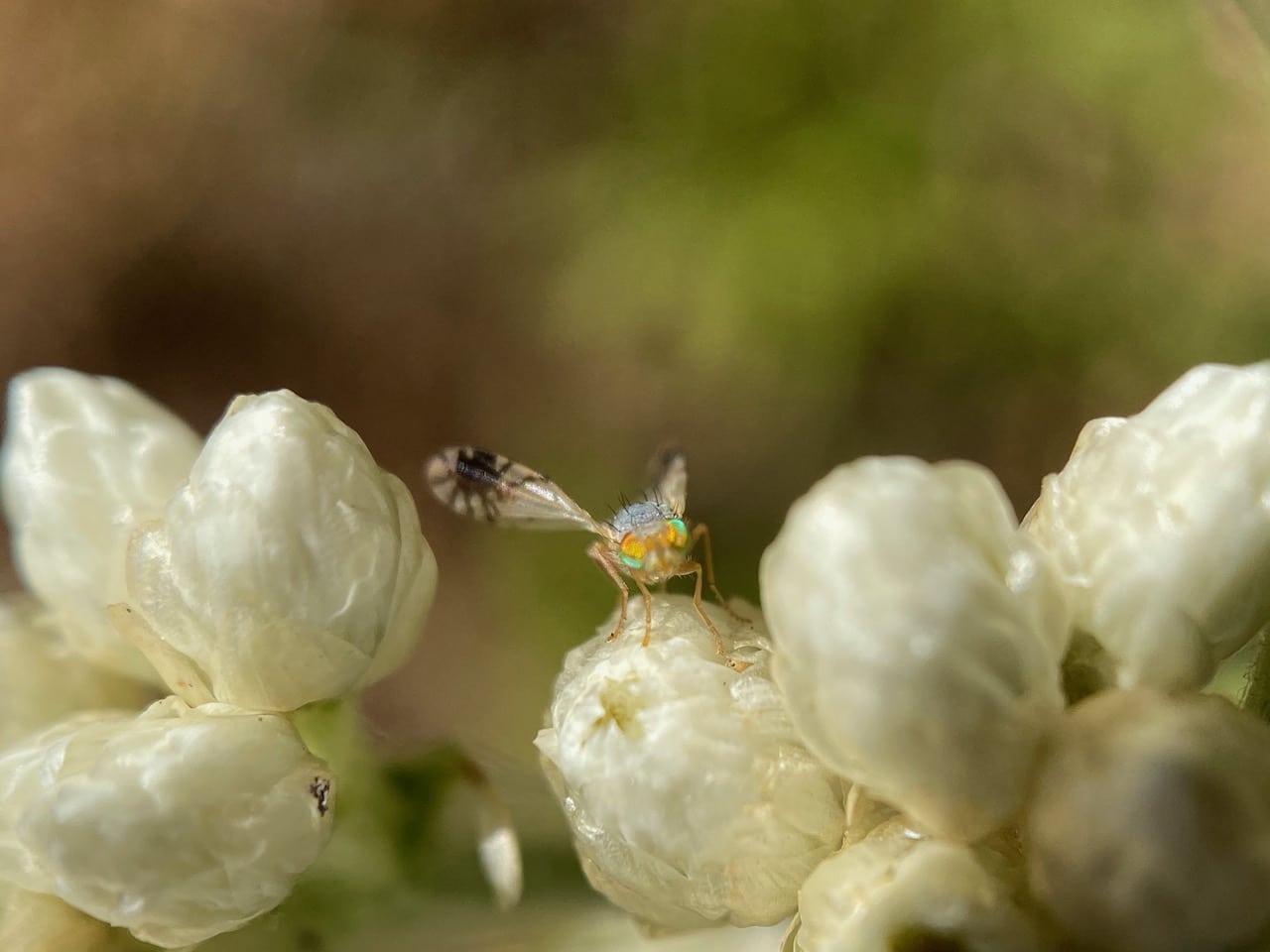
Her eyes reflecting a rainbow of colors in the sun, Trupanea is waving her picture wings alternately in a figure-8 motion. Is she signaling to potential mates that she is ready? A few days ago, I was fortunate to see a female Trupanea lay eggs in the everlasting flowerheads.
Trupanea californica reproduces in the flowerheads of Gnaphalium and related genera in Asteraceae. The larvae feed mainly on the ovules and achenes of their host plants.
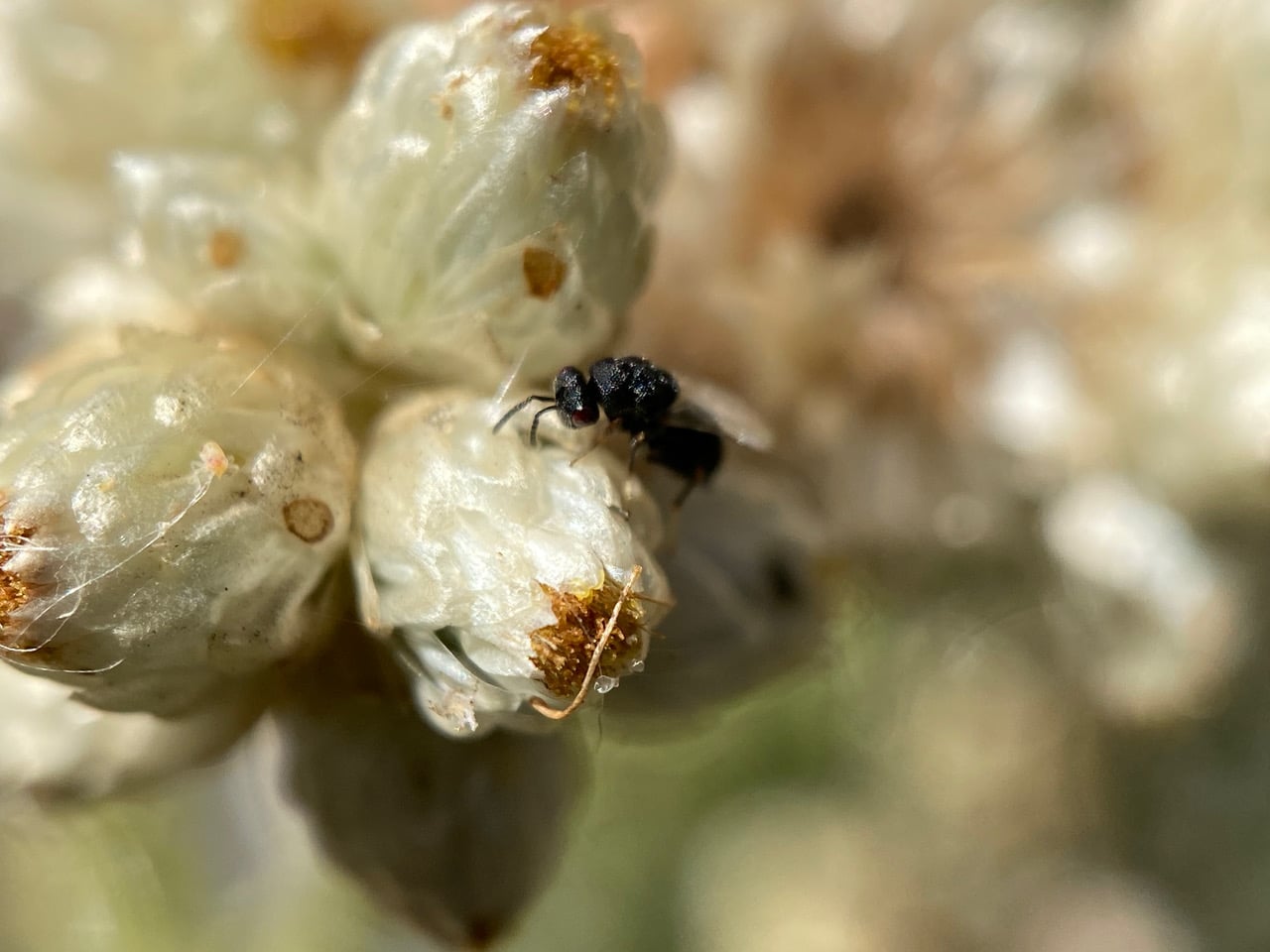
Ooh, here’s a tiny parasitoid wasp investigating a flowerhead of California Everlasting! It is tapping the phyllaries with its antennae – looking for a place to lay eggs?
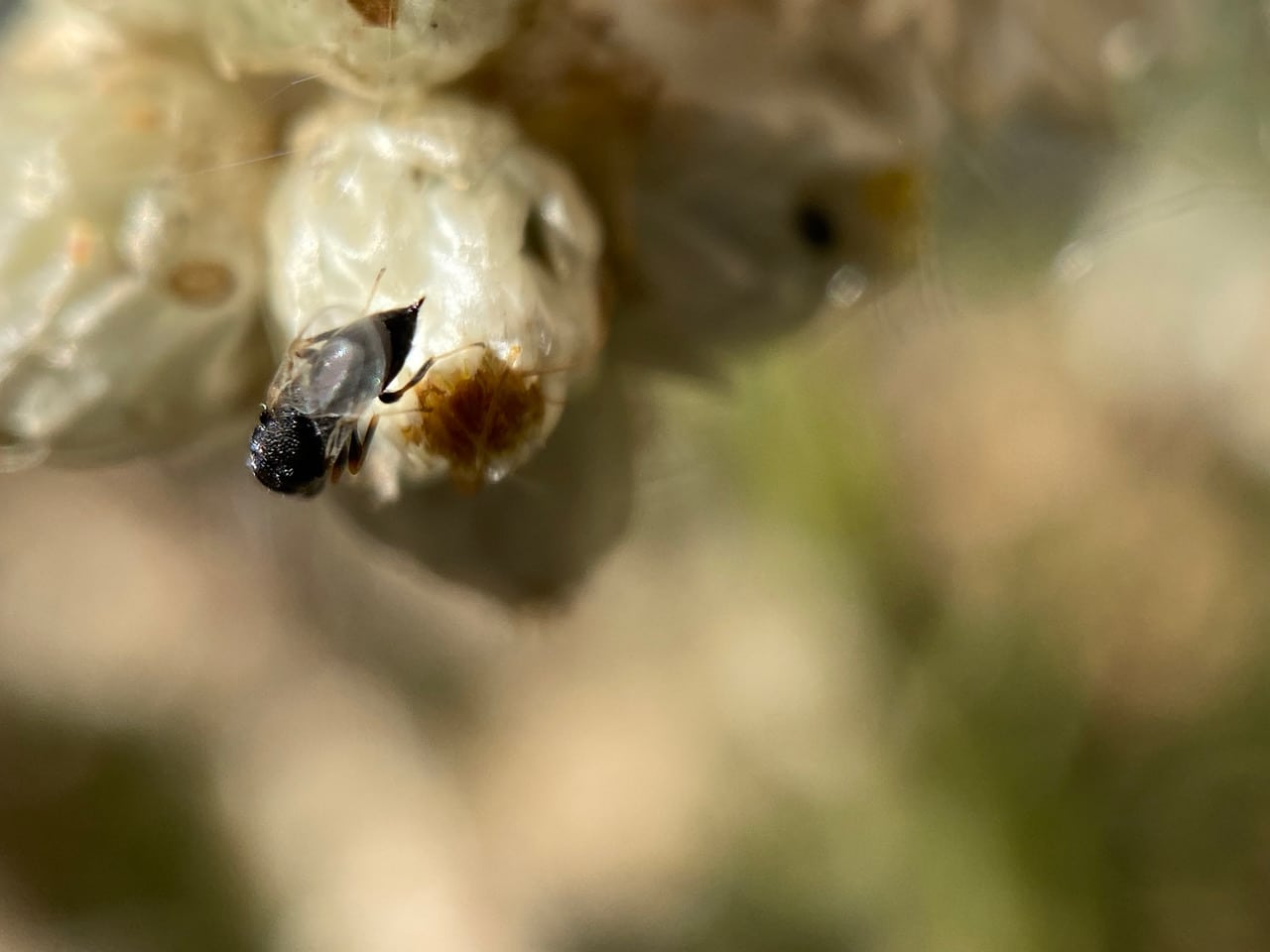
Sure enough the wasp is a female, with a short, pointy ovipositor.
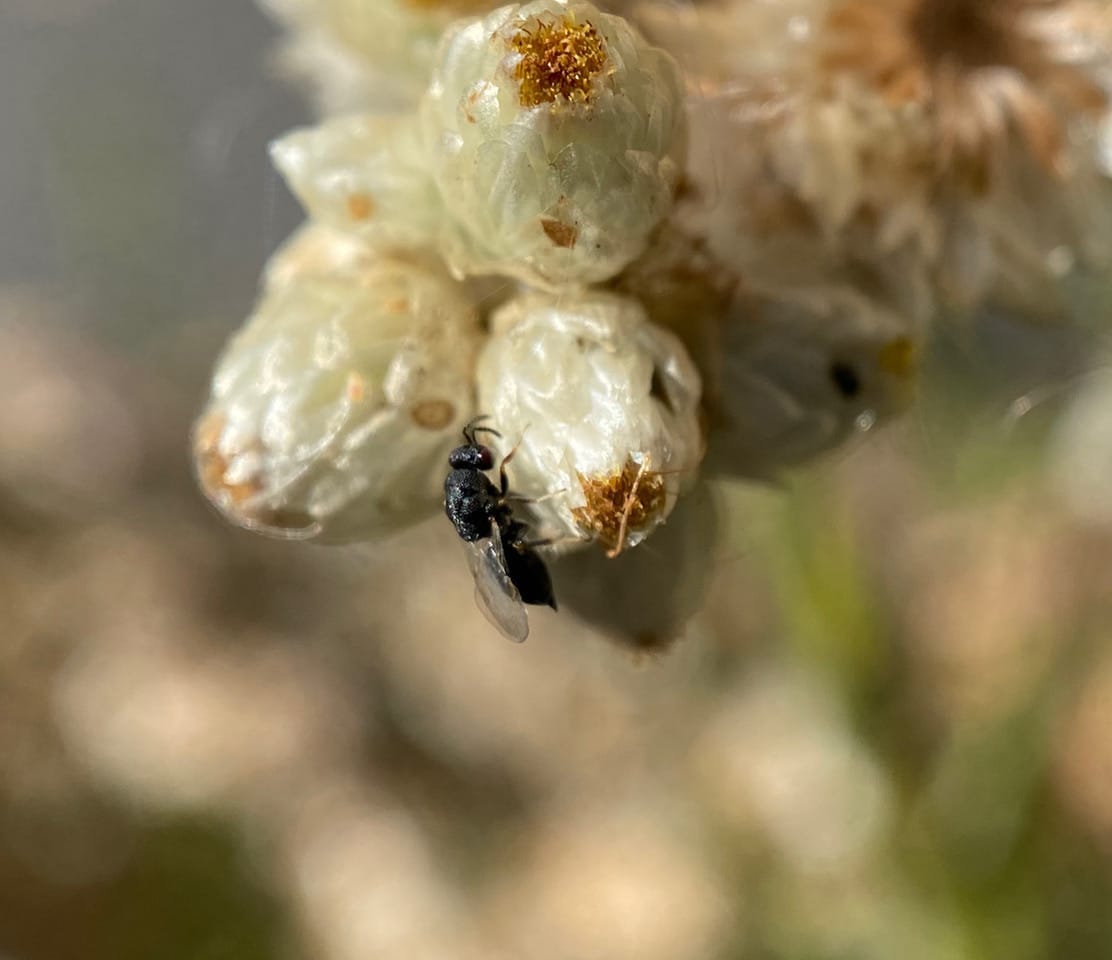
More probing and tapping….
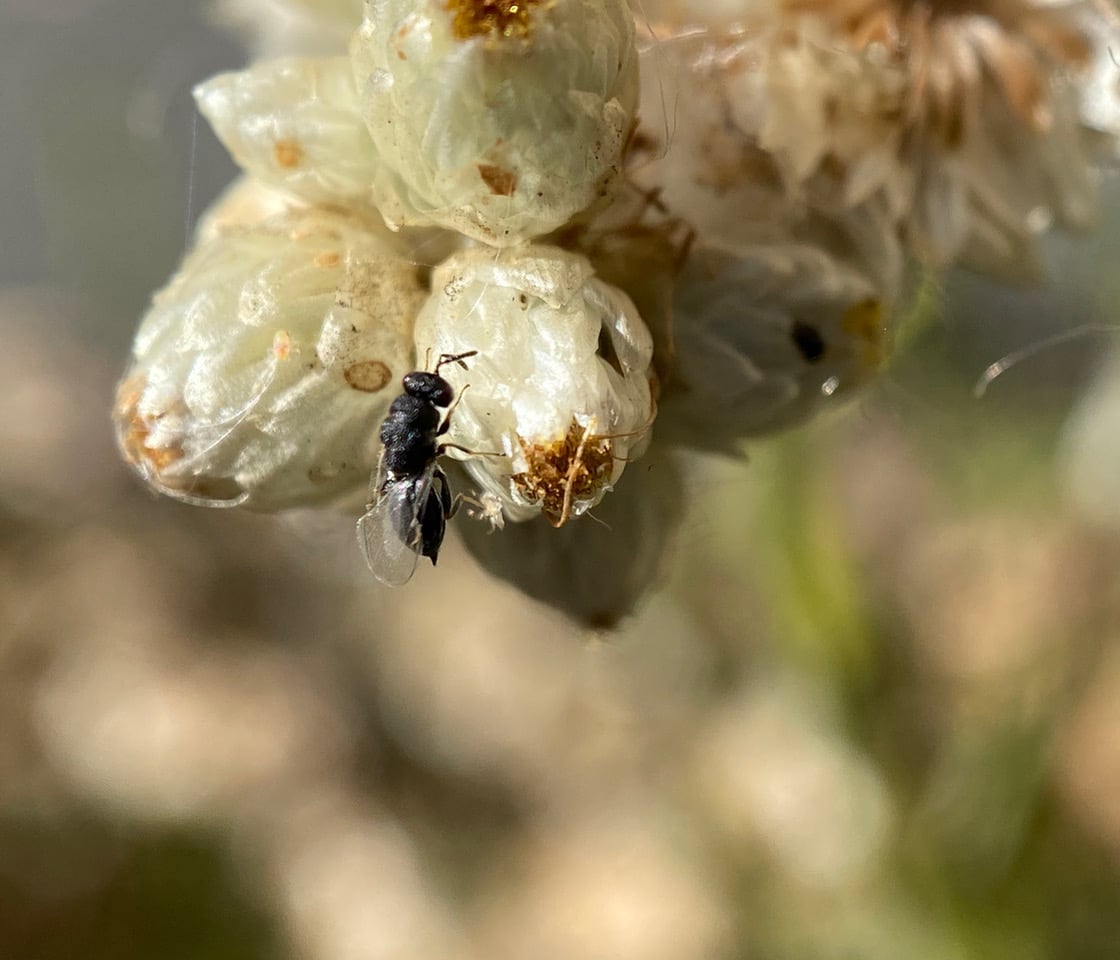
She seems to be interested in this spot.
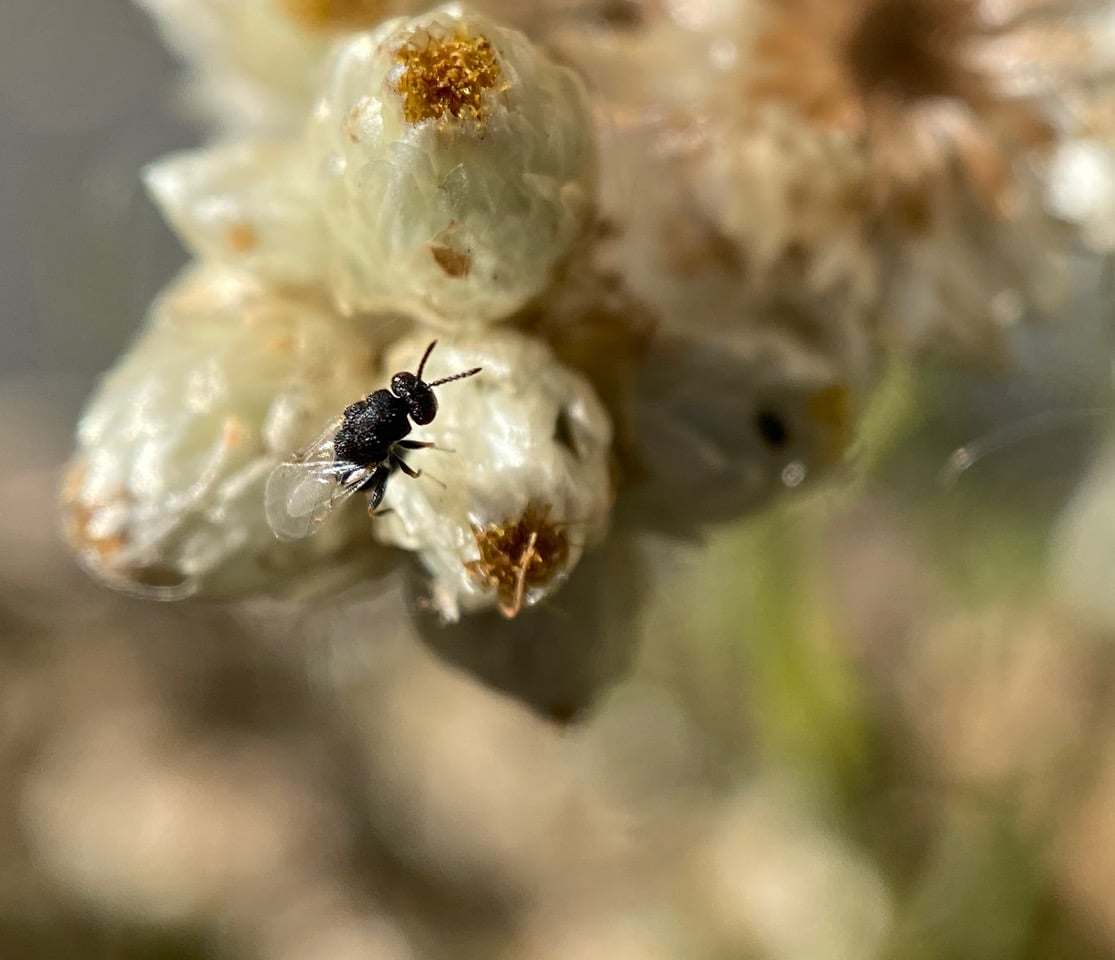
With her abdomen curled forward, the wasp proceeds to lay eggs!
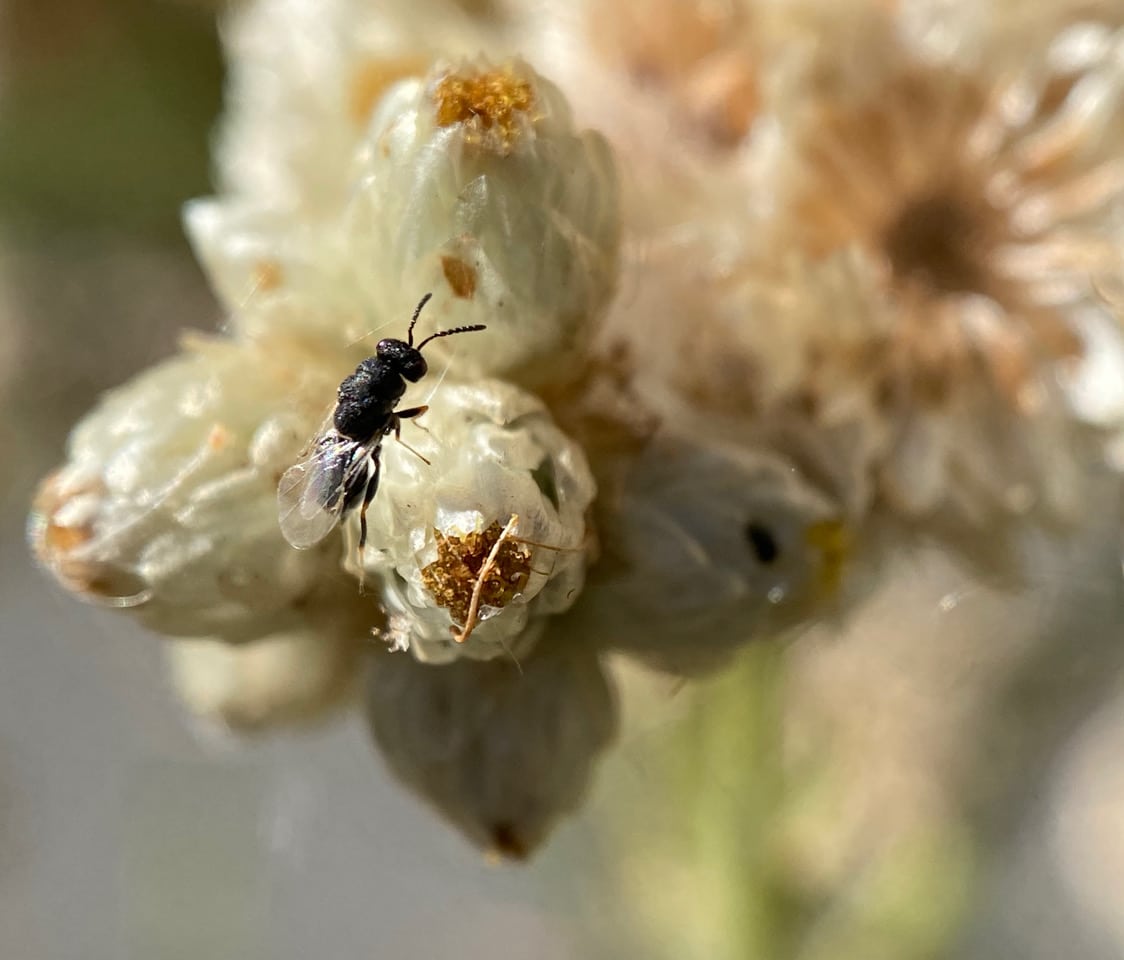

The wasp finds a gap between the phyllaries on the other side of the same flowerhead, and proceeds to lay eggs in there too.
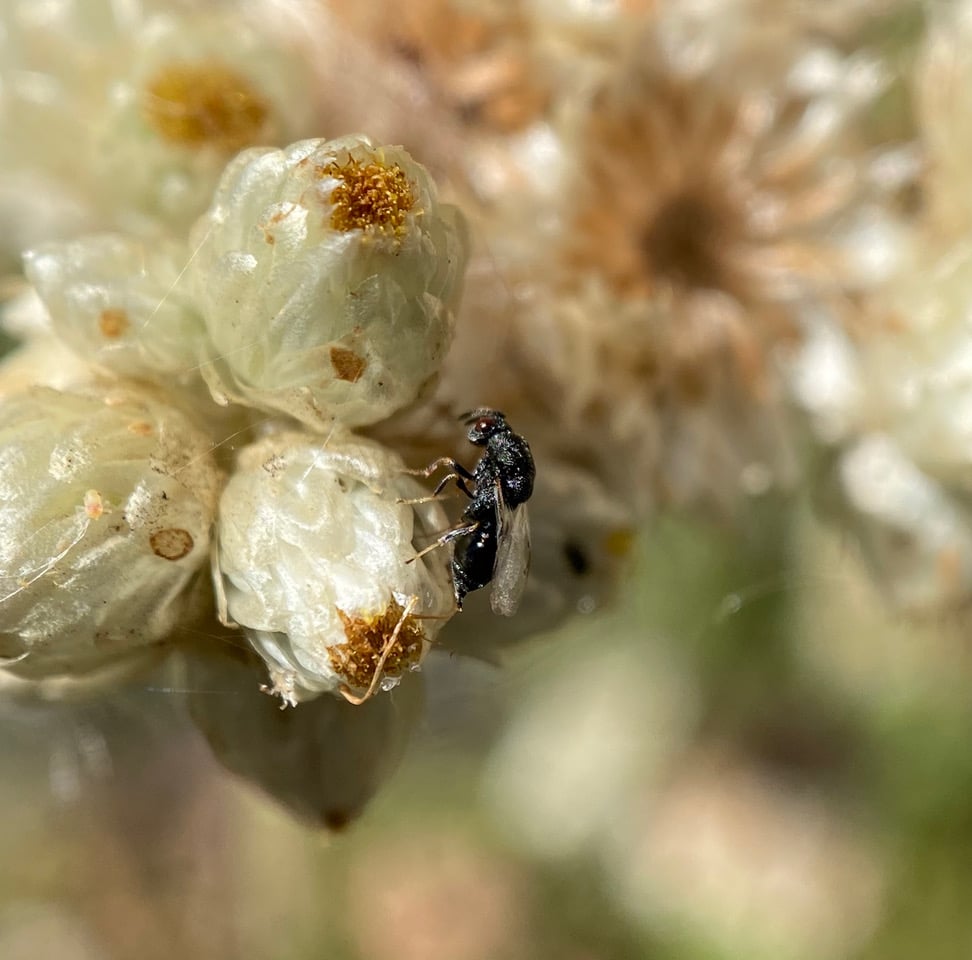
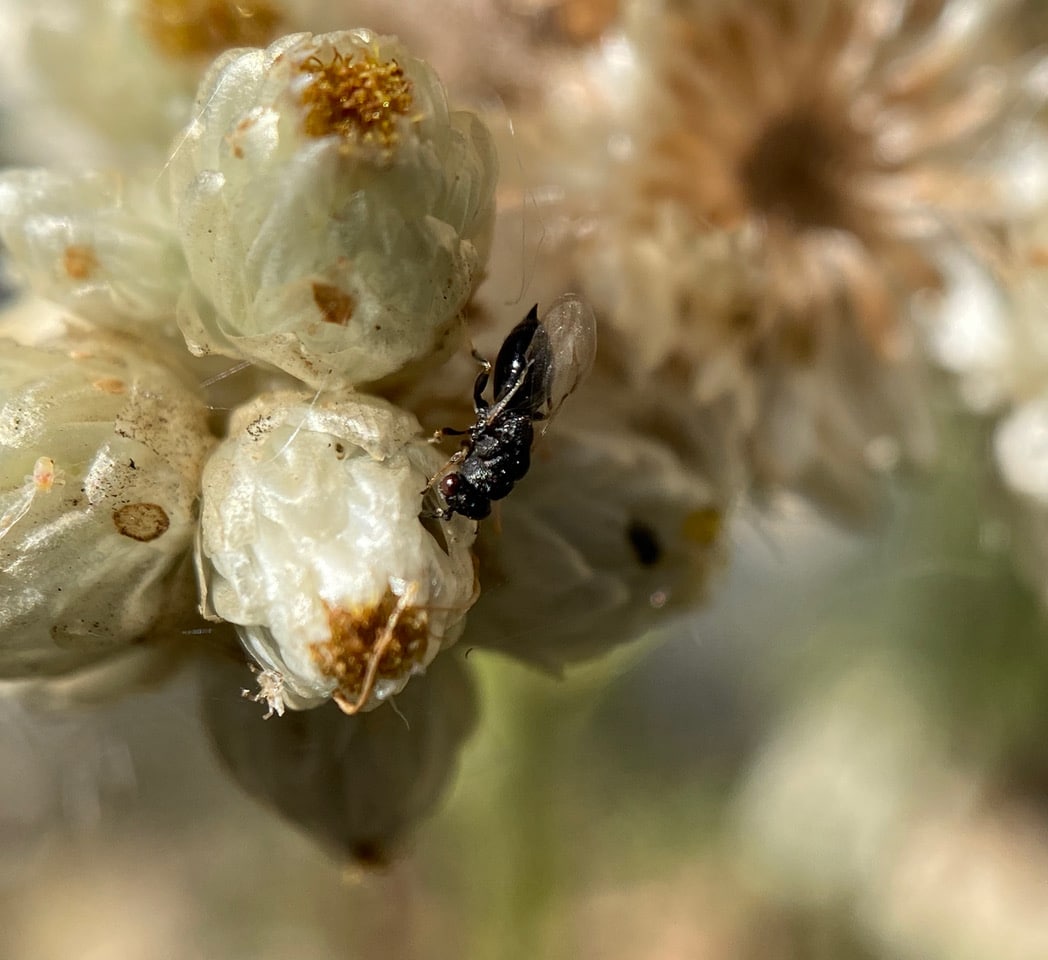
Then she turns around to check on her job.

Satisfied, she lays more eggs in the space, this time facing the opposite direction.
 The wasp moves on.
 iNaturalist has helped identify the parasitoid wasp as a member of the genus Eurytoma, family Eurytomidae, superfamily Chalcidoidea. Unlike most chalcidoids, the larvae of many are phytophagous (feeding in stems, seeds, or galls), while others are more typical parasitoids, though even then the hosts are usually found within plant tissues. These wasps are found throughout the world in virtually all habitats and a few are considered pests. They tend to be dull and not metallic, and heavily punctured, with very think, collar-like pronota.
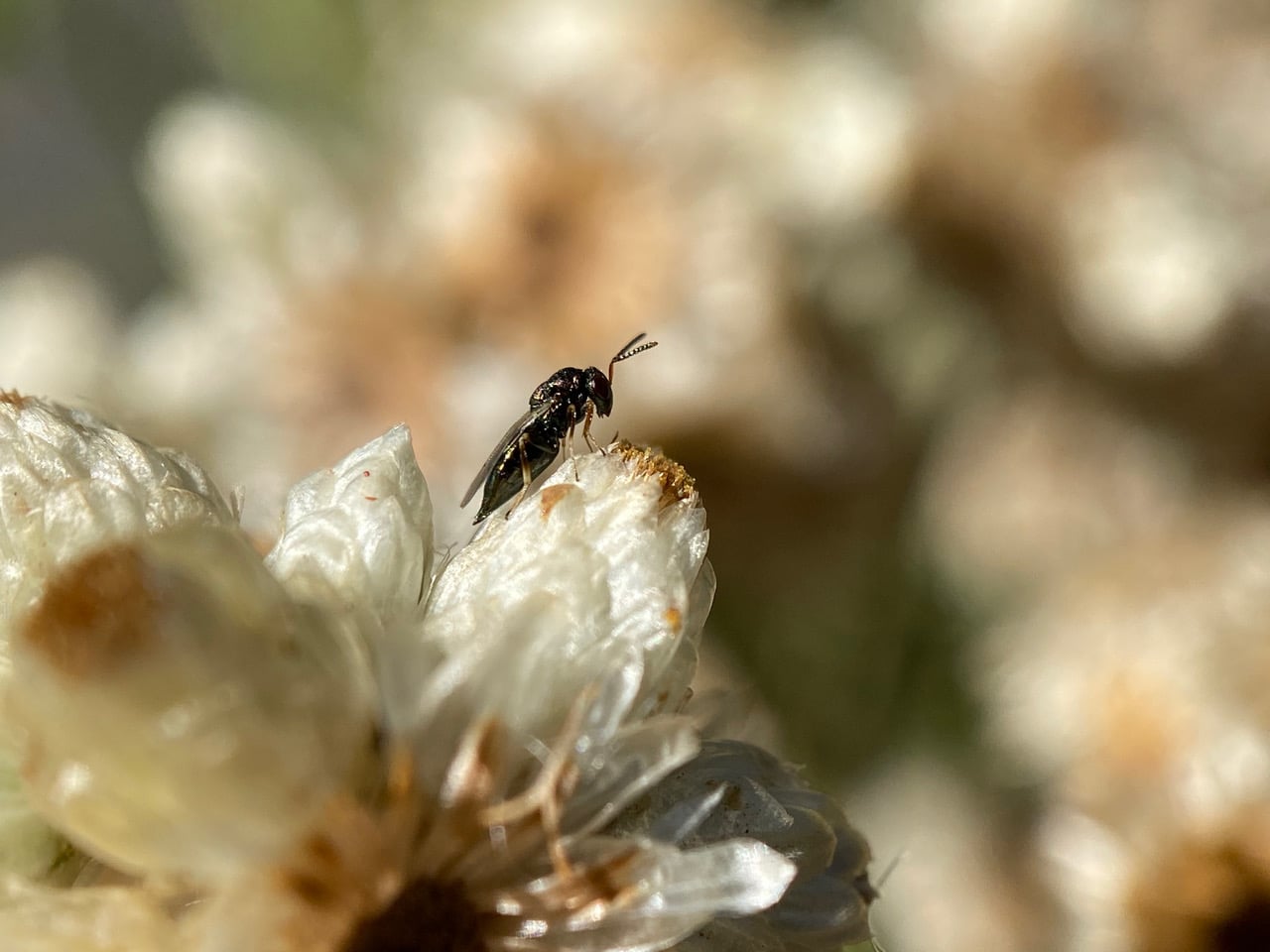
Here’s yet another parasitoid wasp on the same California Everlasting! It belongs to the family Pteromalidae, superfamily Chalcidoidea.
The Pteromalidae are a large family of wasps, the majority being parasitoids of other insects. They are found throughout the world in virtually all habitats, and many are important as biological control agents. The wasps are usually metallic chalcidoids of varying body size and build. Their life strategies also vary greatly, depending on the species. There are both solitary and gregarious species, living outside (ectoparasitoid) or inside their prey (endoparasitoid), primary parasitoids and hyperparasitoids and even predators that kill and consume the prey immediately.

A Sedgesitter, Platycheirus sp. (family Syrphidae) is feeding on pollen from the anthers of a Sticky Monkeyflower, Diplacus aurantiacus. Its dusky, metallic sheen distinguishes it from most other hover fly species.
Platycheirus is found in grass and herb vegetation. Adults of many species feed on pollen of wind-pollinated plants, such as Salix, Plantago, Poaceae, Cyperaceae, but they visit other flowers also. Many stay active during cold and rainy weather. Larvae feed on aphids.

A Spotted Cucumber Beetle, Diabrotica undecimpunctata (family Chrysomelidae) is enjoying the morning sun on the lower lip of a Sticky Monkeyflower.
Native to North America, the beetle can be a major agricultural pest, causing damage to crops in the larval as well as adult stages of their life cycle. Larvae, sometimes known as rootworms feed on the roots of emerging plants. In the adult stage the beetles cause damage by eating the flowers, leaves, stems and fruits of the plant.
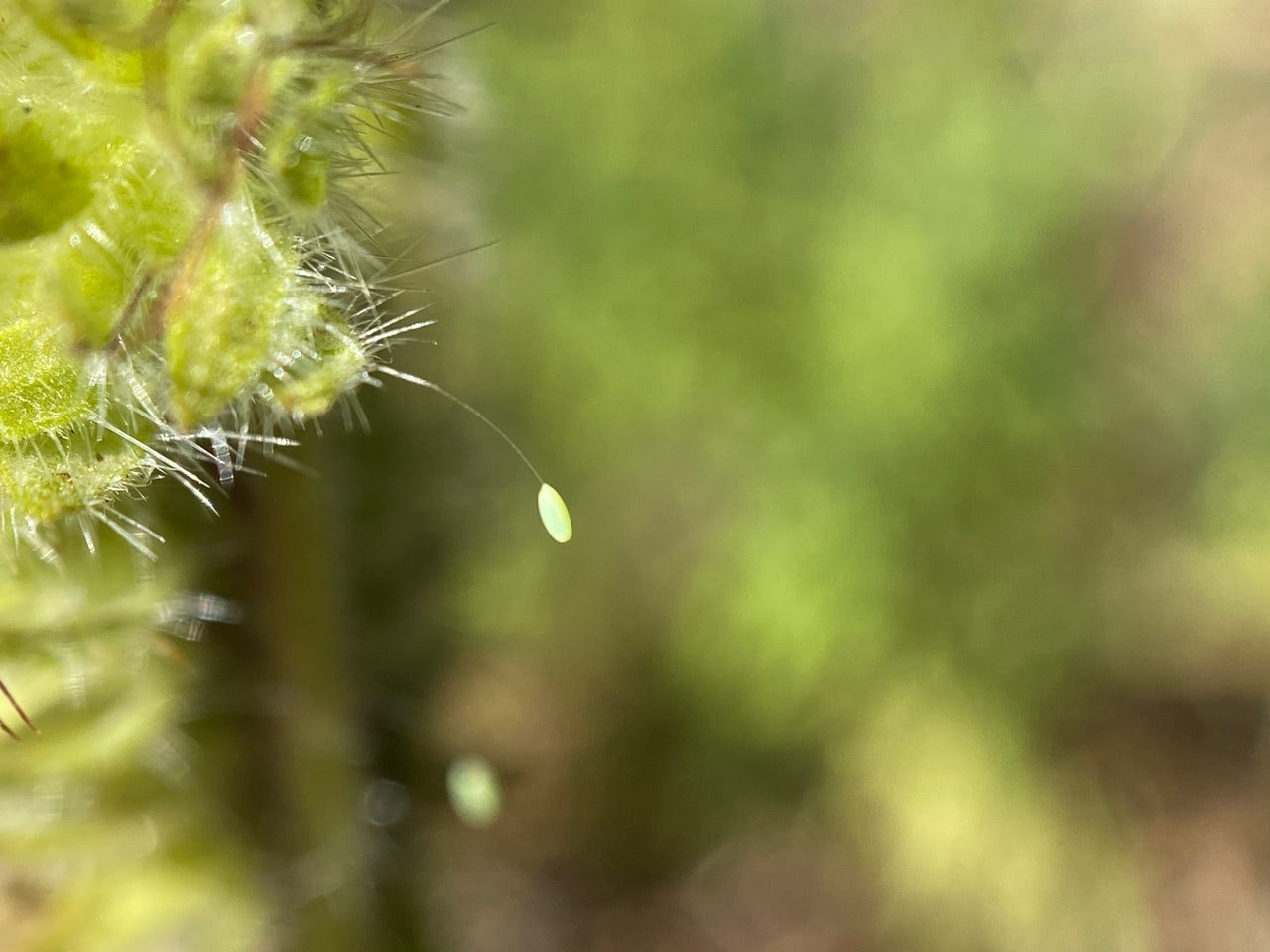
Hey, a fresh Lacewing egg that is still green! It is attached by a silken stalk to the bristly bracts of a spent inflorescence of California Phacelia, Phacelia californica.
Lacewings are insects in the large family Chrysopidae of the order Neuroptera. Adults are crepuscular or nocturnal. They feed on pollen, nectar and honeydew supplemented with mites, aphids and other small arthropods. Eggs are deposited at night, hung on a slender stalk of silk usually on the underside of a leaf. Immediately after hatching, the larvae molt, then descend the egg stalk to feed. They are voracious predators, attacking most insects of suitable size, especially soft-bodied ones (aphids, caterpillars and other insect larvae, insect eggs). Their maxillae are hollow, allowing a digestive secretion to be injected in the prey. Lacewing larvae are commonly known as “aphid lions” or “aphid wolves”. In some countries, Lacewings are reared for sale as biological control agents of insect and mite pests in agriculture and gardens.
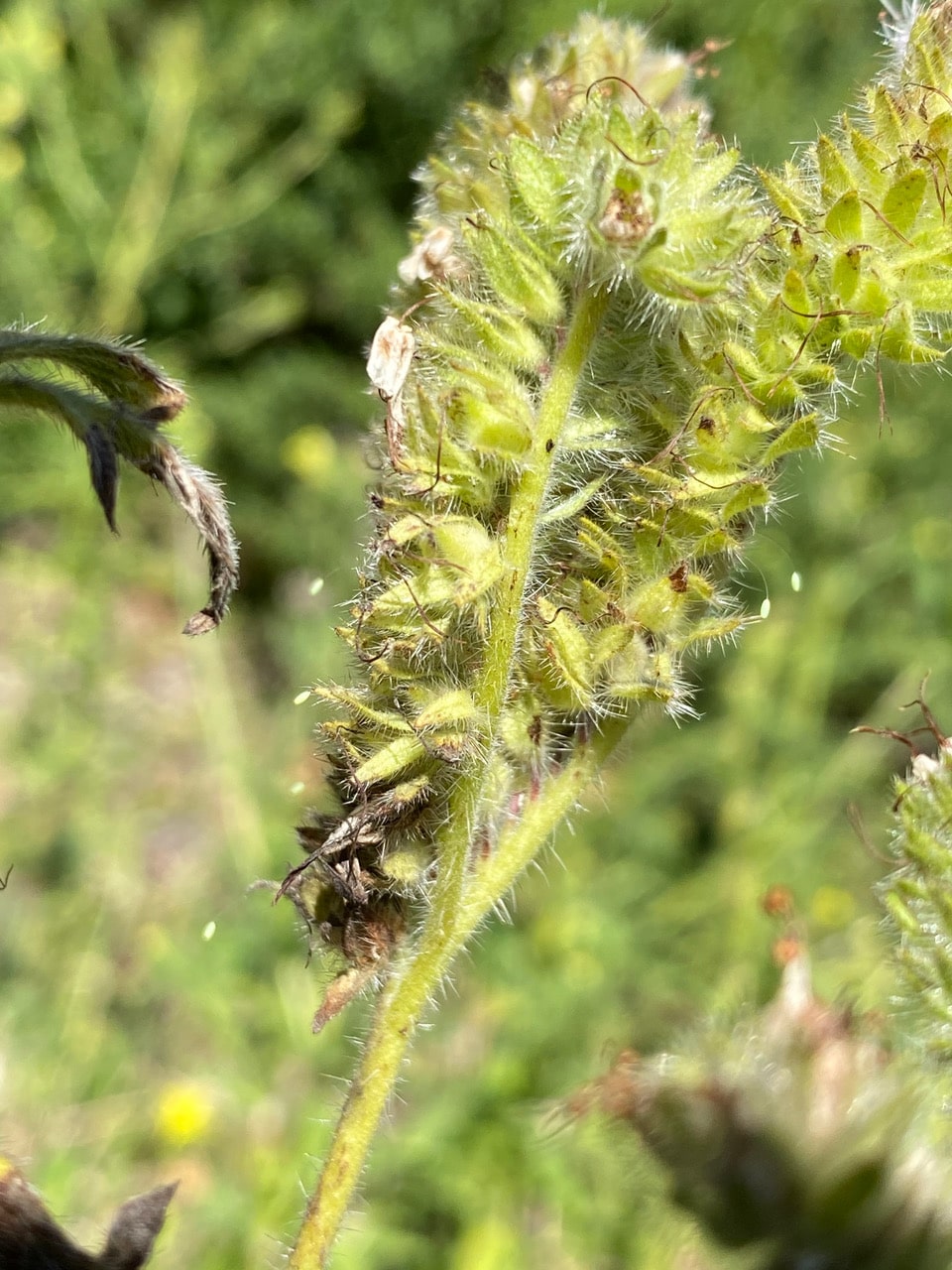
I look around, and find about a dozen of similar eggs on the same phacelia inflorescence. Why did mama Lacewing lay so many eggs here – perhaps there are tiny aphids among the bracts that I can’t see?
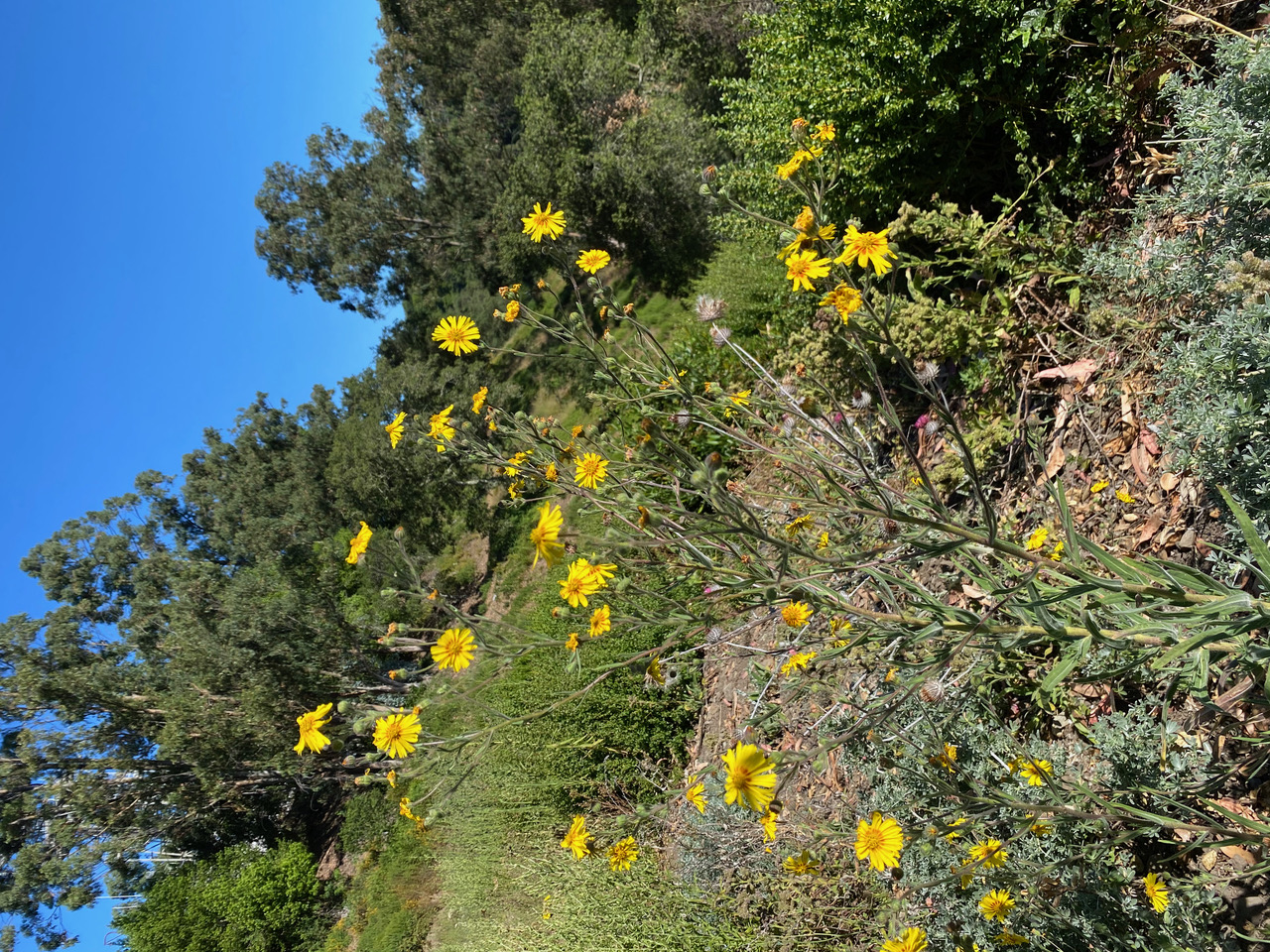
I am delighted to see that the flowerheads of Elegant Tarweed, Madia elegans are still open when I reach the top of the hill near the Radio Tower. It won’t be long before they are closed because the morning is fast heating up.

A large glossy, black insect is flying around noisily, then lands to take nectar from a Elegant Tarweed flowerhead. Easily mistaken for a Carpenter Bee, it is actually a Purple Bromeliad Fly, Copestylum violaceum (family Syrphidae).
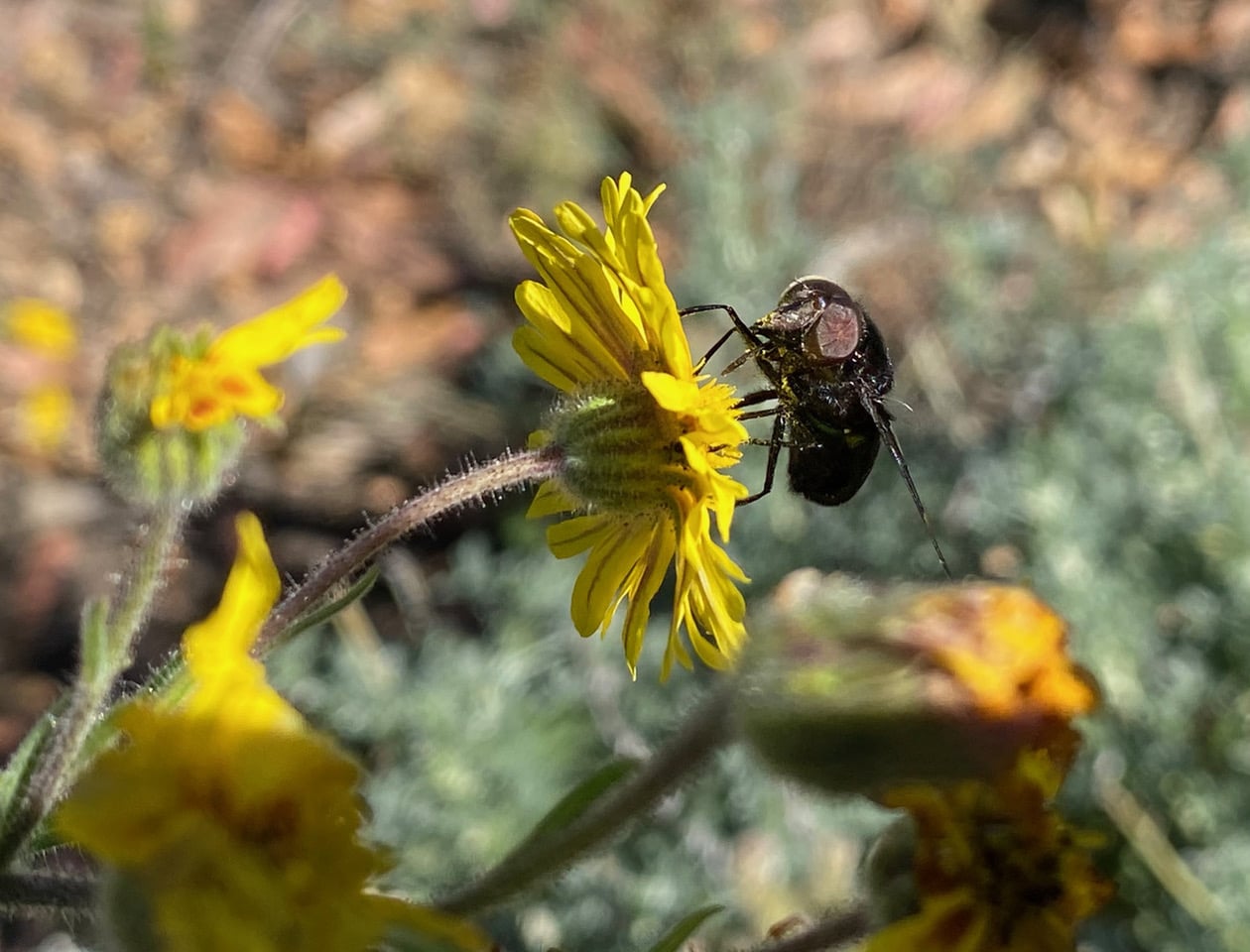
What an unusual “snout” on the face of Copestylum!
Copestylum females lay eggs in rotting plant materials. Not much else is known about the fly’s biology.
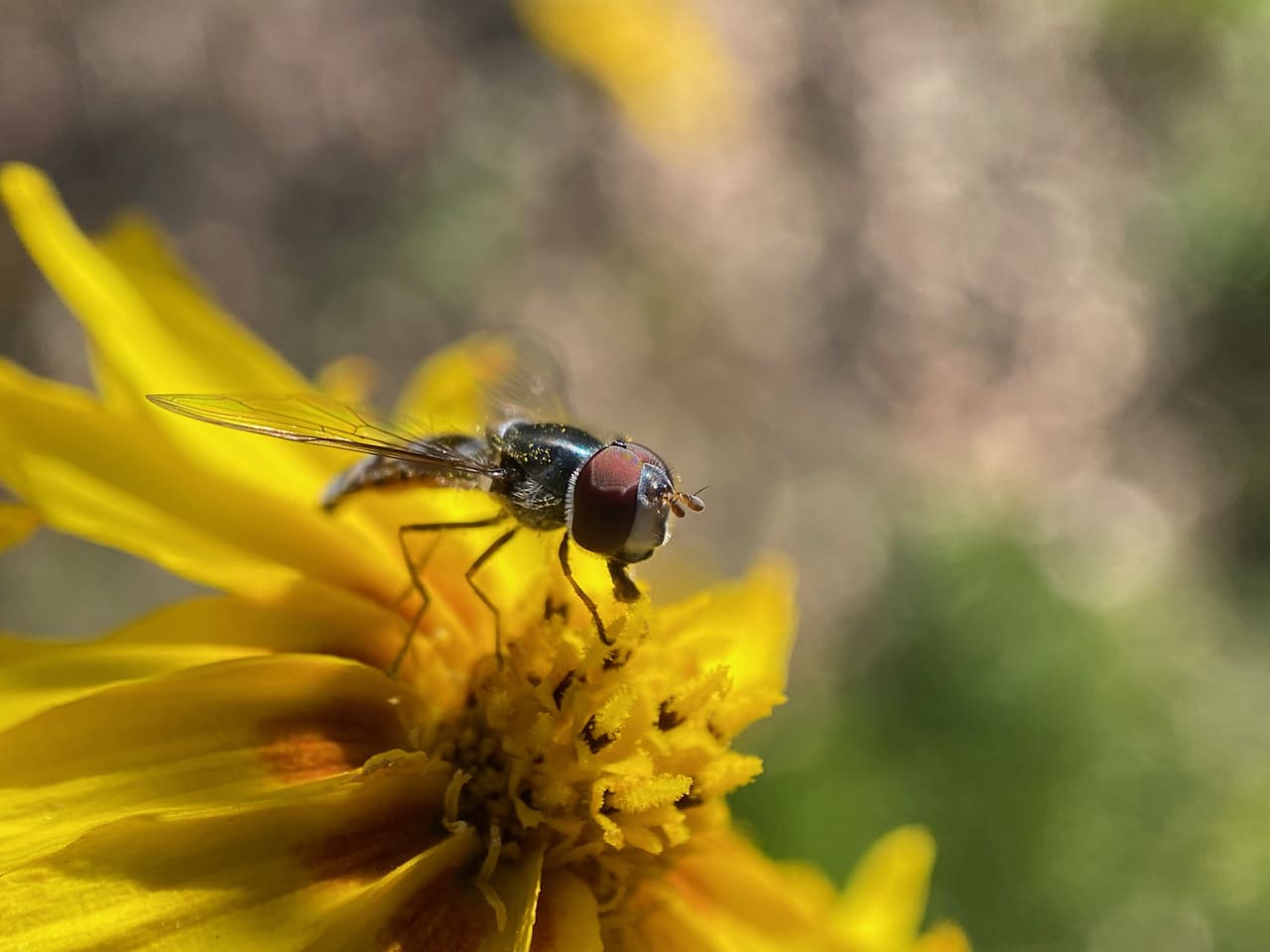
Here’s a more elegant hover fly, foraging for pollen on a Madia elegans flowerhead. It is the Silver-banded Hover Fly, Pseudoscaeva diversifasciata (family Syrphidae).

The Silver-banded Hover Fly, Pseudoscaeva diversifasciata is found in western North America. Unfortunately there’s hardly any information out there on the natural history of the species. Since it is in the subfamily Syrphinae, I would assume that the larvae are aphidophagous (feeding on aphids)?