

Pollinator Post 7/23/26 (2)
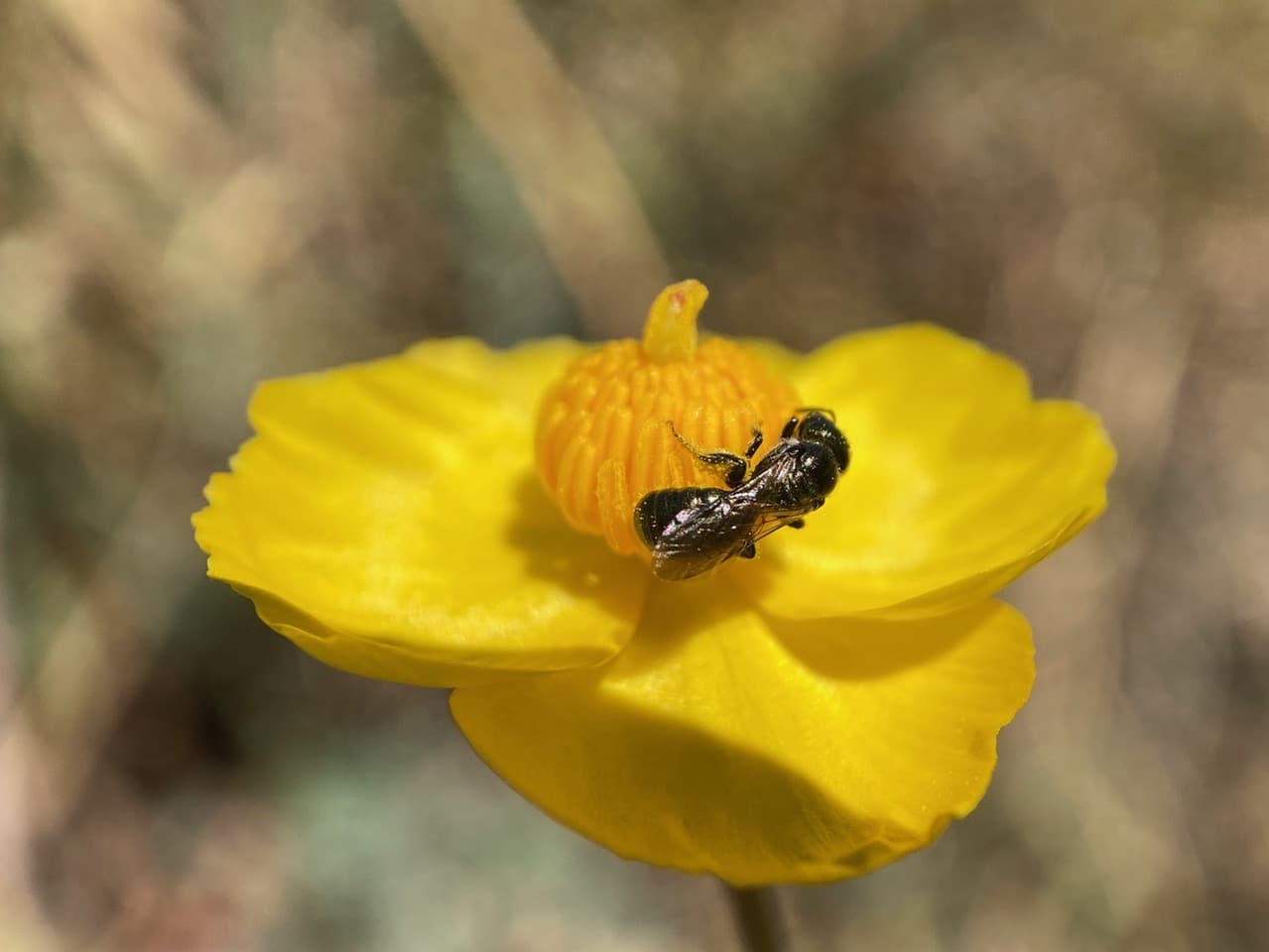
In the native plant garden at Crab Cove, a jet-black, stocky bee is foraging on the anthers of a very fresh Bush Poppy flower, Dendromecon rigida. It is a Small Carpenter Bee, Ceratina sp. (family Apidae). Unlike the better-known ground-level California Poppy which only offers pollen, Bush Poppy flowers produce nectar as well. But our little bee is fully focused on gathering pollen right now.
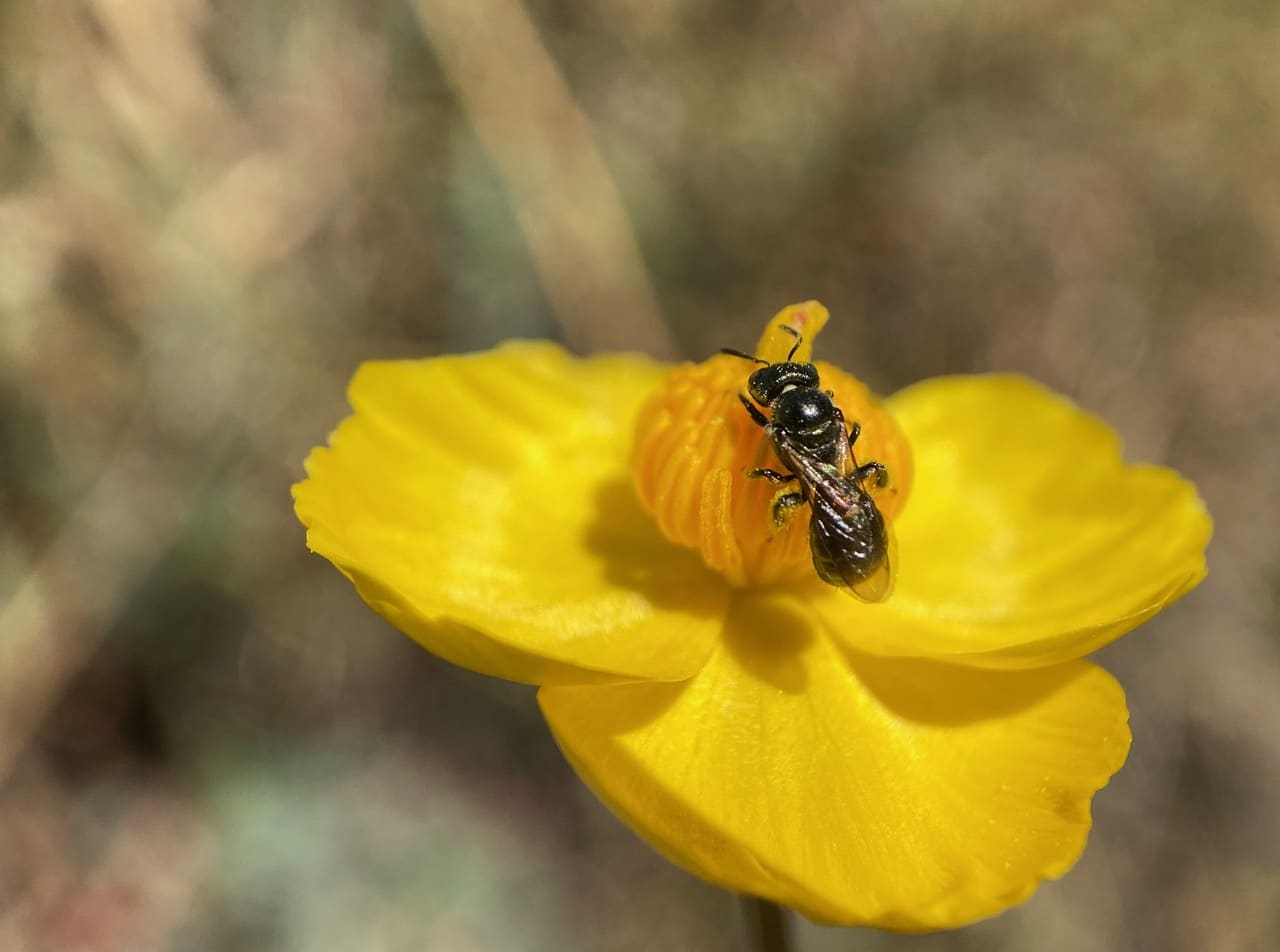
The Small Carpenter Bee genus Ceratina is closely related to the more familiar, and much larger Carpenter Bees (genus Xylocopa). Ceratina are typically dark, shiny, even metallic bees, with fairly sparse body hairs and a weak scopa on the hind leg. The shield-shaped abdomen comes to a point at the tip. Some species have yellow markings, often on the face.
Females excavate nests with their mandibles in the pith of broken or burned plant twigs and stems. While many species are solitary, a number are subsocial. Both male and female carpenter bees overwinter as adults within their old nest tunnels, emerging in the spring to mate. In the spring, this resting place (hibernaculum) is modified into a brood nest by further excavation. The female collects pollen and nectar, places this mixture (called bee bread) inside the cavity, lays an egg on the provision, and then caps off the cell with chewed plant material. Several cells are constructed end to end in each plant stem.

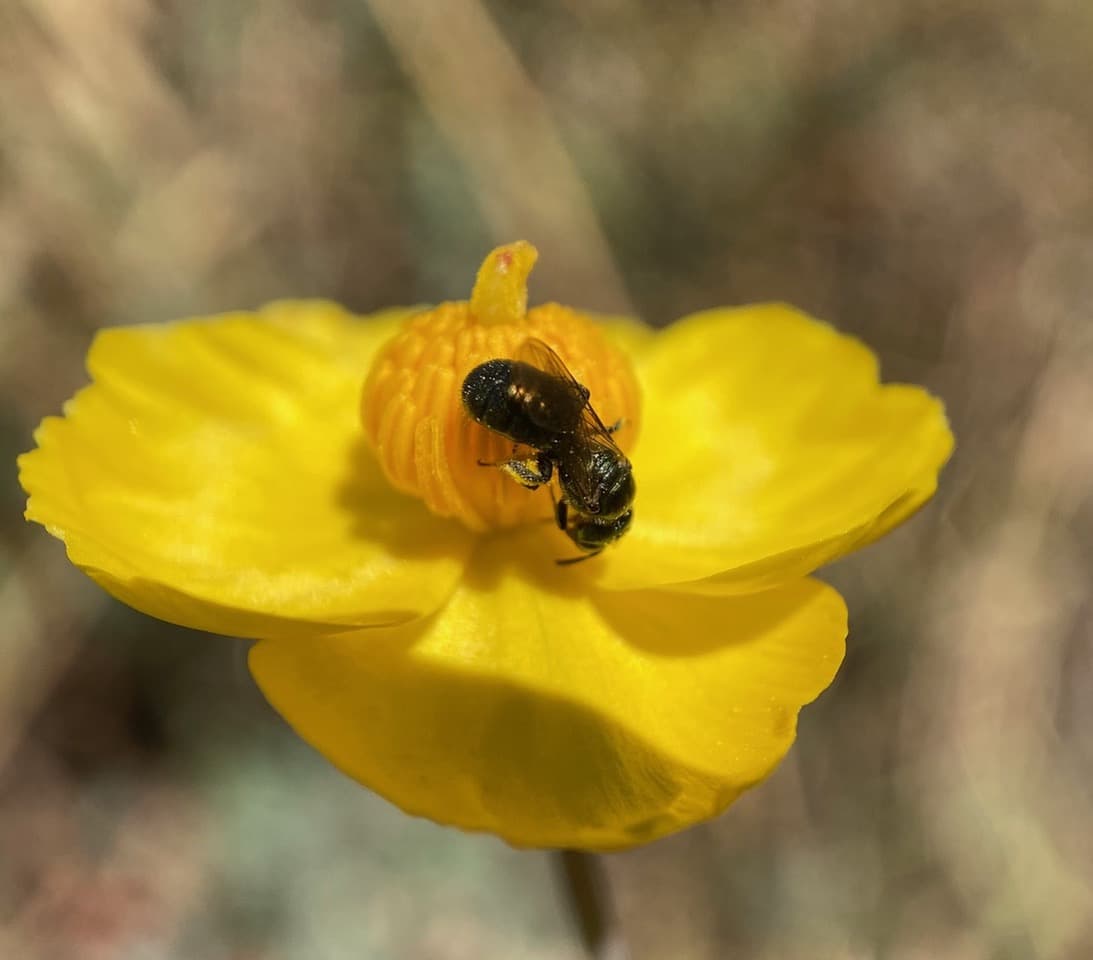
Note the small amount of pollen the female has collected in the modest scopae of her hind legs.

The large, flat area at the front gate to Crown Memorial State Beach is ablaze with the pink flowers of Red-flowered Buckwheat, Eriogonum grande var. rubescens.
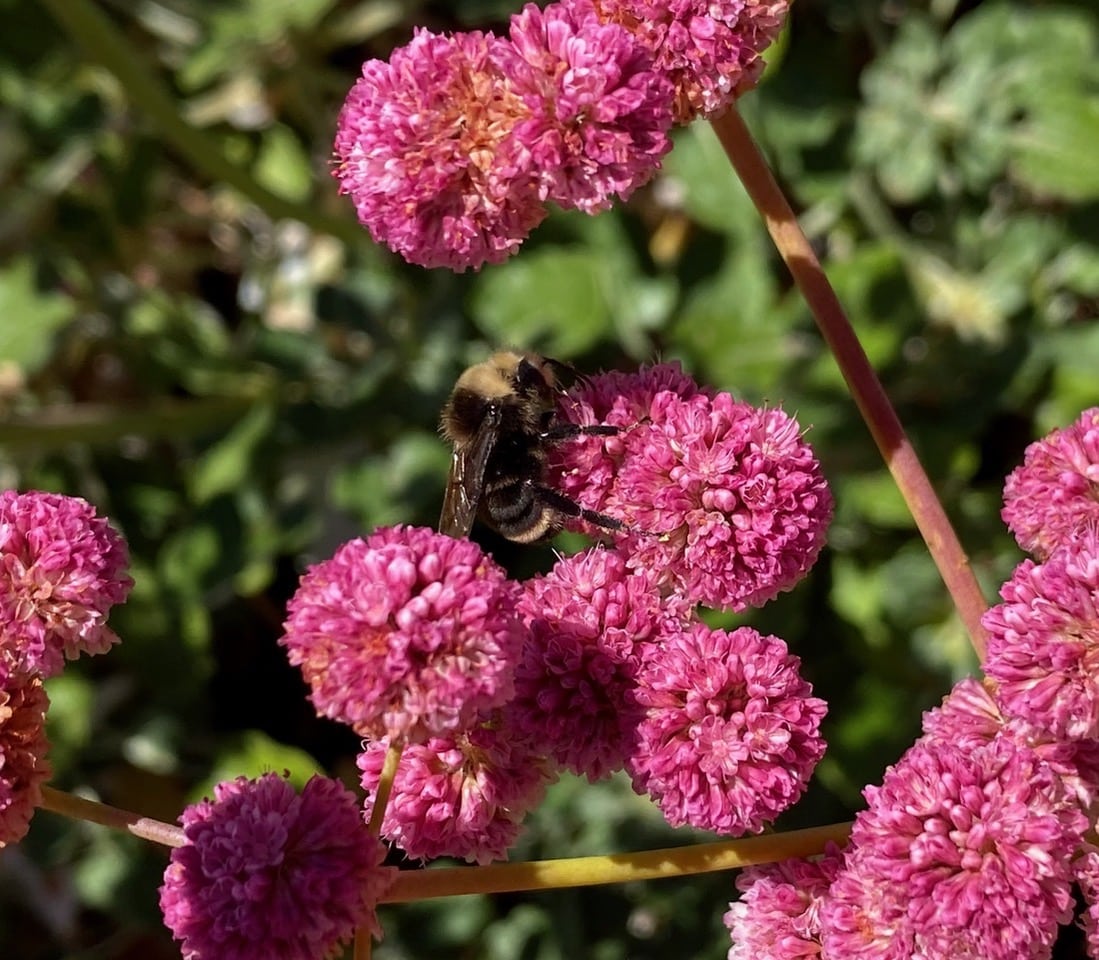
That Bumble Bee appears to have faint rows of pale hairs between its black abdominal segments, and there’s pale hairs on the thorax as well. iNaturalist identifies the bee as a Yellow-faced Bumble Bee, Bombus vosnesenskii. Apparently as bumble bees age, their hair color fades due to bleaching from sunshine, and physical wear and tear from rubbing against plants, wood, and stones.

Here’s another view of the same bumble bee. The pollen baskets (corbiculae) on her hind legs are empty – the bee has not been collecting pollen.
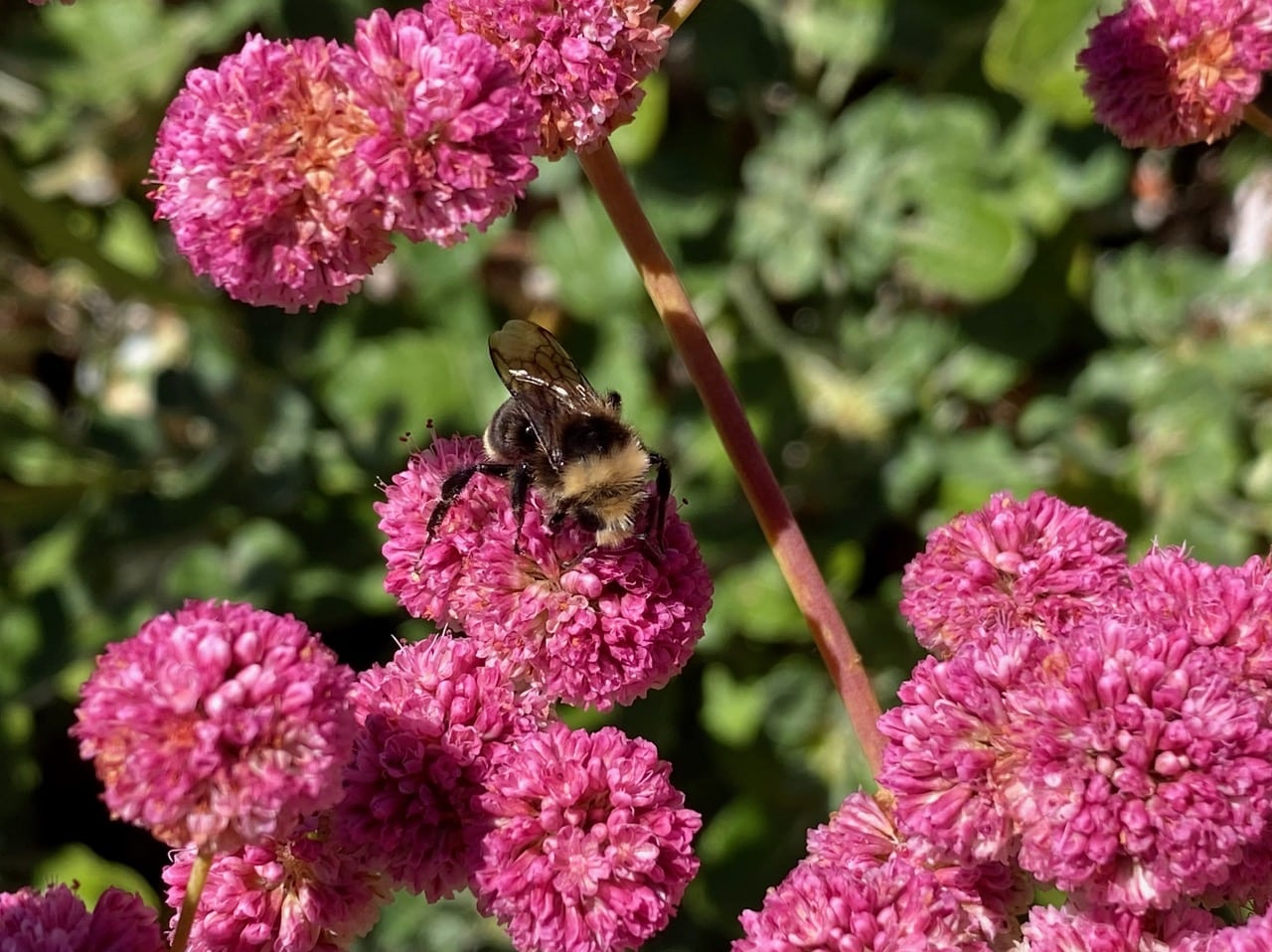
The bumble bee appears somewhat disheveled although its wings are in good shape. A senior bee taking a nectar break?
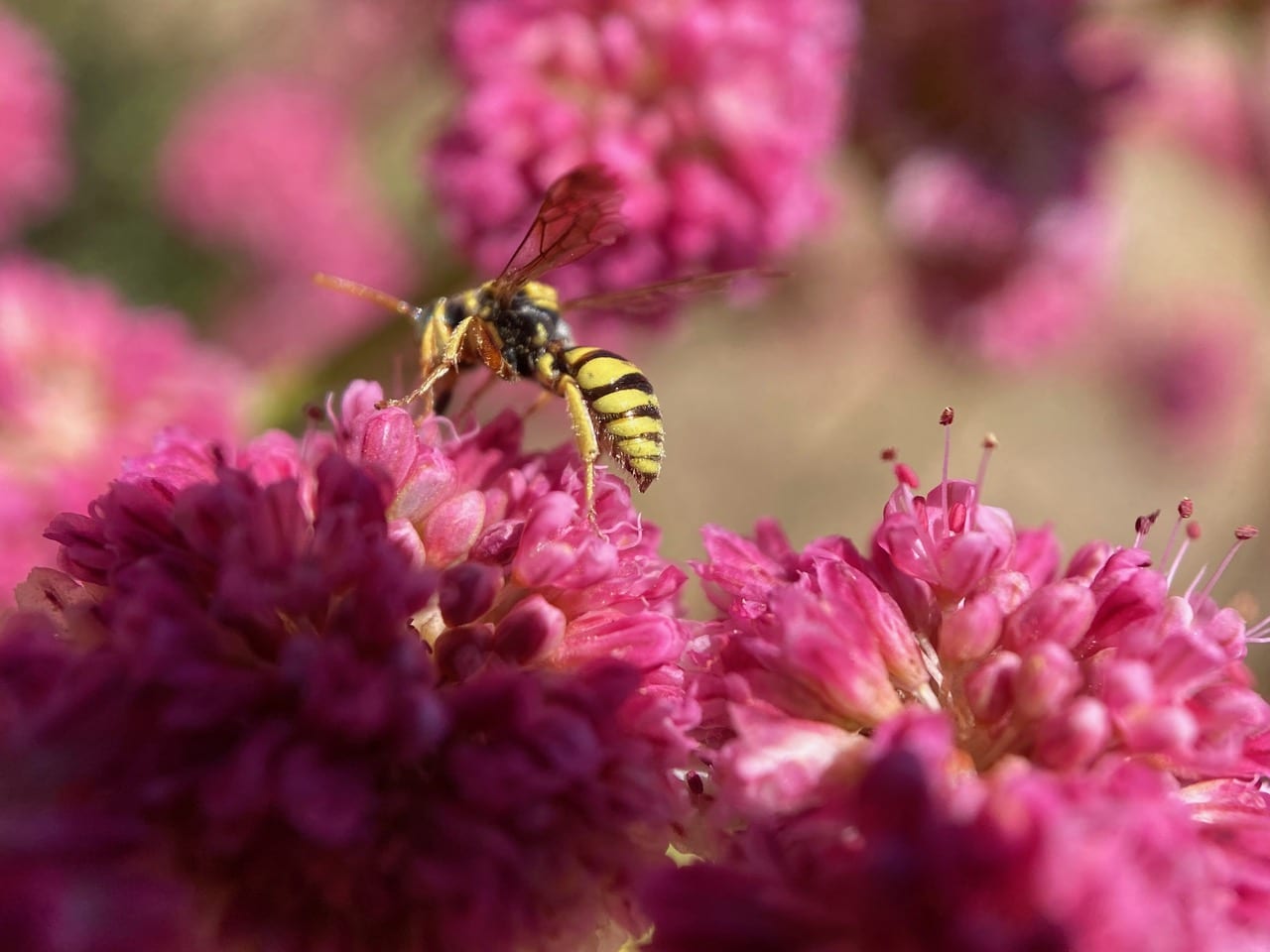
Is that a wasp on the buckwheat flowers? I have seen enough of these over the years to know that they are not wasps, but Nomad Bees, Nomada sp. (family Apidae) – a kind of cuckoo bee. It’s always a thrill to see one.

Nomad bees are a group of wasp-like bees that survive by exploiting the hard work of other solitary bees. They are wasp-like in appearance, do not collect pollen and are virtually hairless. Their name “Nomada” is derived from the Greek word meaning “wandering”. All Nomad Bees are kleptoparasites or “cuckoo bees” that lay eggs in the nest of other bees, especially Mining Bees (genus Andrena).
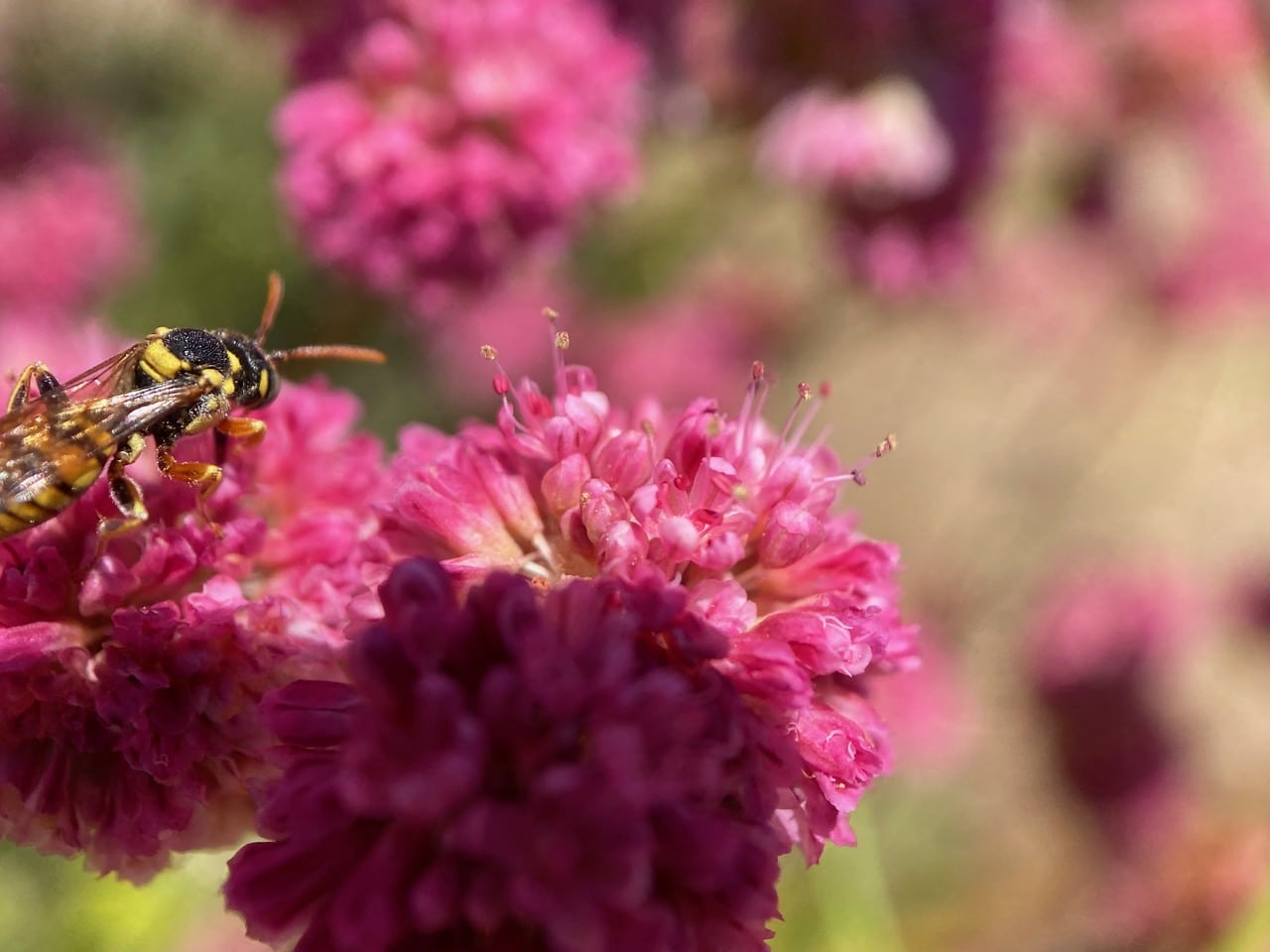
Female Nomad Bees detect a host nest by scent and visual cues, and wait until the nest is unoccupied. She then enters the nest burrow and lays an egg in an unsealed nest cell. When it hatches, the larva kills the host egg or larva, and proceeds to feed on the pollen/nectar food store of the host. In the following year, the Nomad Bee will emerge as an adult and the process repeats.
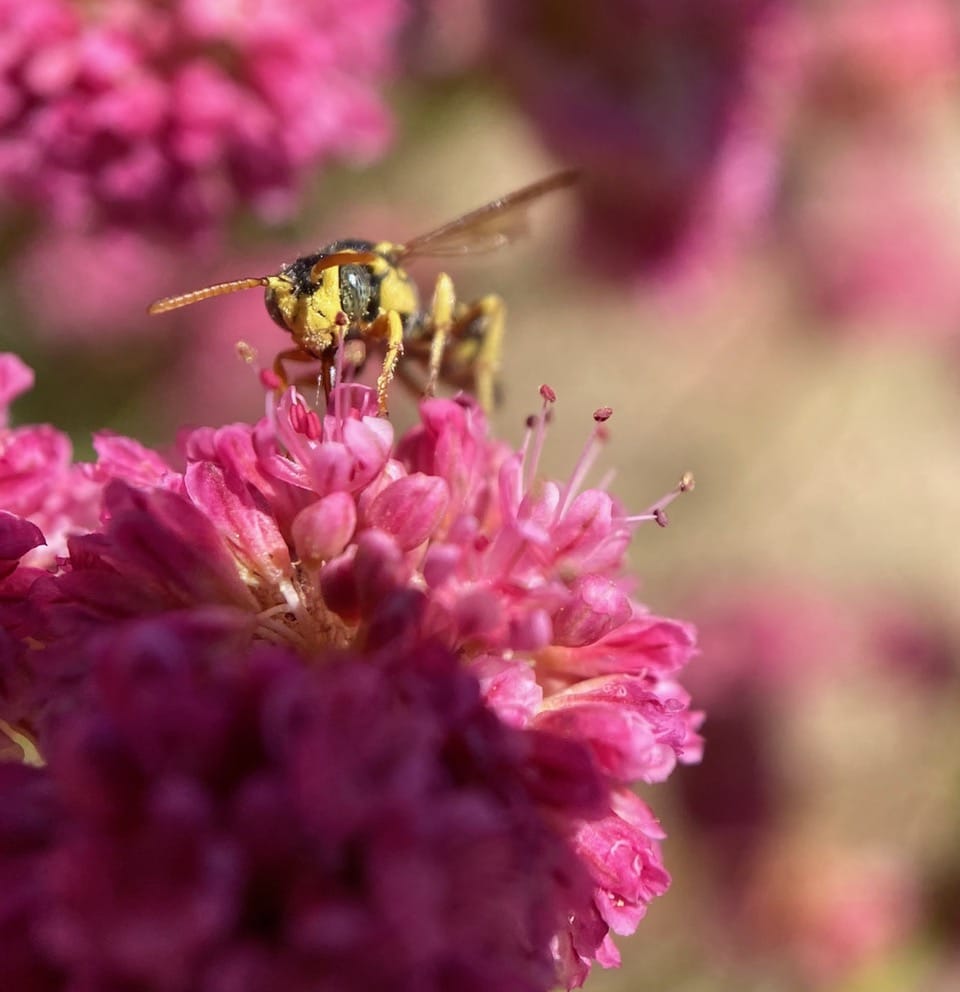
Nomad Bees are most likely to be found around the nest sites of their host species or on flowers nearby. As Nomad Bees do not collect pollen; they are virtually hairless and have no special pollen-collecting hairs.
While we might take offense at the cuckoo bees’ parasitic lifestyle, their presence in the garden is actually an indicator of a good population of the host species – something to celebrate!
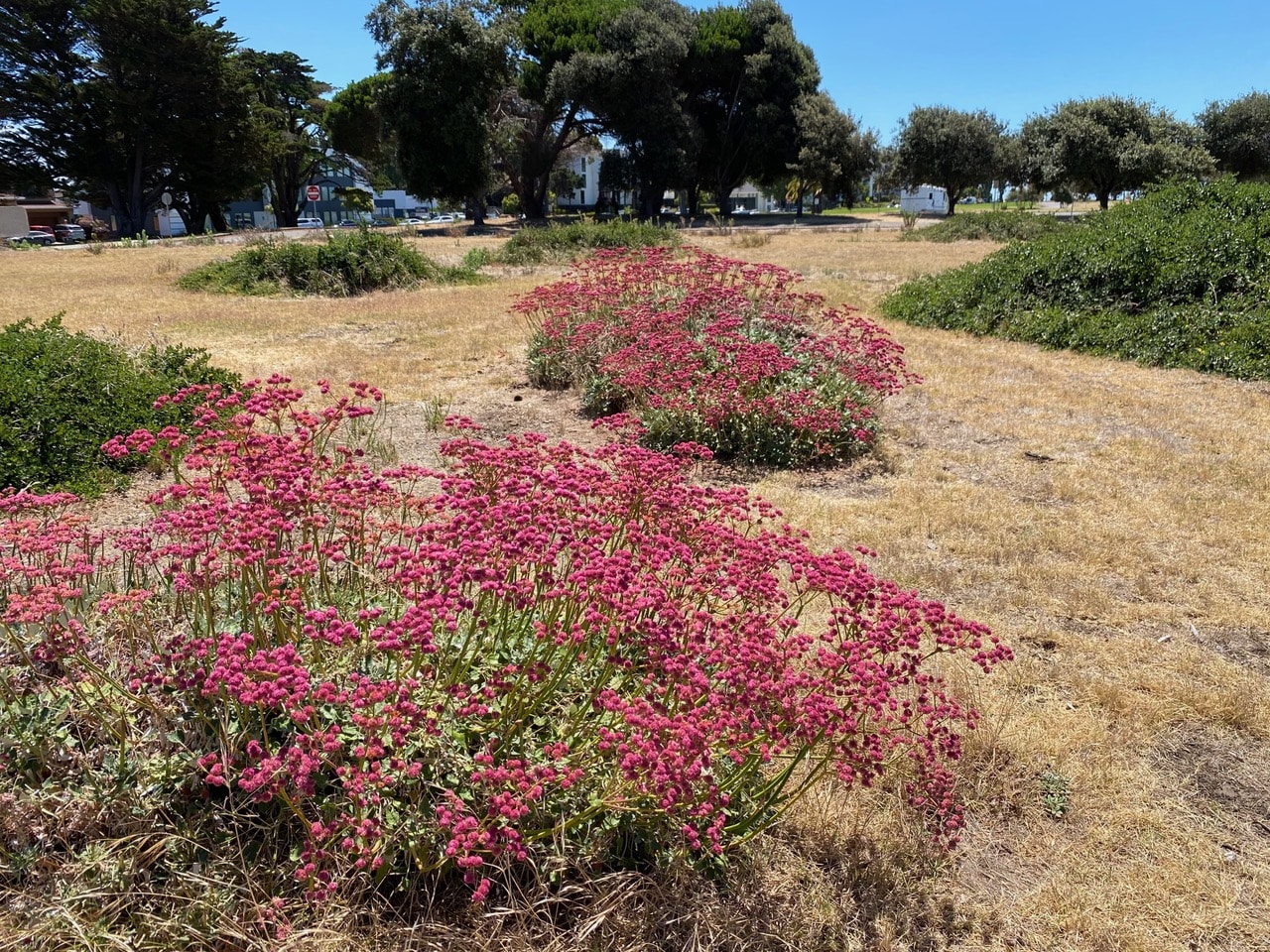
Park visitors hardly ever use this large patch that is merely a traffic turn-around at the front gate. The ground is usually kept neatly mowed between the plants. The only other significant species on the island is a Ceanothus, an early-blooming species. Regardless of what’s in bloom, I usually have the whole place to myself, blissfully undisturbed.
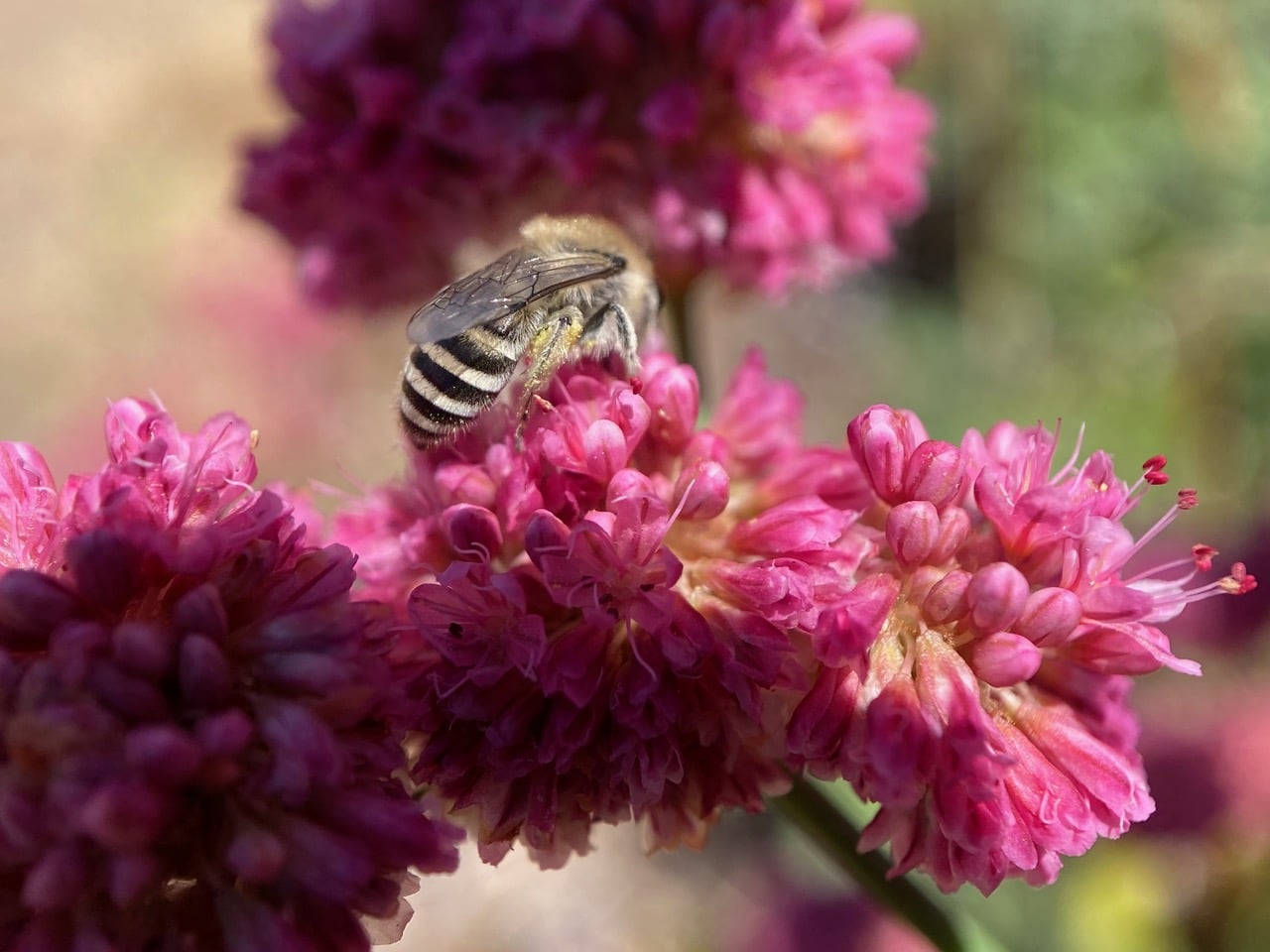
Hey, look! That’s a Cellophane Bee, Colletes sp. (family Colletidae).
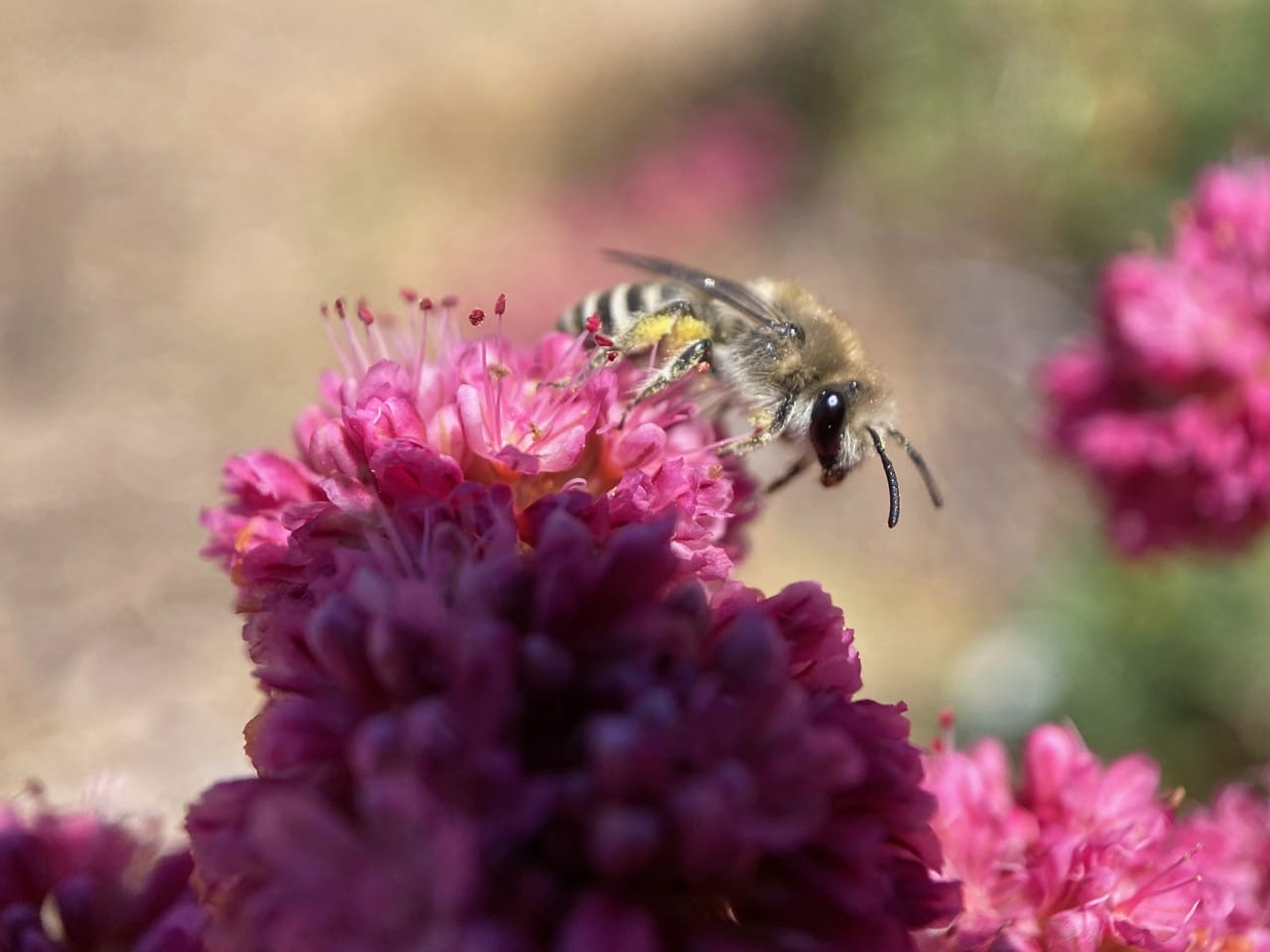
Aww, that heart-shaped face!
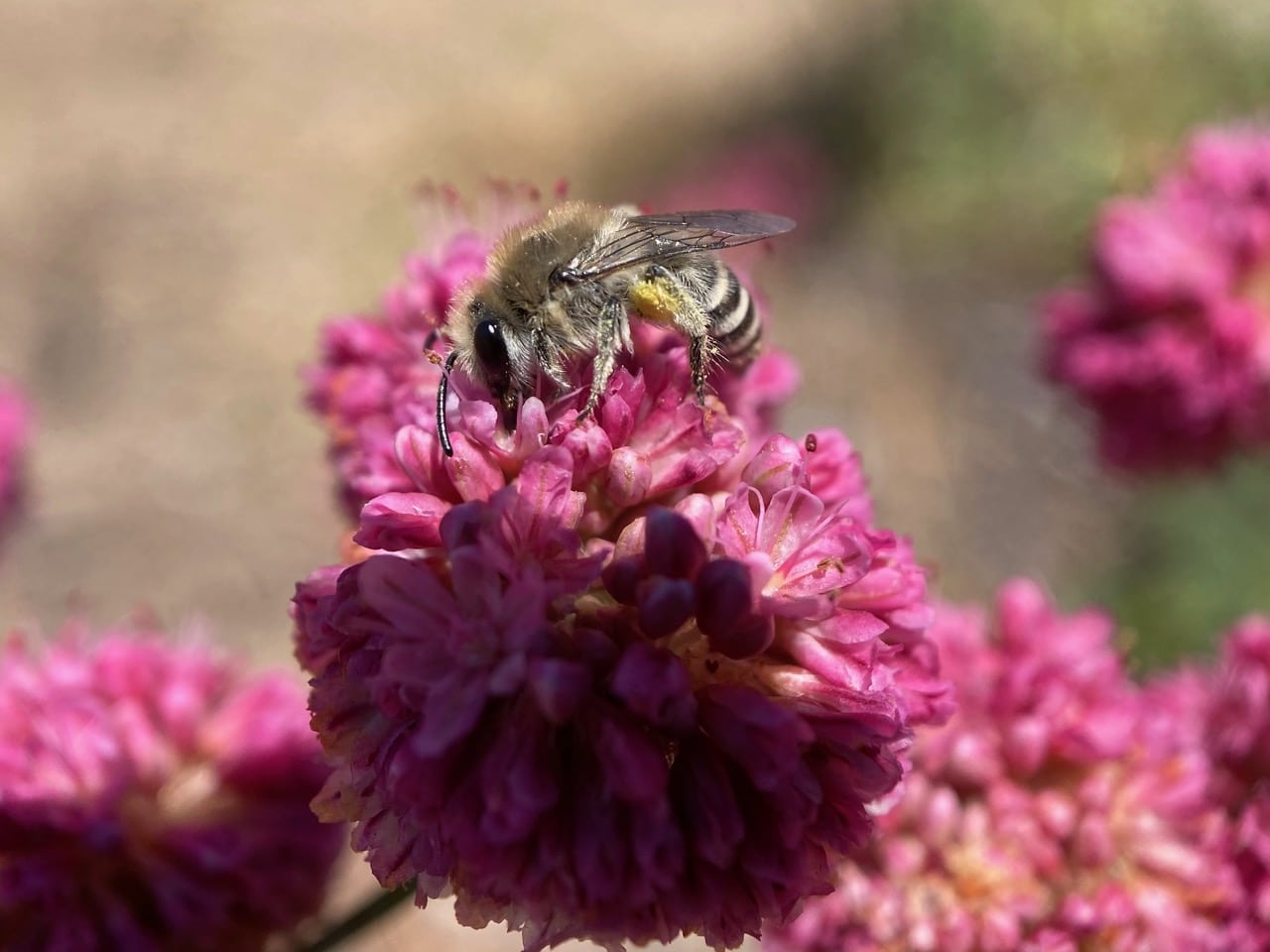
The bee family Colletidae includes generalists and specialists, and they are likely important pollinators of many wildflowers. All Colletidae in North America are solitary ground nesters, but some species nest in large aggregations. There are two major genera of Colletidae in North America: the Masked Bees (genus Hylaeus) and Cellophane Bees (genus Colletes). The most obvious shared characteristics of Colletidae is also the hardest to see: their short tongue. Colletes are moderately hairy, slender bees, ranging in size from 7 to 16 mm. Distinct features include a hairy head and thorax, pale bands of hair on the abdomen, and a heart-shaped head. The eyes of Colletes are angled (rather than being parallel), making the face slightly heart-shaped. The eyes of Colletes are angled (rather than being parallel), making the face slightly heart-shaped.
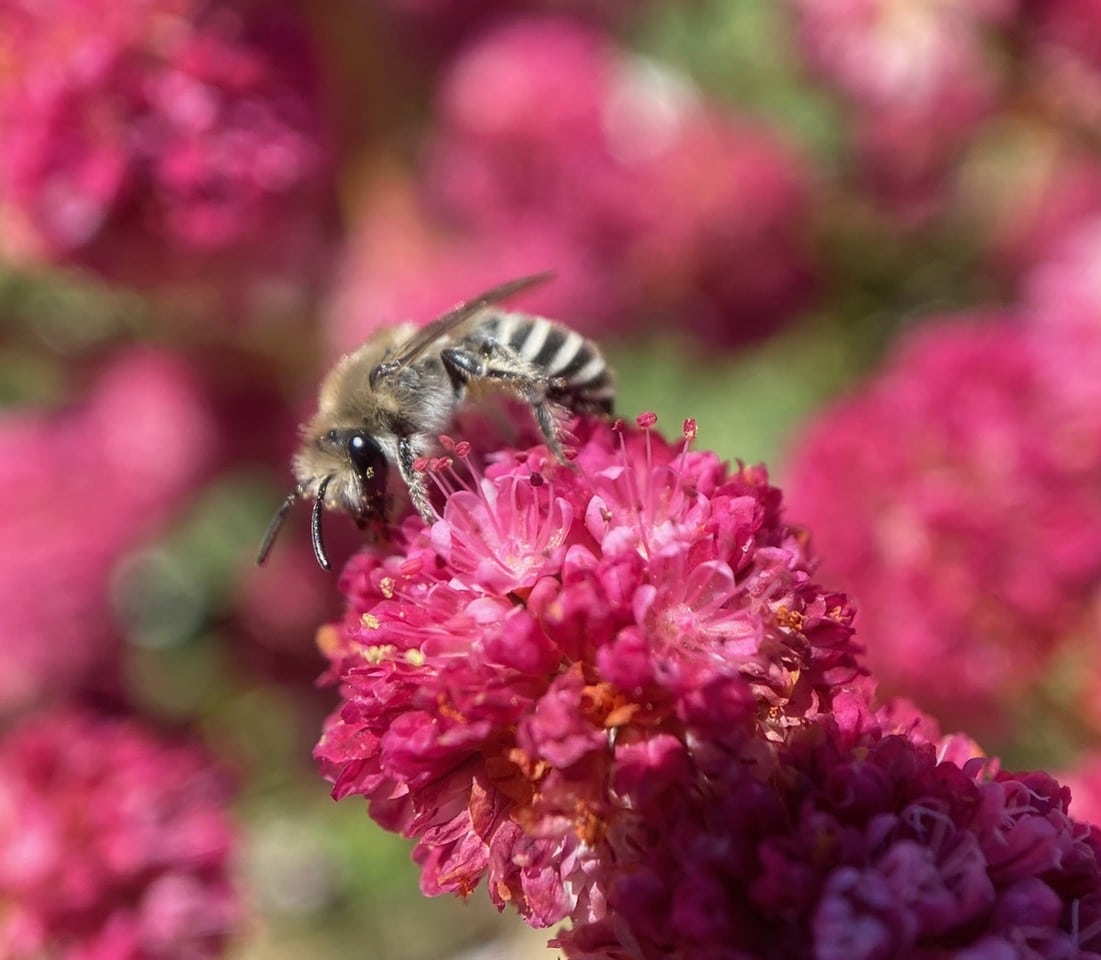
The genus name Colletes means “one who glues”, referring to their habit of applying a glue- or cellophane-like lining to the walls of nest cells, using their specialized tongues. This lining gives rise to their common names: cellophane bees, polyester bees, and plasterer bees. Colletes tongue is unique: short, flat, and forked at the tip. Colletes line their nests with a distinctive cellophane-like substance made from saliva and secretions from the Dufour’s gland on the abdomen. Using their specialized tongue, they paint the walls with saliva, then with secretions from the Dufour’s gland, they add a coat of varnish. This creates a clear covering that is strong, durable, and resistant to mold and water.

There’s a robust population of these Cellophane Bees here. The shallow, tightly packed flowers of the buckwheat are easy for the short-tongued bees to access nectar, and the sandy soil around here probably provides good nesting habitats.
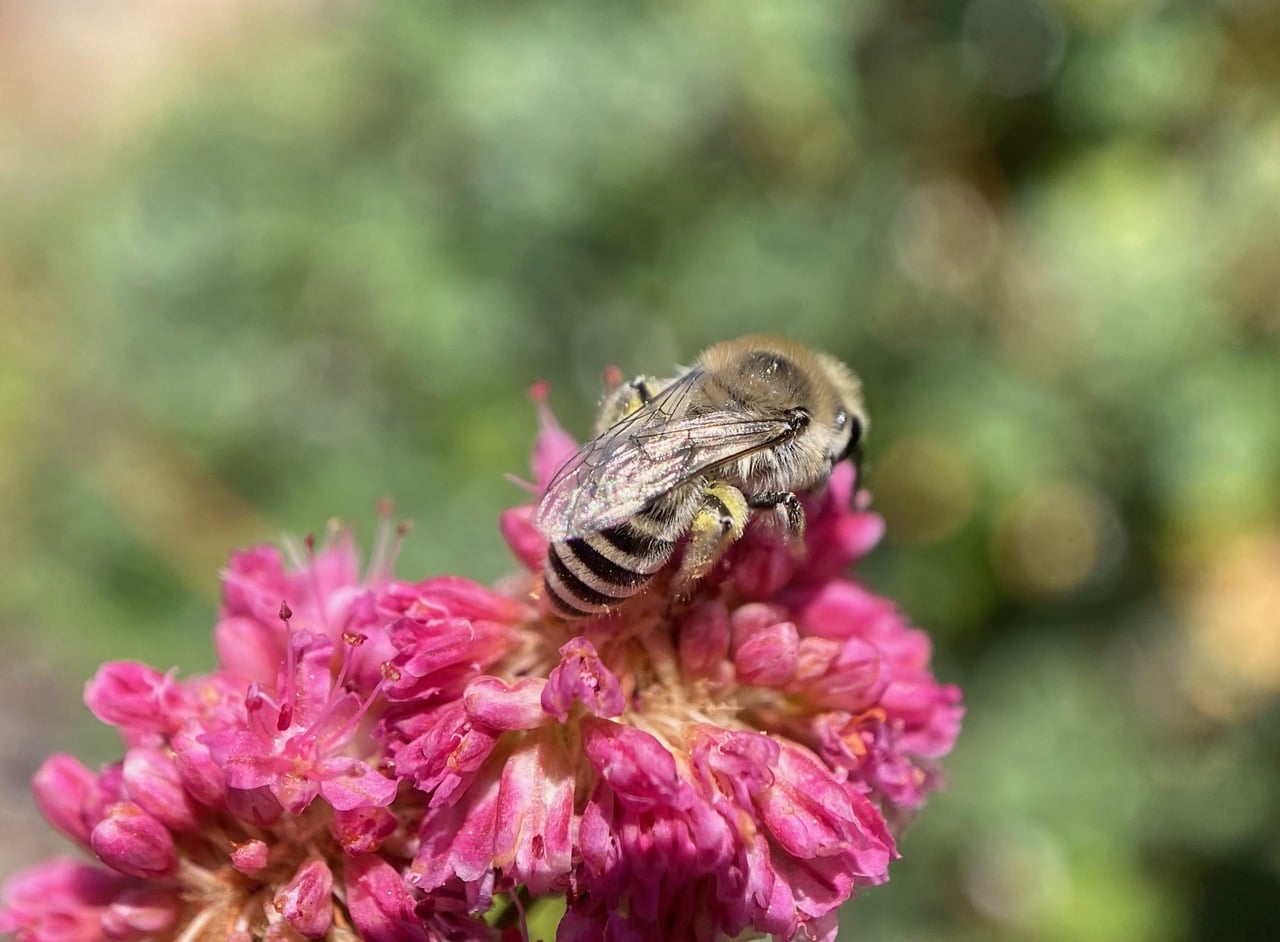
Most of the Cellophane Bees in these photos are females. They would at least stay put for a picture while foraging. The males are impossibly hyperactive today, bumping each other off from their perches.
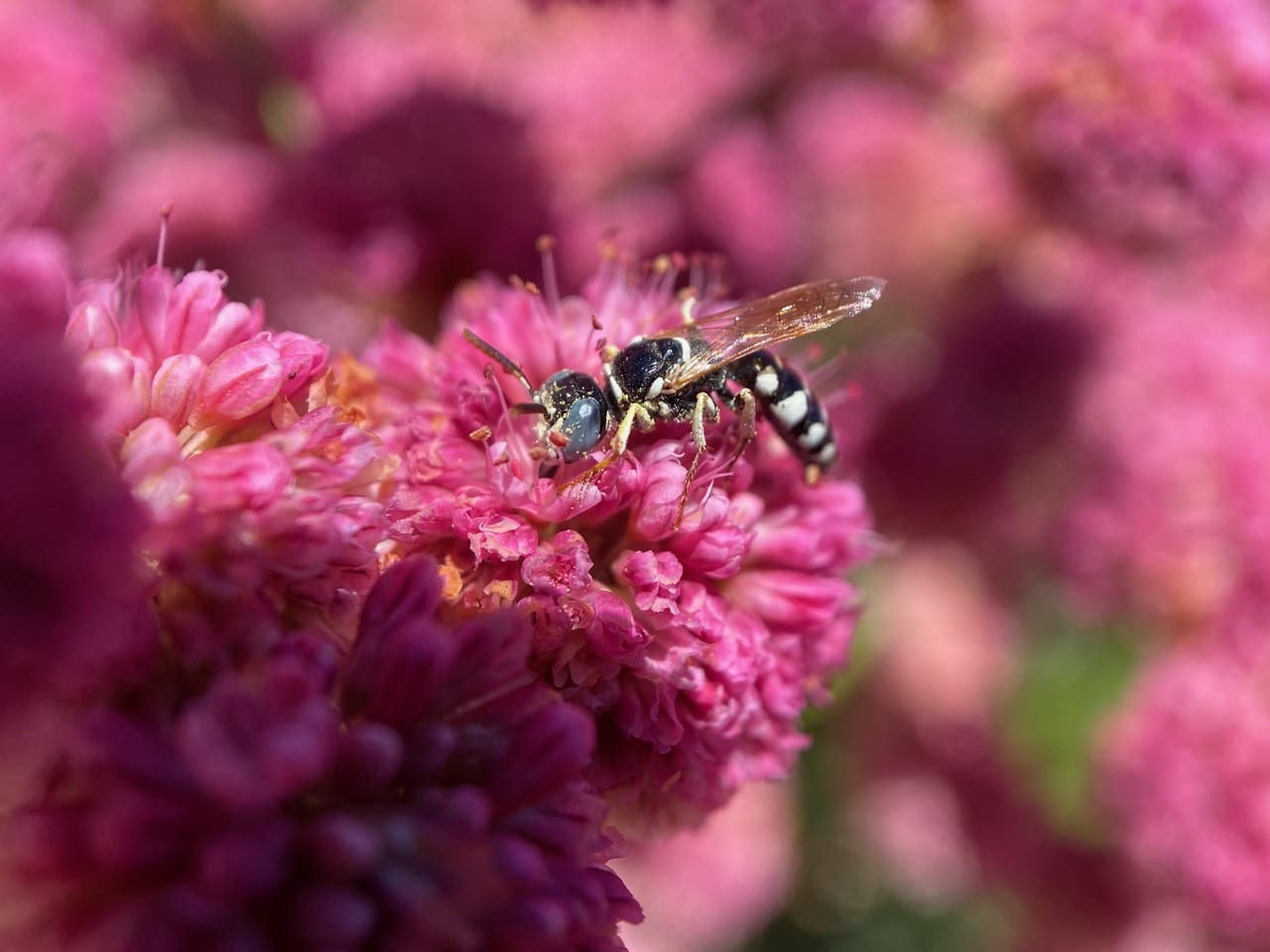
Wait, that little elongate wasp is a Beewolf, Philanthus politus (family Crabronidae)! While taking nectar on the buckwheat inflorescence, it is also on the lookout for their prey – bees!
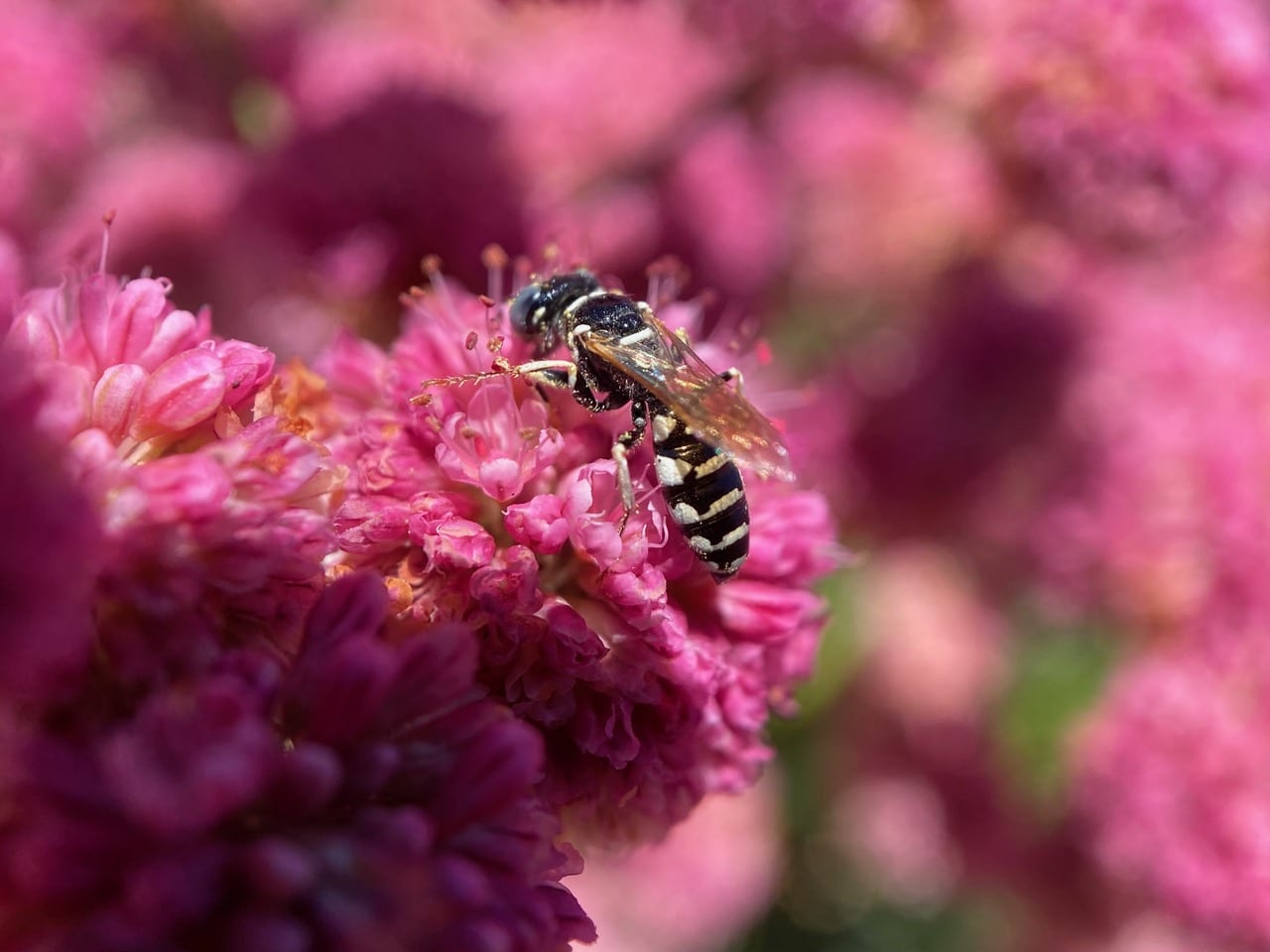
Beewolves (genus Philanthus) are solitary, predatory wasps, most of which prey on bees, hence their common name. The adult females dig tunnels in the ground for nesting, while the territorial males mark twigs and other objects with pheromones to claim the territory from competing males. As with all other spheroid wasps, the larvae are carnivorous, forcing the inseminated females to hunt for bees on which she lays her eggs, supplying the larvae with prey when they emerge. To prevent fungal growth on the stored prey, female Philanthus wasps secrete symbiotic bacteria from specialized antennal glands. Some Philanthus species specialize on certain bee species, others may be generalists that prey on a wide variety of bees. The adults visit flowers for nectar. Philanthus politus preys on small ground-nesting bees, primarily targeting species from the families Halictidae (sweat bees) and Andrenidae (mining bees). The best known beewolf is the species that prey on honey bees.
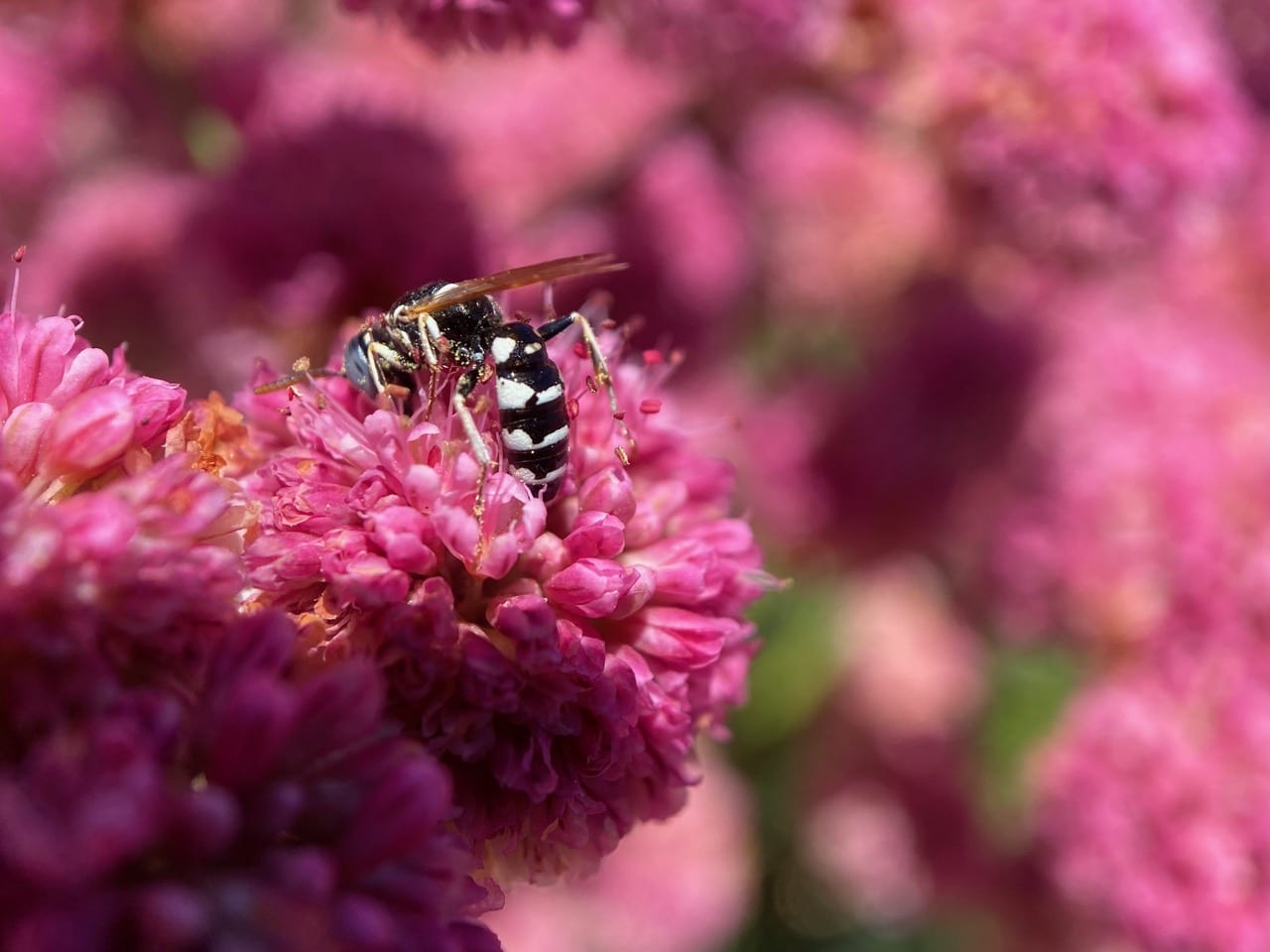
The Beewolves are endlessly amusing to watch. They can bend and contort their flexible body in seemingly impossible ways.
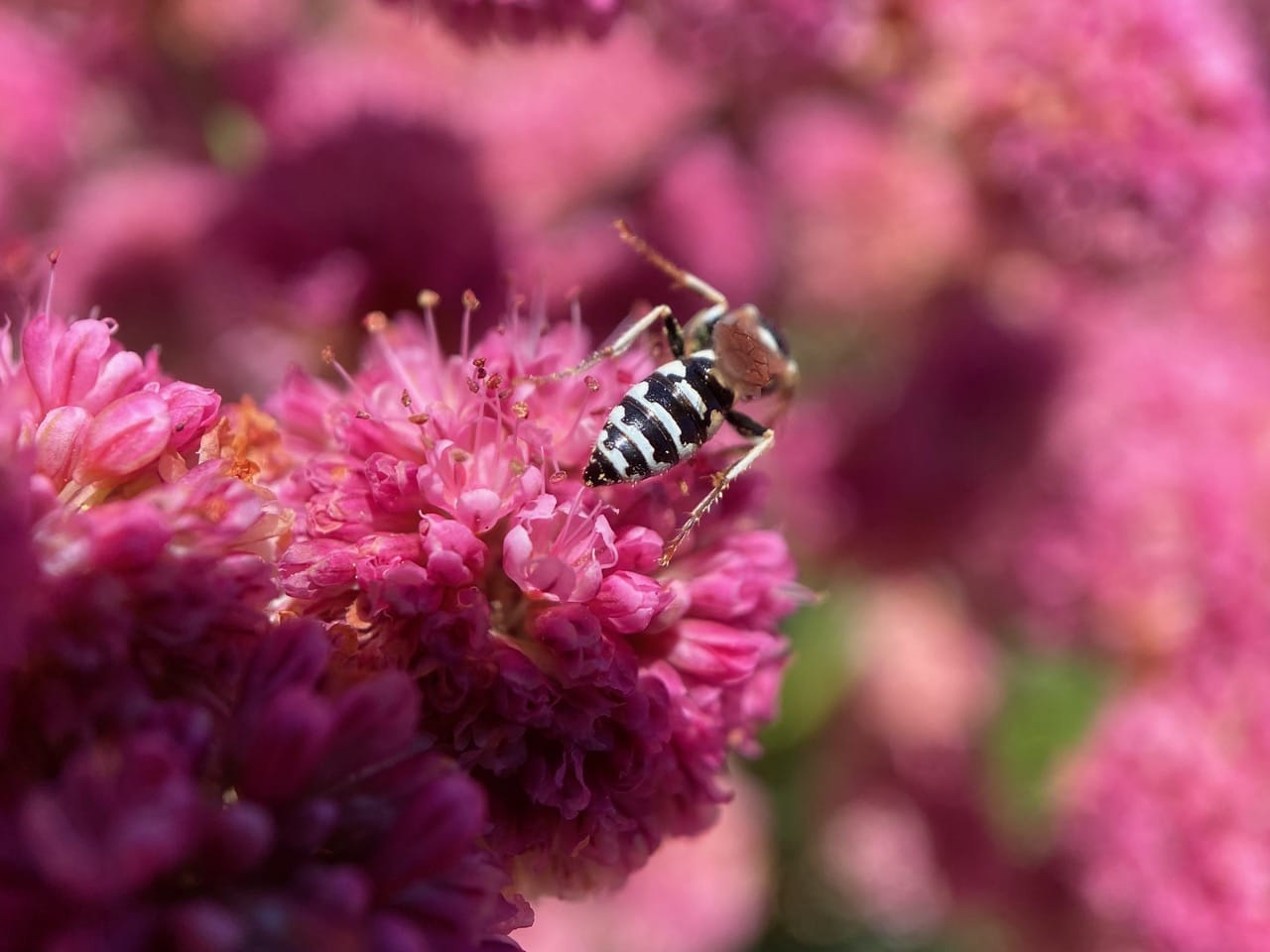
A parting shot of the Beewolf as it disappears over the buckwheat inflorescence.