

Pollinator Post 7/2/23 (2)
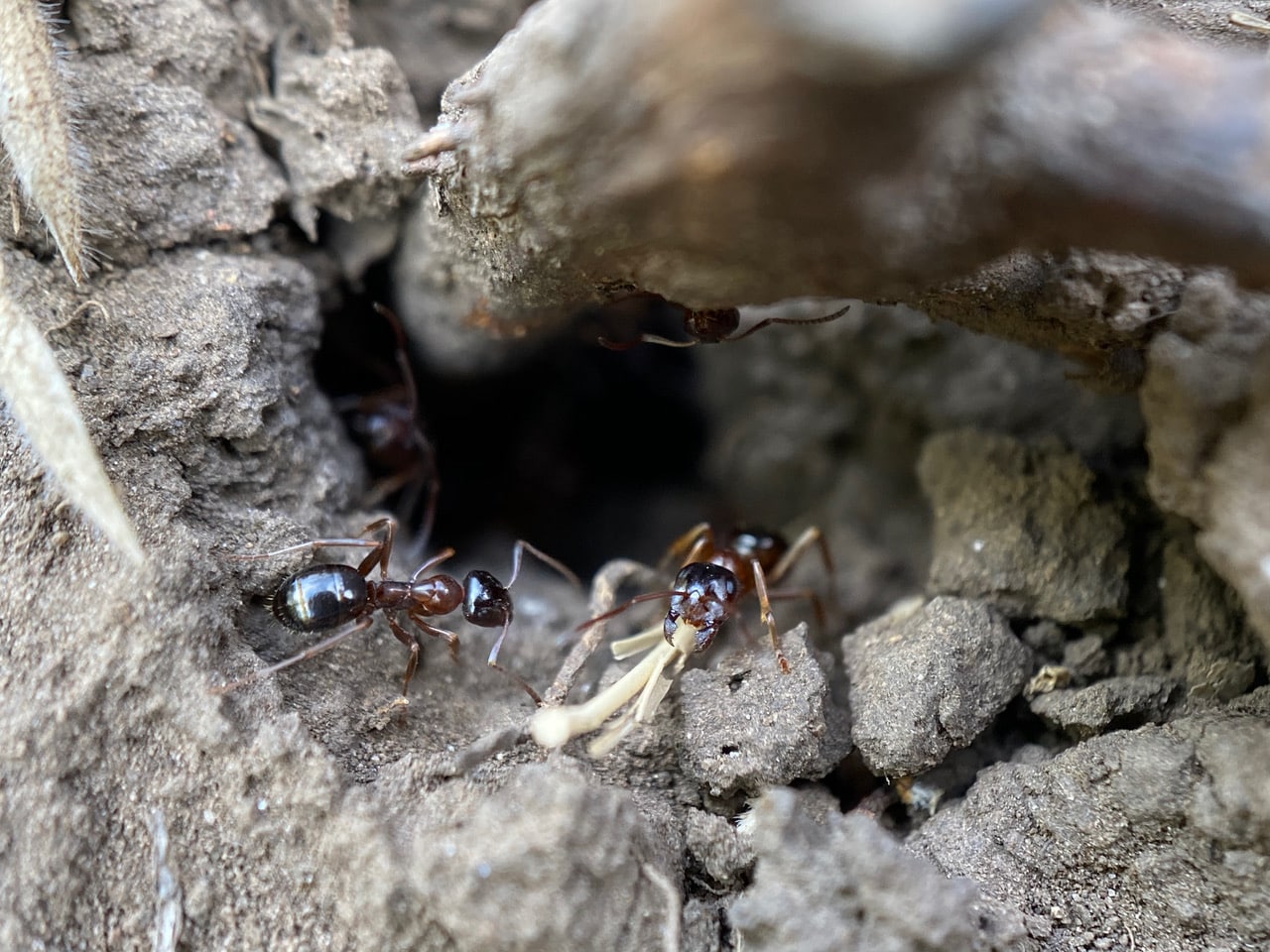
There’s an air of excitement at a small hole at the edge of the trail. Some Field Ants, Formica subpolita (family Formica) are gathered at the entrance to their nest.
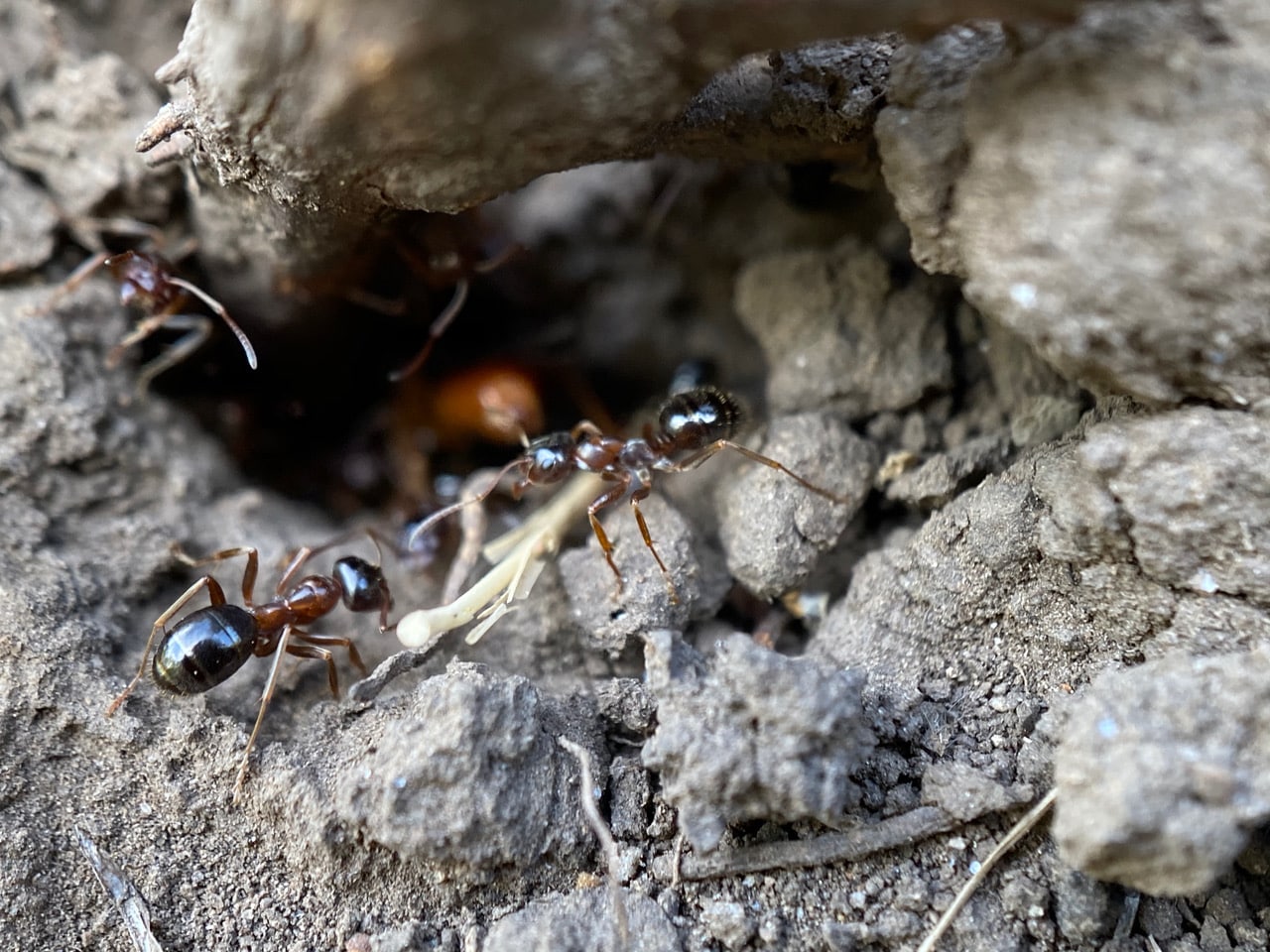
I look just in time to see a wasp-like insect retreat into the hole. It is winged, considerably larger than the ants, and it has a large orange abdomen. The ants do not seem alarmed by the insect, but direct their wrath at my macro lens, snapping their mandibles. Might that wasp-like insect be a virgin queen, ready for her nuptial flight? Most ant nuptial flights occur after some rain. We haven’t had any rain recently. What is going on?
Nuptial flight is an important phase in the reproduction of most ant, termite, and some bee species. A mature ant colony seasonally produces winged virgin queens and males, called alates. In what is known as the haplo-diploidy sex determination system, unfertilized eggs develop into males, while fertilized eggs usually develop into wingless, sterile workers, but may develop into virgin queens if the larvae receive special nutrition. Young queens and males stay in their parent colony until conditions are right for the nuptial flight. The flight requires warm, rain-free and relatively windless weather, often after some rain. Different colonies of the same species often use environmental cues to synchronize the release of the alates so that they can mate with individuals from other nests, thereby avoiding inbreeding. The sudden take off of huge numbers of the ants all at once also serves to momentarily overwhelm their predators (birds, lizards, etc.) to ensure that a few alates will survive to establish new colonies.
During the nuptial flight, each virgin queen usually mates with several males. The sperm is stored in a special organ in her abdomen, the spermatheca, and lasts throughout her lifetime. Once the alates have mated, the role of the males is over, and they soon die. The mated queens quickly chew off their own wings and begin looking for a suitable site in which to nest and set up a new colony. She digs herself an underground chamber and lays her first few eggs, which she rears to adulthood. After the first workers appear, the queen’s role in the colony typically becomes one of exclusive egg-laying.
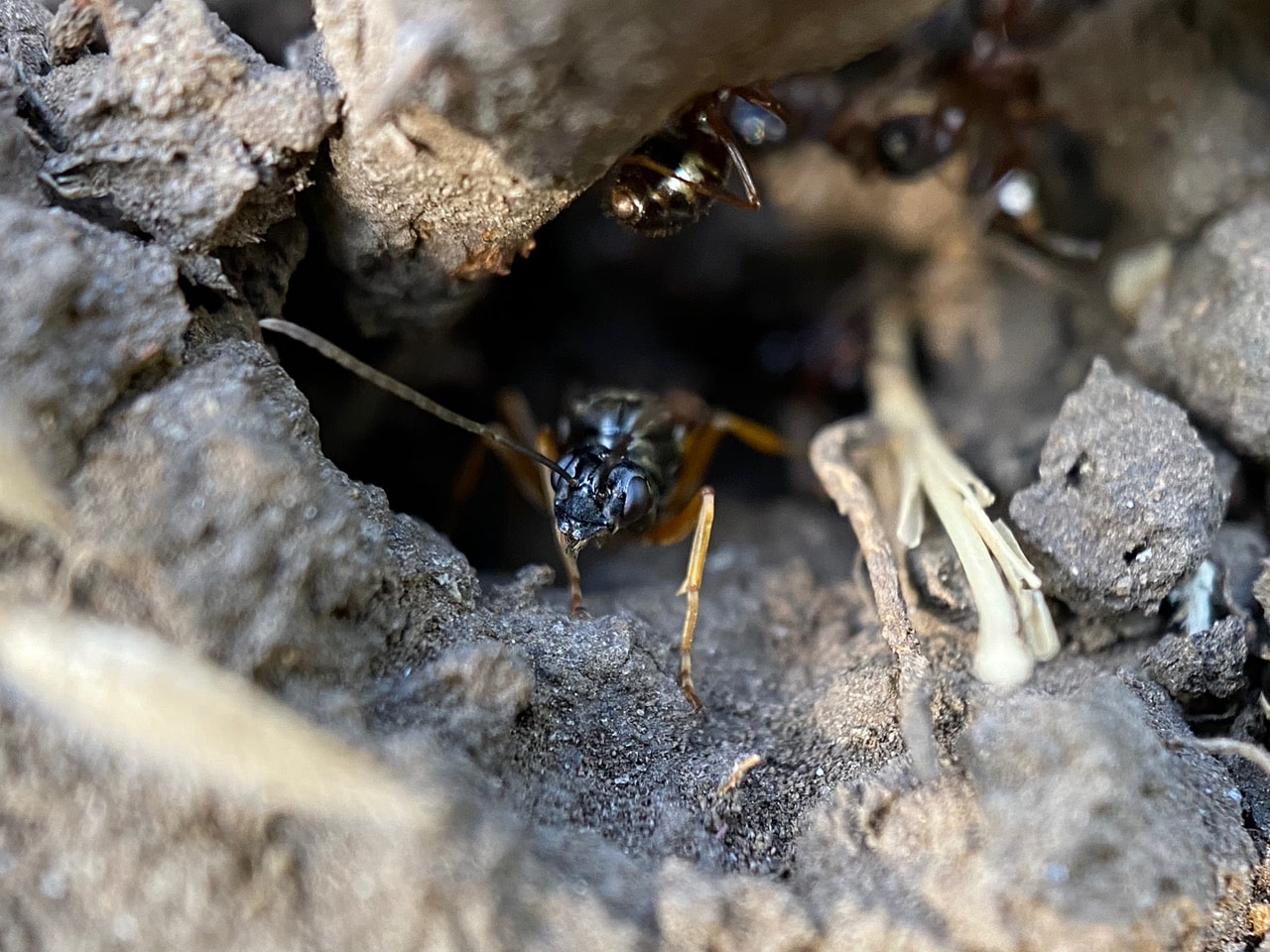
I settle down next to the ant nest, hoping to see the queen again. She makes several furtive appearances at the entrance, each time looking left and right and waving her long antennae as if checking the air. Each time she retreats back into the hole. I think she can sense my presence.
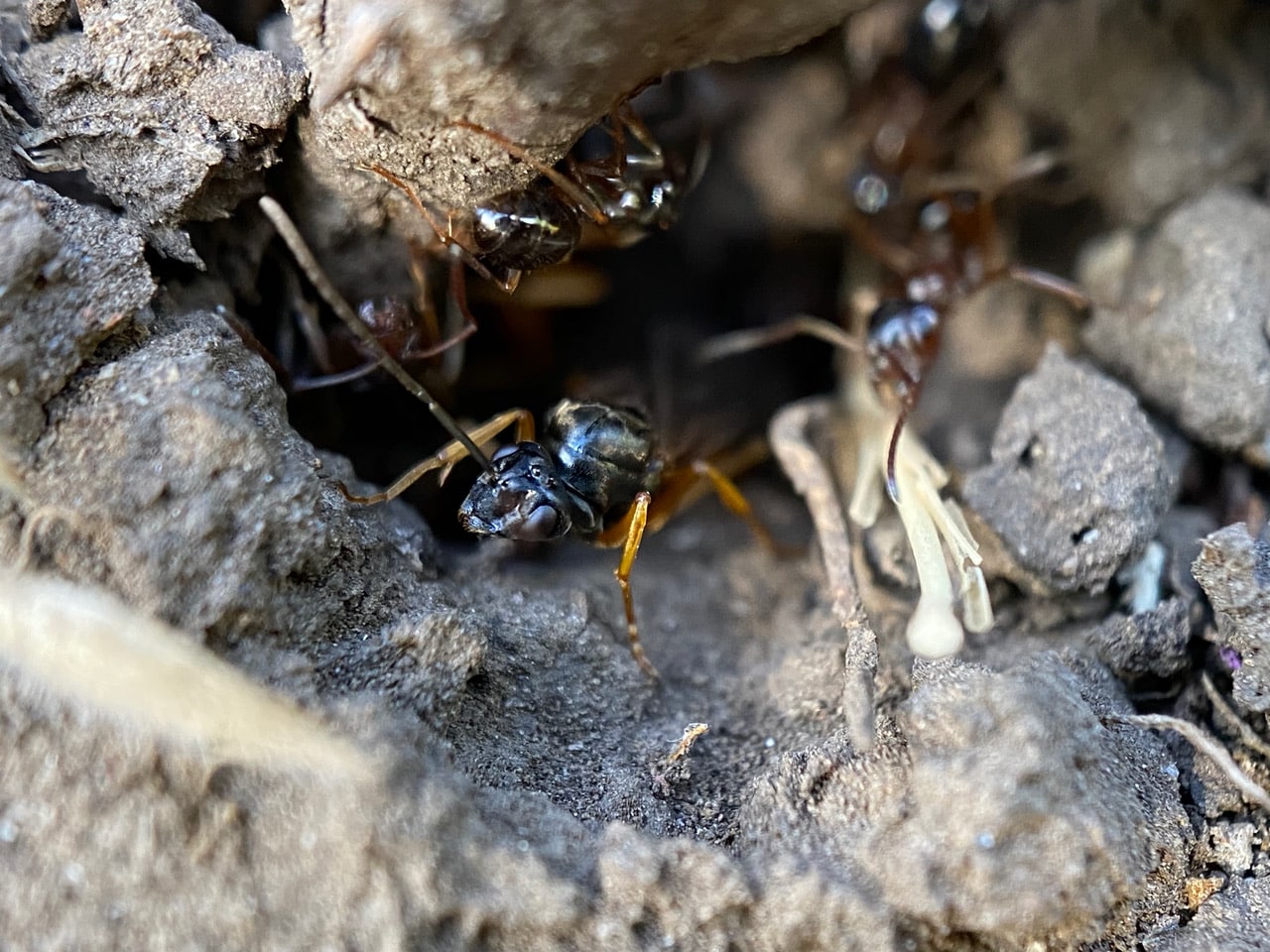
Here she is again checking at the nest entrance.

All of a sudden, the queen makes a dash to the right.
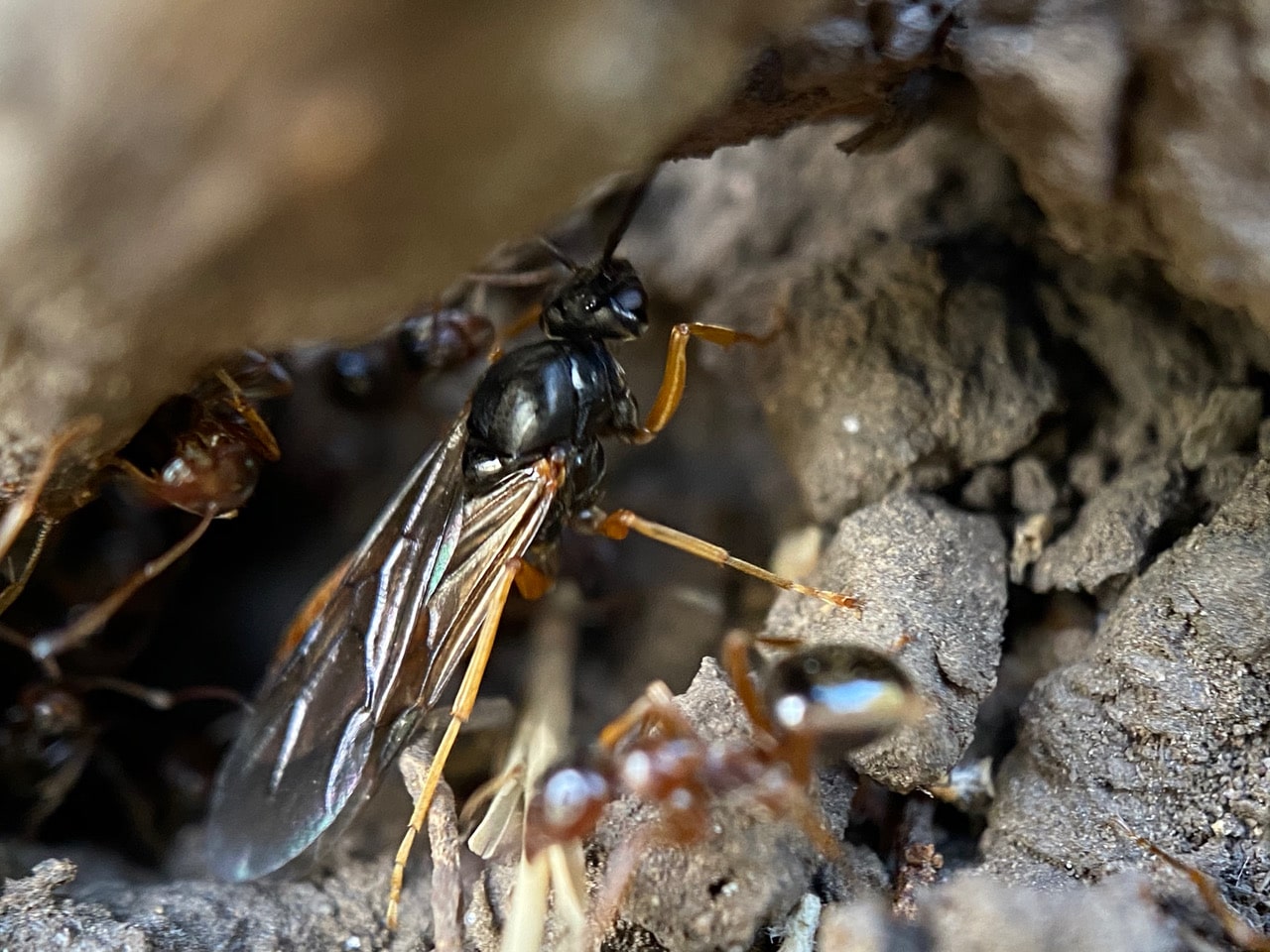
But before she’s out of the hole, she swings upwards. The nest entrance is divided by a twig. The queen is heading for the smaller entrance in the back – a move I haven’t anticipated!
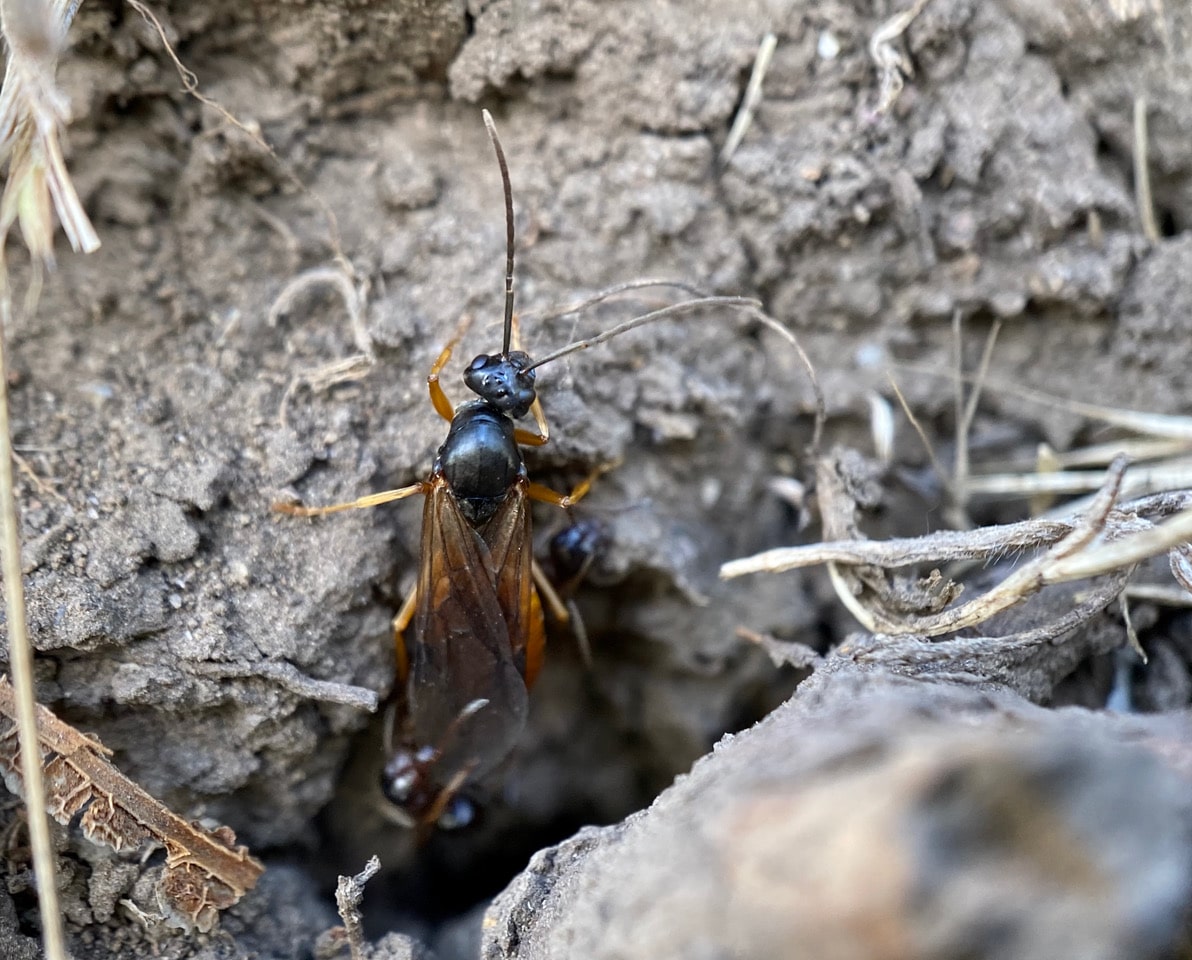
Ah, here she is, climbing out of the nest through the back entrance, aided by a couple of workers.
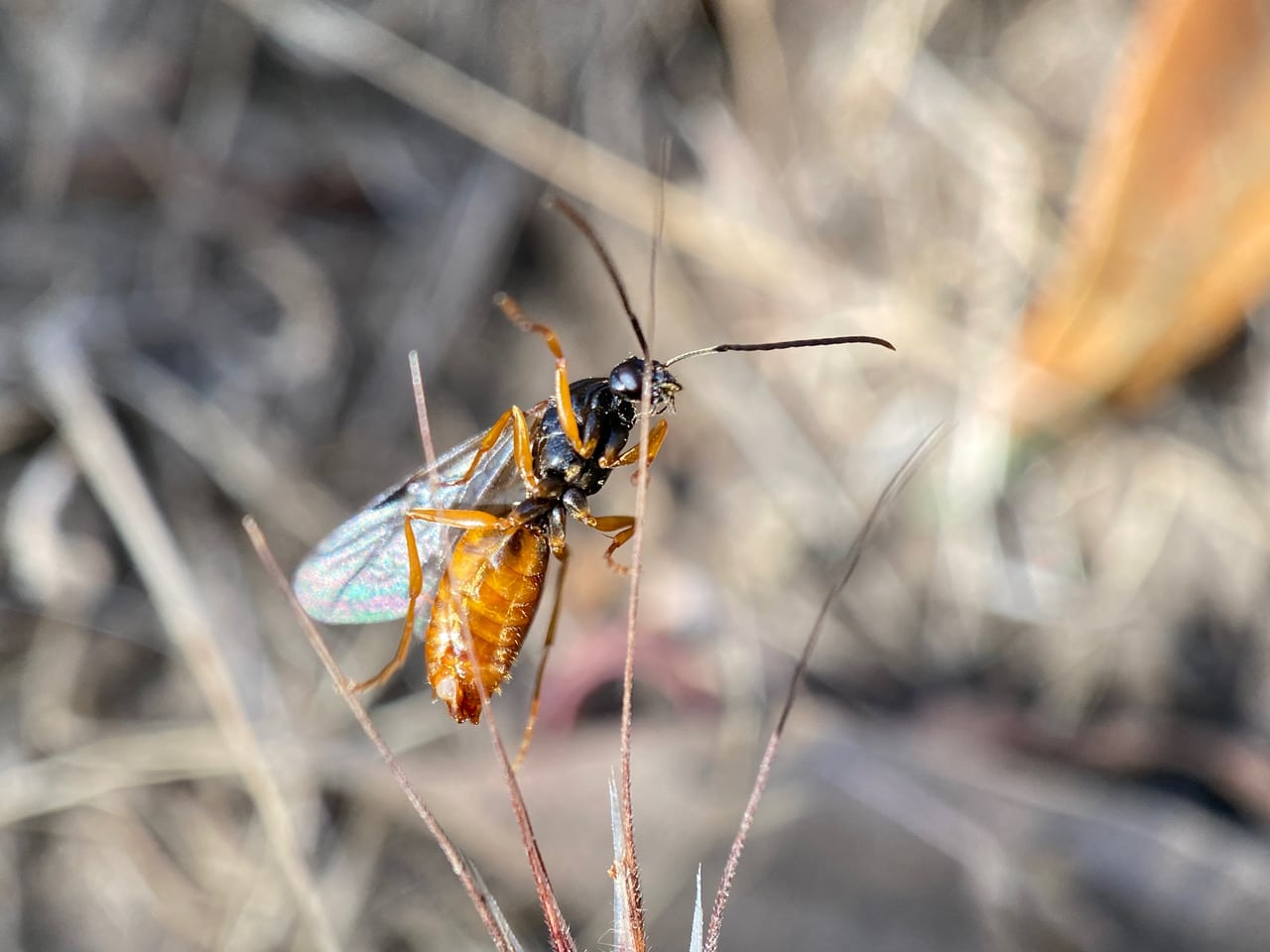
Clumsily she clambers onto some dry grasses.
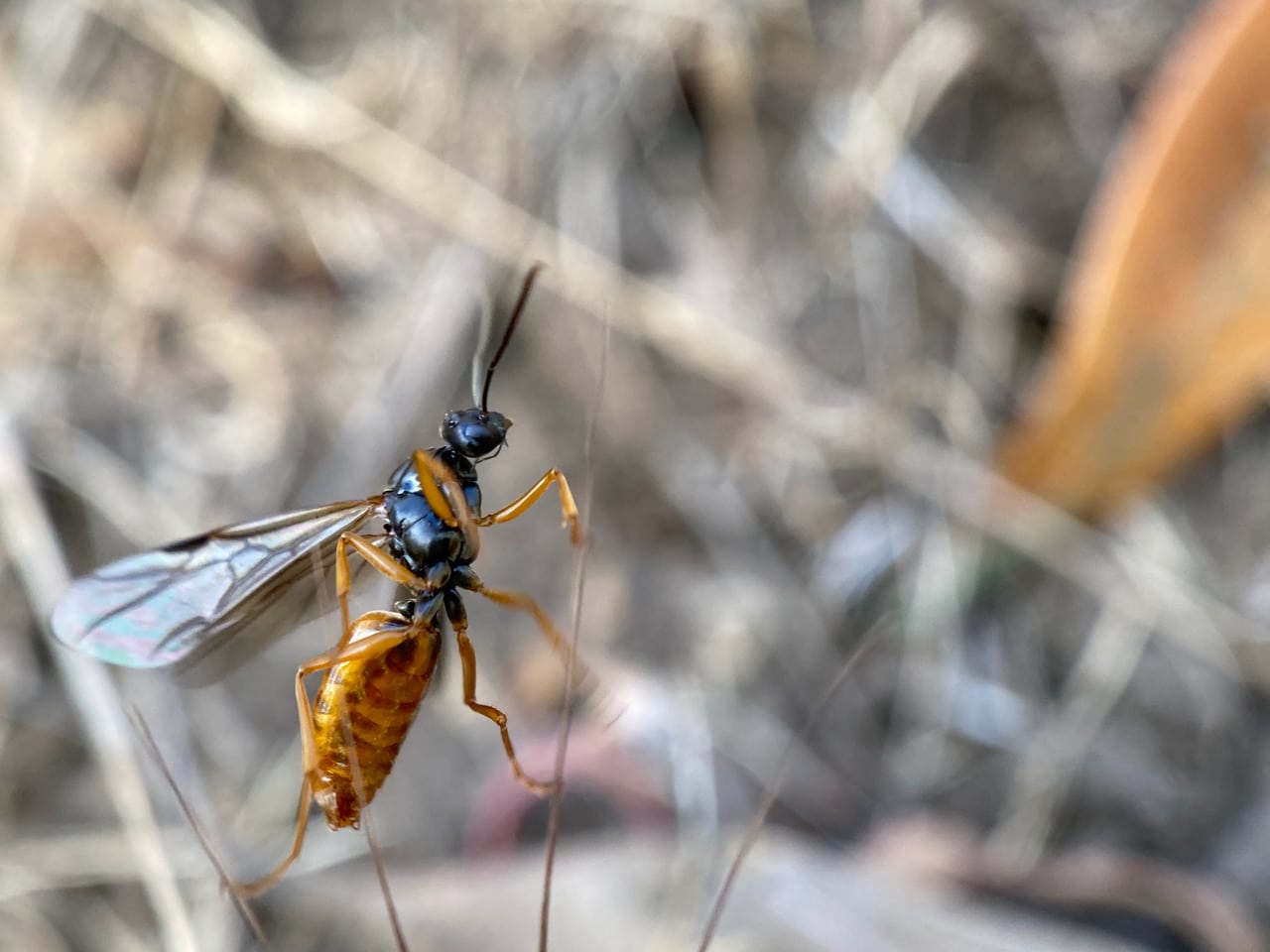
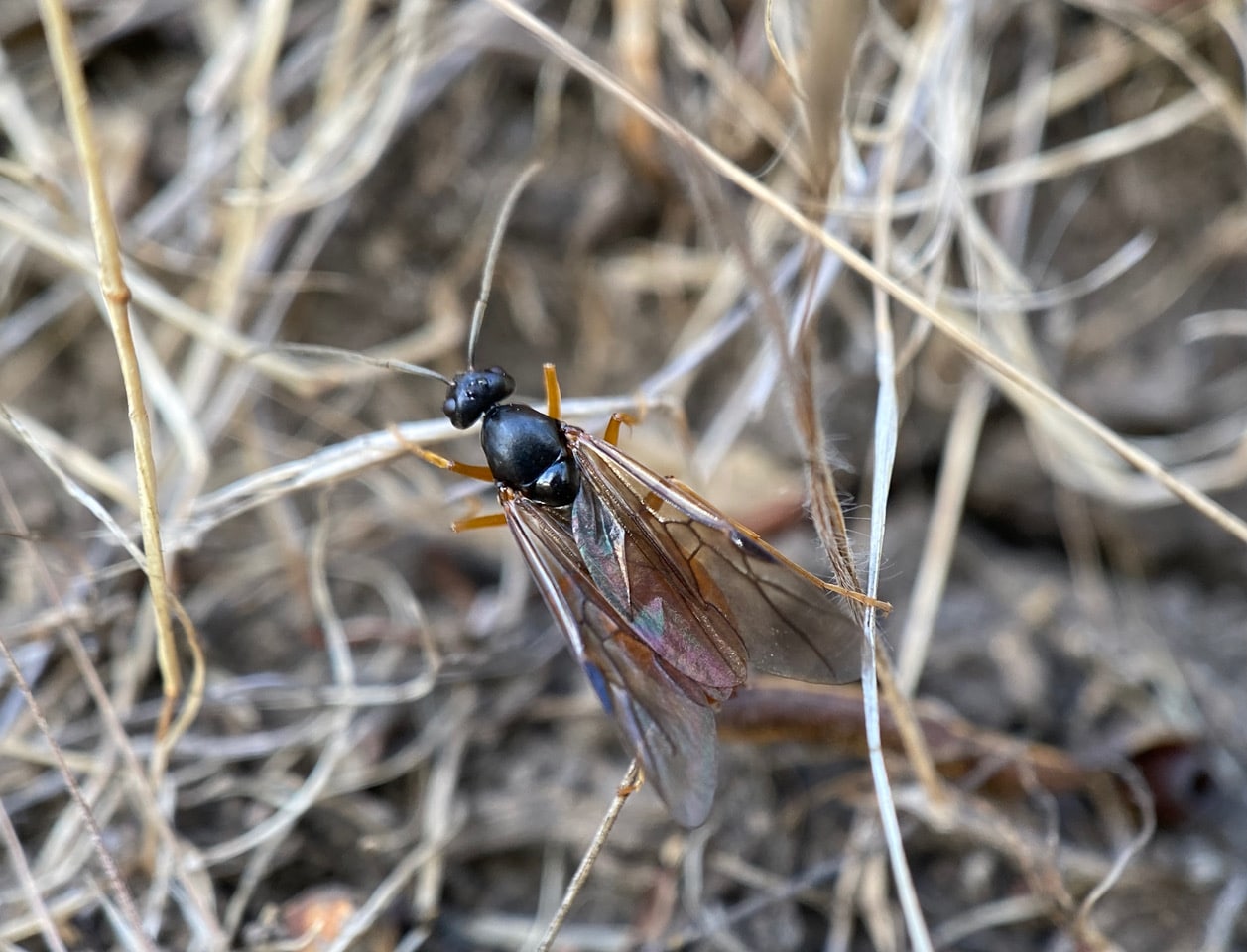
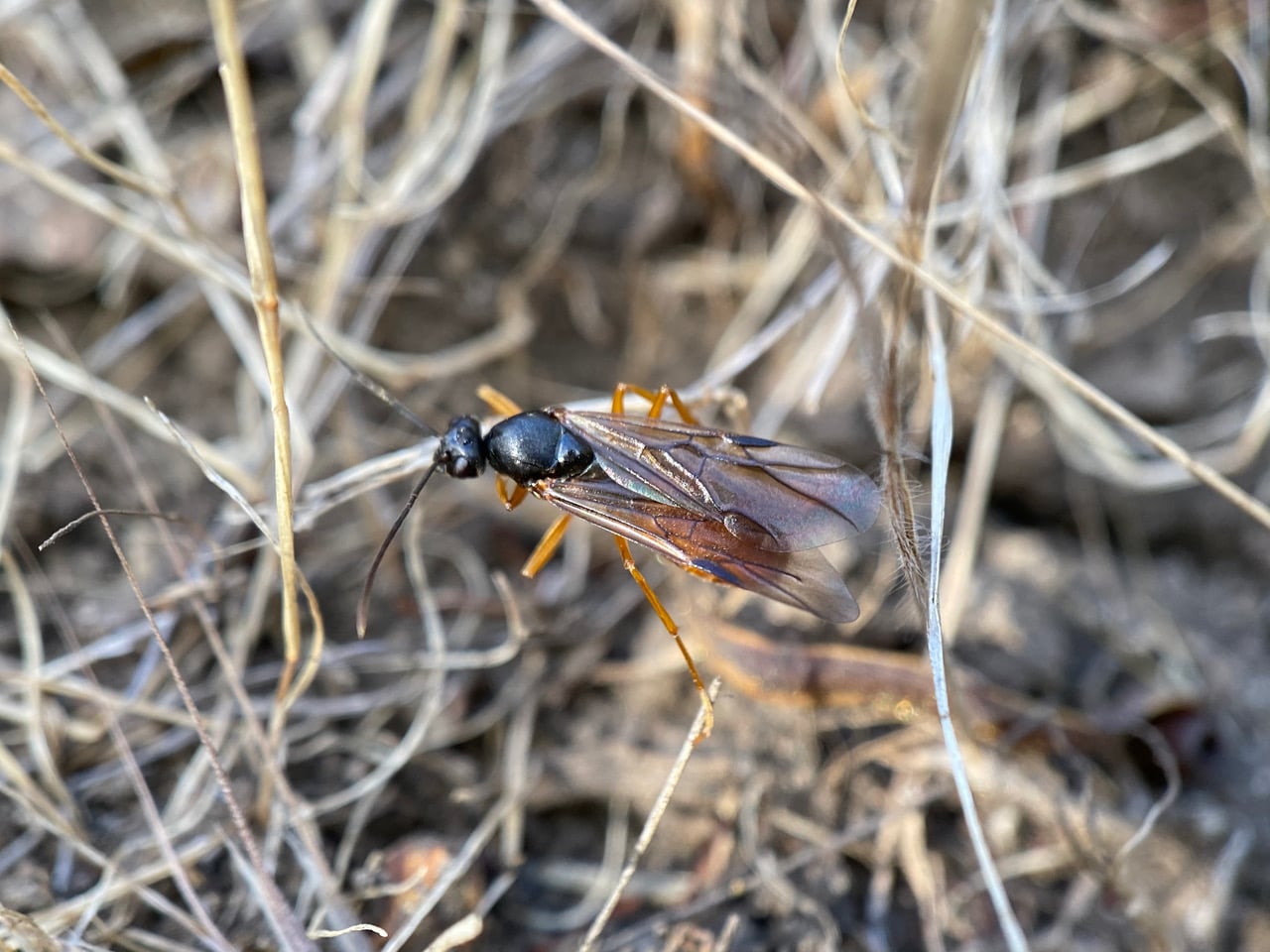
The surrounding terrain of dried grasses is difficult for a small insect with large wings to navigate. But she finally finds a steady perch on a stalk, and lifts off into the air. Bon voyage, Your Royal Highness! Why am I seeing only one queen? Is she a straggler, late for the party? Where are the male alates? Don’t both sexes participate in nuptial flights? What is the environmental cue that triggered this one? Did the unusually high temperatures trigger this nuptial flight? Today’s still air? When I pass the same ant nest a couple of hours later, everything is quiet at the entrance – the event is over. There’s so much I have to learn about ants….
Formica is a genus of ants in the family Formicidae, commonly known as wood ants, mound ants, and field ants. Many species live in wooded areas. In more suburban landscapes, they tend to nest near structures such as sidewalks, fences, or building foundations. Most Formica species are polygynous (have multiple queens per colony), and some are polydomous (have multiple nests belonging to the same colony). Unlike other ants, the genus Formica does not have separate castes, which are based on an individual’s specialization and morphology.
Formica ants actively gather honeydew from source insects, and extrafloral nectar. They also prey on insects and spiders, and scavenge small dead invertebrates, honeydew on leaf litter and plant surfaces, etc.
Formica ants lack a stinger, but instead they squirt formic acid from the tip of their abdomen as a defense mechanism. They can also bite. They may pinch skin with their mouthparts, and then squirt formic acid into the wound, which may give the sensation of a sting.
Formica subpolita is distributed in the western North America; often found in coastal forests.

The most numerous bee visiting the Sticky Monkeyflowers today are the Small Carpenter Bees, Ceratina sp. (family Apidae). This one is gathering pollen on the ceiling of the floral tube. See her shield-shaped abdomen that comes to a point at the tip?
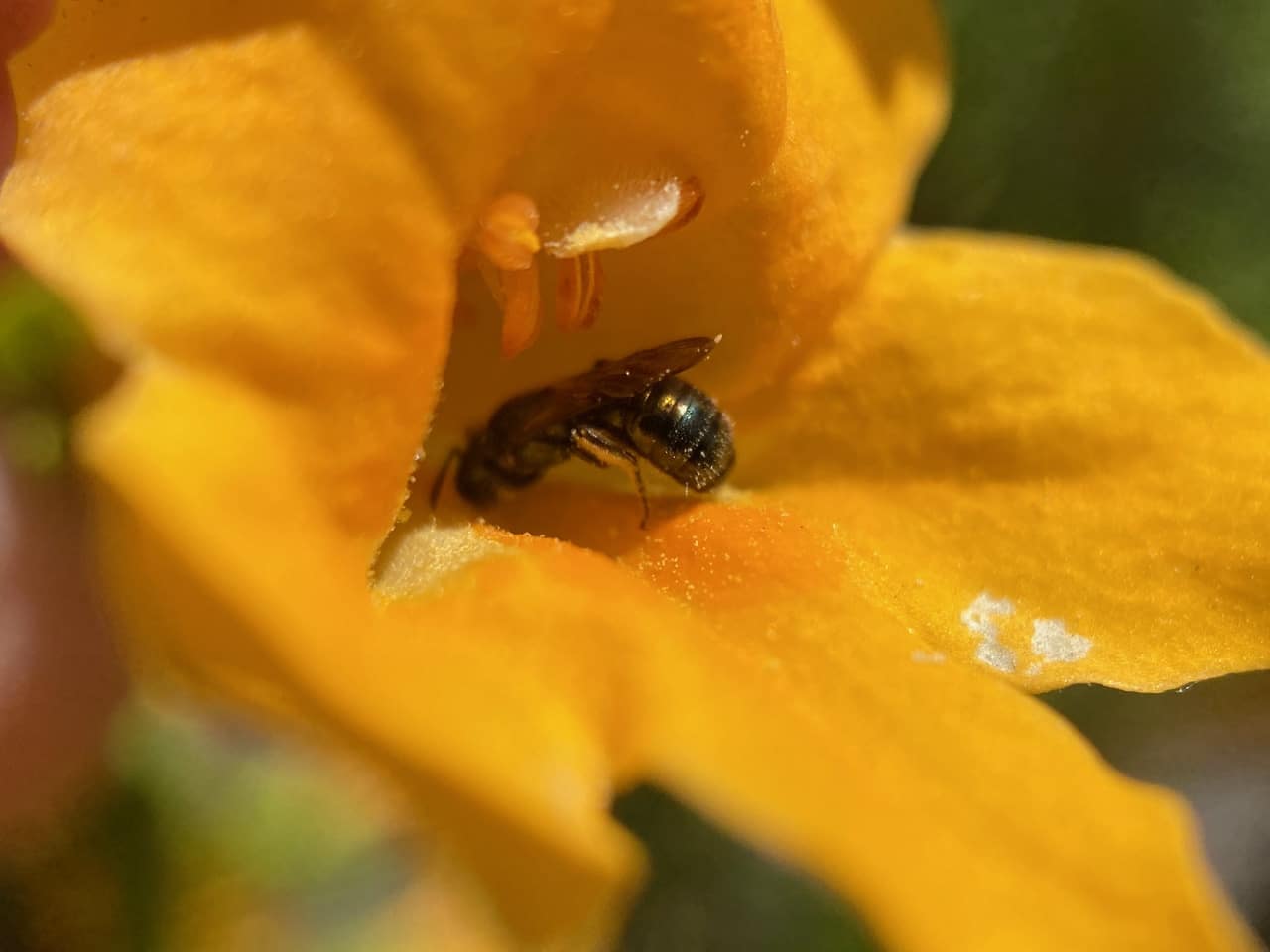
Note the modest scopa (pollen collecting hairs) on her hind leg, and her glossy, almost metallic body with sparse hairs.
The Small Carpenter Bee genus Ceratina is closely related to the more familiar, and much larger Carpenter Bees (genus Xylocopa). Ceratina are typically dark, shiny, even metallic bees, with fairly sparse body hairs and a weak scopa on the hind leg. The shield-shaped abdomen comes to a point at the tip. Some species have yellow markings, often on the face.
Females excavate nests with their mandibles in the pith of broken or burned plant twigs and stems. While many species are solitary, a number are subsocial. Both male and female carpenter bees overwinter as adults within their old nest tunnels, emerging in the spring to mate. In the spring, this resting place (hibernaculum) is modified into a brood nest by further excavation. The female collects pollen and nectar, places this mixture (called bee bread) inside the cavity, lays an egg on the provision, and then caps off the cell with chewed plant material. Several cells are constructed end to end in each plant stem.

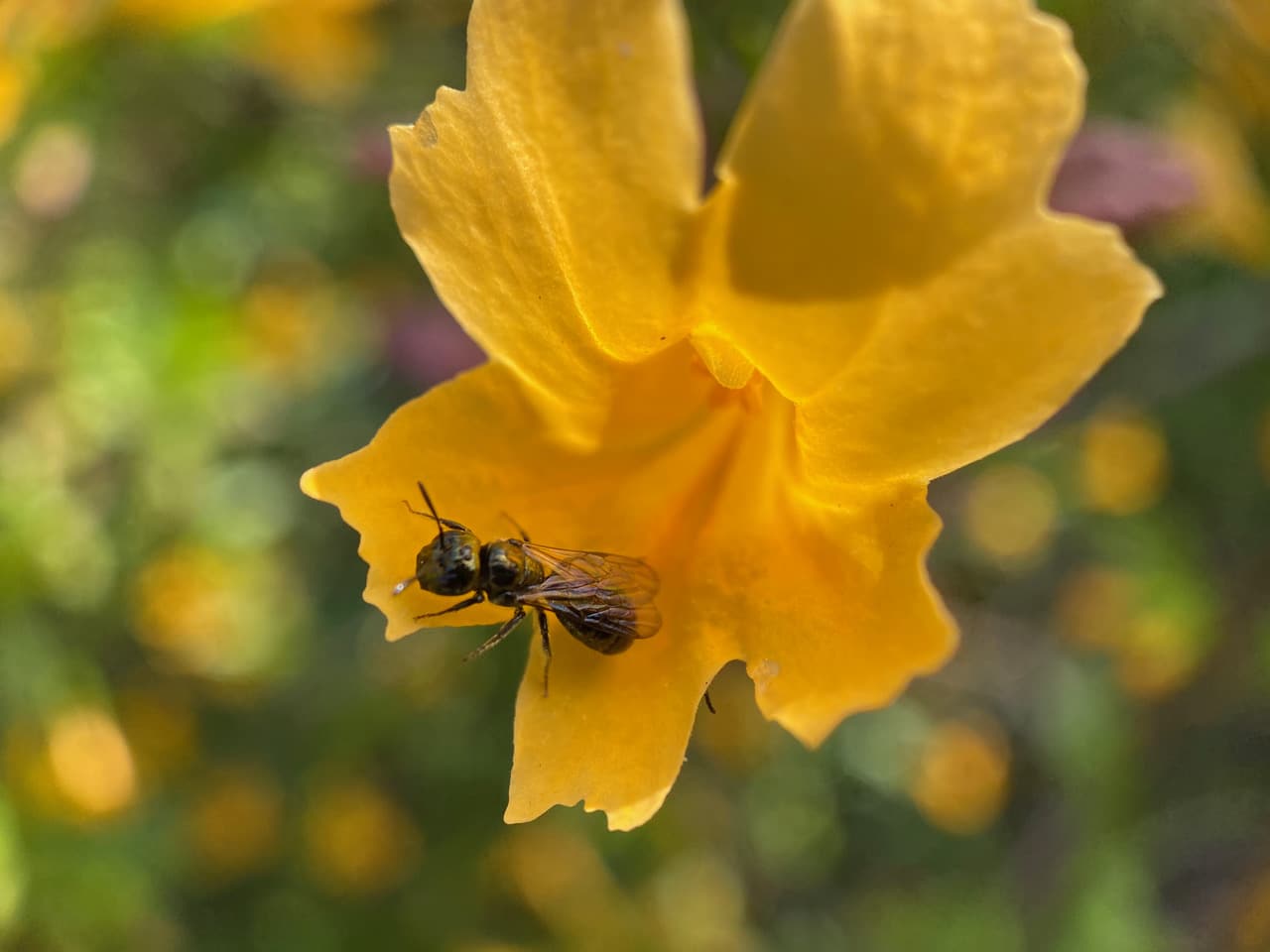
A good look at Ceratina outside the flower before she flies off.

Some of the California Phacelia in full sun have folded their inflorescences upward. This is the first time I have seen this behavior. Is this a response to the heat? To desiccation? It is approaching 80 F out here.

A Common Damsel Bug, Nabis americoferus (family Nabidae) is perched stock-still on a stem of California Goldenrod, Solidago velutina ssp. californica.
Damsel Bugs are slender, tan-colored, soft-bodied, elongate, winged predators. They generally have large, round eyes and long legs. They are generalist predators, catching almost any insect smaller than themselves, and cannibalizing each other when no other food is available. They use their thickened raptorial front legs that are lined with spines to catch and hold prey, then suck out the body contents with their piercing mouthparts. Females deposit their tiny eggs in plant stems or other tissue, and immatures (nymphs) go through five instars before becoming adults.

As the Damsel Bug moves, I get a good look at its thickened raptorial front legs, and the jointed rostrum, the piercing-sucking mouthpart that is folded under the body when not in use.
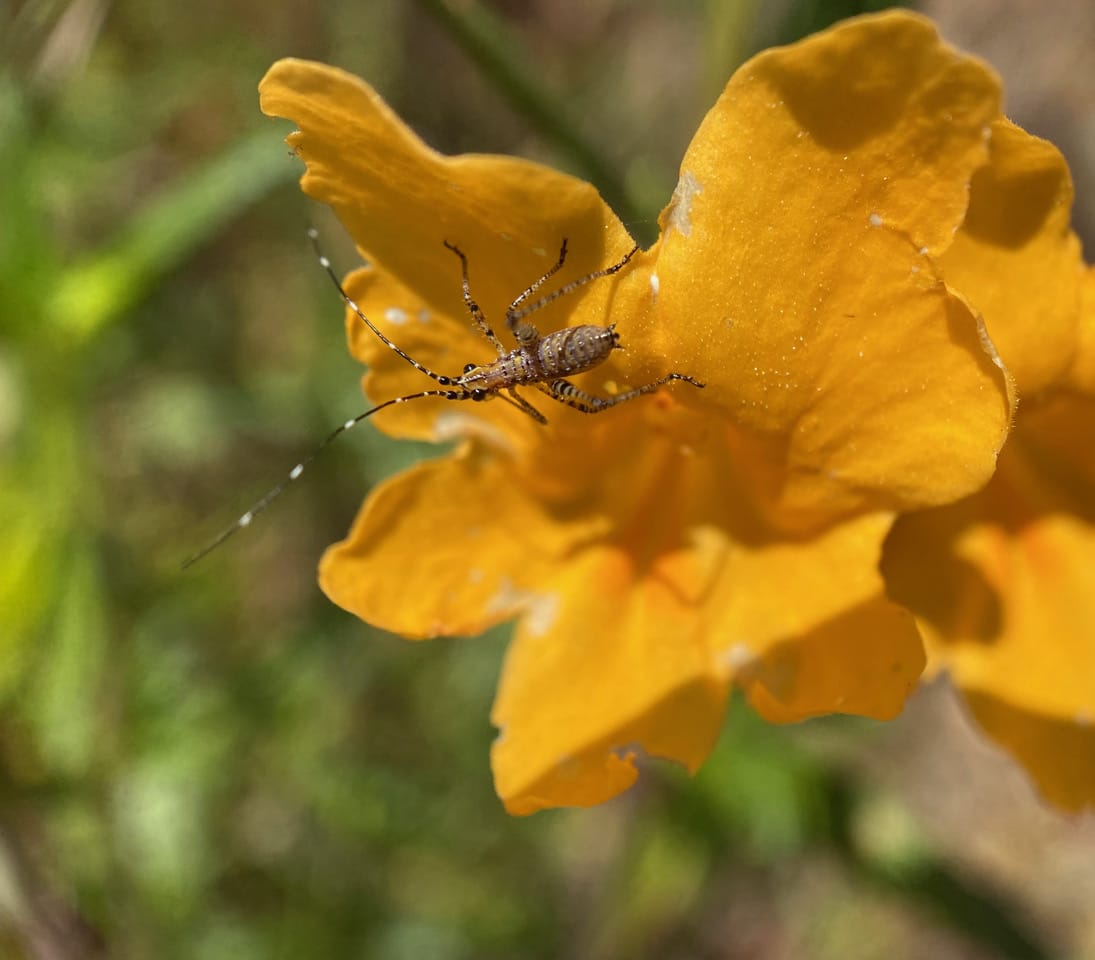
The day won’t be complete without finding a baby Katydid.
Scudderia is a genus of katydids in the family Tettigoniidae. They are sometimes called bush katydids and are 30-38 mm in length. They are mostly found in North America. Scudder’s Bush Katydids are herbivores, with nymphs feeding primarily on flowers and adults preferring woody deciduous plants.