

Pollinator Post 7/2/23 (1)
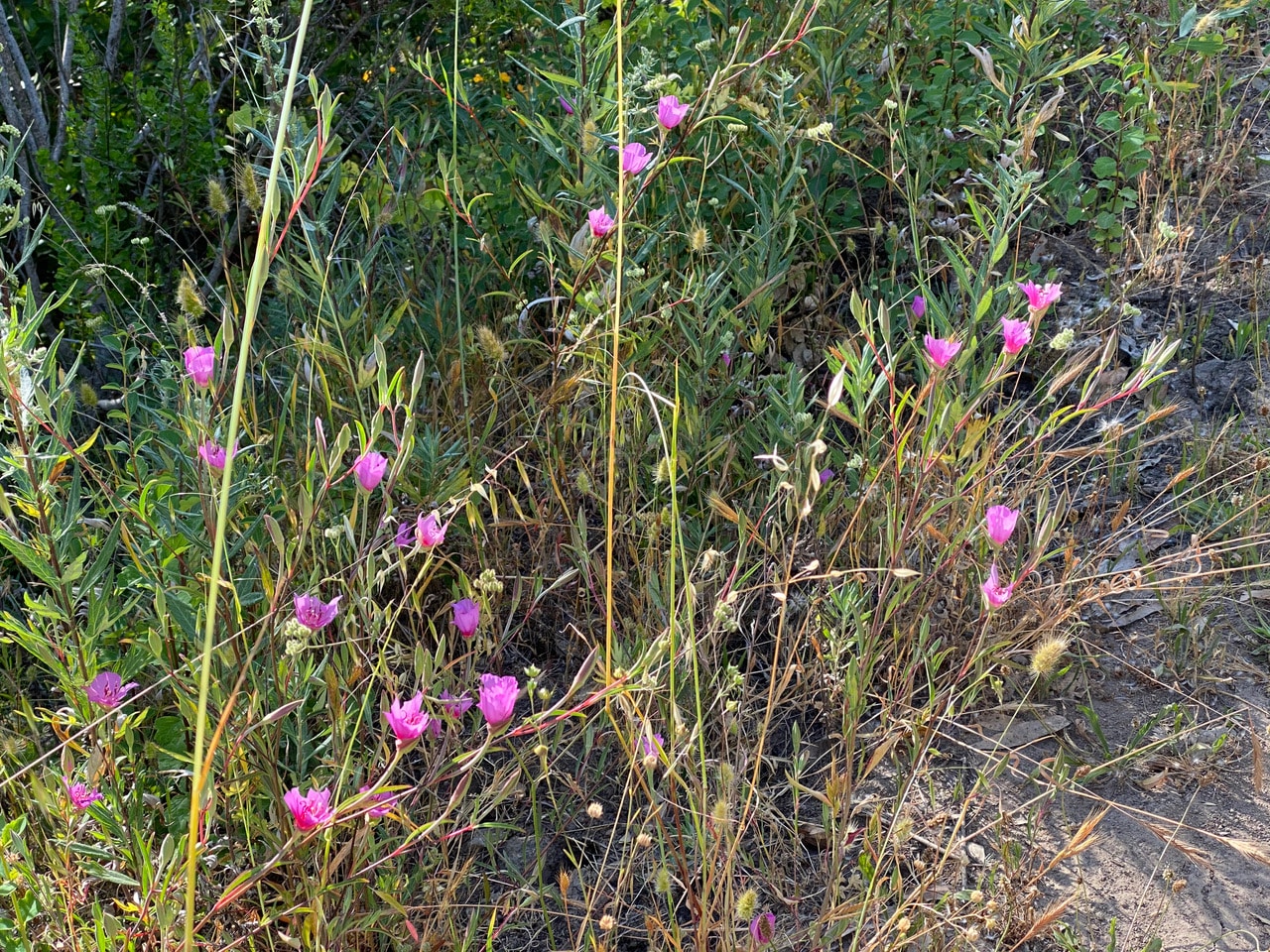 Hoping for a cooler walk on this warm morning, I start early at 8:30 am and head south on Skyline Trail from Siesta Gate. What a delight to see Farewell-to-Spring, Clarkia rubicunda in bloom!
Seeing the flowers close-up is even more delightful – most of them have been cut by the Leaf-cutter Bees, Megachilie sp. (family Megachilidae)! It’s an LOL moment.
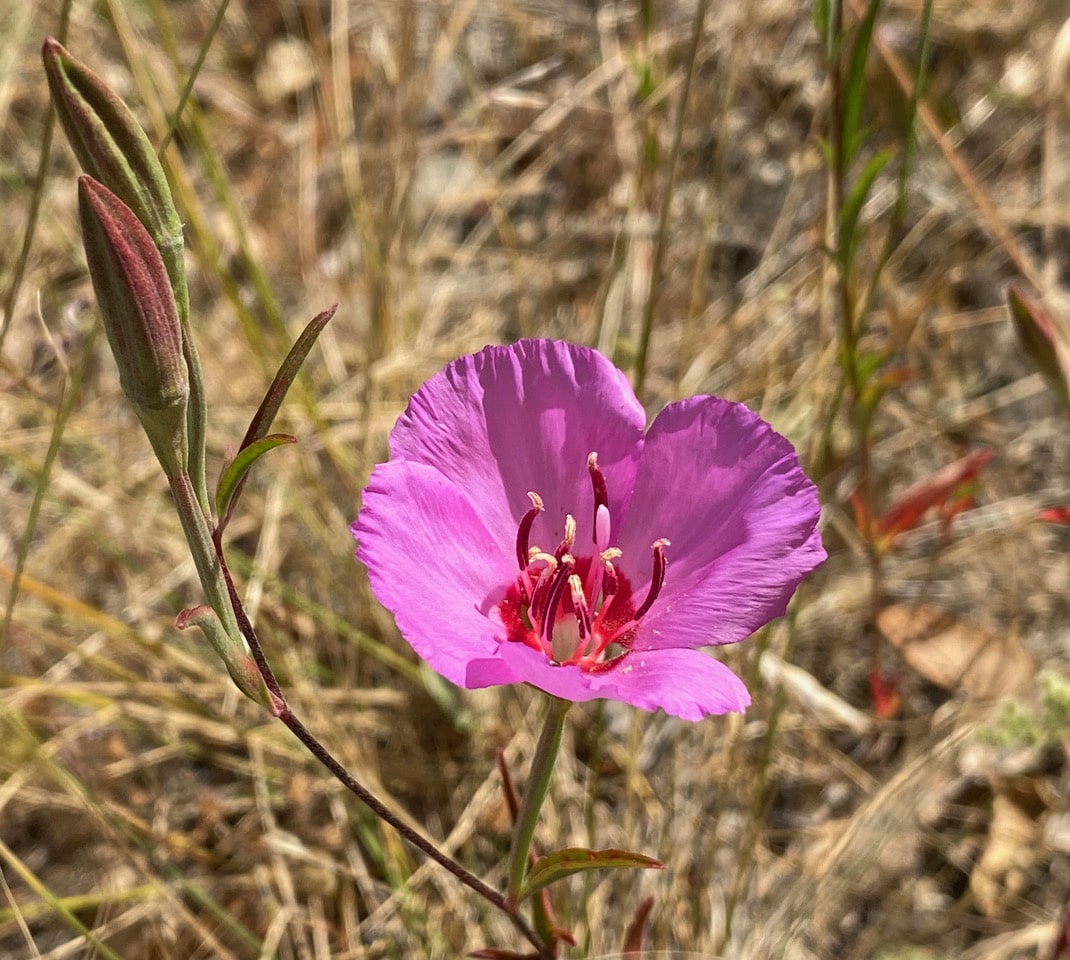
This is what a regular, uncut Clarkia rubicunda flower looks like.
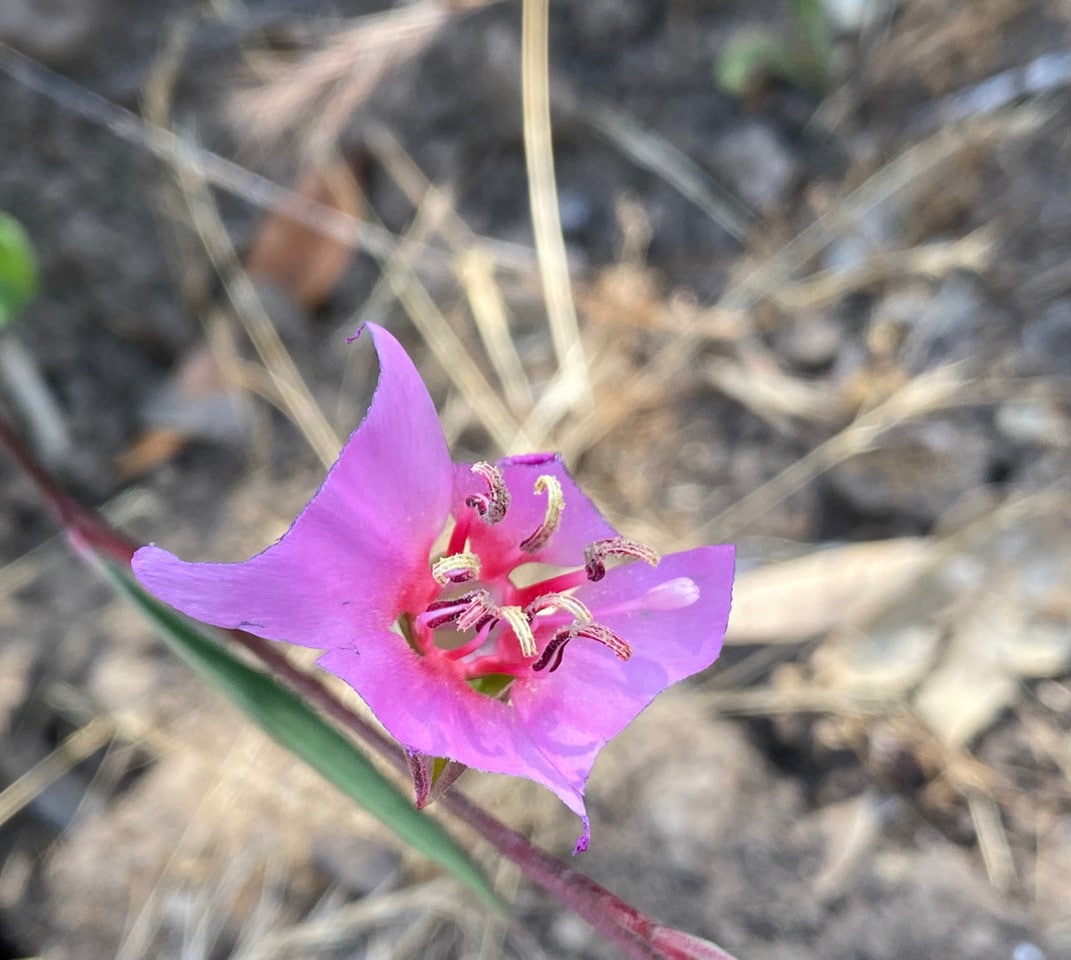
All four petals of this Clarkia flower have had circular pieces cut out of them, no doubt by a Leaf-cutter Bee, Megachile sp. (family Megachilidae). I have yet to see a Leaf-cutter Bee at Skyline, but obviously the females are already out and about.
The females in the genus Megachile, family Megachilidae cut pieces of leaf and sometimes flower petals to line their brood cells. For some reason they favor Clarkia petals. Probably because they are large and soft, and don’t contain noxious chemicals?
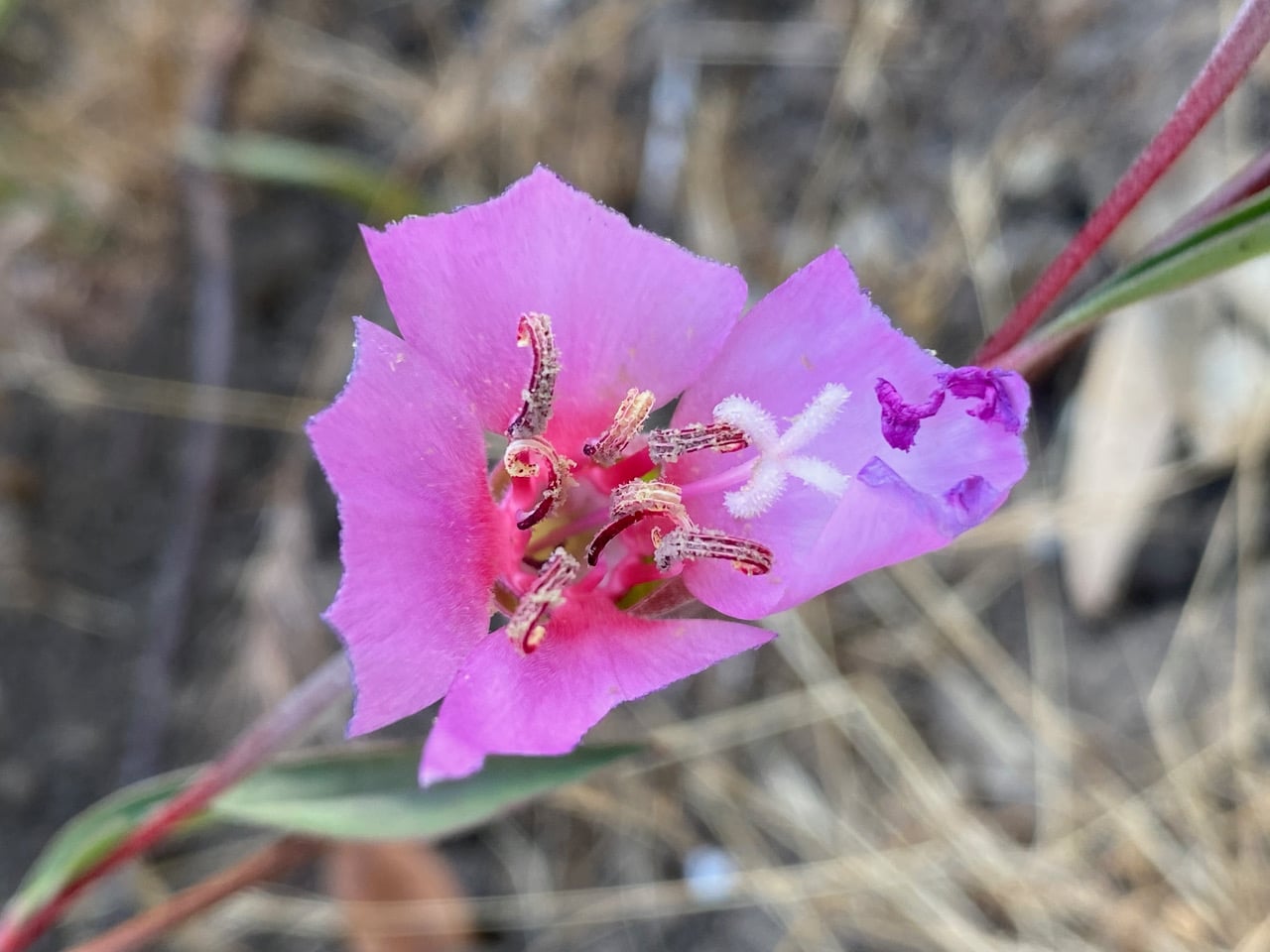
This is an older Clarkia flower that has been cut. How do I know it is older? Clarkia flowers are protandrous, the male reproductive structures maturing before the female parts. In this flower the eight anthers (male) are done releasing their pollen, and the tall, white 4-lobed stigma (female) has opened up to receive incoming pollen. The temporal separation of the sexes in a flower serves to prevent self-pollination.

Her tongue extended, a female Forked Globetail, Sphaerophoria sulphuripes (family Syrphidae) is feeding on the pollen of Coyote Mint, Monardella villosa.

It is difficult to get a good photograph of these little moths as they tend to land up-side-down on vegetation.
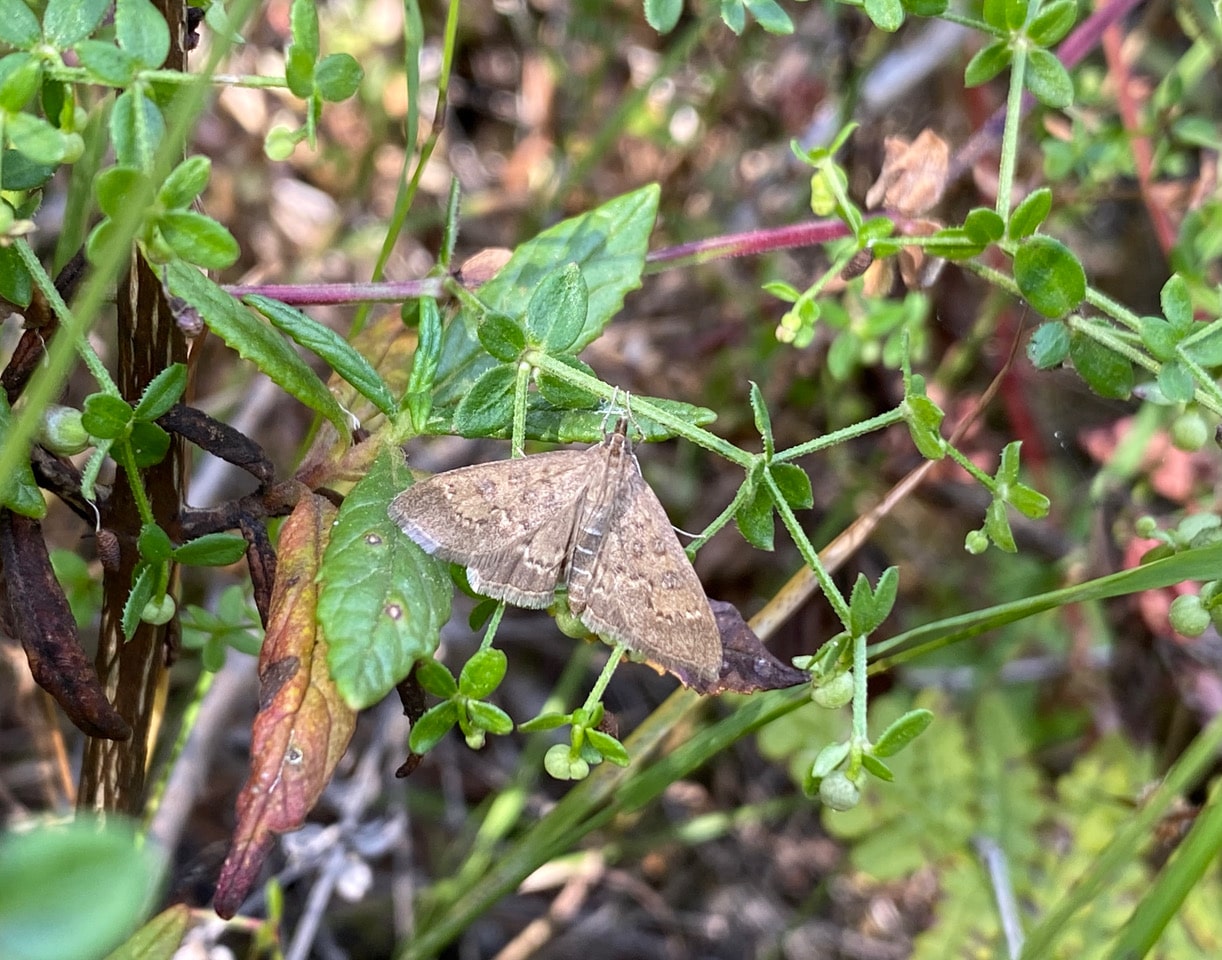
Today this moth is cooperative enough to show it’s upper side. It has been identified to the superfamily Pyraloidea.
The Pyraloidea (Pyraloid moths or snout moths) are a moth superfamily, one of the most species rich groups of Lepidoptera (butterflies and moths), comprising two families – Pyralidae and Crambidae. They are generally fairly small moths, with head bearing long and upturned palpi. They possess basally scaled proboscis and paired tympanal organs on the 2nd abdominal segment. Tympanal organs enable moths to detect the ultrasounds of insectivorous bats.
Larvae of most species feed on living plants either internally or externally as leaf rollers, leaf webbers, leaf miners, borers, root feeders, and seed feeders. Many are economically important pests of crops, and stored products such as seeds and grains.
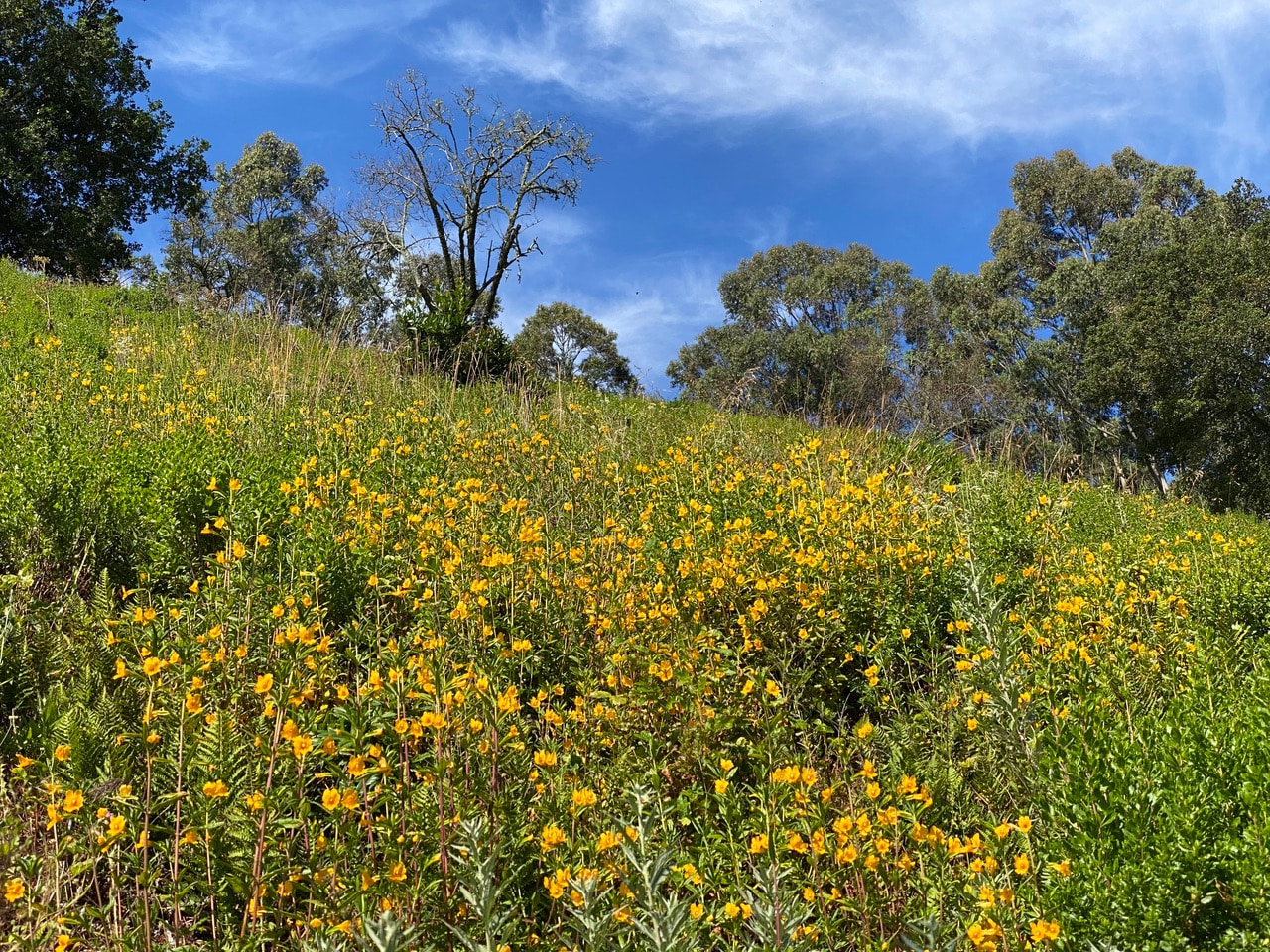
There’s gold on them thar hills! Sticky Monkeyflower, Diplacus aurantiacus is in peak bloom at Skyline Gardens.

This stretch of Skyline Trail is flanked on the east side by countless Sticky Monkeyflowers in the partial shade of Bay Trees, while the steep slope on the west is ablaze with the golden blooms as well.

A black sliver of an insect on a Sticky Monkeyflower turns out to be a tiny wasp. For this size, one immediately suspects a parasitoid wasp. It is most likely a Chalcid Wasp in the superfamily Chalcidoidea.
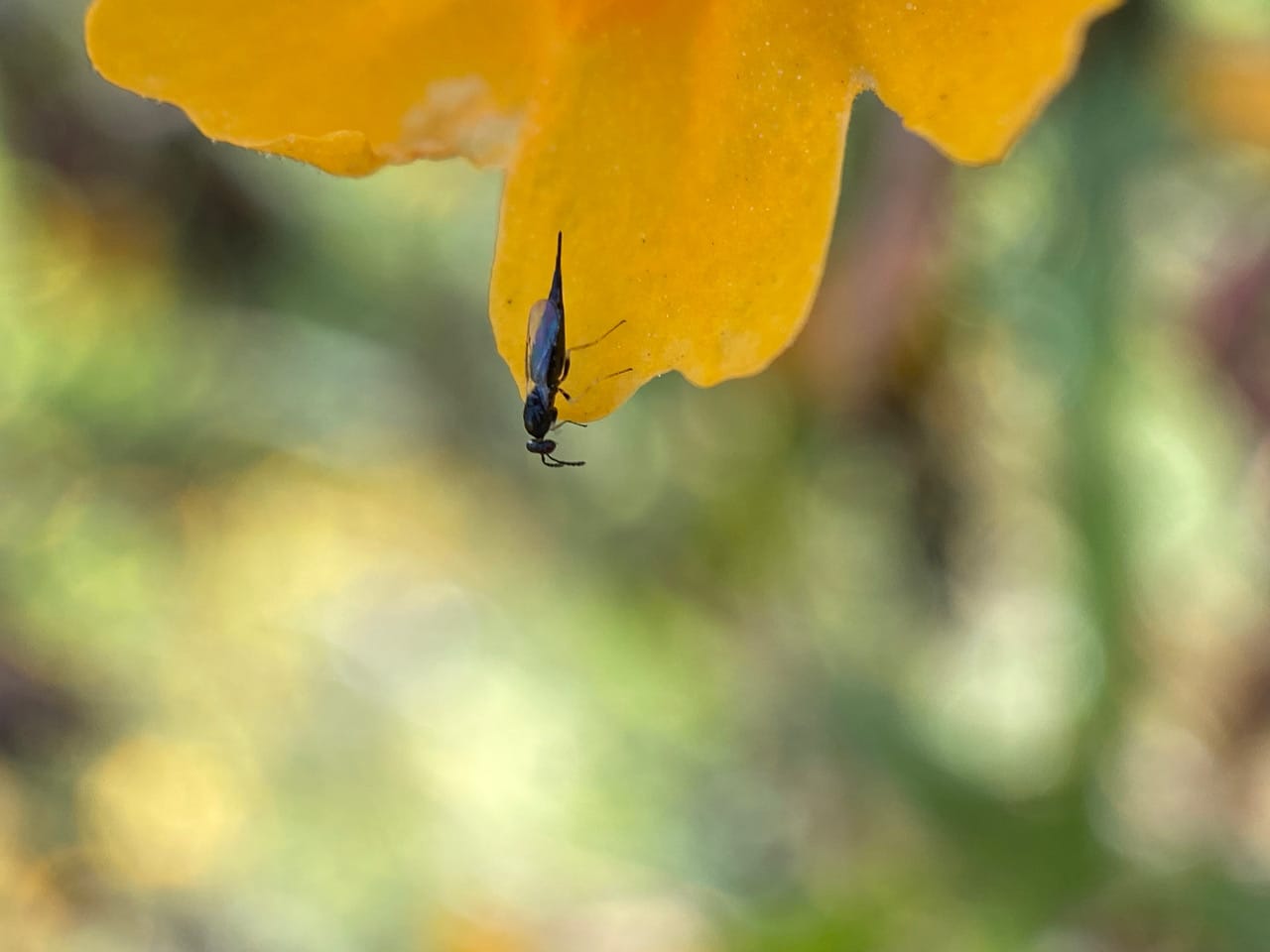
Most species of Chalcid Wasps are parasitoids of other insects, attacking the eggs or larval stage of their host, though many other life cycles are known. These hosts are to be found in at least 12 different insect orders including Lepidoptera (butterflies and moths), Diptera (true flies), Coleoptera (beetles), Hemiptera (true bugs), and other Hymenoptera, as well as two orders of Arachnida. When the host is itself a parasitoid, the wasps are referred to as hyperparasitoids. Generally beneficial to humans as a group, chalcidoids help keep various crop pests under control, and many species have been used as biocontrol agents.
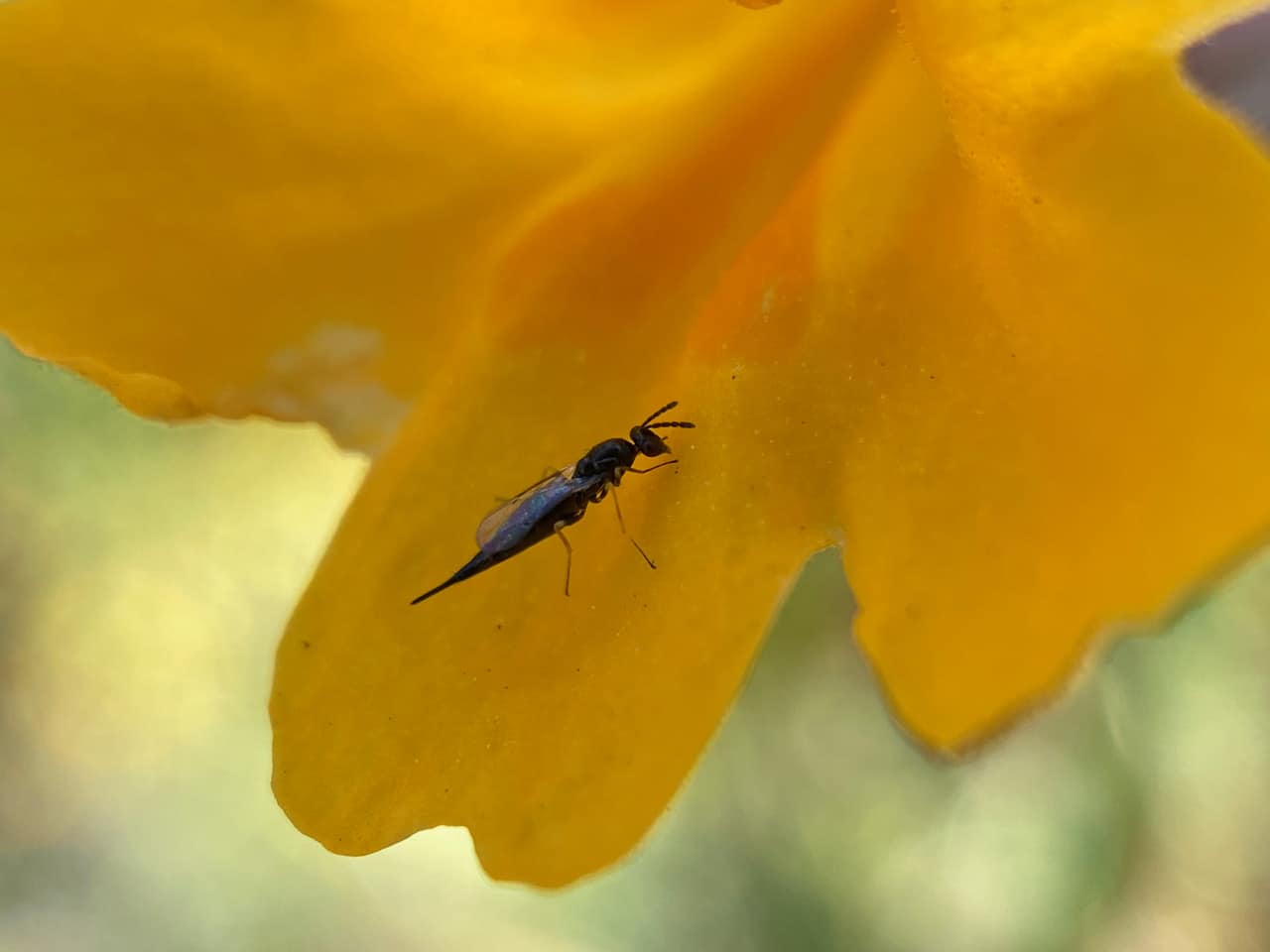
The wasp appears to be feeding on something on the lower petal of Sticky Monkeyflower.
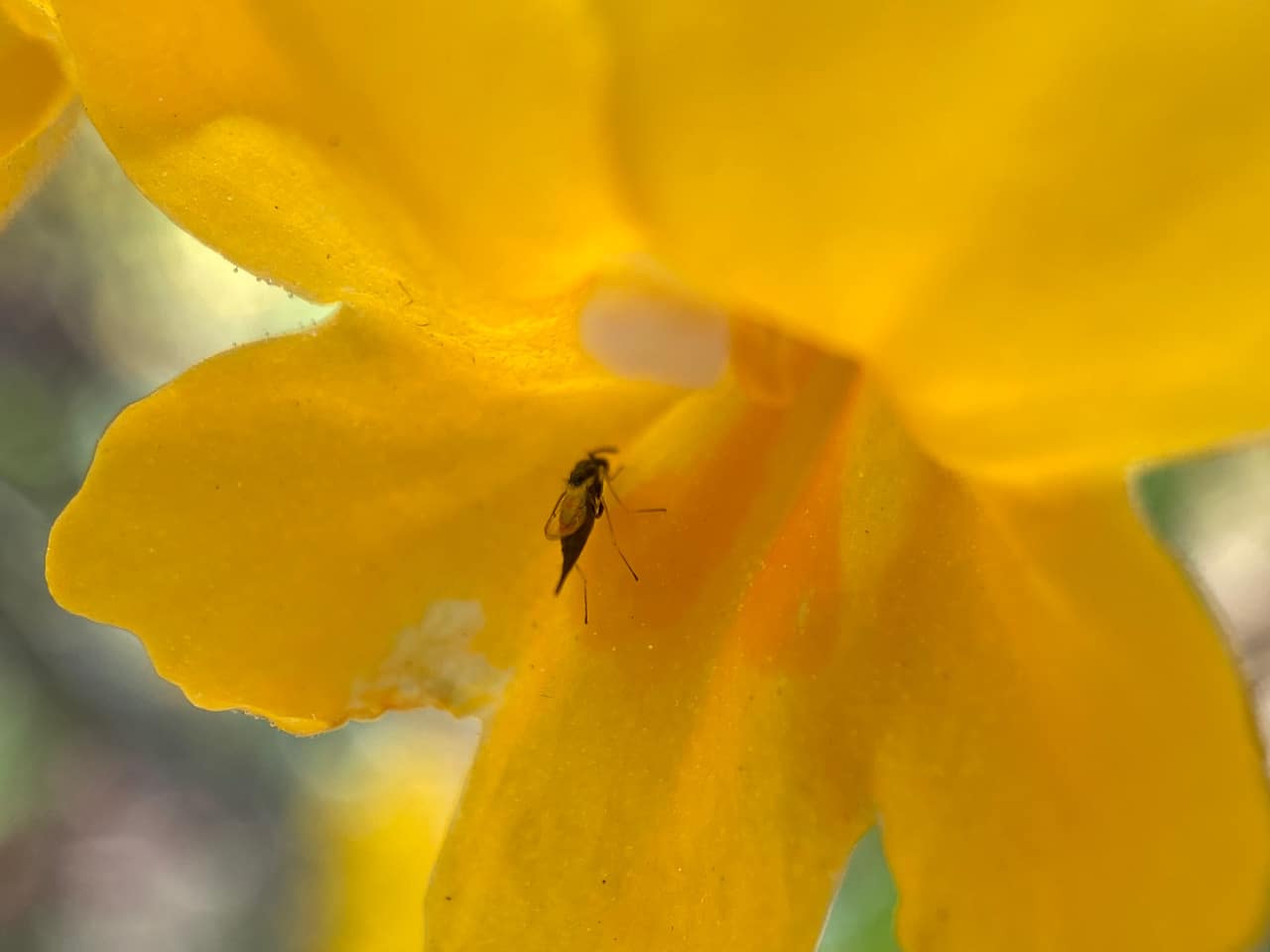
Then it disappears into the corolla. Seeking nectar? hosts?
Amazingly, from these sketchy images, a parasitoid wasp expert on iNaturalist was able to further refine my identification of the wasp to the subfamily Tetrastichinae (family Eulophidae).
Tetrastichinae is a subfamily of the Chalcid wasp family Eulophidae. They are found in almost any type of terrestrial habitat and have a worldwide distribution. Hosts of this subfamily are found in 100 families of insects in ten different orders, in addition to spider eggs, gall-forming mites, and even nematodes; a few species are partially or completely phytophagous (feeding on plants). Some larvae are inquilines with gall forming insects. The subfamily includes both ectoparasitic and endoparasitic species.
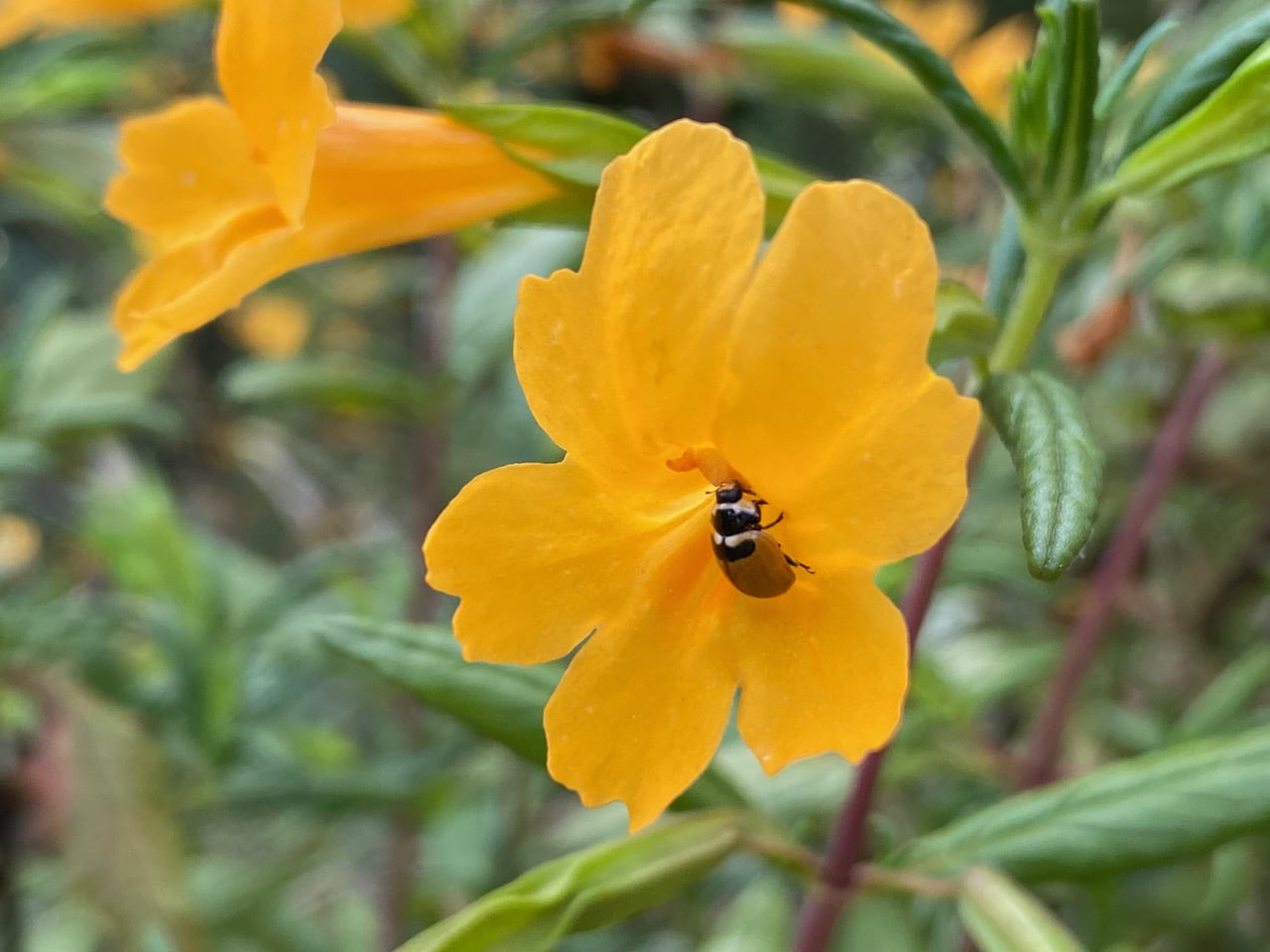
Hey, that’s a Three-banded Ladybeetle feeding on the pollen of Sticky Monkeyflower. Although Ladybeetles are commonly known as predators of aphids and other soft-bodied insects, they also feed on pollen and nectar when prey is scarce.
The Three-banded Ladybeetle, Coccinella trifasciata (family Coccinellidae) is native to North America. “Three-banded”? The species is rather variable depending on its range. The ones found east of the Rockies are indeed three-banded. Species Coccinella trifasciata – Three-banded Lady Beetle – BugGuide.Net Here in California, we have the subspecies Coccinella trifasciata subversa, also known as the Pacific Three-banded Ladybeetle. Photos of Pacific Three-banded Lady Beetle (Subspecies Coccinella trifasciata subversa) · iNaturalist These beetles are active from spring through summer months and on warm days of fall; diapausing (that’s insect version of hibernation) through the colder winter months.
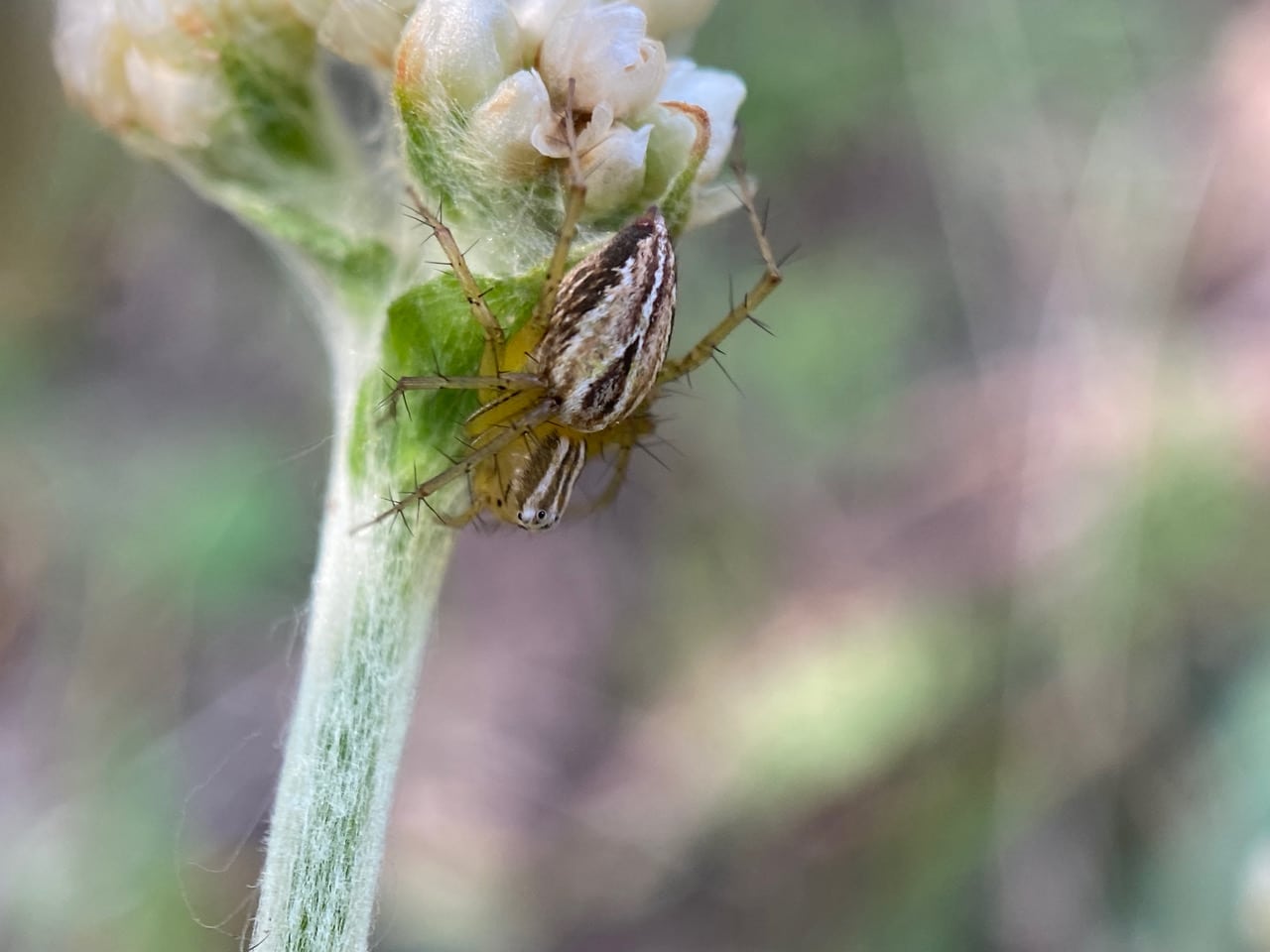
A female Striped Lynx Spider is stationed in ambush under a cluster of flowerheads of California Everlasting, Pseudognaphalium californicum.
The Striped Lynx Spider, Oxyopes salticus (family Oxyopidae) is a small (4-7 mm), spiny legged spider and generalist predator that feeds on a wide variety of insect prey, including several economically important insect pests. The species is native to the Americas, typically found in agricultural fields, tall grasses, backyards, gardens, and old fields. Lynx spiders get their name from the catlike hunting behavior of ambushing or slowly stalking and pouncing on prey. As a cursorial spider that does not make webs to capture prey, the Striped Lynx Spider instead uses silk to protect its eggs and make silk supports for resting on vegetation. The species name salticus derives from the Latin word salts, meaning jumping. This is a fitting name because of the spider’s interesting behavior of waving its front pair of legs and jumping rapidly and frequently through vegetation.