

Pollinator Post 7/18/25 (1)
I take my walk this morning in a leafy neighborhood of Alameda. Most of the gardens along Thompson Ave. are planted with non-native ornamentals, but sometimes I do come across some nice insect surprises.
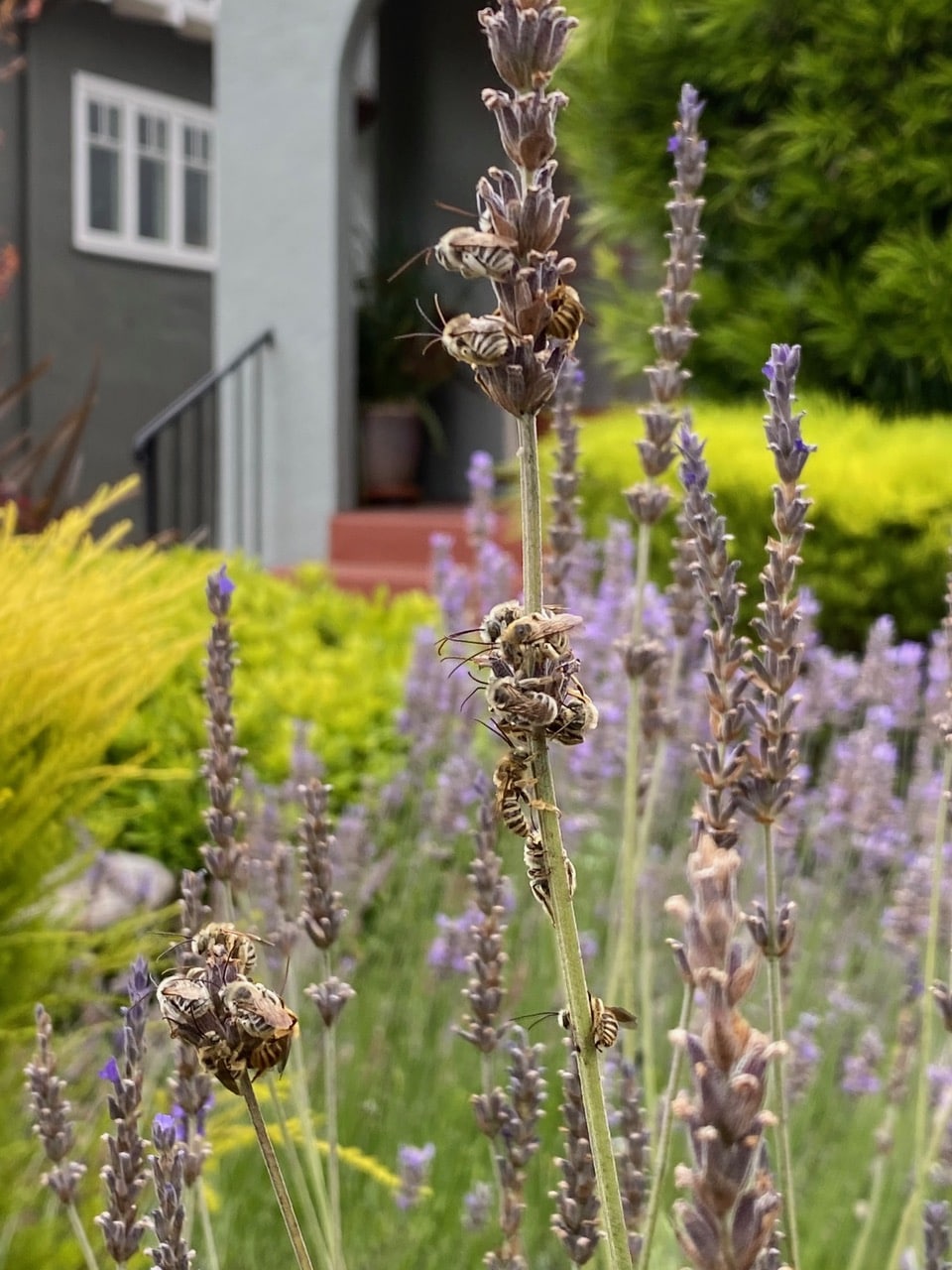
About two dozen male Summer Longhorn Bees, Melissodes sp. (family Apidae) are still asleep at 10 am on this cool, cloudy morning. They are clustered on two adjacent stalks of Common Lavender, Lavandula angustifloia that have finished blooming, the seed heads serving as convenient perches for the slumbering bees.
The Summer Longhorn Bees, Melissodes sp. (family Apidae) are medium to large bees, stout-bodied, usually with gray hair on the thorax and pale hair bands on the abdomen. Males usually have yellow markings on their faces and have very long antennae from which their common name is derived. They are active May to September, with peak flight in late June to early August. The females prefer flat, bare ground for digging their solitary nests, though they sometimes nest in aggregations. The nests appear as distinctive round holes about the diameter of a pencil or slightly smaller, sometimes with small piles of dirt around them looking like mini-volcanos. Pollen is transported in scopae on the hind legs. Pollen loads are often copious and brightly colored and thus very distinguishable. Melissodes are specialists on Asteraceae – females gather pollen from flowers of Aster, Bidens, Coreopsis, Cosmos, Encelia, Gaillardia, Helianthus, and Rudbeckia ssp.
One of the most interesting and endearing behaviors of the male Melissodes is their habit of sleeping in aggregation at night. Unlike females who build and return to their individual ground nests to sleep, the males don’t have a nest of their own. As the light dims in the evening, the males gather on plant stems or flowers, clinging on tightly with their mandibles until morning. They often return to the same plant night after night. The exact reasons for this behavior are not fully understood, but gathering in groups might offer some protection from predators. Clustering together could also help them conserve energy, especially on colder nights. Once you have found a Melissodes slumber party, you are likely to find it again for the rest of the season, as long as you wake up before the boys do.
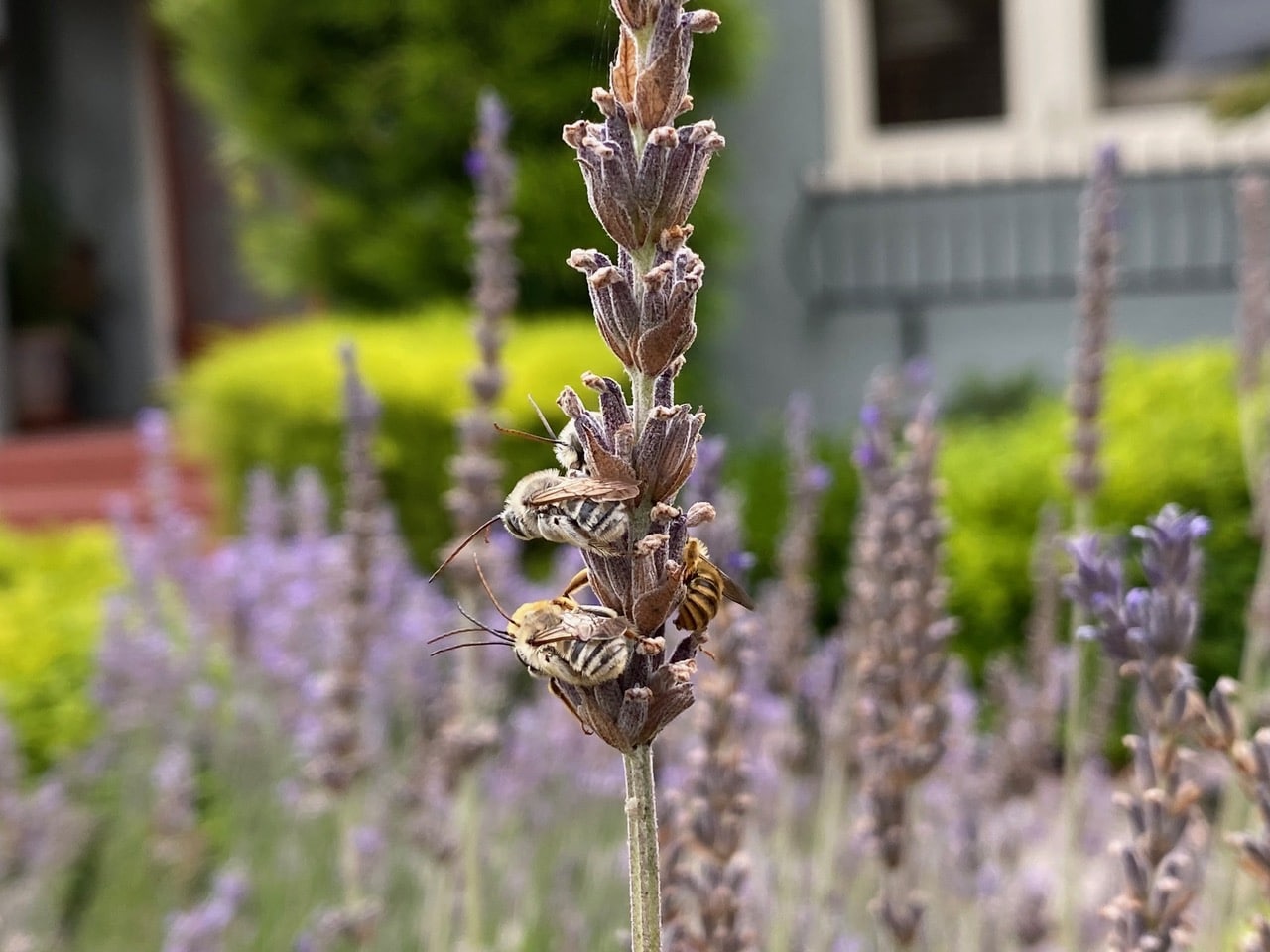
These boys have the penthouse.
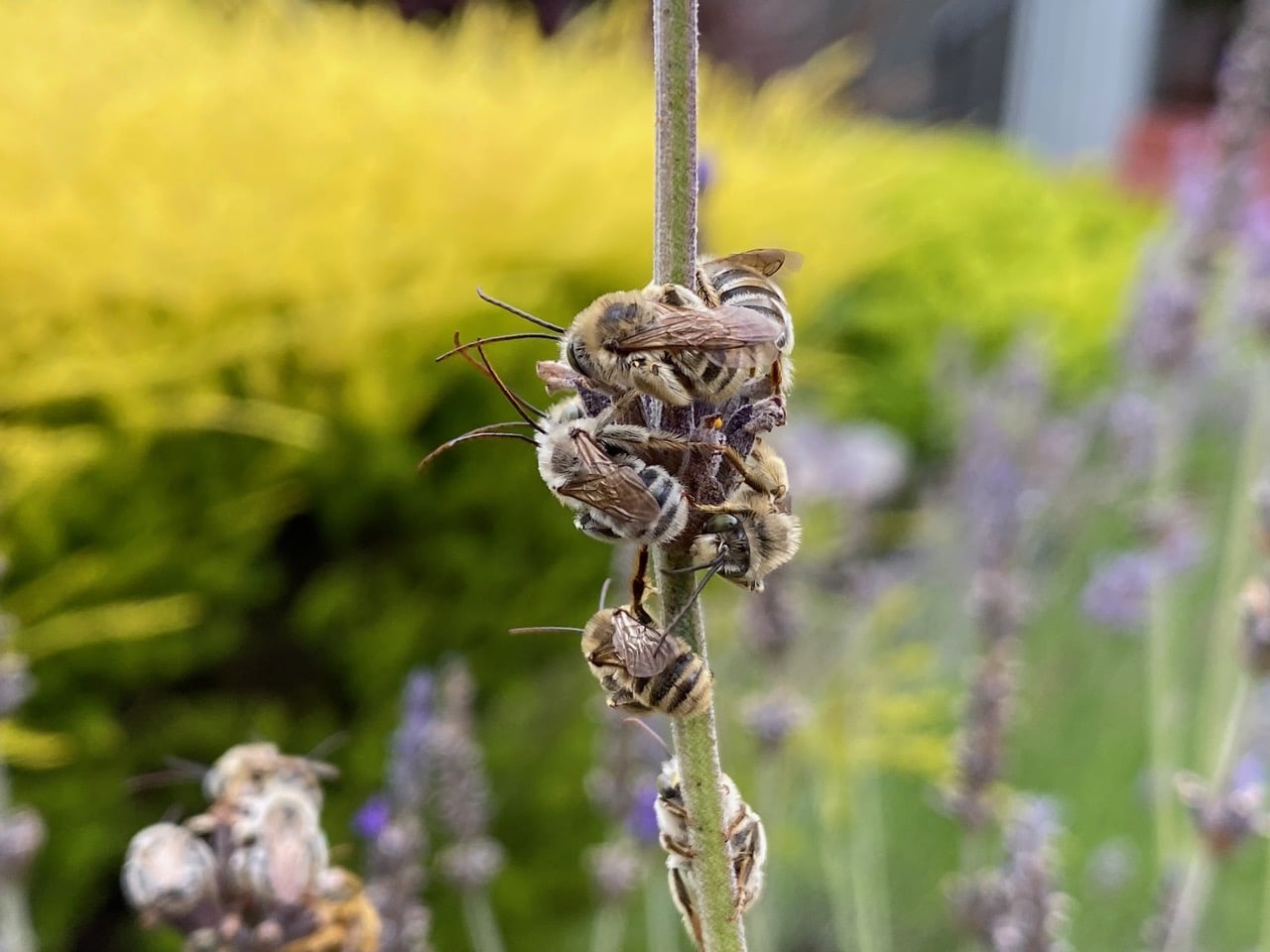
Lower down, the stalk holds many more males. Although their eyes are wide open, they are fast asleep – bees do not have eyelids.
Male sleeping aggregations are based on a suitable perch and not related to where females are nesting, but probably no more than 100 yards from the nearest female nest. The boys usually settle in as the light dims in the evening. Cool, and drizzly conditions may modify bed time. Each establishes his own spot, so there may be some jostling for position initially. Generally, it is a peaceful and congenial routine – this after competing with each other for the girls all day!
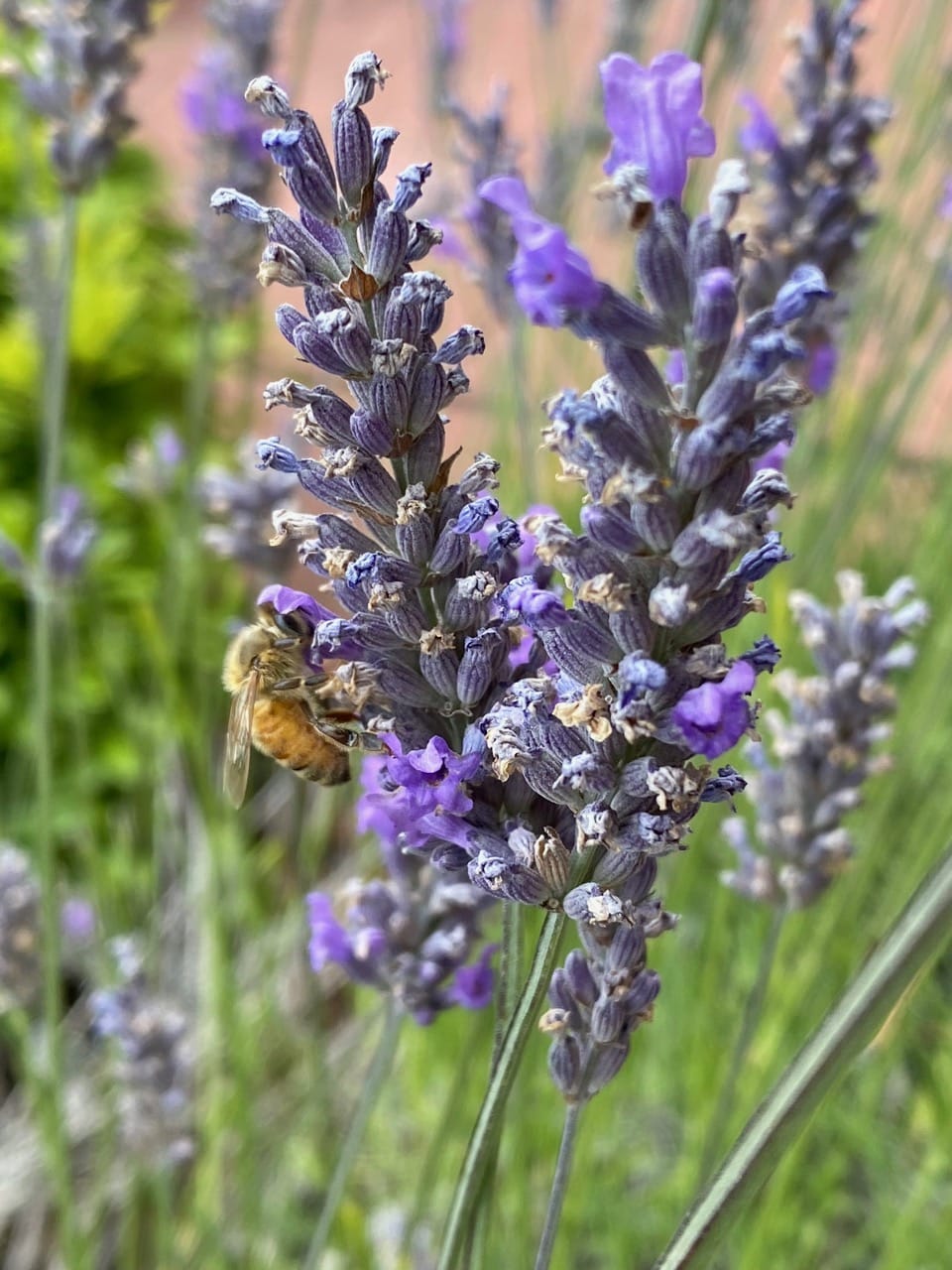
This hard-working Honey Bee, Apis mellifera (family Apidae) is already foraging before the Longhorn males wake up.
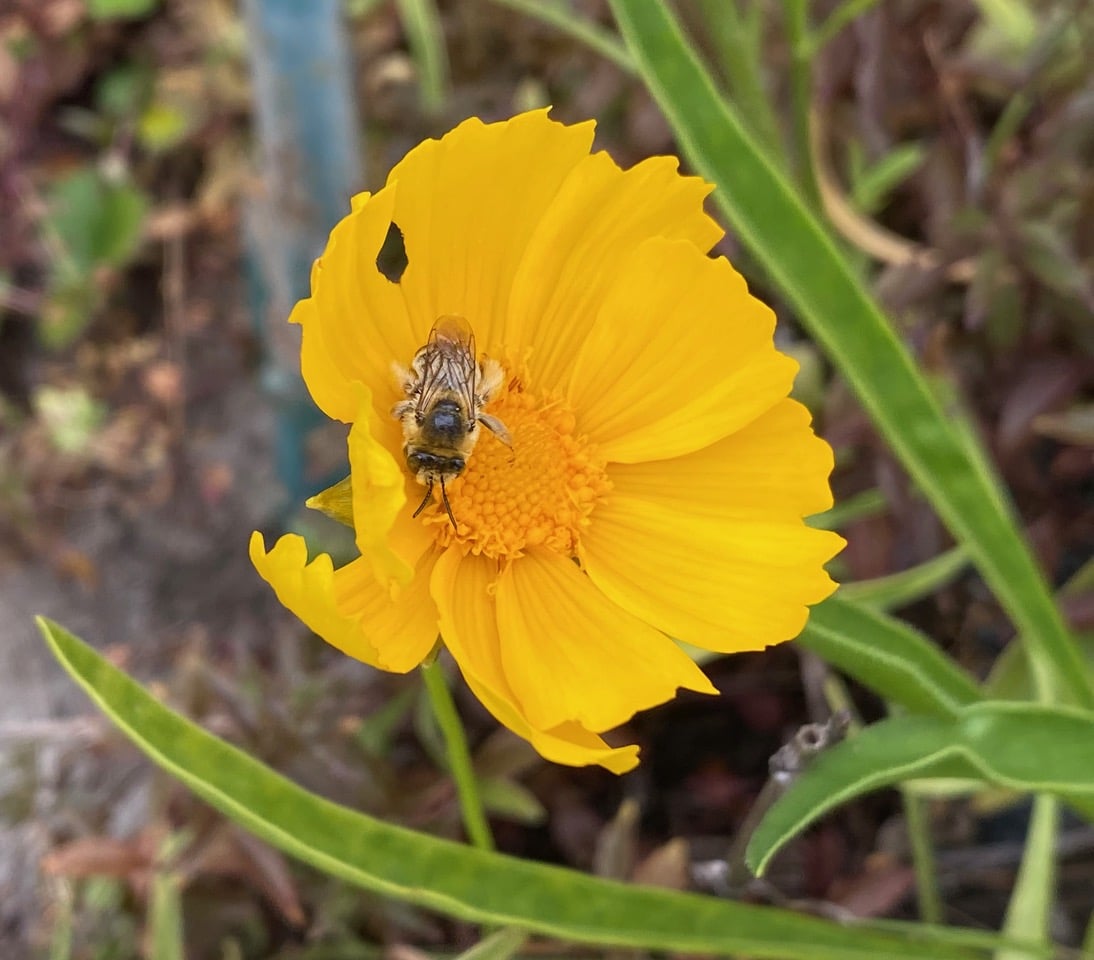
Just two doors down the road, a female Melissodes is asleep on a flowerhead of an ornamental Coreopsis. Occasionally a female bee may spend the night out if she is caught by sudden drop in temperature. Usually she is not part of a group sleep-over.
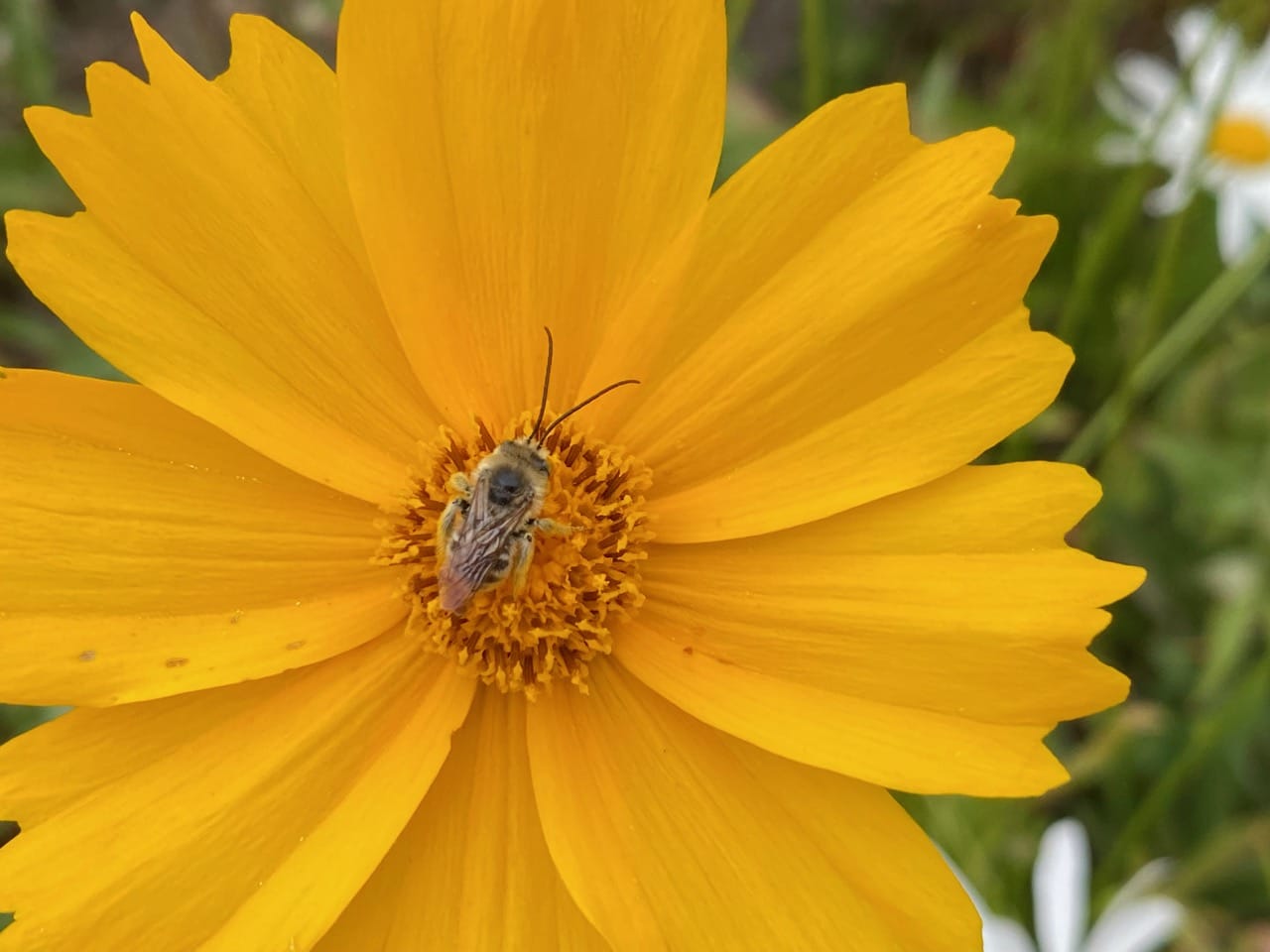
Here’s a male Melissodes on his own Coreopsis flowerhead.
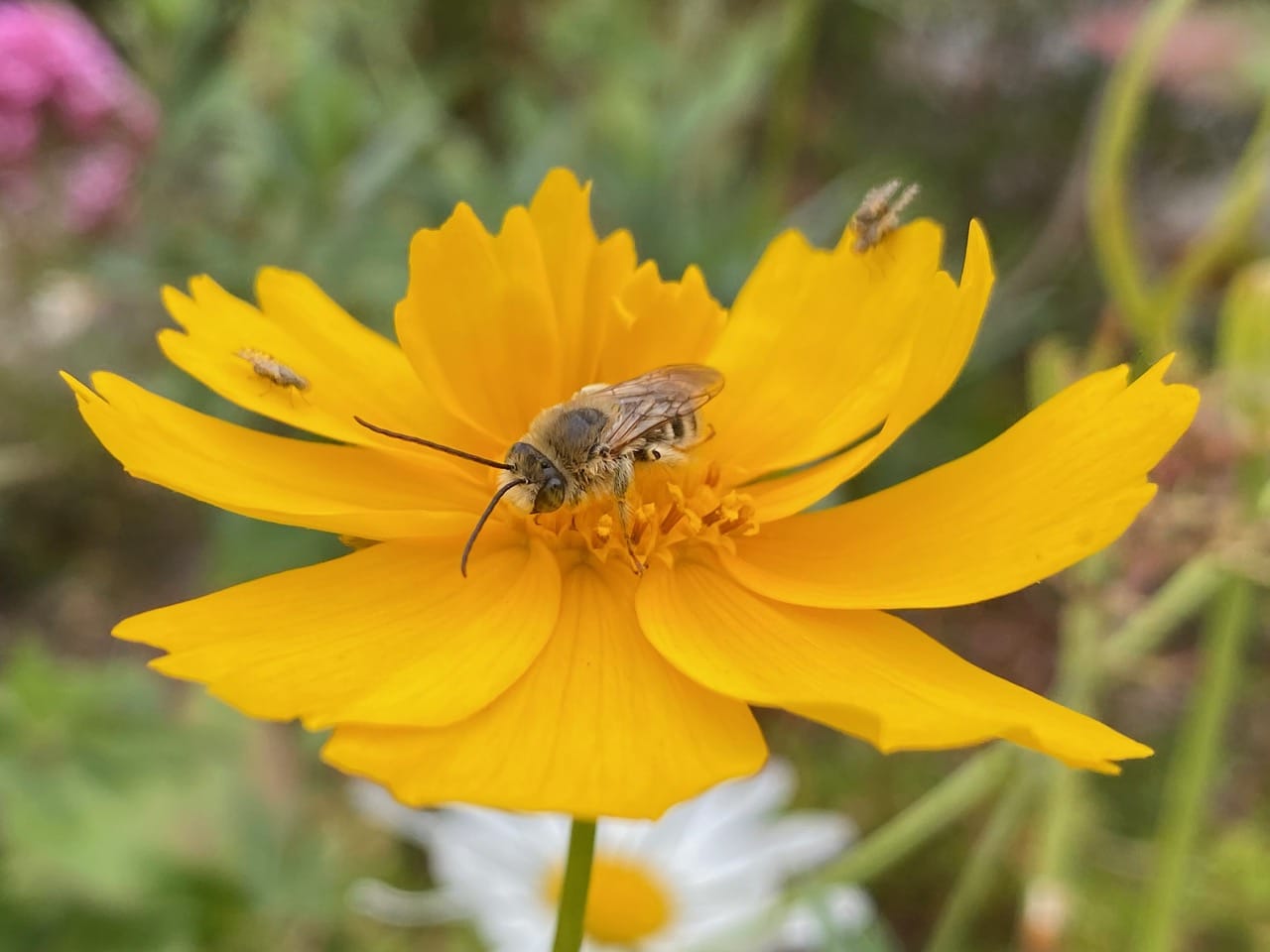
Eyes wide open, this male Melissodes is asleep on another Coreopsis flowerhead, in the company of some Fruit Flies.
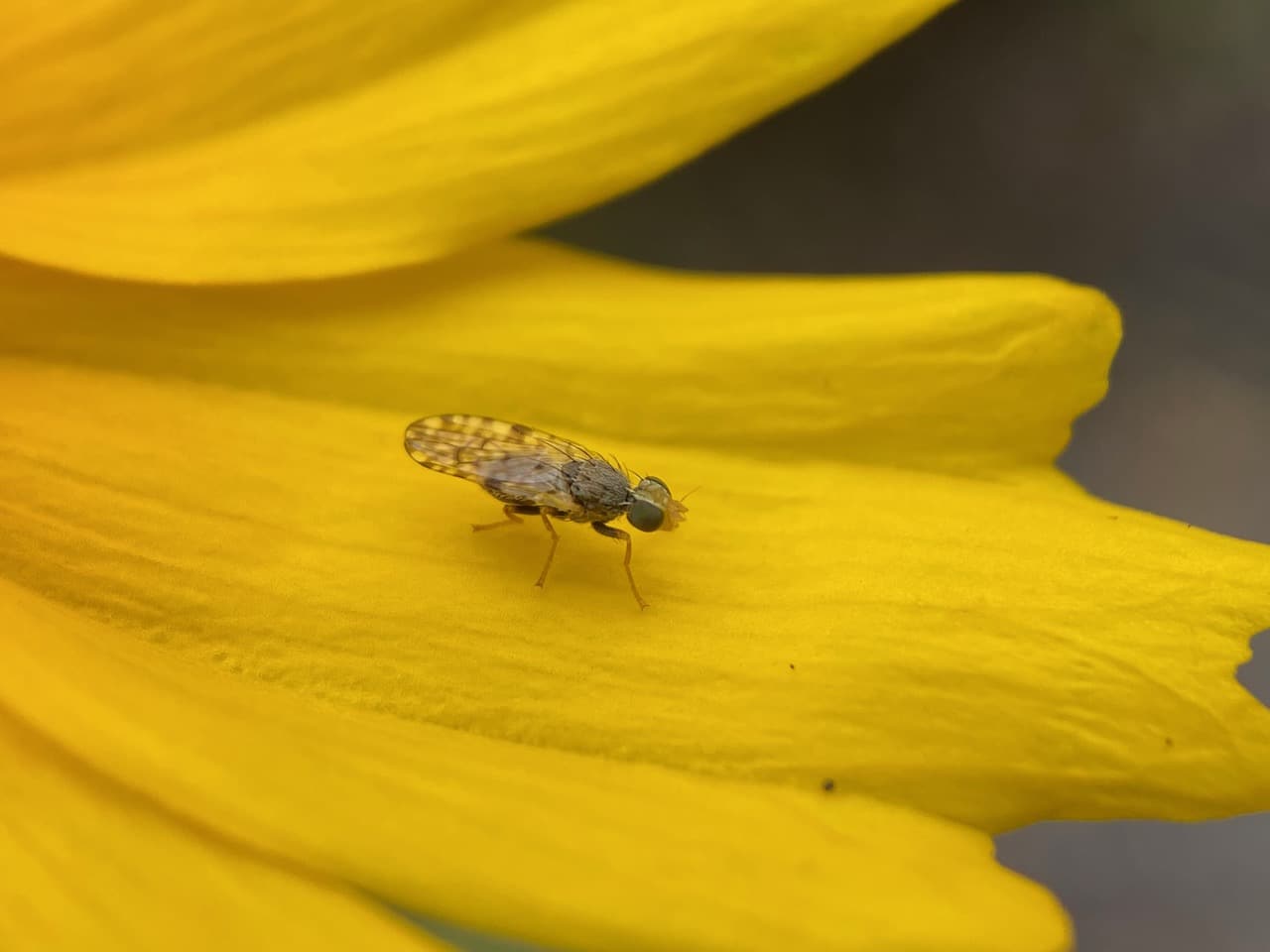
Close up of a Fruit Fly, Campiglossa sp. (family Tephritidae).
Tephritids are small to medium-sized flies that are often colorful, and usually with picture wings. The larvae of almost all Tephritidae are phytophagous. Females deposit eggs in living, healthy plant tissues using their telescopic ovipositors. Here the larvae find their food upon emerging. The larvae develop in leaves, stems, flowers, seeds, fruits, and roots of the host plant, depending on the species. Adults are often found on the host plant and feeding on pollen, nectar, rotting plant debris, or honeydew. Tephritid flies are of major economic importance as they can cause damage to fruit and other plant crops. On the other hand, some Tephritids are used as agents of biological control of noxious weeds.
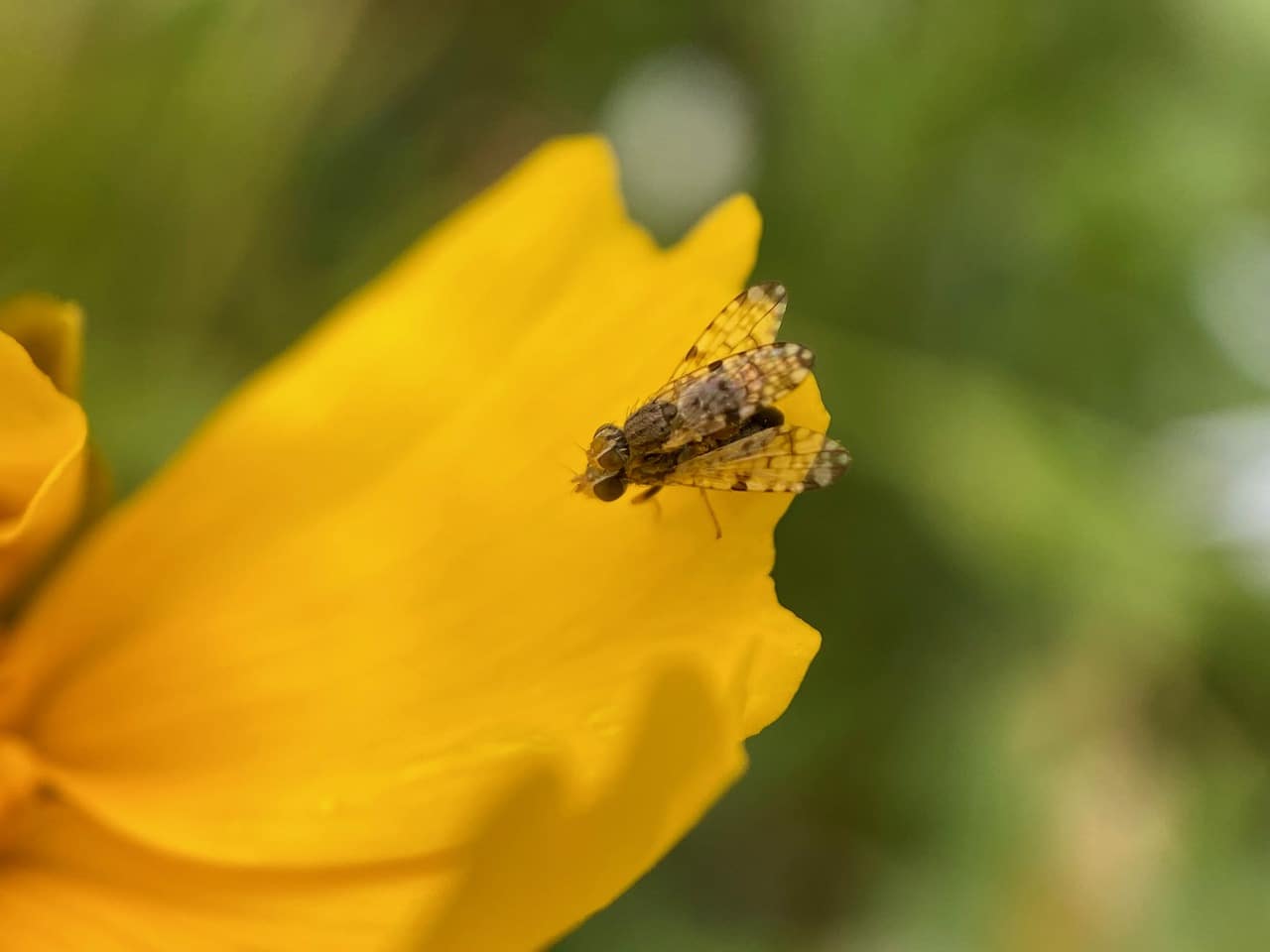
A pair of the Fruit Flies are mating on a ray petal, the male riding on the female.
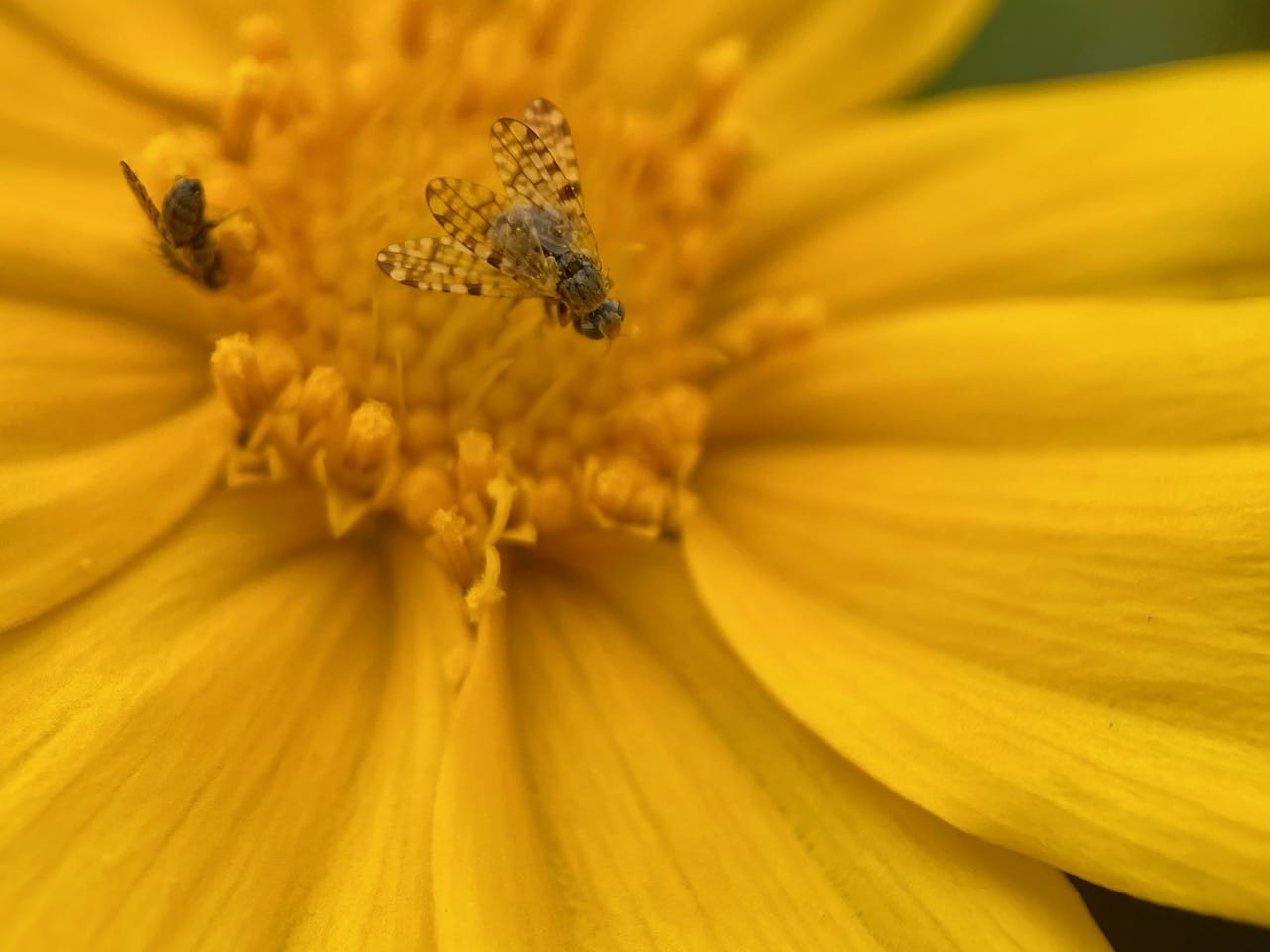
The same thing is happening in the middle of another Coreopsis flowerhead. Wow, these flies are cold tolerant, active before the sun peeks through the clouds.
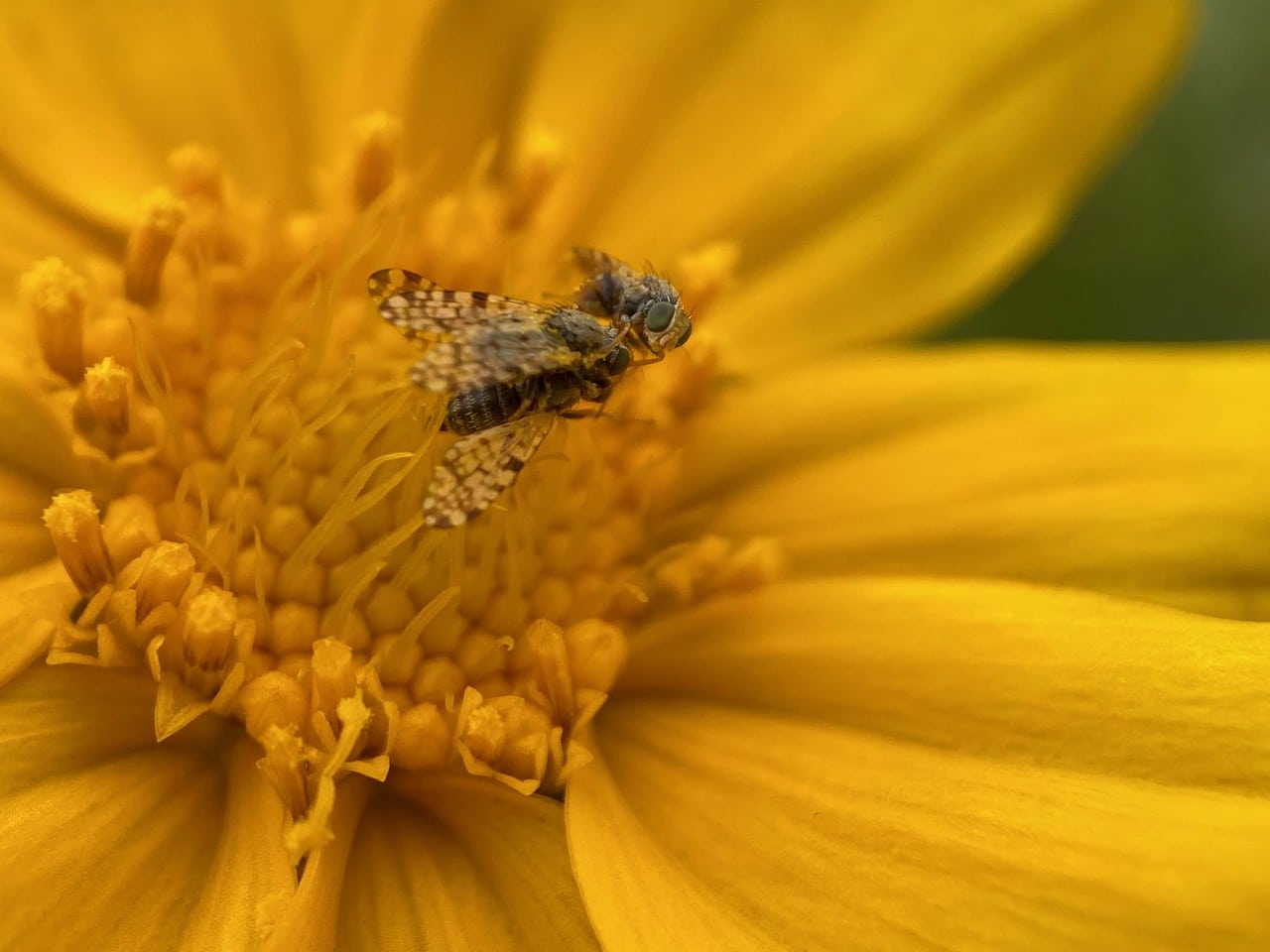
Suddenly the pair is attacked by a male that wants in on the action.
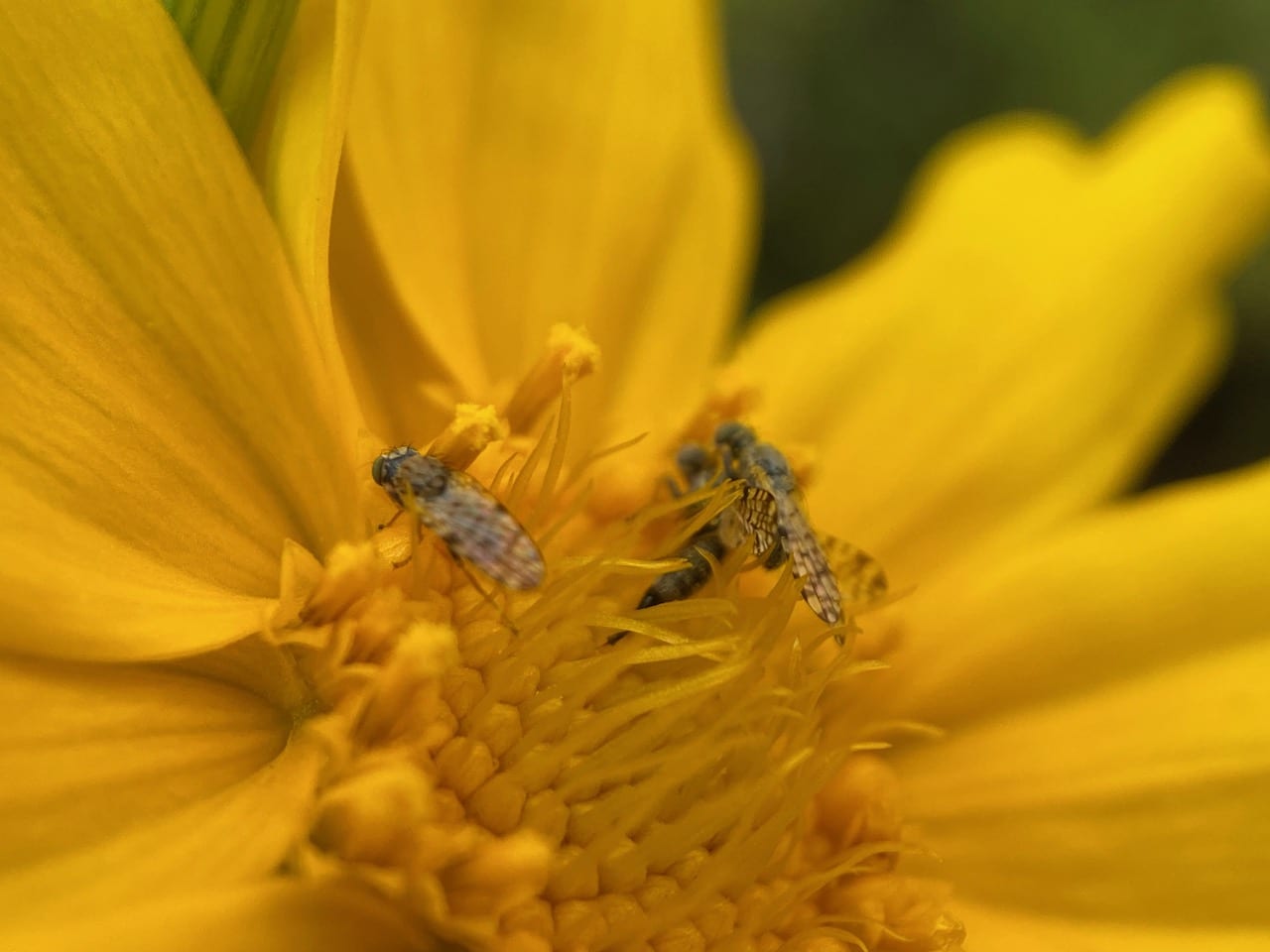
After some scuffles, the female actually attempts to lay eggs, extending her oviscape down into the florets, while the male hangs on.
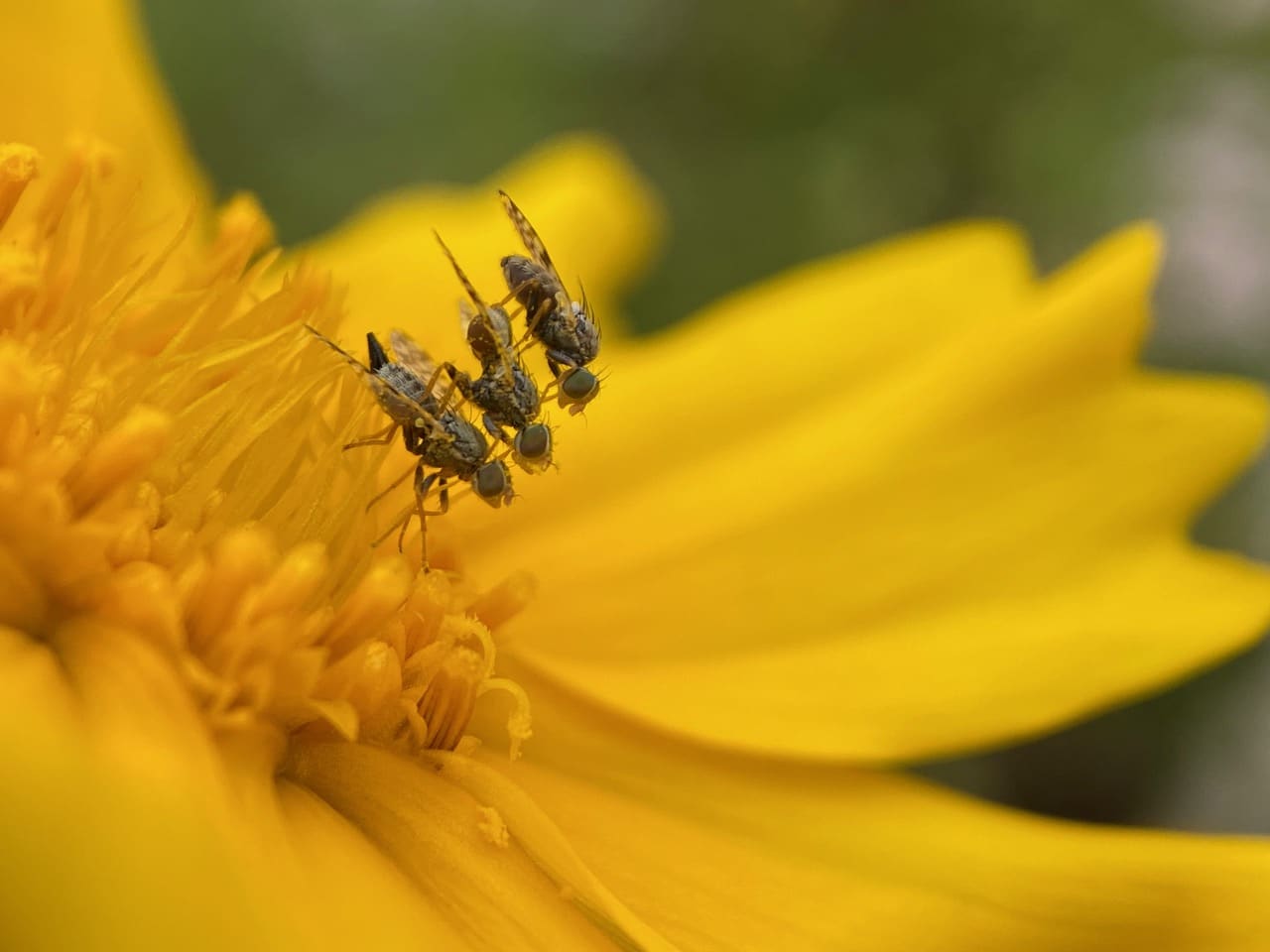
The situation gets even more bizarre when the second male piles on atop the pair. The one at the bottom is the female. Note the dark oviscape on the tip of her abdomen. The oviscape is the basal part of the ovipositor, the non-retractile sheath that protects the ovipositor. It remains exposed when the ovipositor is withdrawn and not in action.

The female Fruit Fly lowers her oviscape into the florets as if to lay eggs. Or is she simply trying to avoid mating, telling the males that she wants no part in this fracas? To inseminate her, the male aedeagus (insect version of penis) has to penetrate her oviscape.
I next find my way to Crab Cove on the other side of the island. The native plant demonstration garden near the Bath House is always worth a stop. The small patch of the Red-flowered Buckwheat, Eriogonum grande var. rubescens is always productive, yielding a diversity of hymenopterans.

A Cellophane Bee, Colletes sp. (family Colletidae) is foraging on an inflorescence of flowers of the Red-flowered Buckwheat.

The female is fuzzy all over, with scopae (special pollen-collecting hairs) on her hind legs.
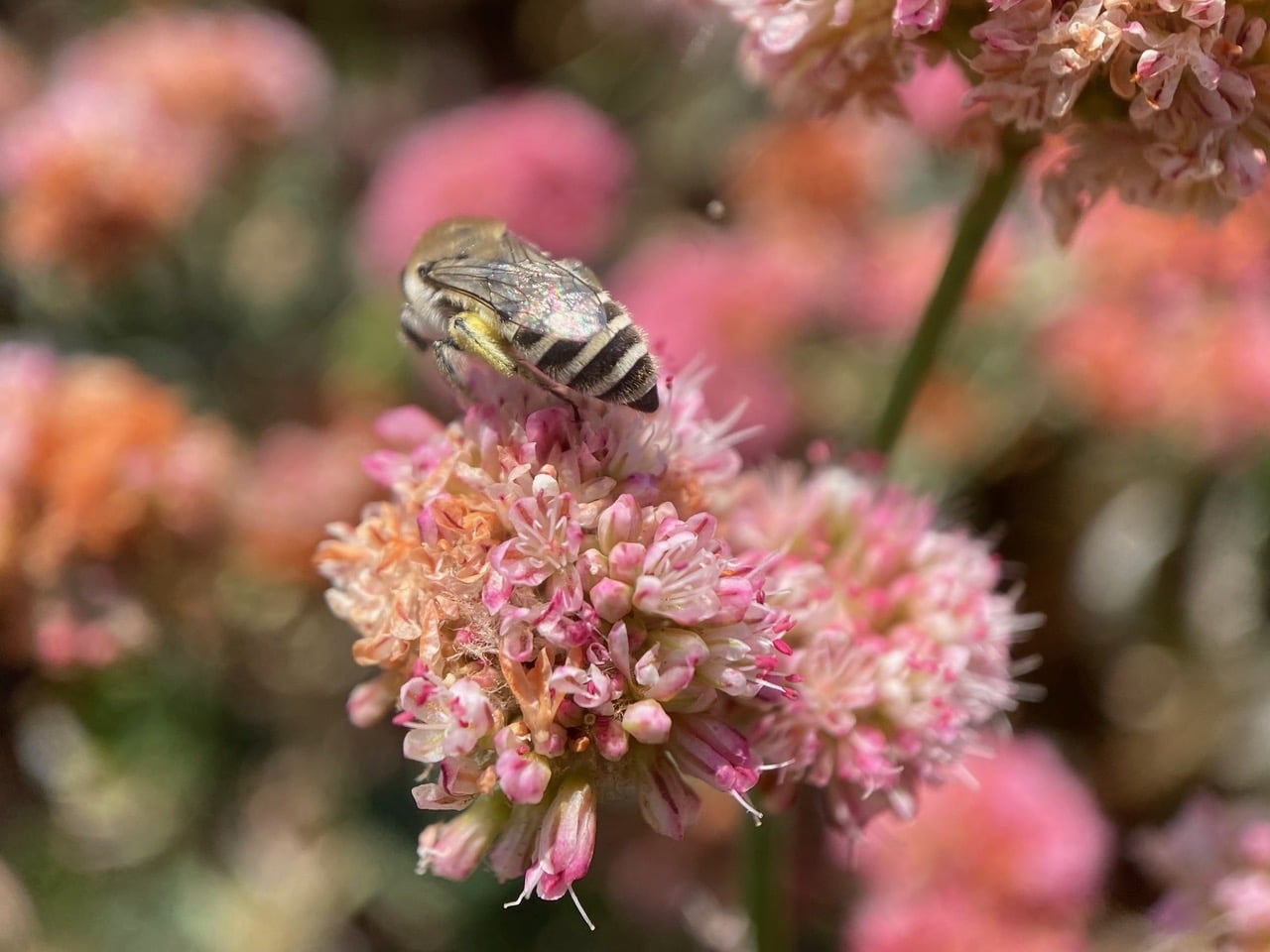
A tapering black-and-white abdomen with a pointed tip is typical for the female Colletes.


Dominating every flowering plant in the garden are the ubiquitous American Sand Wasps, Bembix americana (family Crabronidae).
Sand wasps in the genus Bembix are familiar and common throughout North America, digging their burrows in dunes, on beaches, and other habitats with loose, deep sand. The female rapidly kicks out large quantities of sand using a “tarsal rake” of spines on each front leg. The burrow is excavated before the wasp goes hunting. Bembix are generalist, opportunistic hunters. True flies in the order Diptera are the usual prey. A victim is paralyzed or killed by the wasp’s sting, and is then flown back to the nest. Most species will lay an egg on the first victim, while some species lay an egg in the empty cell before starting to hunt. Once the egg hatches, mama wasp brings flies to her larva as needed. This “progressive provisioning” is rare in the insect world. When the larva reaches maturity, mama wasp closes the cell. Inside, the larva spins an oblong cocoon, weaving sand grains into the structure and resulting in a hardened capsule. Overwintering takes place as a prepupa inside this cocoon, but there are usually two generations a year.
Male sand wasps often engage in an elaborate flight ritual called “sun dances”. Males emerge before females, and fly erratically at dizzying speed one or two inches above the ground attempting to detect virgin females about to emerge from their underground nests. Both sexes are often seen taking nectar at flowers, especially from Asteraceae family. Bembix wasps are often victims of other insects such as cuckoo wasps (Chrysididae), velvet ants (Mutillidae), satellite flies (Sarcophagidae), bee flies (Bombyliidae), and thick-headed flies (Conopidae).

A Cuckoo Bee, Complex Nomada vegana (family Apidae) is taking nectar from the flowers of Red-flowered Buckwheat. These bees are so common here I have learned to distinguish them from the Mason Wasps by their distinctive mottled gray-blue eyes and their abdominal pattern.
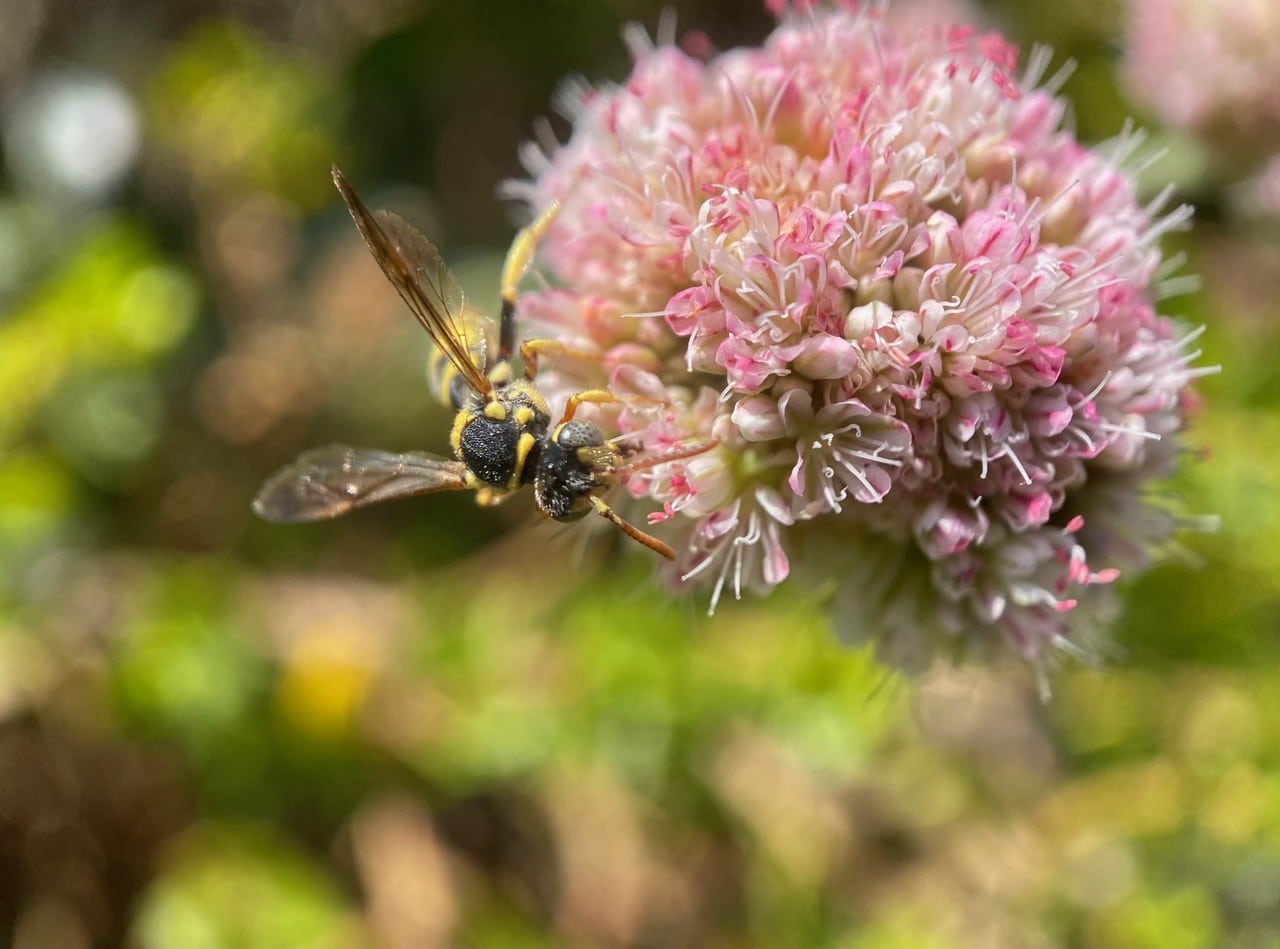
Nomad Bees in the genus Nomada is one of the largest genera in the family Apidae, and the largest genus of Cuckoo Bees. Nomada are kleptoparasites of many different types of ground-nesting bees as hosts, primarily the genus Andrena. They lack a pollen-carrying scopa, and are mostly hairless, as they do not collect pollen to feed their offspring. Adults visit flowers for nectar. The bees are extraordinarily wasp-like in appearance, often with yellow or white integumental markings on their abdomen.
Nomad Bees occur worldwide. All known species parasitize ground-nesting bees, and their habitats and seasonality correlate closely with their hosts. In early spring, females scout out their hosts, searching for nests to parasitize. The female Nomada sneaks into the host’s nest while the resident female is out foraging, then lays eggs in the nest. The parasite larva that hatches out kills the host offspring and feeds on the host’s provisions. This type of parasitism is termed brood parasitism. The parasites pupate in the host cell and finally emerge as adults the following season along with the hosts.

While we might shudder at the thought of cuckoo bees in our garden, the presence of cuckoo bees actually indicates a healthy population of their host bees, suggesting a diverse and thriving ecosystem. Parasitism is a natural part of many ecosystems, and cuckoo bees play a role in regulating the populations of their host species. Cuckoo bees, while not collecting pollen for their own young, still visit flowers for nectar and inadvertently pollinate plants in the process. Cuckoo bees are also a food source for other animals, further contributing to the food web.
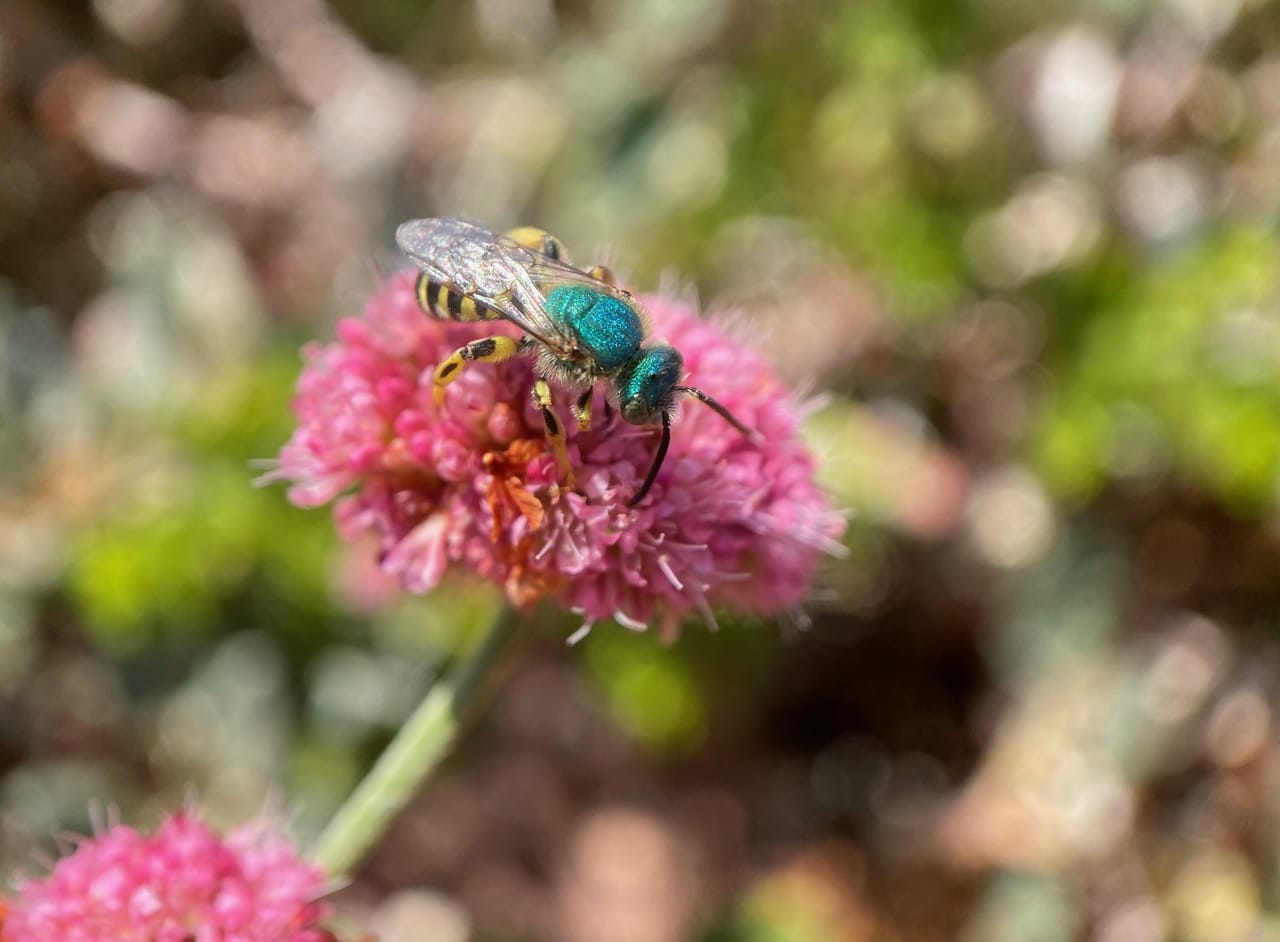
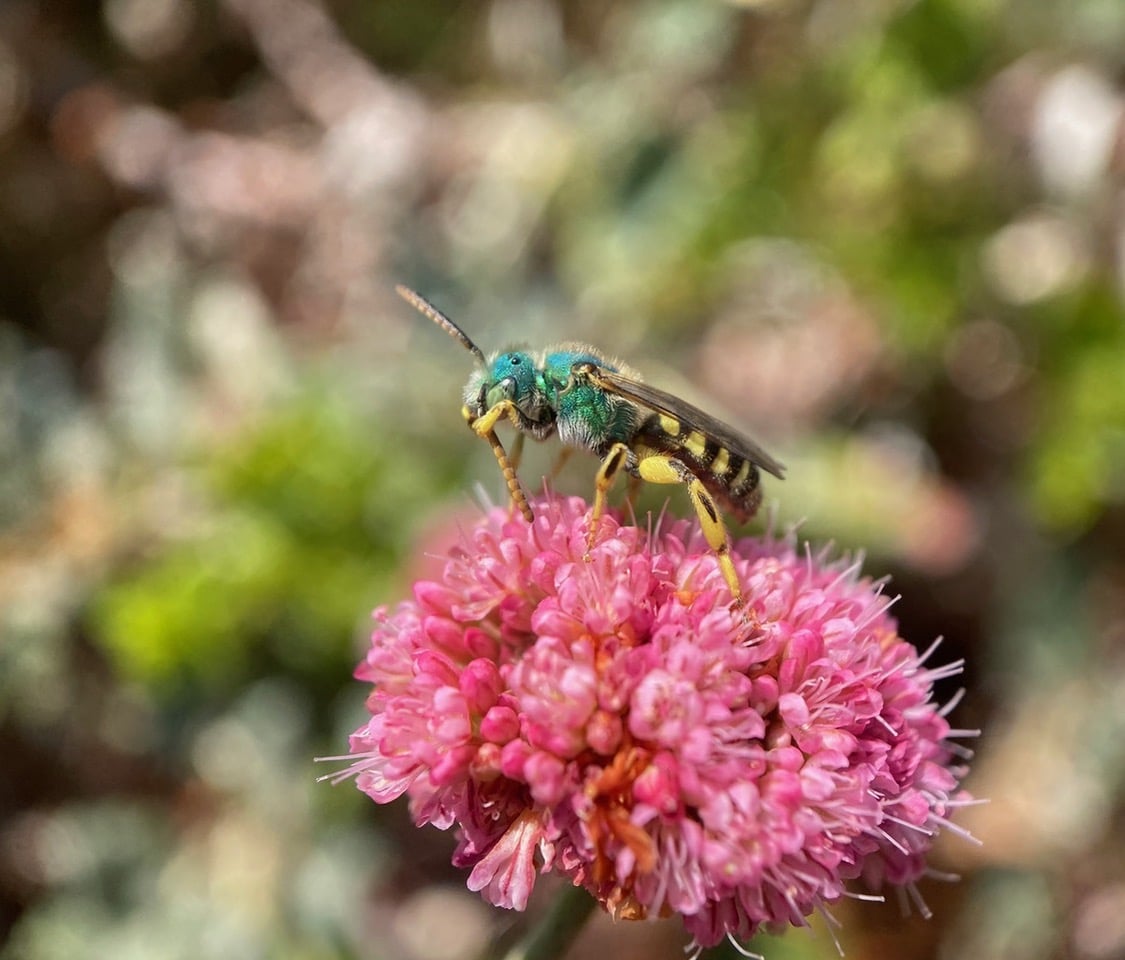
A male Fine Striped Sweat Bee, Agapostemon subtilior (family Halictidae) is foraging on a cluster of buckwheat flowers.
Agapostemon are brightly colored metallic green or blue bees measuring 7 to 14.5 mm long. Most species have a metallic green head and thorax, and black-and-yellow striped abdomen; some females are entirely bright green or blue. Females carry pollen on scopal hairs located on their hind legs. Agapostemon are generalists. Like other members of the family Halictidae, they are short-tongued and thus have difficulty extracting nectar from deep flowers. Males are often seen flying slowly around flowers looking for females. The bees favor flowers with high densities. Females excavate nests in the ground. These are summer to fall bees.
Fine striped sweat bee (Agapostemon subtilior) · iNaturalist
A male Fine Striped Sweat Bee, Agapostemon subtilior (family Halictidae) cleans his long antennae.
All bees have an antenna cleaner on each of their two forelegs. The antenna cleaners consists of two parts: a notch in the basitarsus, which is fitted with stiff hairs, and a corresponding spur on the tibia. To clean its antenna, the bee raises its foreleg over its antenna and then flexes it tarsus. The action allows the spur to close the notch, forming a ring around the antenna. The bee pulls each antenna through the bristles to clean it of debris such as pollen or dust which might interfere with the many sensory organs within the antenna. A bee’s antennae serve numerous functions: smell, taste, perceive humidity and temperature, feel, monitor gravity and flight speed and even detect sound waves to help guide the bee in its daily activities.