

Pollinator Post 7/17/24
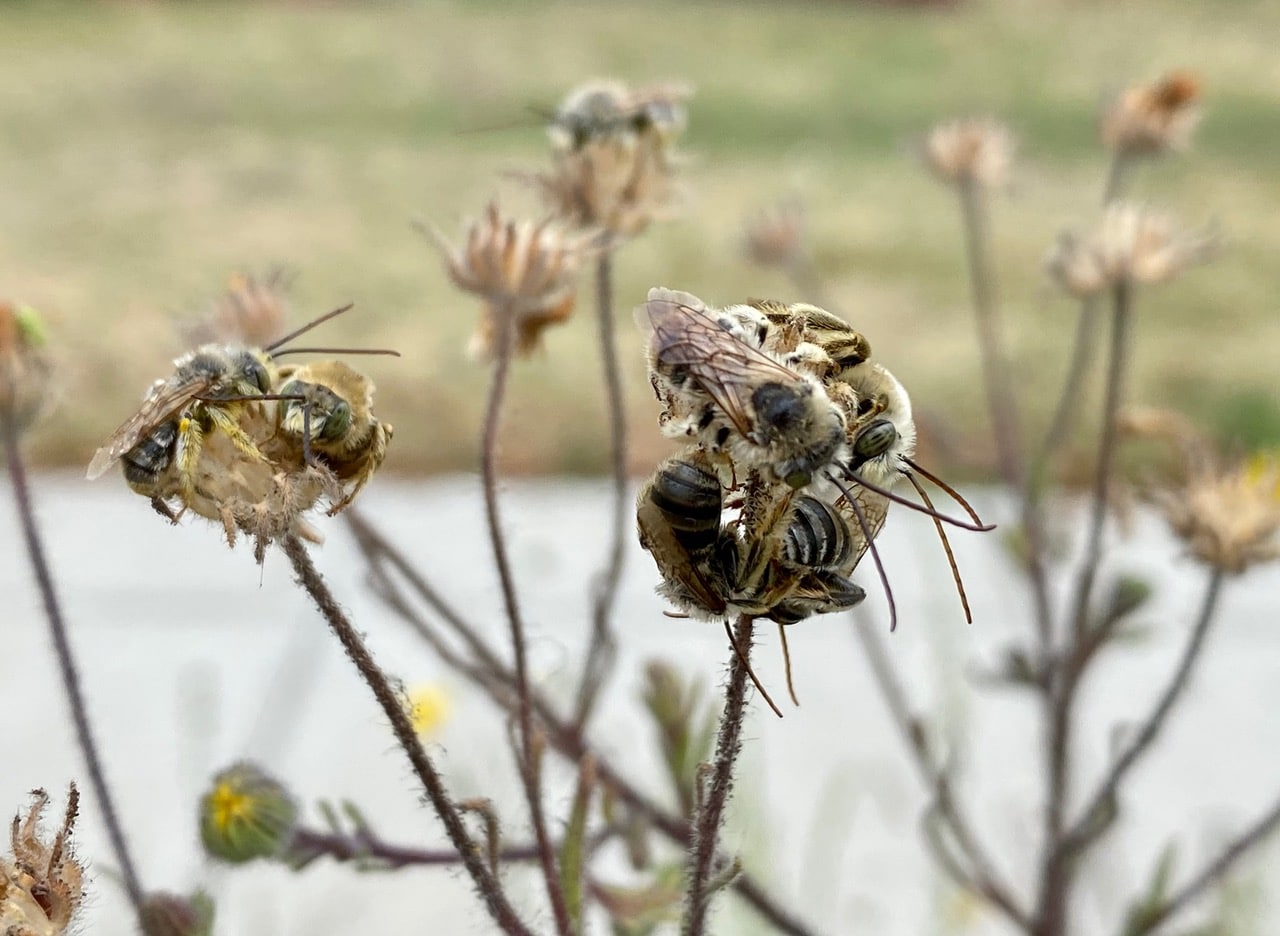
I make a 10-minute stop at the small parking strip in Alameda to check on the bees on this cool and cloudy morning.
10:36 am. Several male Summer Longhorn Bees, Melissodes sp. (family Apidae) are still sleeping on the spent seed heads of the Elegant Tarweed, Madia elegans.
The Summer Longhorn Bees, Melissodes sp. (family Apidae) are medium to large bees, stout-bodied, usually with gray hair on the thorax and pale hair bands on the abdomen. Males usually have yellow markings on their faces and have very long antennae from which their common name is derived. They are active May to September, with peak flight in late June to early August. The females prefer flat, bare ground for digging their solitary nests, though they sometimes nest in aggregations. Pollen is transported in scopae on the hind legs. Pollen loads are often copious and brightly colored and thus very distinguishable. Melissodes are specialists on Asteraceae – females gather pollen from flowers of Aster, Bidens, Coreopsis, Cosmos, Encelia, Gaillardia, Helianthus, and Rudbeckia ssp.
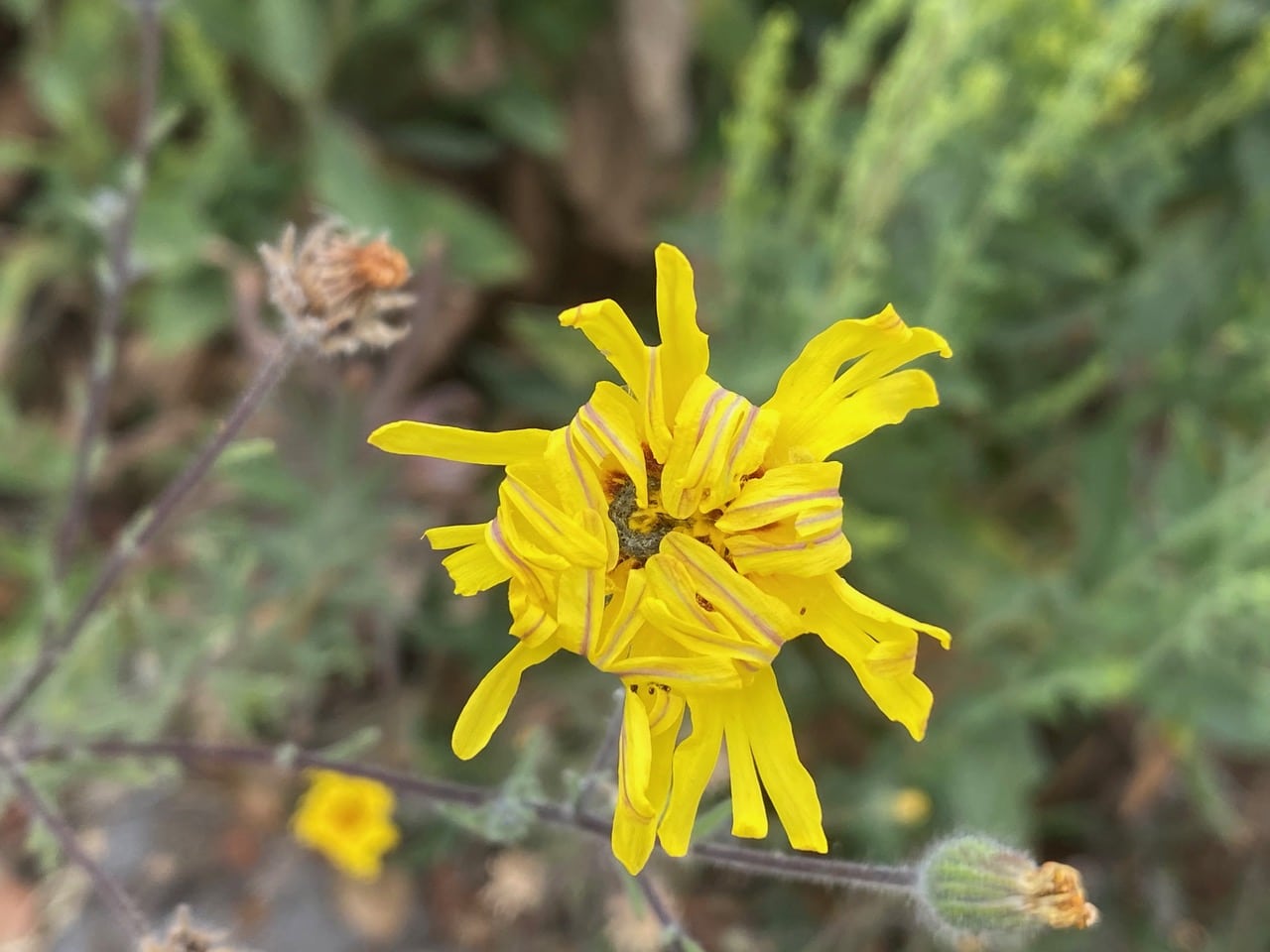
An artfully wrapped flowerhead of Elegant Tarweed invariably indicates the presence of a caterpillar of the Small Heliothodes Moth, Heliothodes diminutiva (family Noctuidae). See the dark green caterpillar on the flowers?
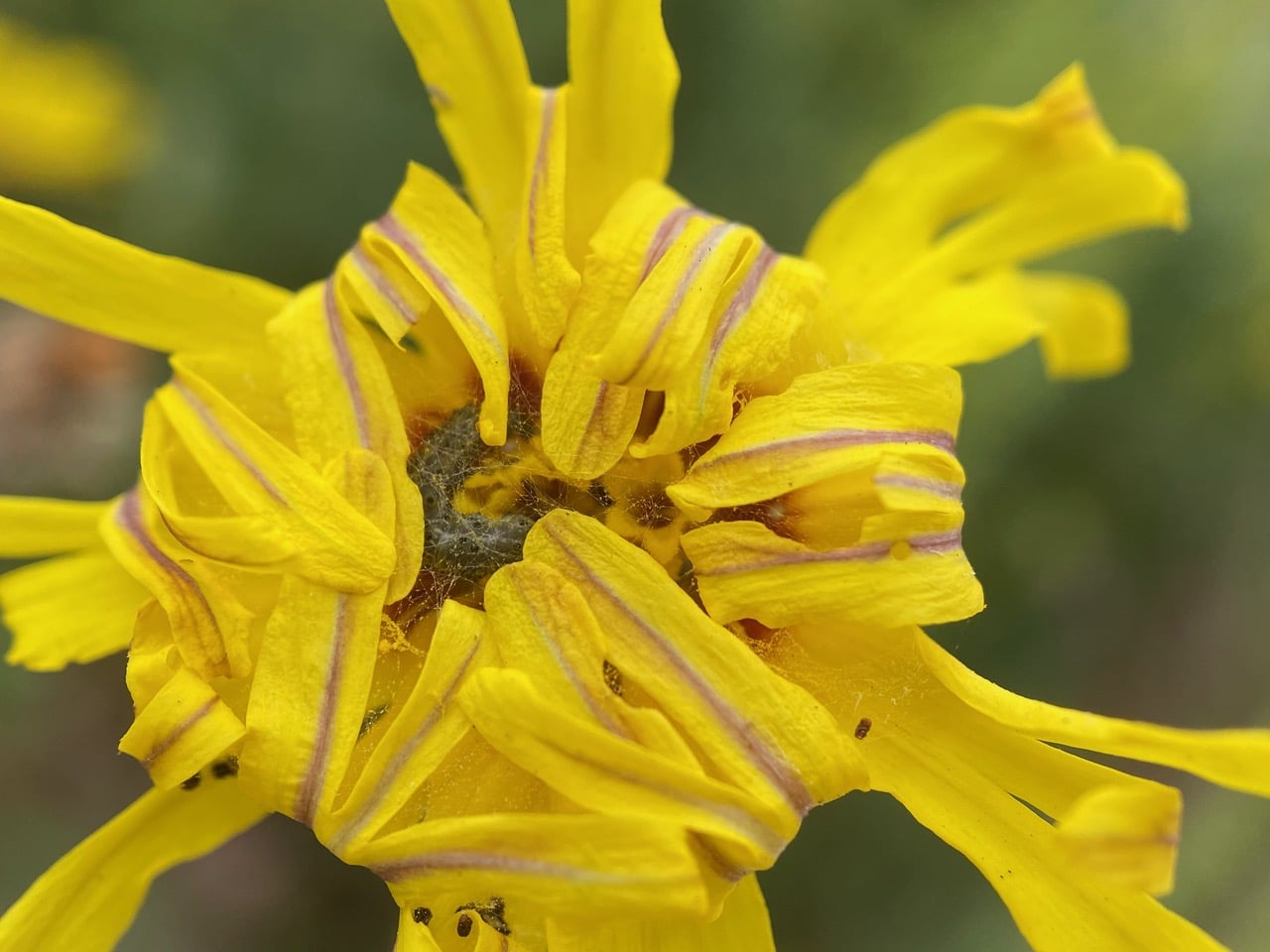
Close-up, we can see the network of silk that the caterpillar has applied to draw the ray petals together to form a protective shelter. Inside, the caterpillar can feed on the flowers safe from predators and parasites.
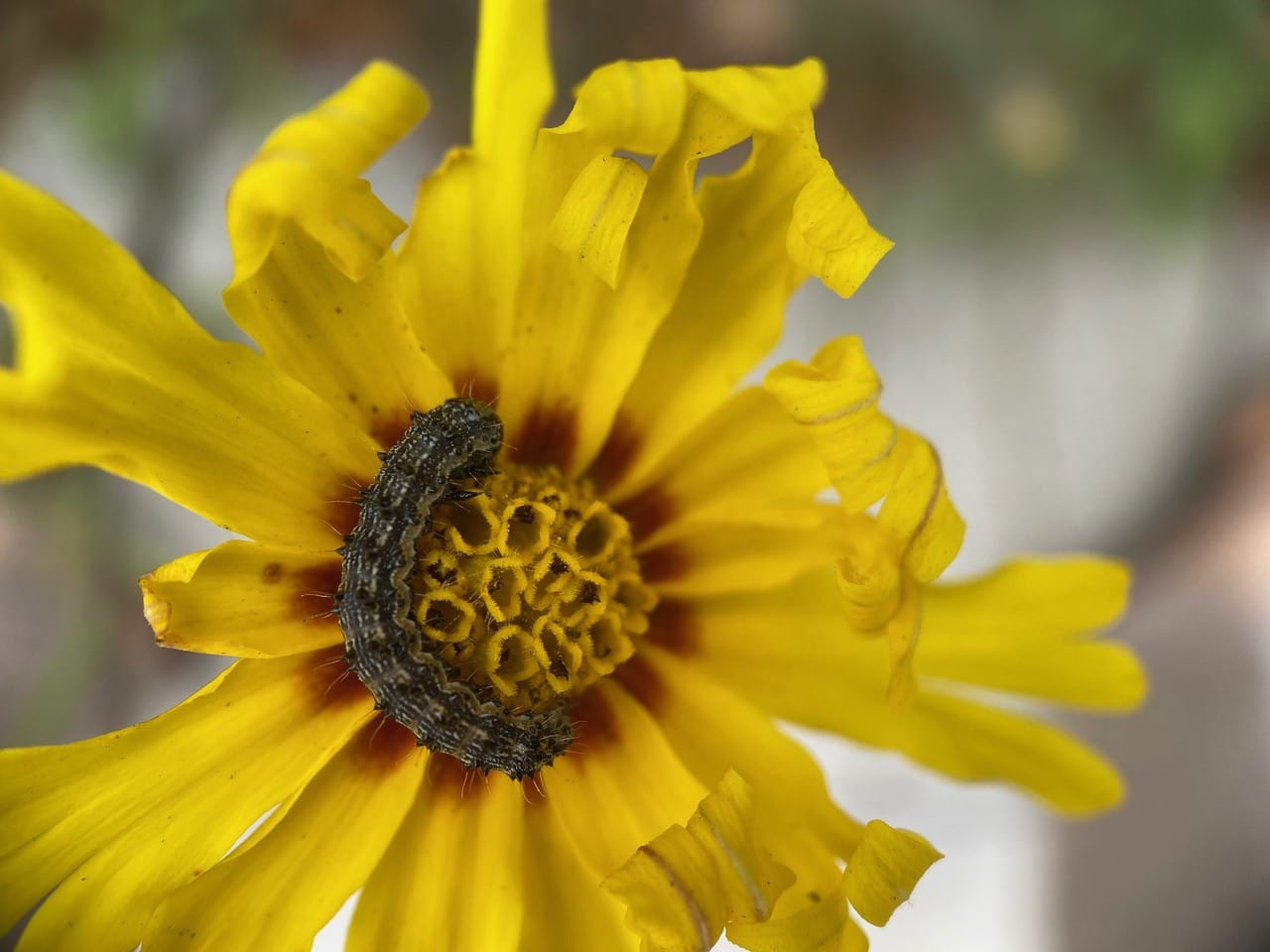
A Small Heliothodes caterpillar is feeding openly on an Elegant Tarweed flowerhead. Note that all the flowers are missing their reproductive parts. These caterpillars feed selectively on the reproductive parts of Asteraceae flowers.
The Small Heliothodes Moth, Heliothodes diminutiva (family Noctuidae) is day-active. It is found from California, through Oregon to Washington, almost always on plants in the family Asteraceae.

A 5th instar nymph of a Lygus Bug (family Miridae) is hanging out on the involucre of an Elegant Tarweed flowerhead. Its green color and black spots make for perfect camouflage against the tar-spotted phyllaries.
The term lygus bug is used for any member of the genus Lygus, in the family of plant bugs, Miridae. Adult lygus are approximately 3 mm wide and 6 mm long, colored from pale green to reddish brown or black. They have a distinctive triangle or V-shape on their backs. Lygus bugs are known for their destructive feeding habits – they puncture plant tissues with their piercing mouthparts, and feed by sucking sap. Both the physical injury and the plant’s own reaction to the bug’s saliva cause damage to the plant. Many lygus bugs are well-known agricultural pests.
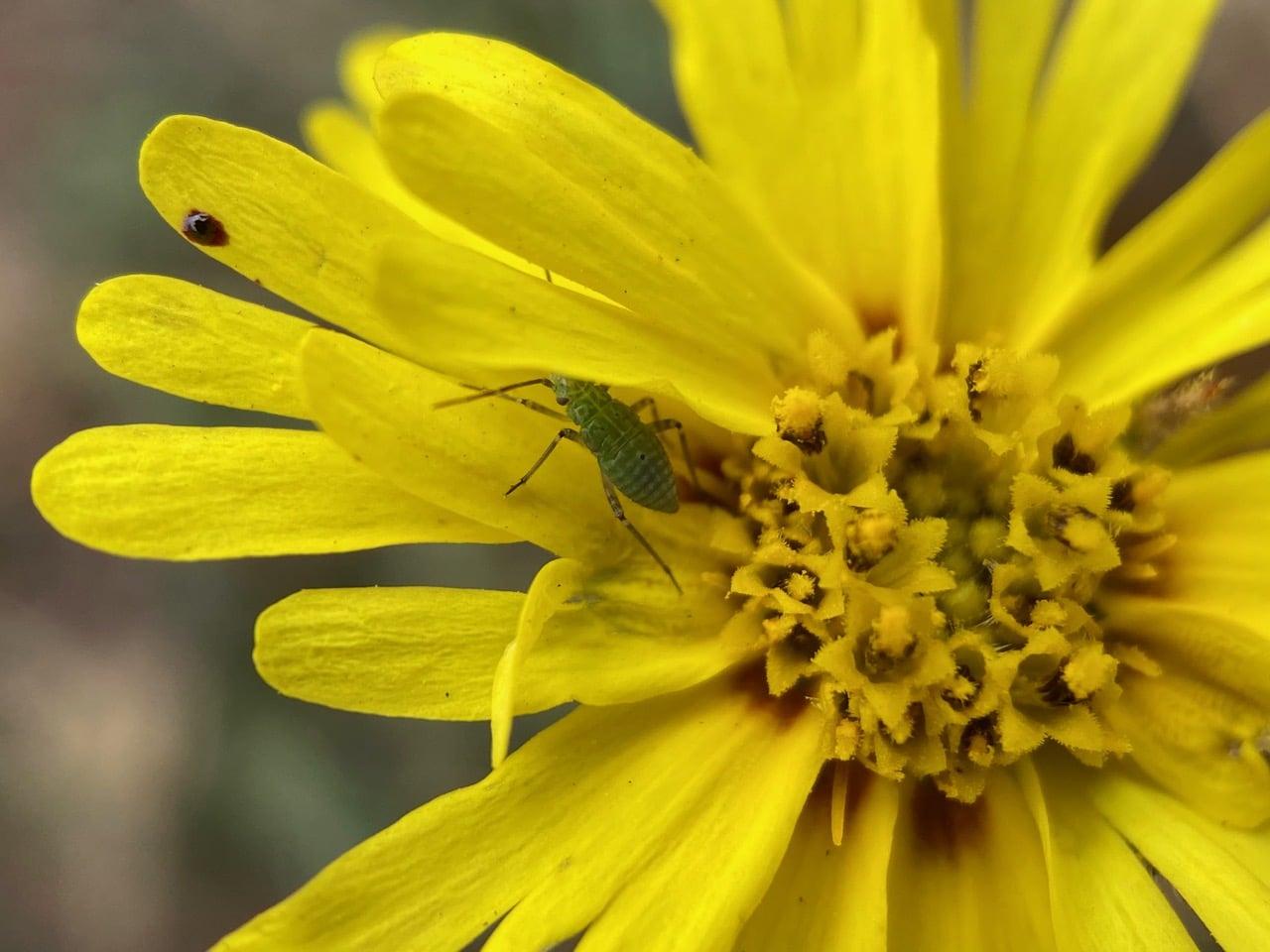
A younger nymph of the Lygus Bug is running away from my camera.
“True bugs” in the order Hemiptera undergo incomplete metamorphosis without a pupal stage. The nymphs, which look like adults, develop through a series of molts, each time getting bigger after shedding their old exoskeleton. At the last molt, they transform into adults with functional wings and reproductive parts.
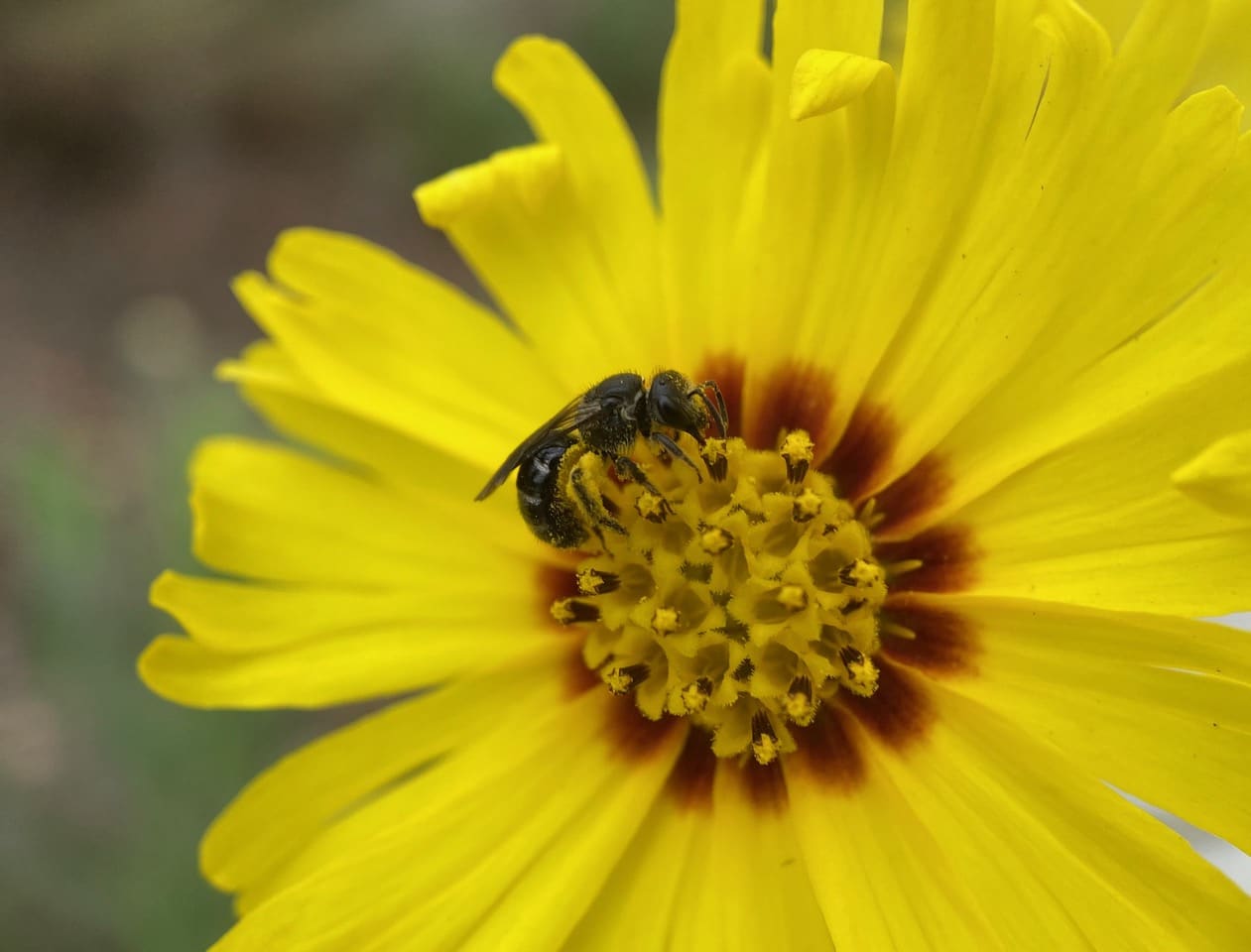
It’s that little bee again, on the Elegant Tarweed. It is distinctly black and opaque, reflecting no light from its integument. Judging from the way she carries pollen in the scopae on her hind legs and under her abdomen, I gather she is probably a Sweat Bee (family Halictidae).
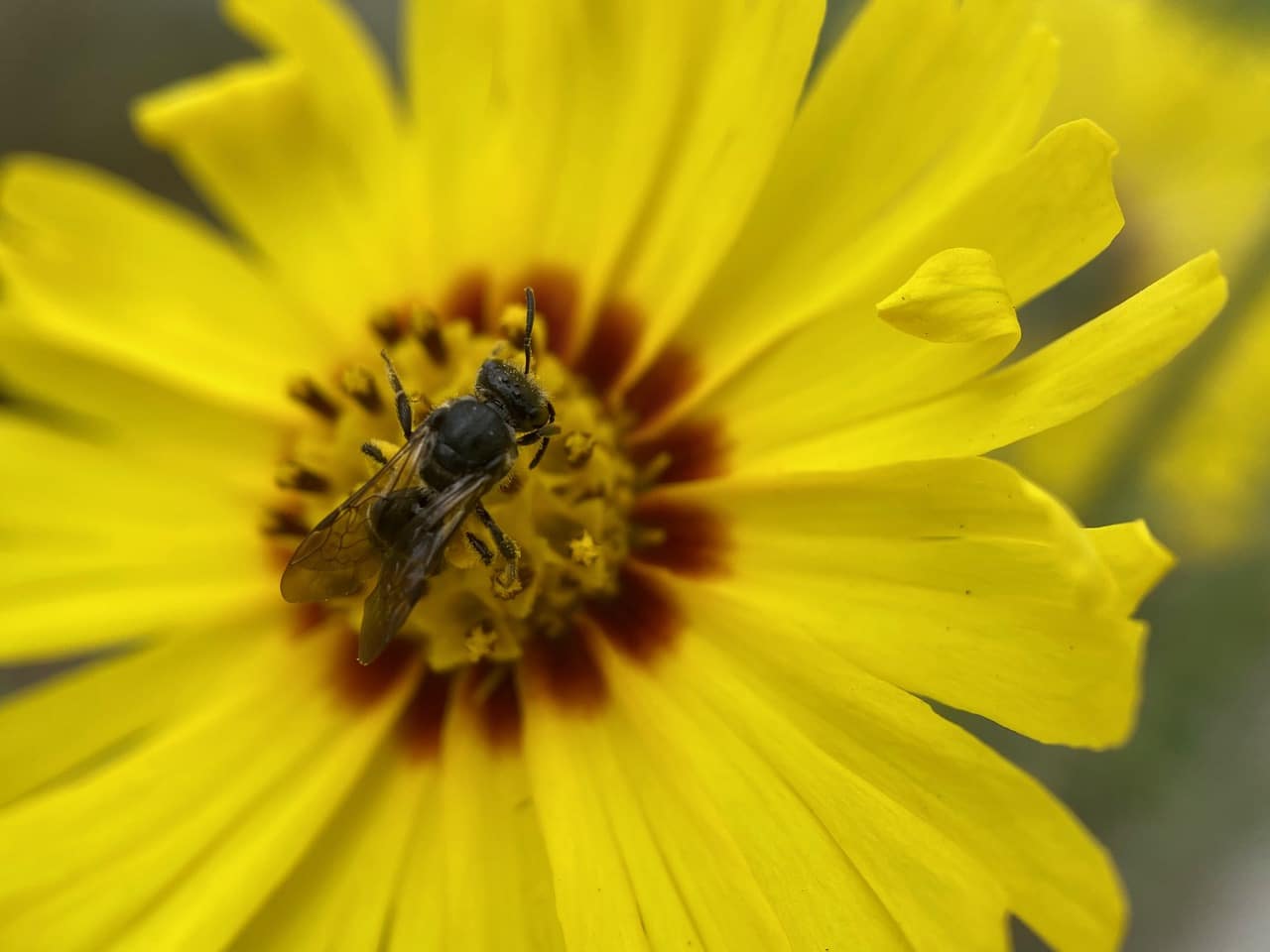
The bee cleans her antenna by running the antenna through the antenna cleaner on her foreleg.
All bees have an antenna cleaner on each of their two forelegs. The antenna cleaners consists of two parts: a notch in the basitarsus, which is fitted with stiff hairs, and a corresponding spur on the tibia. To clean its antenna, the bee raises its foreleg over its antenna and then flexes it tarsus. The action allows the spur to close the notch, forming a ring around the antenna. The bee pulls each antenna through the bristles to clean it of debris such as pollen or dust which might interfere with the many sensory organs within the antenna. A bee’s antennae serve numerous functions: smell, taste, perceive humidity and temperature, feel, monitor gravity and flight speed and even detect sound waves to help guide the bee in its daily activities.
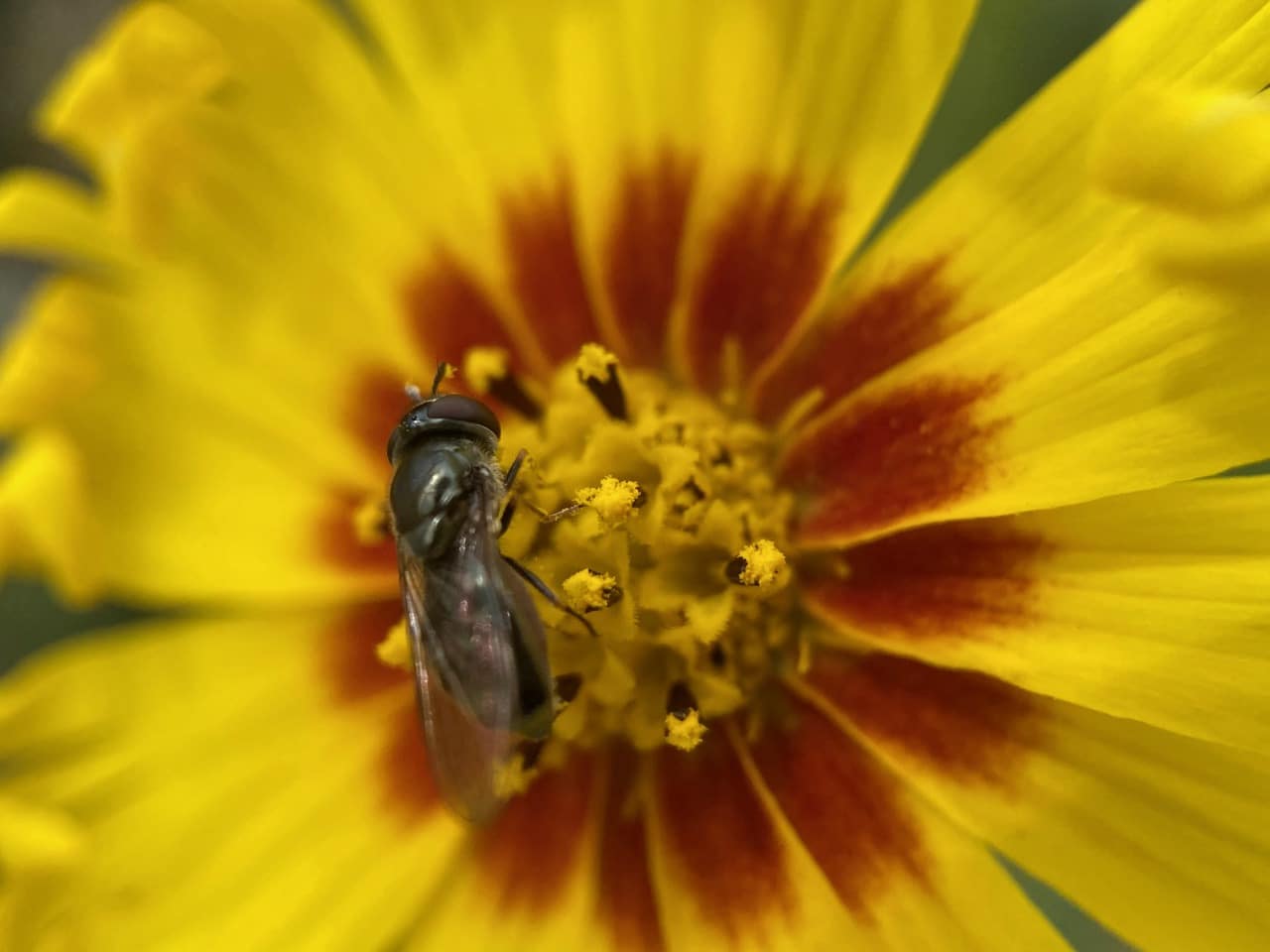
On this cloudy morning, even the metallic Sedgesitter, Platycheirus sp. (family Syrphidae) does not shine.
Platycheirus is found in grass and herb vegetation. Adults of many species feed on pollen of wind-pollinated plants, such as Salix, Plantago, Poaceae, Cyperaceae, but they visit other flowers also. Many stay active during cold and rainy weather. Larvae feed on aphids.

Hey, here’s an insect that can dispel the gloom of any overcast day – the iridescent Striped Sweat Bee, Agapostemon sp. (family Halictidae)! The all-green female is collecting pollen from a flower of the Beach Evening Primrose, Camissoniopsis cheiranthifolia. Note that the pollen in her scopae comes in two distinct colors – yellow and cream. The bee has obviously been gathering pollen from different flowers on this foraging trip.
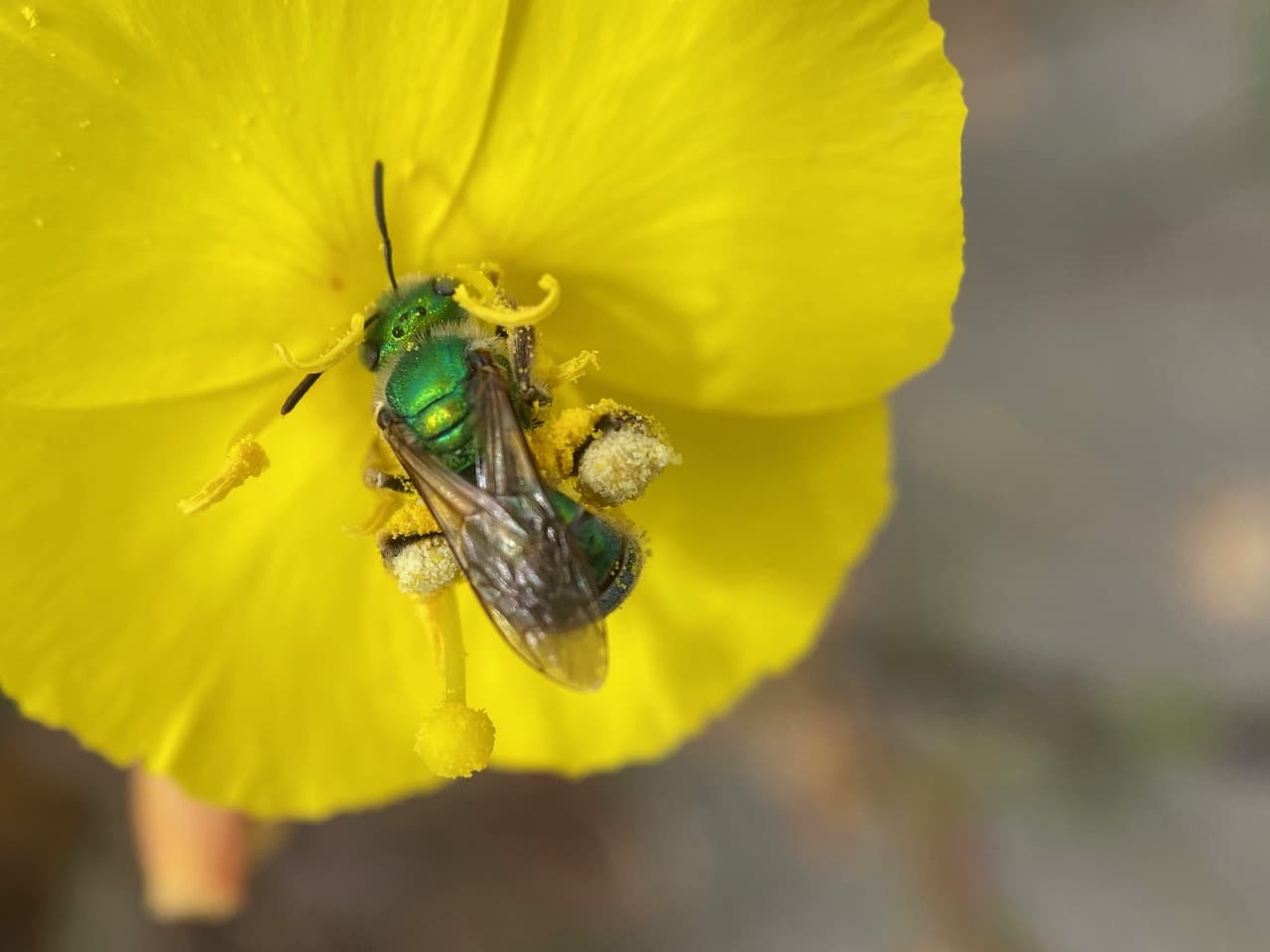
The genus Agapostemon is widespread and abundant throughout North America. They are most diverse and abundant in temperate regions and southwestern U.S. deserts. Agapostemon are commonly called “sweat bees” because they are closely related to, and resemble bees in the Halictus and Lasioglossum genera. Unlike those bees however, Agapostemon are not attracted to human sweat.
Agapostemon are brightly colored metallic green or blue bees measuring 7 to 14.5 mm long. Most species have a metallic green head and thorax, and black-and-yellow striped abdomen; some females are entirely bright green or blue. Females carry pollen on scopal hairs located on their hind legs. Agapostemon are generalists. Like other members of the family Halictidae, they are short-tongued and thus have difficulty extracting nectar from deep flowers. Males are often seen flying slowly around flowers looking for females. The bees favor flowers with high densities. They are active summer to fall.
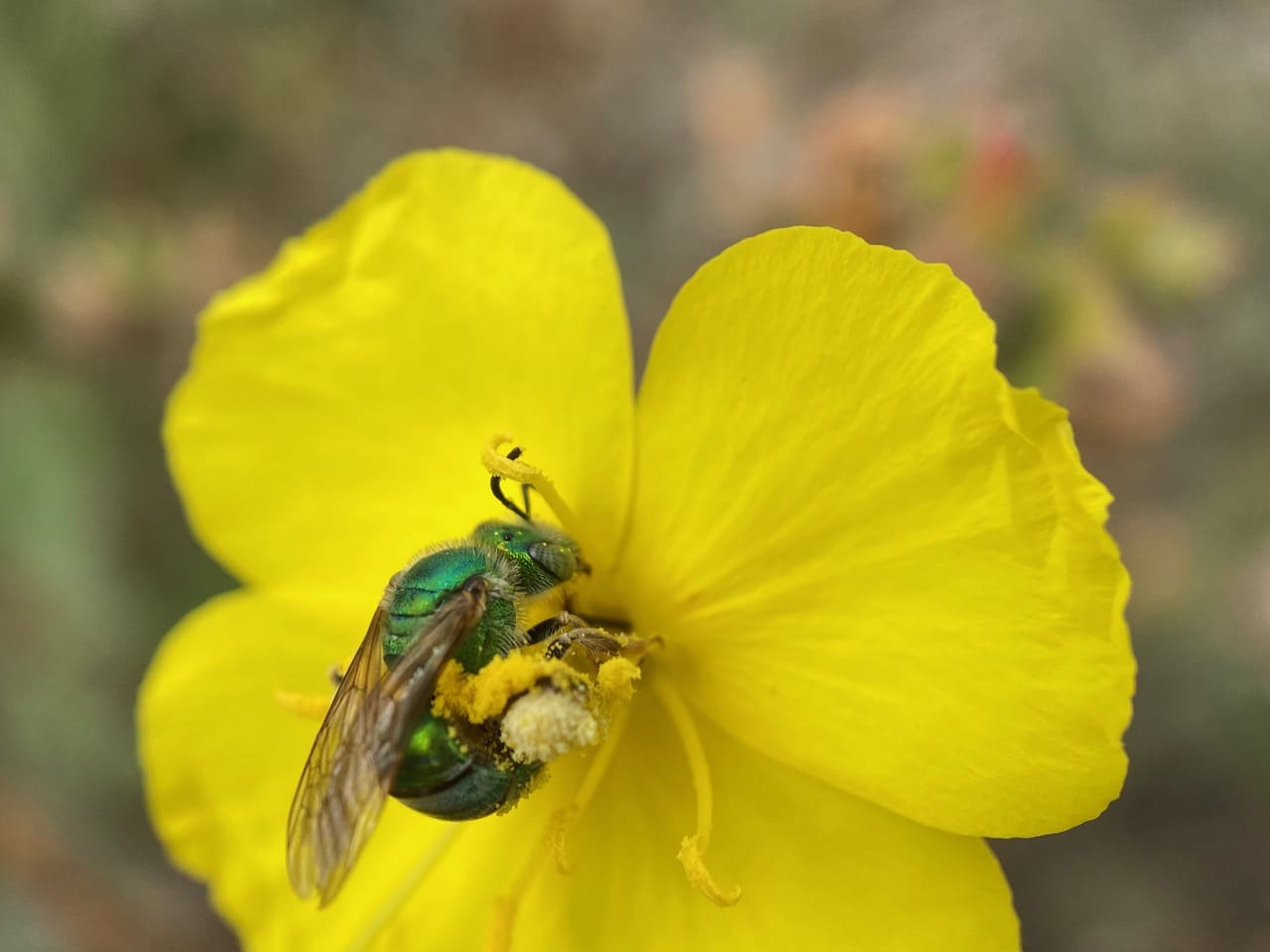
Agapostemon females dig deep vertical burrows in flat or sloping soil, or sometimes in banks. Most species are solitary, but some species nest communally. Up to two dozen females may share a single nest entrance, but each individual builds and provisions its own cluster of brood cells. Where a communal nest gallery shares a single entrance, one bee usually guards the hole, with only her head visible from above ground. Unlike other social bees, in communal bees there is no reproductive division of labor. In cool temperate regions, there is one generation per year, with females active in the early summer and males and pre-diapausing females active in the late summer. Only mated females survive the winter. This is probably because unmated females cannot enter diapause (insect version of hibernation).

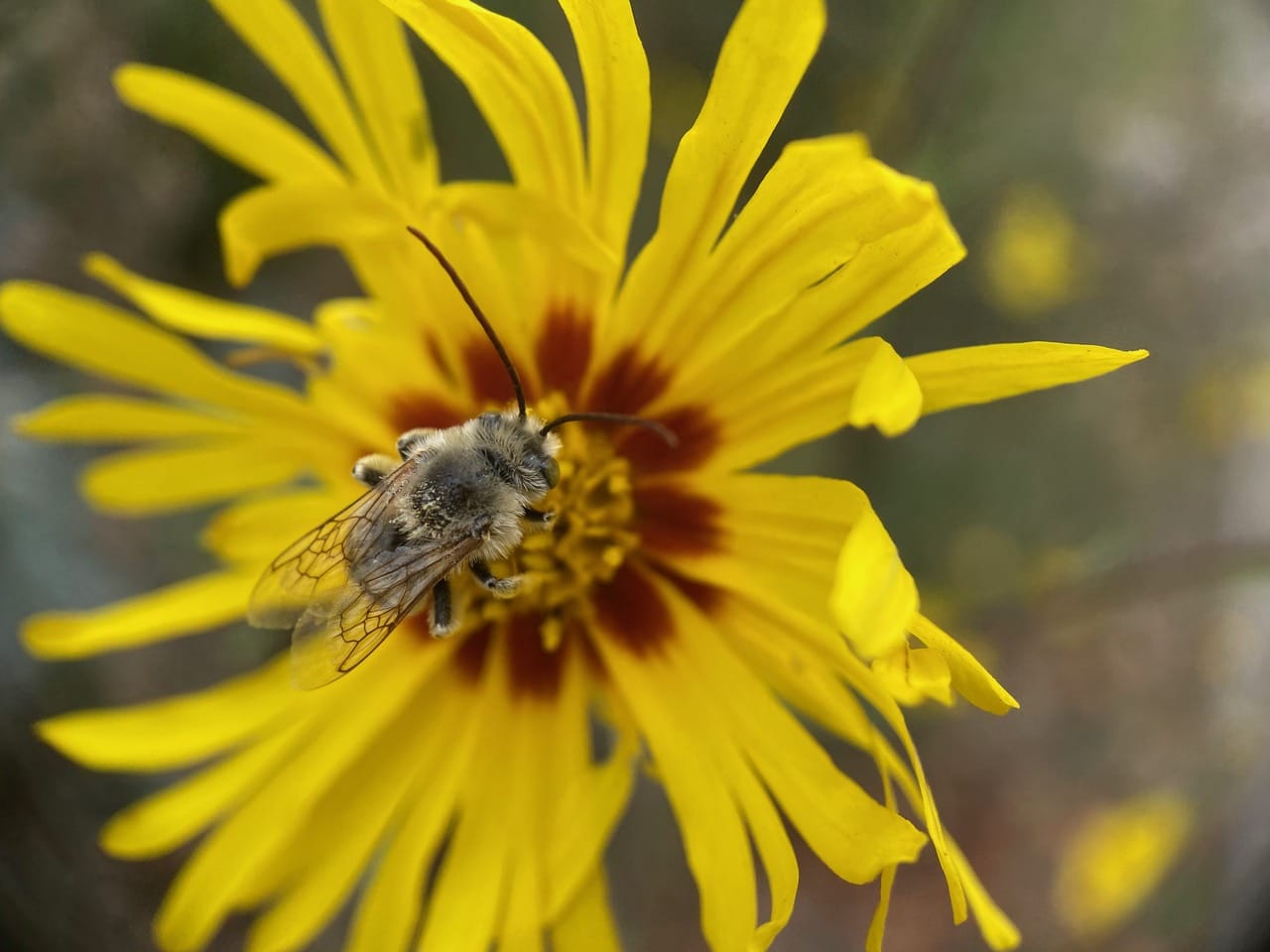
10:45 am. The male Summer Longhorn Bees have finally peeled off from their sleeping aggregations and are seeking breakfast on the flowers of Elegant Tarweed.