

Pollinator Post 7/14/24

I am a little late getting to the parking strip in Alameda this morning.
At 9:20 am the male Summer Longhorn Bees are just about waking up on the seed heads of the Elegant Tarweed, Madia elegans. Since it is Sunday, there’s no construction workers around to disrupt my enjoyment of these bees. I make a quick check for the lone male on the other side of the big tree with the two Cuckoo Bees. None of them can be found in their usual spot.
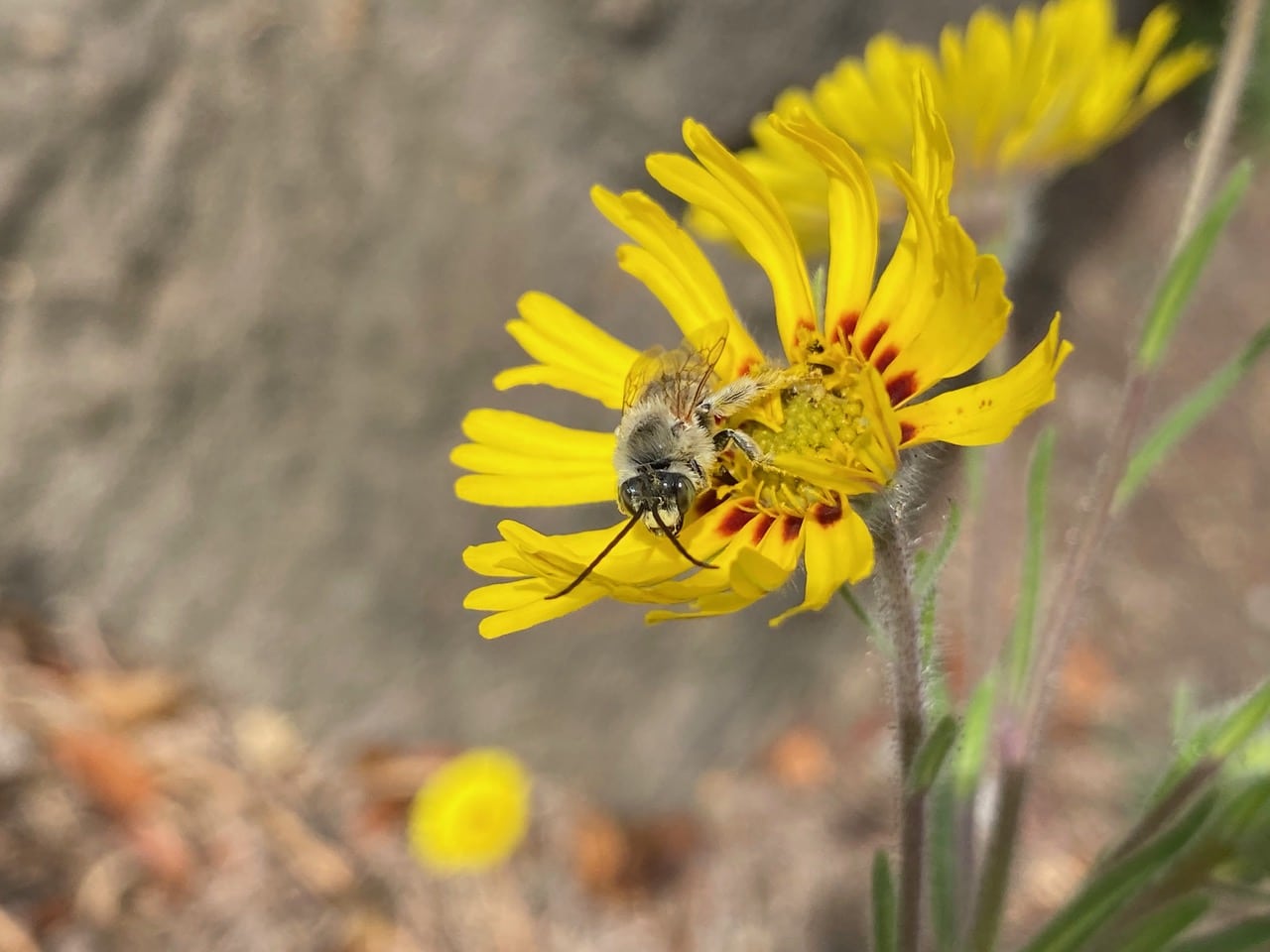
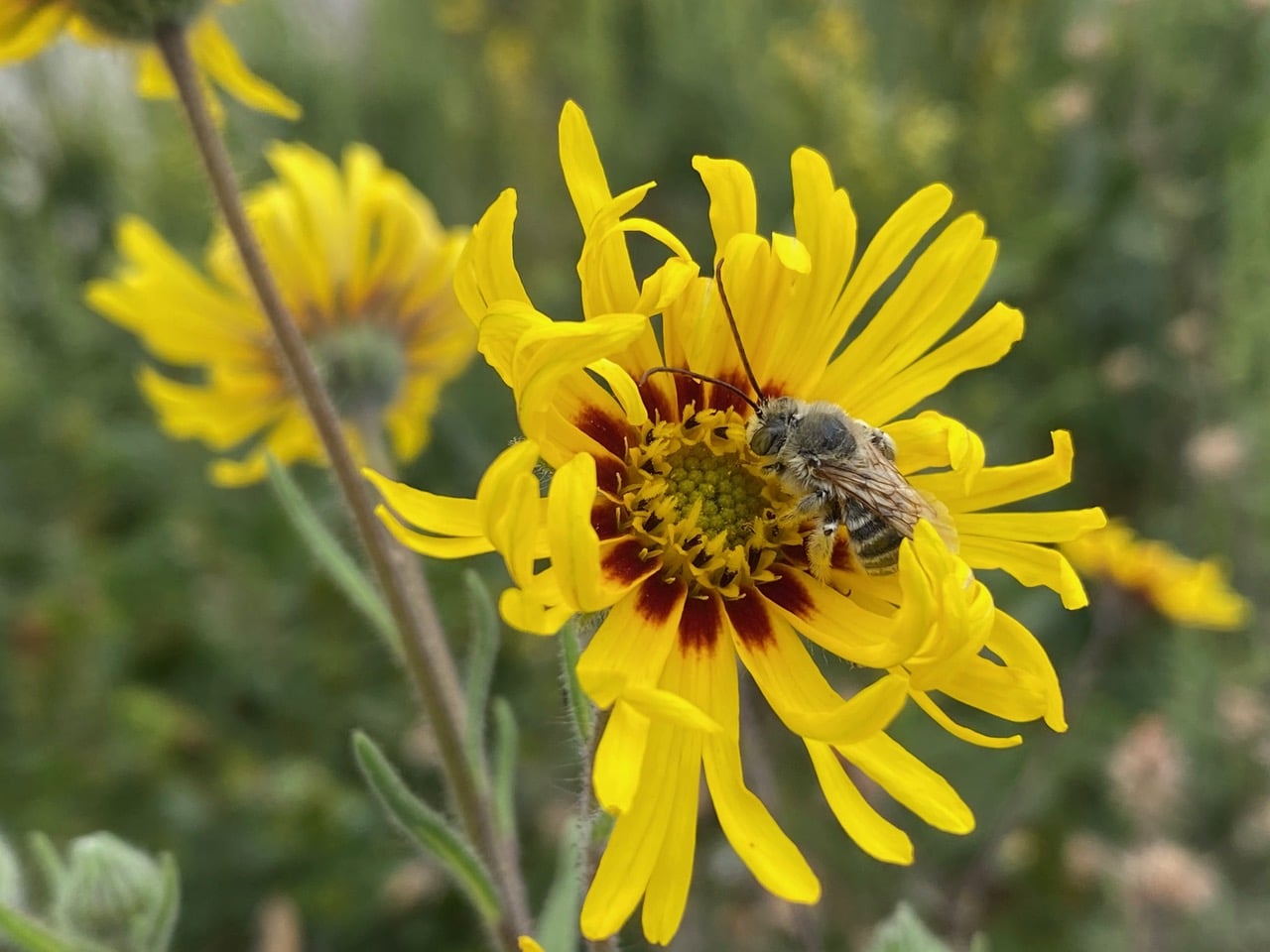


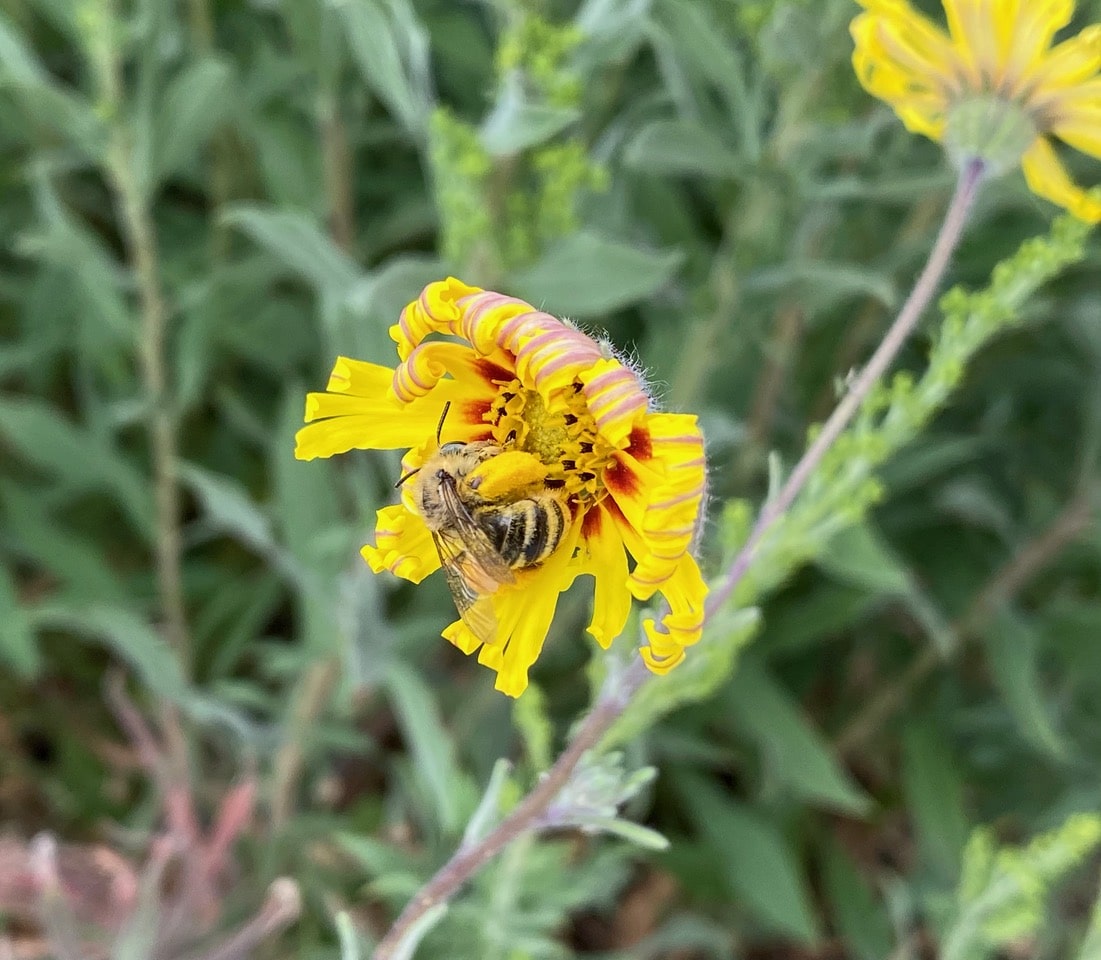


It doesn’t take long before the male bees start appearing on their favorite flowers, the Elegant Tarweed.
There are other Asteraceae in bloom in this little patch, such as the Hairy Gumweed, and the California Goldenrod, but they don’t seem to be visited by these Asteraceae specialists. Madia elegans is their absolute favorite!
The Summer Longhorn Bees, Melissodes sp. (family Apidae) are medium to large bees, stout-bodied, usually with gray hair on the thorax and pale hair bands on the abdomen. Males usually have yellow markings on their faces and have very long antennae from which their common name is derived. They are active May to September, with peak flight in late June to early August. The females prefer flat, bare ground for digging their solitary nests, though they sometimes nest in aggregations. Pollen is transported in scopae on the hind legs. Pollen loads are often copious and brightly colored and thus very distinguishable. Melissodes are specialists on Asteraceae – females gather pollen from flowers of Aster, Bidens, Coreopsis, Cosmos, Encelia, Gaillardia, Helianthus, and Rudbeckia ssp.
Although male bees do not intentionally collect pollen, the sticky pollen of tarweed invariably clings to their hairs as they seek nectar, making them good pollinators too.
Pollenkitt is a sticky covering found on the surface of pollen grains. It is also sometimes called “pollen coat”. It is found in some plant families more often than others, but it is especially common in plants that are pollinated by insects. Because of this scientists believe that one of the major functions of pollenkitt is to help the pollen stick to the insect pollinators. The pollen from many wind-pollinated plants, such as grass, is much drier and not nearly so sticky. The insects benefit from lots of pollen that is easy to carry home. What’s more, pollenkitt contains lipids, proteins, and phenolic compounds that are important to bee health. For the plant, pollenkitt may prevent the pollen from blowing away or drying out, or it may protect the pollen from ultra-violet radiation and certain pathogens.
Hey, the females are out foraging too! Look at the size of her pollen load already!
It is a treat to watch a female Melissodes at work. Her skill and efficiency at gathering pollen has to be seen to be believed.
There’s a caterpillar of the Small Heliothodes Moth, Heliothodes diminutiva (family Noctuidae) in that flowerhead of Elegant Tarweed.
The Small Heliothodes Moth, Heliothodes diminutiva (family Noctuidae) is day-active. It is found from California, through Oregon to Washington, always on plants in the family Asteraceae.

Closing in, I can see that the caterpillar has cleverly drawn the ray petals together with a network of silk. This is a safeguard against many predators and parasites, especially wasps.

Look at that flowerhead! A little caterpillar is in there feeding in the safety of its fortress. Note the bits of frass (insect poop) spilling out at the bottom.
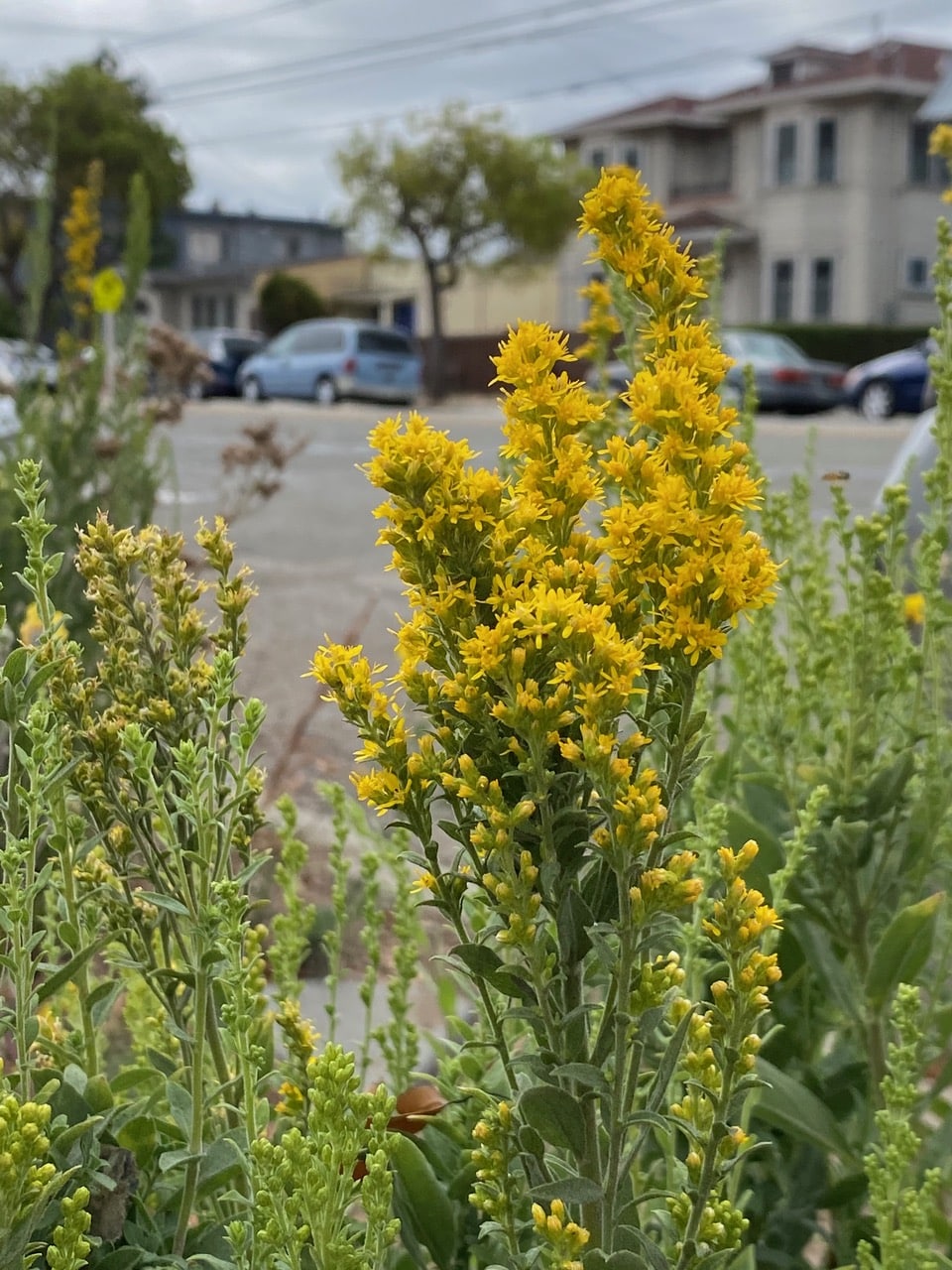
The California Goldenrod, Solidago velutina ssp. californica is starting to bloom in this little garden on a parking strip. Note the street in the background.

A female Forked Globetail, Sphaerophoria sulphuripes (family Syrphidae) is laying eggs among the terminal leaves of a California Goldenrod.
Hover Flies, also called Syrphid Flies make up the insect family Syrphidae. They are often seen hovering or nectaring at flowers; the adults of many species feed mainly on nectar and pollen, while the larvae eat a wide range of foods. In many species, the larvae feed on aphids, thrips, and other plant-sucking insects. In some species, the larvae are saprotrophs, eating decaying plant and animal matter in the soil or in ponds and streams. Many Hover Flies are brightly colored, with spots, stripes and bands of yellow; due to this coloring, they are often mistaken for wasps or bees. They exhibit Batesian mimicry – the resemblance to stinging insects gives the hover flies some protection from predators.
Hover Flies are considered the second-most important groups of pollinators after wild bees. Most are generalists that visit a wide range of plant species. The feeding habits of Syrphid larvae further endear them to the gardeners, serving as pest control agents and recyclers of organic matter.
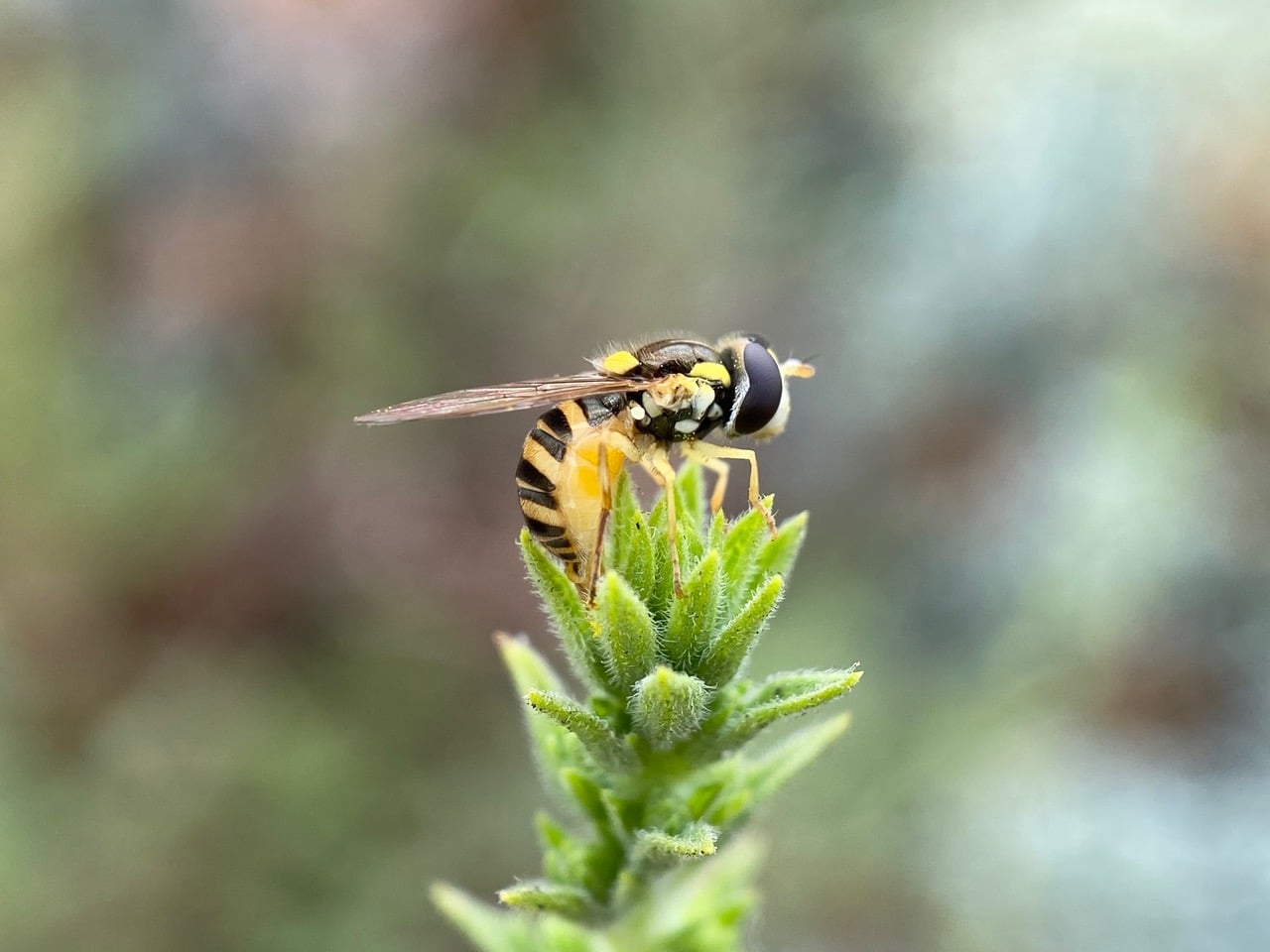
Closing in, I see that the hover fly is bloated with eggs. But she will only deposit her eggs singly, usually close to aphids and/or other soft-bodied insects. This way, each of her larvae will have plenty to eat without having to compete with one another.
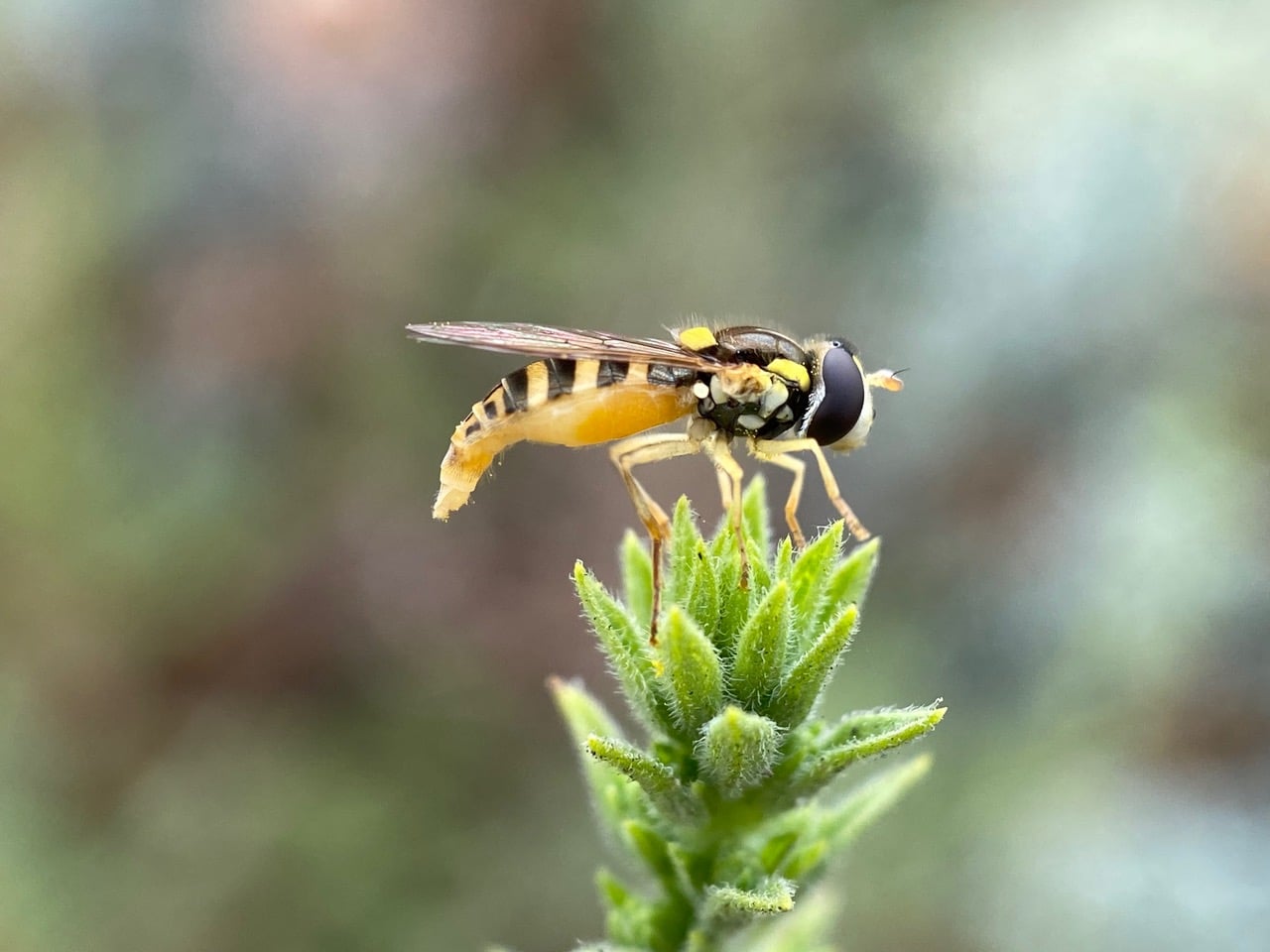
The female Globetail lifts up her extended abdomen after laying her egg. Wow, I can’t believe my luck! Just a week ago I saw a pair of these hover flies mating here.

I begin to see several more gravid female Forked Globetails on the goldenrods.
The Forked Globetail is native to western North America. Adults visit flowers for nectar and pollen. Larvae feed on aphids and other soft-bodied insects. There is marked sexual dimorphism in the species – the males have a slender abdomen with a reddish, swollen tip.

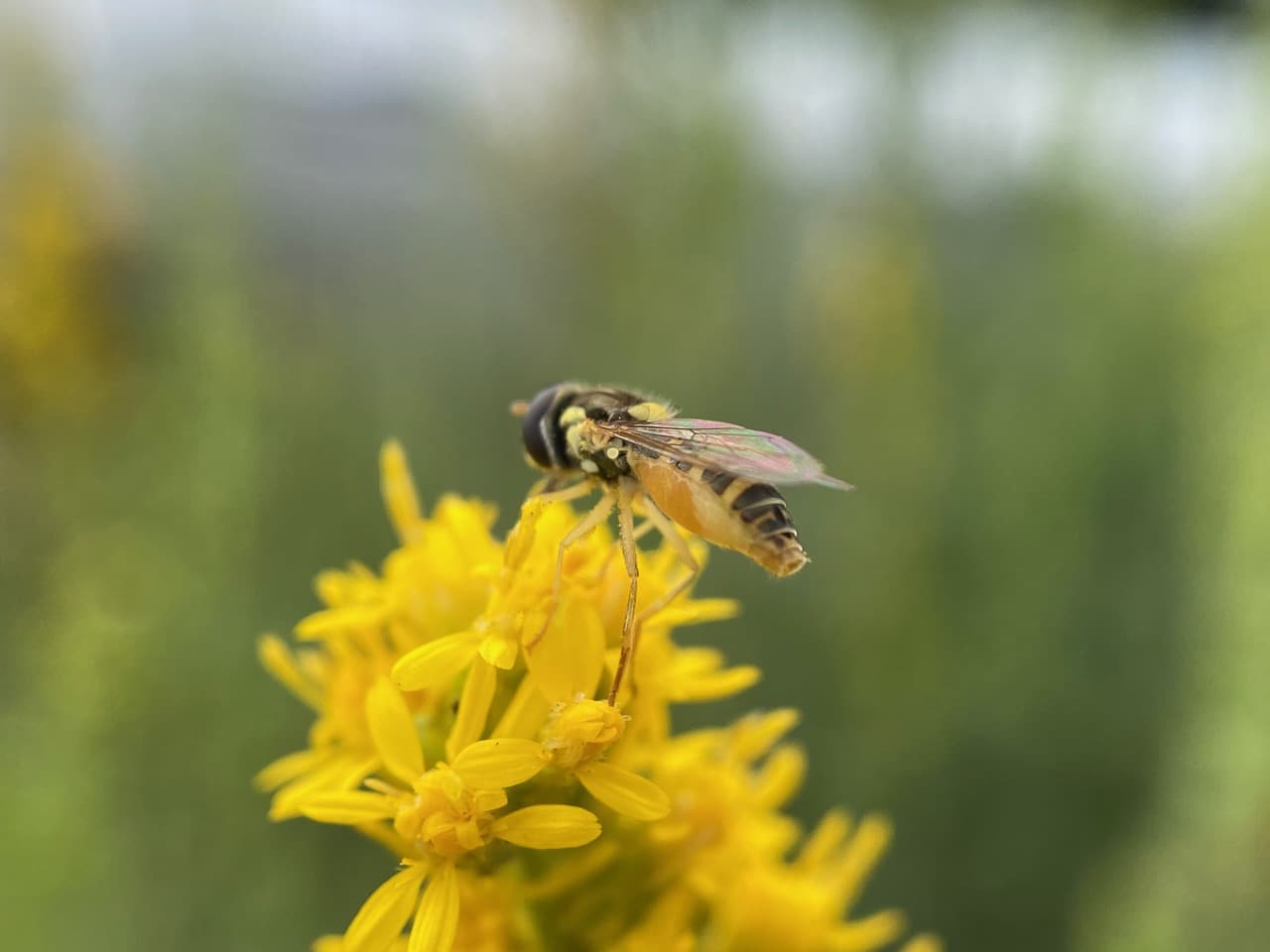
There must be a bonanza of aphids on the Goldenrod to attract these gravid female hover flies.
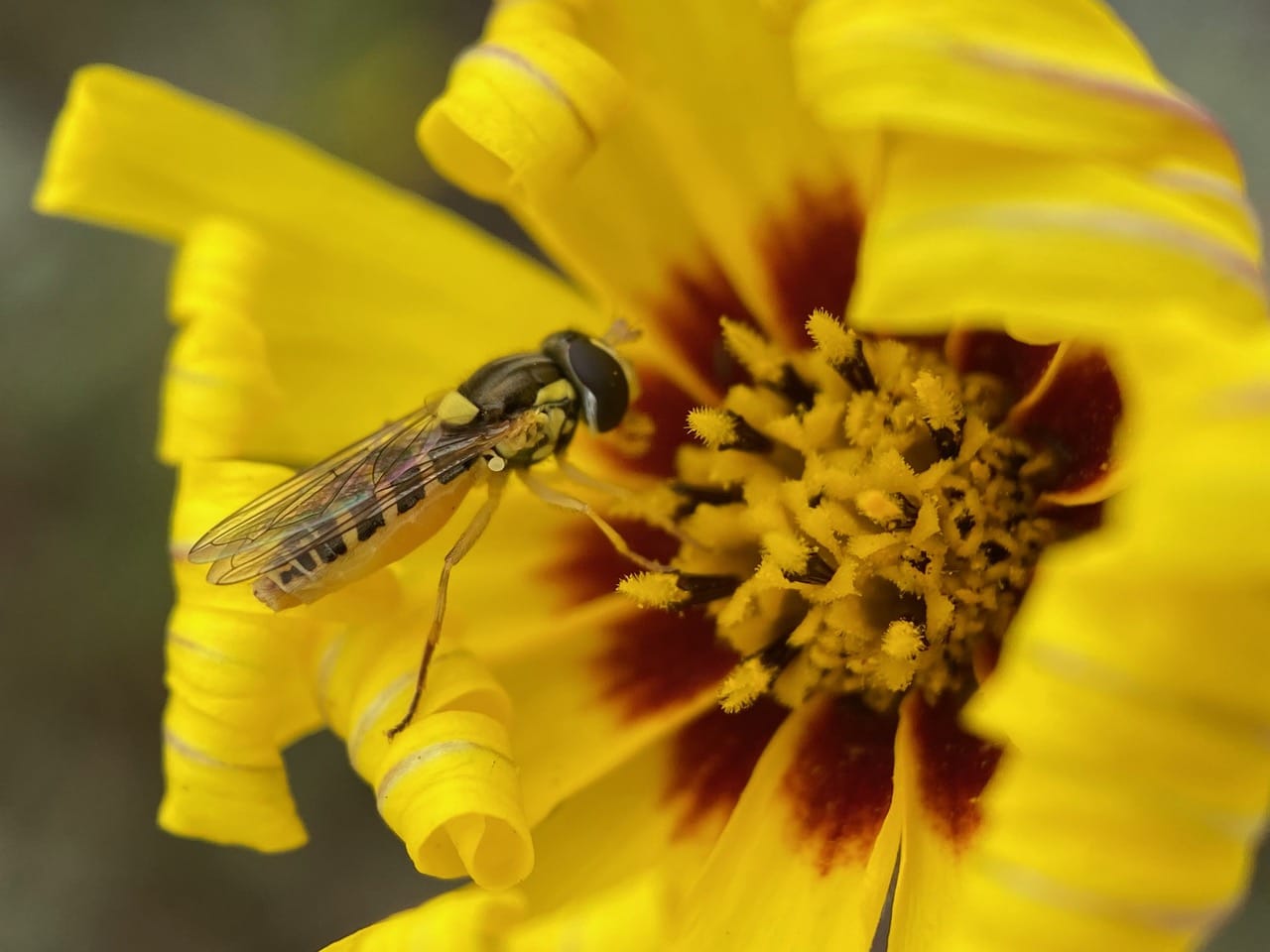
A gravid female Forked Globetail visits a flowerhead of Elegant Tarweed.

Something black is moving around in a half-opened flowerhead of Hairy Gumweed, Grindelia hirsutula.

The insect appears to be a Sweat Bee (family Halictidae).

A small black bee with smokey wings lands on a flowerhead of Elegant Tarweed. I am not sure what kind of bee it is. Sweat Bee (family Halictidae)?
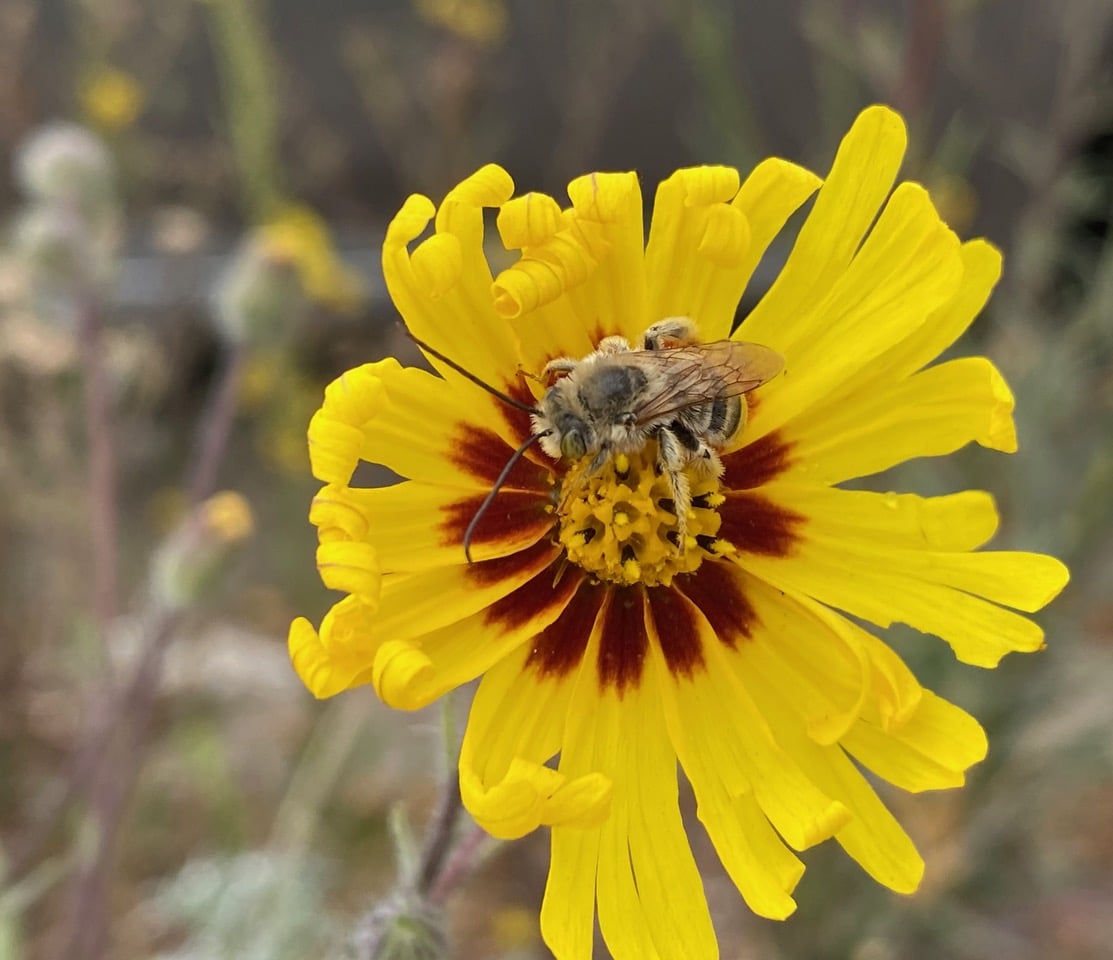

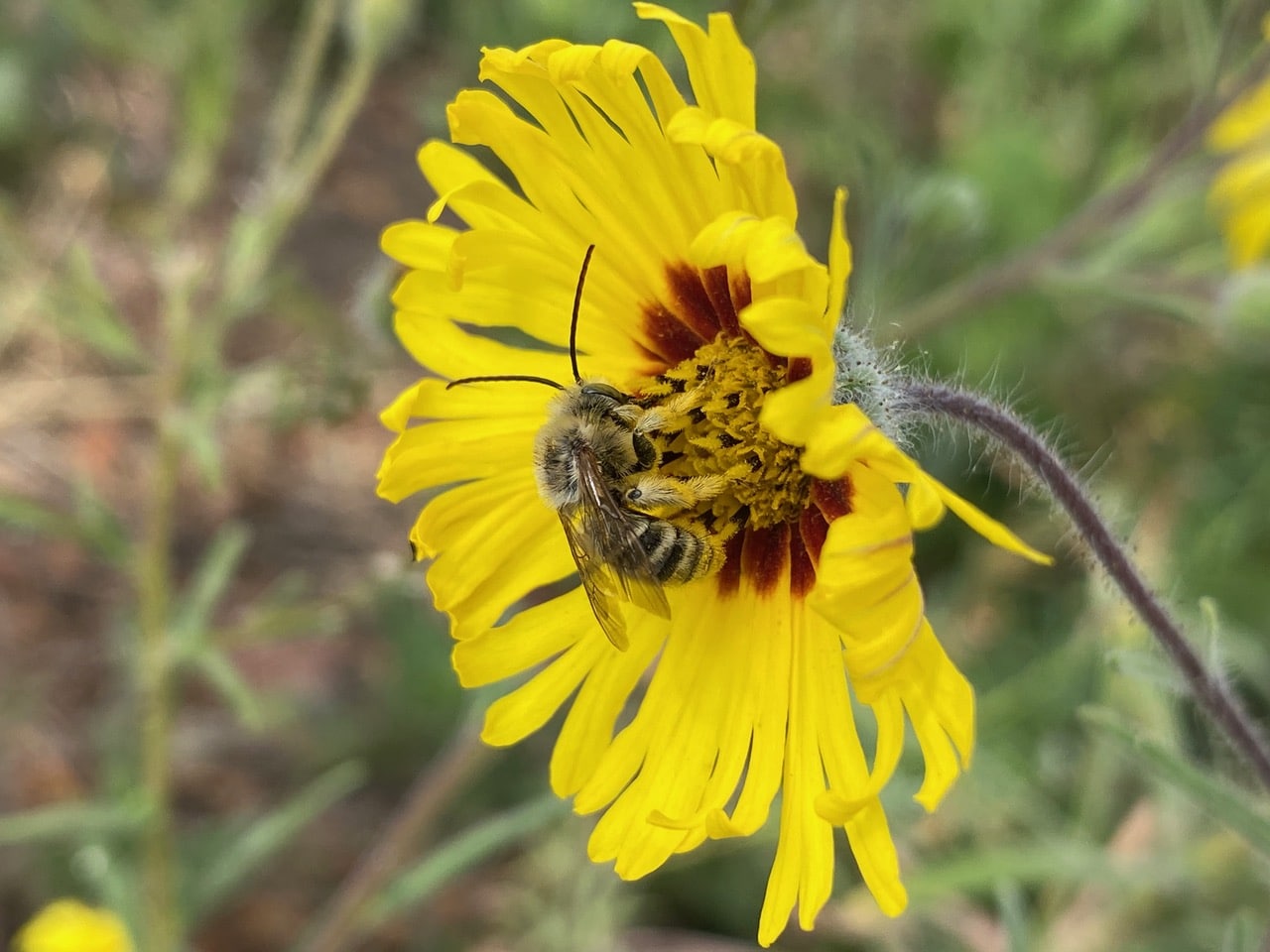

A male Melissodes lands on an Elegant Tarweed flowerhead with a Small Heliothodes caterpillar on it.
The vibrant insect life in this tiny garden on a parking strip has been a humbling eye-opener for me. Who would’ve guessed that insects could subsist on the limited resources on an isolated patch along a busy street. Although there are small gardens in front of the houses in the neighborhood, they are not at all floriferous. How did these insects find this oasis? Where did they come from?