

Pollinator Post 7/13/23 (2)
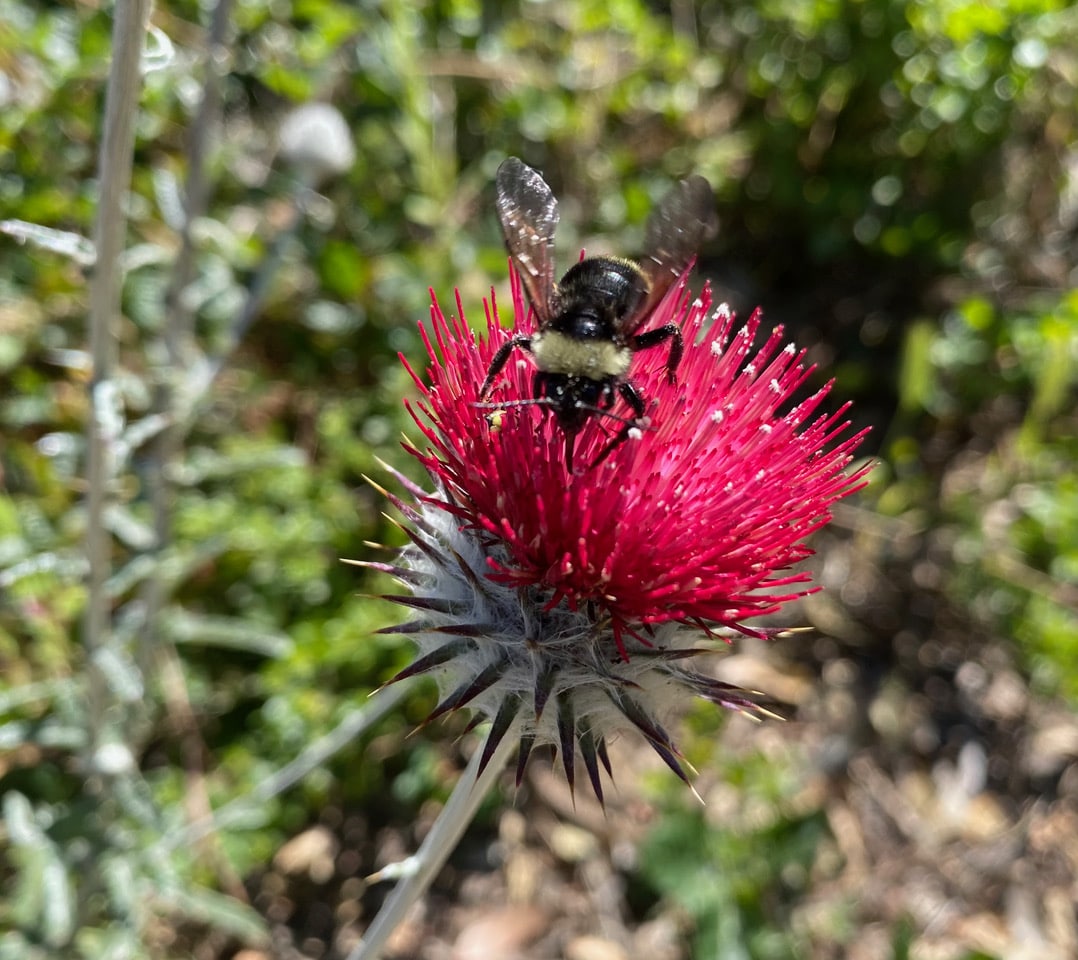
Some Bumble Bees are foraging on the Cobweb Thistle, Cirsium occidentale, their heads buried in the flowerheads. I have to patiently wait for them to look up to ascertain their identity. Most of them are the Yellow-faced Bumble Bees, Bombus vosnesenskii, while a few with black heads are California Bumble Bees, Bombus californicus.
Bombus californicus, the California Bumble Bee, is found in Central and the western half of North America. The species is now classified as Vulnerable by the IUCN. It was the most common bumble bee in California until about the 1990s when its numbers and distribution began to decline. Many factors may have contributed to its decline, including invasive species, pesticide use, commercial bumble bee rearing, habitat destruction, and climate change.
Although morphologically the species is quite variable, the “typical” color pattern of female B. californicus is black with only a single strong yellow band anteriorly on the thorax, and another single yellow band near the apex of the abdomen. Males exhibit considerably more variation.
The California Bumble Bee is an important pollinator in alpine environments in its native range. They are social bees having a queen and workers. Their colonies last for one year. New queens overwinter, usually underground, and found new colonies from scratch the following year. Queens emerge from April through mid July. Workers are present from April to September. The species is known to pollinate sage, blueberry bushes, red clover, California poppies, and many other species of flowers.

Covered with sticky pollen, this California Bumble Bee has rather long antennae, and does not seem to have a pollen basket on its hind legs. A male?
All worker bumble bees are female – they do all the work for the colony – taking care of the young, cleaning and maintenance of the hive, etc. Males are usually produced late in the season, expressly to mate with the virgin queens who are the only ones to overwinter, and who will singlehandedly establish new colonies when they wake up from hibernation in early spring next year.
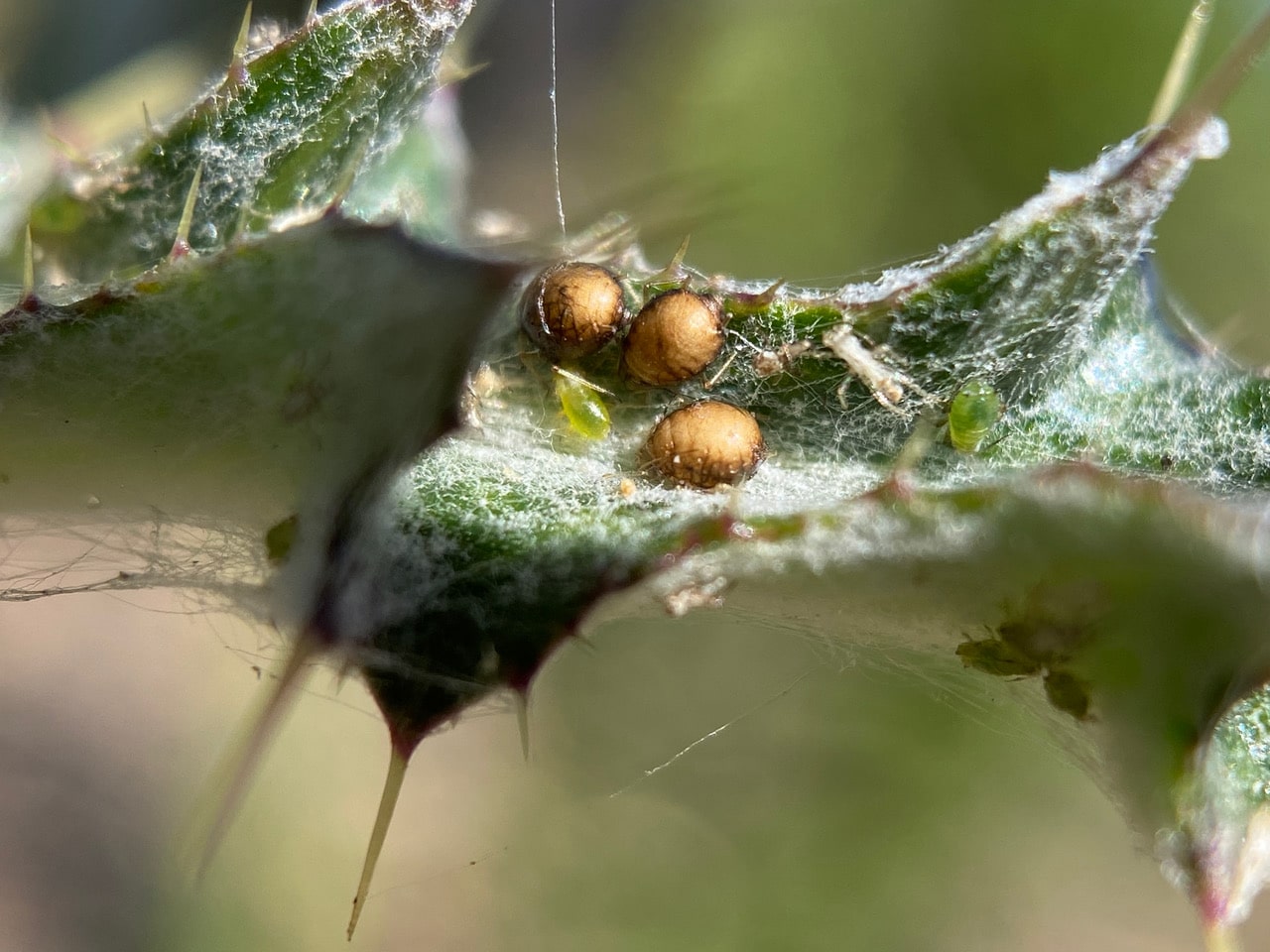
While looking for caterpillar nests on the young Cobweb Thistles, I find these tiny but conspicuous brown things on the leaves. They are aphid mummies! There are a few healthy green aphids around as well.
Aphids are often attacked by a tiny parasitoid wasp, Aphidius sp. (family Broconidae). The female wasp lays an egg in the aphid. When the egg hatches, the wasp larva feeds on the inside of the aphid. As the larva matures, the host dies and becomes slightly enlarged or mummified, often turning browner yellow. Complete metamorphosis occurs within the host. The adult parasite chews its way out of the mummy, leaving a round hole. The Aphidius wasps are often used for biological pest control of aphids on agricultural crops and home gardens.

On the thistle stem, I find a thriving colony of Thistle Aphids, Brachycaudus cardui (family Aphididae). The aphids are tended by some Odorous House Ants, Tapinoma sessile (family Formicidae). Wow, this is new – the Thistle Aphids I have observed earlier in the season have always been tended by the American Winter Ants.
The Thistle Aphids, Brachycaudus cardui (family Aphididae) which have a wide distribution in Europe, Asia, North Africa and North America. The primary host of this species is plum, cherry, apricot, or peach, but during the summer months it moves to a secondary host, often a thistle in the genera Carduus or Cirsium where it is commonly seen on the stems and flowerheads. The viviparous (live-bearing) wingless females of B. cardui have an oval or pear-shaped body and grow to a length of 1.8 to 2.5 mm. The colors varies from green, yellowing, reddish or brown. The abdomen has a dark, shining patch on the dorsal surface.

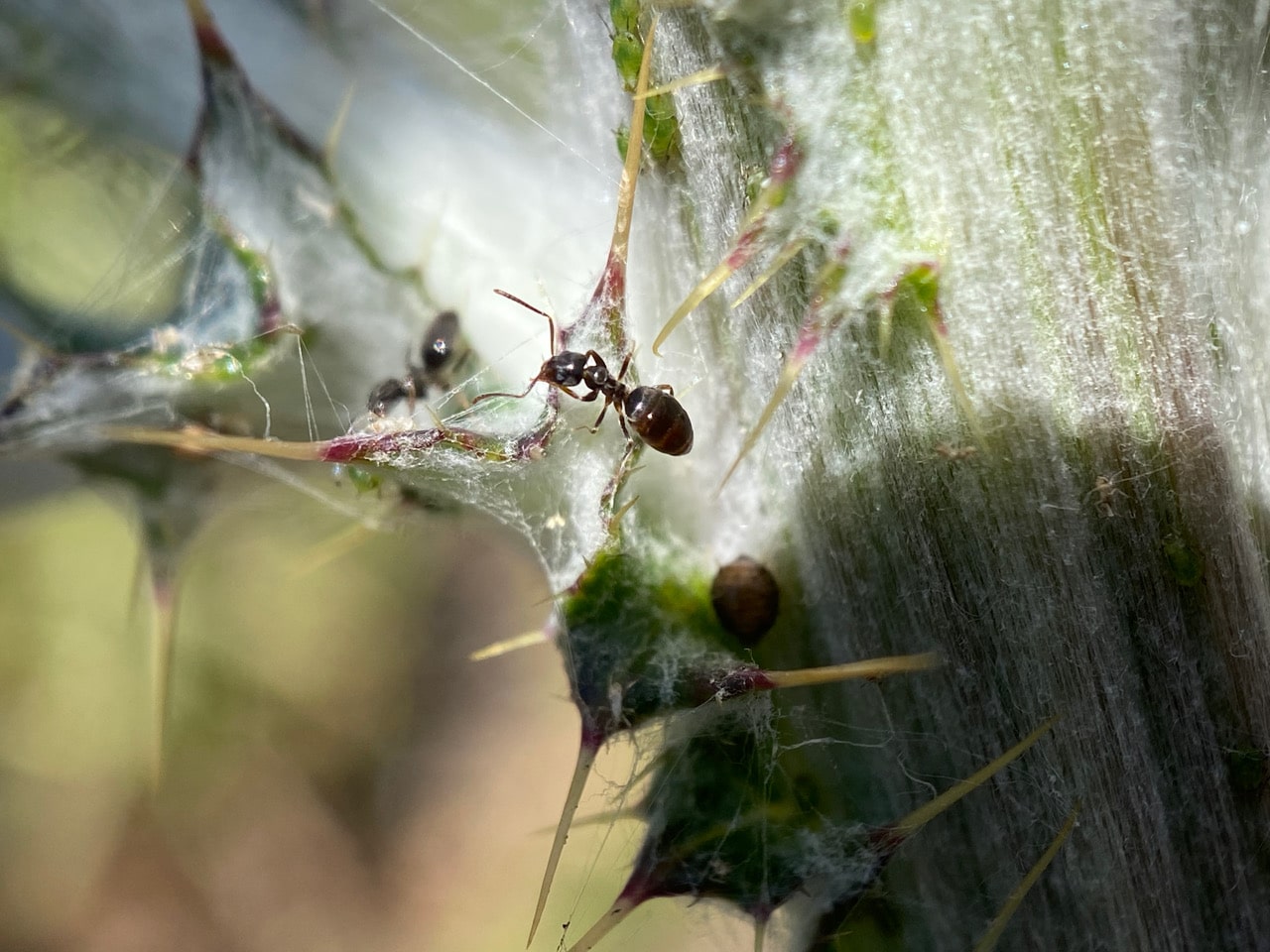
The Odorous House Ant, Tapinoma sessile (subfamily Dolichoderinae) is native to North America, ranging from southern Canada to northern Mexico. The species is found in a vast diversity of habitats, including within houses. The ants mainly feed on floral nectar and other sugary food. They also forage for honeydew produced by aphids and scale insects that they guard and tend.
Odorous House Ants are small ants, the workers measuring 2-3 mm. As in all members of the subfamily Dolichoderinae (odorous ants), this species does not possess a sting, instead relying on the chemical defense compounds produced from the anal gland. Such compounds are responsible for the smell given off by the ants when crushed or disturbed.
T. sessile colonies are polydomous (consist of multiple nests) and polygynous (contain multiple reproductive queens). The species practices seasonal polydomy – the colony overwinters in a single nest, and forms multiple nests during spring and summer when resources are more abundant and spread out.
The Odorous House Ants are rather docile, with little propensity for attack, preferring to use chemical secretions instead of biting. For this reason they are vulnerable to the invasion of the aggressive Argentine Ants, Linepithema humile.

Ants and aphids share a well-known mutualistic relationship. The aphids produce honeydew, a sugary food for the ants; in exchange, the ants care for and protect the aphids from predators and parasites. Some ants will “milk” the aphids to make them excrete the sugary substance. The ants stroke the aphids with their antennae, stimulating them to release the honeydew. Aphid-herding ants make sure the aphids are well-fed and safe. When the host plant is depleted of nutrients, the ants carry their aphids to a new food source. If predatory insects or parasites attempt to harm the aphids, the ants will defend them aggressively. Some species of ants continue to care for aphids during winter. The ants carry the aphids to their nest for the winter months, and transport them to a host plant to feed the following spring.
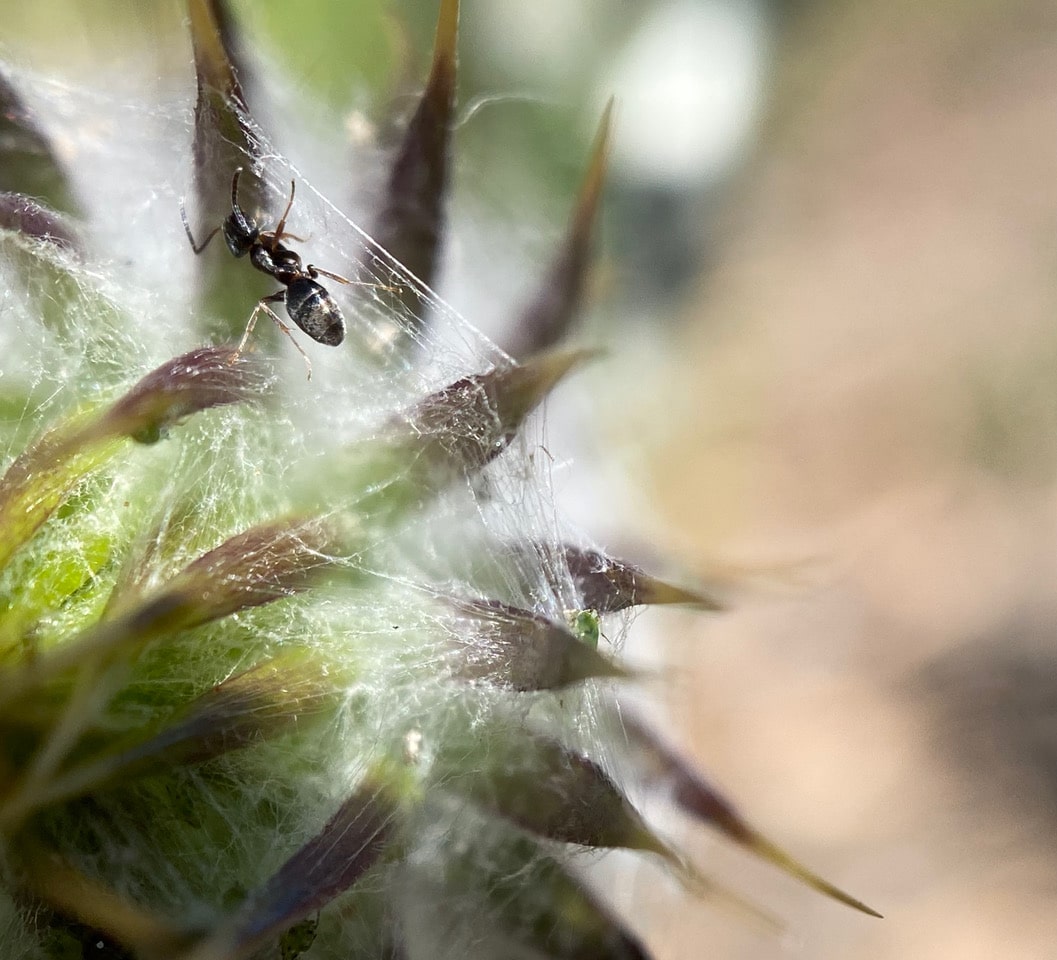
An Odorous House Ant is crawling on the webbing of an immature flowerhead of Cobweb Thistle. It is interesting that this smaller species is taking over the job of tending aphids from the American Winter Ants, which have probably gone underground/dormant now that the weather has turned warm.
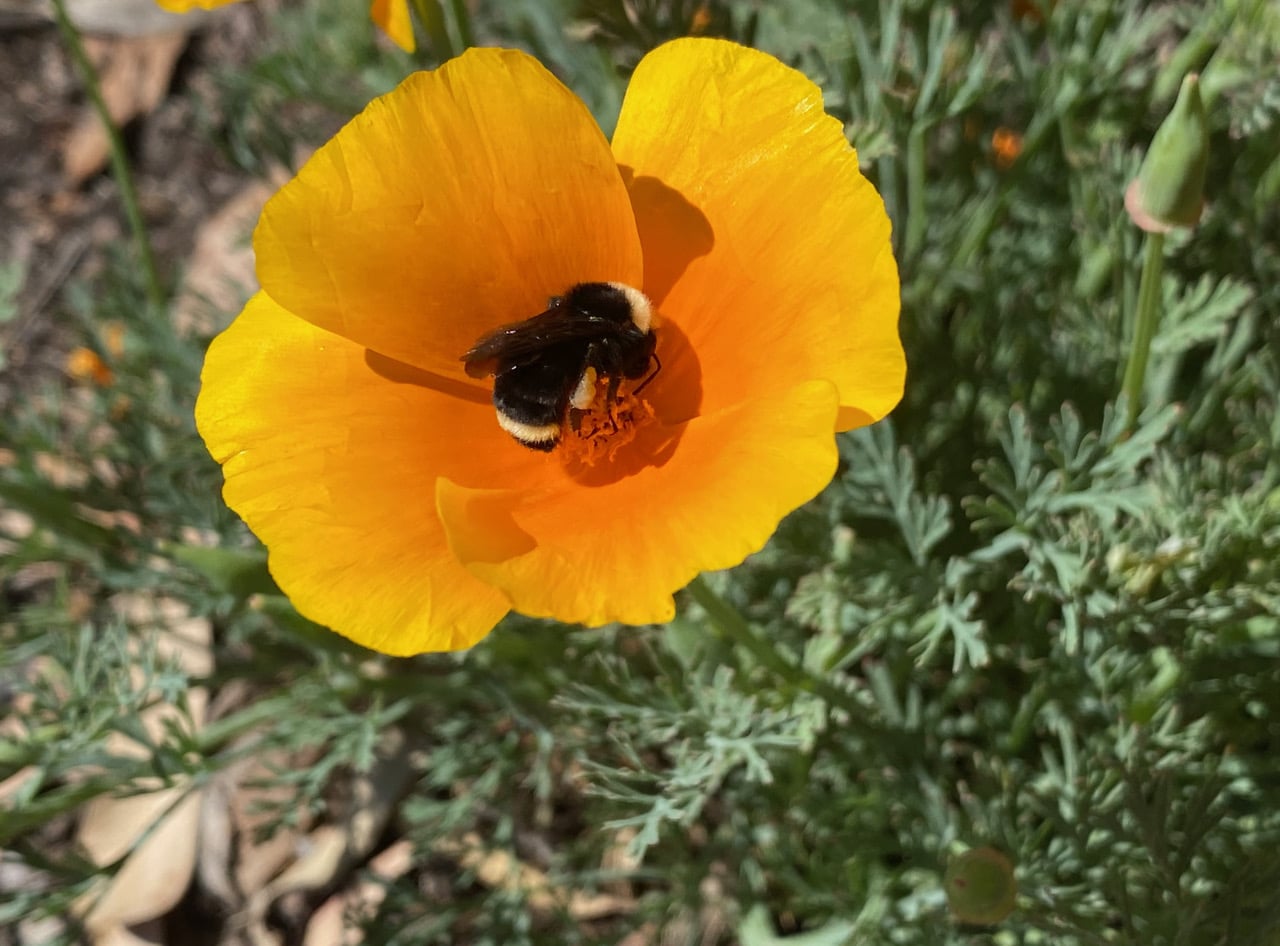 While many of the Calfornia Poppy, Eschscholzia californica have gone to seed, I’m glad there are still flowers to support the pollen needs of bumble bees this late in the season.
A Yellow-faced Bumble Bee, Bombus vosnesenskii is lifting off after foraging in a California Poppy.

Ooh! It’s that tiger-striped Flower Longhorn Beetle, Xestoleptura crassipes (family Cerambycidae, subfamily Lepturinae) again! This one is exploring the foliage of Coyote Brush, Baccharis pilularis.
The Flower Longhorn Beetles are usually found on flowers where they feed on pollen and nectar, and are considered pollinators. They have a particular affinity for the umbel flowers of the carrot family, Apiaceae.

Many of the flowerheads of California Everlasting, Pseudognaphalium californicum have opened up to release their plumed seeds to the wind. When the seeds and their attached plumes (actually the pappus) are gone, the spent flowerheads with their shiny phyllaries look like flowers.
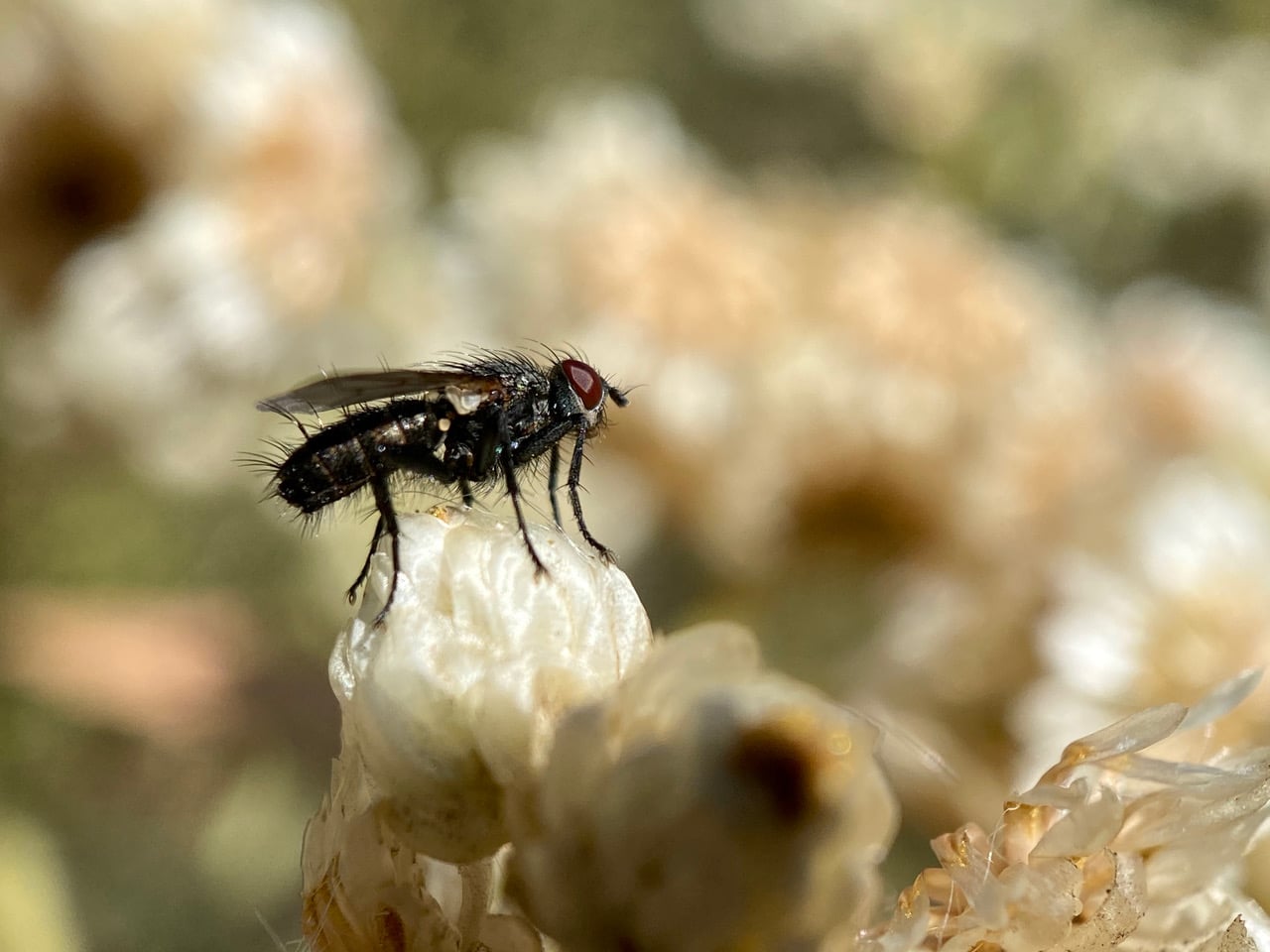
A small, dark bristly fly lands on a flowerhead of California everlasting.
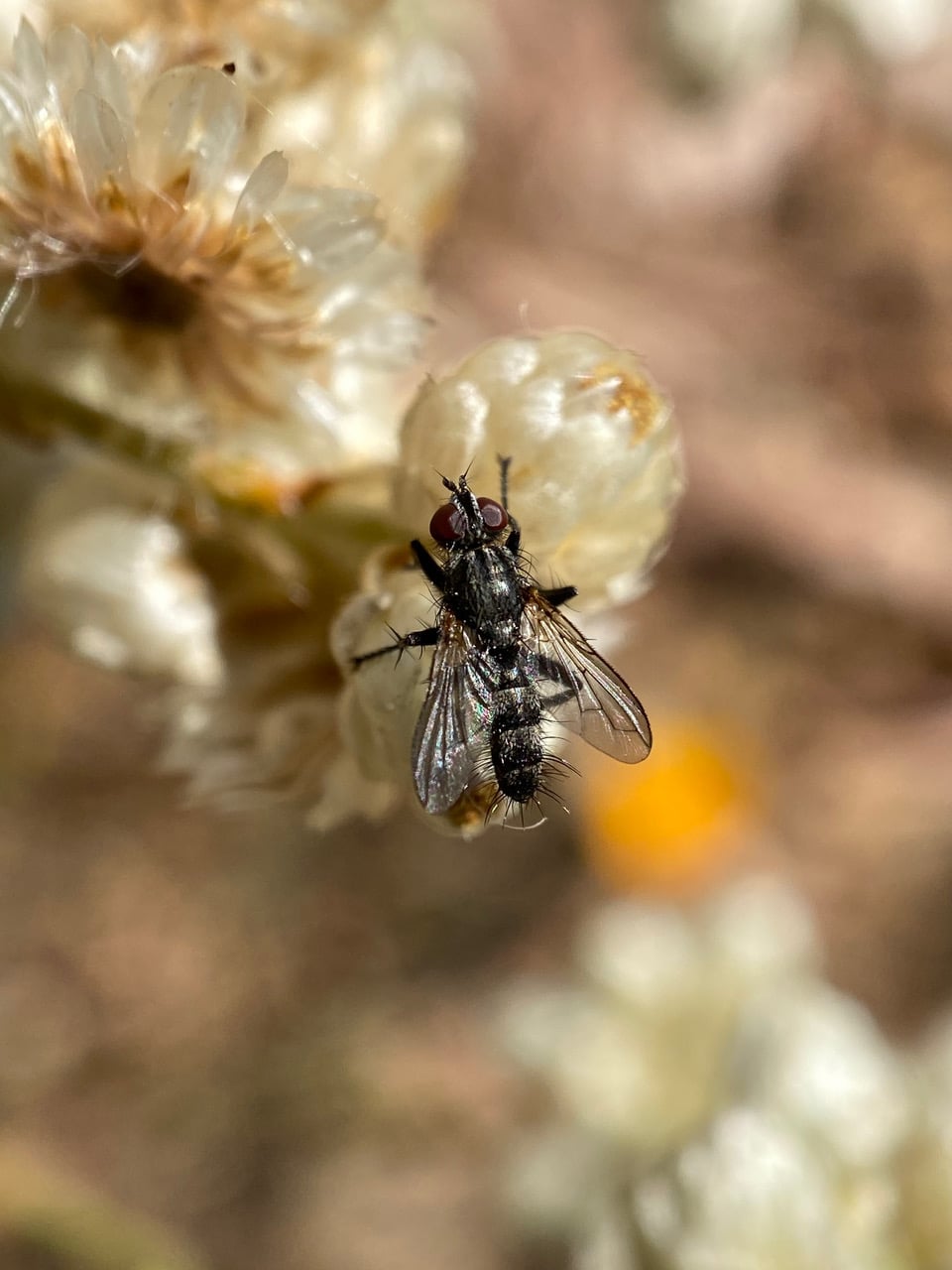
The dorsal patterns on the insect reveal it to be a Woodlouse Fly, Stevenia deceptoria (family Rhinophoridae).
These small, slender, black, bristly flies are somewhat related to the Tachinidae. The larvae are mostly parasitoids of woodlice (pill bugs), beetles, spiders and other arthropods, and occasionally snails.
Native to Europe, Stevenia deceptoria is now widespread in the US. The flies are parasitoids of terrestrial woodlice (roly polies) of the order Isopoda (Oniscoidea).


I wonder who laid those honey-colored eggs on the underside of a leaf of Coast Tarweed, Madia sativa. Since the plant is habitat for several bugs (order Hemiptera), it’s probably one of them. Scentless Plant Bug (family Rhopalidae)?
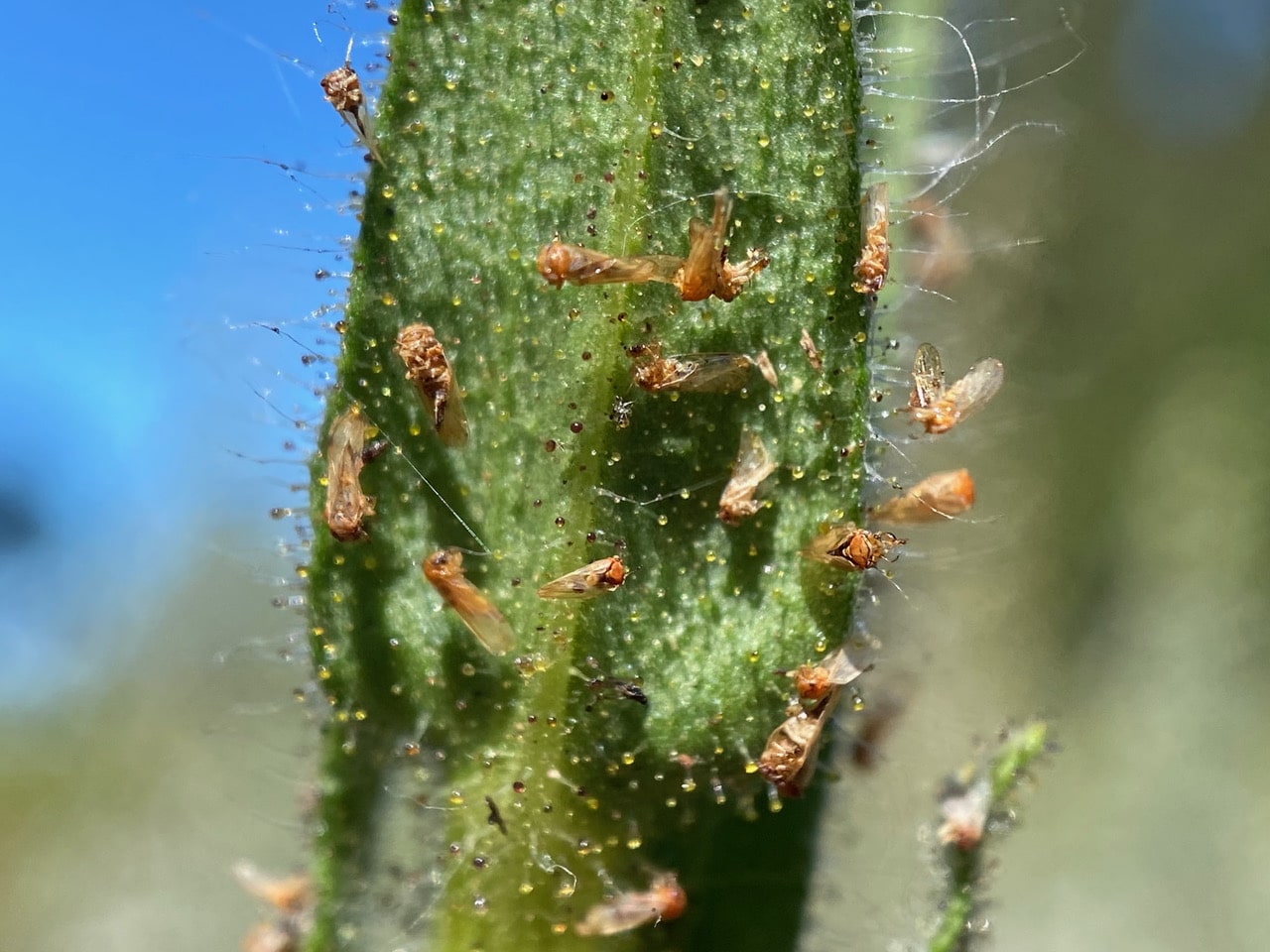
Those tiny bugs stuck to the sticky hairs of the Coast Tarweed are Eucalyptus Redgum Lerp Psyllids, Glycaspis brimblecombei (family Aphalaridae) that have fallen from the surrounding Eucalyptus trees. Up close, they look like miniature cicadas.
Native to Australia, the Psyllid nymphs and adults feed on sugar rich phloem of Eucalyptus. Honeydew is a sticky waste product excreted by the psyllids after digesting phloem. As nymphs feed they can use honeydew excretions to form a protective white cap called a “lerp”, the conspicuous white cone seen on eucalyptus leaves. Nymphs feed and grow to adulthood under this crystalline cap. Winged adults (4 mm) leave the protection of the lerp and fly to new plants to mate, feed, and lay eggs.
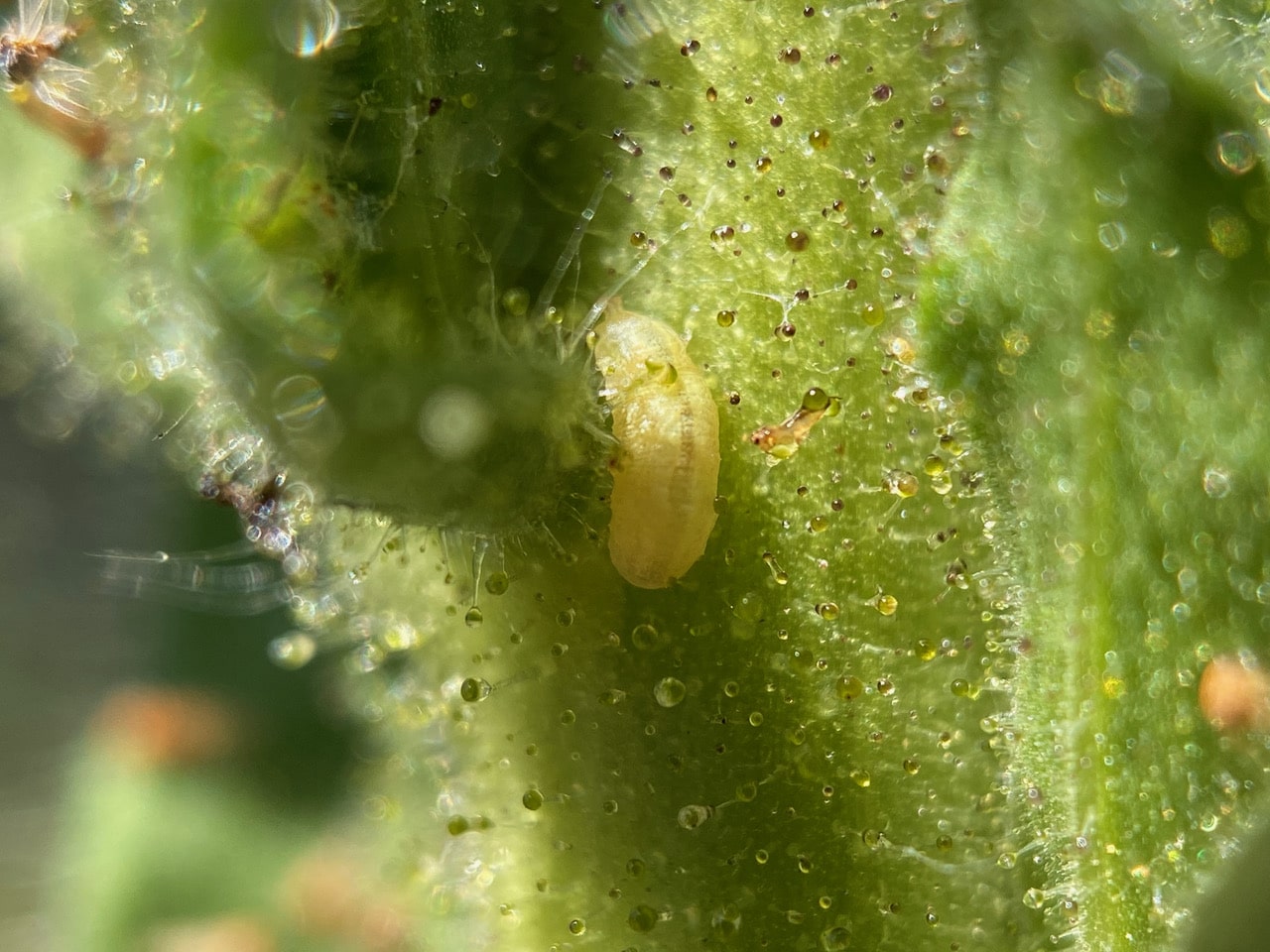
A tiny Hover Fly larva is resting on the back of a Coast Tarweed leaf.
The larvae of most Syrphid Fly species are slug like and taper towards the head. Coloration is commonly brown, greenish, pink, or whitish. The Syrphid larvae lack true legs, but the creviced, segmented body can give the appearance of having appendages. They are blind, relying on their sense of touch to navigate and to catch prey. They feed on aphids and other insects and move around on the plants in search of prey. The larvae complete their development in two to three weeks while consuming
up to 400 aphids each.
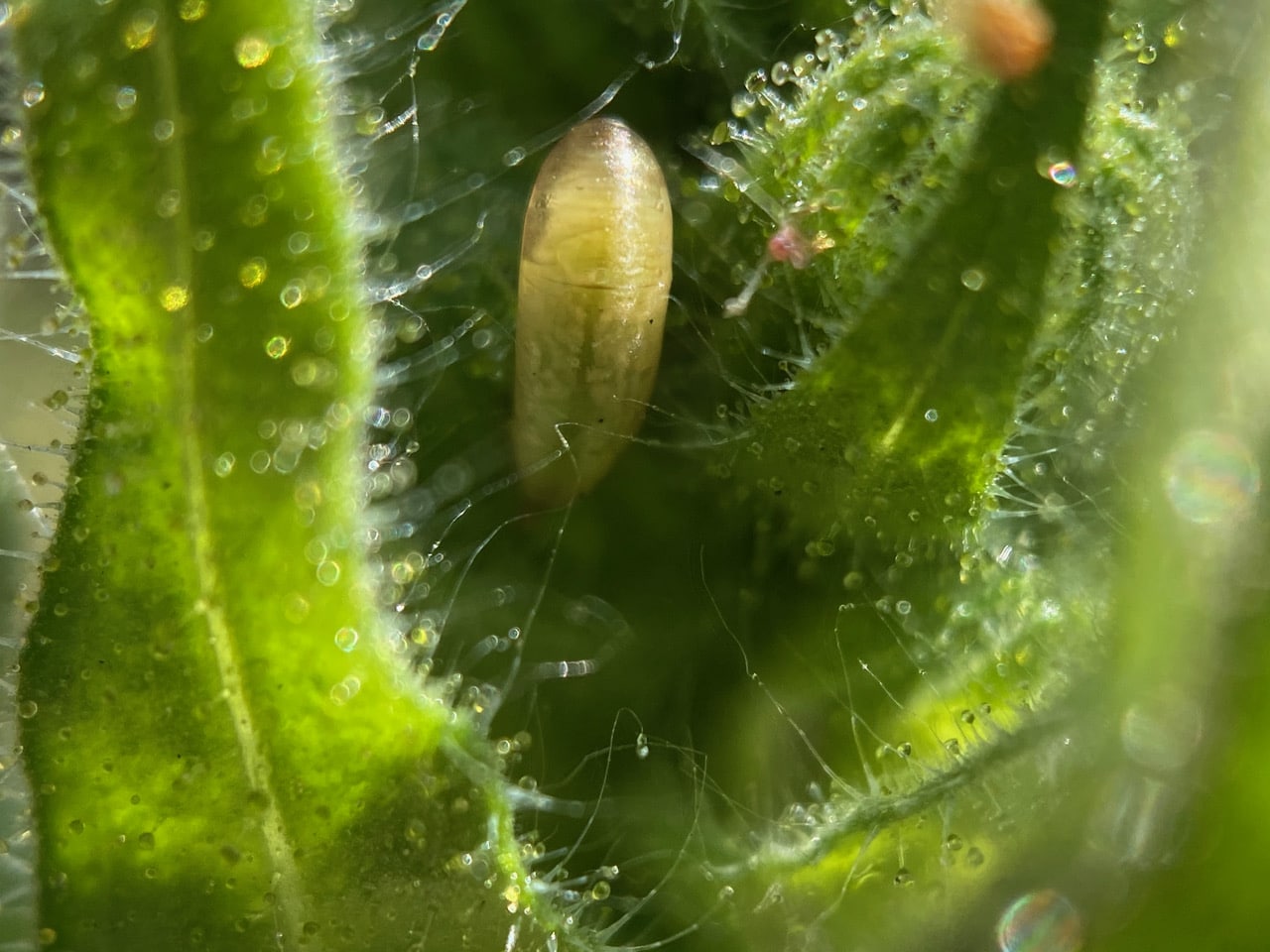
A Hover Fly pupa among the bracts surrounding the flowerheads of Coast Tarweed.

Hey, there’s another one of those tiger-striped Flower Longhorn Beetles, Xestoleptura crassipes (family Cerambycidae, subfamily Lepturinae). They are everywhere today!
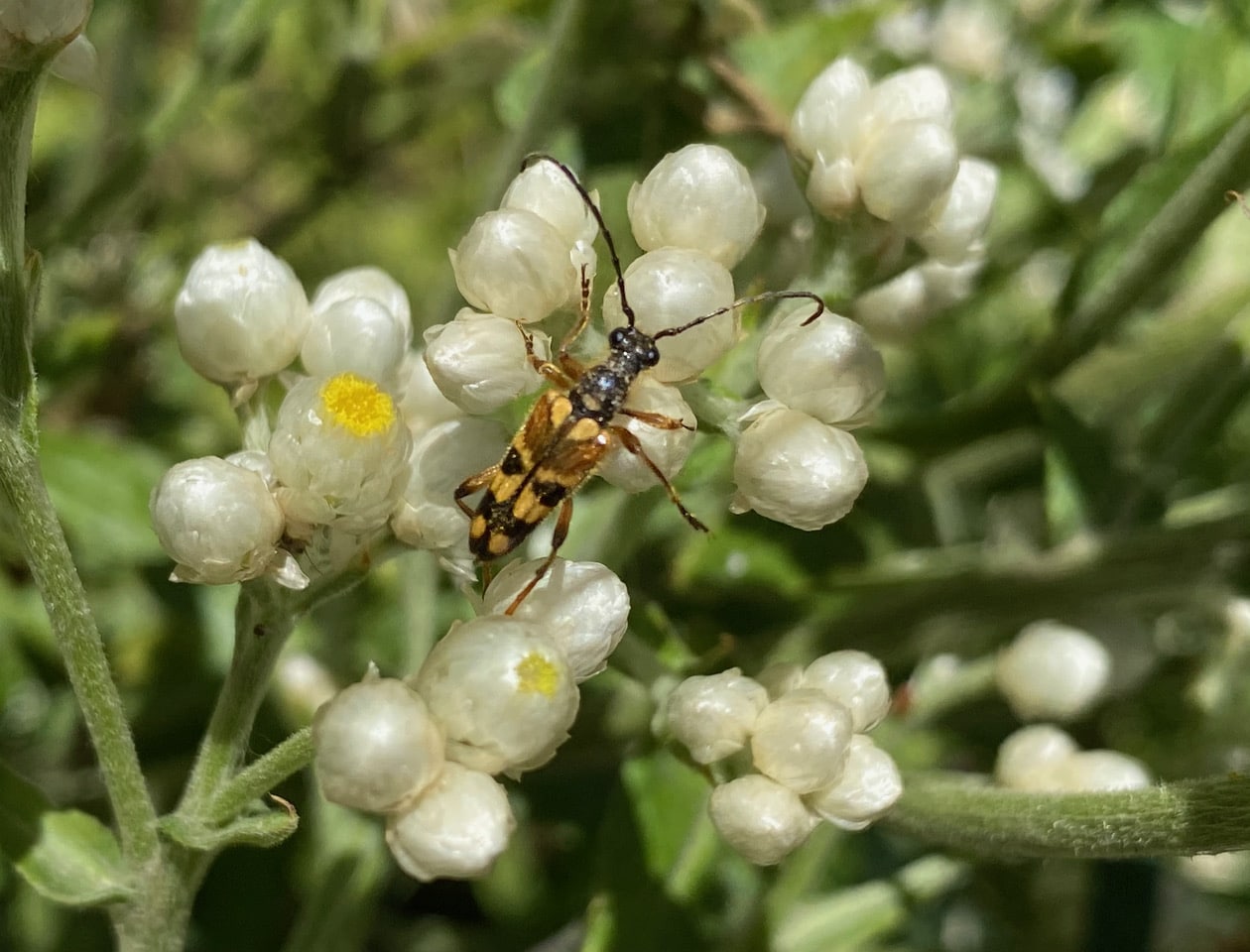
This one is exploring an inflorescence of California Everlasting.

The Flower Longhorn Beetle takes flight, giving us a brief glimpse of its wings. As the elytra are lifted, the membranous flight wings underneath are visible. The elytra are the tough fore wings of beetles that are not used in flight but are used to protect the more delicate hind wings. The elytra are often colored or decorated with pits and grooves.