

Pollinator Post 7/10/24 (2)

Leaving Alameda, I head for the cool sanctuary of the Reinhardt Redwood Regional Park.
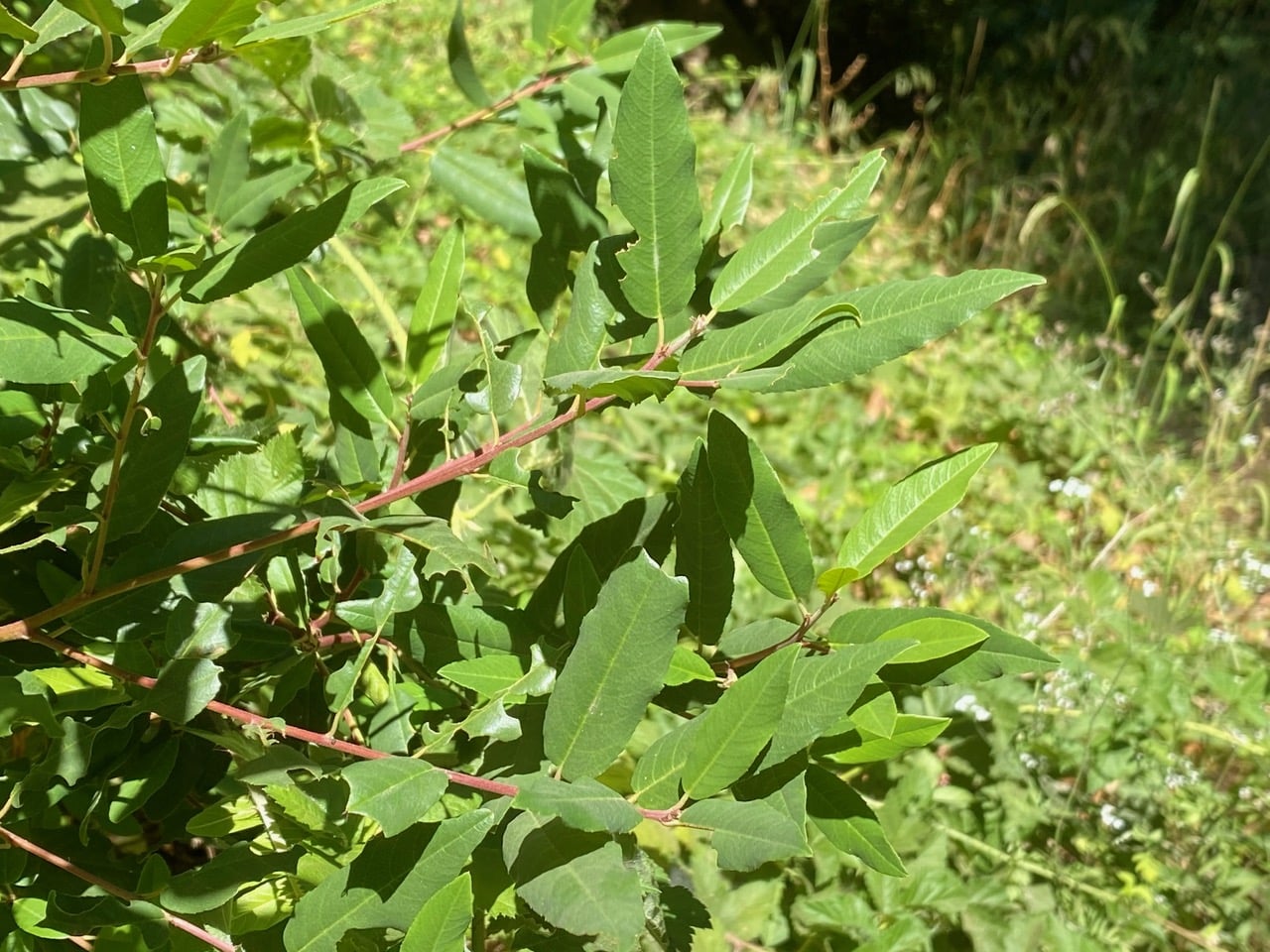
To my disappointment, neither of the two Pale Swallowtail caterpillars are on their Coffeeberry today. There are so many wasps out hunting caterpillars, I know that their chances of surviving predation are slim.
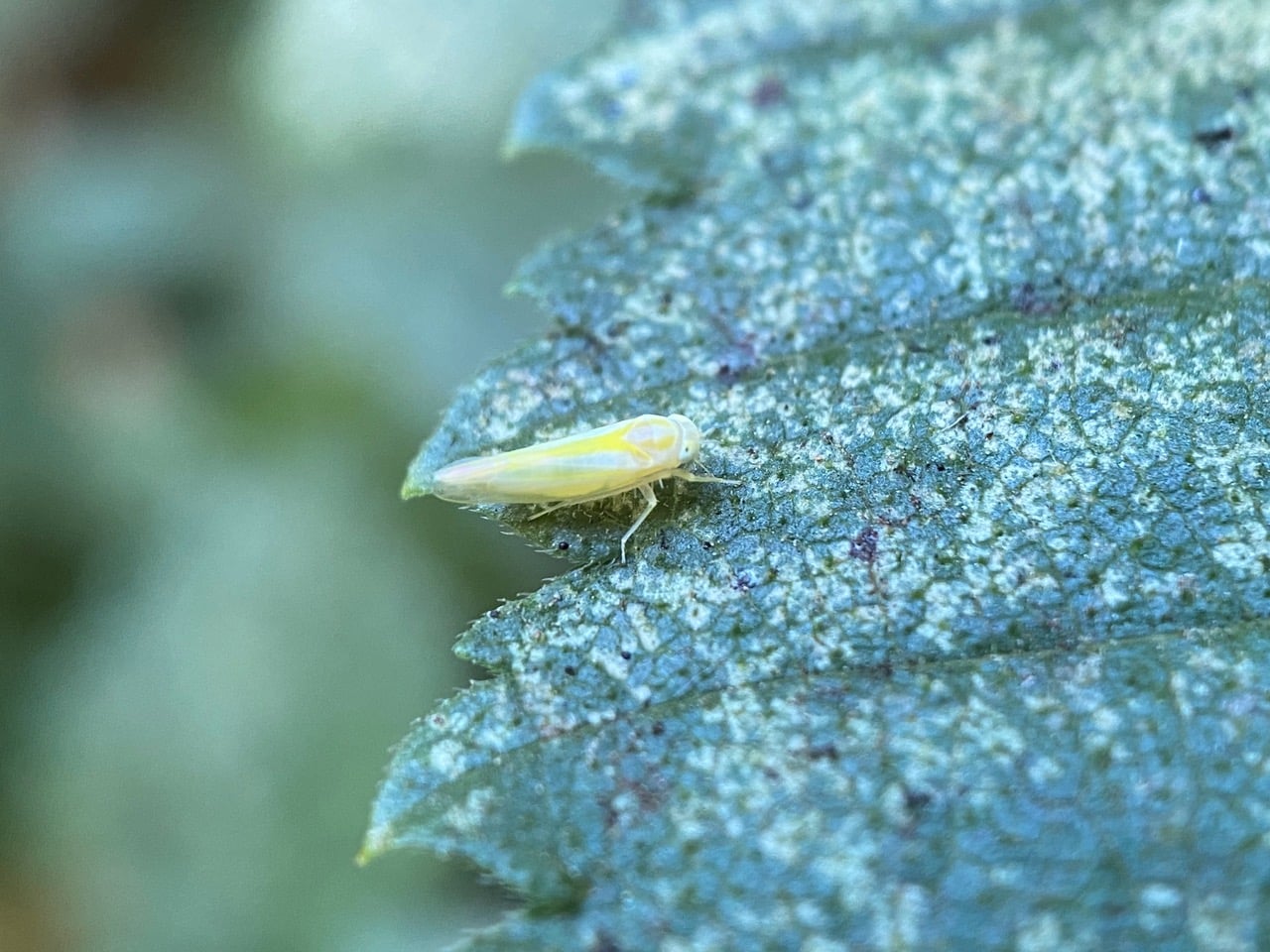
Passing the blighted young elm in the shade, I search for those tiny creatures again. Here’s one of those translucent Leafhoppers.
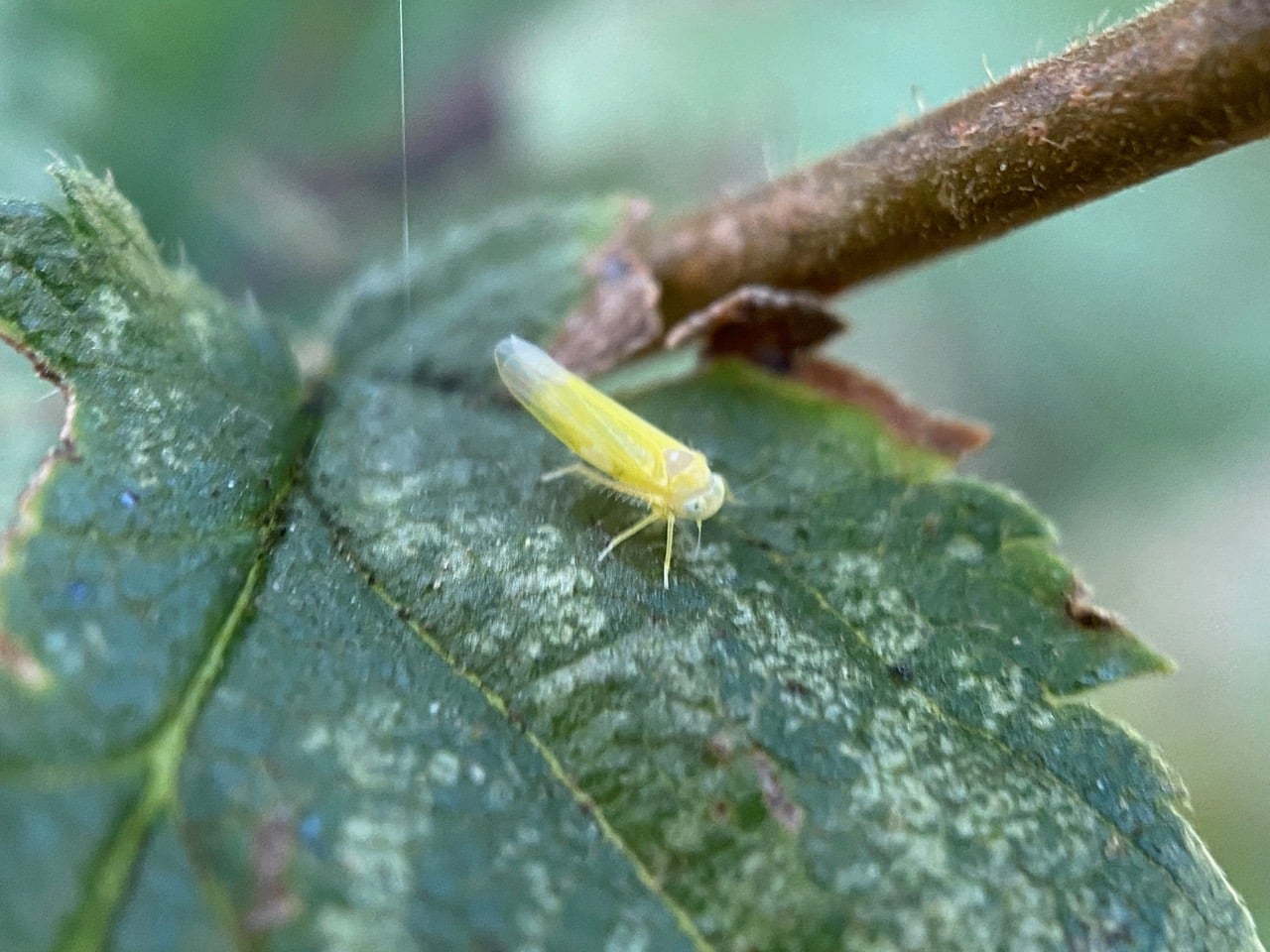
Leafhopper is the common name given to true bugs in the family Cicadellidae. The bugs are plant feeders that suck plant sap from grass, shrubs, or trees. Their hind legs are modified for jumping, and are covered with hairs that facilitate the spreading of a secretion over their bodies that act as a water repellent and carrier of pheromones. They undergo partial metamorphosis, and have various host associations, varying from very generalized to very specific.
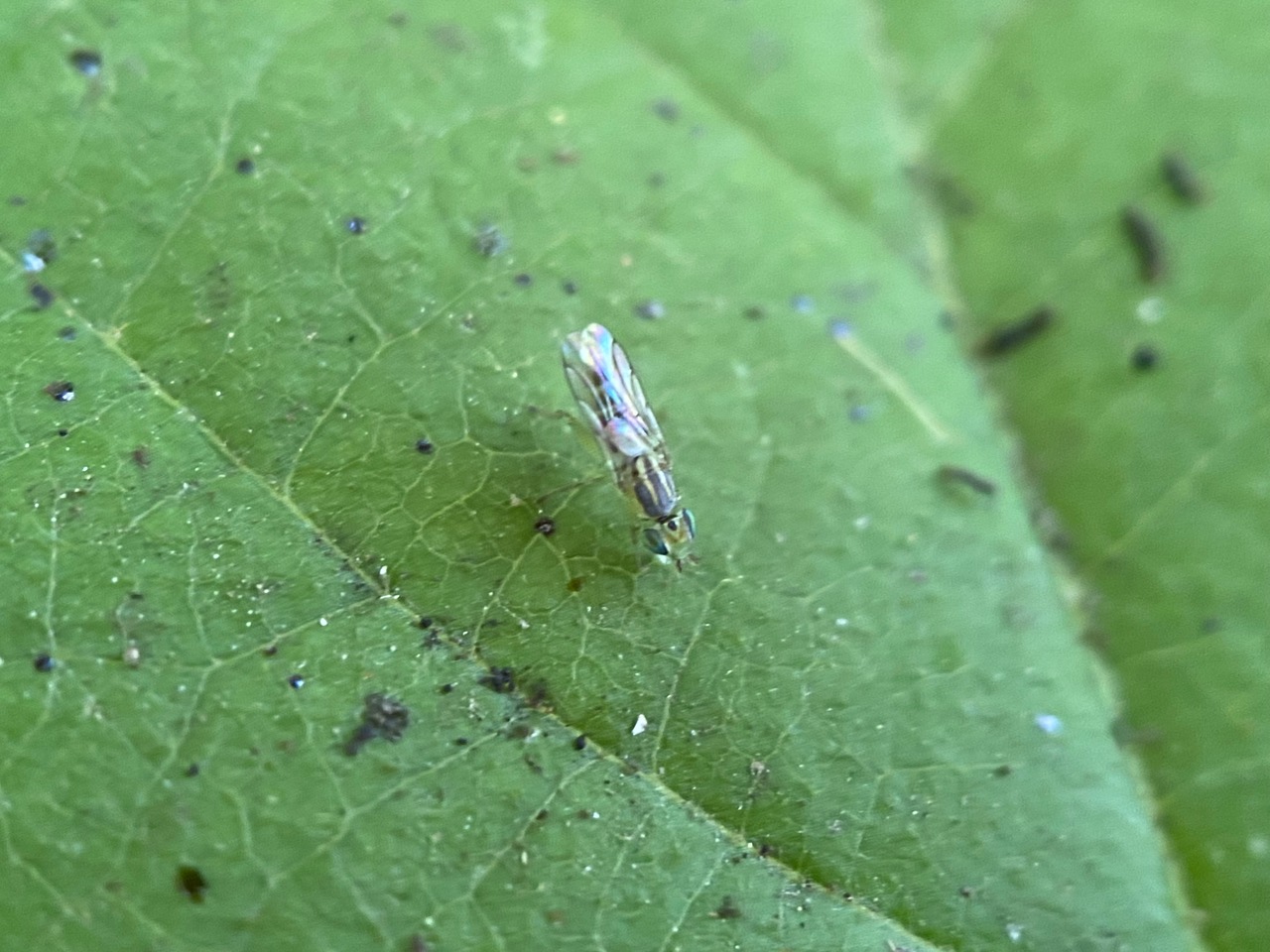
Even smaller and harder to photograph is this tiny fly, less than 2 mm, and so translucent and shiny it appears to be made of glass. iNaturalist has identified it as a Grass Fly, Meromyza sp. (family Chloropidae, subfamily Chloropinae).
Chloropidae are minute to small flies, usually 1-4 mm. The thorax often has a pattern of three to five longitudinal stripes against a light-colored background. The flies appear shiny due to the virtual absence of any hairs. The majority of the larvae are phytophagous, mainly on grasses.
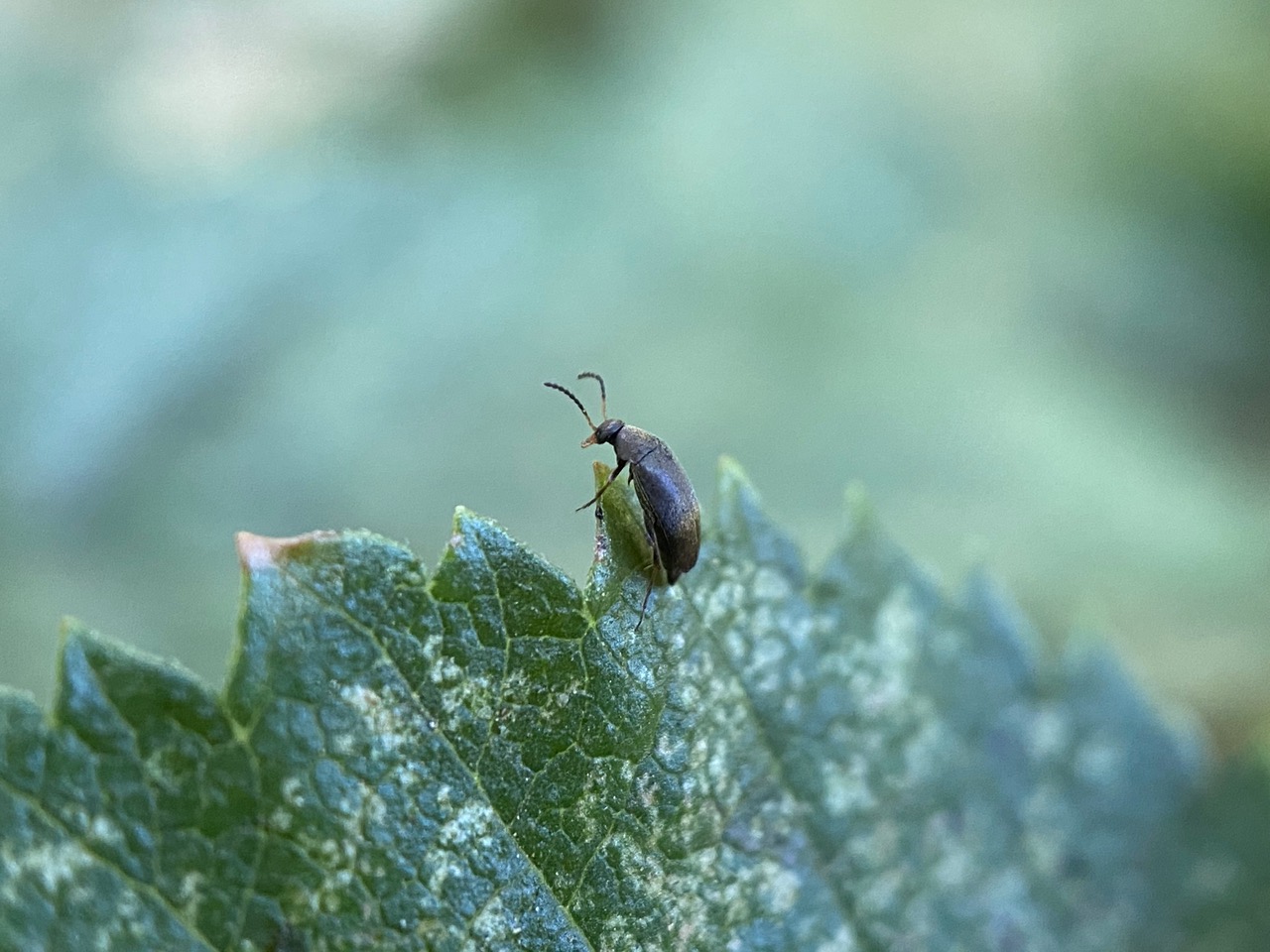
A tiny beetle is perched on the edge of an elm leaf. It is one of the smallest beetles I have ever seen, less than 2 mm. iNaturalist has suggested Ozagnathus cornutus (family Ptinidae).
The species is native to North America. The beetle is saproxylophagous, meaning that it feeds on dead wood, including galls and the feces of other wood-eating insects. They are also known to feed on dried fruits and vegetables. Adult Ozognathus cornutus are dark brown or black and 1.5-2.8 mm in length. They lay their eggs in galls induced by other species of insects.

A small Bristle Fly, Strongygaster sp. (family Tachinidae) lands on a twig.
The family Tachinidae is by far the largest and most important group of parasitoid flies. All species are parasitic in the larval stage. Most adults have distinct abdominal bristles, hence the common name. Adults feed on liquids such as nectar and honeydew. They can be found resting on foliage, feeding at flowers or searching for hosts.
Most tachinids attack caterpillars, adult and larval beetles, true bugs, grasshoppers, and other insects. Females lay eggs in or on the host. Tachinid larvae live as internal parasites, consuming their hosts’ less essential tissues first and not finishing off the vital organs until they are ready to pupate. The larvae leave the host and pupate on the ground. Tachinids are very important in natural control of many pests, and many have been used in biological control programs.
Members of genus Strongygaster, about 4-5 mm in size, are widespread in North America. They are known to parasitize various beetles (Coccinellidae, Chrysomelidae, Curculionidae, Tenebrionidae) and Lepidoptera.
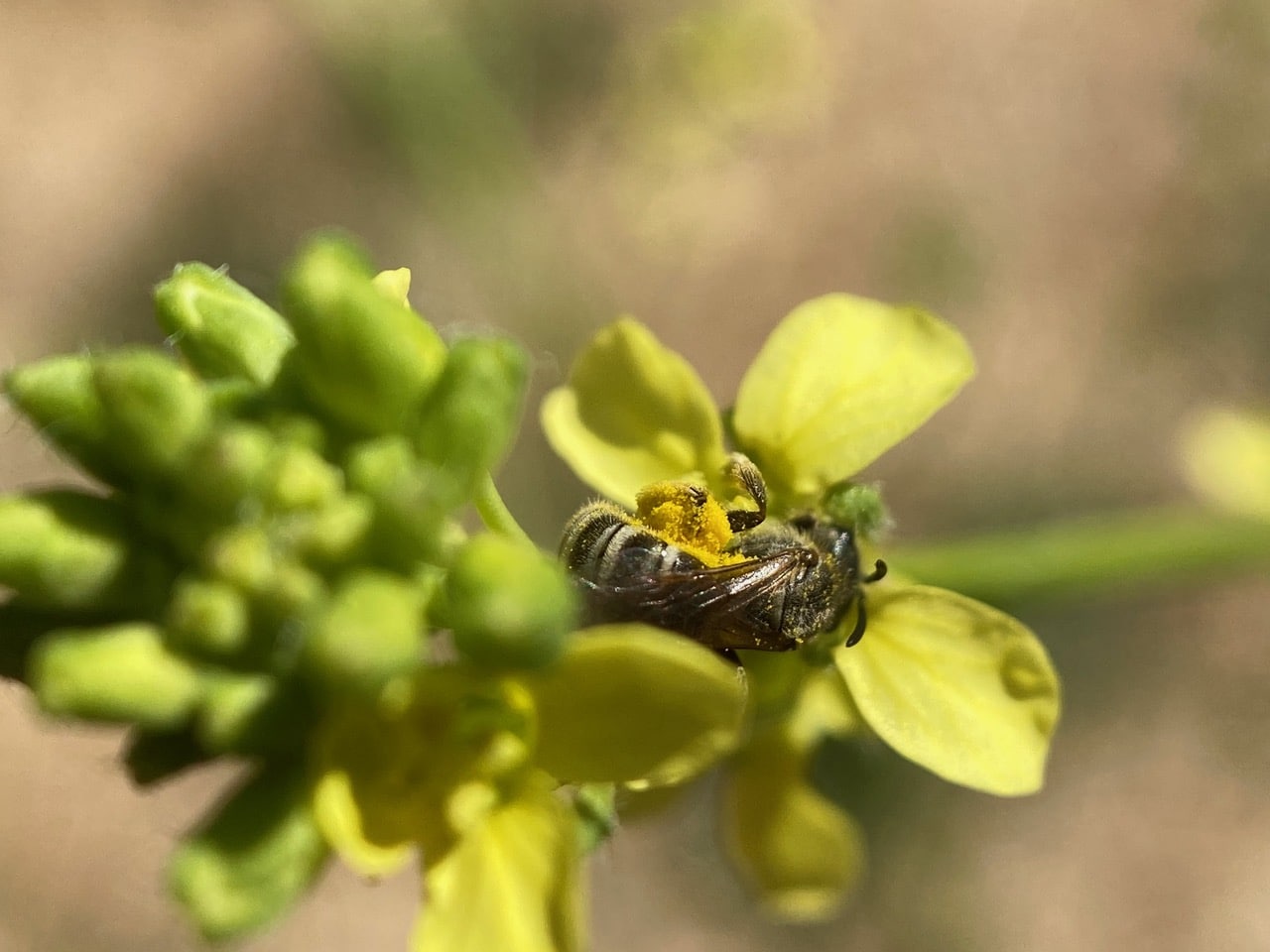
A Sweat Bee, Halictus sp. (family Halictidae) is foraging on the flowers of Wild Mustard.
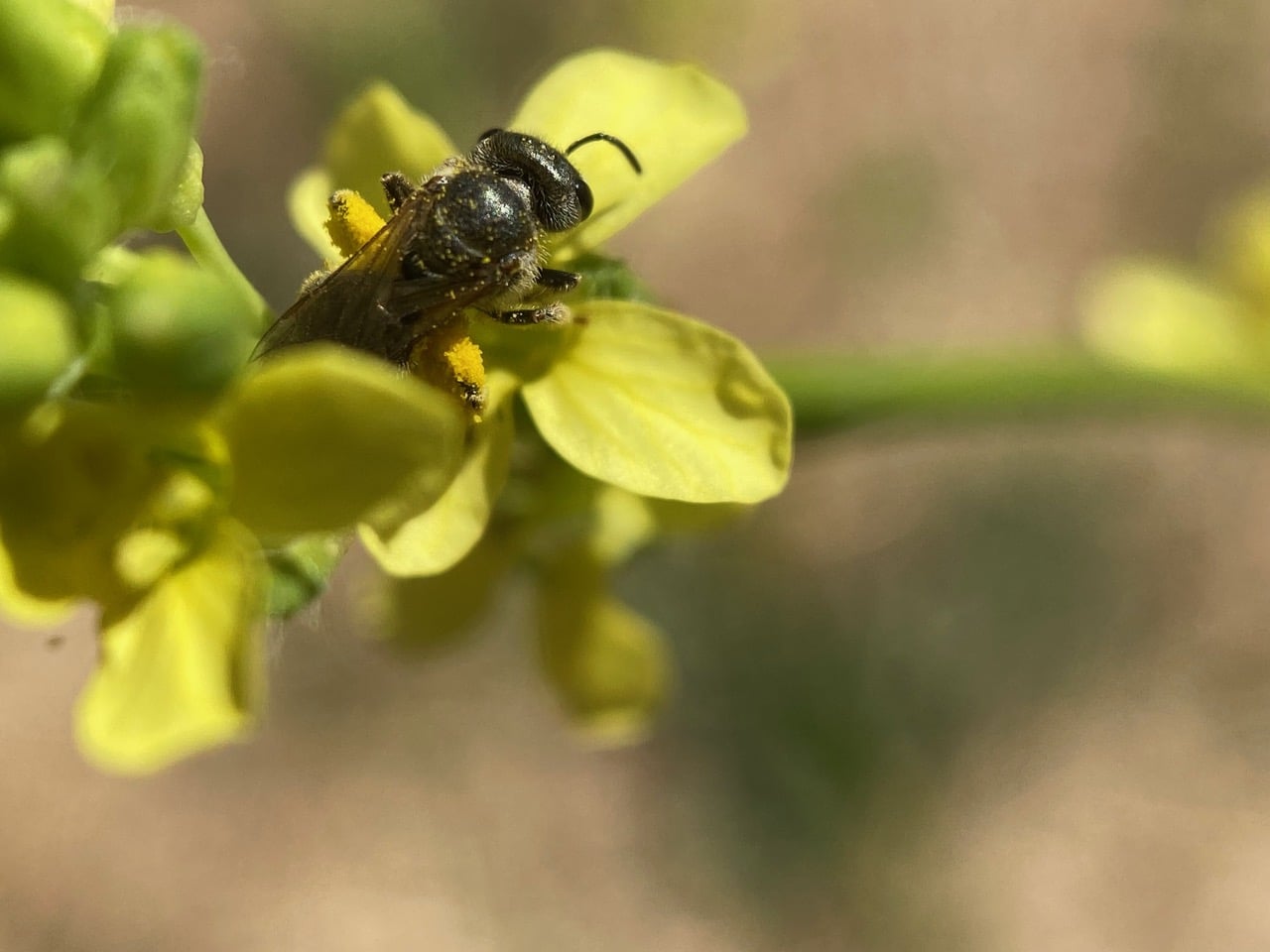
As few natives are blooming in the park at the moment, most of the bees and other insects have turned to non-native flowers to meet their needs.
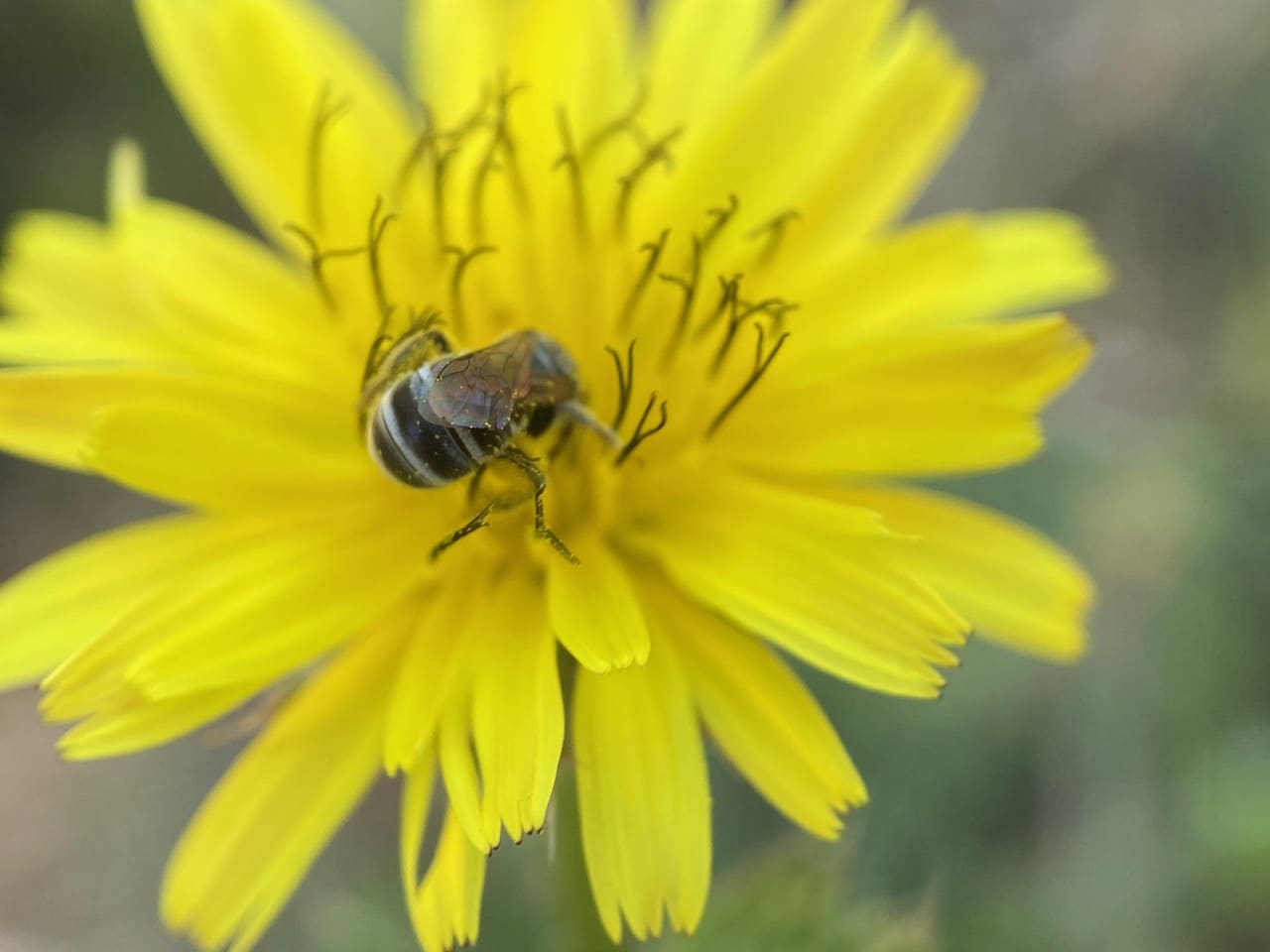
A Sweat Bee, Halictus sp. (family Halictidae) is foraging on a flowerhead of Bristly Oxtongue, Picris echioides, another non-native species.
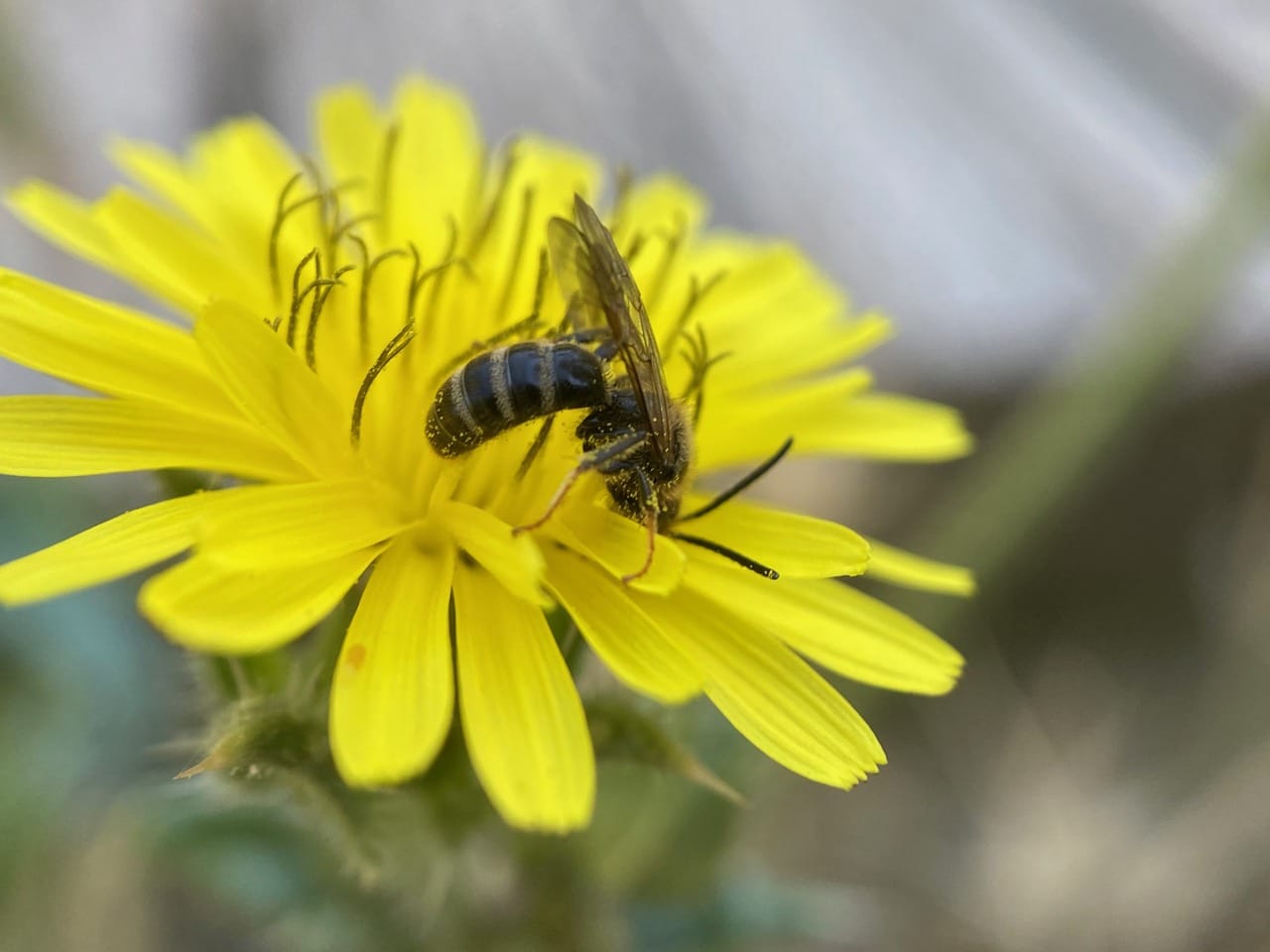
A male Sweat Bee, Lasioglossum sp. (family Halictidae) is taking nectar from a flowerhead of Bristly Oxtongue. Note his long antennae and lack of scopae on the hind legs.

Although male bees do not intentionally collect pollen, their hairs invariably attract pollen while they forage, making them good pollinators nonetheless.
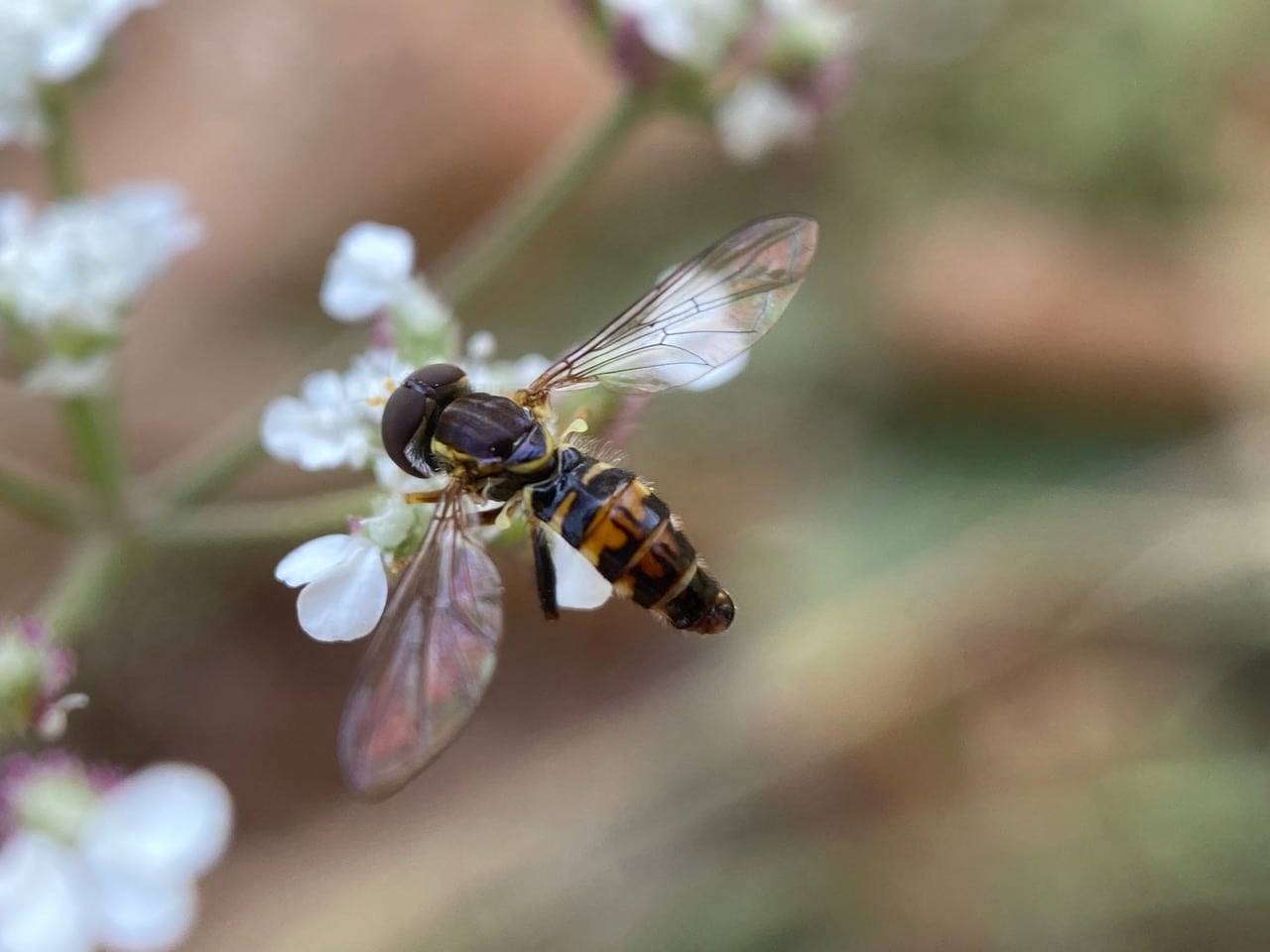
A male Western Calligrapher, Toxomerus occidentalis (family Syrphidae) is foraging on a flower umbel of the Common Hedge Parsley, Torilis arvensis. His abdomen is much narrower than the female’s, and lacks the beautiful clear pattern. Adults of the species visit flowers for nectar and pollen. Larvae feed on aphids and other soft-bodied insects.