

Pollinator Post 7/10/23 (3)
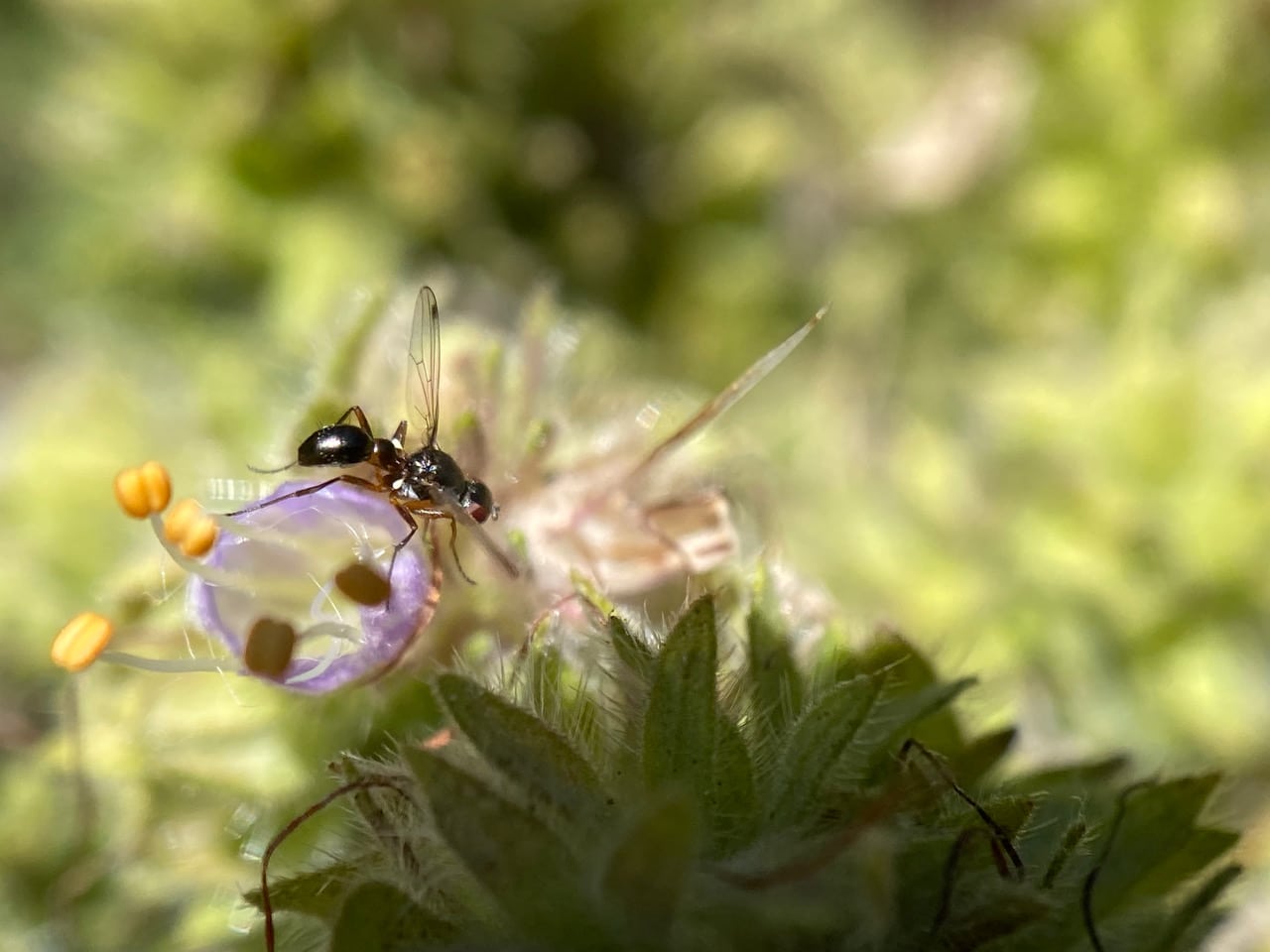
I pause at the California Phacelia that Spidey, the Red-backed Jumping Spider used to hunt on. Sadly she has been absent for a while now, but her hunting pad has taken on new life. Few of Spidey’s silk lines are left on the pad. Did they disintegrate/decompose on their own? Well, there are scavengers running around on the pad – Black Scavenger Flies and Odorous House Ants. Nature’s undertakers and clean-up crew.

The ant-sized Black Scavenger Fly or Ensign Fly is in the family Sepsidae. Over 300 species are described worldwide. They are usually found around dung or decaying plant and animal material. Many species resemble winged ants, having a “waist” and glossy black body. The head is rounded. Many Sepsidae have a curious wing-waving habit made more apparent by dark patches at the wing tip. Adult flies are found mostly on mammal excrement, where eggs are laid and larvae develop, and on nearby vegetation, carrion, fermenting tree sap, and shrubs and herbs. Revolting as their dietary habits might seem, these flies serve a vital function in the ecosystem as decomposers/recyclers of organic matter.

The Black Scavenger Flies are fast, efficient and thorough. They get into every nook and cranny, feeding on everything.
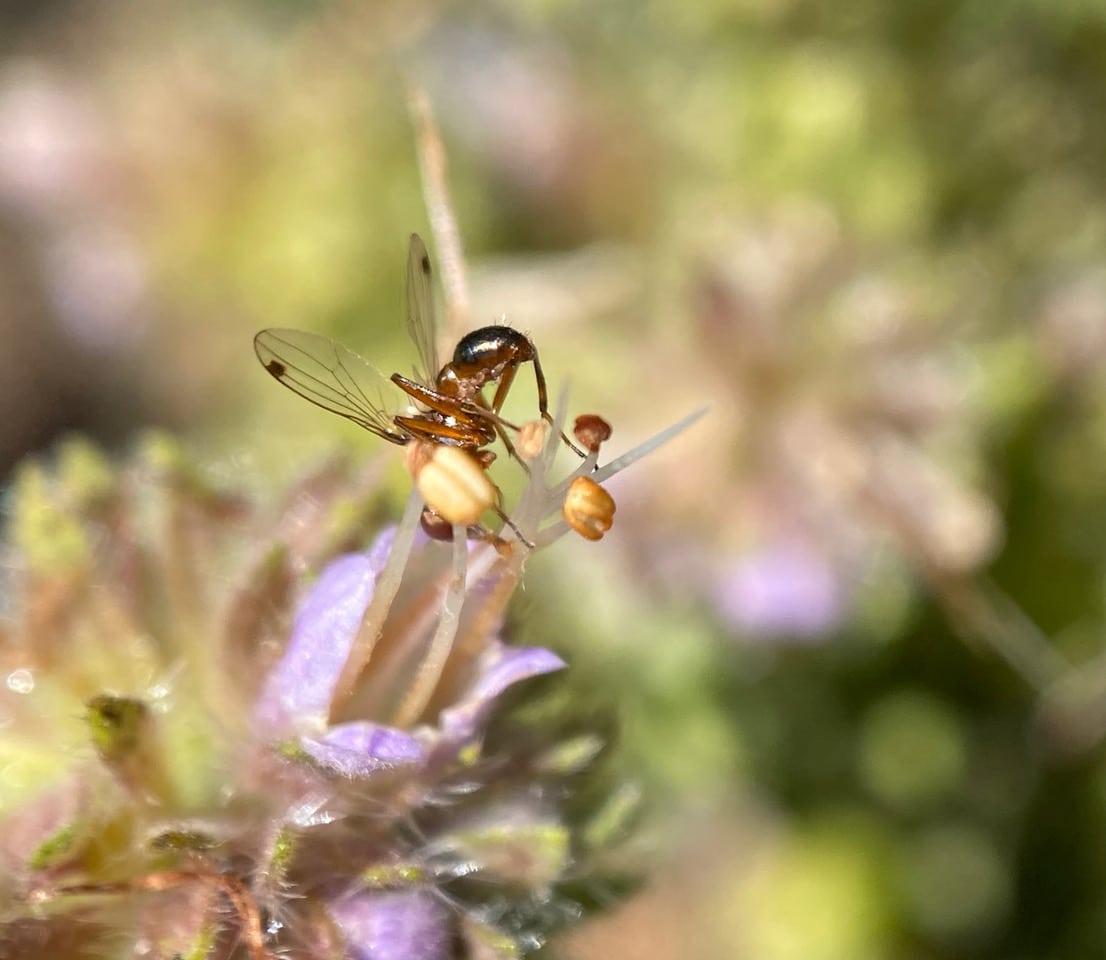


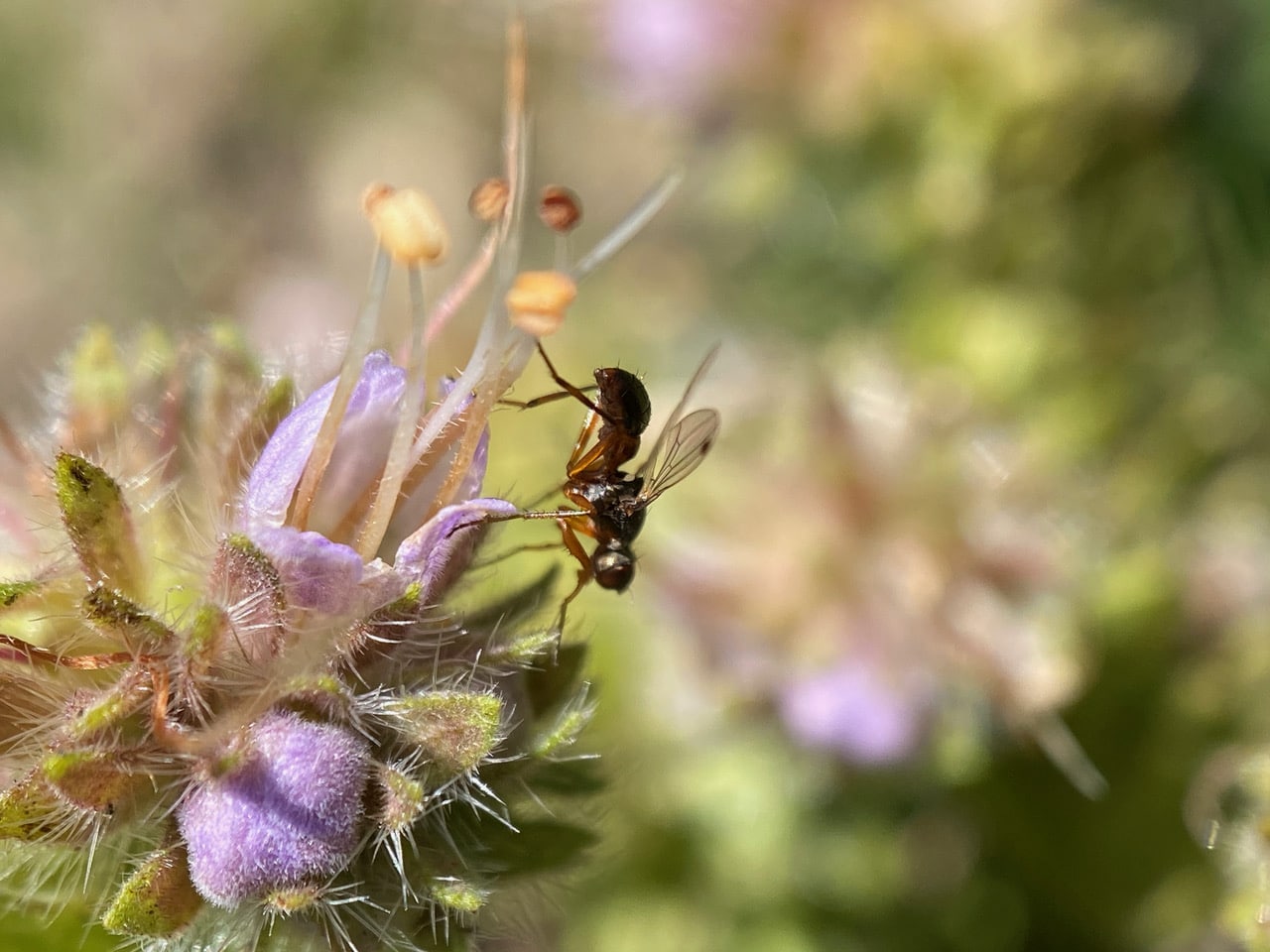
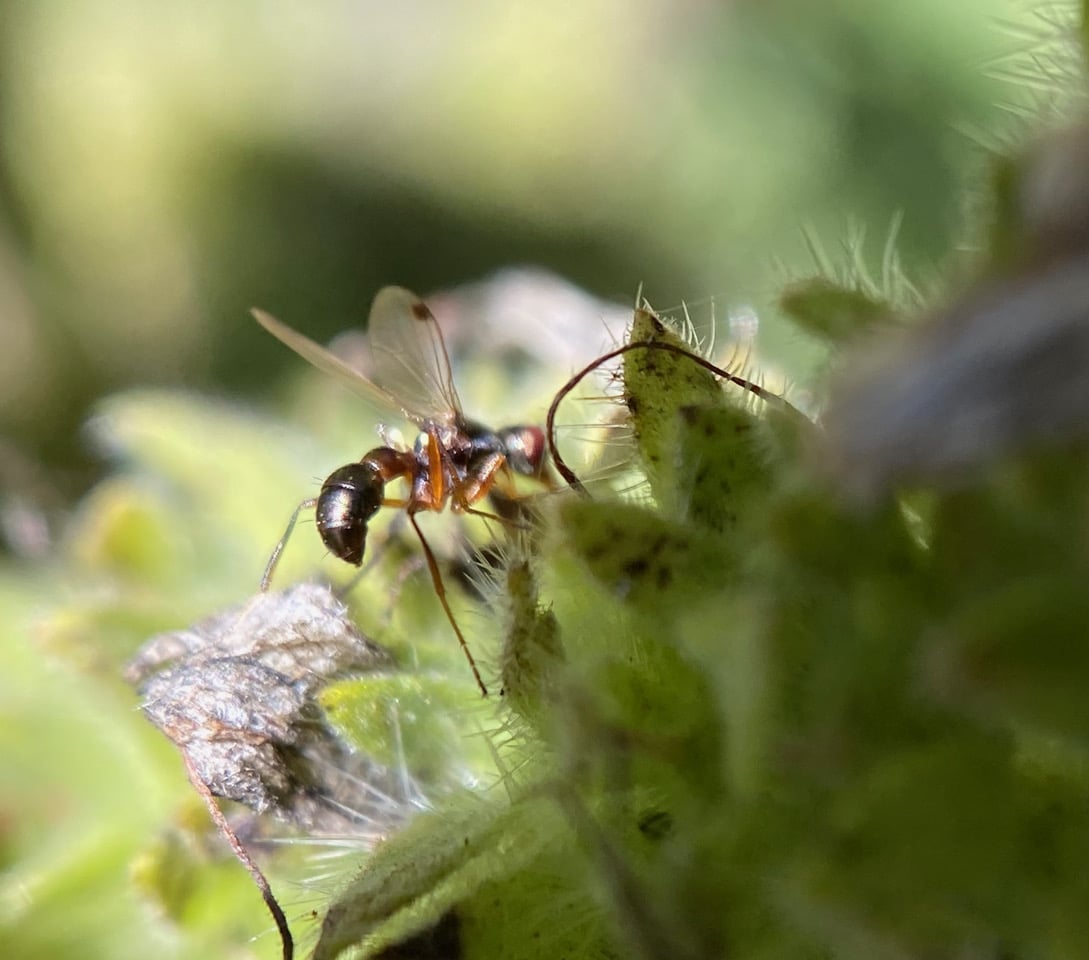

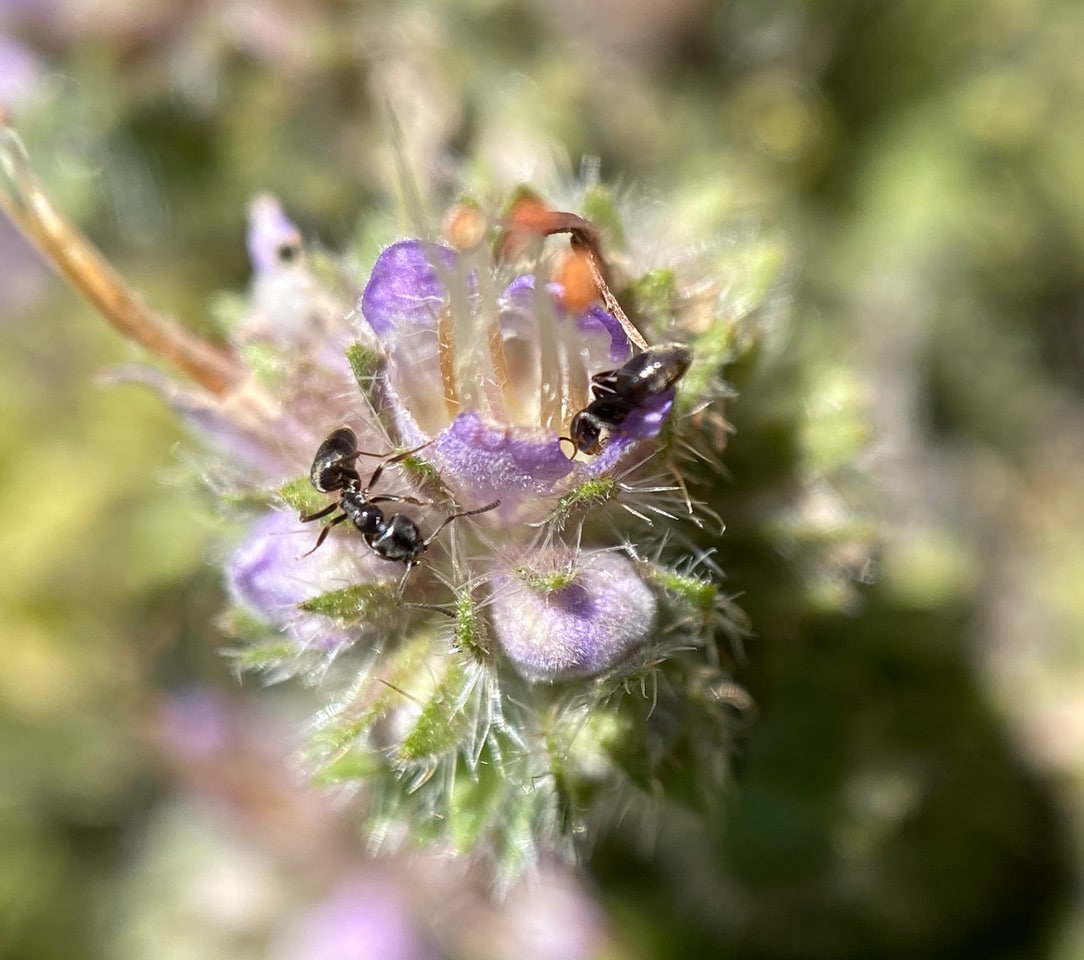
An Odorous House Ant is foraging on Spidey’s California Phacelia.
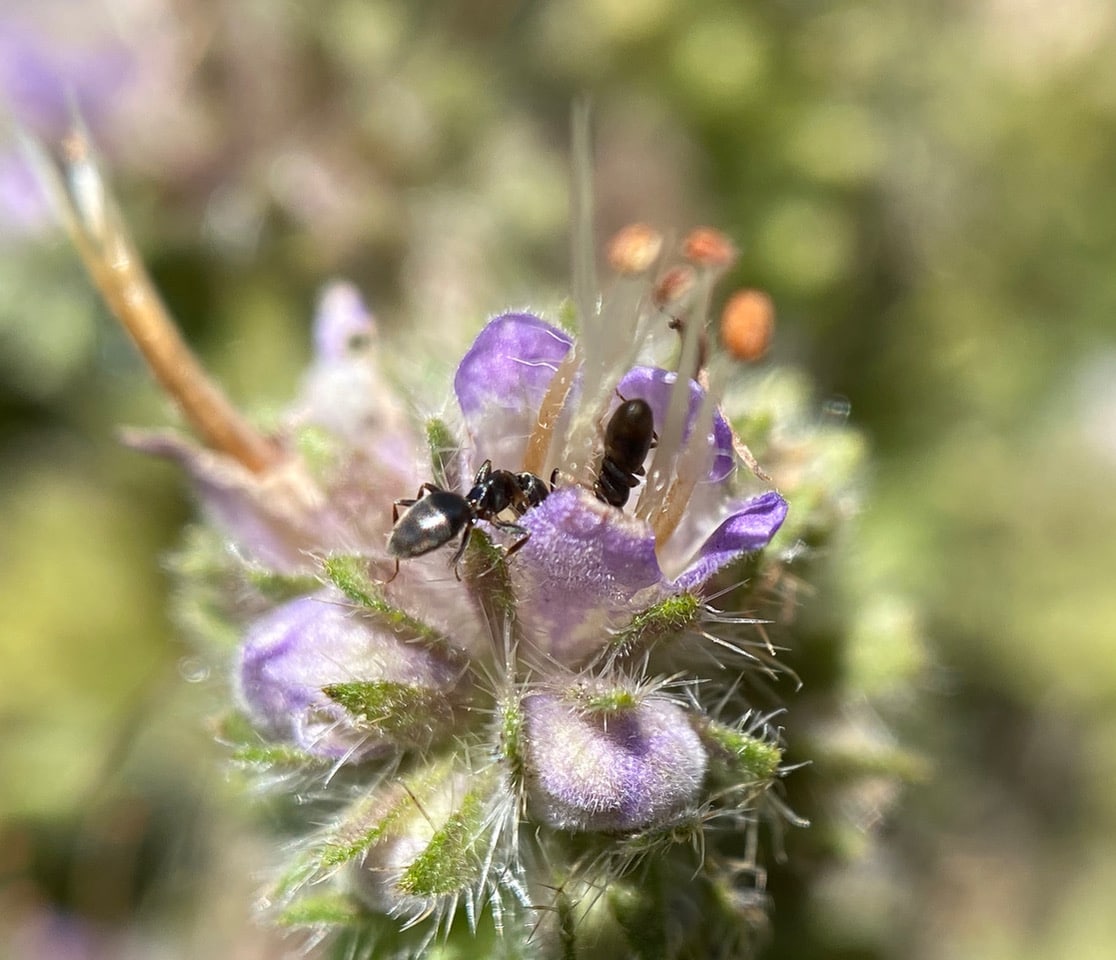
The Odorous House Ant, Tapinoma sessile (subfamily Dolichoderinae) is native to North America, ranging from southern Canada to northern Mexico. The species is found in a vast diversity of habitats, including within houses. The ants mainly feed on floral nectar and other sugary food. They also forage for honeydew produced by aphids and scale insects that they guard and tend.
Odorous House Ants are small ants, the workers measuring 2-3 mm. As in all members of the subfamily Dolichoderinae (odorous ants), this species does not possess a sting, instead relying on the chemical defense compounds produced from the anal gland. Such compounds are responsible for the smell given off by the ants when crushed or disturbed.
T. sessile colonies are polydomous (consist of multiple nests) and polygynous (contain multiple reproductive queens). The species practices seasonal polydomy – the colony overwinters in a single nest, and forms multiple nests during spring and summer when resources are more abundant and spread out.
The Odorous House Ants are rather docile, with little propensity for attack, preferring to use chemical secretions instead of biting. For this reason they are vulnerable to the invasion of the aggressive Argentine Ants, Linepithema humile.


A Red-shouldered Stink Bug, Thyanta custator (Pentatomidae) is perched on a fading inflorescence of California Everlasting, Pseudognaphalium californicum.
Pentatomidae is a family of insects belonging to the order Hemiptera or “true bugs”. As hemipterans, the pentatomids have piercing-sucking mouthparts, and most are phytophagous, including several species that are severe pests on agricultural crops.
All Pentatomids have 5-segmented antennae, and they generally have a large triangular scutellum in the center of the back. The body shape of adults is generally shield-shaped when viewed from above. The common name of Stink Bug refers to their ability to release a pungent defensive spray when threatened, disturbed, or crushed.
The Red-shouldered Stink Bug is a generalist feeder and is reported to be a minor pest on a variety of crops including beans, corn, peaches, and wheat.
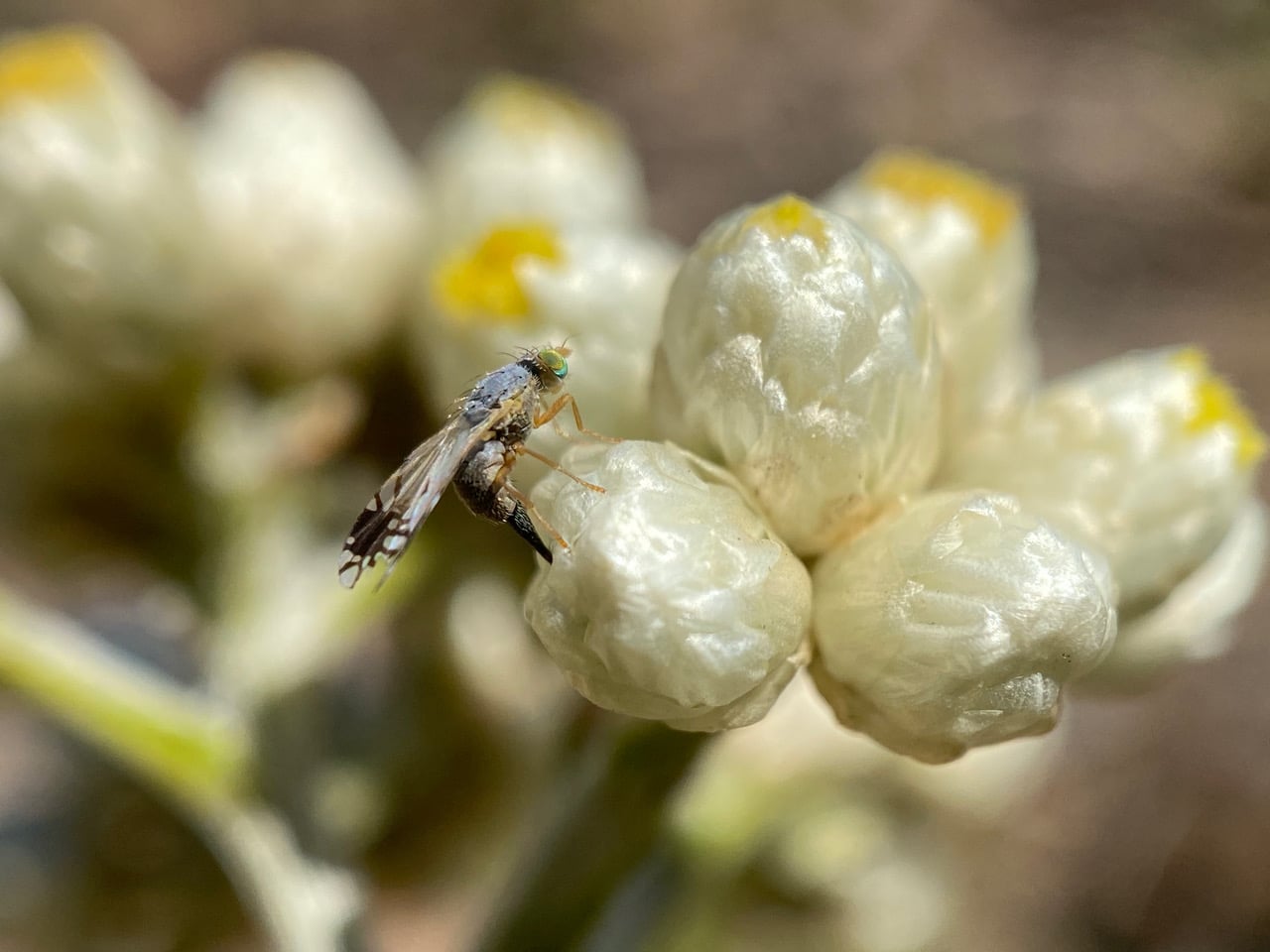
For a couple of weeks now, I have been seeing single female Fruit Flies, Trupanea sp. (family Tephritidae) linger on the immature flowerheads of California Everlasting, Pseudognaphalium californicum. I have wondered if they were there to lay their eggs. It is finally happening today! Female fruit flies are easily distinguished by the pointy oviscape at the tip of their abdomen. The oviscape is the basal part of the ovipositor, the non-retractile sheath that protects the ovipositor. It remains exposed when the ovipositor is withdrawn and not in action.

Have the female fruit flies been waiting around to be mated before laying their eggs, or were they waiting for the flowerheads to reach an appropriate stage of development?

This female Trupanea is slowly inserting her oviscape into the flowerhead between the papery phyllaries.
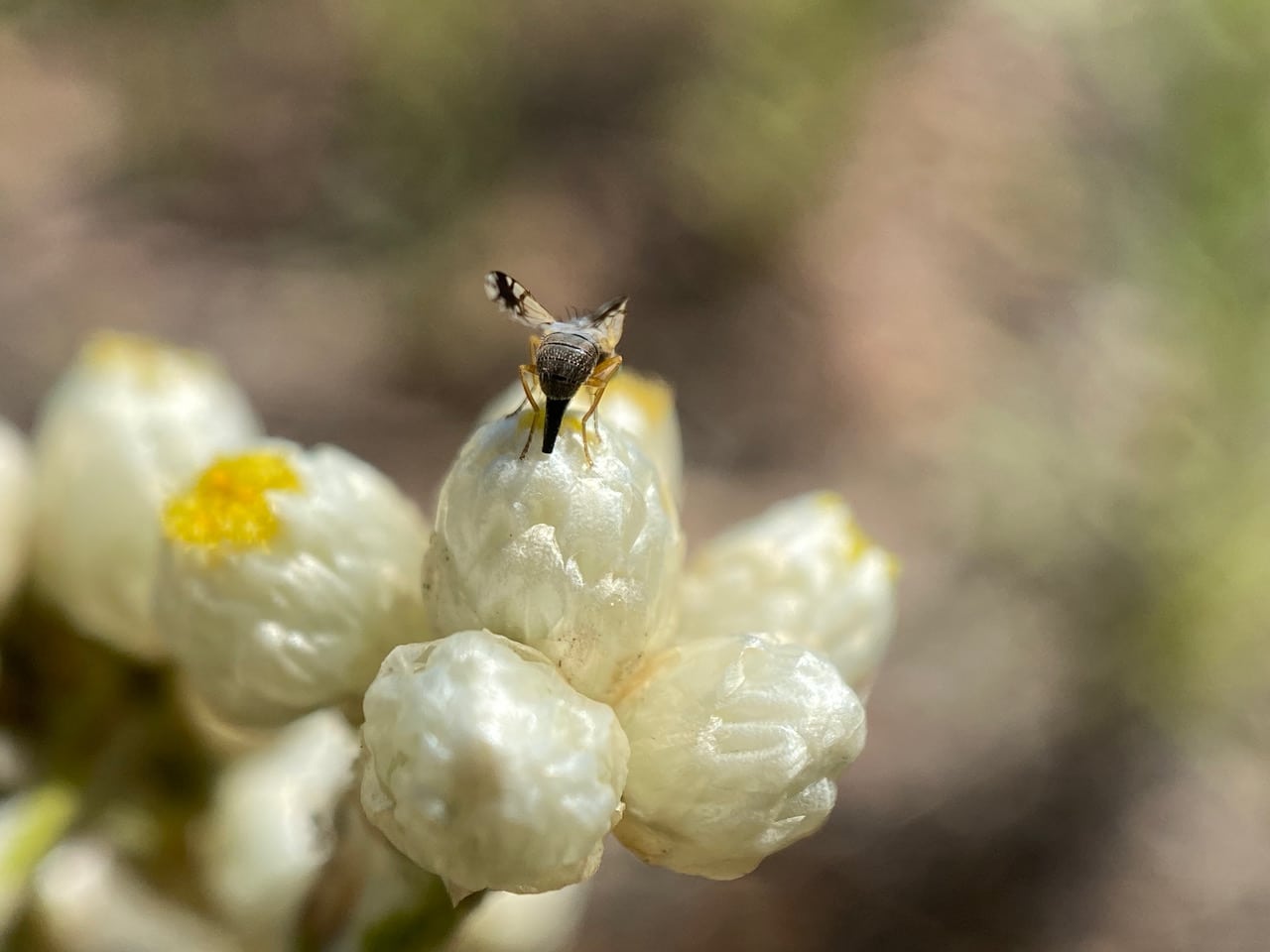
The job done, she moves on to the next flowerhead….

… and aims her oviscape vertically into the open flowerhead.
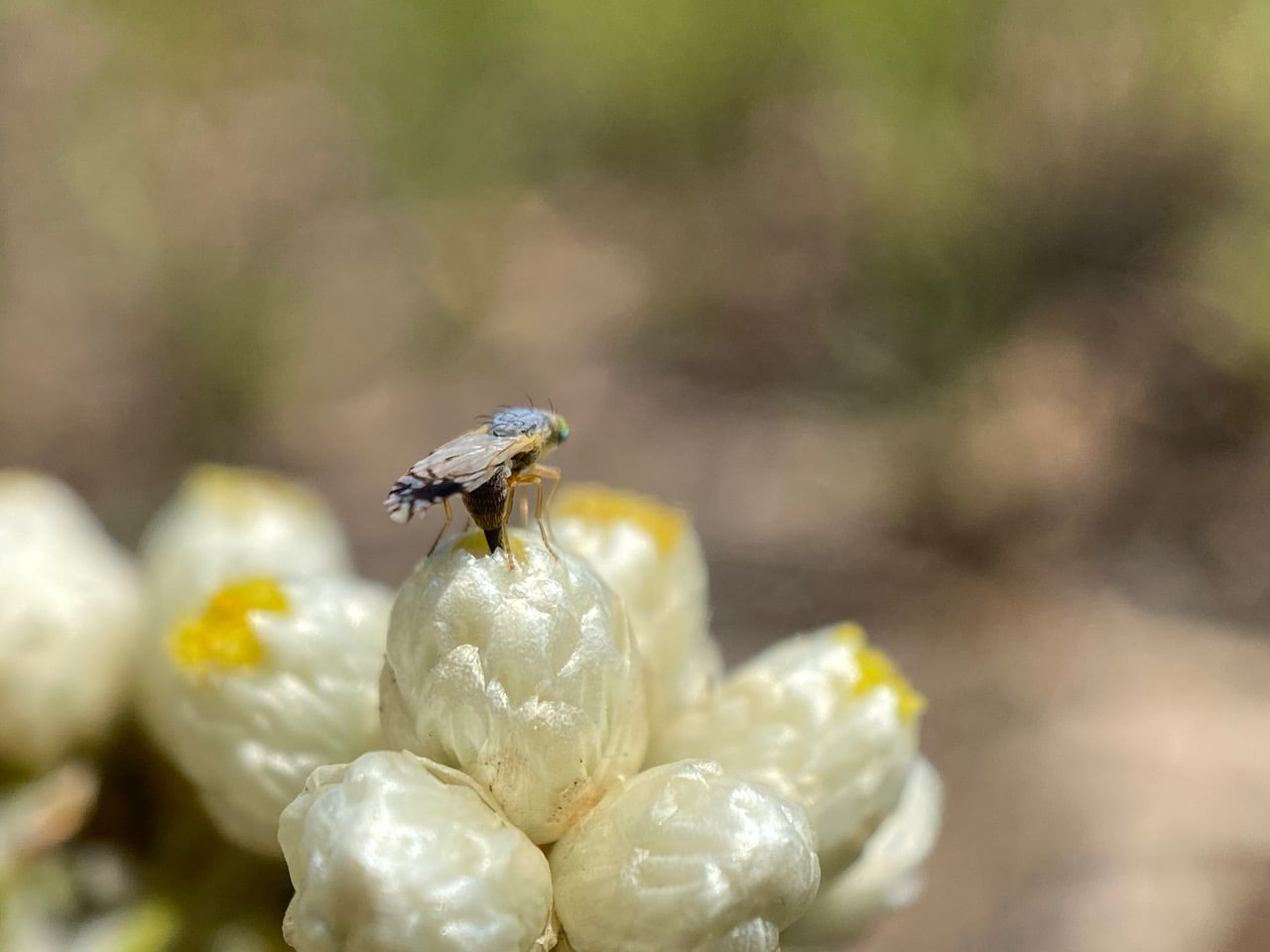
She then pushes the oviscape into the flowers within.
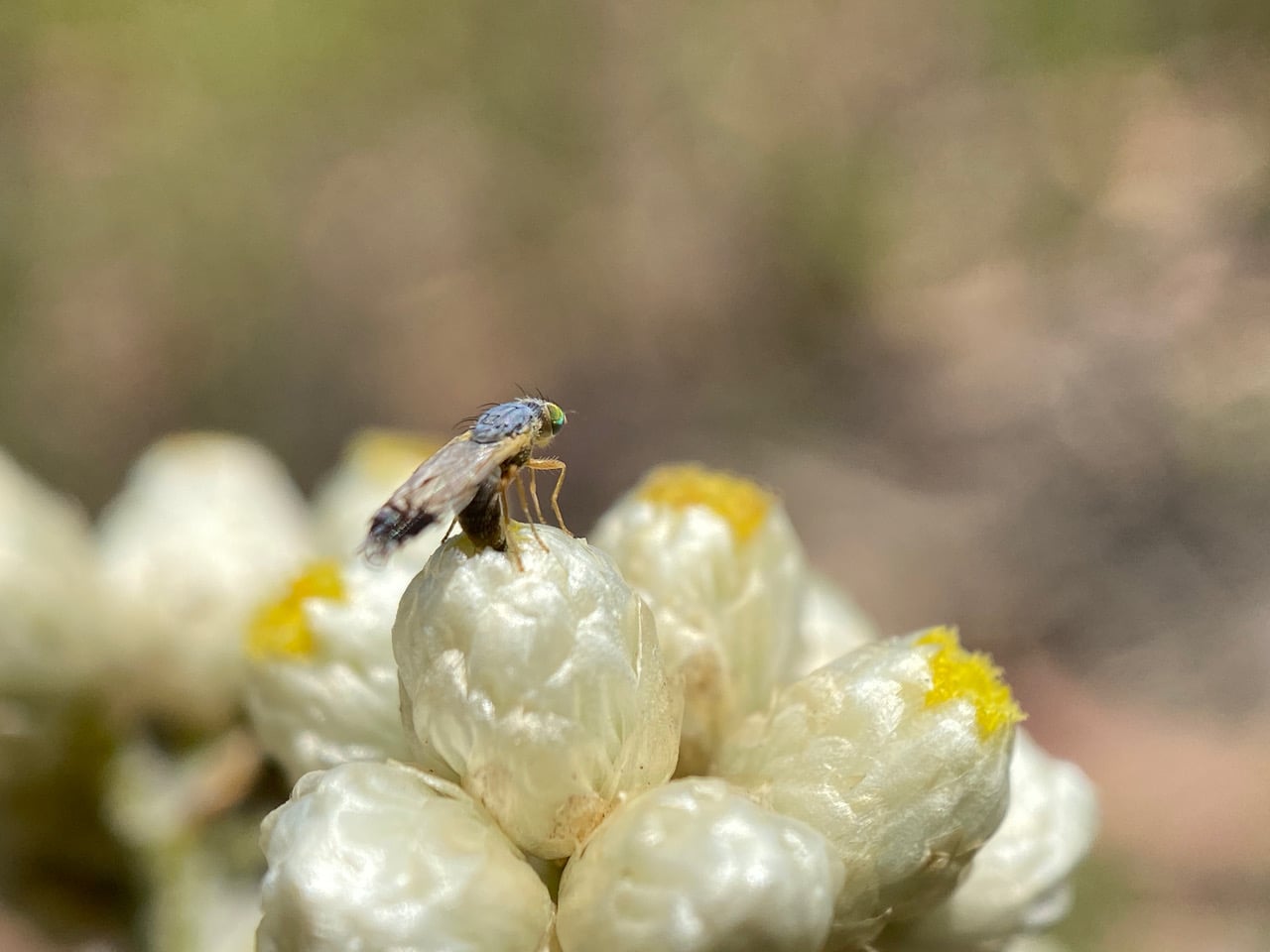
She stays in this position for a while, apparently laying her eggs.
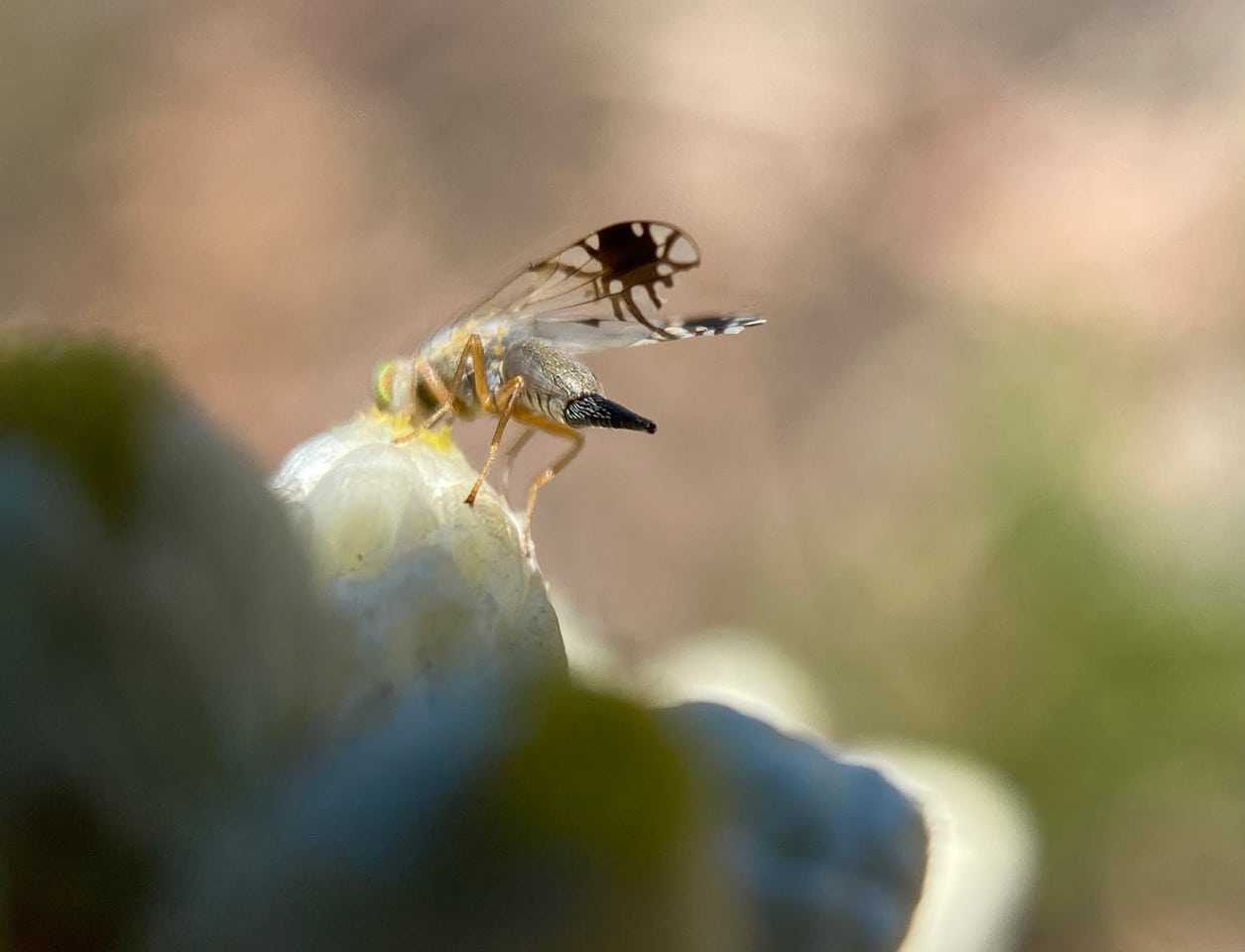
Finished, the female Trupanea (family Tephritidae) goes on to search for other places to lay her eggs.
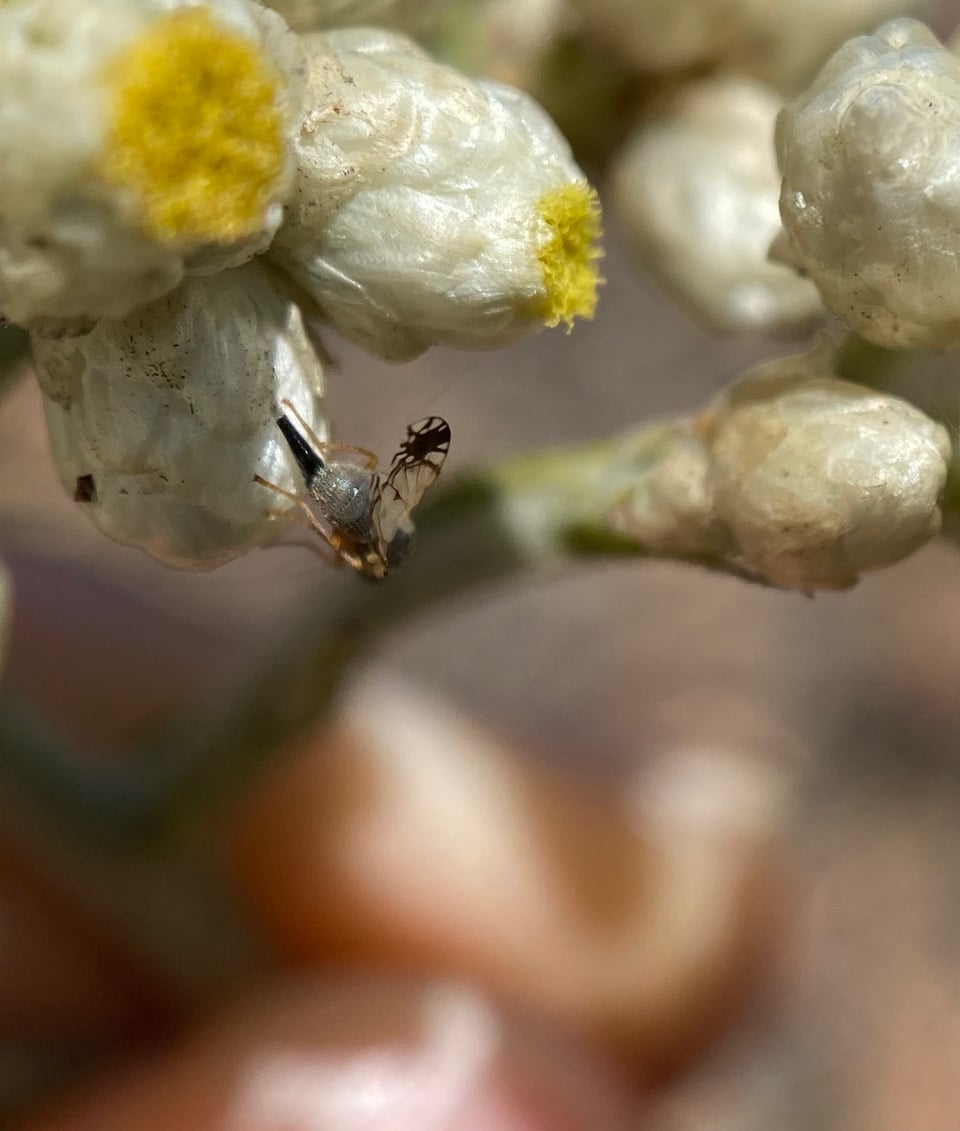
There, she’s repeating the same sequence again, this time on an unopened flowerhead.
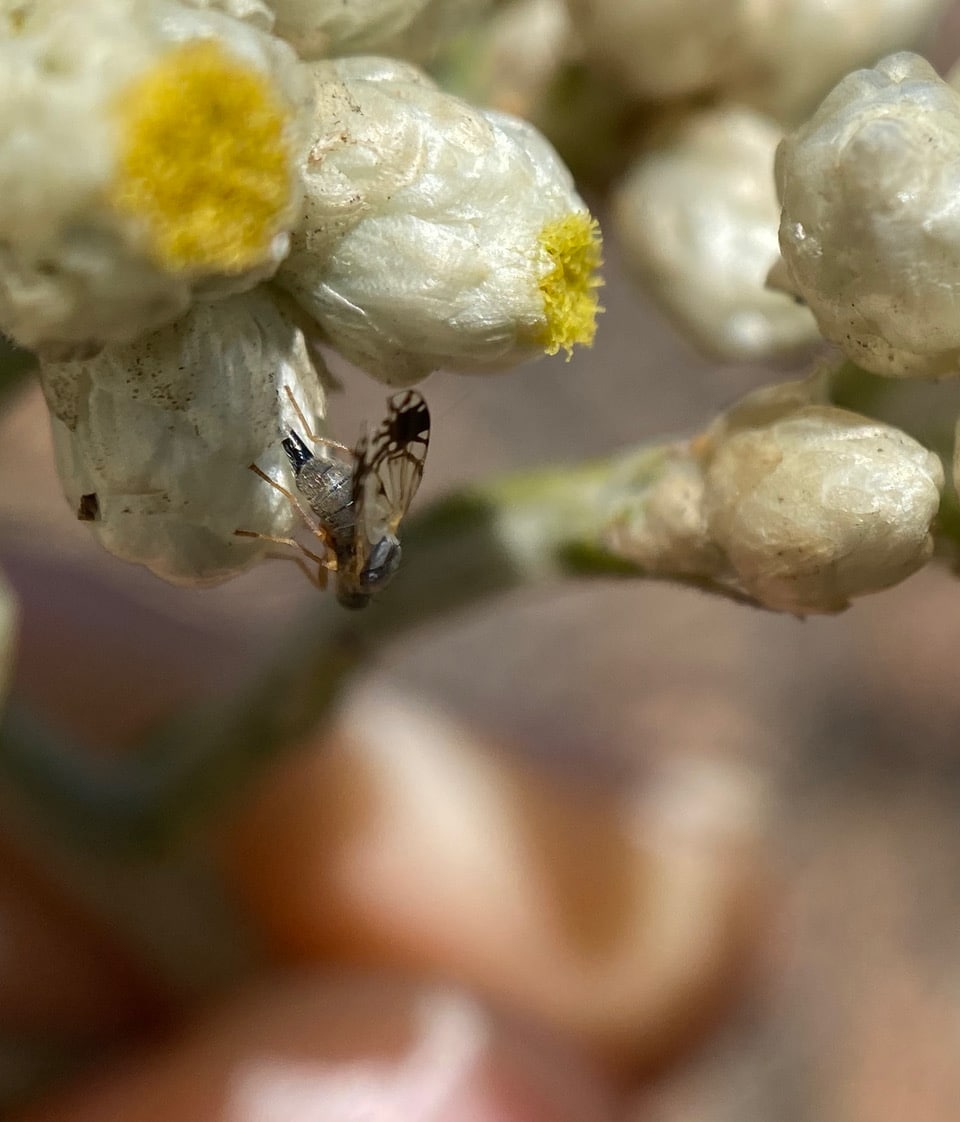
She inserts her oviscape between the papery phyllaries …
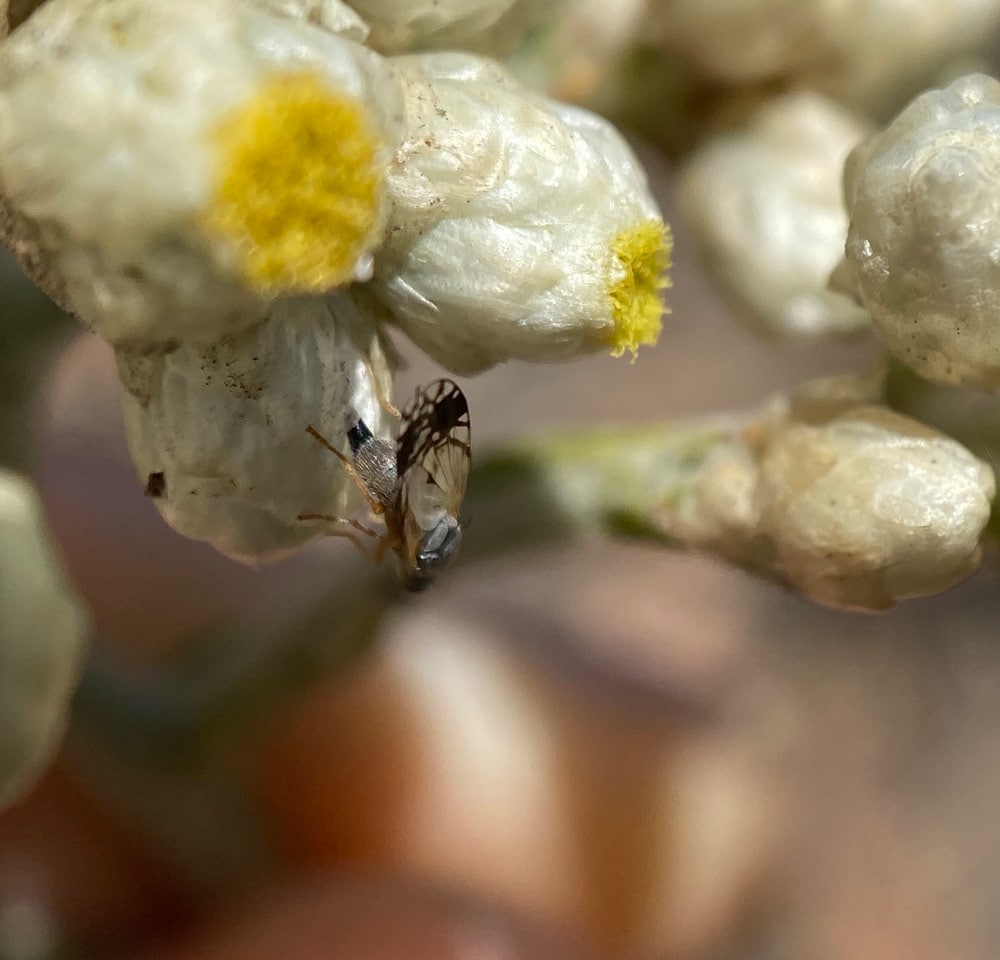
… to inject her eggs.
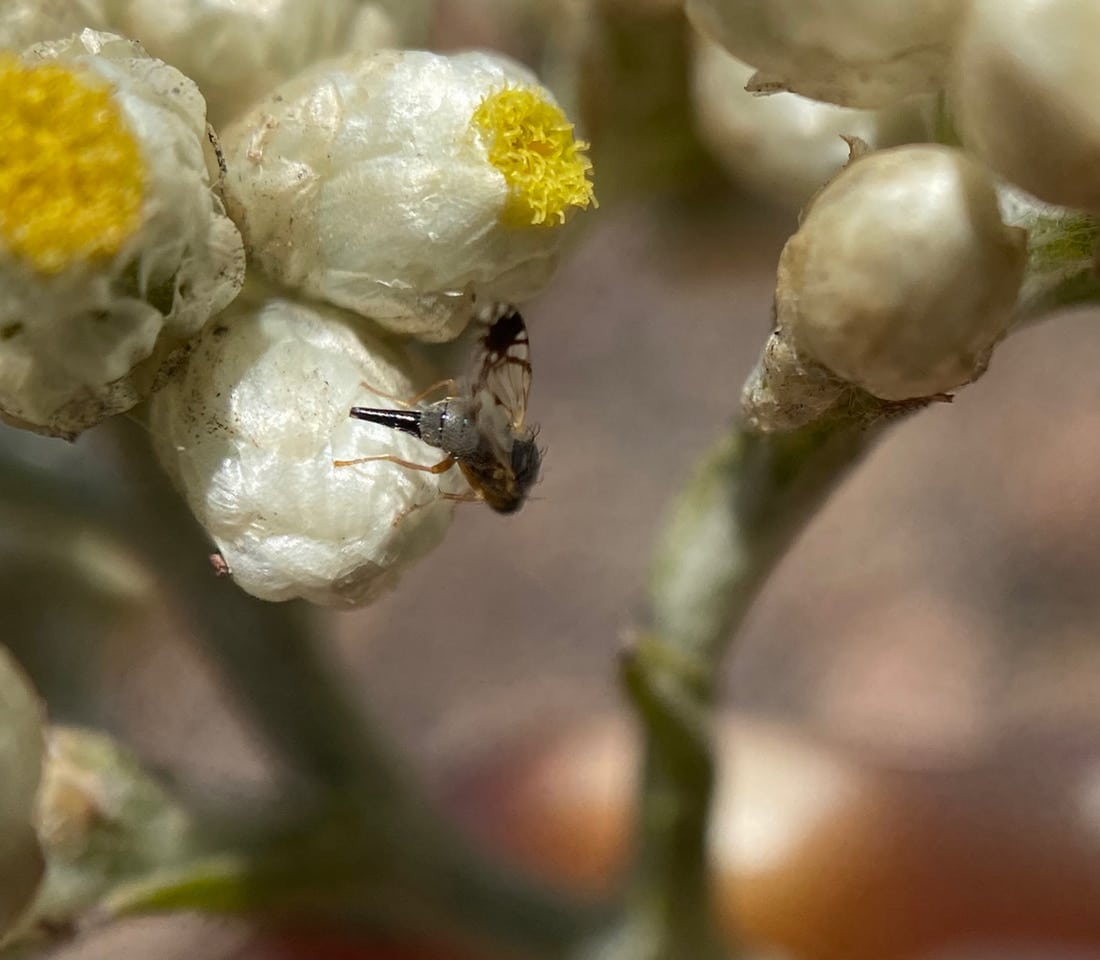
The female fruit fly repositions her oviscape…
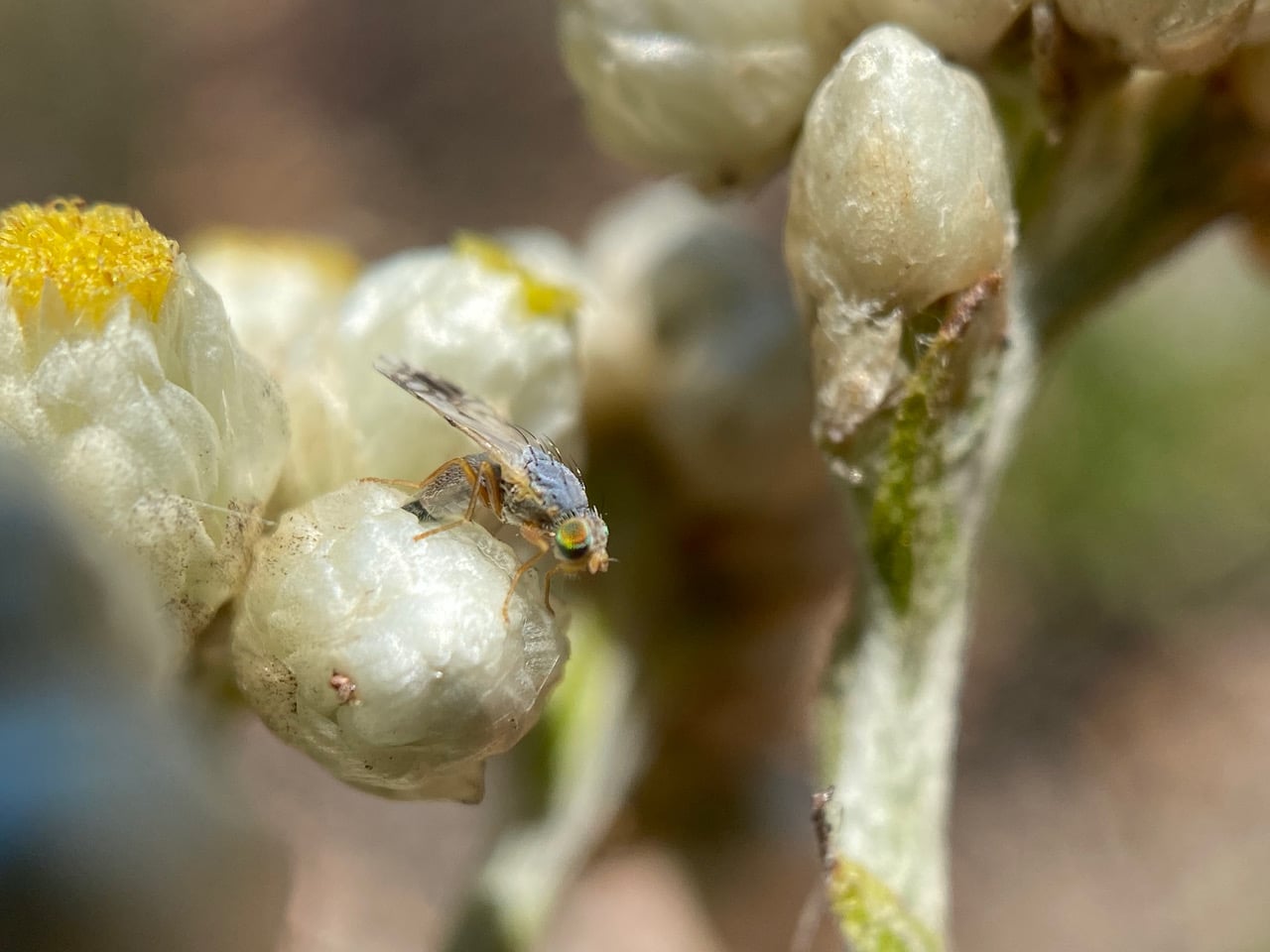
… and tries again.
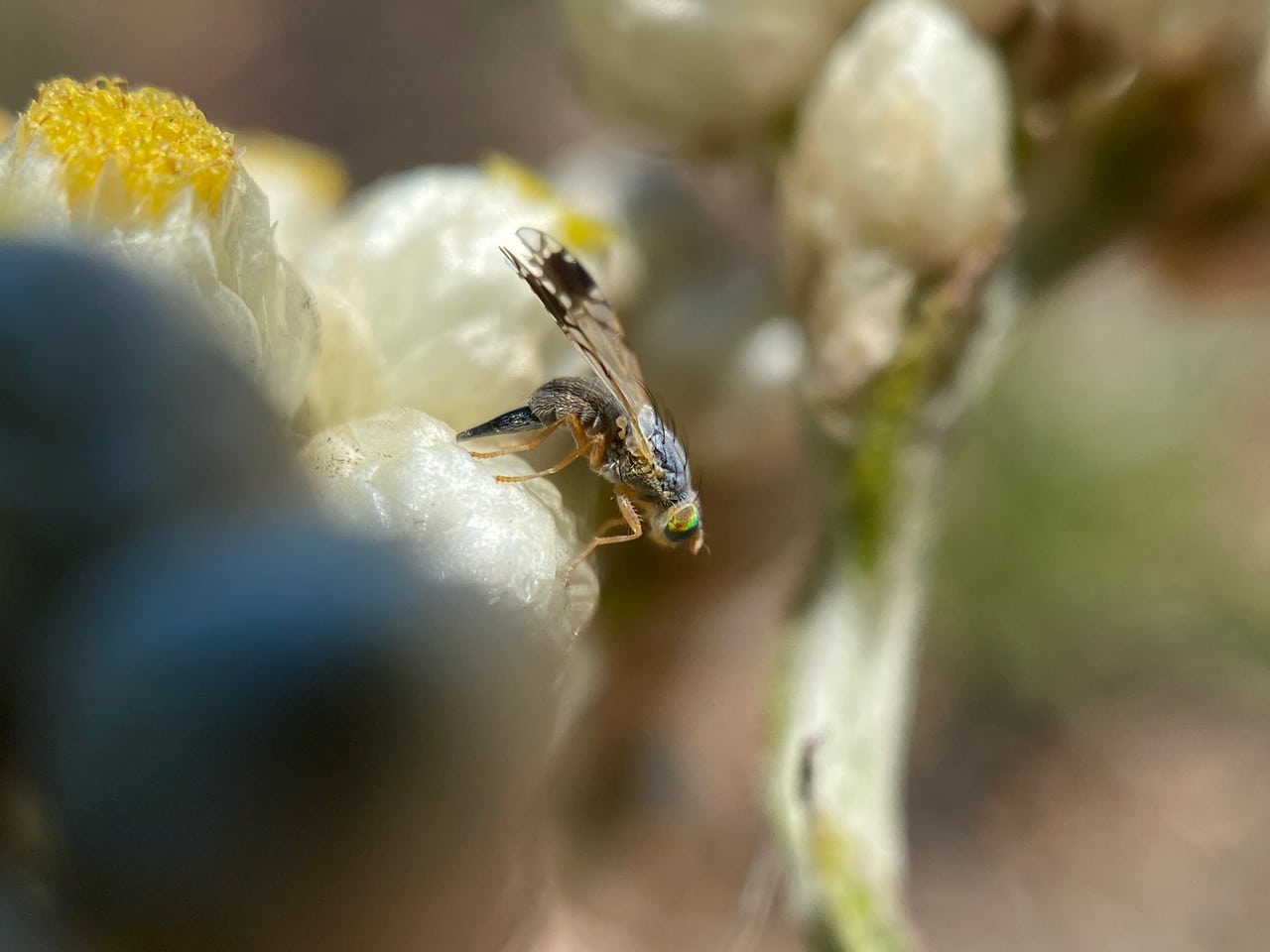
There, the job is done! I observe the same female lay her eggs in four different flowerheads, methodically going through the same sequence of movements. Wow, it’s an incredible privilege to be witness to this!