

Pollinator Post 7/1/25 (1)

Since it is cool and cloudy this morning, I decide to make a quick run to Naomi’s sidewalk garden in Alameda. Maybe the male Summer Longhorn Bees, Melissodes sp. (family Apidae) are still sleeping in aggregation?

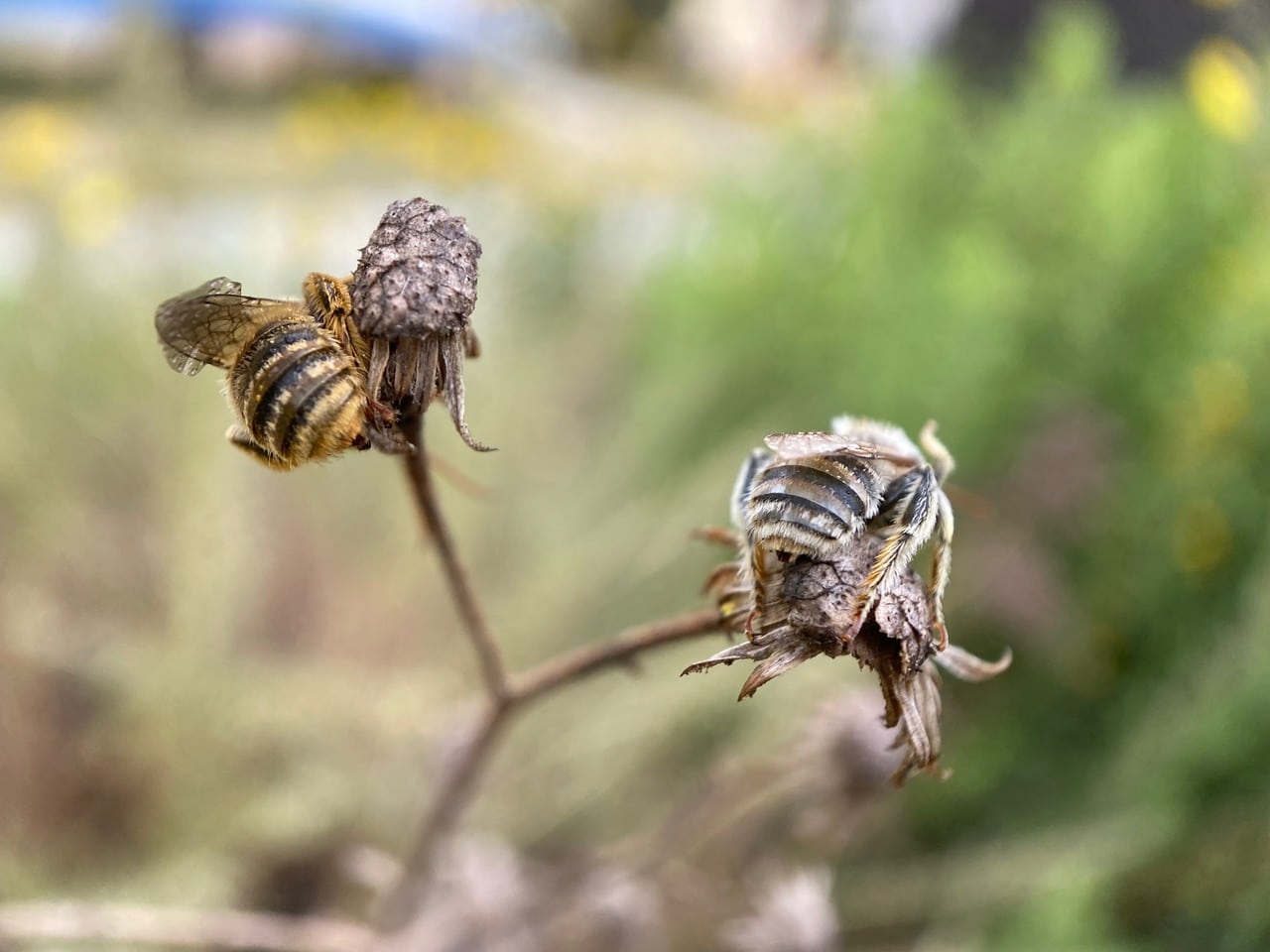
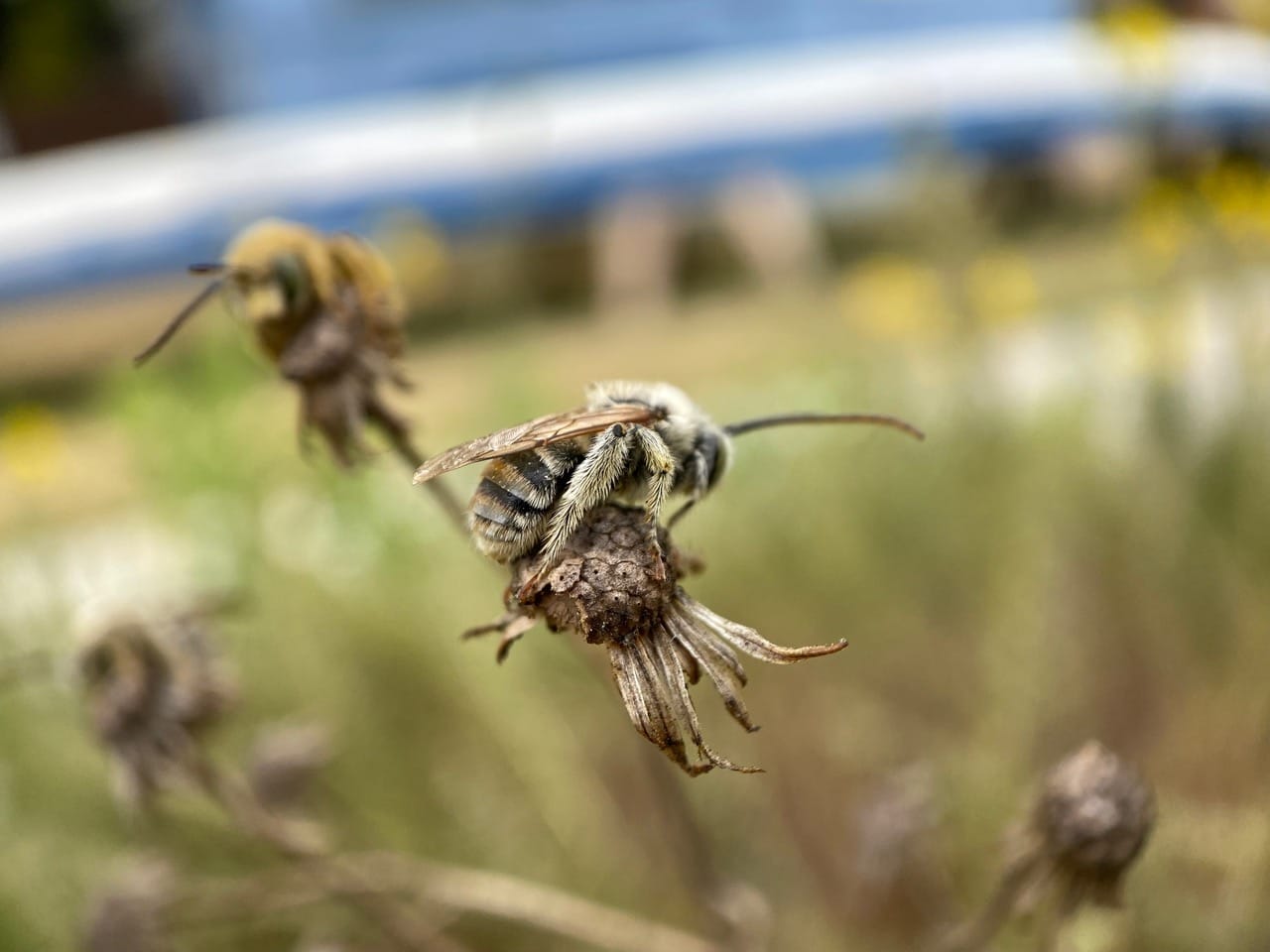
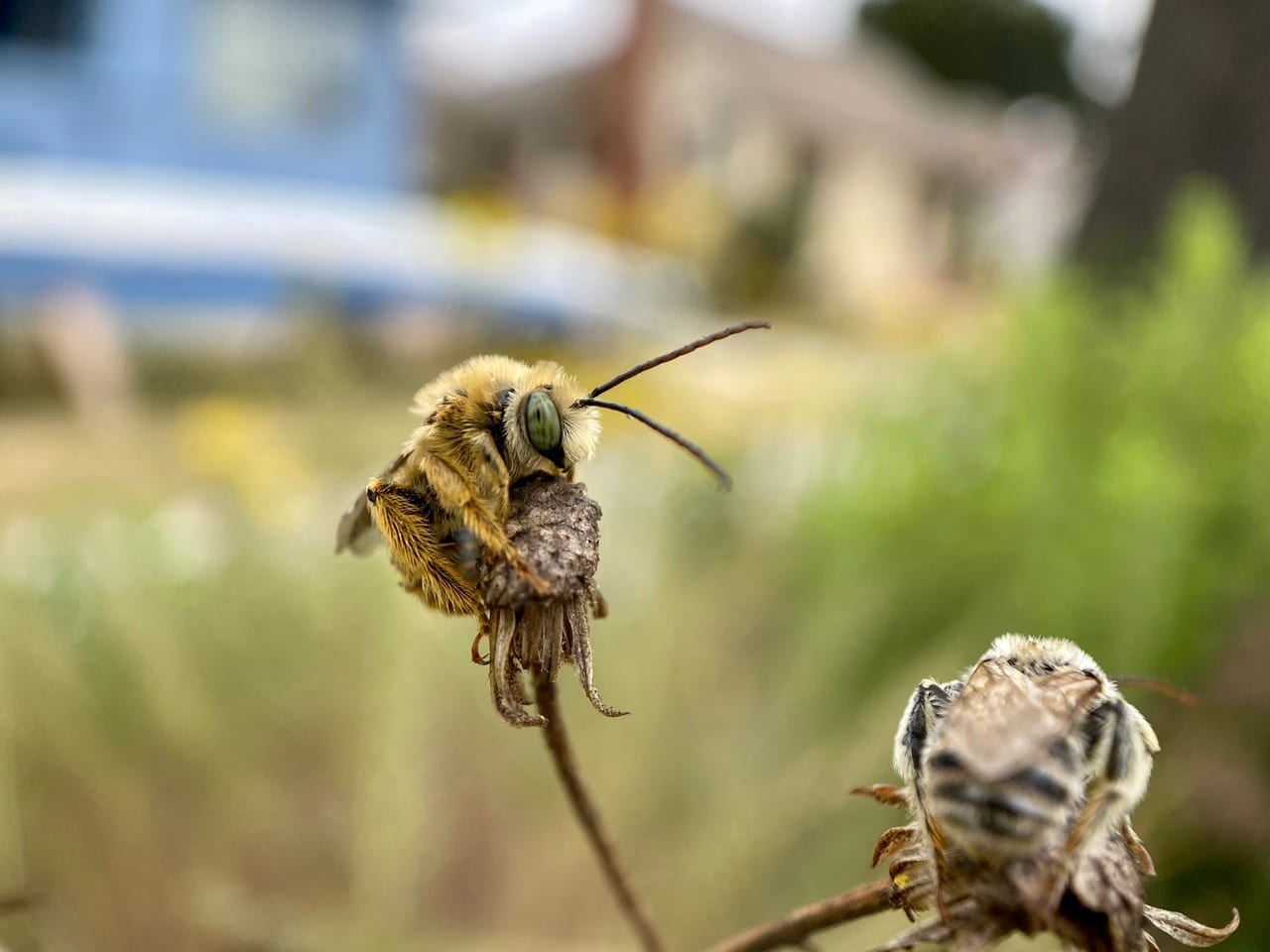

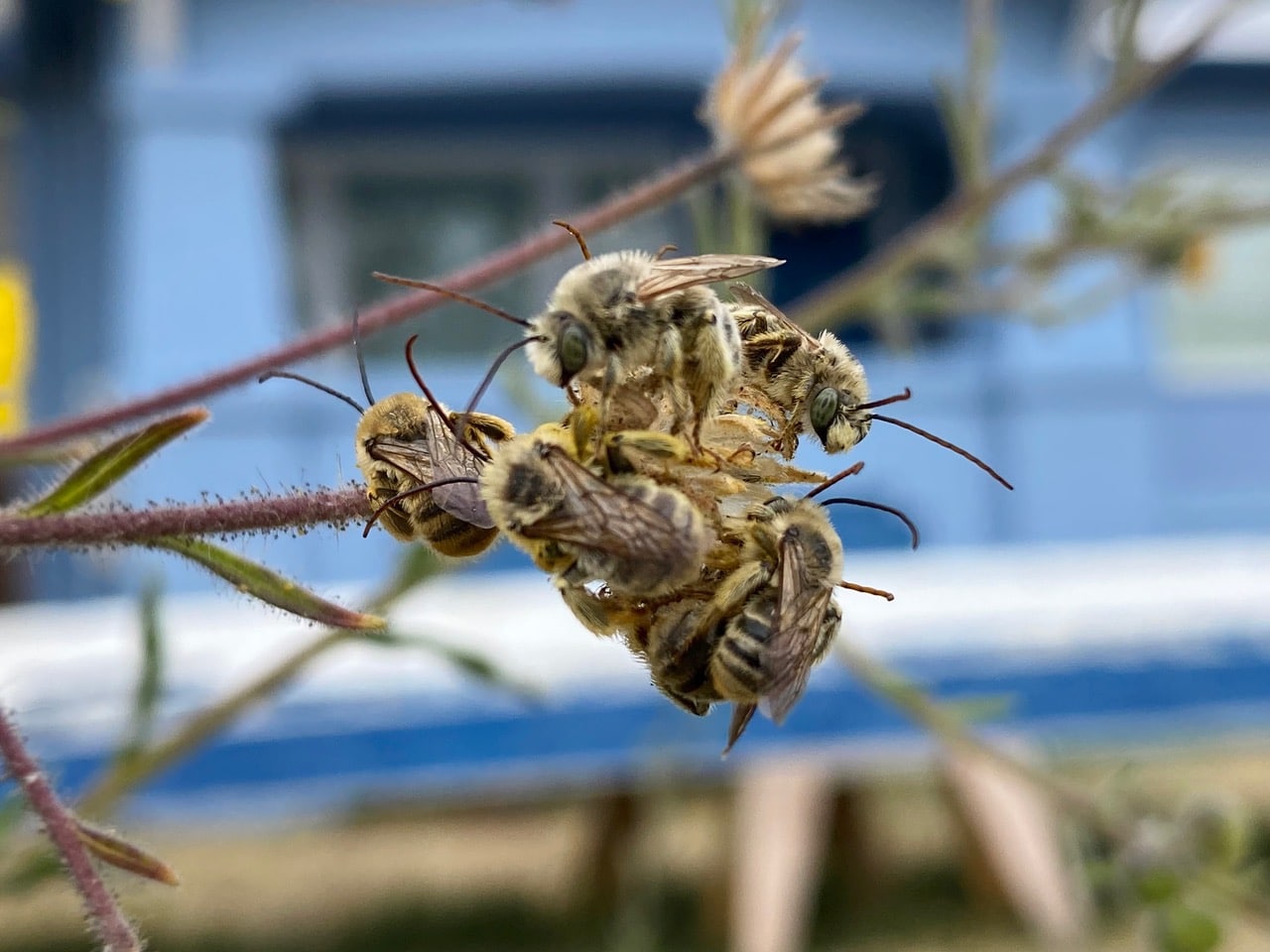
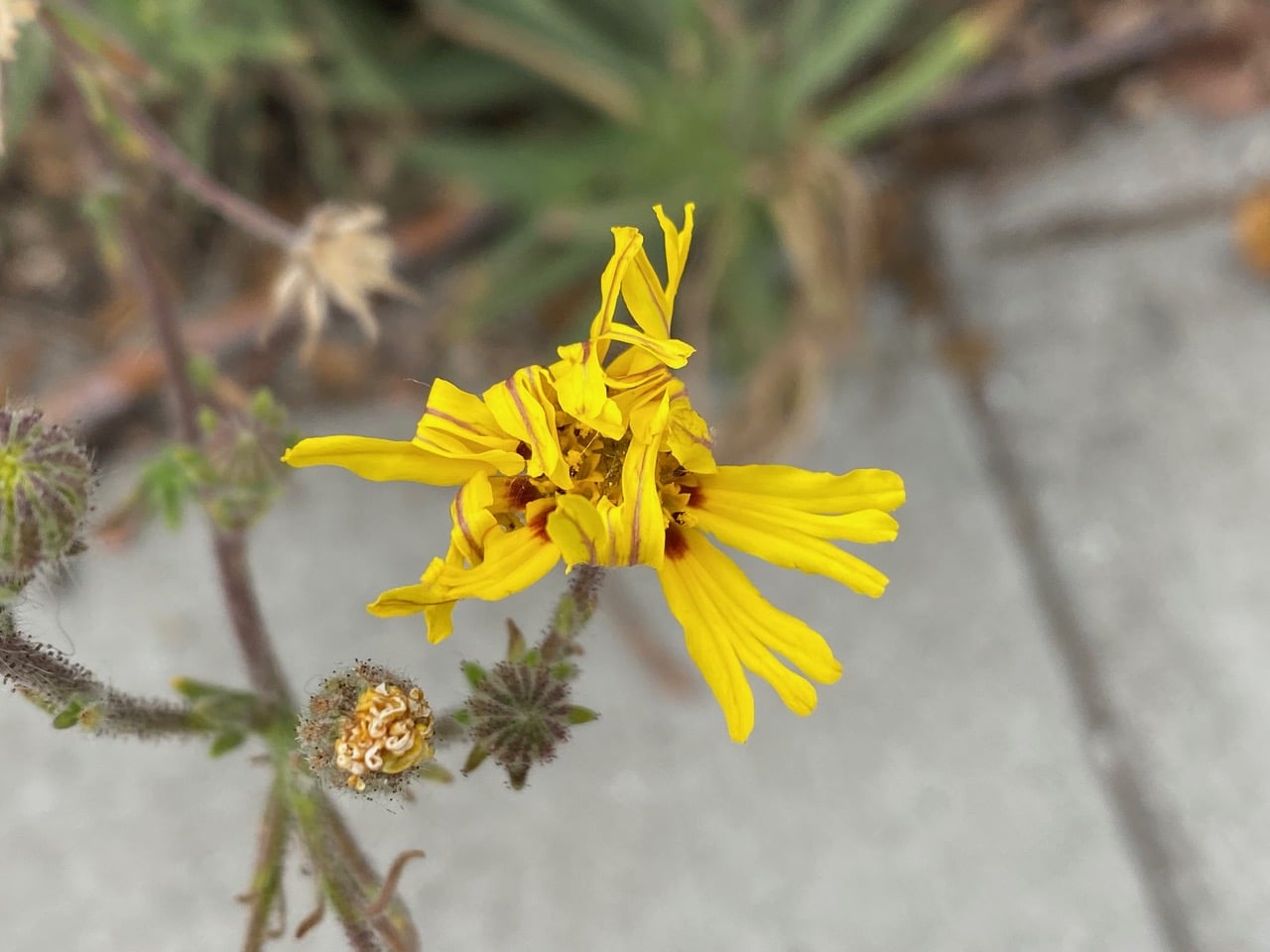
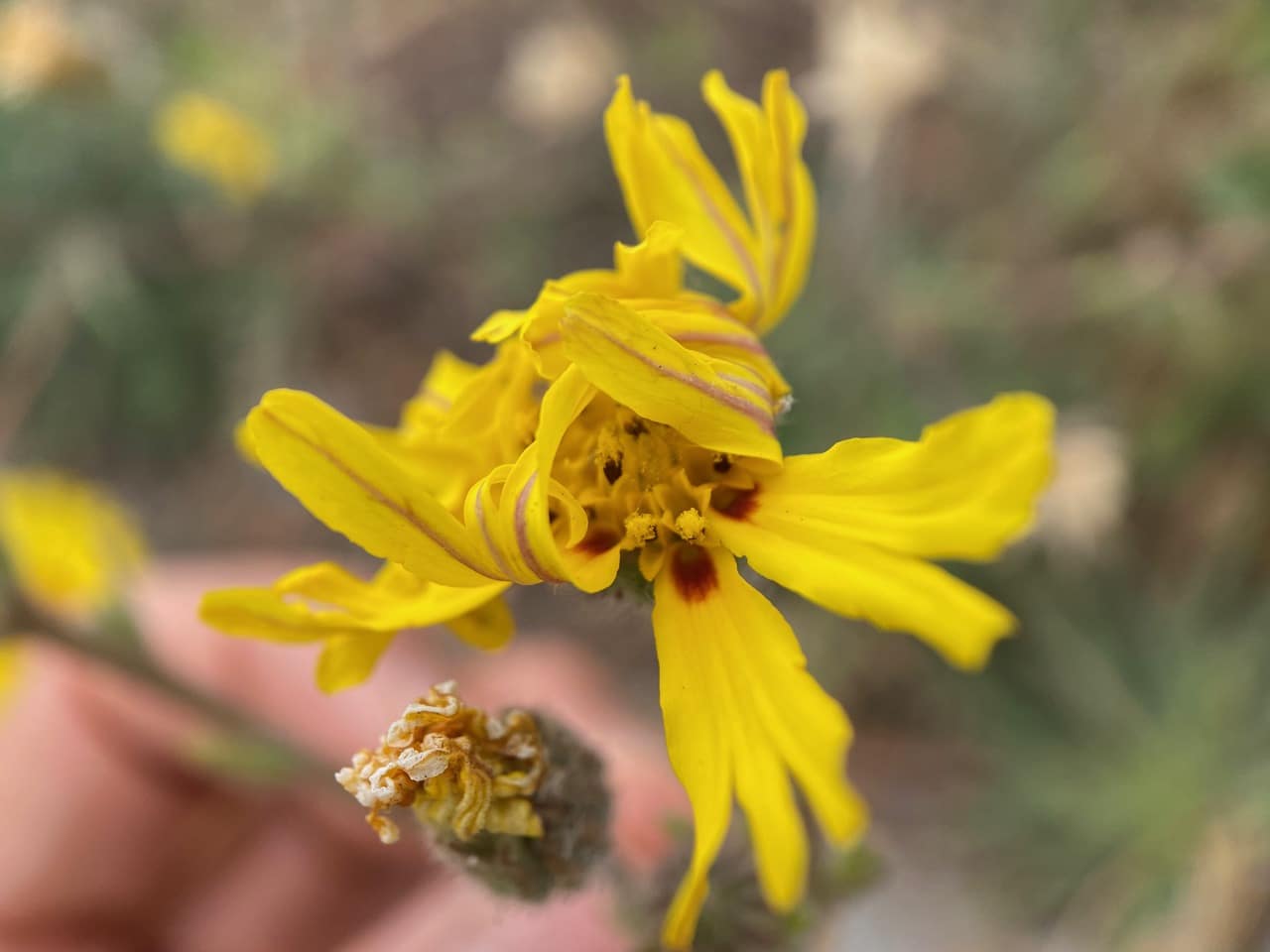

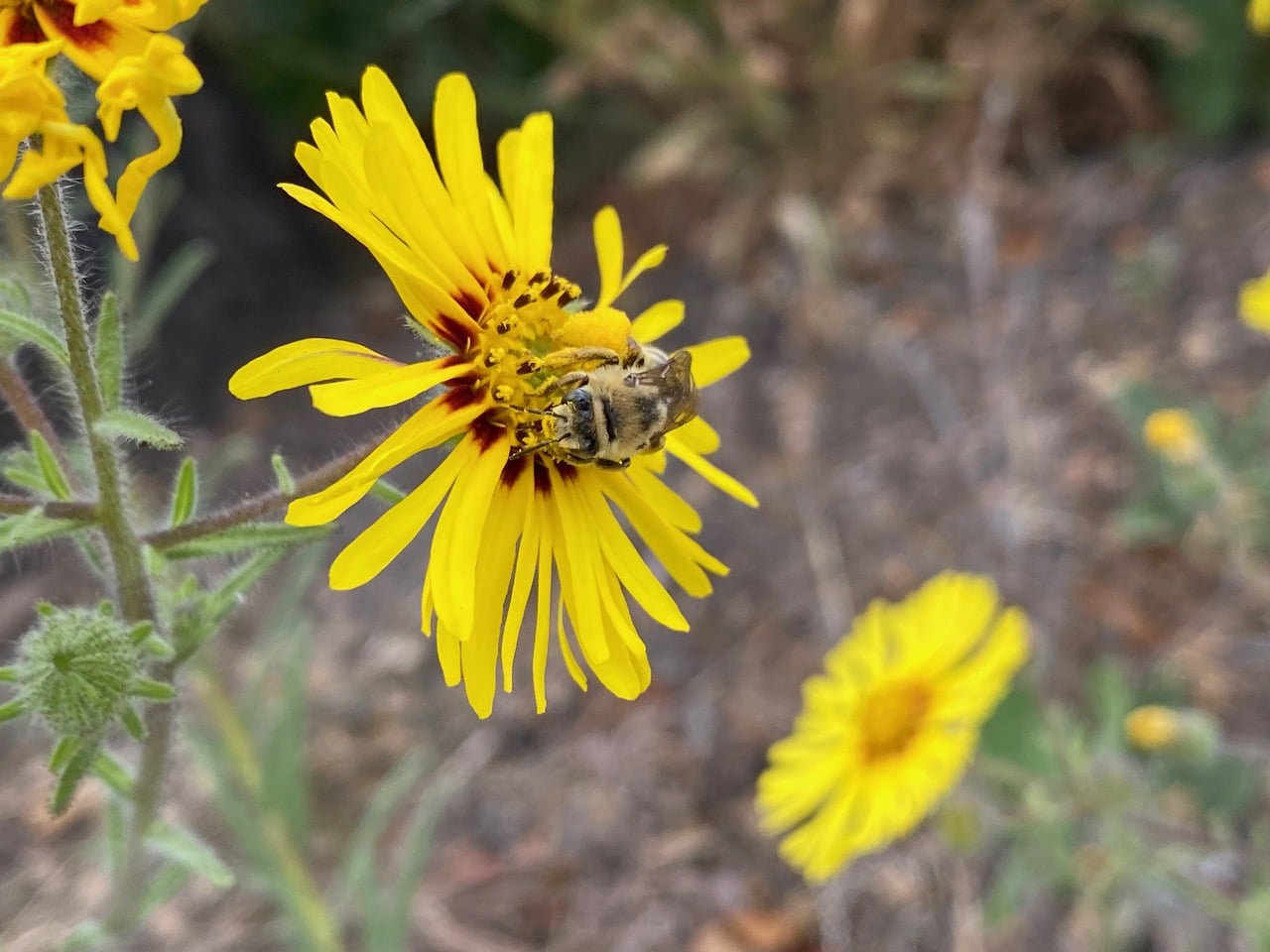
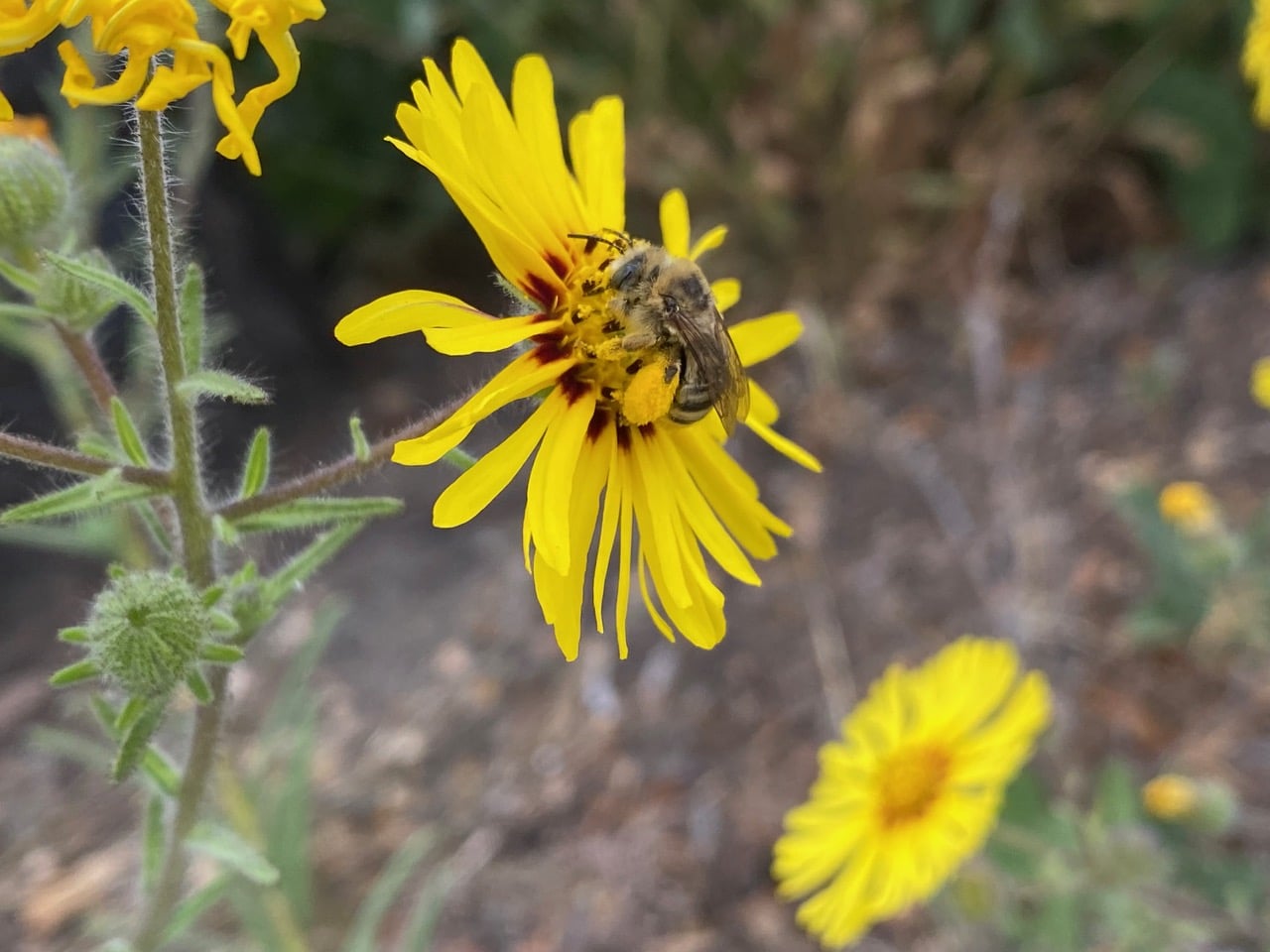


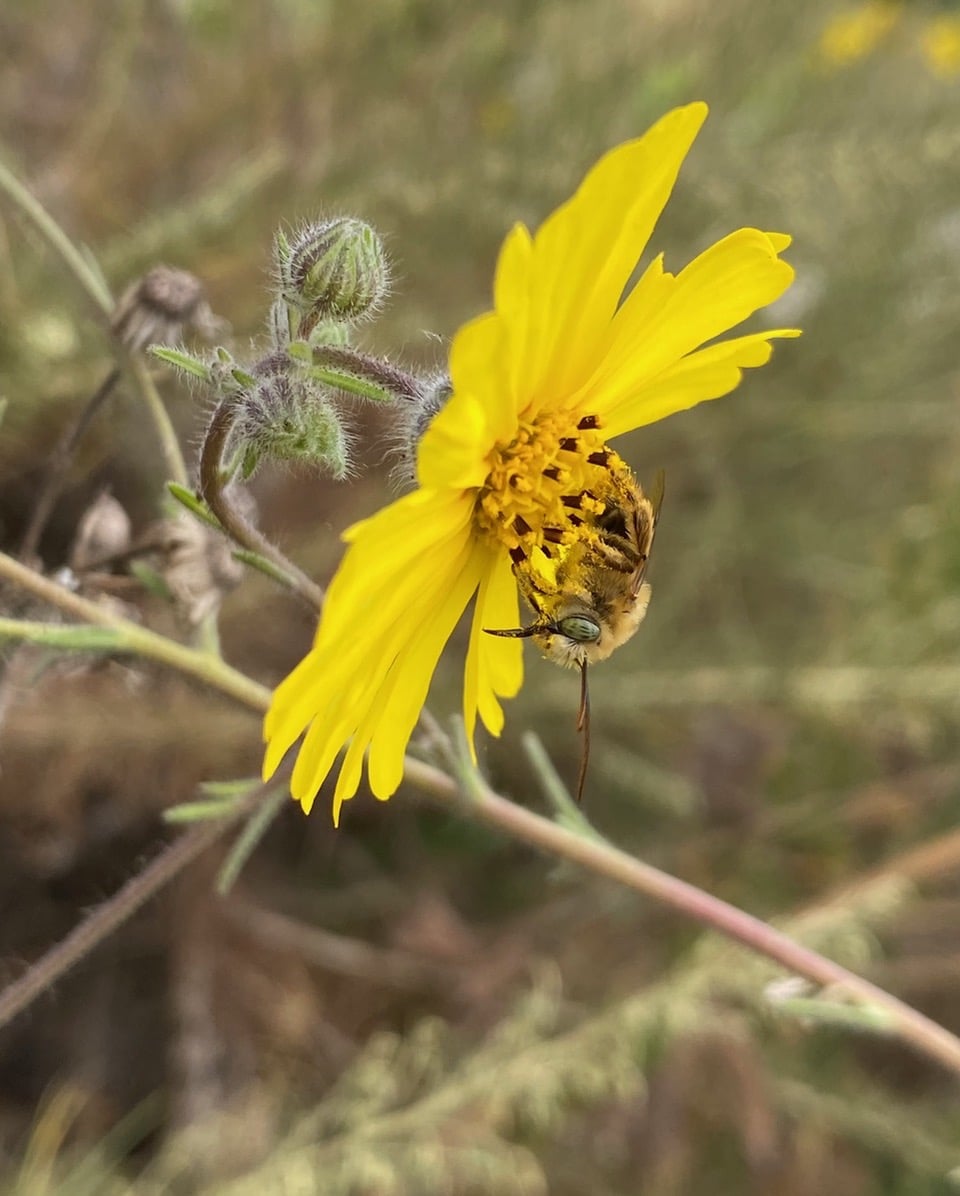
9:45 am. Yes, indeed they are, but not where I had expected to find them. They are now occupying two adjacent seed heads on the tallest Elegant Tarweed, Madia elegans that is still in bloom on the little sidewalk strip.
Here they are. There are seven in the cluster on the right, and three on the left. All still fast asleep. Adorable!
I located the old Telegraph Weed seed heads, Heterotheca grandiflora on which I have seen the males gather in the afternoon of 6/21/25. Only two males are sleeping on two adjacent seed heads here.
Here’s the gray male.
And here’s his brown companion. Although their eyes are wide open, the bees are fast asleep. Bee don’t have eyelids.
As I watch, the brown one begins to stir. He starts the day by grooming himself, beginning with the antennae.
All bees have an antenna cleaner on each of their two forelegs. The antenna cleaners consists of two parts: a notch in the basitarsus, which is fitted with stiff hairs, and a corresponding spur on the tibia. To clean its antenna, the bee raises its foreleg over its antenna and then flexes it tarsus. The action allows the spur to close the notch, forming a ring around the antenna. The bee pulls each antenna through the bristles to clean it of debris such as pollen or dust which might interfere with the many sensory organs within the antenna. A bee’s antennae serve numerous functions: smell, taste, perceive humidity and temperature, feel, monitor gravity and flight speed and even detect sound waves to help guide the bee in its daily activities.
When I turn my attention to the sleeping males on the Tarweed, I see that these are also waking up, and starting to groom themselves.
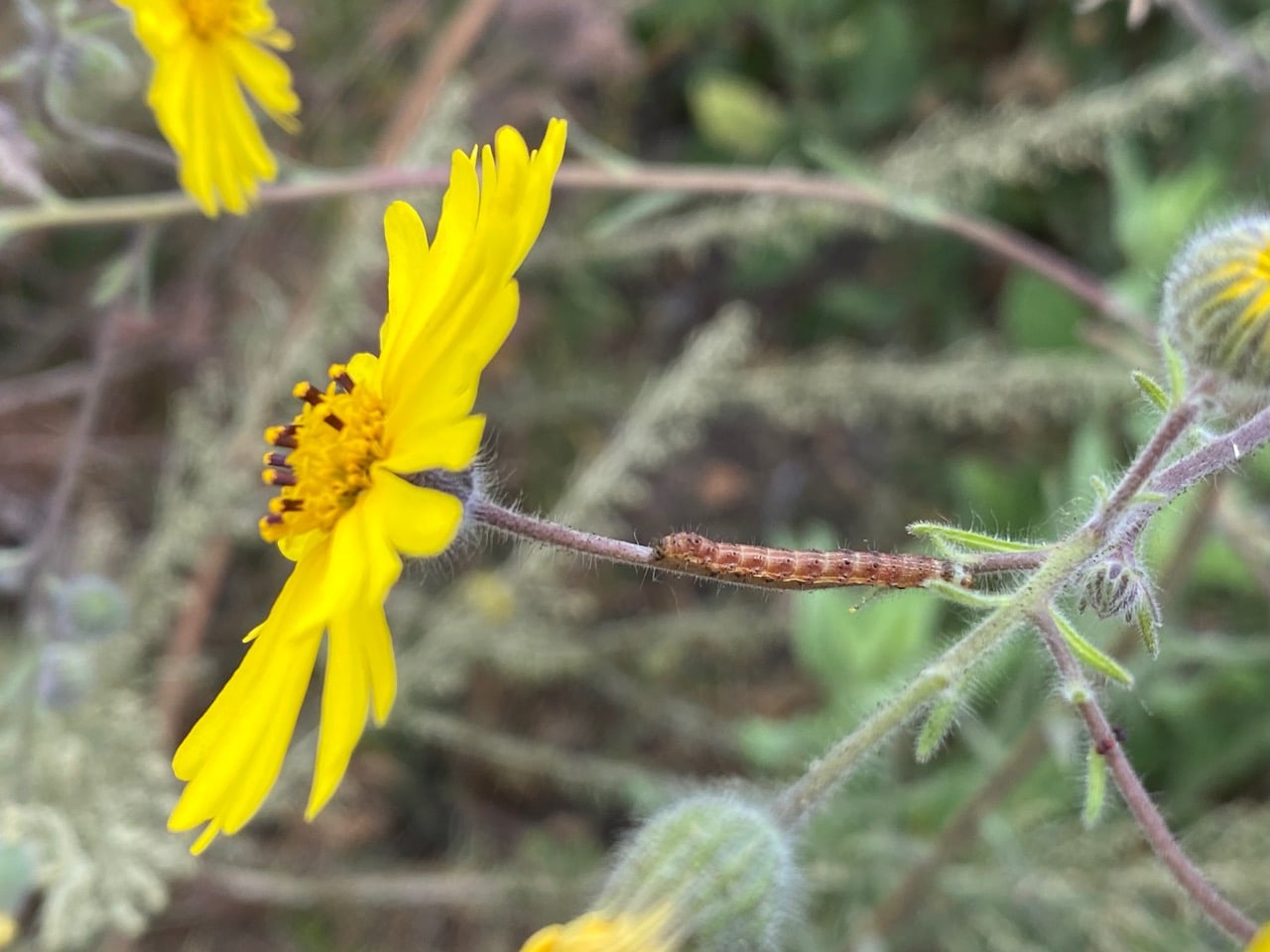
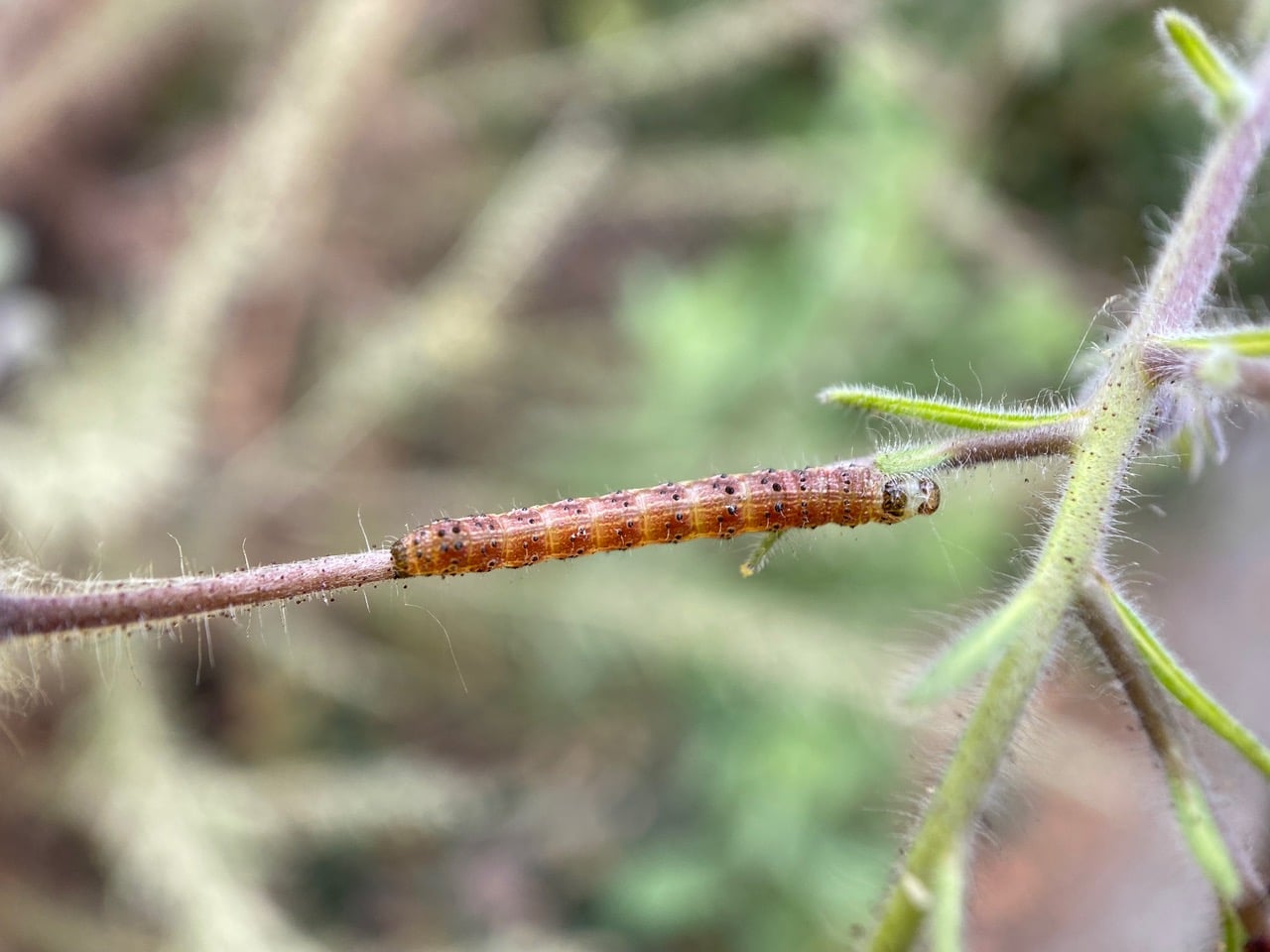
Hey, I think there’s a caterpillar on that flower stalk.
iNaturalist has helped identify it as an Owlet Moth in the genus Chloridea, formerly Heliothis (family Noctuidae).
The family name Noctuidae is derived from the word noctua, which is Latin for little owl. The Noctuidae are commonly known as owlet moths, cutworms or army worms. The names “army worms” and “cutworms” are based on the behavior of the larvae of this group which can occur in destructive swarms and cut the stems of plants. Members of Noctuidae, like other butterflies and moths, perform an important role in plant pollination. Some species have evolved a strong connection with their host plants, a sort of love-hate relationship in which the larvae feed on the plant while the adults pollinate the flowers.
Some of the Chloridea moths have larvae which are agricultural pests on crops species such as tobacco, cotton, soybean and pigeon pea.
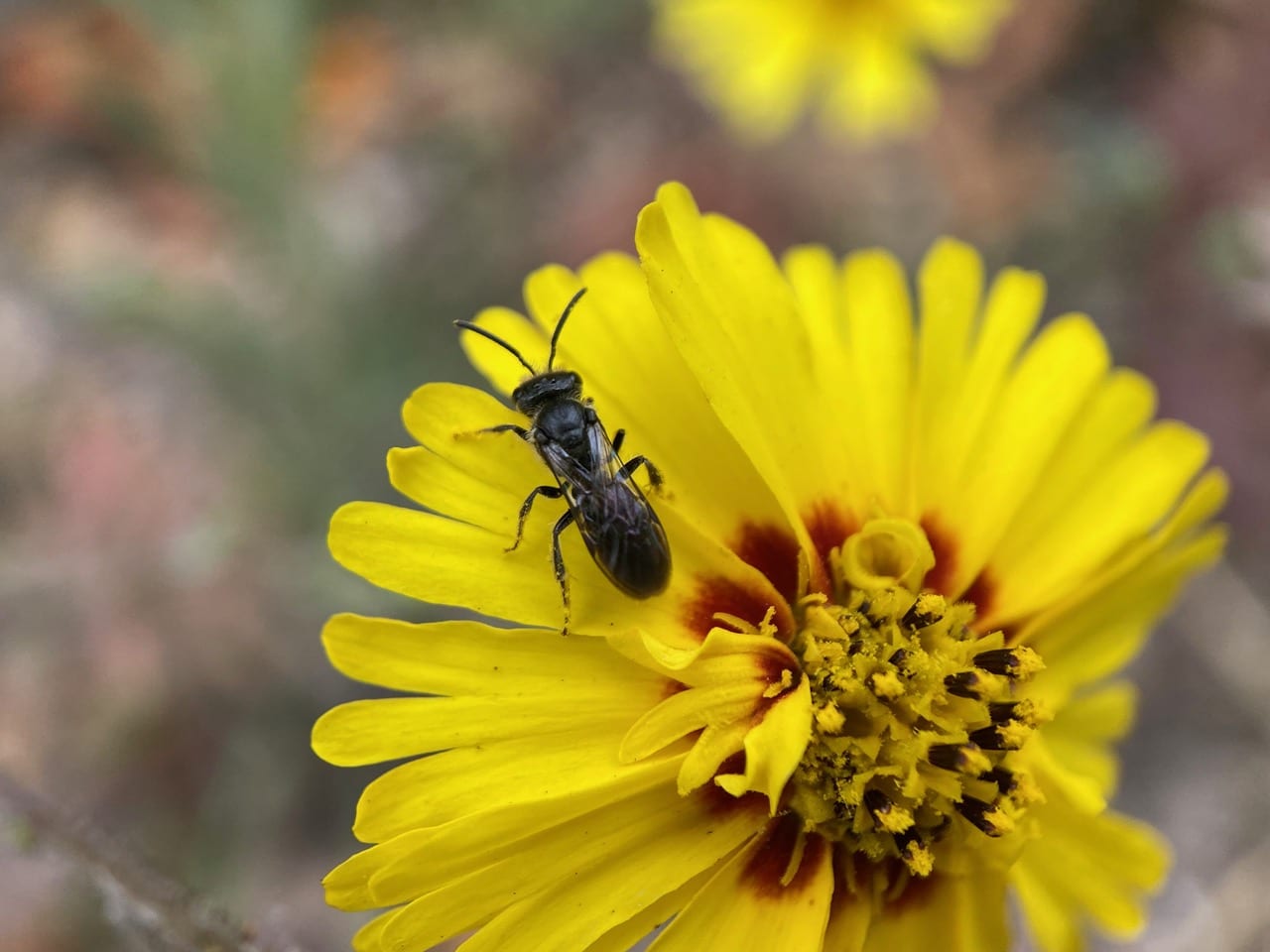
A jet-black bee is perched on an Elegant Tarweed flowerhead, fast asleep. It is a Kincaid’s Sweat Bee, Lasioglossum kincaidii (family Halictidae).
Lasioglossum species are found worldwide, and they constitute the largest bee genus. The majority of Lasioglossum are generalists. Because they are so abundant throughout the flowering season, the bees are often important pollinators. Their sheer numbers are enough to achieve excellent pollination of many wild flowers, especially of plants in the Asteraceae, which have shallow floral tubes that are easily accessed by these minute bees.
Lasioglossum are closely related to the genera Halictus and Agapostemon. These genera are commonly called “sweat bees” because of their attraction to human sweat, which they drink for its salt content. Lasioglossum are dusky black to brown slender bees with bands of hair on their abdomen. Female Sweat Bees (family Halictidae) carry pollen in the scopae on their entire hind legs and underside of their abdomen.
Lasioglossum exhibit a range of social behaviors; the genus includes solitary, communal, semi social, primitively eusocial, and even parasitic species. Almost all Lasioglossum in the U.S. nest in the ground. Generally these nests are built in the spring by fertilized females (called foundresses) that spent the winter in hibernation. In social species, the foundresses behave much like the queen bumble bees – they lay the first batch of eggs that develop into the first generation of female workers. The nest grows with each additional generation of bees. Later broods may consist of both males and females. They mate, and at the end of the season the fertilized females hibernate til the following spring, repeating the life cycle of the colony.
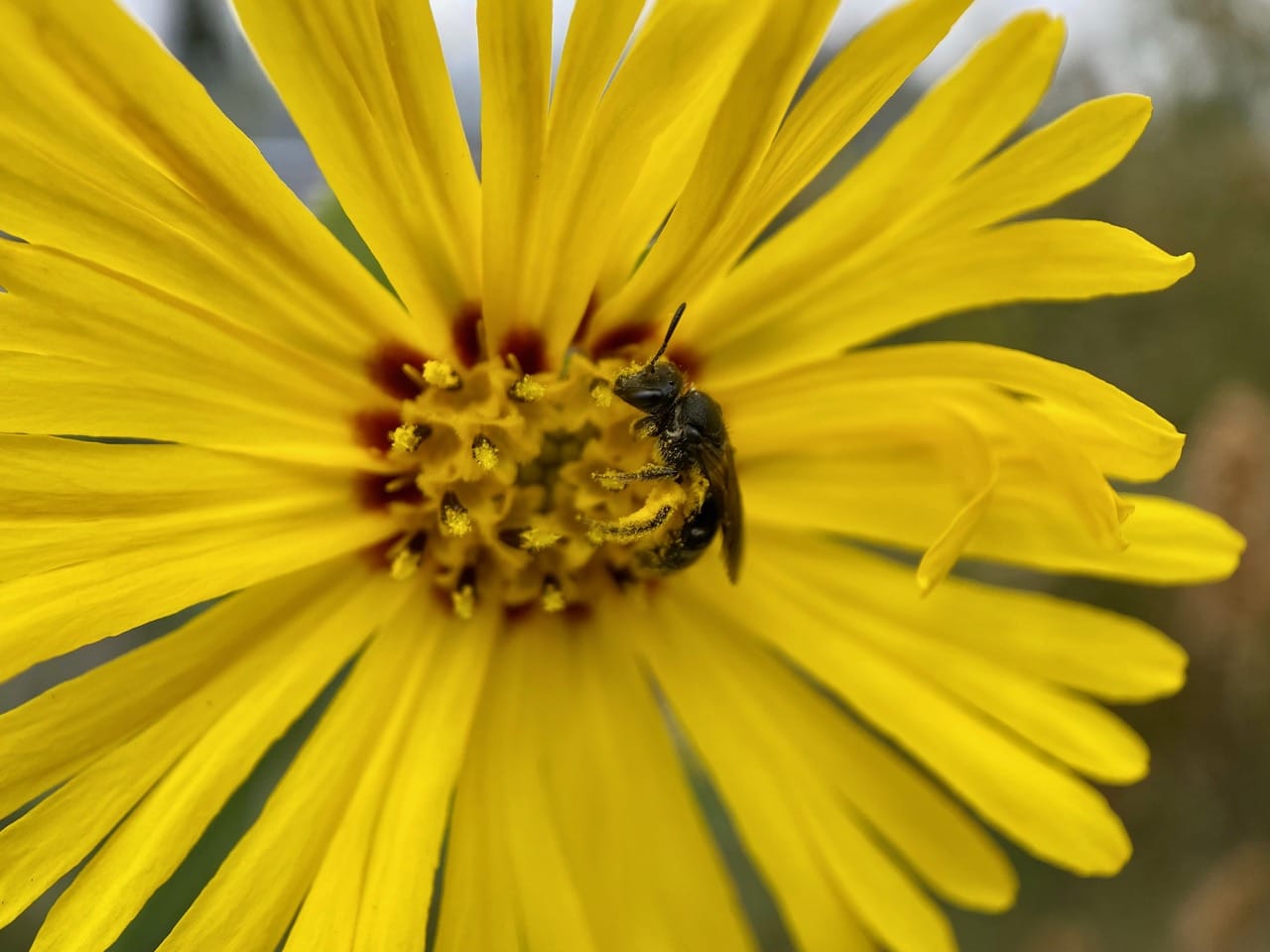
Minutes later, I find a female Kincaid’s Sweat Bee collecting pollen on another flowerhead. I wonder if the black coloration confers cold-tolerence to these bees? I often find them out foraging on cool mornings.
Most of the flowerheads of Elegant Tarweed are fully open on this cool, cloud morning. Someone has tempered with this one. I see traces of silk threads binding the ray petals together. I think I know who the culprit might be – a caterpillar of the Owlet Moth, Heliothodes diminutiva (family Noctuidae). The young caterpillars often bind together the ray petals to form an enclosed shelter in which the caterpillar can feed on the florets, safe from predators and parasitoids.
I peek inside the partially enclosed flowerhead but fail to see any caterpillar. Maybe it has already been taken by a predator such as a wasp?
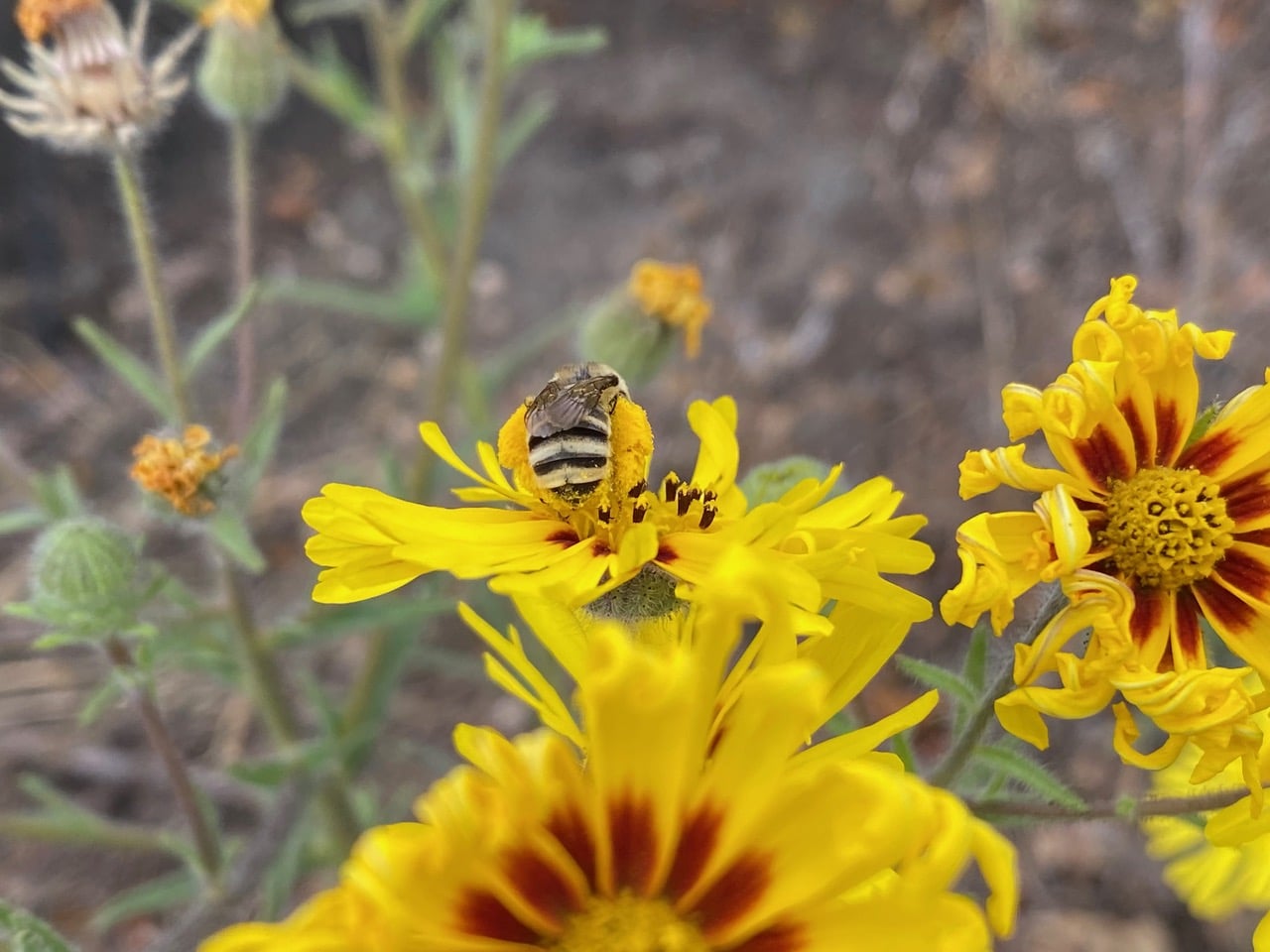
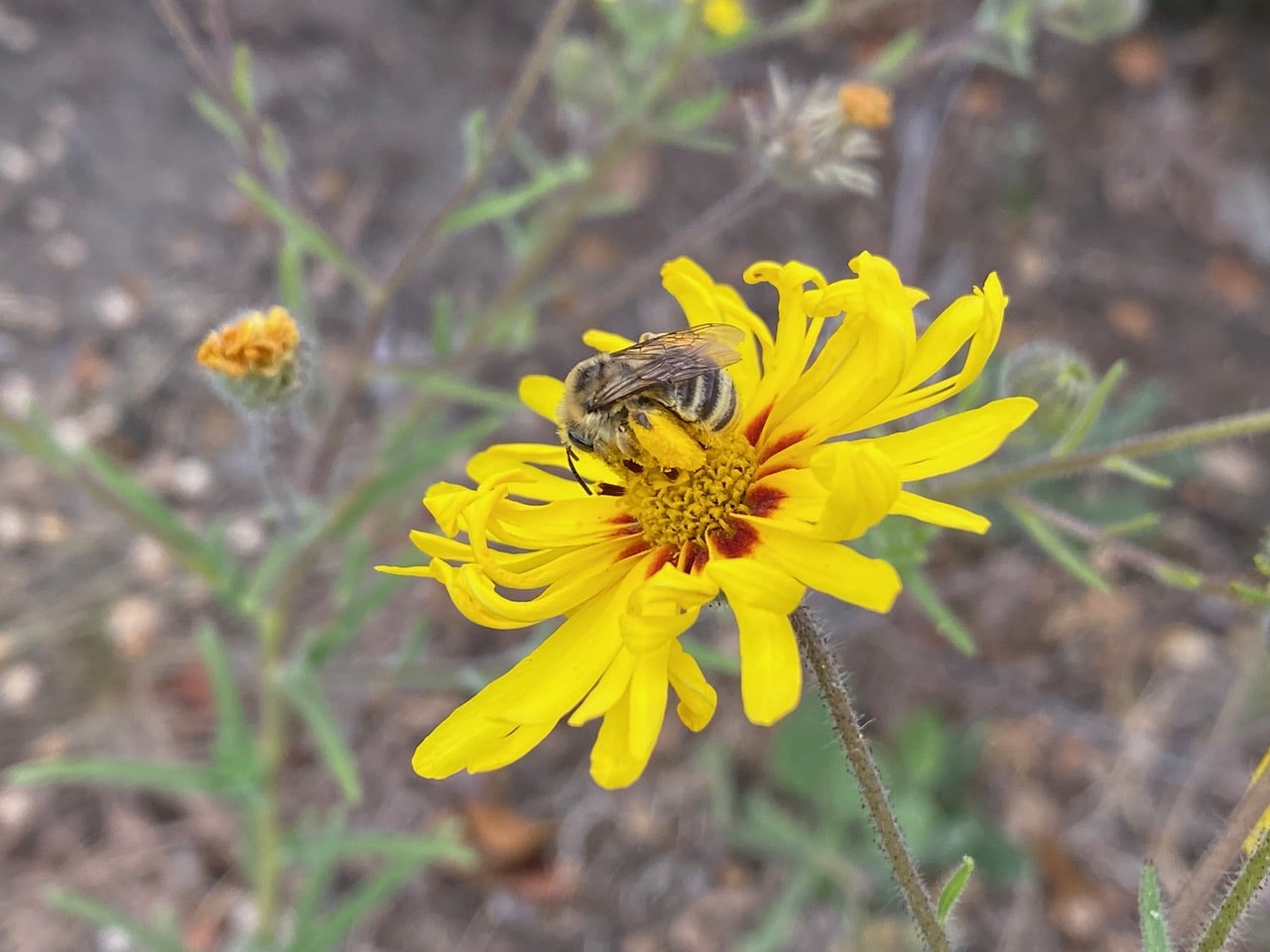
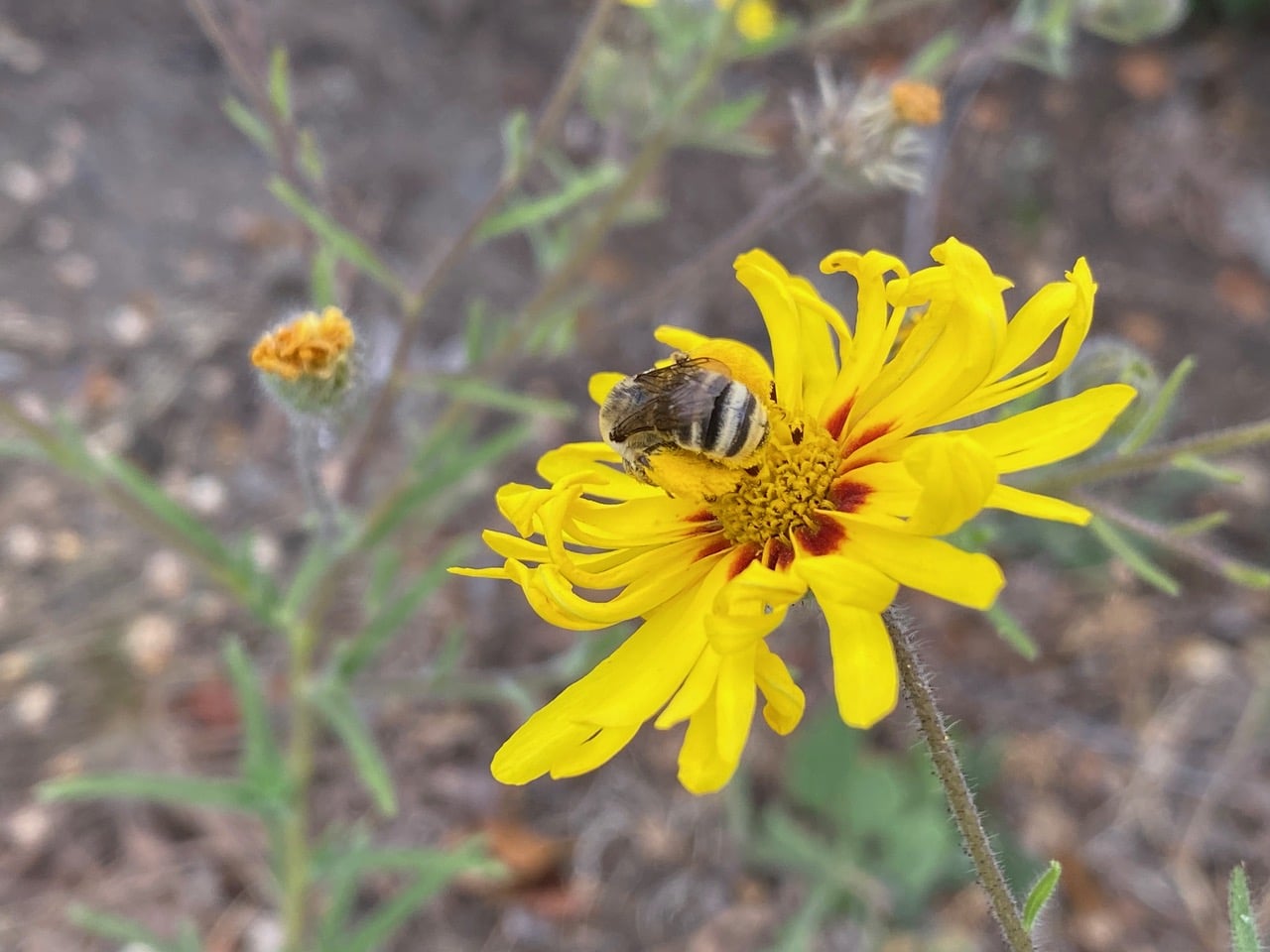
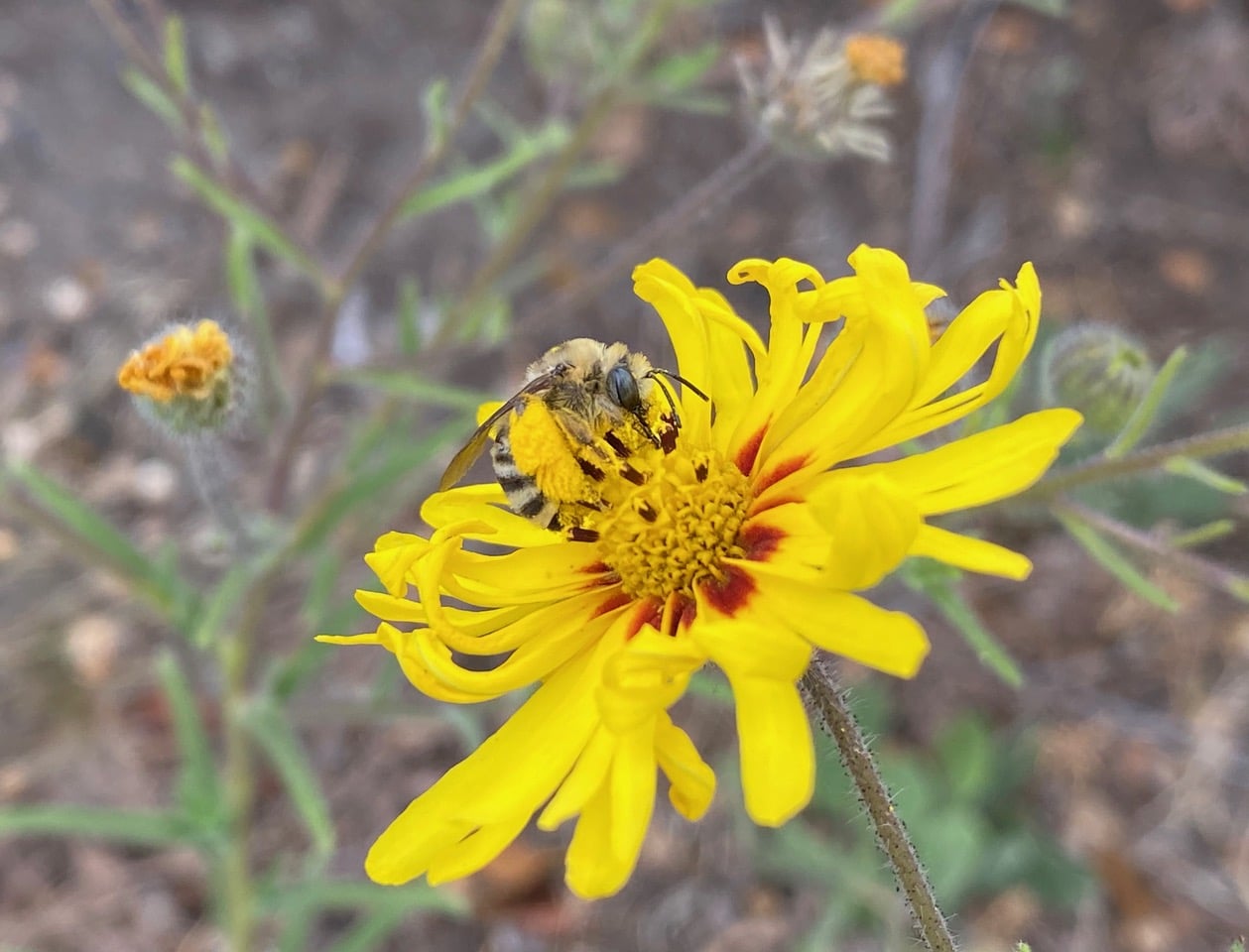
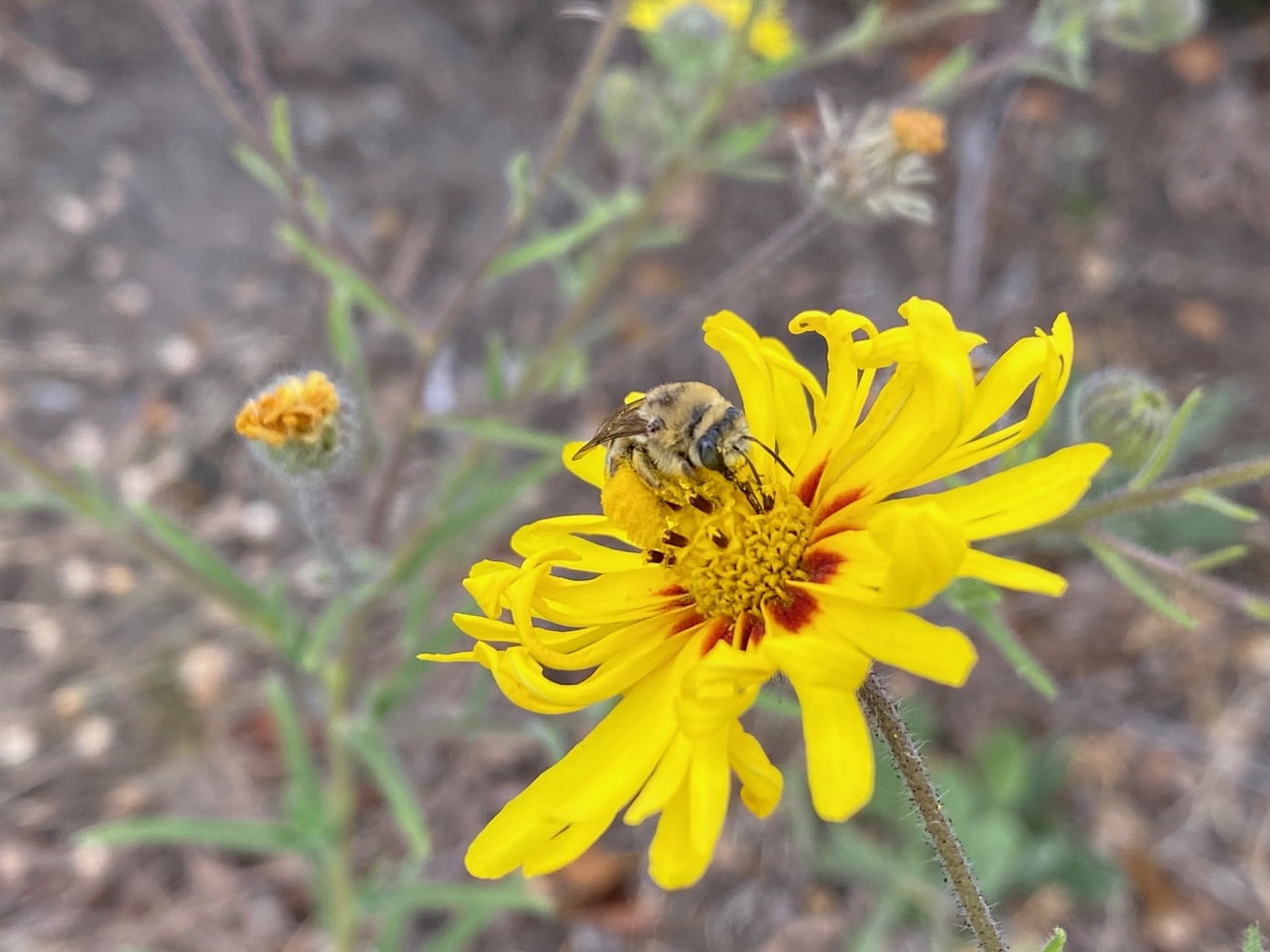
Even before the males wake up, a female Summer Longhorn Bees, Melissodes sp. (family Apidae) is out foraging on the Elegant Tarweed, Madia elegans, her scopae already bulging with pollen.
The Summer Longhorn Bees, Melissodes sp. (family Apidae) are medium to large bees, stout-bodied, usually with gray/brown hair on the thorax and pale hair bands on the abdomen. Males usually have yellow markings on their faces and have very long antennae from which their common name is derived. They are active May to September, with peak flight in late June to early August. The females prefer flat, bare ground for digging their solitary nests, though they sometimes nest in aggregations. Pollen is transported in scopae on the hind legs. Pollen loads are often copious and brightly colored and thus very distinguishable. Melissodes are specialists on Asteraceae – females gather pollen from flowers of Aster, Bidens, Coreopsis, Cosmos, Encelia, Gaillardia, Helianthus, and Rudbeckia ssp.
With rapid footwork on the florets, the female Longhorn Bee pivots around the tarweed flowerhead in a characteristic manner, gathering a huge amount of pollen into her prodigious scopae in no time. I have hardly seen these females on flowers other than members of the Asteraceae. They probably take their nectar from these flowers as well while they collect pollen from them.
Specialist bees have evolved to efficiently collect pollen from certain plants, often due to unique floral structures that match their body shape and specialized hairs. While pollen collecting is specialized, nectar foraging is often more flexible. Bees may visit various flowers for nectar, even those outside their pollen specialization, as long as the nectar is accessible and provides sufficient energy.
Pollen grains are loosely held by electrostatic attraction to the hairs of the scopae. Because pollen in scopae are not moistened and compacted, it falls off easily. It is believed that bees that transport pollen in scopae are better pollinators than bees that pack moistened pollen in corbiculae (“pollen baskets”), such as honey bees and bumble bees.
As the bee gathers pollen, her scopae fill up quickly. A Melissodes female can create and provision one nest cell per day.
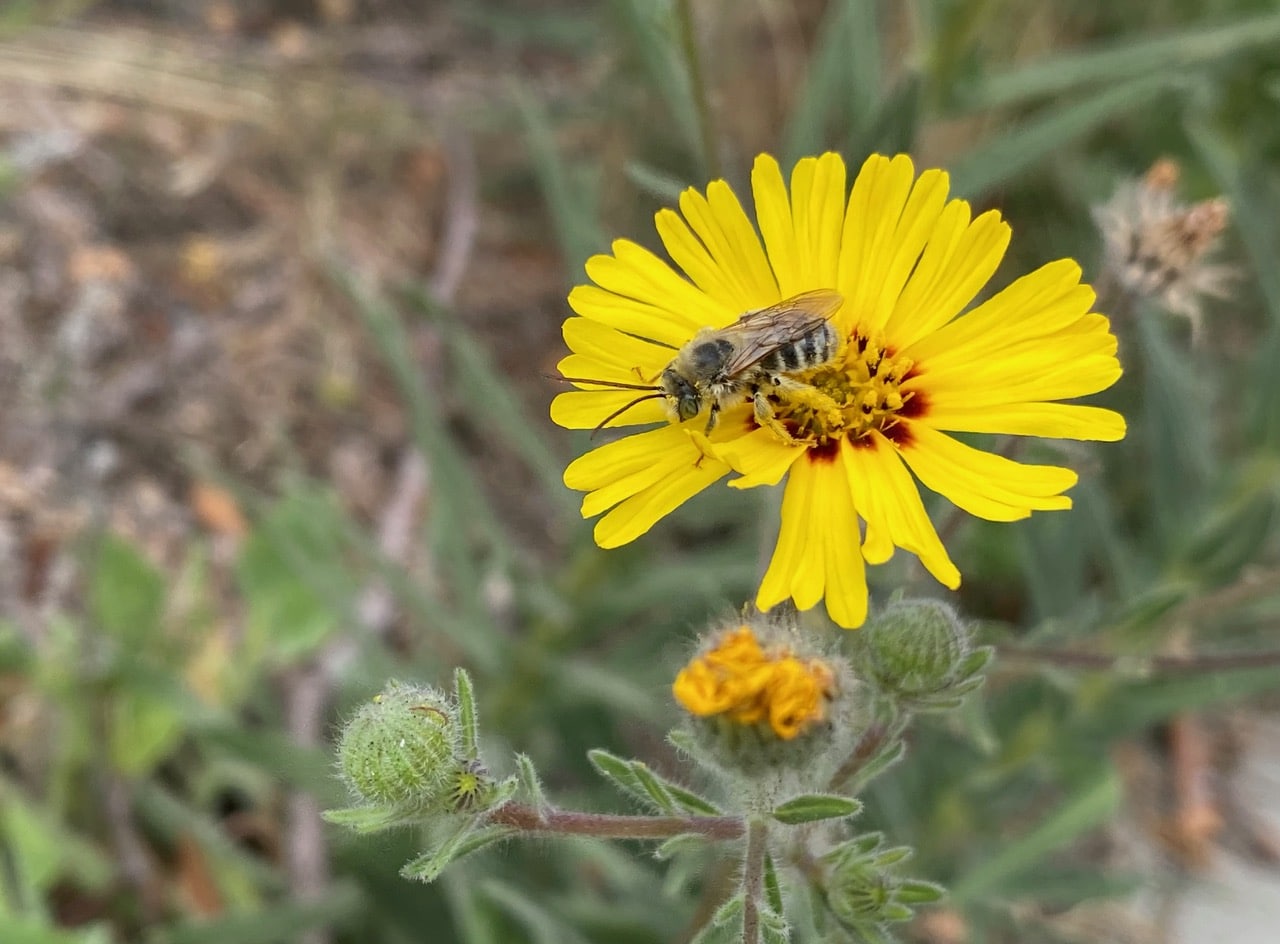
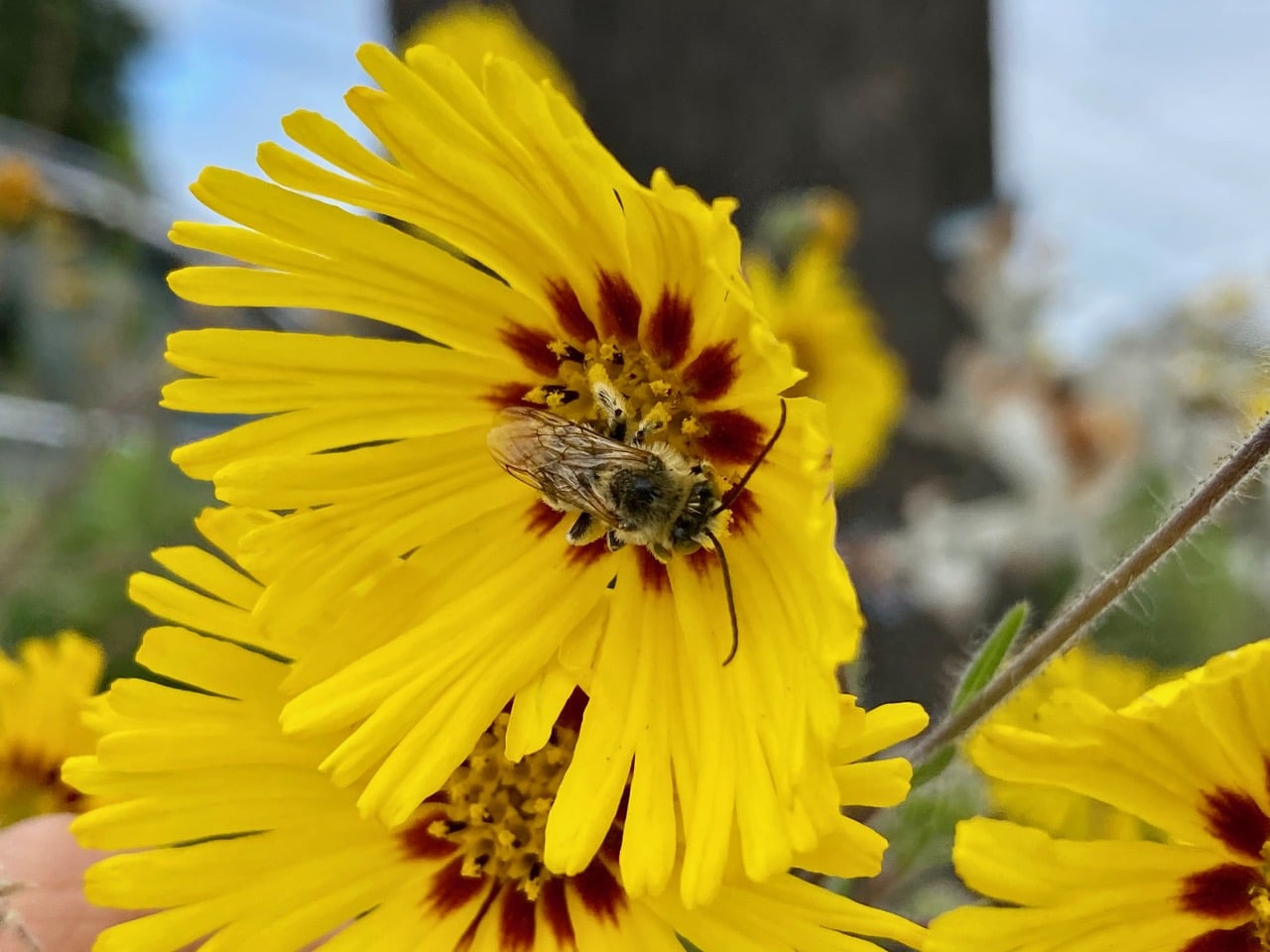
Soon after the males leave their sleeping aggregation on the seed heads, they can be seen seeking nectar on the tarweed flowerheads.
This male Longhorn Bee clings tightly to the tarweed flowerhead as it is blown about wildly by the wind. The very long antennae of the males give rise to the common name of “longhorn”.
Male bees do not collect pollen. Neither do they have the equipment for the job (Note the absence or scopae on the hind leg). Males do not construct nests, sleeping out in the open at night in aggregations. So the males don’t bring home the bacon, and they don’t help around the house. What good are they?
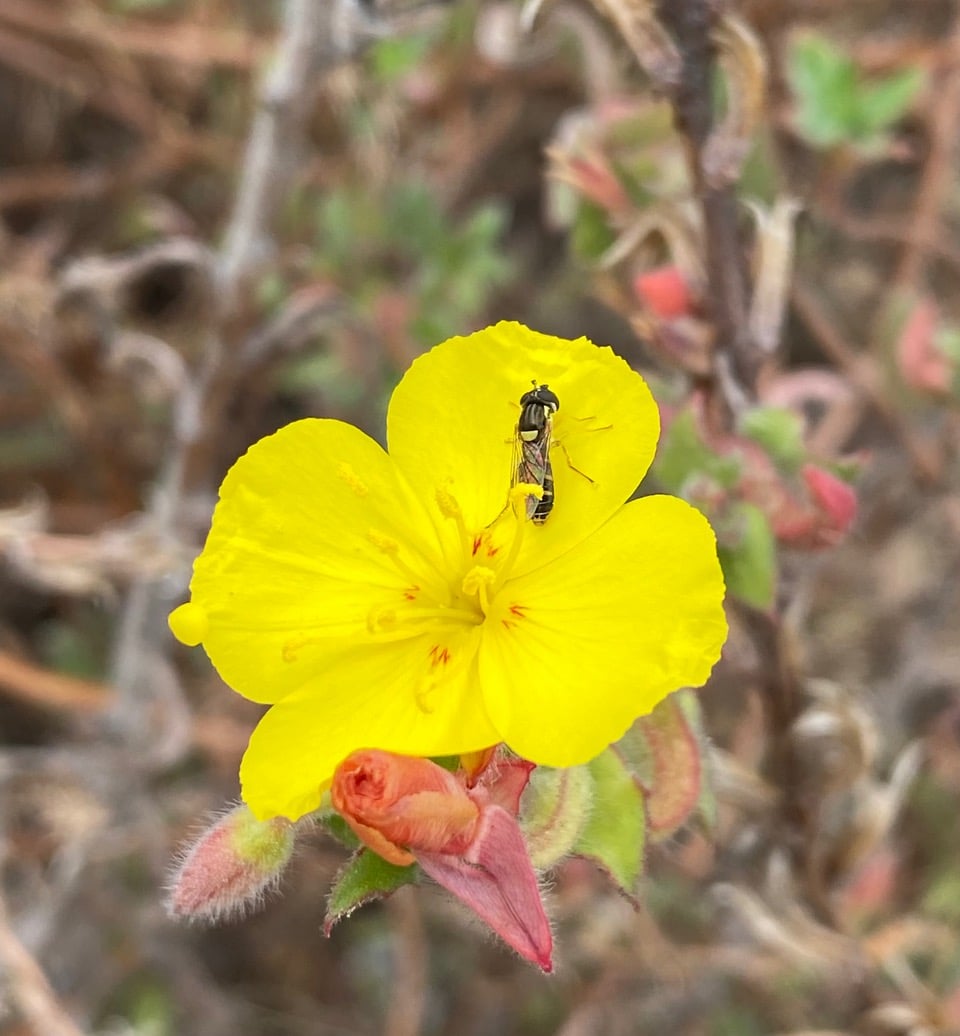
A female Forked Globetail, Sphaerophoria sulphuripes (family Syrphidae) visits a flower of the Beach Evening Primrose, Camissoniopsis cheiranthifolia.
Sphaerophoria sulphuripes is native to western North America. There is marked sexual dimorphism in the Forked Globetail – the males have a narrow abdomen with a reddish, swollen tip. Adults visit flowers for nectar and pollen. The larvae of Sphaerophoria feed on aphids and other soft-bodied insects.
Forked Globetail (Sphaerophoria sulphuripes) · iNaturalist
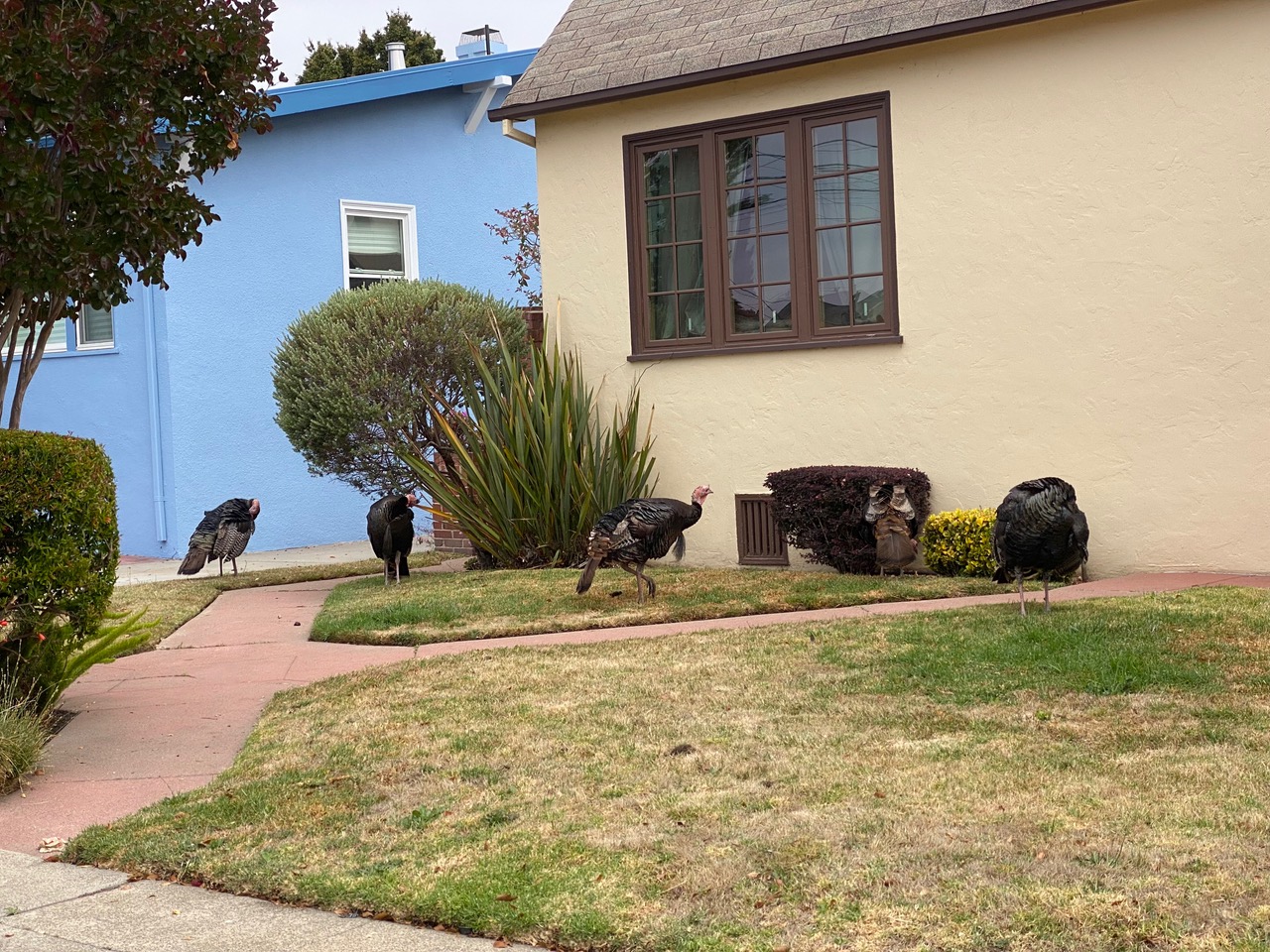
When I look up from the flowers, I find five large turkeys preening themselves on the lawn. How bizarre! This is a busy street with constant traffic. Where did the turkeys come from?