

Pollinator Post 6/8/25 (2)
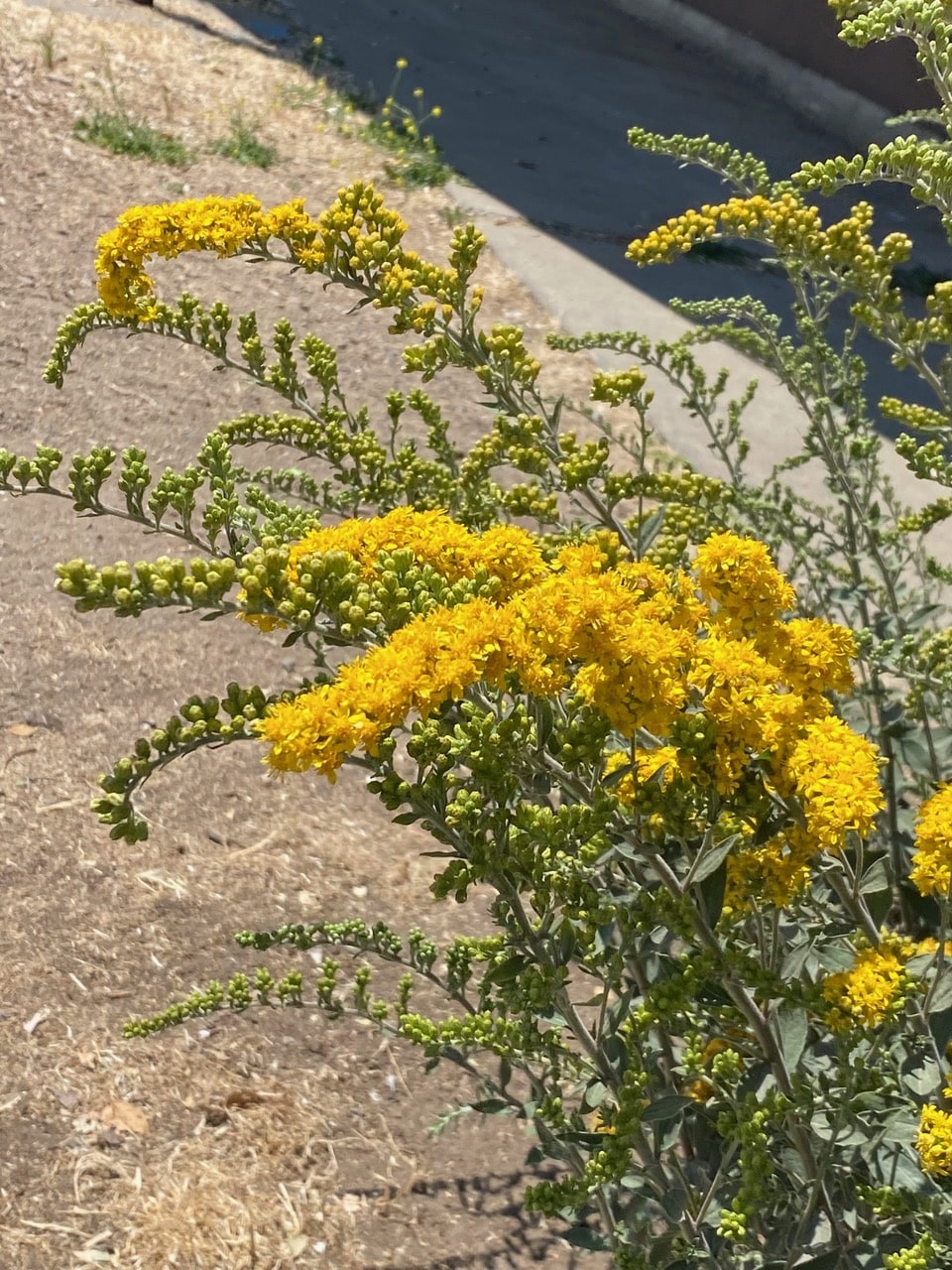
Further on along the curb, the California Goldenrod, Solidago velutina ssp. californica is starting to bloom.
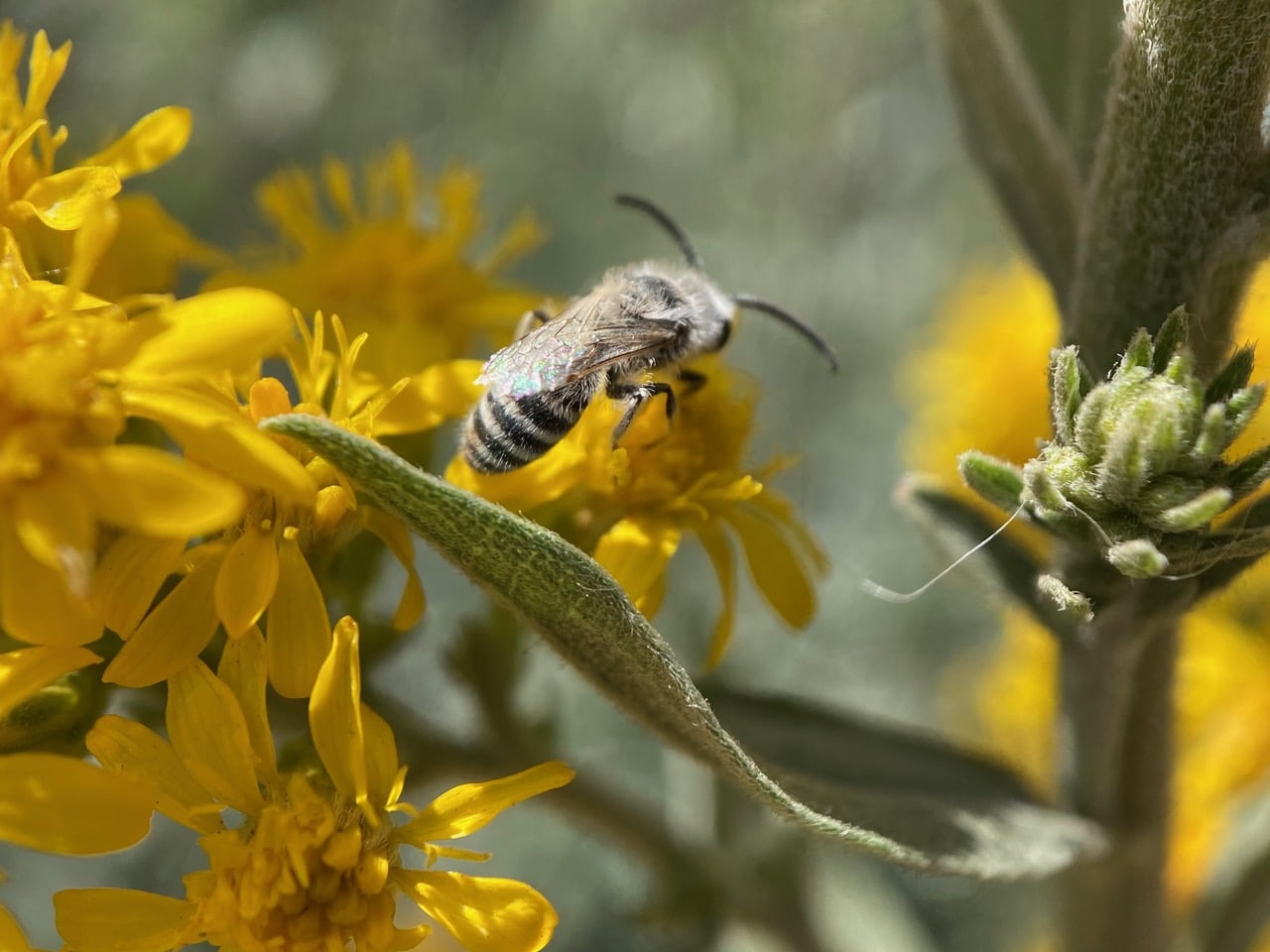
A male Cellophane Bee, Colletes sp. (family Colletidae) is foraging on the small flowers of California Goldenrod.
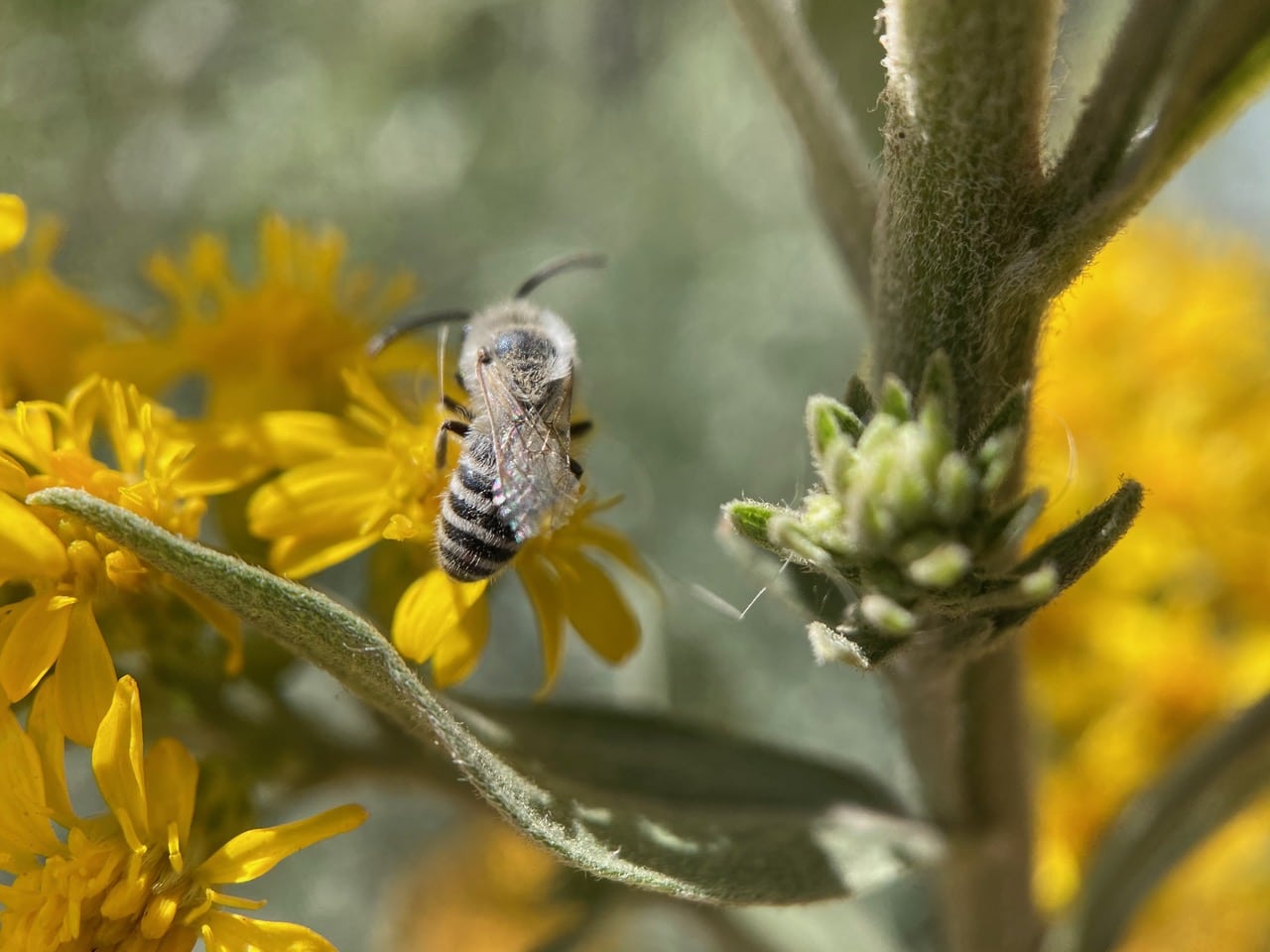
The bee family Colletidae includes generalists and specialists, and they are likely important pollinators of many wildflowers. All Colletidae in North America are solitary ground nesters, but some species nest in large aggregations. There are two major genera of Colletidae in North America: the Masked Bees (genus Hylaeus) and Cellophane Bees (genus Colletes). The most obvious shared characteristics of Colletidae is also the hardest to see: their short tongue. Colletes are moderately hairy, slender bees, ranging in size from 7 to 16 mm. Distinct features include a hairy head and thorax, pale bands of hair on the abdomen, and a heart-shaped head. The eyes of Colletes are angled (rather than being parallel), making the face slightly heart-shaped.
The genus name Colletes means “one who glues”, referring to their habit of applying a glue- or cellophane-like lining to the walls of nest cells, using their specialized tongues. This lining gives rise to their common names: cellophane bees, polyester bees, and plasterer bees. Colletes tongue is unique: short, flat, and forked at the tip. Colletes line their nests with a distinctive cellophane-like substance made from saliva and secretions from the Dufour’s gland on the abdomen. Using their specialized tongue, they paint the walls with saliva, then with secretions from the Dufour’s gland, they add a coat of varnish. This creates a clear covering that is strong, durable, and resistant to mold and water.
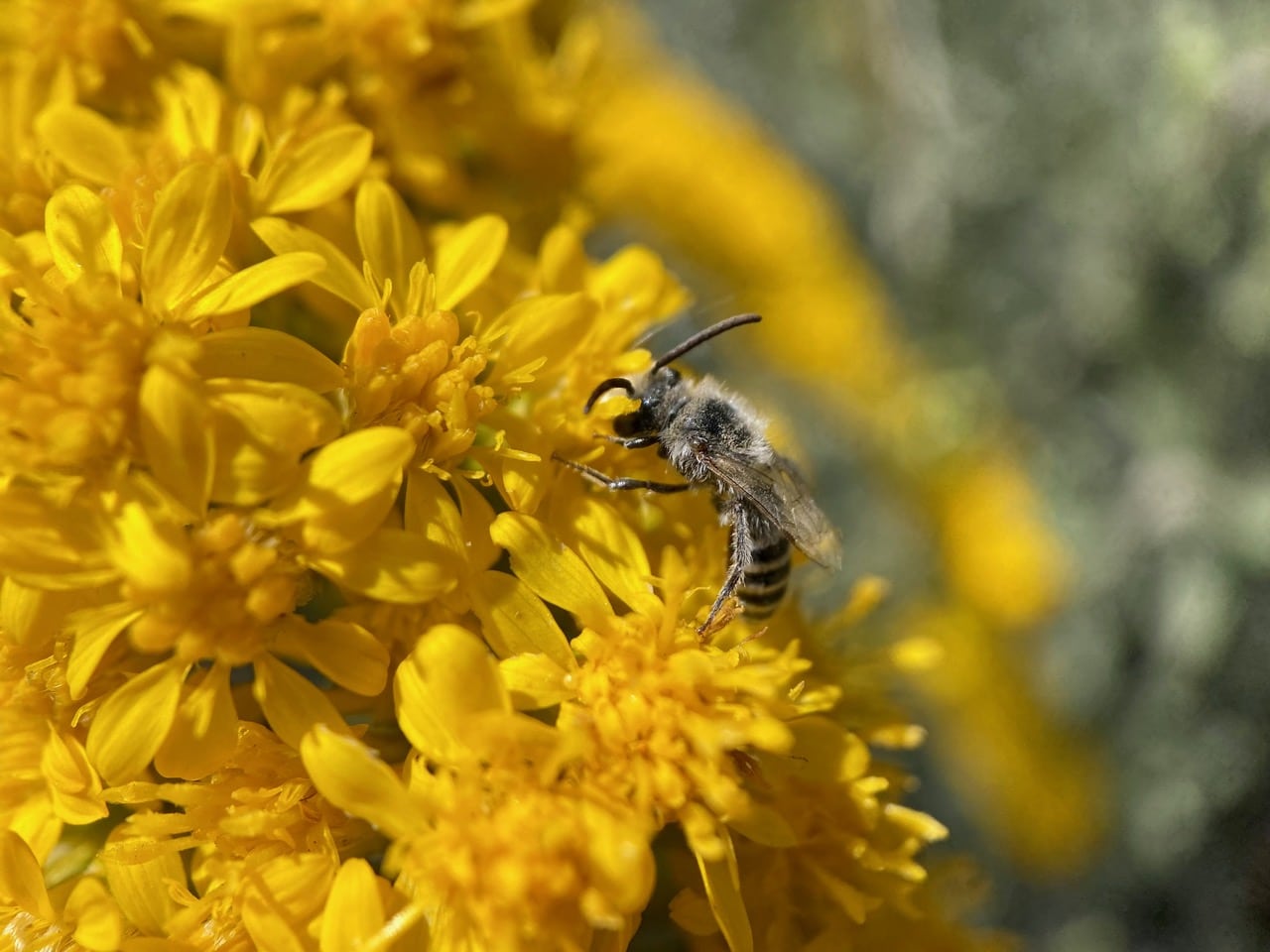
Yet another male Cellophane Bee, Colletes sp. (family Colletidae) is foraging on another inflorescence of California Goldenrod. Male bees generally have longer antennae than their female counterparts. Male antennae have an extra segment and the segments themselves are longer. This is because male antennae are specialized to pick up the subtle scent of female pheromones.

Note that the male lacks a scopa (special pollen collecting hairs) on his hind legs. Male bees do not collect pollen to provision the nest; neither are they anatomically equipped for the job.
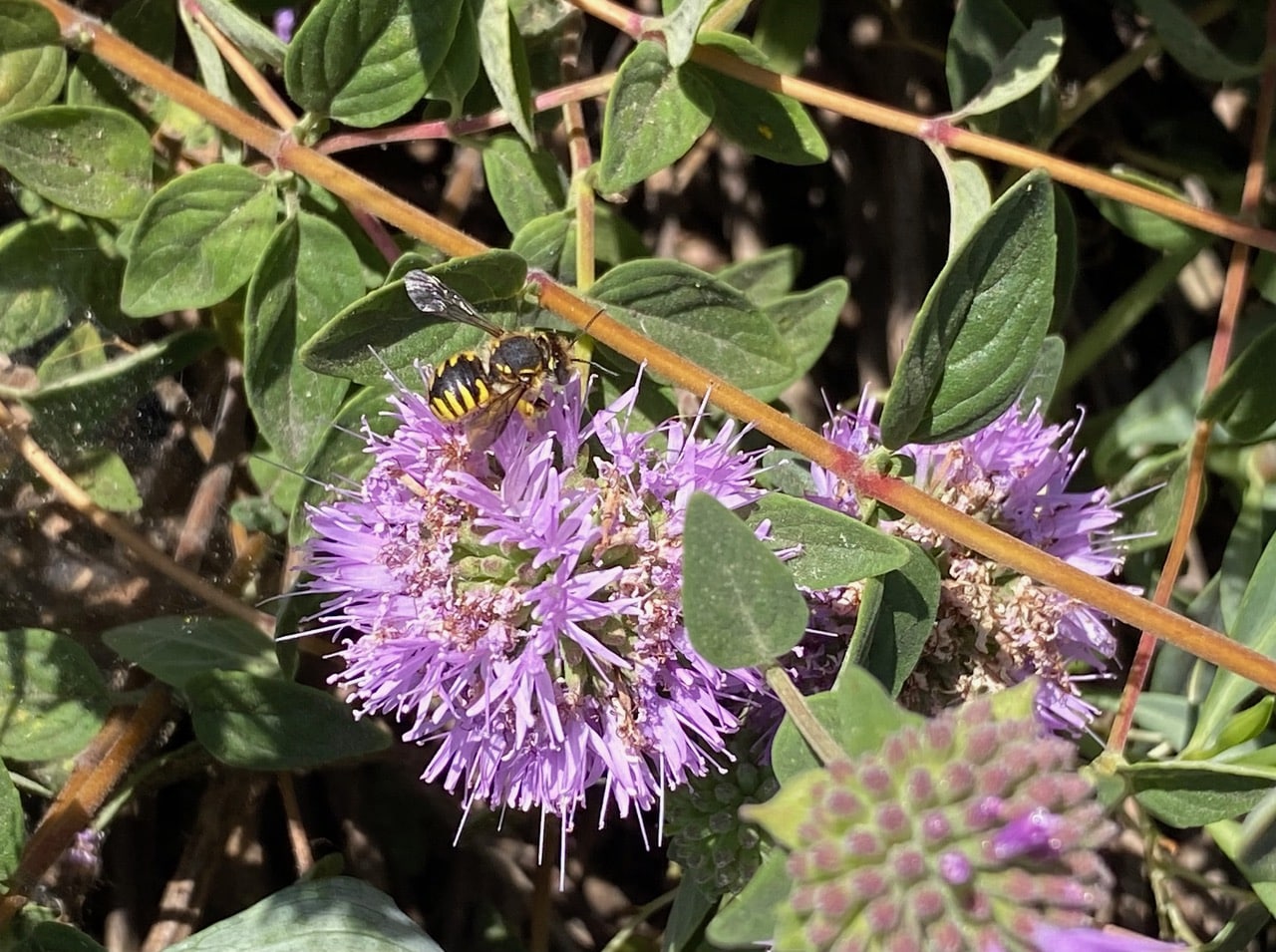
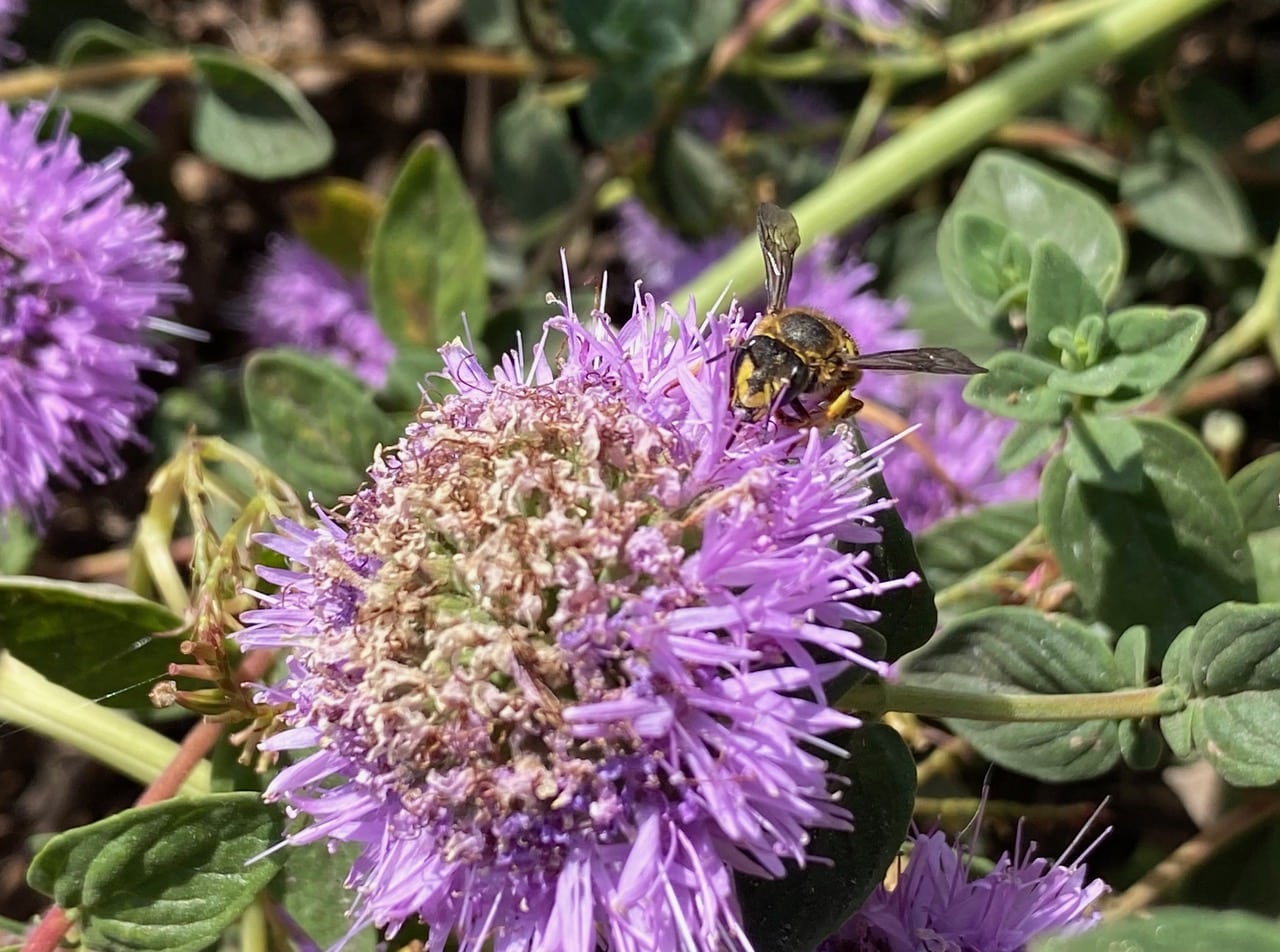
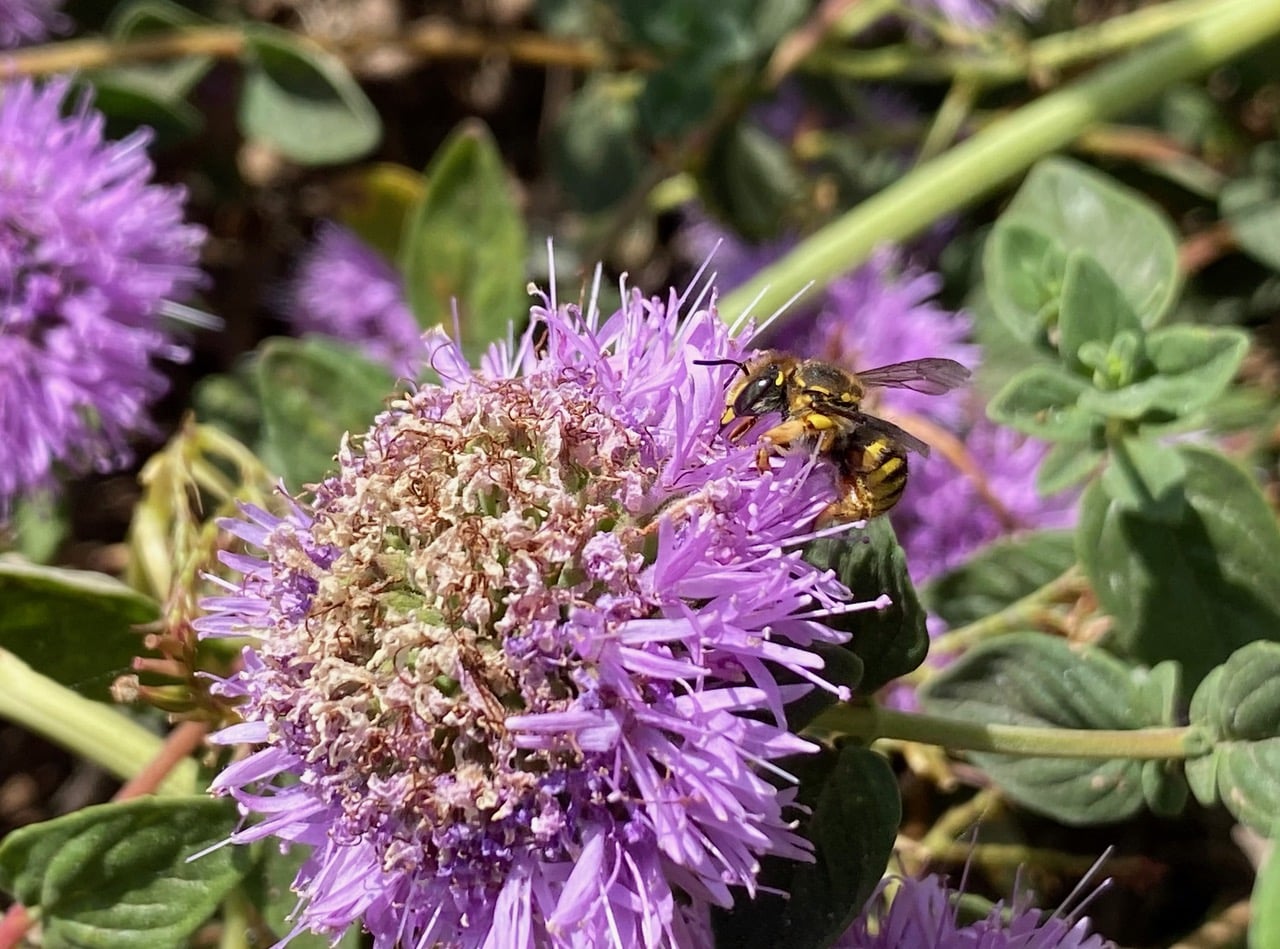
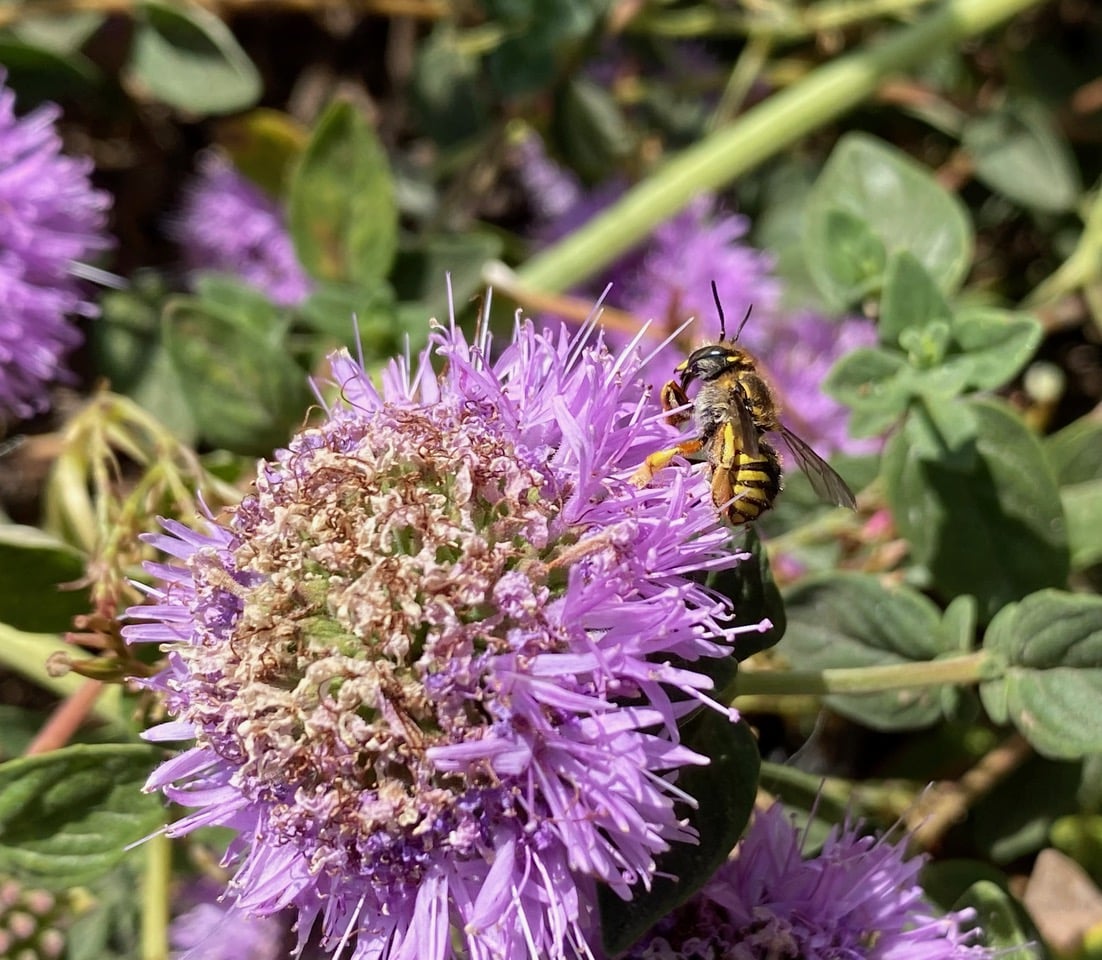
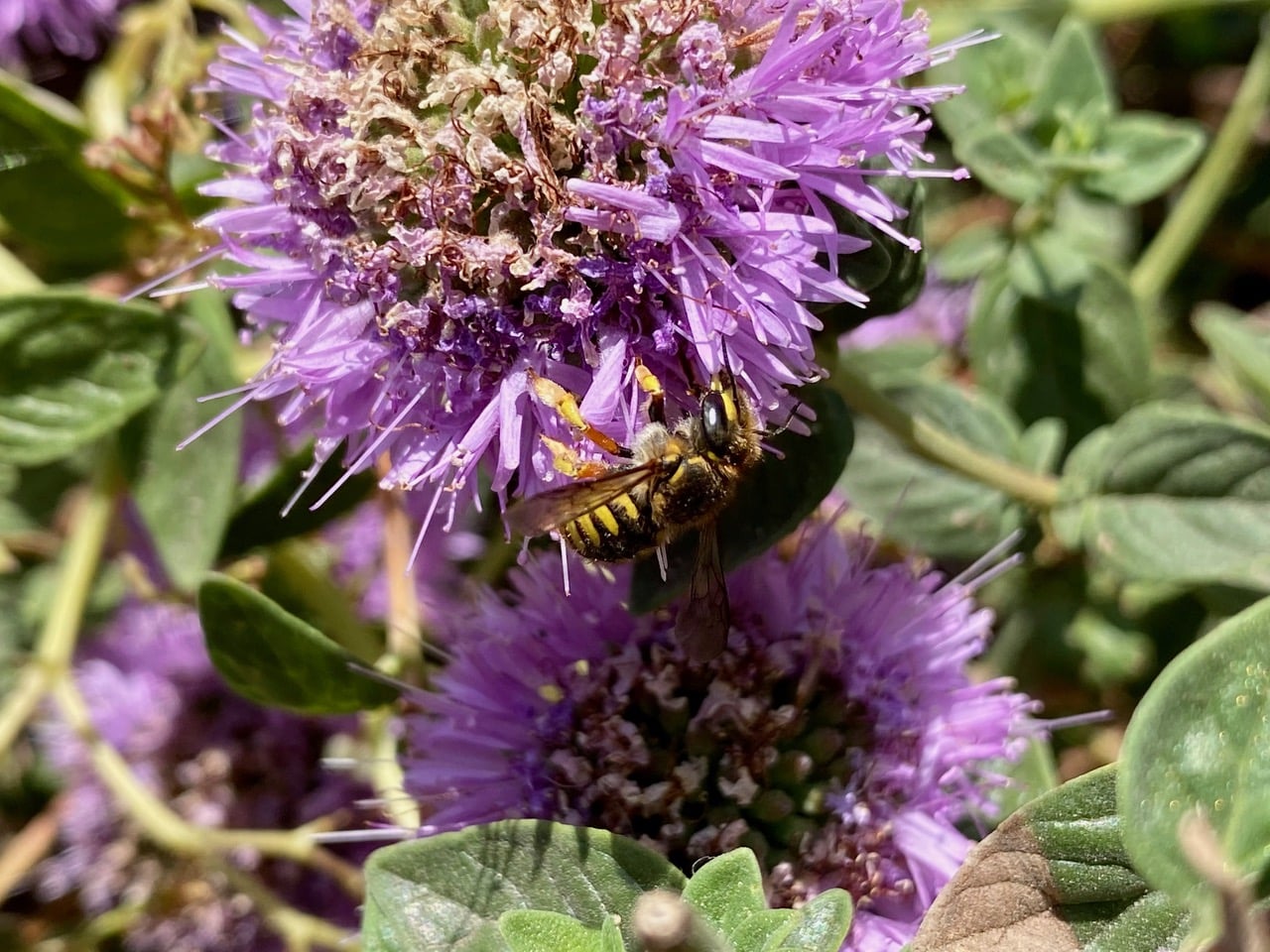
As I pass the patch of Coyote Mint, Monardella villosa again, I am delighted to see a European Woolcarder Bee, Anthidium manicatum (family Megachilidae) on a flowerhead. While I regularly see these bees on the flowers of Bird’s-foot Trefoil, I have never seen them on Coyote Mint. Coyote Mint after all is a member of the family Lamiaceae, favored by these bees. This individual is rather large and robust, and has long antennae – probably a male
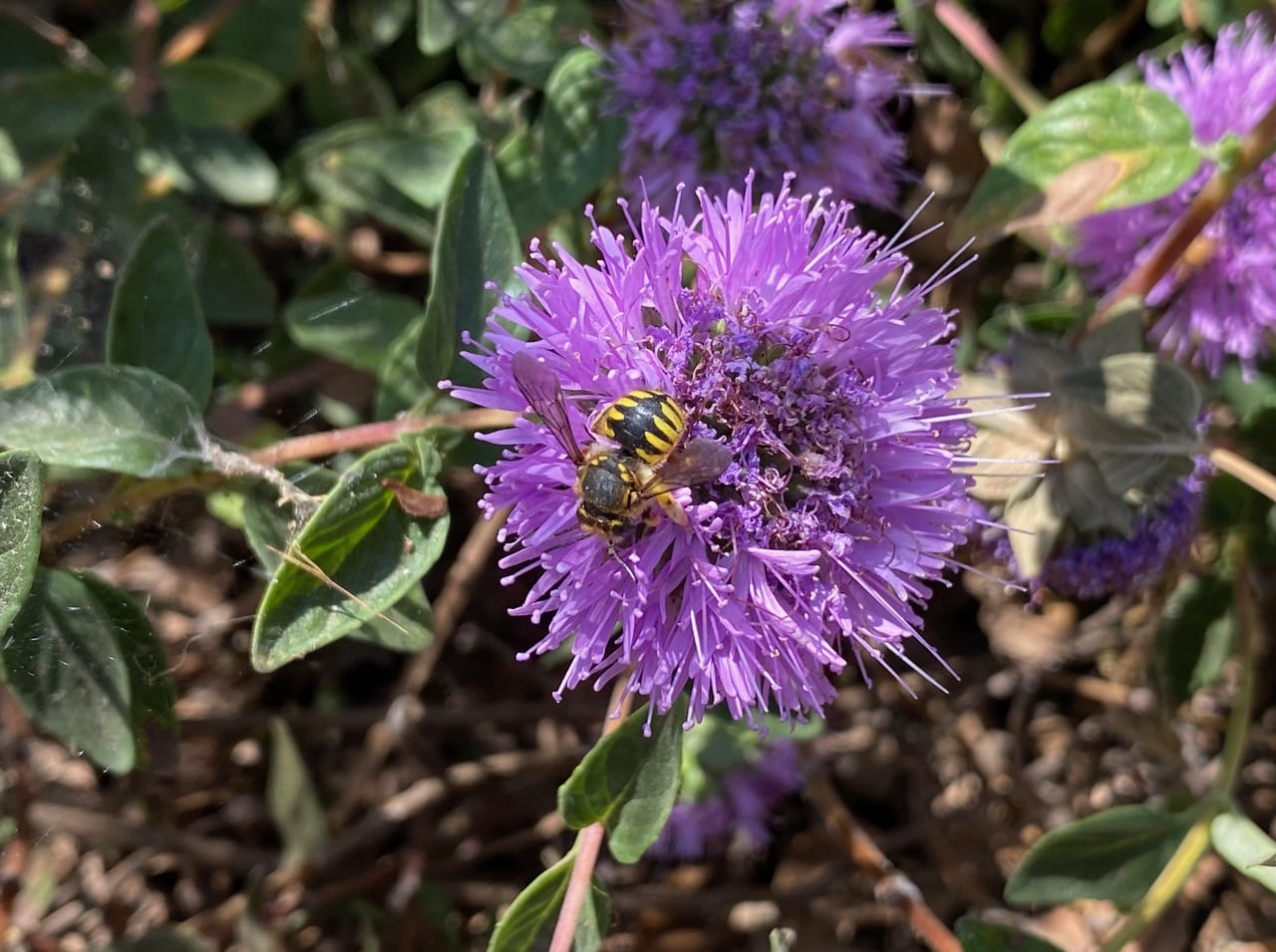
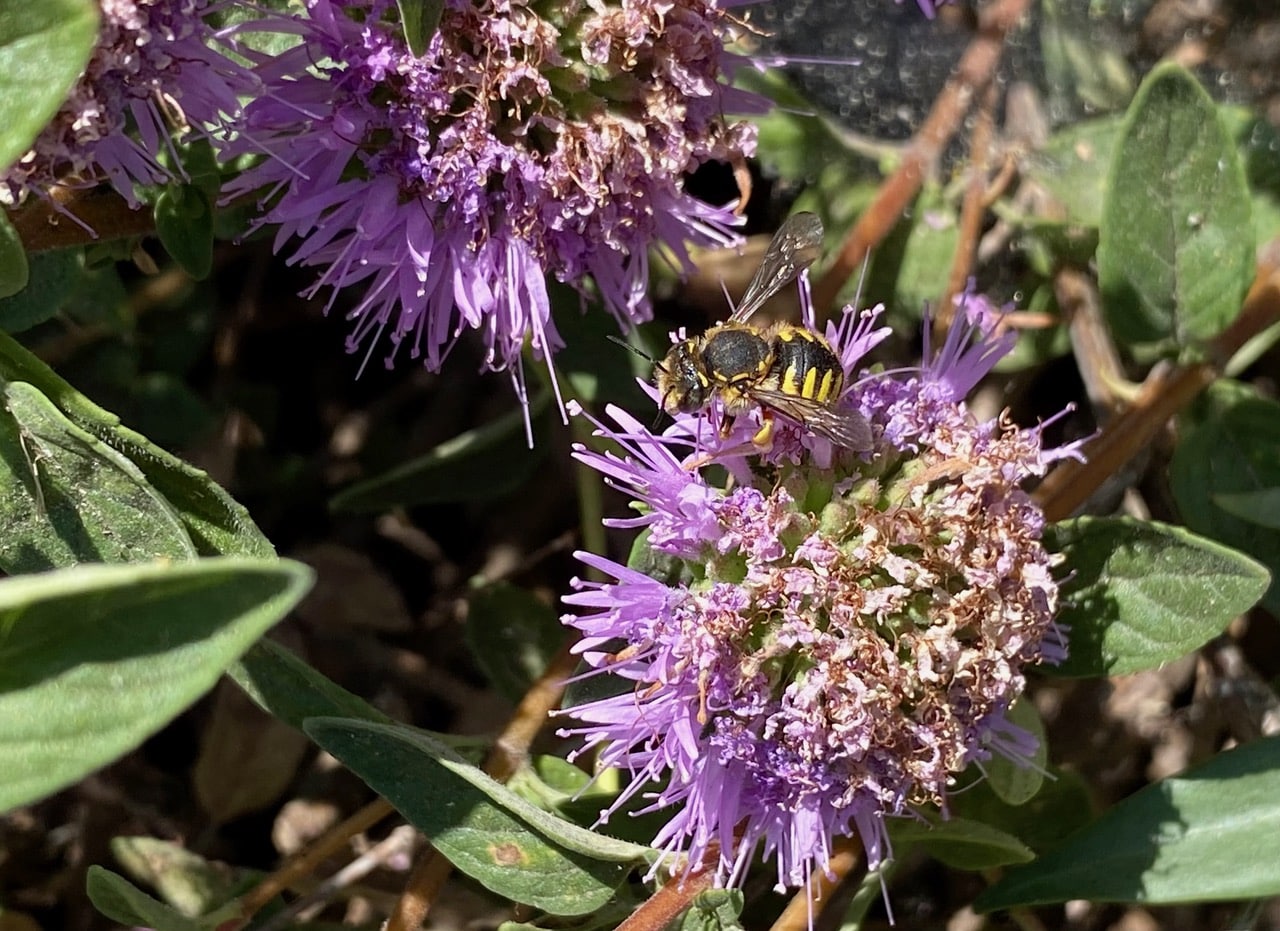
Anthidium manicatum, commonly called the European Woolcarder Bee, is a species in the family Megachilidae, which includes the leaf-cutter bees and mason bees. They get the name “carder” from the behavior of the females scraping hair from leaves and stems of wooly plants. The substantially larger males engage in territorial behavior, aggressively chasing other males and pollinators from their territory. They mate with the females that forage in their territory. The females construct their nests in pre-existing cavities, using the hairs of wooly plants that they collect with their sharply toothed mandibles. They then roll up the fibers into a ball and transport them to the nest to line the nest cell, where they lay an egg and a provisioning mass consisting of nectar and pollen. Females largely use the hairs of plants in the mint family, Lamiaceae, especially those of genus Stachys and Betonica. The European Woolcarder Bees visit a wide range of flowers, with a preference for blue flowers that have long throats. They are considered generalists. Females carry pollen in the scopa on the underside of their abdomen. Both males and females can hover in midair near flowers similar to the hover flies (family Syrphidae).
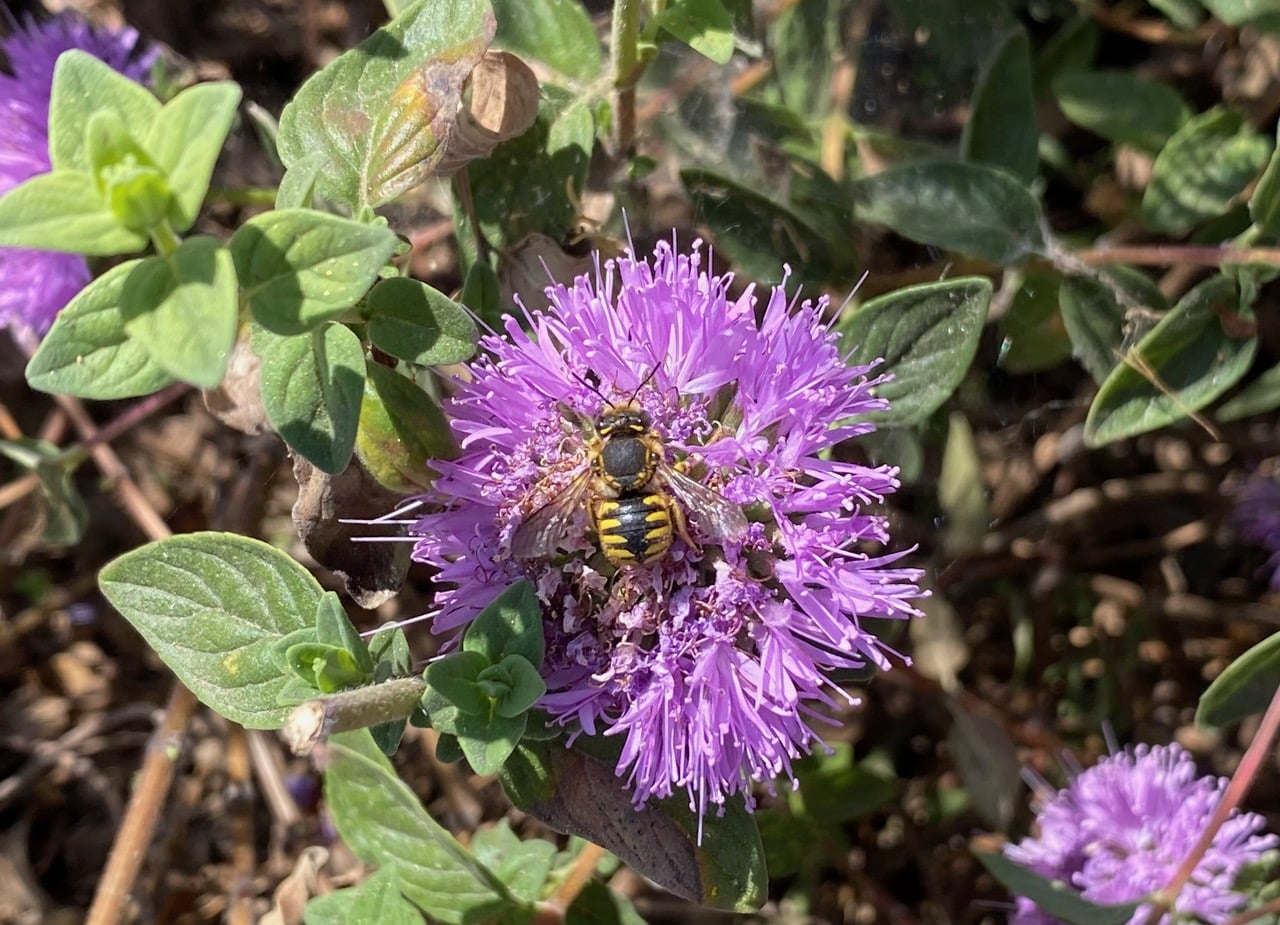
There are no other Woolcarder Bees around, so there’s none of the usual frenzy and territorial scuffle in this patch of Coyote Mint. The bee takes its time – I have never had such an easy time photographing an Anthidium!



I finally get to relax on the beach, close to my favorite patch of Seaside Woolly Sunflower, Eriophyllum staechadifolium.
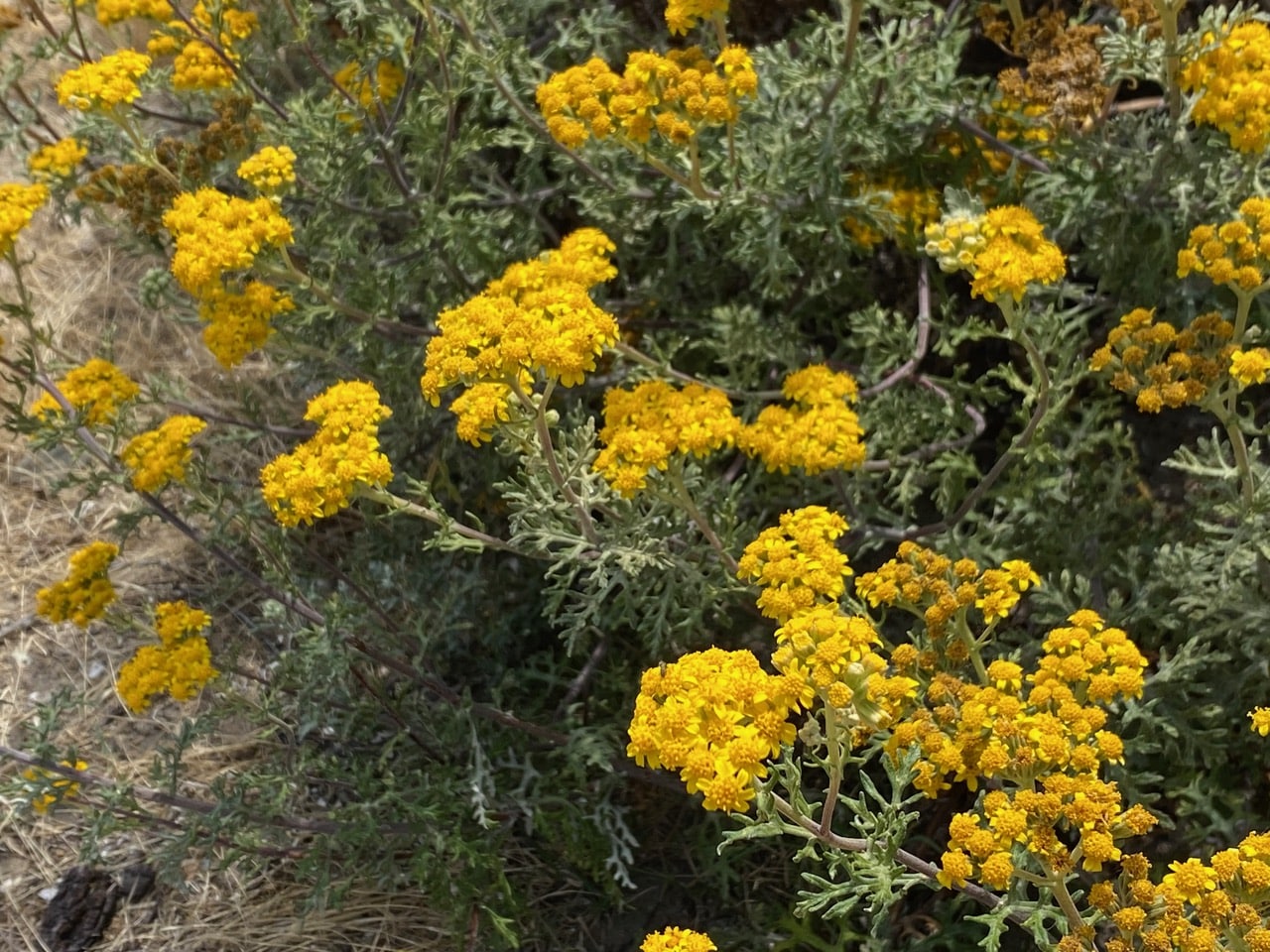
There is the usual intense insect activity on the golden inflorescences, but I have already photographed most of these insects before…
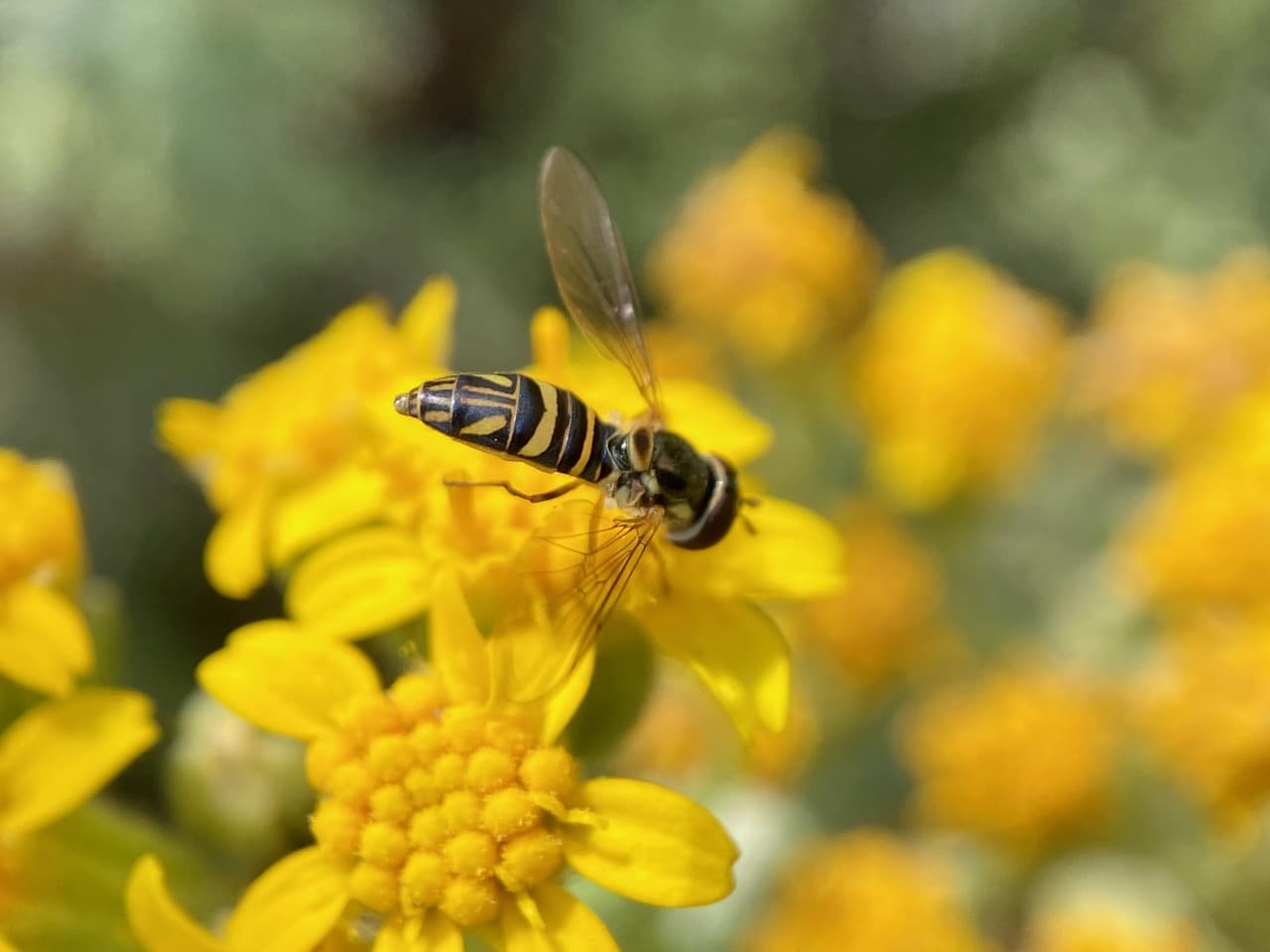
…except perhaps the Oblique Streaktail, Allograpta obliqua (family Syrphidae). It is a female, as she has a pointed tip to her abdomen.
Although small in size (6-7 mm long), the Oblique Streaktail is easily recognizable for the unique pattern on its black-and-yellow abdomen. It is a common North American species of hover fly. Adults visit flowers for nectar and pollen, and are pollinators. Females lay eggs on plant surfaces near aphids. Larvae feed on the aphids.