

Pollinator Post 6/8/24 (1)

The weather up here at Skyline Gardens can be astonishingly different from where I live in Oakland. I am no longer surprised to see the place shrouded in fog this fine morning. It’s a welcome respite from the heat we have been experiencing.

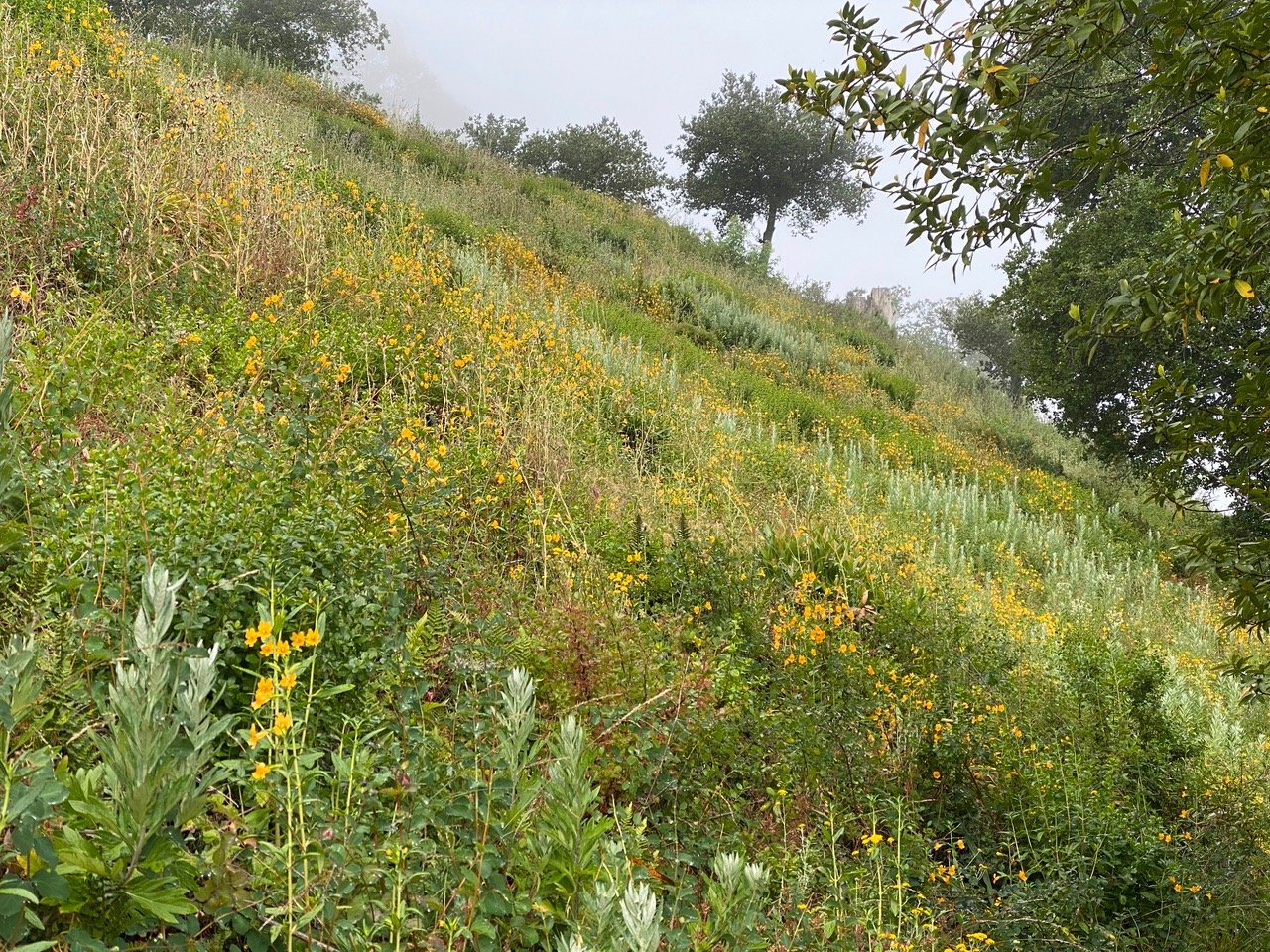







This stretch of Skyline Trail near Siesta Gate always reminds me of the importance of fog drip in maintaining the vegetation in the garden. Sometimes I get water dripping on me as I walk under these Bay trees.
The hillside has burst out in orange-yellow flowers of Sticky Monkeyflower, Diplacus aurantiacus.
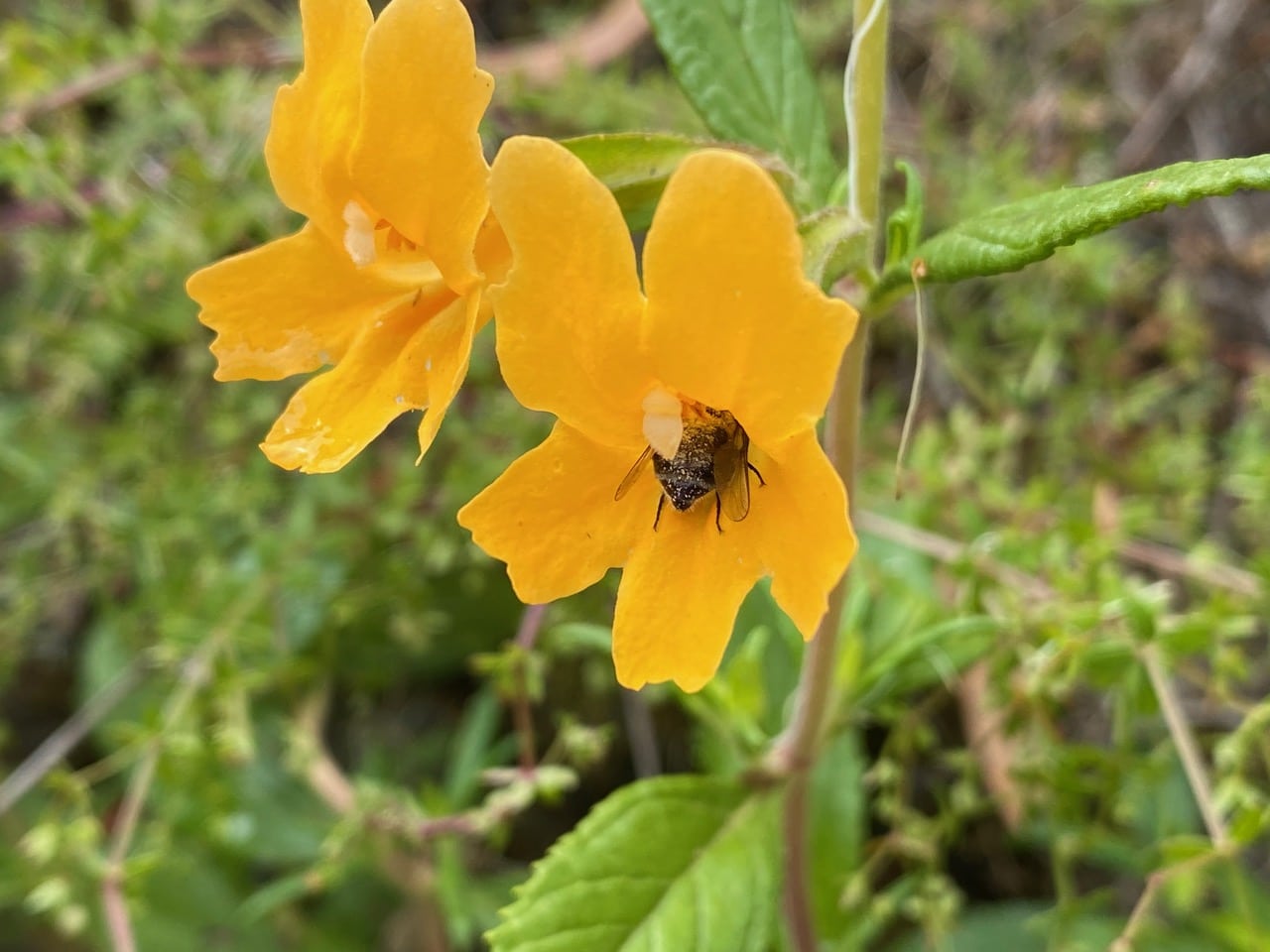
A Small-headed Fly, Eulonchus sp. (family Acroceridae) is still asleep in a Sticky Monkeyflower, its back covered with the yellow pollen that has fallen from the anthers above. It seems a partnership made in heaven, the fly gets shelter from the elements, the flower gets pollinated. It is worth getting out early just to witness this.
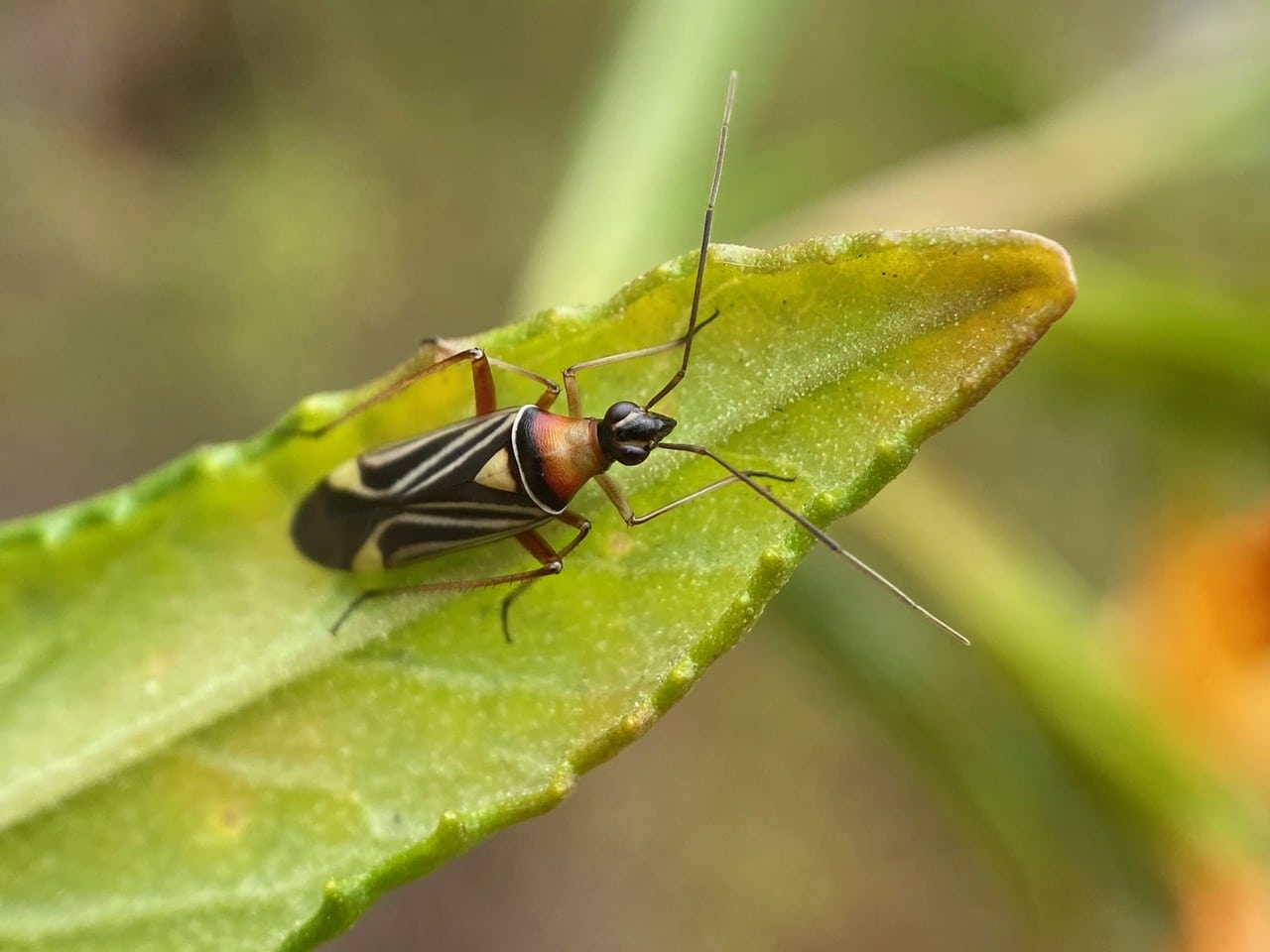
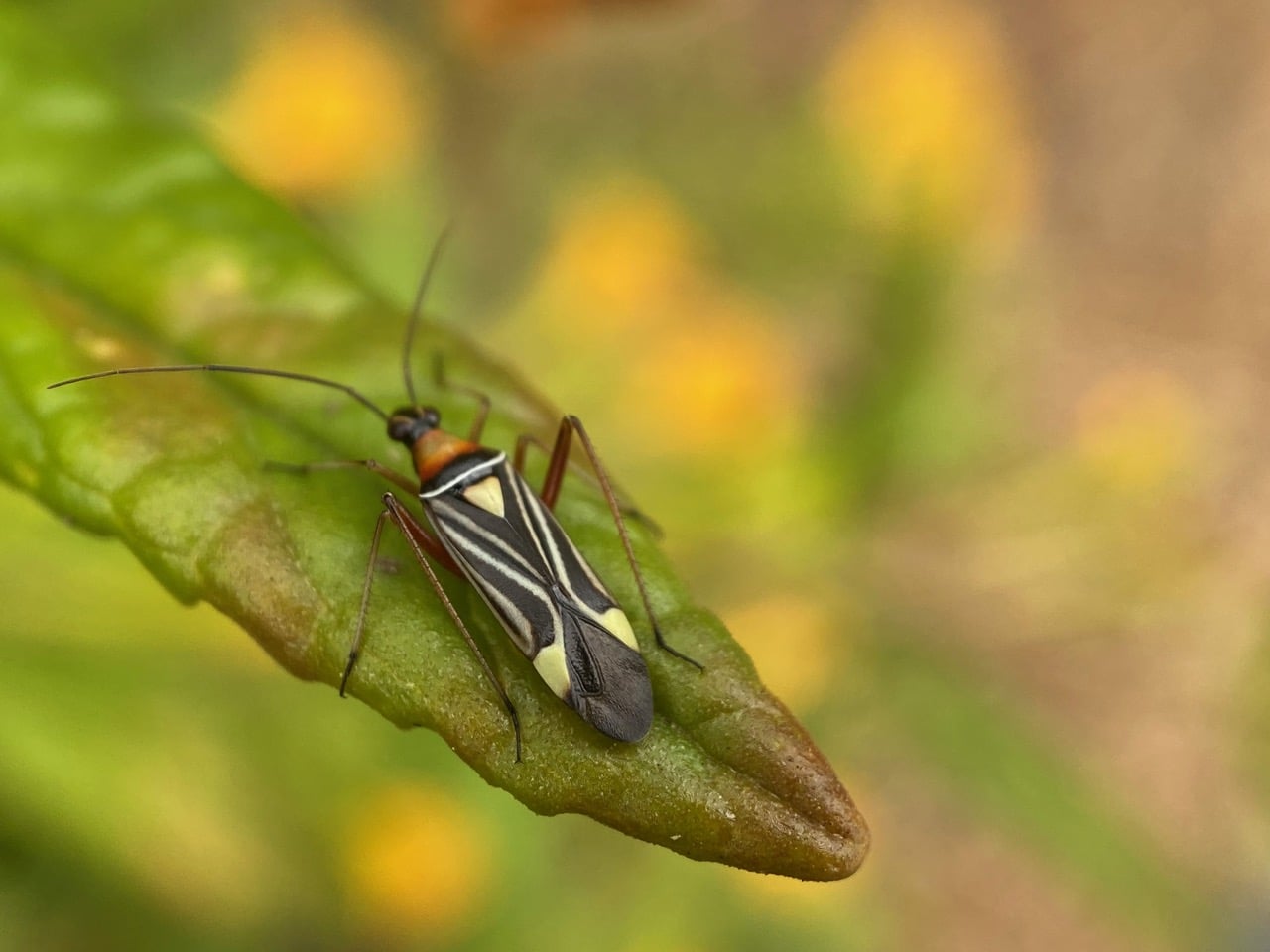
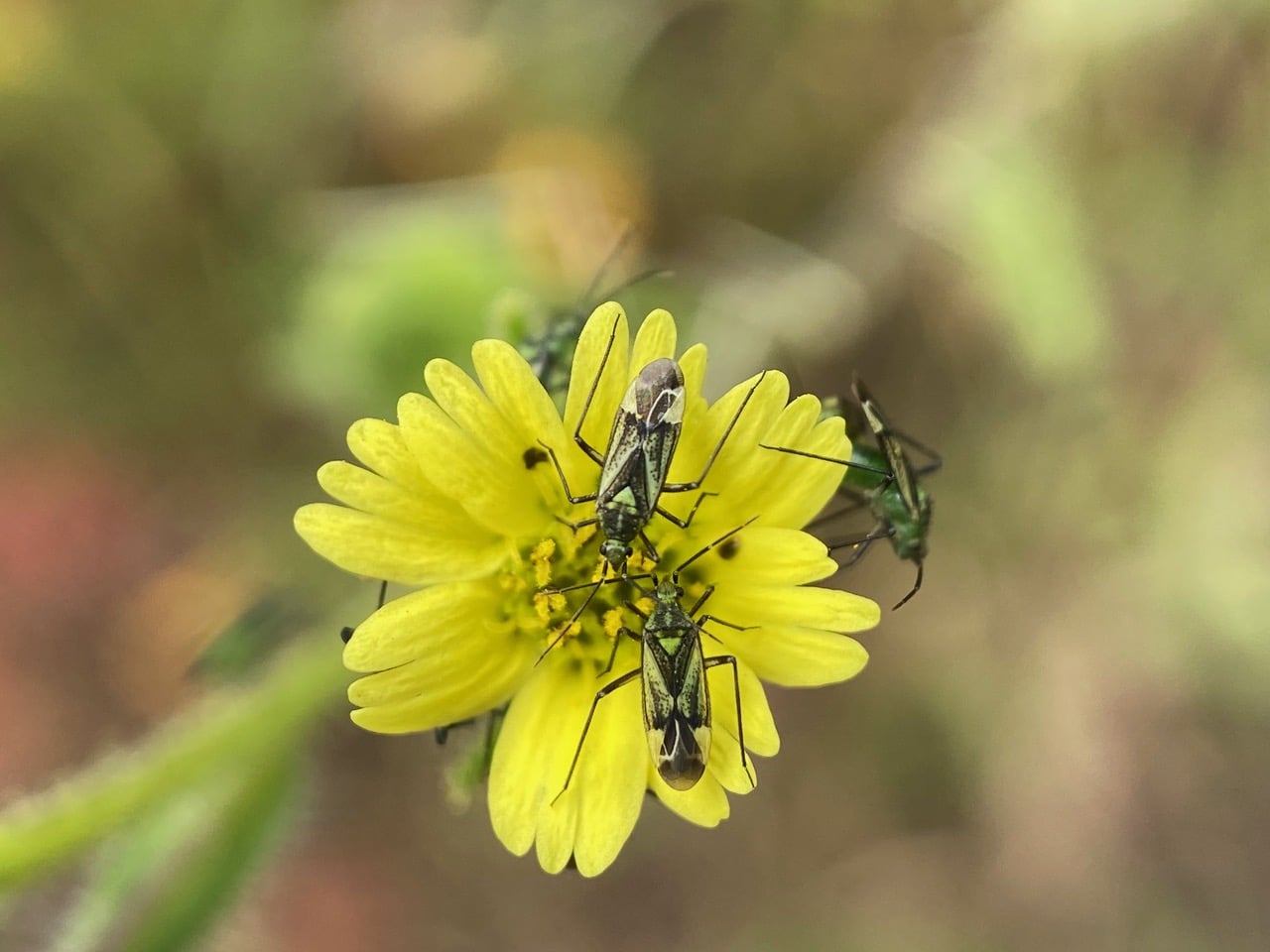
Hey, that’s the first adult Plant Bug, Closterocoris amoenus (family Miridae) for me this year! I have been seeing the ant-mimic nymphs lurking in the Sticky Monkeyflowers over the past couple of weeks. They have finally grown up!
Mirid bugs are also referred to as plant bugs or leaf bugs. Miridae is one of the largest family of true bugs in the order Hemiptera. Like other Hemipterans, Mirids have piercing, sucking mouthparts to extract plant sap. Some species are predatory.
“True bugs” in the order Hemiptera undergo incomplete metamorphosis without a pupal stage. The nymphs, which look like adults, develop through a series of molts, each time getting bigger after shedding their old exoskeleton. At the last molt, they transform into adults with functional wings and reproductive parts.
One useful feature in identifying members of the family Miridae is the presence of a cuneus; it is the triangular tip of the corium, the firm, horny part of the forewing, the hemielytron. The cuneus is visible in nearly all Miridae.

Gee, I wonder what kind of caterpillar that is? Look at the damage it has done to the flower.
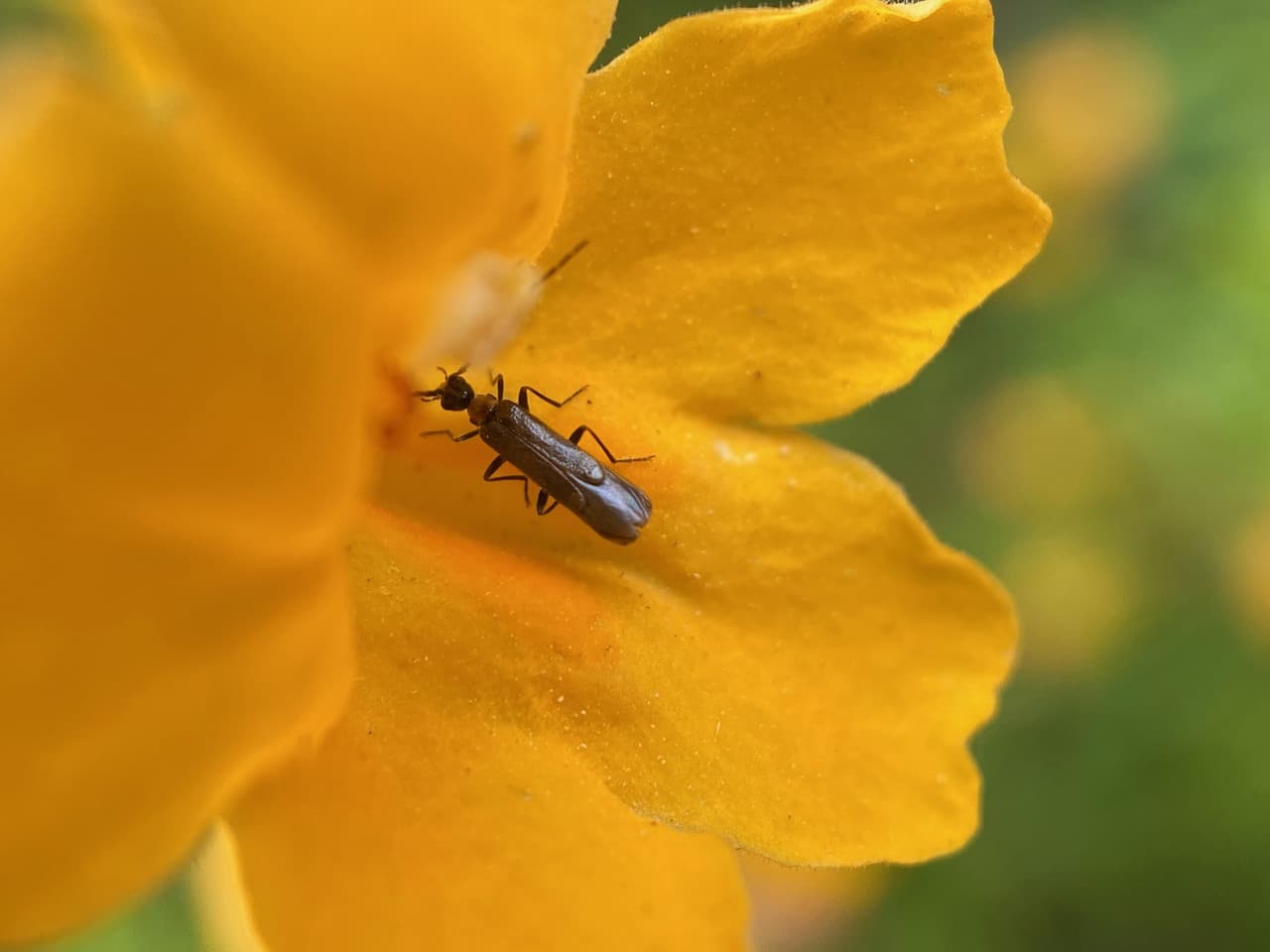
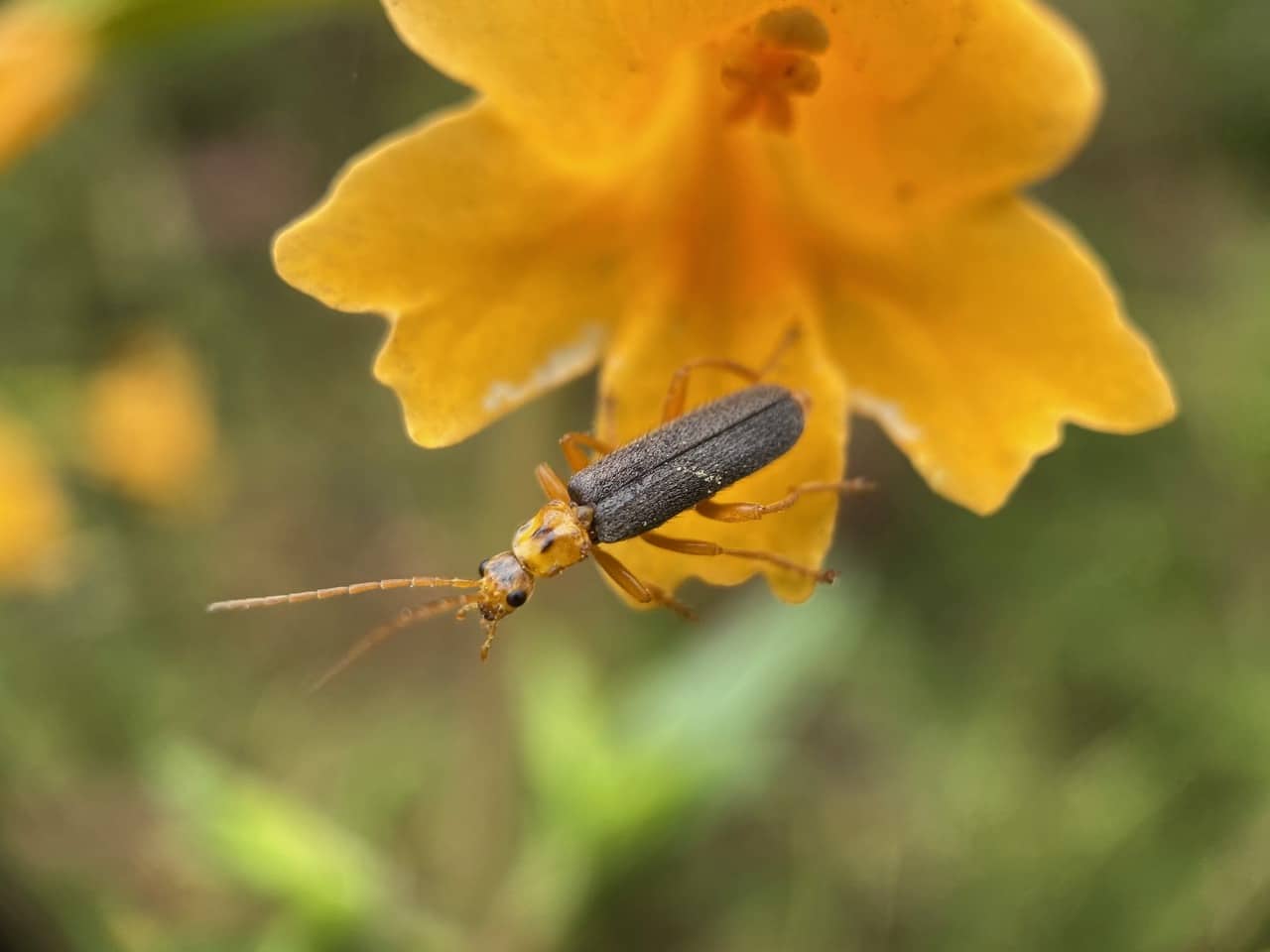
Wow, that is one small Soldier Beetle (family Canthariedae)! From its size and its short elytra that don’t fully cover the hindwings, I recognize it as a member of the genus Malthodes.
The Soldier Beetles, family Cantharidae are relatively soft-bodied, straight-sided beetles. One of the first described species has a color pattern reminiscent of the red coats of early British soldiers, hence the common name. They are also known commonly as Leatherwings because of their soft elytra.
Soldier beetles often feed on both nectar and pollen as well as predating on other small insects. The larvae are often active, and feed on the ground, hunting snails and other small creatures. Soldier beetles are generally considered beneficial insects by gardeners.
Malthodes is the most speciose Cantharidae genus, with about 130 ssp. in our area. It is distinguished by small size (1-4 mm) and having short elytra which leave the inner wings partly exposed and folded along the dorsal surface of the abdomen.
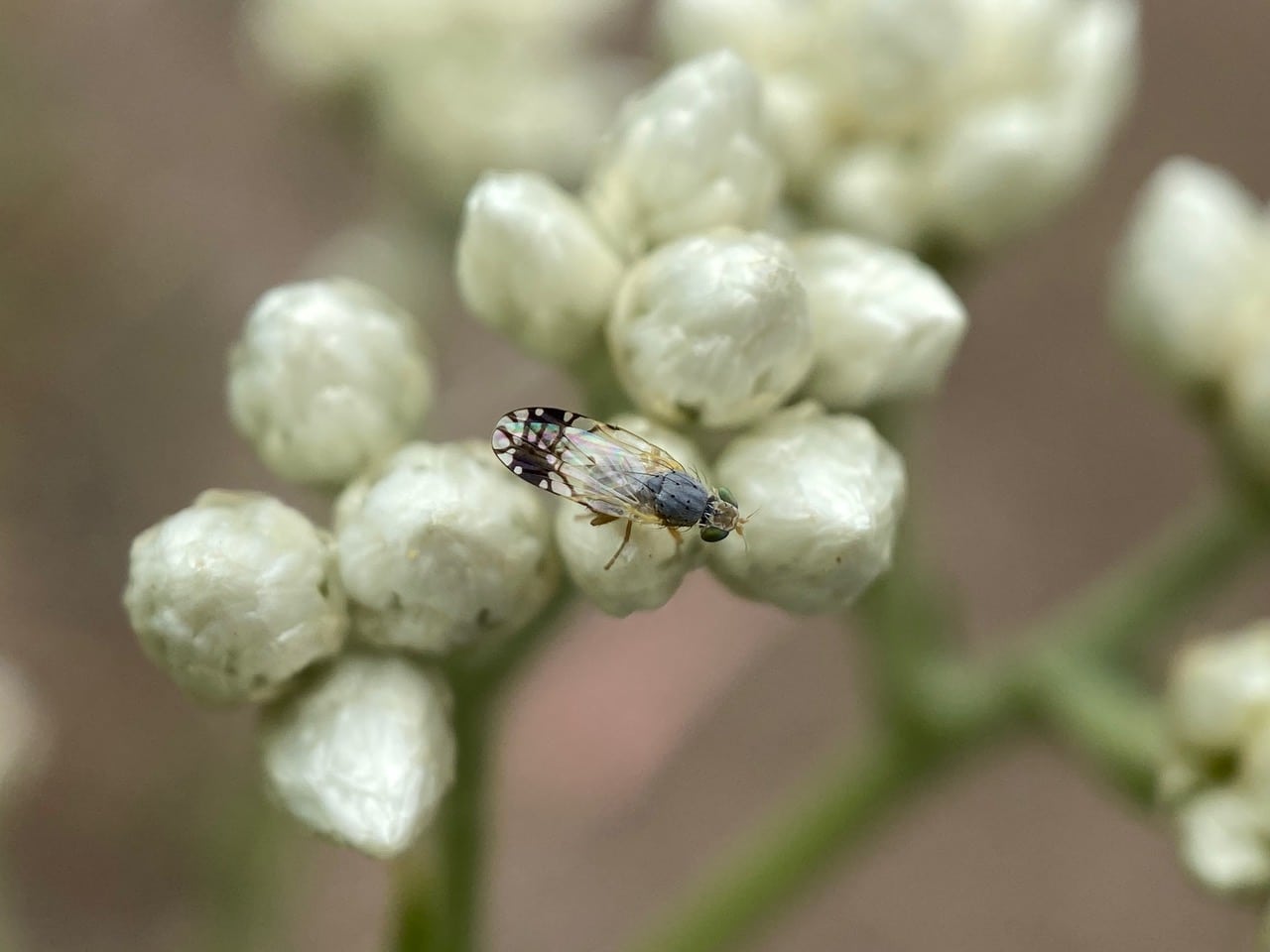
A Fruit Fly, Trupanea sp. (family Tephritidae) is perched on an immature inflorescence of California Everlasting, Pseudognaphalium californicum. It is not doing any wing display and I can’t tell whether it is a male or female as I can’t see its abdomen. In previous years, I have seen females lay eggs in the flowerheads, and I am sure this is the host plant on which the larvae feed.
Tephritids are small to medium-sized flies that are often colorful, and usually with picture wings. The larvae of almost all Tephritidae are phytophagous. Females deposit eggs in living, healthy plant tissues using their telescopic ovipositors. Here the larvae find their food upon emerging. The larvae develop in leaves, stems, flowers, seeds, fruits, and roots of the host plant, depending on the species. Adults are often found on the host plant and feeding on pollen, nectar, rotting plant debris, or honeydew. Tephritid flies are of major economic importance as they can cause damage to fruit and other plant crops. On the other hand, some Tephritids are used as agents of biological control of noxious weeds.
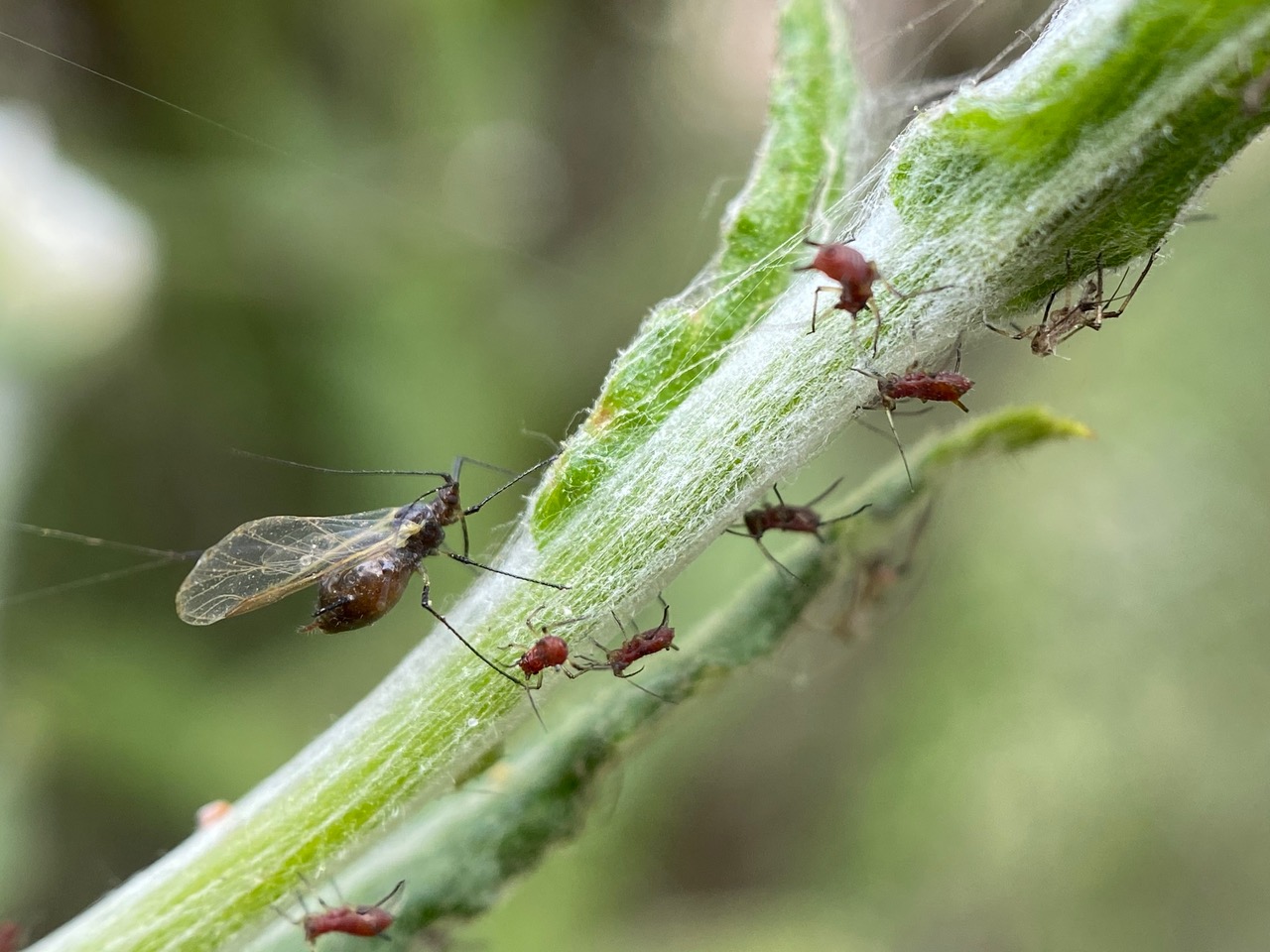
The colony of Rose Aphids, Macrosiphum rosae (family Aphididae) on this California Everlasting has started to produce alates (winged reproductives).
Generally adult aphids are wingless, but most species also occur in winged forms, especially when populations are high or during spring and fall. The ability to produce winged individuals provides the aphids with a way to disperse to other plants when the quality of the food source deteriorates, or when predation pressure is high.
That pale creature looks like a nymph of a Hemiptera (“true bugs”) that is ready to molt.
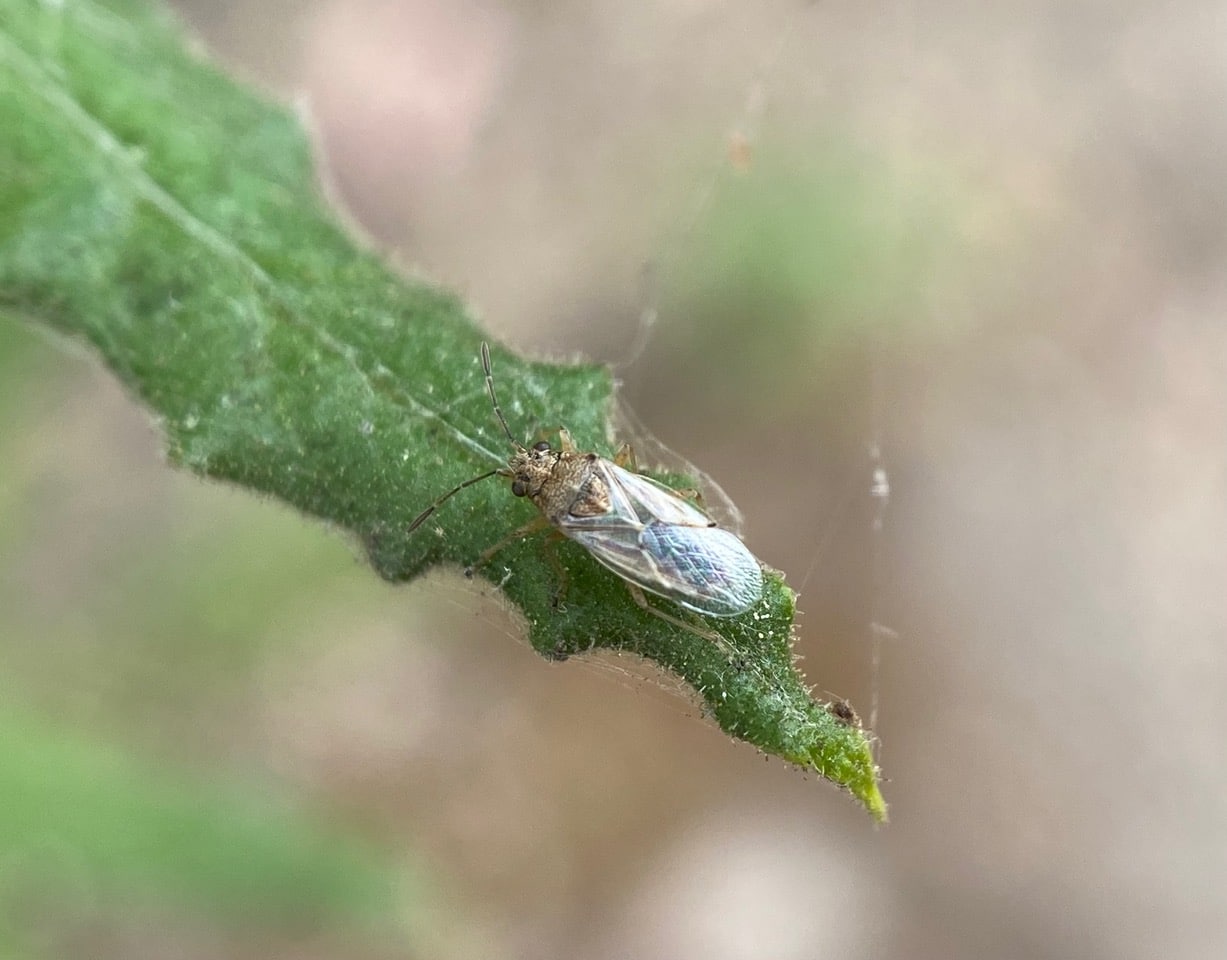
A False Cinch Bug, Nysius raphanus (family Lygaeidae or seed bugs) is resting on a leaf tip of California Everlasting.
Nysius raphanus is commonly found within grassy or weedy fields, pastures, and foothills. The bugs spend the winter as nymphs and adults, usually in uncultivated areas beneath debris or in plants, often feeding on mustards or other winter annual plants. Each spring, once the plants in these areas dry up, the False Cinch Bug migrates to find new places to feed. There can be several generations a year. When populations are high in wet years, the bugs can become a nuisance for gardeners and farmers.
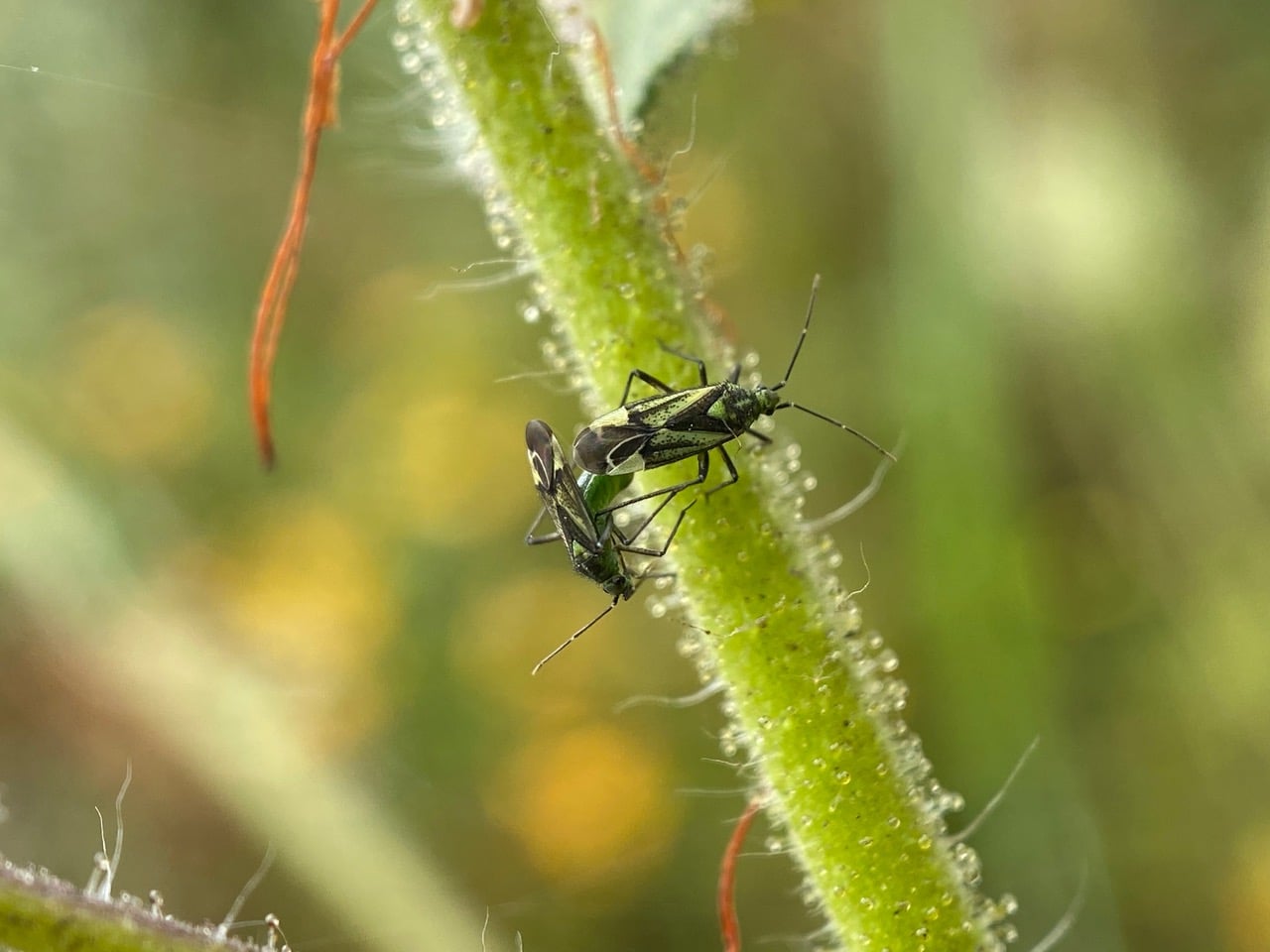
The Slender Tarweed, Madia gracilis has started to bloom along the trail. The plant is already occupied by the tiny Plant Bugs, Macrotylus essigi (family Miridae). The bugs seem to navigate the sticky terrain of tarweeds with ease. In fact, the only plants I have ever seen these bugs on are the tarweeds. Are they tarweed specialists?
Mirid bugs are also referred to as plant bugs or leaf bugs. Miridae is one of the largest family of true bugs in the order Hemiptera. Like other Hemipterans, Mirids have piercing, sucking mouthparts to extract plant sap. Some species are predatory. One useful feature in identifying members of the family is the presence of a cuneus; it is the triangular tip of the corium, the firm, horny part of the forewing, the hemielytron. The cuneus is visible in nearly all Miridae.
A pair of Plant Bugs, Macrotylus essigi (family Miridae) is mating on the stem of Slender Tarweed.
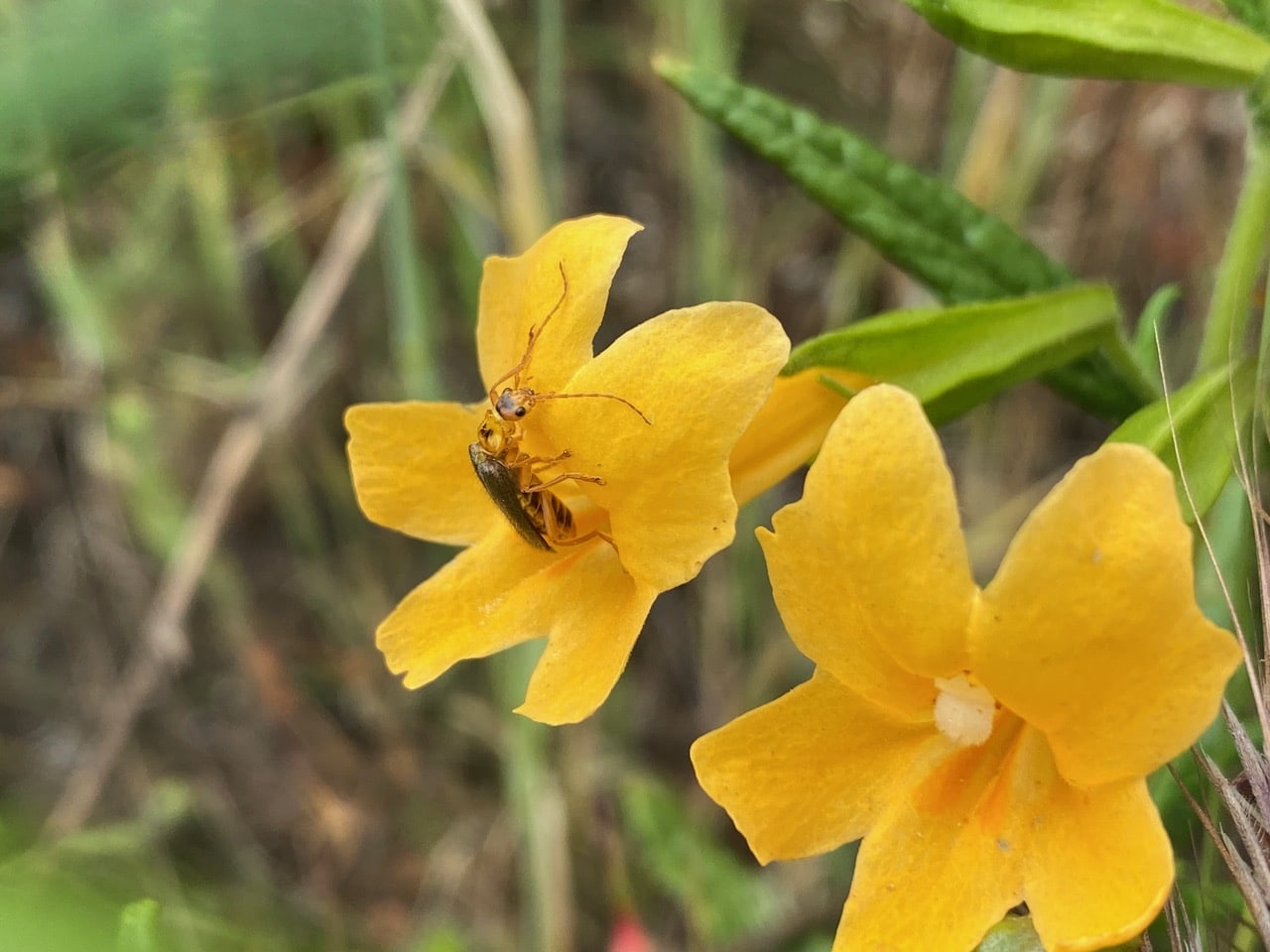
A Soldier Beetle, Cultellunguis americanus (family Cantharidae) is crawling out of a Sticky Monkeyflower.
The Soldier Beetles, family Cantharidae are relatively soft-bodied, straight-sided beetles. One of the first described species has a color pattern reminiscent of the red coats of early British soldiers, hence the common name. They are also known commonly as Leatherwings because of their soft elytra.
Soldier beetles often feed on both nectar and pollen as well as predating on other small insects. The larvae are often active, and feed on the ground, hunting snails and other small creatures. Soldier beetles are generally considered beneficial insects by gardeners.
A Yellowjacket wasp, is taking nectar from a flower of California Bee Plant, Scrophularia californica.
Yellowjacket is the common name for predatory social wasps of the genera Vespula and Dolicovespula (family Vespidae). Yellowjackets are social hunters living in colonies containing workers, queens, and males (drones). Colonies are annual with only inseminated queens overwintering. Queens emerge during the warm days of late spring or early summer, select a nest site, and build a small paper nest in which they lay eggs. They raise the first brood of workers single-handedly. Henceforth the workers take over caring for the larvae and queen, nest expansion, foraging for food, and colony defense. The queen remains in the nest, laying eggs. Later in the summer, males and queens are produced. They leave the parent colony to mate, after which the males quickly die, while fertilized queens seek protected places to overwinter. Parent colony workers dwindle, usually leaving the nest to die, as does the founding queen. In the spring, the cycle is repeated.
Yellowjackets have lance-like stingers with small barbs, and typically sting repeatedly. Their mouthparts are well-developed with strong mandibles for capturing and chewing insects, with probosces for sucking nectar, fruit, and other juices. Yellowjacket adults feed on foods rich in sugars and carbohydrates such as plant nectar and fruit. They also search for foods high in protein such as insects and fish. These are chewed and conditioned in preparation for larval consumption. The larvae secrete a sugary substance that is eaten by the adults.
The Western Yellowjackets typically build nests underground, often using abandoned rodent burrows. The nests are made from wood fiber that the wasps chew into a paper-like pulp. The nests are completely enclosed except for a small entrance at the bottom. The nests contain multiple, horizontal tiers of combs within. Larvae hang within the combs.
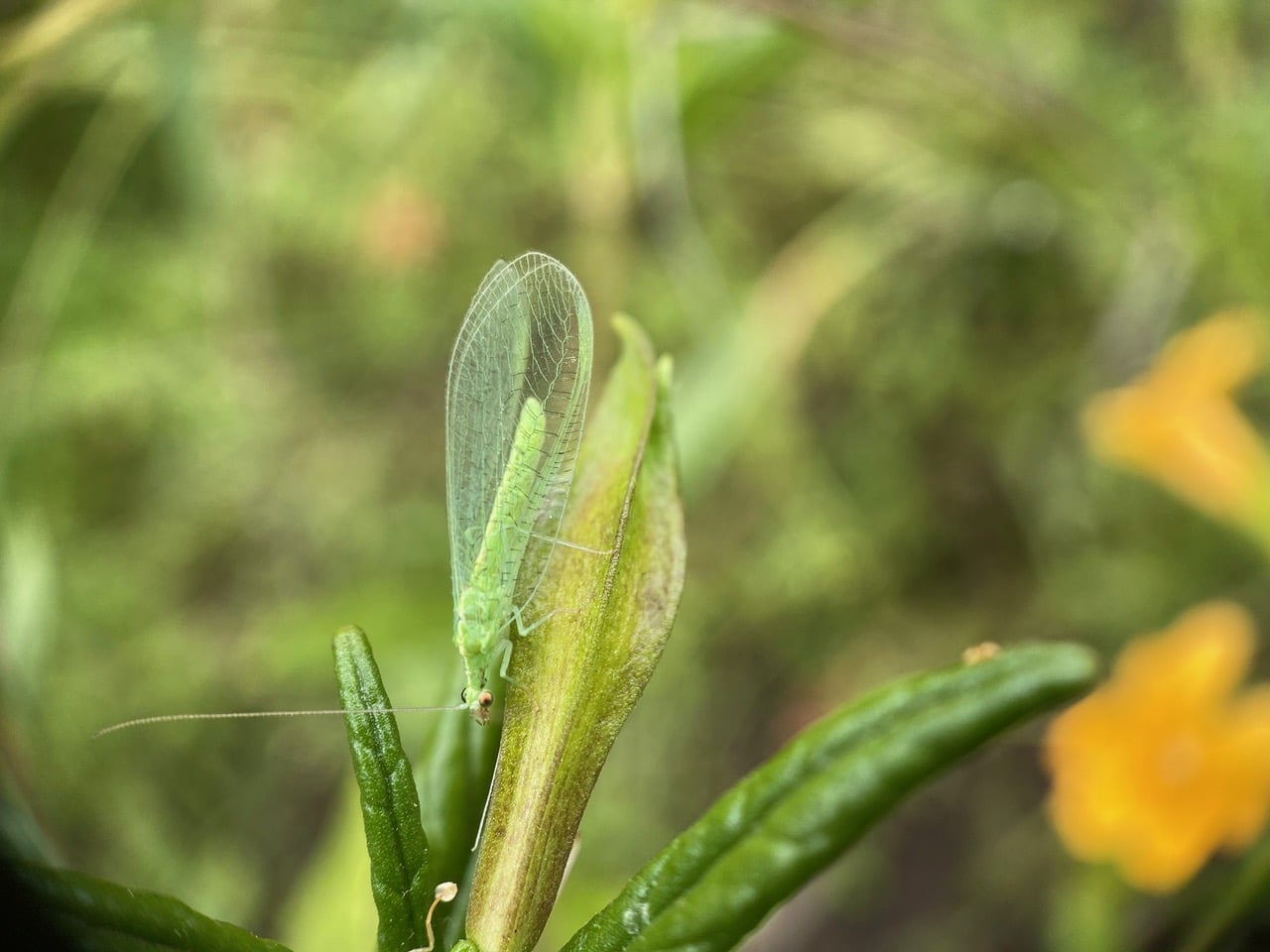
A Green Lacewing (family Chrysopidae) lands on a flower bud of Sticky Monkeyflower.
Lacewings are insects in the large family Chrysopidae of the order Neuroptera. Adults are crepuscular or nocturnal. They feed on pollen, nectar and honeydew supplemented with mites, aphids and other small arthropods. Eggs are deposited at night, hung on a slender stalk of silk usually on the underside of a leaf. Immediately after hatching, the larvae molt, then descend the egg stalk to feed. They are voracious predators, attacking most insects of suitable size, especially soft-bodied ones (aphids, caterpillars and other insect larvae, insect eggs). Their maxillae are hollow, allowing a digestive secretion to be injected in the prey. Lacewing larvae are commonly known as “aphid lions” or “aphid wolves”. In some countries, Lacewings are reared for sale as biological control agents of insect and mite pests in agriculture and gardens.
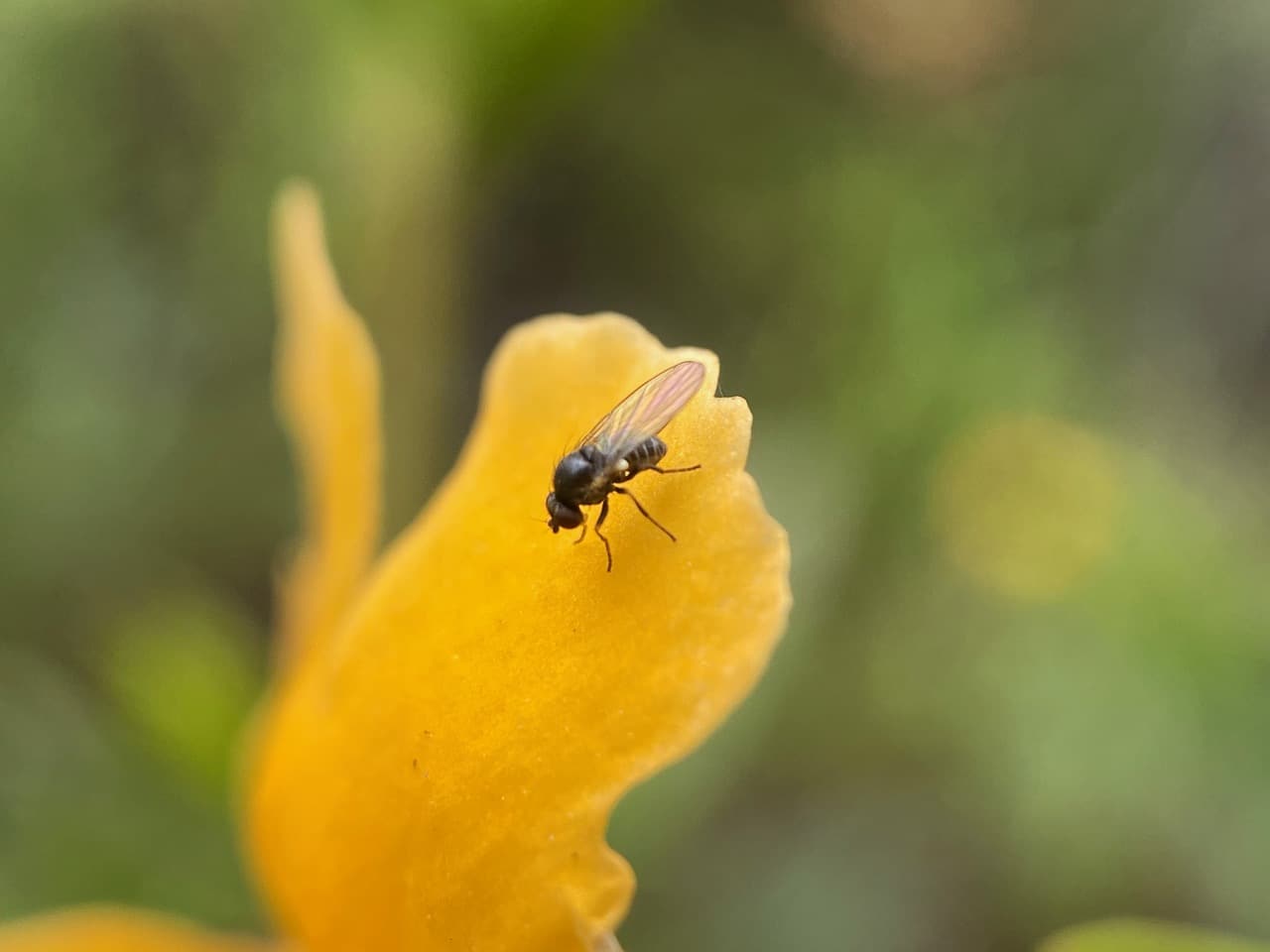
A tiny fly is resting on the upper petal of a Sticky Monkeyflower. It appears to be a Leaf-miner Fly (family Agromyzidae).
A leaf miner is any one of numerous species of insects in which the larval stage lives in, and eats, the leaf tissue of plants. The vast majority of leaf-mining insects are moths (Lepidoptera), sawflies (Symphyta), and flies (Diptera). Some beetles also exhibit this behavior. Leaf miners are protected from many predators and plant defenses by feeding within the tissues of the leaves, selectively eating only the layers that have the least amount of cellulose, and lowest levels of defensive chemicals.
The Agromyzidae are a family commonly referred to as the Leaf-miner Flies, for the feeding habits of their larvae, most of which are leaf miners on various plants. They are small flies, most species in the range of 2-3 mm. Agromyzidae larvae are phytophagous, feeding as leaf miners, less frequently as stem miners or stem borers. A few live on developing seeds, or produce galls. There is a high degree of host specificity. A number of species attack plants of agricultural or ornamental value, so are considered pests. The shape of the mine is often characteristic of the species and therefore useful for identification. Adults occur in a variety of habitats, depending on the larval host plants.
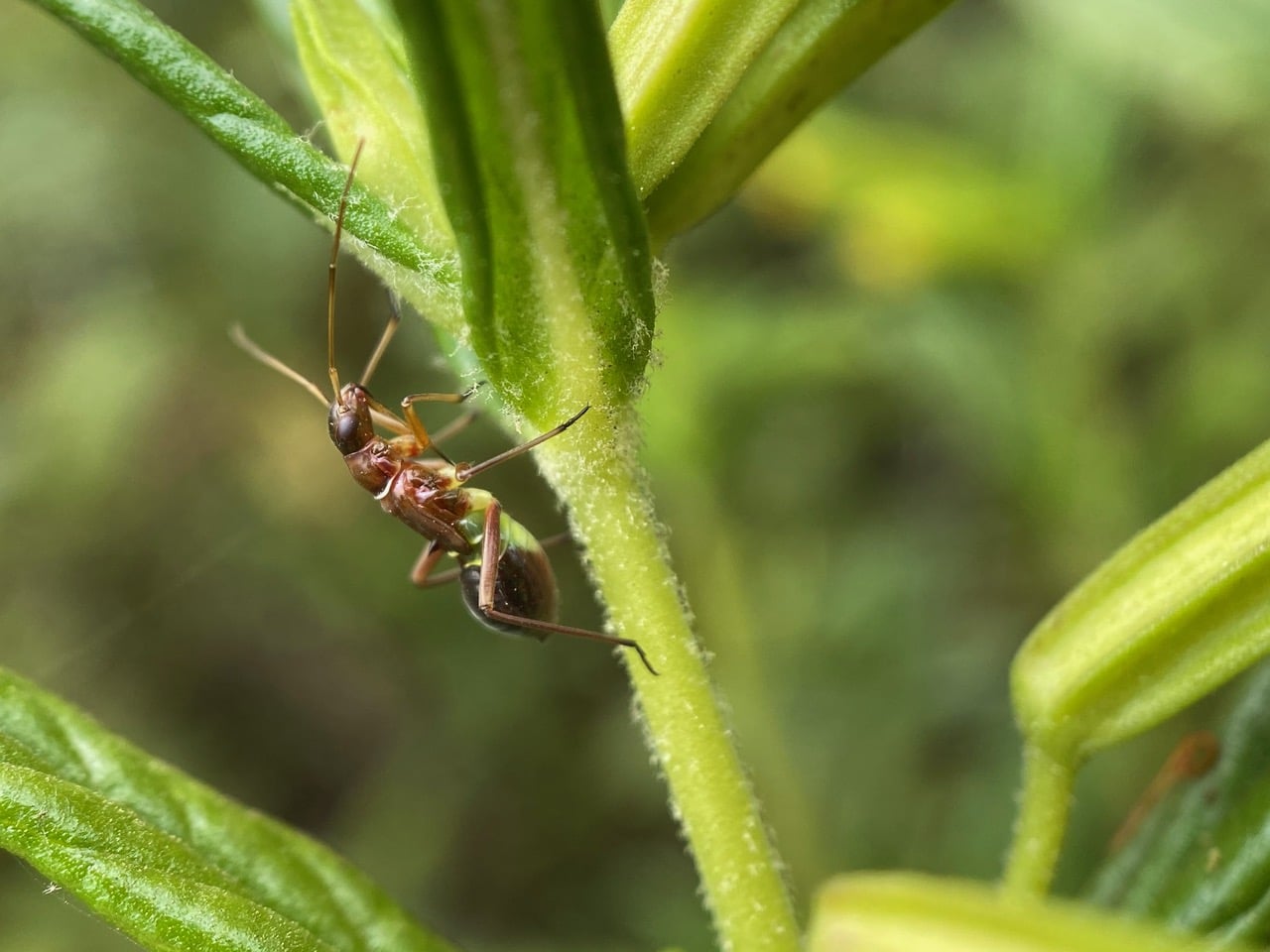
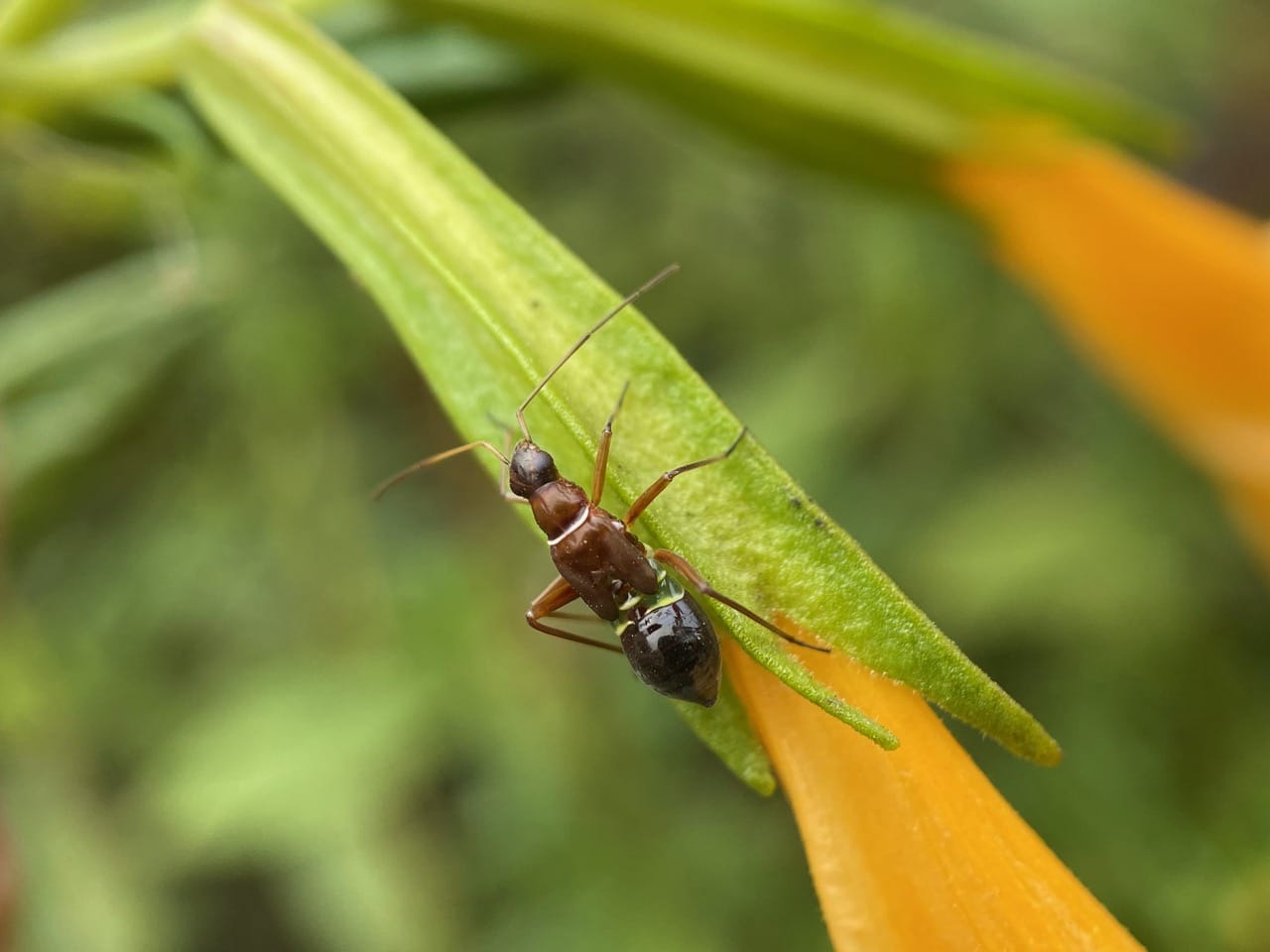
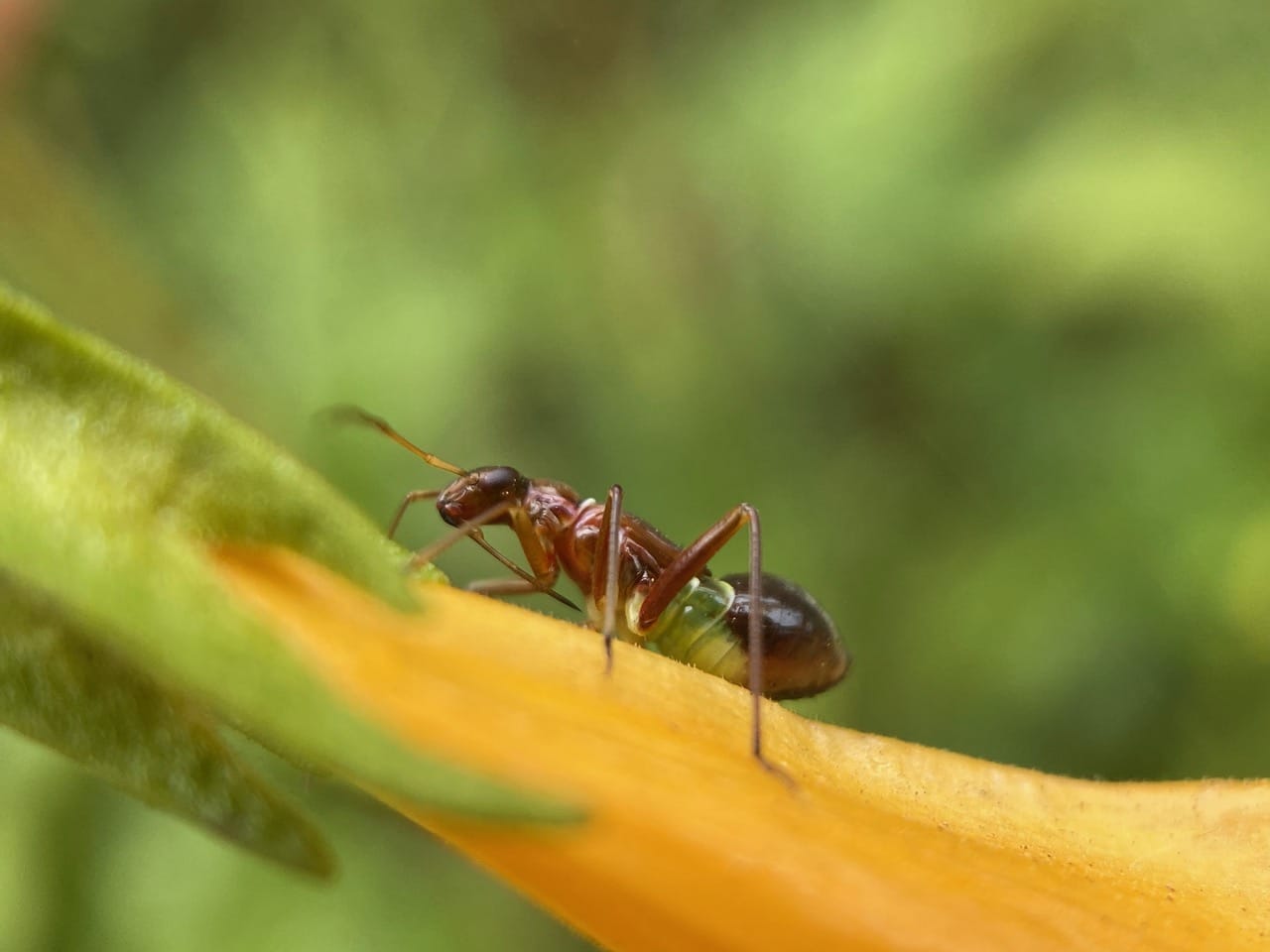
An Ant-mimicking nymph of a Plant Bug, Closterocoris amoenus (family Miridae) is walking up a Sticky Monkeyflower stem.
Mirid bugs are also referred to as plant bugs or leaf bugs. Miridae is one of the largest family of true bugs in the order Hemiptera. Like other Hemipterans, Mirids have piercing, sucking mouthparts to extract plant sap. Some species are predatory.
Ant mimicry or myrmecomorphy is mimicry of ants by other organisms. Ants are abundant all over the world, and potential predators such as birds and wasps normally avoid them as they are either unpalatable or aggressive. Spiders are the most common ant mimics. Additionally, many insects from a wide range of orders and families mimic ants to escape predation (protective mimicry), while others mimic ants anatomically and behaviorally to hunt ants in aggressive mimicry.
The nymph is the most mature one I have seen so far. Note its sizable wing pads. Also the two pleat-like segments on its upper abdomen are green, not yellow. Do these structures turn from yellow to green as the nymph matures?
“True bugs” in the order Hemiptera undergo incomplete metamorphosis without a pupal stage. The nymphs, which look like adults, develop through a series of molts, each time getting bigger after shedding their old exoskeleton. At the last molt, they transform into adults with functional wings and reproductive parts.
Close-up of the bug nymph shows its rostrum (mouth part) that is folded under the body when not feeding.
The defining feature of Hemipterans or “true bugs” is their “beak” or rostrum in which the modified mandibles and maxillae form a “stylet” which is sheathed within a modified labium. The stylet is capable of piercing tissues and sucking liquids, while the labium supports it. The stylet contains a channel for outward movement of saliva and digestive enzymes, and another channel for the inward movement of pre-digested liquid food. The rostrum is usually folded under the body when not in use.

This unidentified fly is commonly found on and near the Sticky Monkeyflower.
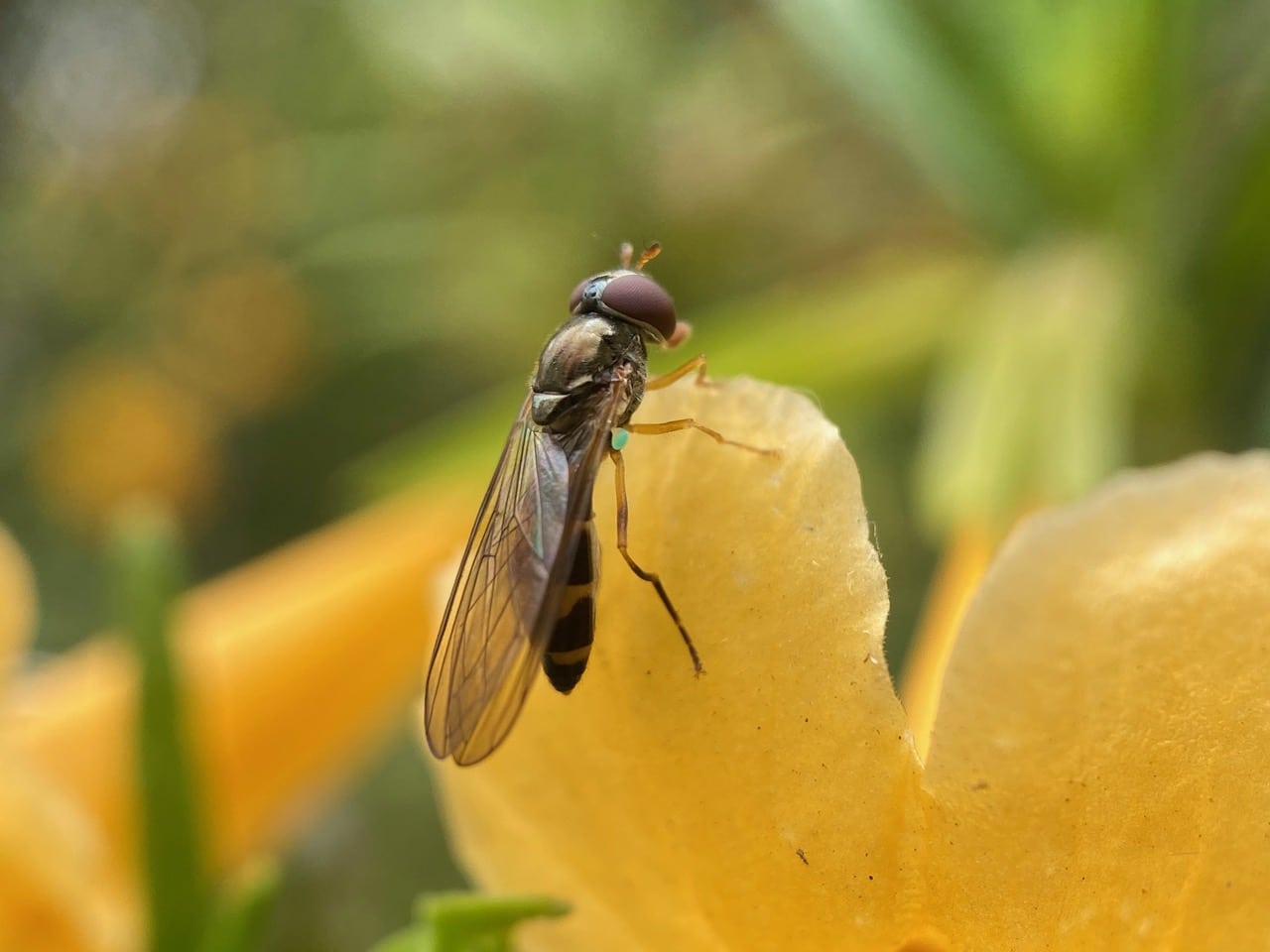
A female Variable Duskyface Fly, Melanostoma mellinum (family Syrphidae) has landed on an upper petal of a Sticky Monkeyflower. There are two ways I can tell that the fly is female. Her eyes do not meet on top of the head like males’ do, and she has green halteres.
Halteres are the modified hind wings in Diptera (flies). They are shaped like ‘drum sticks’ with a slender shaft connected to the thorax. Halteres are highly sophisticated balance organs and they oscillate during flight.
Melanostoma mellinum is a very common species of hover fly found in many parts of Europe including the Mediterranean basin and North Africa, the East Palearctic, and North America. A small species, their wingspan between 4.7 and 7.0 mm. Very similar to Platycheirus, but can be distinguished by fine details. In M. mellinum, the normally pale halteres turn bright blueish-green in females about to lay eggs.
The species’ preferred habitat include grasslands and moorlands, including those in hilly and mountainous regions. Adults can be found feeding on pollen of grasses and other wind-pollinated plants. Little is known of their biology, but the larvae are suspected to be a general predator of small insects in the leaf litter.