

Pollinator Post 6/8/23 (2)
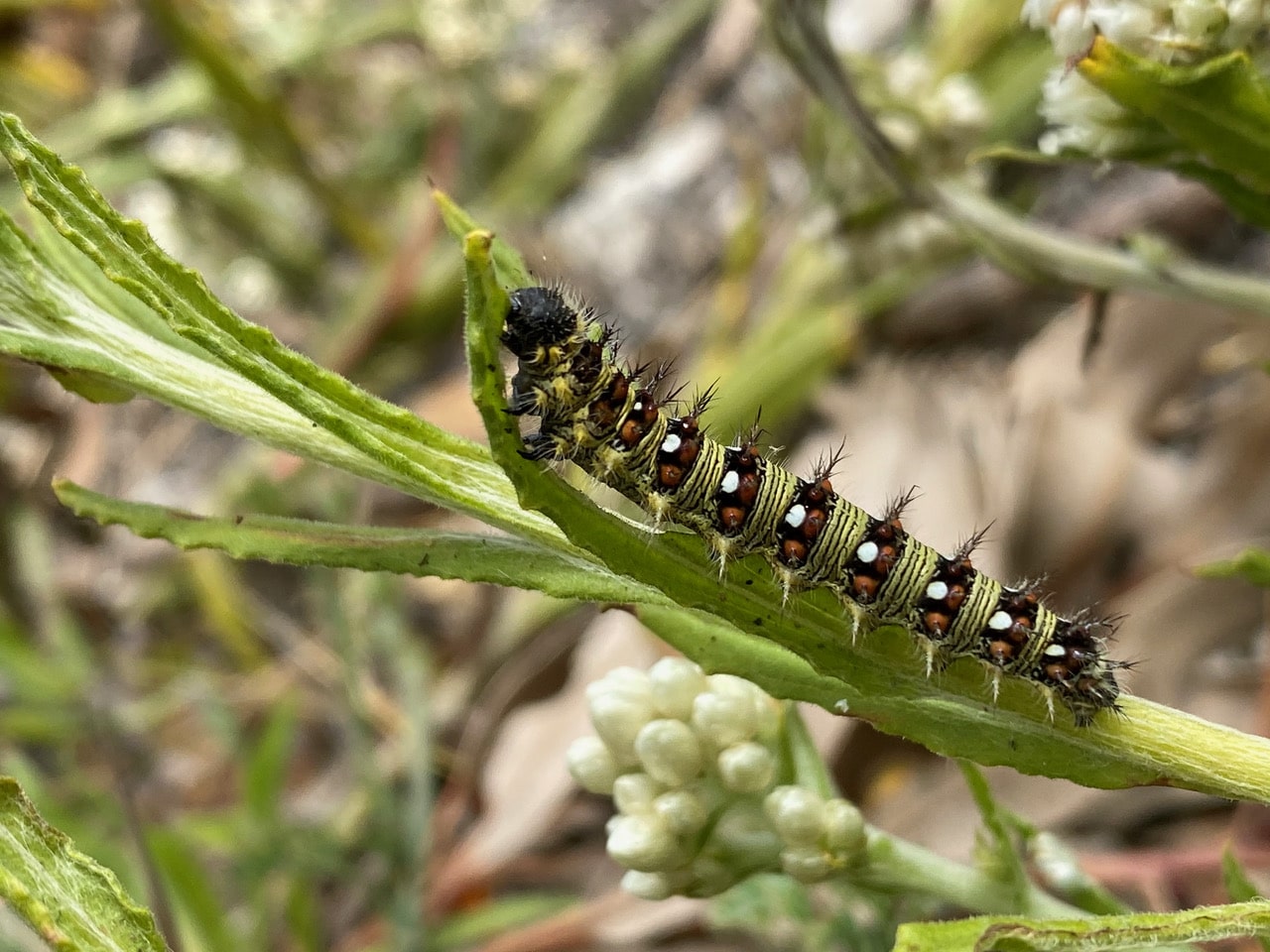
Wow, so fortunate to come across an American Lady caterpillar, Vanessa virginiensis (family Nymphalidae) feeding out in the open on a California Everlasting, Pseudognaphalium californicum. For the past two weeks, I have been observing the half dozen caterpillar nests, large and small on the plant, hoping to catch a glimpse of the caterpillar. It is about 11/2 in. long now, probably close to pupation.
The American Lady, Vanessa virginiensis (family Nymphalidae) occurs from southern Canada throughout the US and southward to South America. The preferred host plants for the larvae are the “everlastings” or “cudweed” herbs and their close relatives in the sunflower family, Asteraceae. American Lady caterpillars are solitary feeders and construct nests from various parts of their host plant. Tiny larvae use leaf hairs to construct tiny nests; larger caterpillars arrange leaves, flower heads, and detritus to form tight shelters. Several structures are typically built during the caterpillar’s development.

For the third time in a row now, I have come across a Variable Checkerspot butterfly hang out at this spot. Unlike the others of the species, this one is calm and lets me close to take pictures. It seems to be in good shape, not injured. The same individual? Is there site fidelity in butterflies?
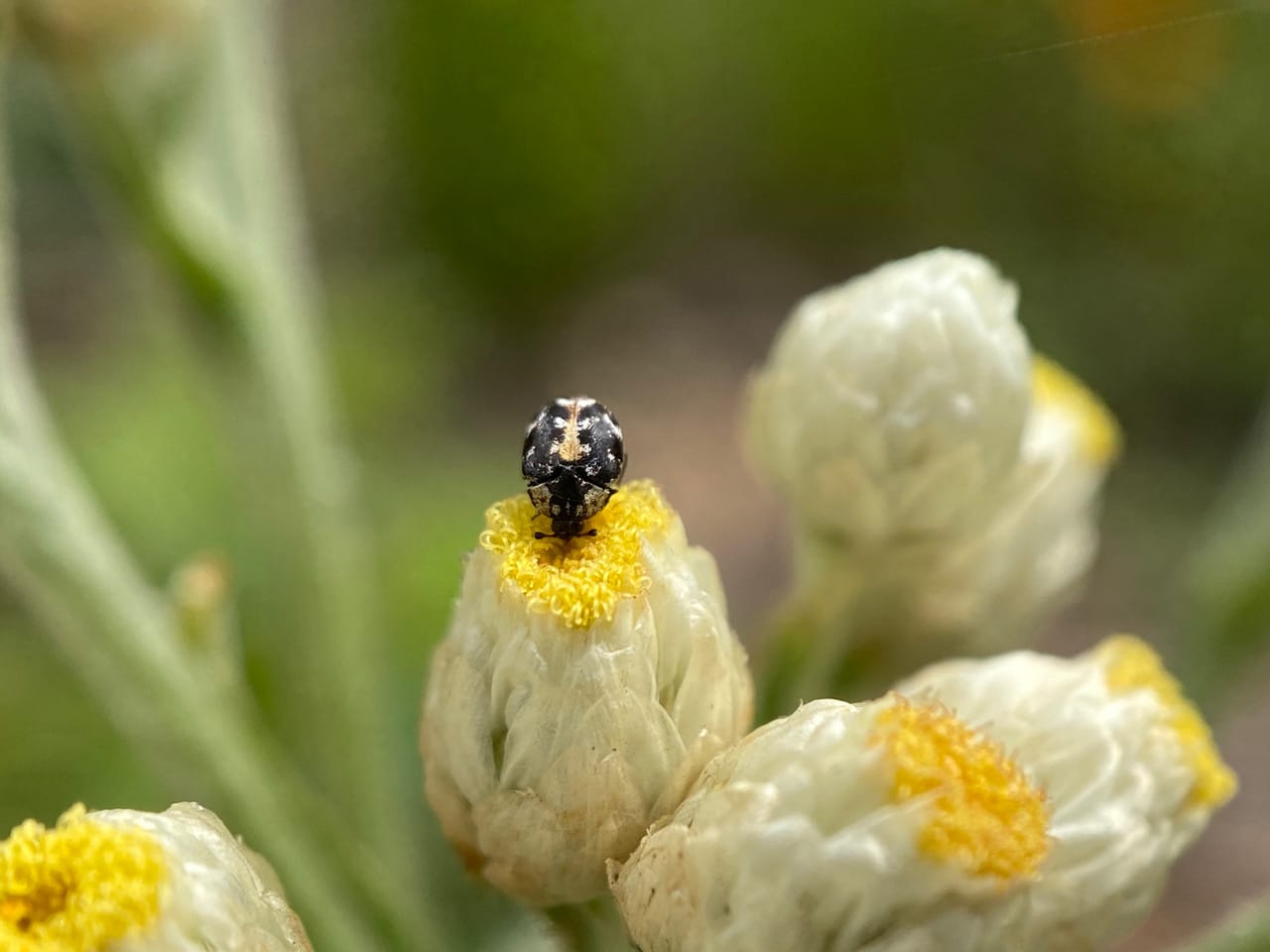
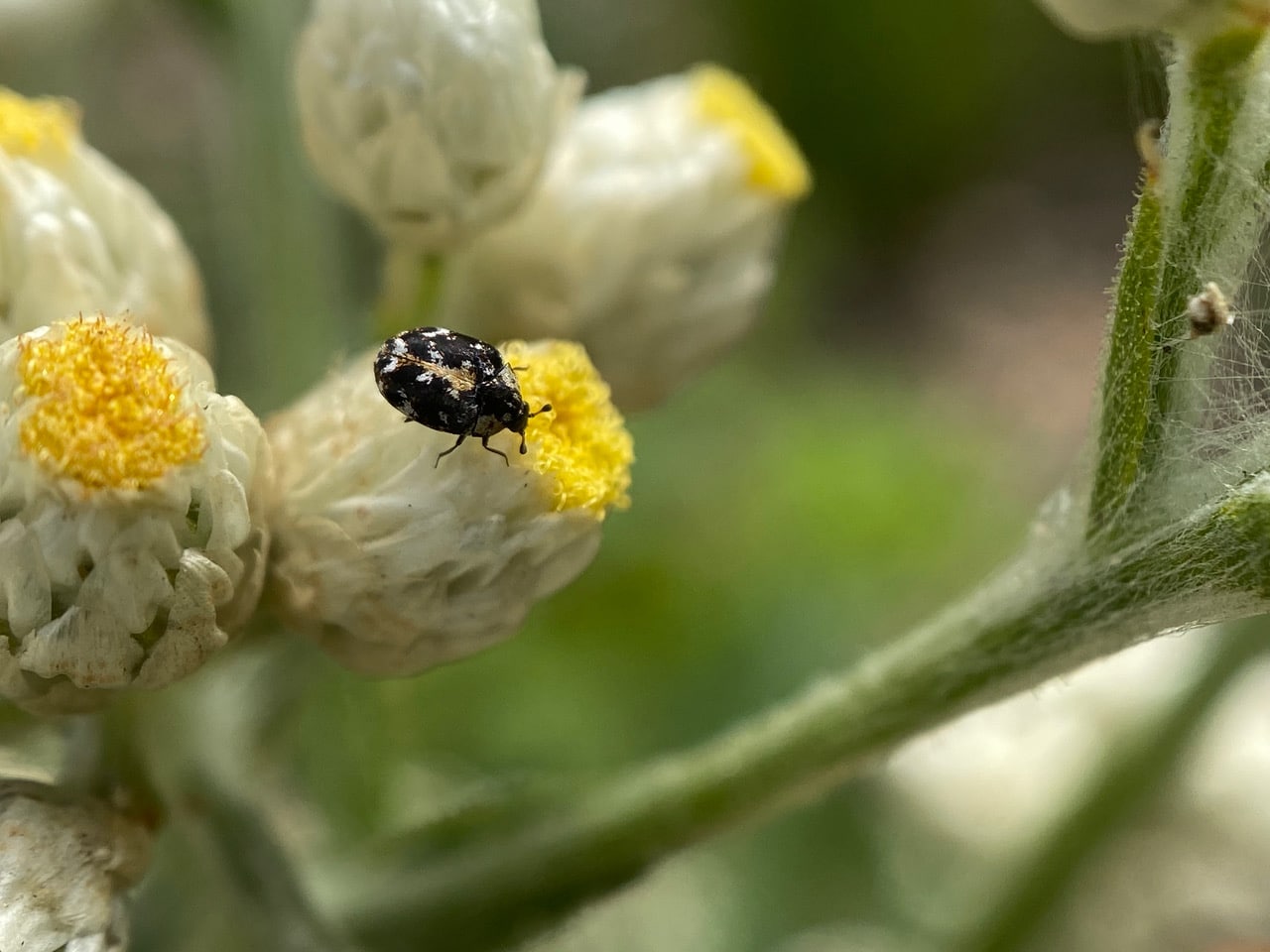
A picture perfect Skin Beetle, Anthrenus lepidus (family Dermestidae) is feeding atop a flowerhead of California Everlasting, Pseudognaphalium californicum.
Dermestidae are a family of Coleoptera (beetles) that are commonly referred to as skin or carpet beetles. Ranging in size from 1 to 2 mm, the beetles typically have clubbed antennae that fit into deep grooves. Most Dermestids are scavengers that feed on dry animal or plant materials, such as skin or pollen, animal hair, feathers, dead insects and natural fibers. The larvae are used in taxidermy and by natural history museums to clean animal skeletons.
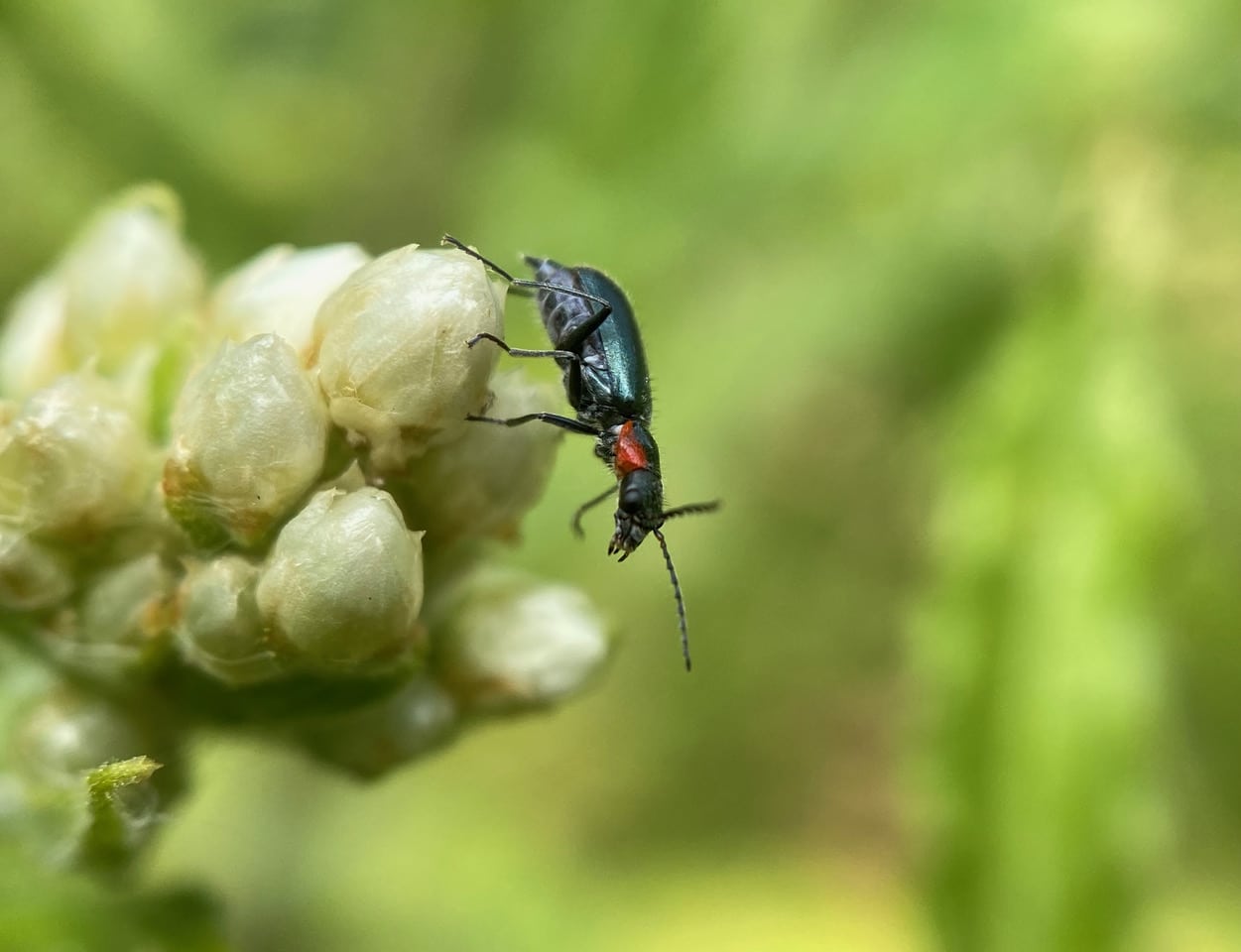
A Malachite Beetle, Malachius auritus (family Melyridae, subfamily Malachiinae) is exploring an inflorescence of California Everlasting.
The Malachite Beetle (subfamily Melachiinae) is a member of the family of Soft-winged Flower Beetles (family Melyridae). Most Melyrids are elongate-oval, soft-bodies beetles 10 mm or less in length. Members of the subfamily Malachiinae have peculiar orange structures along the sides of the abdomen which can be everted, but usually kept hidden. Most adults and larvae are predaceous. Omnivorous adult Melyrids are often found on flowers out in the open, where they feed on pollen, insect eggs, and flower-loving insects that land within their grasp. The larvae generally stay concealed under tree bark or leaf litter or soil, where they prey on other invertebrates.
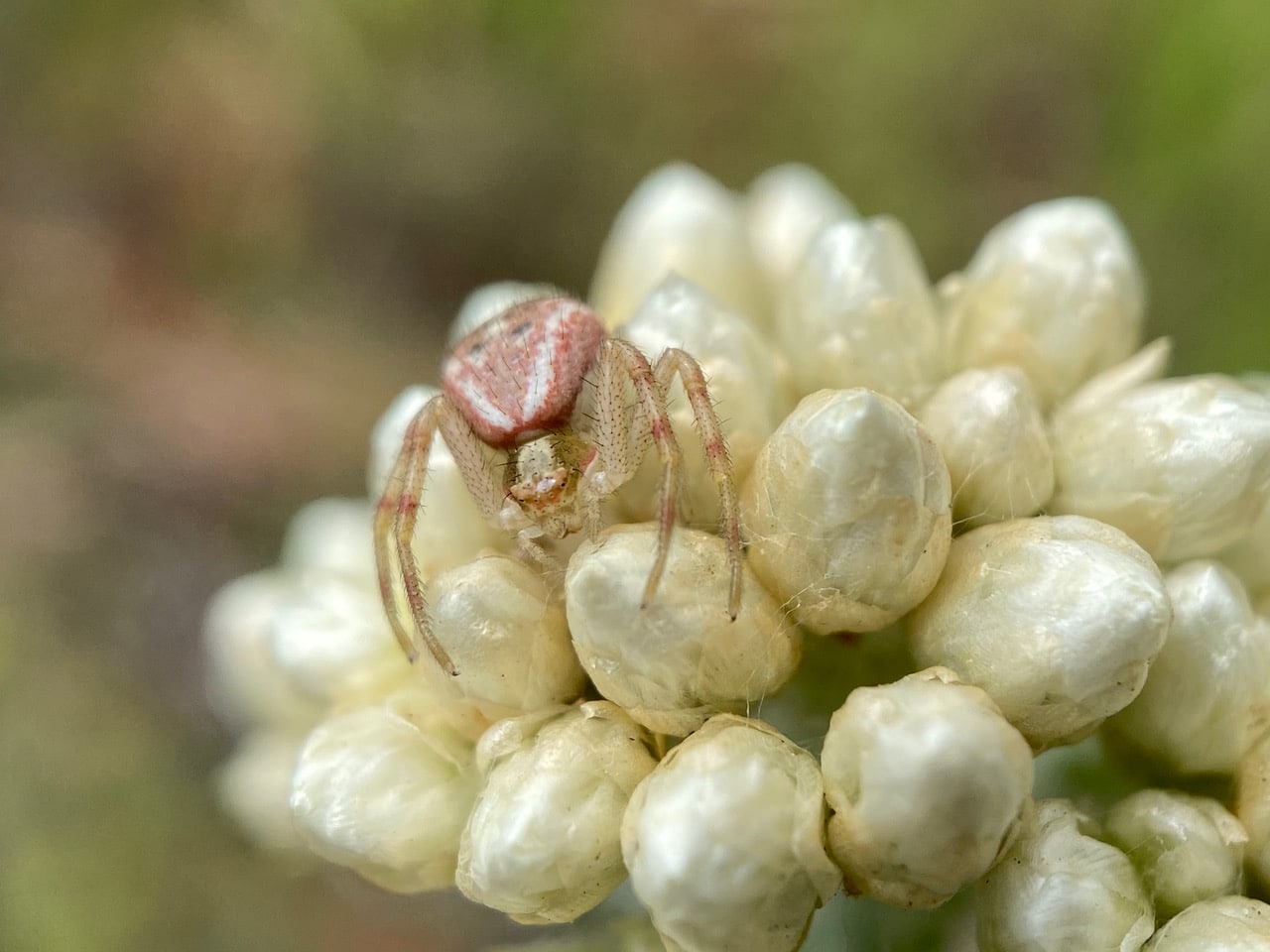
Over the past few weeks, I have often found small Crab Spiders, Mecaphesa sp. (family Thomisidae) hunting in ambush on the inflorescence of California Everlasting. This one has grown pretty large. Life is good here!
Members of the family Thomisidae do not spin webs, and are ambush predators. The two front legs are usually long and more robust than the rest of the legs. Their common name derives from their ability to move sideways or backwards like crabs. Most Crab Spiders sit on or beside flowers, where they grab visiting insects. Some species are able to change color over a period of some days, to match the flower on which they are sitting.
Mecaphesa is distinguished from the other genera of Crab Spider by the size and arrangement of the eight eyes (in two curved rows of four). Mecaphesa is also often hairy, with tiny hairs protruding from the head, legs, and body.