

Pollinator Post 6/7/24 (2)
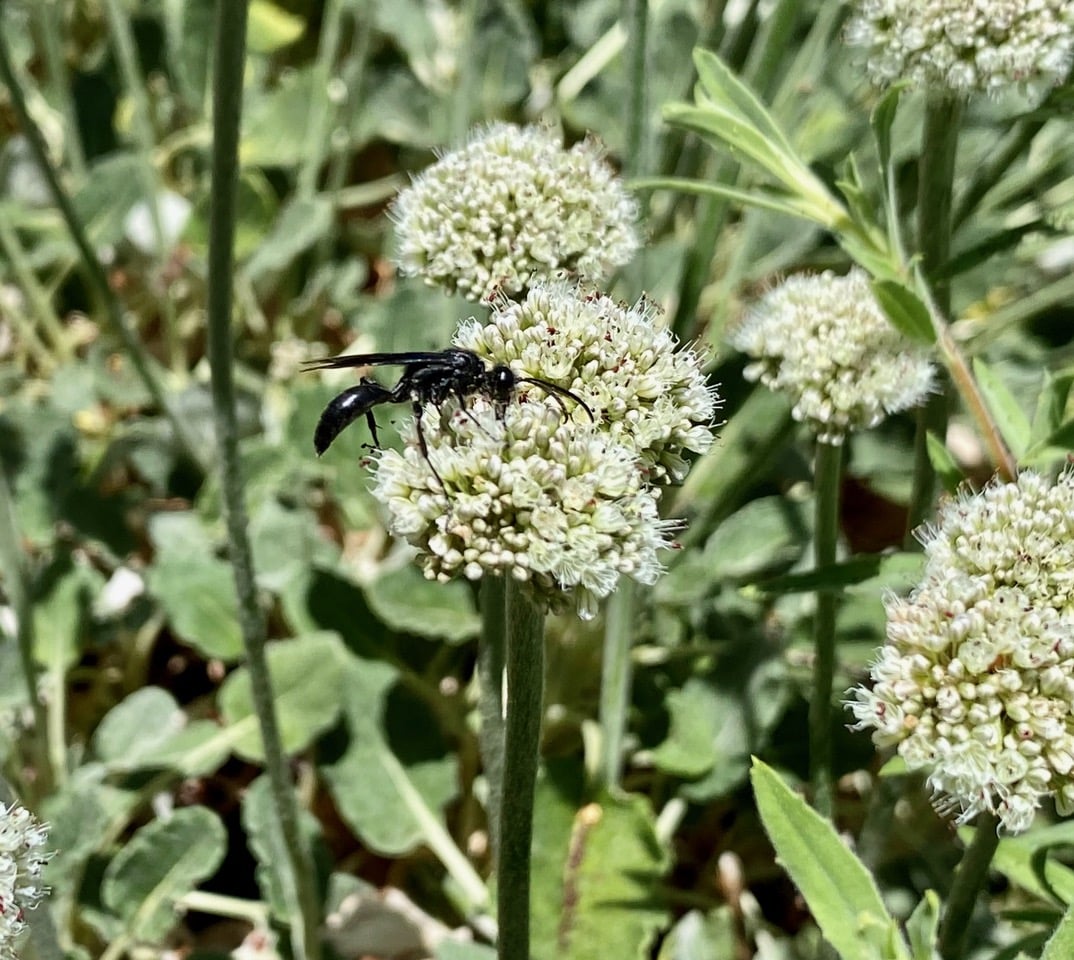
A Great Black Digger Wasp, Sphex pensylvanicus (family Sphecidae) is nectaring on an inflorescence of Nude Buckwheat, Eriogonum nudum.
The large wasp is 22-28 mm in length, with deep black body and wings that give off a blue iridescent sheen. They have long segmented antennae, tiny pinched waists, large compound eyes, and strong chewing mandibles. The larger females wield a stinger for paralyzing prey. Their bodies are also covered with fine hairs that collect pollen during their trips to the flowers.
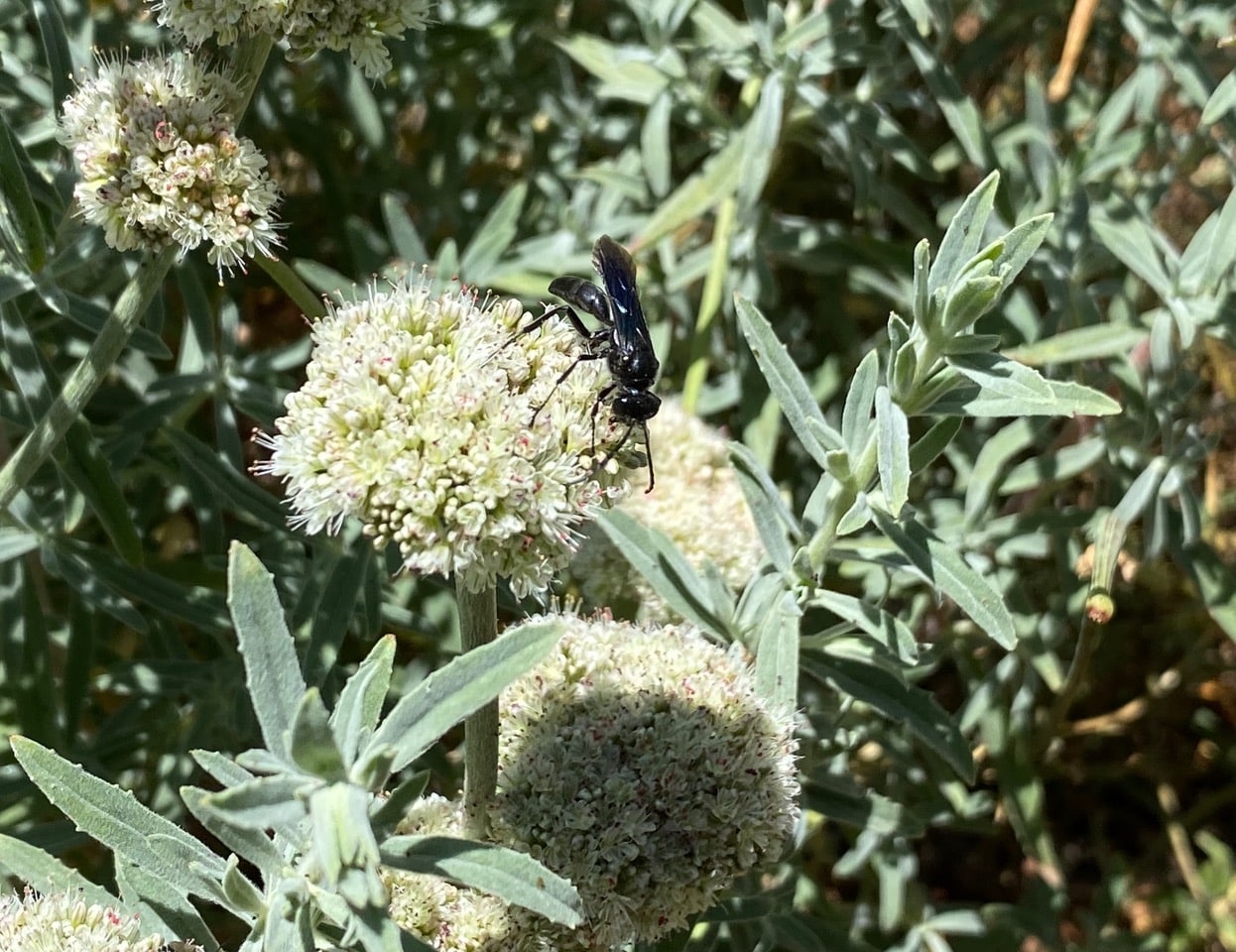
The Great Black Digger Wasps occur across most of the United States. They can commonly be found patrolling flowering plants during the summer, especially in July and August. The adults drink nectar from flowers while hunting for prey items for their young.
Like other digger wasps, the Great Black Digger Wasp females build their nests in the ground. The female digs about a foot beneath the soil and creates a series of tunnels using her mouth and spiny legs. The adult females are active hunters that paralyze and carry their prey back to the nest for their brood. Their prey consists of many insects in the Orthoptera order (crickets, katydids, and grasshoppers). Prey are stung three times – once in the neck and twice in the thorax. Although paralyzed, the prey can survive for weeks. The female places a prey insect in each chamber. She then glues an egg to the underside of the prey insect between the first and second pairs of legs. Each of the several chambers in the nest houses a single larva, which consumes 2-6 katydids or grasshoppers. When a brood tunnel is eventually filled up with developing young, a female will seal off the chamber to protect the larvae from parasites or thieves coming to steal her young’s food. To do this, she will often use her head and vibrate her abdomen to tamp down the soil but may also use small tools like a pebble or piece of stick. The larvae will slowly eat away at the prey’s paralyzed body over the course of a week while it is still alive. The larvae pupate and overwinter in their burrows until the following summer when the cycle begins all over again.
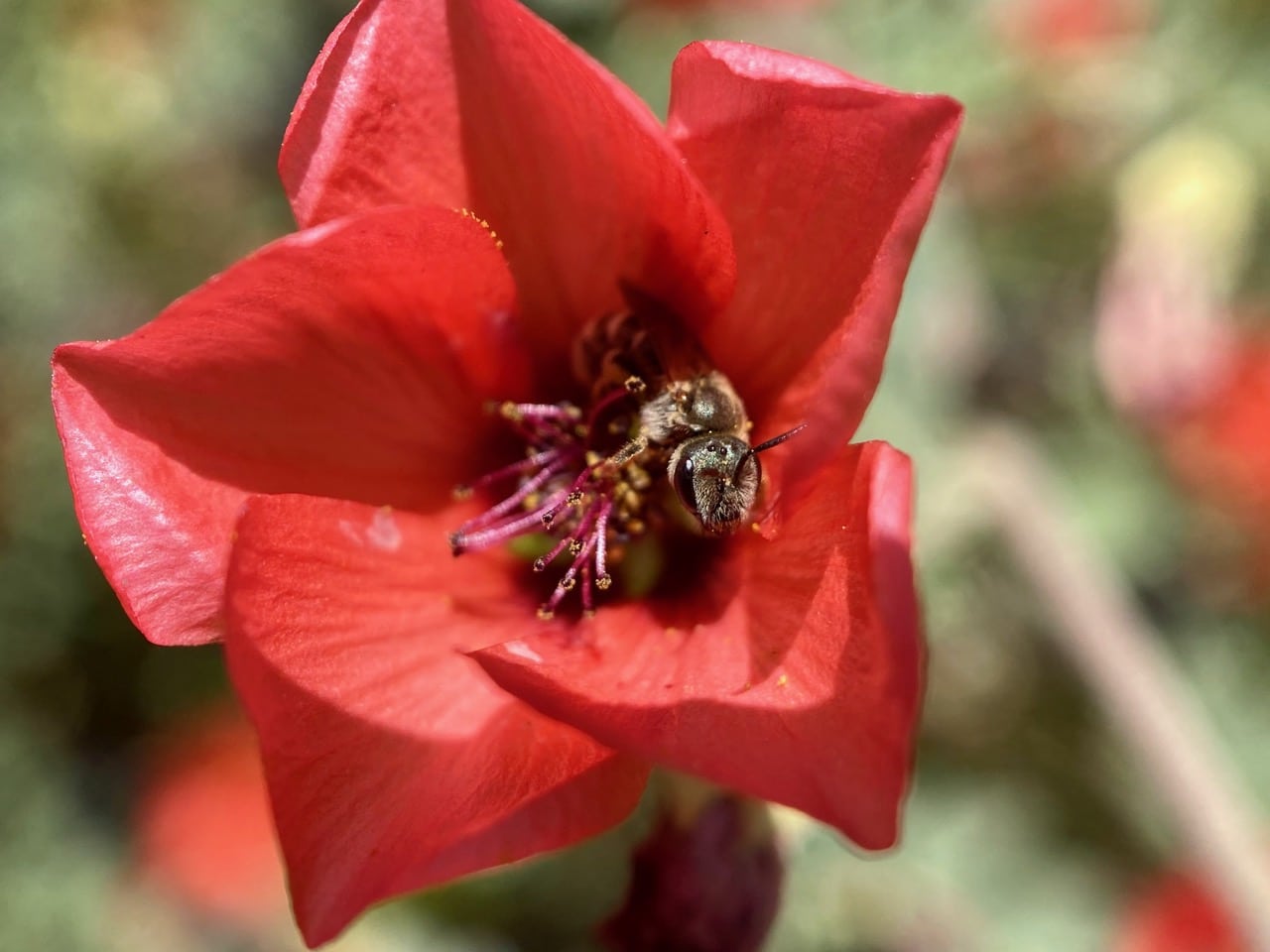
A Sweat Bee (family Halictidae) is coming out of an Apricot Mallow flower, Sphaeralcea ambigua (family Malvaceae) after taking nectar at the base of the freshly open flower. In mallows, the stamens consist of modified filaments fused into a tube that surrounds the pistil and has attached to the tube several anthers. Getting in and out of the flower, the bee invariably comes in contact with the anthers, picking up pollen along the way. In a later phase, the pistil protrudes from the tube or column in the center of the flower, ready to receive incoming pollen. Malvaceae flowers are protandrous, the male parts maturing before the female parts. The temporal separation of the sexes serves to prevent self-pollination.

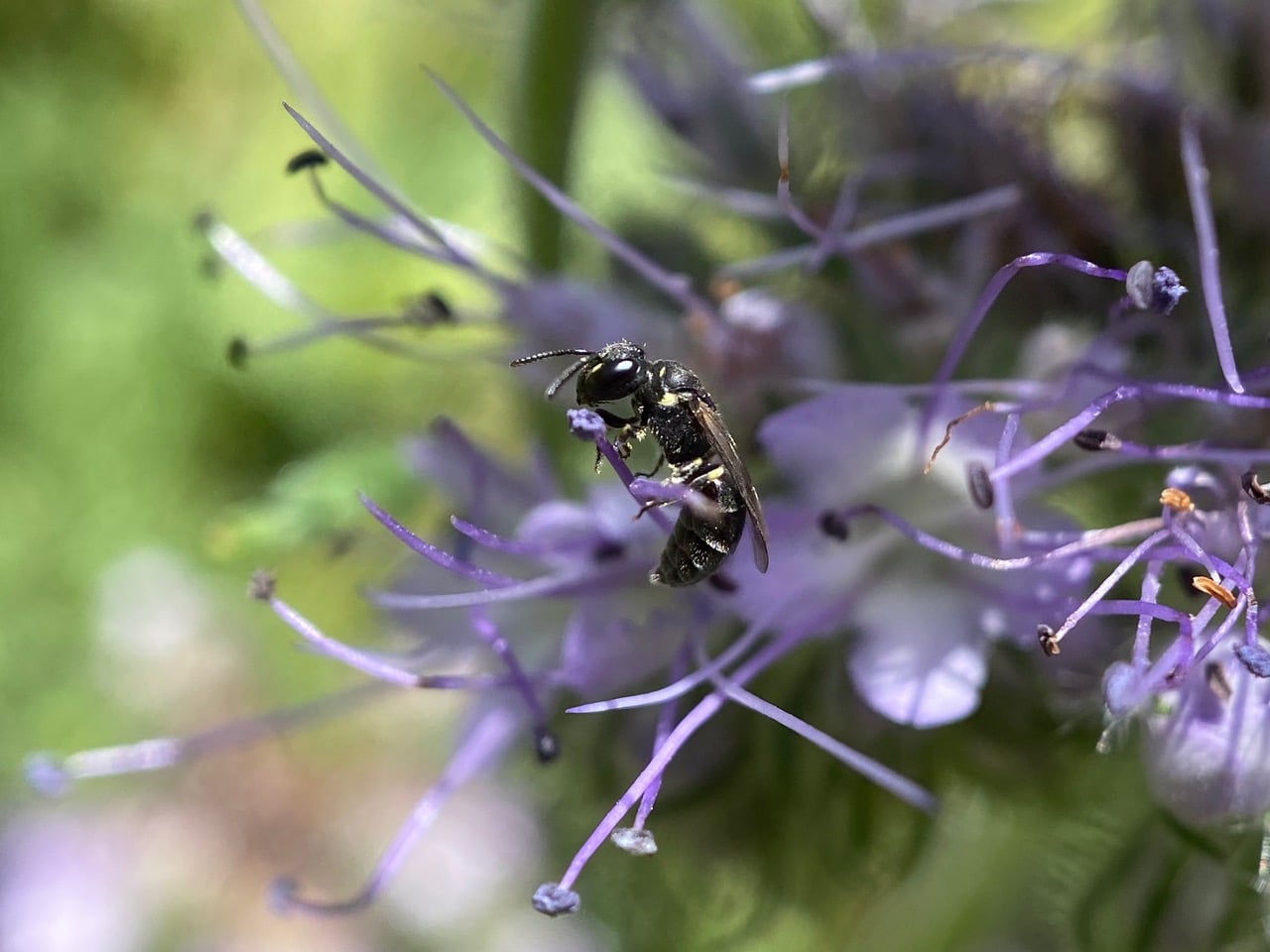
Clinging to a stamen of the Lacy Phacelia flower, Phacelia tanacetifolia, a Masked Bee, Hylaeus sp. (family Colletidae) is gathering pollen from an anther.
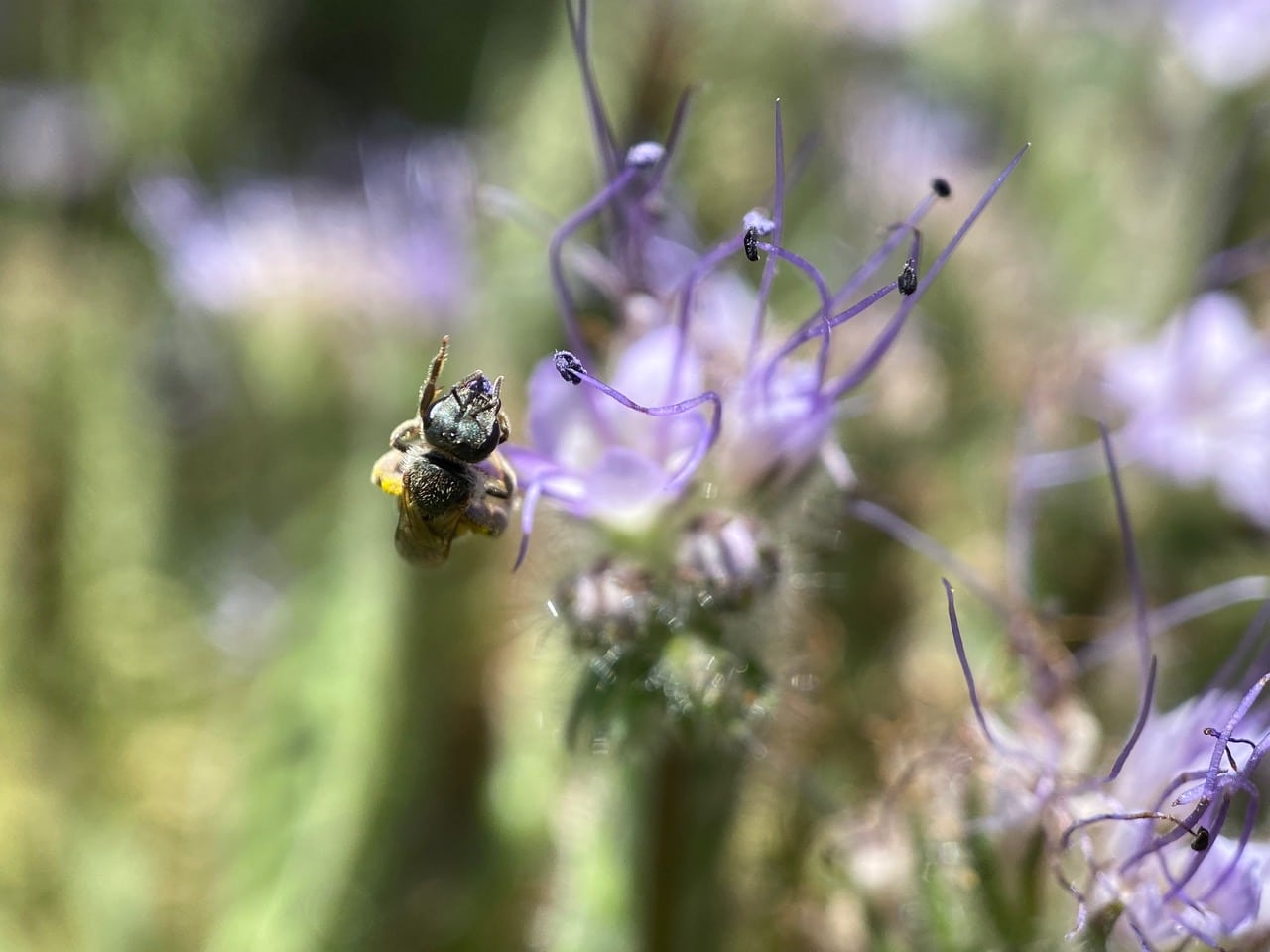
About the same size as the Masked Bee, a little Sweat Bee (family Halictidae) is using the same acrobatic pollen collecting technique.
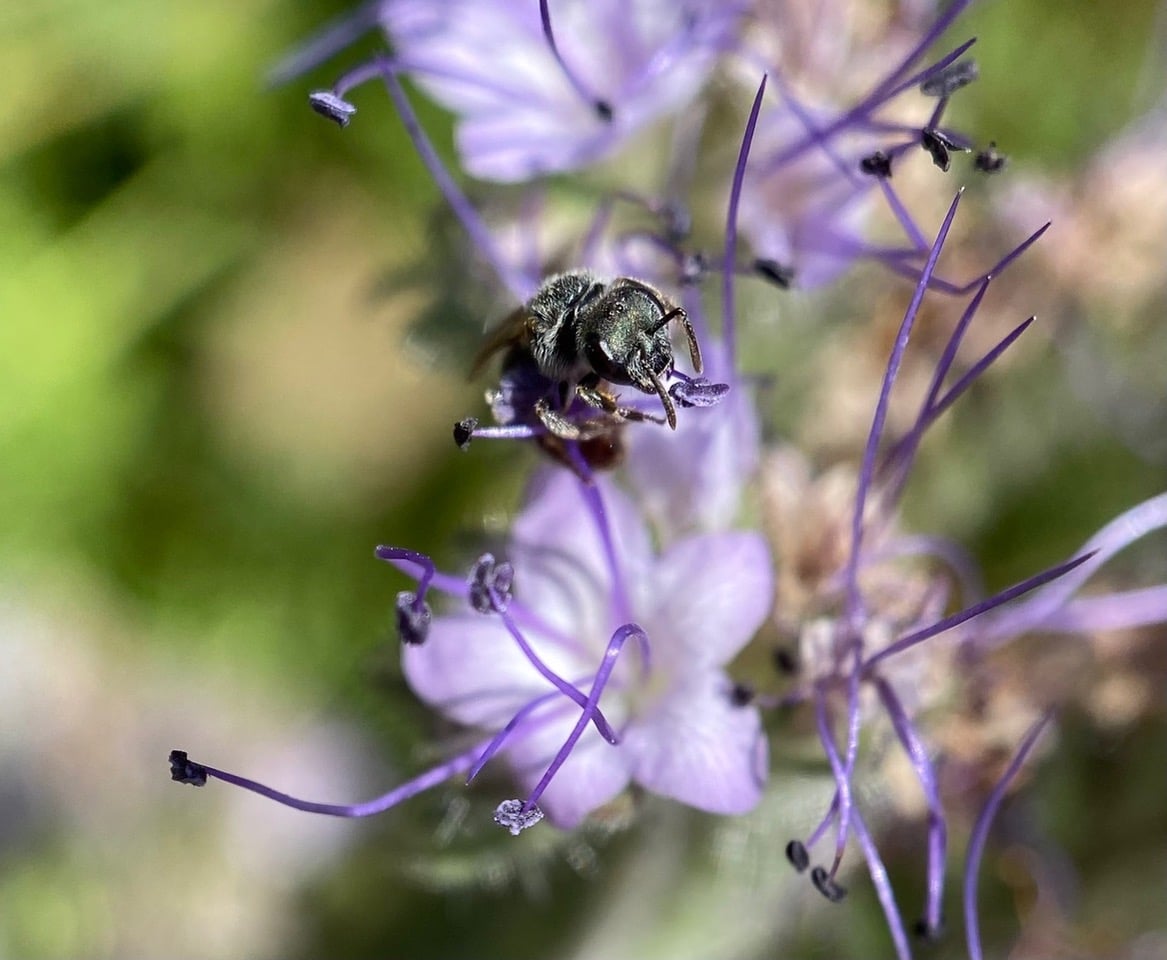
Photo by Kathy Kramer. Kathy shares a better close-up of the action. Note the bee’s mandibles working the anther.
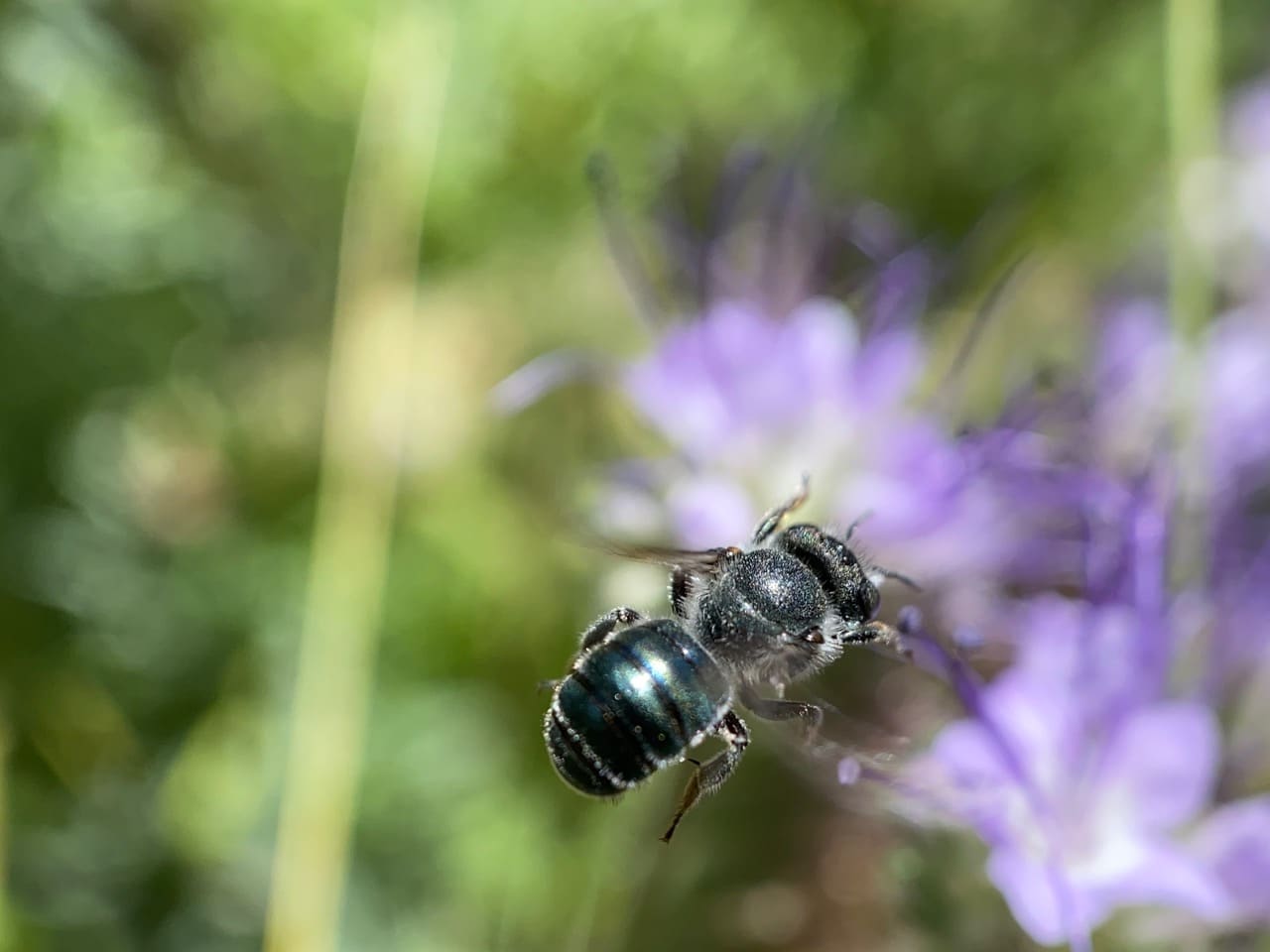
In contrast to the little bee’s gentle, meticulous foraging techniques, the medium sized Mason Bees, Osmia sp. (family Megachilidae) are fast furious, and bombastic.
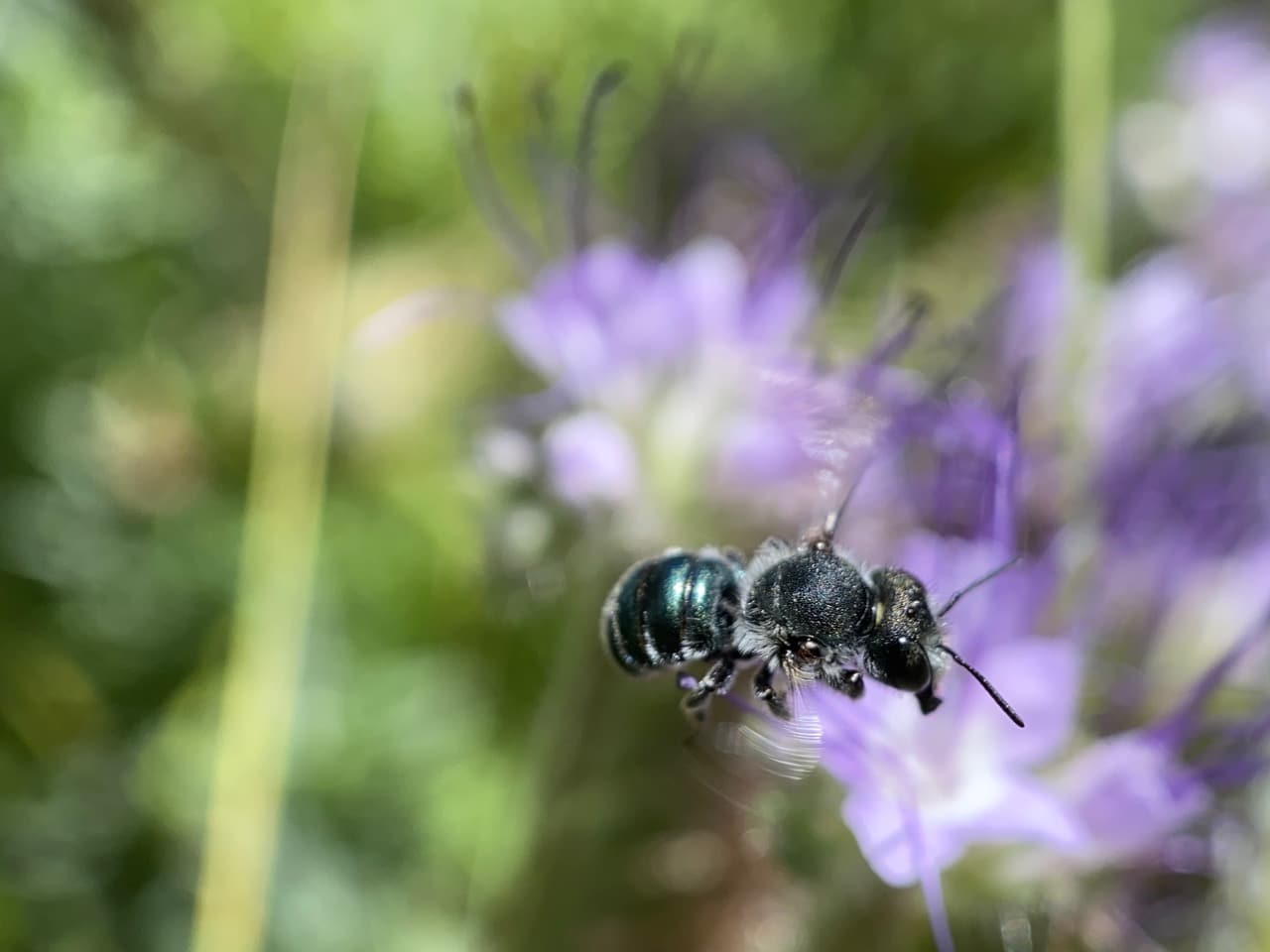
They buzz in and out before you can focus your camera on them.

Most of my photos of the Mason Bees look like this, if the insect is in the frame at all!
Mason Bee is a name commonly used for species of bees in the genus Osmia, of the family Megachilidae. Mason Bees are named for their habit of using mud or other “masonry” products in constructing their nests, which are made in naturally occurring gaps/cavities such as cracks in stones, hollow stems or holes in wood made by wood-boring insects. Osmia means ‘odor’, and refers to a faint lemony scent used by these bees to mark their nest entrances. Osmia species are frequently metallic green or blue. Females have black ventral scopae (special pollen collecting hairs) on the underside of their abdomen, which are difficult to see unless laden with pollen. Ventral abdominal scopae is a feature shared by all members of the Megachilidae family, which include the wool-carder bees (genus Anthidium), and leaf-cutter bees (genus Megachile).
Mason Bees are a solitary species and are non-aggressive. Every female is fertile and makes her own nest. Each nest cell is provisioned with pollen and contains one egg which will develop into a larva. The female creates a partition of mud between the nest cells. The process continues until she has filled the cavity. She plugs the entrance to the cavity, and then may seek another nest location. The larvae that hatch out consume their provisions and begin spinning a cocoon around itself and enters pupal stage. Adults mature in fall or winter, hibernating inside its cocoon.
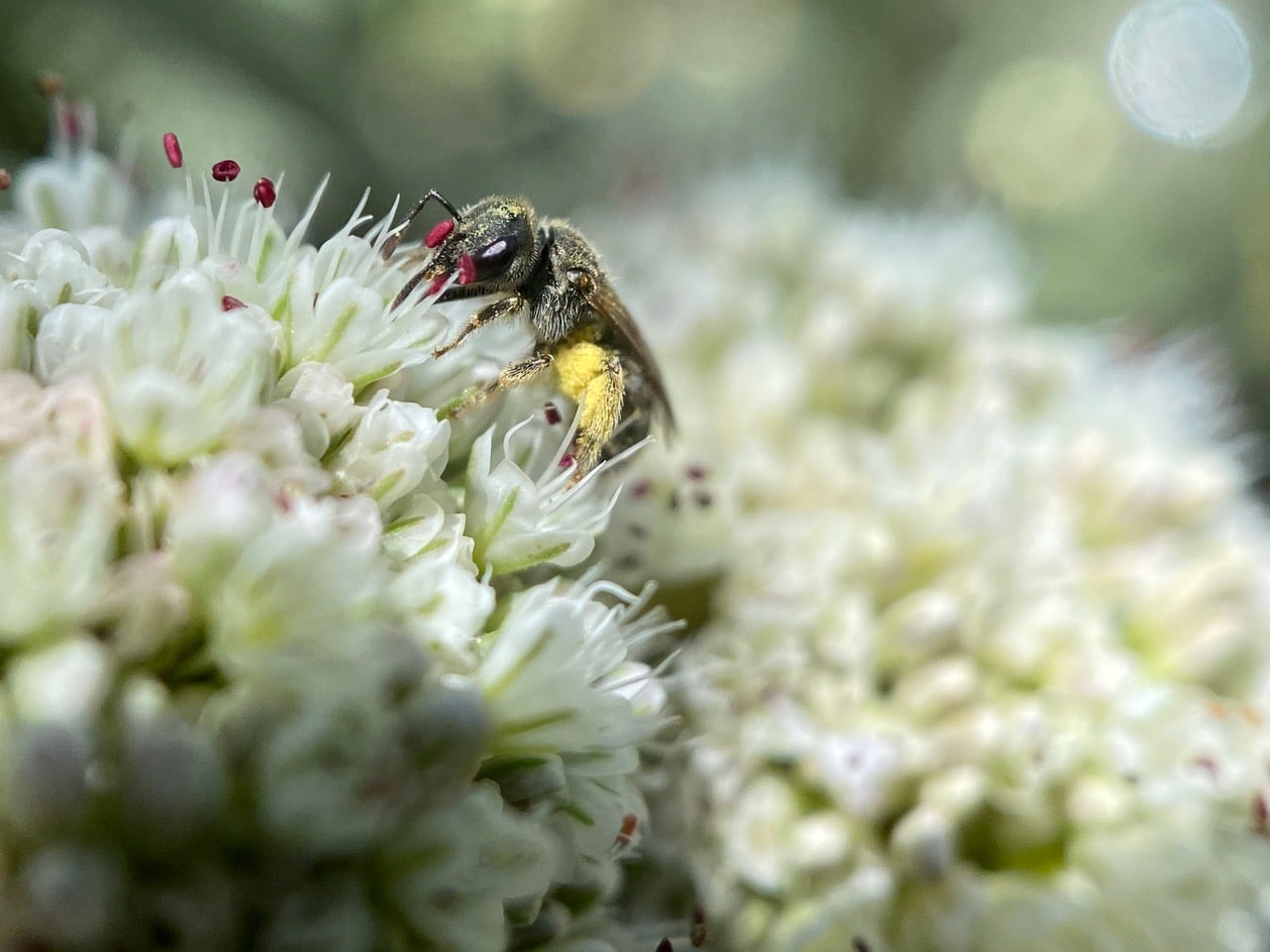
A Sweat Bee (family Halictidae) is foraging on an inflorescence of Naked Buckwheat. Note that her scopa extends the full length of her hind leg.
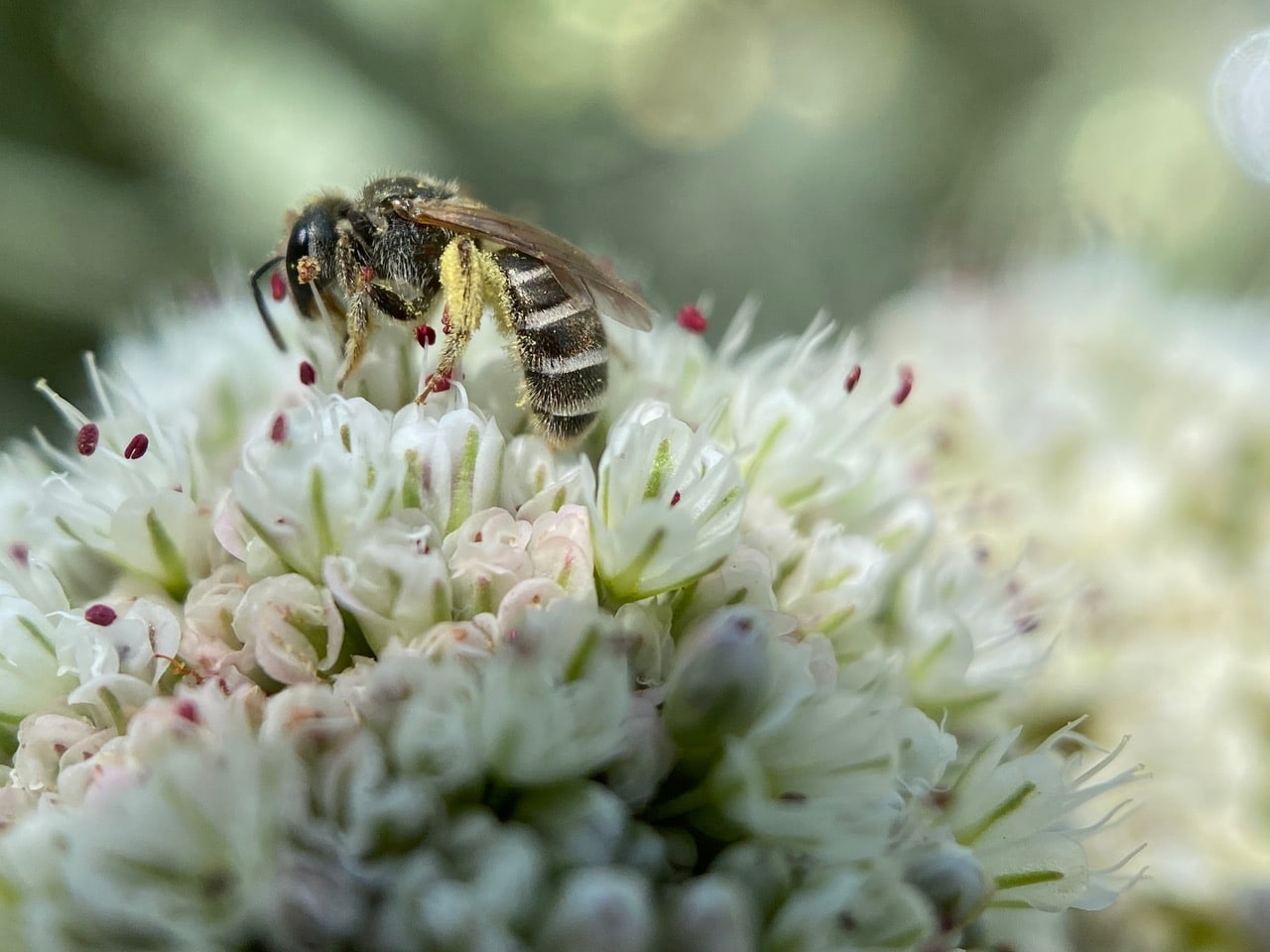
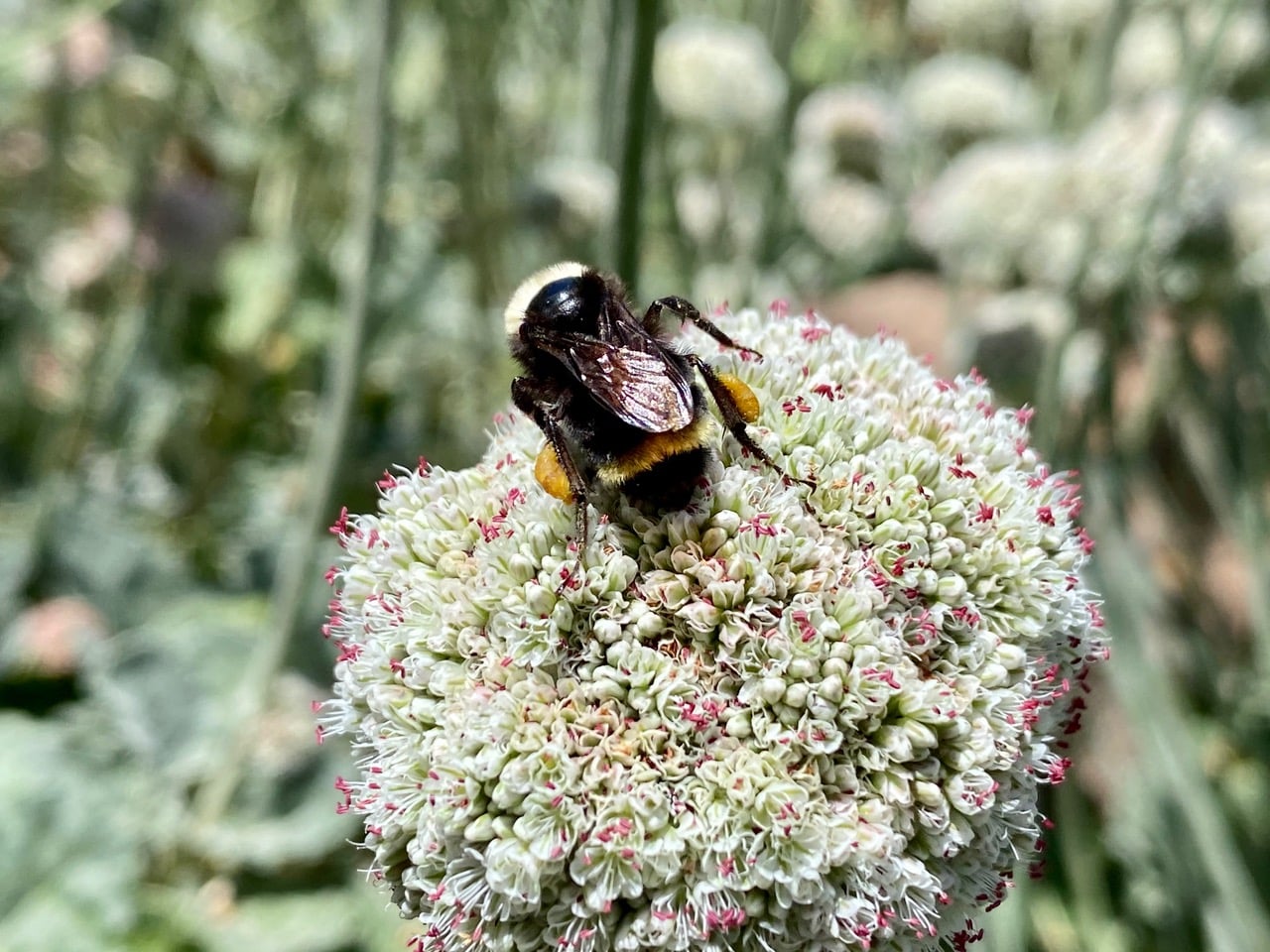
A Yellow-faced Bumble Bee, Bombus vosnesenskii (family Apidae) is foraging on a dense inflorescence of Nude Buckwheat. Note that the pollen in her corbiculae (“pollen baskets”) are a bit darker than that gathered by the solitary bees with scopae. This is due to the fact that the bumble bee mixes the pollen with some nectar as she packs it into the pollen basket. The wet pollen has the consistency of putty, and a darker color than the original dry pollen.
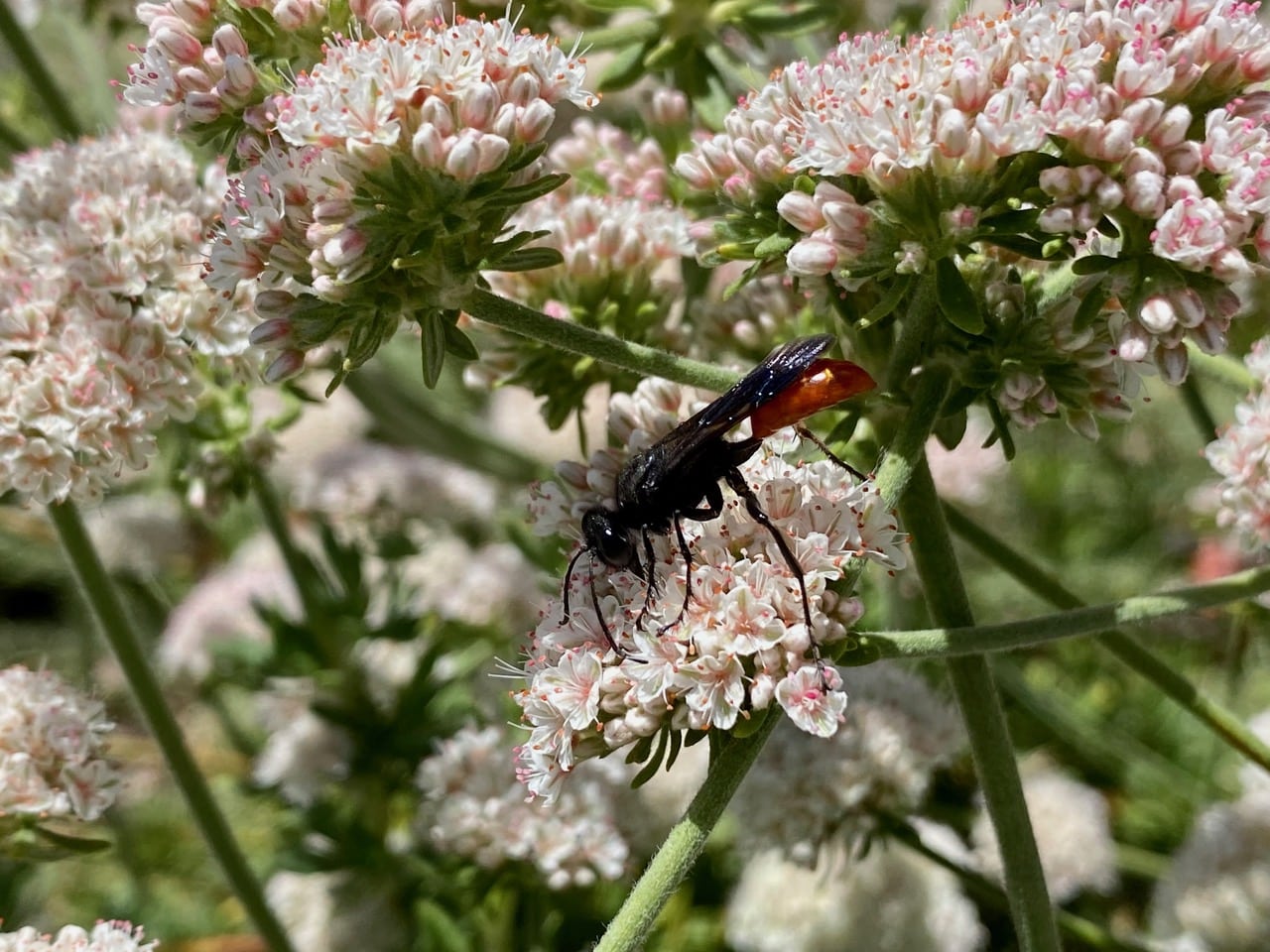
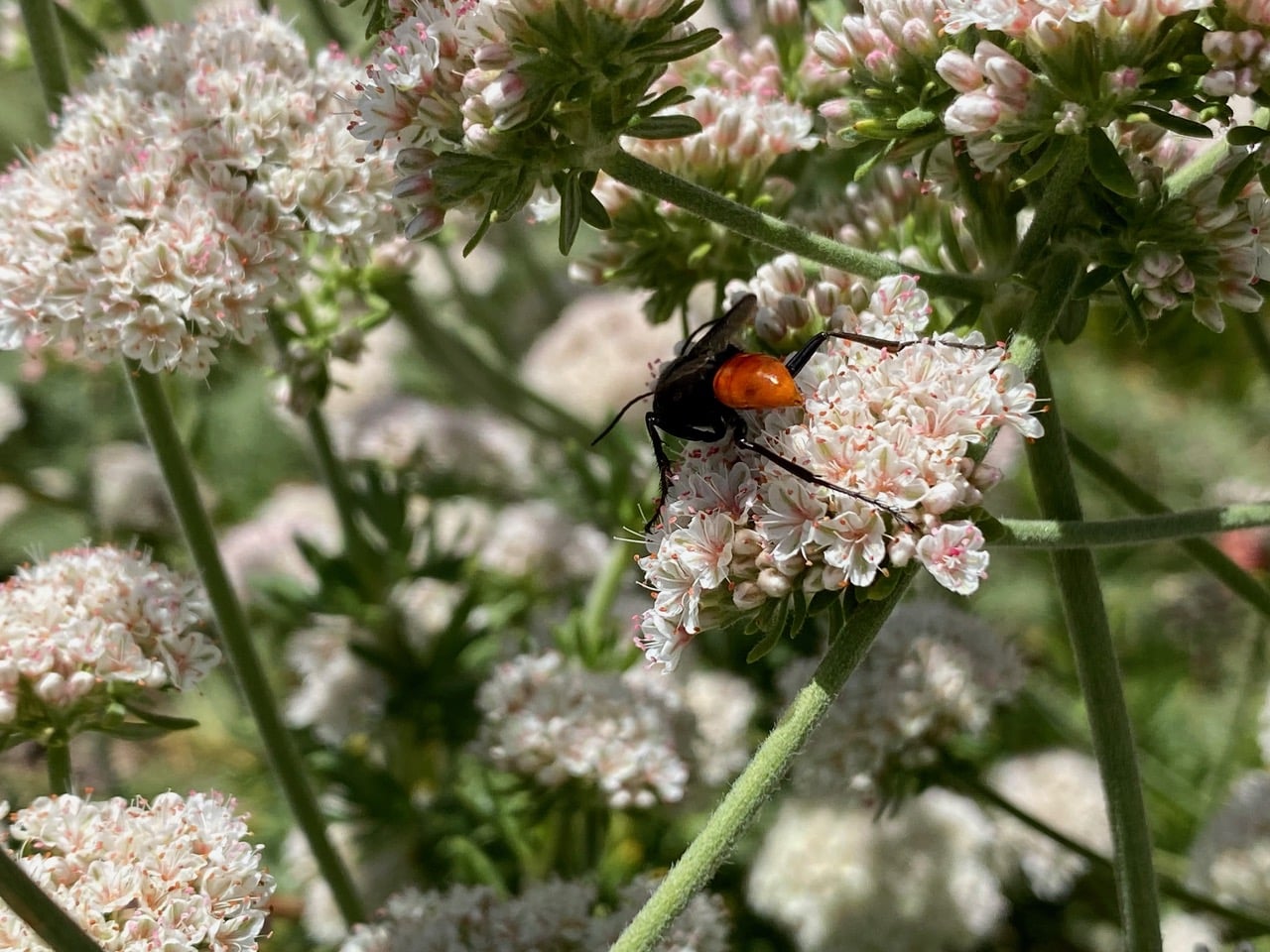
The most imposing presence at the Nude Buckwheat flowers is the female Thread-waisted Burrowing Wasp, Sphex lucae (family Sphecidae). Not only is she big, her abdomen is an orange-red color.
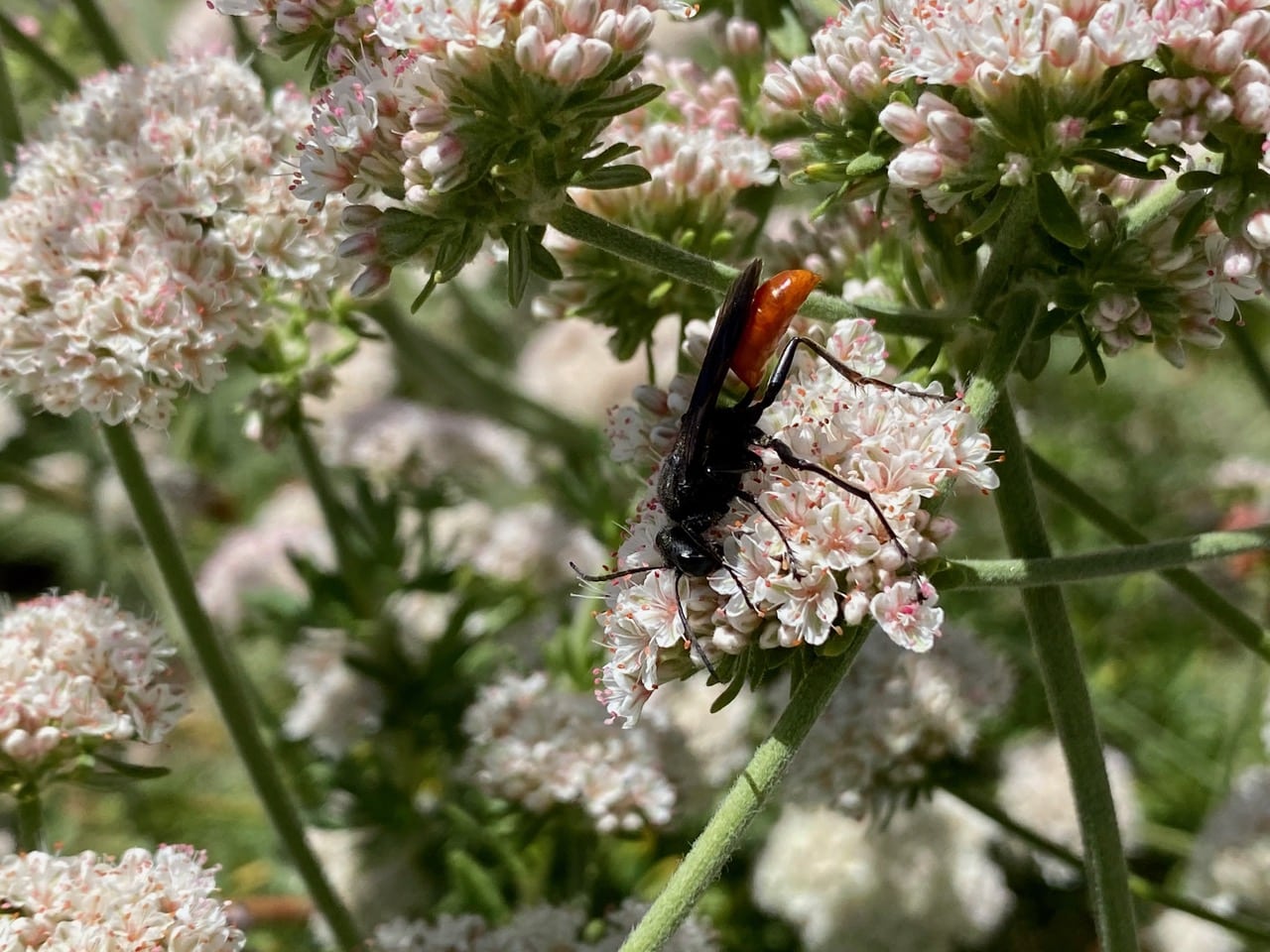
The Sphecidae are solitary wasps with elongated and narrow first abdominal segment, giving rise to the common name Thread-waisted Wasps. Sphex lucae is a widespread western species, ranging from WA in the north, south to CA, and east to TX. The species exhibits sexual dimorphism – females are black with a red abdomen, while the males are all black. Adults visit many types of flowers for nectar. Females hunt katydids and grasshoppers as food for their young. The wasp excavates a single-celled burrow in the soil in advance of hunting activities. She drags her paralyzed prey back to the burrow, laying a single egg on the victim. The nest entrance is then sealed and the process is repeated. Males of this species spend nights in sleeping aggregations in sheltered places such as beneath a rock overhang.
Dr. Megan Asche on Twitter: “Sphecid wasp (possibly Sphex lucae) digging a tunnel. I think it is so neat when you see them pick up rocks and move them around. #Hymenoptera #SolitaryWasp #HeavyLifter https://t.co/HQkiDxsCCG” / X