

Pollinator Post 6/6/24 (2)

The Masked Bee, Hylaeus sp. (family Colletidae) is one of our smallest bees, no larger than a grain of rice. When they hover around flowers, they are easily mistaken for midges. It is fun to watch female Masked Bees collect pollen from flowers. Because of their small size, they usually climb on the filaments and work the individual anthers one at a time.
I watch as this female Hylaeus hover over several California Phacelia, Phacelia californica inflorescences before she chooses to land on a flower with fresh anthers.
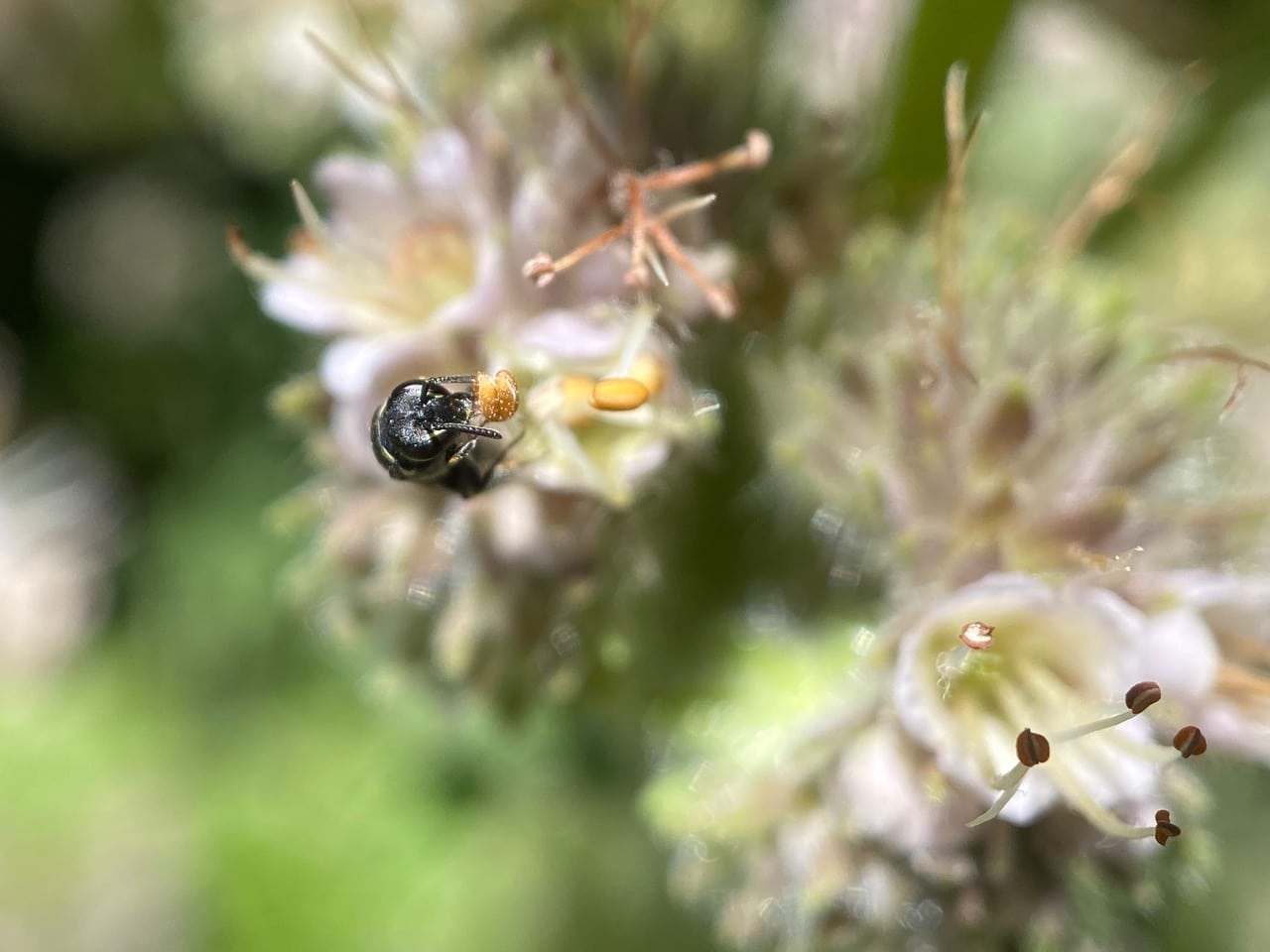
Climbing up the filament, she opens up the anther with her mandibles.

Masked Bees are best recognized by the yellow markings on their faces. Females generally have a thin sliver of yellow along the inner margins of their eyes. In contrast, the males have larger, more conspicuous yellow markings on their faces. The bees may also have other yellow markings on their legs.
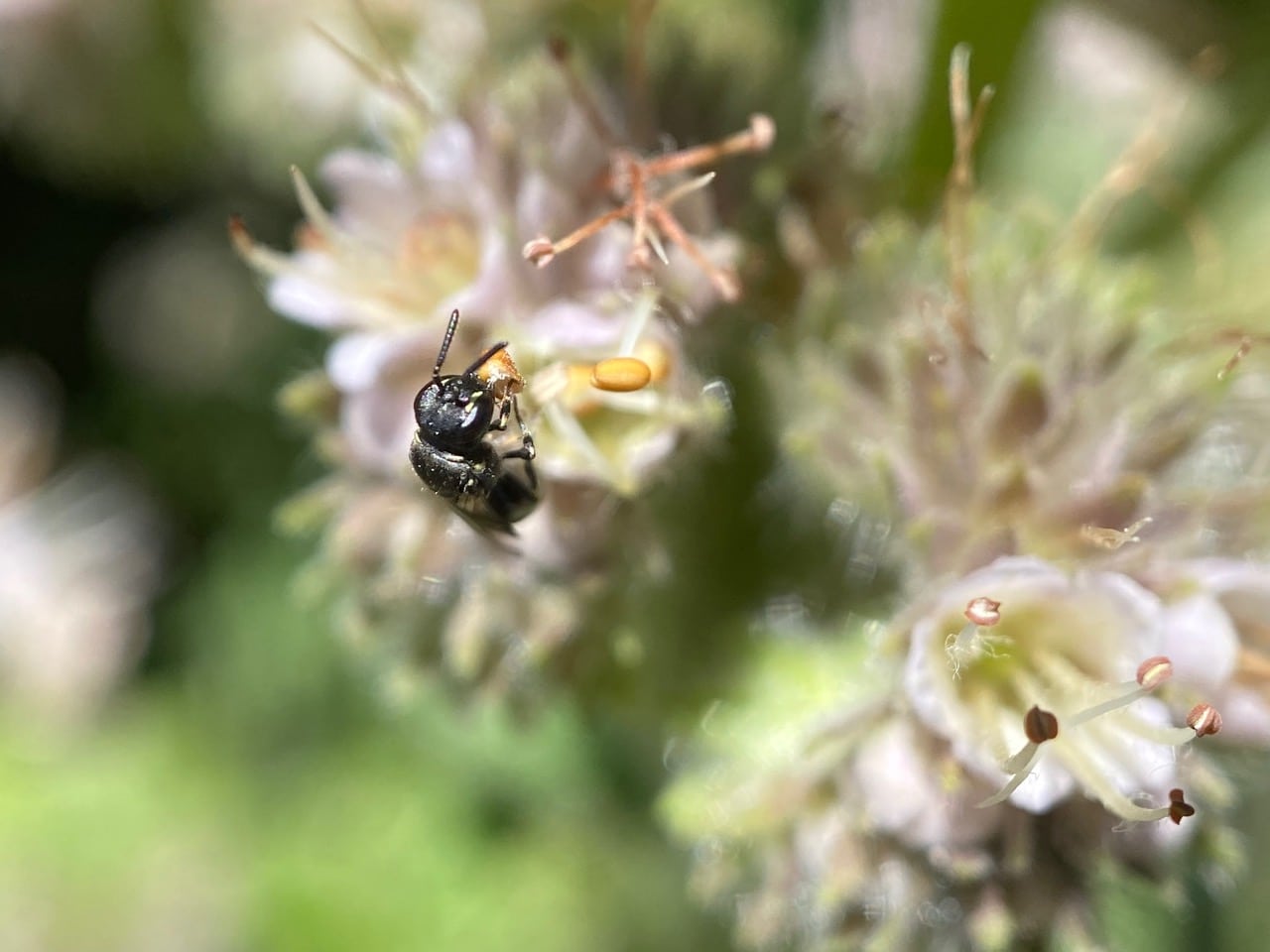
Hylaeus (family Colletidae) are shiny, slender, hairless, and superficially wasp-like bees. They are small, 5 to 7 mm long, usually black with bright yellow or white markings on their face and legs. These markings are more pronounced on the males. Hylaeus do not carry pollen and nectar externally, they instead store their food in the crop and regurgitate it upon returning to their nests. They are primarily generalist foragers. Hylaeus are short-tongued, but their small body size enables them to access deep flowers. Hylaeus nest in stems and twigs, lining their brood cells with self-secreted cellophane-like material. They lack strong mandibles and other adaptations for digging, using instead pre-existing cavities made by other insects.
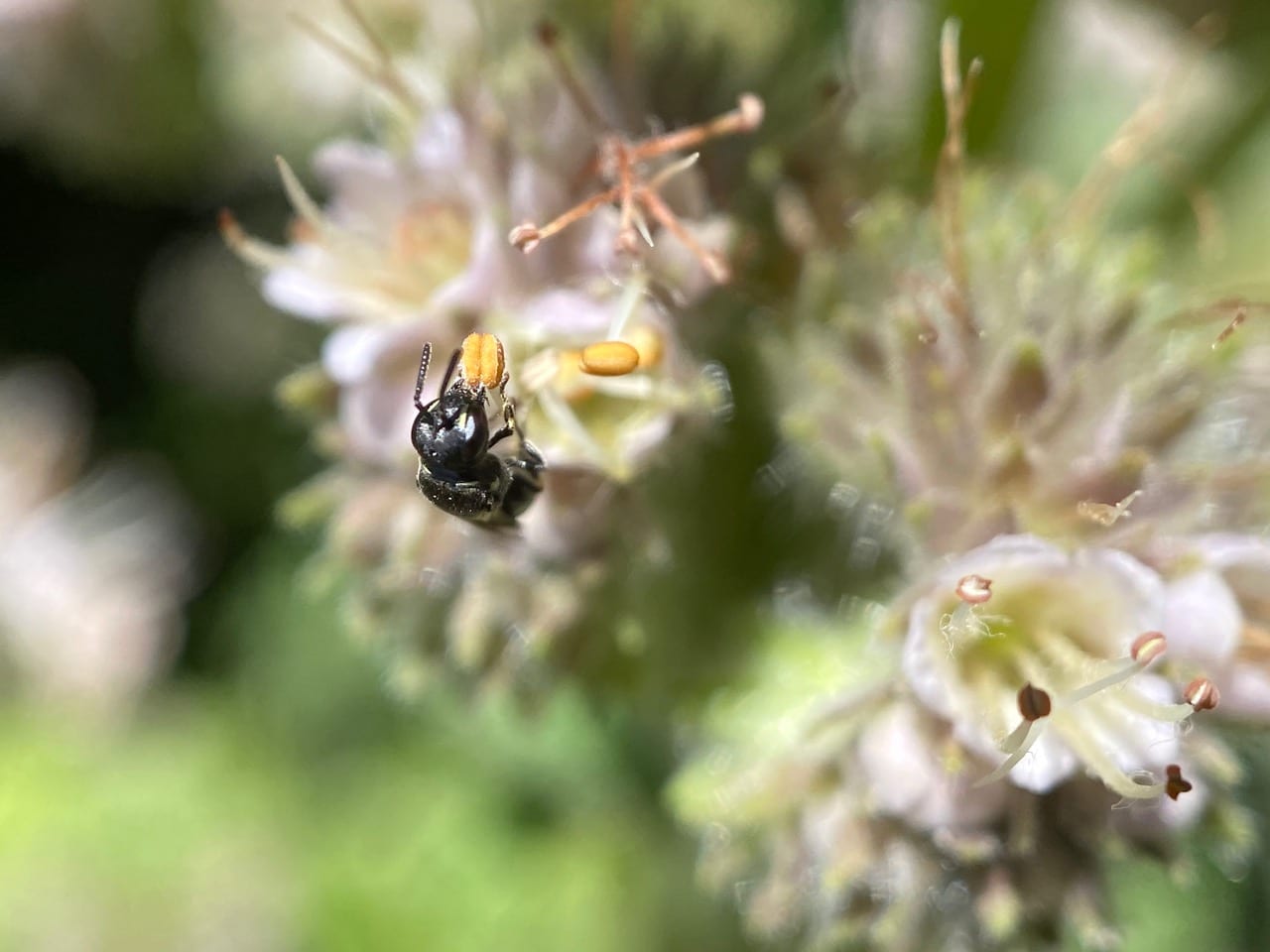
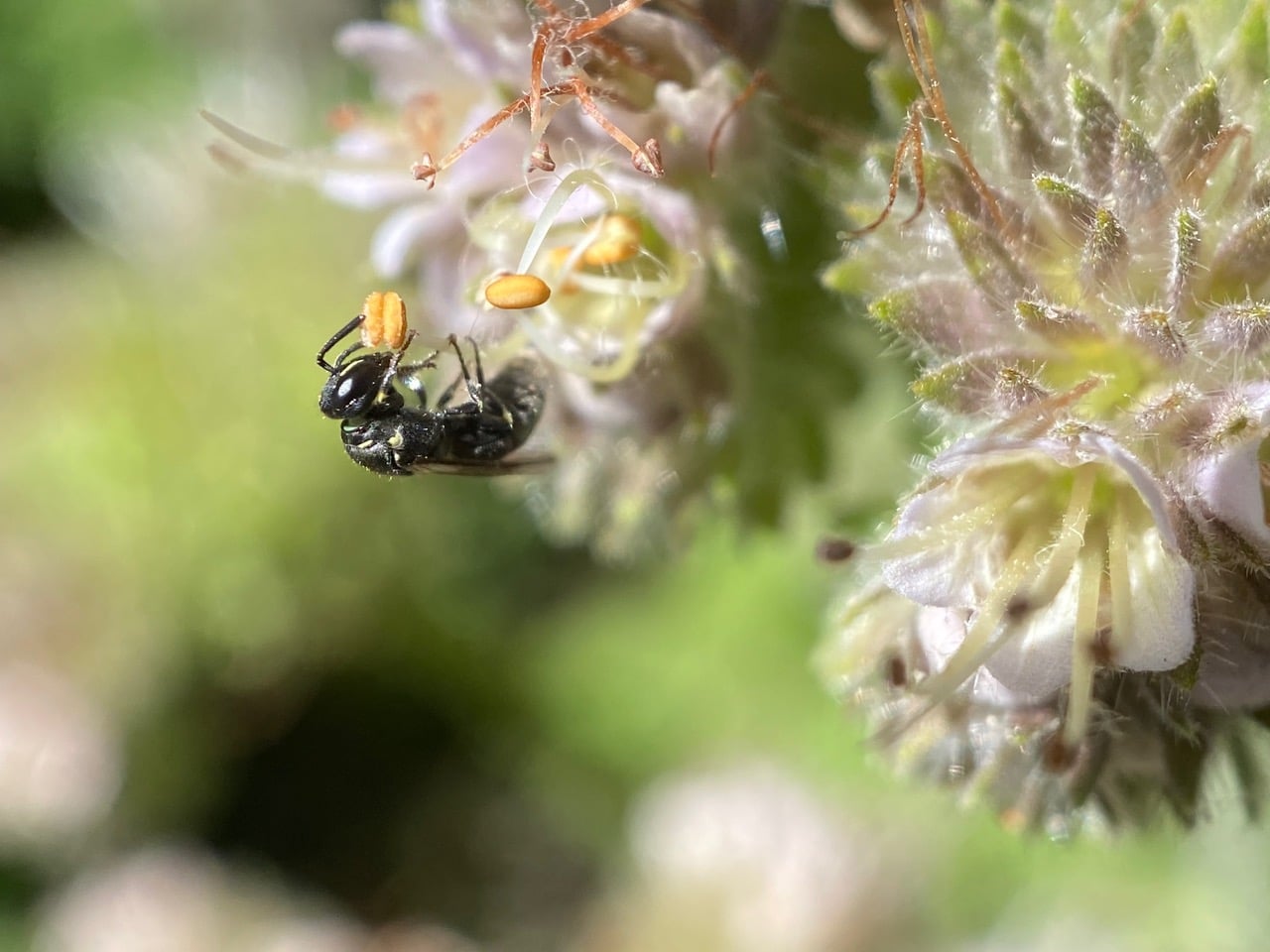

Time to work on another anther. Note that the bee has no scopa on her hind legs or abdomen. All the nectar and pollen that she gathers go into her crop, part of her gut. Back at her nest, she will regurgitate this soupy mixture into her waterproof nest cells to provision for her young.
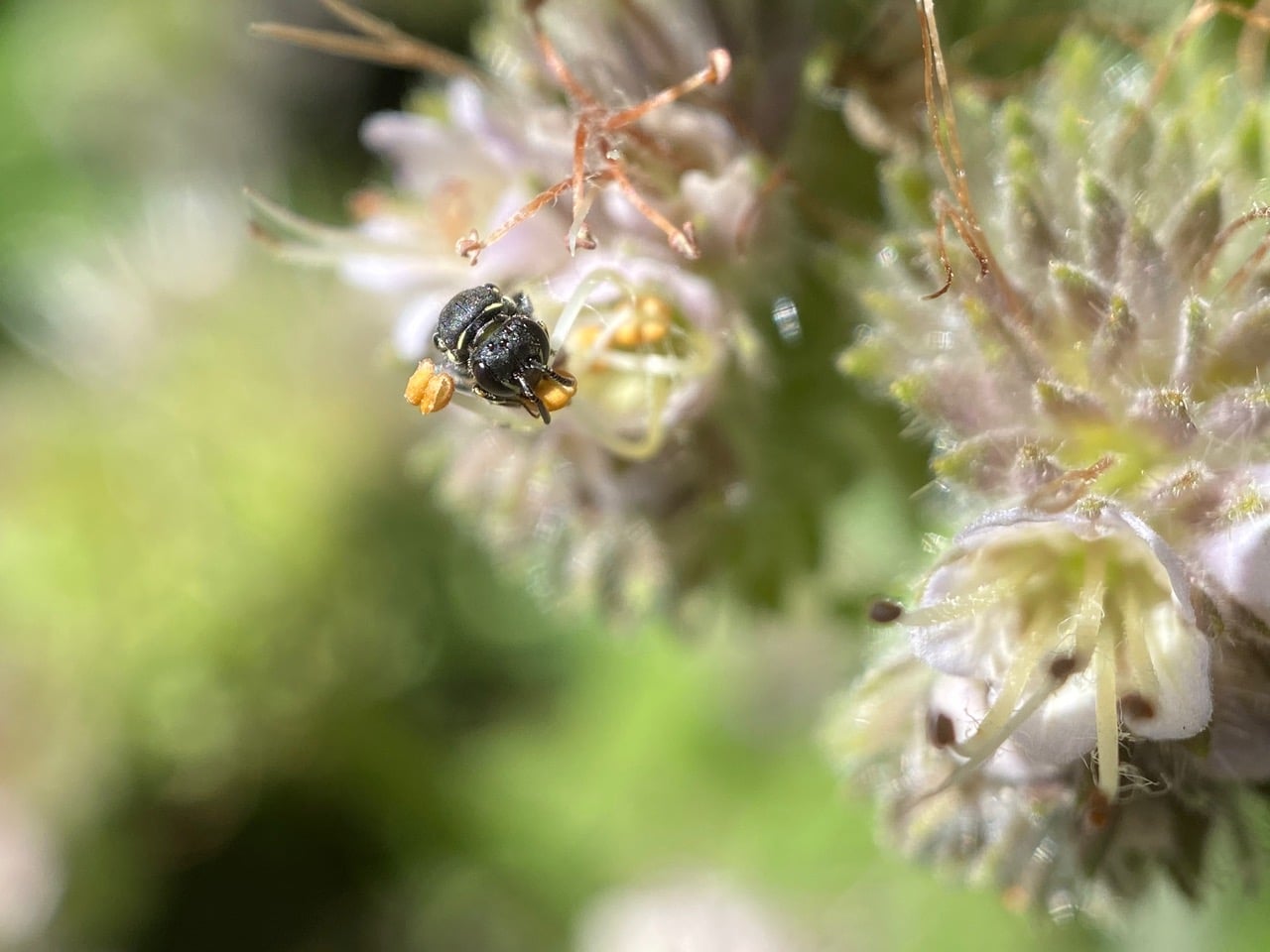
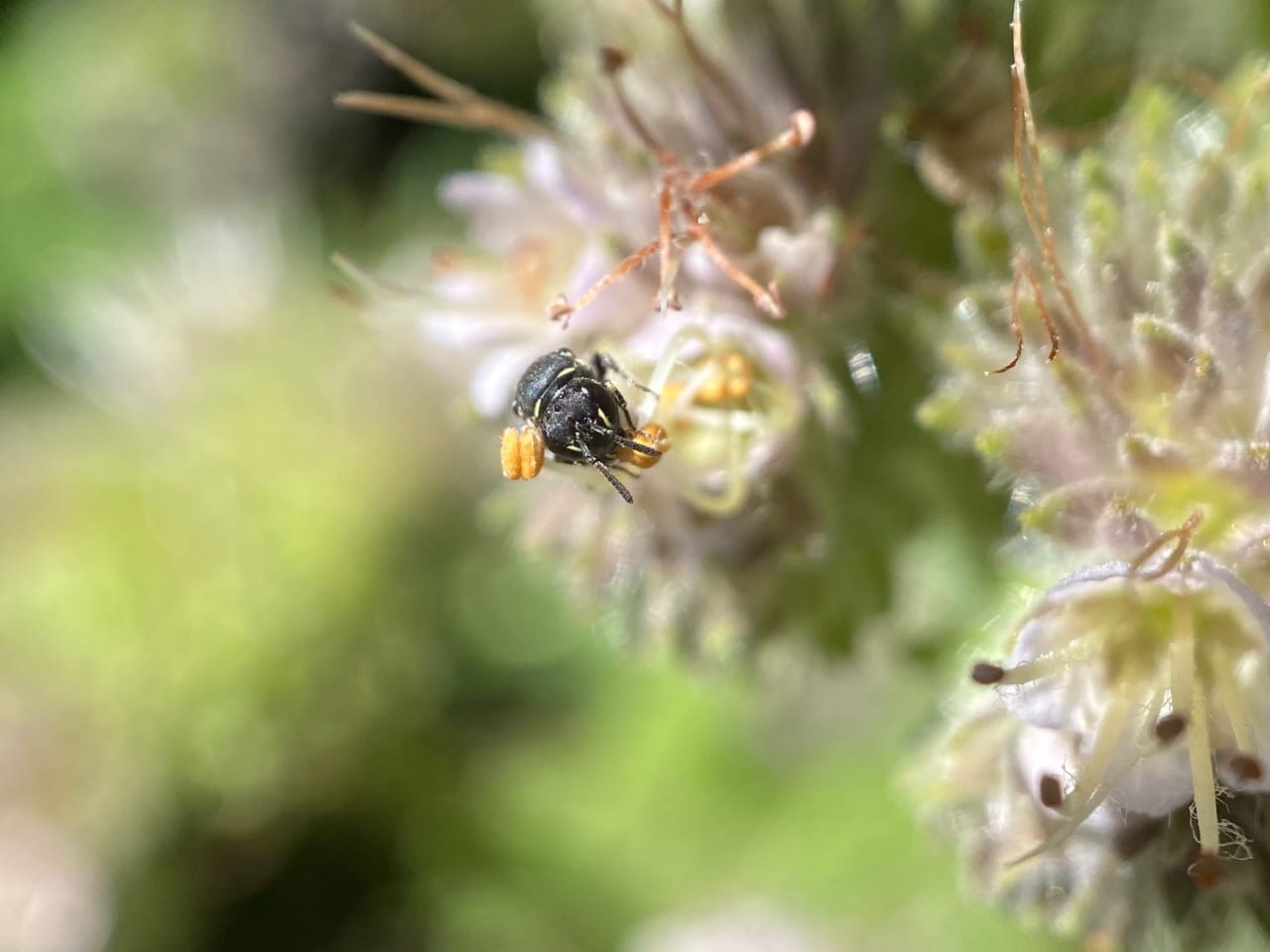

She is breaking open another anther with her mandibles.
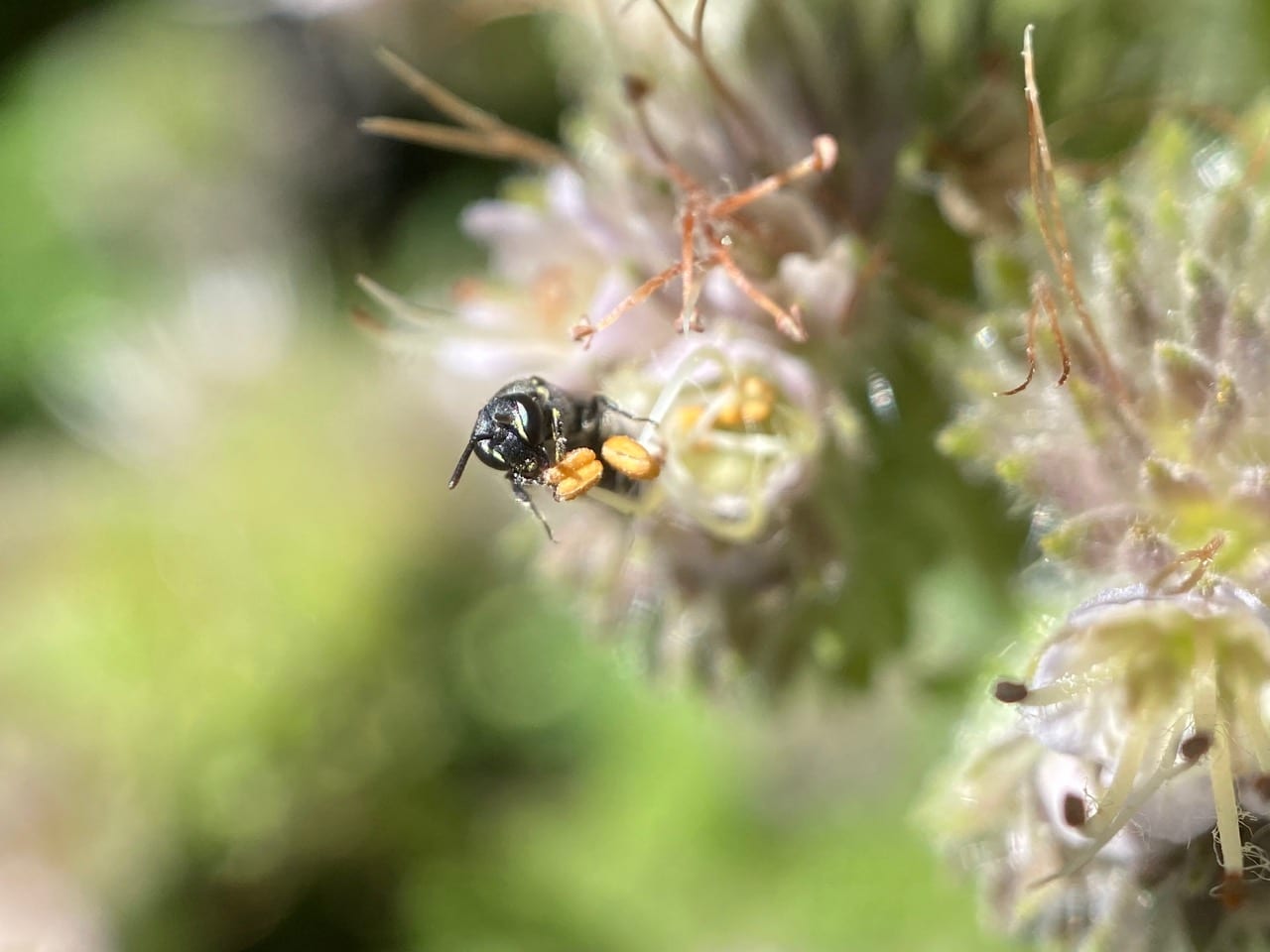
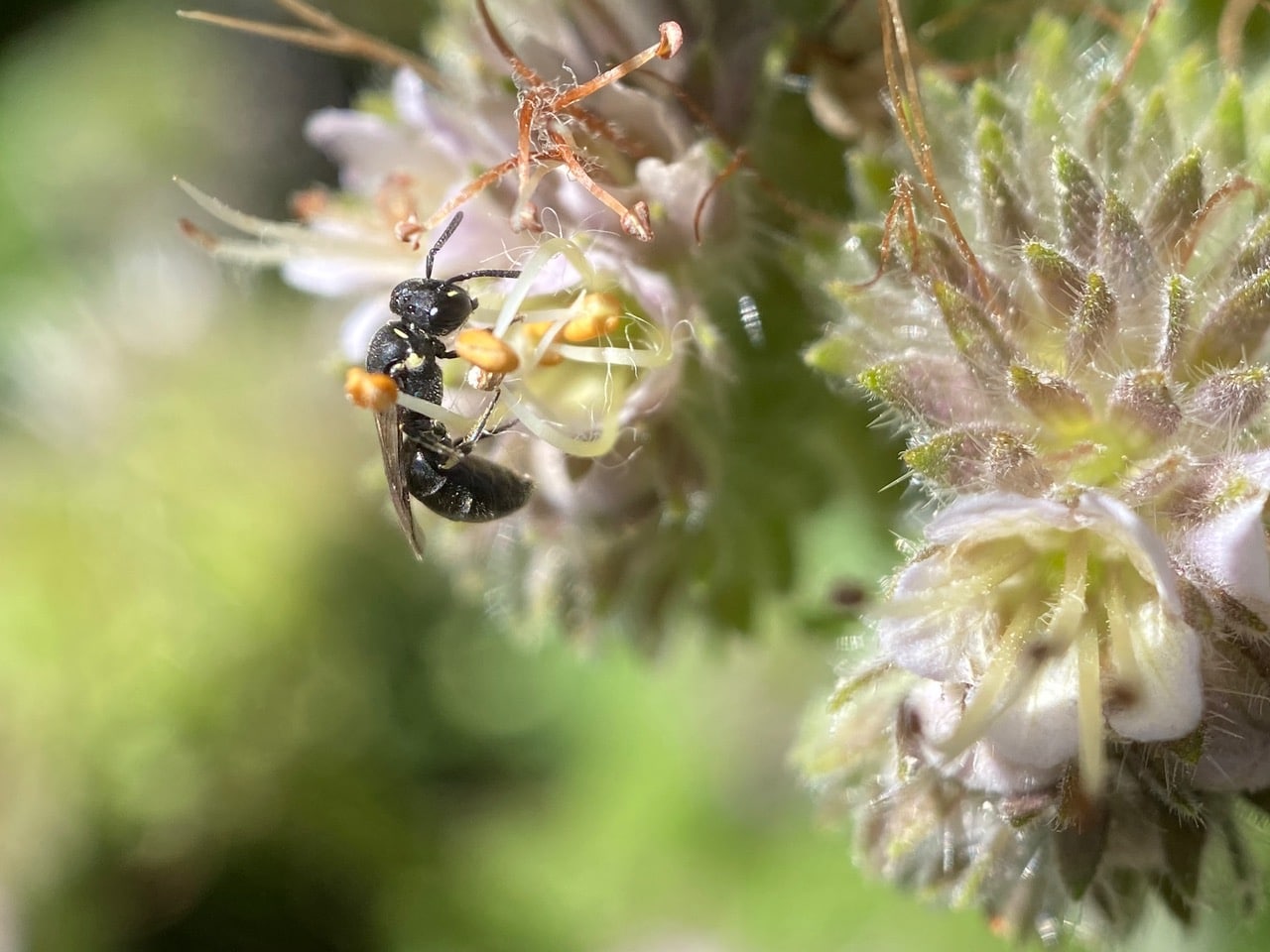
There are more stamens still coiled up in the young phacelia flower. What will the little bee do?

Maybe she will come back when the stamens are unfurled?
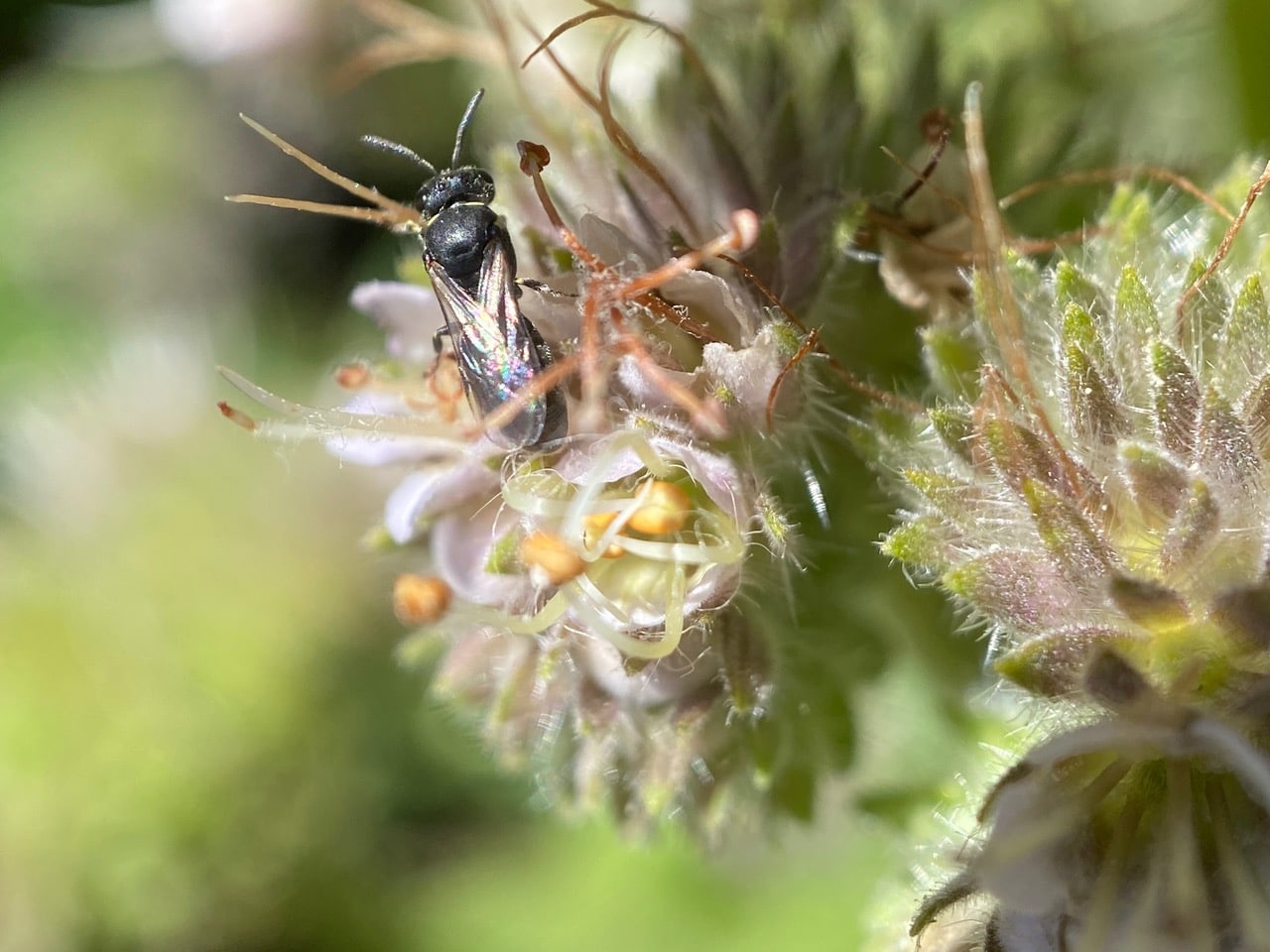
Hylaeus turns around and flies off. Maybe her crop is full, and she needs to unload her loot back at the nest.

Little bees better beware – a Crab Spider, Mecaphesa sp. (family Thomisidae) is waiting in ambush to grab you!
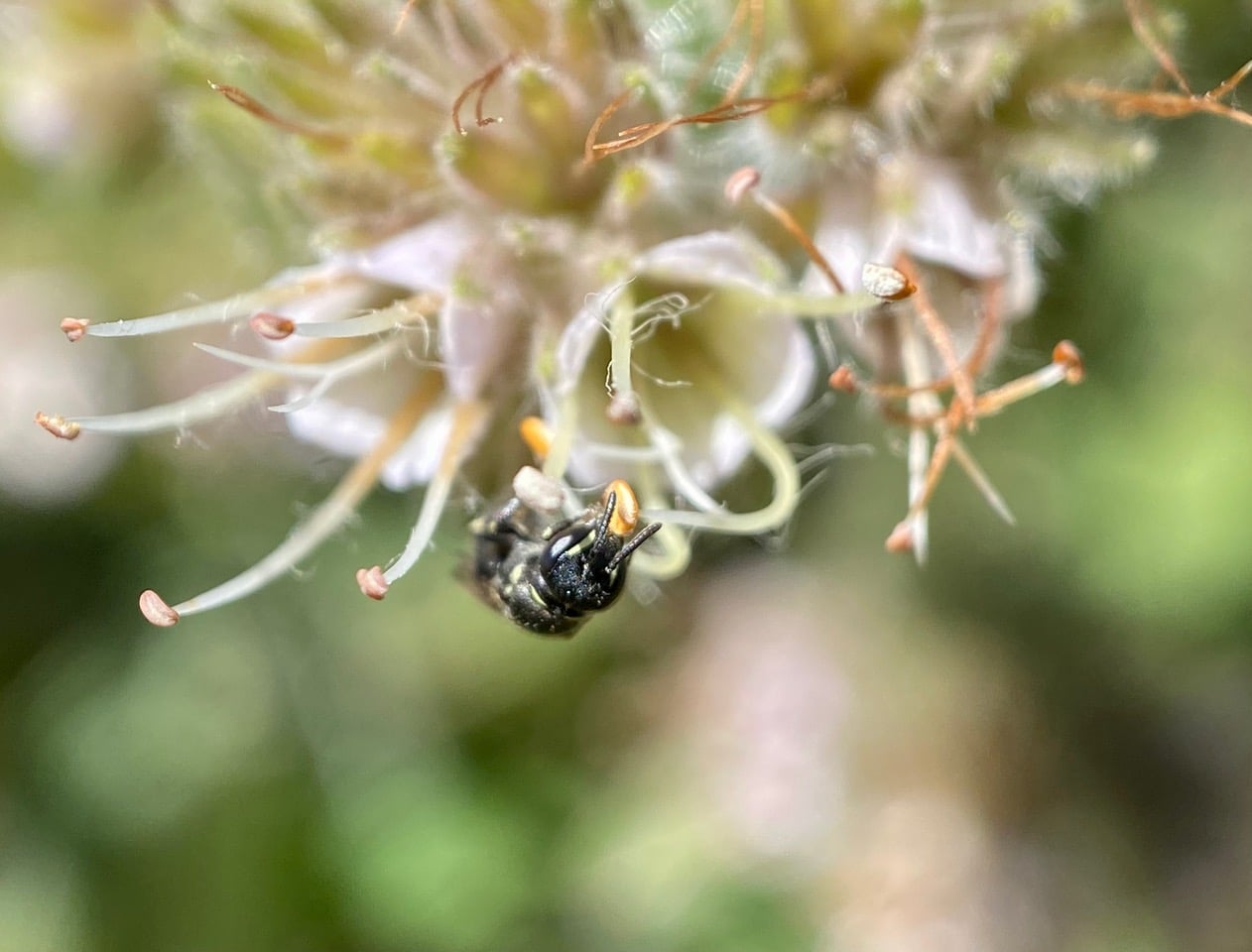
A Masked Bee, Hylaeus sp. (family Colletidae) lands on the fresh stamens of a California Phacelia. It is uncanny how the bees always pick out the flowers with fresh stamens without fail.
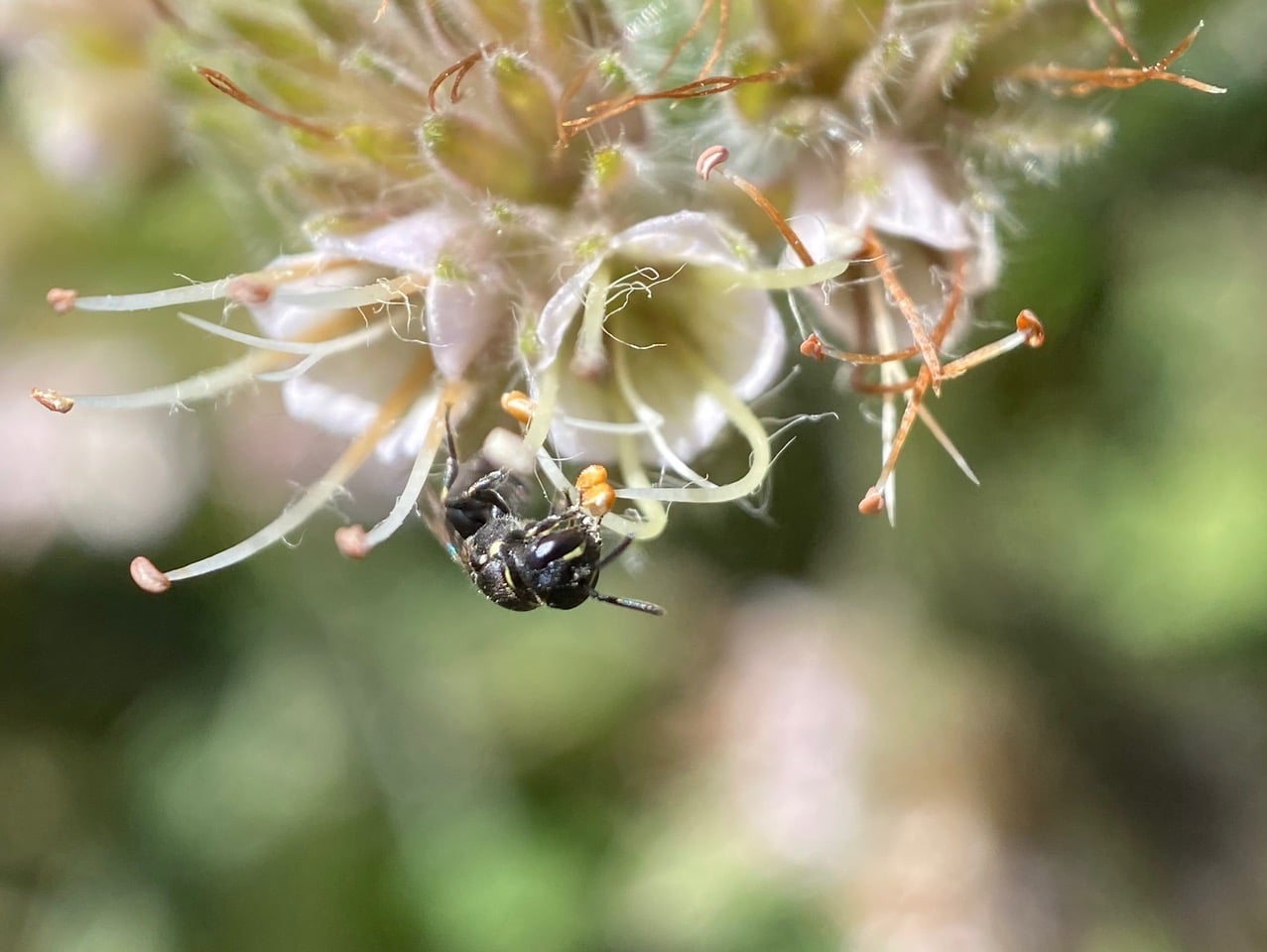
She proceeds to break open an anther with her mandibles to extract the pollen.

This is apparently a Masked Bee’s standard procedure for collecting pollen.
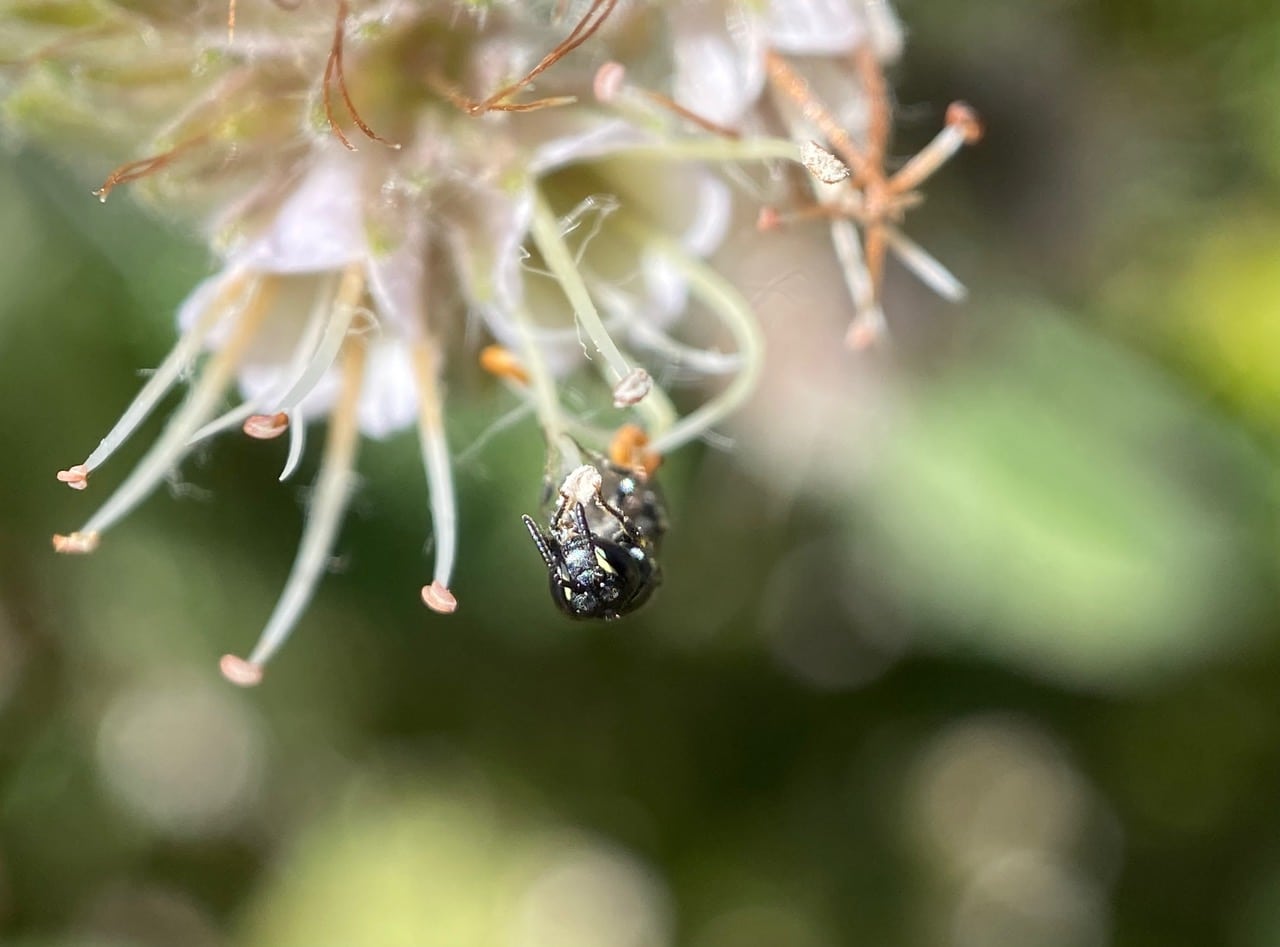
Masked bees do not pack pollen into any external scopae when they forage. The pollen is ingested and temporarily stored in their crop, a part of their gut. The mixture of nectar and pollen is regurgitated at the nest to provision for the young. Hylaeus larvae feed on a liquid diet in their waterproof nest cells.
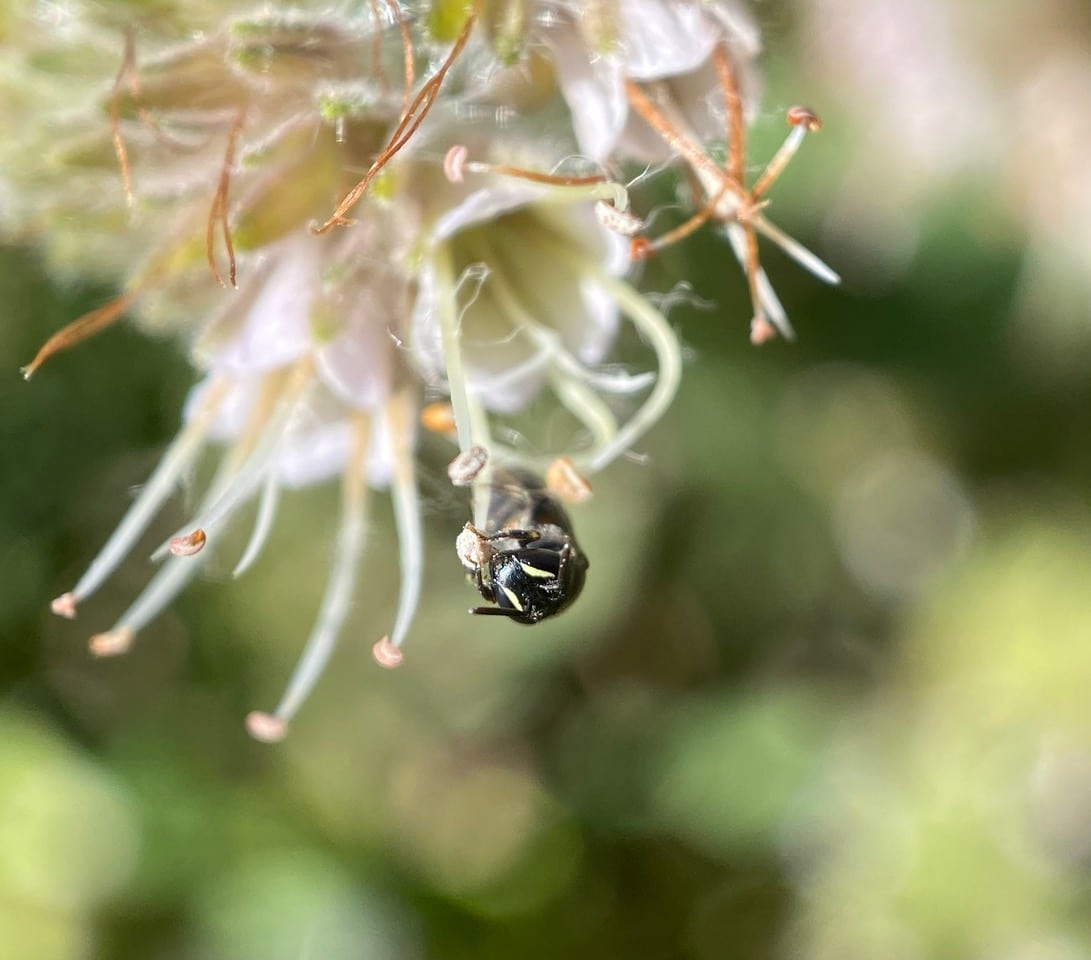
It’s all in a day’s work!
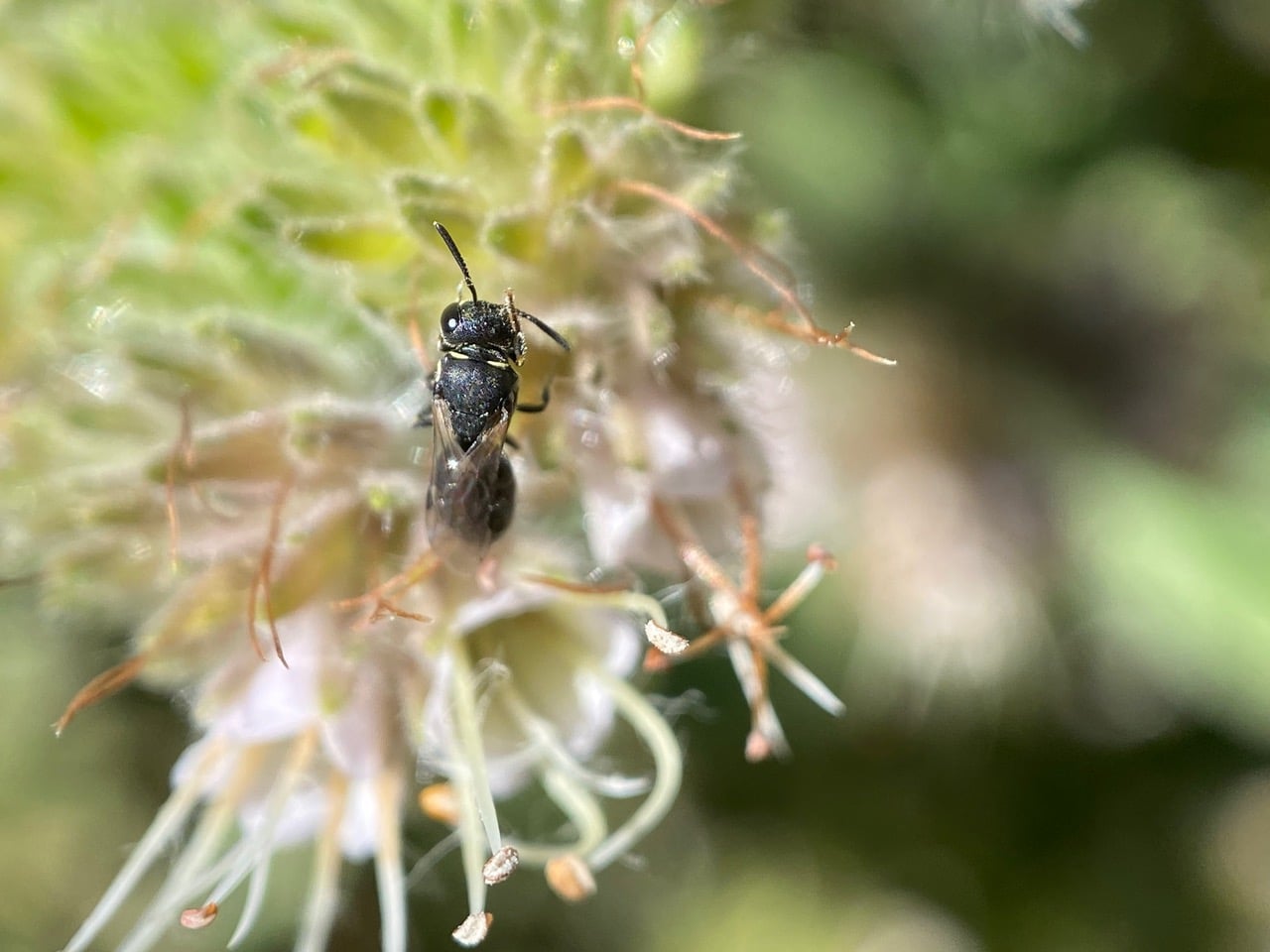
Before Hylaeus flies off, she runs her right antenna through the antenna cleaner on her right foreleg.
All bees have an antenna cleaner on each of their two forelegs. The antenna cleaners consists of two parts: a notch in the basitarsus, which is fitted with stiff hairs, and a corresponding spur on the tibia. To clean its antenna, the bee raises its foreleg over its antenna and then flexes it tarsus. The action allows the spur to close the notch, forming a ring around the antenna. The bee pulls each antenna through the bristles to clean it of debris such as pollen or dust which might interfere with the many sensory organs within the antenna. A bee’s antennae serve numerous functions: smell, taste, perceive humidity and temperature, feel, monitor gravity and flight speed and even detect sound waves to help guide the bee in its daily activities.
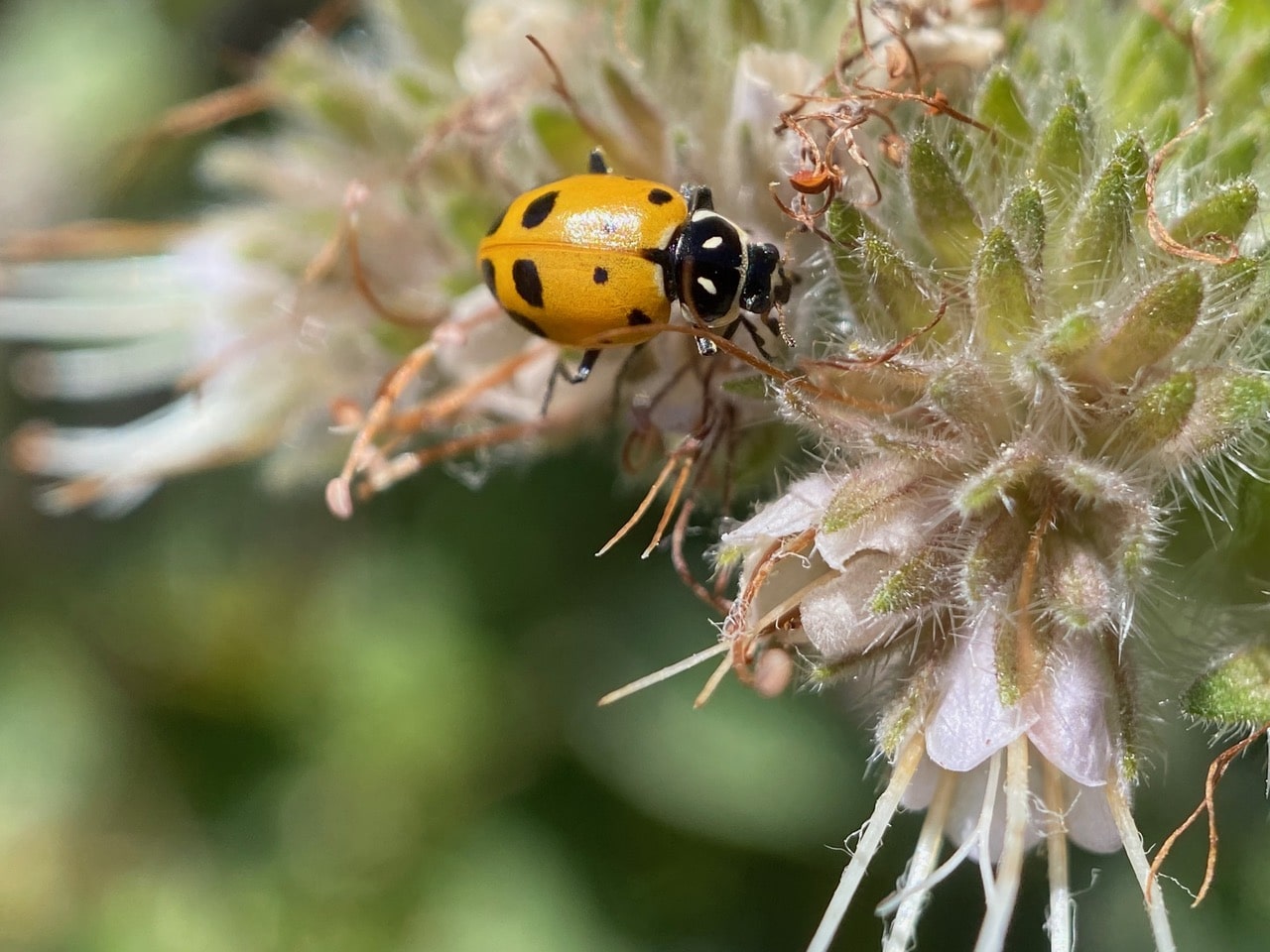
A Convergent Ladybeetle, Hippodamia convergens (family Coccinelidae) is roaming an inflorescence of California Phacelia. It is unclear whether it is hunting aphids, or foraging for floral resources. When prey is scarce, the predominantly carnivorous beetles are known to feed on nectar and pollen.
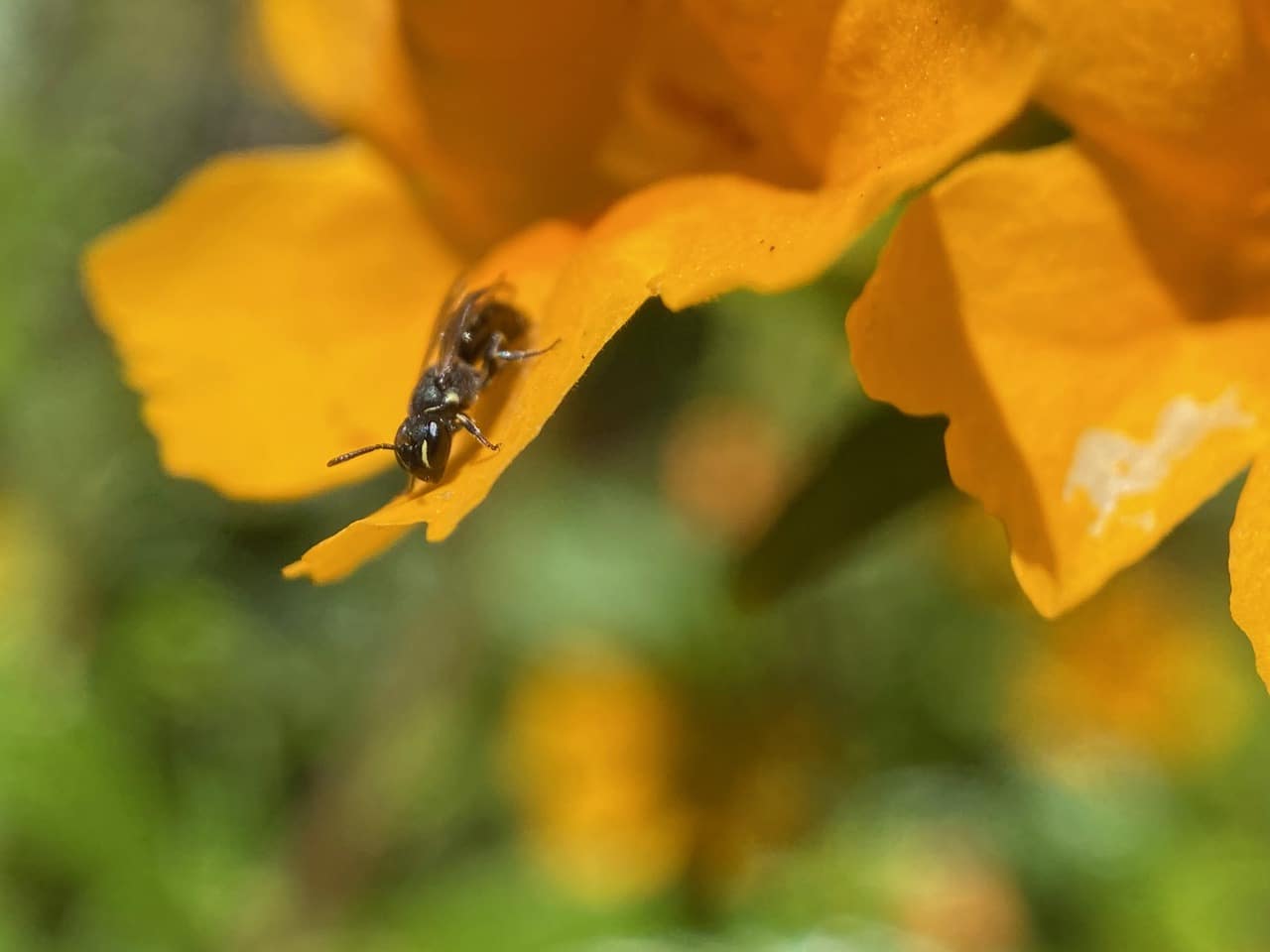
A female Masked Bee, Hylaeus sp. (family Colletidae) crawls out of a Sticky Monkeyflower.
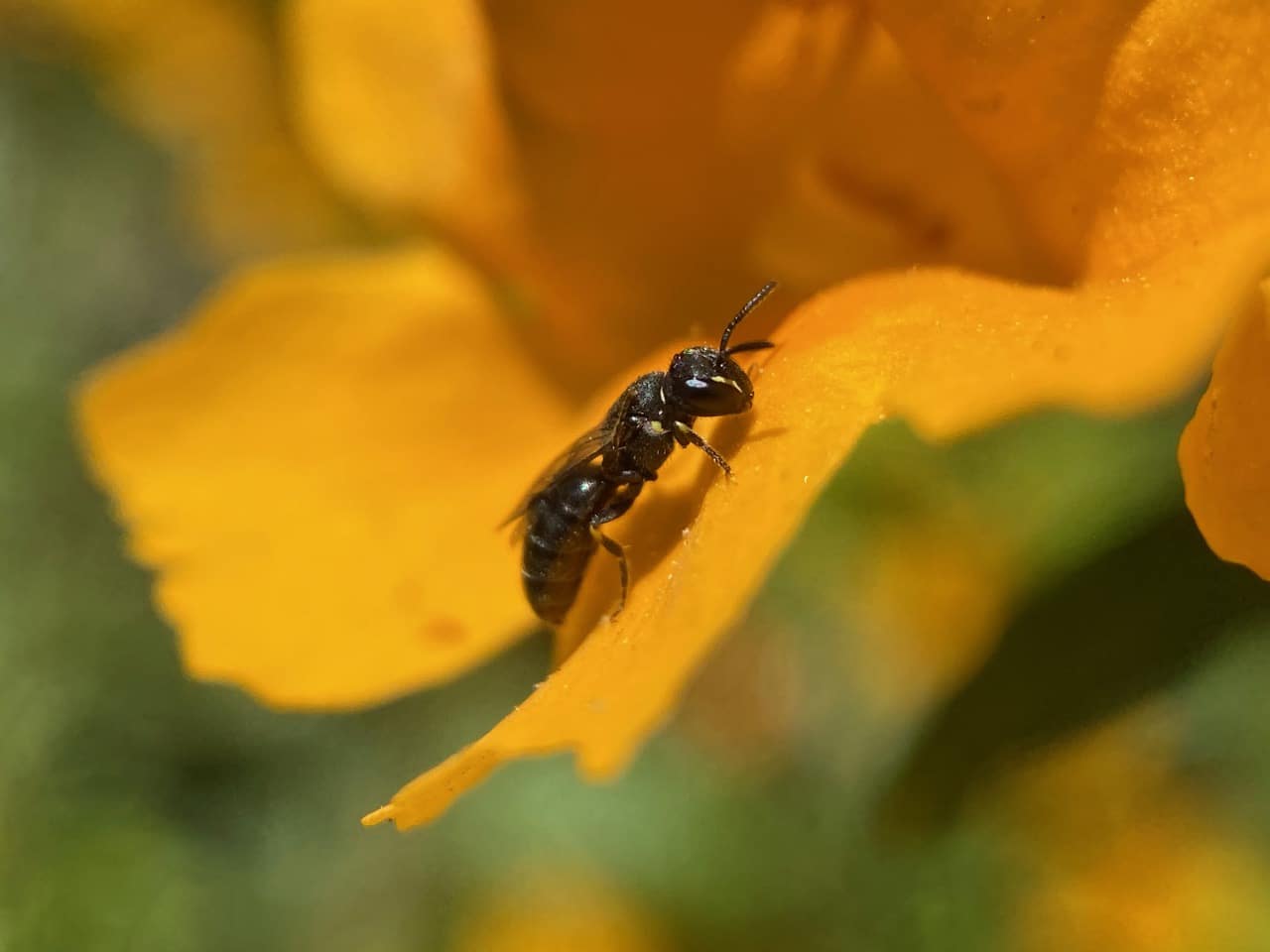
I zoom in to see if she is going to “blow bubbles”. Nope, not this time!
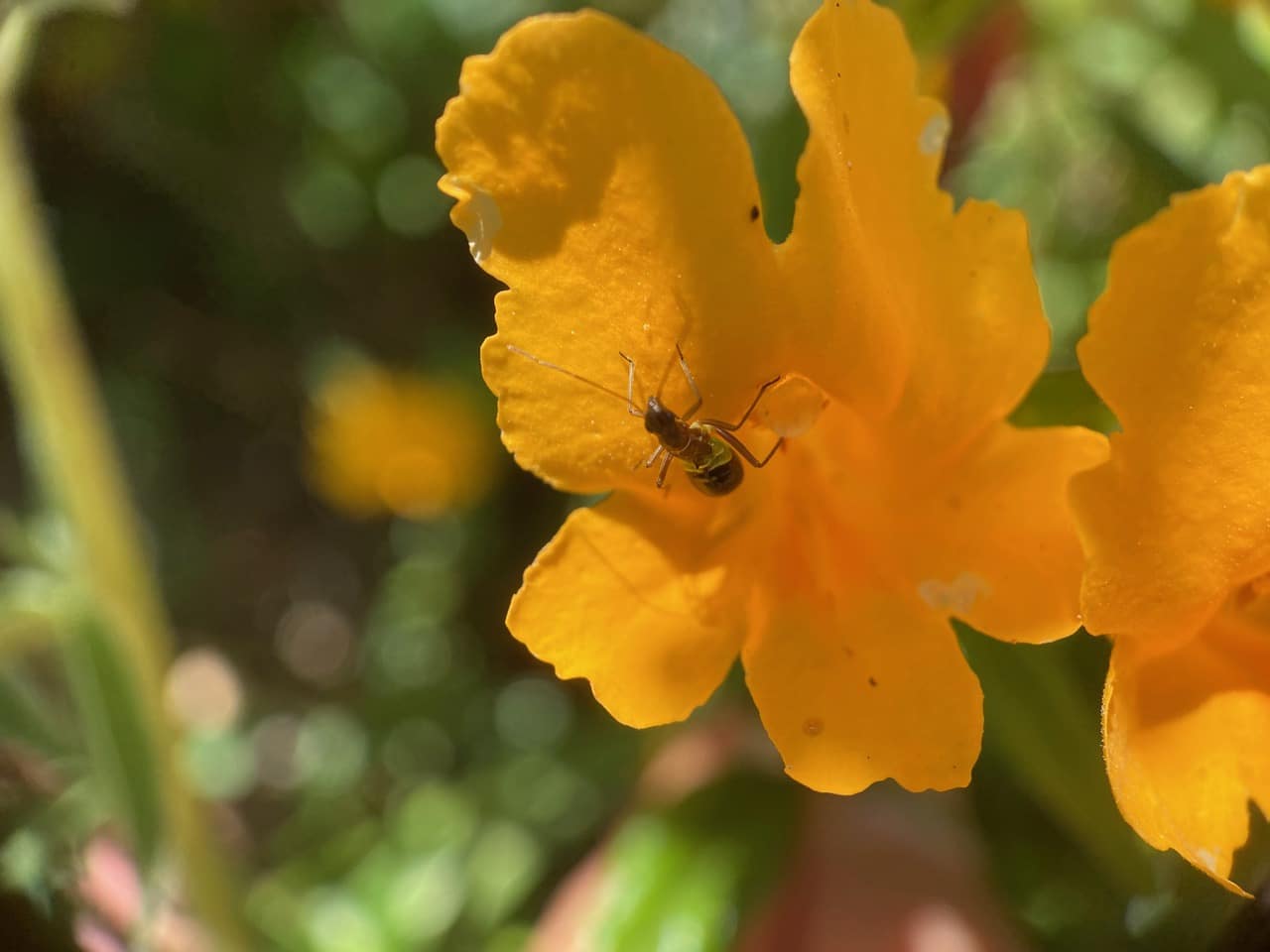
A small insect is crawling out of a Sticky Monkeyflower.
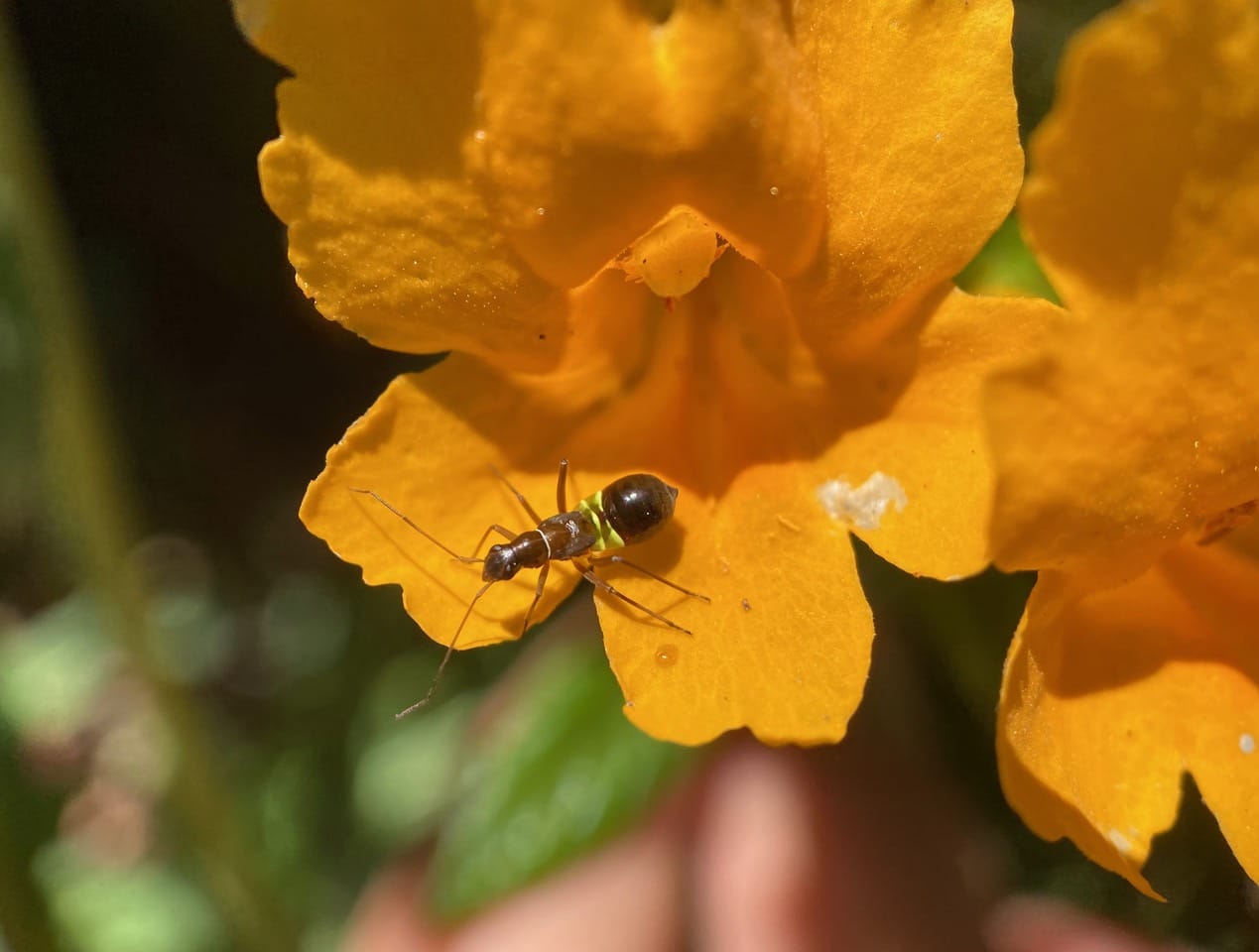
Except for the long antennae and the two yellow segments between its thorax and abdomen, the insect looks a lot like a Carpenter Ant. It is in fact a young Plant Bug, Closterocoris amoenus (family Miridae), native to Central and North America. I see these ant-like nymphs every year, almost exclusively on Sticky Monkeyflower. The adults also seem to have an affinity for the plant.
Mirid bugs are also referred to as plant bugs or leaf bugs. Miridae is one of the largest family of true bugs in the order Hemiptera. Like other Hemipterans, Mirids have piercing, sucking mouthparts to extract plant sap. Some species are predatory.
Ant mimicry or myrmecomorphy is mimicry of ants by other organisms. Ants are abundant all over the world, and potential predators such as birds and wasps normally avoid them as they are either unpalatable or aggressive. Spiders are the most common ant mimics. Additionally, many insects from a wide range of orders and families mimic ants to escape predation (protective mimicry), while others mimic ants anatomically and behaviorally to hunt ants in aggressive mimicry.
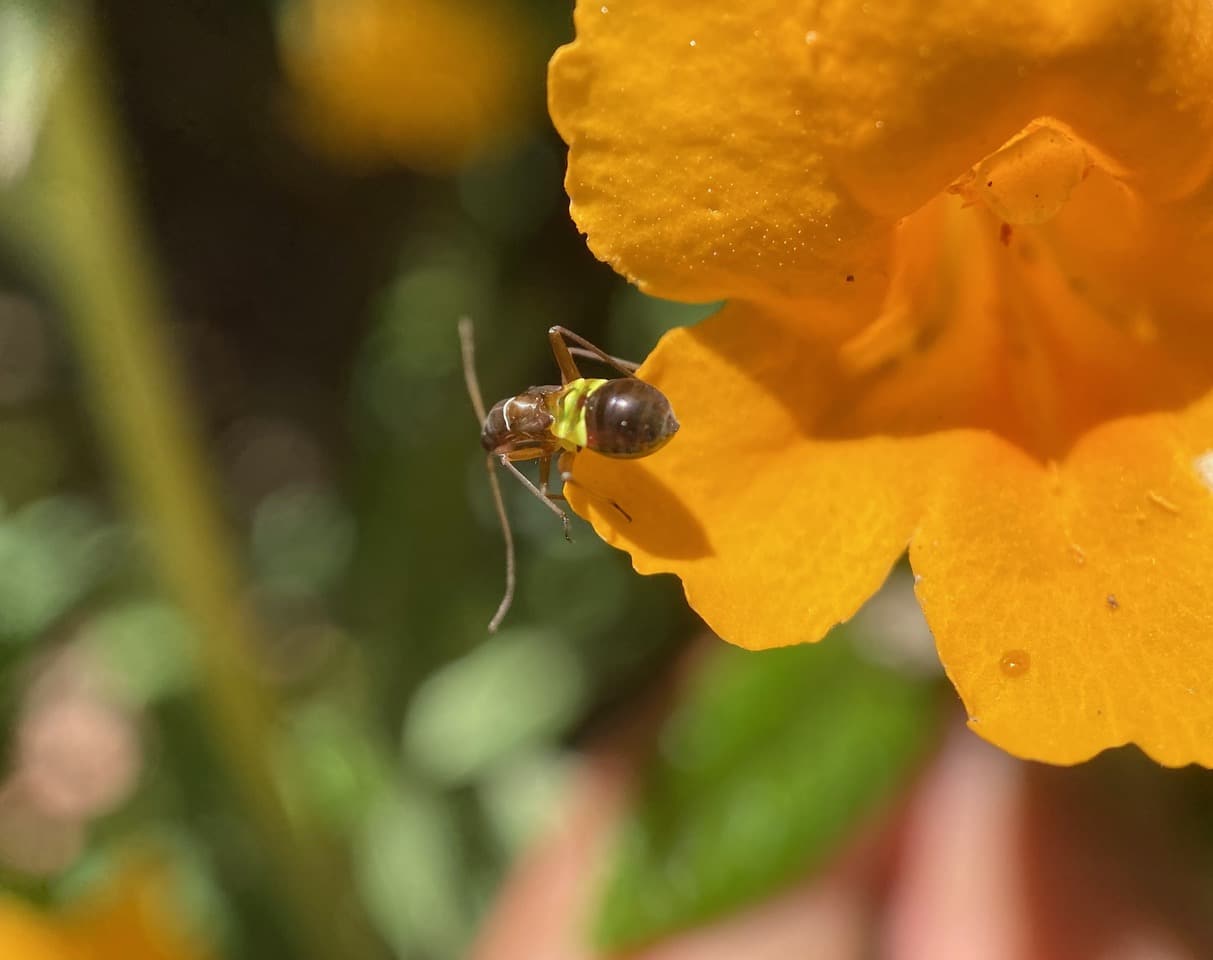
I wonder what those two yellow segments are about? They look like accordion pleats. Perhaps they help make the abdomen more flexible? But why such a conspicuous color?

A female Masked Bee, Hylaeus sp. (family Colletidae) is “blowing bubbles” outside a Sticky Monkeyflower. “Bubble blowing” is a behavior often observed in Hylaeus. The bee repeatedly brings up a droplet of liquid in its jaws, and then slowly retrieves it into its body. It has been speculated that Masked Bees do this to facilitate the evaporation of the nectar they have collected, to reduce the load they have to fly home with.
It was recently discovered that the semi-liquid provisions that females of a species of Colletidae prepare for the young is a fermented brew rich in lactic acid bacteria. Is bubble-blowing a procedure to mix the gathered nectar and pollen with the bacteria, I wonder? Many insects have compartments in their gut that harbor symbiotic microbiota that aid in their nutrition. Maybe the Hylaeus moms are starting the brewing process even before they head home with the day’s harvest?

A Honey Bee, Apis mellifera and a Yellow-faced Bumble Bee, Bombus vosnesenskii are foraging side-by-side on an inflorescence of California Phacelia. They would nudge each other in friendly competition when they are close enough, but neither flies away. There’s enough floral resources for both today! Note the huge load of pollen in the bumble bee’s pollen basket on her hind leg. That pale purple is the color of phacelia pollen after it’s been moistened with nectar when being packed into the corbicula. Bees can carry up to a third of their body weight in pollen and still able to fly.
The pollen collecting apparatus in Apidae bees, which include honey bees and bumble bees, is commonly called a “pollen basket” or corbicula. This region is located on the tibia of the hind legs and consists of hairs surrounding a concave region. After the bee visits a flower, she begins to groom herself and brushes the pollen down toward her hind legs and packs the pollen into her pollen basket. A little nectar mixed with the pollen keeps it all together like putty, and the stiff hairs surrounding the pollen basket hold it in place.
.jpg)