

Pollinator Post 6/6/24 (1)

It’s a clear morning at Skyline Gardens. I have an early start, heading up the paved road from Siesta Gate at 9 am.


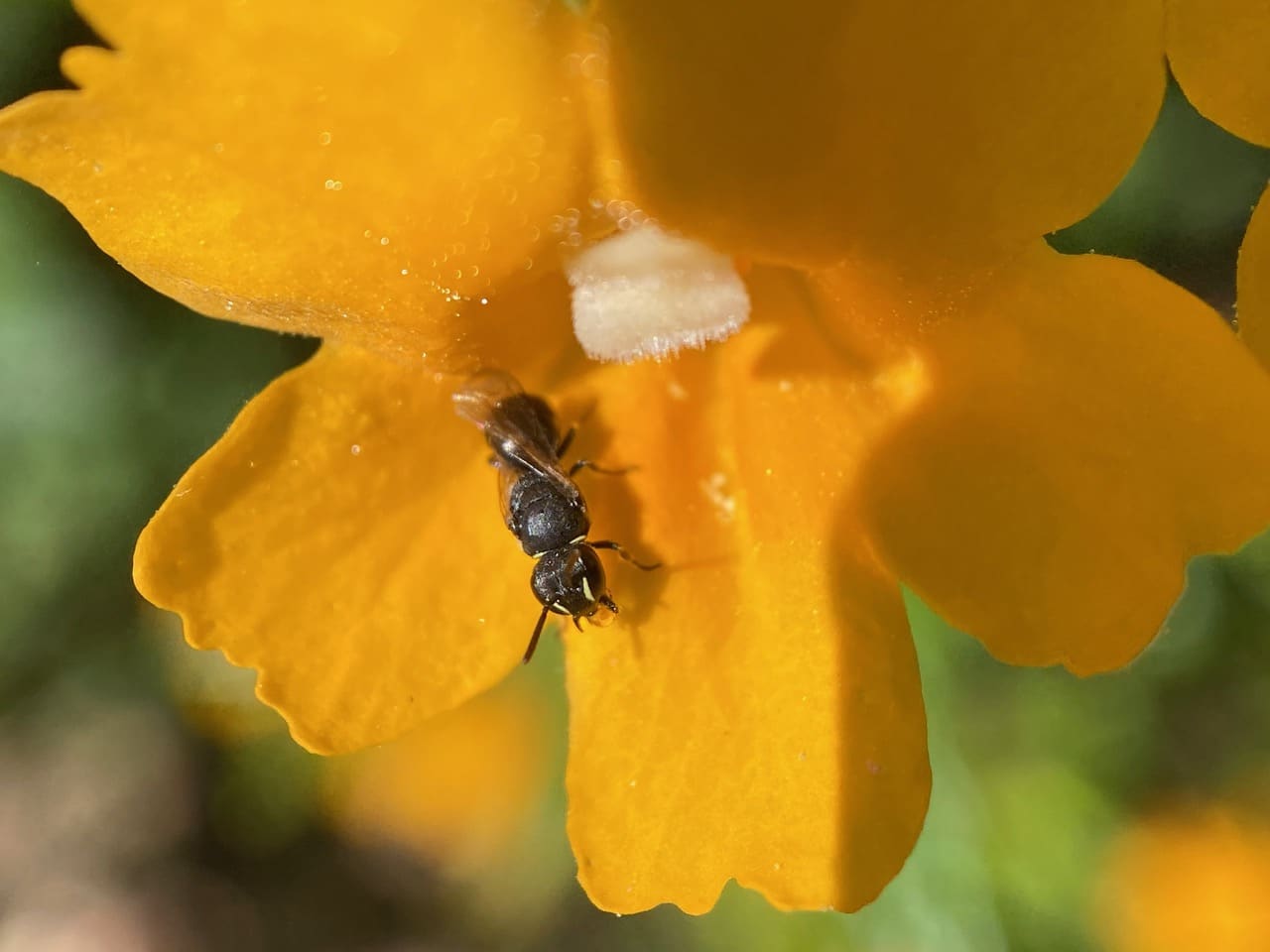
 Yes, indeed she is “blowing bubbles”!
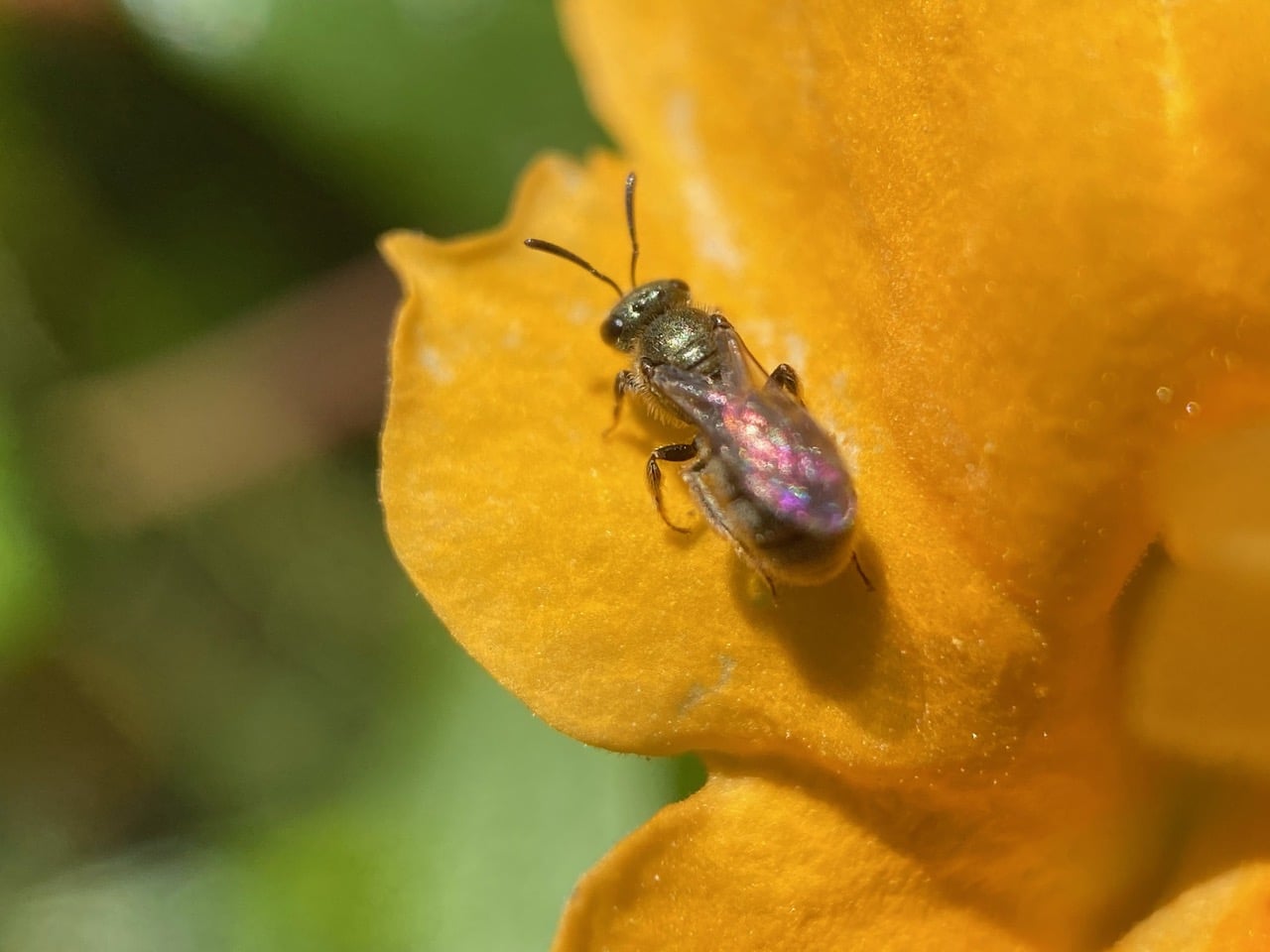
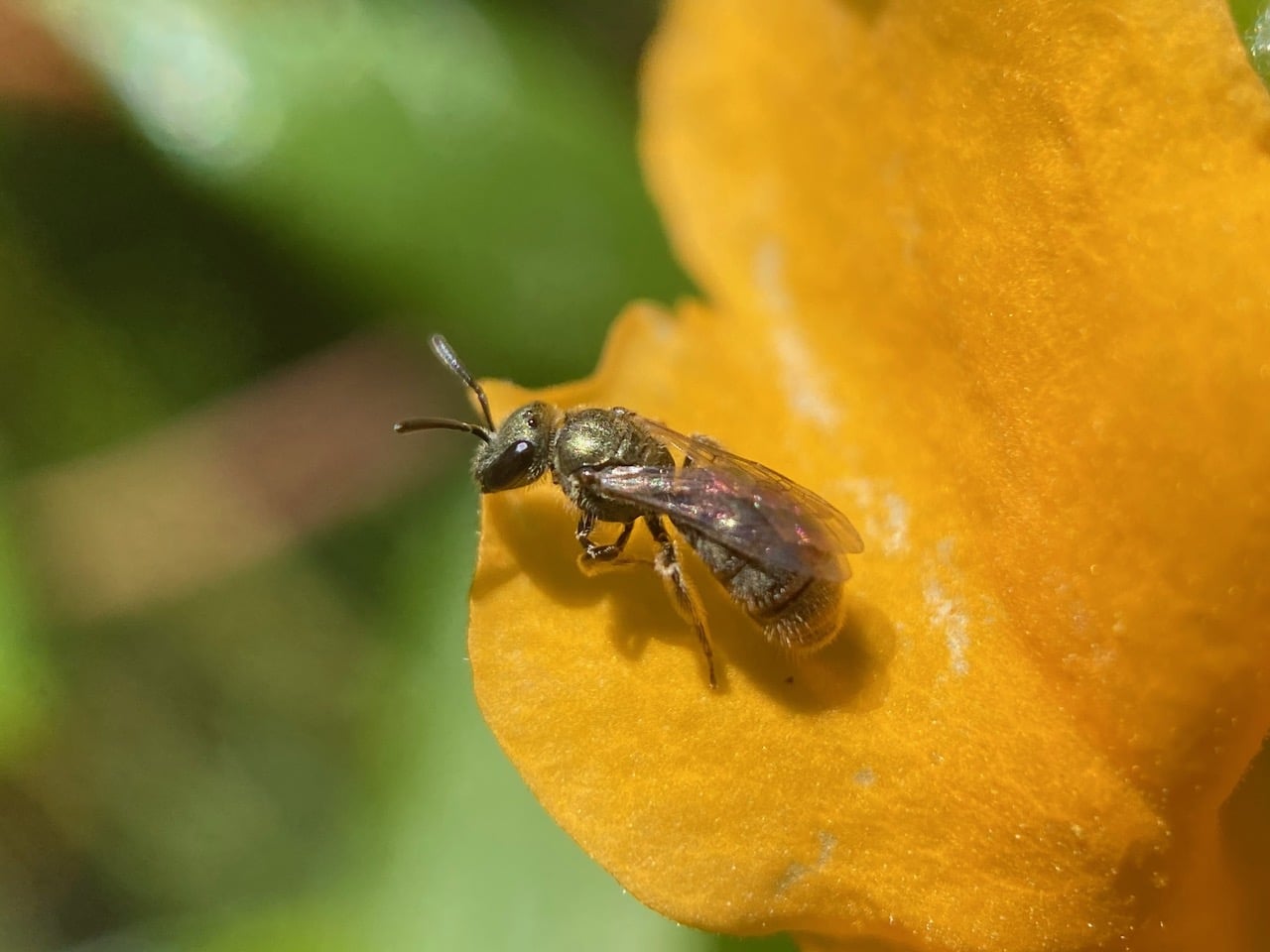
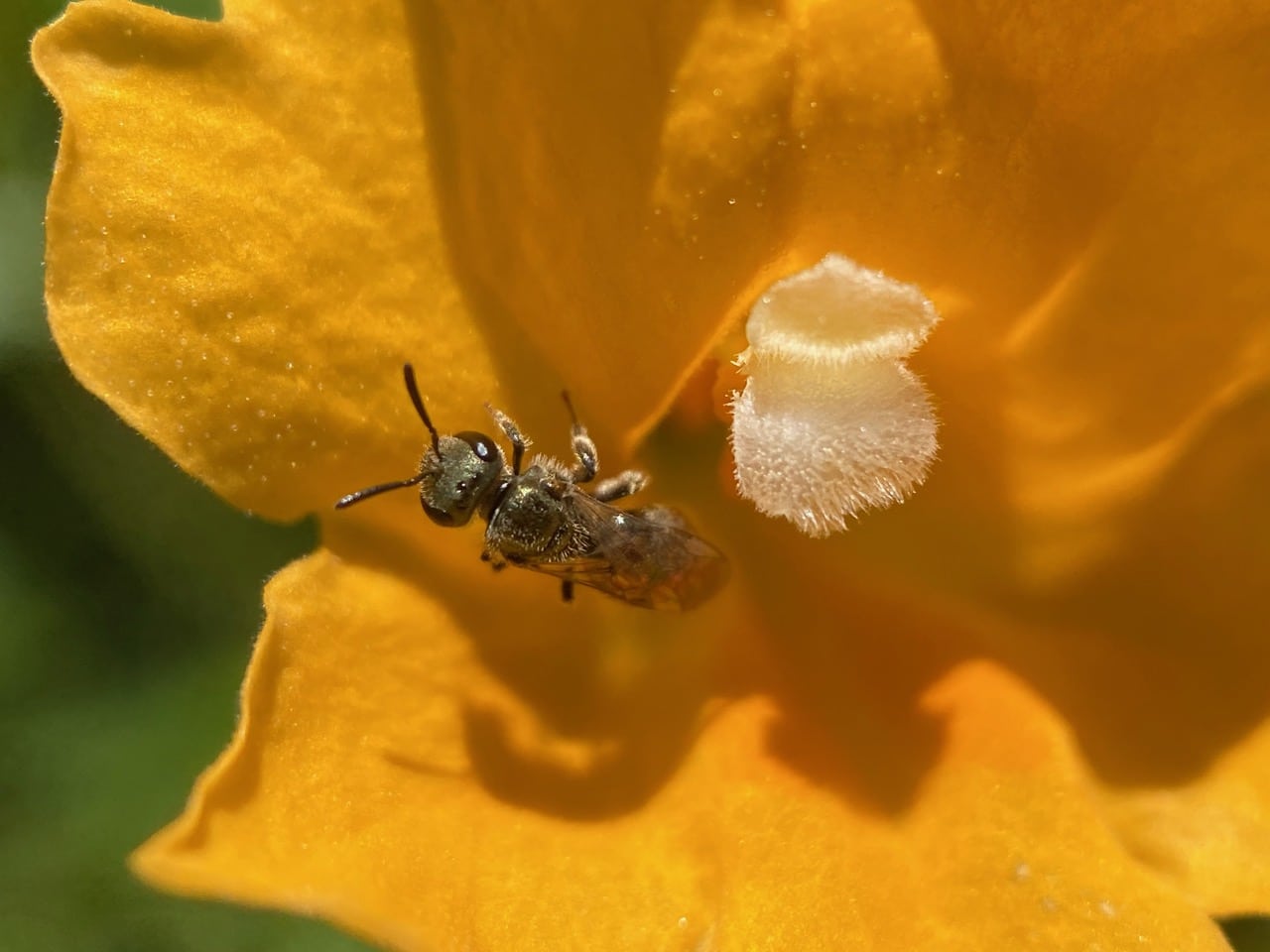
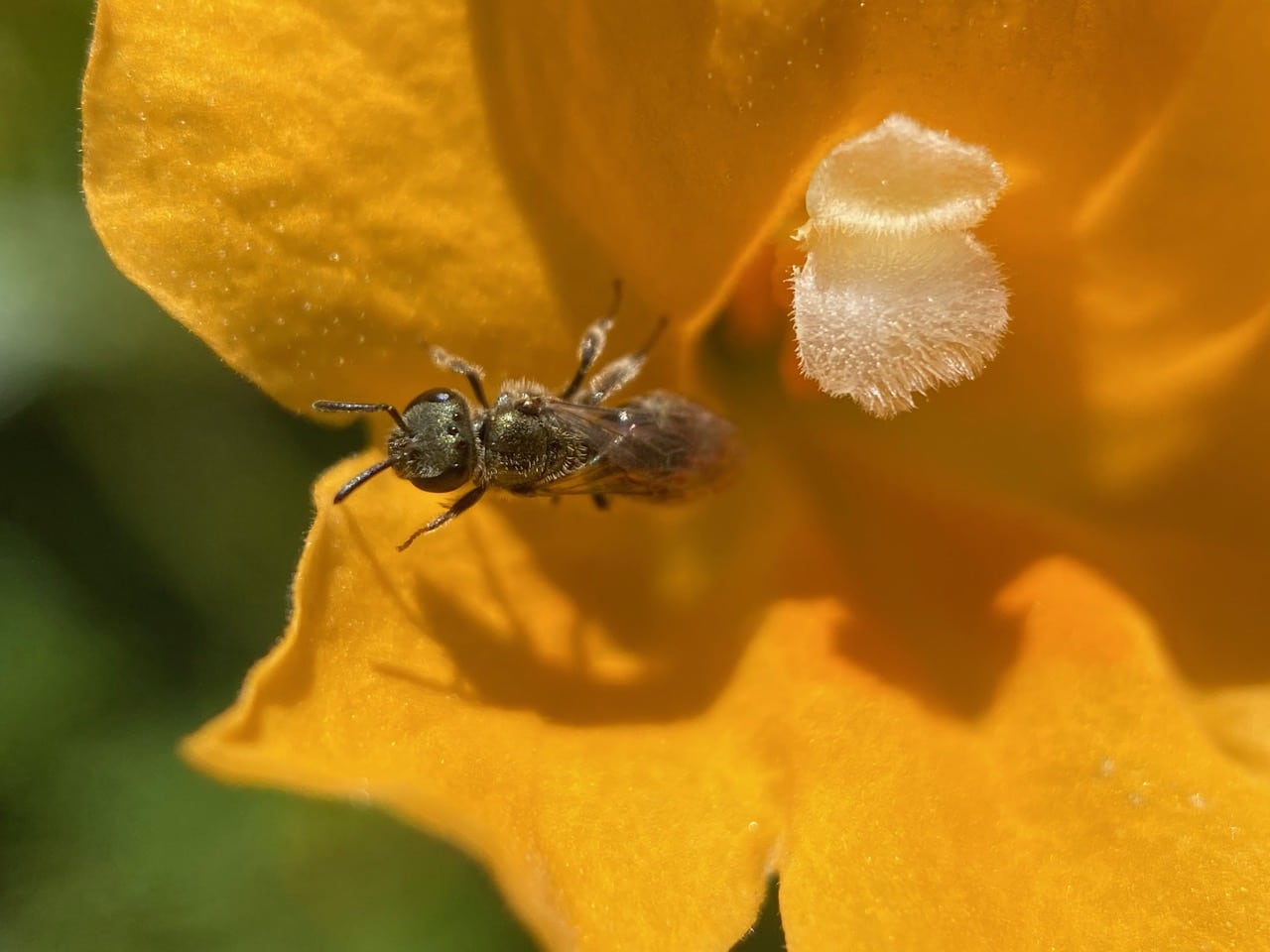
 The Sticky Monkeyflowers are sure getting a lot of little visitors on this sunny day. A Metallic Sweat Bee, Lasioglossum (Dialictus) sp. (family Halictidae) is entering a flower.



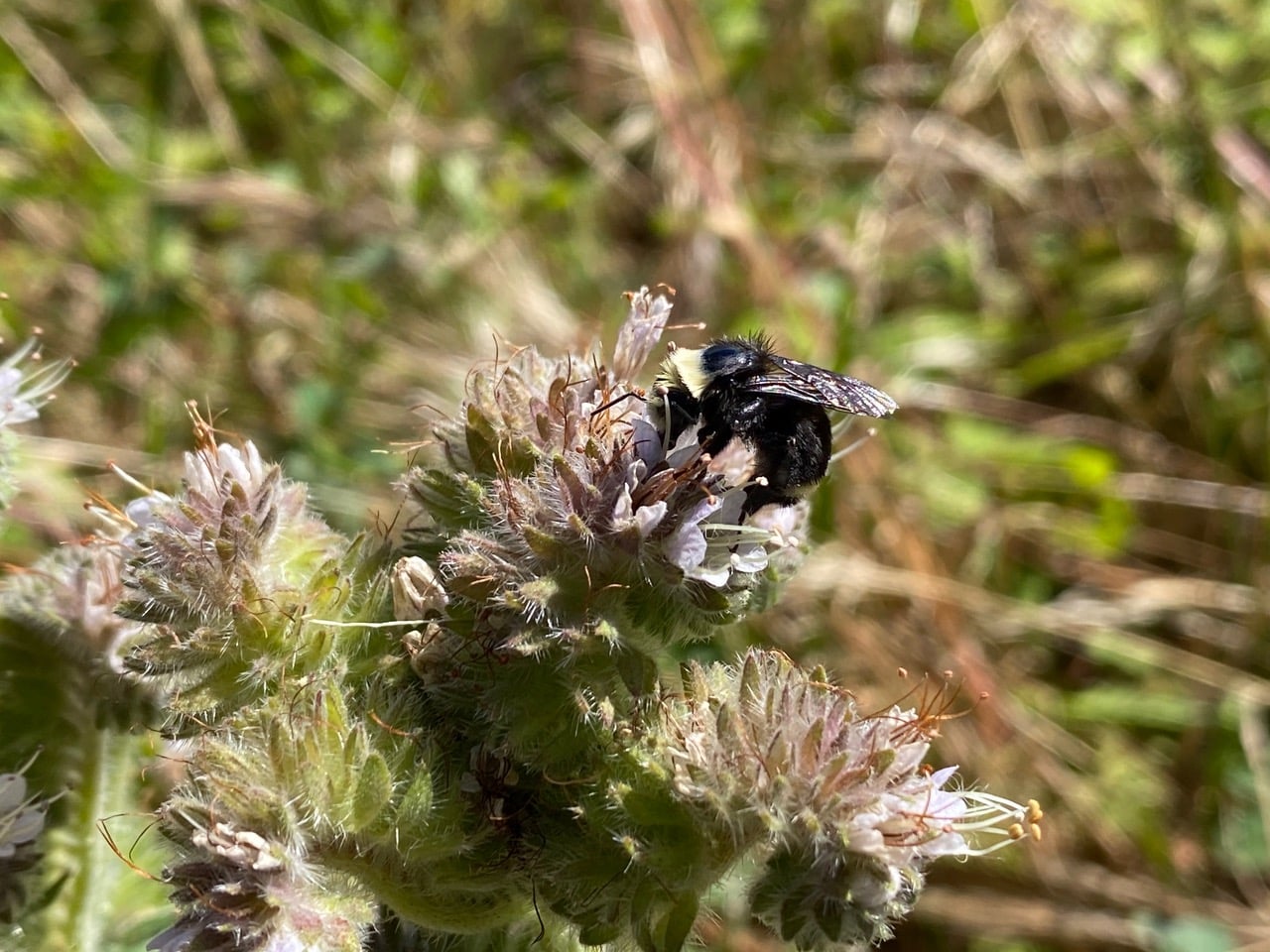
The bumble bees are busy buzzing around the California Phacelia, Phacelia californica. Some of the worker bees are looking well worn with balding thorax, but still work just as hard.
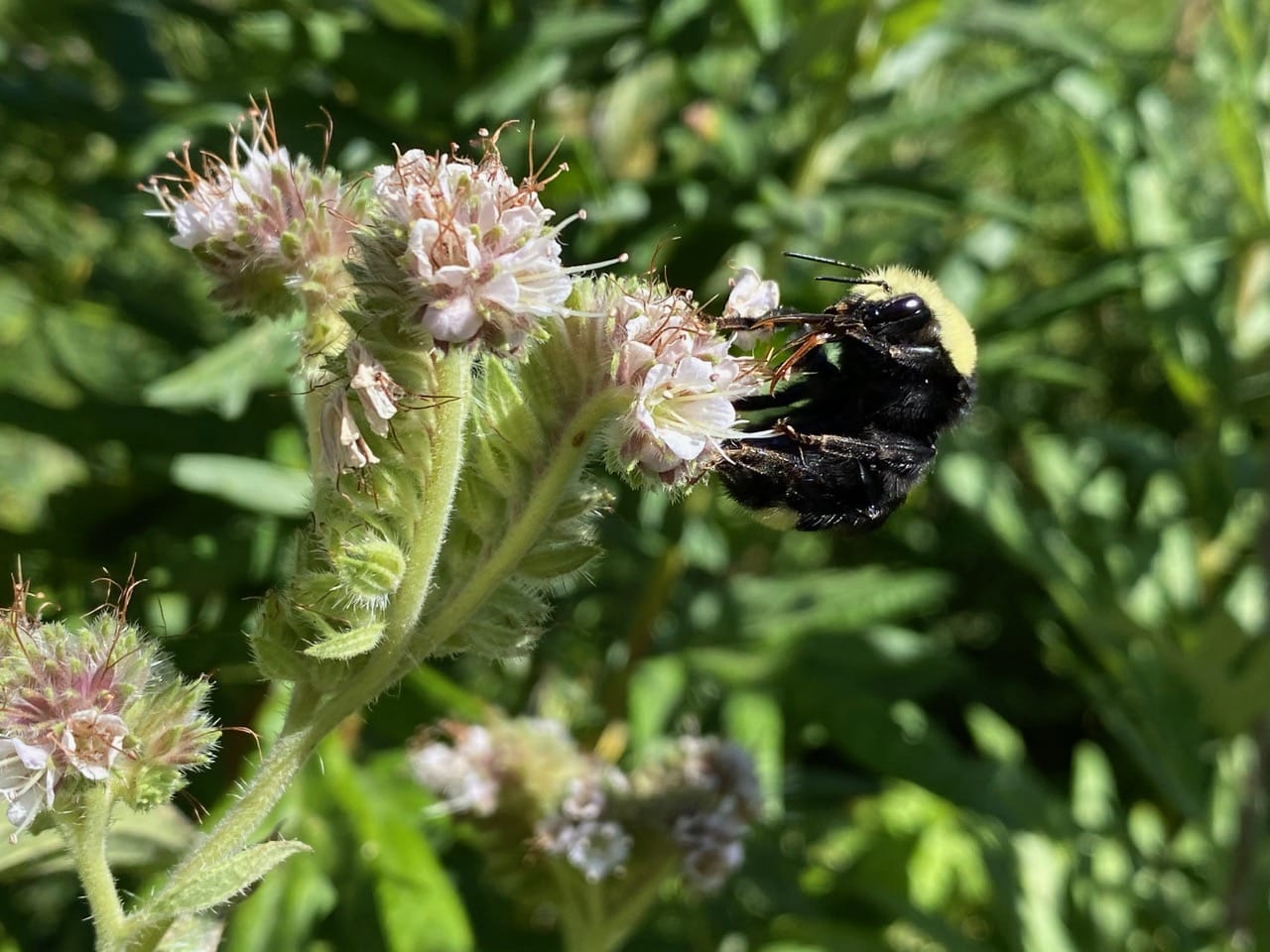
Wow, that’s a huge Yellow-faced Bumble Bee – she’s got to be a queen. Probably a newly minted one, not a hair out of place. She’s not collecting pollen, but is only taking nectar from the Phacelia flowers. On a fine day soon, she will go off on her nuptial flight to mate with a male from a different colony. She and the other new queens will be the only ones in their colony to overwinter. They will emerge from their hibernation early next spring to establish new colonies. Much depends on the health of these new queens.
The queen bumble bee leans back, and proceeds to disassemble her complex mouth parts to clean her long, reddish-brown tongue.
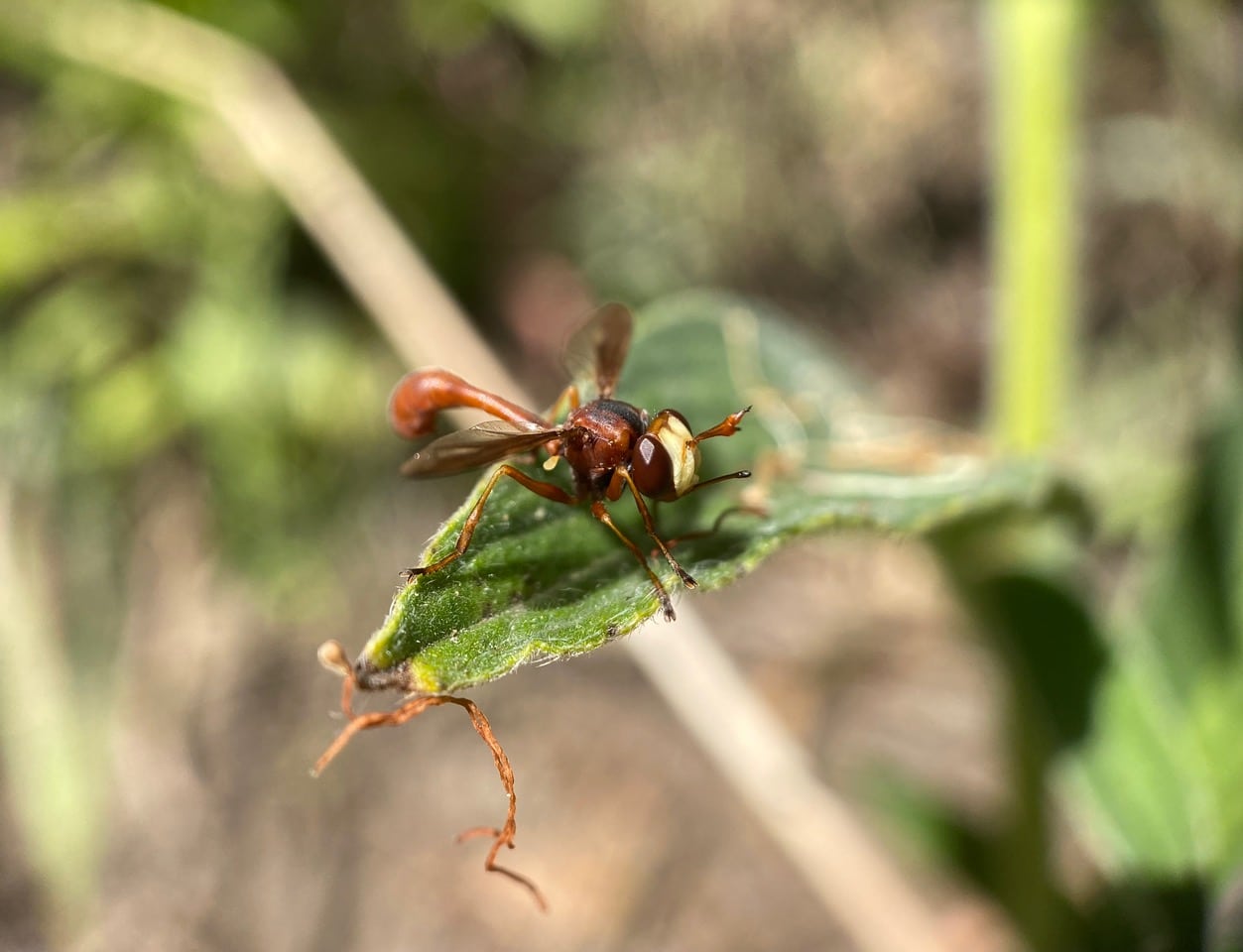
Uh oh, look who’s hanging around the phacelia! A Thick-headed Fly, Physocephala burgessi (family Conopidae) is on the hunt for bumble bees!
The small and little-known family of Conopidae, commonly called the Thick-headed Flies, are distributed worldwide. Remarkable mimics of wasps and bees, the flies are frequently found at flowers, feeding on nectar with their long probosces. The larvae of all Conopids are internal parasitoids, mostly of aculeate (stinging) Hymenoptera (wasps, bees). Adult females aggressively intercept their hosts in flight to deposit eggs. Vulnerable foraging bees are likely the most susceptible to parasitism by Conopids. The female’s abdomen is modified to form what amounts to a “can opener” to pry open the segments of the host abdomen as the egg is inserted. The fly larva feeds on the host from the inside out. The vast majority of parasitized bumble bees bury themselves by burrowing into the ground right before they die. This behavior does not matter to the bees – they are doomed. But it is critical for the flies – if the host dies underground, the fly is sheltered from the elements, predators and parasites.
The life spans of parasitized bumble bees are not significantly shortened, though as the parasitoid grows, the bee can’t carry home as much nectar. Bumble bees will chill, literally, to put off the inevitable, seeking cooler spots, even sleeping outside at night to slow the growth within them. If many of the workers in a colony are infested, future queens may be smaller in size and may not have enough energy to get through the winter.
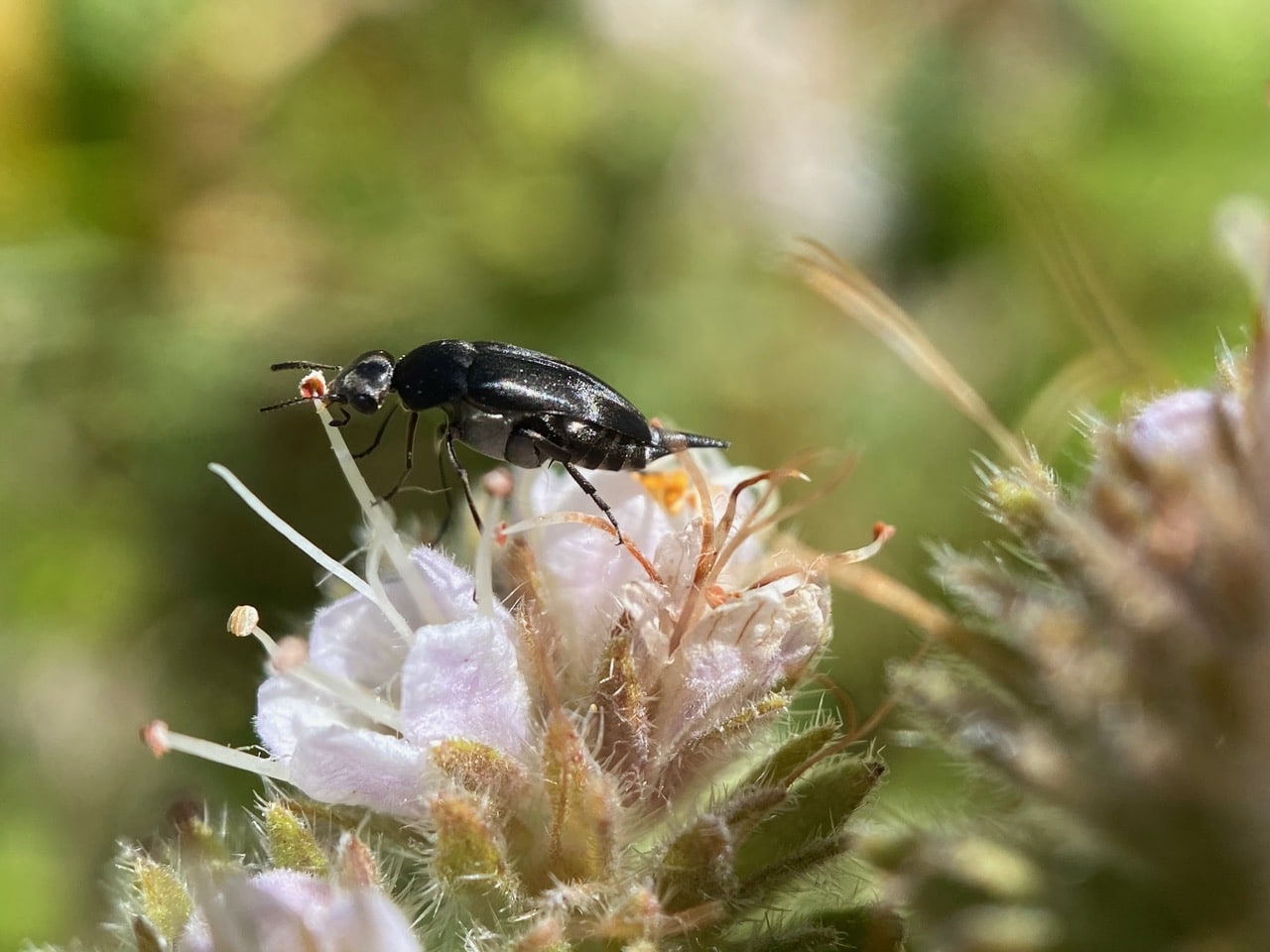
A Tumbling Flower Beetle (family Mordellidae) is feeding on pollen from an anther of a California Phacelia flower. It is uncommon to see the head of the beetle – it is usually kept low under the humped thorax.
The Tumbling Flower Beetles (family Mordellidae) are named for the characteristic irregular movements they make when escaping predators. They are also sometimes called Pintail Beetles for their abdominal tip which aids them in performing these tumbling movements. Mordellids are small, wedge-shaped, hump-backed beetles with head bent downward. The body is densely covered with fine silky hairs, usually black, but often very prettily spotted or banded with silvery hues. The adults feed on pollen, occurring on flowers or on dead trees, flying or running with rapidity. The larvae live in old wood or in the pith of plants, and those of some species are said to be carnivorous, feeding on the young of Lepidopterans and Diptera which they find in the plant stems.
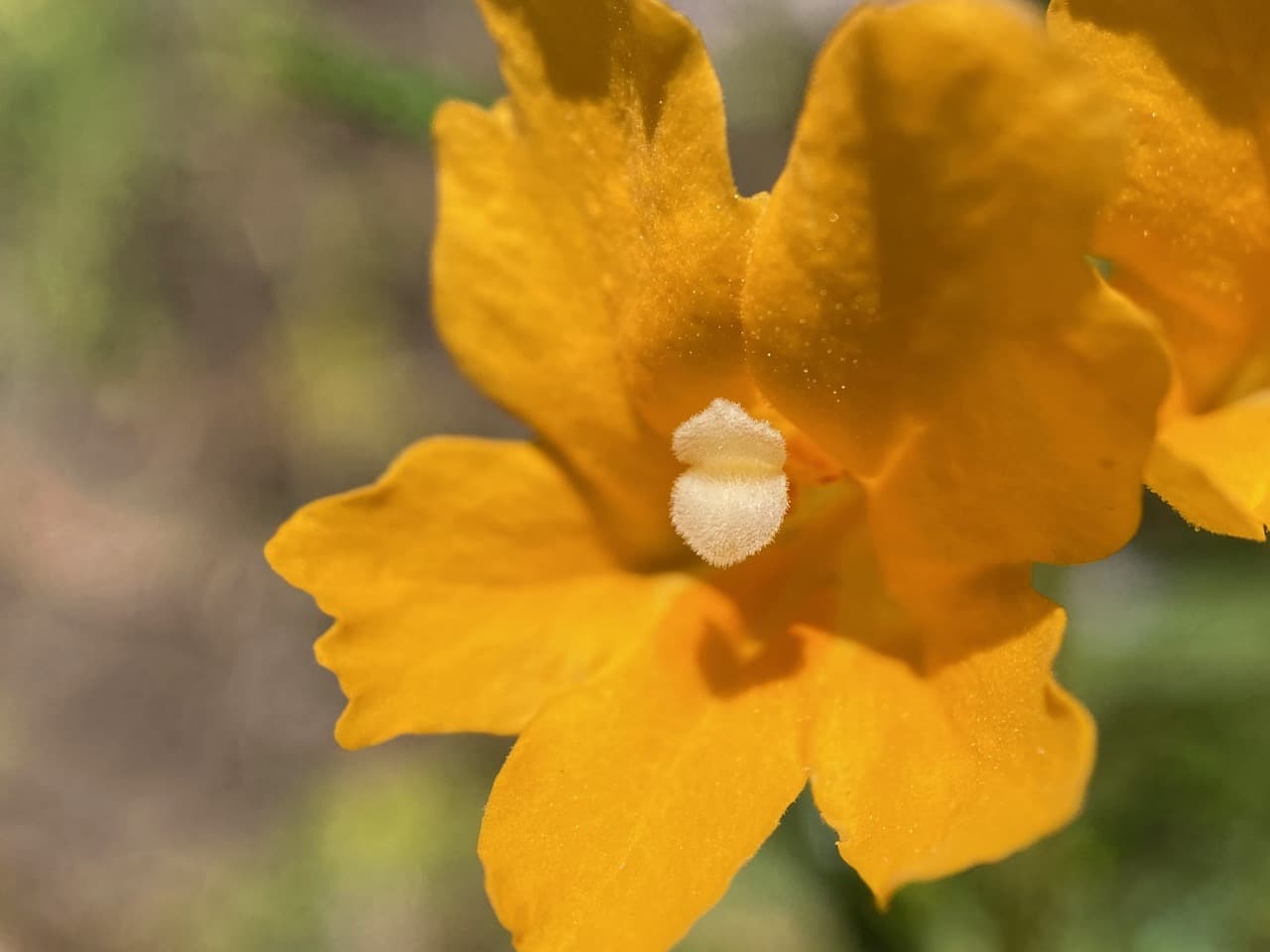
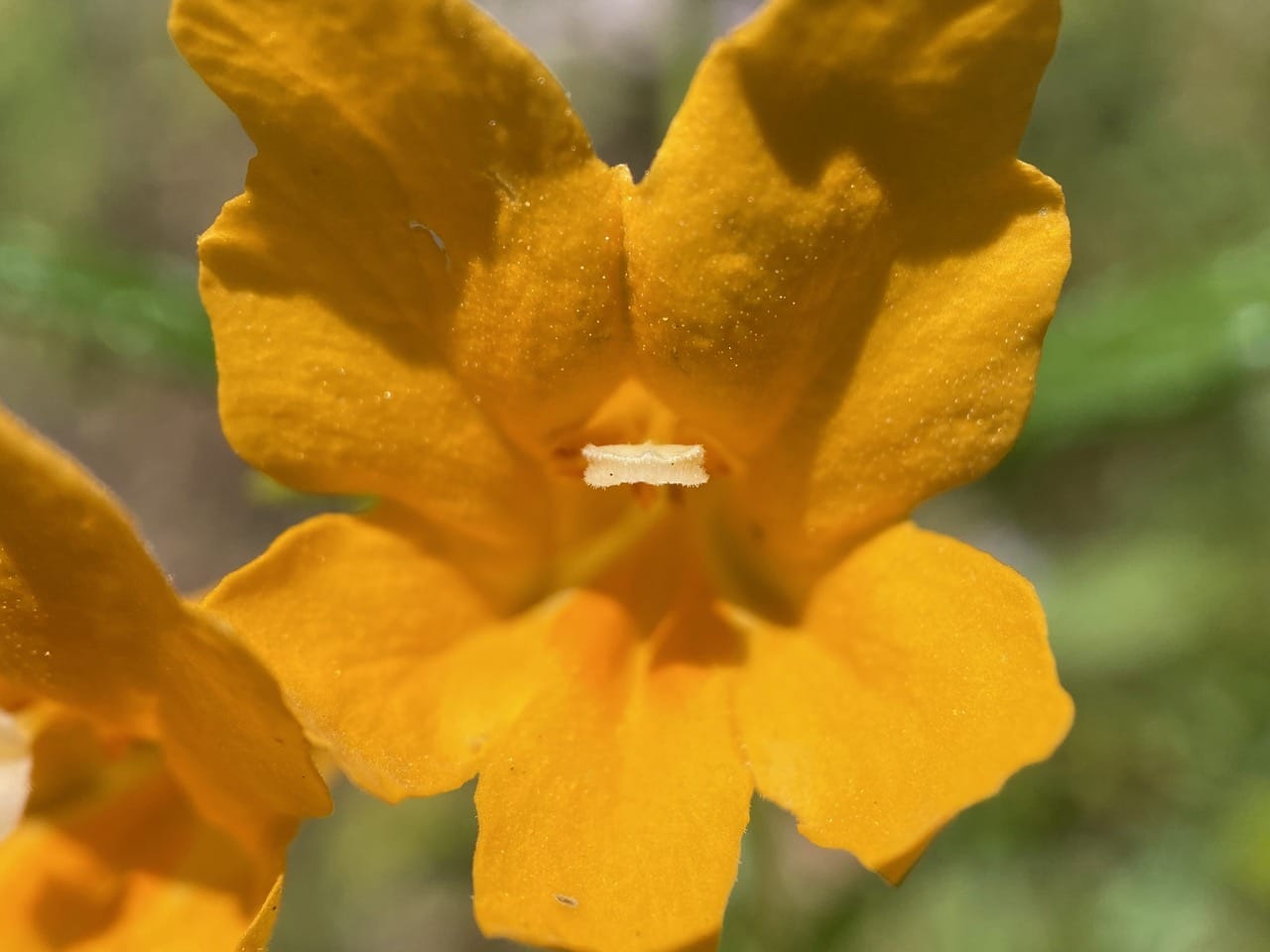
The Sticky Monkeyflower, Diplacus aurantiacus is approaching peak bloom. A pair of bright orange-yellow flowers appear to be welcoming pollinators with their white two-lobed stigmas open wide.
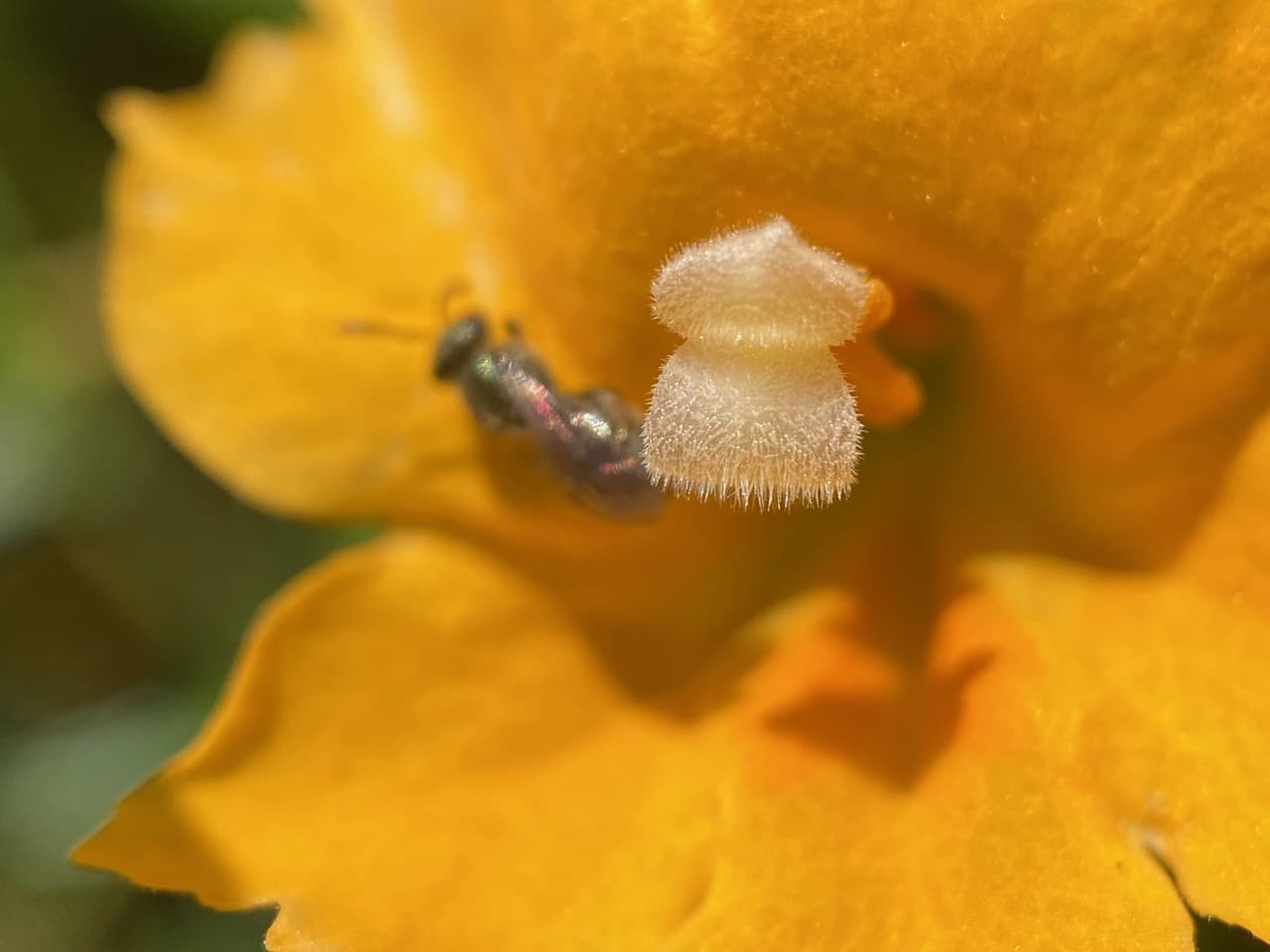
Close up of the stigma of one of the flowers show the fuzzy surface receptive to incoming pollen.
I lightly touch the stigma of the other flower. Within seconds, the lower lobe moves up to meet the upper lobe, closing up the stigmatic surface.
On fresh Sticky Monekeyflowers, the two stigmatic lobes are spread apart, presenting their receptive surfaces for pollination. But once the stigma is touched, either by a bee or your finger, the lower lobe moves upward to meet the upper lobe, closing up the stigmatic surface within seconds. (This is fun to watch in real time!) The movement in response to touch is called thigmotaxis. If no pollen has been deposited, the stigma will open up again. If pollination has occurred, the stigma is permanently closed. This is a clever way the flower prevents self-pollination. When a pollinator backs out of the floral tube after feeding on nectar or pollen, its body covered in pollen, the stigma is still closed, unable to receive pollen from its own flower.
As I am photographing the stigma of the Sticky Monkeyflower, a shiny dark bee exits from the floral tube.
It is a Metallic Sweat Bee, Lasioglossum (Dialictus) sp. (family Halictidae).
Lasioglossum species are found worldwide, and they constitute the largest bee genus. The subgenus Dialictus are the most likely to be seen in the U.S., with over 300 species of these tiny metallic bees. The majority of Lasioglossum are generalists. Because they are so abundant throughout the flowering season, the bees are often important pollinators. Their sheer numbers are enough to achieve excellent pollination of many wild flowers, especially of plants in the Asteraceae, which have shallow floral tubes that are easily accessed by these minute bees.
Lasioglossum are closely related to the genera Halictus and Agapostemon. These genera are commonly called “sweat bees” because of their attraction to human sweat, which they drink for its salt content. Lasioglossum are dusky black to brown slender bees with bands of hair on their abdomen. Female Sweat Bees (family Halictidae) carry pollen in the scopae on their entire hind legs and underside of their abdomen.
Lasioglossum exhibit a range of social behaviors; the genus includes solitary, communal, semi social, primitively eusocial, and even parasitic species. Almost all Lasioglossum in the U.S. nest in the ground. Generally these nests are built in the spring by fertilized females (called foundresses) that spent the winter in hibernation. In social species, the foundresses behave much like the queen Bumble Bees – they lay the first batch of eggs that develop into the first generation of female workers. The nest grows with each additional generation of bees. Later broods may consist of both males and females. They mate, and at the end of the season the fertilized females hibernate til the following spring, repeating the life cycle of the colony.
The bee has no pollen on the scopae on her hindlegs. She has only been taking nectar from the flower.
Dialictus is a subgenus of Sweat Bees belonging to the genus Lasioglossum. Most of the members of this subgenus have a subtly metallic appearance, and are small, about 3.4-8.1 mm in size. They are commonly found in Northern Hemisphere and are found in abundance in North America. As in the other members of the family Halictidae, the bees have very diverse forms of social structure, making them model organisms for studying the social behavior of bees.
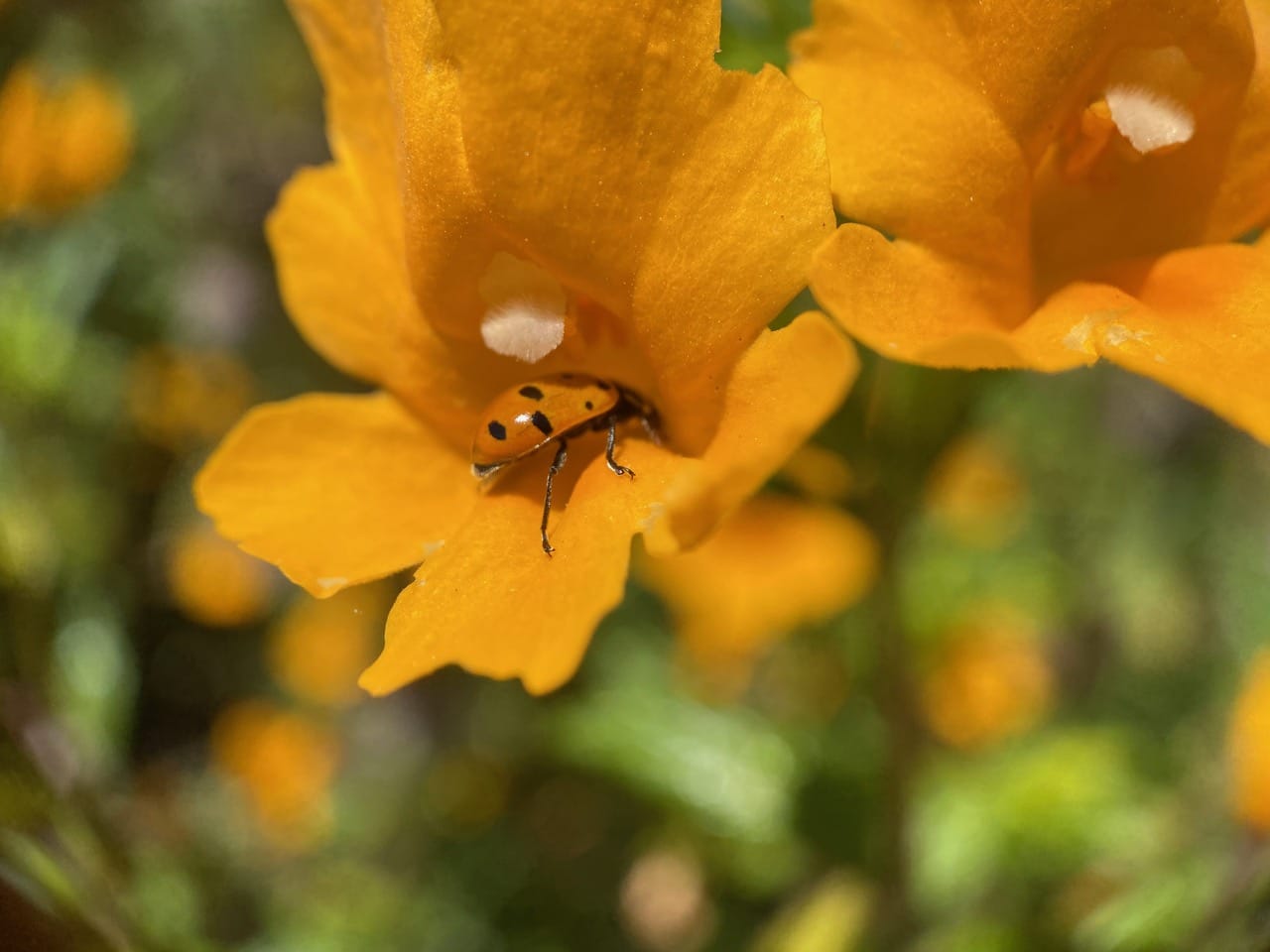
A Convergent Ladybeetle, Hippodamia convergens (family Coccinellidae) is entering a Sticky Monkeyflower. Is it hunting small insects, or is it scavenging for pollen? For the main part, ladybeetles are predatory, feeding on small insects. However, they are also known to feed on pollen and nectar when prey is scarce.
A Masked Bee, Hylaeus sp. (family Colletidae) emerges from a Sticky Monkeyflower and stands stock-still on the lower lip of the flower for a while. I think I know what she’s doing…
Hylaeus (family Colletidae) are shiny, slender, hairless, and superficially wasp-like bees. They are small, 5 to 7 mm long, usually black with bright yellow or white markings on their face and legs. These markings are more pronounced on the males. Hylaeus do not carry pollen and nectar externally, they instead store their food in the crop and regurgitate it upon returning to their nests. They are primarily generalist foragers. Hylaeus are short-tongued, but their small body size enables them to access deep flowers. Hylaeus nest in stems and twigs, lining their brood cells with self-secreted cellophane-like material. They lack strong mandibles and other adaptations for digging, using instead pre-existing cavities made by other insects.
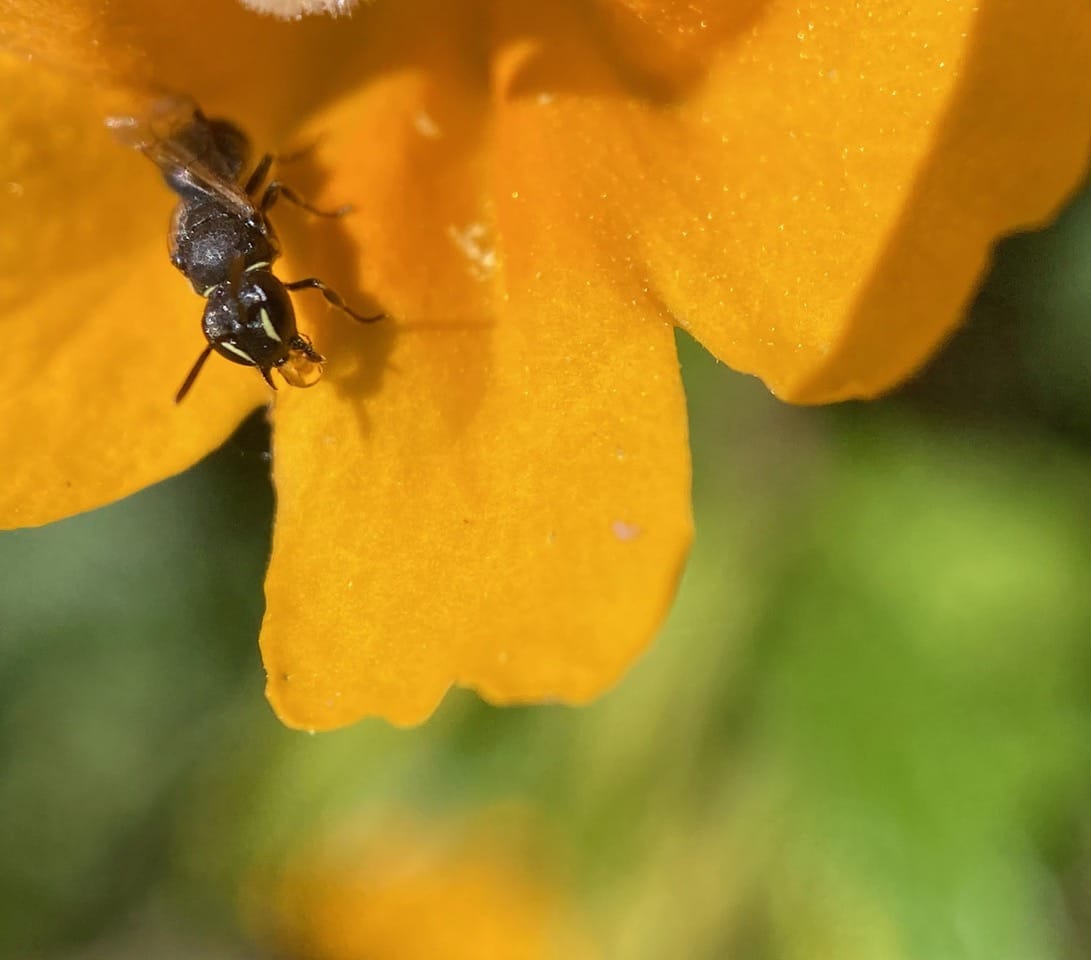
Yes, indeed she is “blowing bubbles”! The bee is regurgitating a drop of liquid from her mouthparts. She then swallows the liquid. The process is repeated several times as I watch. This behavior, termed “bubble-blowing” is often seen in female Hylaeus as they forage, the function of which is unclear. I think the bee might be mixing the nectar and pollen that she has just collected in her crop. Hylaeus provision their cells with a semi-liquid combination of nectar and pollen, instead of the more doughy “bee bread” of many solitary bee species. Recently it was discovered that the larvae of cellophane bees (family Colletidae) are fed a fermented brew rich in lactic acid bacteria.
Is bubble-blowing a procedure to mix the gathered nectar and pollen with the bacteria, I wonder? Many insects have compartments in their gut that harbor symbiotic microbiota that aid in their nutrition. Maybe the Hylaeus moms are starting the brewing process even before they head home with the day’s harvest?
Here’s a closer look a the Masked Bee “blowing bubbles”.
The Sticky Monkeyflowers are sure getting a lot of little visitors on this sunny day. A Metallic Sweat Bee, Lasioglossum (Dialictus) sp. (family Halictidae) is entering a flower. The bee exits with no pollen on its hind legs.
Could this be a male Metallic Sweat Bee? It doesn’t seem to have much of a scopa on its hind legs, and its antennae are long. Male bees do not collect pollen, but will visit flowers for nectar.
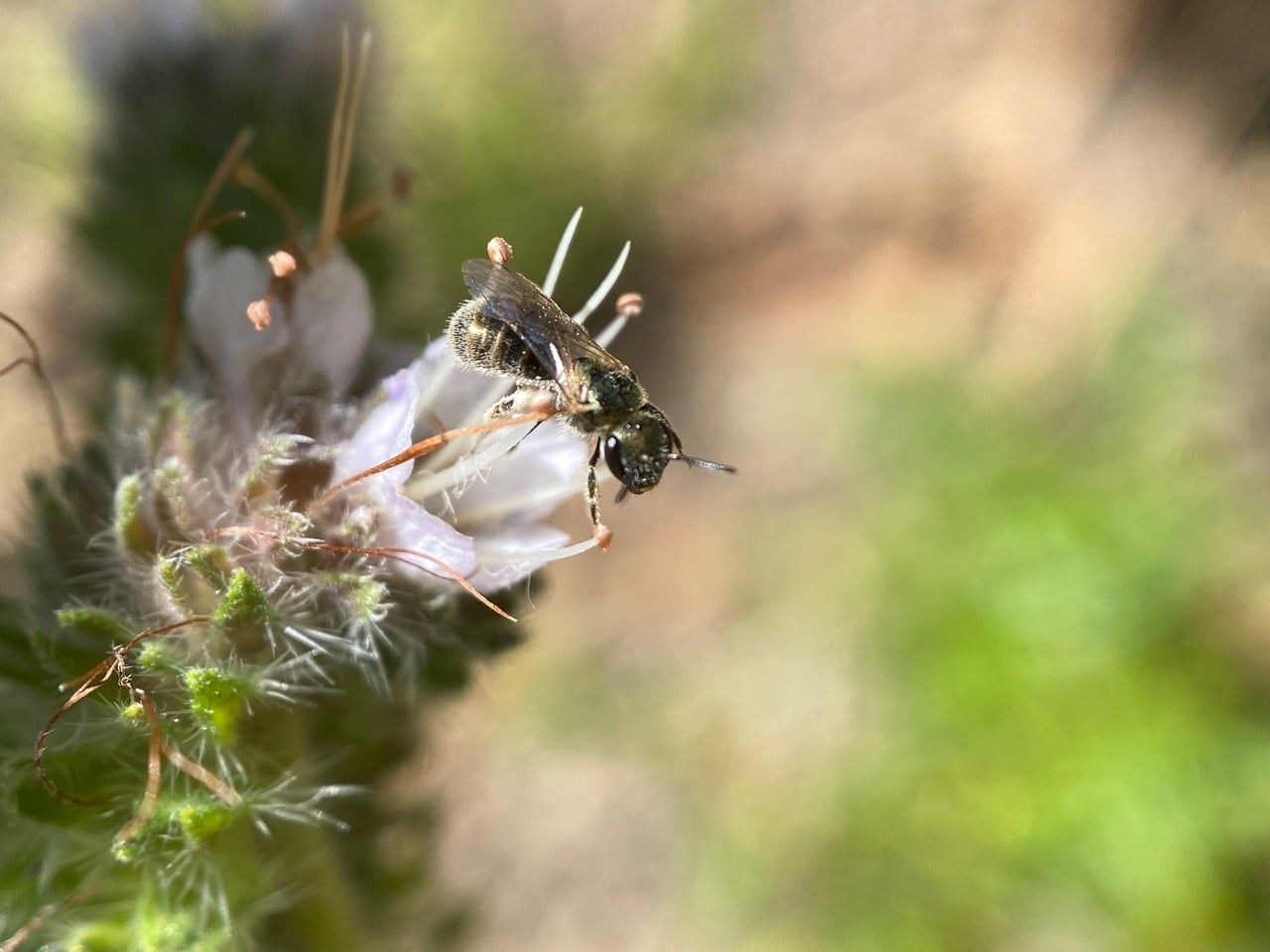
A female Metallic Sweat Bee, Lasioglossum (Dialictus) sp. (family Halictidae) is gathering pollen from a California Phacelia flower, Phacelia californica. The little bee climbs on the stamens to collect pollen from the individual anthers one at a time.
Off to another good flower with fresh pollen! Note that she has packed some of the cream-colored pollen onto the scopae on her hind legs.
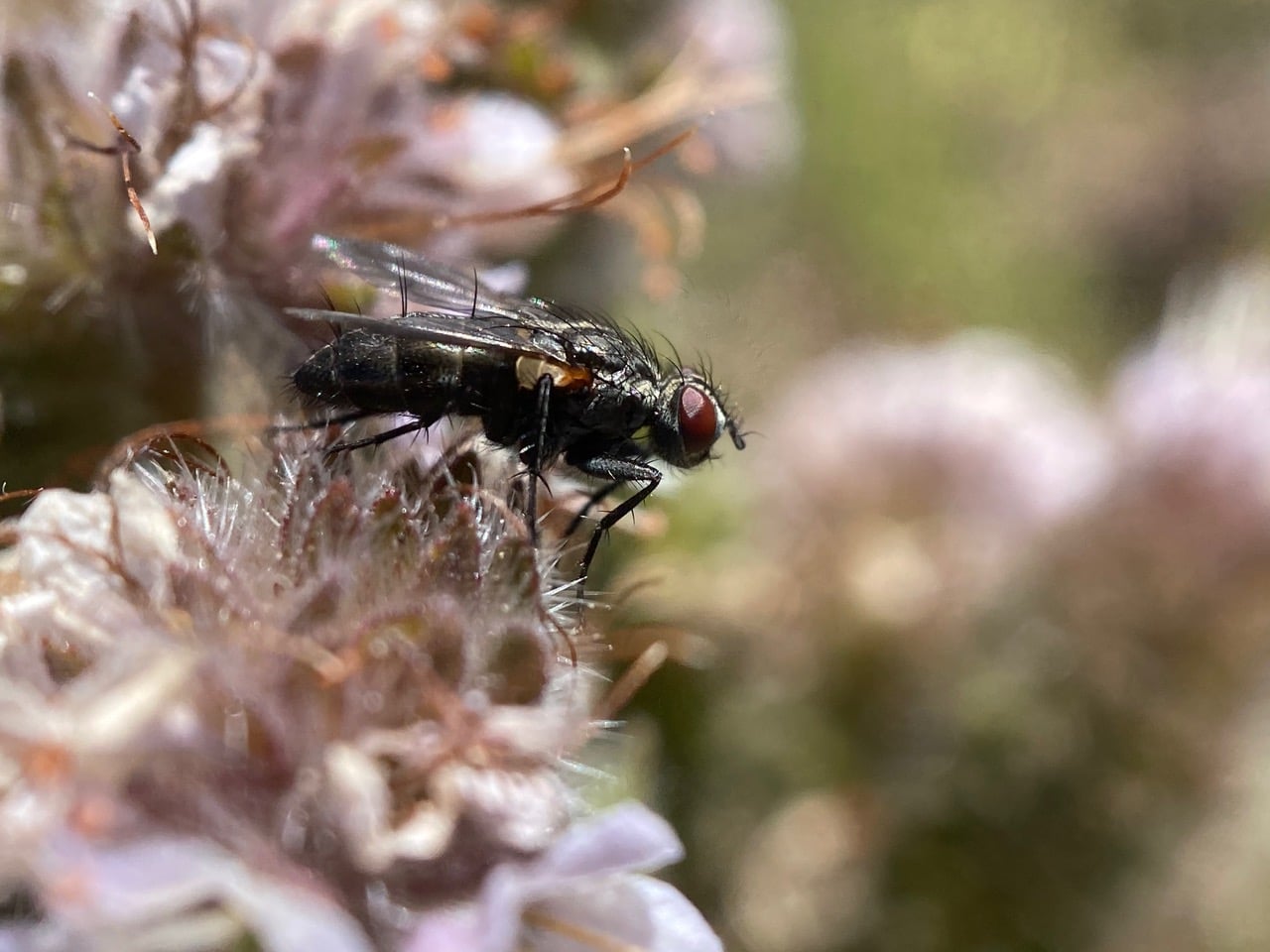
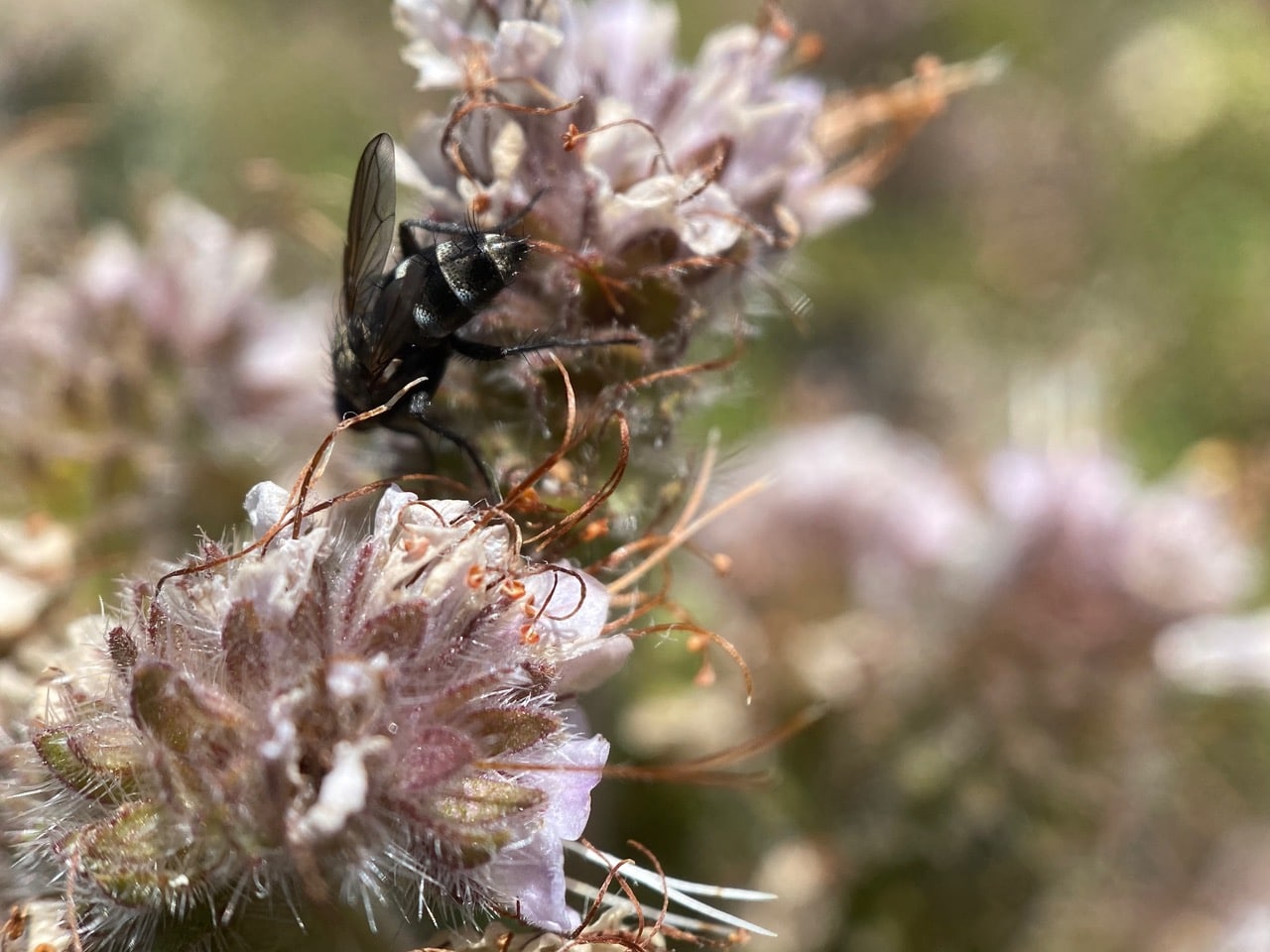
A Woodlouse Fly, Stevenia deceptoria (family Rhinophoridae) is perched on an inflorescence of California Phacelia. These small, slender, black, bristly flies are somewhat related to the Tachinidae. The larvae are mostly parasitoids of woodlice (pill bugs), beetles, spiders and other arthropods, and occasionally snails.

We get a brief look at the fly’s rear end as it disappears behind the cluster of flowers.
Native to Europe, Stevenia deceptoria is now widespread in the US. The flies are parasitoids of terrestrial woodlice (roly polies) of the order Isopoda (Oniscoidea).
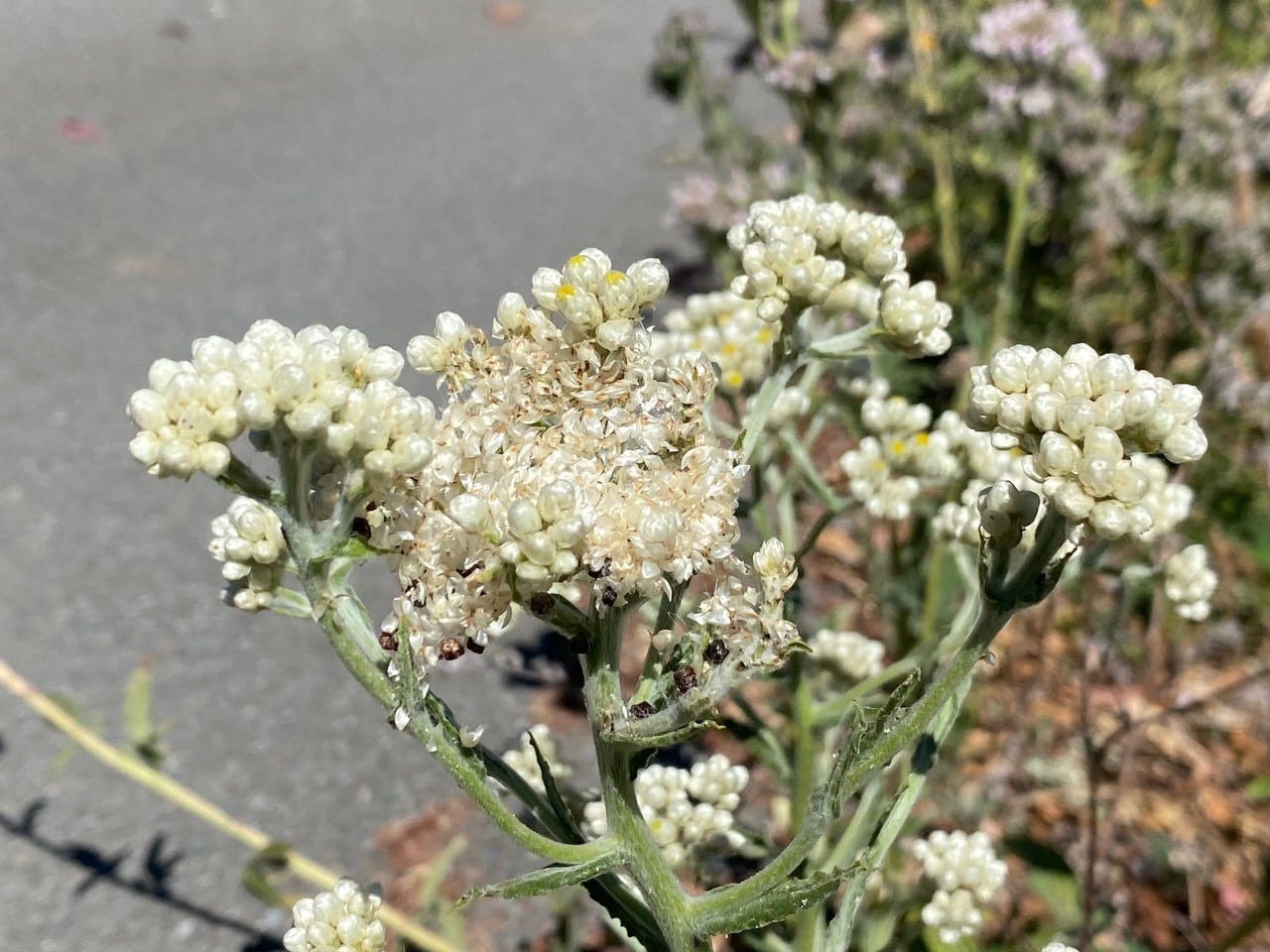
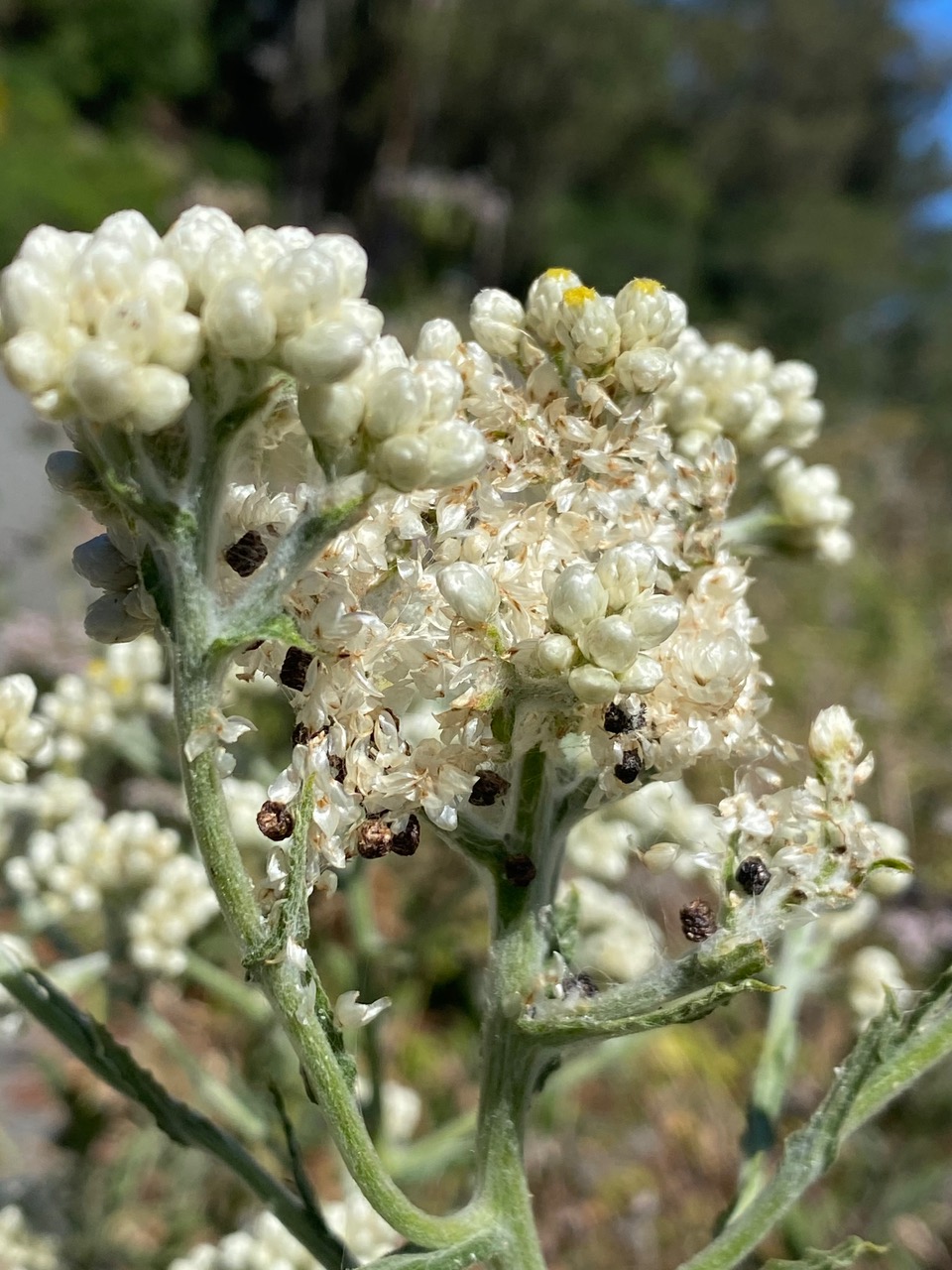
Some California Everlasting, Pseudognaphalium californicum are already in bloom along the paved road near the Radio Tower. That inflorescence of the California Everlasting, Pseudognaphalium californicum looks suspiciously untidy. Some parts are just a jumble of loose phyllaries (bracts that surround the actual tiny flowers). Who’s responsible for the rearrangement of the flower parts? I bet it’s a caterpillar of the American Lady butterfly, Vanessa virginiensis!
American Lady caterpillars are solitary feeders and construct nests from various parts of their host plant. Tiny larvae use leaf hairs to construct tiny nests; larger caterpillars arrange leaves, flower heads, and detritus to form tight shelters. Several structures are typically built during the caterpillar’s development.
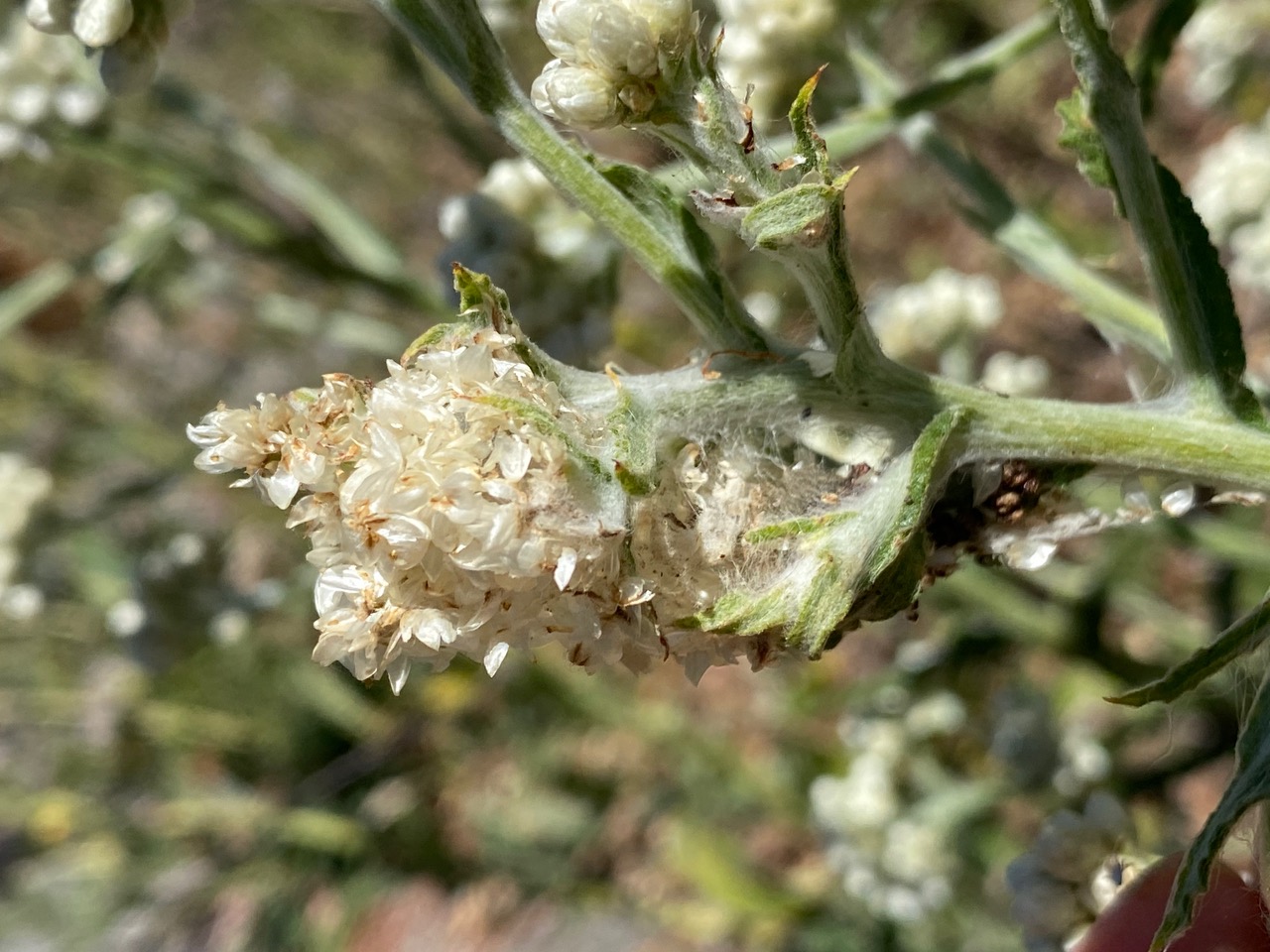
Several inflorescences of the same plant have been similarly rearranged. The loose bracts are bound together with silk, and there is frass (insect poop) visible at the bottom of these silken nests.
Here’s another American Lady caterpillar nest on another branch of the same plant. The whole thing is so tightly constructed I can’t even peer inside to look for the caterpillar.
A Convergent Ladybeetle, Hippodamia convergens (family Coccinellidae) patrols an inflorescence of California Everlasting.
We usually think of the lady beetles as friendly, harmless insects. Why then would they wear such eye-catching aposematic coloration? The combination of the bright red color and black spots serve as a warning to discourage predators. Ladybeetles produce alkaloids, toxic chemicals that make them unpalatable to hungry spiders, ants, or other predators. When threatened, ladybeetles exude small droplets of hemolymph (insect version of blood) from their leg joints, an unusual response known as “reflex bleeding”. The alkaloids in the blood produce a foul odor, another warning to the predator. Research shows that a ladybeetle’s colors are an indication of how toxic it is. Ladybeetles with richer colors were also found to have better quality diets early in their lives. The correlation suggests that when resources are plentiful, the well-nourished ladybeetles can invest more energy in producing toxic defense chemicals and warning pigmentation.
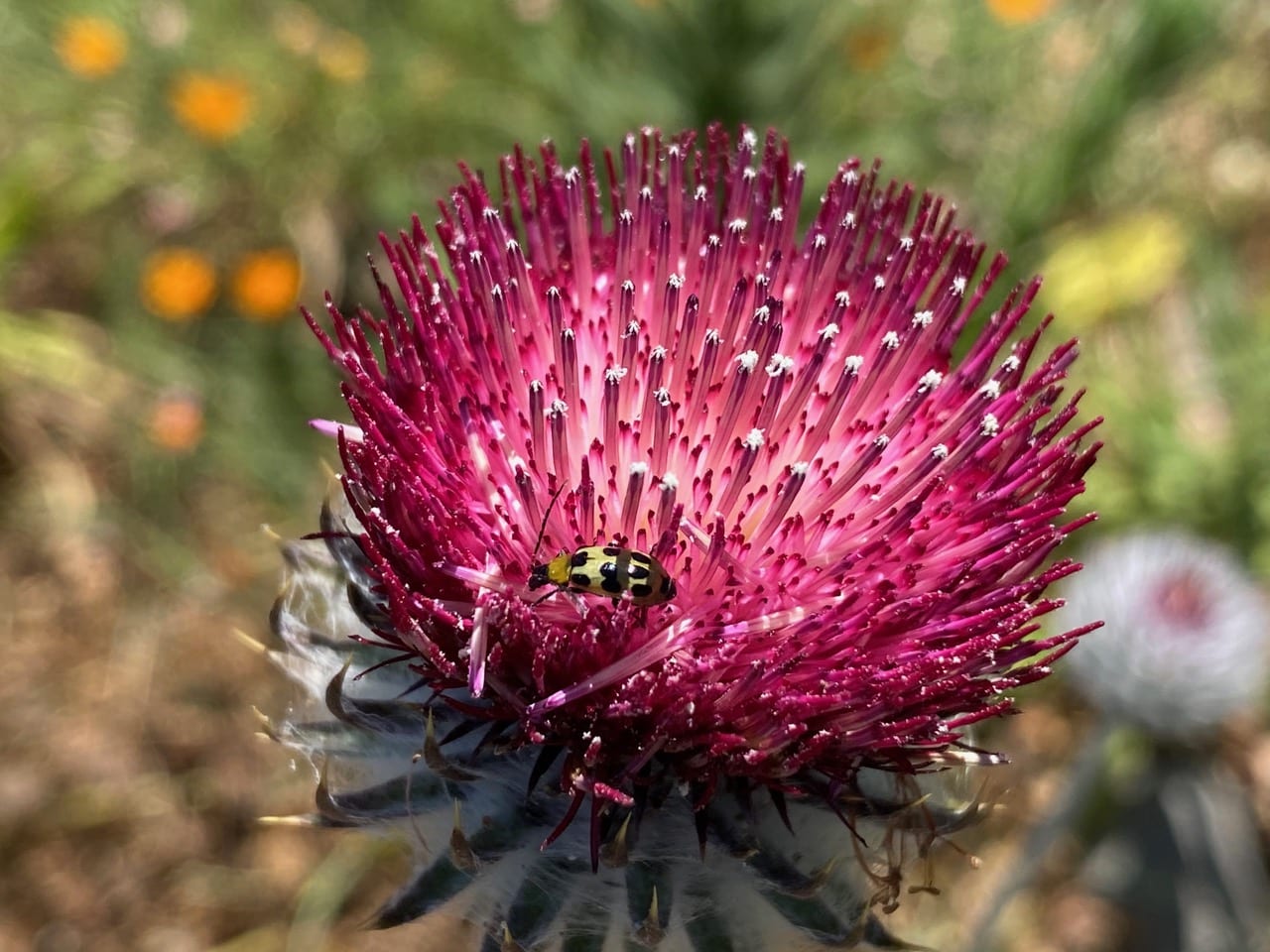
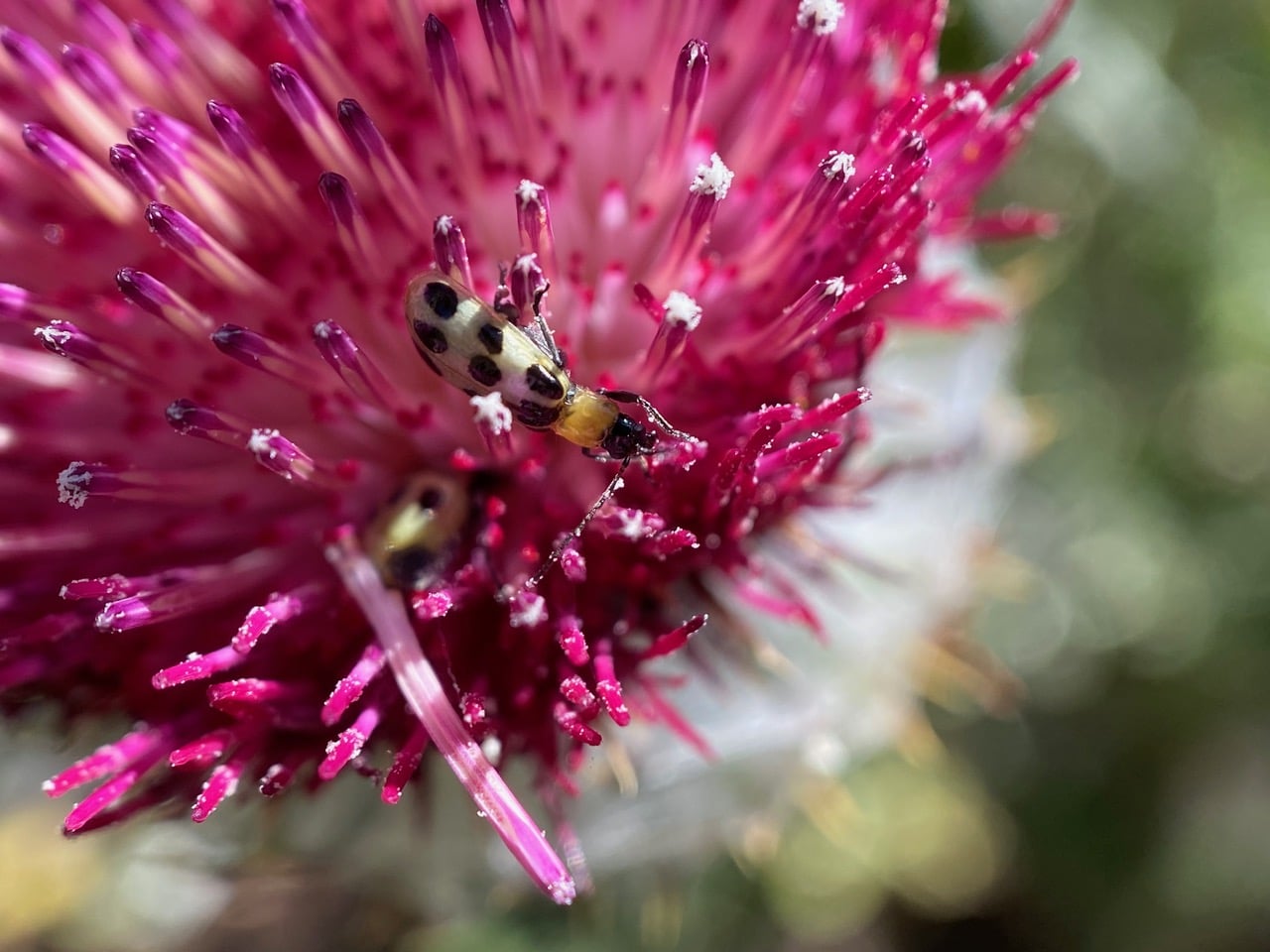
I was expecting to see Bumble Bees on the blooms of Cobweb Thistle, Cirsium occidentale. Nope, the bees are not here today. Instead, a few Spotted Cucumber Beetles are foraging on the flowerheads.
The cobwebby fibers between the spiky phyllaries of the Cobweb Thistle flowerhead gives rise to the common name. There are dozens of disc flowers, but no ray flowers on a single flowerhead of the thistle. In bloom, each disc flower produces a plug of pollen atop a long anther tube. To reach the nectaries at the base of the flowers, a large insect such as a bumble bee would have to push through a forest of these anther tubes. Small bees and other insects may collect pollen from individual anther tube.
While one Spotted Cucumber Beetle, Diabrotica undecimpunctata (family Chrysomelidae) has headed down for the nectar, another is feeding on pollen at the top, one anther tube at a time.
Members of the family Chrysomelidae are commonly known as Leaf Beetles. Adults and larvae feed on all sorts of plant tissues, and all species are fully herbivorous. Many are serious pests of cultivated plants, including food crops. Others are beneficial due to their use in biocontrol of invasive weeds. Chrysomelids are popular among insect collectors, as many are conspicuously colored, typically in glossy yellow to red or metallic blue-green hues, and some have spectacularly bizarre shapes. Photos of Leaf Beetles (Family Chrysomelidae) · iNaturalist
Native to North America, the Spotted Cucumber Beetle can be a major agricultural pest, causing damage to crops in the larval as well as adult stages of their life cycle. Larvae, sometimes known as rootworms feed on the roots of emerging plants. In the adult stage the beetles cause damage by eating the flowers, leaves, stems and fruits of the plant.
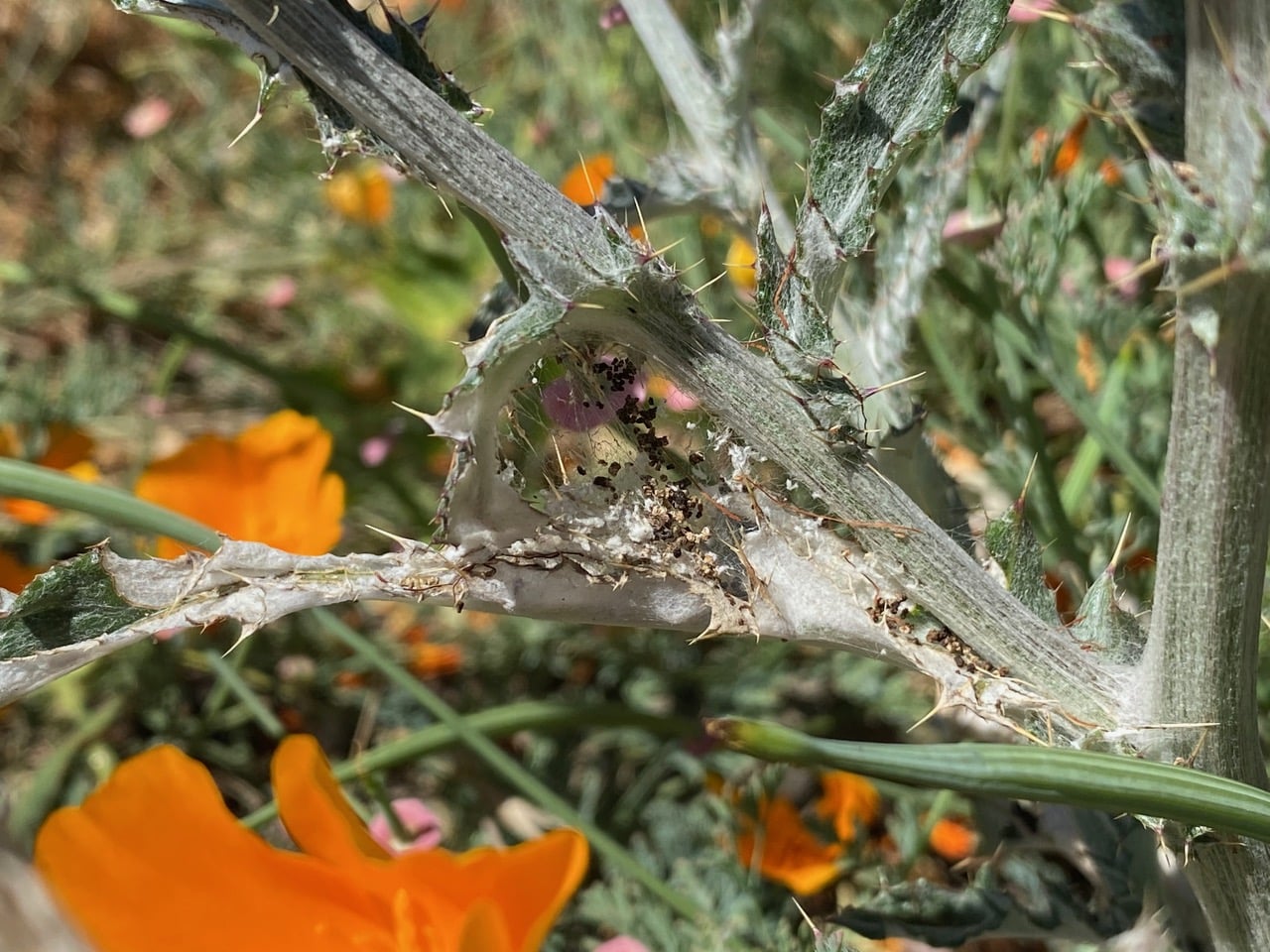
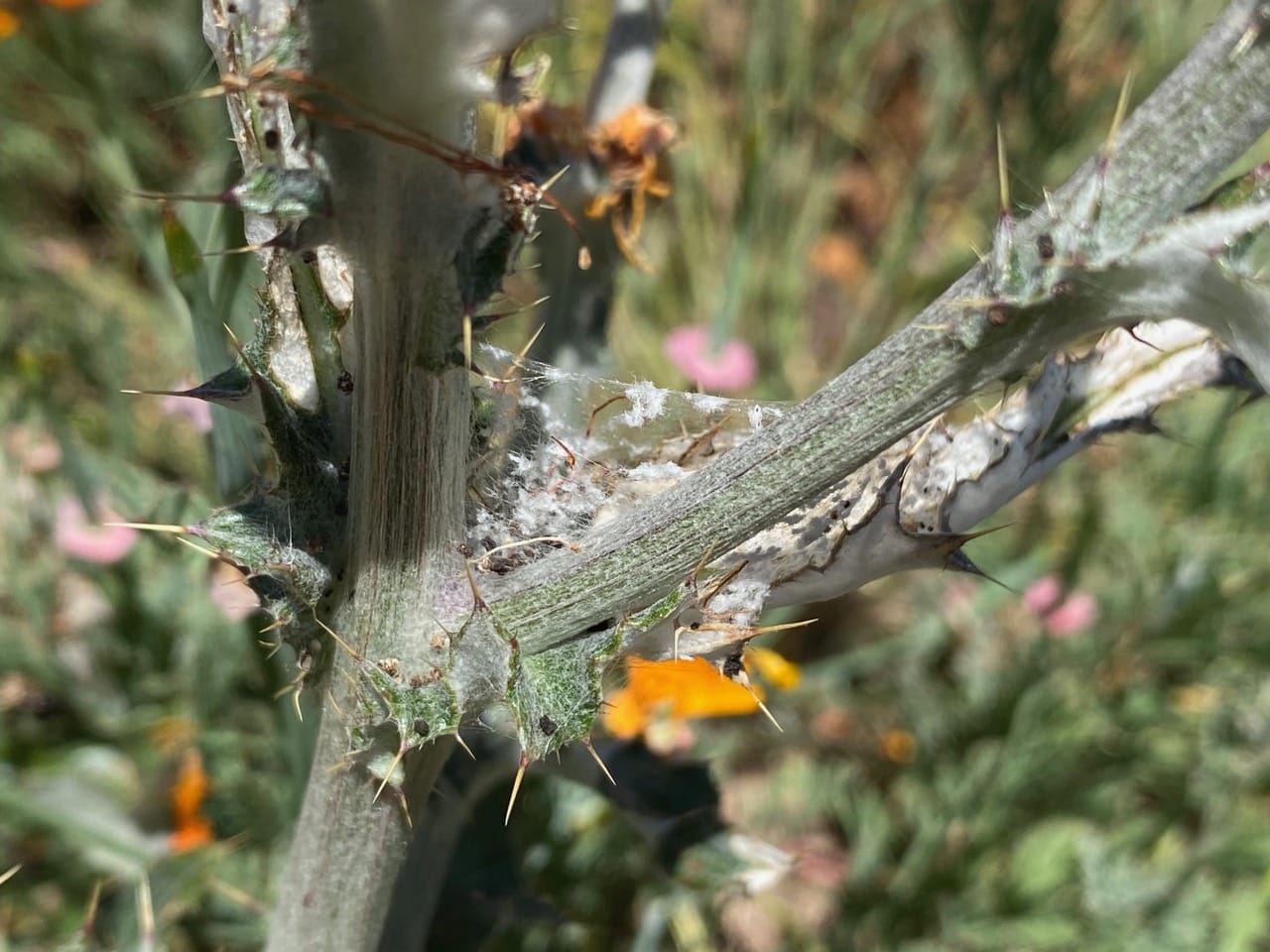
I check the base of the Cobweb Thistle for caterpillars among the spiky foliage. There are no visible caterpillars, but I find a couple of caterpillar retreats at the leaf axils, complete with silk webbing and frass (insect poop).
These silken tents on the leaves or the leaf axils of thistles are typically constructed by the Painted Lady caterpillars. The white flecks incorporated into the silk tent are leaf hairs that the caterpillar has gathered from the host plant.
The Painted Lady, Vanessa cardui (family Nymphalidae) is the most widespread of all butterflies. They are found on every continent except Antarctica and Australia. The butterfly also goes by the name thistle butterfly; its scientific name Vanessa cardui means “butterfly of thistle”. Although more than 100 host plants have been recorded for the species, the caterpillars’ favorites include thistles (Asteraceae), hollyhock and mallow (Malvaceae), and various legumes (Fabaceae).
Female Painted Lady butterflies lay eggs singly on the upper side of host plant leaves, sometimes on the thistle flowerheads. When small the caterpillars live for most of the time within a tent of leaves loosely spun together with silk. Only when larger are the larvae more likely to be found feeding outside a leaf tent on the food plant.
Painted Lady Vanessa cardui (Linnaeus, 1758) | Butterflies and Moths of North America