

Pollinator Post 6/6/23 (2)

Hey, I recognize that – it’s the Yellow-legged Wood Fly, Blera humeralis (family Syrphidae) I found for the first time a few days ago on Cow Parsnip!
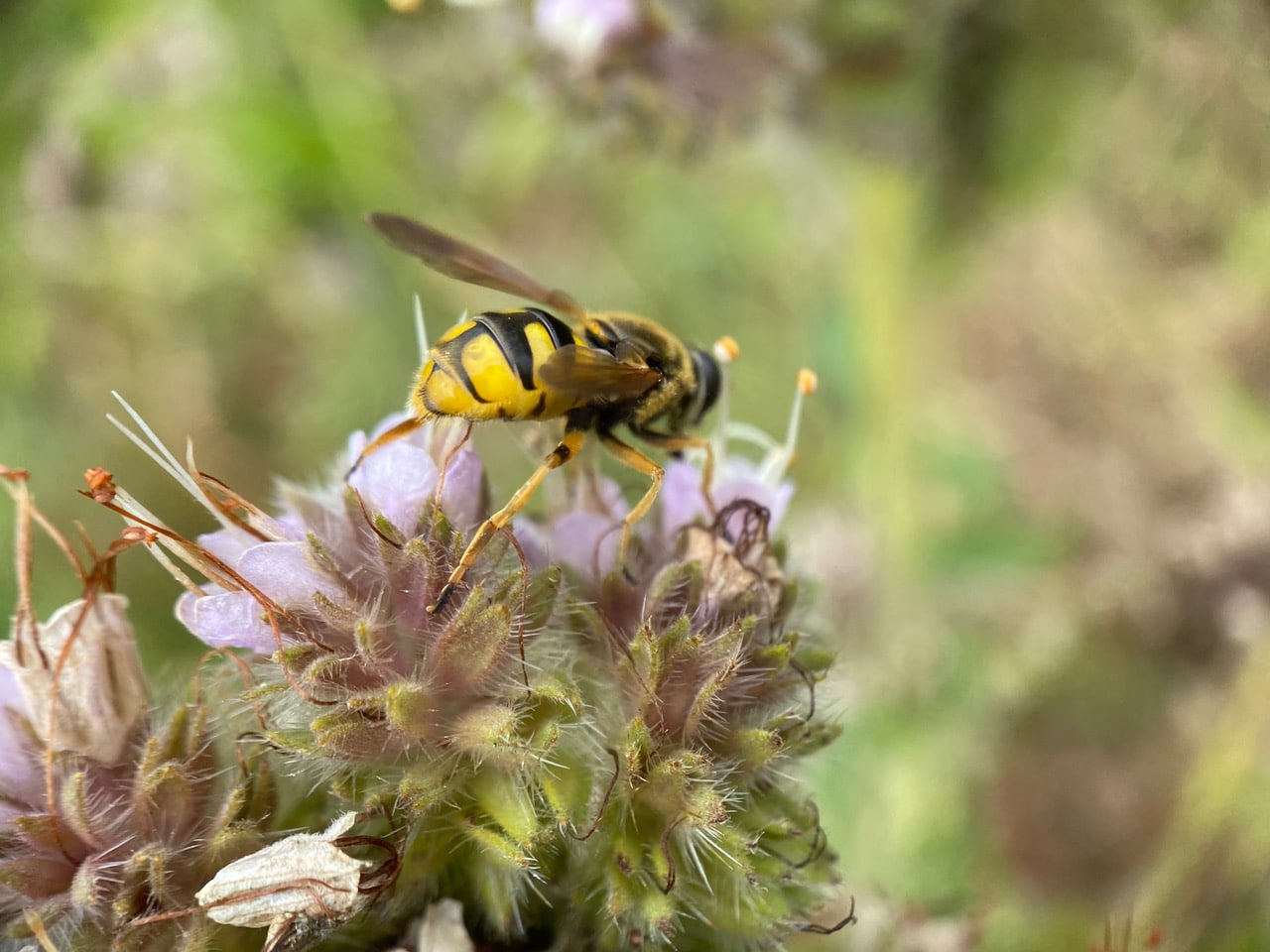
Hover Flies, also called Syrphid Flies make up the insect family Syrphidae. They are often seen hovering or nectaring at flowers; the adults of many species feed mainly on nectar and pollen, while the larvae eat a wide range of foods. In many species, the larvae feed on aphids, thrips, and other plant-sucking insects. In some species, the larvae are saprotrophs, eating decaying plant and animal matter in the soil or in ponds and streams.
Hover Flies are considered the second-most important groups of pollinators after wild bees. Most are generalists that visit a wide range of plant species. The feeding habits of Syrphid larvae further endear them to the gardeners, serving as pest control agents and recyclers of organic matter.

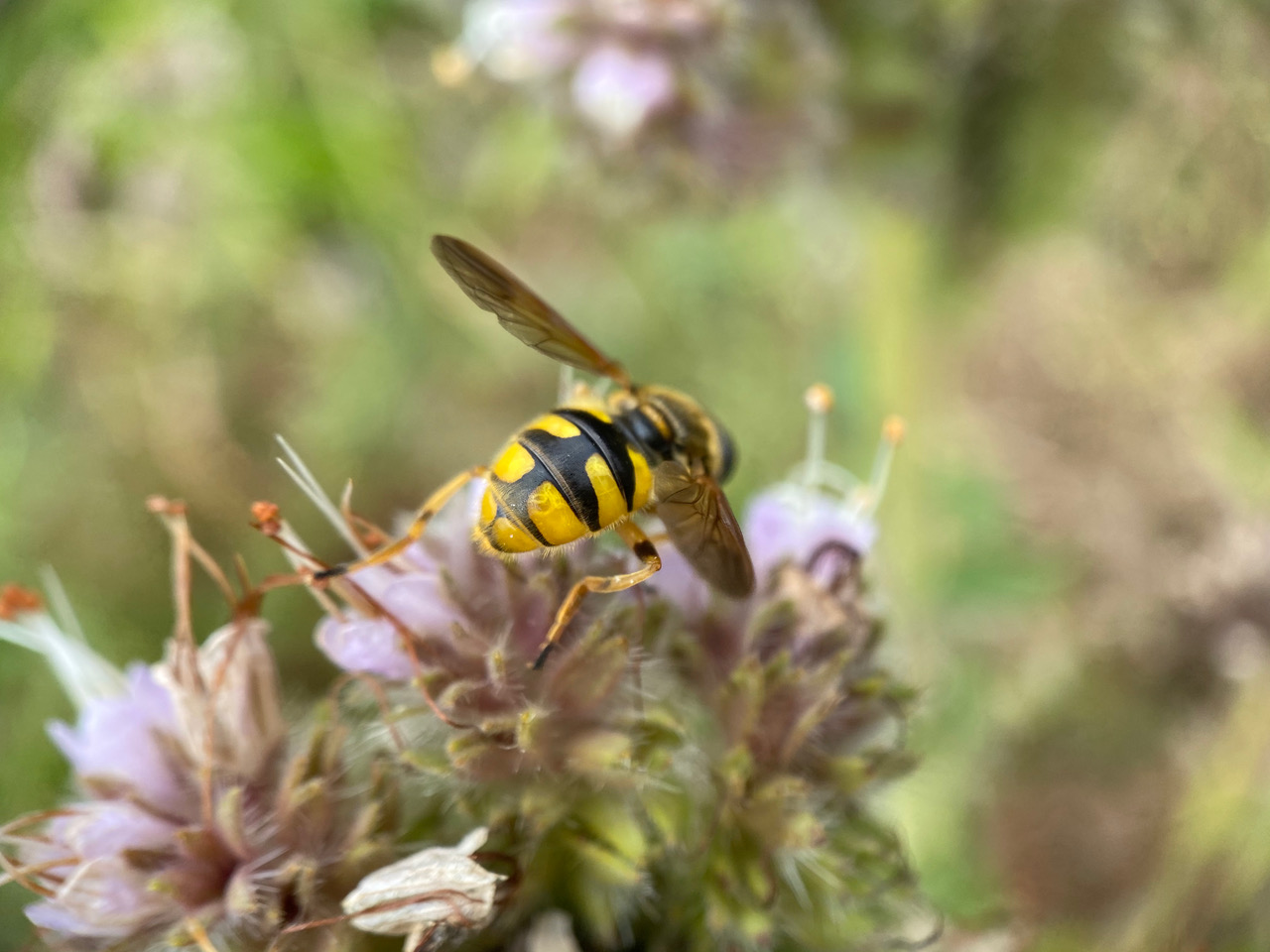
Hover Flies are the quintessential example of Batesian mimicry. Many are brightly colored, with spots, stripes and bands of yellow; due to this coloring, they are often mistaken for wasps or bees. The resemblance to stinging insects gives the hover flies some protection from predators.

Its tongue extended, the fly is taking nectar from a Phacelia flower. Note the pollen adhering to the side of its thorax.
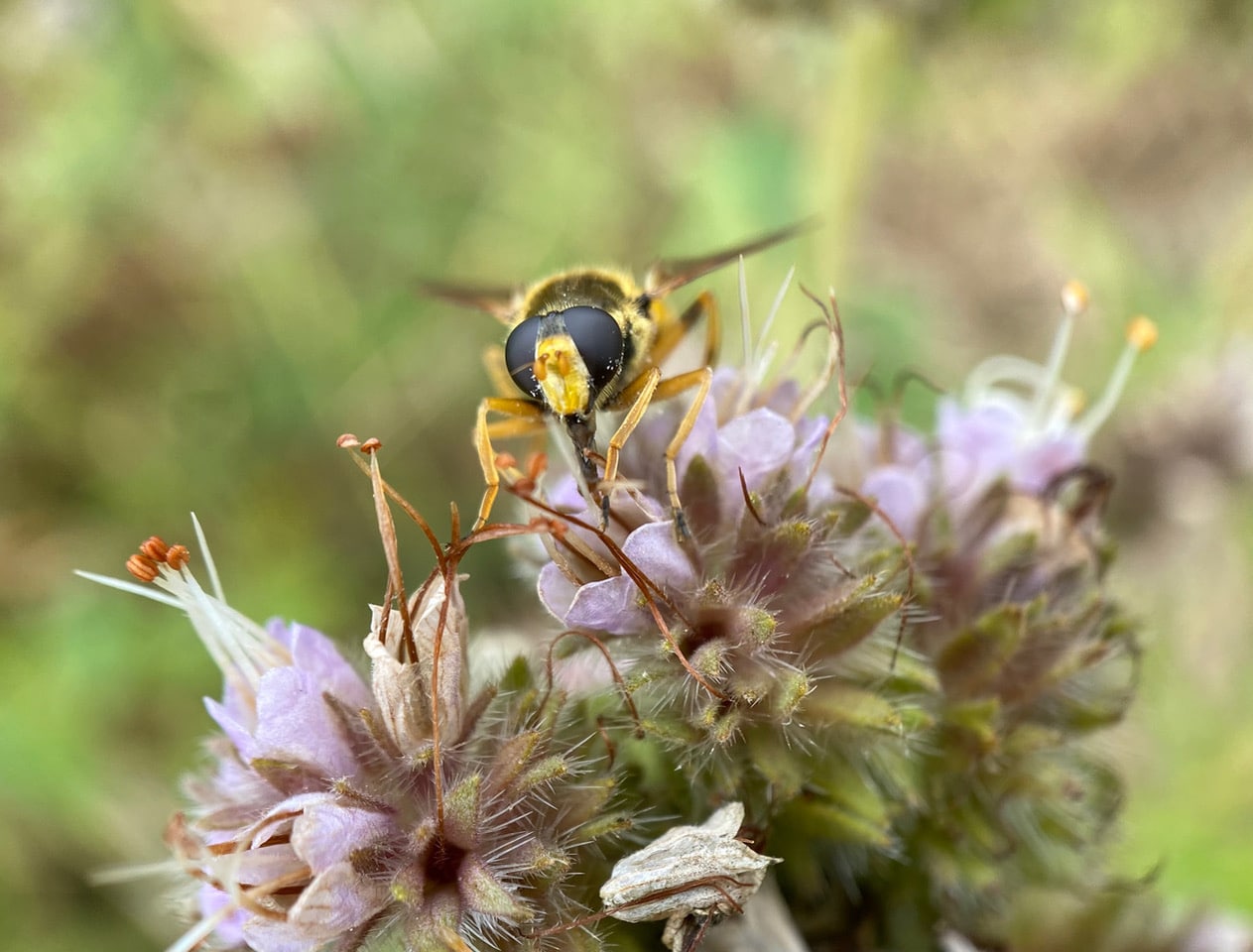
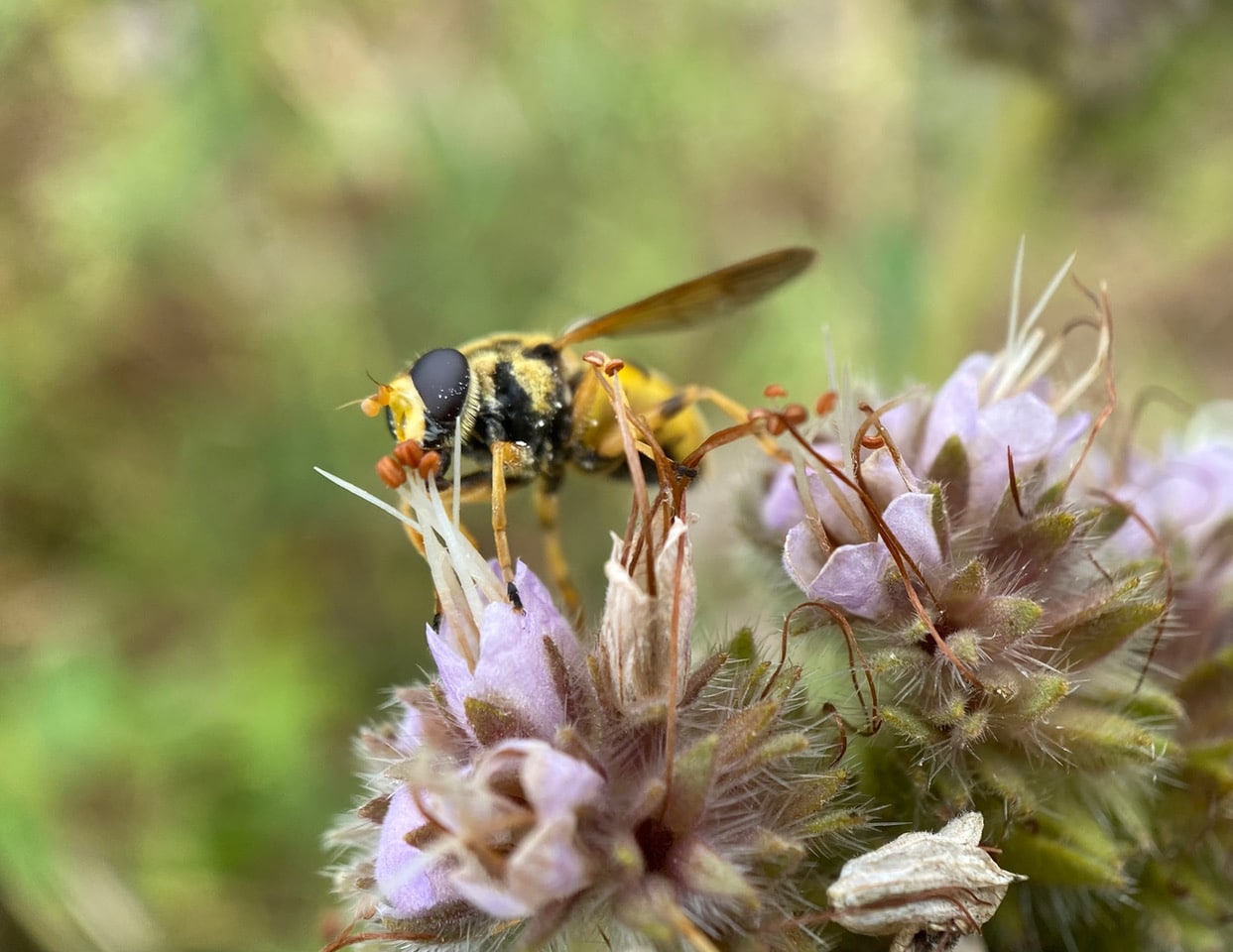
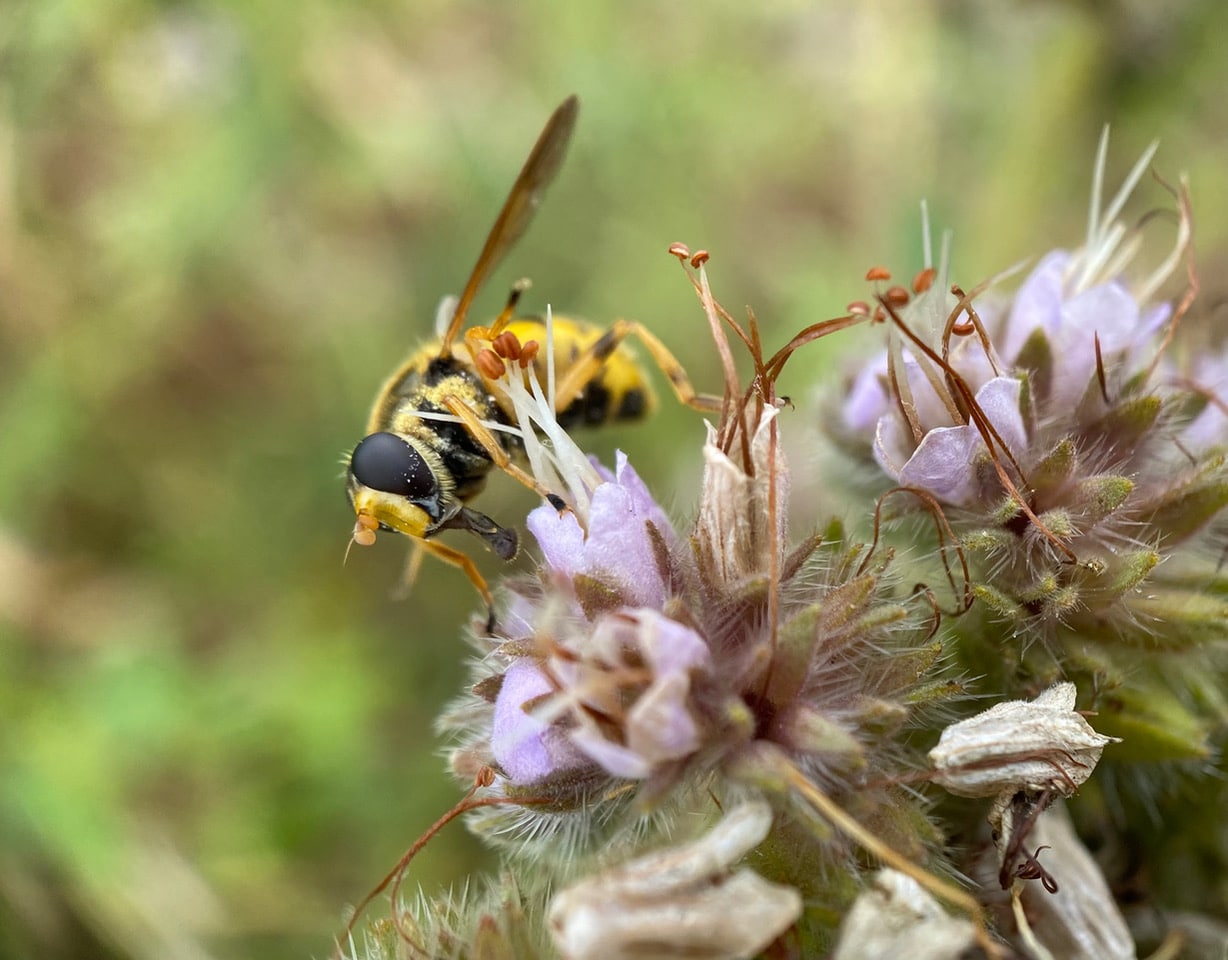
Blera humeralis, the Yellow-legged Wood Fly, is an uncommon species of Syrphid Fly. Little information is available on the species except that it is distributed along the coast in western North America, and that its larvae are of the rat-tailed type, feeding on exuding sap or in the rot holes of trees.

A glossy black fly with dark smokey wings visits the Phacelia flowers. It frequently stretches and shakes its wings as it runs around on the inflorescence.
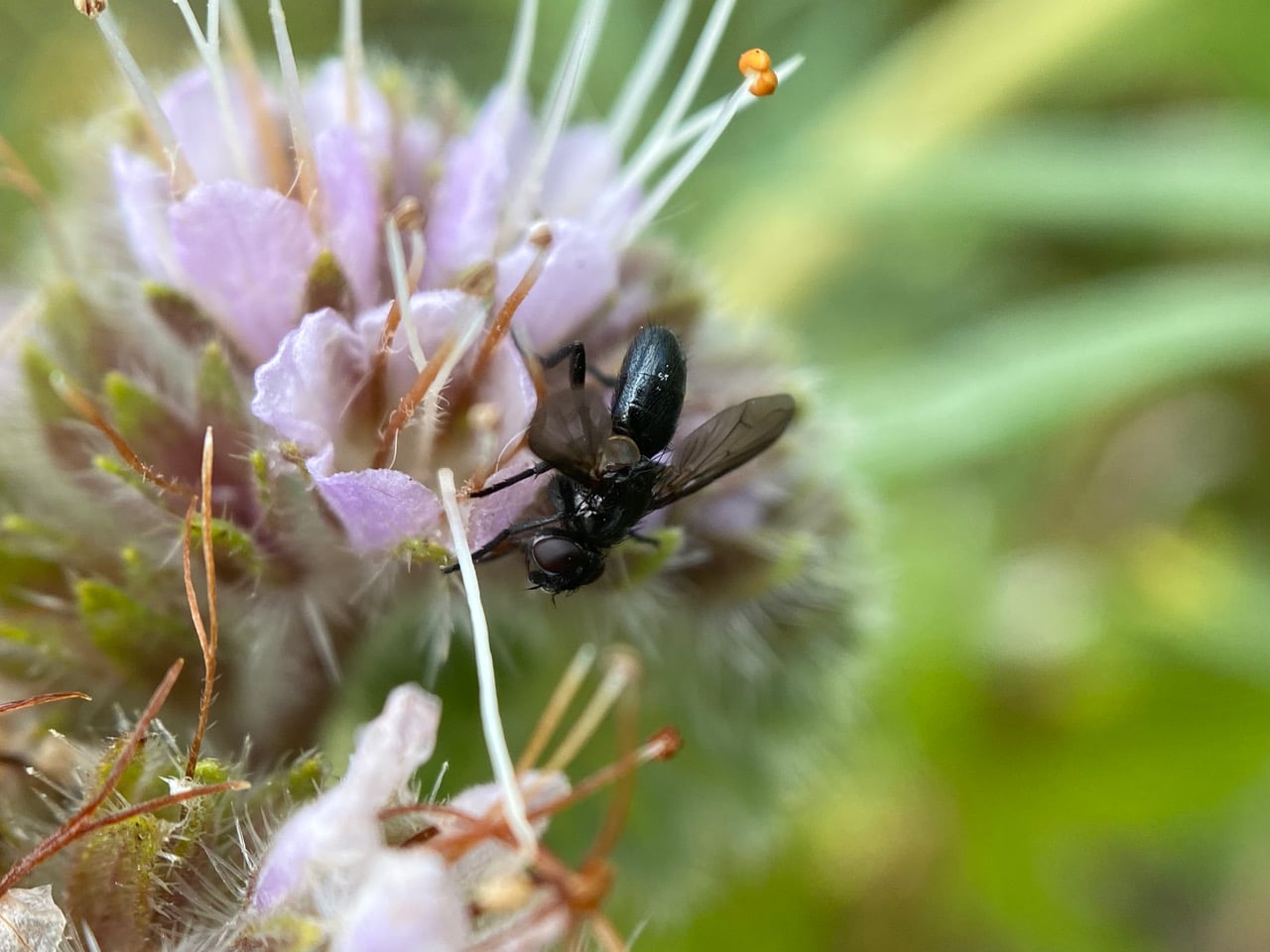 The fly is so dark it is impossible to make out any anatomical details. But I do see that it has calypters – the pair of small rounded membranous flaps under the wings.




The fly is so dark it is impossible to make out any anatomical details. But I do see that it has calypters – the pair of small rounded membranous flaps under the wings.The calypters are faintly visible here under the outstretched wings. The presence of calypters is an important diagnostic feature and is often used by entomologists to help identify different species of fly. The calypters are often mistaken for the fly’s halteres, the modified hind wings used for balance. The halteres are actually shaped like a drum-stick and can be hidden below the calypters.
Alas, according to an entomologist on iNaturalist, our black fly can only be identified as a Calyptrate Fly and no further. Calyptrate flies are those which possess a calypter that covers the halteres, among which are the familiar house fly.
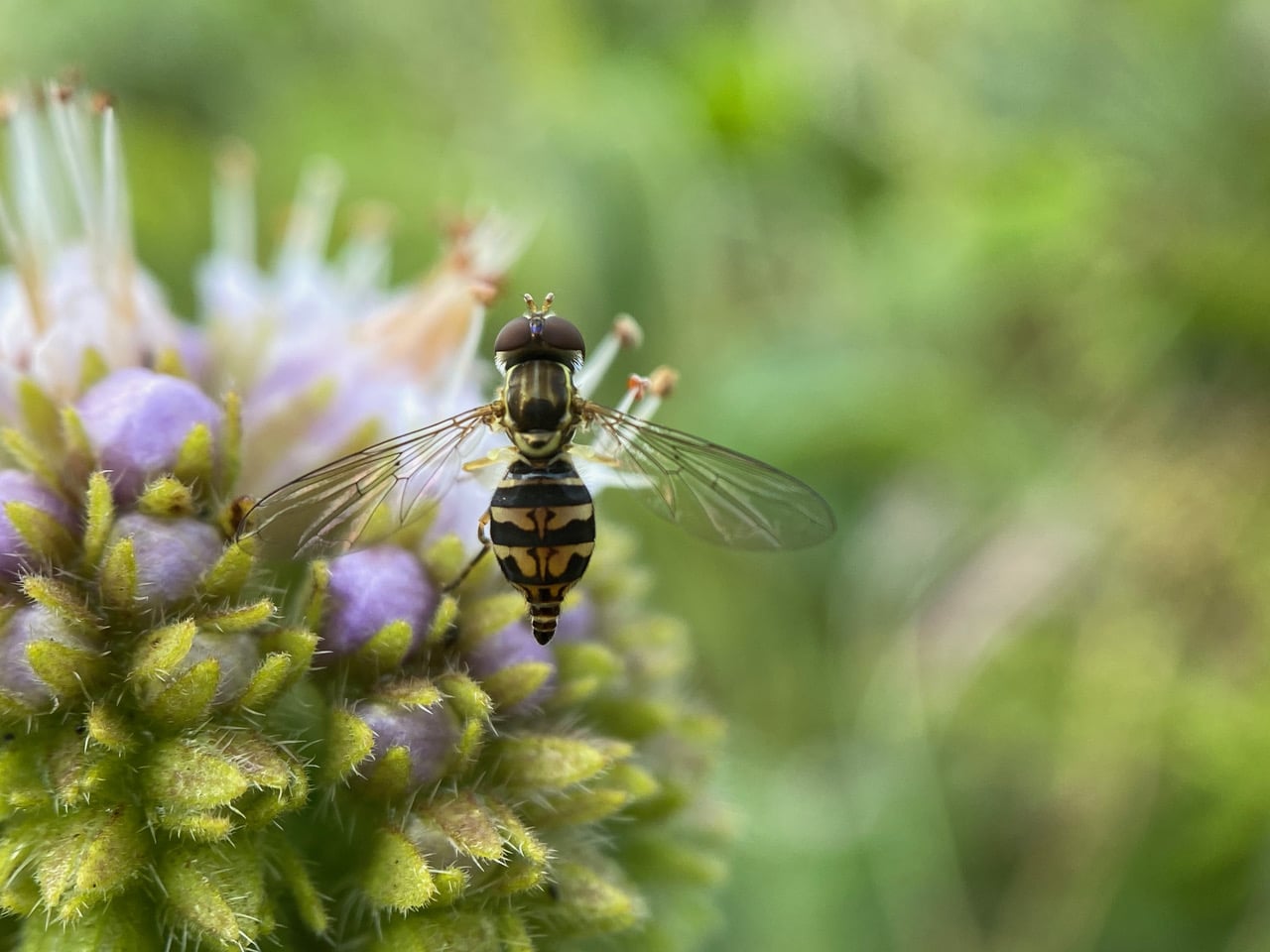
If only all insects are so distinctively marked and easy to identify! The cutie here is a female Western Calligrapher, Toxomerus occidentalis (family Syrphidae), a species of hover fly found in western North America.
Toxomerus is a very large genus of Hover Flies. They are found in North and South America. The majority of species are only 6-9 mm in length. They are notable for their mimicry of stinging Hymenoptera to avoid predators. Their unique abdominal patterns are diagnostic at the species level within the genus. Most larvae feed on soft bodied insects, such as aphids; a few feed on pollen. Adults feed on the pollen of a wide range of flowers. A female can lay up to hundreds of eggs at a time and will place them where prey or pollen food sources are readily available. They can be found in a wide variety of habitats, often in dense ground cover.
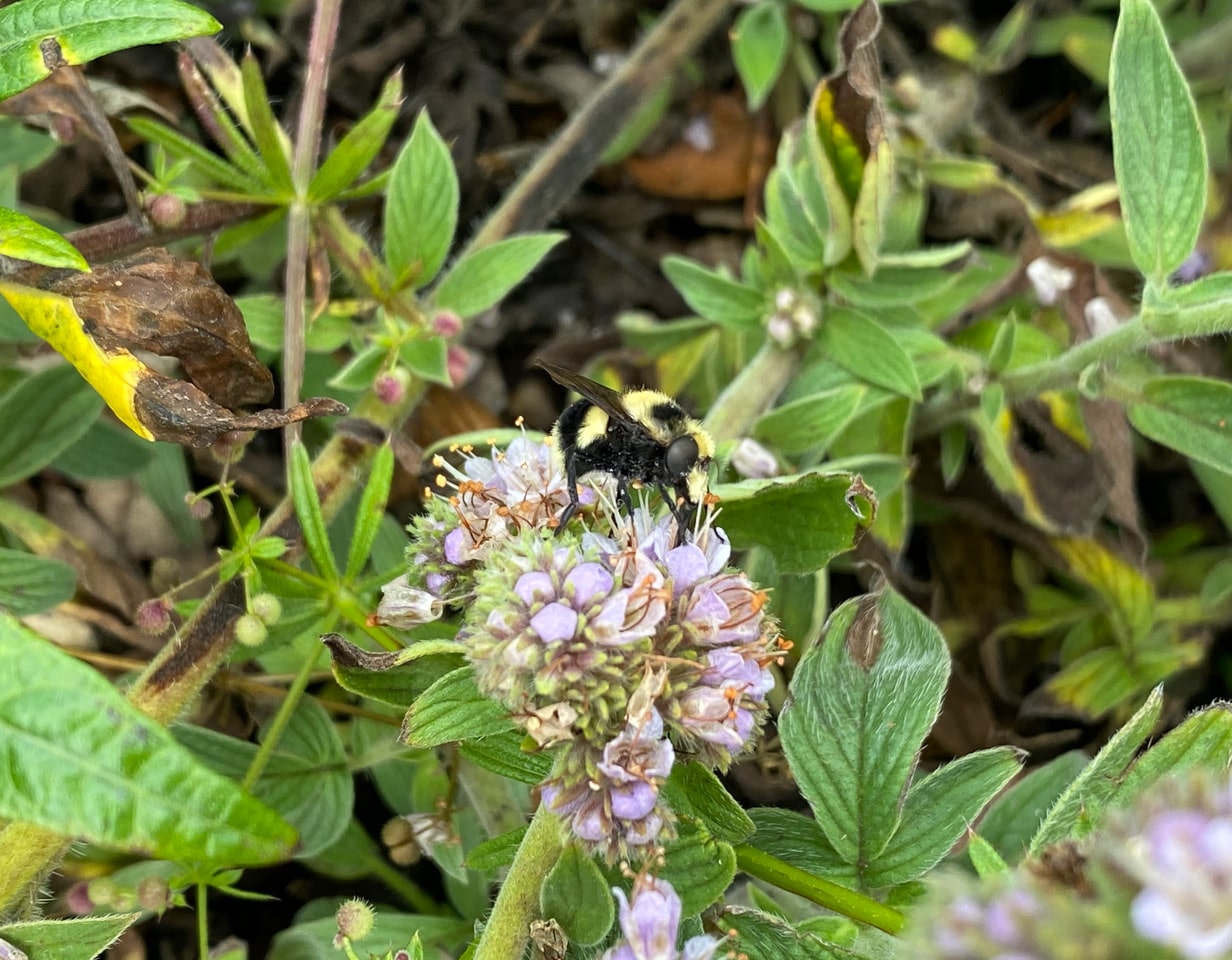
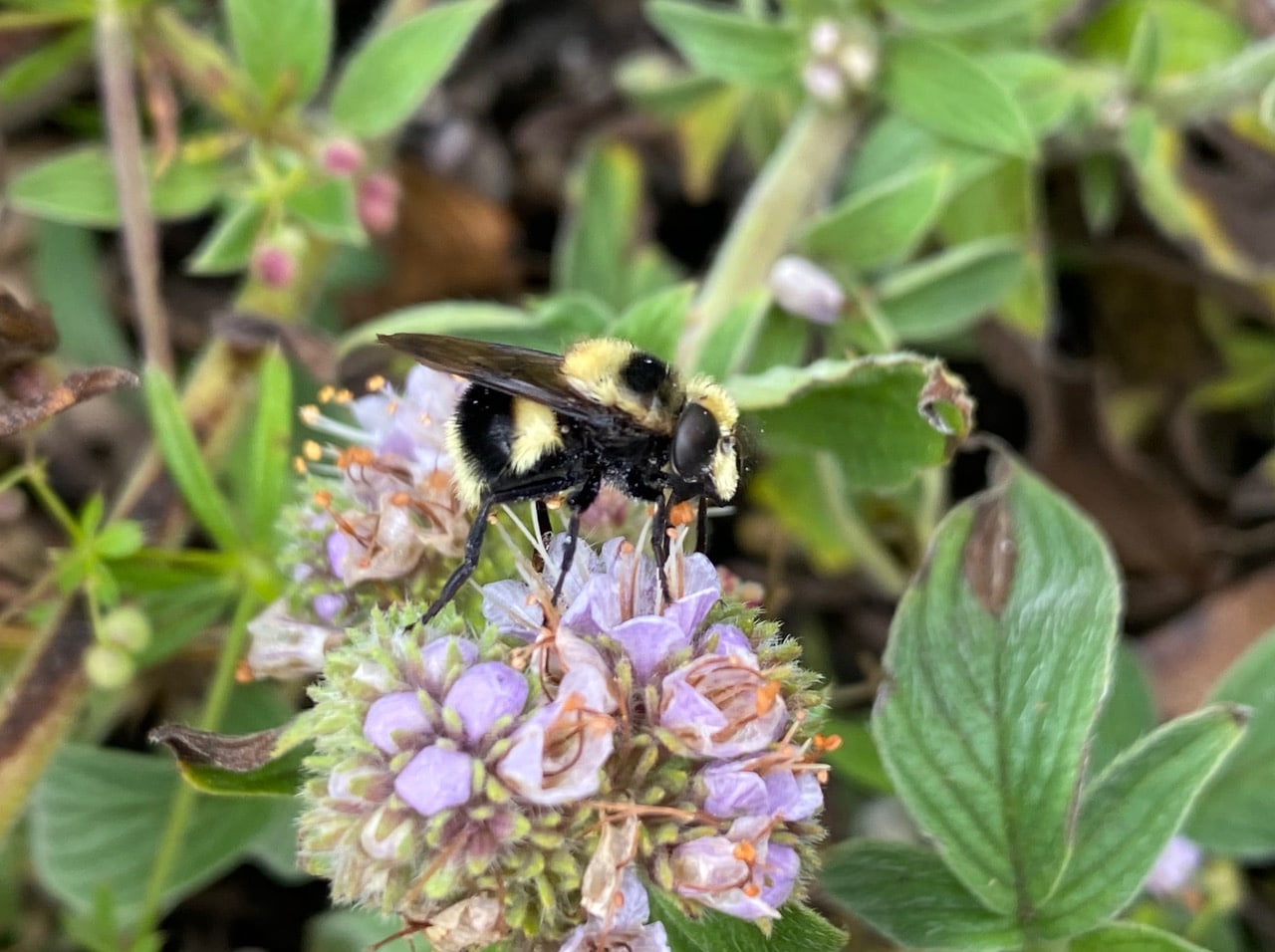
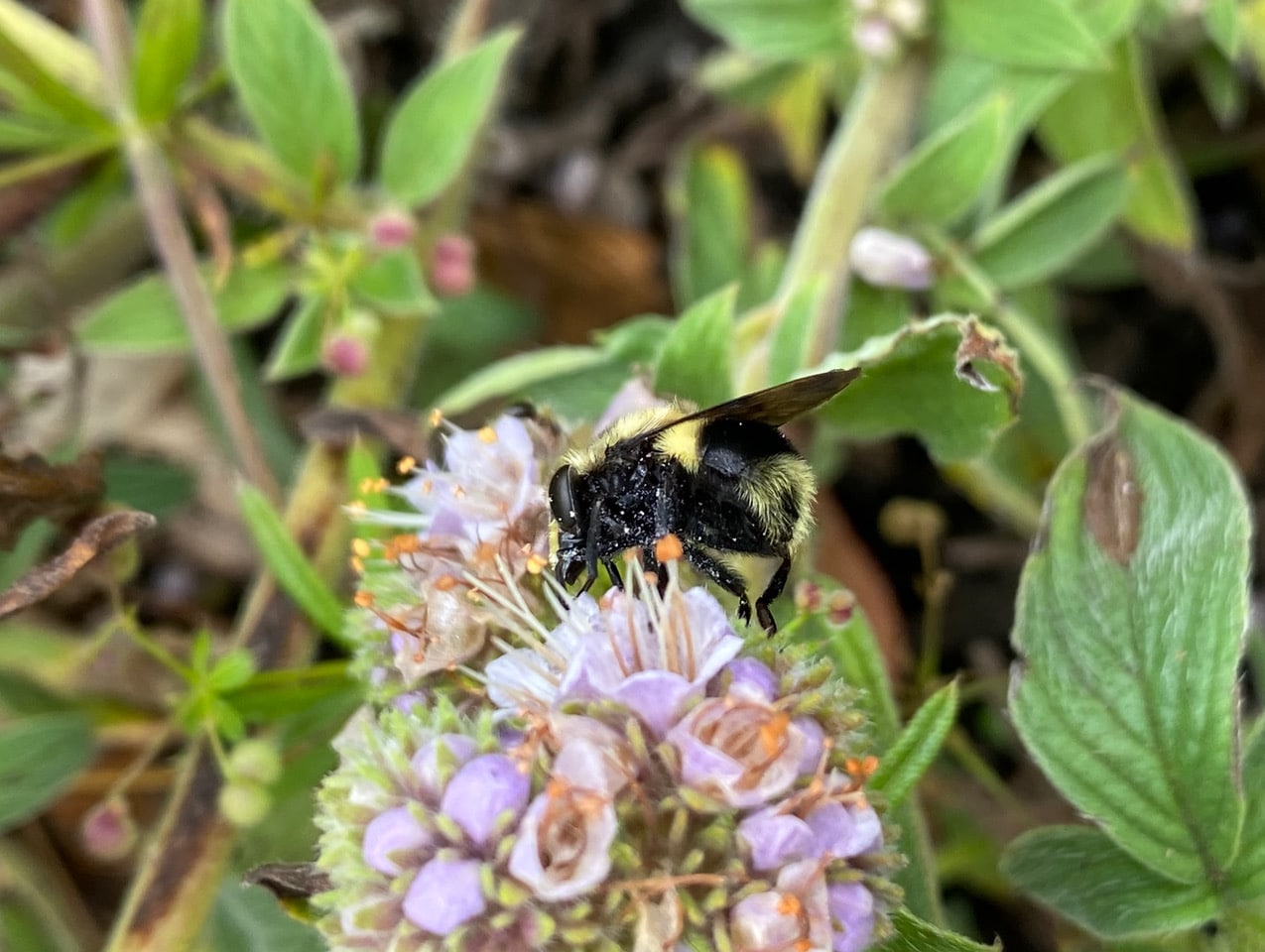
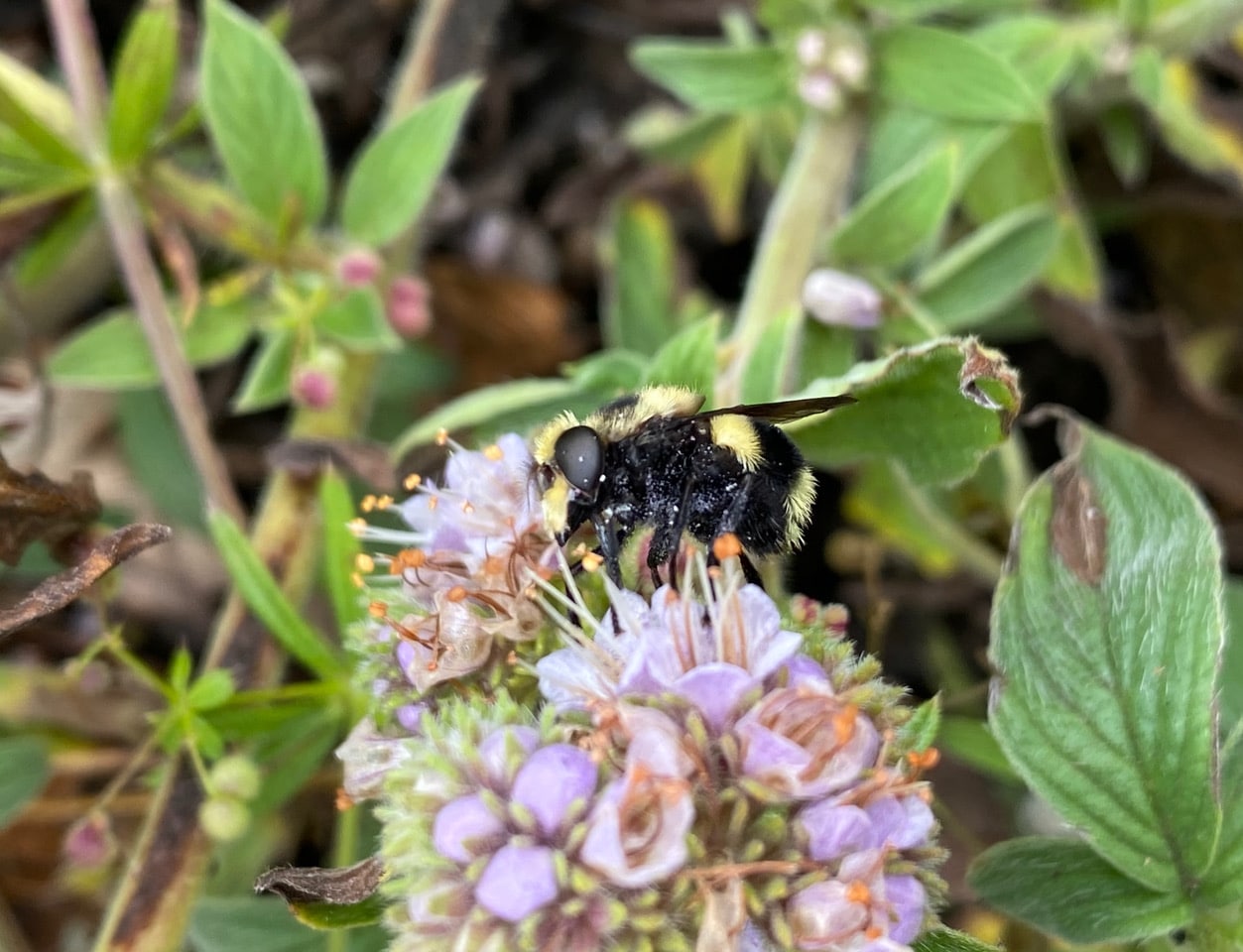
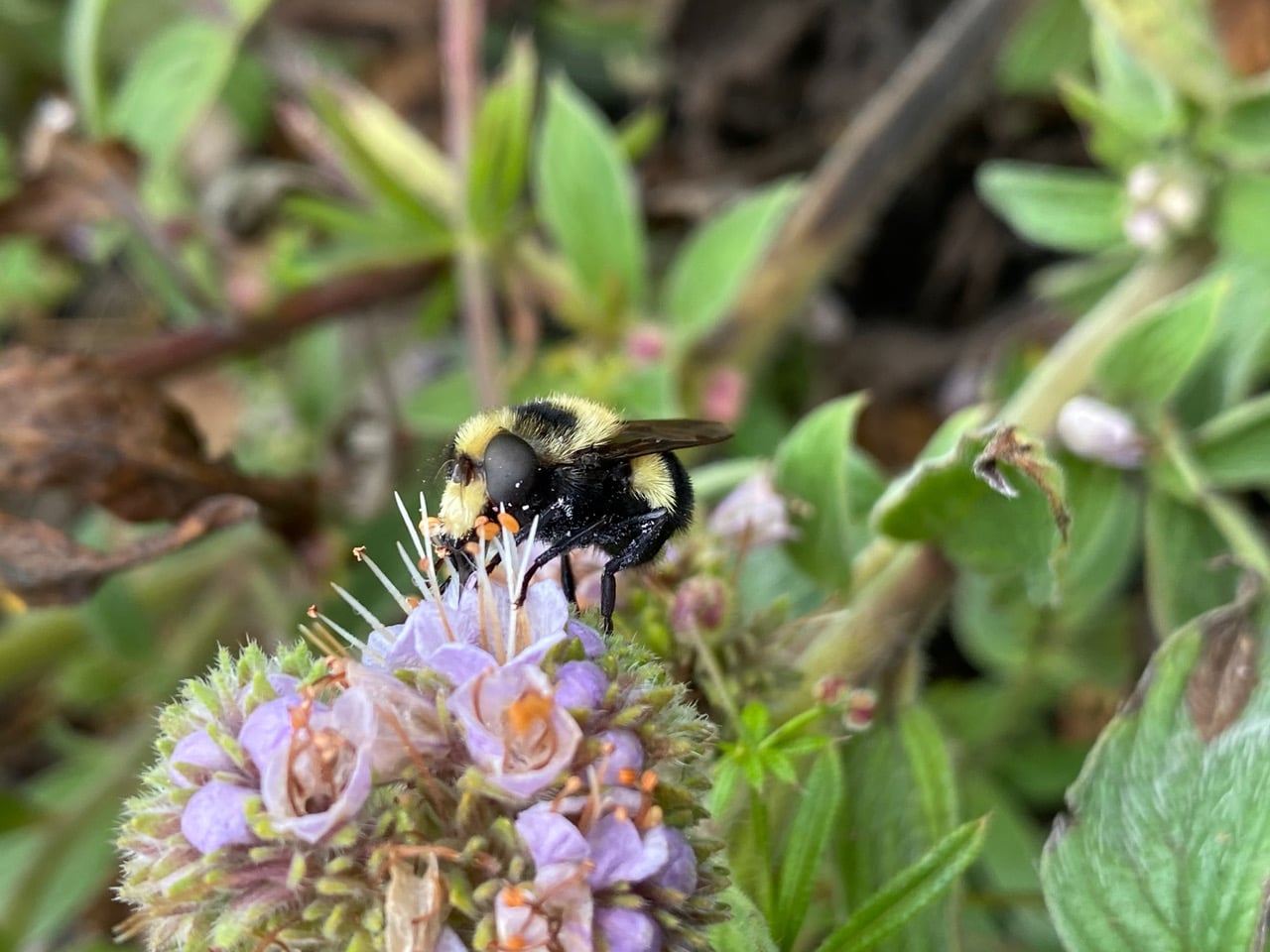
Ooh, that looks like a Black-tailed Bumble Bee, Bombus melanopygus, but something tells me that it is not. The insect is a little too big (we no longer have the queens of this bumble bee out foraging), and its movements are not as swift as the real bees.
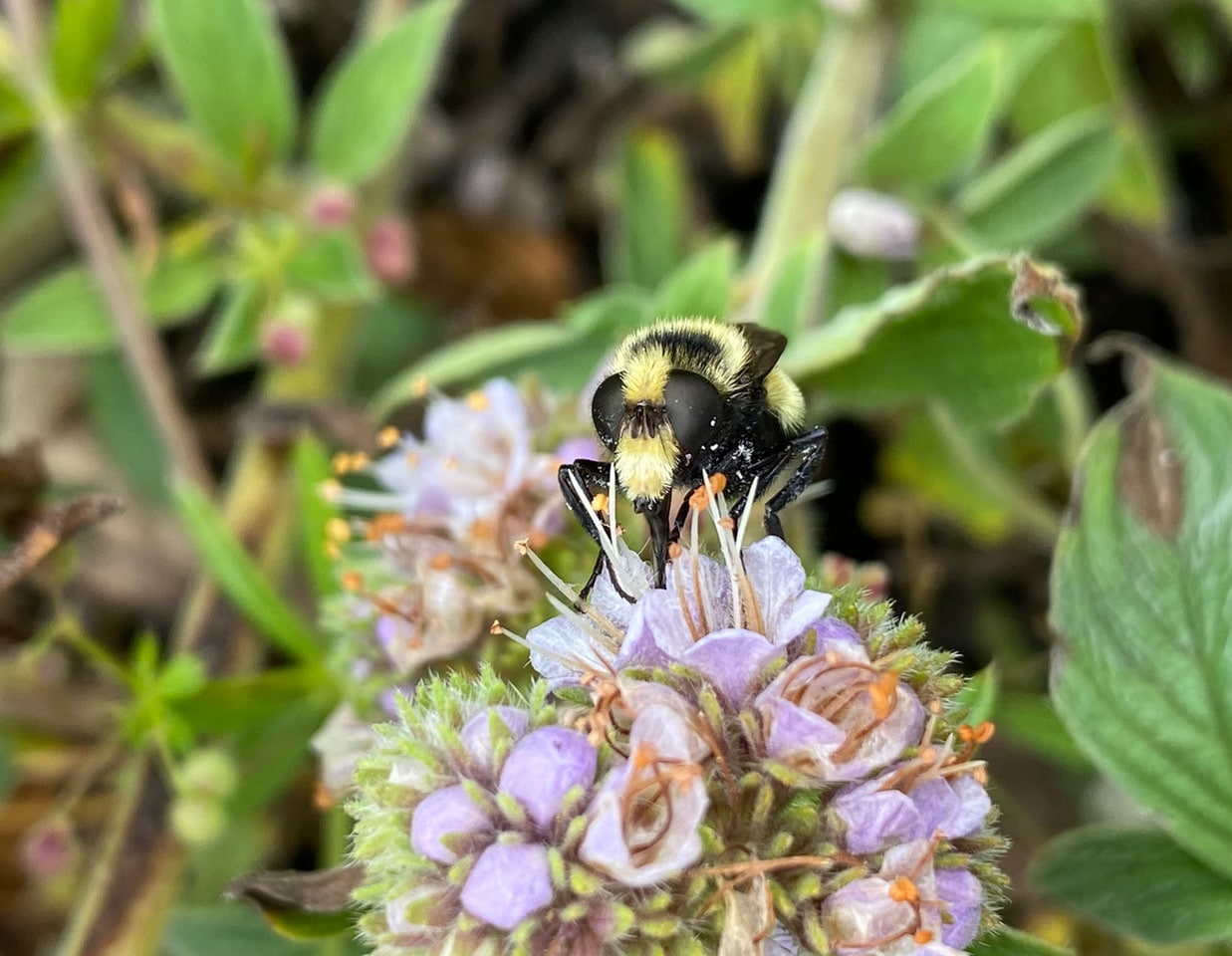
Whoa, what’s that furry yellow thing hanging off its face? And look at those antennae – they are aristate antennae of flies (Bees have geniculate or elbowed antennae). The insect is a Wanna-bee! A Bumble Bee Hover Fly, Volucella bombylans (family Syrphidae).
The Volucella bombylans complex comprises numerous hover flies that are bumble bee mimics, also known as Bumble Bee Hoverflies. These flies look like a bumble bee with a furry black and yellow body, but they are given away by their heads, plumed antennae, large eyes and a single pair of wings. Fast fliers, the adults feed on nectar and pollen, with a preference for blue and yellow flowers. The females lay eggs in the nests of bumble bees and social wasps. The larvae live as scavengers on the bottom of the host’s nest, feeding on waste and dead host larvae.
This provides a glimpse into a different larval niche from what most folks know about Syrphid Flies. We are familiar with the many Syrphid species that have larvae that feed on soft-bodied insects such as aphids. Quite a few other species have larvae that are aquatic filter-feeders that live in decomposing organic matter. Overall, the Syrphid larvae display a degree of habitat diversity that is unusually broad for a single family of Diptera.
Here’s a good look at the fly’s hairy beaked face and its aristate antennae.
The Bumble Bee Hover Fly is feeding on both nectar and pollen of California Phacelia.
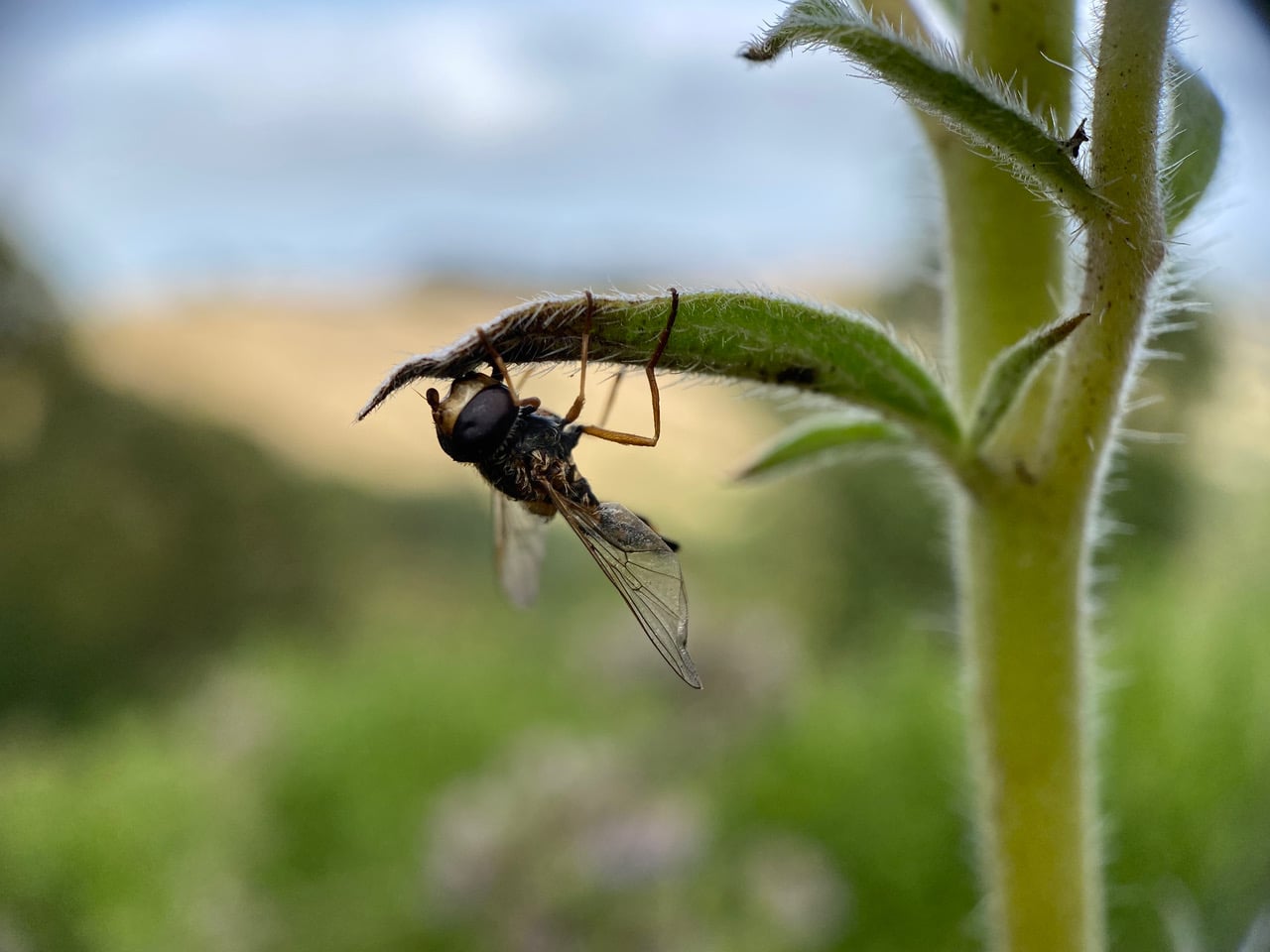
A dead Hover Fly is hanging upside down on a leaf of California Phacelia. I wonder how it met its demise.
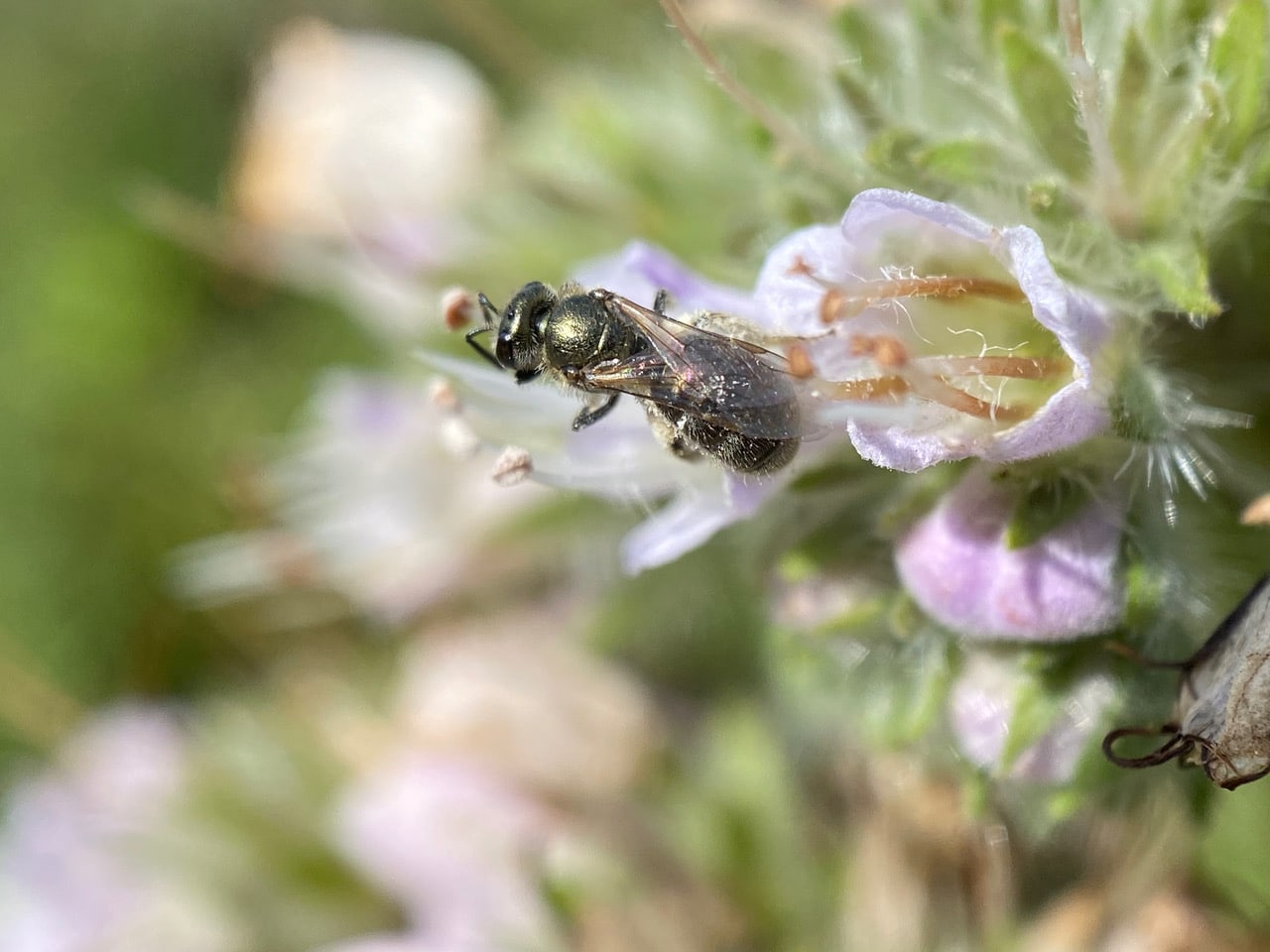
A Metallic Sweat Bee, Lasioglossum (Dialictus) sp. (family Halictidae) is hanging on a stamen of a Phacelia flower, gathering pollen from the anther.
Lasioglossum are closely related to the genera Halictus and Agapostemon. These genera are commonly called “sweat bees” because of their attraction to human sweat, which they drink for its salt content. Lasioglossum are dusky black to brown slender bees with bands of hair on their abdomen.
Dialictus is a subgenus of Sweat Bees belonging to the genus Lasioglossum. Most of the members of this subgenus have a subtly metallic appearance, and are small, about 3.4-8.1 mm in size. They are commonly found in Northern Hemisphere and are found in abundance in North America. As in the other members of the family Halictidae, the bees have very diverse forms of social structure, making them model organisms for studying the social behavior of bees.
Female Sweat Bees (family Halictidae) carry pollen in the scopae on their entire hind legs and underside of their abdomen.
A scopa (plural scopae; Latin for “broom”) is any of a number of different modifications on the body of a bee that form a pollen-carrying apparatus. It is a dense mass of elongated, often branched, hairs (or setae) on the hind leg. When present, it covers the tibia at a minimum, but some bees, depending on the species also have the hairs on the other segments of their leg. The leaf-cutter bees in the family Megachilidae have an extensive scopa on the underside of the abdomen. In the Sweat Bees (family Halictidae), the entire hind leg and abdomen carry pollen. Bumble Bees and Honey Bees have a more highly-developed structure than the scopa: the corbicula, or pollen basket. Some other bees, such as the Masked Bees (family Colletidae), transport pollen internally in the crop, and they lack a scopa. Parasitic bees do not collect pollen; they do not have a scopa.
The little bee is very efficient at gathering pollen from the anthers of Phacelia flowers. She apparently fills her abdominal scopa first before the ones on her hind legs.