

Pollinator Post 6/6/23 (1)
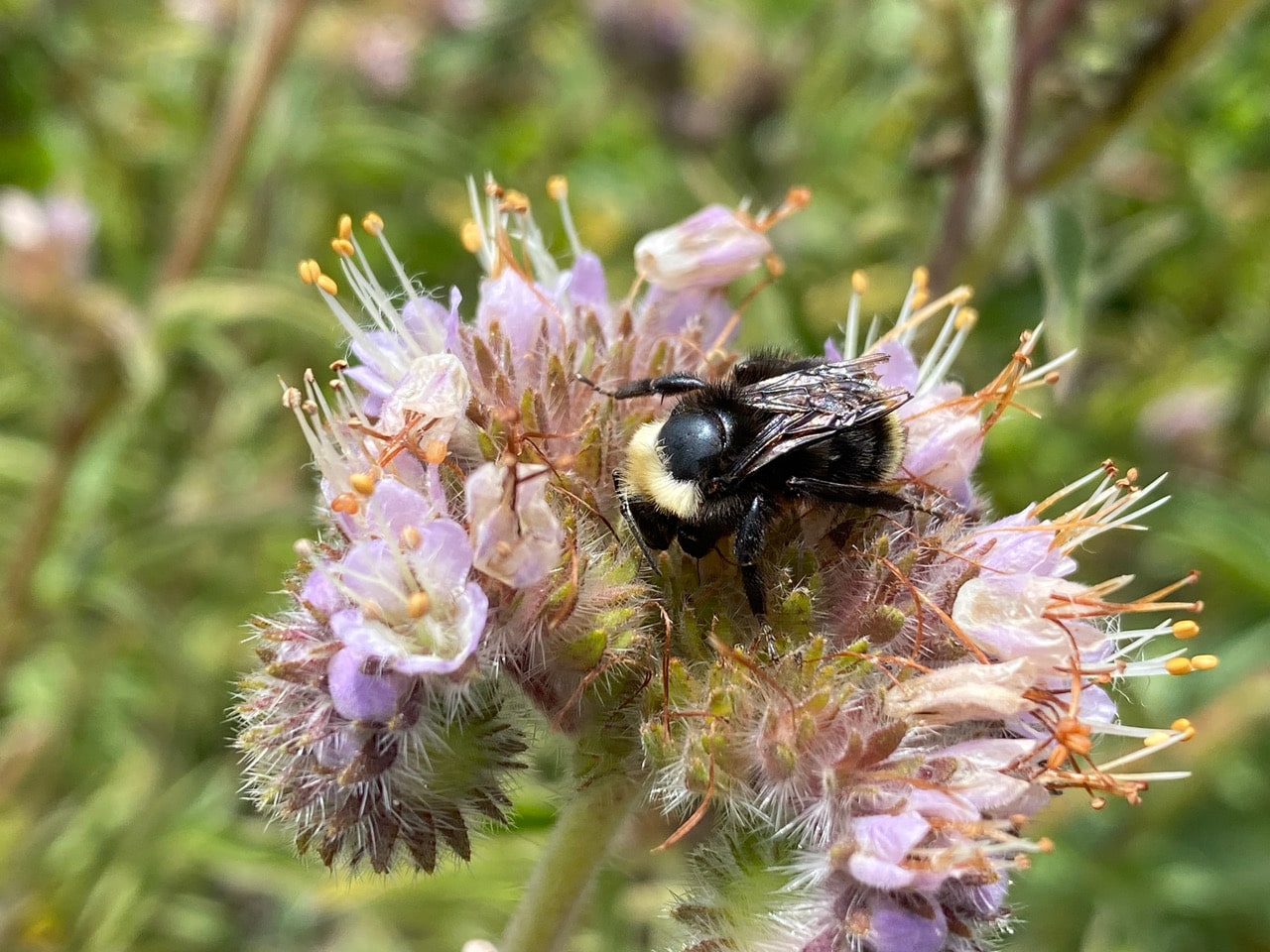
After the light rain shower in the late morning, I decide to check for insect activity at the Skyline Gardens in the afternoon.
Although it is still overcast, temperatures are in the 60’s, and many Yellow-faced Bumble Bees, Bombus vosnesenskii are out foraging on the California Phacelia, Phacelia californica. One particular individual is slumped over an inflorescence, barely moving. On closer inspection, I find that she has lost most the black hairs on her thorax, leaving a shiny black patch exposed. The tips of her wings are frayed. An old bee at the end of her life?
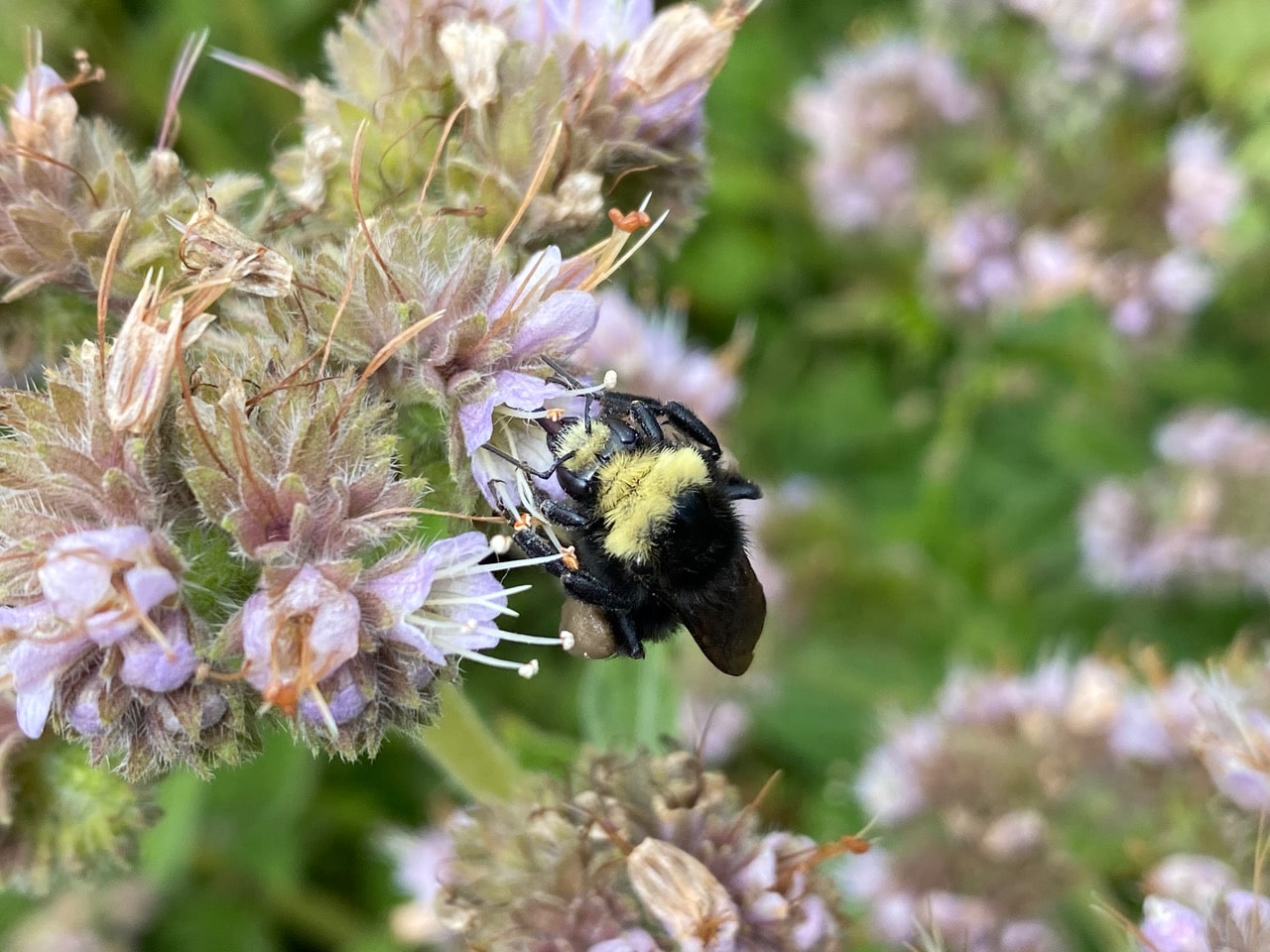
The healthy young bees have velvety black hairs on their thorax behind the yellow band of yellow hair.

I encounter a few more of the bees with balding thorax. This individual is in the worst shape, wet and disheveled. She is moving around weakly on the inflorescence trying to sip nectar. Is this how old bees expire in the field?
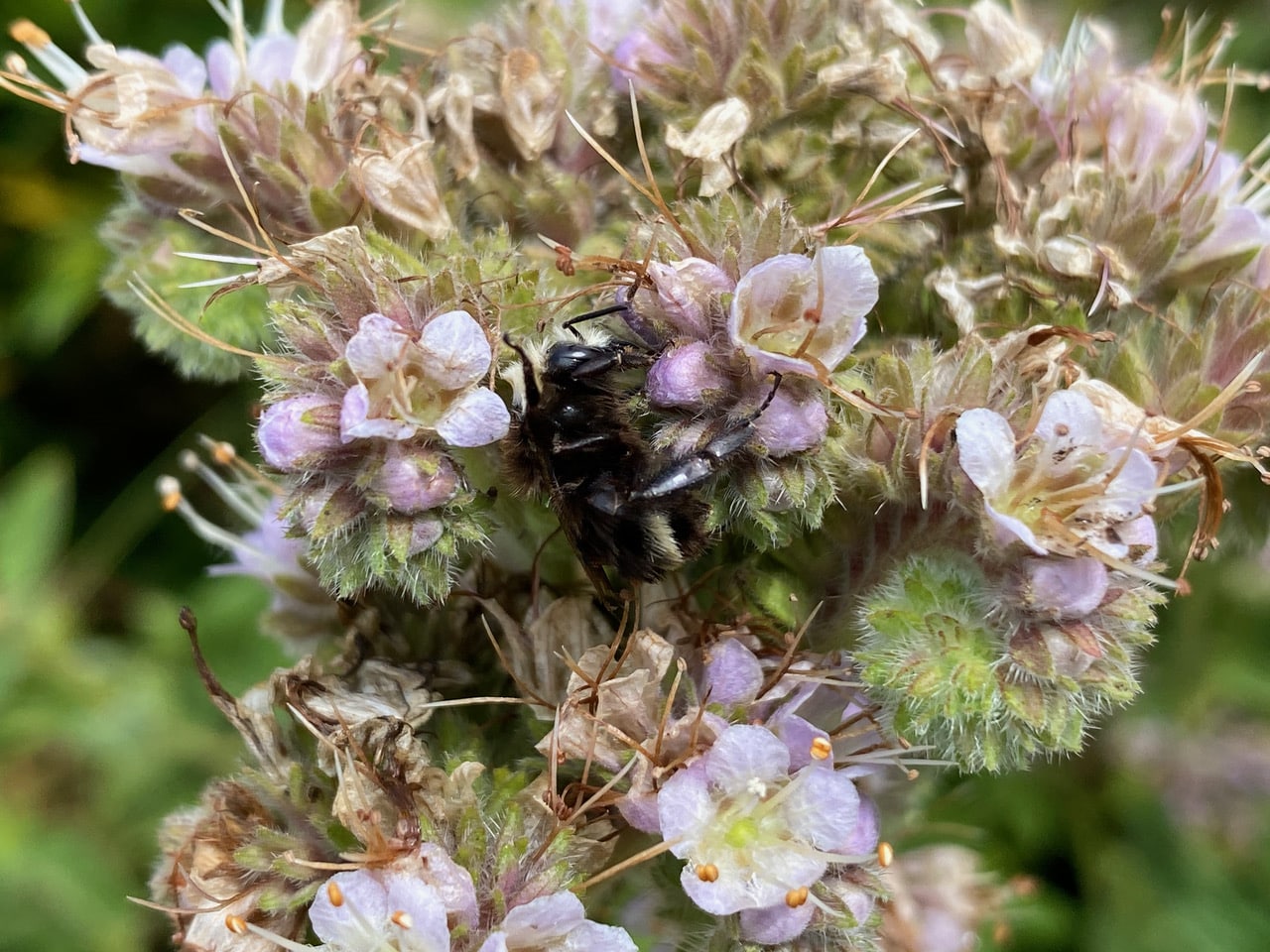
A dead but relatively intact Yellow-faced Bumble Bee, Bombus vosnesenskii is wedged between some Phacelia flowers. I look for a possible predator, such as a Crab Spider, but can’t find any. Did the bee die of old age? A sadness wells up in me. None of the books on bees have prepared me for this… There are things that the mind does not touch. They are simply felt by the heart.
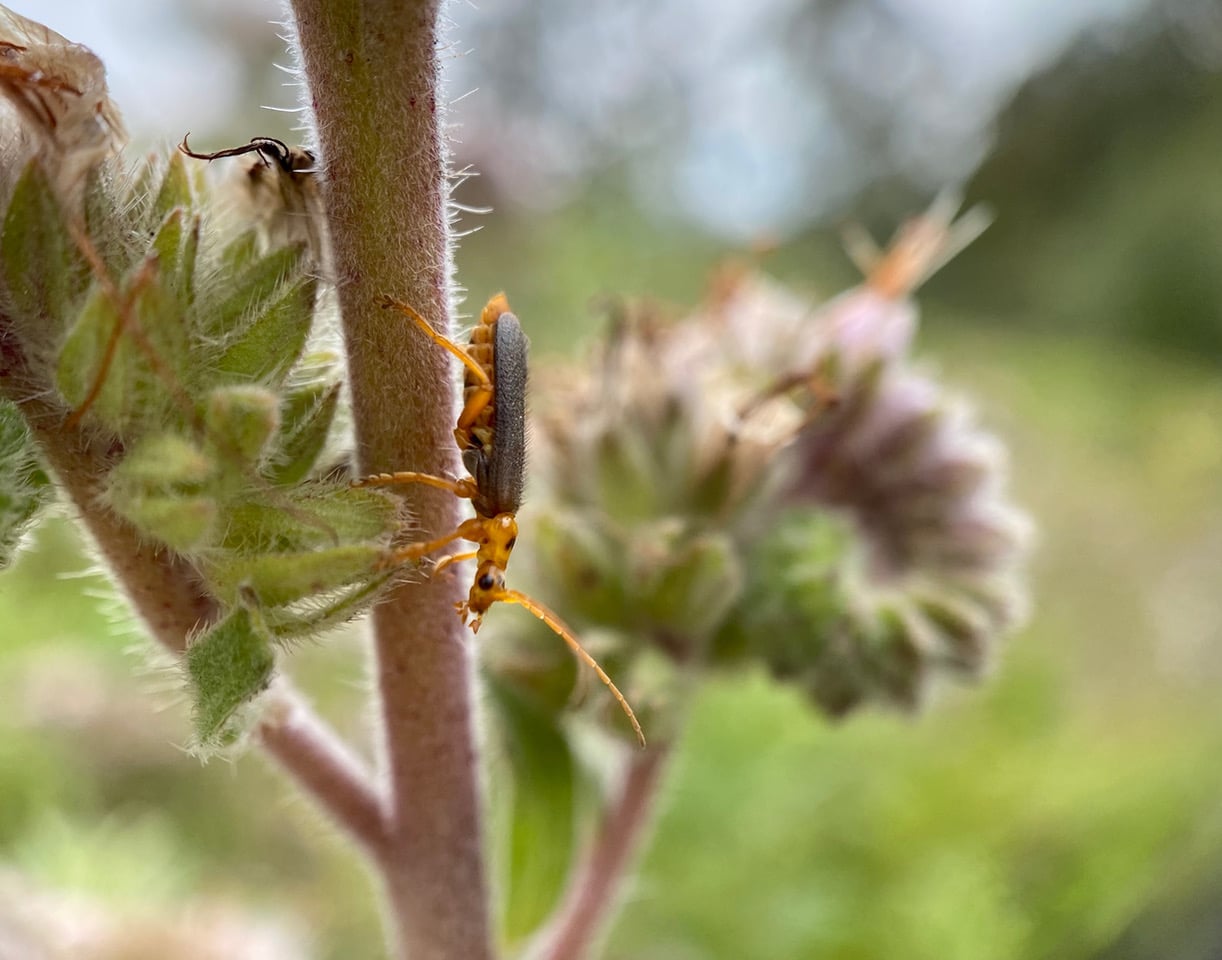
A Soldier Beetle, Cultellunguis americanus (family Cantharidae) is patrolling along a Phacelia stem.
The Soldier Beetles, family Cantharidae are relatively soft-bodied, straight-sided beetles. One of the first described species has a color pattern reminiscent of the red coats of early British soldiers, hence the common name. They are also known commonly as Leatherwings because of their soft elytra.
Soldier beetles often feed on both nectar and pollen as well as predating on other small insects. The larvae are often active, and feed on the ground, hunting snails and other small creatures. Soldier beetles are generally considered beneficial insects by gardeners.
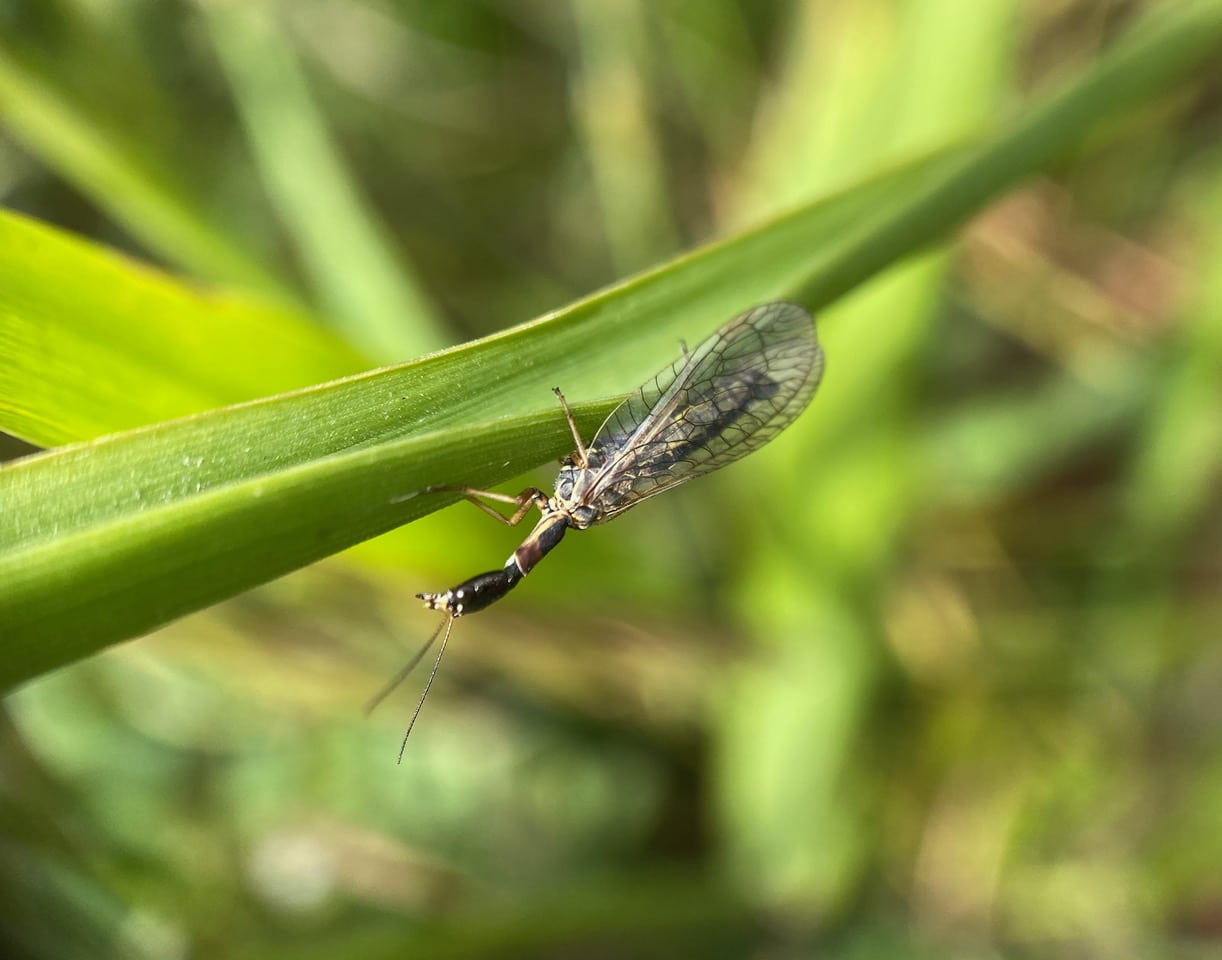
A Snakefly is perched quietly on a blade of grass.
Snakeflies are a group of predatory insects comprising the order Raphidioptera. They are a relict group, having reached their apex of diversity during the Cretaceous before undergoing substantial decline. Adult Snakefly has a notably elongated thorax which, together with the mobile head, gives the group their common name of snakily. The body is long and slender and the two pairs of long membranous wings are prominently veined. The head is long and flattened and heavily sclerotized. The mouthparts are strong and relatively unspecialized, being modified for biting. The large compound eyes are at the sides of the head. Females have a large and sturdy ovipositor which is used to deposit eggs into crevices or under bark. Snakeflies are holometabolous insects with four-stage life cycle consisting of eggs, larvae, pupae and adults. Both adults and larvae are predators of soft-bodied arthropods such as aphids and mites.
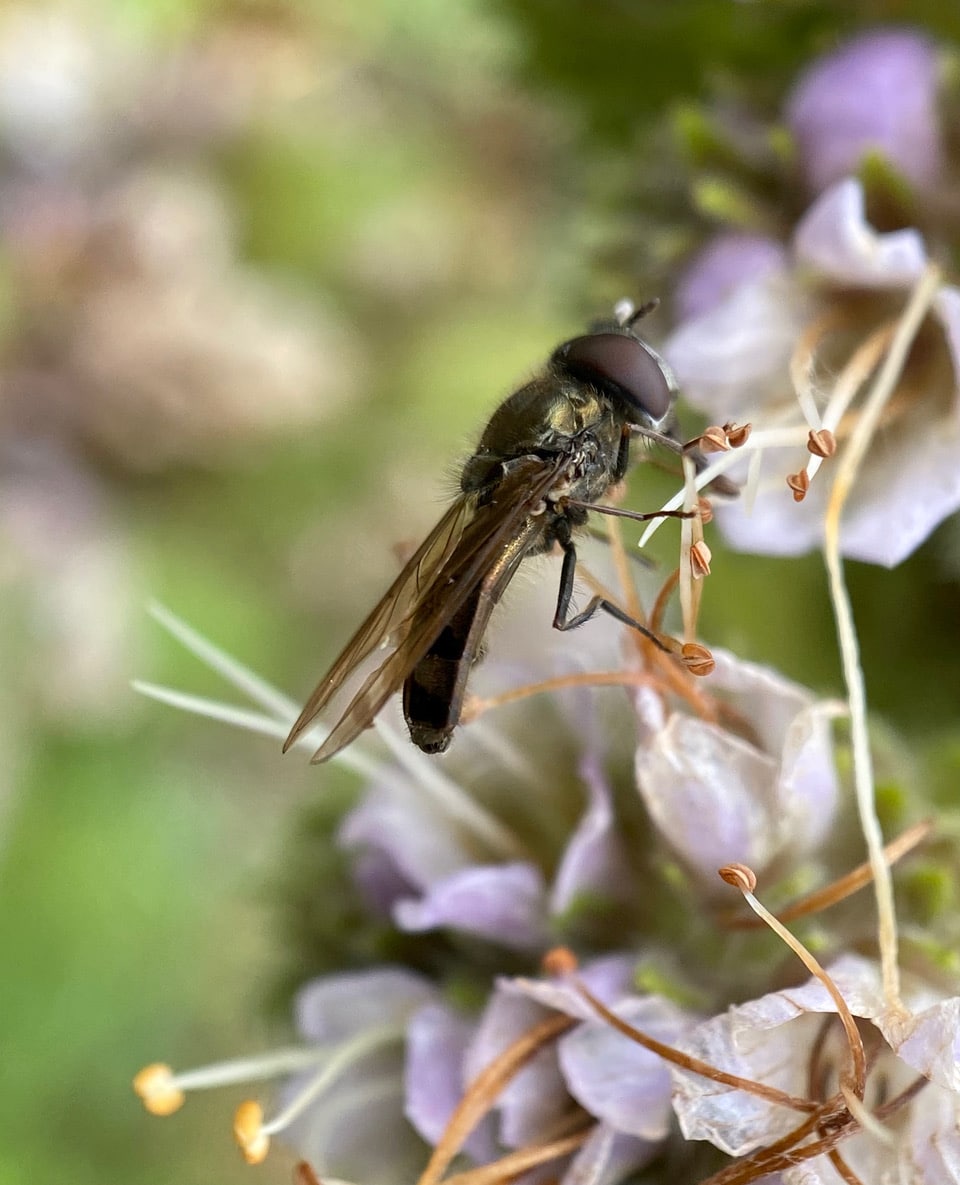
A Metallic Hoverfly, also known as the Sedgesitter, Platycheirus sp. (family Syrphidae) appears dark on a sunless day. It is foraging for pollen.
Platycheirus is commonly found in grass and herb vegetation. Adults of many species feed on pollen of wind-pollinated plants, such as Salix, Plantago, Poaceae, Cyperaceae, but they visit other flowers as well. Many stay active during cold and rainy weather. Larvae feed on aphids.

As the Platycheirus turns its head towards me, I catch a metallic flash on its face – the greenish shine of tarnished copper!
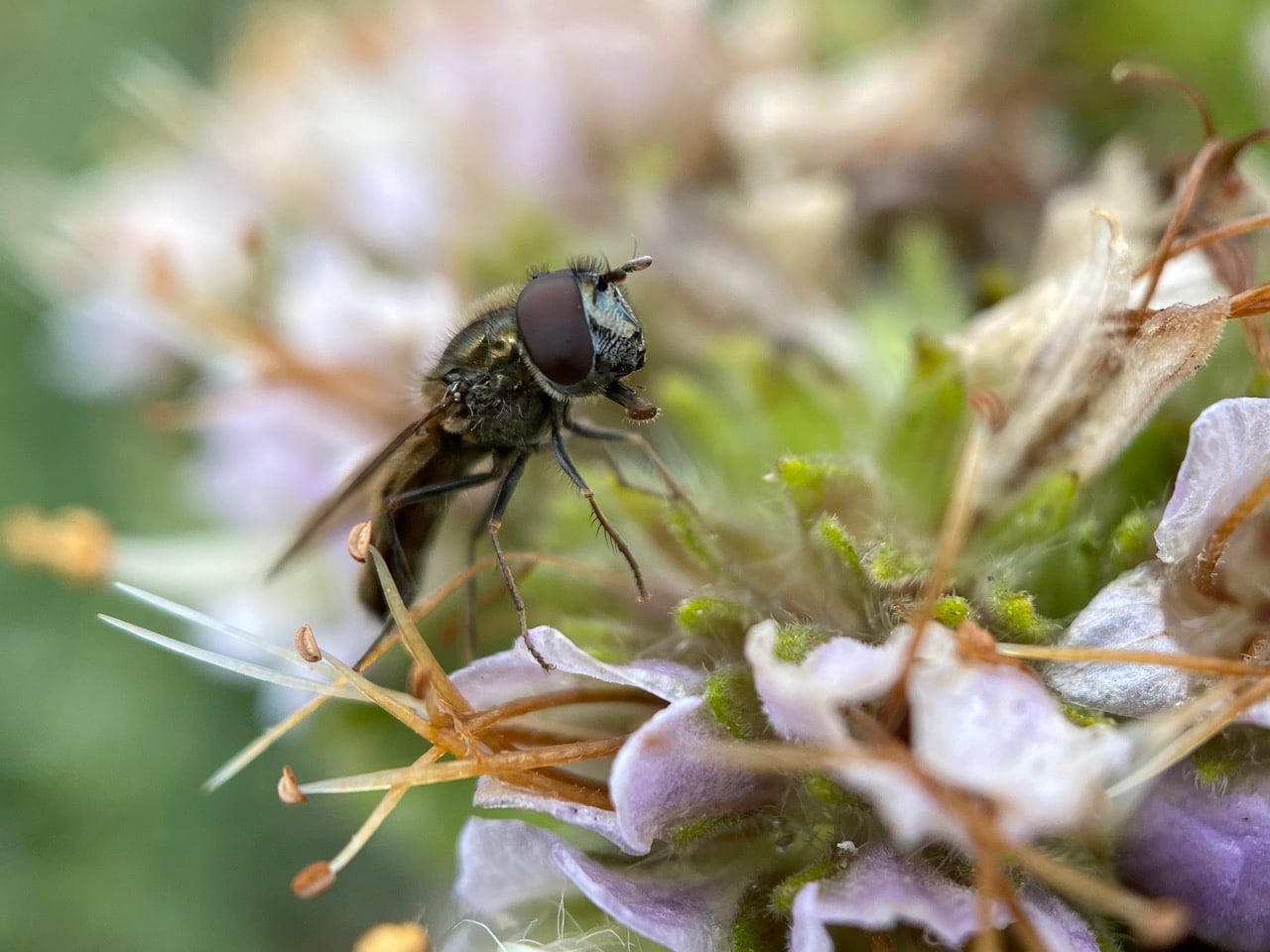
It is a female hoverfly, as evidenced by her compound eyes that do not meet on top of the head. The tip of the fly’s extended mouthparts (the labellum) is a sponging structure that is used to sop up liquid food. Saliva is released from the labellum to help dissolve and collect food particles.
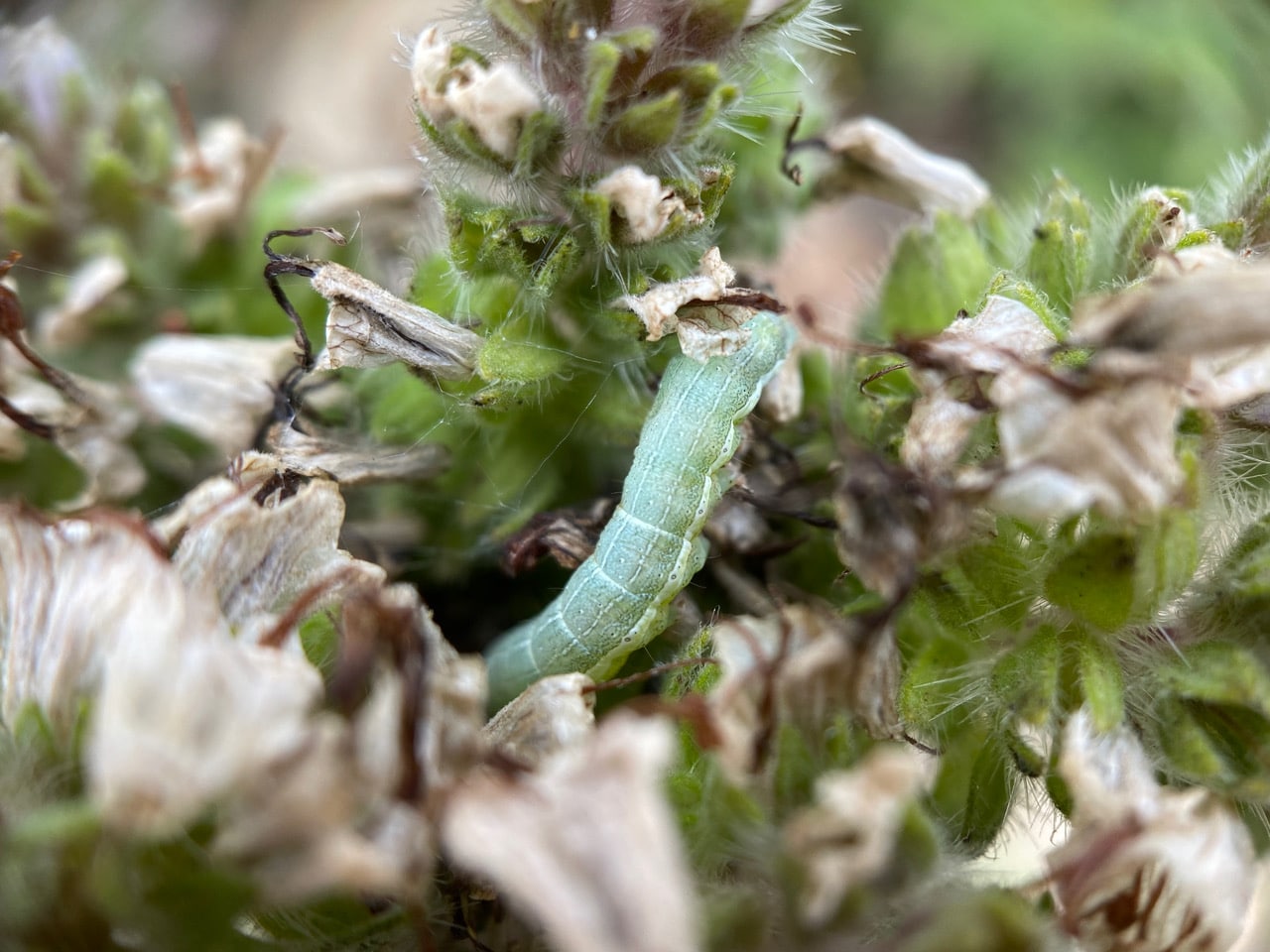
A caterpillar is moving around among the flowers of California Phacelia. What are the chances that it will develop into an adult moth or butterfly? Probably pretty slim. Predators and parasites abound.

This Bristle Fly, Siphona sp.(family Tachinidae) will be happy to find the caterpillar.
The family Tachinidae is by far the largest and most important group of parasitoid flies, with over 1,300 species in North America. All species are parasitic in the larval stage. The appearance of Tachinid Flies varies considerably, but most have distinct abdominal bristles. Adults feed on liquids such as nectar and the honeydew of aphids and scale insects. They can be found resting on foliage, feeding at flowers or searching for hosts.
Most tachinids attack caterpillars, adult and larval beetles, true bugs, grasshoppers, and other insects. Egg laying varies considerably. In some species, eggs are deposited on foliage near the host insect. After the eggs hatch, the maggots are ingested during feeding by the host, and then develop within the host. In other species, the adult fly glues her eggs to the body of the host. After the eggs hatch, the maggots penetrate into the host body. Some adult female tachinids possess a piercing ovipositor that she uses to inject the eggs into the host body. Tachinid larvae live as internal parasites, consuming their hosts’ less essential tissues first and not finishing off the vital organs until they are ready to pupate. The larvae leave the host and pupate on the ground. Tachinids are very important in natural control of many pests, and many have been used in biological control programs.
Siphona is the only commonly encountered genus of Tachinidae with a long, thin, jointed proboscis. A few other genera have a straight or curved rigid proboscis. Larvae are parasitoids of Lepidoptera (butterflies and moths).
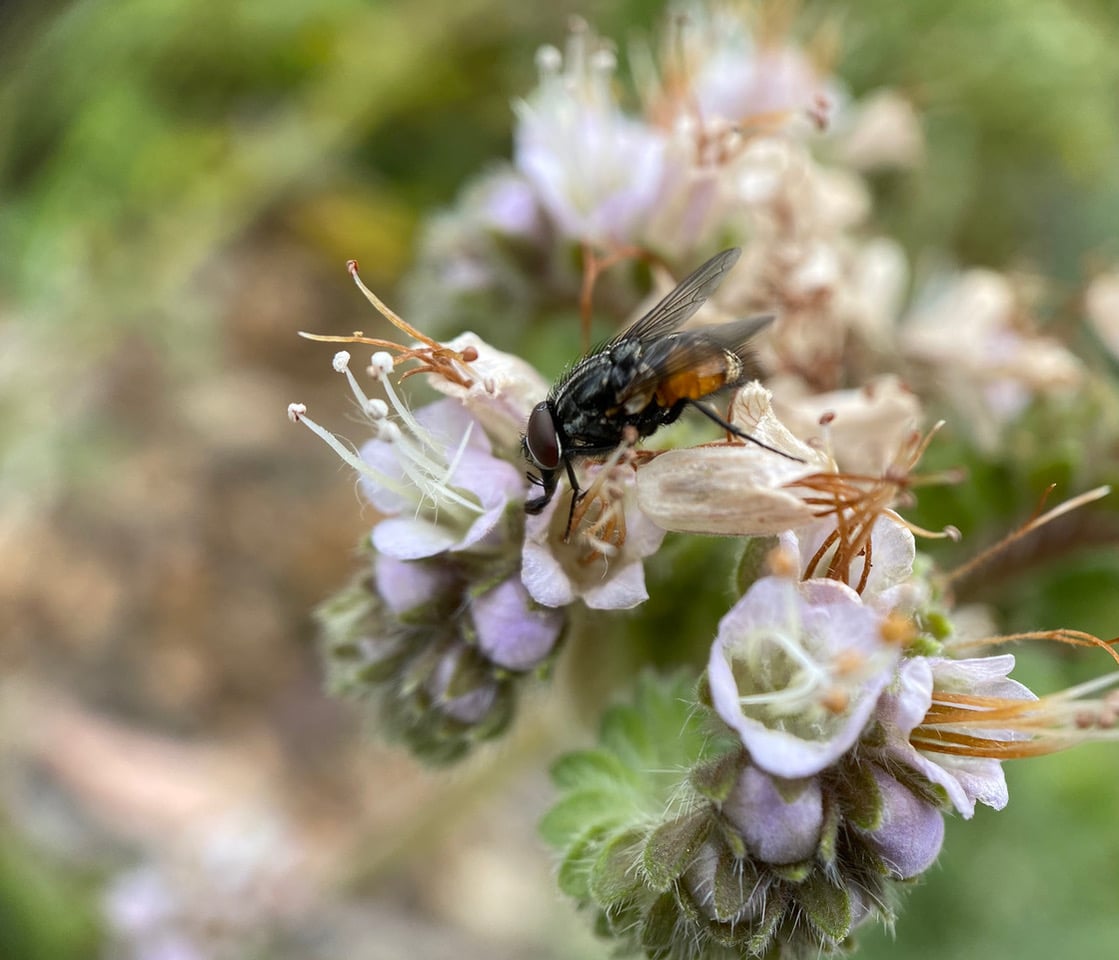
A Face Fly is actively moving around on an inflorescence of California Phacelia.
The Face Fly, Musca autumnalis (family Muscidae) is similar to the closely related housefly but is slightly larger, about 7-8 mm long, with a grey thorax with four dorsal longitudinal dark stripes. The yellowish abdomen has a single, dorsal longitudinal dark stripe.

Musca autumnalis is widespread throughout most of Europe, Asia and some parts of North Africa. It was introduced into North America around the 1940s and is now commonly found in most temperate parts of the United States.
Adult Face Flies emerge from winter hibernation in early spring. During the day, they feed on manure juices and plant sugars. On cattle and horses they feed on secretions around the eyes, mouth and nostrils. They will also feed on the hosts’ blood through wounds such as horse-fly bites. At night both sexes rest on vegetation. Females lay eggs on fresh cow manure where the maggots feed on microbes, developing through three instars and final pupation. Musca autumnalis is considered a pest species, as it transmits the eye worm to cattle and horses, and pinkeye to cattle.

Ooh! Unmistakable butt of a wasp! Note that it is relatively smooth and hairless.

It appears to be a Potter Wasp, Ancistrocerus sp. (subfamily Eumeninae, family Vespidae).
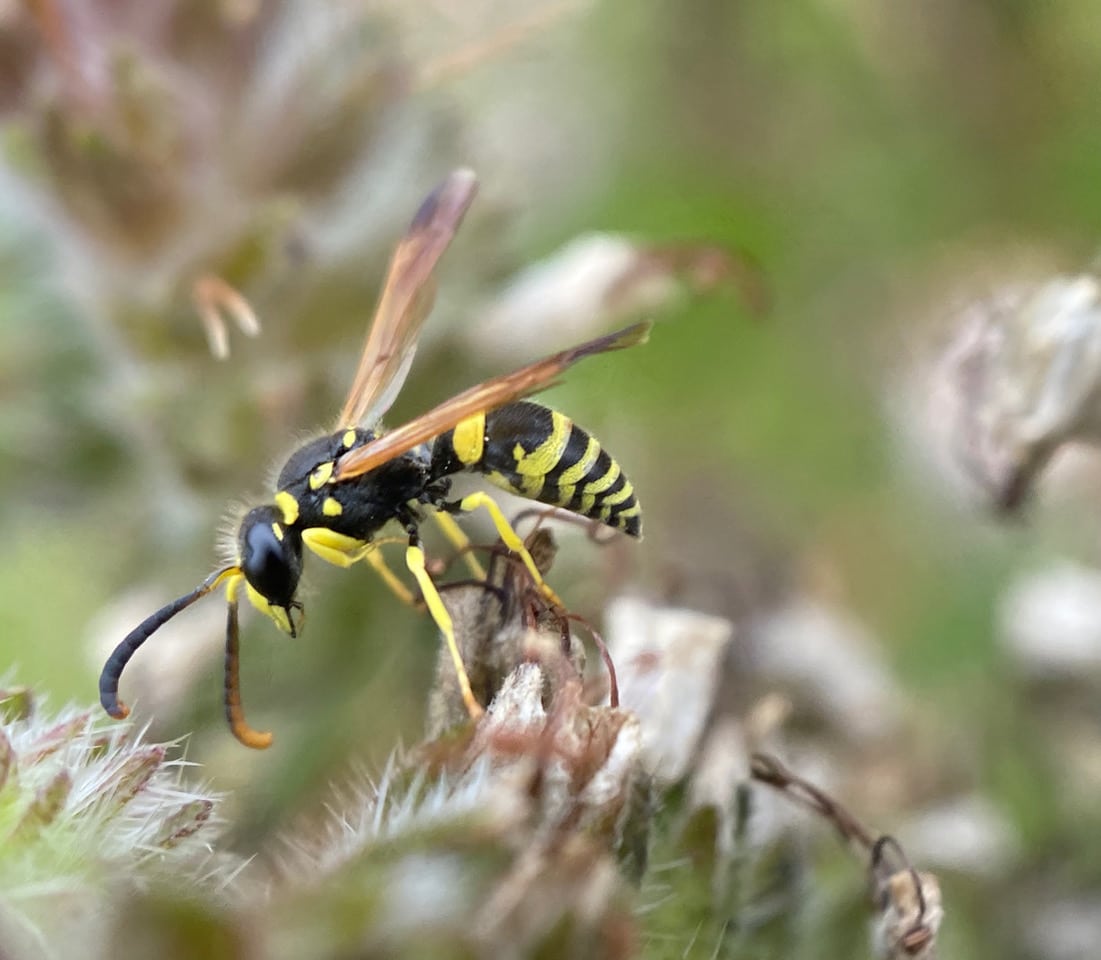
Along with the bees and ants, wasps belong the the order Hymenoptera. Wasps are distinguished from the ants and bees of Apocrita by various behavioral and physical characteristics, particularly their possession of a slender, smooth body and legs with relatively few hairs. Wasps generally are predatory or parasitic and have stingers with few barbs that can be removed easily from their victims. Wasps have biting mouthparts and antennae with 12 or 13 segments. They are normally winged. In stinging species, only the females are provided with a formidable sting, which involves use of a modified ovipositor (egg-laying structure) for piercing and venom-producing glands. Adult wasps may feed on nectar and, in some species, on the secretions produced by larvae. Larvae of predatory wasp species typically feed on insects, while larvae of parasitic species feed on their hosts.
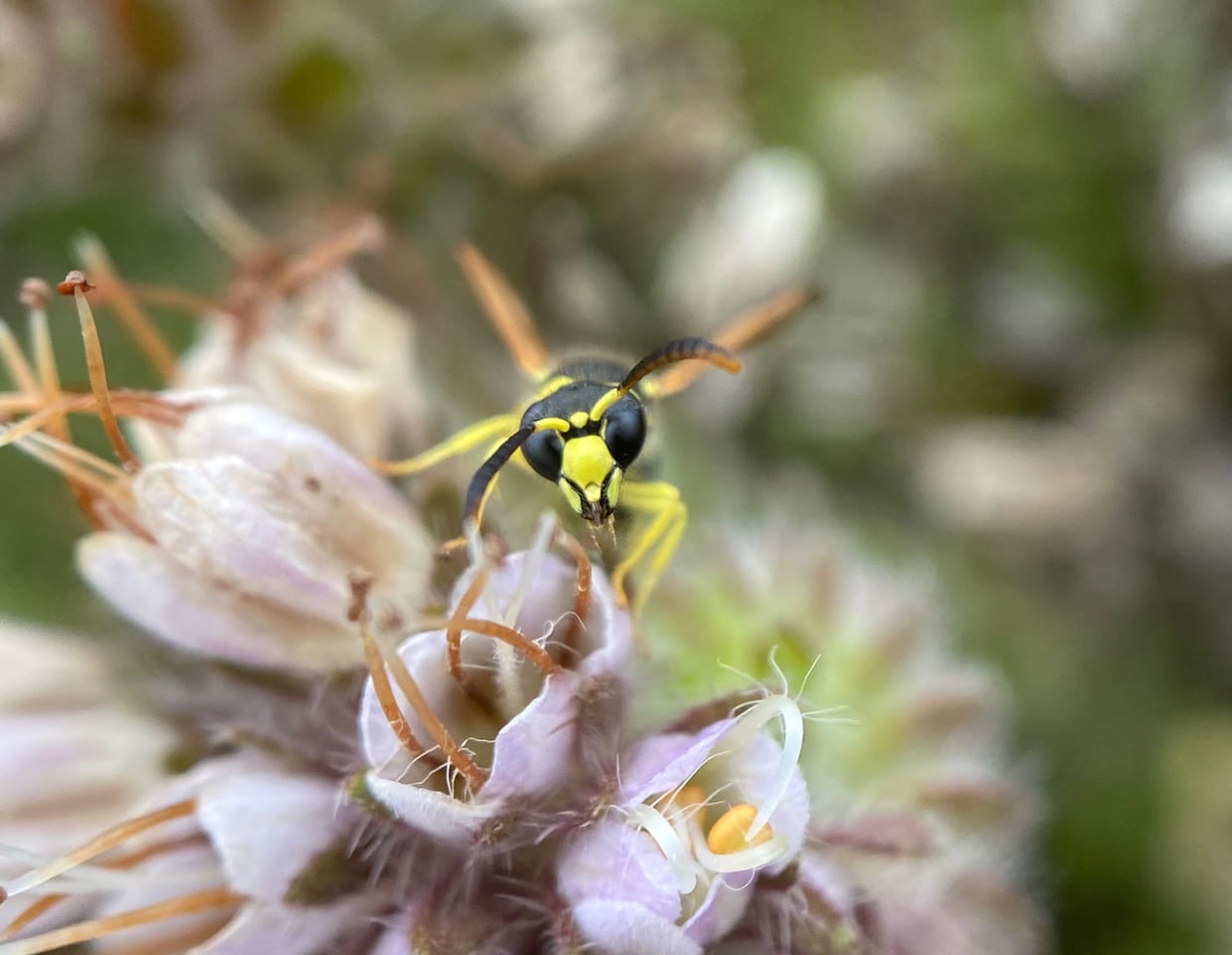
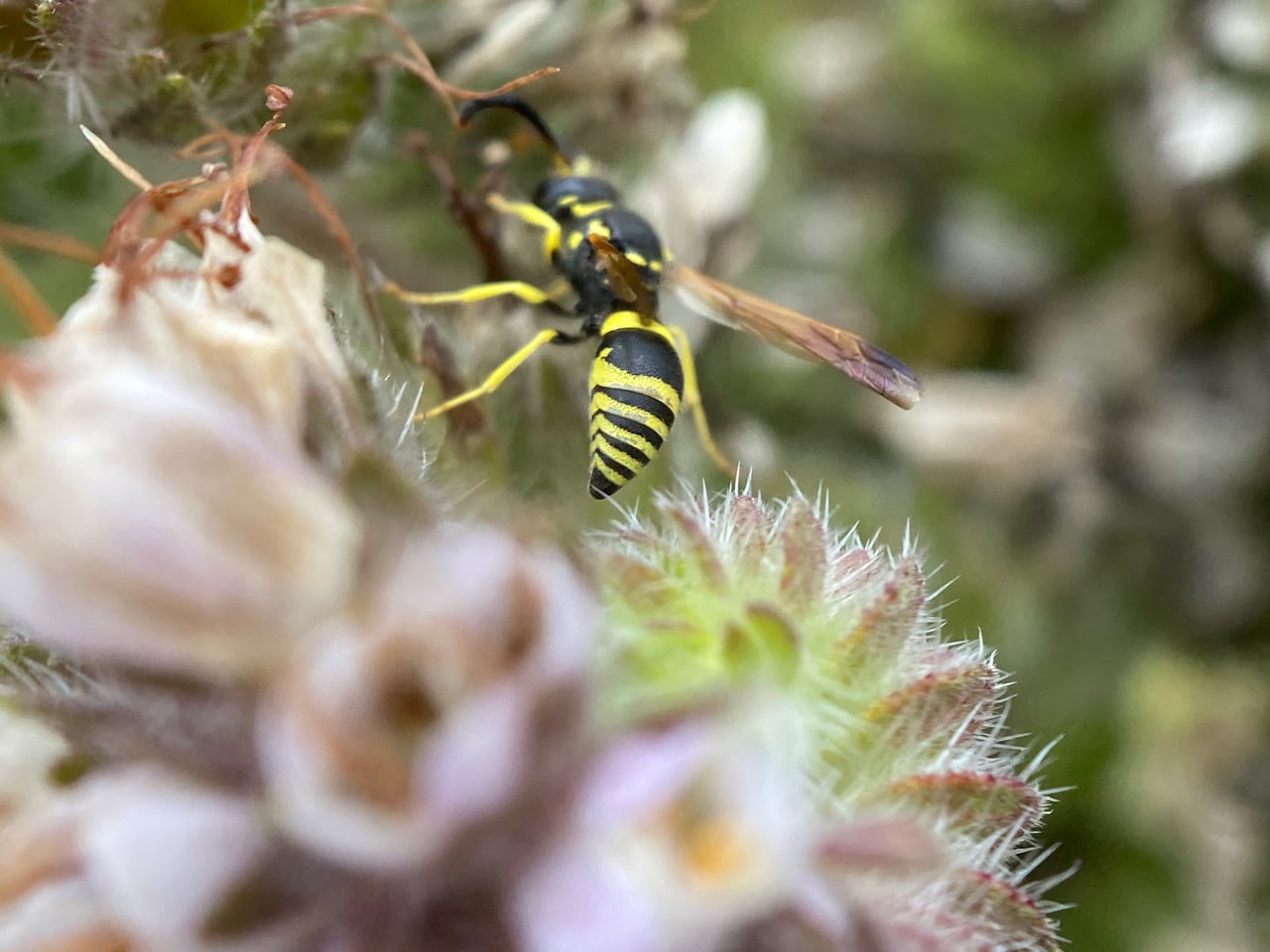

Note that the wings, as in all Vespidae, are folded longitudinally when not in use.

Potter Wasps (or Mason Wasps), the Eumeninae, are a subfamily of Vespidae. Most eumenine species are black or brown, and commonly marked with strikingly contrasting patterns of yellow, white, orange, or red. Like most vespers, their wings are folded longitudinally at rest.
Eumenine wasps are diverse in nest building. The different species may either use existing cavities (such as beetle tunnels in wood, abandoned nest of other Hymenoptera, or even man-made holes like old nail holes) that they modify, or they construct their own either underground or exposed nests. The nest may have one or several individual brood cells. The most widely used building material is mud made of a mixture of soil and regurgitated water.
All known eumenine species are predators, most of them solitary mass provisioners. When a cell is completed, the adult wasp typically collects beetle larvae, spiders, or caterpillars and, paralyzing them, places them in the cell to serve as food for a single wasp larva. As a normal rule, the adult wasp lays a single egg in the empty cell before provisioning it. The complete lifecycle may last from a few weeks to more than a year from the egg until the adult emerges. Adult potter wasps feed on floral nectar.
The genus Ancistrocerus is a widely distributed genus of potter wasps. They are nonpetiolate. The name of the genus (meaning “hooked horn” for the back-curved last segment of the antennae characteristic of males of this genus and most other potter wasps genera).
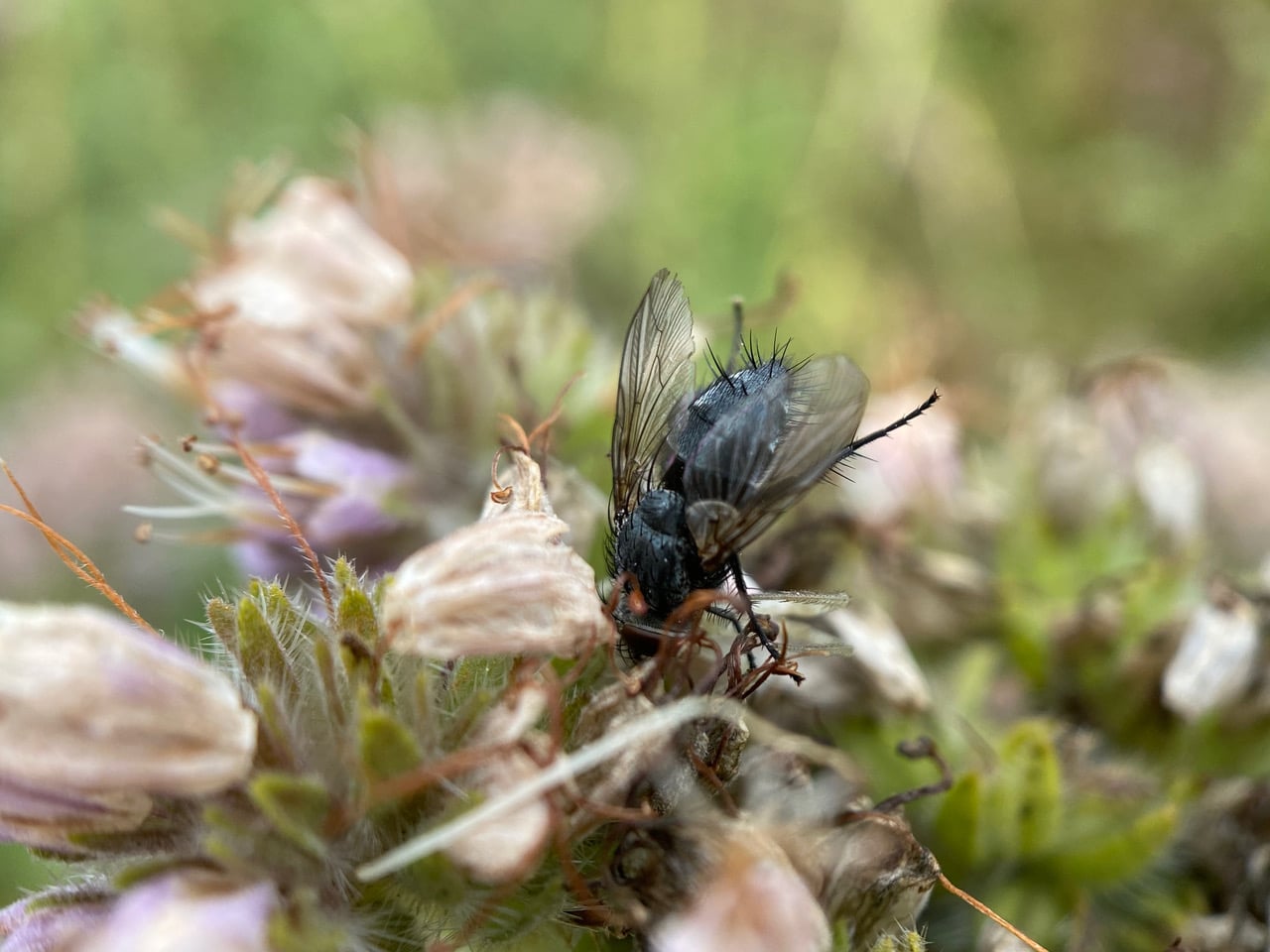
What is that Bristle Fly (family Tachinidae) doing standing on its head? Wait, it is not moving – I suspect foul play.
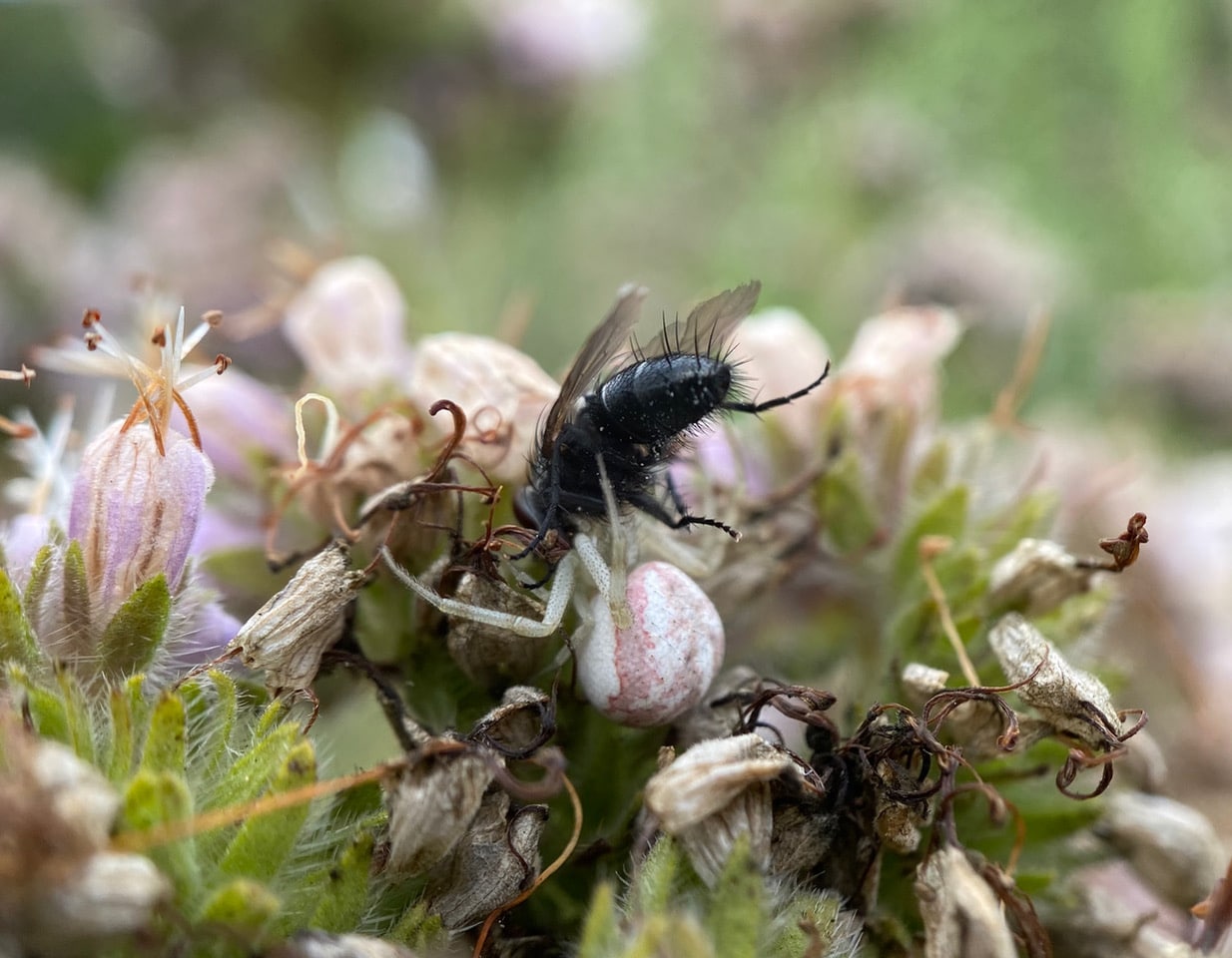
Viewed from a different angle, the Bristle Fly is being held up by a Crab Spider, Mecaphesa sp. (family Thomisidae). The spider is probably feeding on its prey.
Crab Spiders do not spin webs, and are ambush predators. The two front legs are usually long and more robust than the rest of the legs. Their common name derives from their ability to move sideways or backwards like crabs. Most Crab Spiders sit on or beside flowers, where they grab visiting insects. Some species are able to change color over a period of some days, to match the flower on which they are sitting.
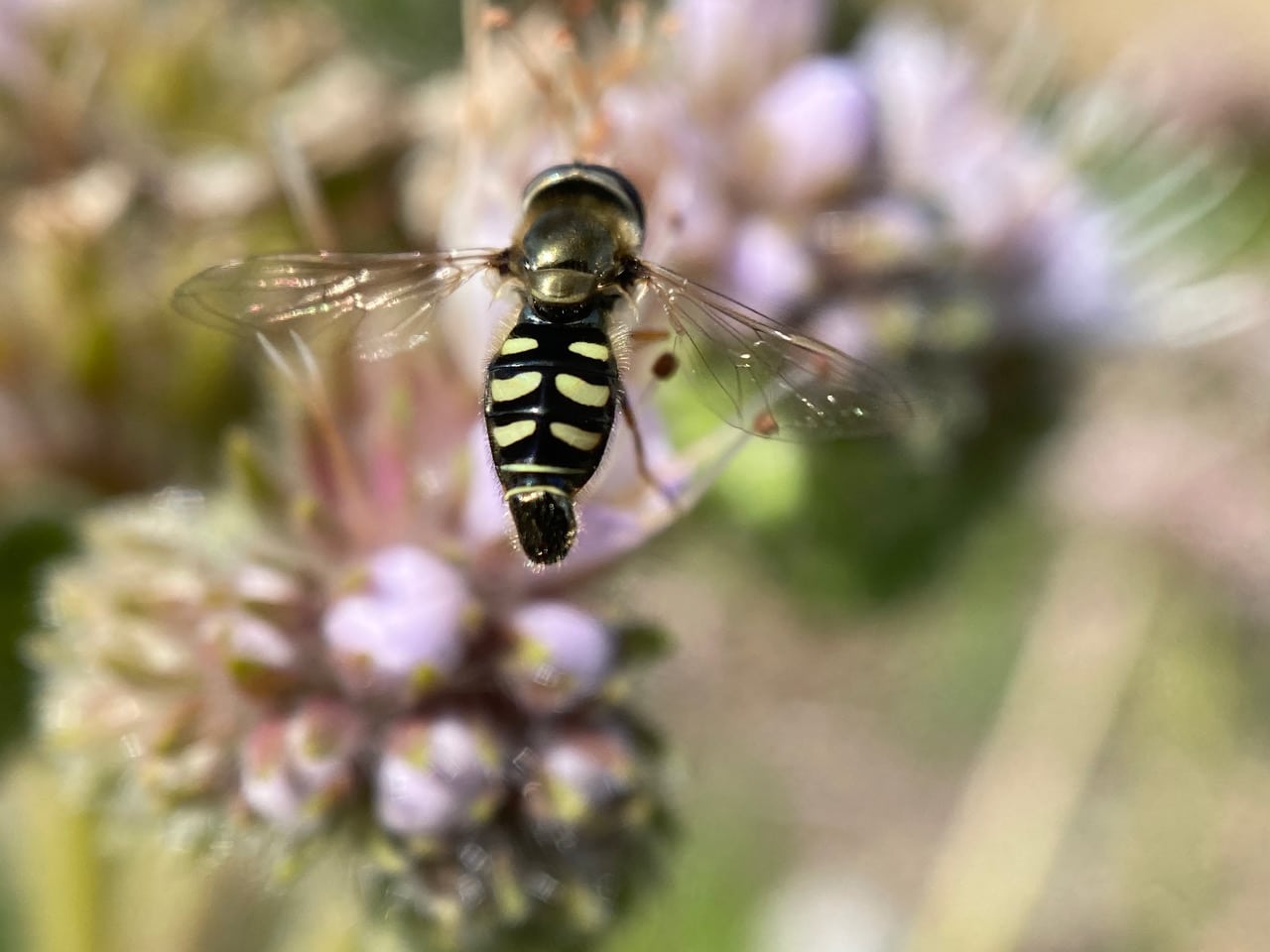
A Large-tailed Aphideater, Eupeodes volucris (family Syrphidae) stops to feed on the California Phacelia. The black, projecting cylindrical abdomen of males in this species is rather distinctive. The species is found in western North America, and is active March through November. As the common name implies, the larvae of the species feed on aphids.