

Pollinator Post 6/5/24

As extreme heat is in the forecast for today, I come to the Padre Picnic Area in Tilden Regional Park for a short walk under the big oak trees. It is already 72 degrees F in the shade at 10 am!
The Ithuriel’s Spear, Triteleia laxa is still blooming well along the narrow trail through the meadow. The flowers are very much sought after by the Mason Bees, Osmia sp. (family Megachilidae). Note that the bee has no scopae on her hind legs.
Mason Bee is a name commonly used for species of bees in the genus Osmia, of the family Megachilidae. Mason Bees are named for their habit of using mud or other “masonry” products in constructing their nests, which are made in naturally occurring gaps/cavities such as cracks in stones, hollow stems or holes in wood made by wood-boring insects. Osmia means ‘odor’, and refers to a faint lemony scent used by these bees to mark their nest entrances. Osmia species are frequently metallic green or blue. Females have black ventral scopae (special pollen collecting hairs) on the underside of their abdomen, which are difficult to see unless laden with pollen. Ventral abdominal scopae is a feature shared by all members of the Megachilidae family, which include the wool-carder bees (genus Anthidium), and leaf-cutter bees (genus Megachile).
Mason Bees are a solitary species and are non-aggressive. Every female is fertile and makes her own nest. Each nest cell is provisioned with pollen and contains one egg which will develop into a larva. The female creates a partition of mud between the nest cells. The process continues until she has filled the cavity. She plugs the entrance to the cavity, and then may seek another nest location. The larvae that hatch out consume their provisions and begin spinning a cocoon around itself and enters pupal stage. Adults mature in fall or winter, hibernating inside its cocoon.

The iridescent blue bees are particularly fond of the flowers that are barely open, sometimes forcing their way in. Perhaps these pristine flowers offer more nectar?

In dappled shade, a little bee is collecting pollen from an Ithuriel’s Spear flower.
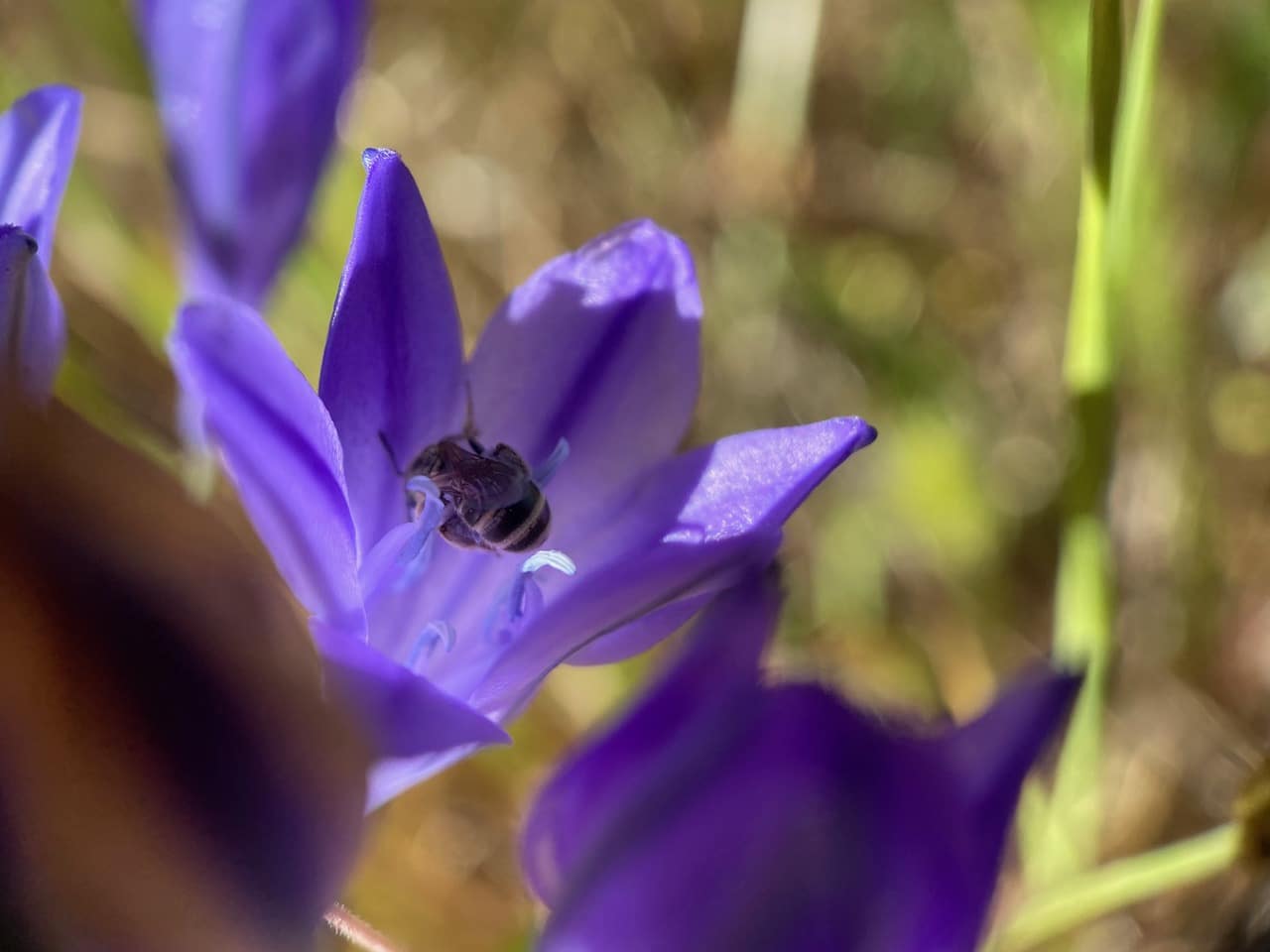
Closing in, I see that she has distinct white bands on her abdomen.
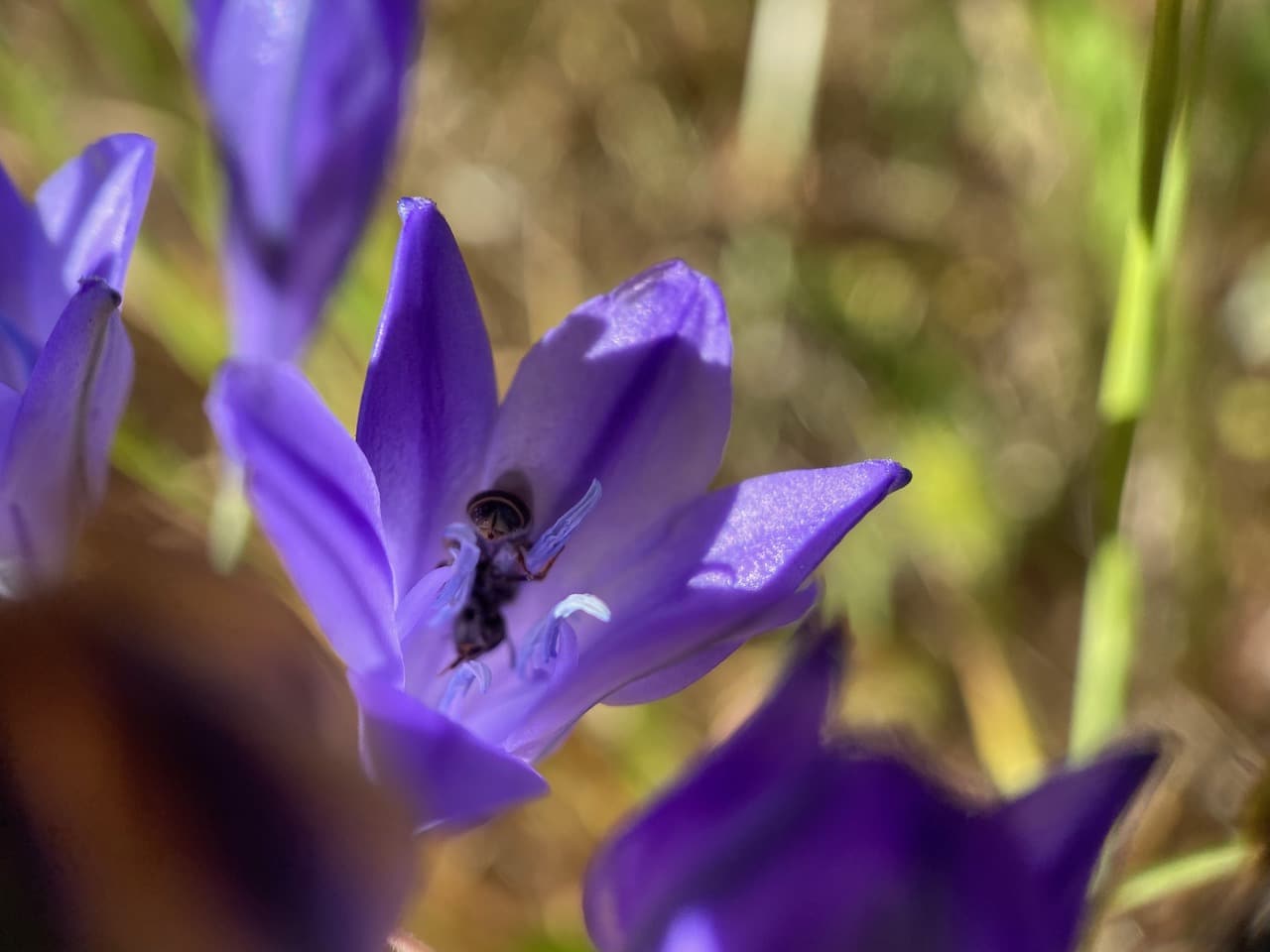
As the bee heads down further, I can see a furrow at the tip of her abdomen. She is a Furrow Bee in the genus Halictus (family Halictidae).
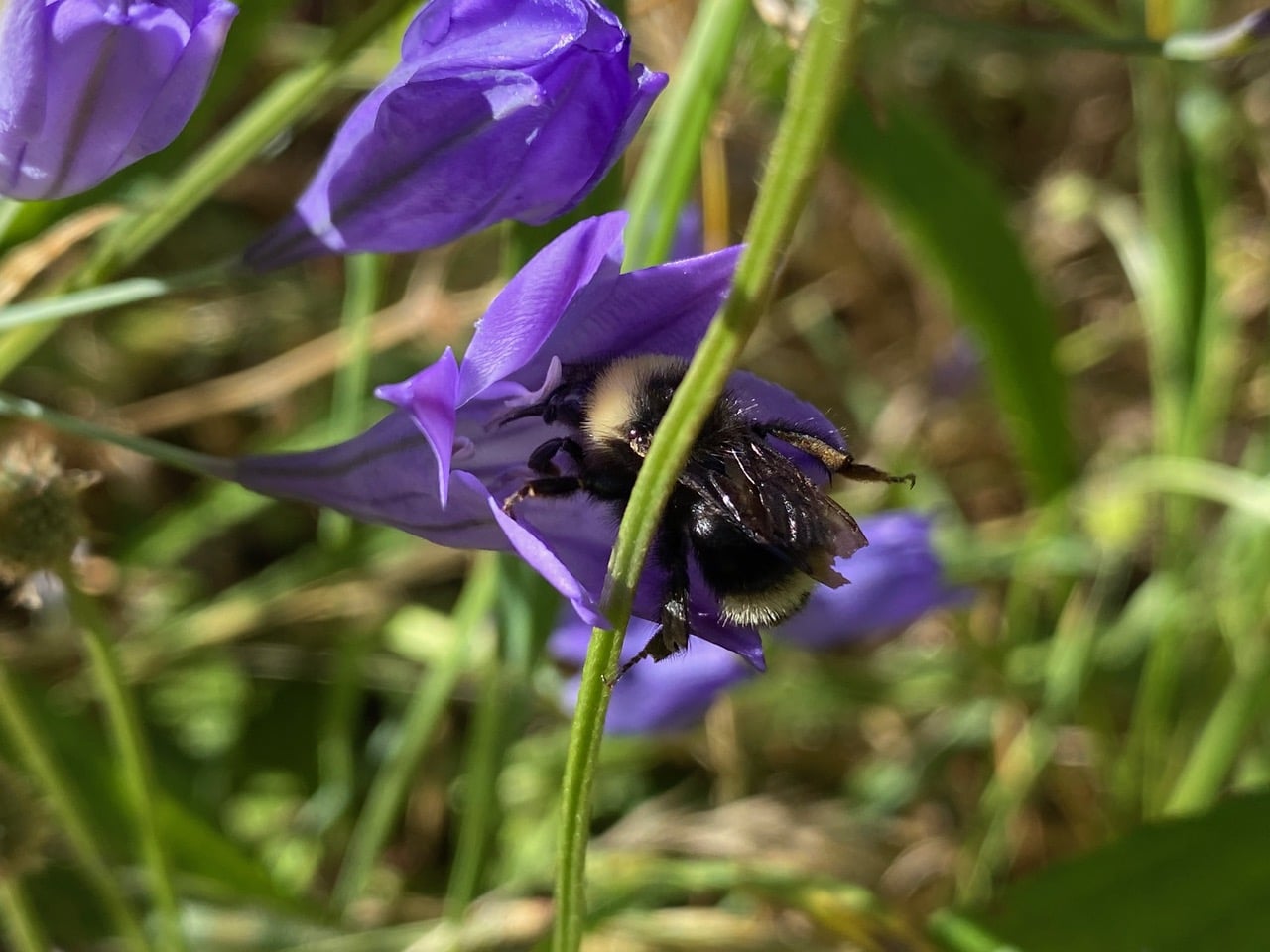 Her tongue extended, a large Yellow-faced Bumble Bee, Bombus vosnesenskii (family Apidae) is about to enter the floral tube of an Ithuriel’s Spear flower.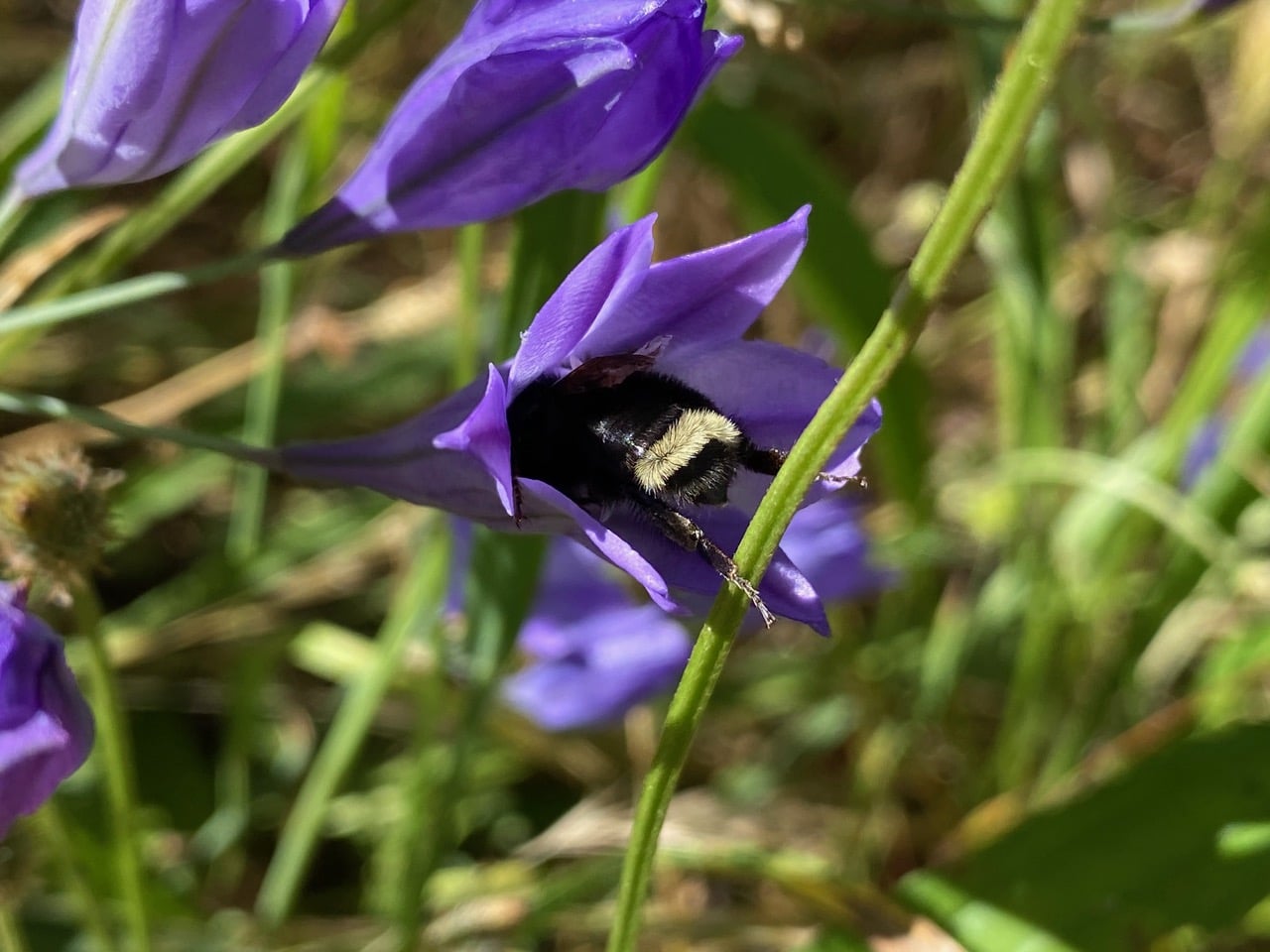
There, she has forced herself in as far as she can. Hope her tongue can reach the nectar at the base of the flower.

The Ithuriel’s Spear flowers are getting quite a bit of attention from bumble bees today.
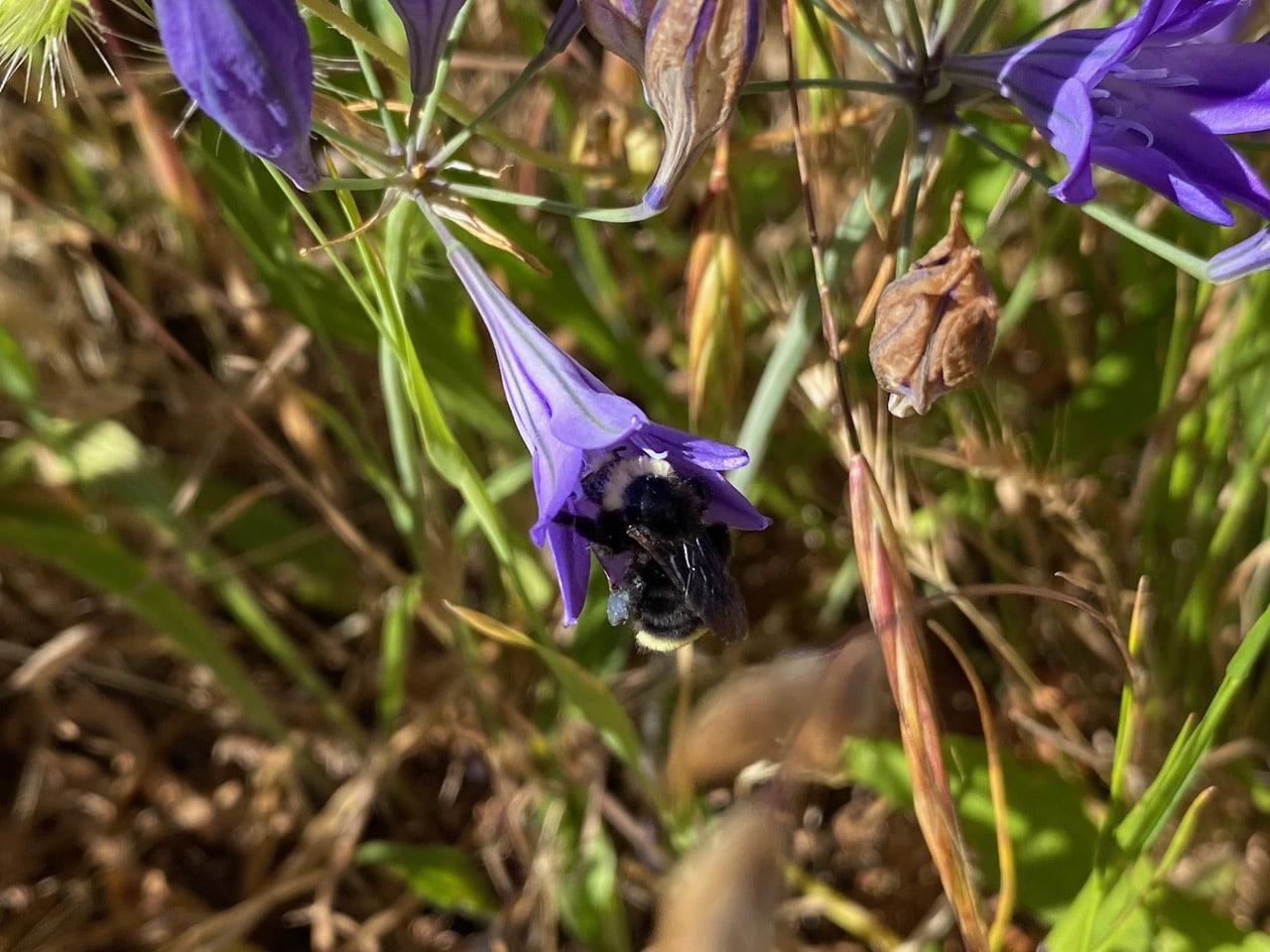
This Yellow-face Bumble Bee has landed on an Ithuriel’s Spear flower that is barely open. I am seeing this behavior in most of the bees today. Perhaps the younger, pristine flowers offer more nectar? Note that the bee has some blue pollen in the pollen basket on her hind leg.
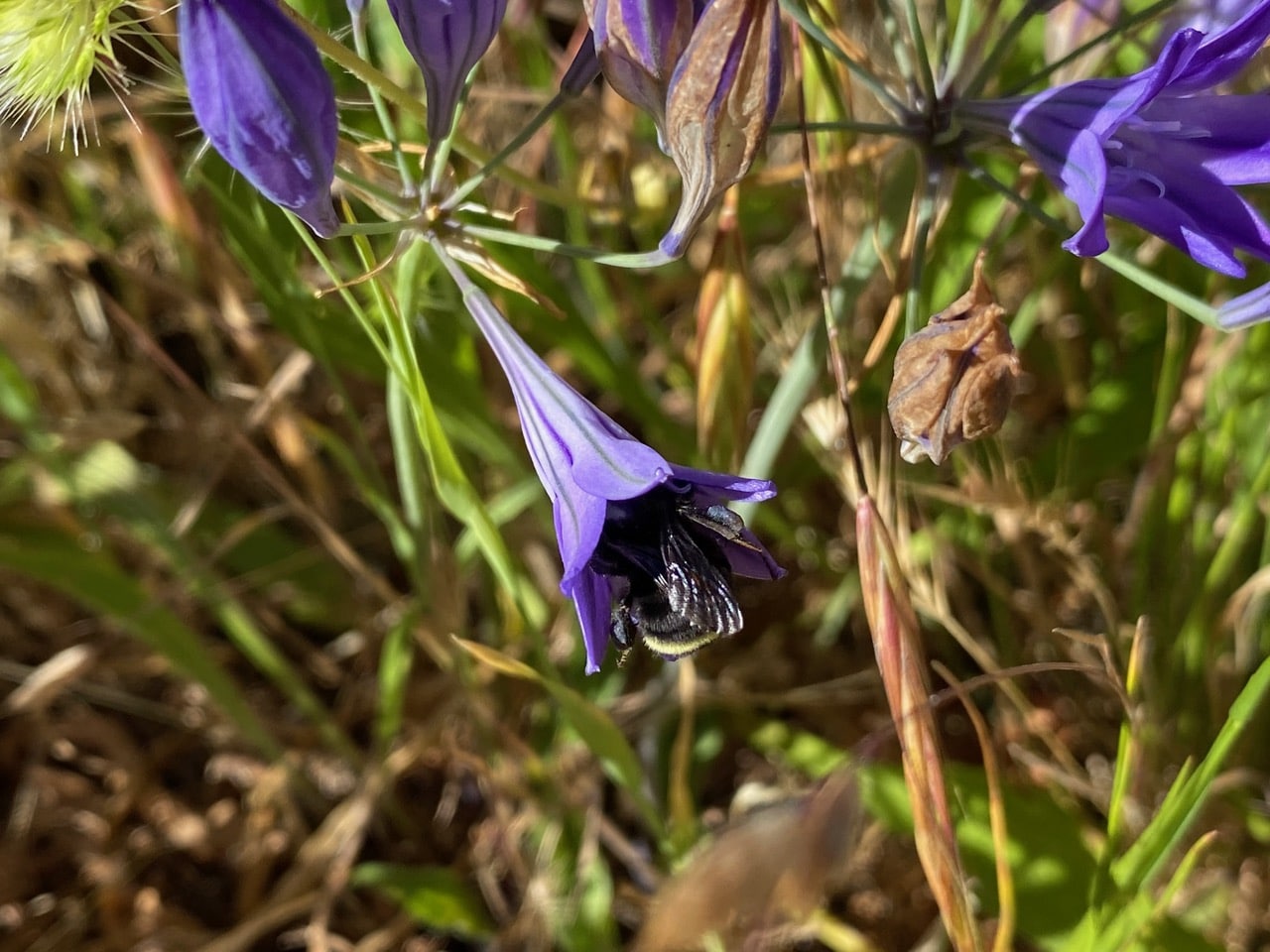
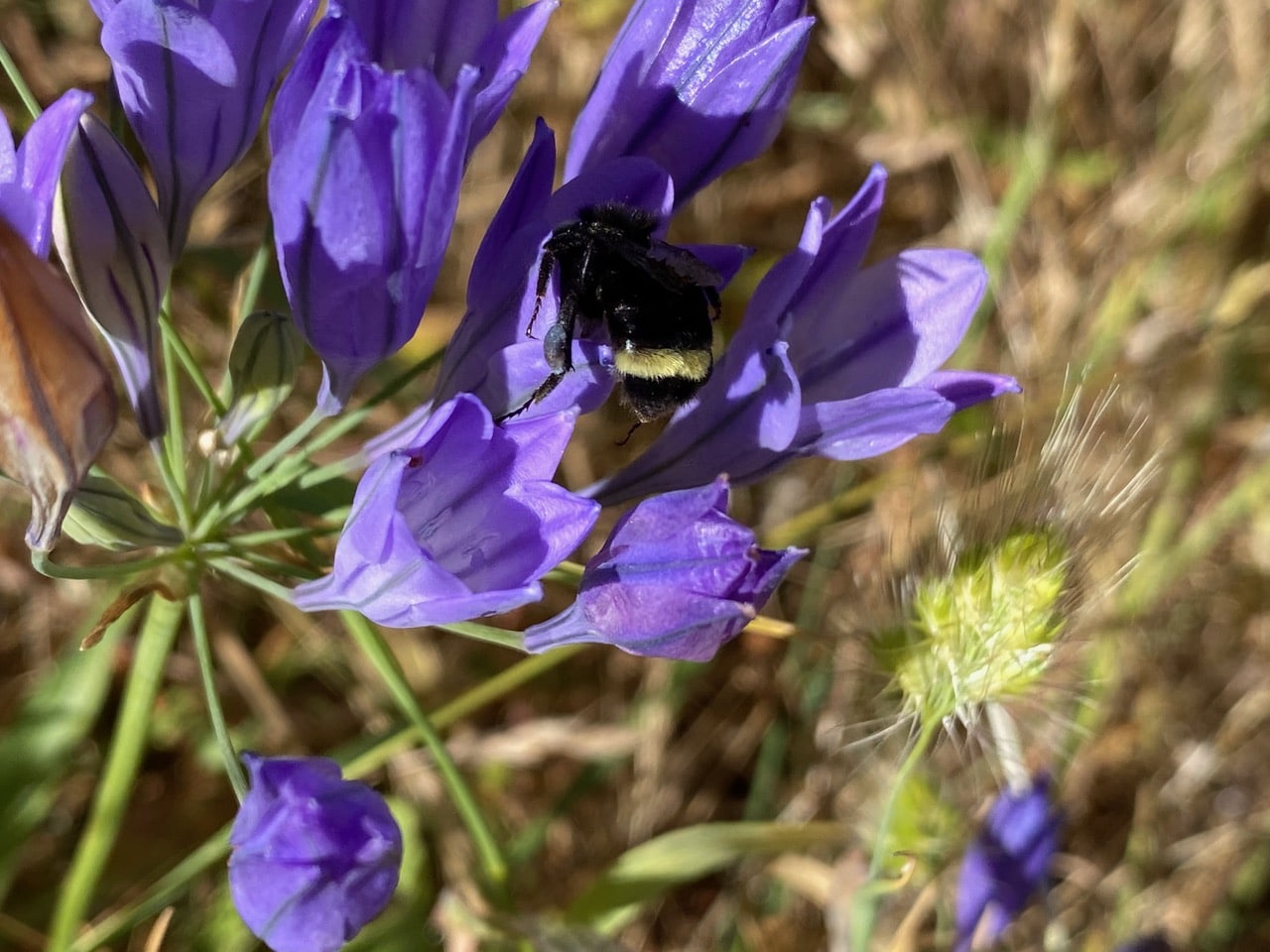
Most of the bumble bees do have some blue pollen in their pollen baskets.
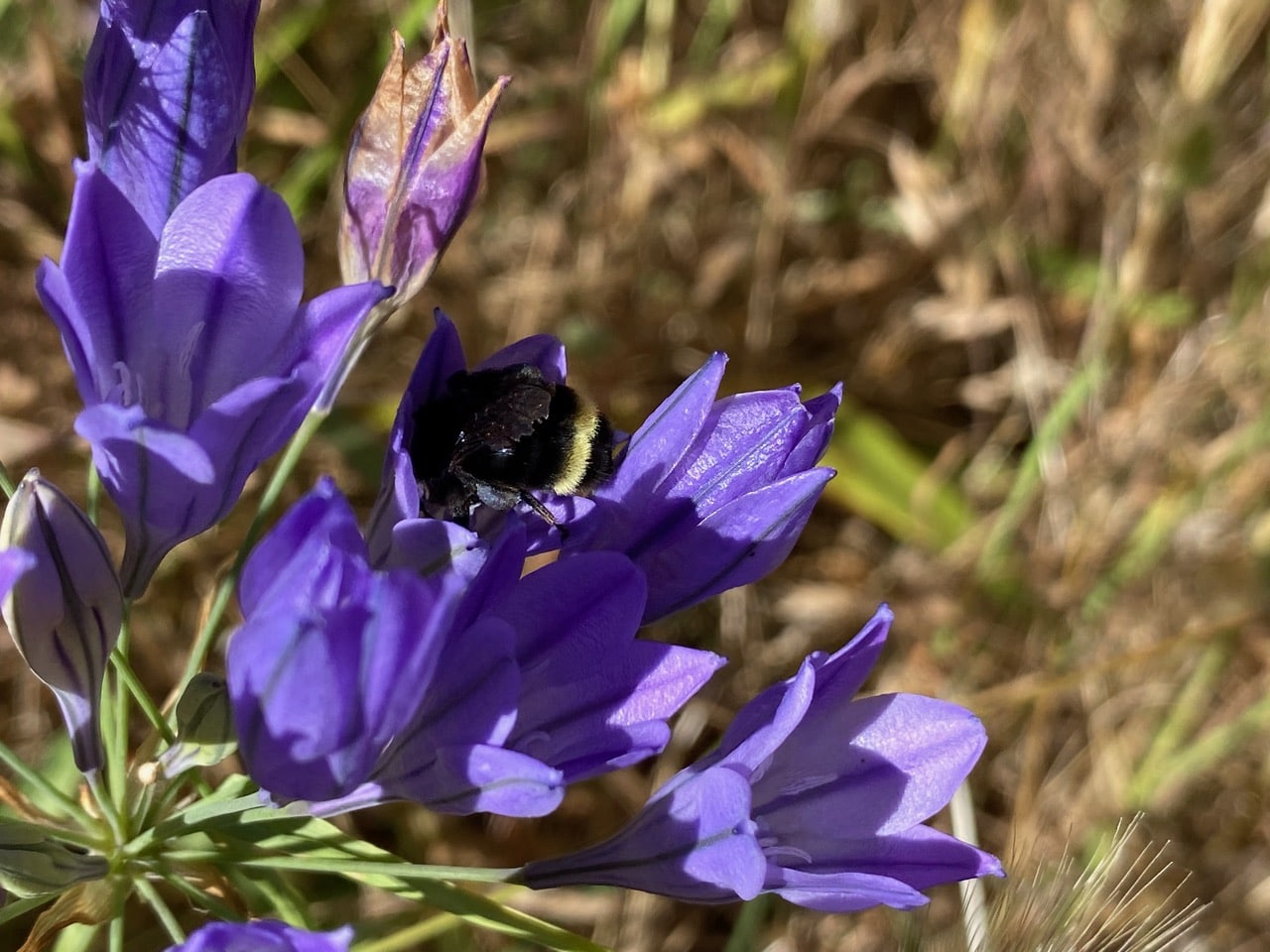
It is almost comical how the bumble bees have to work so hard to collect nectar and pollen from the flowers of Ithuriel’s Spear. The anthers are located where the corolla flares, so the bee can collect pollen without having to enter the tubular part of the flower. However, Ithuriel’s nectar is a bit of a stretch for these large bees.
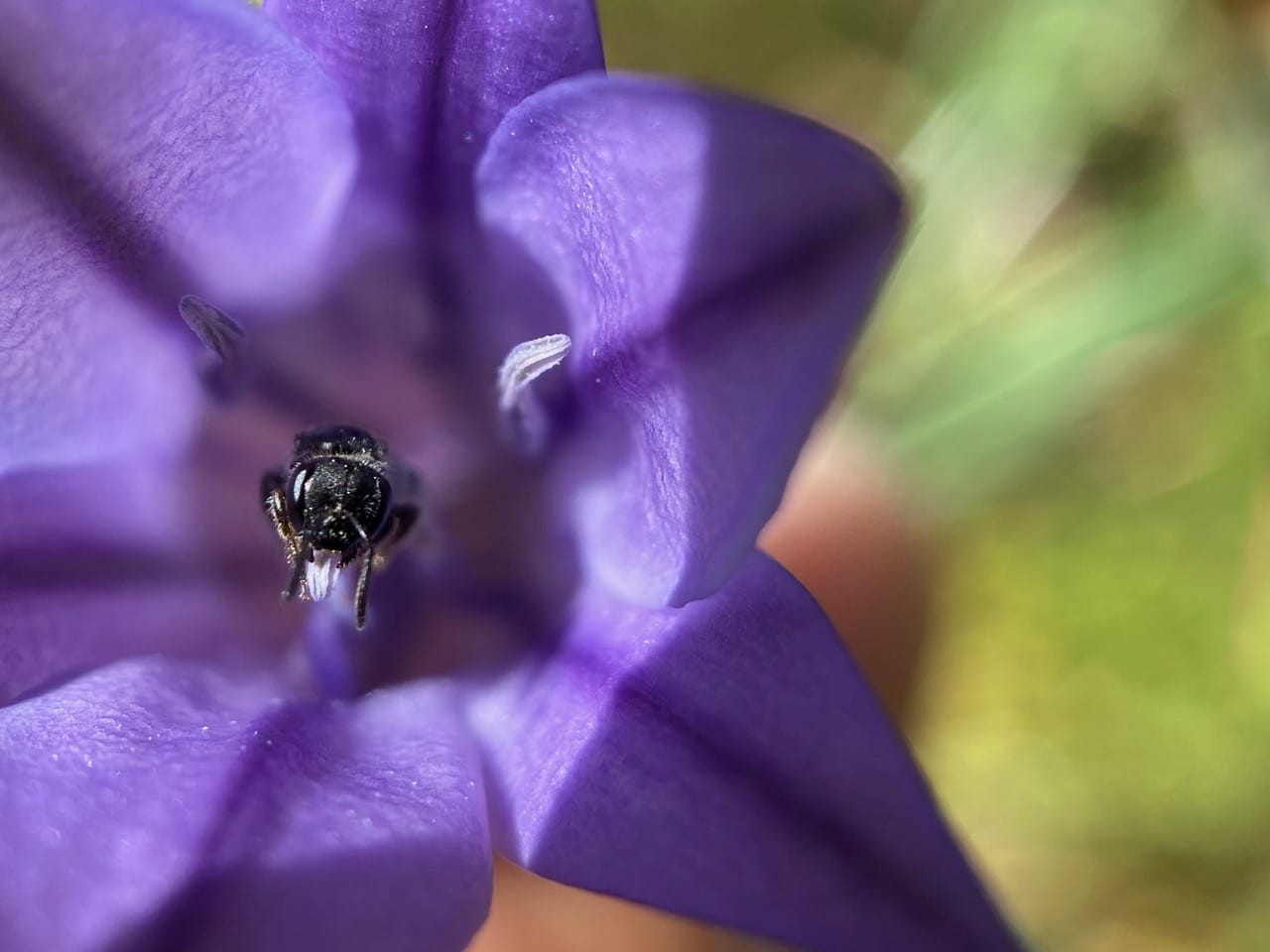
A dark little bee is collecting pollen from an anther of an Ithuriel’s Spear flower.
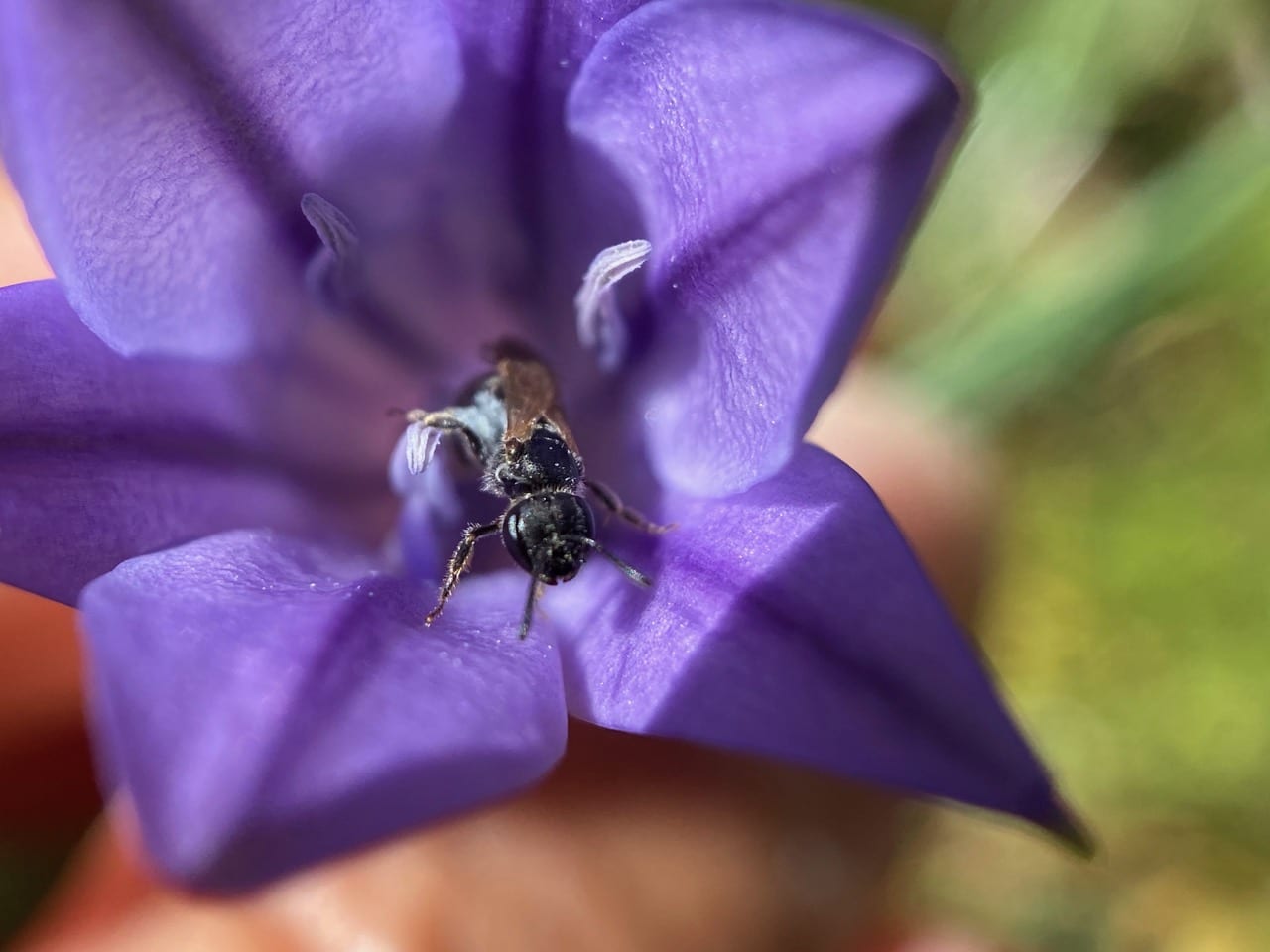
She climbs off the anther to pack the powder blue pollen into the scopae on her hind legs.
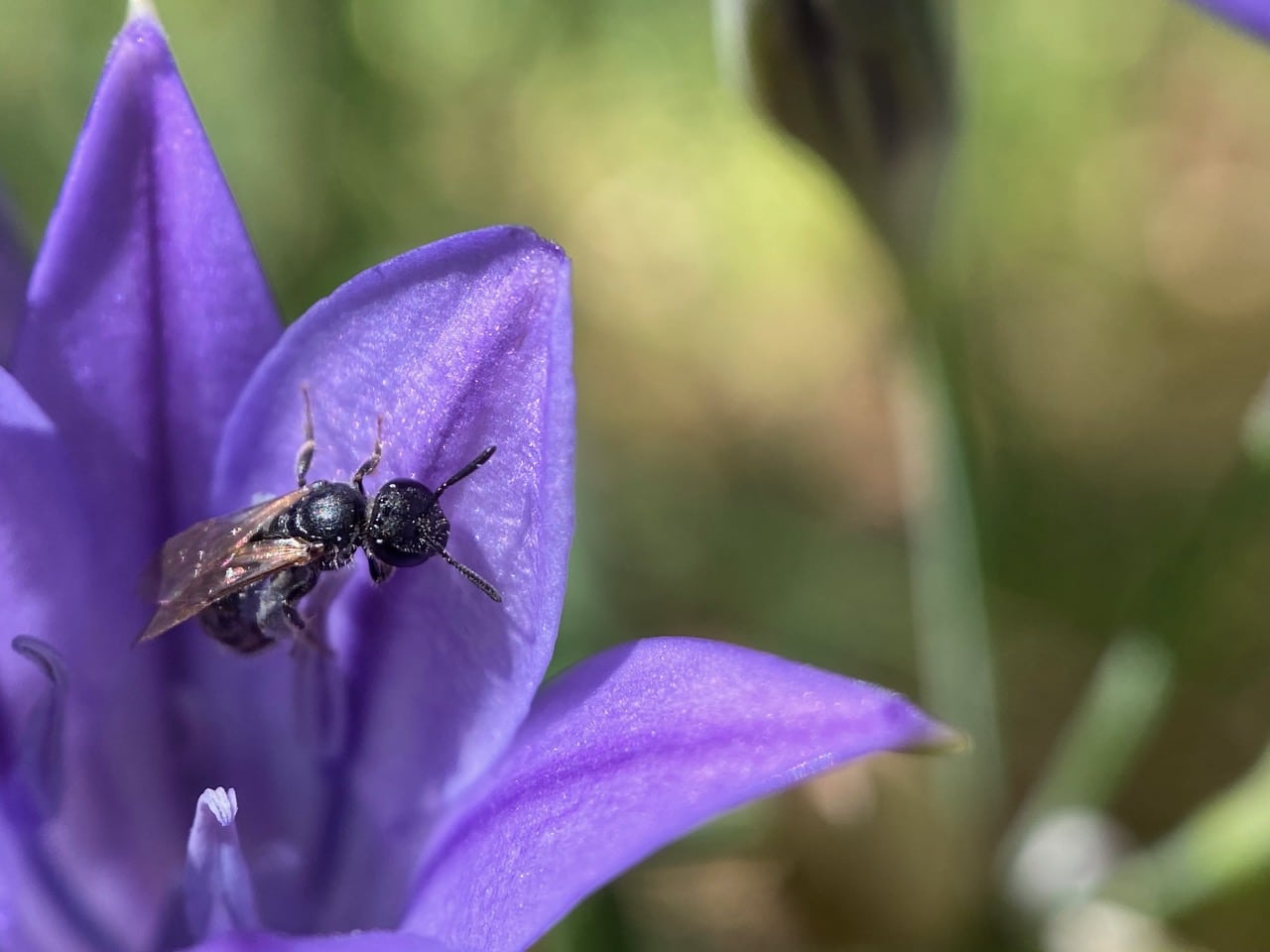
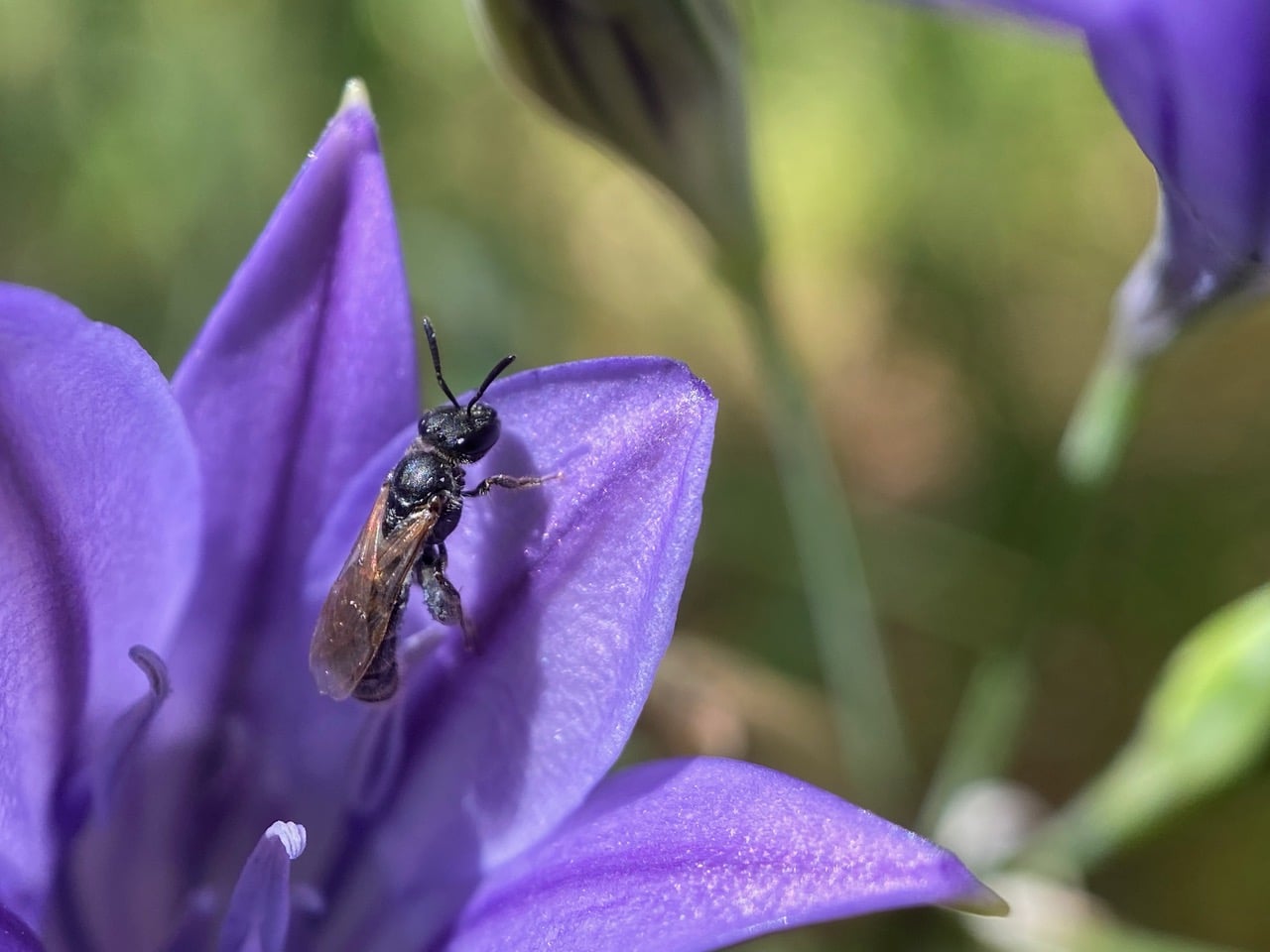

The bee flies and lands on a grass seed head to steady herself. She has a black shiny abdomen with bands of short hairs that are not white. The blue pollen she has gathered has been stowed in her scopae along the full length of her hind legs. She is a Sweat Bee, Lasioglossum sp. (family Halictidae).
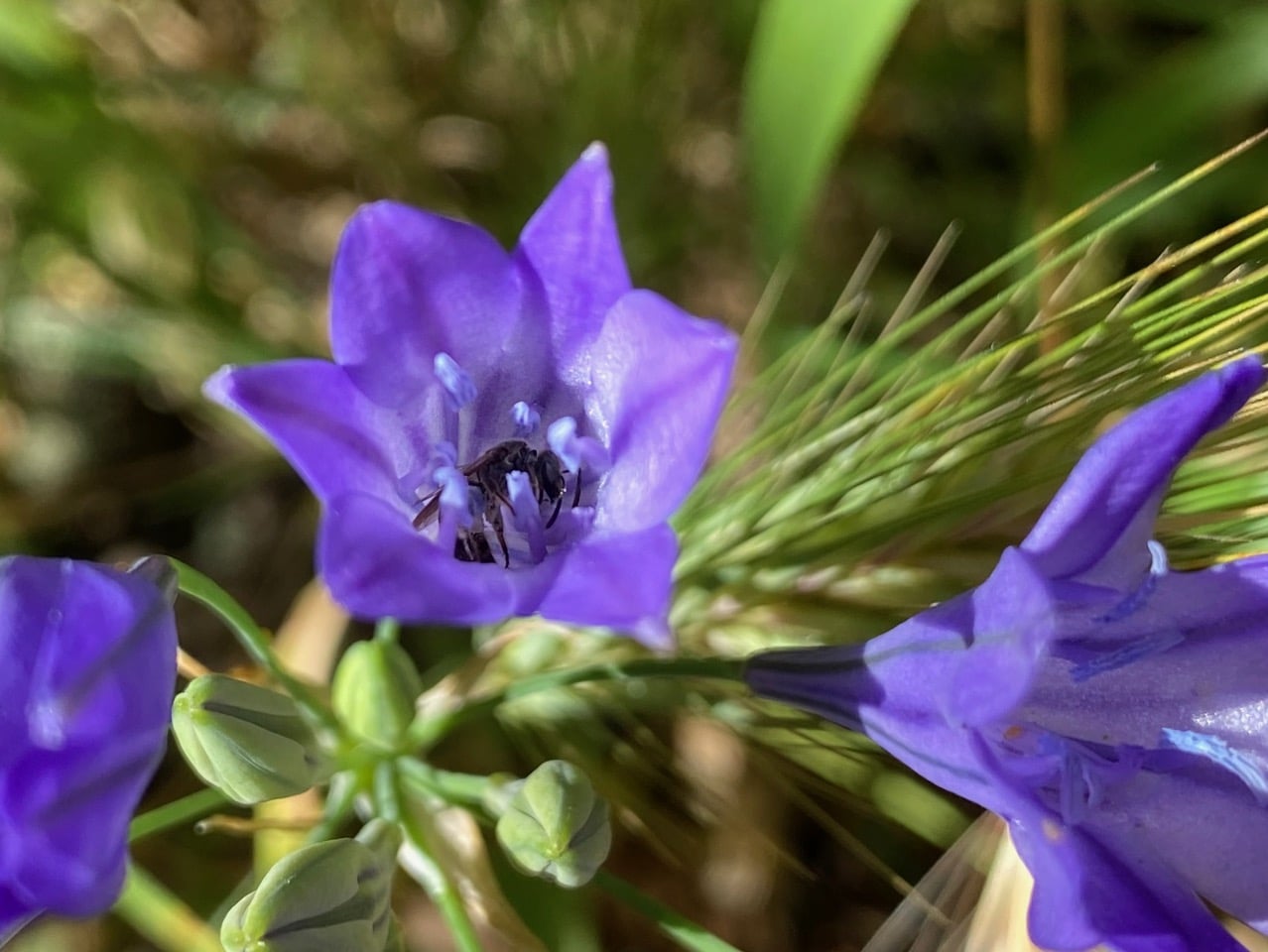
Hey, there’s a small bee in that well-lit Ithuriel’s Spear flower! The bee is probably taking nectar down there at the base of the flower.
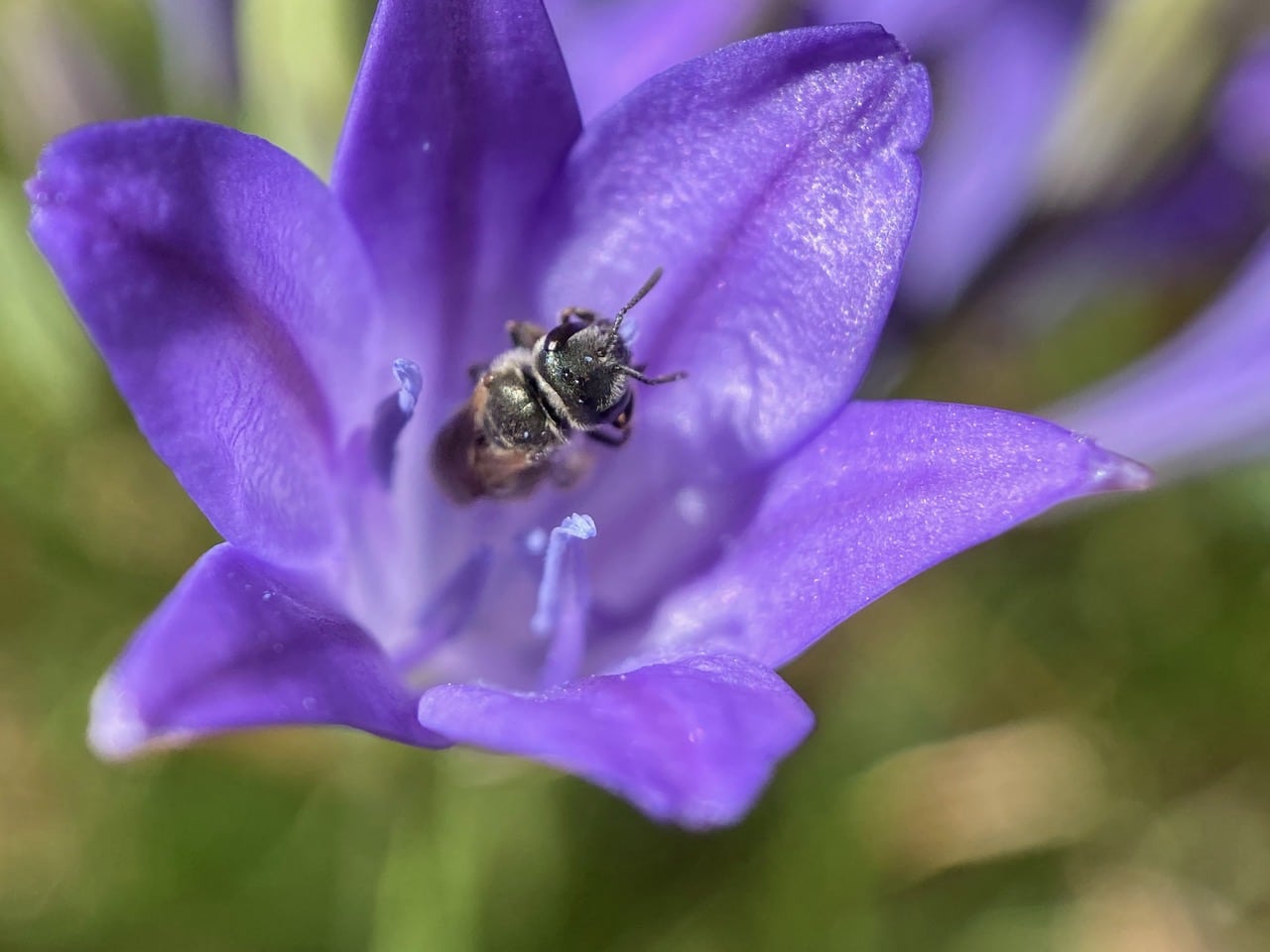
I wait with bated breath for the bee to emerge. Here she comes!
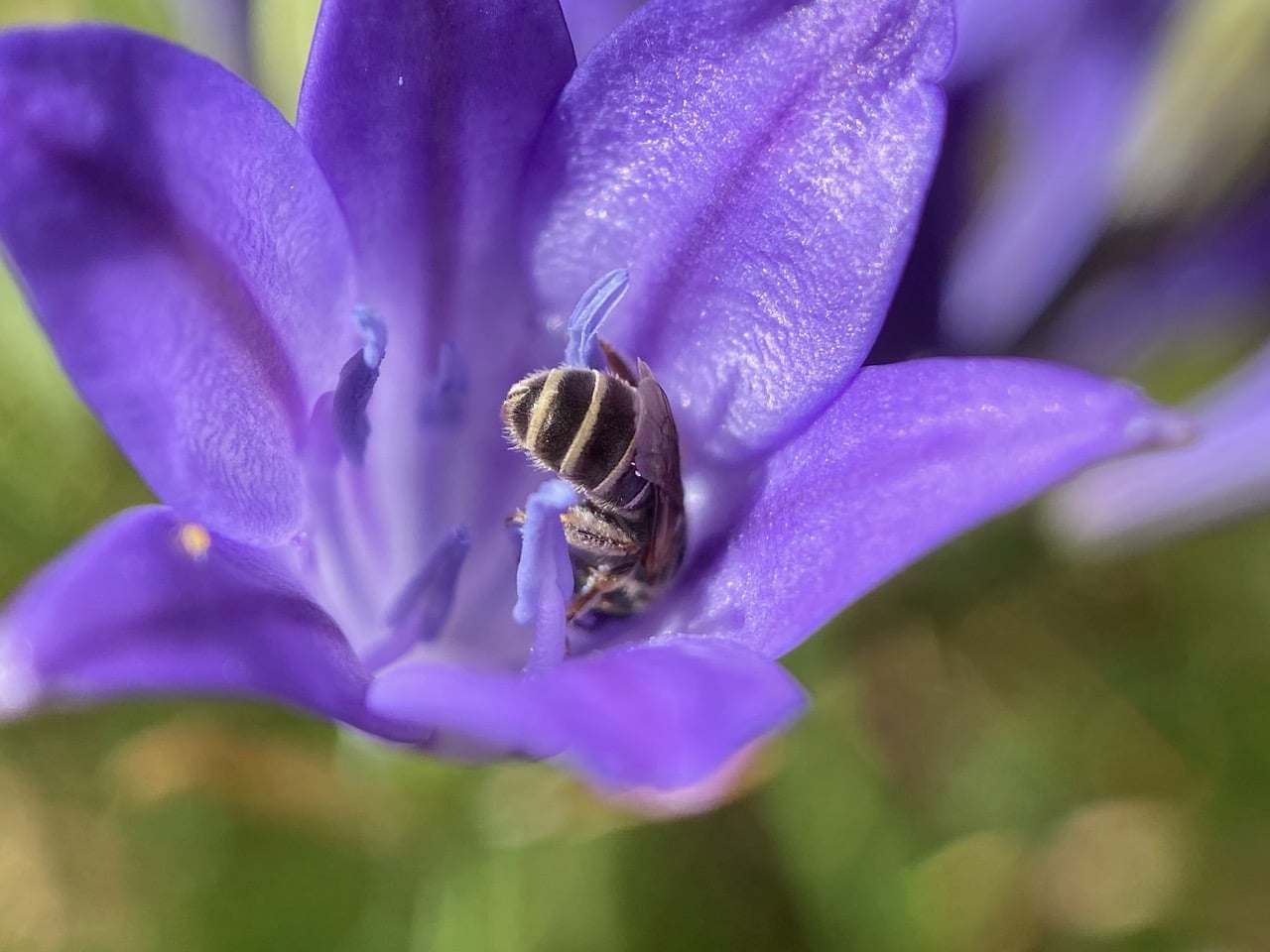 A lucky shot showing the bee’s furrow at the tip of her abdomen. She’s a Furrow Bee in the genus Halictus (family Halictidae).
The furrow, only present in females, distinguishes the genus Halictus from the related and similar genus Lasioglossum. This is the reason why Halictus are sometimes called Furrow Bees. The furrow on the last tergite (top segment of the abdomen) is referred to as a ‘rima’. The purpose of this feature is unknown.

The little bee patiently works the six anthers at the flared opening of the corolla, one at a time.
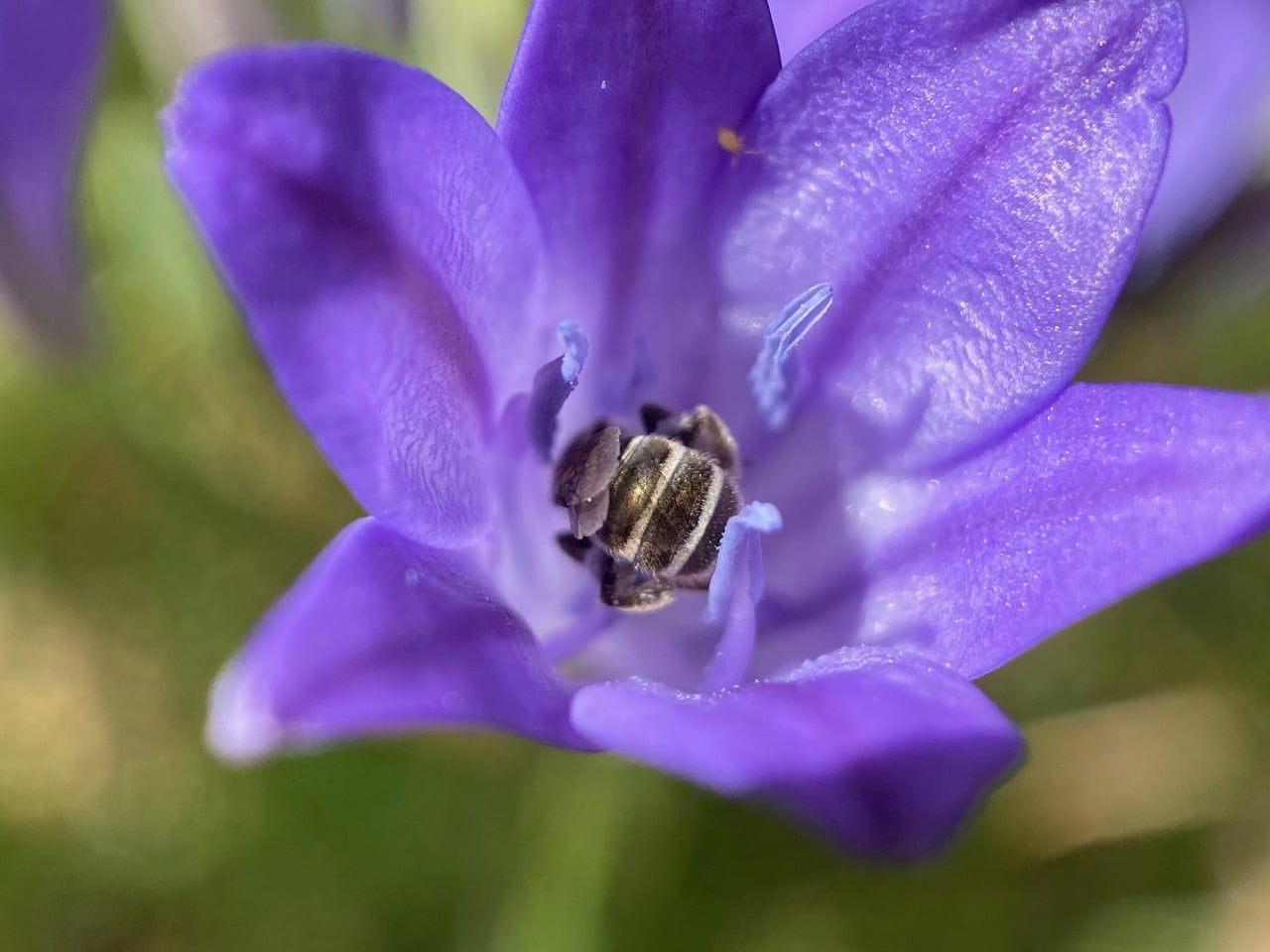
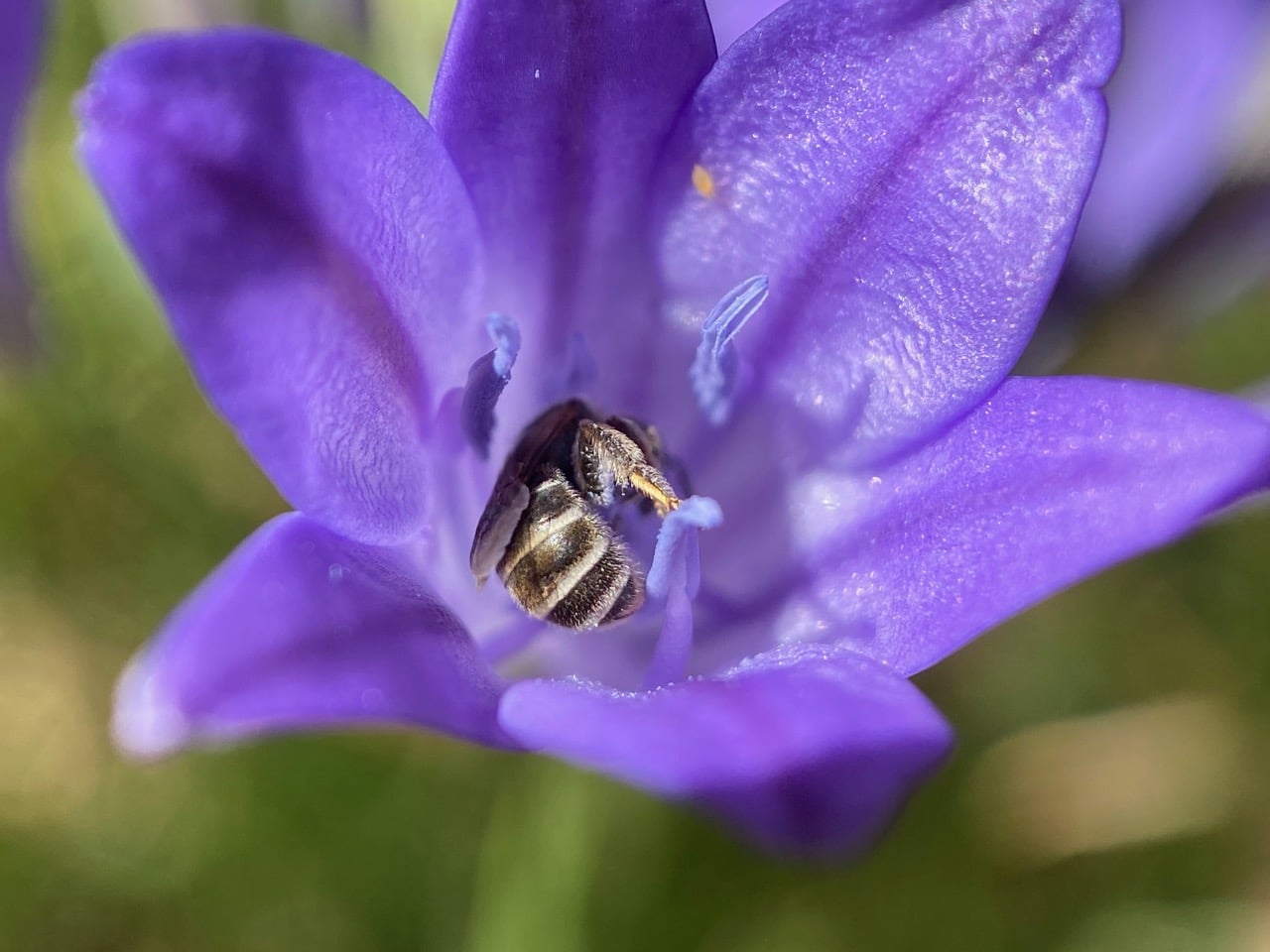
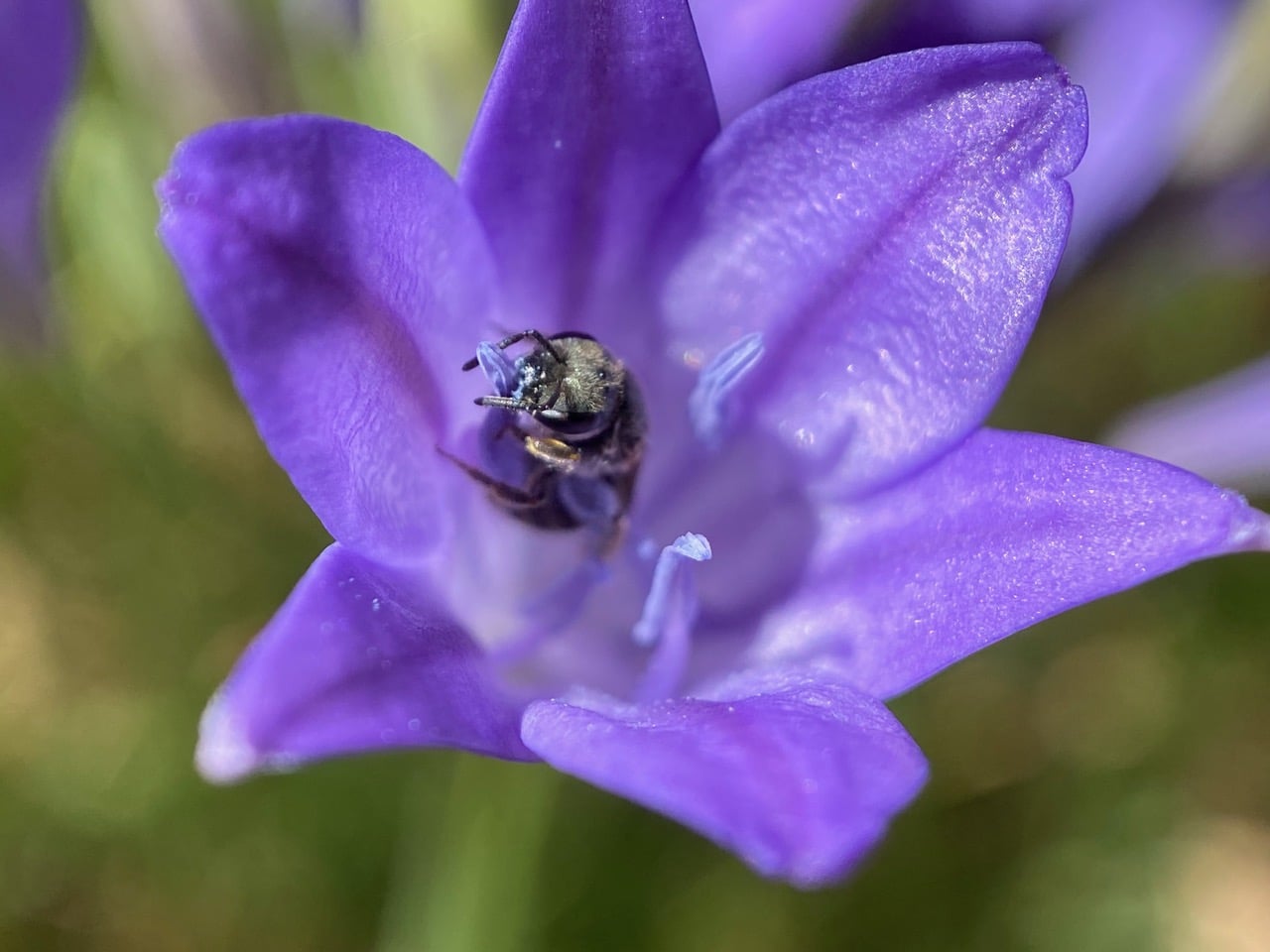
The bee is collecting blue pollen from an anther with her mandibles.

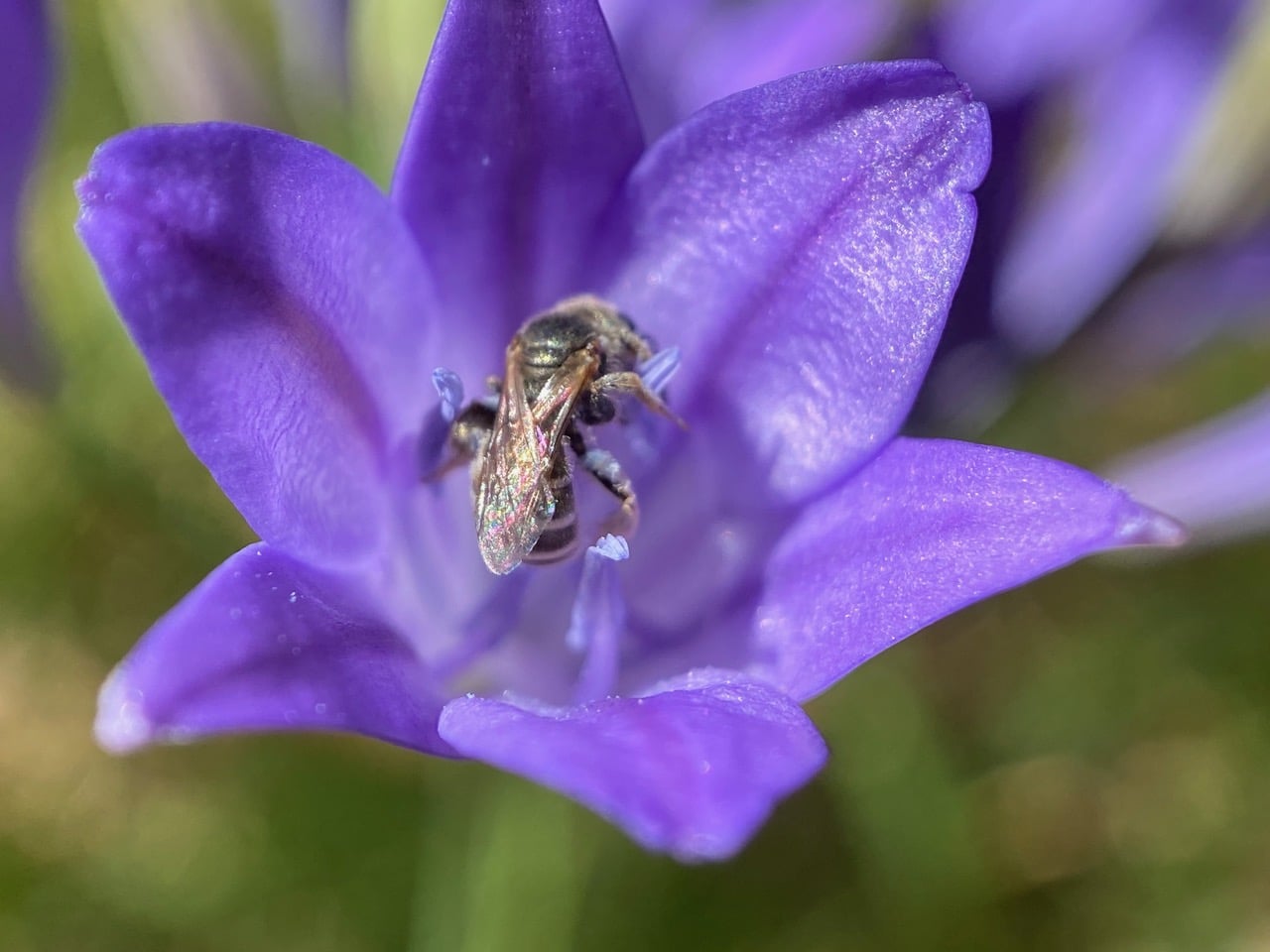
The bee appears rather skilled at working the Ithuriel’s Spear flower. She can balance on different stamens while gathering pollen on another.

The bee still has a ways to fill the scopae on her hind legs, which stretches from her femur through her tibia, and down to her tarsus. Typical scopae of the Sweat Bees (family Halictidae).

The Sweat Bee is collecting pollen from an anther with her jaws and her front legs, while the relatively empty scopae on her hind leg are on full display.
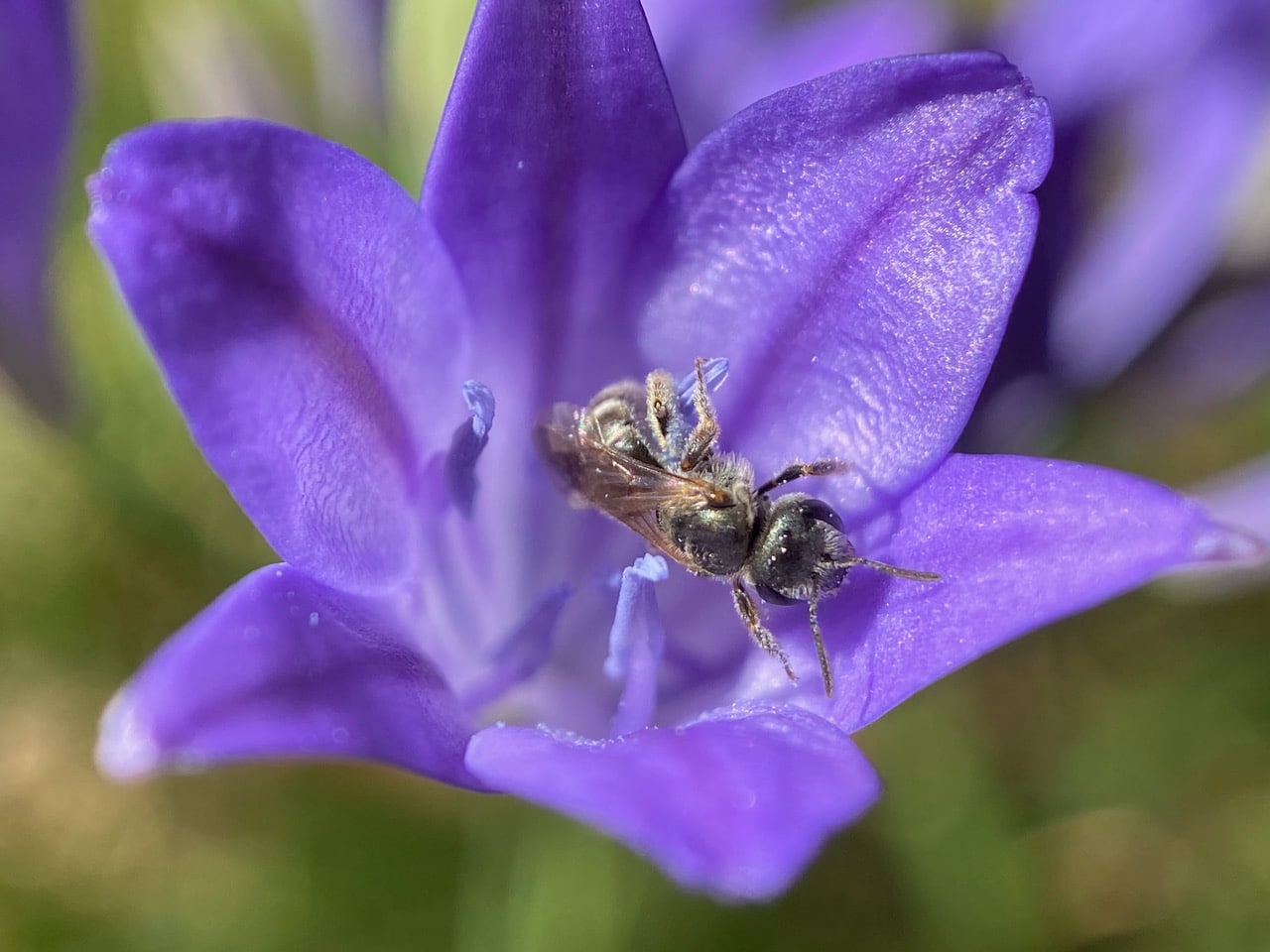
She is now moving the pollen to the scopae on her hind legs.
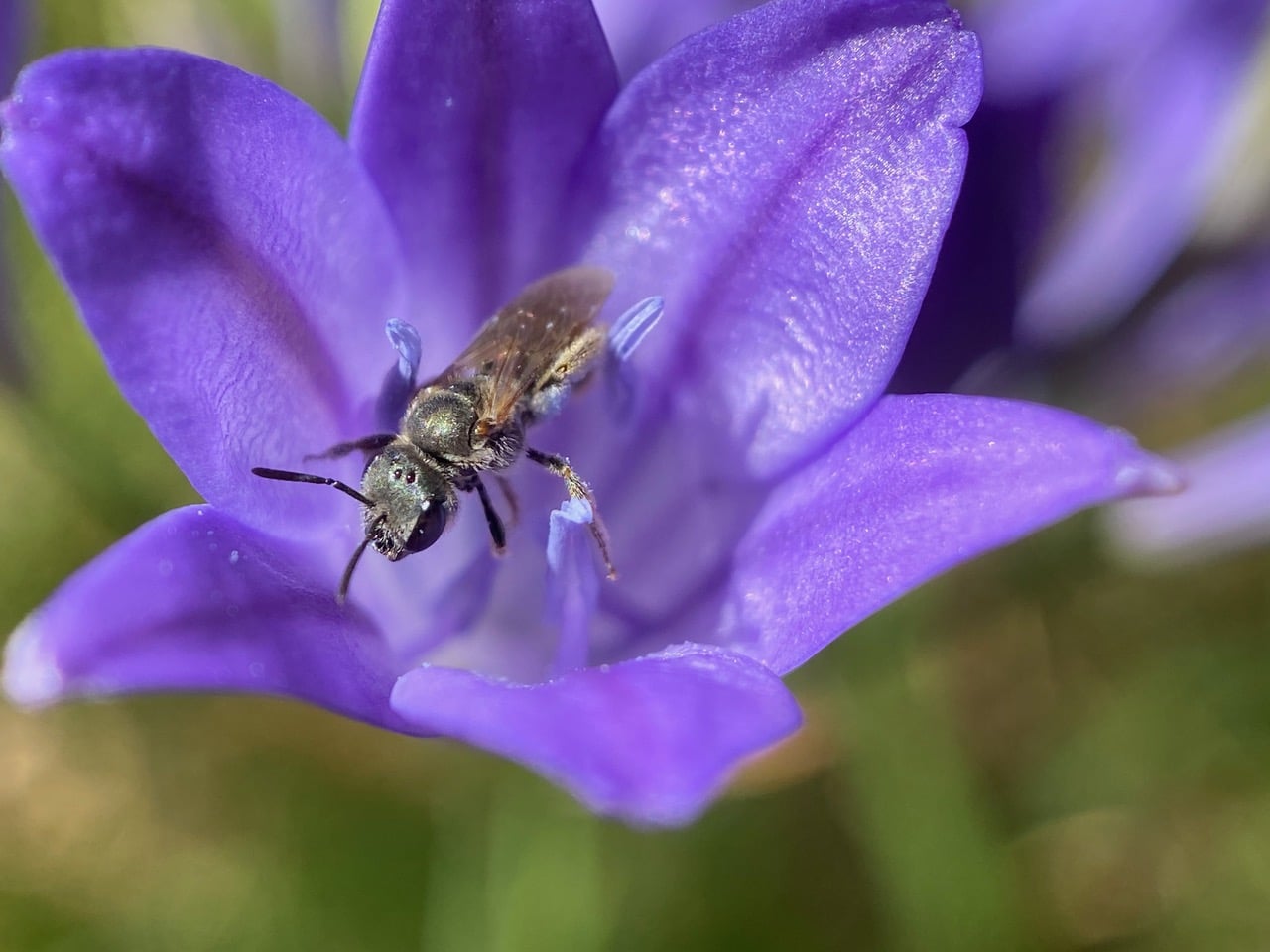
So lucky to have good light for this series of photos!
The flowers of Ithuriel’s Spear appear to attract bees of all sizes and shapes. In about half an hour, I have seen the tiny Sweat Bees (family Halictidae), the iridescent blue Mason Bees (family Megachilidae) and the stocky Bumble Bees (family Apidae) foraging on these flowers.