

Pollinator Post 6/30/25 (1)

It’s a clear, sunny morning at Crab Cove.
At the end of McKay Ave, the Sneezeweed, Heleniun puberulum near the curb has started to bloom. A male Fine Striped Sweat Bee, Agapostemon subtilior (family Halictidae) is taking nectar from the tiny florets that have opened up around the rim/base of the flowerhead.
This oddball member of the sunflower family Asteraceae is native to California and Baja California, usually found in moist habitats such as riverbanks and meadows. Globular flowerheads are borne on naked peduncles. Each head is composed of numerous disc florets which are yellow when newly open. Some flowerheads have yellow ray florets that subtend the globular structure like a little skirt.
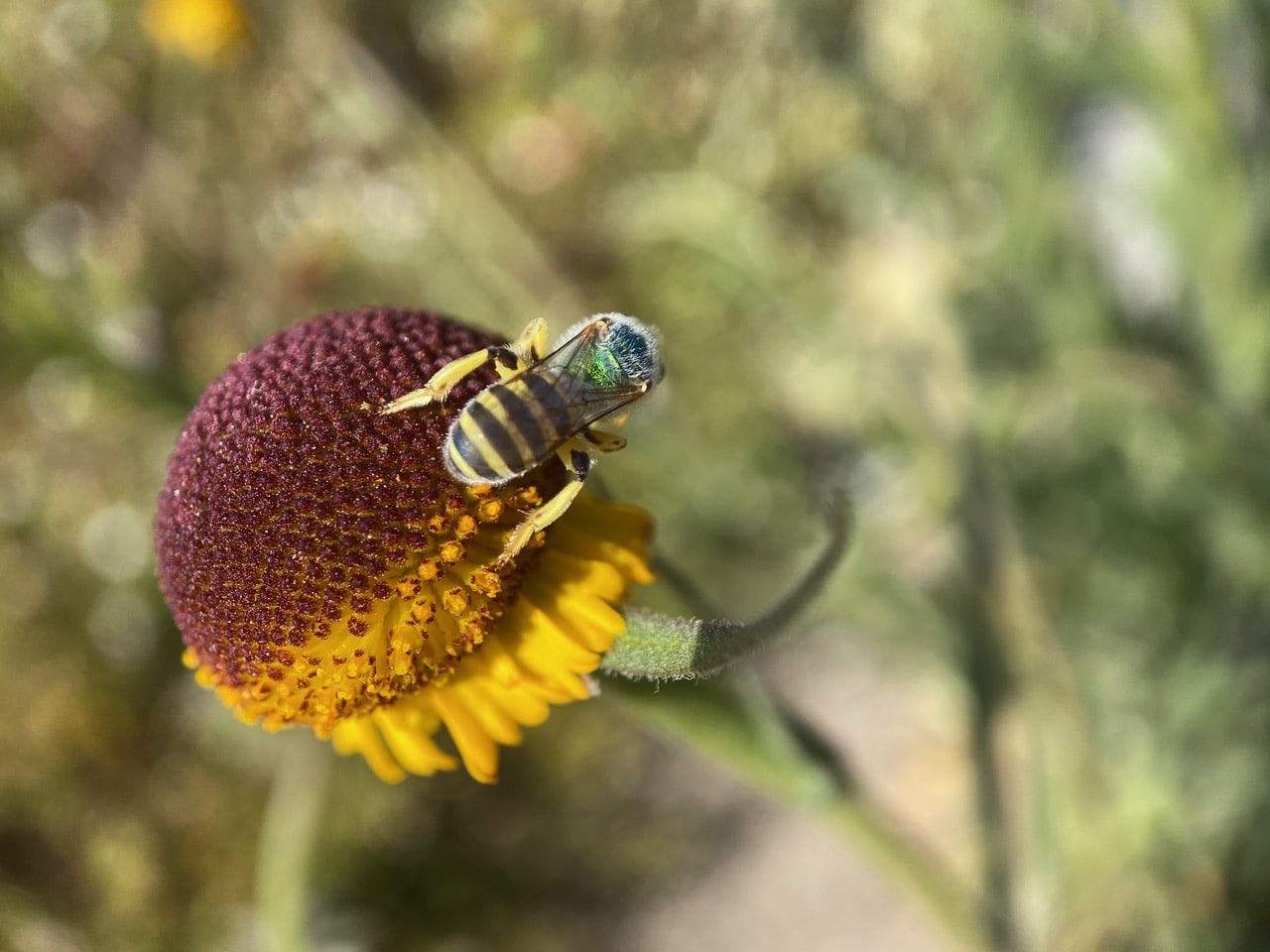
The male Fine Striped Sweat Bee, Agapostemon subtilior (family Halictidae) makes his way slowly around the lower rim of the flowerhead where the freshly opened florets are offering nectar.
The genus Agapostemon is widespread and abundant throughout North America. They are most diverse and abundant in temperate regions and southwestern U.S. deserts. Agapostemon are commonly called “sweat bees” because they are closely related to, and resemble bees in the Halictus and Lasioglossum genera. Unlike those bees however, Agapostemon are not attracted to human sweat.
Agapostemon are brightly colored metallic green or blue bees measuring 7 to 14.5 mm long. Most species have a metallic green head and thorax, and black-and-yellow striped abdomen; some females are entirely bright green or blue. Females carry pollen on scopal hairs located on their hind legs. Agapostemon are generalists. Like other members of the family Halictidae, they are short-tongued and thus have difficulty extracting nectar from deep flowers. Males are often seen flying slowly around flowers looking for females. The bees favor flowers with high densities. Females excavate nests in the ground. These are summer to fall bees.
Fine striped sweat bee (Agapostemon subtilior) · iNaturalist
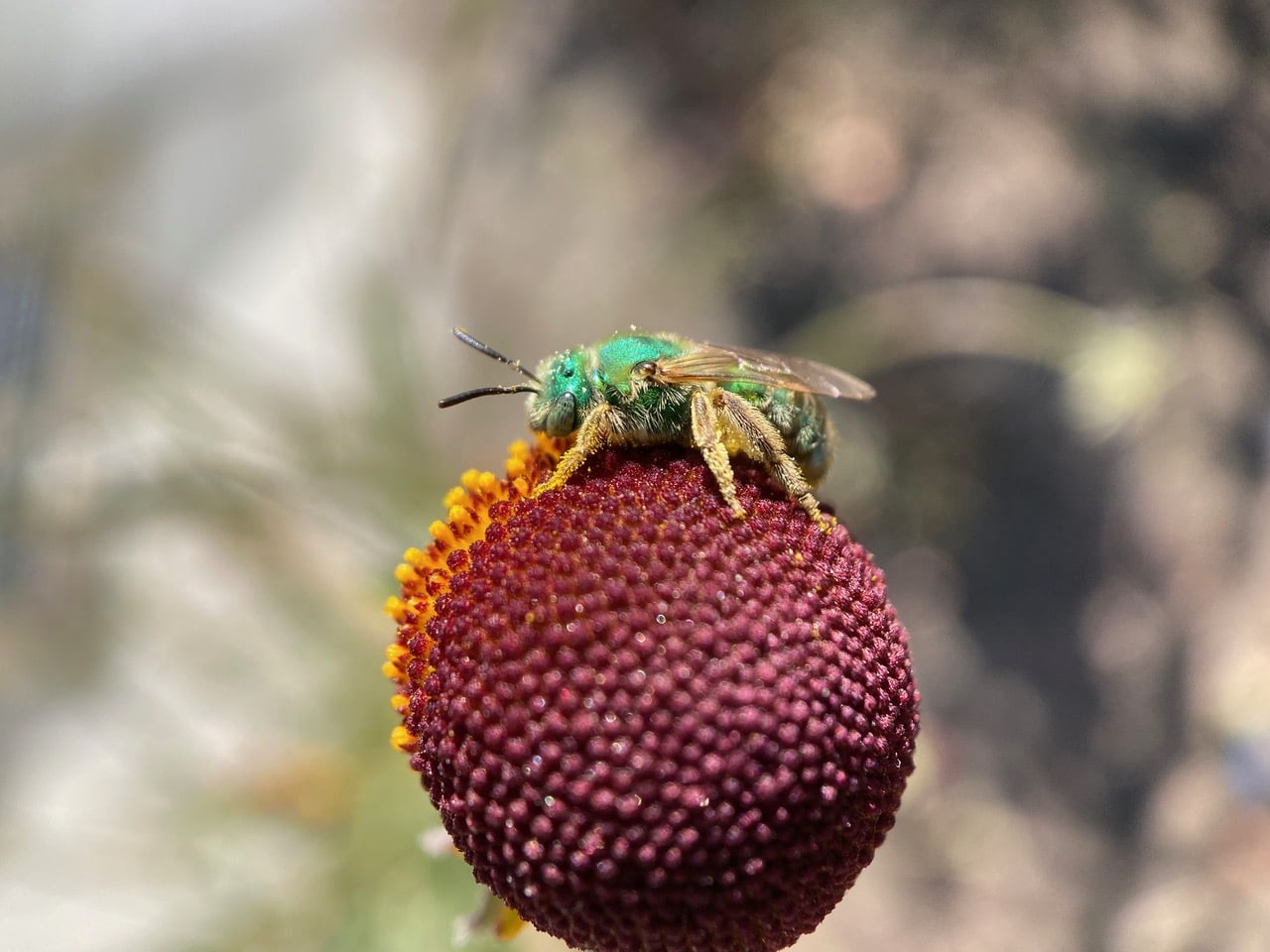
A female Fine Striped Sweat Bee, Agapostemon subtilior (family Halictidae) is foraging on the florets of another Sneezeweed flowerhead. Note that the female is all green, and does not have a striped abdomen like the males of the species.
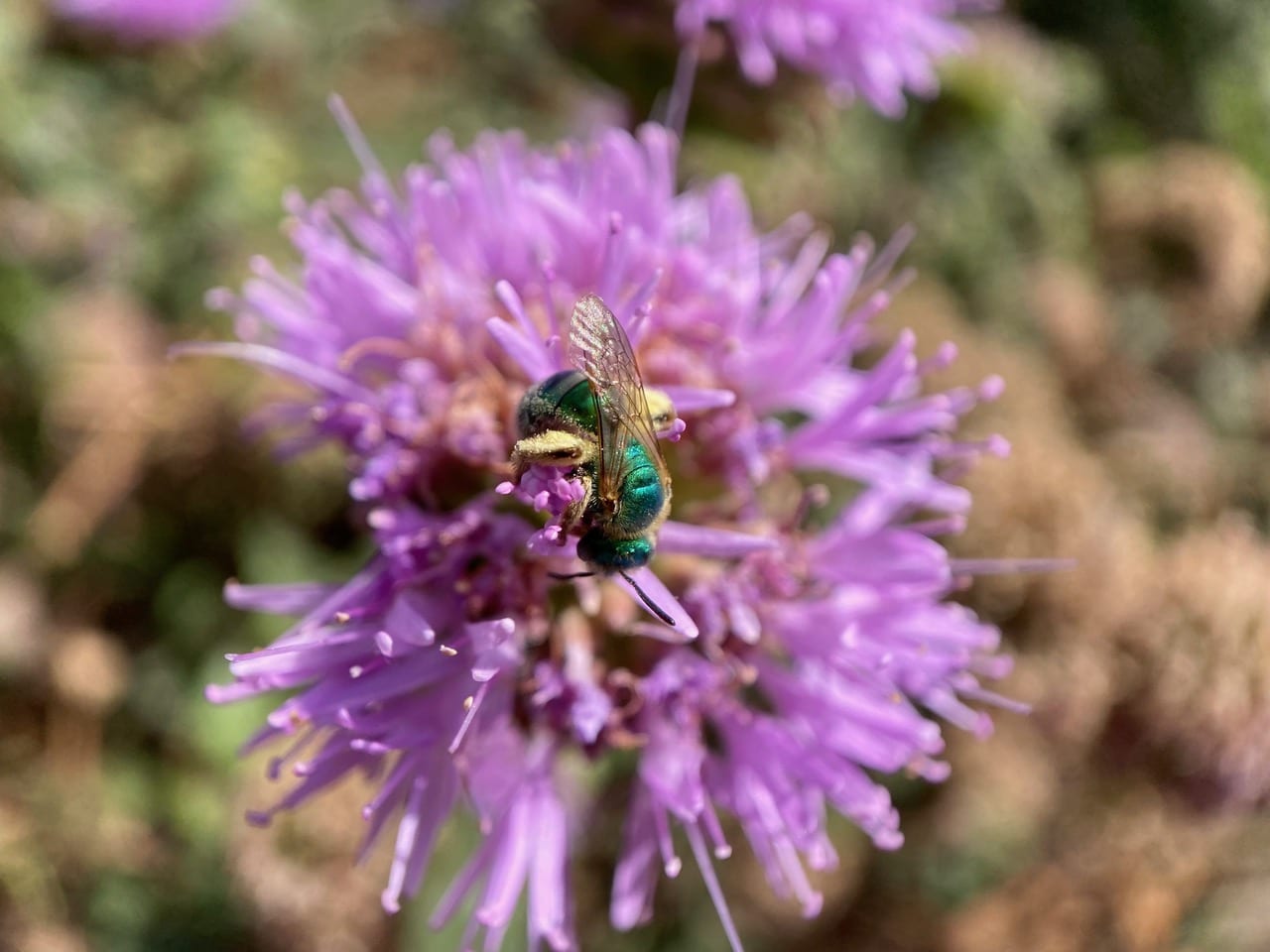
Over by the patch of Coyote Mint, Monardella villosa, a female Fine Striped Sweat Bee, Agapostemon subtilior (family Halictidae) is foraging on one of the last remaining flowerheads. She is hunched in a pollen-collecting posture, and there is cream-colored pollen in the scopae of her hind legs.
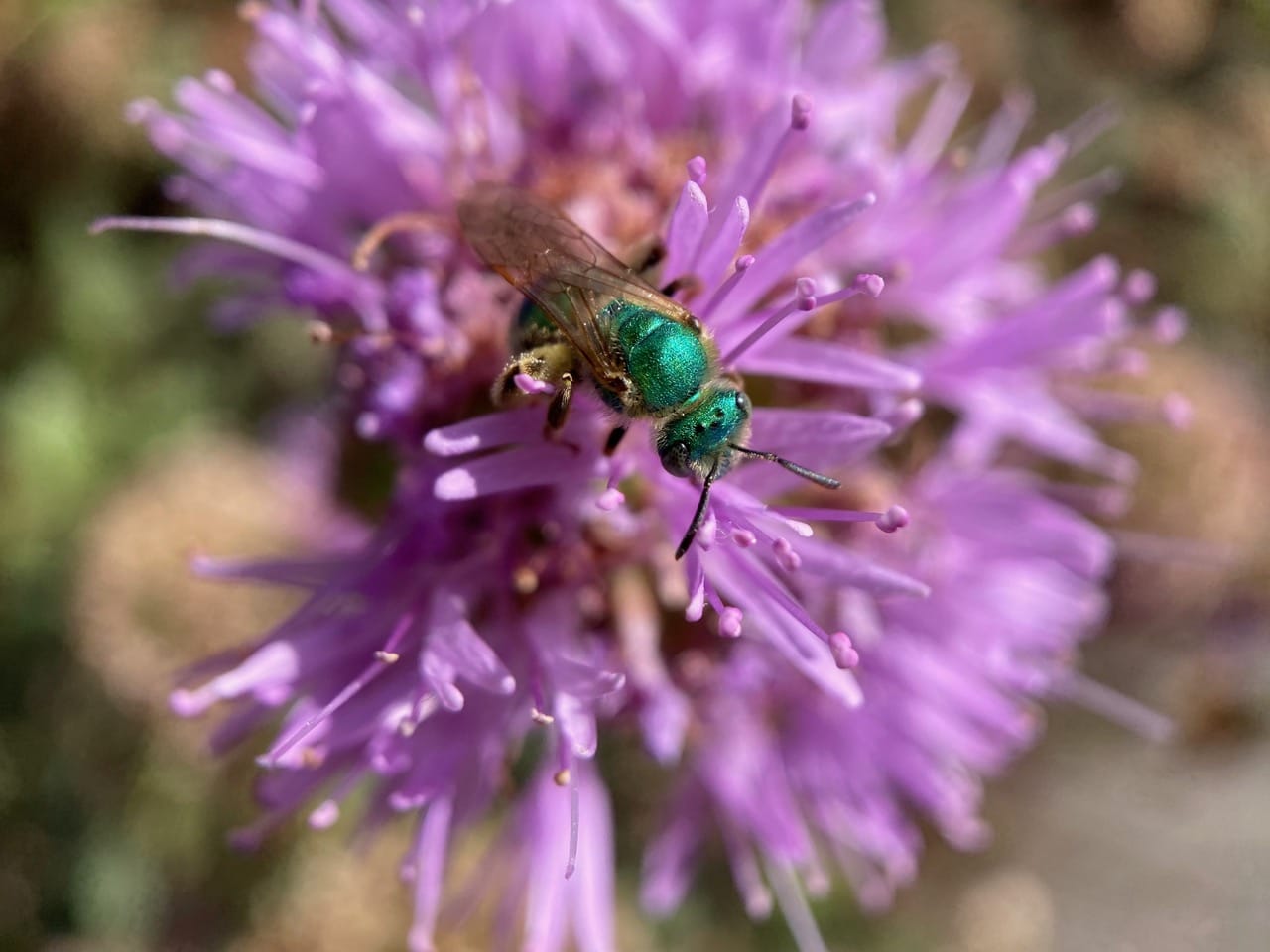
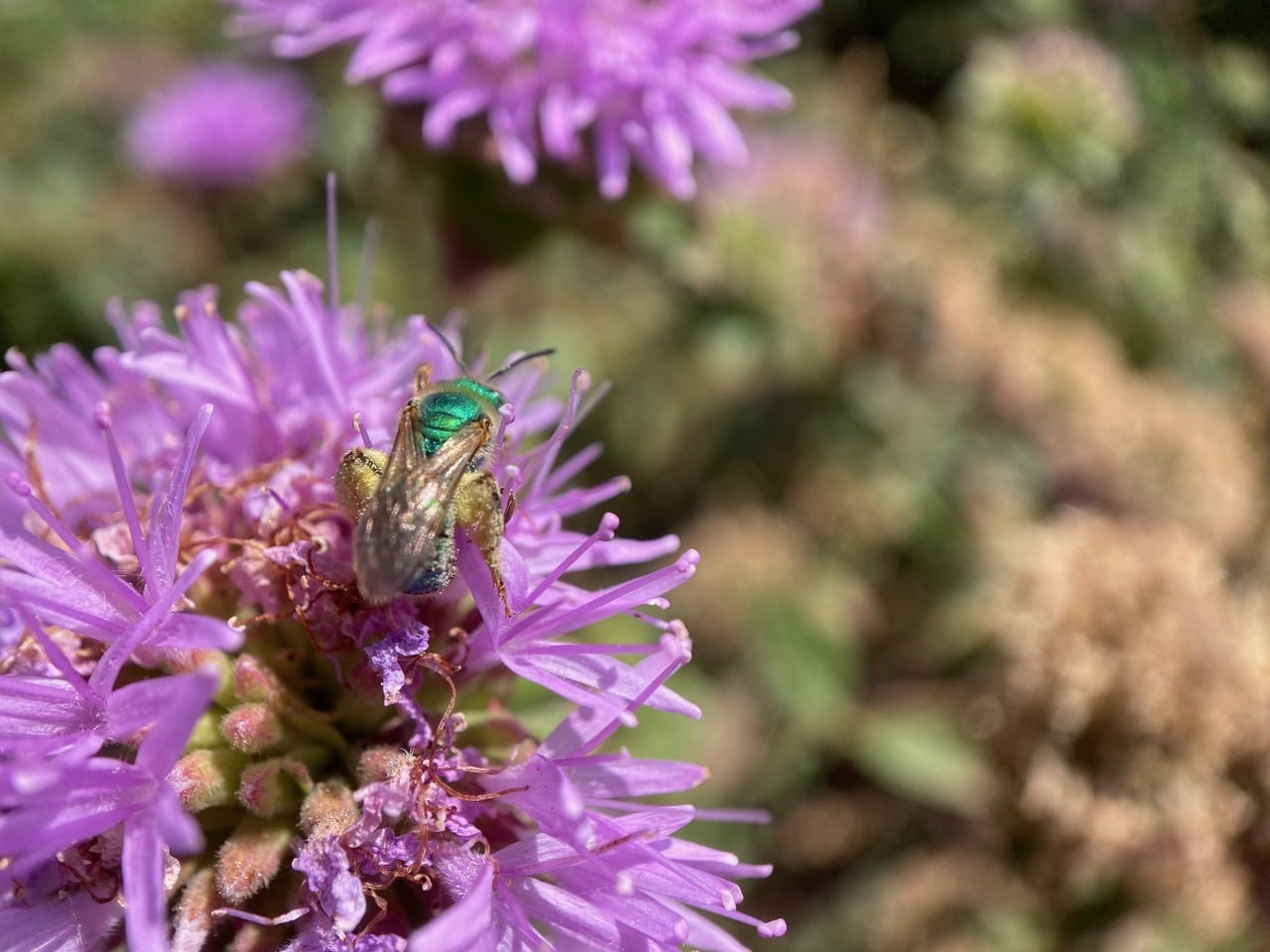
The pollen grains in the sweat bee’s scopae are held loosely on the hairs by electrostatic attraction, not wetted and compacted as in the corbiculae (pollen baskets) of Bumble Bees and Honey Bees. These loosely held pollen can come off easily from the scopae as the bee goes from one flower to the next. It is believed that bees with scopae are much more effective pollinators than the corbiculate bees.
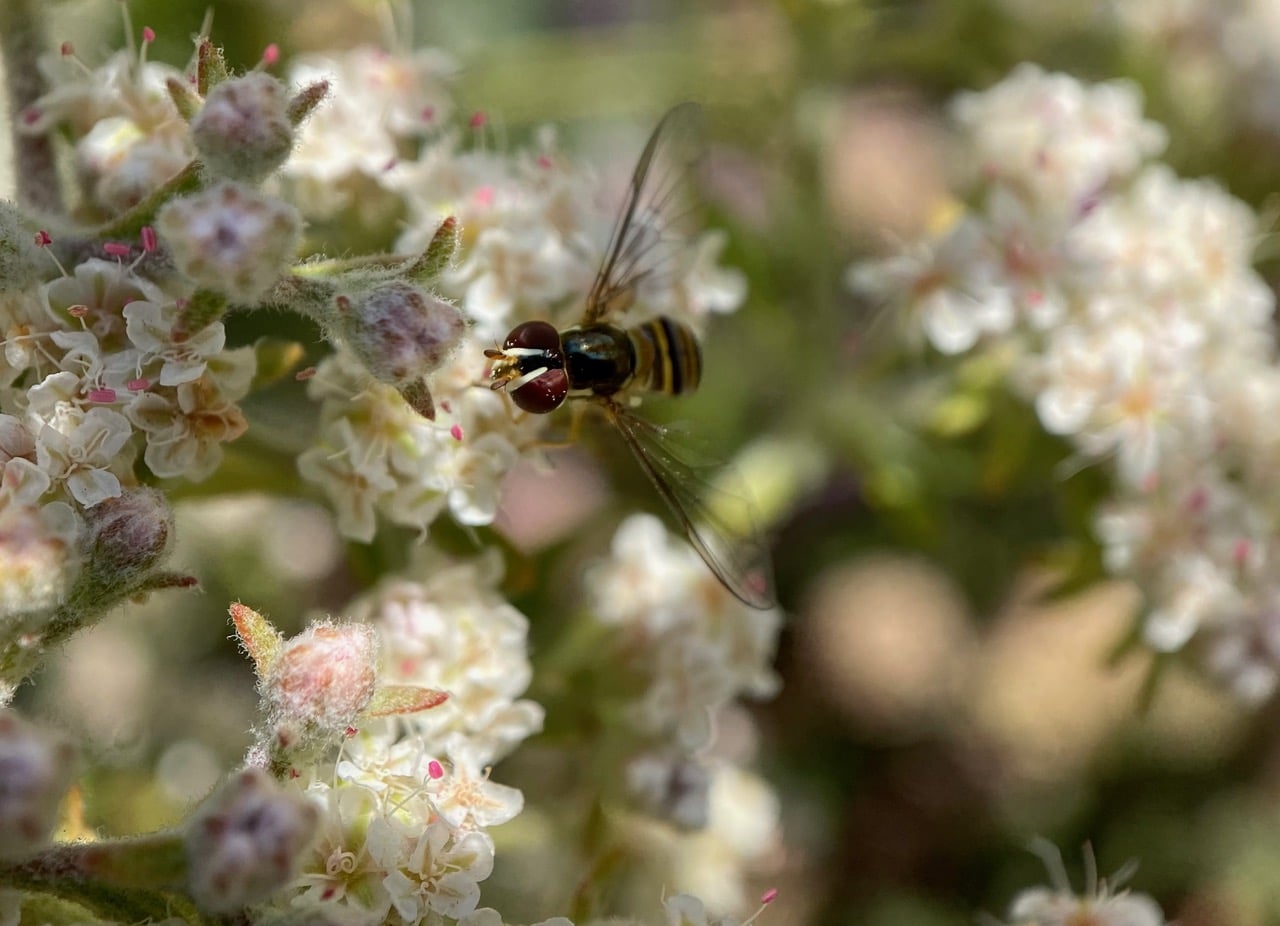
A small hover fly is foraging among the inflorescences of St. Catherine’s Lace, Eriogonum giganteum.
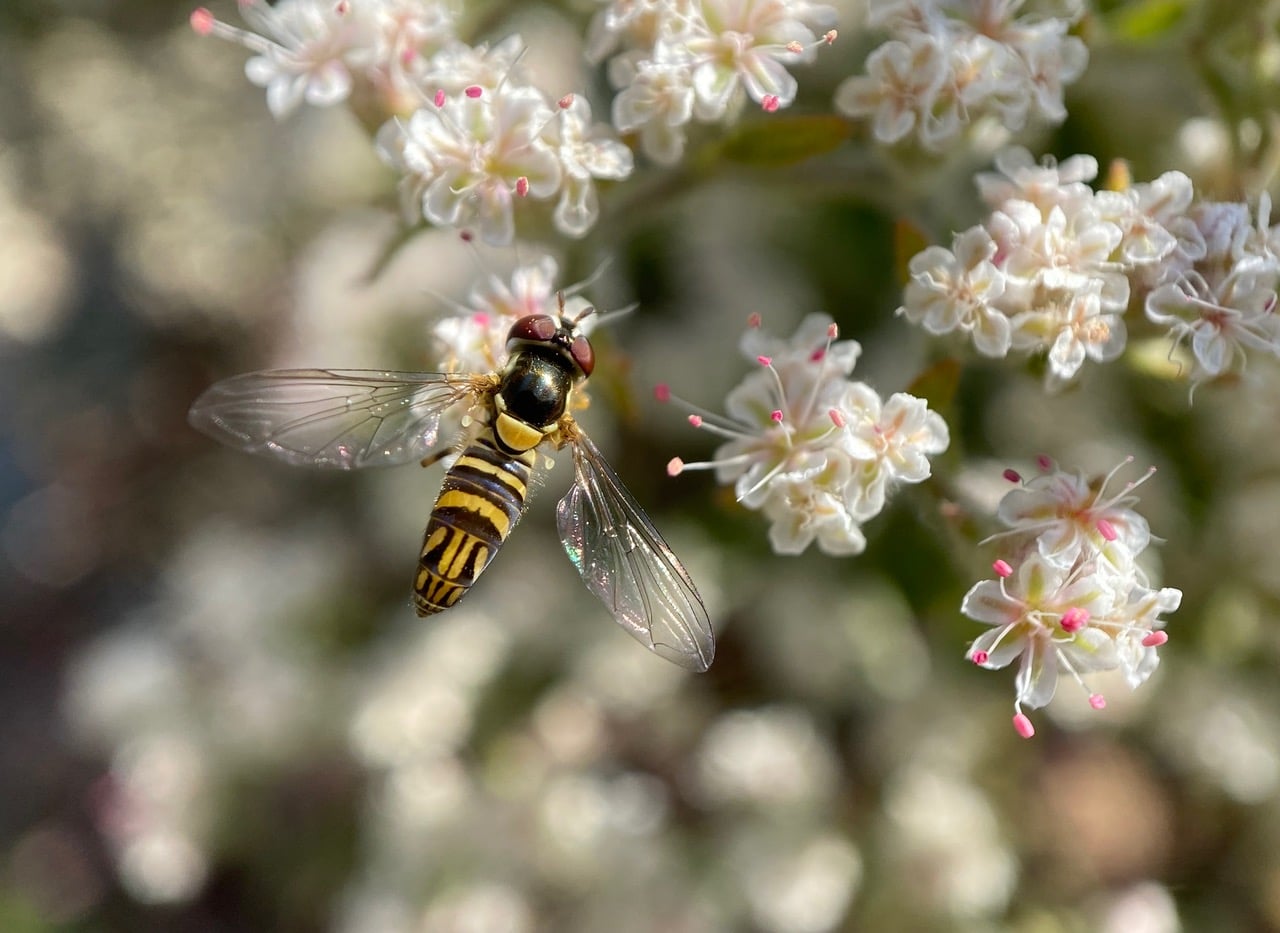
Her beautiful abdominal markings are visible in the sunlight. She is an Oblique Streaktail, Allograpta obliqua (family Syrphidae).
Although small in size (6-7 mm long), the Oblique Streaktail is easily recognizable for the unique pattern on its black-and-yellow abdomen. It is a common North American species of hover fly. Adults visit flowers for nectar and pollen, and are pollinators. Females lay eggs on plant surfaces near aphids. Larvae feed on the aphids.
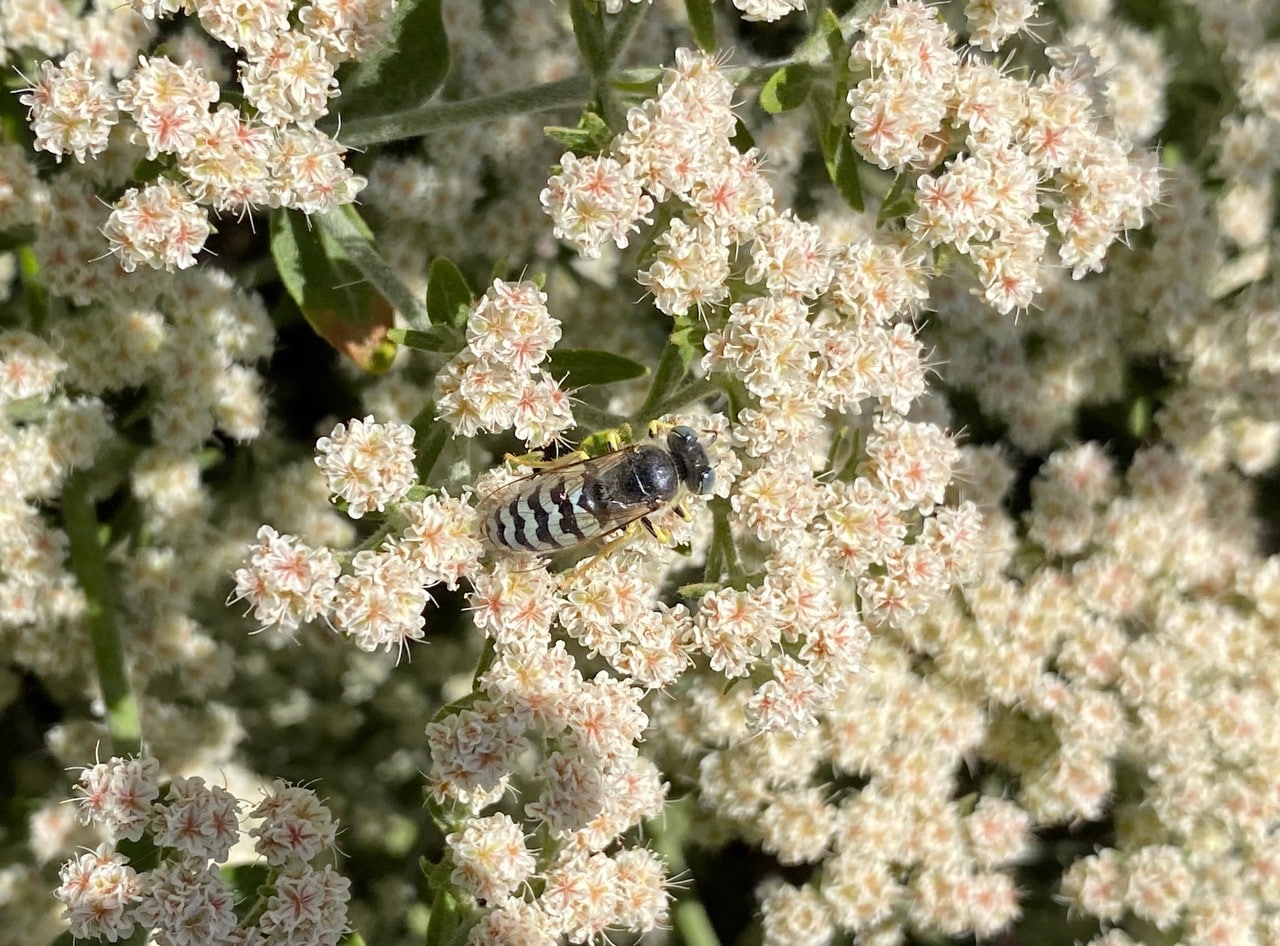
Numerous American Sand Wasps, Bembix americana (family Crabronidae) are taking nectar from the prodigious blooms of St. Catherine’s Lace.
Sand wasps in the genus Bembix are familiar and common throughout North America, digging their burrows in dunes, on beaches, and other habitats with loose, deep sand. The female rapidly kicks out large quantities of sand using a “tarsal rake” of spines on each front leg. The burrow is excavated before the wasp goes hunting. Bembix are generalist, opportunistic hunters. True flies in the order Diptera are the usual prey. A victim is paralyzed or killed by the wasp’s sting, and is then flown back to the nest. Most species will lay an egg on the first victim, while some species lay an egg in the empty cell before starting to hunt. Once the egg hatches, mama wasp brings flies to her larva as needed. This “progressive provisioning” is rare in the insect world. When the larva reaches maturity, mama wasp closes the cell. Inside, the larva spins an oblong cocoon, weaving sand grains into the structure and resulting in a hardened capsule. Overwintering takes place as a prepupa inside this cocoon, but there are usually two generations a year.
Male sand wasps often engage in an elaborate flight ritual called “sun dances”. Males emerge before females, and fly erratically at dizzying speed one or two inches above the ground attempting to detect virgin females about to emerge from their underground nests. Both sexes are often seen taking nectar at flowers, especially from Asteraceae family. Bembix wasps are often victims of other insects such as cuckoo wasps (Chrysididae), velvet ants (Mutillidae), satellite flies (Sarcophagidae), bee flies (Bombyliidae), and thick-headed flies (Conopidae).
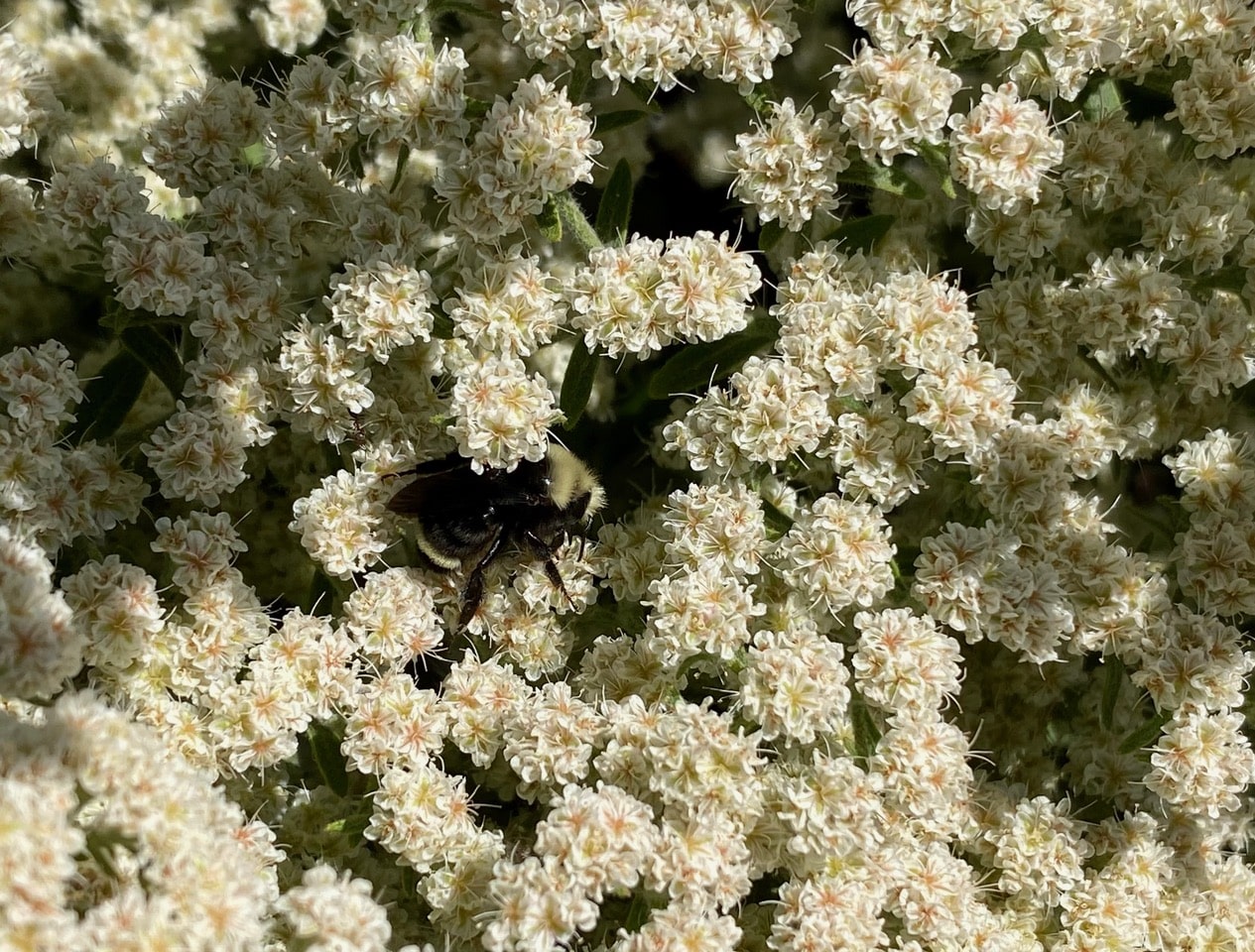
A worker Yellow-faced Bumble Bee, subgenus Pyrobombus (genus Bombus, family Apidae) is foraging on the flowers of St. Catherine’s Lace. She does not seem to be collecting pollen.
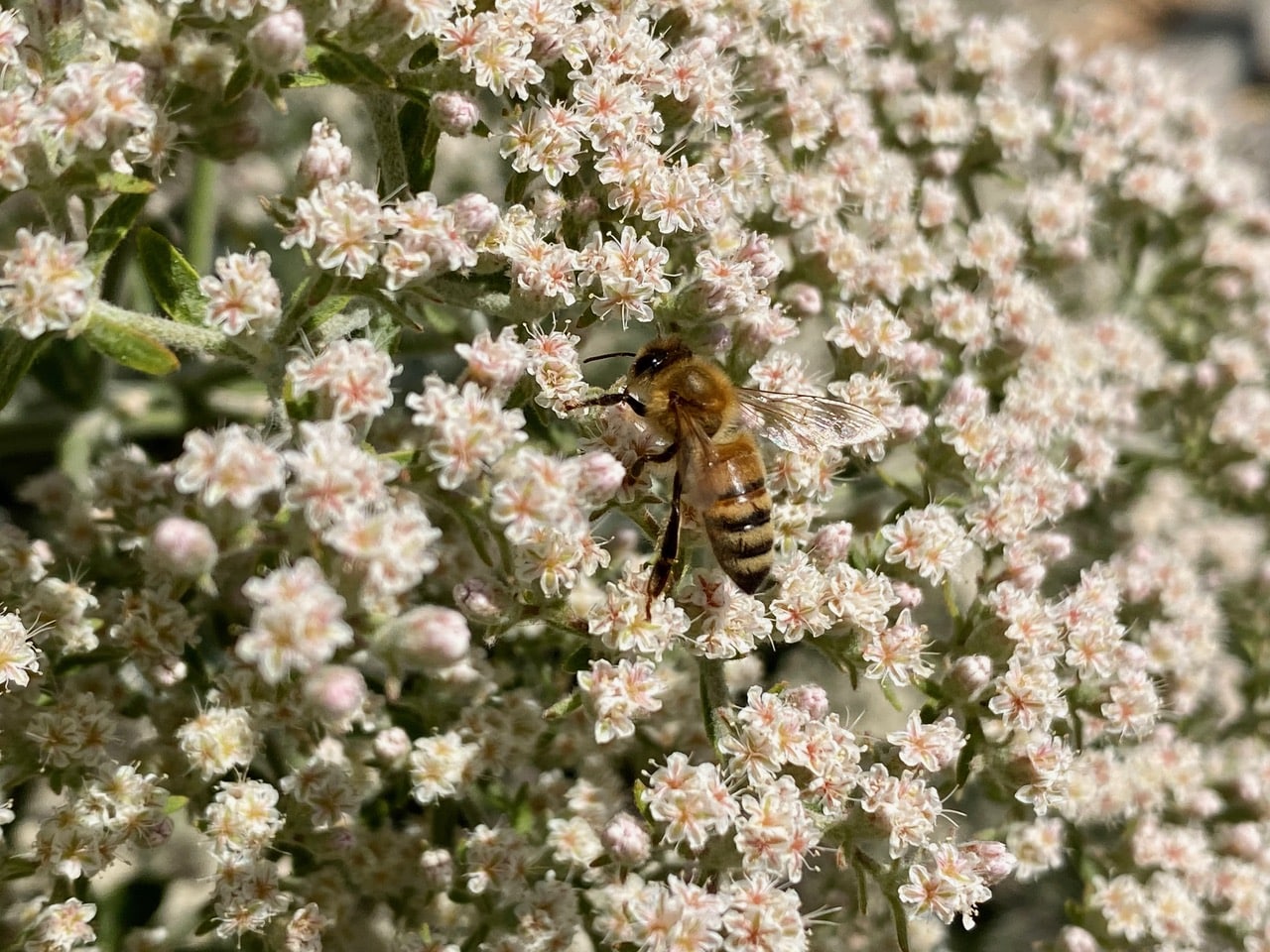
This Honey Bee, Apis mellifera (family Apidae) is not collecting pollen either. The weather has been so hot and dry lately, many bees are simply taking nectar.
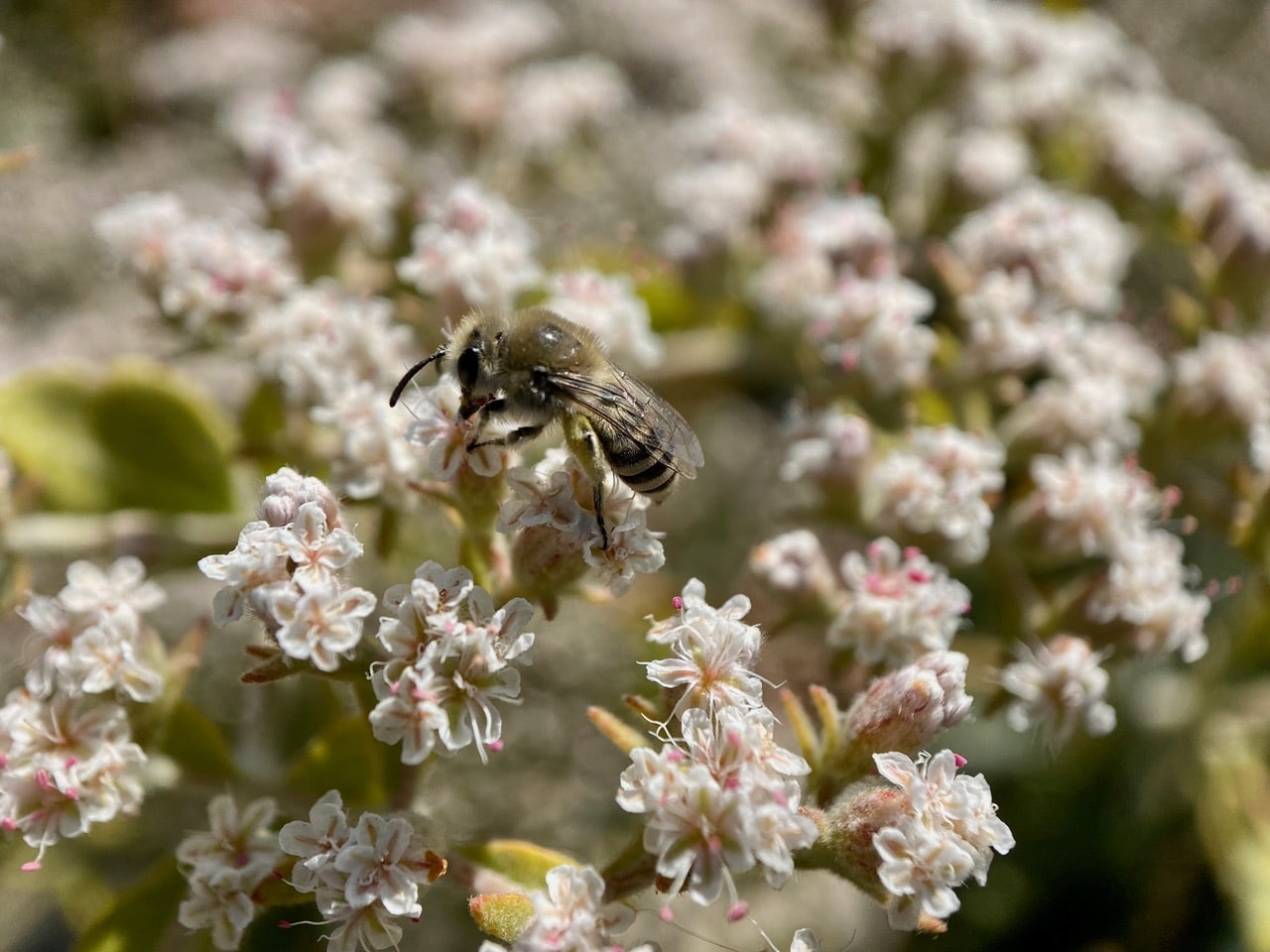
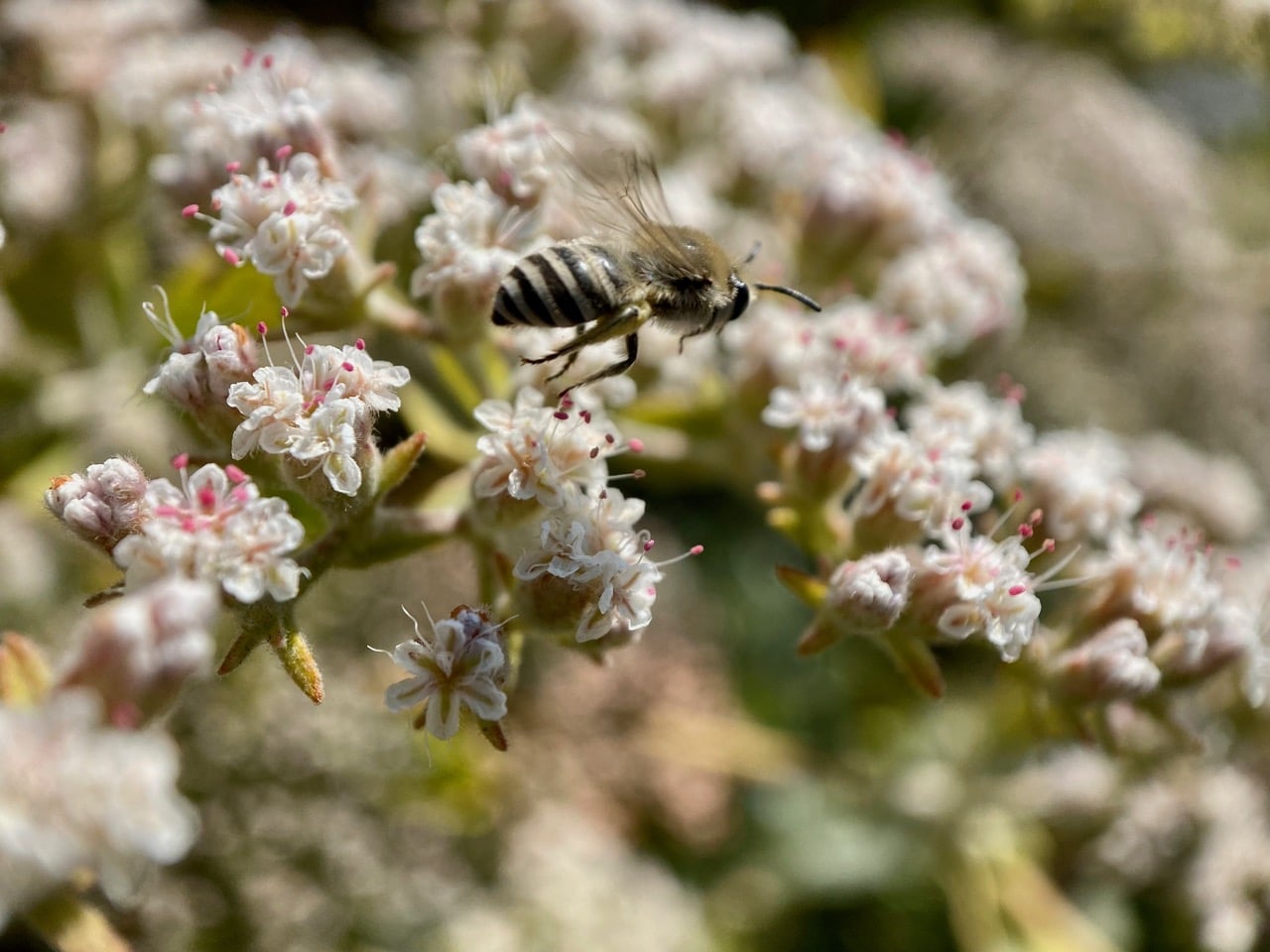
A hairy little bee with black-and-white abdomen is foraging on the flowers of St. Catherine’s Lace. I have learned to recognize these bees now – they are the Cellophane Bee, Colletes sp. (family Colletidae).

This female Colletes has some pollen in the scopae of her hind legs.
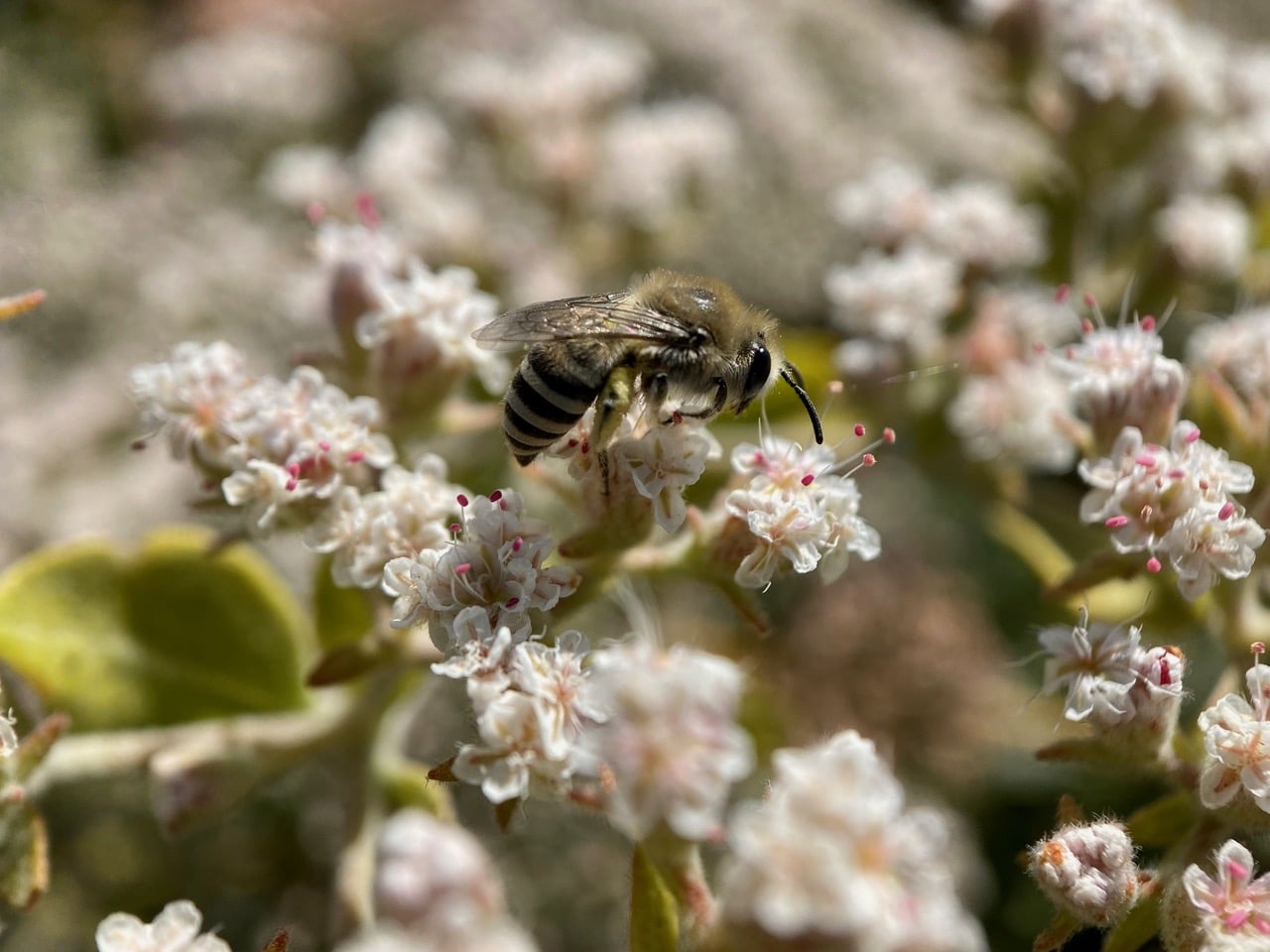
The bee family Colletidae includes generalists and specialists, and they are likely important pollinators of many wildflowers. All Colletidae in North America are solitary ground nesters, but some species nest in large aggregations. There are two major genera of Colletidae in North America: the Masked Bees (genus Hylaeus) and Cellophane Bees (genus Colletes). The most obvious shared characteristics of Colletidae is also the hardest to see: their short tongue. Colletes are moderately hairy, slender bees, ranging in size from 7 to 16 mm. Distinct features include a hairy head and thorax, pale bands of hair on the abdomen, and a heart-shaped head. The eyes of Colletes are angled (rather than being parallel), making the face slightly heart-shaped.
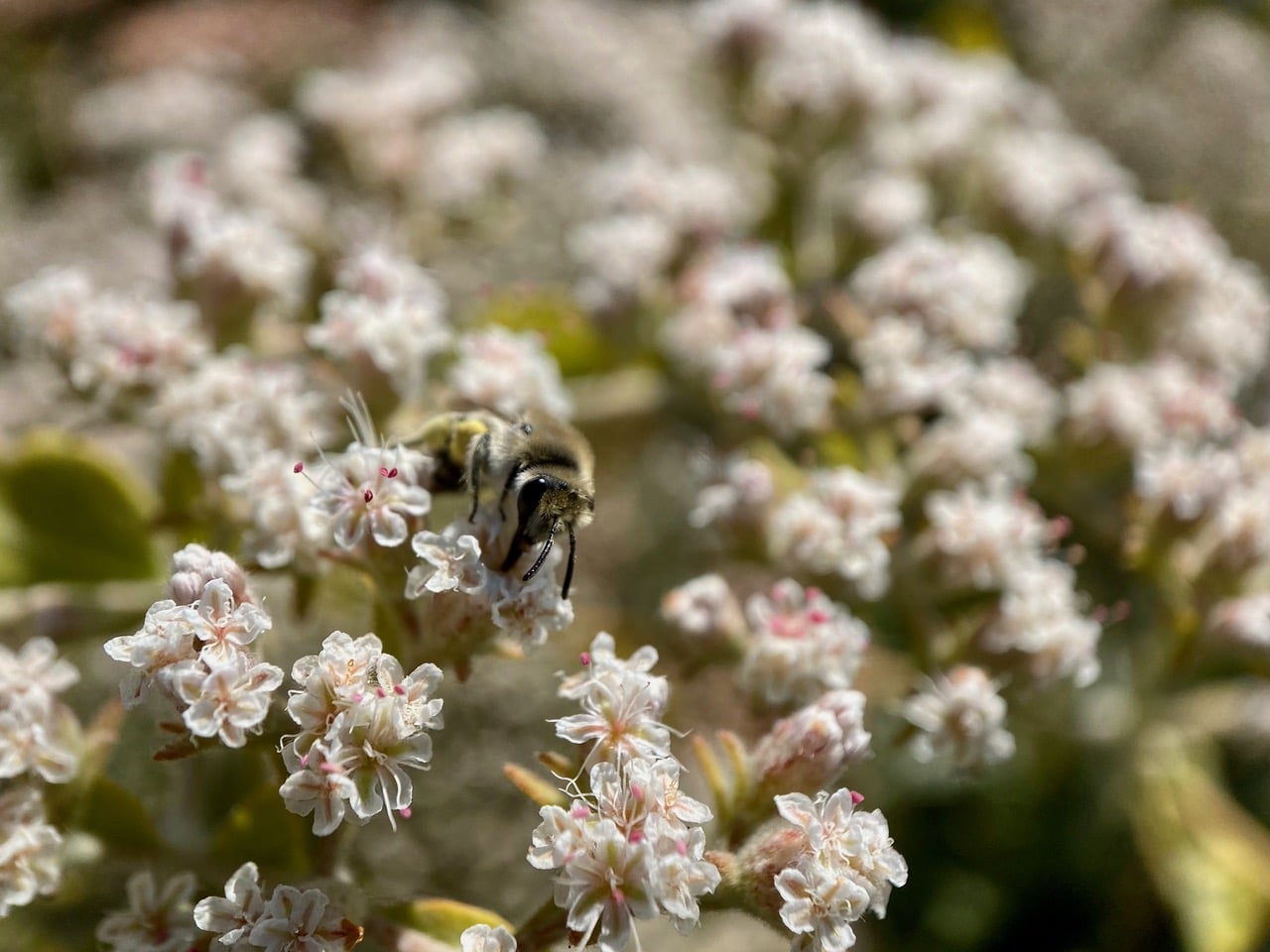
The small, open-faced, shallow flowers of buckwheat are perfect for the short-tongued Cellophane Bees.
The genus name Colletes means “one who glues”, referring to their habit of applying a glue- or cellophane-like lining to the walls of nest cells, using their specialized tongues. This lining gives rise to their common names: cellophane bees, polyester bees, and plasterer bees. Colletes tongue is unique: short, flat, and forked at the tip. Colletes line their nests with a distinctive cellophane-like substance made from saliva and secretions from the Dufour’s gland on the abdomen. Using their specialized tongue, they paint the walls with saliva, then with secretions from the Dufour’s gland, they add a coat of varnish. This creates a clear covering that is strong, durable, and resistant to mold and water.
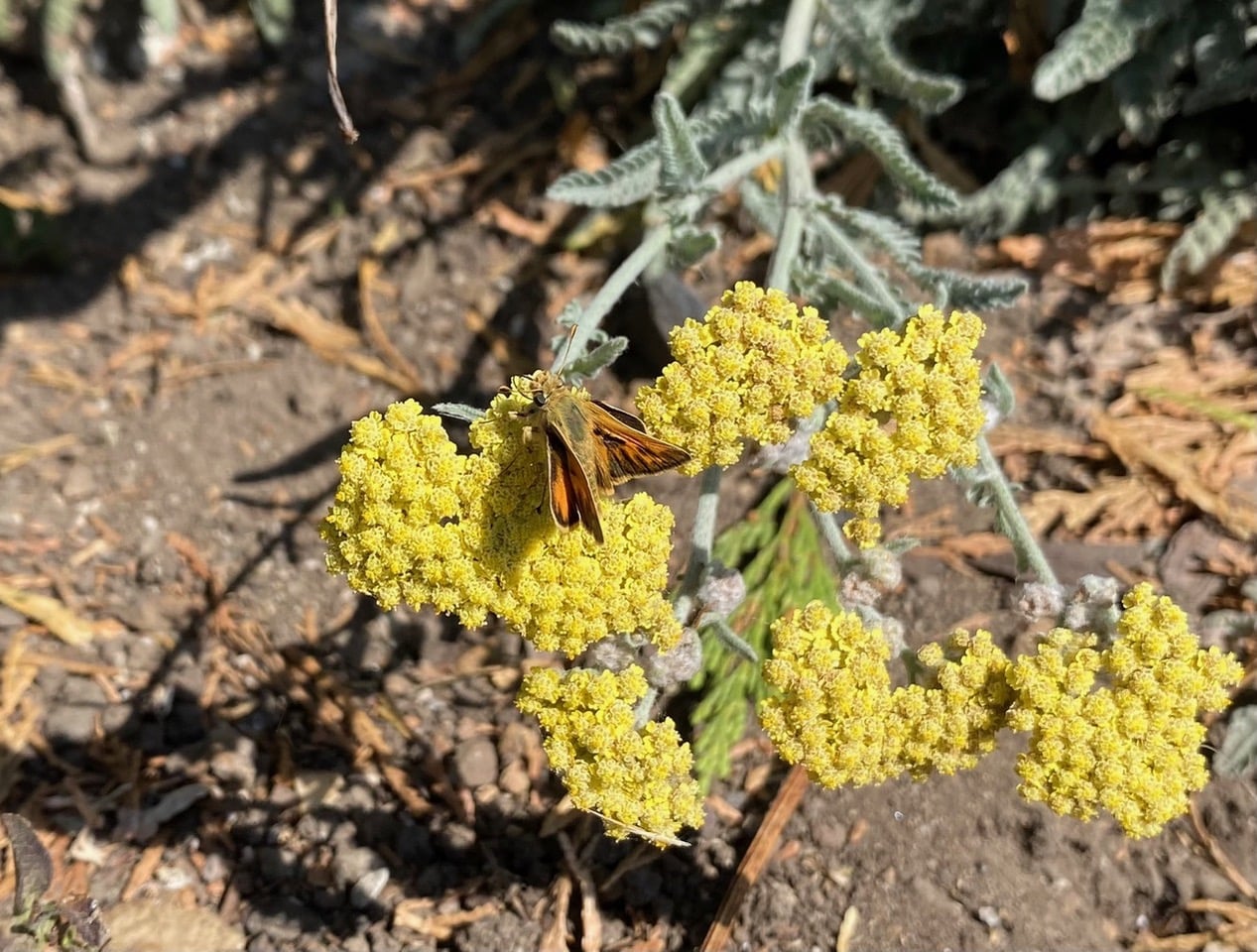
A Sandhill Skipper, Polites sabuletti (family Hesperiidae) is taking nectar from the flowers of Fern-leaf Yarrow, Achillea filipendulina.
Skippers are a family, the Hesperiidae, of the order Lepidoptera (butterflies and moths). They are named for their quick, darting flight habits. Most have the antenna clubs hooked backwards like a crochet hook. They also have generally stockier bodies and larger compound eyes than the other butterflies. Their wings are usually small in proportion to their bodies. When at rest, skippers keep their wings usually angled upwards or spread out, and only rarely fold them up completely. Californian species are mostly brown or tan, with black, orange, or yellow markings.
Skipper caterpillars are usually green or brown, sometimes yellowish, never brightly colored. They have a distinctive “collar”, a narrow ring around the body right behind the head. Caterpillars are camouflaged and often hide during the day. Many species make nests of leaves and silk for additional protection. Most North American species feed on grasses, but some common species eat shrubs and trees, especially in the bean family. Most species are limited to a single group of food plants. Adult skippers are only active during the day, but Skipper caterpillars feed mainly when it is dark or partly light.
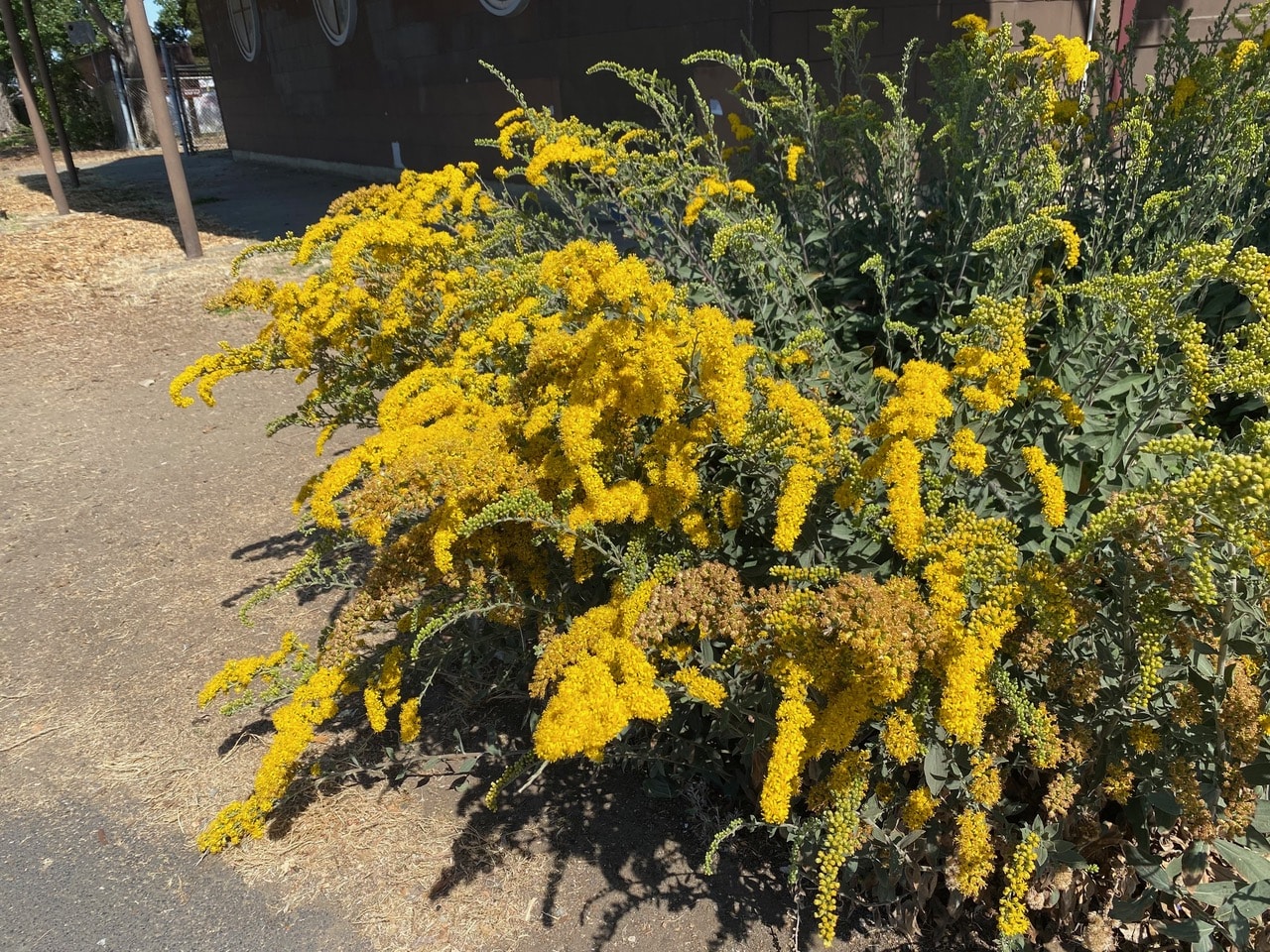
The patch of California Goldenrod, Solidago velutina ssp. californica at the end of McKay Ave. is approaching peak bloom. I am surprised to find hardly any insects on the flowers today.

Hey, there is a tiny wasp on the clustered flowers of California Goldenrod. It has very long and flexible antennae.
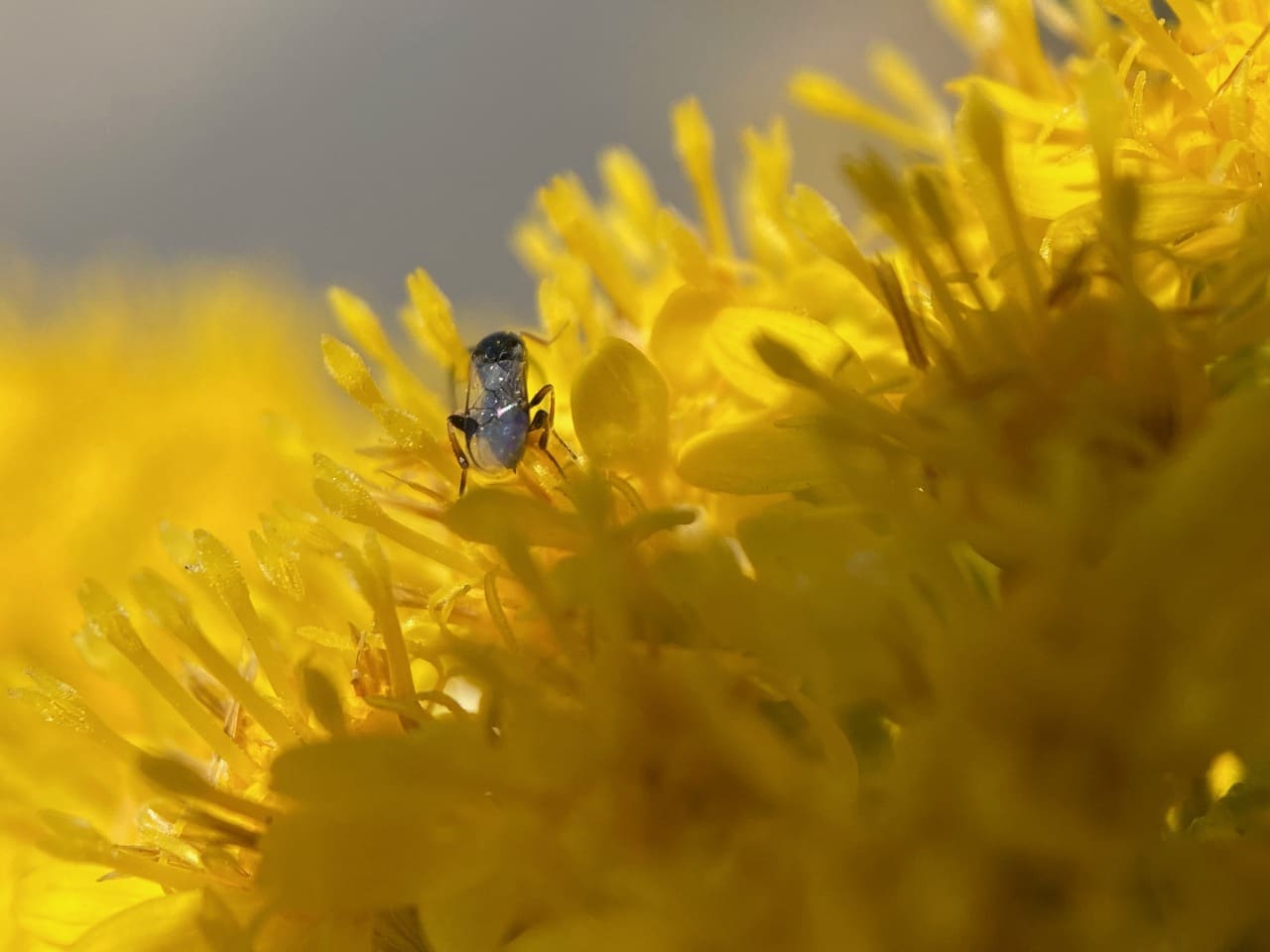
The wasp is making its way through the jungle of floral parts at a fast clip, apparently not feeding. It is probably hunting.
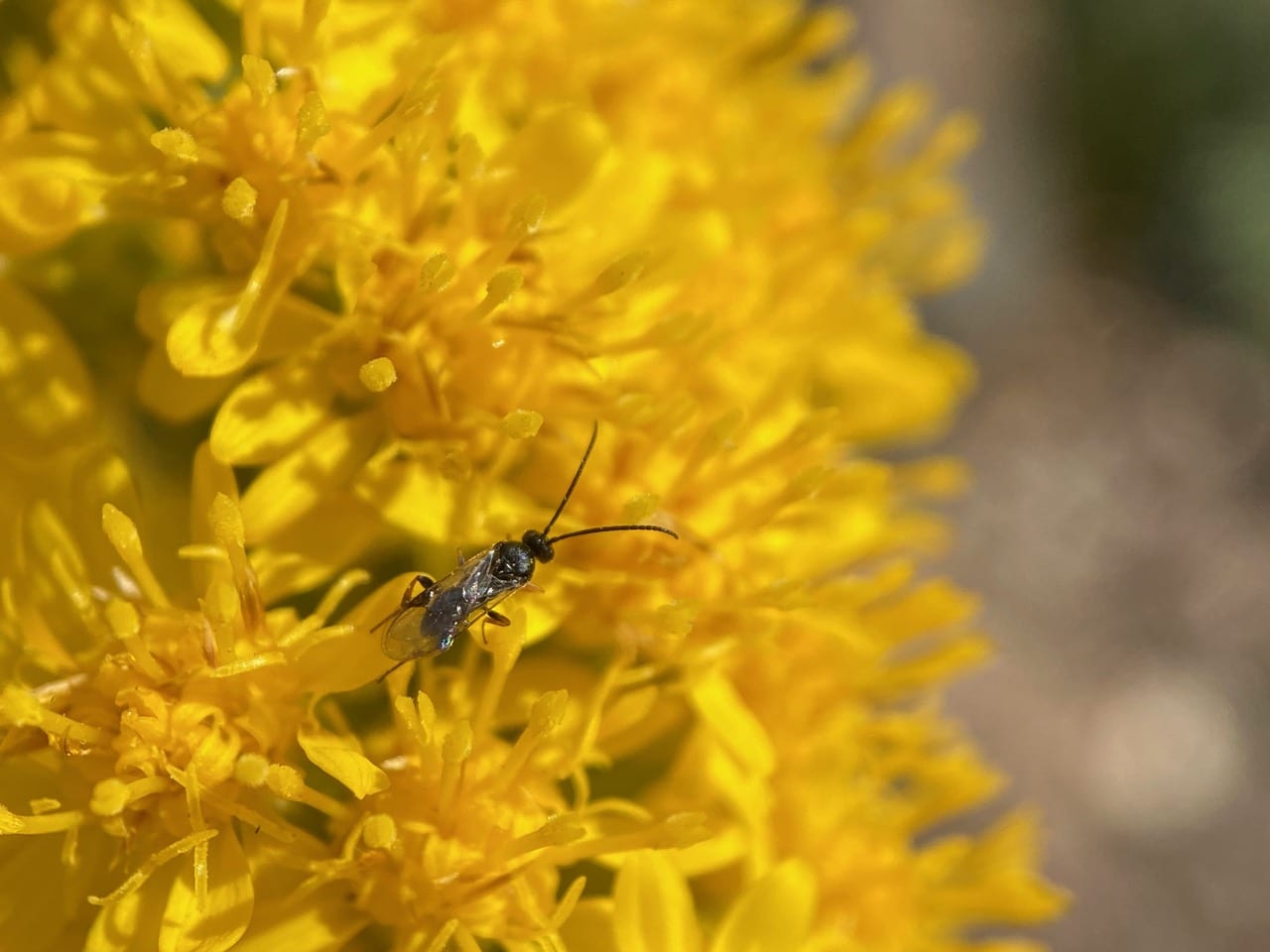
iNaturalist has helped identify the wasp as a Braconid Wasp, Chelonus sp. (family Braconidae).
The Braconidae are a family of parasitoid wasps. After the closely related Ichneumonidae, braconids make up the second-largest family in the order Hymenoptera, with about 17,000 recognized species. Females often have long ovipositors to lay eggs on or in their hosts. The larvae of most braconids are internal primary parasitoids of other insects, especially the larval stages of Coleoptera, Diptera, and Lepidoptera. Generally, the braconid life cycle begins when the female wasp deposits her eggs in the host insect, and the braconid larvae develop in the host body, eating it from the inside out. When the wasp larvae are ready to pupate, they may do so in or on the host insect. The new generation of adult braconid wasps emerges from their cocoons and begins the life cycle again.
Braconid wasps use a remarkable weapon to disable the defenses of their host insects – a virus. These parasitic wasps coevolved with polydnaviruses (read poly-DNA-virus), which they carry and inject into the host insects along with their eggs. The virus attacks the host’s immune system and renders it unable to encapsulate the wasp egg; it also halts the host’s development, so it can’t pupate and transform into an adult. Amazingly, the “bracovirus” also changes the host’s metabolism so that it can survive longer without food or water – thus ensuring a nurturing environment for all the young wasps to come.
Chelonus is a wasp genus in the family Braconidae. Their larvae feed chiefly on larvae of moths in superfamilies Tortricoidea and Pyraloidea.