

Pollinator Post 6/3/24 (3)
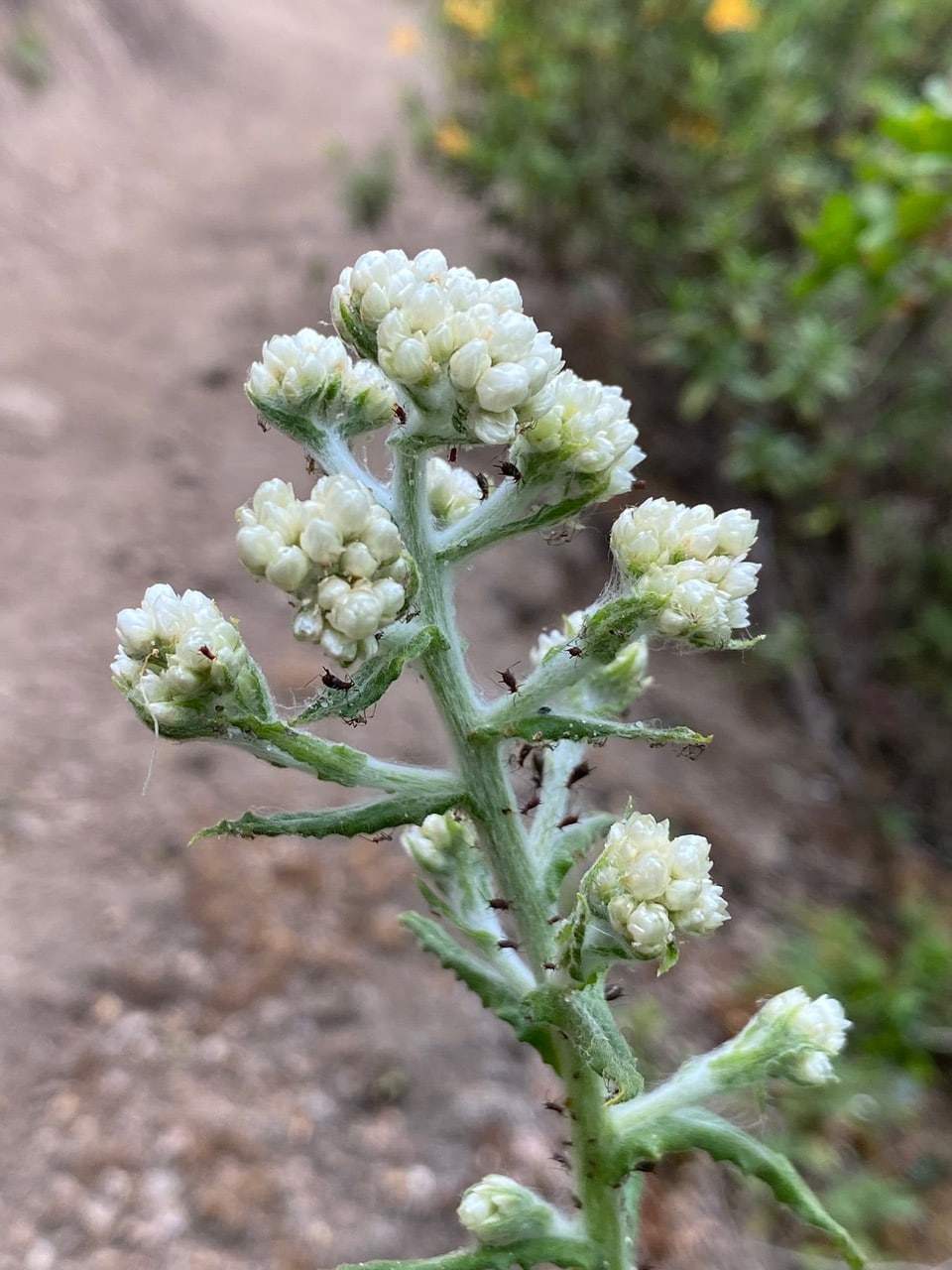
A California Everlasting, Pseudognaphalium californicum at the edge of the trail is dotted with dark insects.

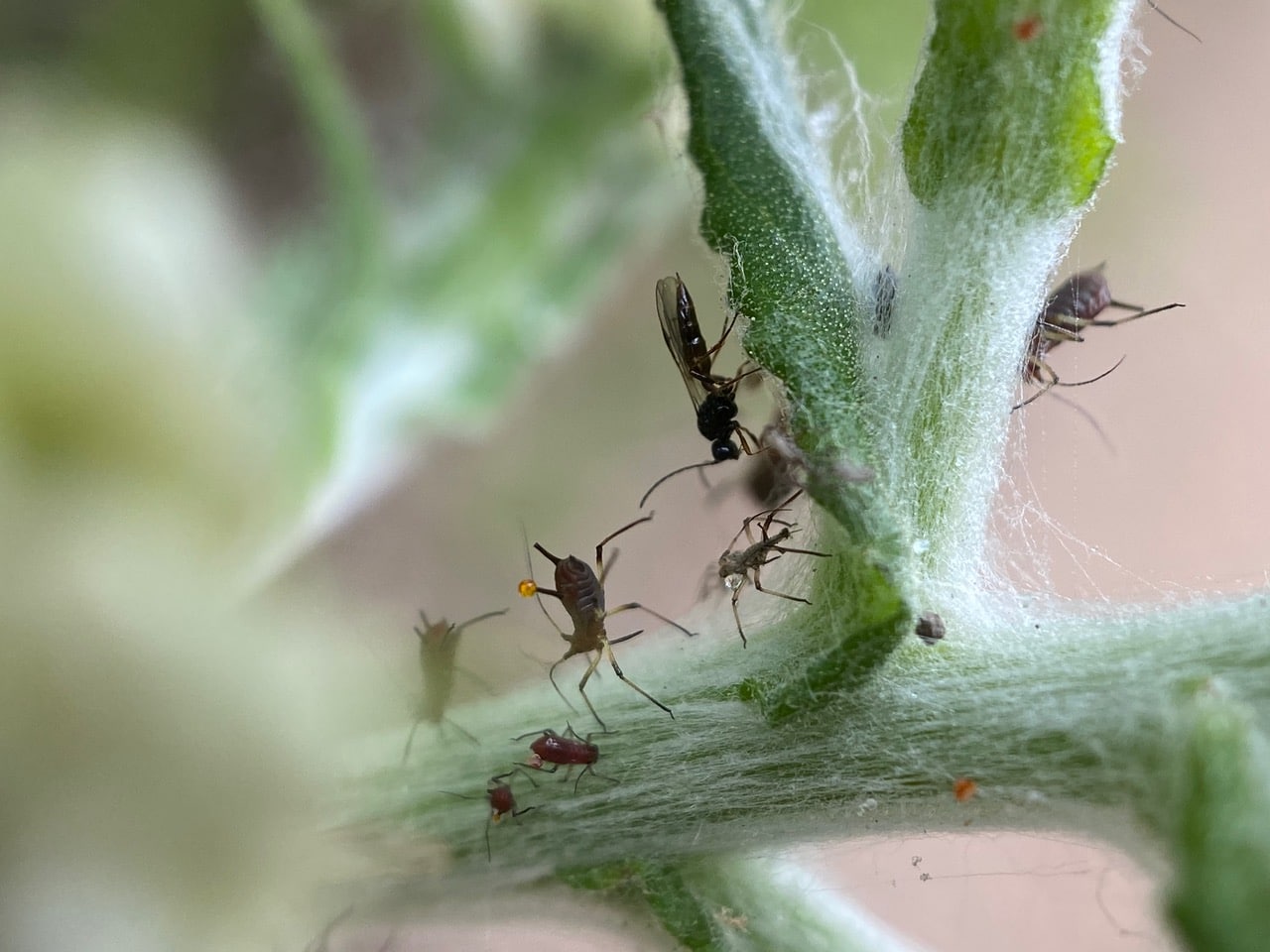
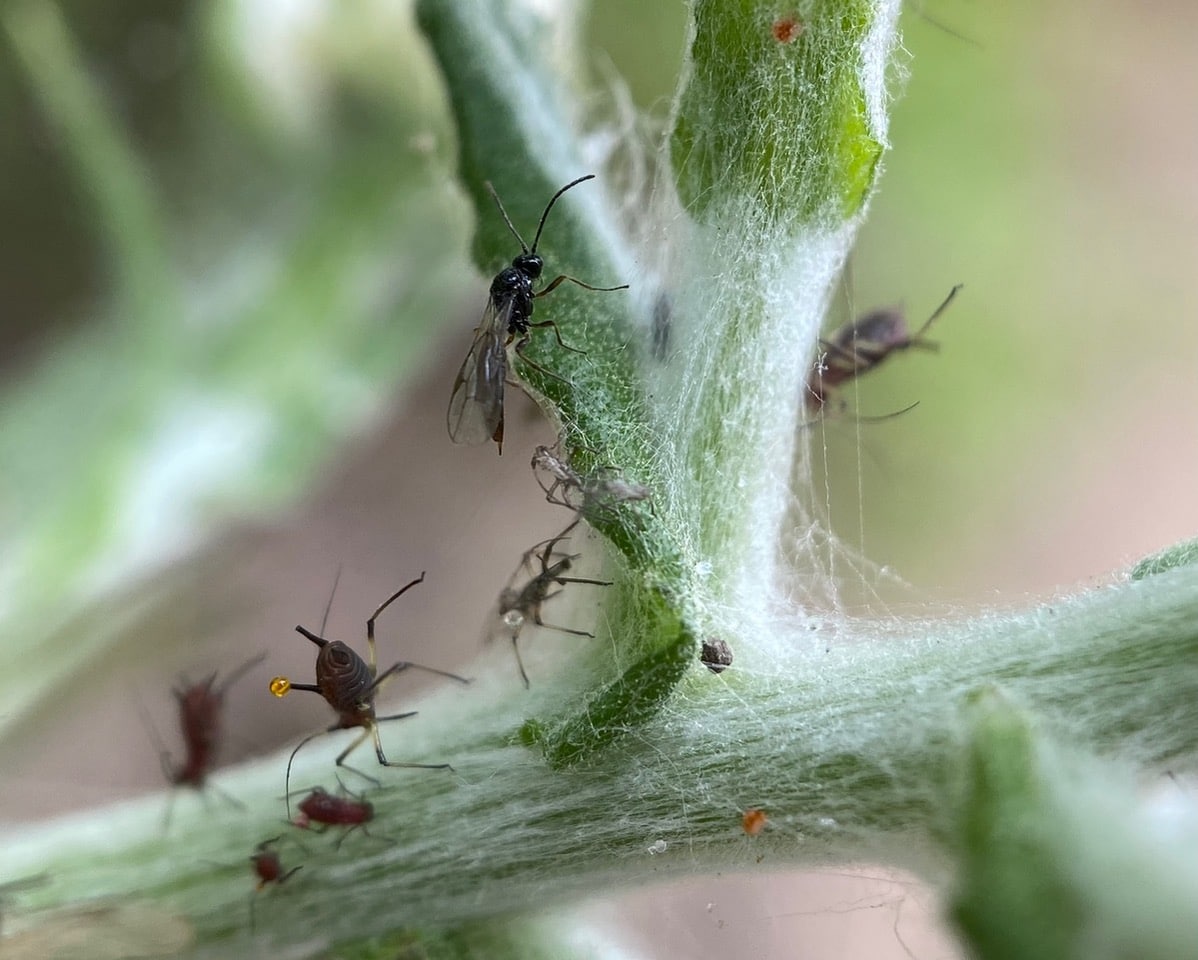
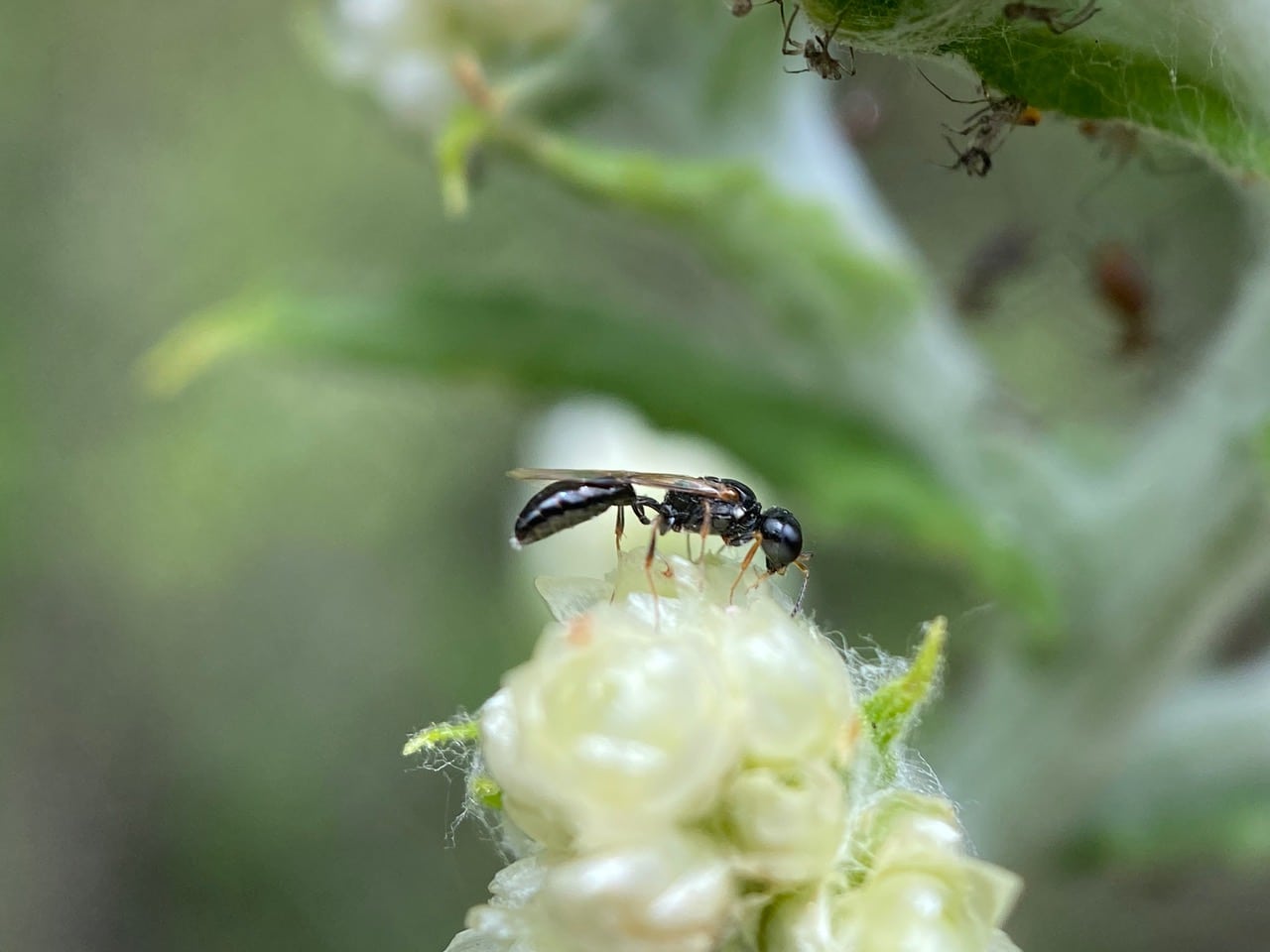

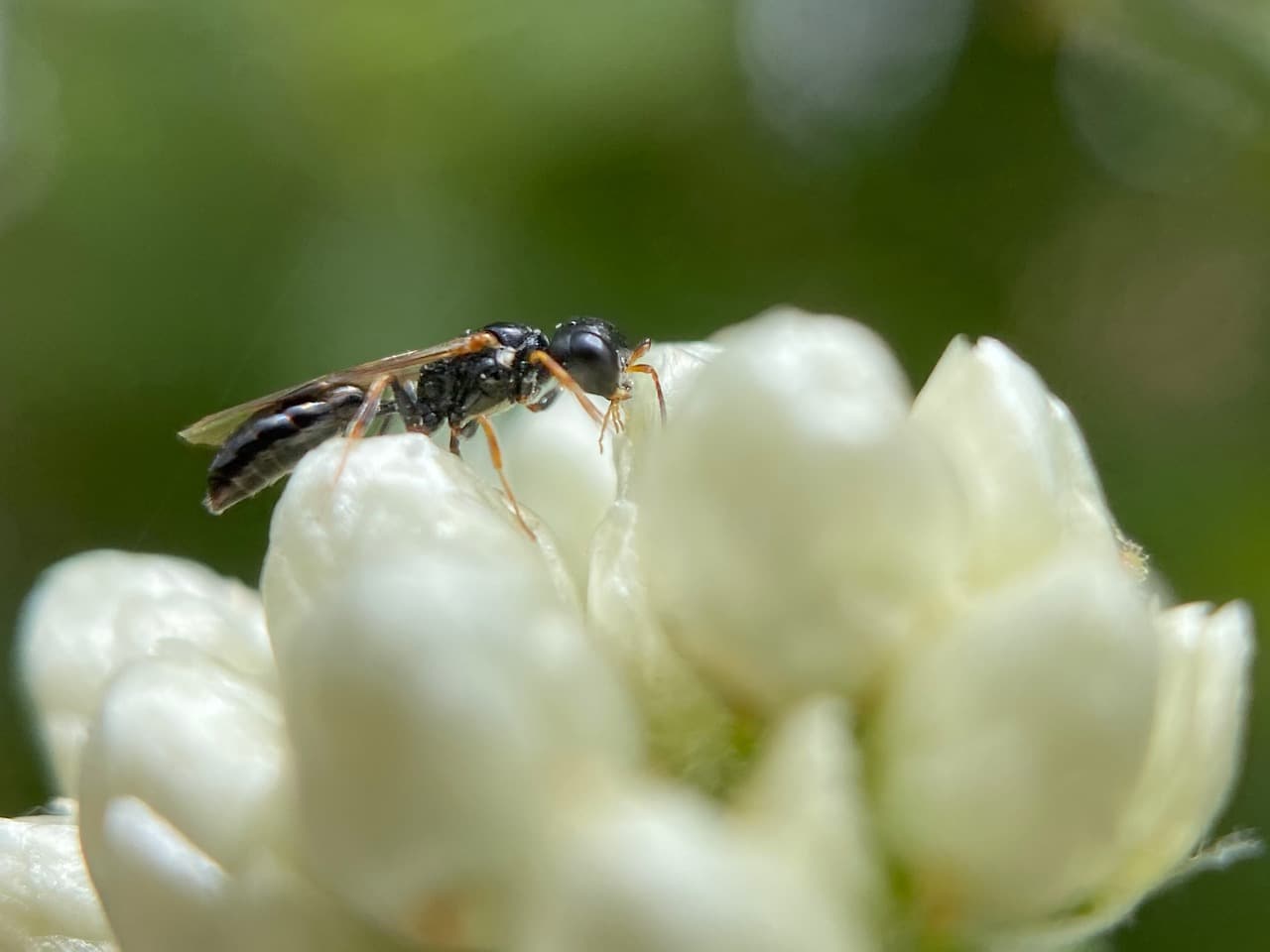
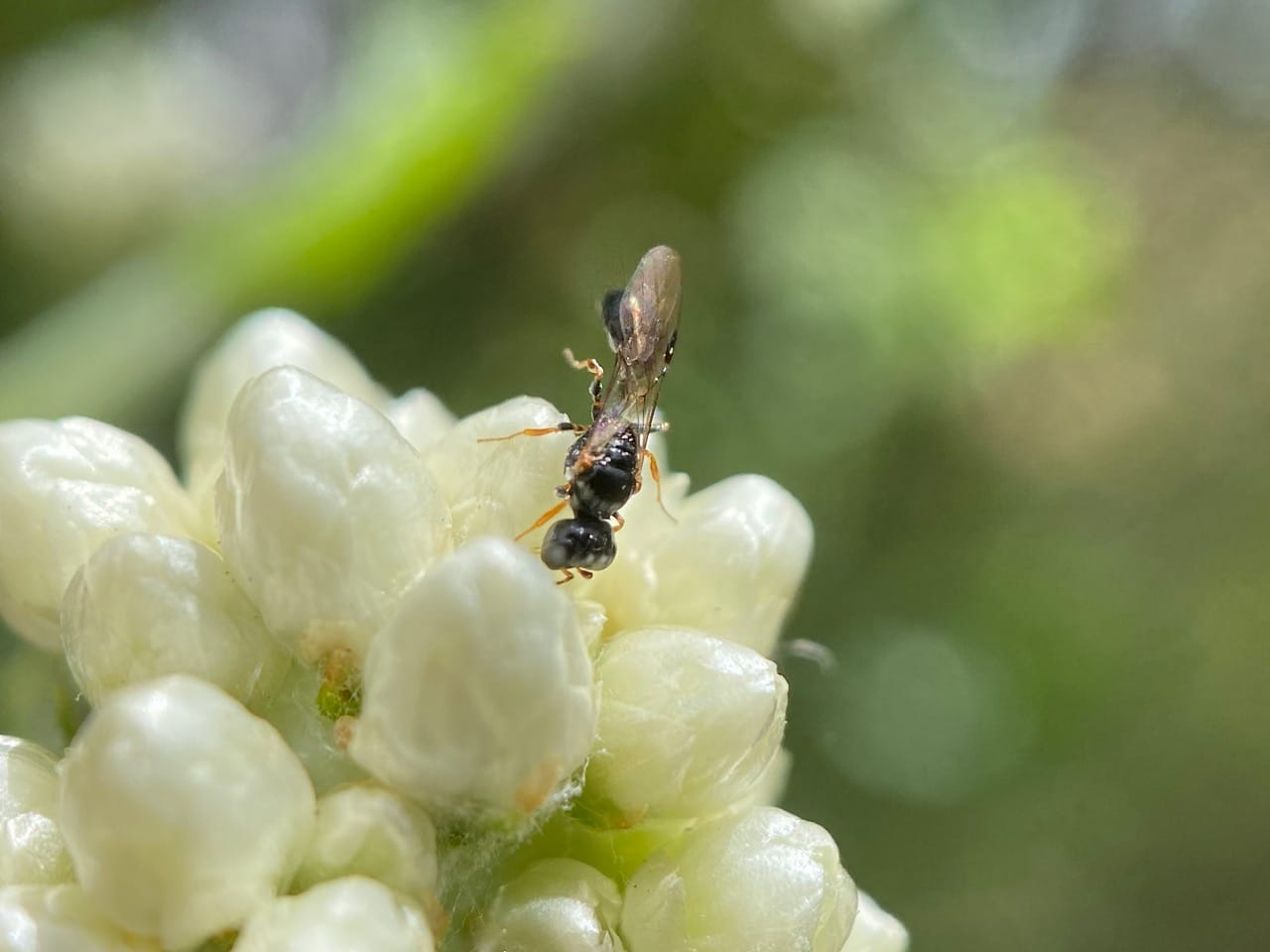
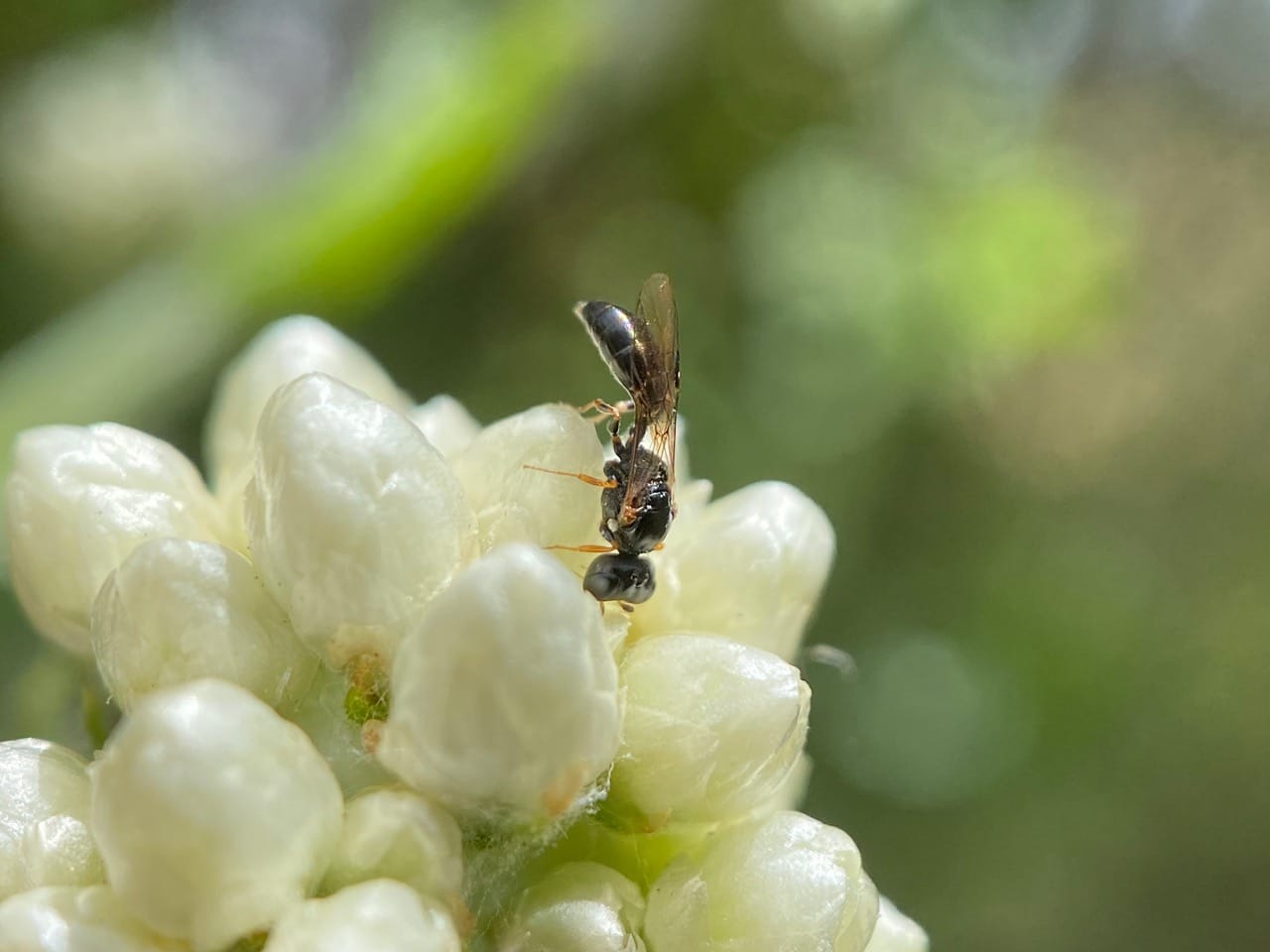
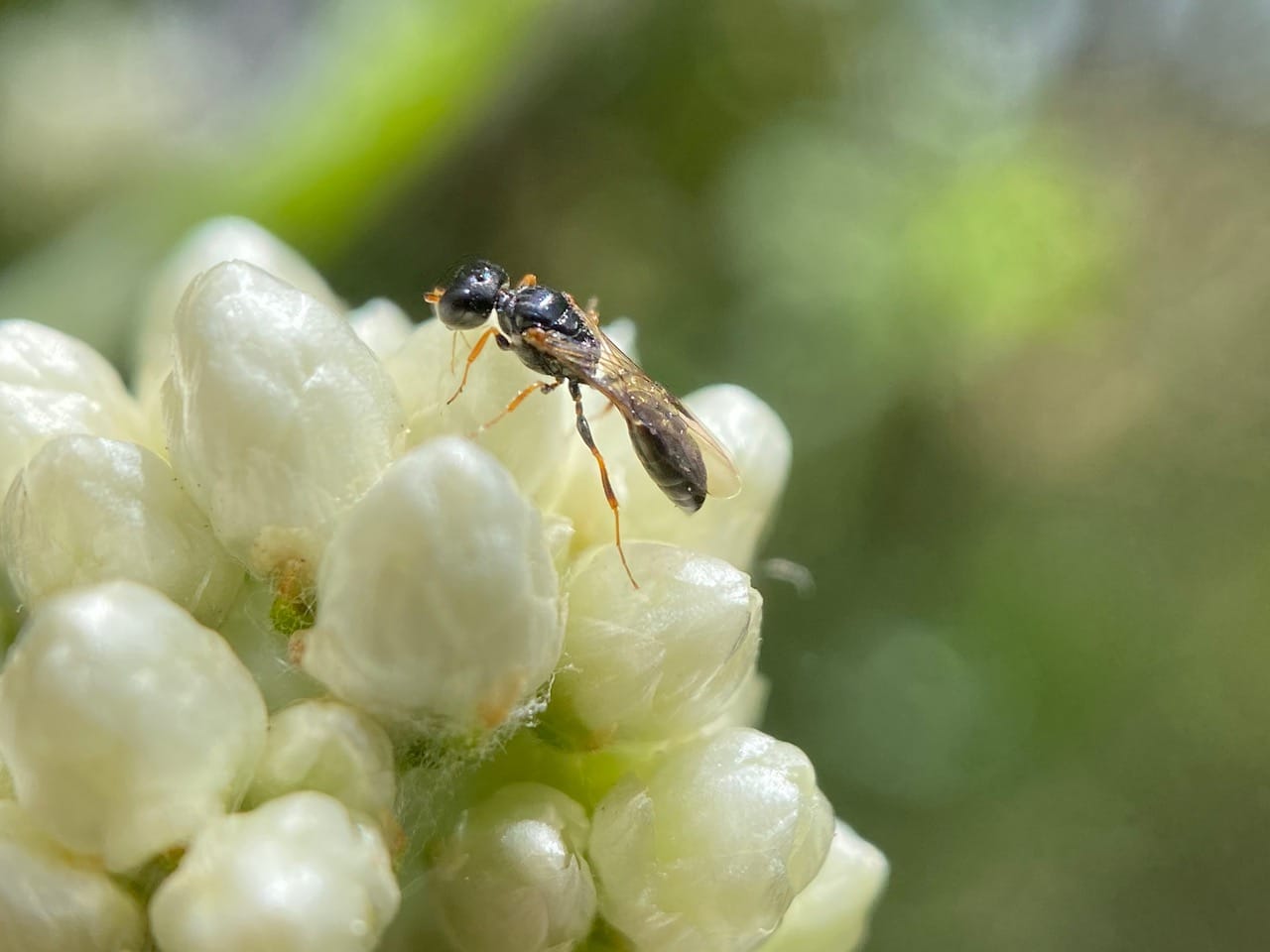
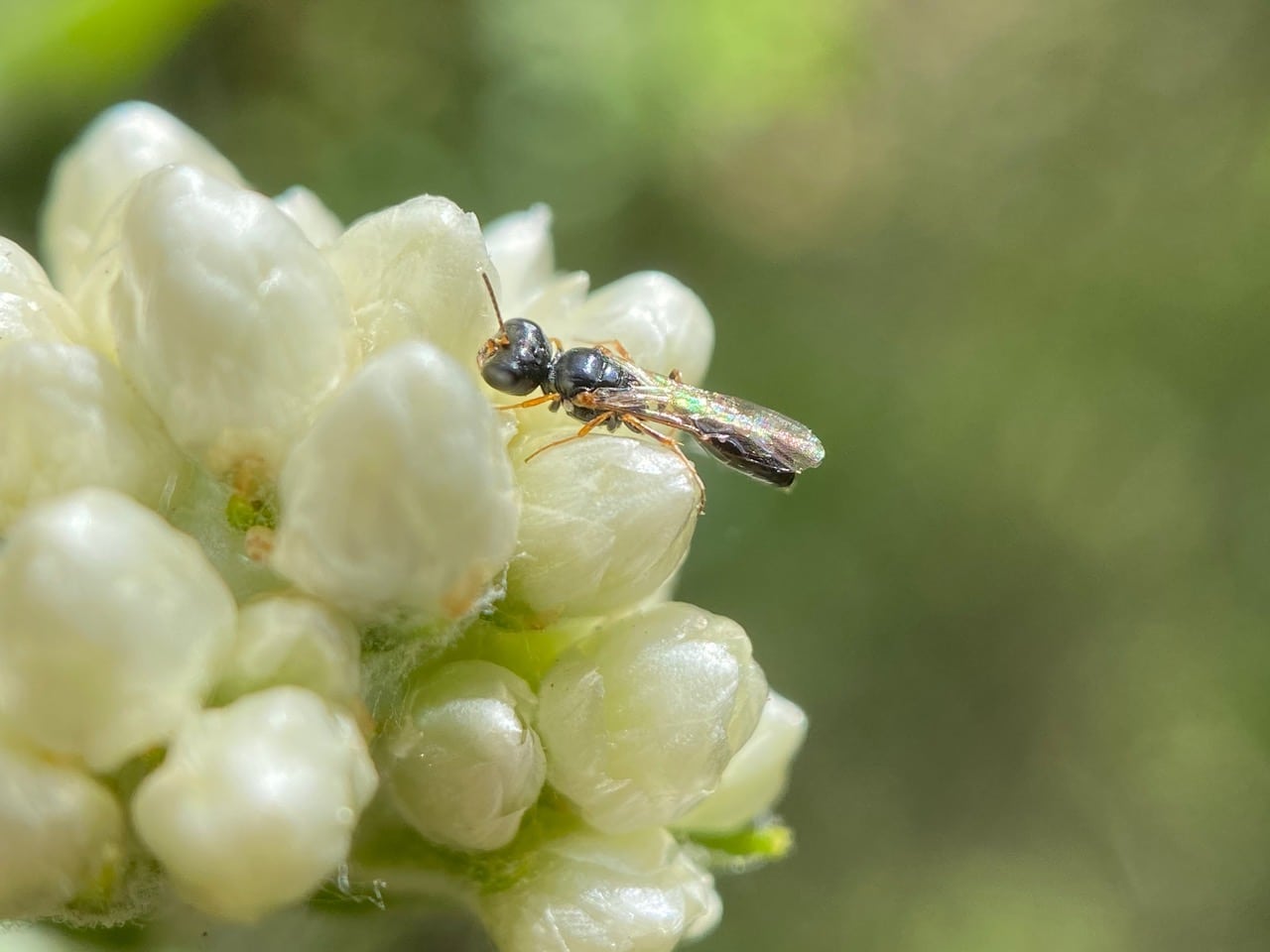 What an interesting square head! iNaturalist has helped identify it as an Aphid Wasp, Stigmus sp. (family Crabronidae, subfamily Pemphredoninae).
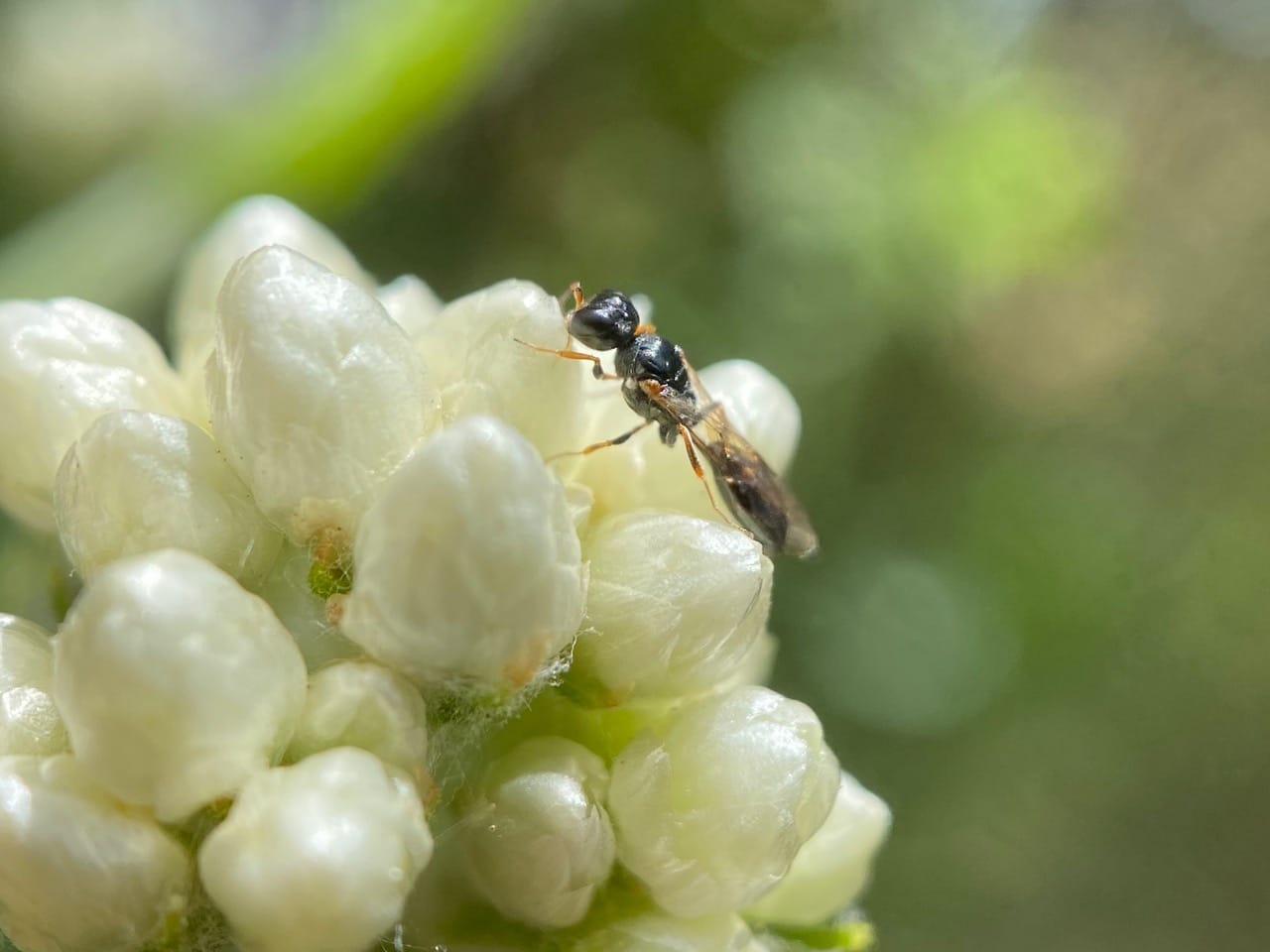

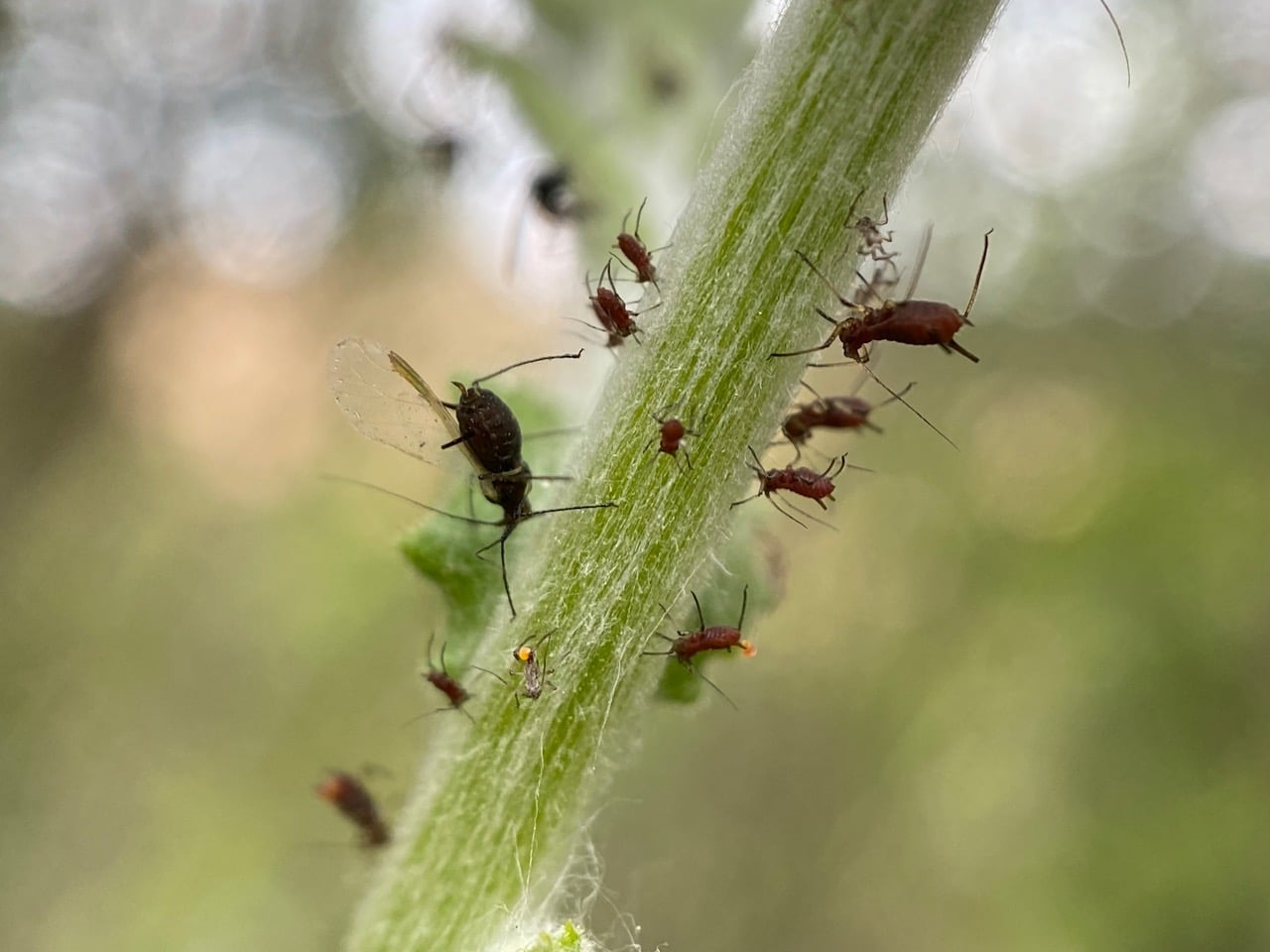
I take a closer look and discover that they are brown aphids. iNaturalist’s AI has identified them as the Rose Aphids, Macrosiphum rosae (family Aphididae).
Aphids are small sap-sucking insects in the order Hemiptera. A typical life cycle involves flightless females giving live birth to female nymphs, – who may also be already pregnant, an adaptation called telescoping generations – without the involvement of males. Maturing rapidly, females breed profusely so that the population multiplies quickly. Winged females may develop later in the season, allowing the insects to colonize new plants. In temperate regions, a phase of sexual reproduction occurs in the autumn, with the insects often overwintering as eggs.
The life cycle of some species involves an alternation between two species of host plants. Some species feed on only one type of plant, while others are generalists, colonizing many plant groups. Some ants have a mutualistic relationship with aphids, tending them for their honeydew and protecting them from predators.
Aphids usually feed passively on phloem of plants. Once the phloem vessel is punctured, the sap, which is under pressure, is forced into the aphid’s food canal. Aphids produce large amounts of a sugary liquid waste called “honeydew”. A fungus called sooty mold can grow on honeydew deposits that accumulate on leaves and branches, turning them black.
Suddenly the aphids wave their rears in the air. I start to pay attention as the behavior is a warning to their fellow aphids of imminent danger. Sure enough, a black wasp has landed on the plant, and is making its way towards the agitated aphids.
The wasp curls her abdomen forward between her legs and jabs a couple of the aphids with her ovipositor. Then she quickly ascends the leaf and flies off.
The wasp is an Aphid Mummy Wasp, Aphidius sp. (family Braconidae). Aphidius adults are small wasps, typically less than 1/8 in. long. The female wasp lays a single egg in an aphid. When the egg hatches, the wasp larva feeds inside the aphid. As the larva matures the aphid is killed and becomes bloated and mummified, usually turning tan or golden in color. The adult parasitoid chews its way out of the mummy leaving a hole.
Ooh, there’s a glossy black wasp much larger than the aphids on the same California Everlasting plant!
The wasp is checking every nook and cranny of this cluster of immature flowerheads.
What an interesting square head! iNaturalist has helped identify it as an Aphid Wasp, Stigmus sp. (family Crabronidae, subfamily Pemphredoninae). Common names for Crabronids include Square-headed Wasps, Hunting Wasps, Digger Wasps, Sand Wasps. Members of Crabronidae are solitary hunting wasps. The female excavates a nest in soil or other substrates (depending on species) and provisions it with prey (usually other insects or spiders) that have been paralyzed by her sting.
The Subfamily Pemphredoninae also known as the Aphid Wasps, is a large group in the wasp family Crabronidae. The subfamily consists of solitary wasps, each genus having its own distinct and consistent prey preferences. The adult females dig tunnels in the ground, or plant material, for nesting. The larvae are carnivorous. Females hunt for prey on which to lay their eggs, mass provisioning the nest cells with paralyzed, living prey that the larvae feed upon after hatching from the eggs. Certain species nest in hollow tubes provisioned with aphids or thrips.
Since the plant is infested with aphids, I assume that this Crabronid wasp is an aphid hunter.
Wow, I get to see two kinds of wasps associated with aphids within minutes of each other – one is a parasitoid wasp in the family Braconidae, and the other is an aphid predator in the family Crabronidae. The larvae of both wasps feed on aphids, in markedly different ways.
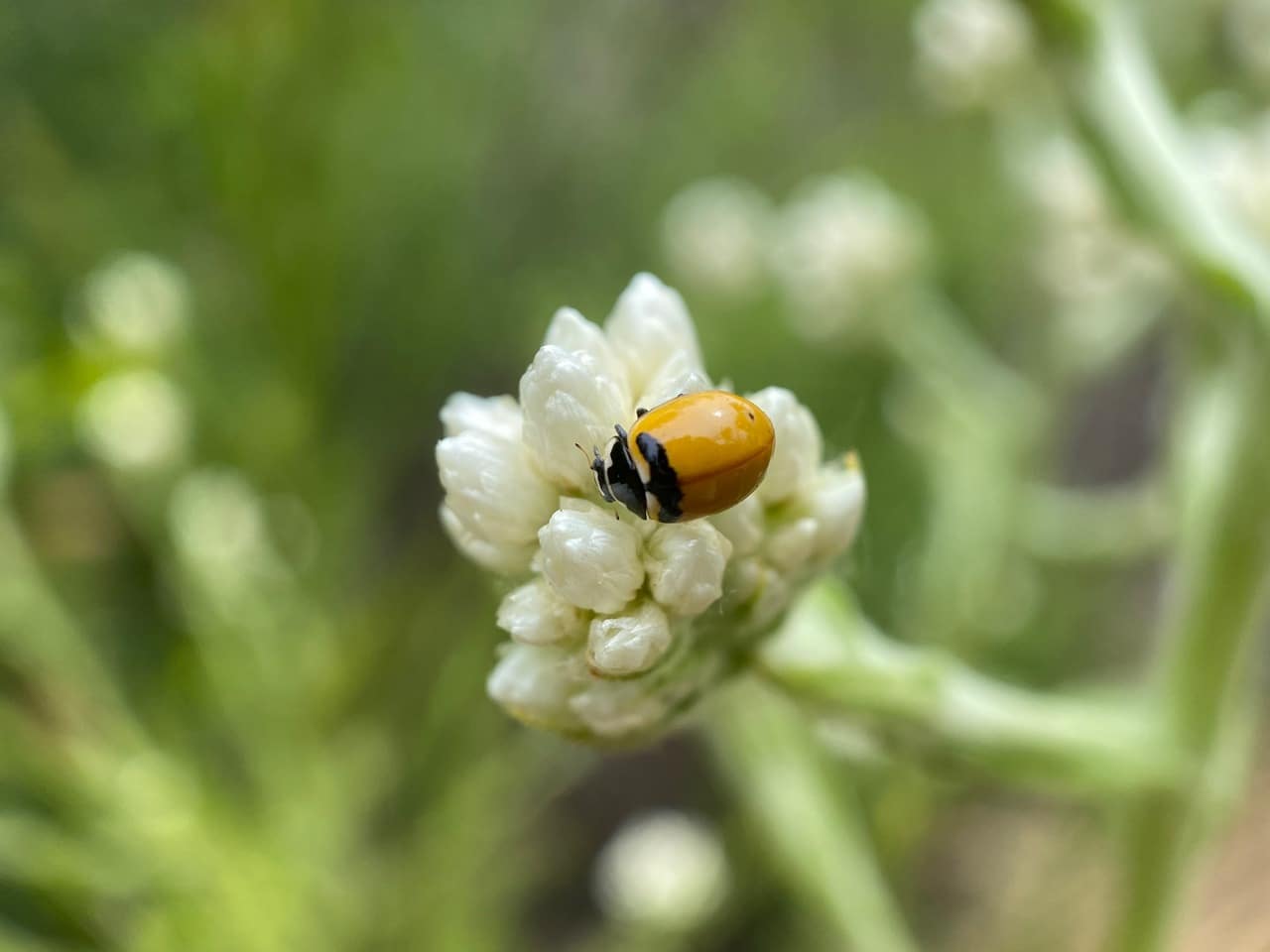
Here’s another aphid predator on the aphid-infested California Everlasting – a Pacific Three-banded Ladybeetle, Coccinella trifasciata subversa (family Coccinellidae).
“Three-banded”? The species is rather variable depending on its range. The ones found east of the Rockies are indeed three-banded. Species Coccinella trifasciata – Three-banded Lady Beetle – BugGuide.Net Here in California, we have the subspecies Coccinella trifasciata subversa, also known as the Pacific Three-banded Ladybeetle. Photos of Pacific Three-banded Lady Beetle (Subspecies Coccinella trifasciata subversa) · iNaturalist These beetles are active from spring through summer months and on warm days of fall; diapausing (that’s insect version of hibernation) through the colder winter months.
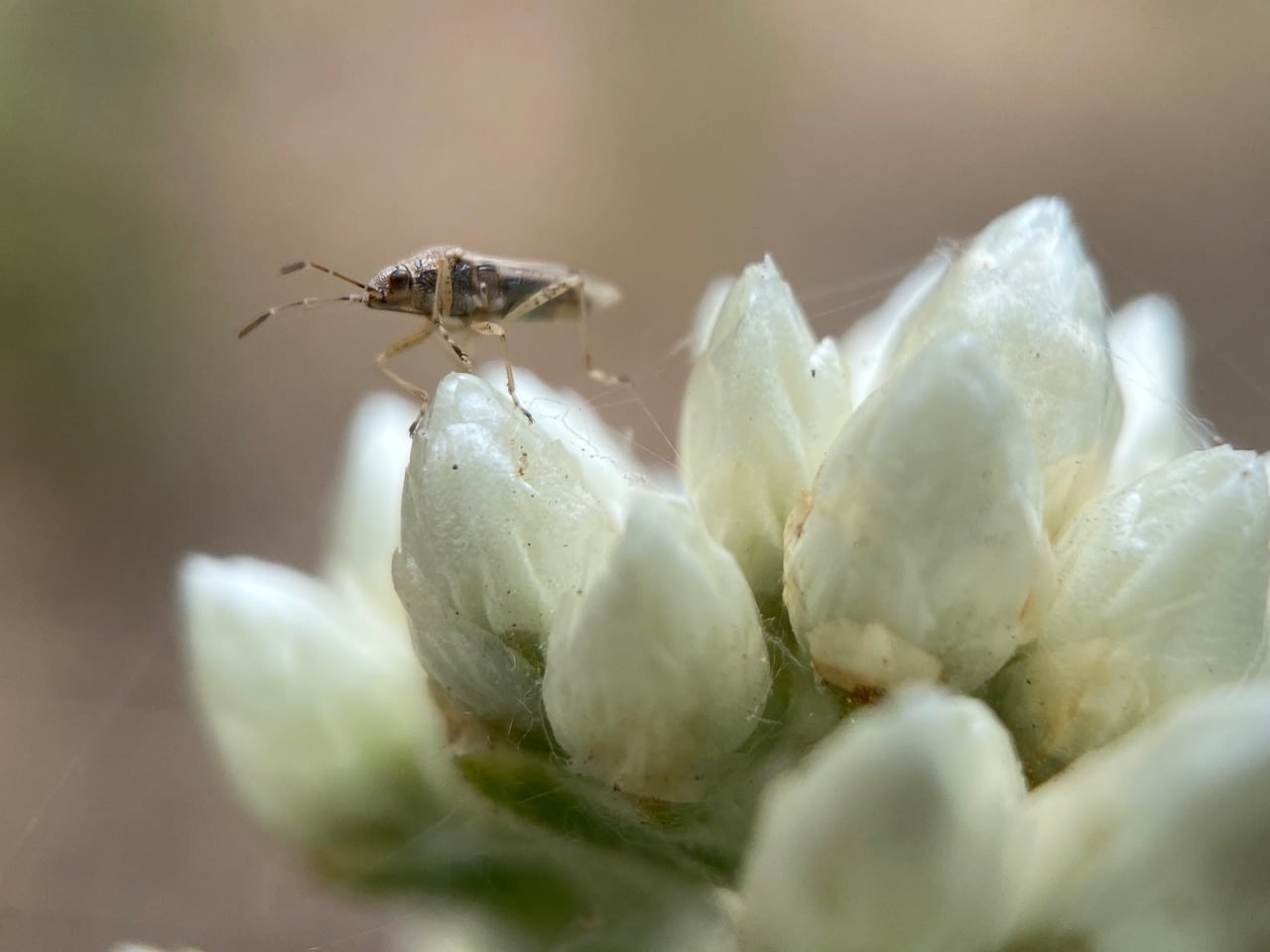
A False Cinch Bug, Nysius raphanus (family Lygaeidae or seed bugs) is roaming a cluster of immature California Everlasting flowerheads. I see them on this plant every year.
Nysius raphanus is commonly found within grassy or weedy fields, pastures, and foothills. The bugs spend the winter as nymphs and adults, usually in uncultivated areas beneath debris or in plants, often feeding on mustards or other winter annual plants. Each spring, once the plants in these areas dry up, the False Cinch Bug migrates to find new places to feed. There can be several generations a year. When populations are high in wet years, the bugs can become a nuisance for gardeners and farmers.
Note the bug’s needle-like mouthpart that is folded under its body when not feeding. The family Lygaeidae or Seed Bugs belong to the order Hemiptera (true bugs), characterized by their piercing-sucking mouthparts. Seed bugs are named because most species in their family eat seeds. Seed bugs are able to feed on seeds by injecting digestive juices into the seeds and sucking up the digested contents as a liquid. Included in this group of true bugs are the colorful milkweed bugs but also a number of less exciting brownish bugs.
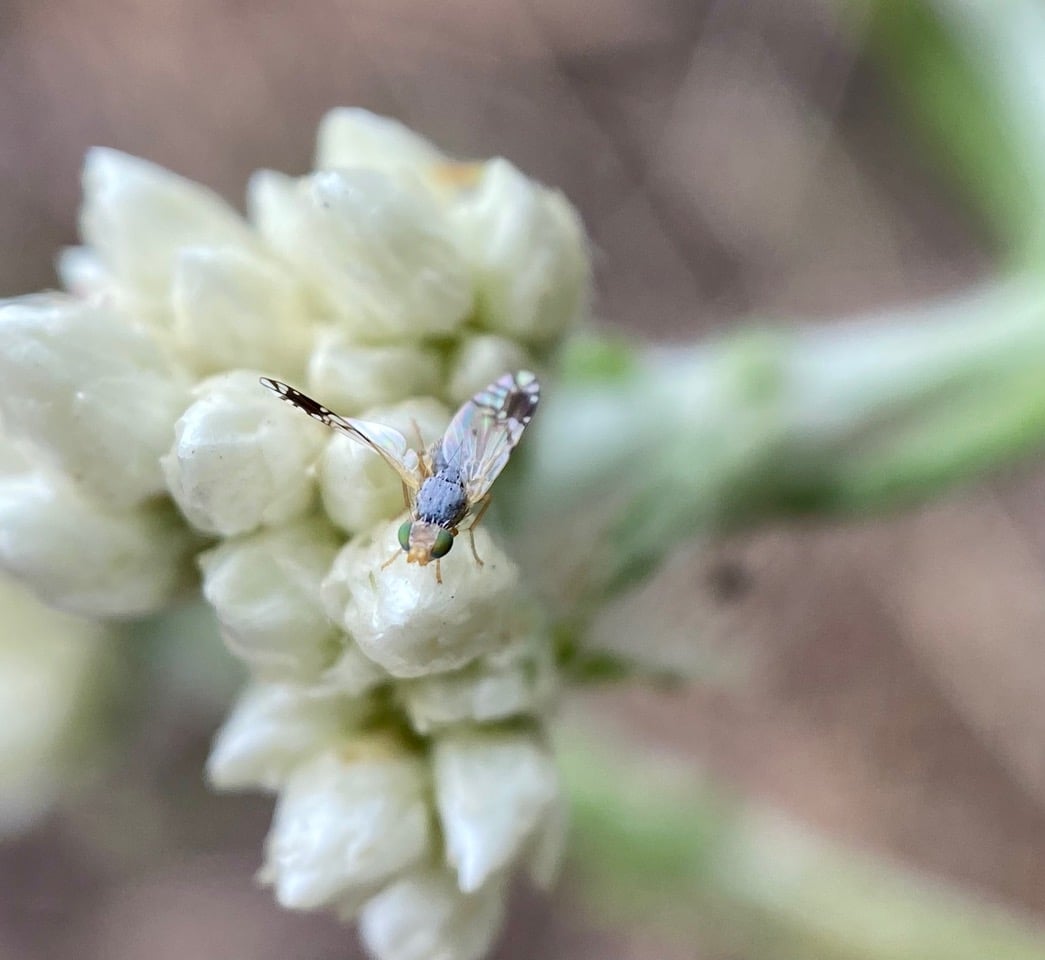
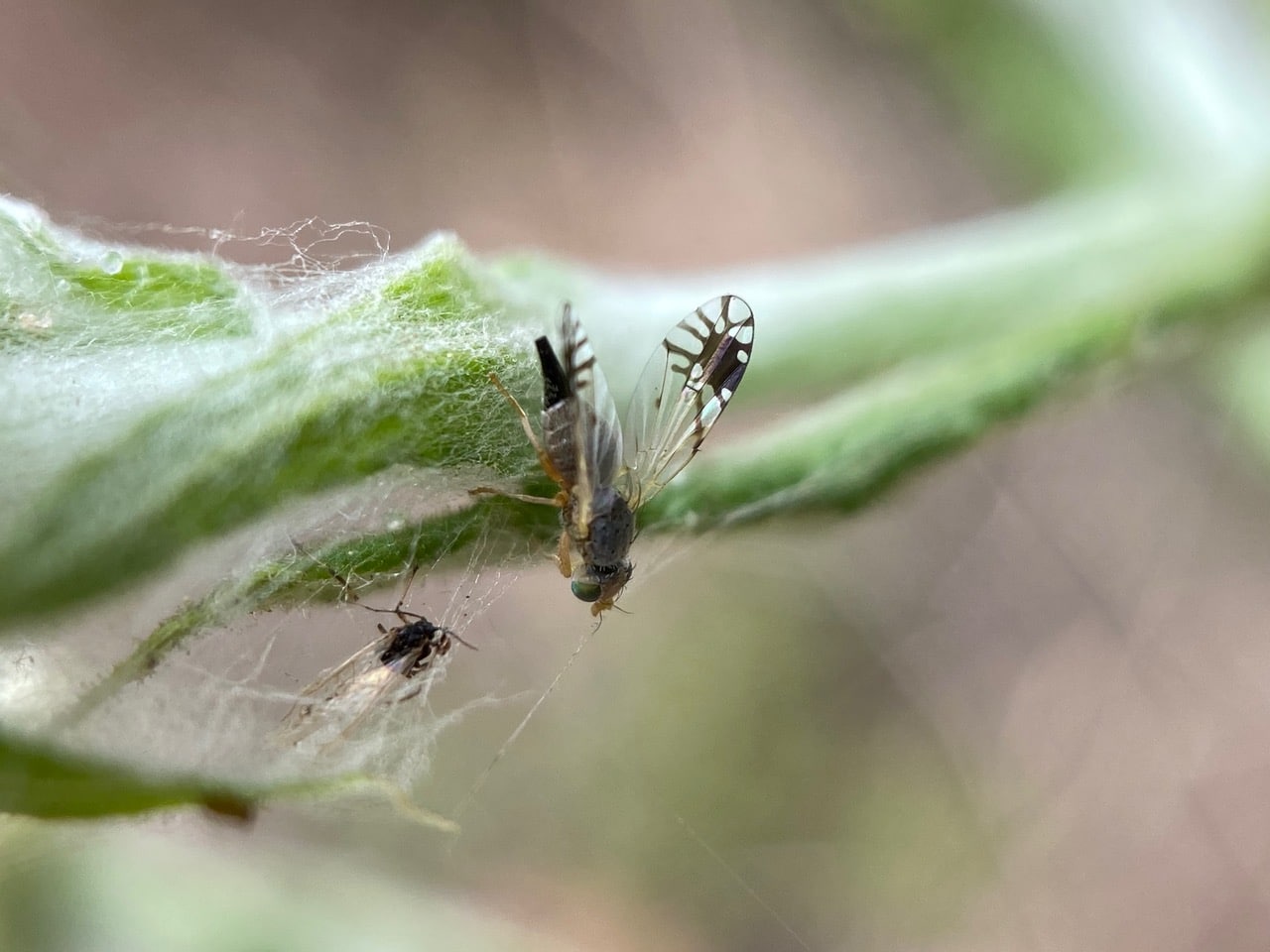
A Fruit Fly, Trupanea sp. (family Tephritidae), only about 3 mm long, is doing a wing display on a cluster of immature California Everlasting flowerheads. It is twisting its wings in figure-8 alternately on slow motion. Tephritids are easily recognizable by their picture wings, which they may wave around in courtship and other communications.
The fly begins to run around the plant. As it bends down I notice the prominent dark, pointed oviscape on the tip of her abdomen. The oviscape is the basal part of the ovipositor of some insects, typically the non-retractile sclerotized sheath that remains exposed when the telescopic ovipositor is withdrawn and not in action. Was the fly signaling to potential mates, and is she looking for a place to lay her eggs?
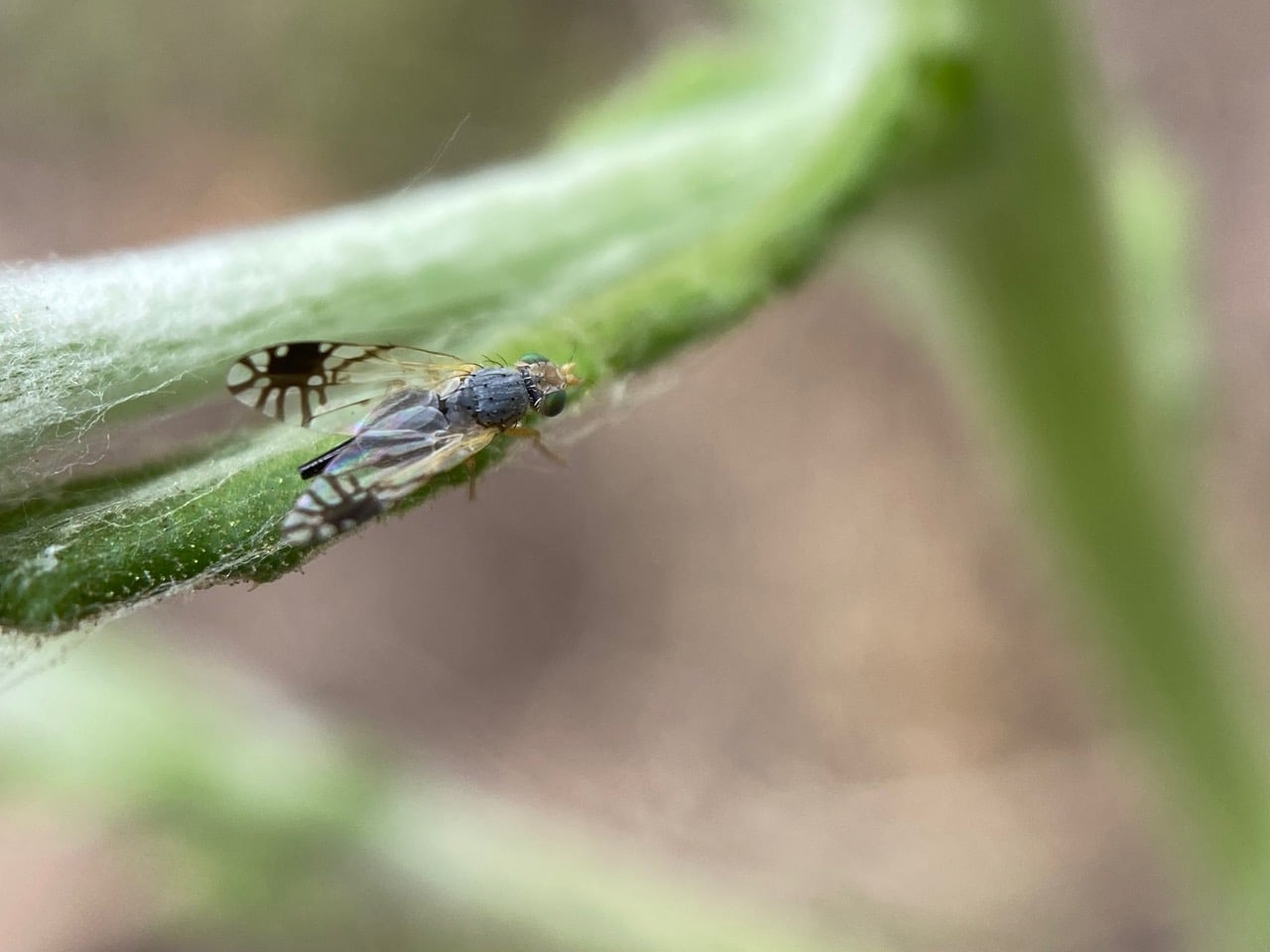
Tephritids are small to medium-sized flies that are often colorful, and usually with picture wings. The larvae of almost all Tephritidae are phytophagous. Females deposit eggs in living, healthy plant tissues using their telescopic ovipositors. Here the larvae find their food upon emerging. The larvae develop in leaves, stems, flowers, seeds, fruits, and roots of the host plant, depending on the species. Adults are often found on the host plant and feeding on pollen, nectar, rotting plant debris, or honeydew. Tephritid flies are of major economic importance as they can cause damage to fruit and other plant crops. On the other hand, some Tephritids are used as agents of biological control of noxious weeds.
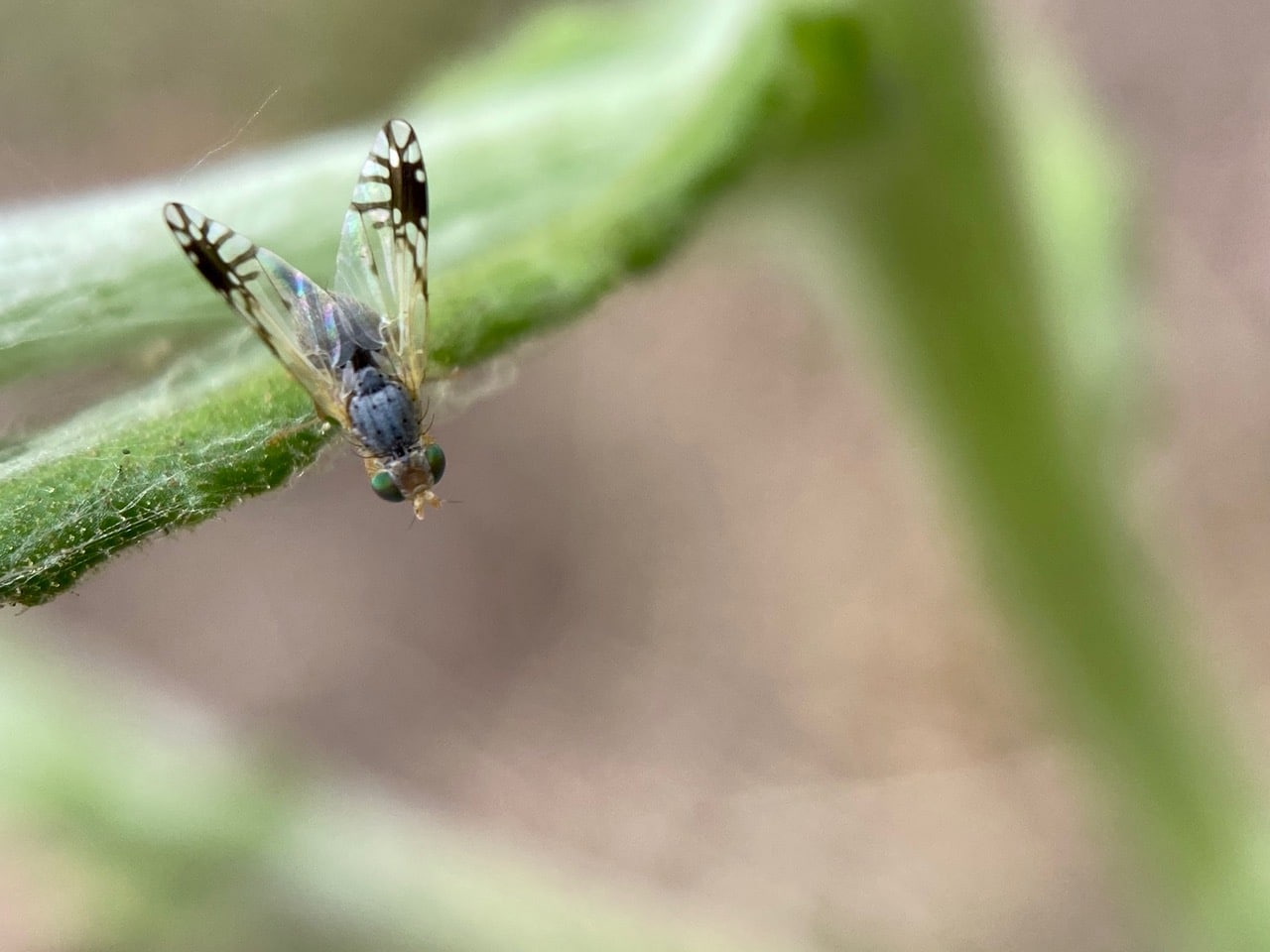


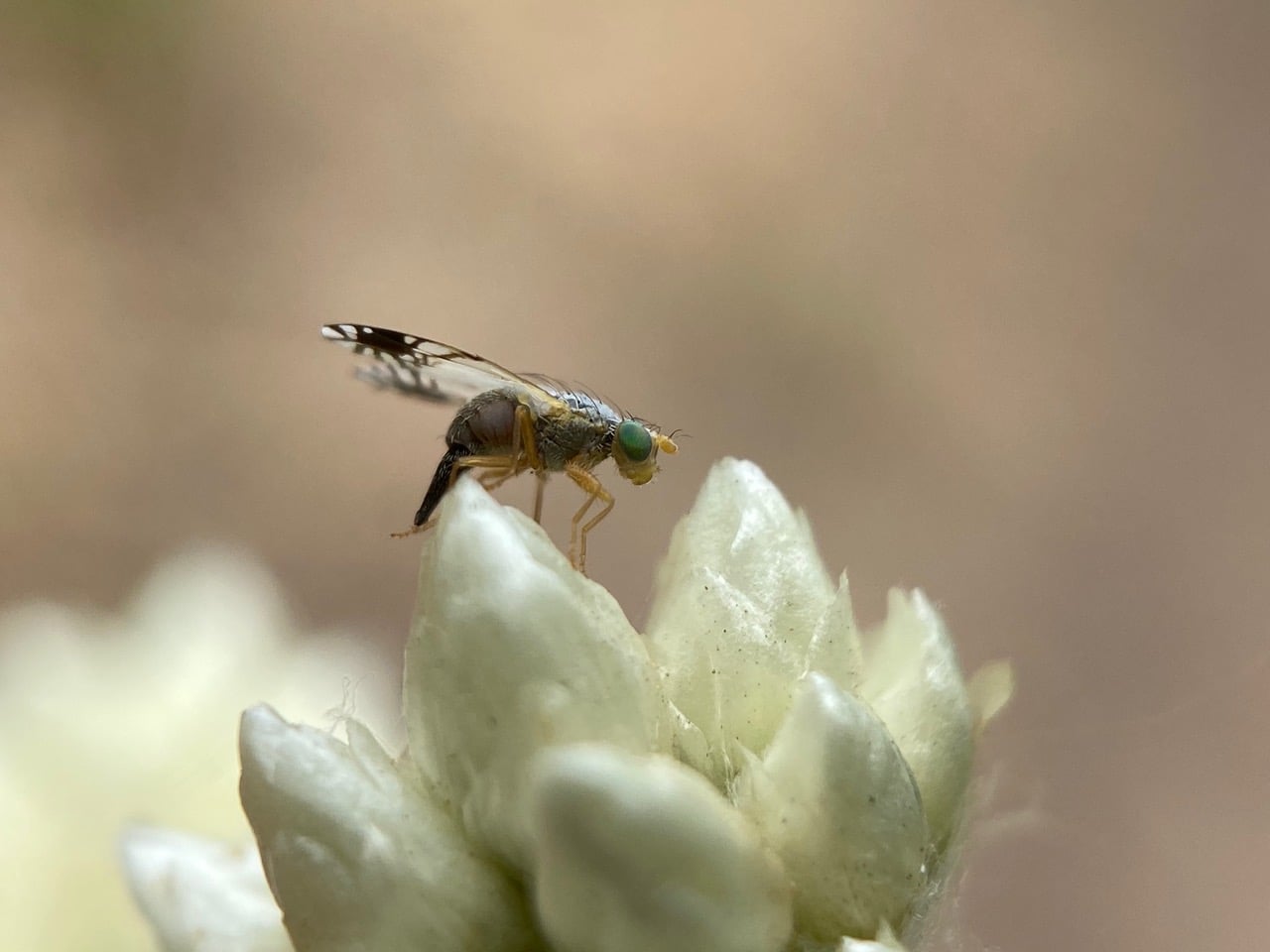
When the Fruit Fly lowers her oviscape, I thought for a moment that she is going to lay eggs. No, she is only cleaning it, brushing it vigorously with her hind legs.

For a brief moment, the fly extrudes her ovipositor through the oviscape. She is probably quite ready to lay eggs.
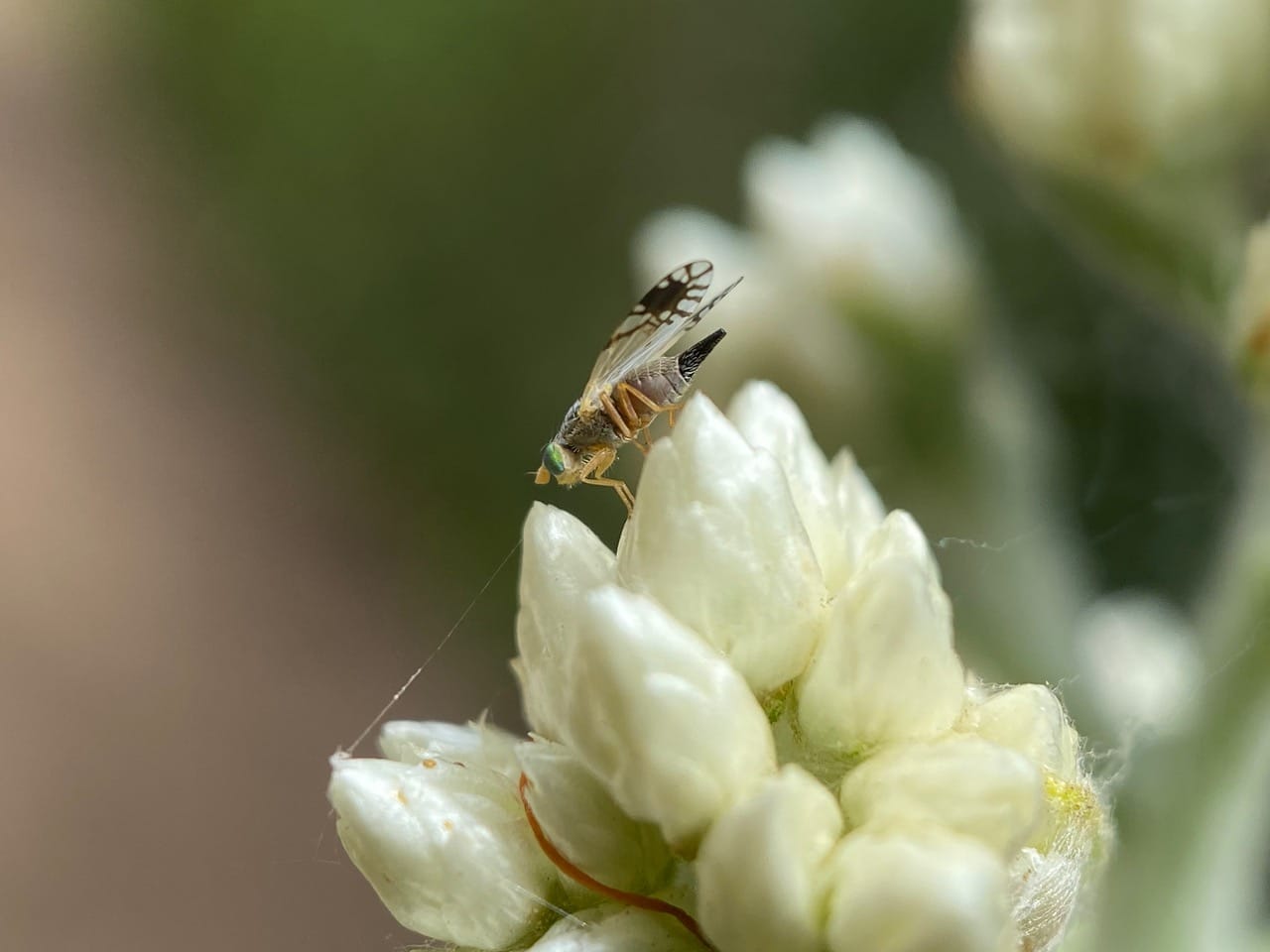
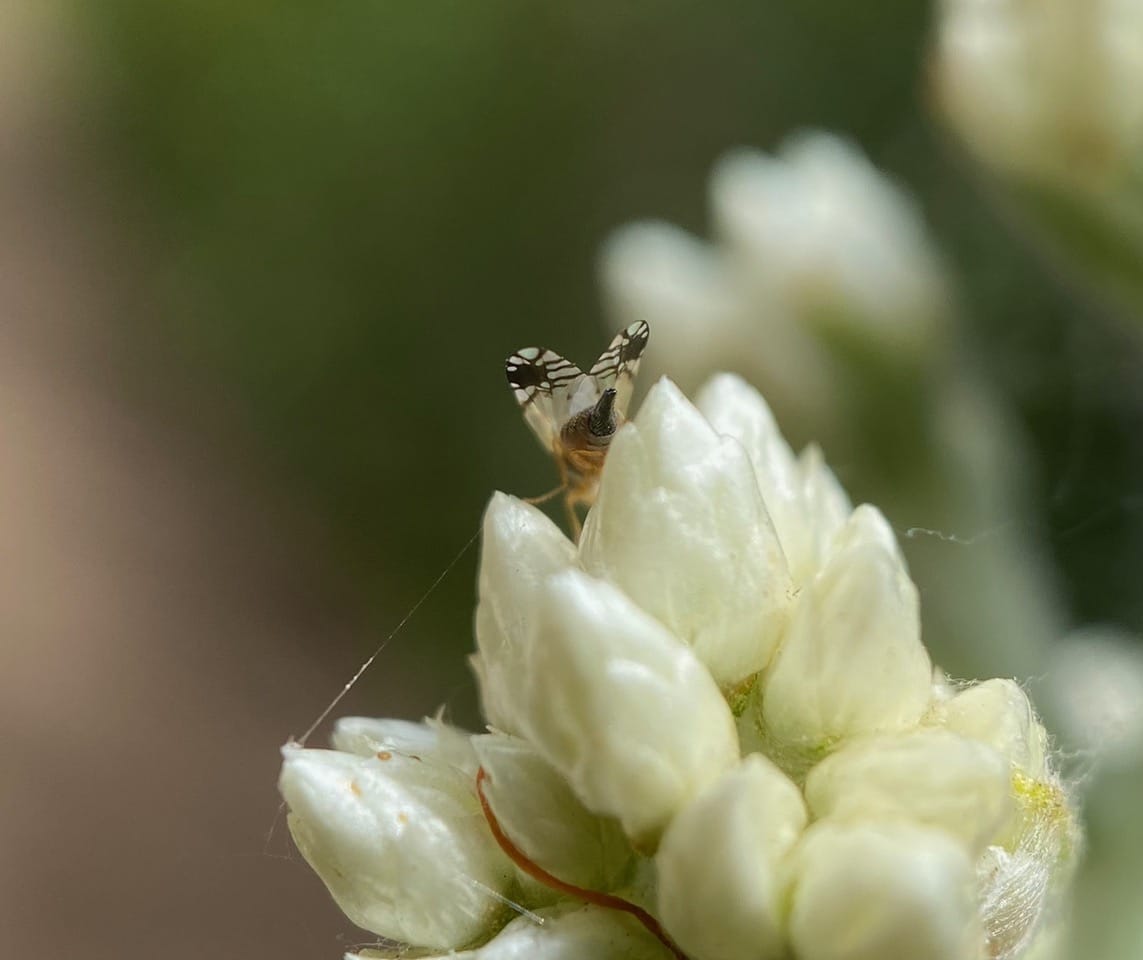

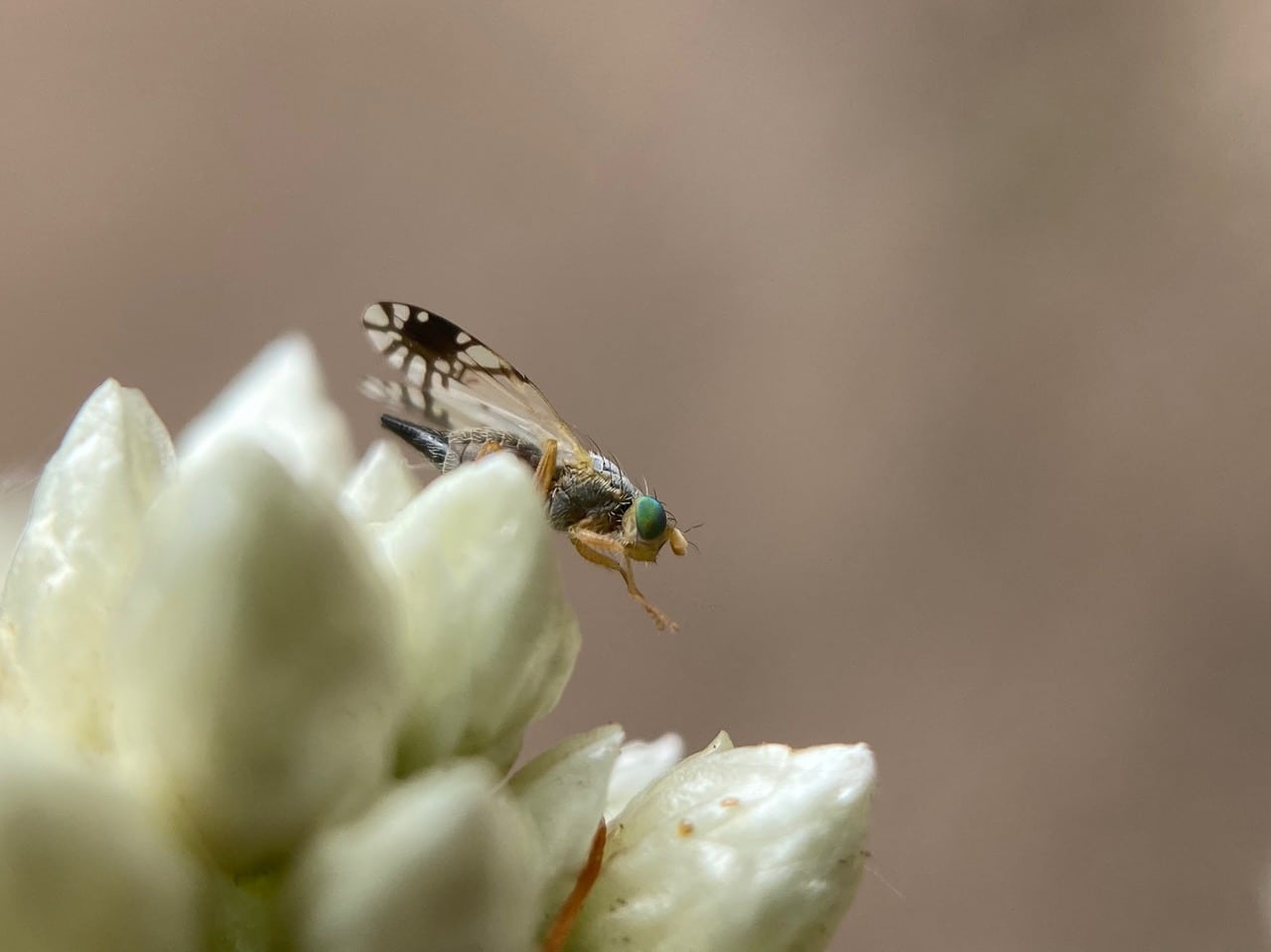
I follow the Fruit Fly’s movement for a while, but don’t see her lay any eggs. I’ll be on the lookout for these flies on the California Everlasting in the next few weeks.