

Pollinator Post 6/3/23 (3)
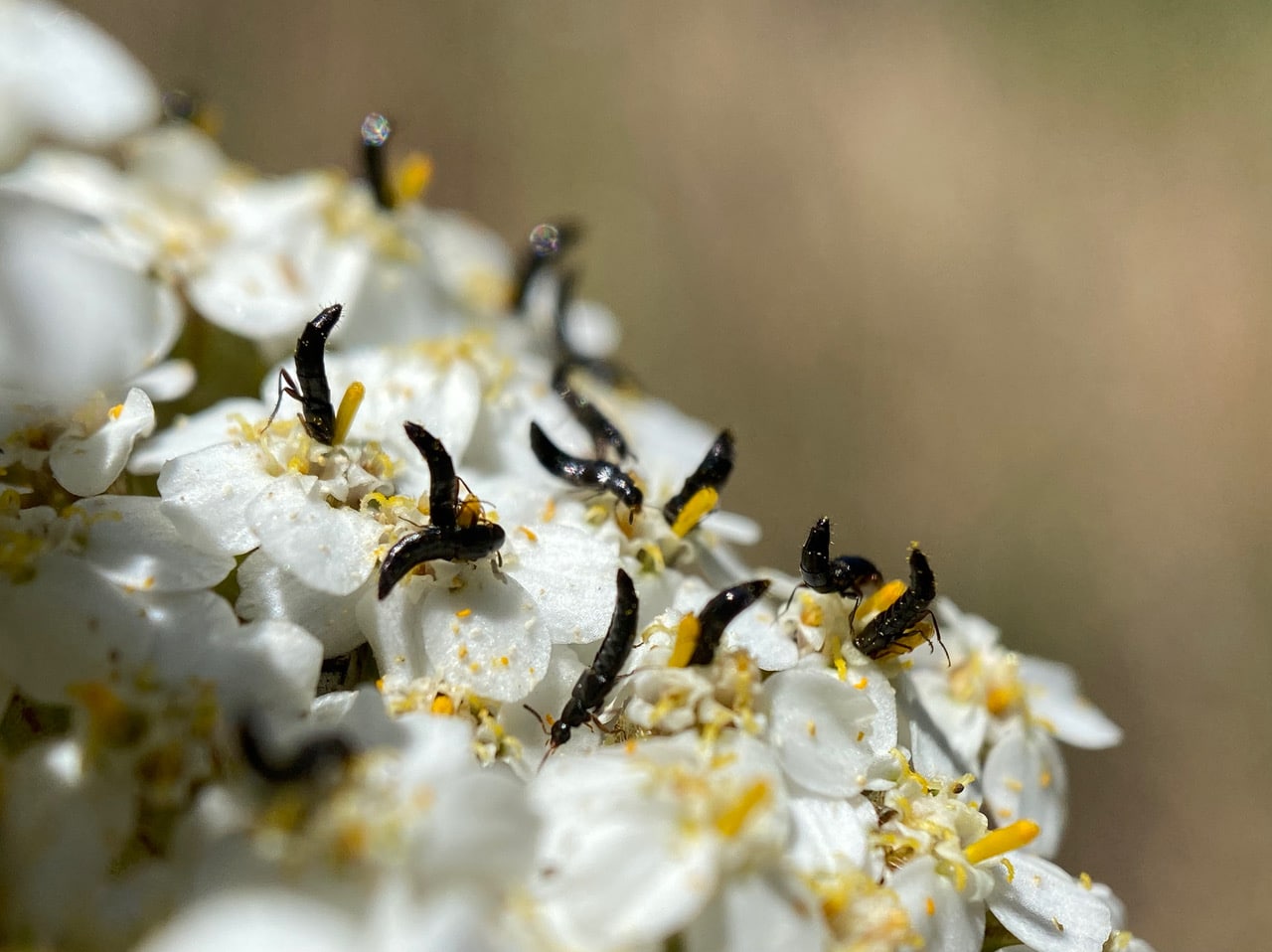
The tiny, black, shiny Rove Beetles (family Staphylinidae) continue to frolic on the flowerheads of Yarrow, Achillea millefolium along Skyline Trail. They are most often seen with their rear ends sticking up from the flowerheads. They are probably feeding on the reproductive parts of the flowers, most of which have been shredded.
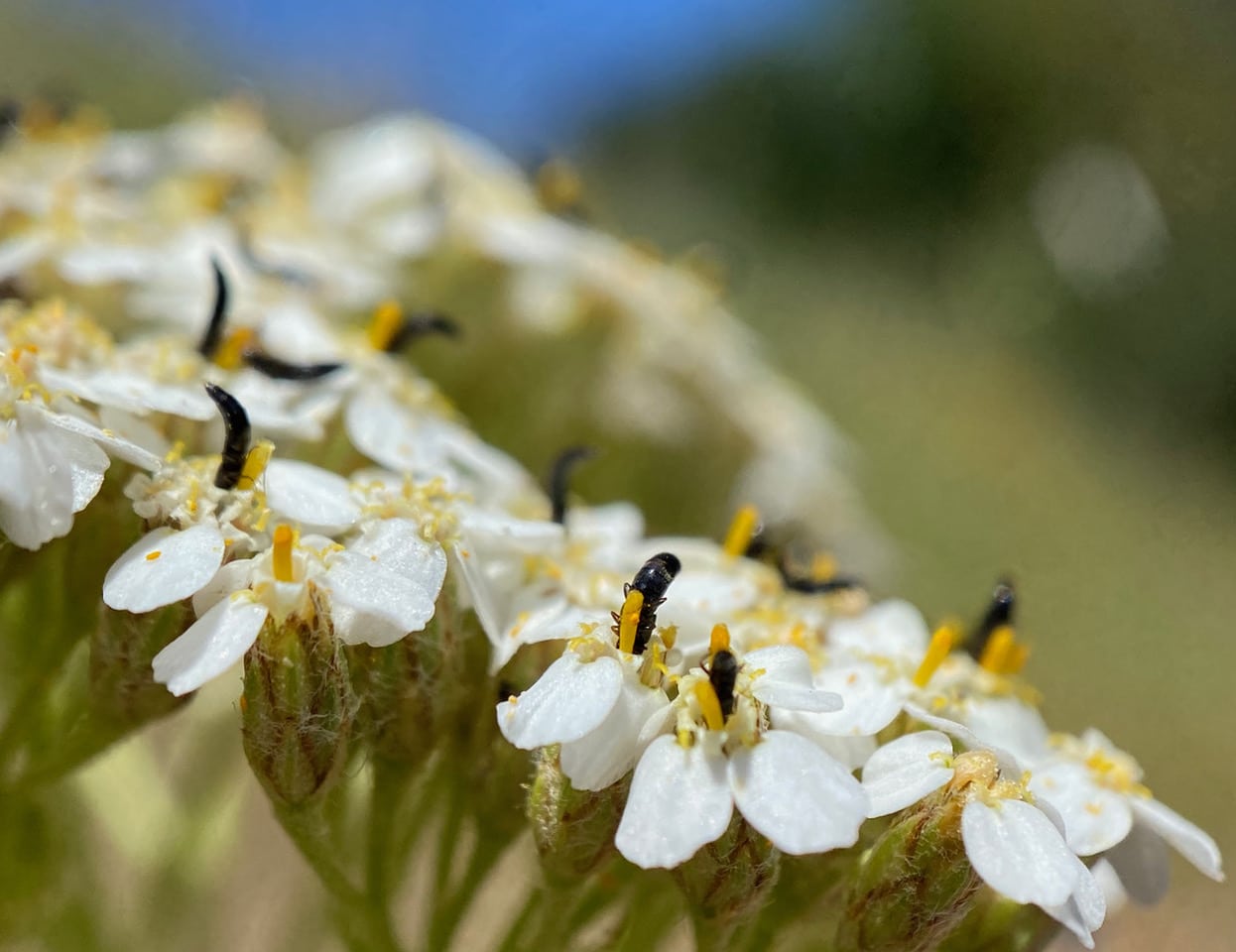
What a surreal scene! Almost no other insects visit the inflorescences that the Rove Beetles are feeding on. Where are the Crab Spiders?
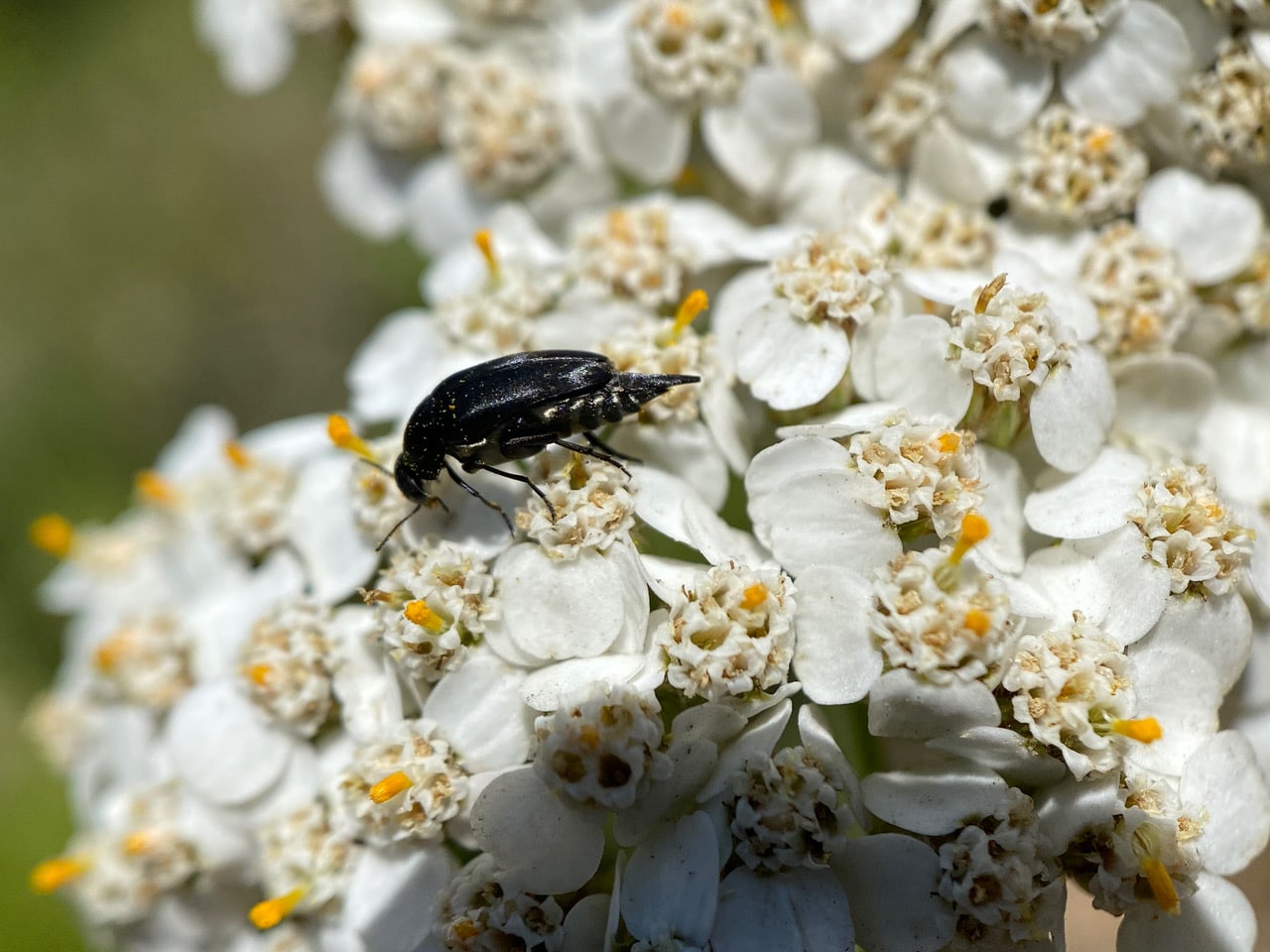
A Tumbling Flower Beetle (family Mordellidae) is foraging on an inflorescence of Yarrow.
The Tumbling Flower Beetles (family Mordellidae) are named for the characteristic irregular movements they make when escaping predators. They are also sometimes called Pintail Beetles for their abdominal tip which aids them in performing these tumbling movements. Mordellids are small, wedge-shaped, hump-backed beetles with head bent downward. The body is densely covered with fine silky hairs, usually black, but often very prettily spotted or banded with silvery hues. The adults feed on pollen, occurring on flowers or on dead trees, flying or running with rapidity. The larvae live in old wood or in the pith of plants, and those of some species are said to be carnivorous, feeding on the young of Lepidopterans and Diptera which they find in the plant stems.
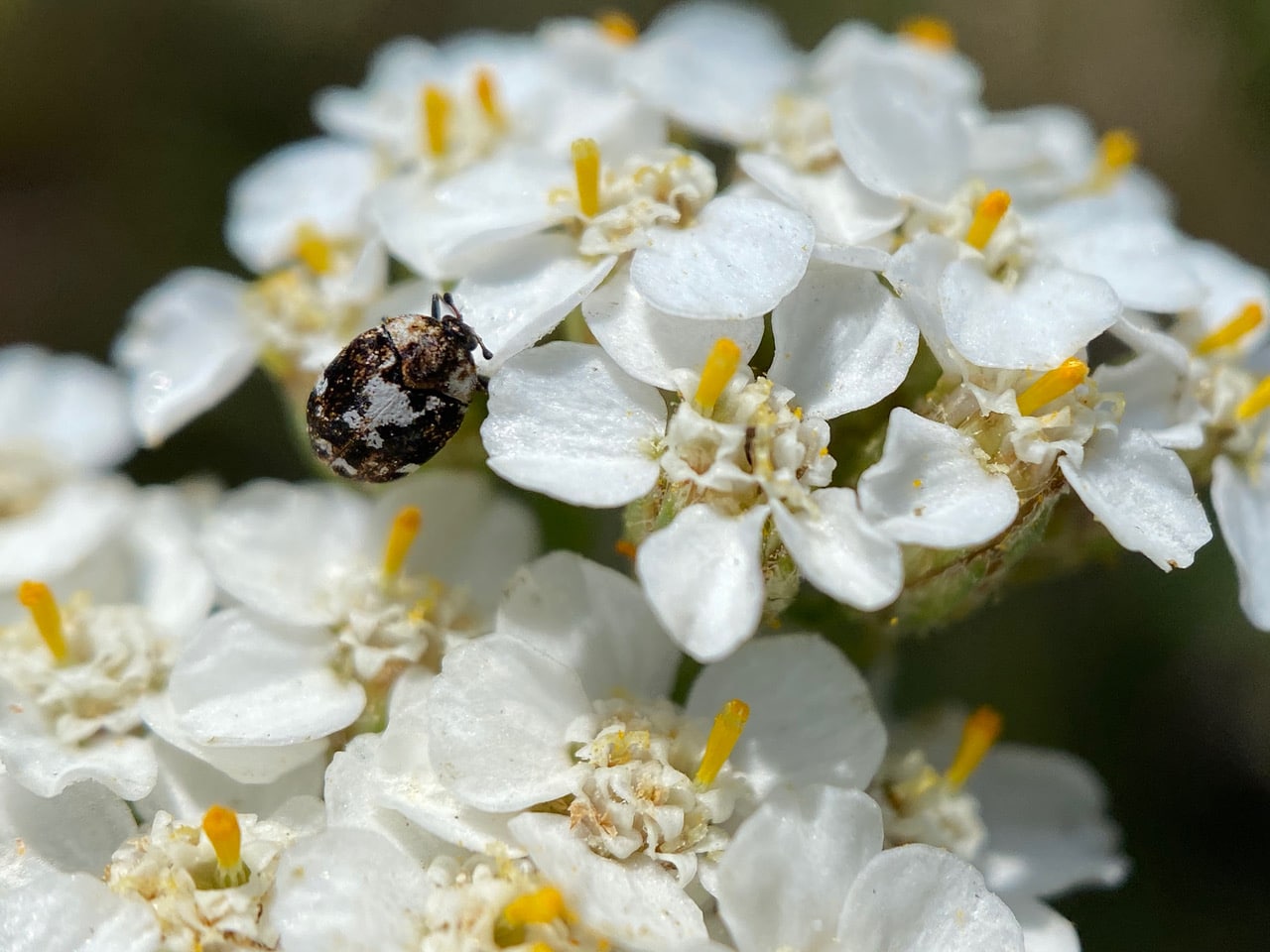
A Skin Beetle, Anthrenus lepidus (family Dermestidae) is roaming an inflorescence of Yarrow.
Dermestidae are a family of Coleoptera (beetles) that are commonly referred to as skin of carpet beetles. Ranging in size from 1 to 2 mm, the beetles typically have clubbed antennae that fit into deep grooves. Most Dermestids are scavengers that feed on dry animal or plant materials, such as skin or pollen, animal hair, feathers, dead insects and natural fibers. The larvae are used in taxidermy and by natural history museums to clean animal skeletons.

The Skin Beetle is reaching into a floret of Yarrow.
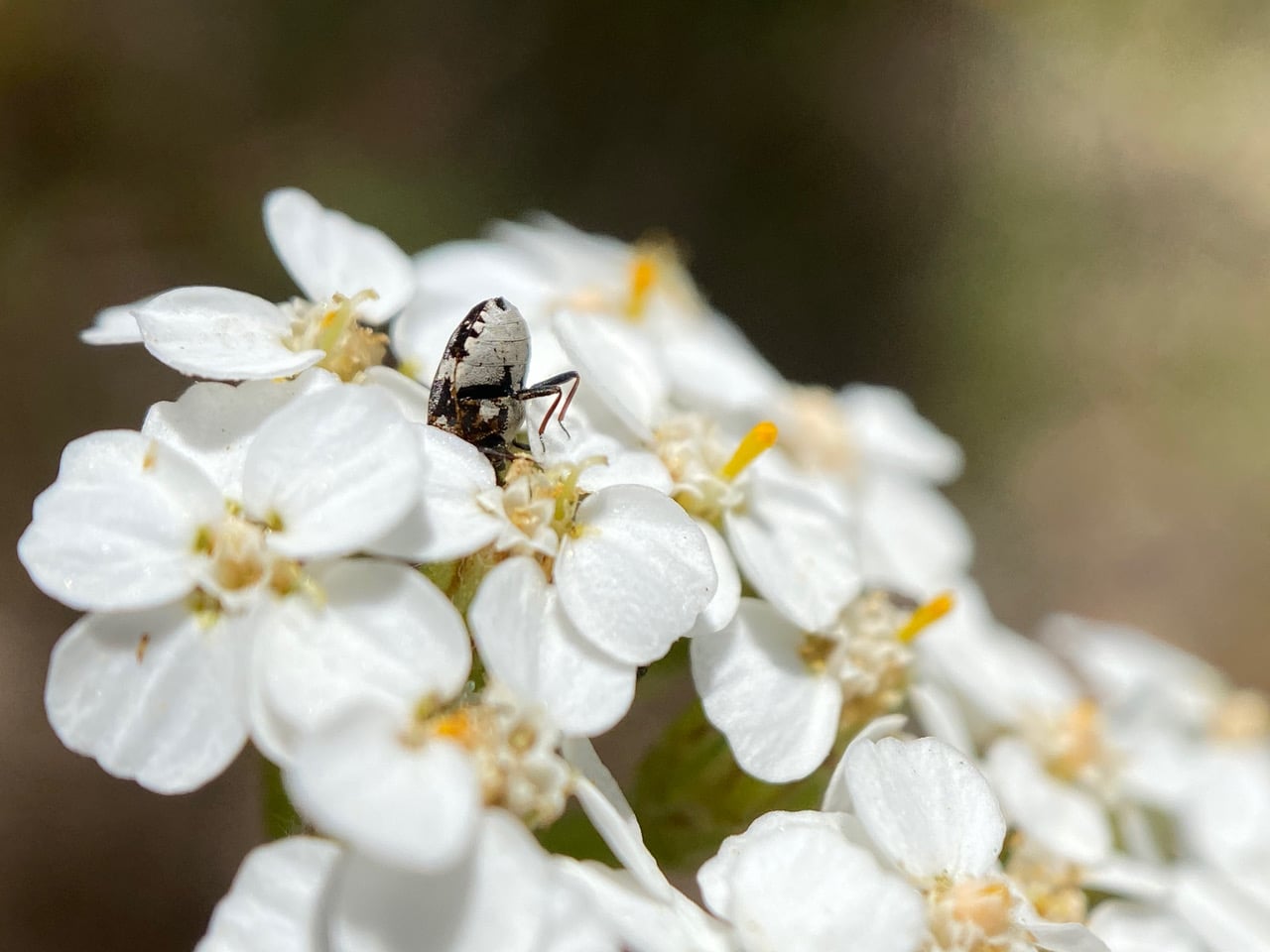
This Skin Beetle is diving even deeper.
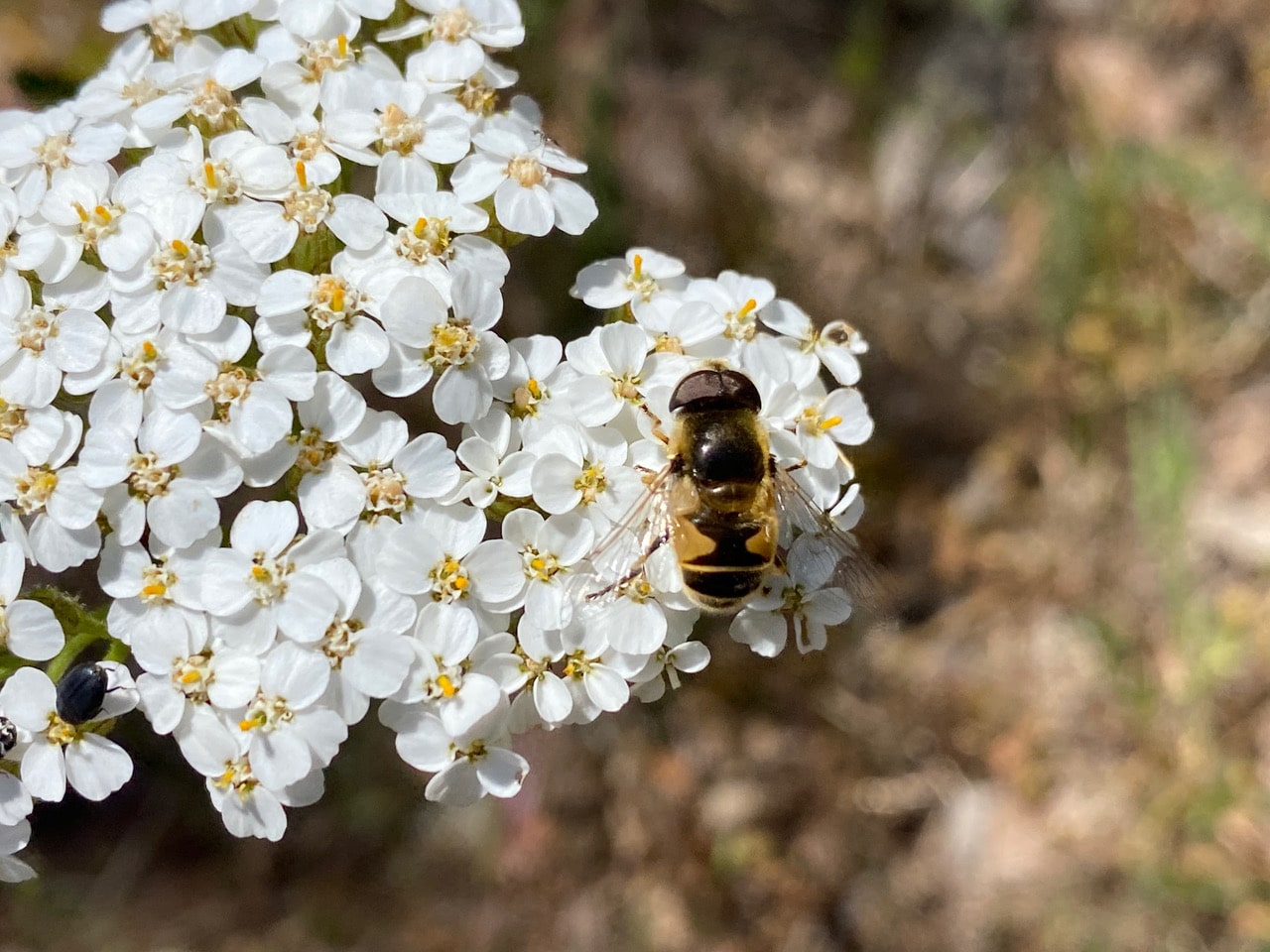
A Black-footed Drone Fly, Eristalis hirta visits in inflorescence of Yarrow.
Eristalis hirta is a common Western North American species of hoverfly. Hoverflies get their name from the ability to remain motionless while in flight. The adults are also known as flower flies for they are commonly found around and on flowers, feeding on nectar and pollen. They are effective pollinators of a wide range of plants. The larvae of E. hirta are aquatic filter feeders of the rat-tailed type. They are important decomposers/recyclers of organic matter.
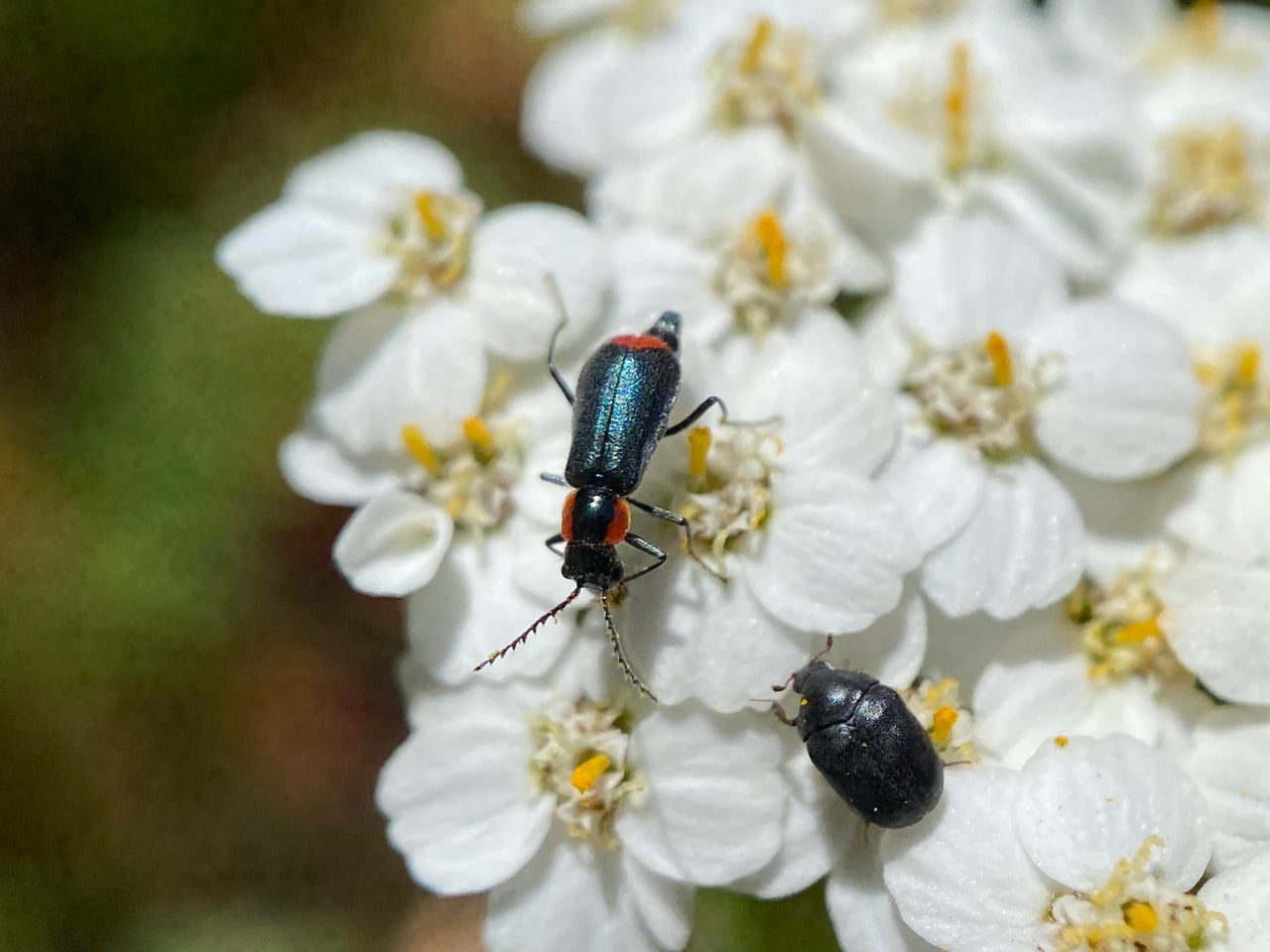
A Malachite Beetle, Malachius auritus (family Melyridae, subfamily Malachiinae) approaches a Skin Beetle, Cryptorhopalum sp. (family Dermestidae) on an inflorescence of Yarrow.
The Malachite Beetle (subfamily Melachiinae) is a member of the family of Soft-winged Flower Beetles (family Melyridae). Most Melyrids are elongate-oval, soft-bodies beetles 10 mm or less in length. Members of the subfamily Malachiinae have peculiar orange structures along the sides of the abdomen which can be everted, but usually kept hidden. Most adults and larvae are predaceous. Omnivorous adult Melyrids are often found on flowers out in the open, where they feed on pollen, insect eggs, and flower-loving insects that land within their grasp. The larvae generally stay concealed under tree bark or leaf litter or soil, where they prey on other invertebrates.

The Malachite Beetle cautiously feels the Skin Beetle with its front legs, but not in a predatory way…
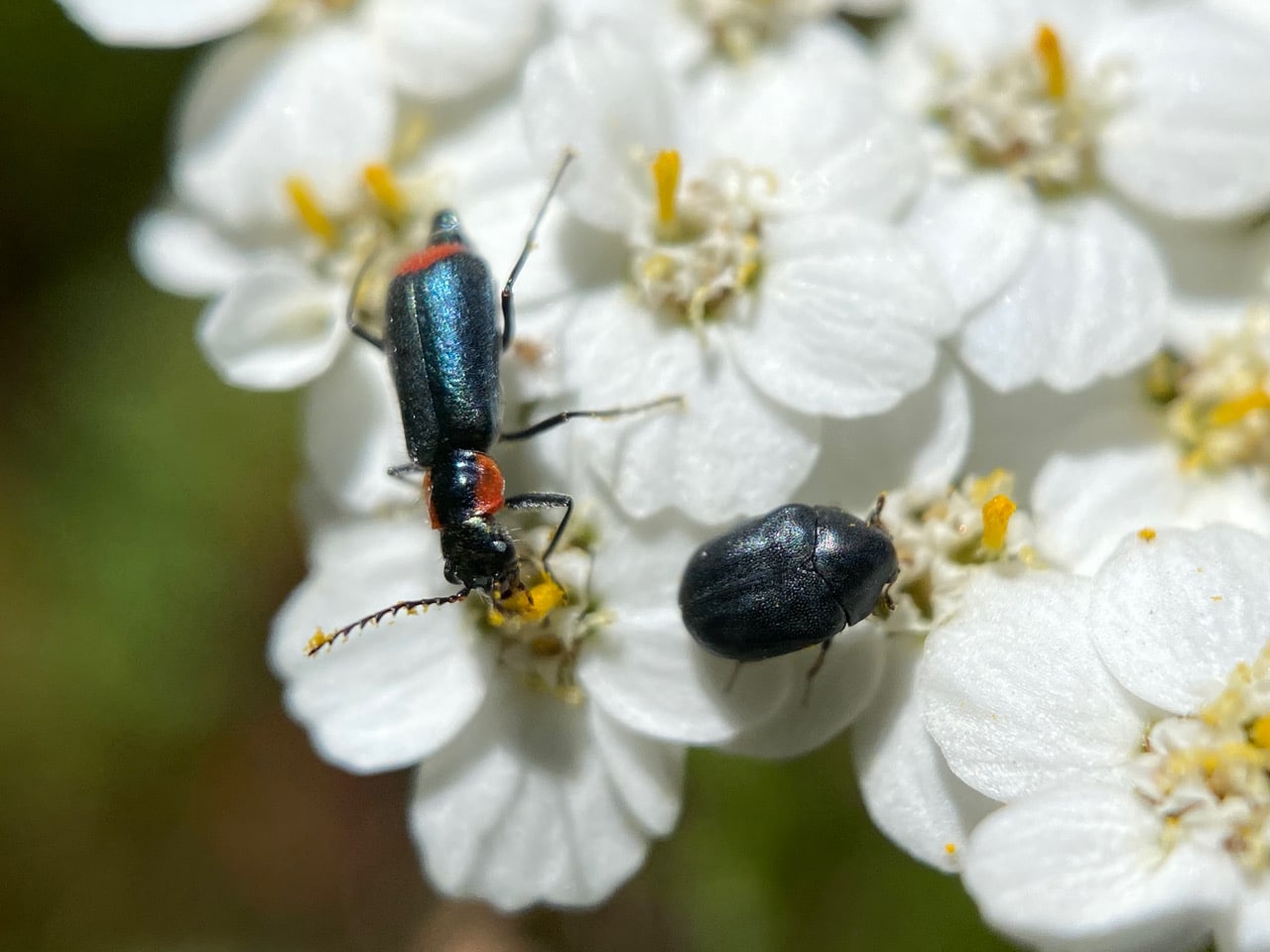
… and decides the other beetle is not appropriate food material.
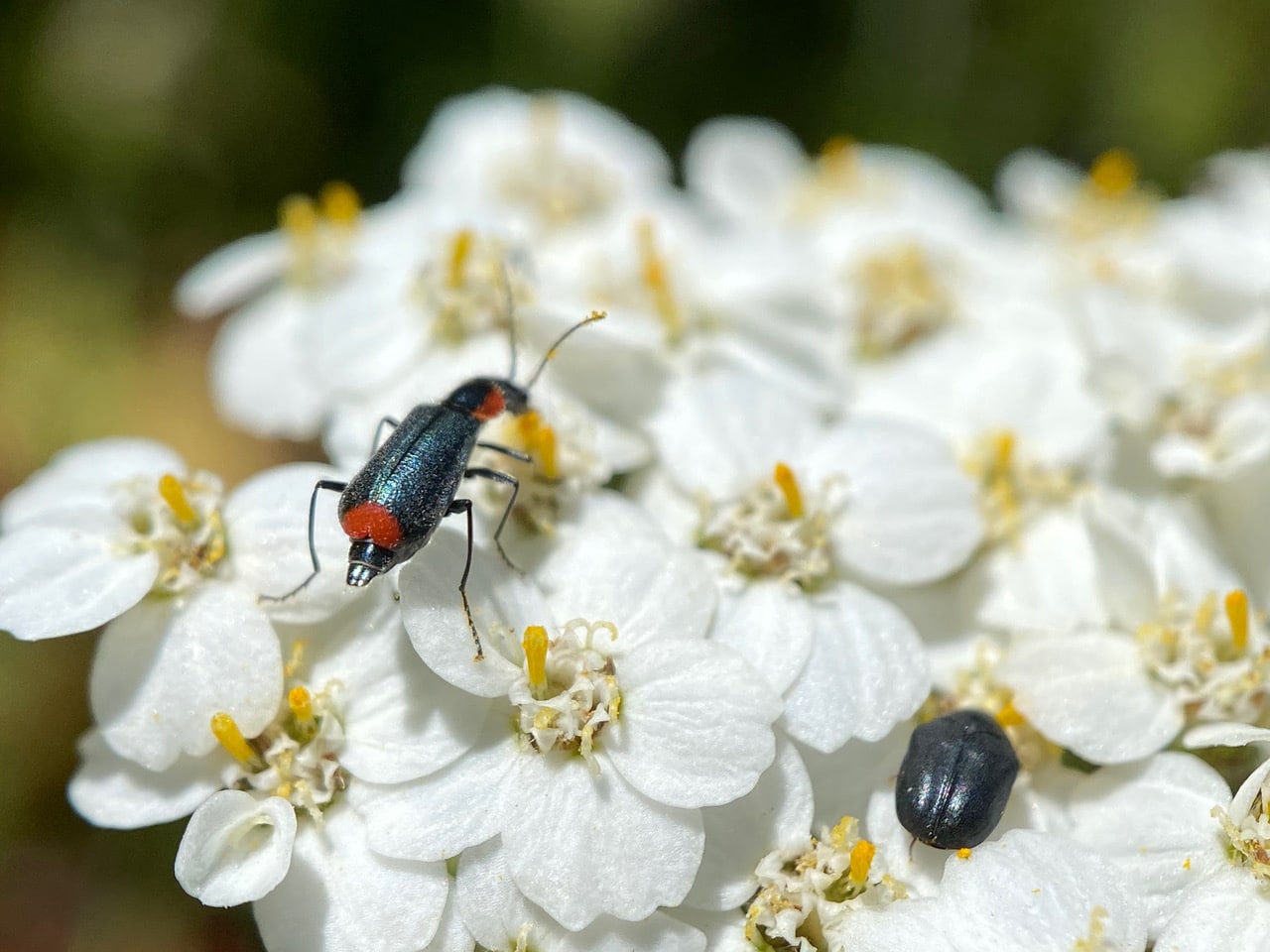
Eventually the beetles go their separate ways to feed on pollen in peace. Aah, the advantages of a vegetarian diet!