

Pollinator Post 6/3/23 (2)
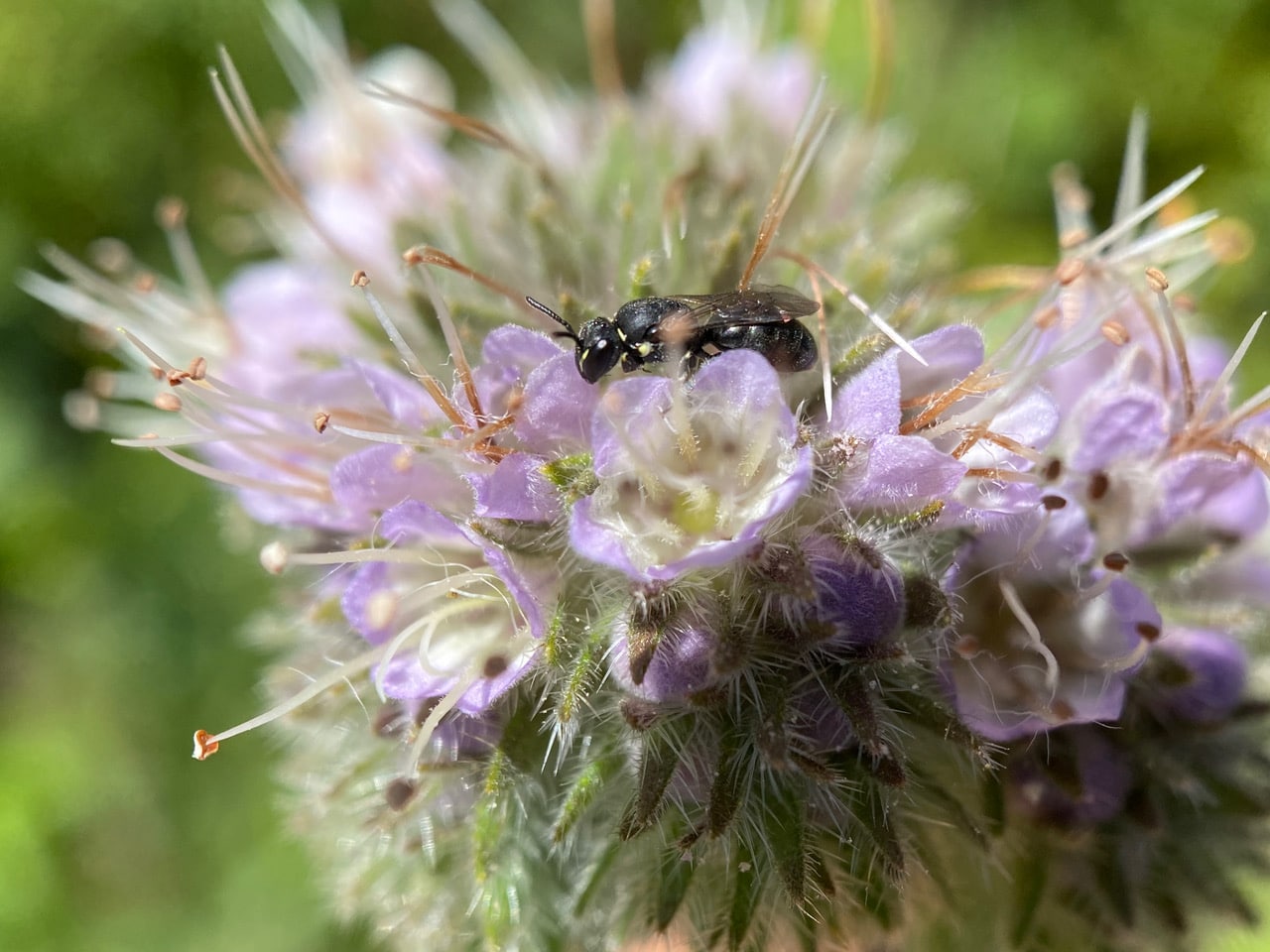
A female Masked Bee, Hylaeus sp. (family Colletidae) is foraging on an inflorescence of California Phacelia, Phacelia californica.
Hylaeus (family Colletidae) are shiny, slender, hairless, and superficially wasp-like bees. They are small, 5 to 7 mm long, usually black with bright yellow or white markings on their face and legs. These markings are more pronounced on the males. Hylaeus do not carry pollen and nectar externally, they instead store their food in the crop and regurgitate it upon returning to their nests. They are primarily generalist foragers. Hylaeus are short-tongued, but their small body size enables them to access deep flowers. Hylaeus nest in stems and twigs, lining their brood cells with self-secreted cellophane-like material. They lack strong mandibles and other adaptations for digging, using instead pre-existing cavities made by other insects.
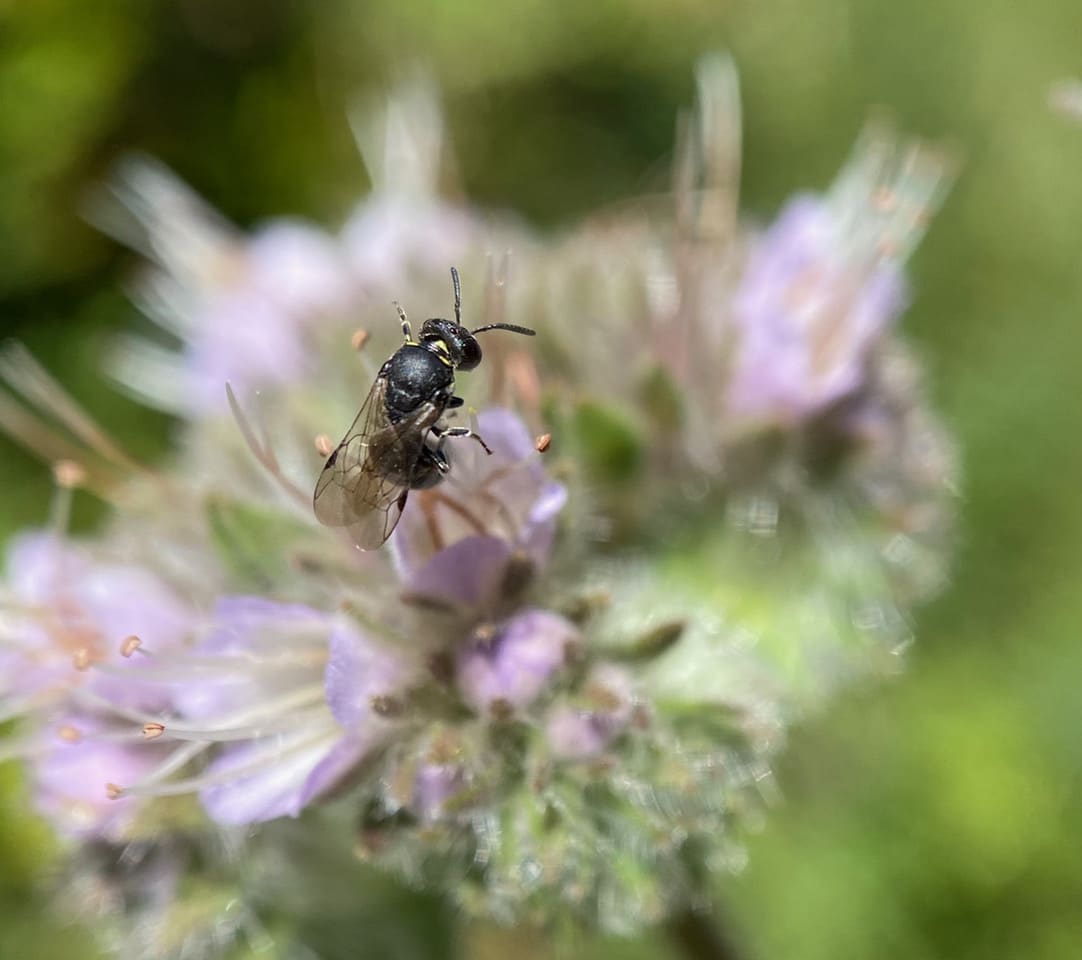
She is searching for stamens with fresh anthers, either closed or already releasing pollen. One of the most endearing sights in my entomological wanderings is that of the tiny bee wrapped around a stamen, collecting pollen one anther at a time. Pole dancing at its noble best!
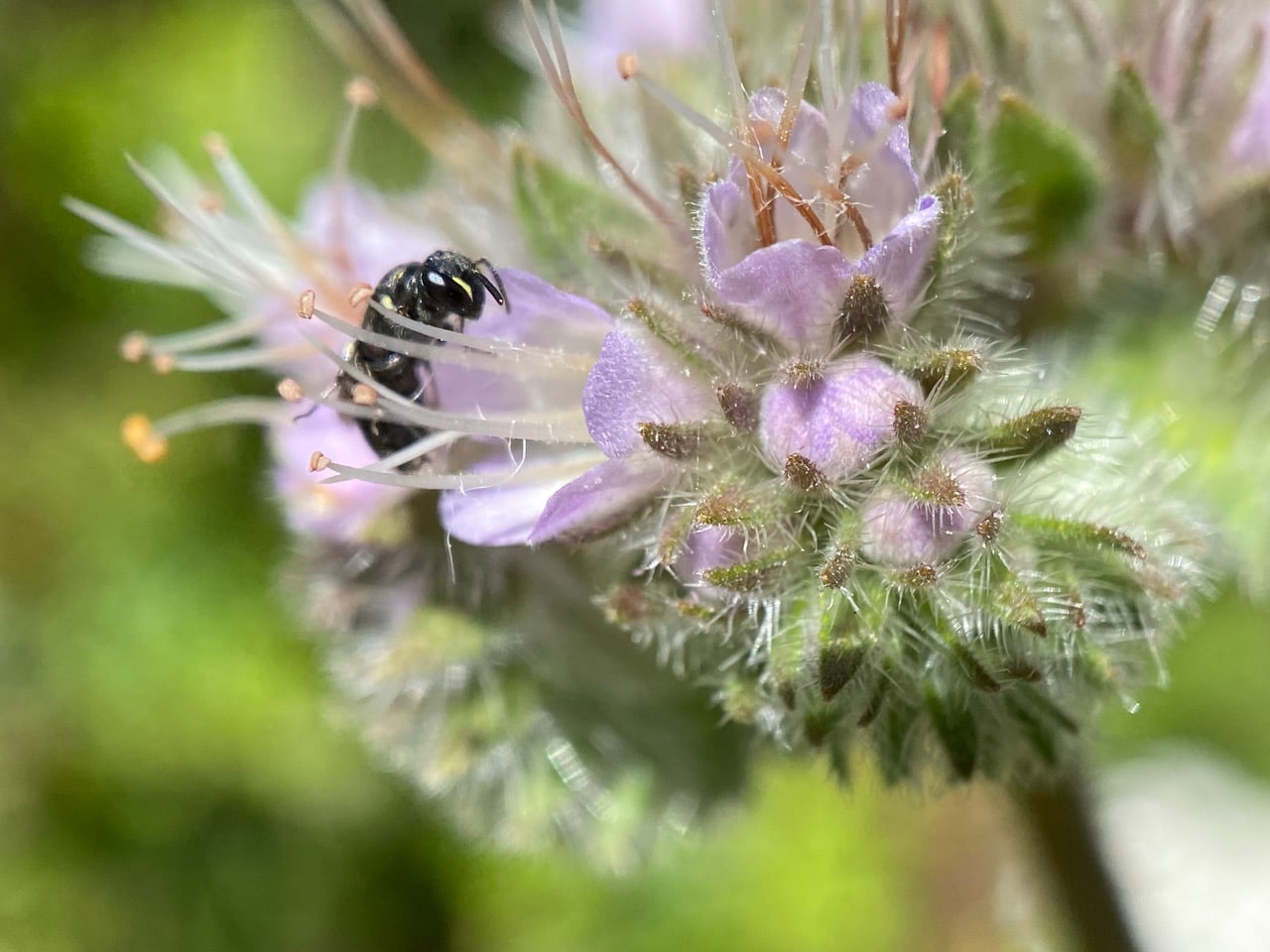
This view shows the face of the female Hylaeus. Note the sliver of yellow marking next to her eye. The facial markings on the males are more prominent.
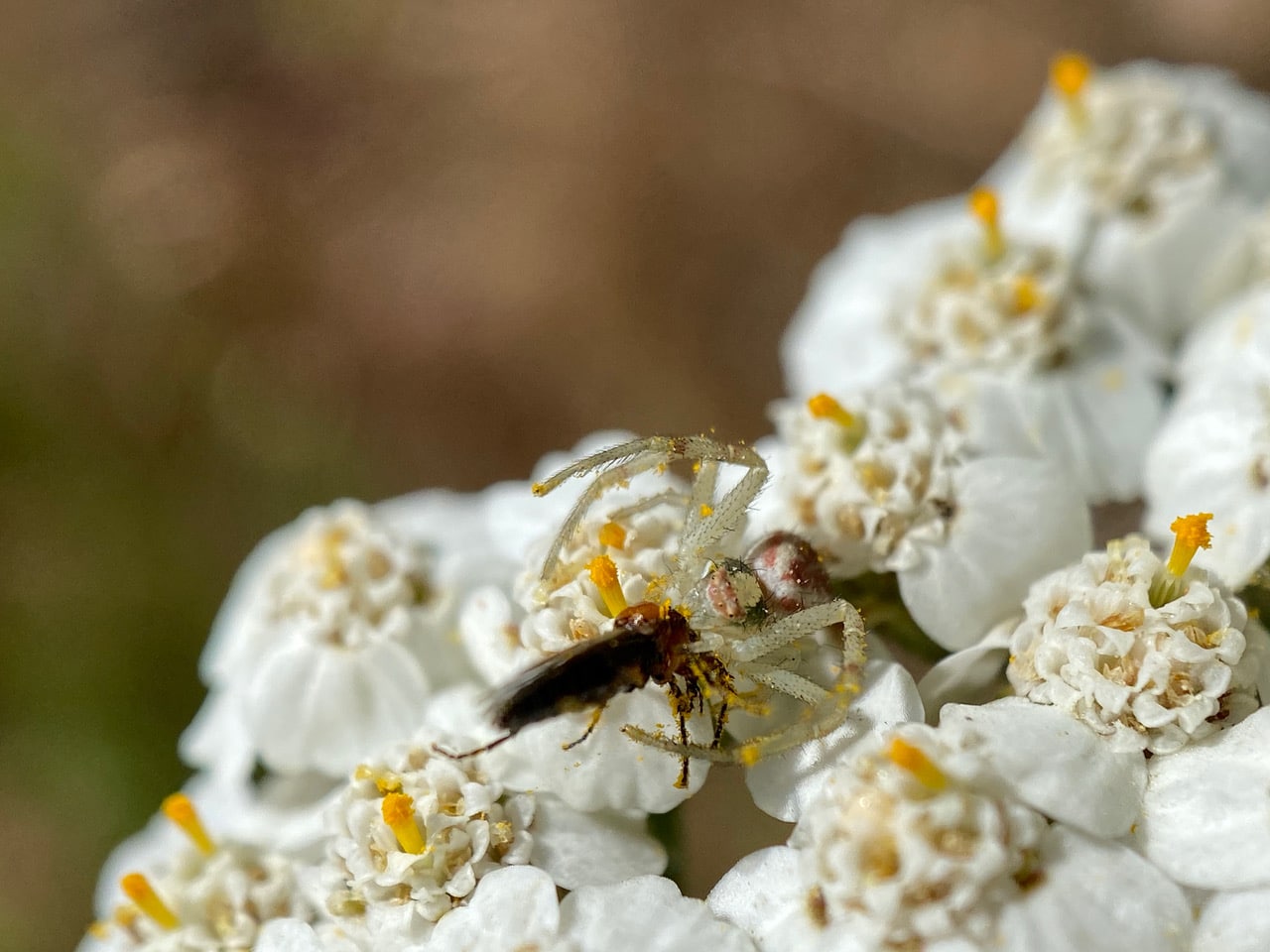
As I pass a Yarrow, Achillea millefolium, I notice a small Crab Spider, Mecaphesa sp. (family Thomisidae) and a female March Fly, Dilophus sp. (family Bibionidae) on opposite ends of an inflorescence. Will predation happen, I wondered, but unfortunately did not stop to watch. A minute later, I turn around – the spider already has the fly in its jaws!
Members of the family Thomisidae do not spin webs, and are ambush predators. The two front legs are usually long and more robust than the rest of the legs. Their common name derives from their ability to move sideways or backwards like crabs. Most Crab Spiders sit on or beside flowers, where they grab visiting insects.
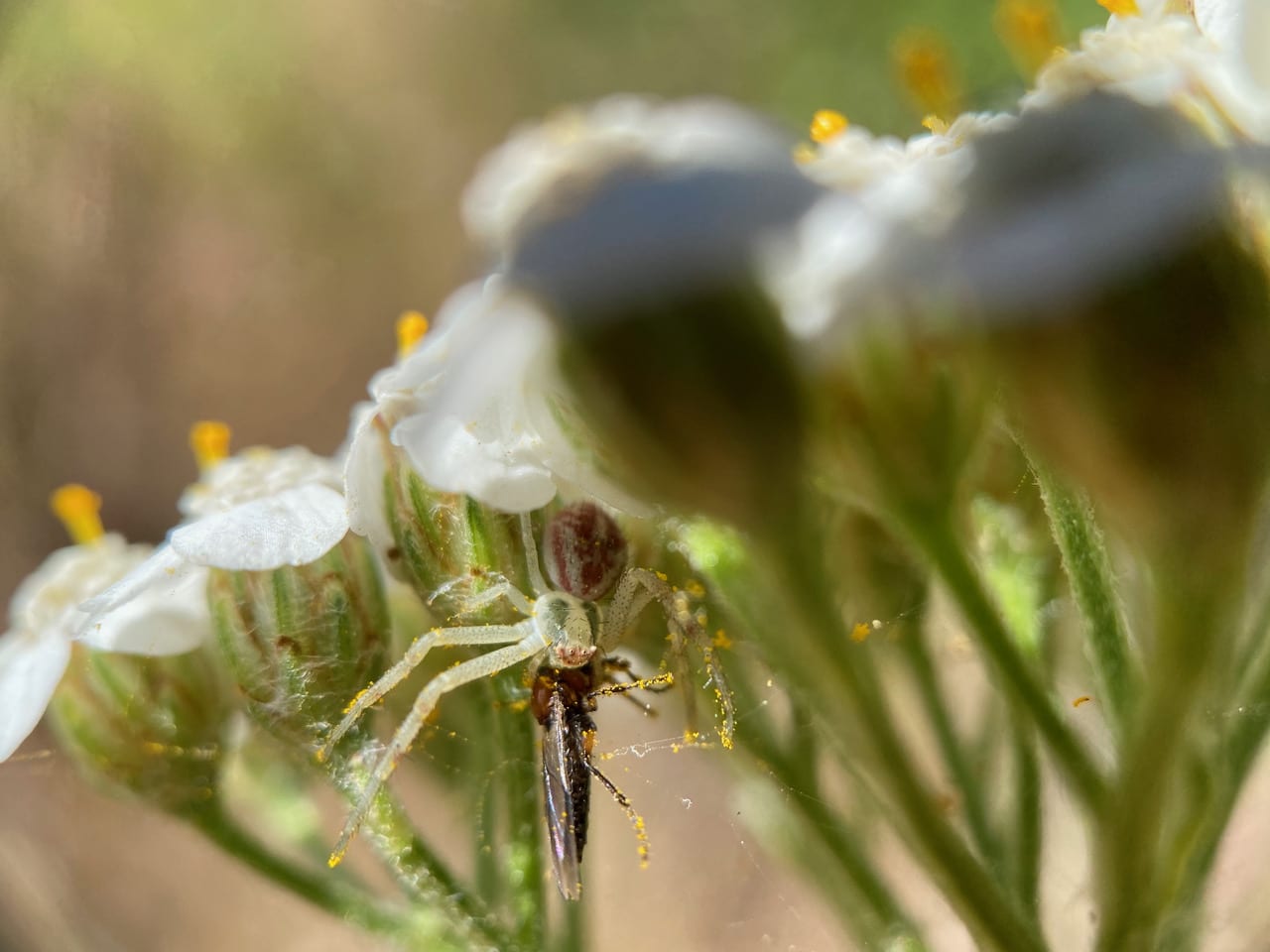
Sensing my intrusion, the Crab Spider quickly descends the inflorescence with its prey held firmly in its jaws. It will continue to feed here away from prying eyes.
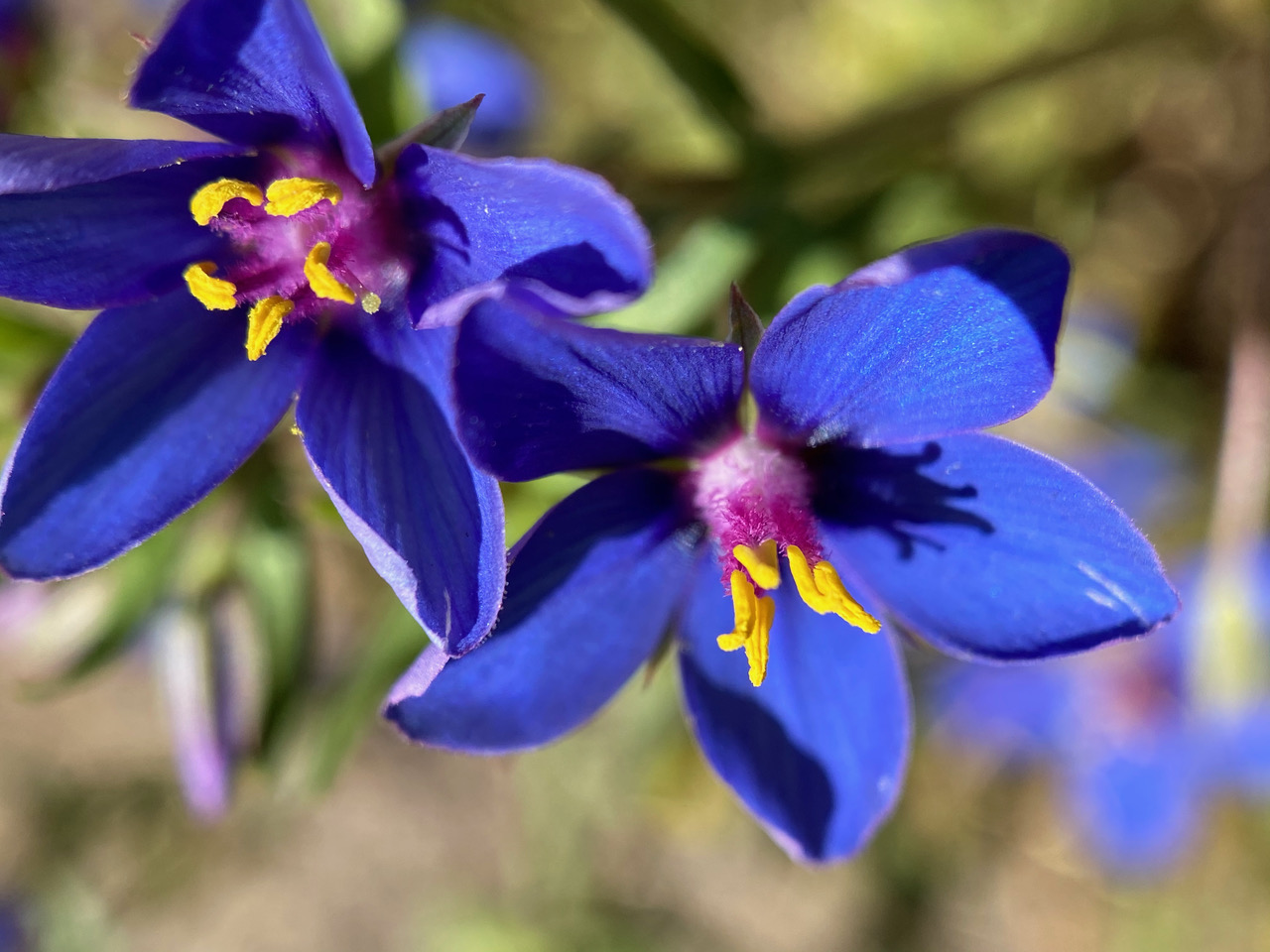
Their petals curling at the edges, the stunning blue flowers of the Blue Pimpernel, Lysimachia monelli (family Primulaceae) are already beginning to show signs of heat stress by noon time. Native to the Mediterranean region, it is a low growing perennial with trailing stems. I have seen native bees visit these flowers, including Bumble Bees and the occasional Mining Bee.
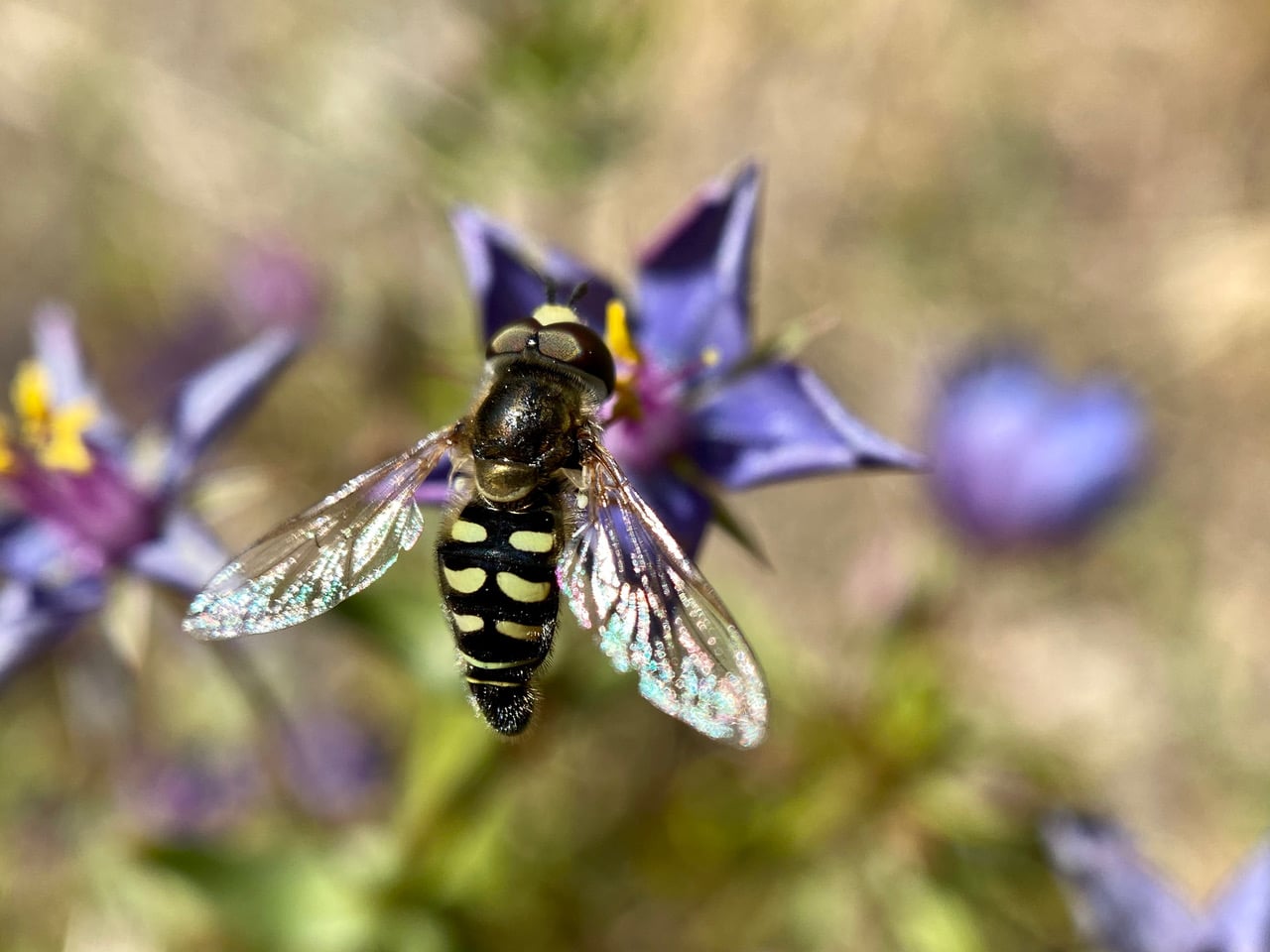
A Large-tailed Aphideater, Eupeodes volucris (family Syrphidae) stops by the Blue Pimpernel for refreshments. The black, projecting cylindrical abdomen of males in this species is rather distinctive. The species is found in western North America, and is active March through November. As the common name implies, the larvae of the species feed on aphids.
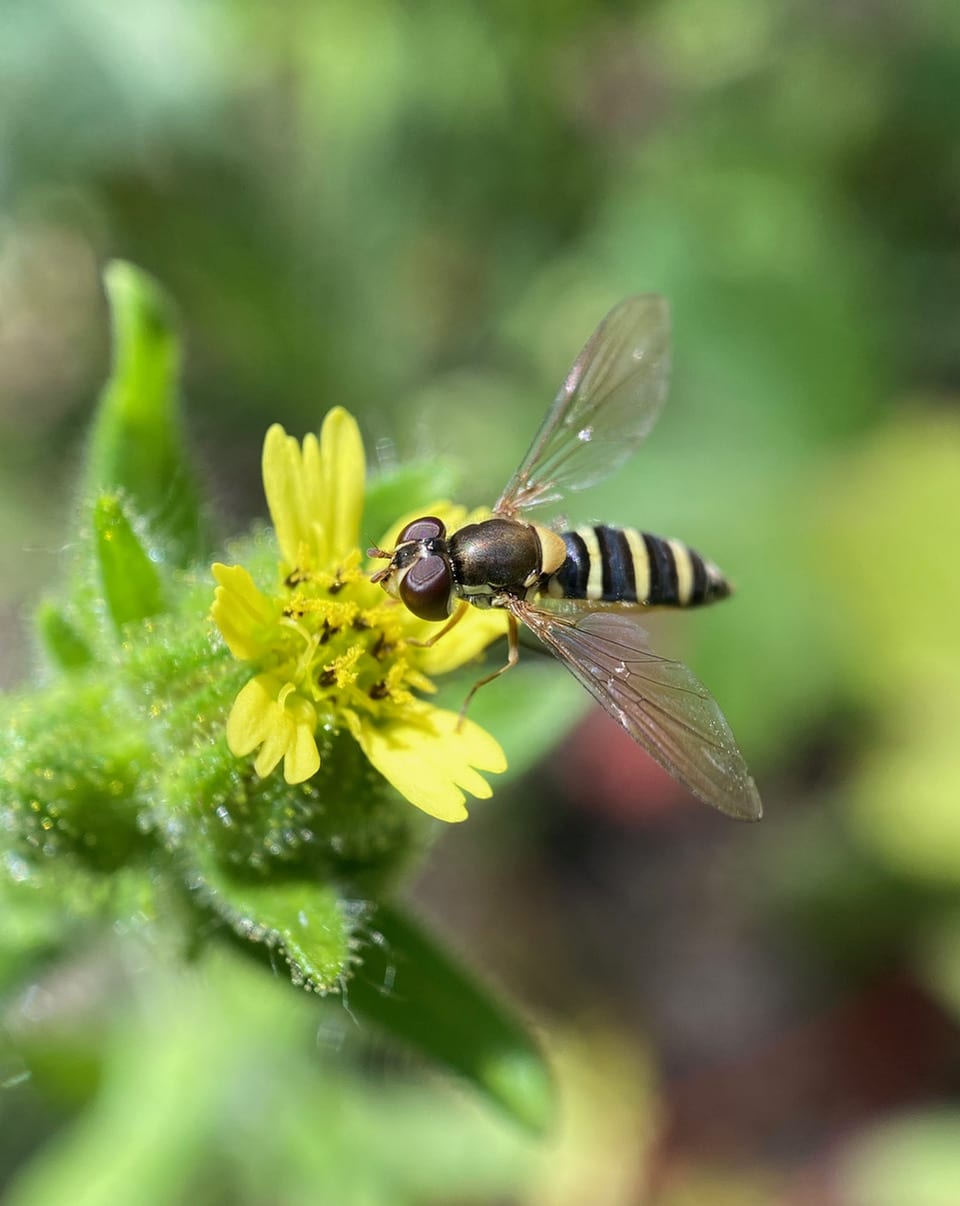
A female Diamond Spottail Hoverfly, Fazia micrura (family Syrphidae) is feeding on a flowerhead of Gumweed, Madia gracilis.
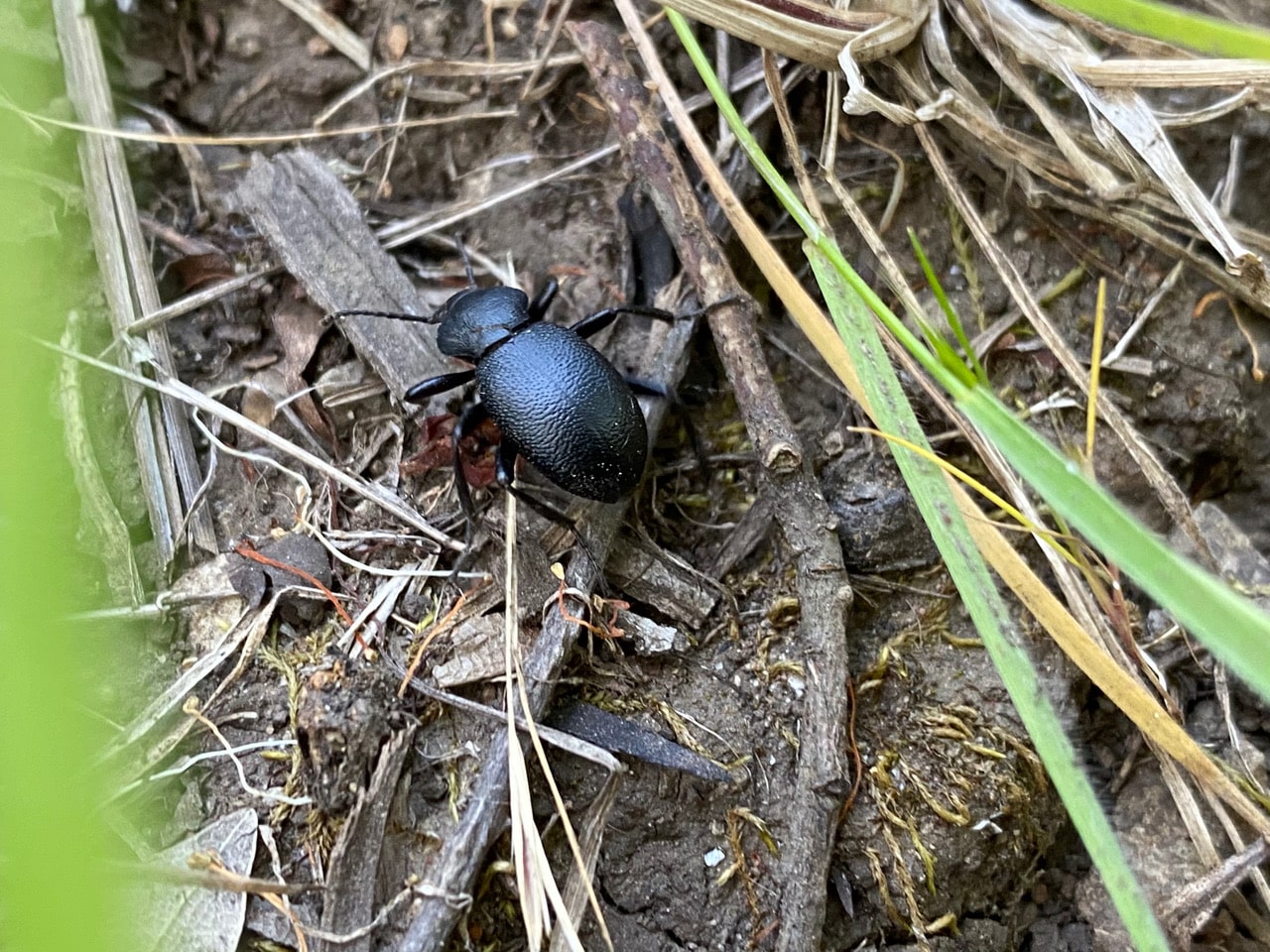
Ooh, a big black beetle is trundling across the trail! It is a Darkling Beetle, Eleodes cordata (family Tenebrionidae).
Darkling Beetles are abundant in both diversity and numbers in the western United States, especially in the deserts. The beetles are often found under logs and in other detritus. They primarily feed on detritus of grasses and forbs. They are best known for their comical, yet effective defense tactics. When alarmed, they lift their rear ends skyward by bending their front legs and extending their rear legs. They spray a reddish brown exudate, an oily, stinky secretion. Most animals know to avoid contact with the Darkling Beetles. The larger species can spray a distance of 10-20 inches, and some can spray multiple times if necessary.
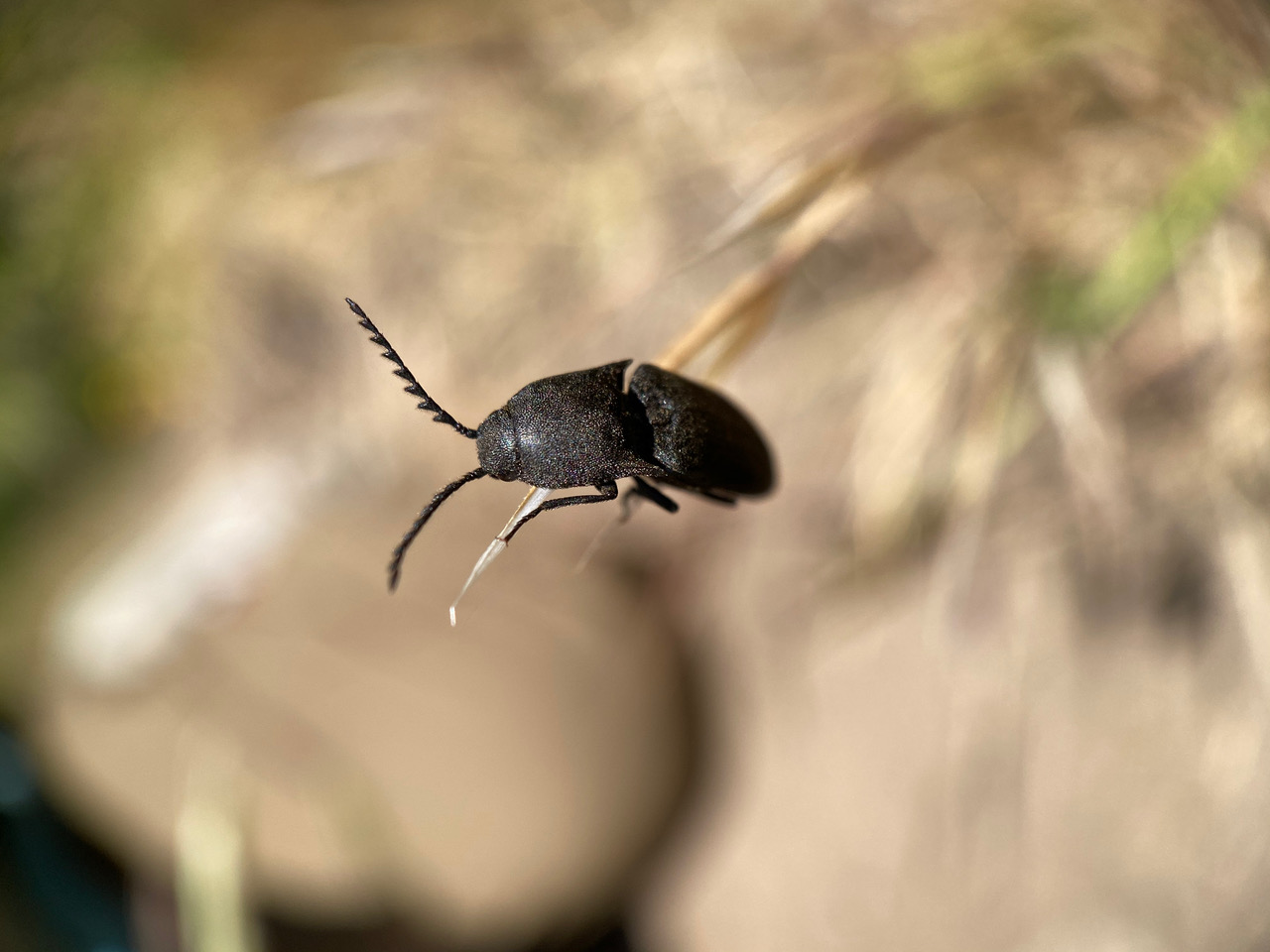
A black beetle is clinging to a blade of dried grass. The shape of its pronotum tells me that it is most likely a Click Beetle (family Elateridae). It has been identified as belonging to the genus Athous.
Click Beetles are long, narrow, straight sided beetles. Most are drab brown, black, or gray. The pronotum (shield-like part between the head and the wings) is extended into sharp points on each side toward the rear The antennae are usually serrate (the segments appearing sawtoothed).
Adult Click Beetles are typically nocturnal and phytophagous (feeding on plants). Their larvae, called wireworms, are usually saprophagous, living on dead organisms, but some species are agricultural pest, and others are active predators of other insect larvae.
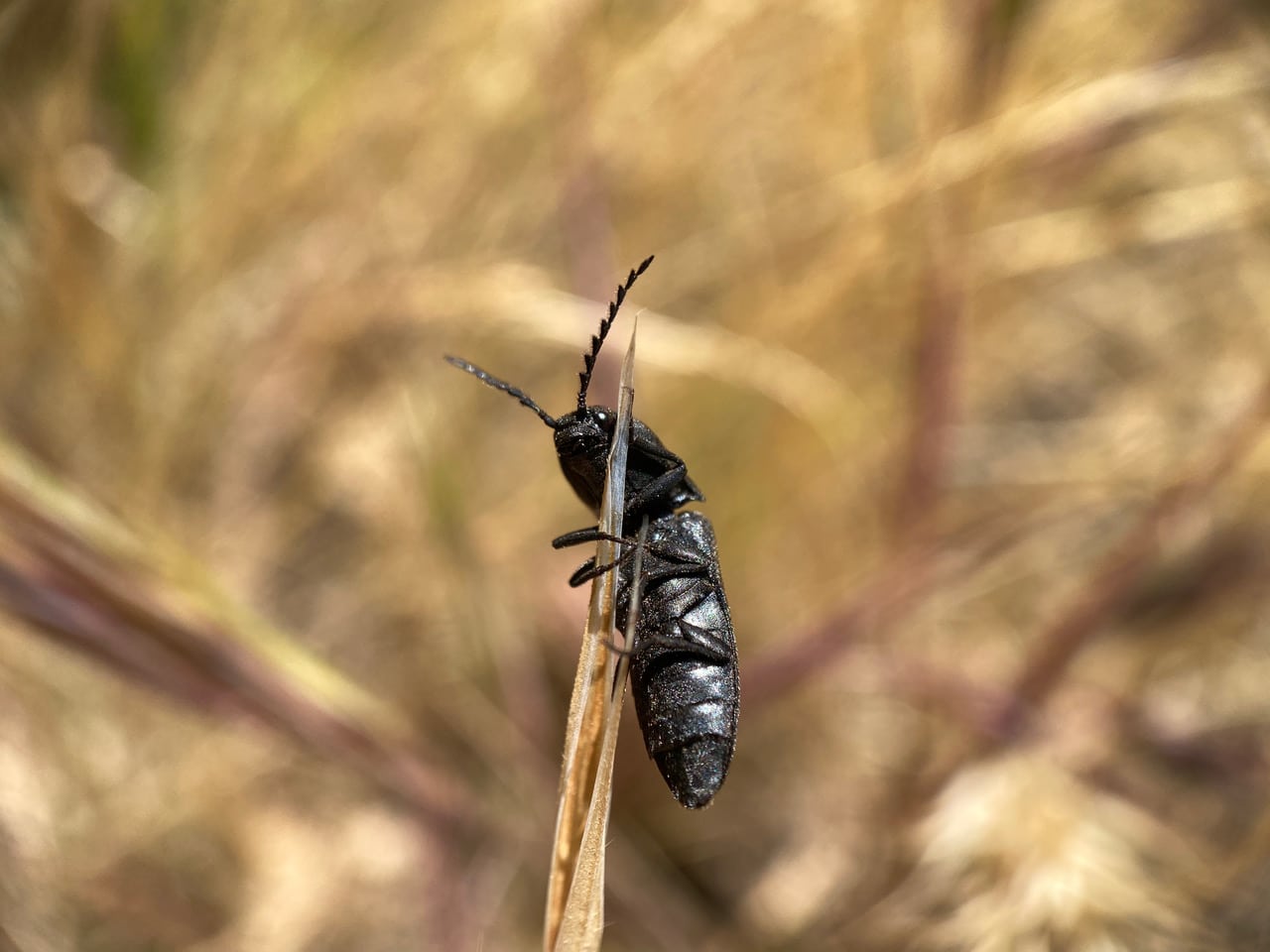
The Click Beetle watches cautiously as I take its picture from the front (its underside).
Behavior helps identify Click Beetles. By snapping a spikelike structure into a groove on the underside of the thorax (beneath the pronotum), click beetles that find themselves on their backs can flip suddenly into the air. This startles predators and helps the beetle escape, in addition to helping them get back on their feet.
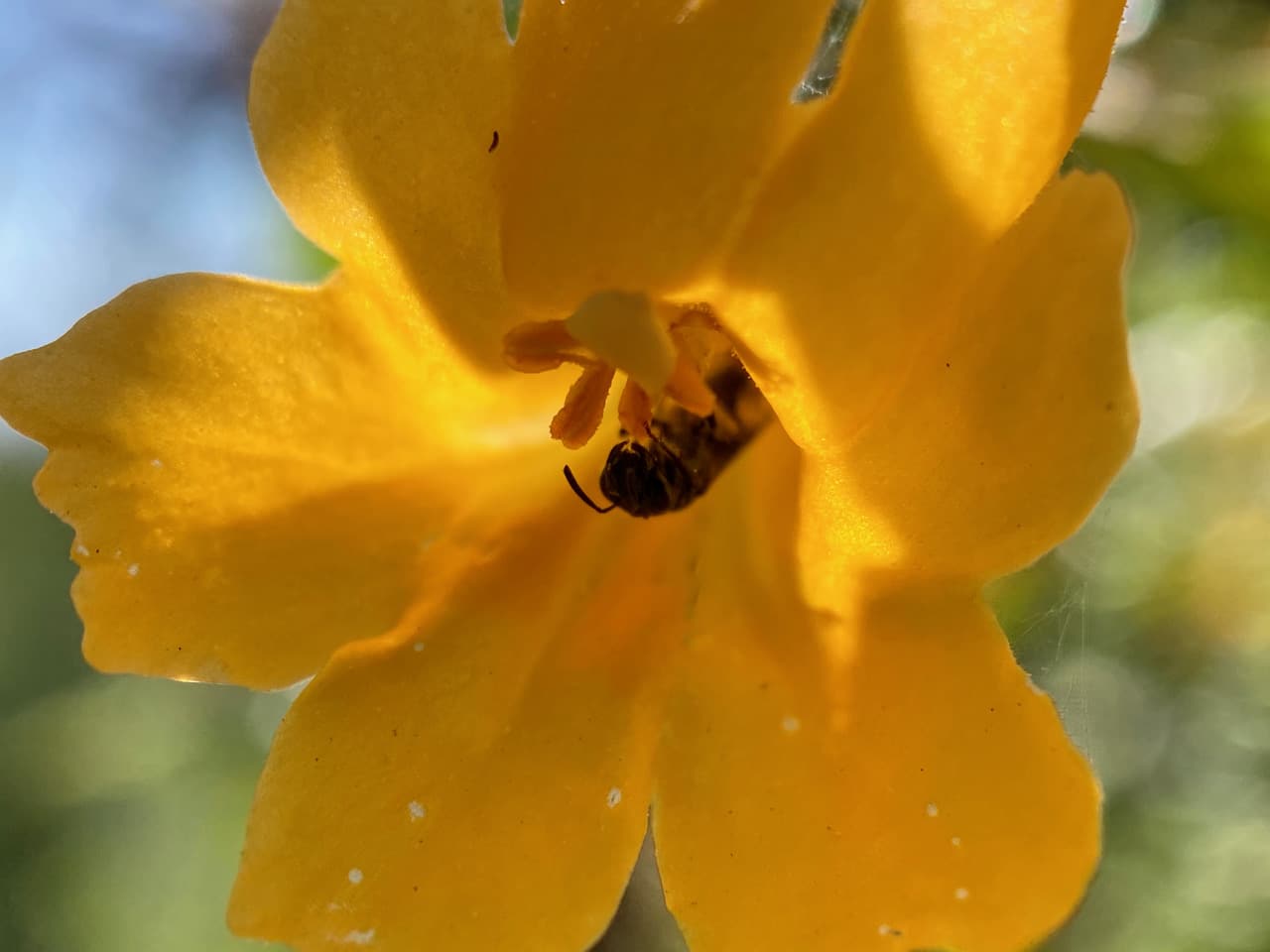 The Sticky Monkeyflowers along Skyline Trail are busy with insect activity. Tiny bees are alighting and entering the flowers constantly. Some disappear deep into the floral tube, probably to take nectar. Most will end up near the entrance of the flower, hanging upside-down to gather pollen from the stamens within the floral tube.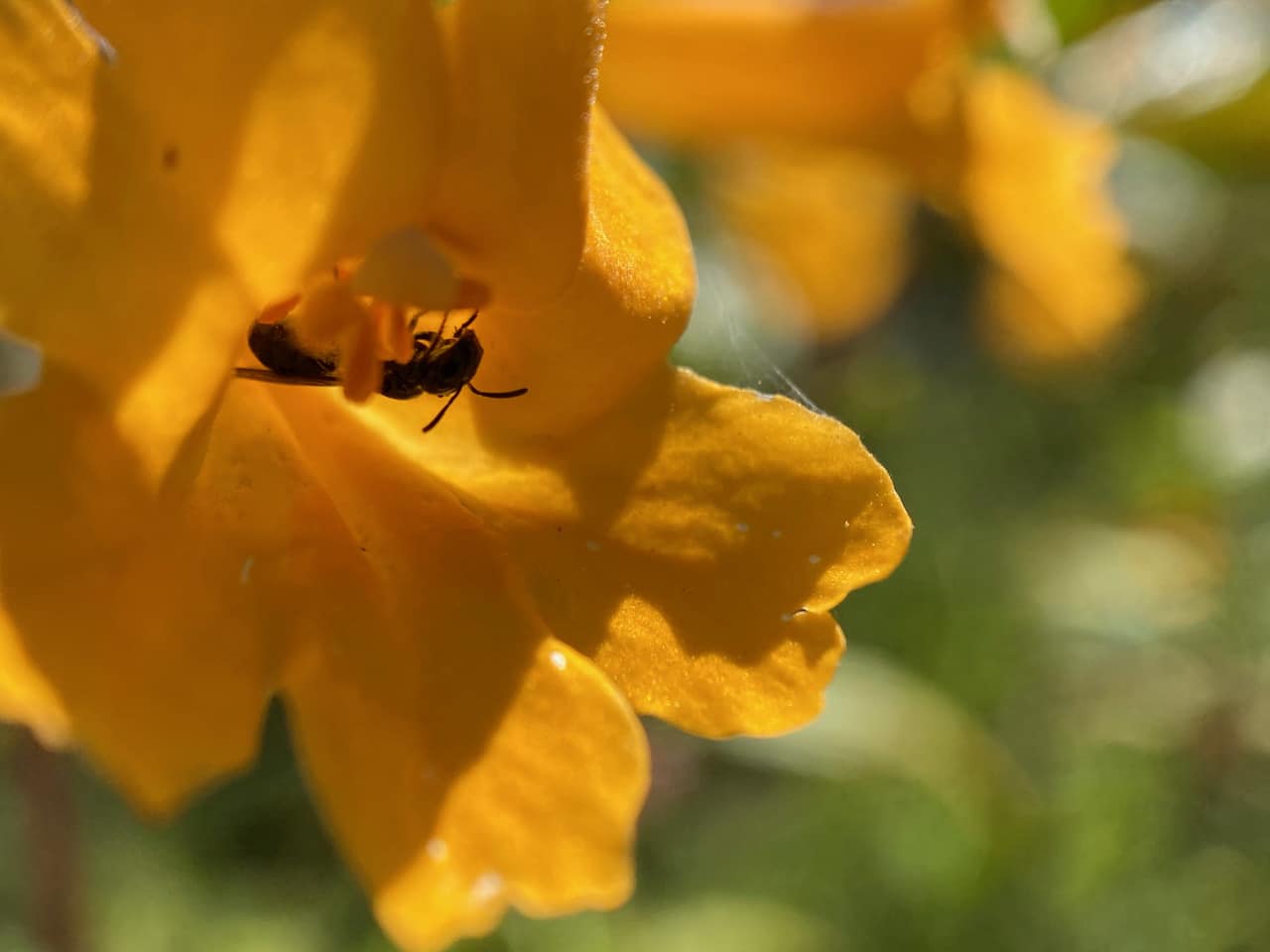
It is difficult to determine the identify of the bee in this light. Judging by its small size, it is likely a Masked Bee, Hylaeus sp.
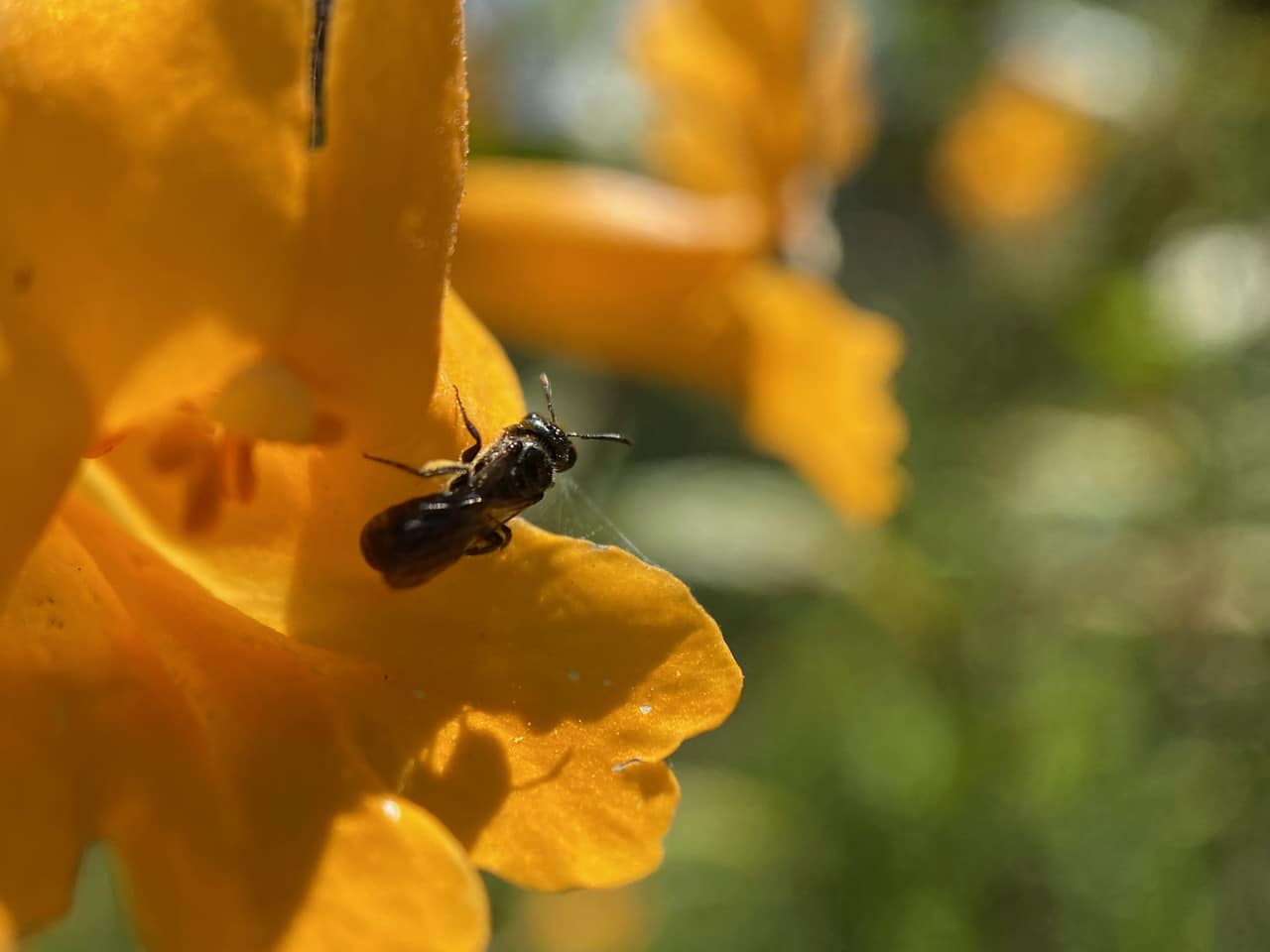
Even as the bee appears briefly outside of the flower before flying off, there’s not enough details to identify it with certainty.
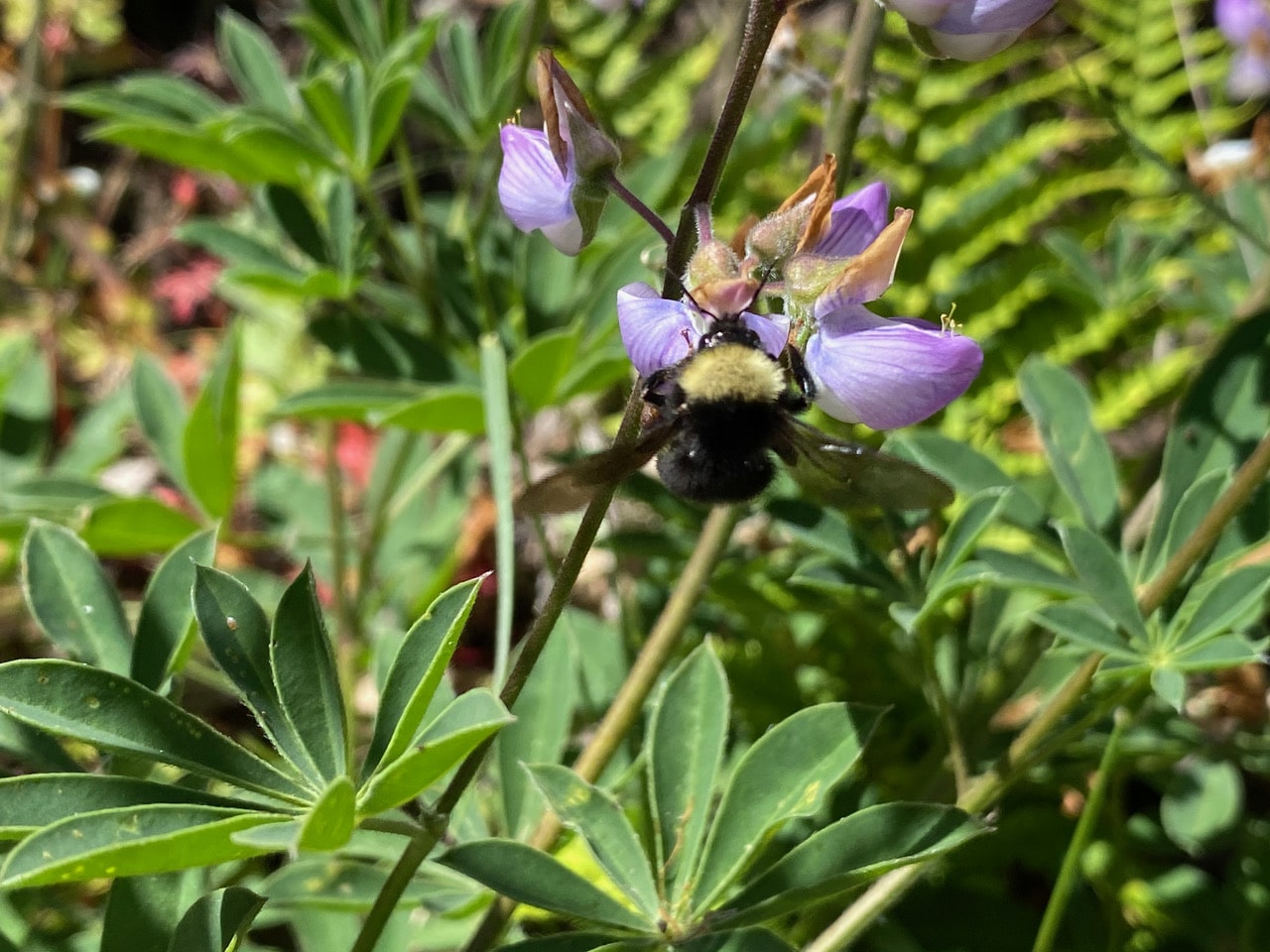
Whoa, this is exciting! A large Bumble Bee is flying around the flowers of a Broadleaf Lupine, Lupinus latifolius, landing briefly to take nectar. The bee does not have any yellow hairs on its head, hence it is not the usual Yellow-faced Bumble Bee. It is probably the rare California Bumble Bee!
Bombus californicus, the California Bumble Bee, is found in Central and the western half of North America. The species is now classified as Vulnerable by the IUCN. It was the most common bumble bee in California until about the 1990s when its numbers and distribution began to decline. Many factors may have contributed to its decline, including invasive species, pesticide use, commercial bumble bee rearing, habitat destruction, and climate change.
Although morphologically the species is quite variable, the “typical” color pattern of female B. californicus is black with only a single strong yellow band anteriorly on the thorax, and another single yellow band near the apex of the abdomen. Males exhibit considerably more variation.
The California Bumble Bee is an important pollinator in alpine environments in its native range. They are social bees having a queen and workers. Their colonies last for one year. New queens overwinter, usually underground, and found new colonies from scratch the following year. Queens emerge from April through mid July. Workers are present from April to September. The species is known to pollinate sage, blueberry bushes, red clover, California poppies, and many other species of flowers.
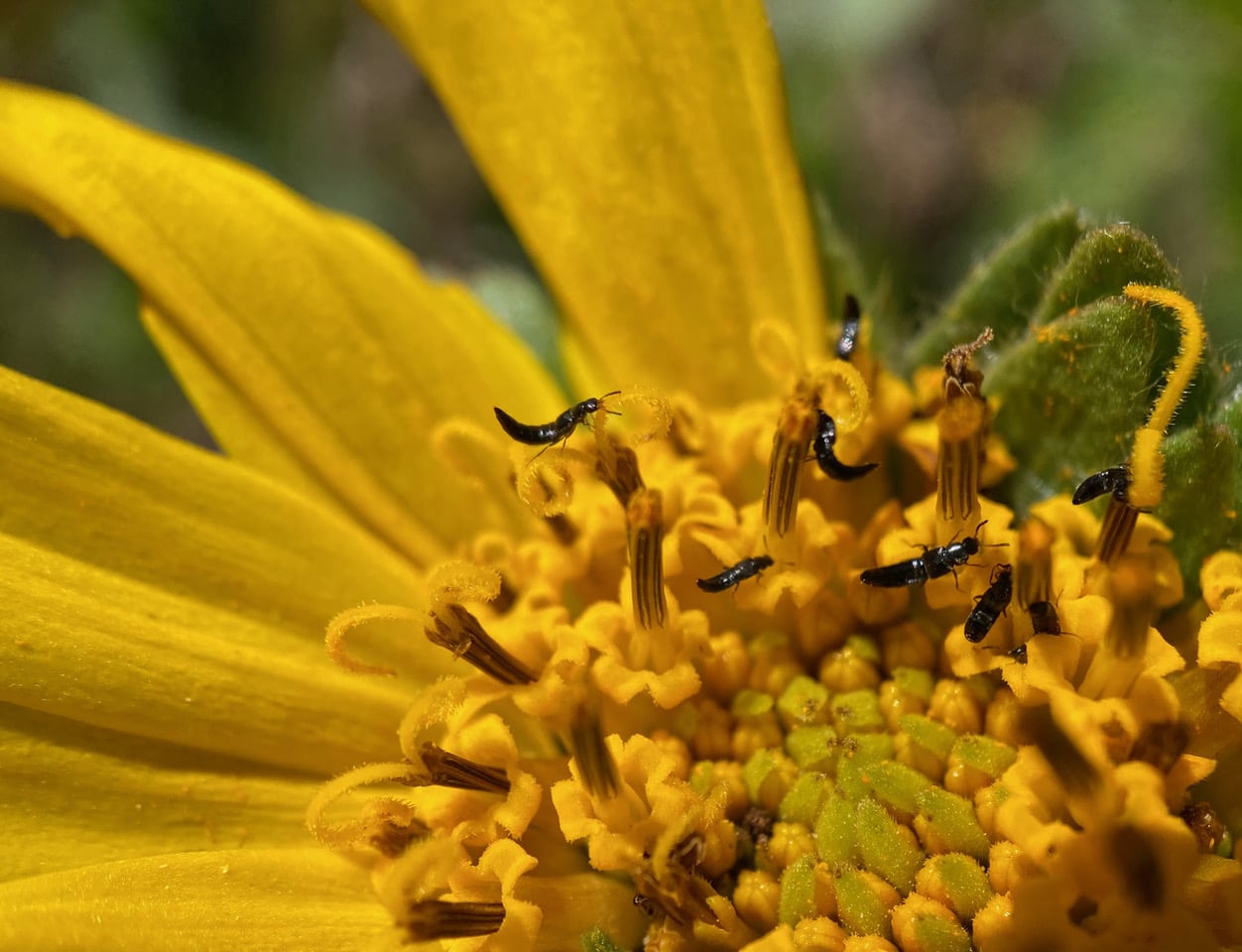
The manic black Rove Beetles (family Staphylinidae) continue to frolic on the flowerheads of the Narrowleaf Mule’s Ear, Wyethia angustifolia, slipping in and out of the florets and climbing on the reproductive parts. Their numbers are staggering and I wonder what natural predators control their population. The beetles seem to be feeding on pollen. Does that affect the reproductive success of the plant, or interfere with visitation from pollinators?
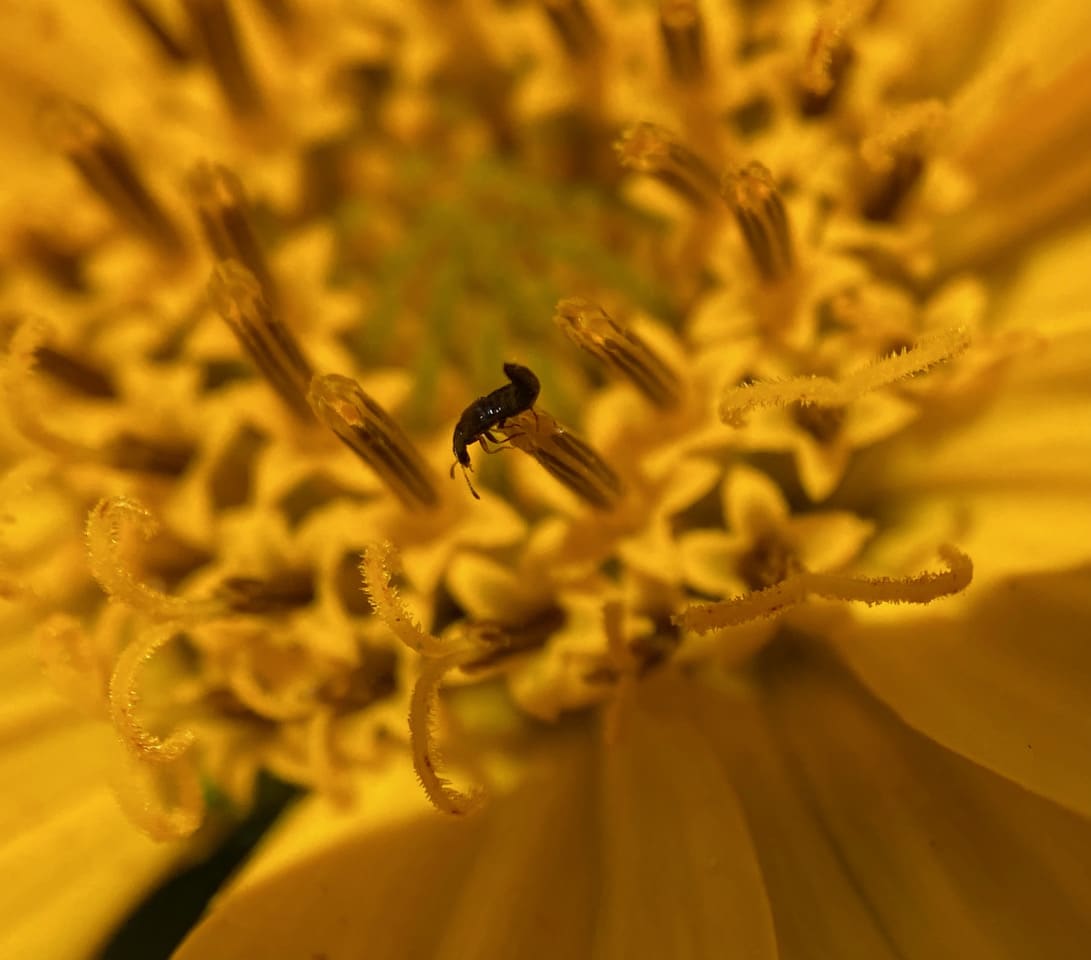
It is unusual to see a lone Rove Beetle. They seem to be highly gregarious.
 Hey, that’s not only an unusual Ladybeetle on the Yarrow, but its color is also unusual. It is probably a Pacific Three-banded Ladybeetle that has freshly emerged from its pupa. It takes some time for the full coloration to develop on the beetles after eclosure. The fresh adults tend to look a pale yellow-orange before turning red.
 The Three-banded Ladybeetle, Coccinella trifasciata (family Coccinellidae) is native to North America. “Three-banded”? The species is rather variable depending on its range. The ones found east of the Rockies are indeed three-banded. Species Coccinella trifasciata – Three-banded Lady Beetle – BugGuide.Net Here in California, we have the subspecies Coccinella trifasciata subversa, also known as the Pacific Three-banded Ladybeetle. Photos of Pacific Three-banded Lady Beetle (Subspecies Coccinella trifasciata subversa) · iNaturalist These beetles are active from spring through summer months and on warm days of fall; diapausing (that’s insect version of hibernation) through the colder winter months.