

Pollinator Post 6/3/23 (1)
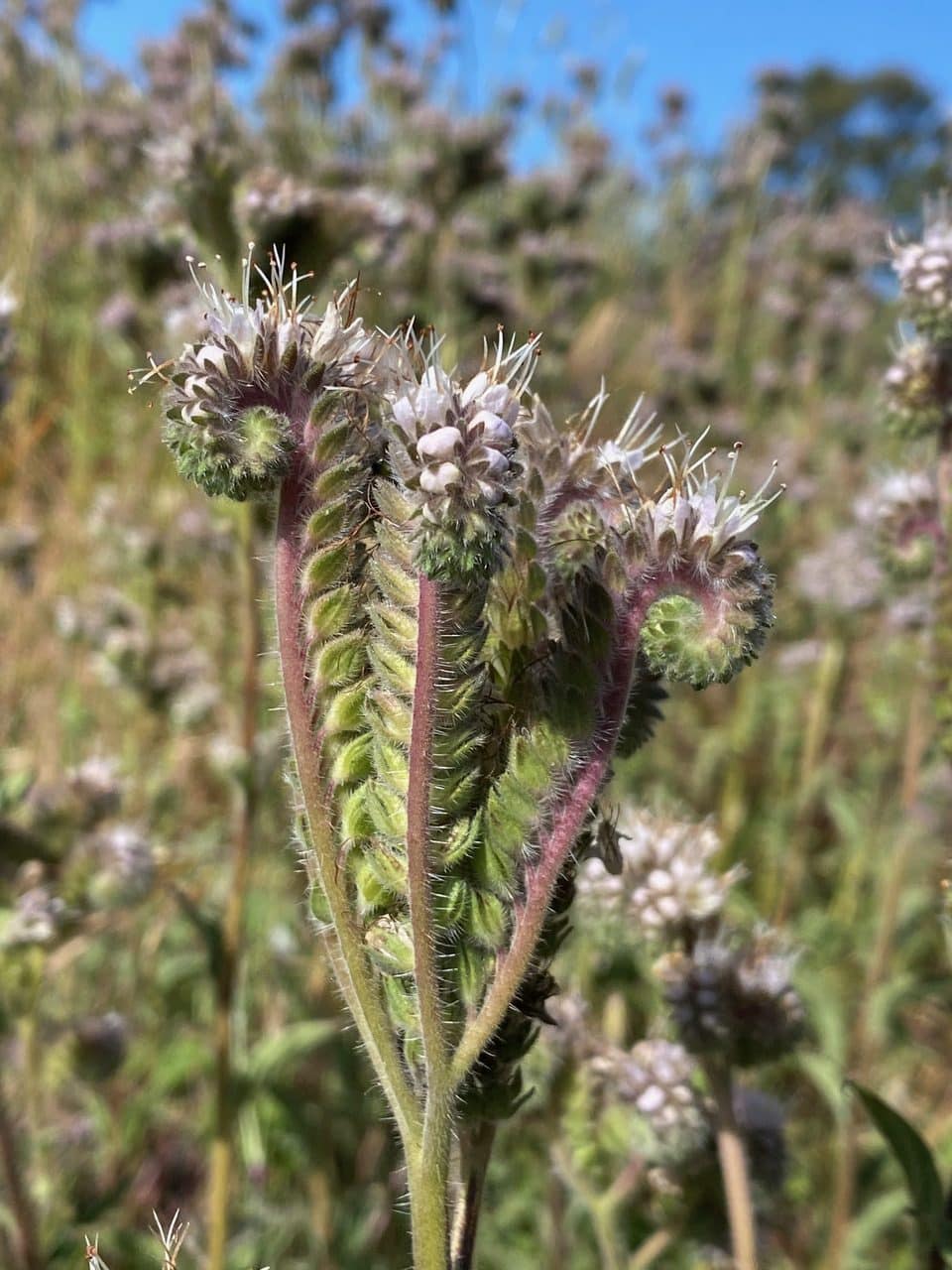
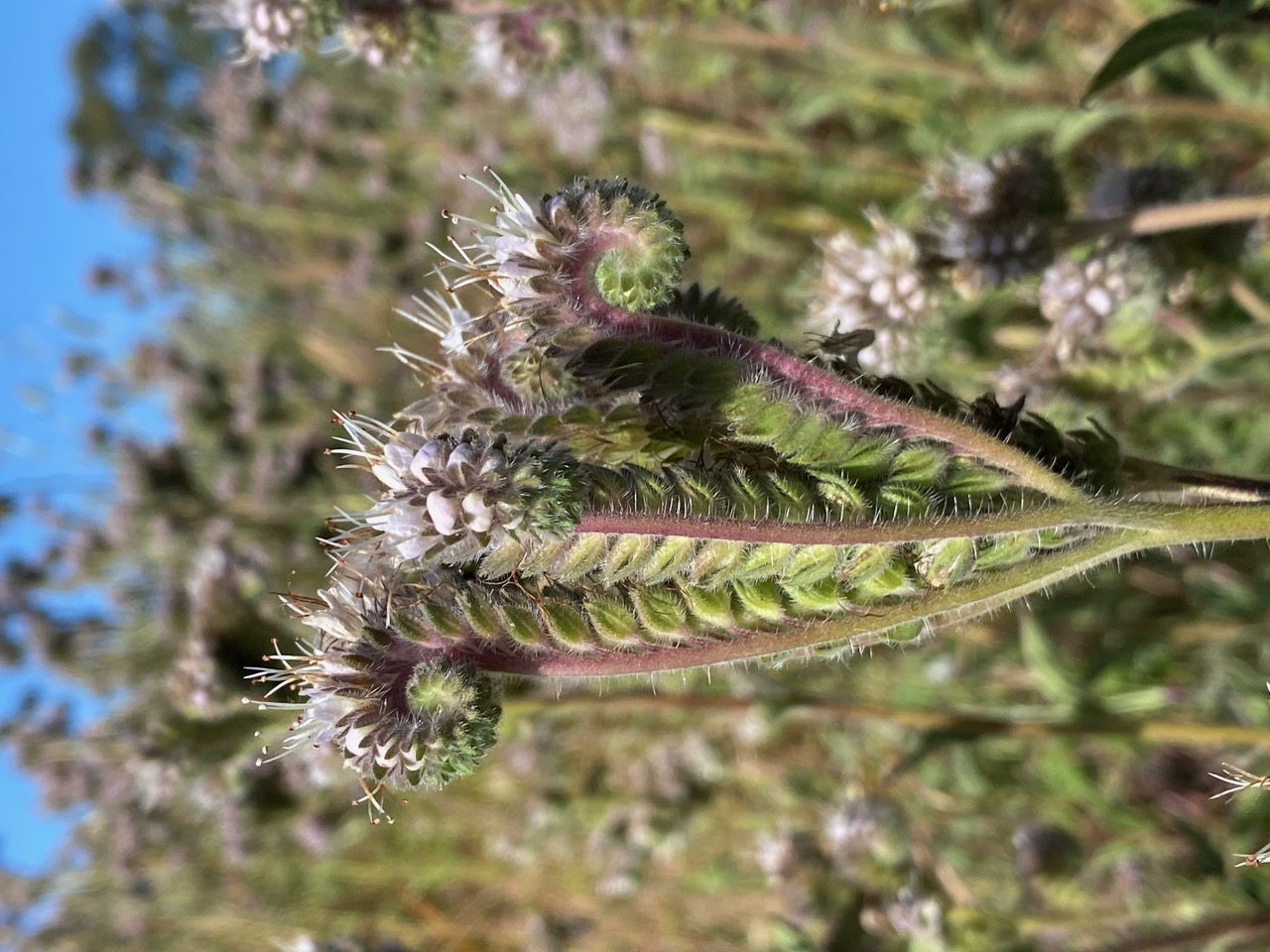
The season is advancing fast. One can almost tell time by how much the scorpionoid cymes of the Calfornia Phacelia, Phacelia californica have uncoiled. Long rows of fruits are developing along the straightened cymes below the remaining flowers.
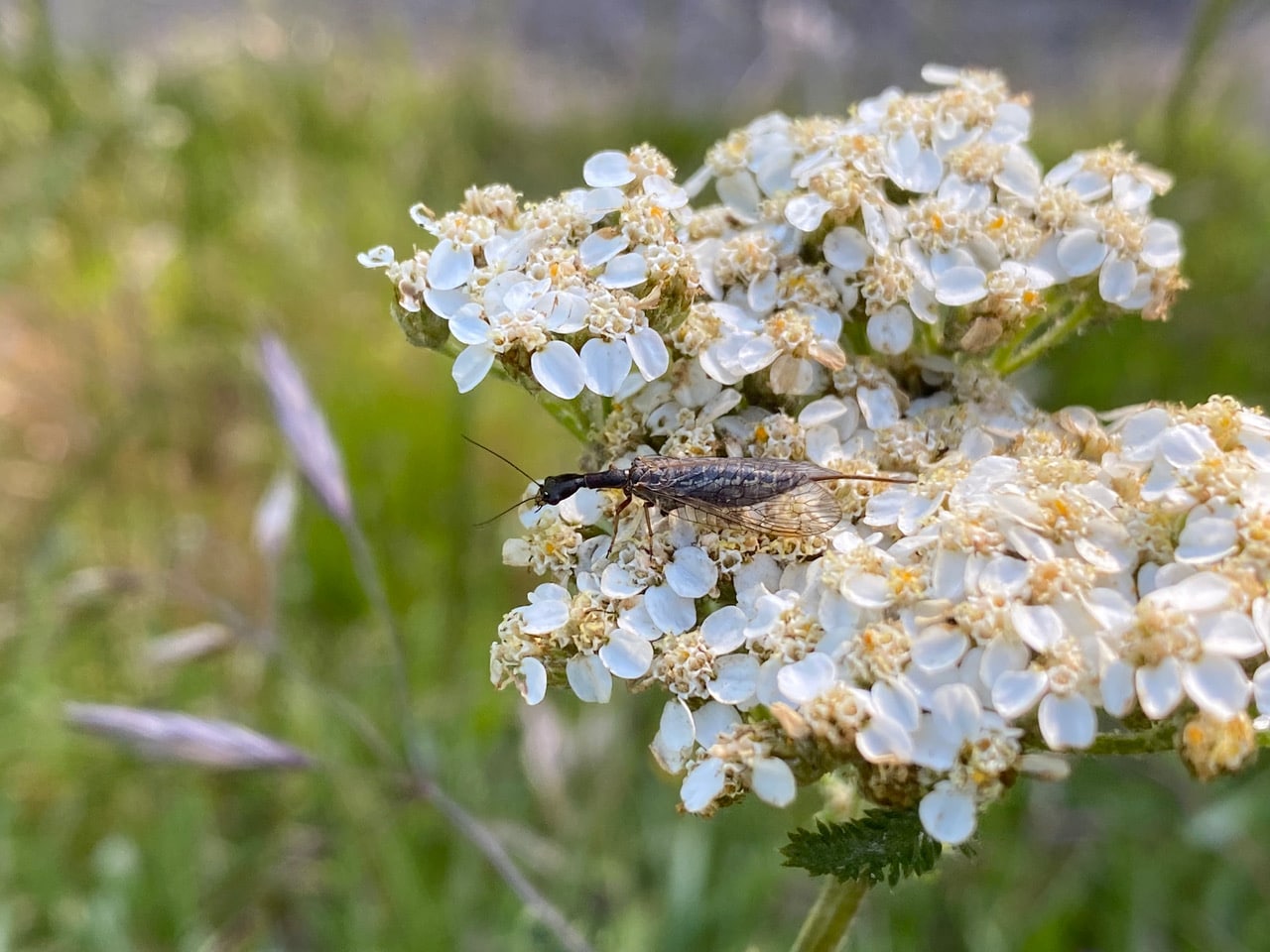
A female Snakefly is hunting on an inflorescence of Yarrow, Achillea millefolium.
Snakeflies are a group of predatory insects comprising the order Raphidioptera. They are a relict group, having reached their apex of diversity during the Cretaceous before undergoing substantial decline. Adult Snakefly has a notably elongated thorax which, together with the mobile head, gives the group their common name of snakily. The body is long and slender and the two pairs of long membranous wings are prominently veined. The head is long and flattened and heavily sclerotized. The mouthparts are strong and relatively unspecialized, being modified for biting. The large compound eyes are at the sides of the head. Females have a large and sturdy ovipositor which is used to deposit eggs into crevices or under bark. Snakeflies are holometabolous insects with four-stage life cycle consisting of eggs, larvae, pupae and adults. Both adults and larvae are predators of soft-bodied arthropods such as aphids and mites.
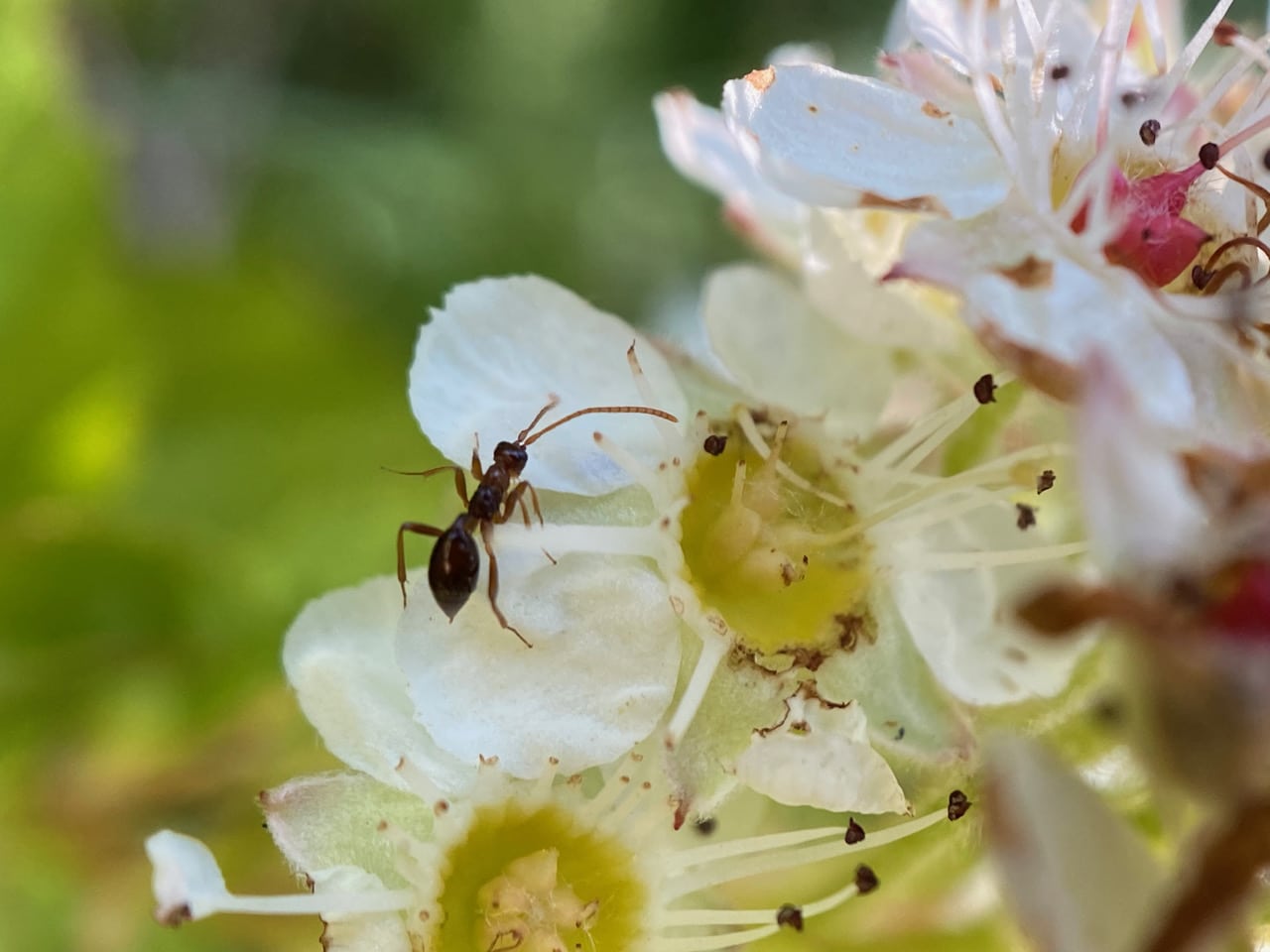
It’s hard to walk past the blooming Pacific Ninebark, Physocarpus capitatus without checking the insects on the flowers. I find the usual visitors, then my attention is hijacked by an insect that appears at first to be an American Winter Ant, Prenolepis imparis. But the antenna are long and not elbowed, as in the ants! It’s probably a wasp! A wingless wasp??
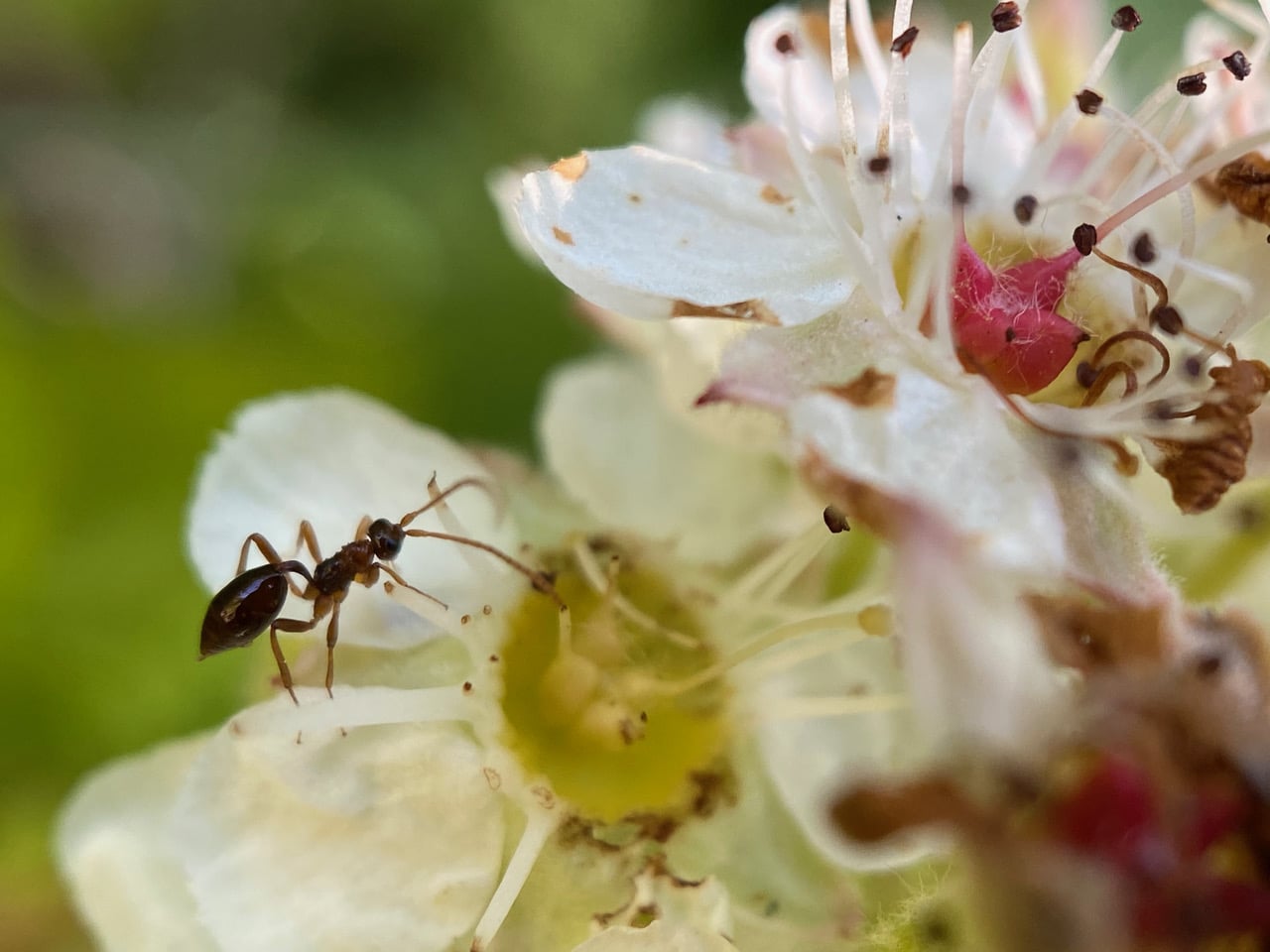
As the insect moves around, I begin to notice a distinctly long petiole between its thorax and abdomen.
In entomology, petiole is the technical term for the narrow “waist” of some hymenopteran insects, especially ants, bees, and wasps in the suborder Apocrita.

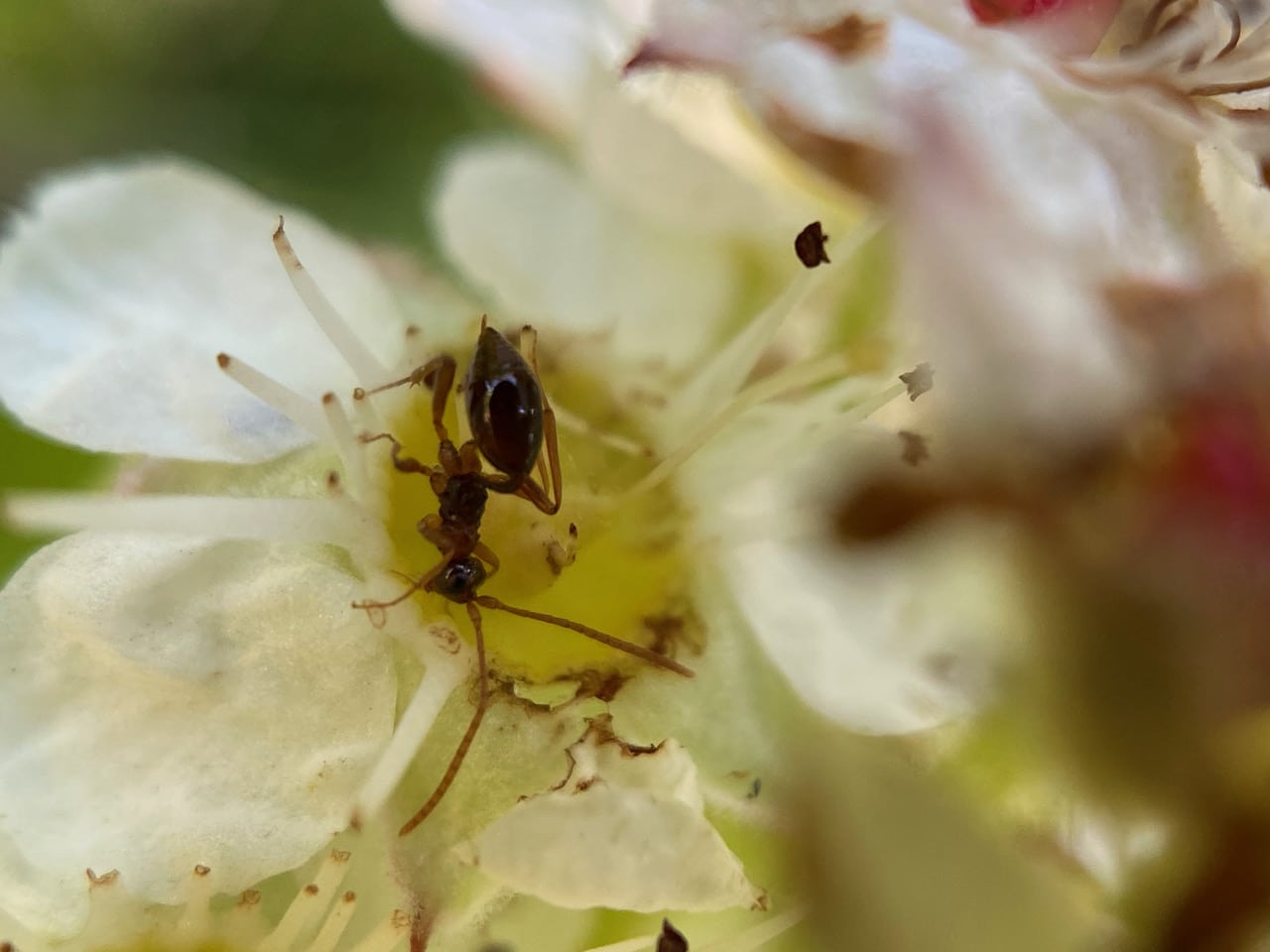
Reaching down into the cup-shaped depression in the center of the flower for nectar, the wasp holds its abdomen high with its long petiole. There seems to be a stinger or ovipositor at the tip of its abdomen.
Wasps are distinguished from the ants and bees of Apocrita by various behavioral and physical characteristics, particularly their possession of a slender, smooth body and legs with relatively few hairs. Wasps generally are predatory or parasitic and have stingers with few barbs that can be removed easily from their victims. Wasps have biting mouthparts and antennae with 12 or 13 segments. They are normally winged. In stinging species, only the females are provided with a formidable sting, which involves use of a modified ovipositor (egg-laying structure) for piercing and venom-producing glands. Adult wasps may feed on nectar and, in some species, on the secretions produced by larvae. Larvae of predatory wasp species typically feed on insects, while larvae of parasitic species feed on their hosts.
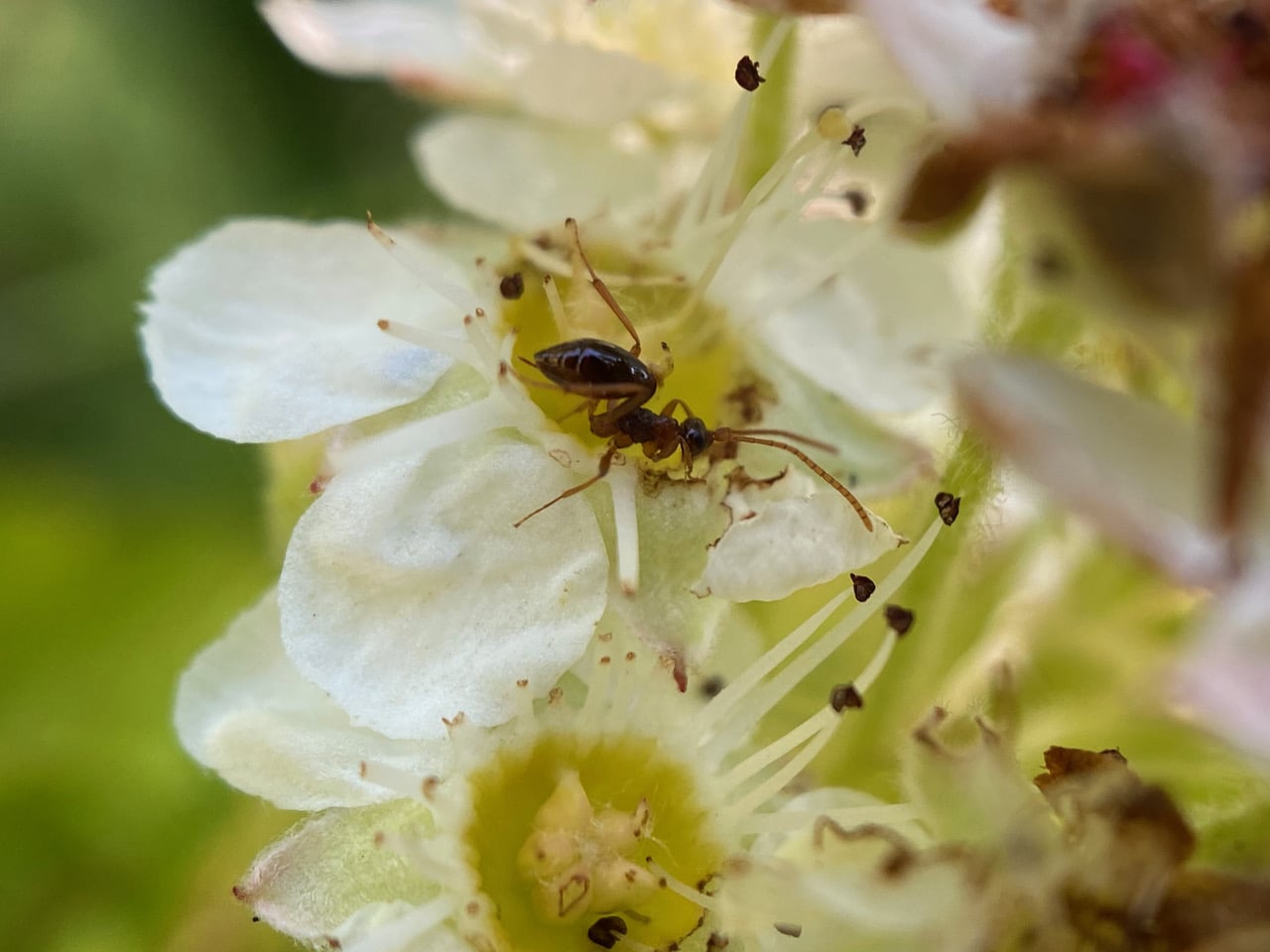
iNaturalist has helped identify the wasp as a member of the genus Gelis (family Ichneumonidae).
The Ichneumonidae, also known as the Ichneumon Wasps, or Ichneumonids, are a family of parasitoid wasps. They are one of the most diverse groups within the Hymenoptera (the order that includes the ants, wasps and bees) with about 25,000 species and counting. Ichneumon Wasps attack the immature stages of insects and spiders, eventually killing their hosts. They play an important role in the ecosystem as regulators of insect populations.
The Ichneumon Wasps have longer antennae than typical wasps, with 16 segments or more as opposed to 13 or fewer. Ichneumonid females have an unmodified ovipositor for laying eggs. They generally inject eggs either directly into their host’s body or onto its surface, and the process may require penetration of wood. After hatching, the Ichneumonid larva consumes its still living host. The most common hosts are larvae or pupae of Lepidoptera (butterflies and moths), Coleoptera (beetles) and Hymenoptera. Adult Ichneumonids feed on plant sap and nectar. Females spend much of their active time searching for hosts while the males are constantly on the look out for females. Many Ichneumonids are associated with specific prey, and Ichneumonids are considered effective biological controls of some pest species.
Many species of Gelis are wingless. Habits are diverse. Many are external parasites of Lepidoptera (moths and butterflies) in cocoons, others are parasitic on sawflies, spiders, Diptera (flies) larvae and pupae, or wood-boring Coleoptera (beetles) larvae. Many are hyperparasites (parasites of parasites).

A small day-active moth, Sulphur Tubic, Esperia sulphurella (family Oecophoridae, or concealer moths) is moving slowly through the Pacific Ninebark flowers, seeking nectar.
Adults of Oecophoridae are very small to medium-sized, with wingspans ranging from 0.3 to 3 mm. The moths have smooth-scaled heads and broad forewings. Larvae usually feed concealed in webs or in rolled leaves of the host plant. Larvae of some species feed on dead leaves, decomposing animals, or decaying fungi. Pupation occurs in the larval shelters, on the ground, or below its surface.

Sulphur Tubic, Esperia sulphurella (family Oecophoridae) is native to Europe, but has been introduced in California. Adults have a body length of 6-8 mm, are black with yellow markings. They are on wing in spring. Larvae are black and feed on dead wood.
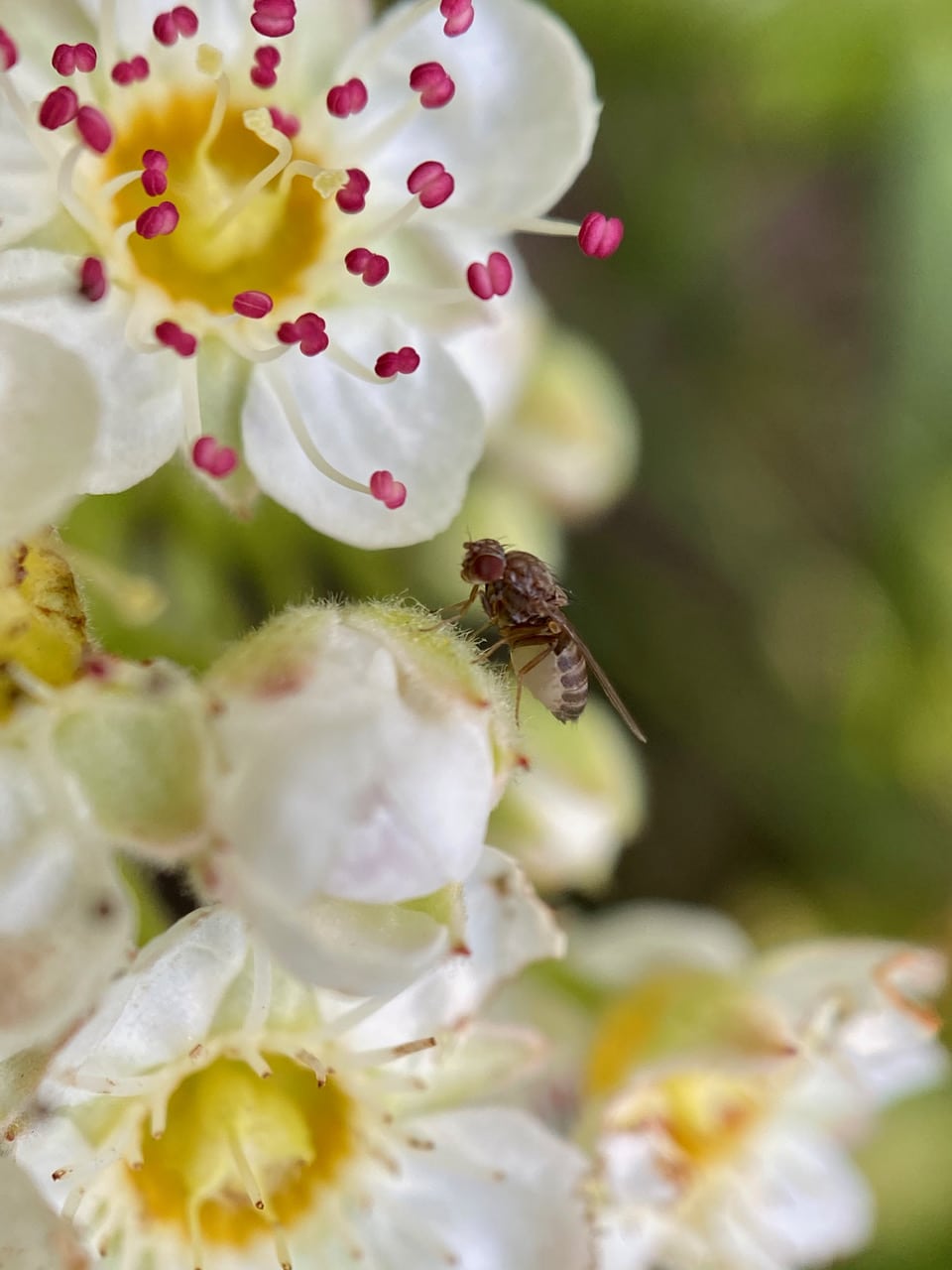
A Small Fruit Fly, Drosophila sp.(family Drosophilidae) is perched quietly on a flower bud of Pacific Ninebark.
Drosophila is a genus of flies in the family Drosophilidae, whose members are often called “small fruit flies” for their habit of lingering around overripe or rotting fruit. One species, D. melanogaster, has been heavily used in research in genetics and is a common model organism in developmental biology. However, the entire genus contains more than 1,500 species, and is very diverse in appearance, behavior, and breeding habitat. Drosophila species are found all around the world, with more species in the tropical regions. Most species breed in various kinds of decaying plant and fungal material, including fruit, bark, slime fluxes, flowers, and mushrooms. Larvae feed not on the vegetable matter itself, but on the yeasts and microorganisms present on the decaying breeding substrate.
Males may congregate at patches of suitable breeding substrate to compete for the females, or form leks, conducting courtship in an area separate from breeding sites. Drosophila males are known to have the longest sperm cells of any studied organism on earth. The cells mostly consist of a long, thread-like tail, and are delivered to the females in tangled coils.

The California Bee Plant, Scrophularia californica is in peak bloom right now.
The small, inconspicuous flower is only about 1/4 in. in length, and displays bilateral symmetry, with two petals pointing up (like Micky Mouse ears) and three down; the latter sometimes appear as two petals to the sides and one down. There are 4 fertile stamens, more of less appressed to the lower portion of the throat and extending to the edge of the lower lobes. The fertile anthers are yellow (only two are visible here). The infertile fifth stamen is dark red, and mostly fused to the upper throat. There is a single style with a capitate stigma. The style is appressed to the lower portion of the tube and extends beyond the corolla, bending downward. The flower is protogynous, meaning the female parts (pistil) mature before the male parts (stamen).
The flower pictured here is in the female phase, with a mature, receptive stigma. The stamens are not yet mature; only one of the four fertile anthers have appeared in the front of the throat, and is not yet dispensing pollen. Nectar is already produced to entice pollinators to visit and deposit pollen from other more mature flowers. Dichogamy (separation of genders in time) is a floral strategy for avoiding self-pollination.
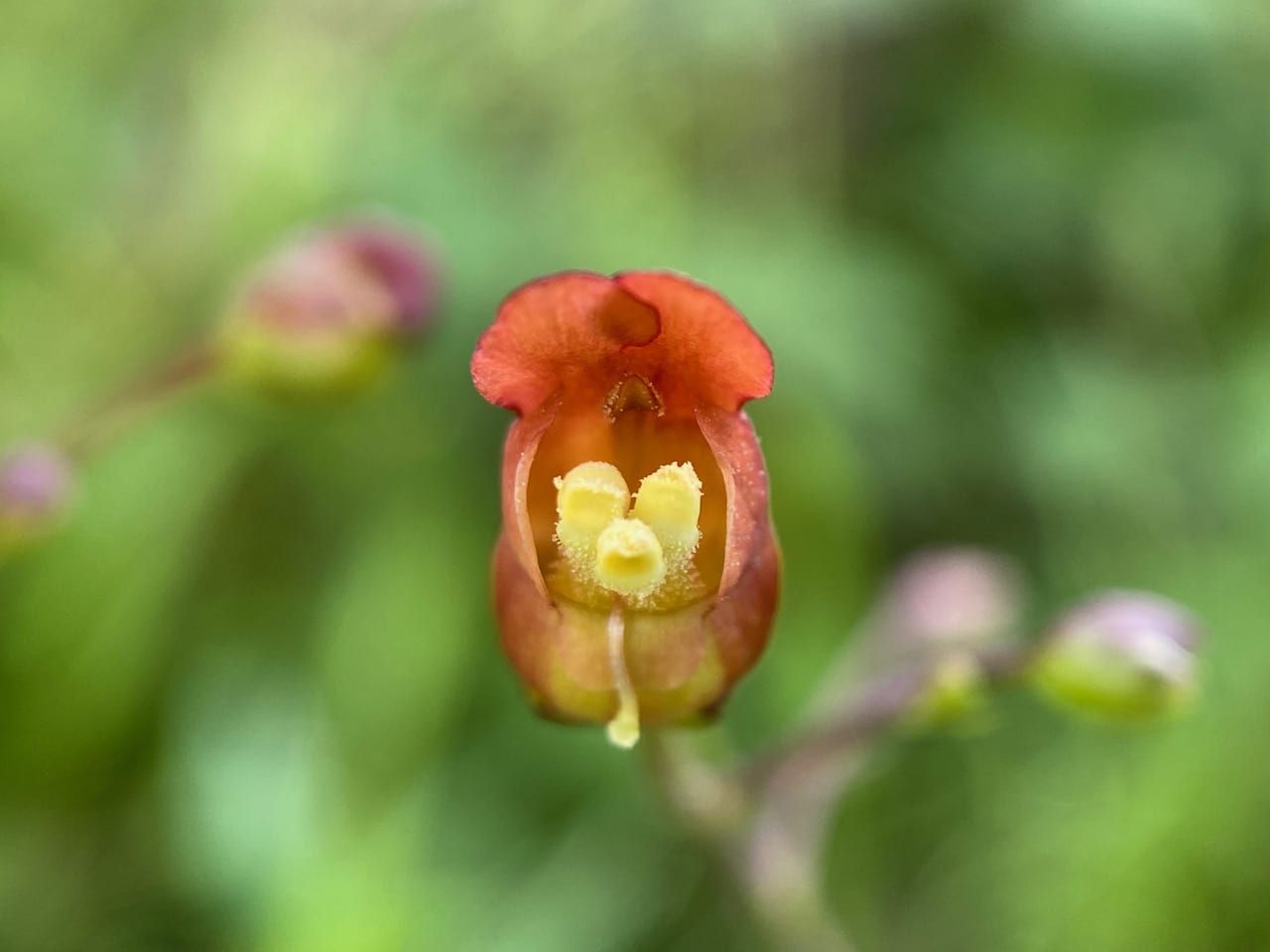
Three of the four fertile stamens have been rolled out of this Bee Plant flower. The stigma and style are receding back and lowered out of the way.
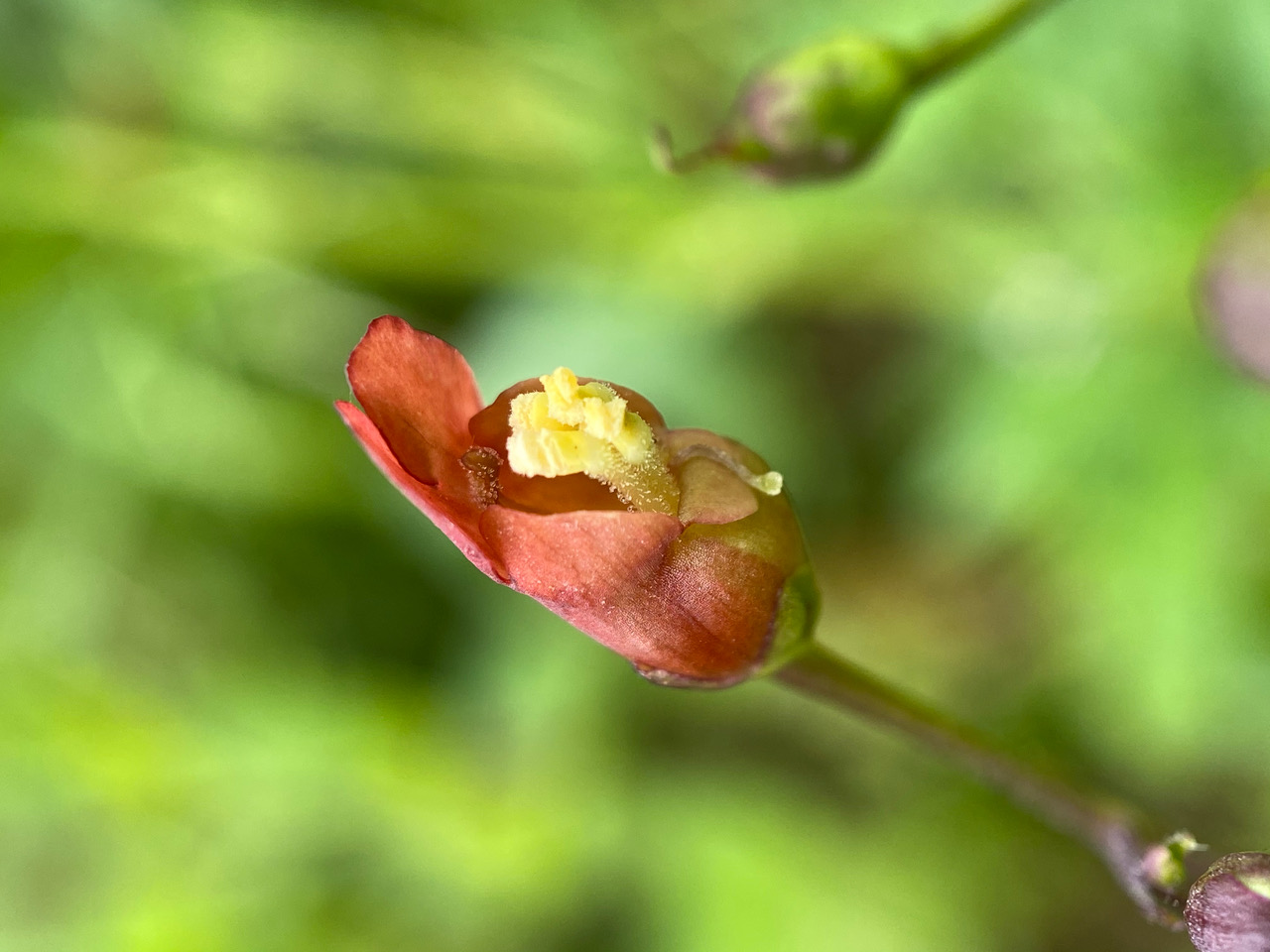
This flower is in the male phase. All four stamens have appeared at the entrance of the corolla, ready for business. The anthers have gaped open to release pollen. The stigma is probably no longer receptive at this point.

A Mining Bee, Andrena sp. (family Andrenidae) visits a California Bee Plant flower. She hangs at the entrance to the corolla for quite some time, probably collecting pollen from the large anthers. Andrenidae have short tongues, so I’m not sure if she’s able to access the nectar without entering the corolla.

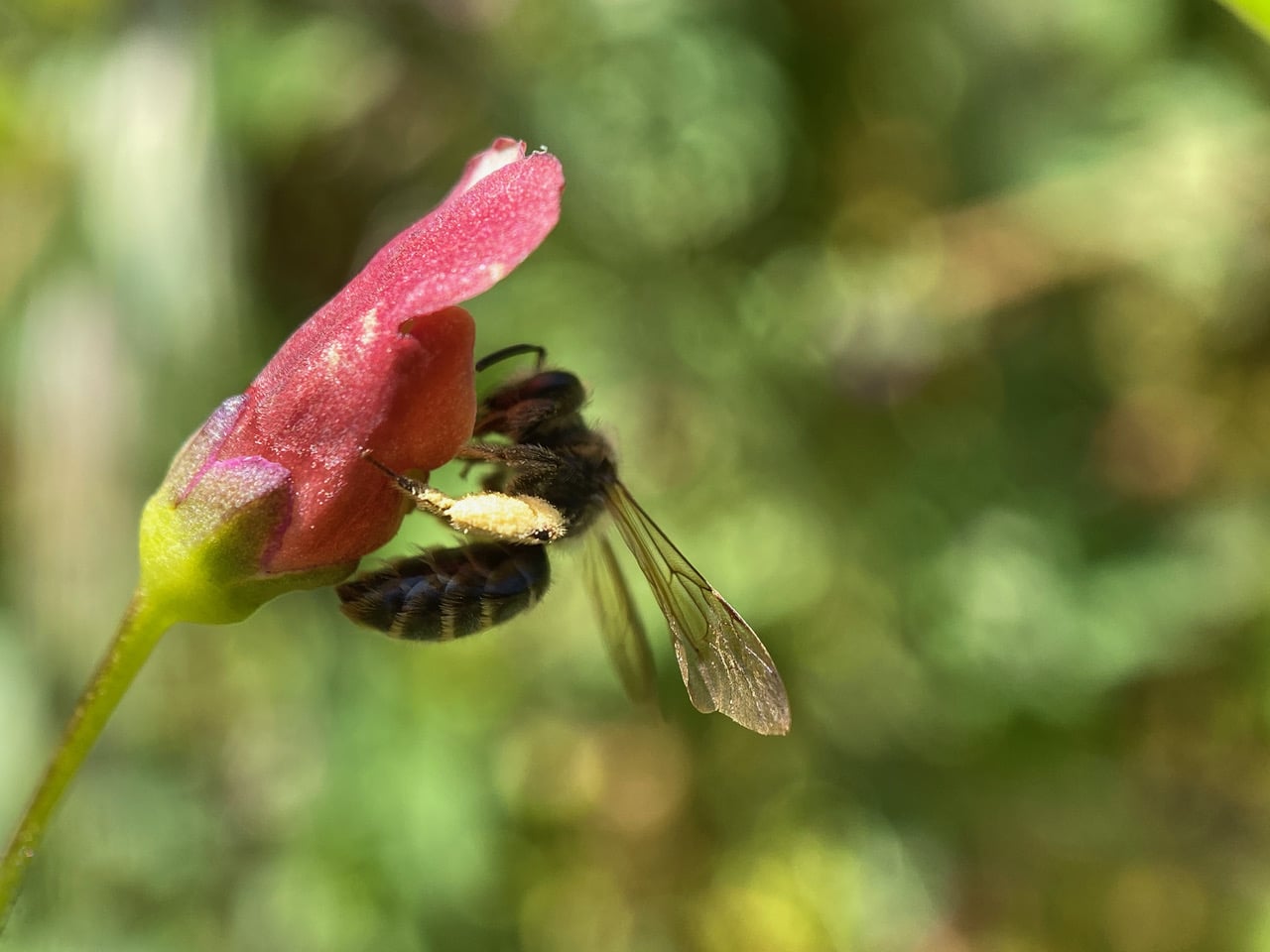
Several of the Mining Bees that visit the California Bee Plant flowers have loaded scopae on their hind legs. The pollen is probably gathered from the Bee Plant.
Although the flowers of California Bee Plant are small, they are visited by many large bees, such as bumble bees. Today I am surprised to see a Carpenter Bee, Xylocopa sp. visit these flowers. Bumble Bees and Carpenter Bees (family Apidae) hang at the entrance and stick their long tongues in to access the nectar. Their stops are brief, and they don’t seem to be collecting pollen. I have never seen any small insect enter the flowers of Bee Plant.
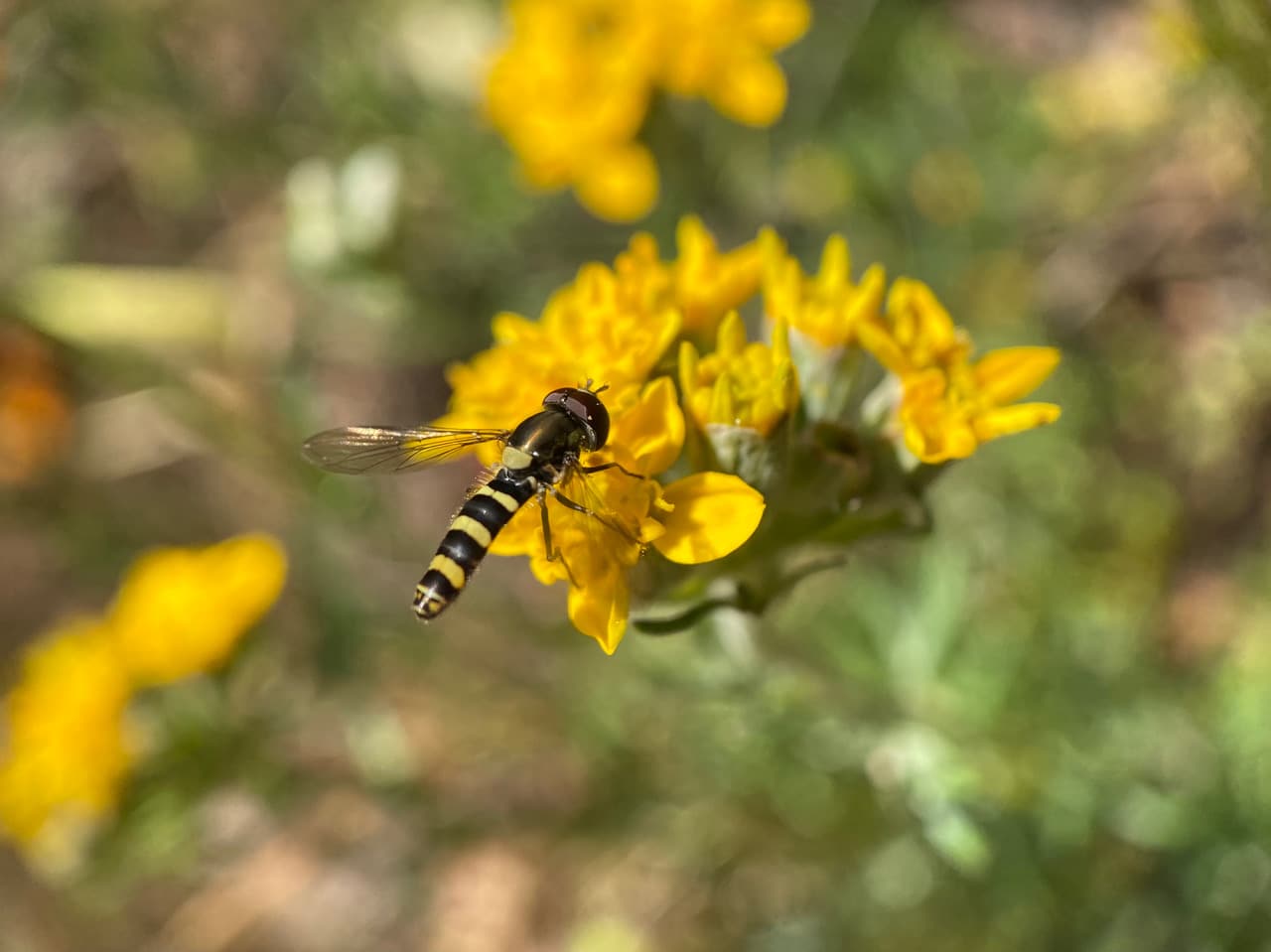
A male Diamond Spottail Hoverfly, Fazia micrura (family Syrphidae) visits the flowers of Golden Yarrow, Eriophyllum confertiflorum. There are four diamond-shaped yellow markings near the tip of the tail.
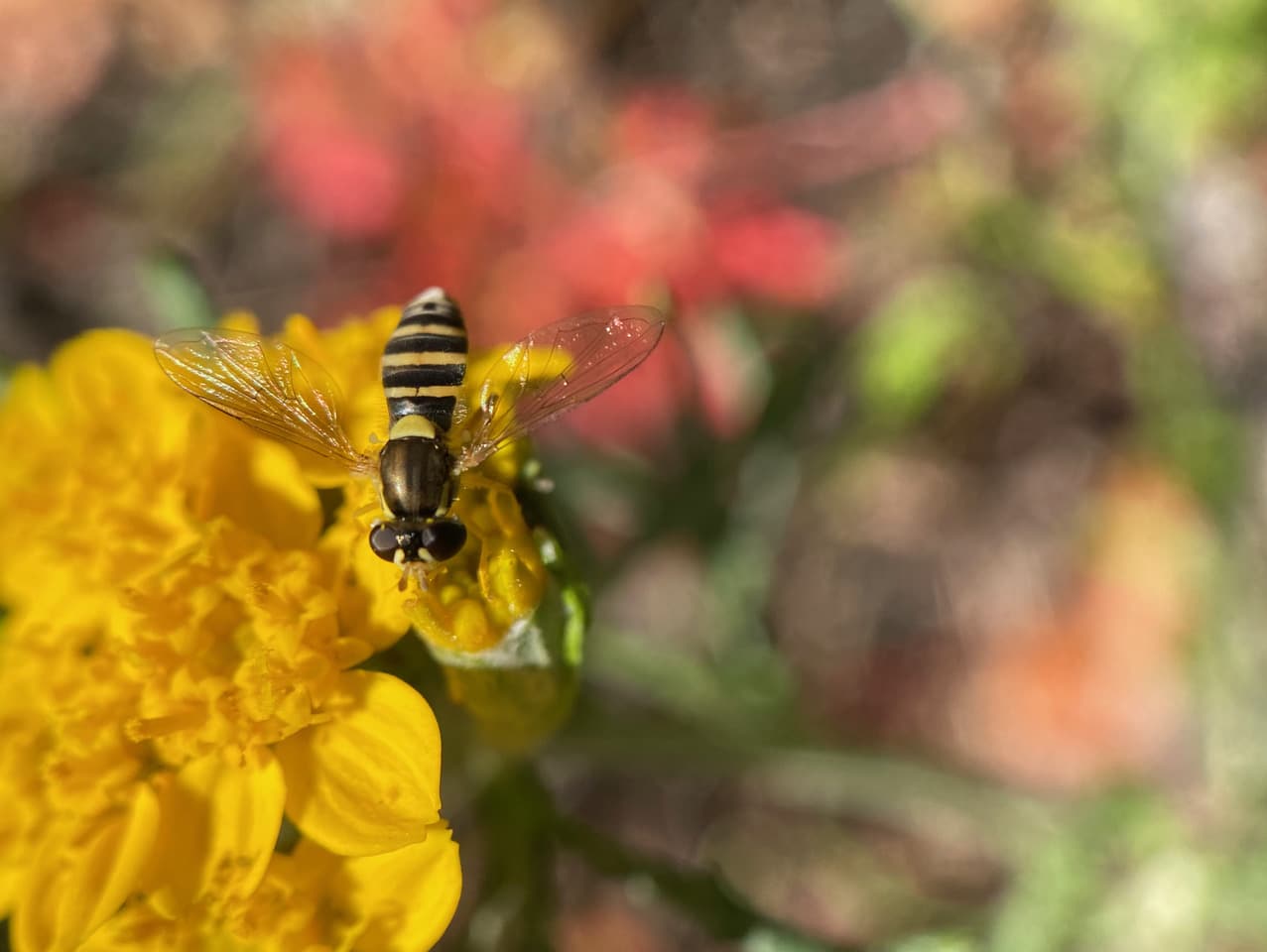
Nearby, a female Diamond Spottail Hoverfly, Fazia micrura is visiting the same flowers. Both sexes have the diamond spots, but the females are distinguished by her broader abdomen, and also by the space between her compound eyes. Males have holoptic eyes that meet along a central line atop the head.
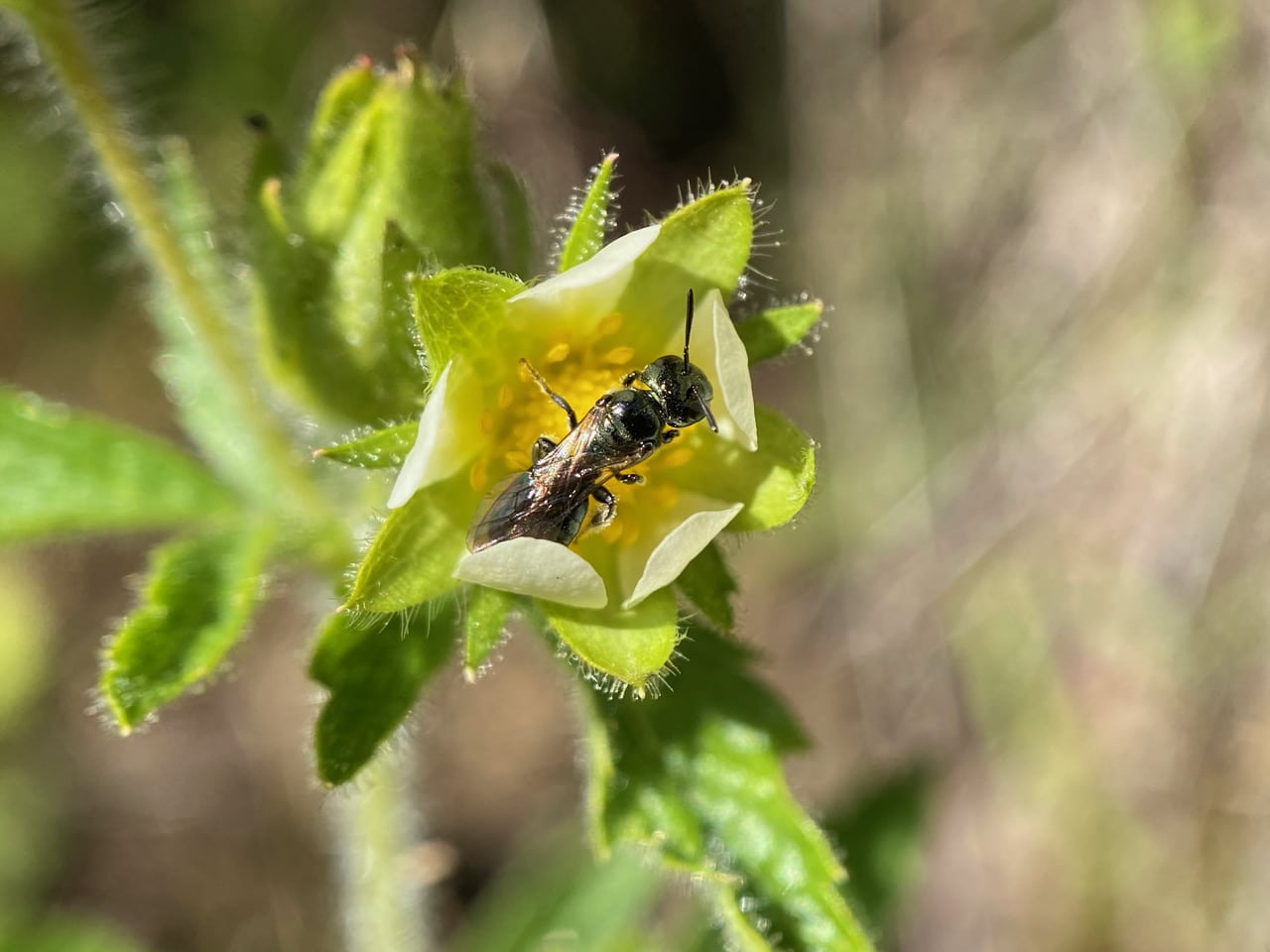
A Small Carpenter Bee, Ceratina sp. (family Apidae) is foraging on a flower of Sticky Cinquefoil, Drymocallis glandulosa.
The Small Carpenter Bee genus Ceratina is closely related to the more familiar, and much larger Carpenter Bees (genus Xylocopa). Ceratina are typically dark, shiny, even metallic bees, with fairly sparse body hairs and a weak scopa on the hind leg. The shield-shaped abdomen comes to a point at the tip. Some species have yellow markings, often on the face.
Females excavate nests with their mandibles in the pith of broken or burned plant twigs and stems. While many species are solitary, a number are subsocial. Both male and female carpenter bees overwinter as adults within their old nest tunnels, emerging in the spring to mate. In the spring, this resting place (hibernaculum) is modified into a brood nest by further excavation. The female collects pollen and nectar, places this mixture (called bee bread) inside the cavity, lays an egg on the provision, and then caps off the cell with chewed plant material. Several cells are constructed end to end in each plant stem.

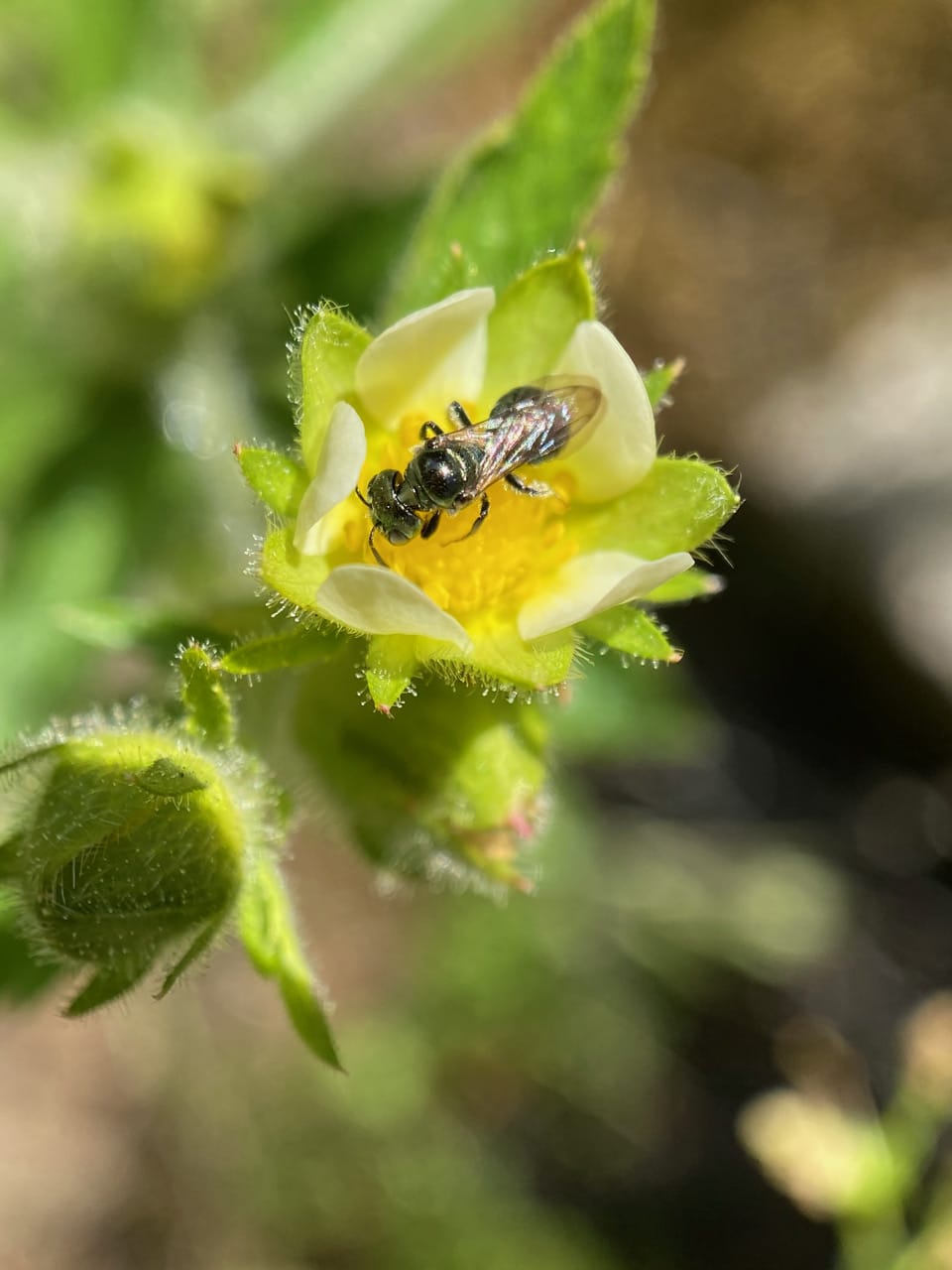
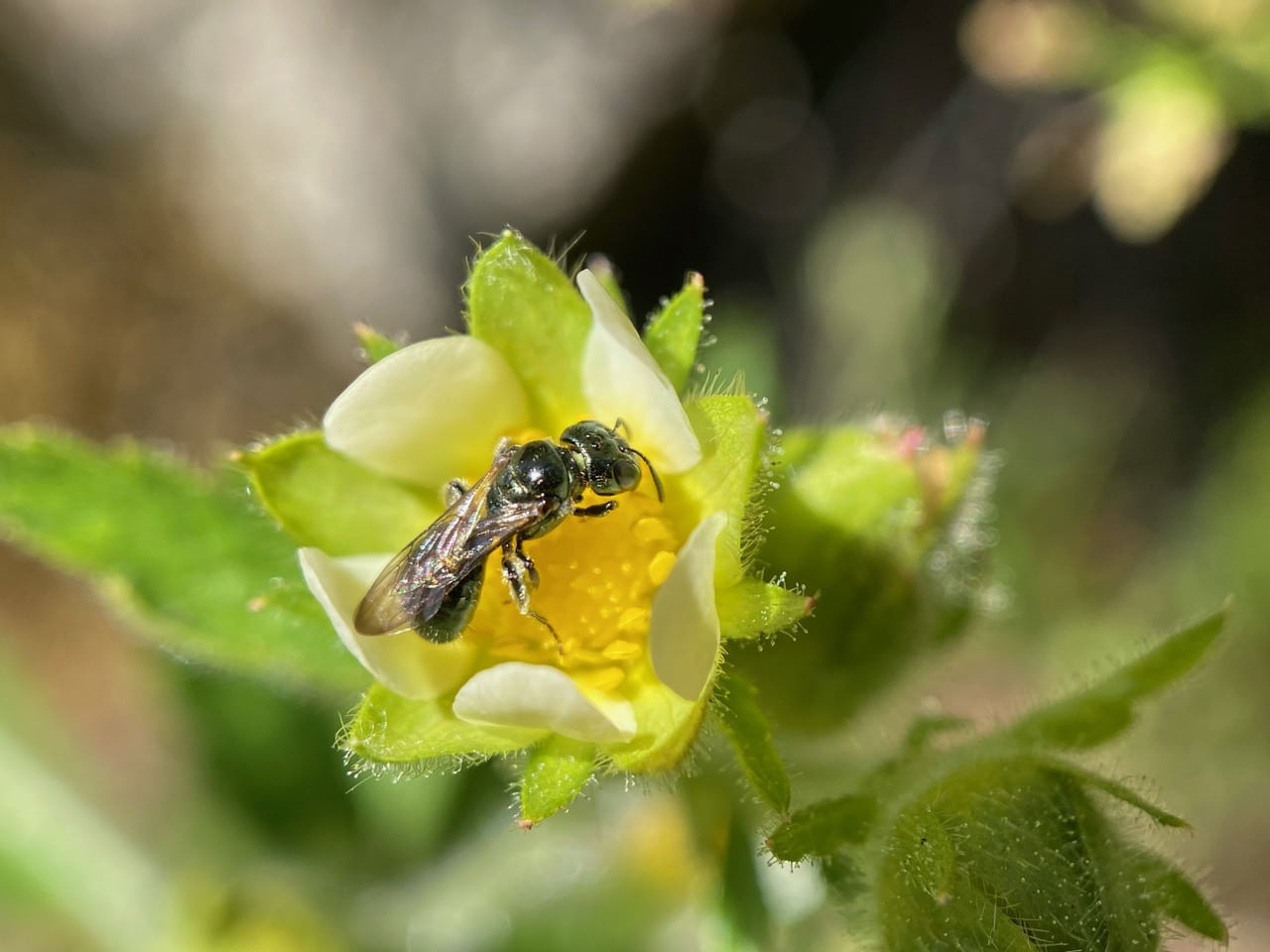
Note the weak scopae on her hind legs. Another distinguishing feature of Ceratina.
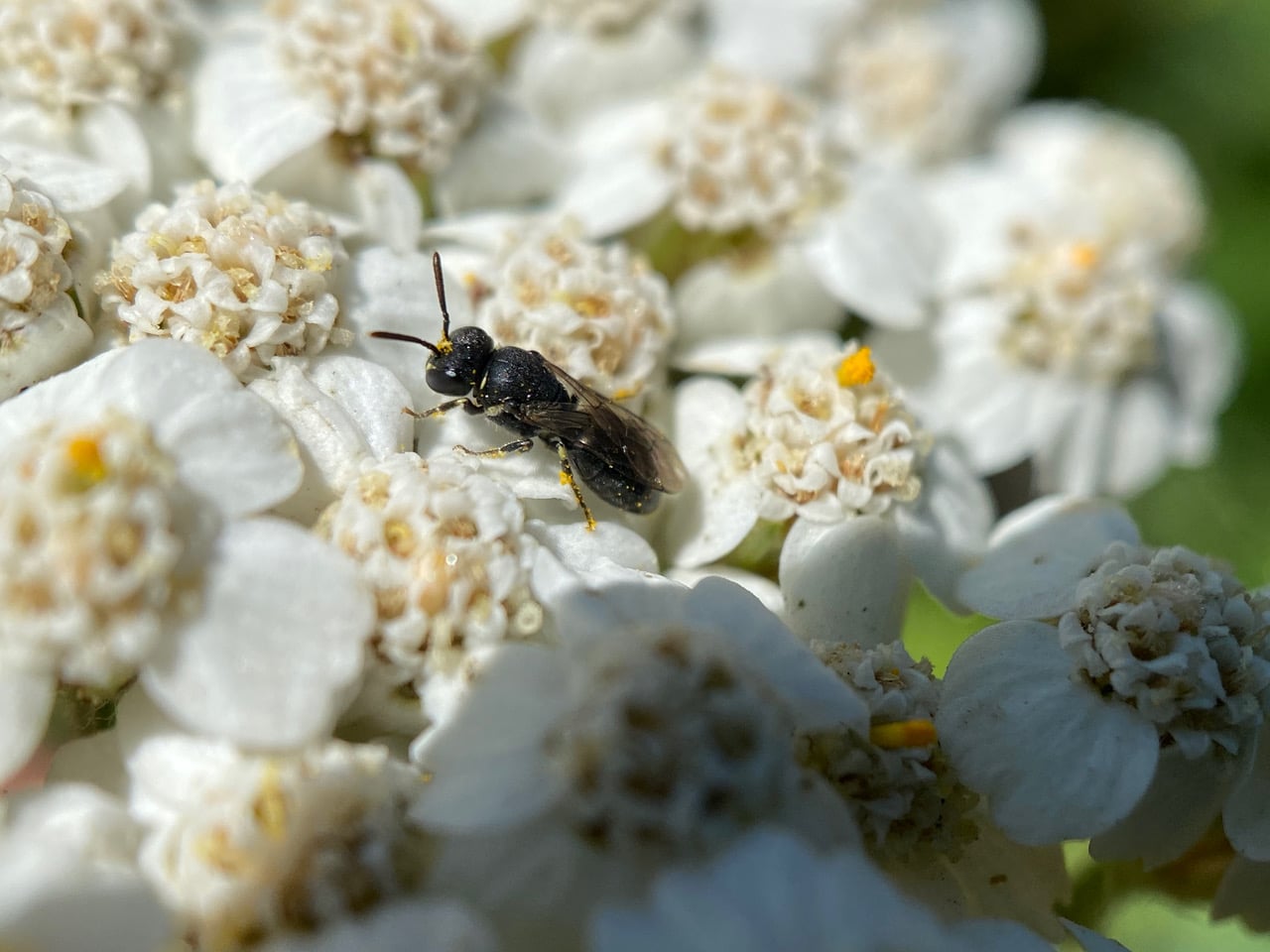
A Masked Bee, Hylaeus sp. (family Colletidae) about the size of a grain of rice, is foraging on an infloresence of Yarrow, Achillea millefolium. This is a female, but you’d never see a scopa on the body, whether male or female.
Hylaeus (family Colletidae) are shiny, slender, hairless, and superficially wasp-like bees. They are small, 5 to 7 mm long, usually black with bright yellow or white markings on their face and legs. These markings are more pronounced on the males. Hylaeus do not carry pollen and nectar externally, they instead store their food in the crop and regurgitate it upon returning to their nests. They are primarily generalist foragers. Hylaeus are short-tongued, but their small body size enables them to access deep flowers. Hylaeus nest in stems and twigs, lining their brood cells with self-secreted cellophane-like material. They lack strong mandibles and other adaptations for digging, using instead pre-existing cavities made by other insects.