

Pollinator Post 6/28/24 (1)

I am excited to visit Anni and Carol’s home garden in Richmond again today! Because they are home, I get to meet the gracious owners and explore their backyard as well.
A Common Checkered Skipper, Burnsius communis (family Hesperiidae) is foraging on the flowers of Red-flowered Buckwheat, Eriogonum grande var. rubescens.Because of its small size, bluish color, and spread-wing posture, the butterfly is often mistaken for one of the “Blues” in the family Lycaenidae. Skippers have the antennae clubs hooked backward like a crochet hook, while the typical butterflies have club-like tips to their antennae. Skippers also have generally stockier bodies and larger compound eyes.
Checkered Skippers belong to the subfamily Pyrginae, commonly known as spread-wing skippers, in the family Hesperiidae. Spread-wing skippers bask with their wings held wide open. The wings are held closed when they are at rest. Caterpillars make folded-leaf nests in which they live and feed on several plants in the mallow family, Malvaceae.
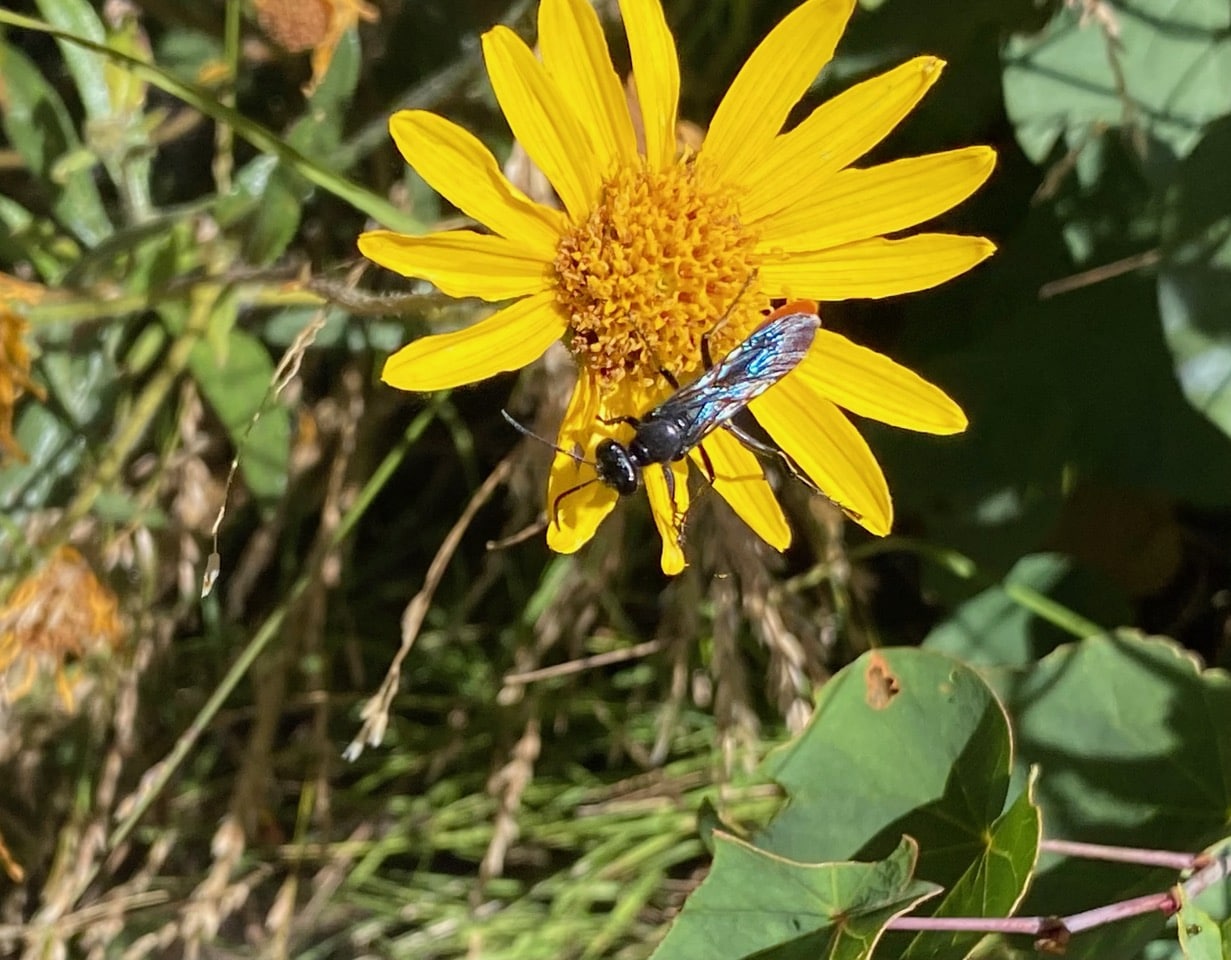
A female Thread-waisted Burrowing Wasp, Sphex lucae (family Sphecidae) visits a flowerhead of Slender Sunflower, Helianthus gracilentus.
The Sphecidae are solitary wasps with elongated and narrow first abdominal segment, giving rise to the common name Thread-waisted Wasps. Sphex lucae is a widespread western species, ranging from WA in the north, south to CA, and east to TX. The species exhibits sexual dimorphism – females are black with a red abdomen, while the males are all black. Adults visit many types of flowers for nectar. Females hunt katydids and grasshoppers as food for their young. The wasp excavates a single-celled burrow in the soil in advance of hunting activities. She drags her paralyzed prey back to the burrow, laying a single egg on the victim. The nest entrance is then sealed and the process is repeated. Males of this species spend nights in sleeping aggregations in sheltered places such as beneath a rock overhang.
Dr. Megan Asche on Twitter: “Sphecid wasp (possibly Sphex lucae) digging a tunnel. I think it is so neat when you see them pick up rocks and move them around. #Hymenoptera #SolitaryWasp #HeavyLifter https://t.co/HQkiDxsCCG” / X

A male Summer Longhorn Bee, Melissodes sp. (family Apidae) patrols the flowerheads of the Slender Sunflower hoping to mate with females who come to forage on these flowers. For some reason, I don’t see any females today.
The Summer Longhorn Bees, Melissodes sp. (family Apidae) are medium to large bees, stout-bodied, usually with gray hair on the thorax and pale hair bands on the abdomen. Males usually have yellow markings on their faces and have very long antennae from which their common name is derived. They are active May to September, with peak flight in late June to early August. The females prefer flat, bare ground for digging their solitary nests, though they sometimes nest in aggregations. Pollen is transported in scopae on the hind legs. Pollen loads are often copious and brightly colored and thus very distinguishable. Melissodes are specialists on Asteraceae – females gather pollen from flowers of Aster, Bidens, Coreopsis, Cosmos, Encelia, Gaillardia, Helianthus, and Rudbeckia ssp.
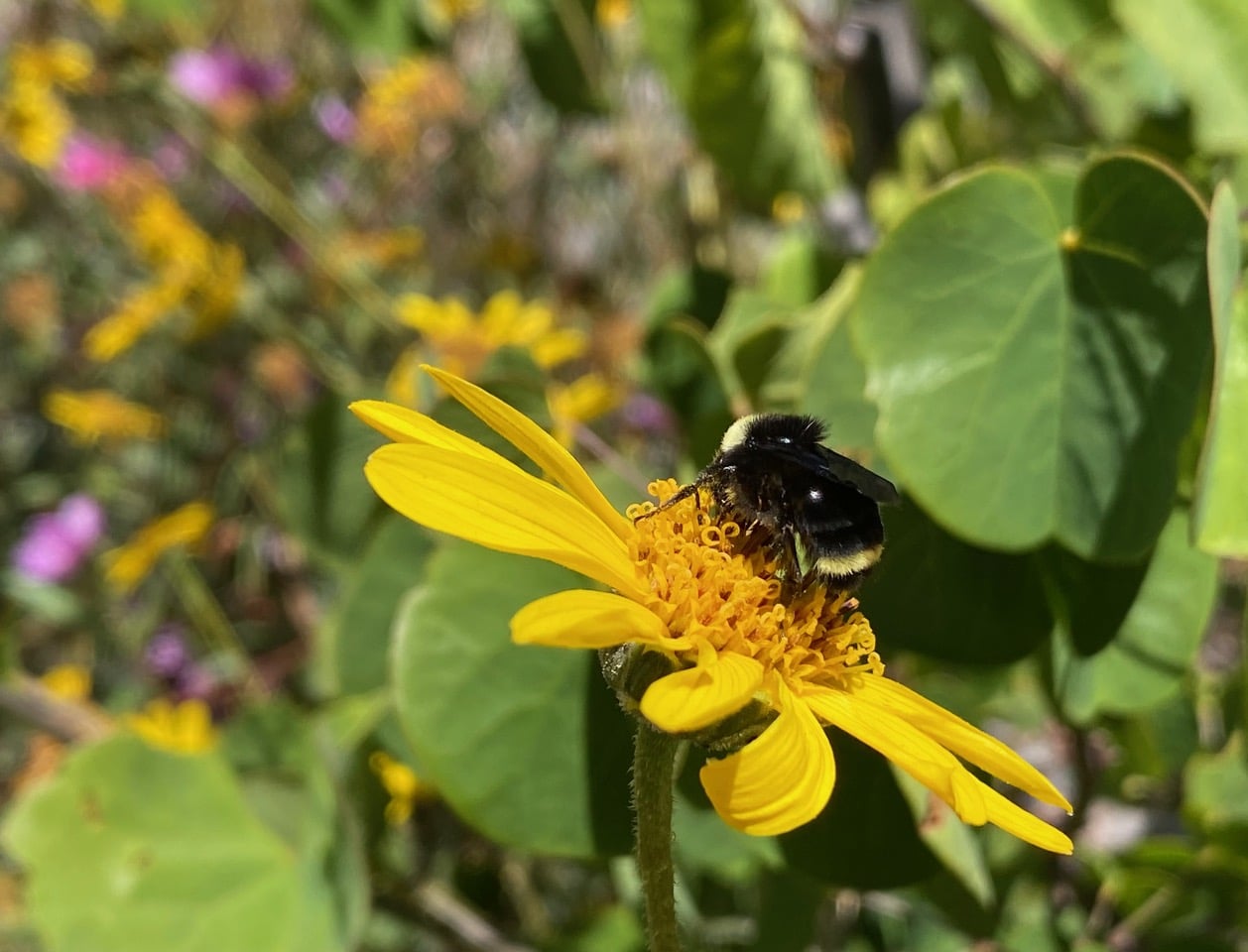
A Yellow-faced Bumble Bee, Bombus vosnesenskii (family Apidae) forages on a flowerhead of Slender Sunflower.

A Sweat Bee, Halictus sp. (family Halictidae) visits the very last flower on this inflorescence of Caterpillar Phacelia, Phacelia cicutaria.
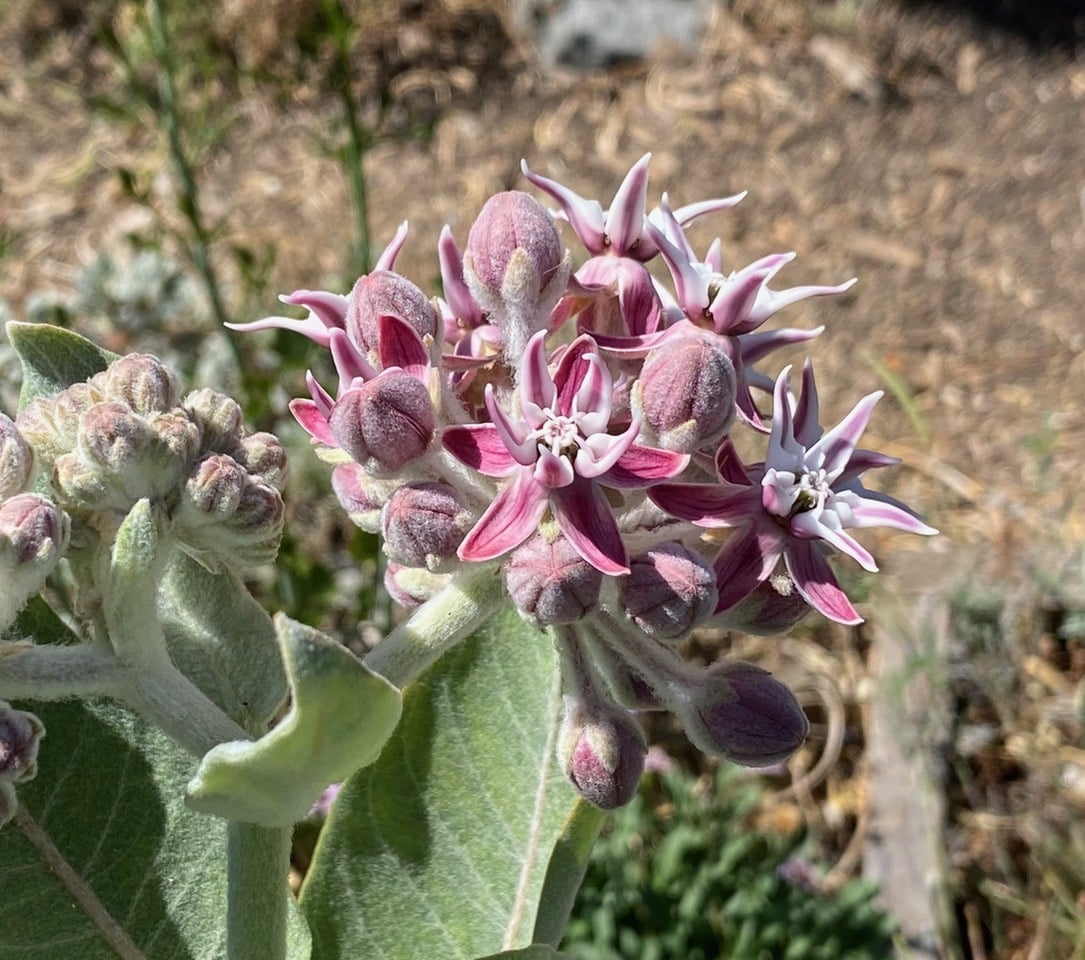
The young flowers of the Showy Milkweed, Asclepias speciosa look almost waxy when they first open up.
Milkweed is the common name for many plants in the genus Asclepias. It is a herbaceous perennial, recognizable by its broad opposite leaves, colorful flower clusters, and seed pods filled with silk that carries its wind-dispersed seeds.
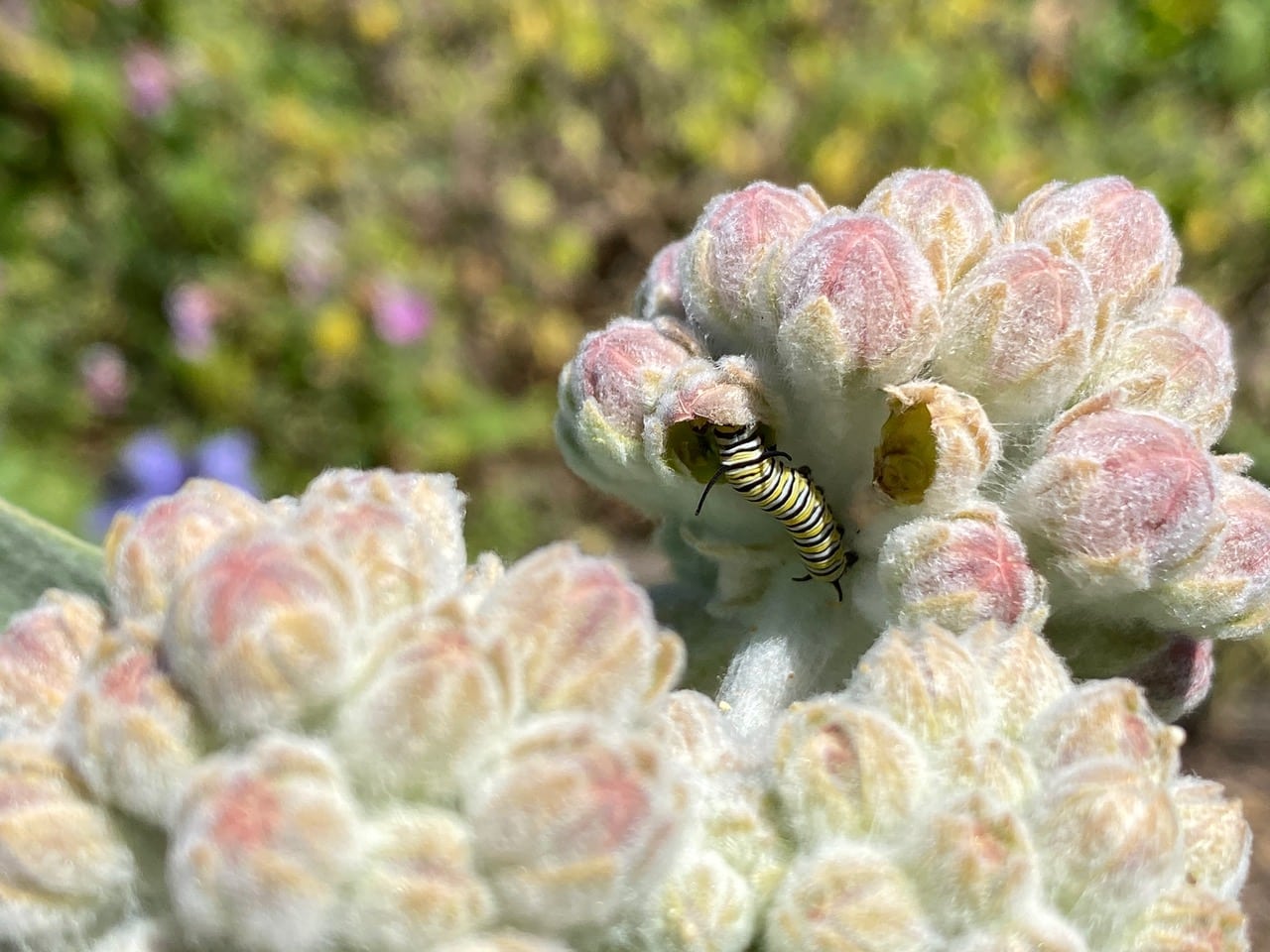
A young Monarch caterpillar is feeding on the flower buds of Showy Milkweed.
Monarch butterflies only lay eggs on milkweed and monarch caterpillars only feed on milkweed. The key to this specialized relationship is found in the milky latex produced by the plant, which contains compounds called cardiac glycosides that are poisonous to most other animals. The monarch butterfly has evolved resistance to this toxin, giving their larvae a strong chemical defense against predators. The caterpillars sequester the toxin in their body, which is also eventually passed on to the adults. Wearing bright colors on their wings, Monarch butterflies flaunt their poisonous status to warn potential predators.

Close up, I can see that the caterpillar has hollowed out one flower bud, and is now working on a second.
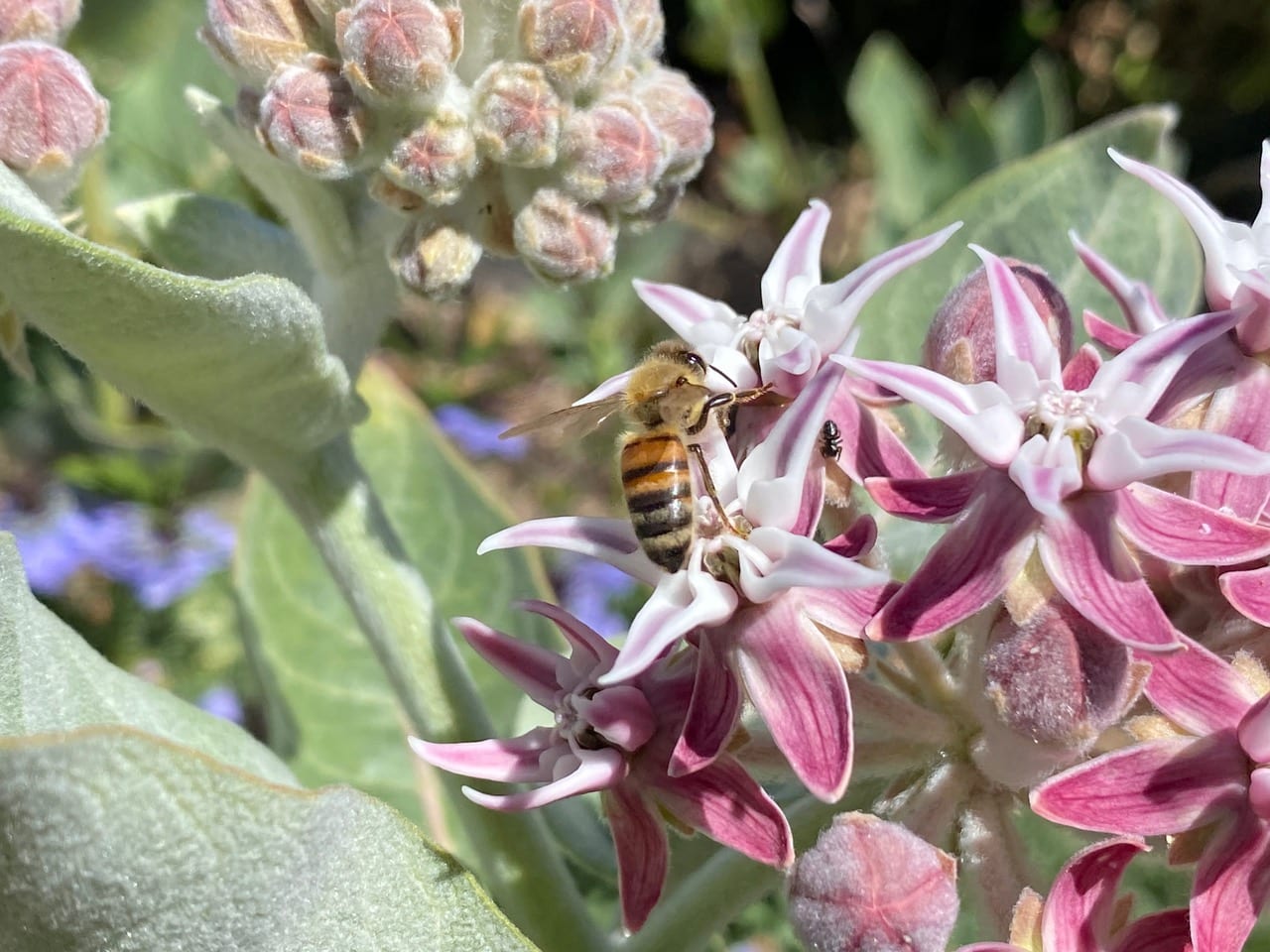
A Honey Bee lands on an inflorescence of Showy Milkweed.
Milkweed is a complicated flower with complex parts. The flower relies on trickery to get pollinated. Each milkweed flower is equipped with a trap door, called a stigmatic slit. When insects land on the flower to feed on nectar, a foot may slip into the stigmatic slit and come in contact with a sticky ball of pollen, called a pollinium. When the insect pulls its foot out of the trap door, it brings the pollinium with it. If the insect moves on to the next flower, and its foot slips into a stigmatic slit again, the pollinium may be transferred and pollination is completed. However, foraging on milkweed flowers is a risky task. Sometimes smaller insects are unable to free their trapped limbs and die on the flower. Others must tear off their own limbs to escape. If too many pollinia have accumulated on their legs, even bumble bees are unable to fly.
.jpg)
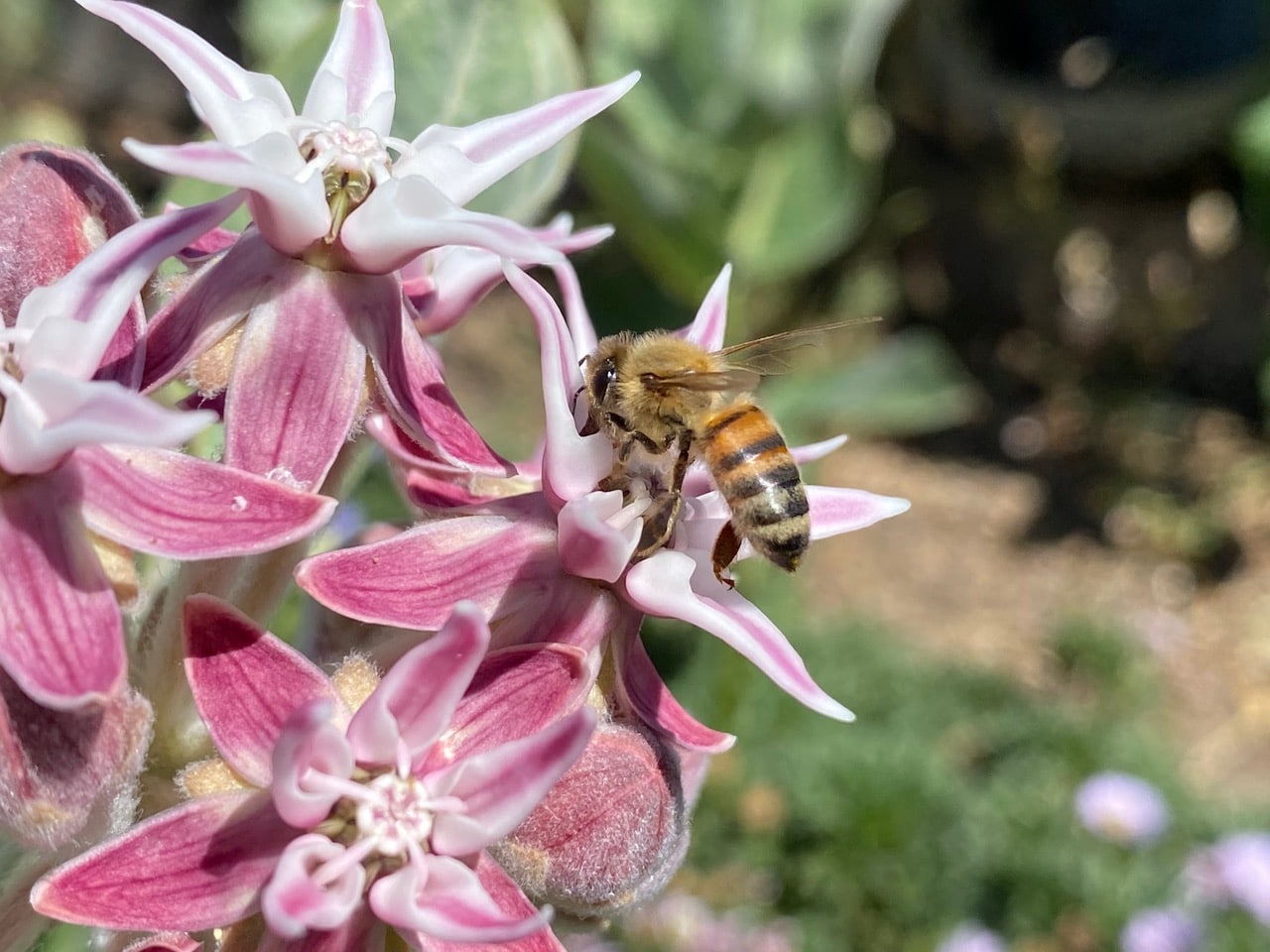
I watch the bee carefully as she probes a flower for nectar. Uh oh, her left hind leg may have slipped into a stigmatic slit. Note that the stigmatic slit in the upper most flower is in full view!
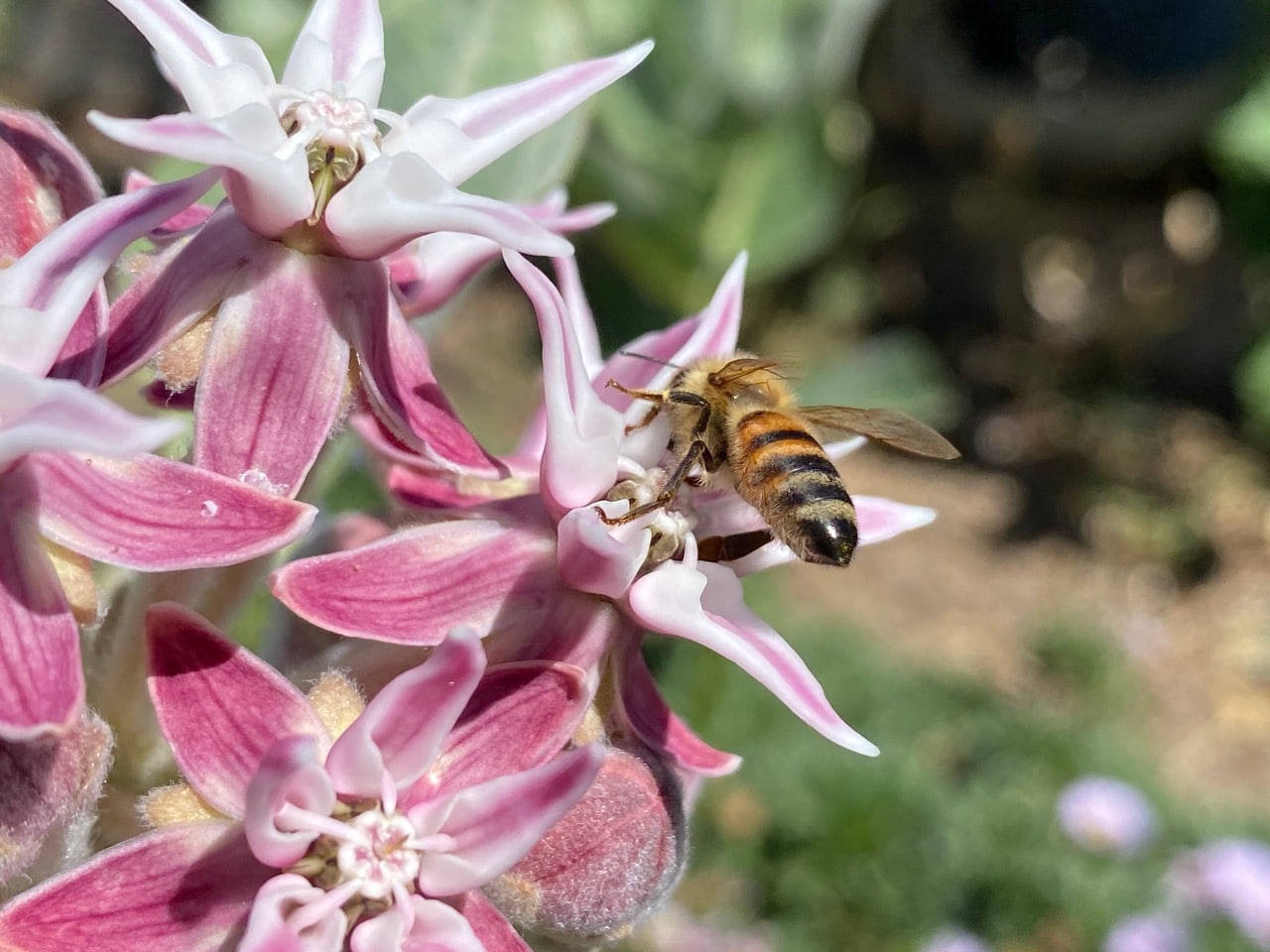
OK, the bee’s left hind leg came out with no trouble, but now her right hind leg has slipped into the next trap.
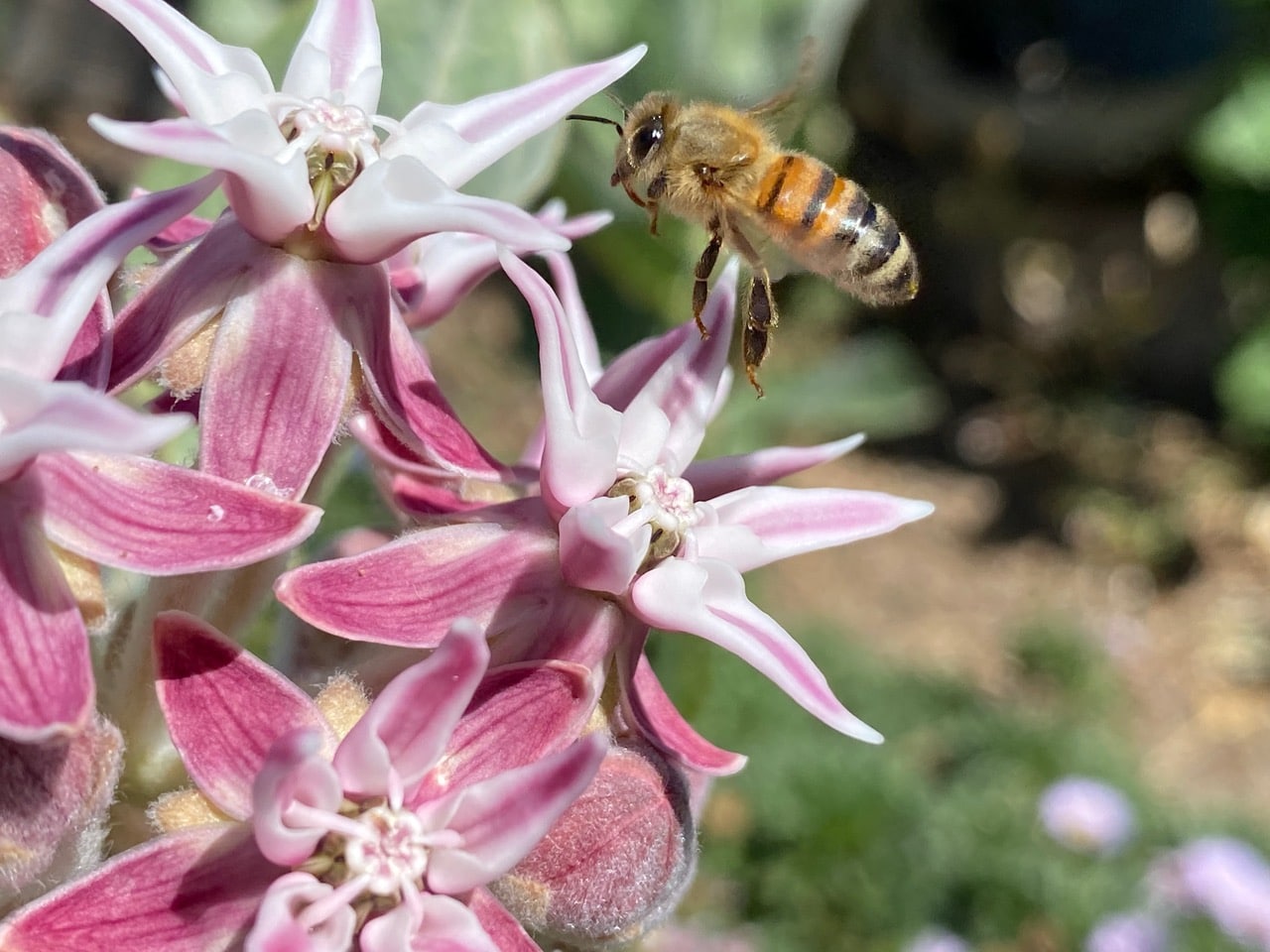
As the bee bounces off the flower, none of her legs has any milkweed pollinia attached. Phew, that was a free lunch!
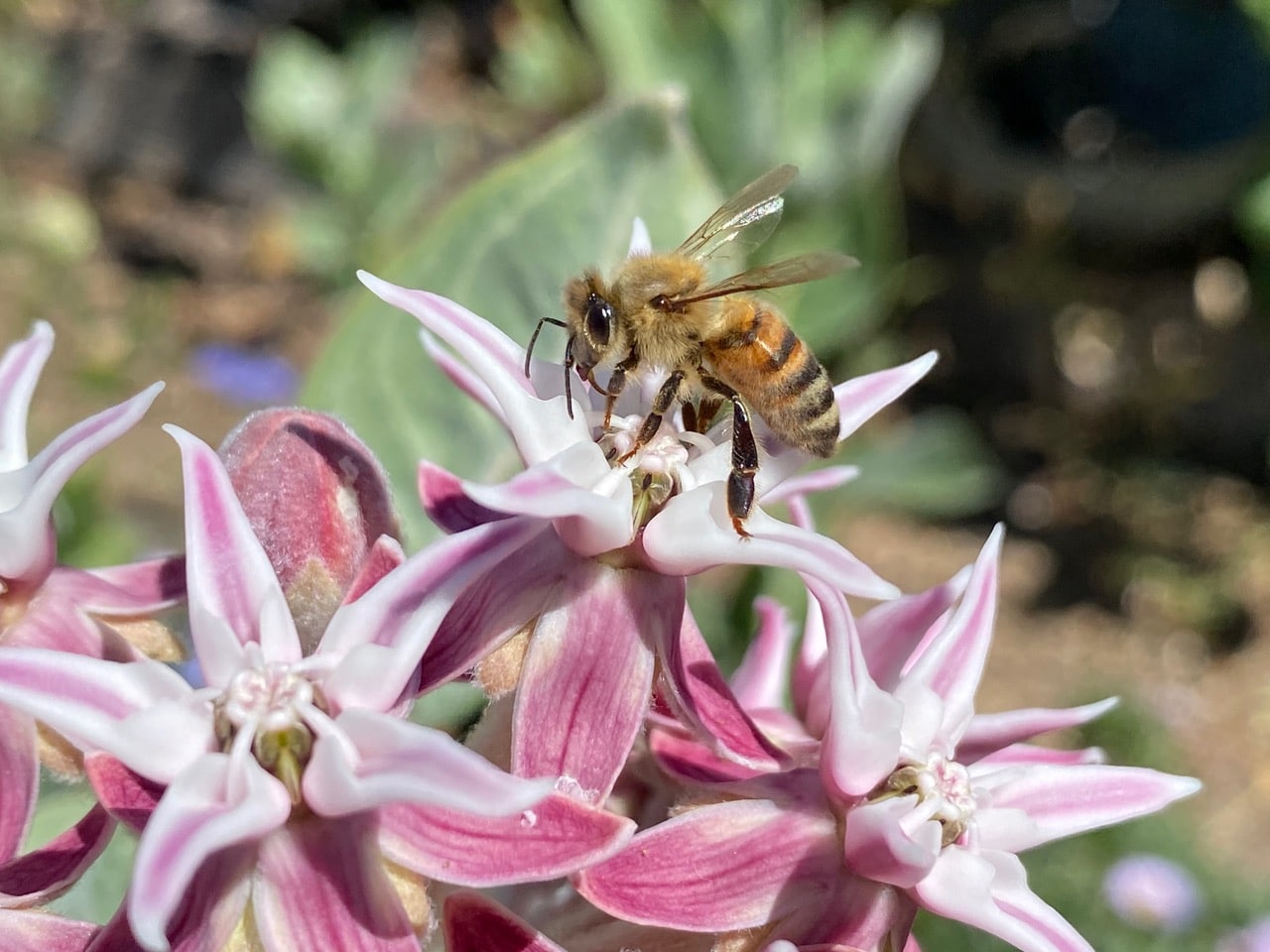
The bee lands on the next milkweed flower, her tongue extended for more sweet stuff. Anni tells me that she occasionally sees a distressed honey bee trying to break free from a milkweed flower.
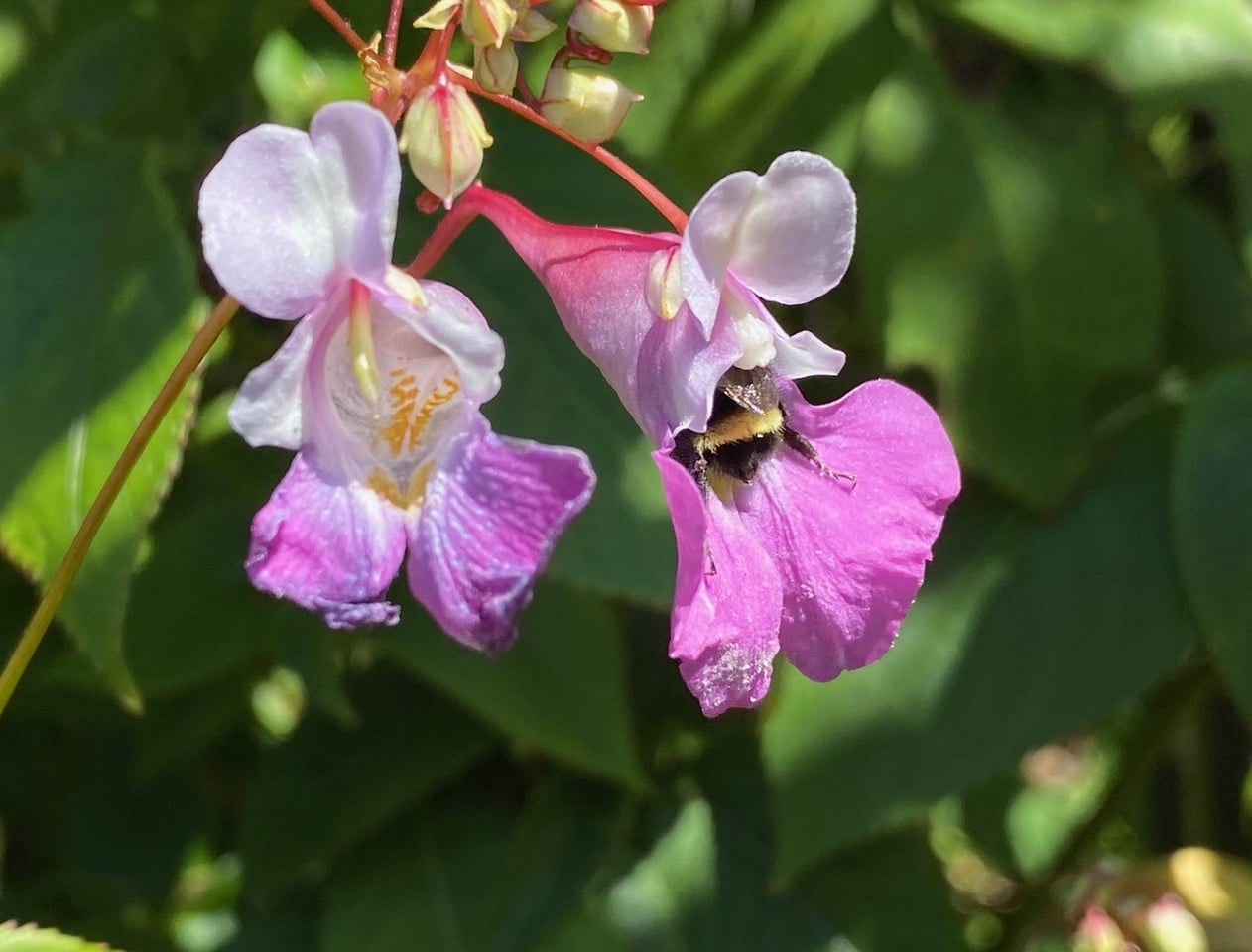
In a corner of the backyard is a large, bushy plant unfamiliar to me. A Yellow-faced Bumble Bee, Bombus vosnesenskii (family Apidae) has climbed into the spacious throat of a flower.
The plant is Impatiens balfourii, commonly known as Balfour’s touch-me-not, or Kashmir balsam (family Balsaminaceae). The annual herb hails from the Himalayas. The inflorescence is a raceme bearing 4 to 8 flowers. One of the two white sepals forms a long, thin spur. Two of the yellow-dotted lavender-pink petals extend from the mouth, serving as a convenient landing pad for insect pollinators. In the Americas where the plant has been introduced, the flowers are also pollinated by hummingbirds.
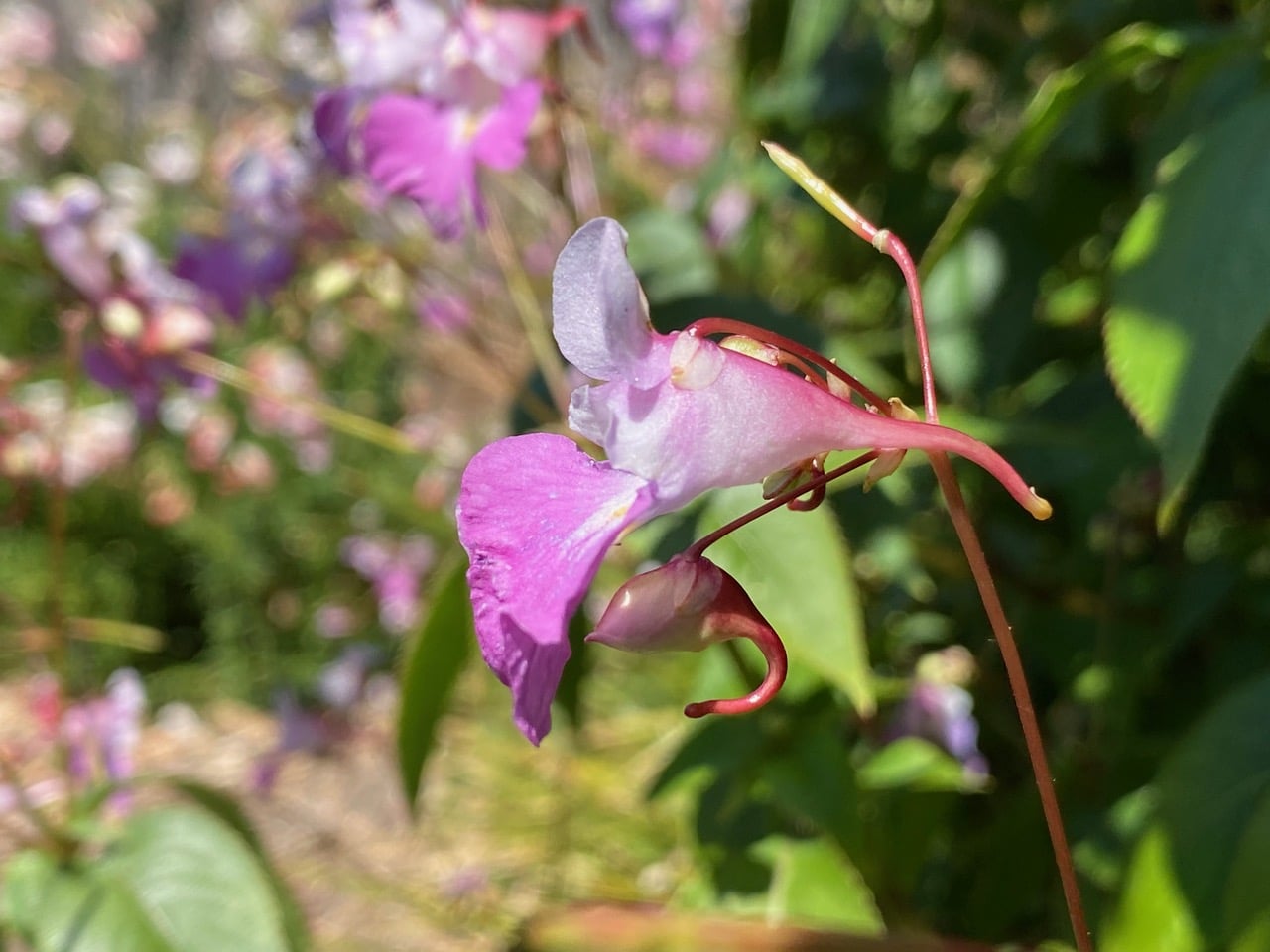
Side view of the Kashmir Balsam flower showing the long, thin nectar spur. Bumble bees have long tongues that can reach the nectar in the spur.
 The satiated Yellow-faced Bumble Bee finally backs out of the flower. After pollination the flowers produce elongated capsules. When mature, the fruits burst at the slightest touch, launching the seeds up to 20 feet away. This is a form of explosive or ballistic seed dispersal.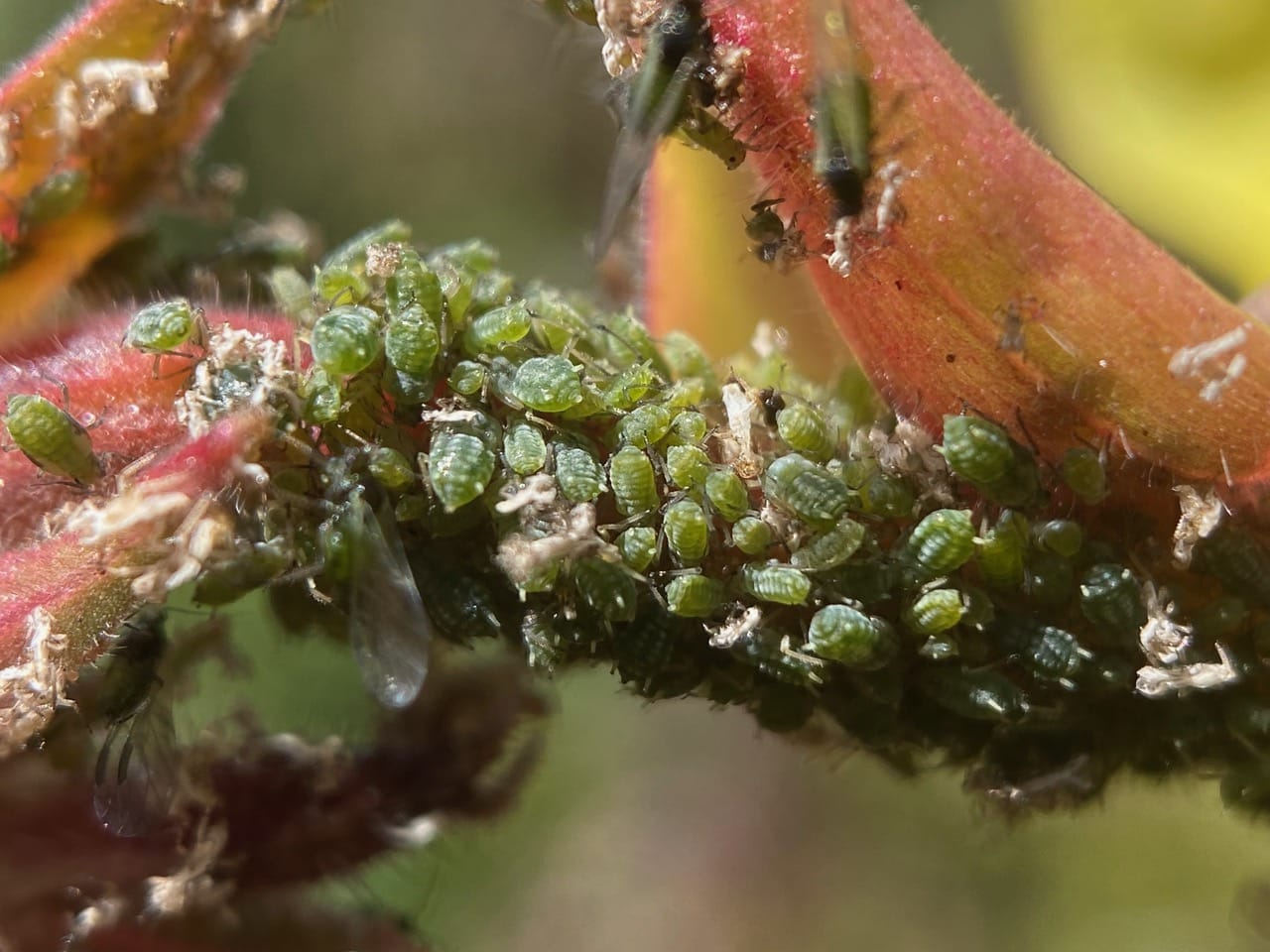
Tiny green aphids crowd a flower stalk of Evening Primrose, Oenothera sp. They do not seem to be tended by ants.
Aphids are small sap-sucking insects in the order Hemiptera. A typical life cycle involves flightless females giving live birth to female nymphs, – who may also be already pregnant, an adaptation called telescoping generations – without the involvement of males. Maturing rapidly, females breed profusely so that the population multiplies quickly. Winged females may develop later in the season, allowing the insects to colonize new plants. In temperate regions, a phase of sexual reproduction occurs in the autumn, with the insects often overwintering as eggs.
The life cycle of some species involves an alternation between two species of host plants. Some species feed on only one type of plant, while others are generalists, colonizing many plant groups. Some ants have a mutualistic relationship with aphids, tending them for their honeydew and protecting them from predators.
Aphids usually feed passively on phloem of plants. Once the phloem vessel is punctured, the sap, which is under pressure, is forced into the aphid’s food canal. Aphids produce large amounts of a sugary liquid waste called “honeydew”. A fungus called sooty mold can grow on honeydew deposits that accumulate on leaves and branches, turning them black.
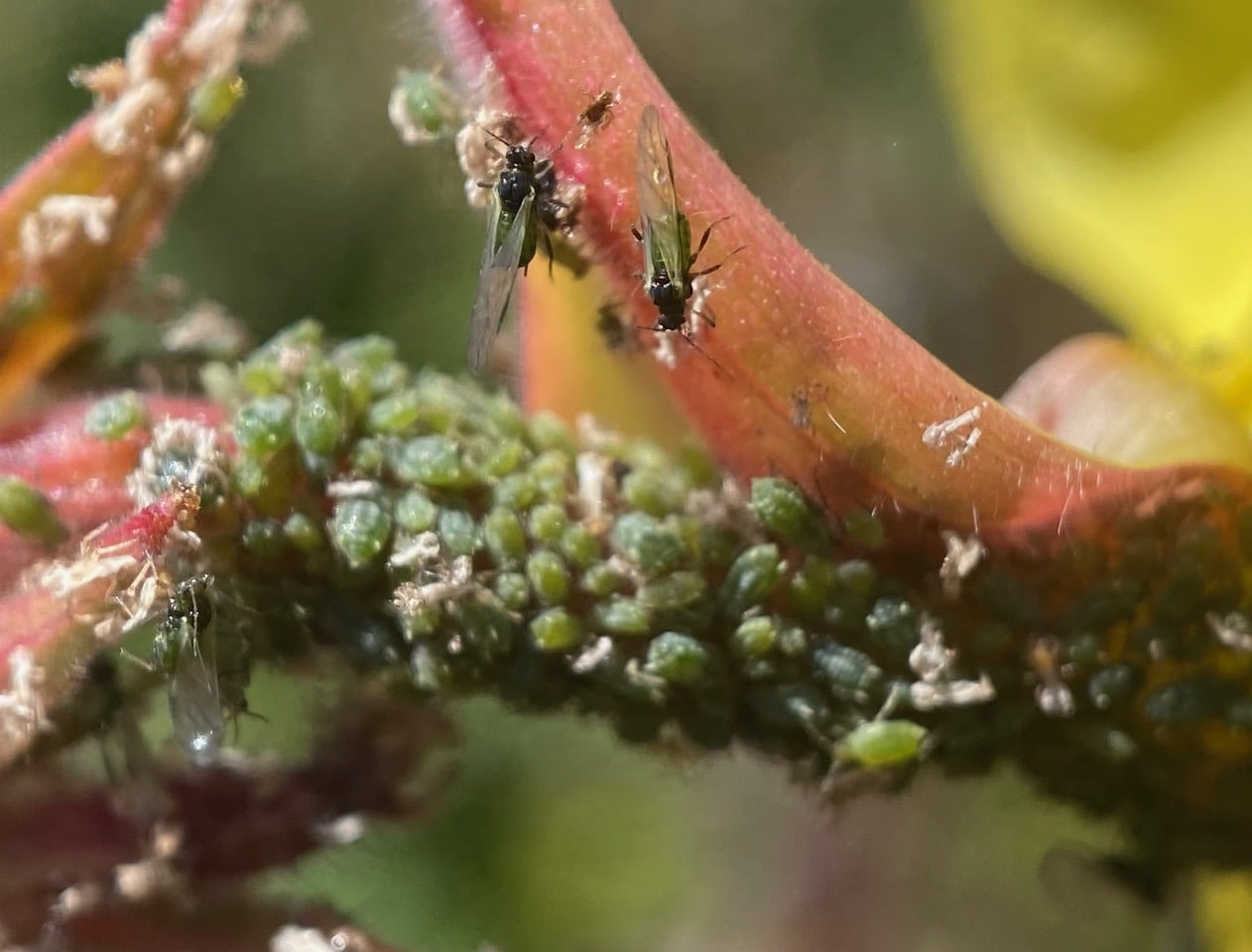
Alates (winged forms) have been produced by this colony of aphids.
Generally adult aphids are wingless, but most species also occur in winged forms, especially when populations are high or during spring and fall. The ability to produce winged individuals provides the aphids with a way to disperse to other plants when the quality of the food source deteriorates, or when predation pressure is high.

A burly male European Woolcarder Bee, Anthidium manicatum (family Megachilidae) settles on a leaf to groom himself.
Anthidium manicatum, commonly called the European Woolcarder Bee, is a species in the family Megachilidae, which includes the leaf-cutter bees and mason bees. They get the name “carder” from the behavior of the females scraping hair from leaves and stems of wooly plants. The substantially larger males engage in territorial behavior, aggressively chasing other males and pollinators from their territory. They mate with the females that forage in their territory. The females construct their nests in pre-existing cavities, using the hairs of wooly plants that they collect with their sharply toothed mandibles. They then roll up the fibers into a ball and transport them to the nest to line the nest cell, where they lay an egg and a provisioning mass consisting of nectar and pollen. Females largely use the hairs of plants in the mint family, Lamiaceae, especially those of genus Stachys and Betonica. The European Woolcarder Bees visit a wide range of flowers, with a preference for blue flowers that have long throats. They are considered generalists. Females carry pollen in the scopa on the underside of their abdomen. Both males and females can hover in midair near flowers similar to the hover flies (family Syrphidae).

A tall, robust Penstemon with dark purple flowers grows in partial shade in the backyard. Anni tells me it is a horticultural selection known as “Midnight”, and that unlike most penstemons, it is not short-lived. The large tubular flowers seem to be very popular with the bumble bees.
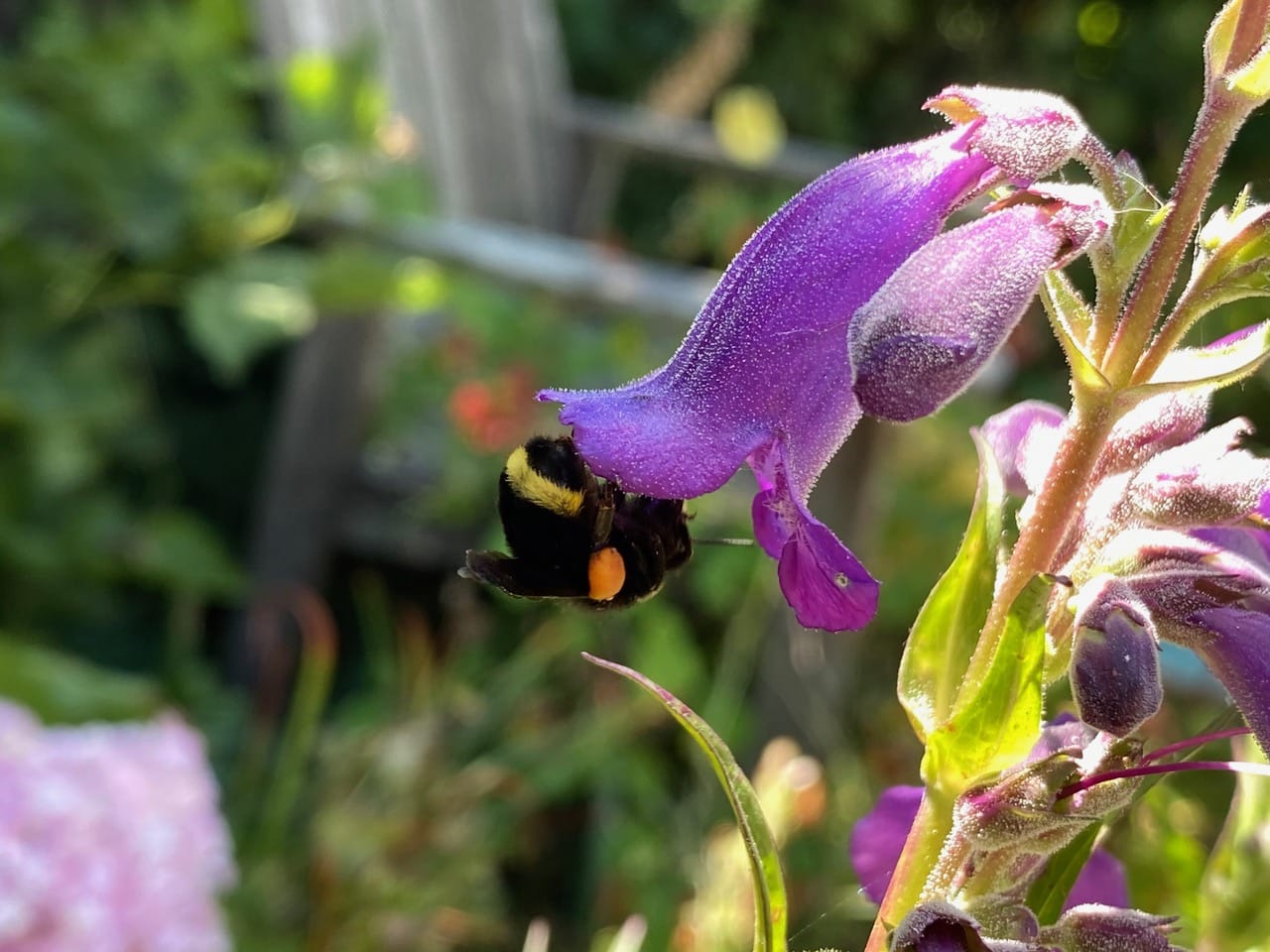 A Yellow-faced Bumble Bee, Bombus vosnesenskii (family Apidae) backs out of a penstemon flower. I don’t know the pollen color of the penstemon, but the orange pollen in her pollen baskets is likely gathered from California Poppy.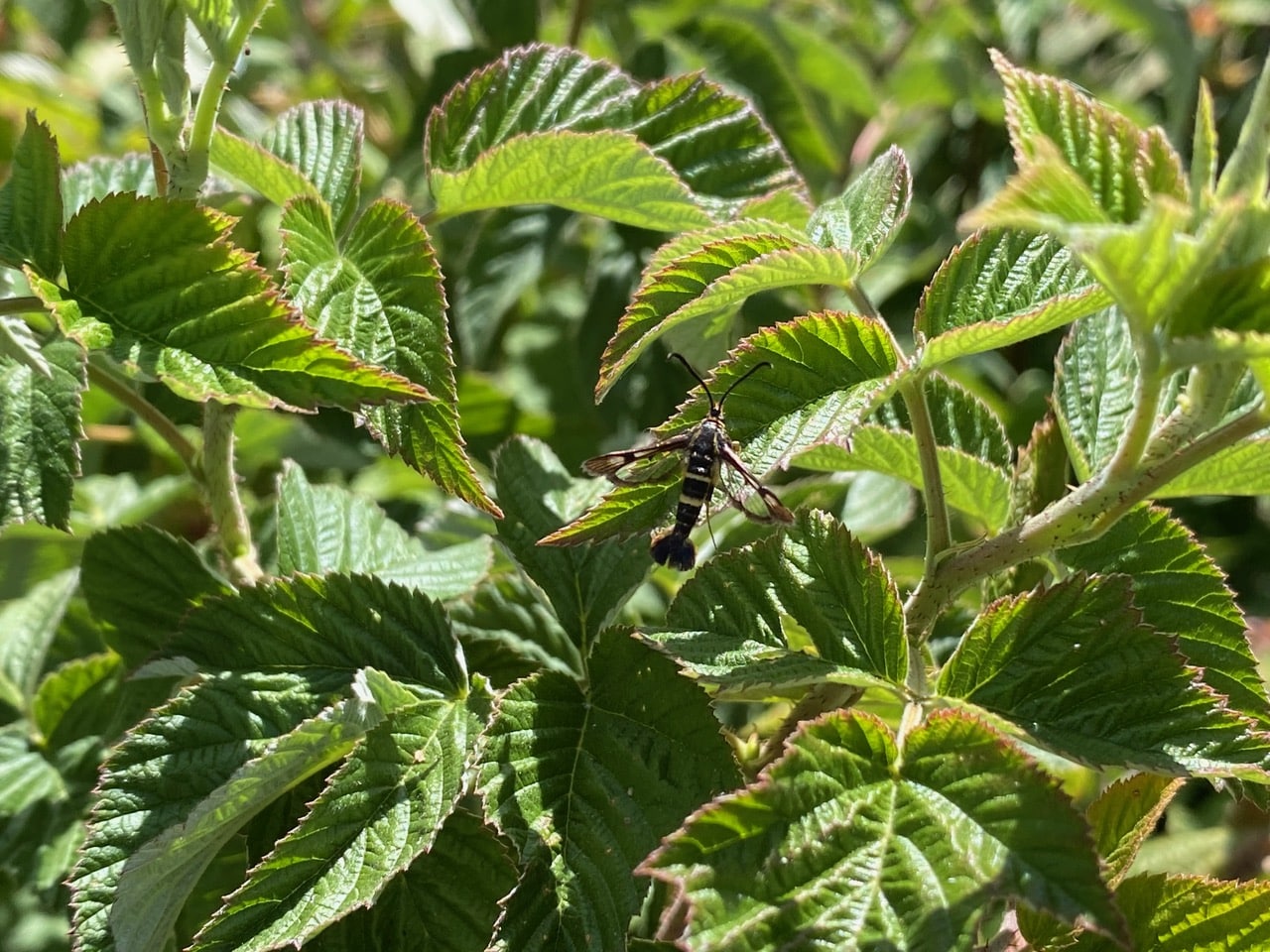
A Strawberry Crown Moth, Synanthedon bibionipennis (family Sesiidae) lands on a Raspberry thicket, Rubus idaeus (family Rosaceae).
The Sesiidae or clearwing moths are a diurnal moth family in the order Lepidoptera known for their Batesian mimicry in both appearance and behavior of various Hymenoptera. The resemblance to the stinging insects provide some measure of protection from predators for these otherwise defenseless moths. Most species have wings with areas where scales are nearly completely absent, resulting in see-through transparency. Sesiidae larvae typically bore in wood or burrow in plant roots. Many species are serious pests of fruit-tree or timber cultivation.
The Strawberry Crown Moth, Synanthedon bibionipennis is a member of the family Sesiidae. Bibionipennis is Latin for “insect wing”. The wingspan is about 20 mm. Adults are on wing from April to August, taking nectar from many different flowers. There is one generation per year. The larvae bore in the roots near the crown or in the stem near the base of various species in the Rose family, including Fragaria, Rosa, Rubus and Potentilla. They are considered to be a pest of strawberries.
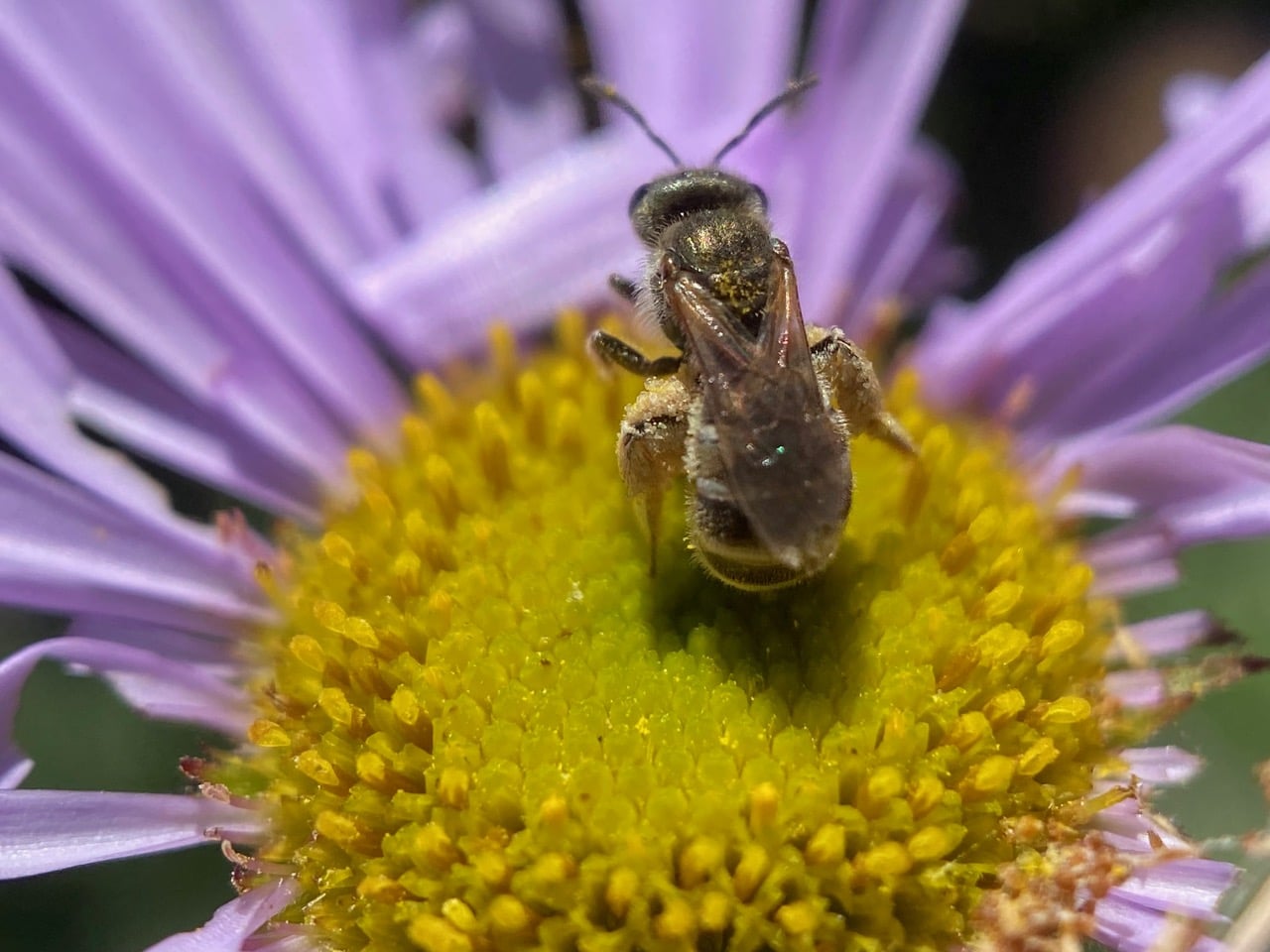
A Sweat Bee, Halictus sp. (family Halictidae) is foraging on a flowerhead of Seaside Daisy, Erigeron glaucus. The scopae on her hind legs are already pretty full, and the pollen does not seem to come from Seaside Daisy. The large pinkish-purple pollen grains might have been gathered from the Clarkias. Halictus bees are mostly generalists, foraging from a wide variety of plants.
Halictus is found worldwide; they are most common in the Northern Hemisphere. All are generalists, foraging from a wide variety of flowering plants. Many species are social and produce several generations per year. This is not surprising as most blooming plants are season-specific; a bee that requires pollen and nectar across multiple seasons would not thrive as a specialist. All Halictus in North America nest in the ground, often in aggregations; and they may nest in the same area for decades.
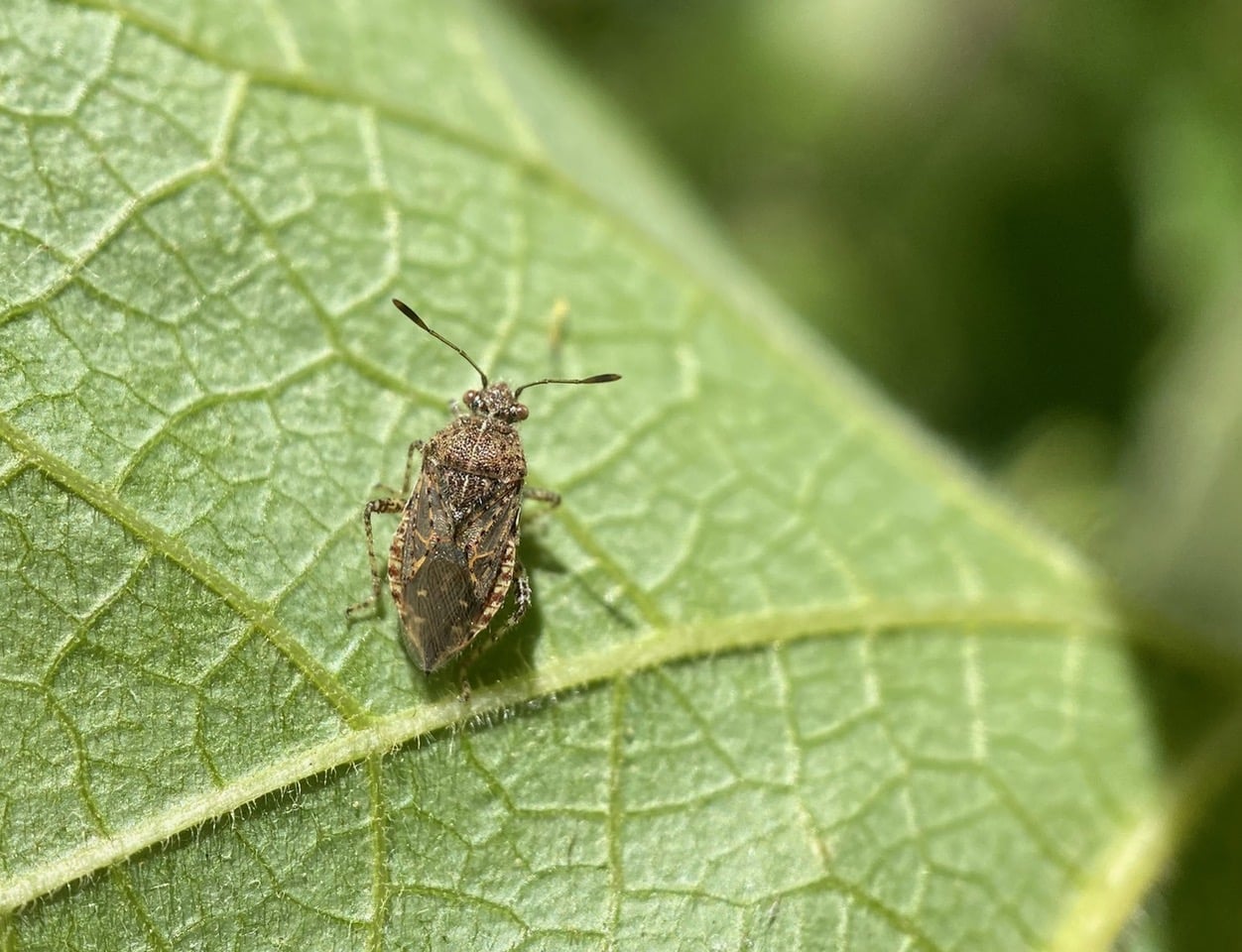
A Scentless Plant Bugs, Arhyssus sp. (family Rhopalidae) poses on the back of a leaf.
The Rhopalidae are distinguished by many veins on the membranous portion of the forewings. They differ from coreids and other hemipterans in lacking functional scent glands. All are plant-feeders, usually on ripe seeds. Like other “true bugs” in the order Hemiptera, Rhopalids have piercing-sucking mouthparts that they use to extract plant tissues. They are able to feed on seeds by injecting digestive juices into the seeds and sucking up the digested contents as a liquid. The mouthparts, collectively called a rostrum, is folded under the body when not in use.