

Pollinator Post 6/28/23 (2)
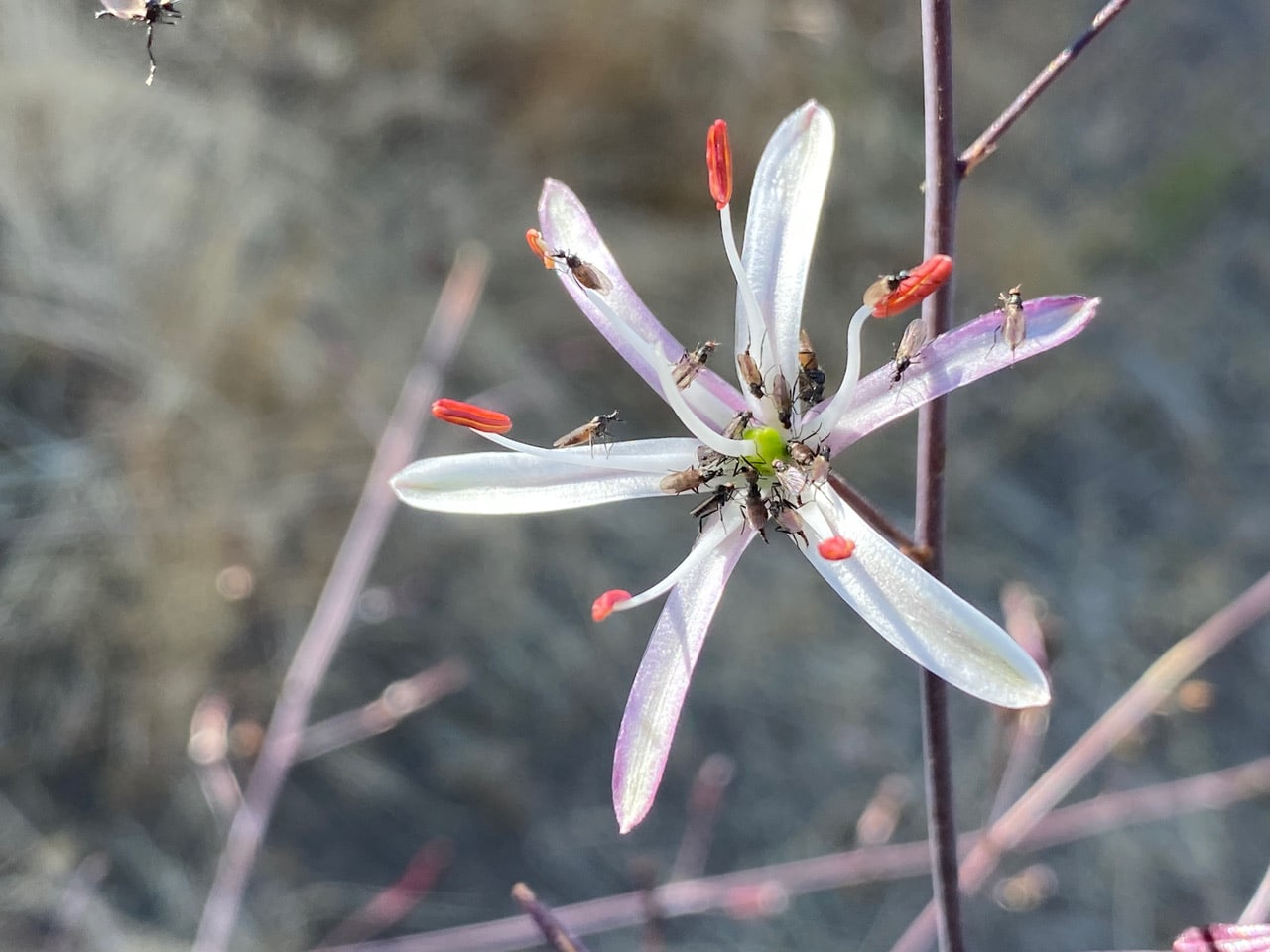
It is about 4:30 pm when I reach the Soap Plants that are just beginning to bloom, attracting a swarm of Dance Flies.

The Dance Flies are not only interested in the nectar, they are crowded around the anthers too.
Dance Flies, in the family Empididae, get their name from the habit of males of some species to gather in large groups and dance up and down in the air in the hopes of attracting females. They are predominantly predatory and they are often found hunting for small insects on and under vegetation in shady areas. Both genders may also drink nectar. Male dance flies give their sweeties a nuptial gift to eat while they mate. The gift is thought to enable her to complete the development of her eggs. Males may wrap their gifts in balloons of silk or spit, hence the other common name of Balloon Flies.
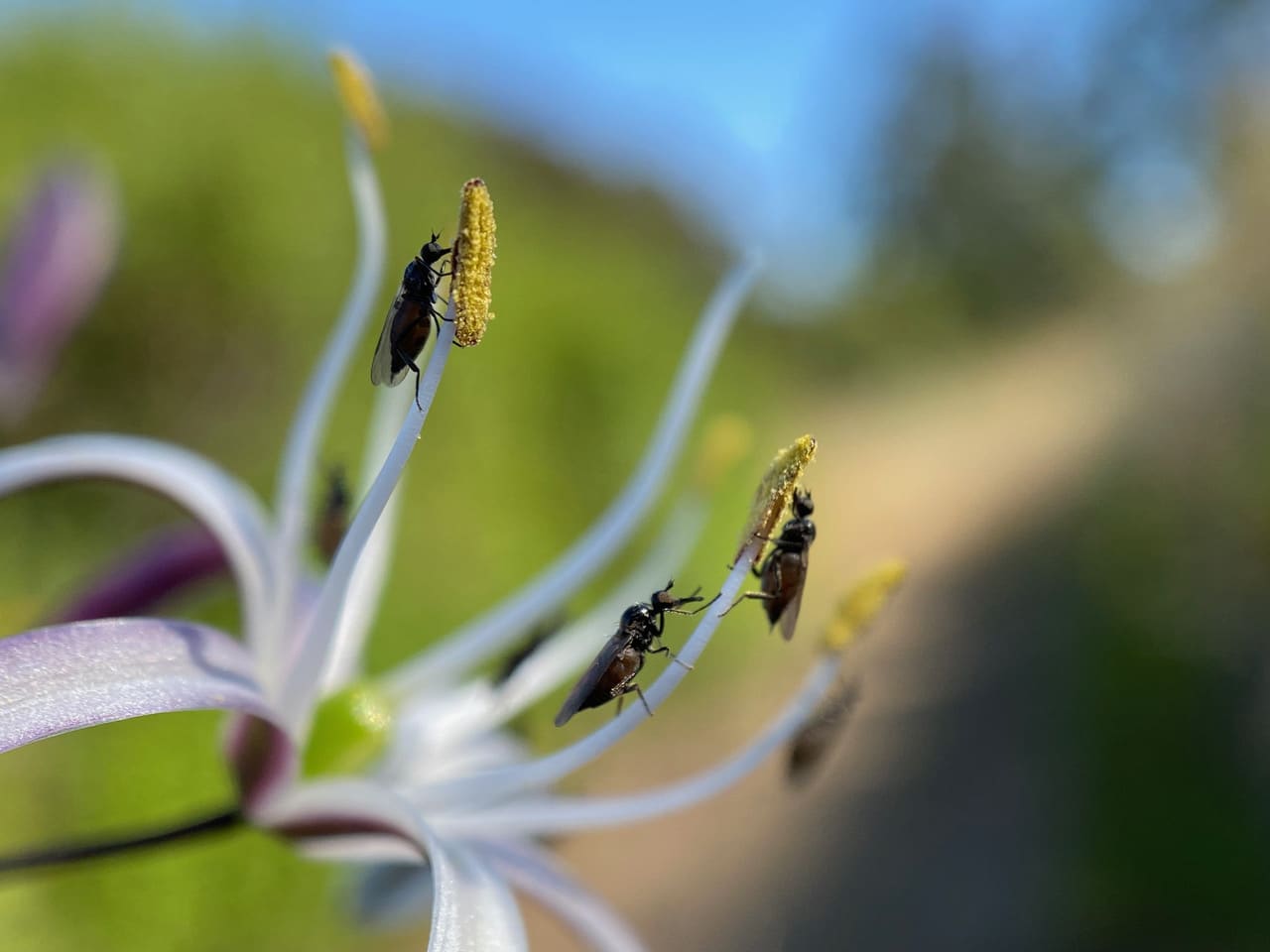
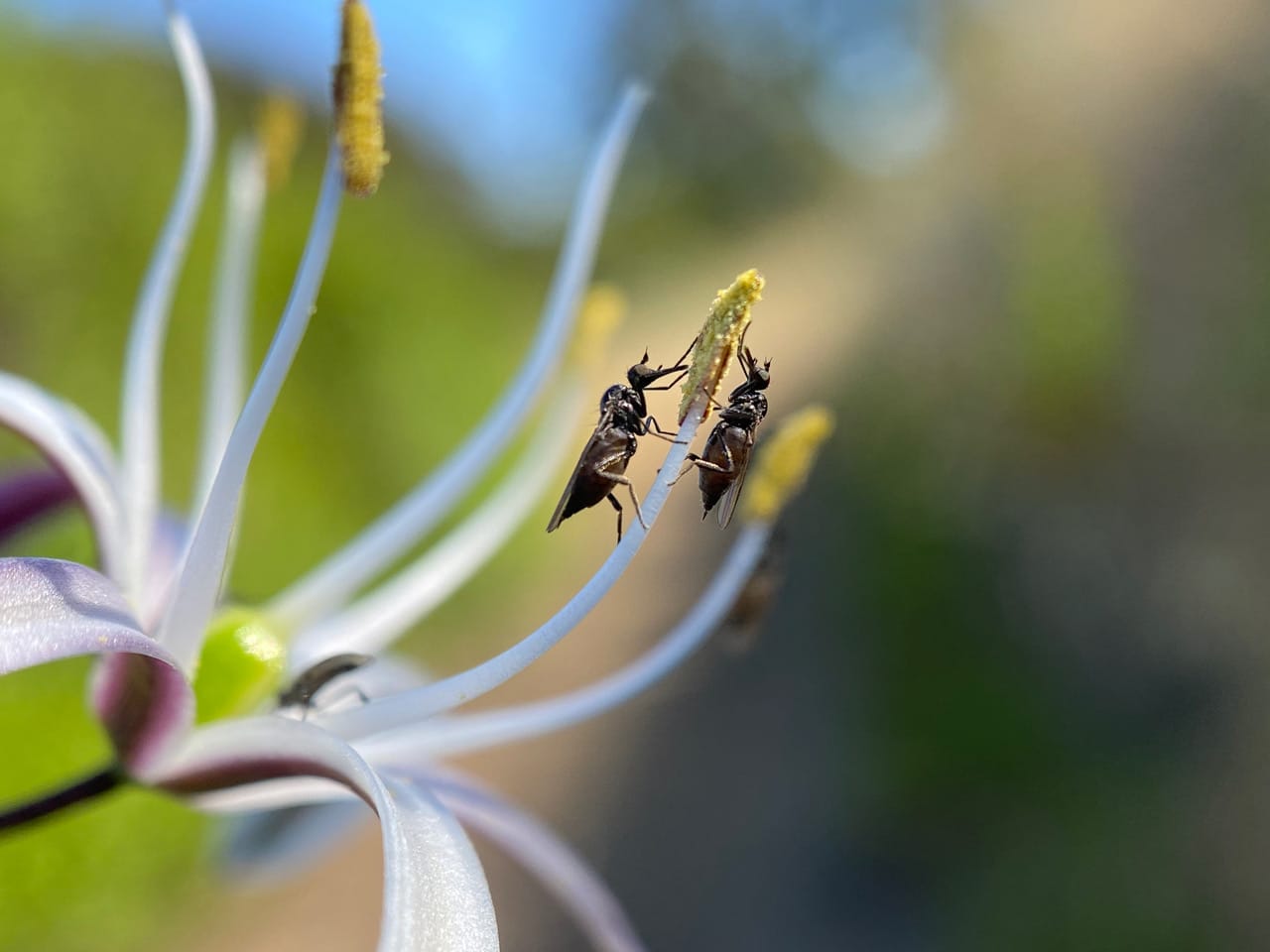
Does this Dance Fly activity on the Soap Plant flowers continue through the night? Are these flies nocturnal?
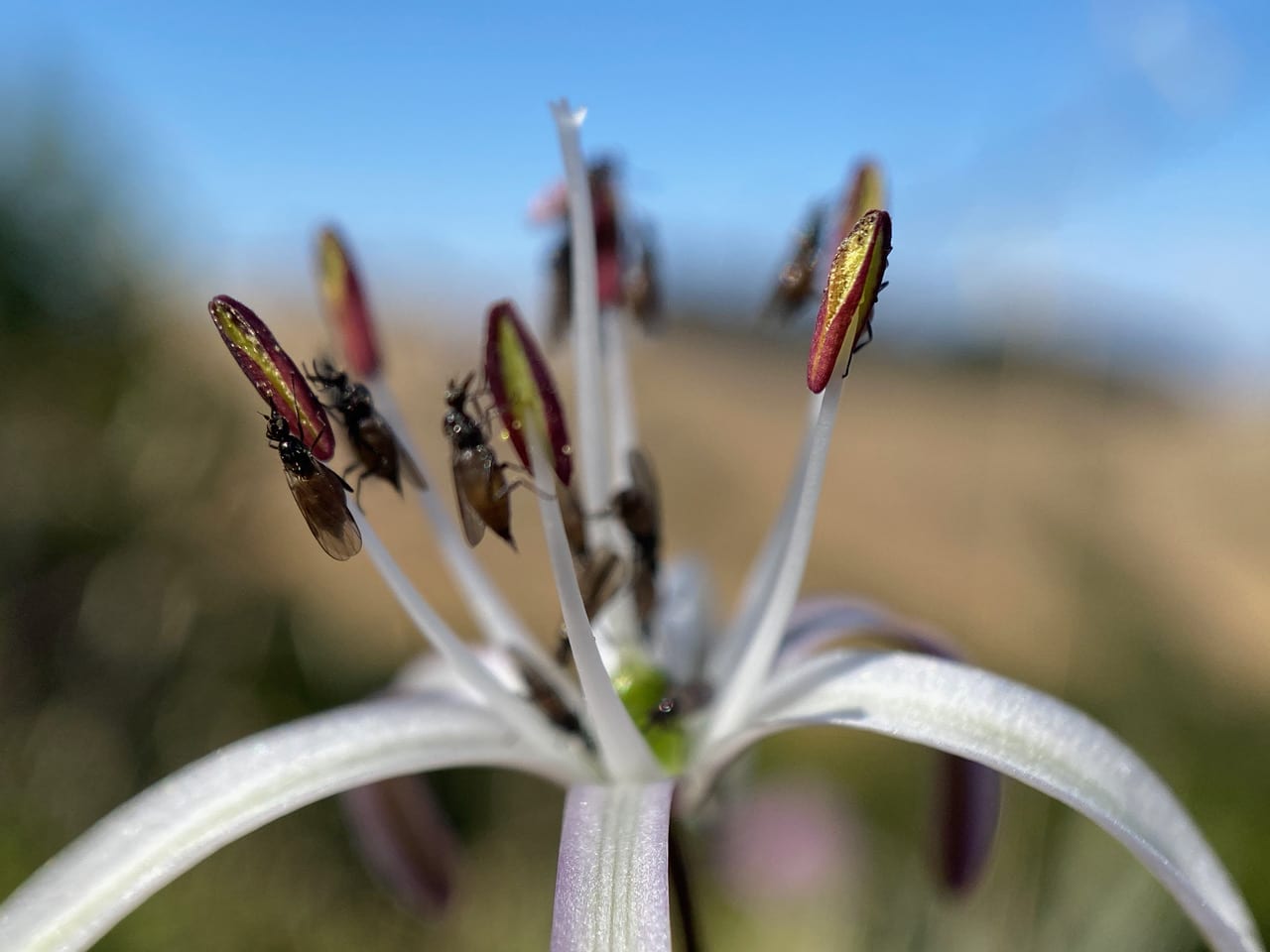
As the anthers gape open to release pollen, the Dance Flies head upward for the feast.
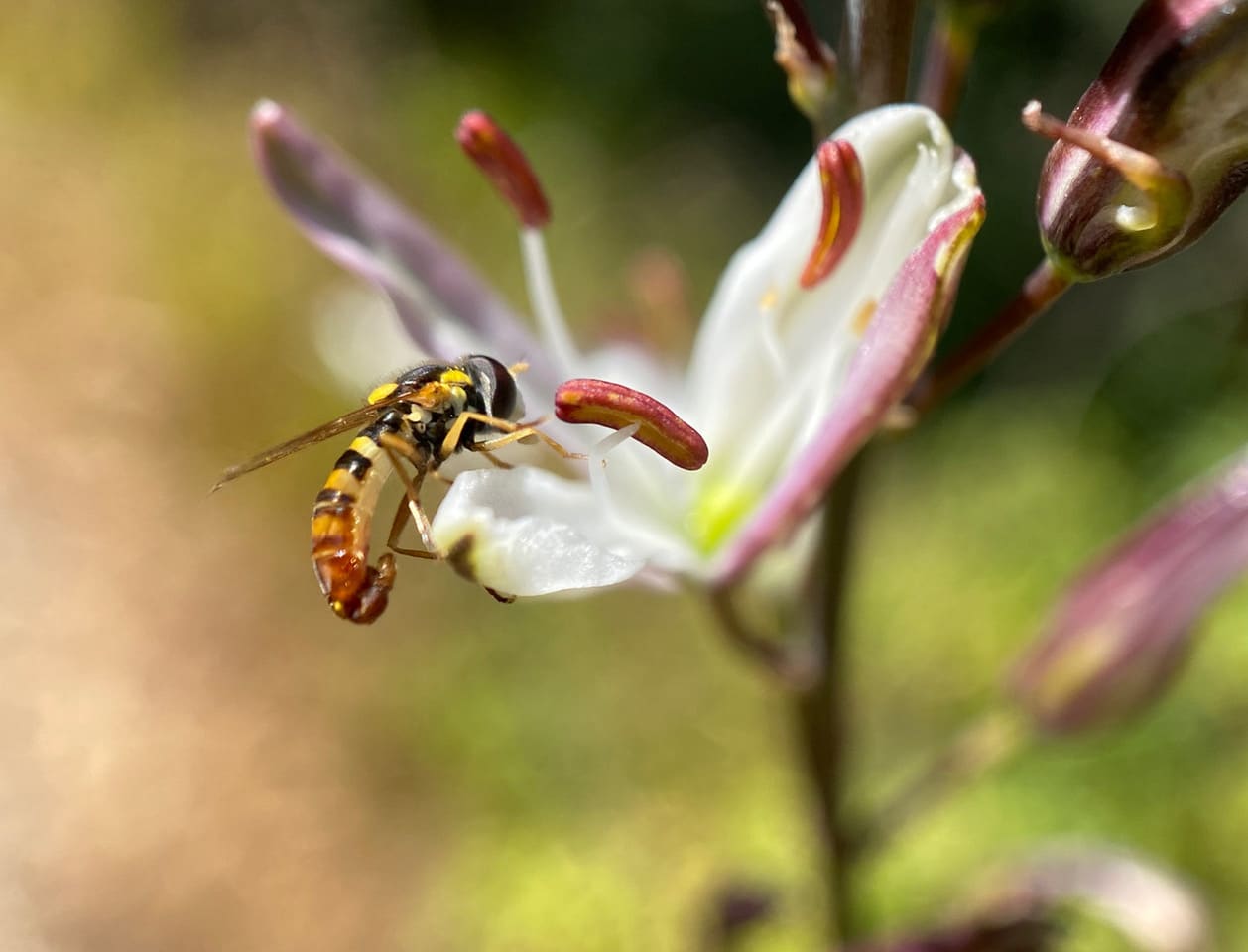
Hey, there’s a new comer to the Soap Plant – a Forked Globetail, Sphaerophoria sulphuripes (family Syrphidae). The tiny hover fly is a male, as evidence by the reddish abdomen with the genitals curled under at the tip. The species exhibits sexual dimorphism, with the males and females looking quite distinct.

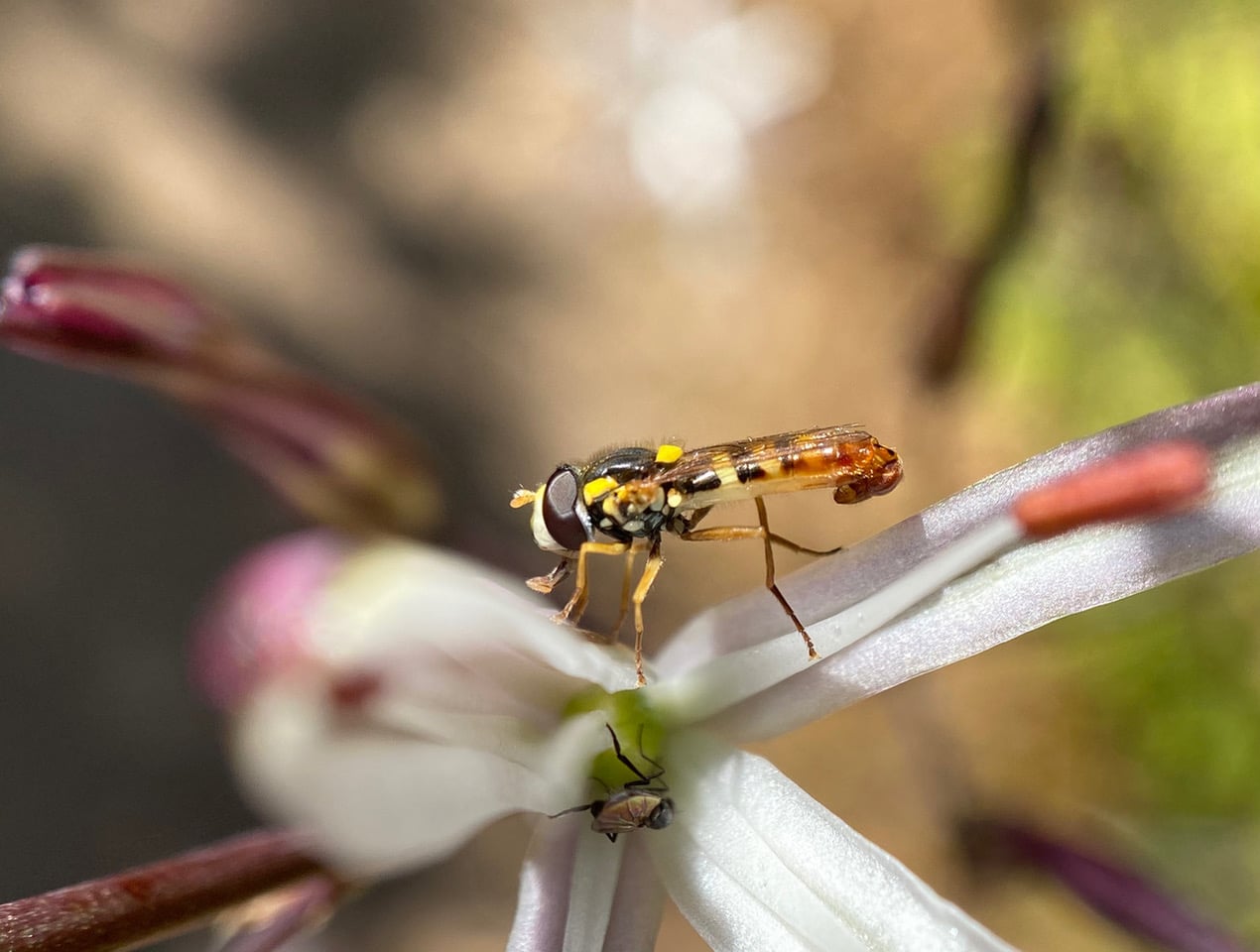
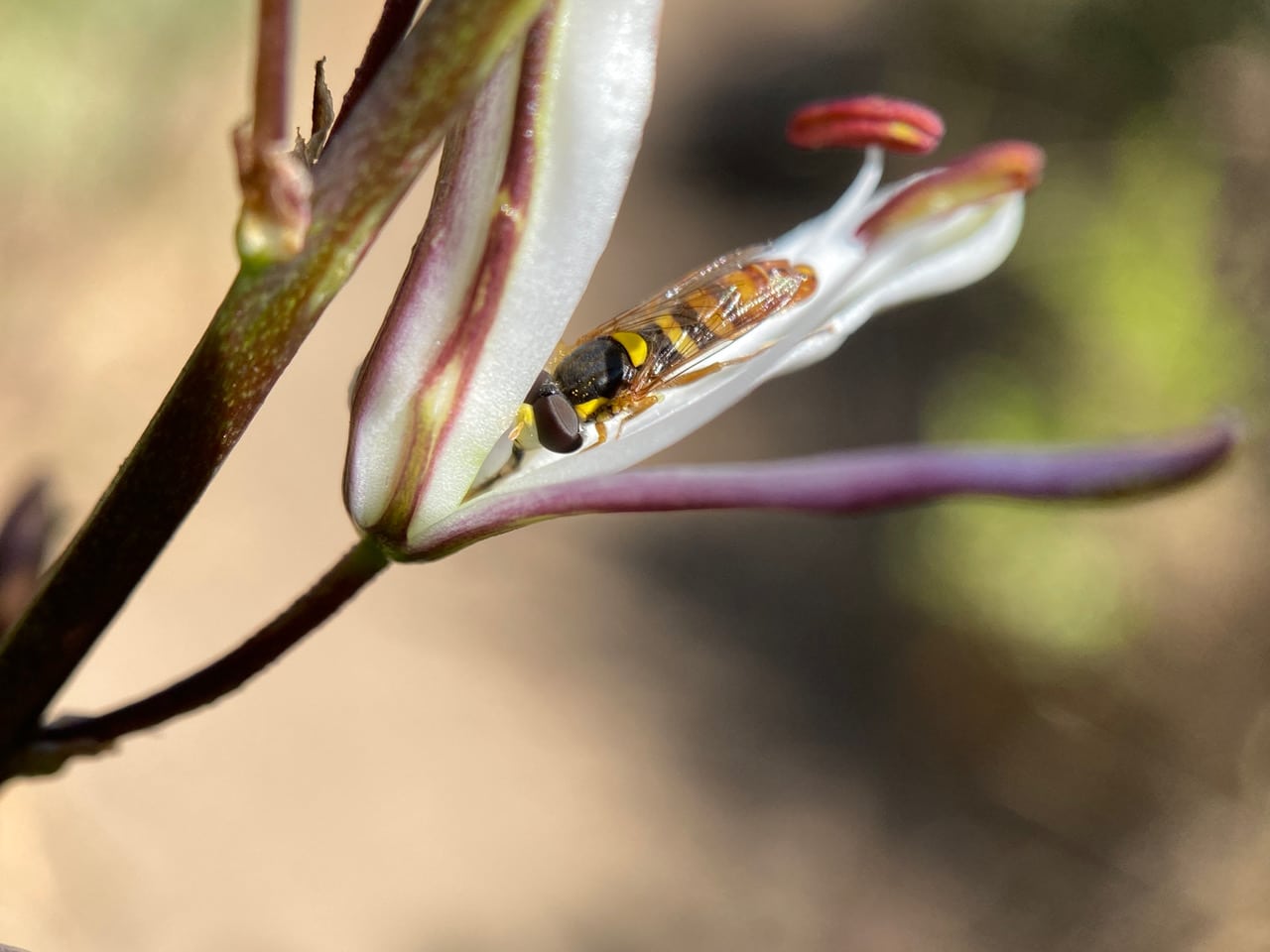
The Forked Globetail is taking nectar from a flower that is not even fully open yet.
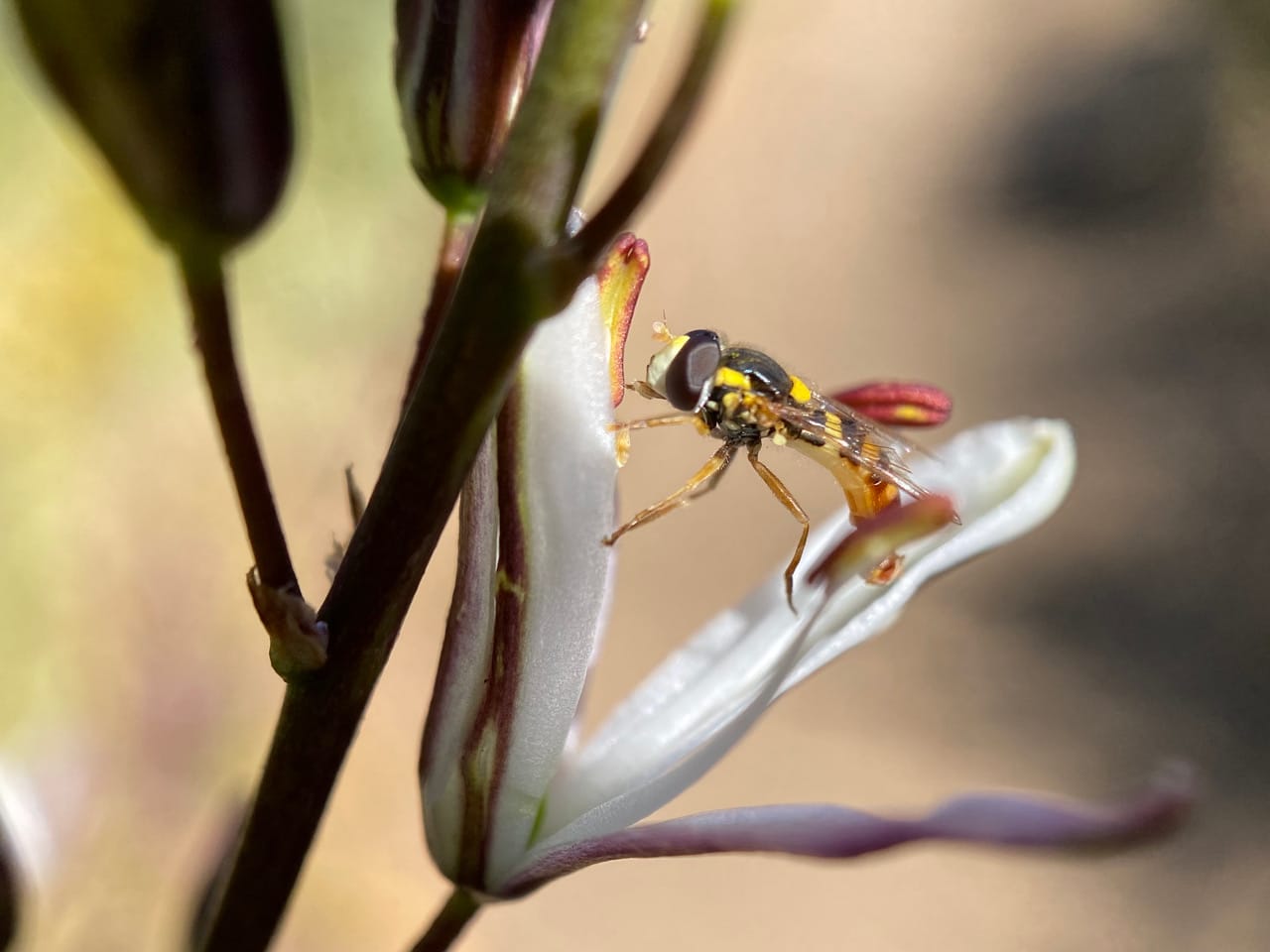
Then he reaches up to an anther to feed on pollen.
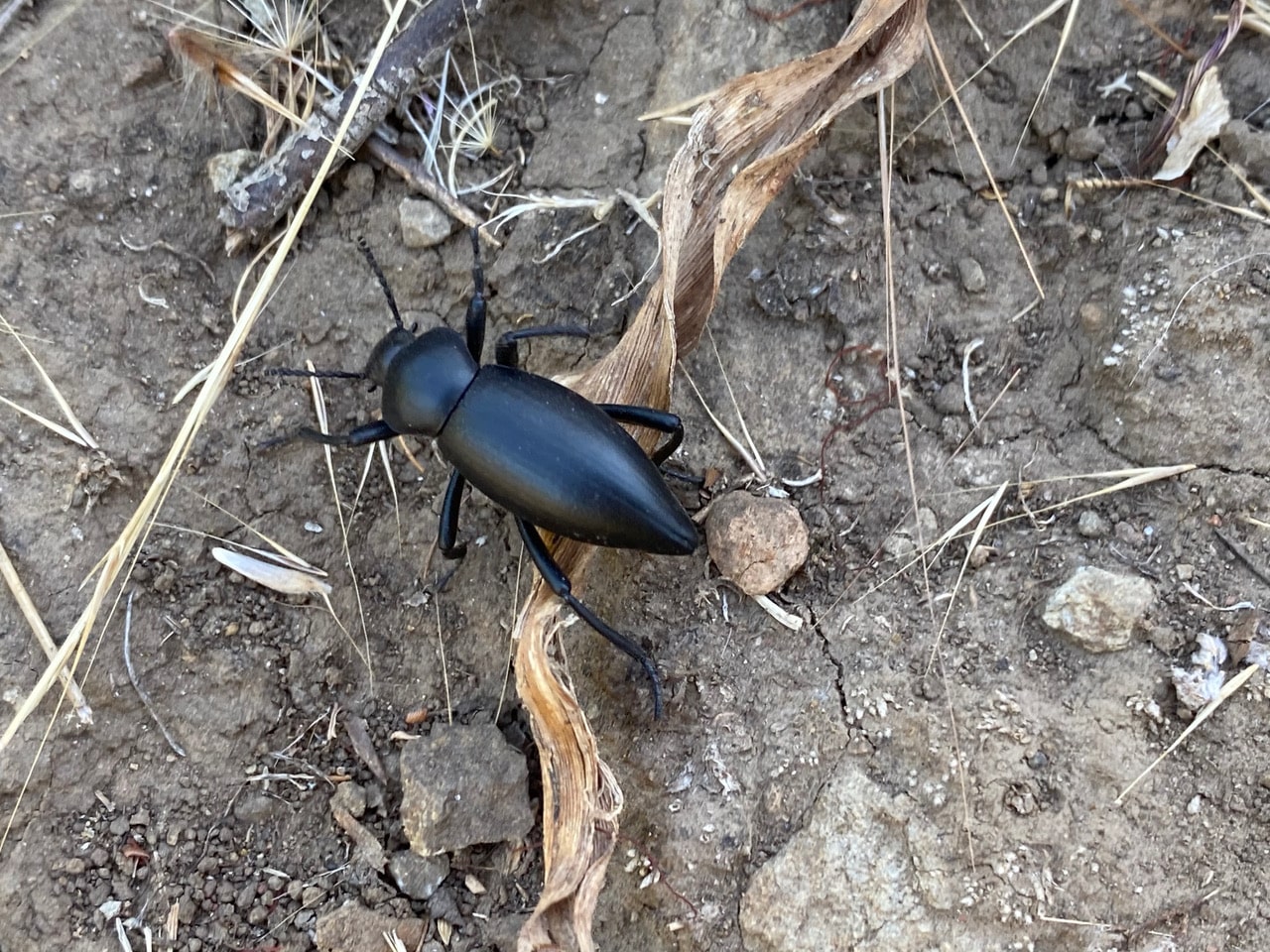
To add to the excitement around the Soap Plants, a Darkling Beetle, Eleodes acuticauda (family Tenebrionidae) saunters by, its abdomen held high.
Darkling Beetles are abundant in both diversity and numbers in the western United States, especially in the deserts. The beetles are often found under logs and in other detritus. They primarily feed on detritus of grasses and forbs. They are best known for their comical, yet effective defense tactics. When alarmed, they lift their rear ends skyward by bending their front legs and extending their rear legs. They spray a reddish brown exudate, an oily, stinky secretion. Most animals know to avoid contact with the Darkling Beetles. The larger species can spray a distance of 10-20 inches, and some can spray multiple times if necessary.