

Pollinator Post 6/27/23 (3)
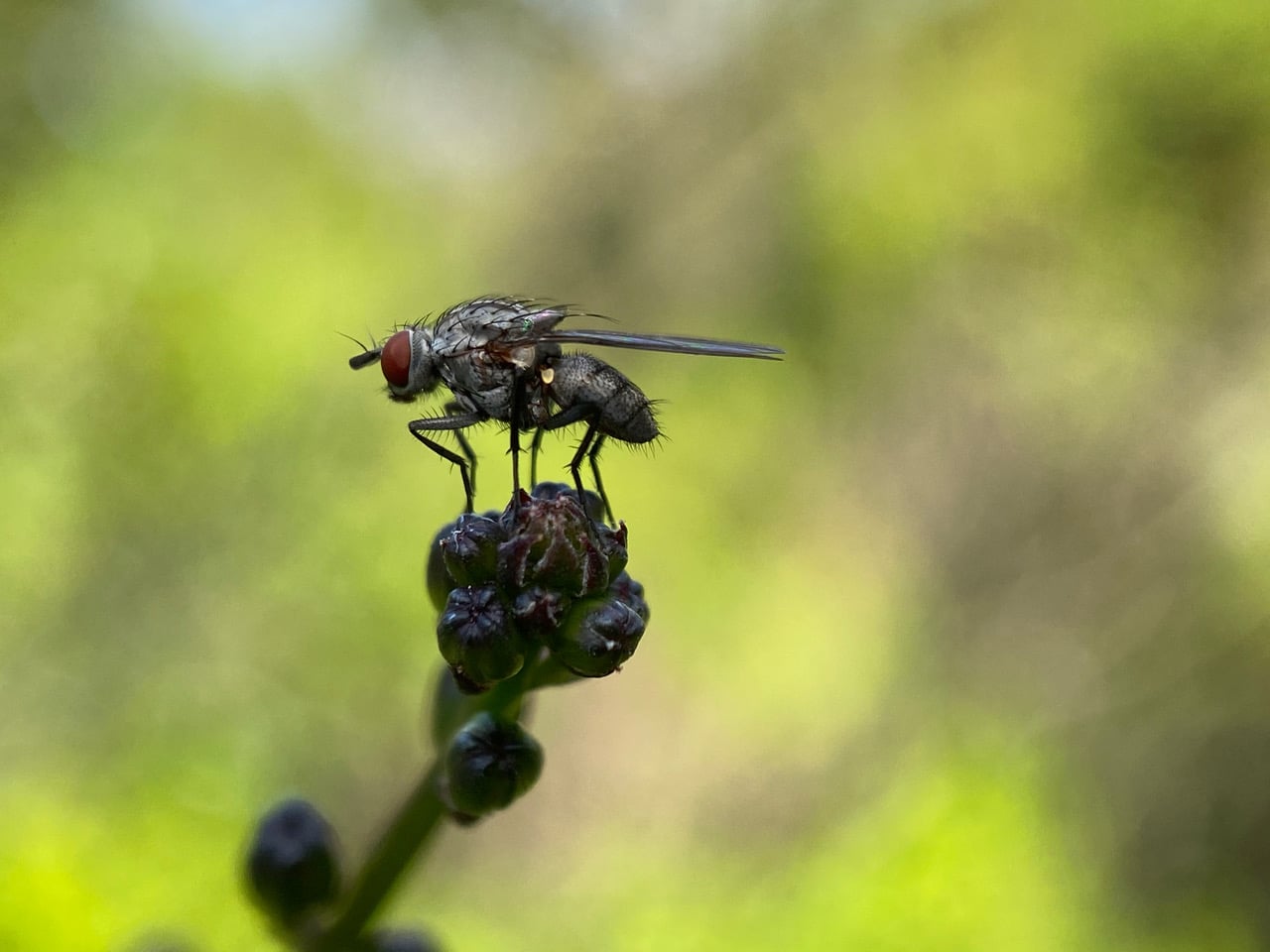 I return to the stand of Soap Plants to find a menagerie of characters has gathered. Here, a Root-Maggot Fly (family Anthomyiidae) is perched on a cluster of flower buds.
Members of the family Anthomyiidae are commonly called Root-maggot Flies. They are small to medium-size flies that resemble house flies but are somewhat more slender. They are usually dull gray or black and silver in color. The larvae typically feed in stems and roots of plants. Many are considered crop pests, and may attack root crops such as onions or rutabagas. Other species may feed on decaying matter, on feces, or are predators of other insects. Adult flies are important pollinators, usually feeding on nectar and pollen.

Many more Dance Flies (family Empididae) have arrived. Most head for the nectar at the base of the flower under the green ovary.
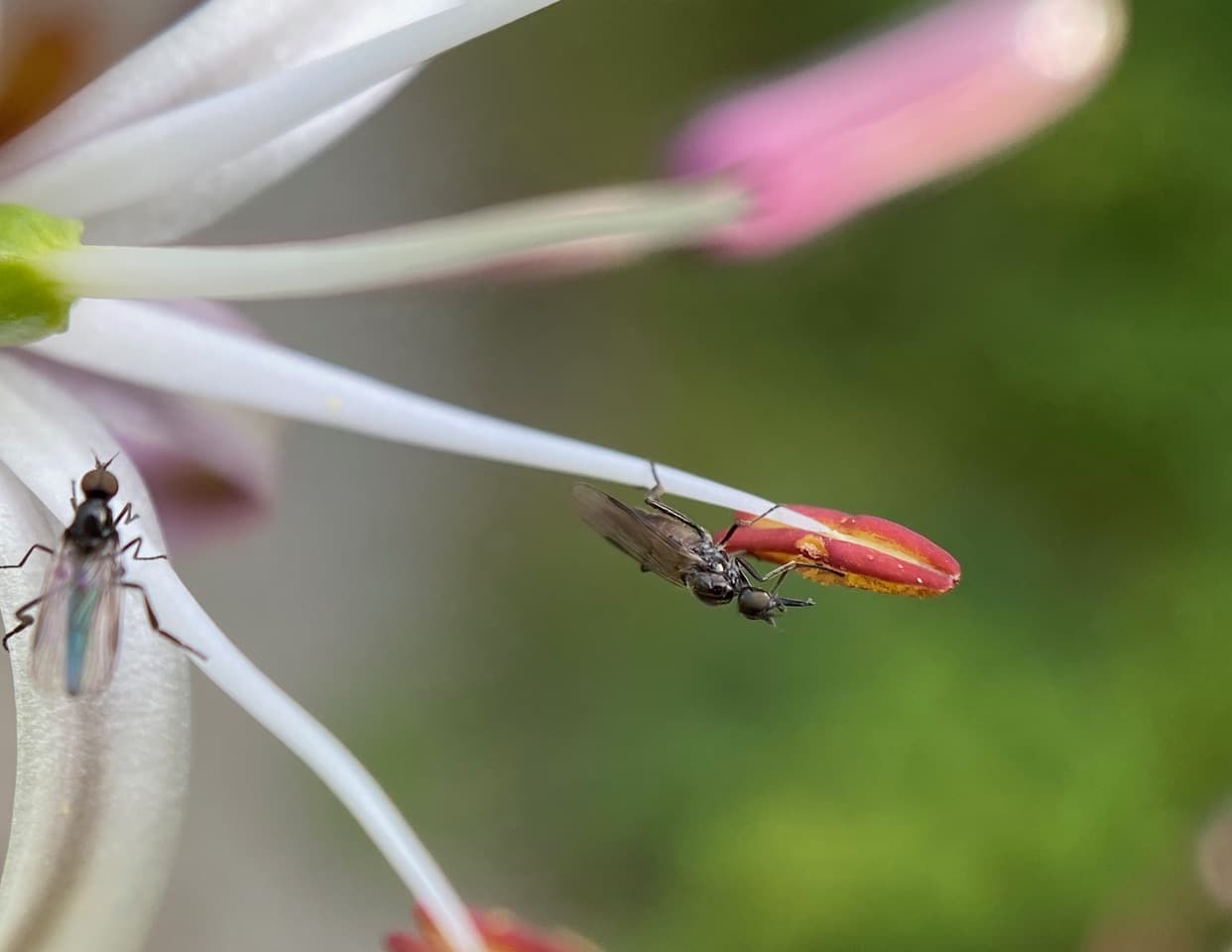
Some visit the anthers, apparently for the pollen. I watch as they peck the open anthers repeated with their stiff proboscis. I thought Dance Flies are for the most part predatory, feeding on other insects. They are known to visit flowers for nectar, but it is rather surprising to see them feed on pollen. Is this a species of herbivorous Dance Flies, or are they simply omnivorous?
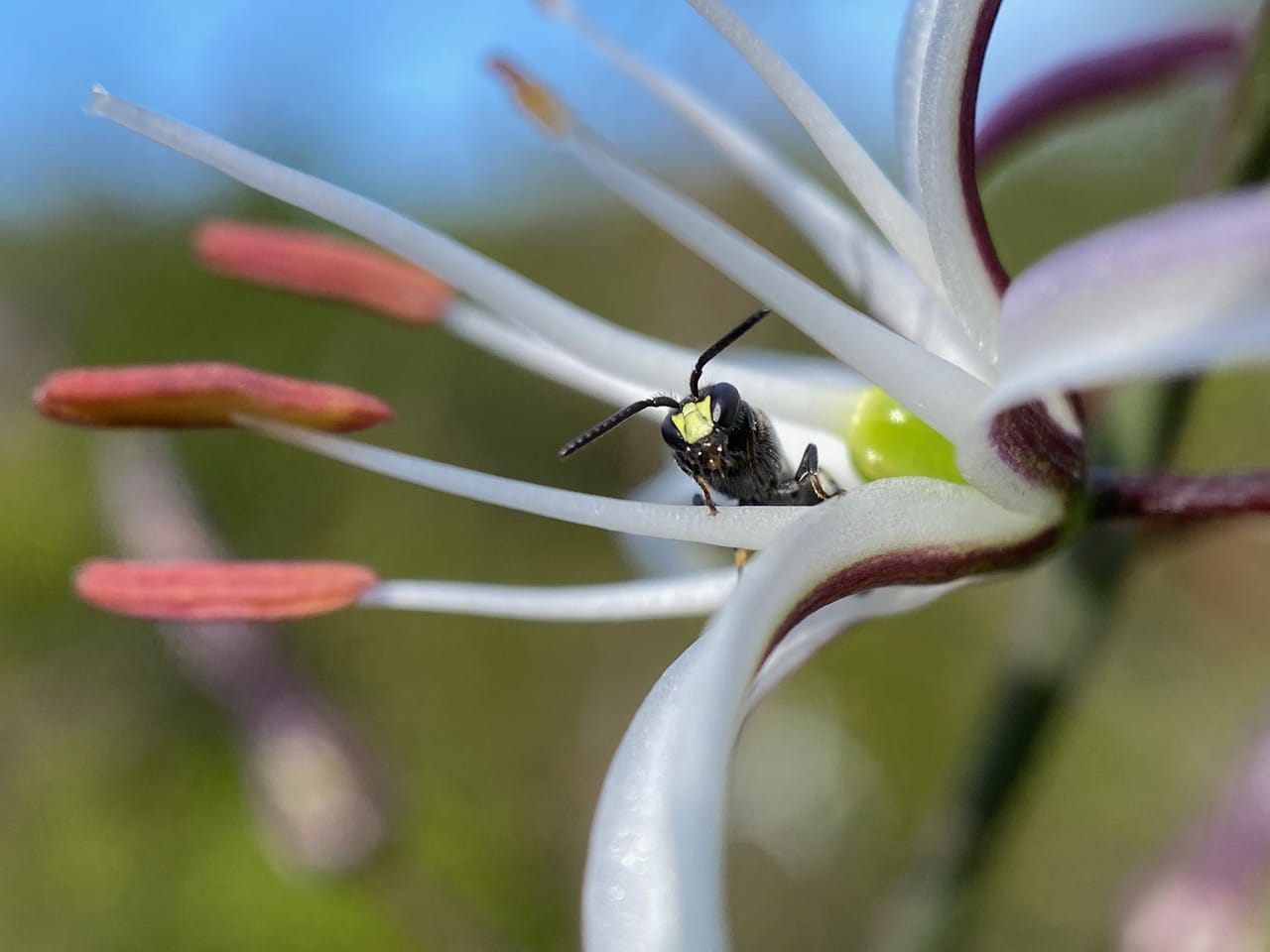
What is this male Masked Bee, Hylaeus sp. (family Colletidae) doing on a Soap Plant flower? He’s not moving – is he already asleep? (Insects do not have eyelids, so it’s hard to tell if one is snoozing.) Is he going to spend the night here? Male solitary bees do not construct nests, so they do not have a home to return to at the end of the day.

I first spot this female Sedgesitter, Platycheirus sp. (family Syrphidae) clasping a Soap Plant anther with her proboscis extended. The anther has yet to open to release its pollen. I am not sure if the hover fly has the means to access the pollen – she has a spongeing mouthpart.

The Sedgesitter heads for the nectar in the middle of the flower. She is joined by a Dance Fly.
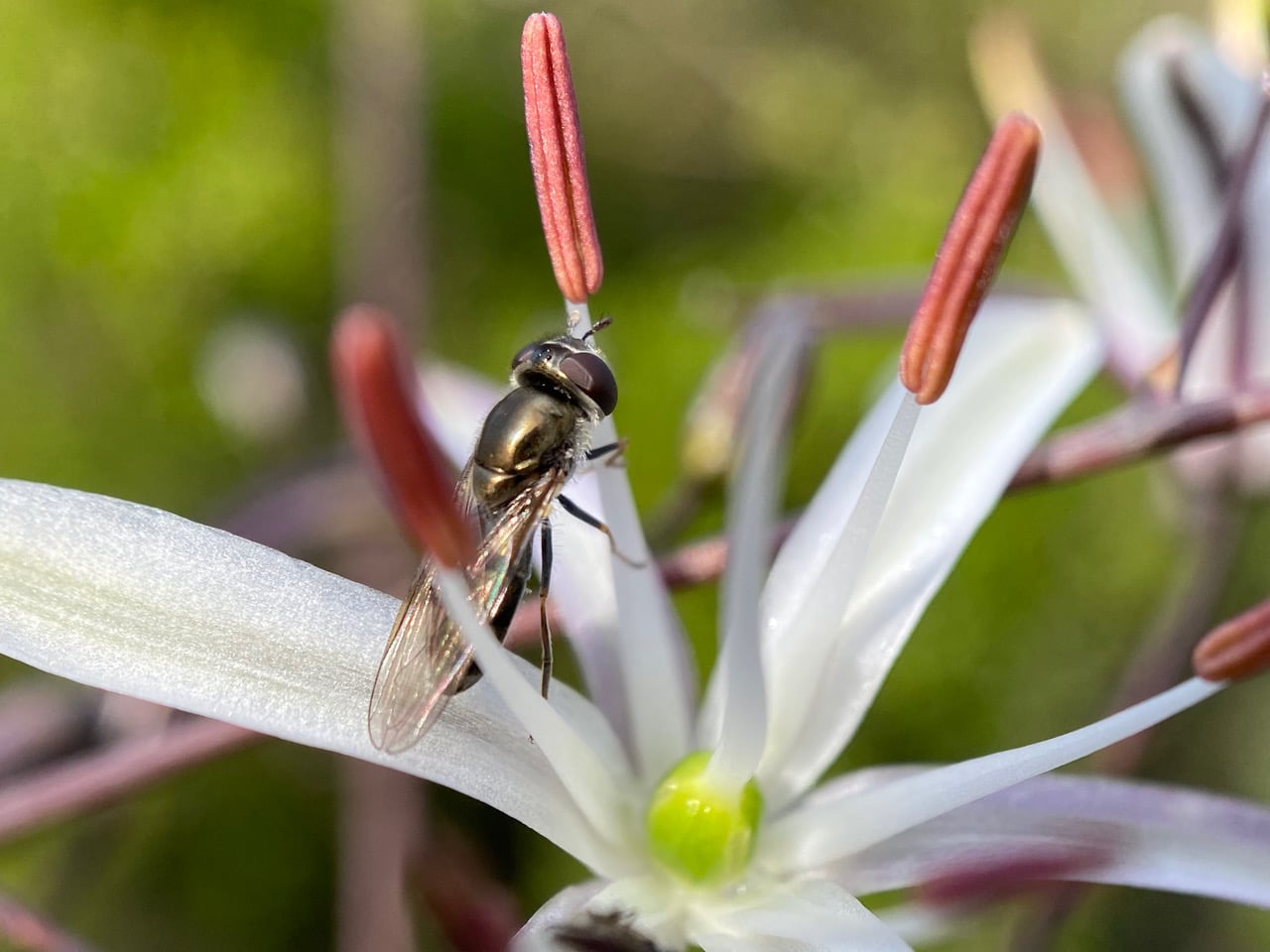
Then she climbs the filament…
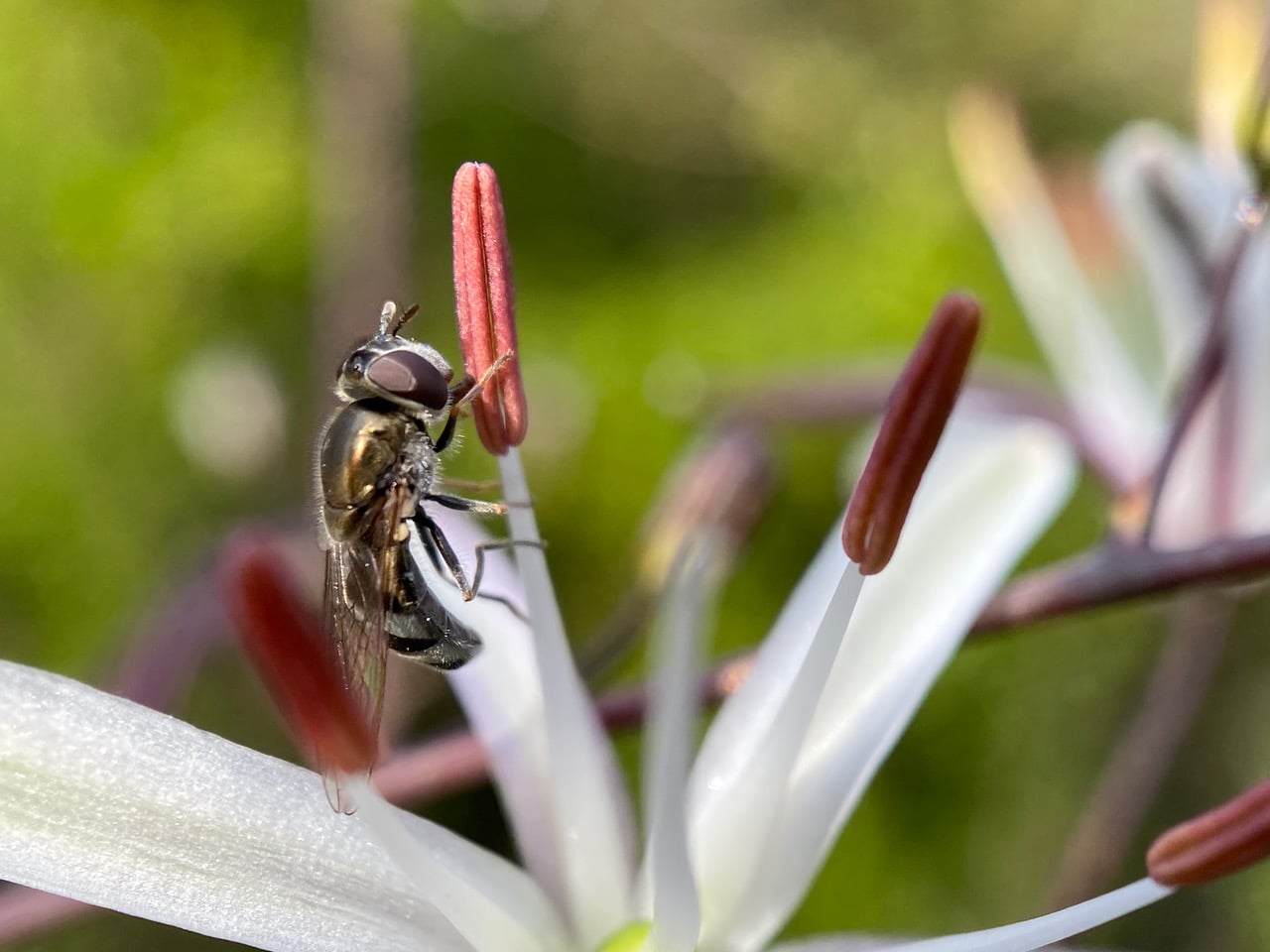
.. and investigates another anther. Alas, it has not opened either!
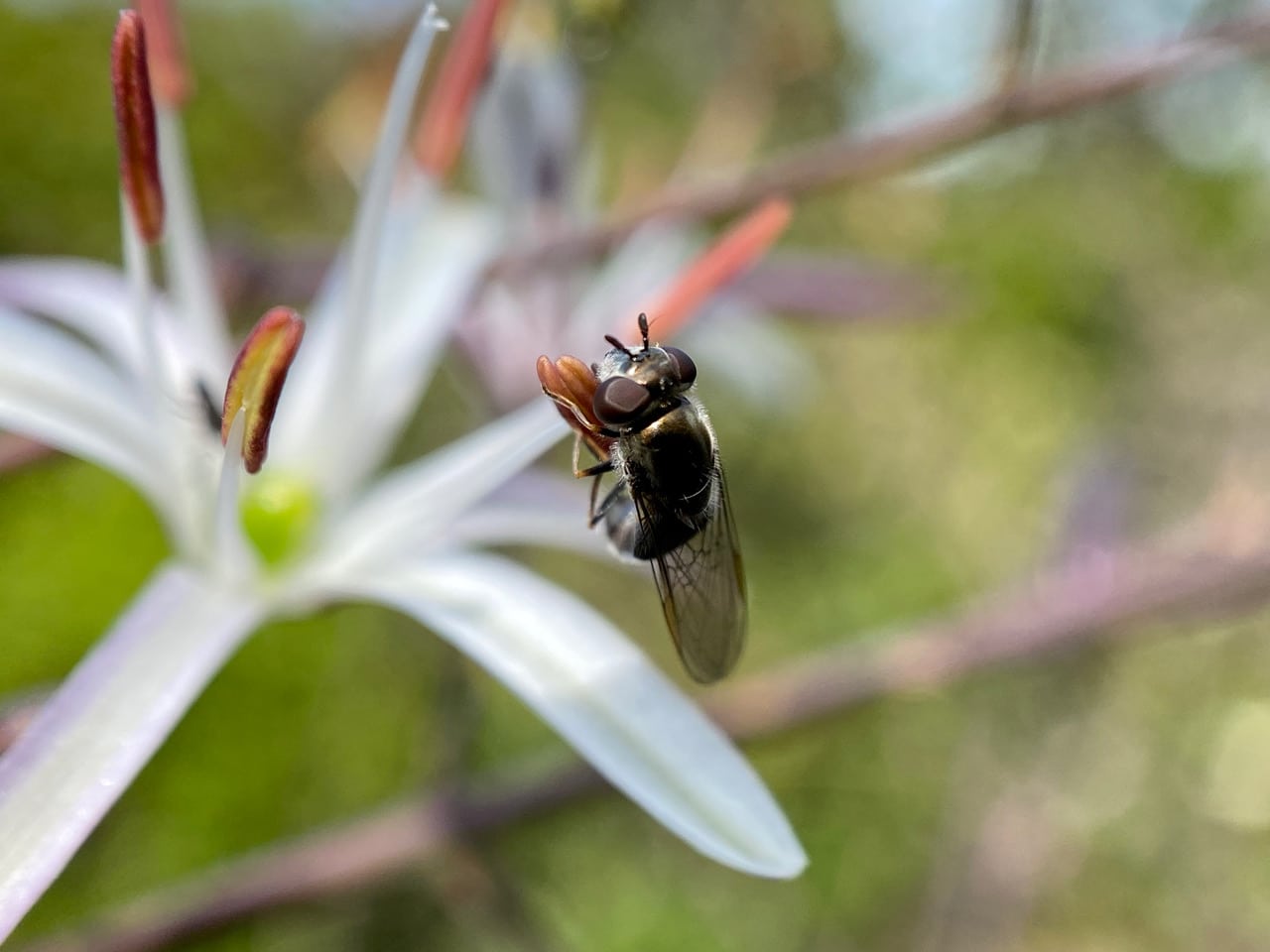
Here she is, lovingly embracing an anther in anticipation of pollen. She won’t have to wait for long. Each Soap Plant flower opens for only one night, so the pollen will burst forth soon!

Ooh, the predators are gathering all around. A Snakefly lurks behind a Coyote Brush leaf.
Snakeflies are a group of predatory insects comprising the order Raphidioptera. They are a relict group, having reached their apex of diversity during the Cretaceous before undergoing substantial decline. Adult Snakefly has a notably elongated thorax which, together with the mobile head, gives the group their common name of snakily. The body is long and slender and the two pairs of long membranous wings are prominently veined. The head is long and flattened and heavily sclerotized. The mouthparts are strong and relatively unspecialized, being modified for biting. The large compound eyes are at the sides of the head. Females have a large and sturdy ovipositor which is used to deposit eggs into crevices or under bark. Snakeflies are holometabolous insects with four-stage life cycle consisting of eggs, larvae, pupae and adults. Both adults and larvae are predators of soft-bodied arthropods such as aphids and mites.
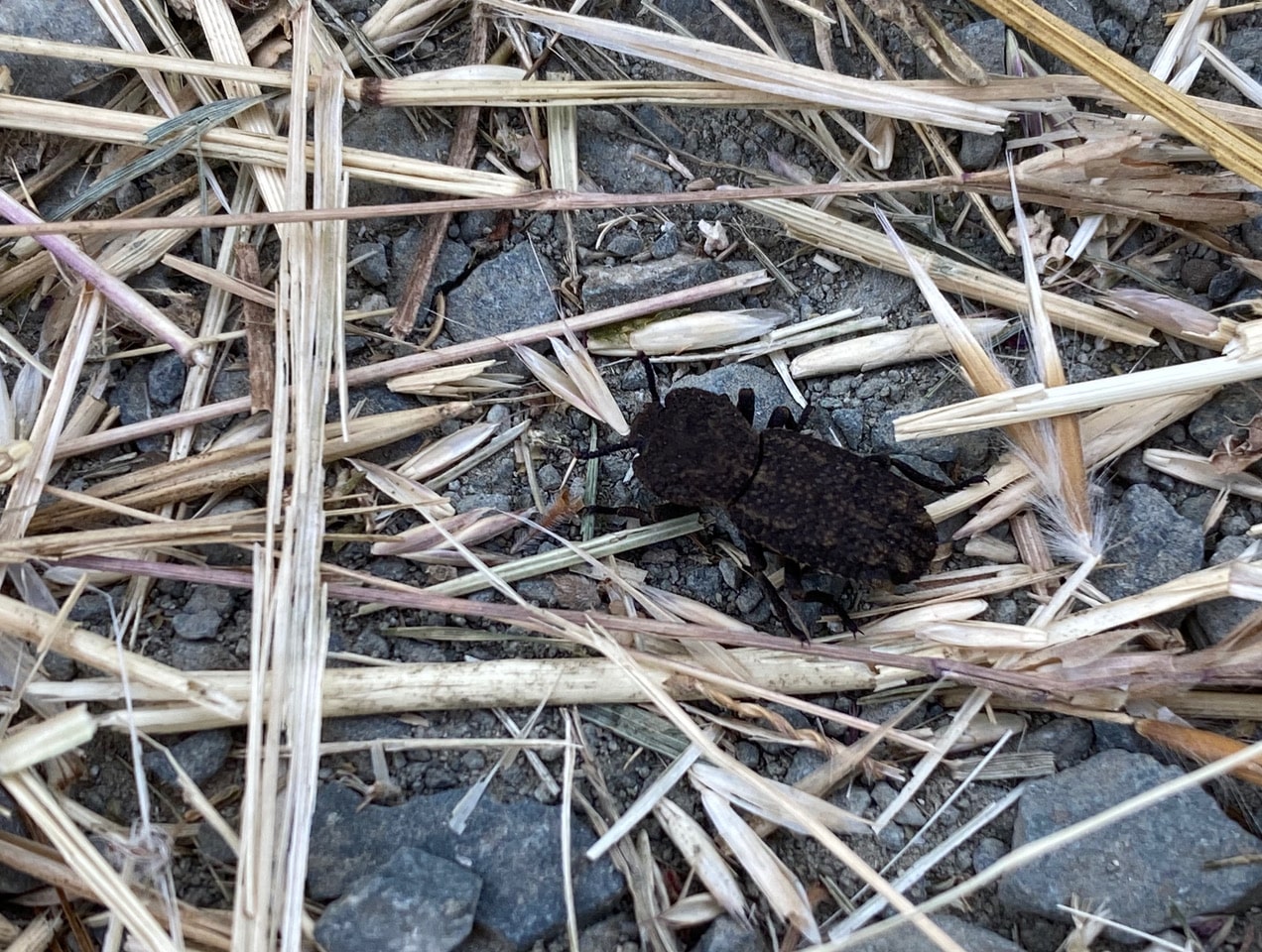
Just when it’s getting dark, and my cell phone warns of low battery, a strange beetle trundles toward me on the trail. I know it is a new species for me, and I need a photo for documentation. Desperate, I resort to low power mode to take this last picture. It shows no details, but a 15-year-old beetle enthusiast on iNaturalist has no problem identifying it to the species! Thanks, KW!
Phloeodes plicatus is an Ironclad Beetle in the family Zopheridae, found primarily on the west coast of North America. A large number feed on rotting wood or the fungus associated with rotting wood. These beetles have fused elytra, so they cannot fly. They are notable for their super-strong armored exoskeleton. A close relative, the Diabolical Ironclad Beetle, Phloeodes diabolicus has been found to survive being run over by a car. Tightly interlocked and impact-absorbing structures that connect pieces of the beetle’s exoskeleton help it survive enormous crushing forces, enabling the flightless beetle to fend off the pecks and nips of birds and rodents.