

Pollinator Post 6/27/23 (2)

It’s almost 4 pm when I am done walking the paved road at Siesta Gate. While there’s still day light, I decide to swing over to the Steam Train entrance to check on the evening insect activities along the northern section of Skyline Trail.
A Tumbling Flower Beetle (family Mordellidae) is feeding on pollen from an opened flowerhead of California Everlasting, Pseudognaphalium californicum.
The Tumbling Flower Beetles (family Mordellidae) are named for the characteristic irregular movements they make when escaping predators. They are also sometimes called Pintail Beetles for their abdominal tip which aids them in performing these tumbling movements. Mordellids are small, wedge-shaped, hump-backed beetles with head bent downward. The body is densely covered with fine silky hairs, usually black, but often very prettily spotted or banded with silvery hues. The adults feed on pollen, occurring on flowers or on dead trees, flying or running with rapidity. The larvae live in old wood or in the pith of plants, and those of some species are said to be carnivorous, feeding on the young of Lepidopterans and Diptera which they find in the plant stems.

A Yellow-faced Bumble Bee, Bombus vosnesenskii is sipping nectar from a California Bee Plant flower, Scrophularia californica.

A gravid female Sedgesitter, Platycheirus sp. (family Syrphidae) feeds on pollen from a California Bee Plant flower.
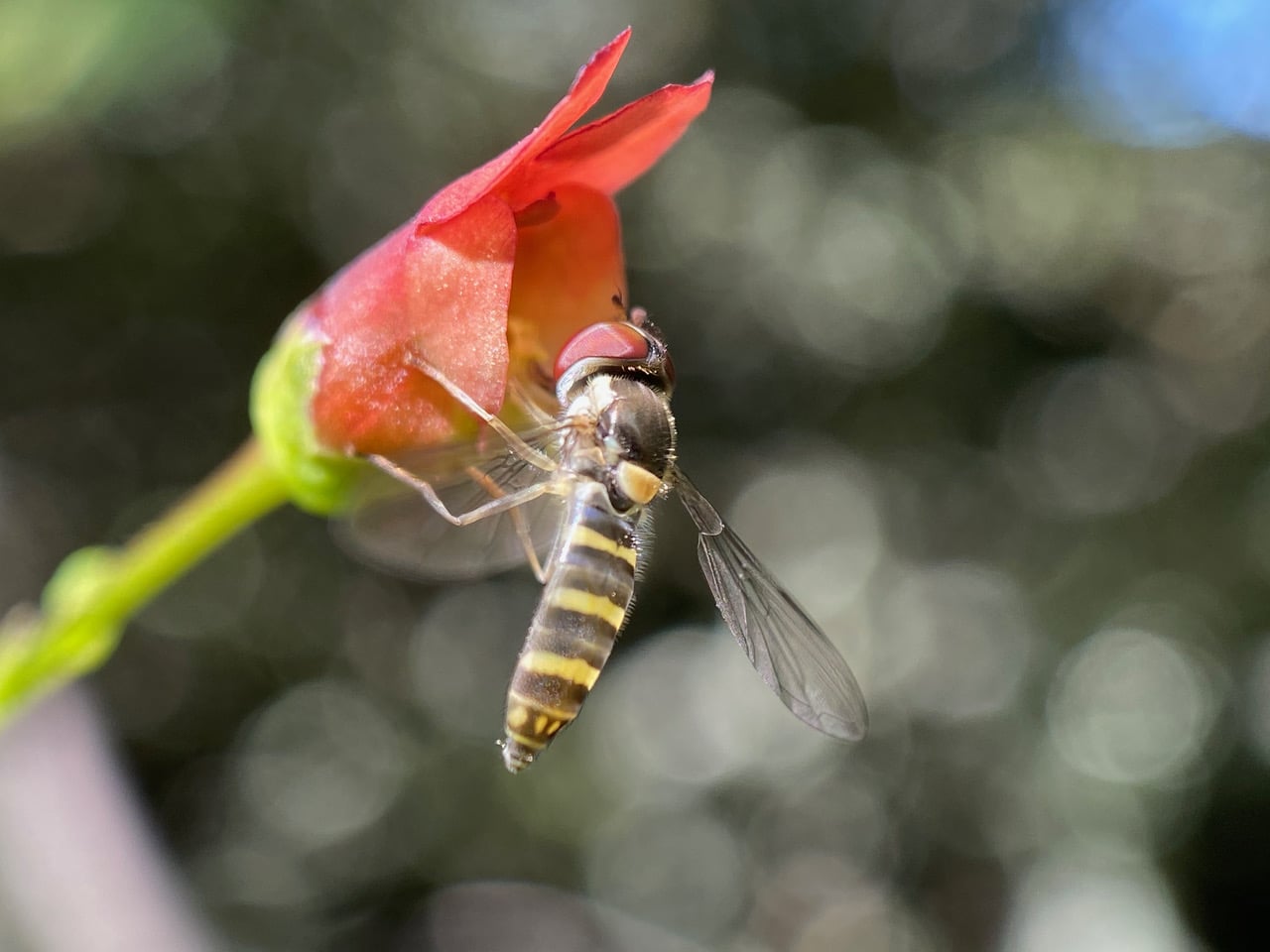
Backlit by the low sun, the abdomen of a Diamond Spottail, Fazia micrura (family Syrphidae) appears translucent as it forages on a California Bee Plant flower.
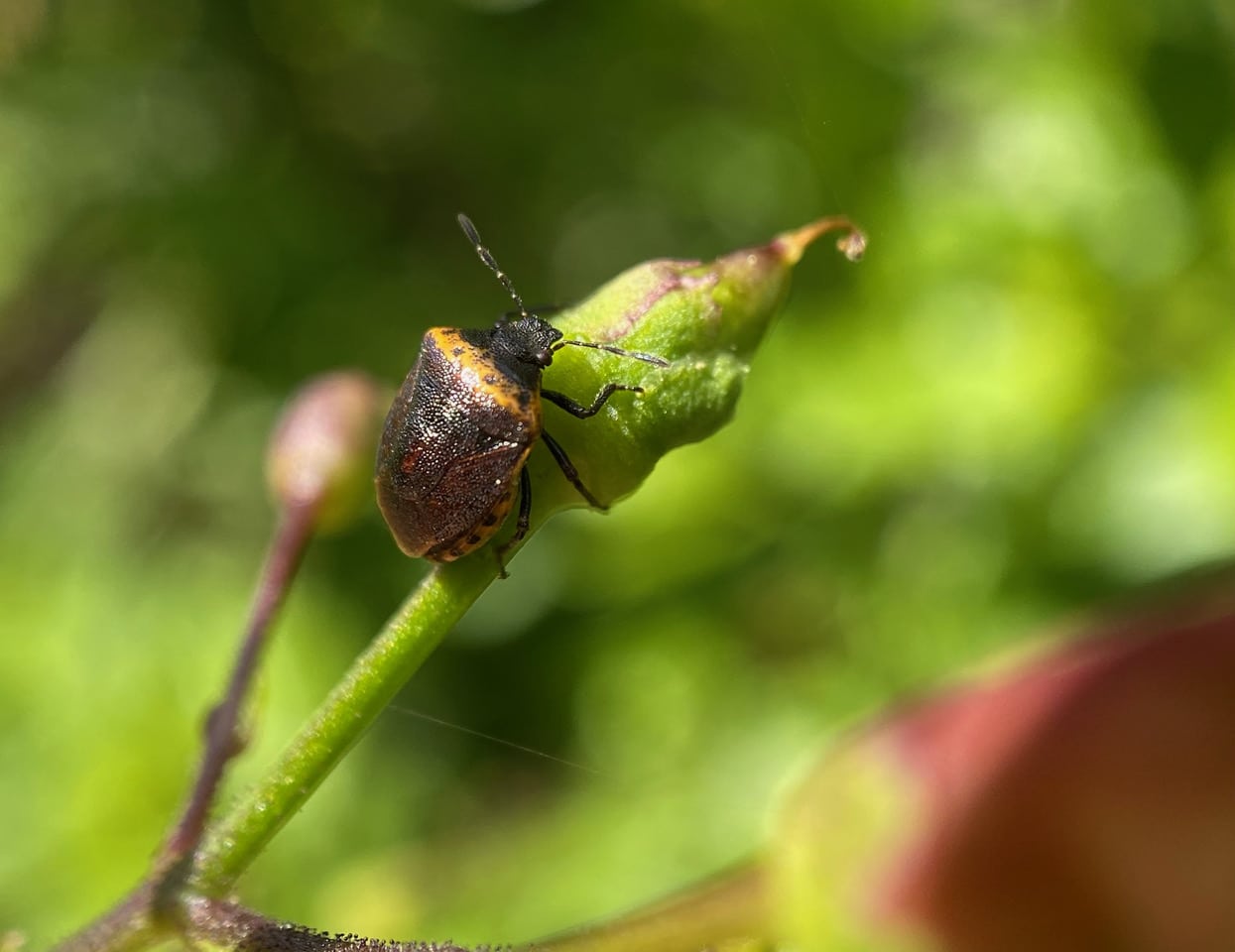
A small Stink Bug, Cosmopepla uhleri (family Pentatomidae) is climbing onto a California Bee Plant flower bud. The bug is easily recognizable – black with an orange transhumeral band with black spots. The bug uses Scropularia californica as a host plant.
All Pentatomids have 5-segmented antennae (hence their family name, Penta – five and tomos – section.) They generally have a large triangular scutellum in the center of the back. The adult is generally shield-shaped when viewed from above. The common name of Stink Bug refers to their ability to release a pungent defensive spray when threatened, disturbed, or crushed.

A Western Calligrapher, Toxomerus occidentalis (family Syrphidae) lands of a spent flower of Soap Plant, Chlorogalum pomeridianum. Is she waiting for the next round of blooming tonight?
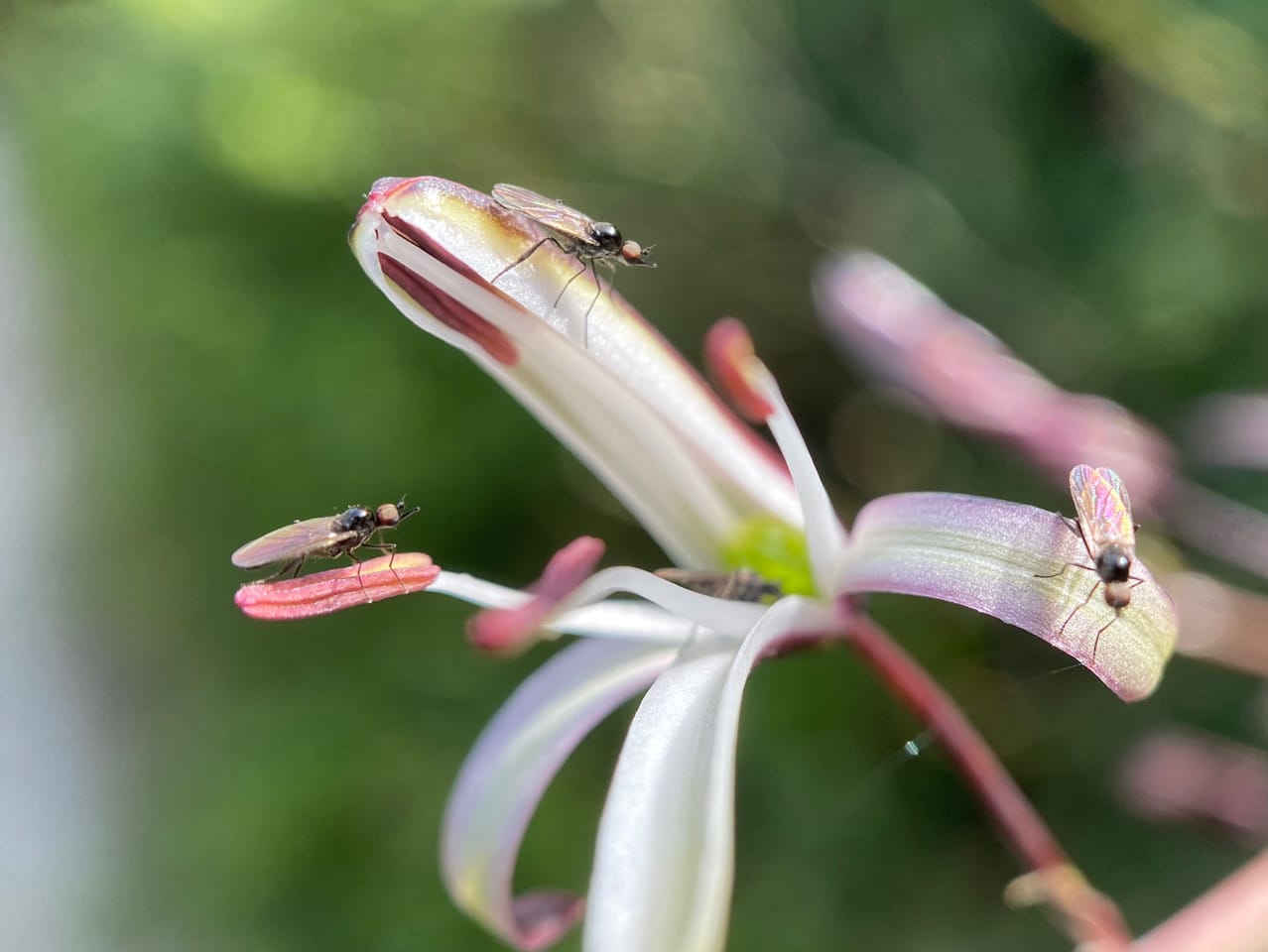
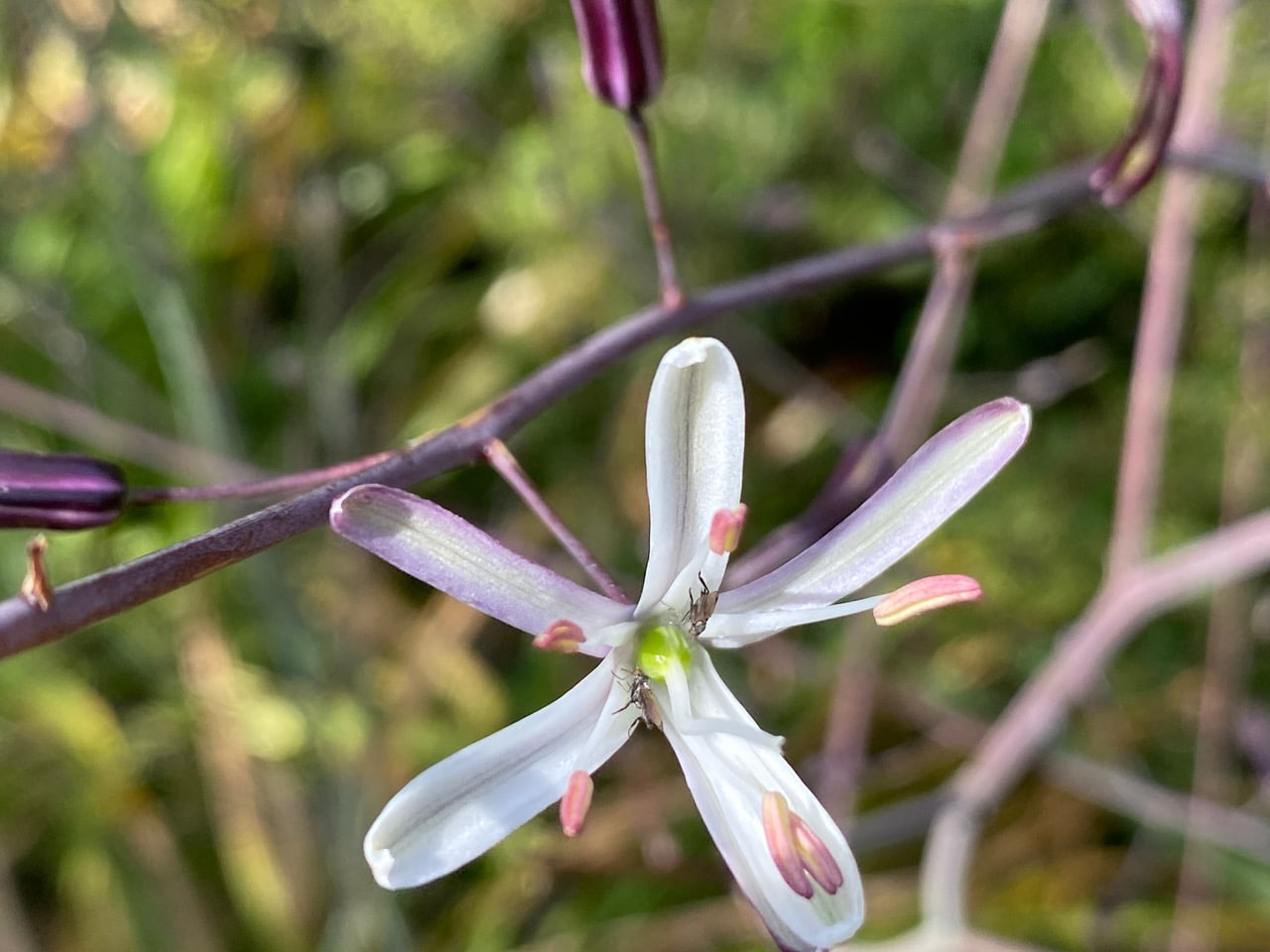
A few Soap Plant flowers are starting to open up, attracting many Dance Flies. The flies stake out various positions on the flower in anticipation of the nectar flow.


I decide to walk along the trail to find out what other insects might be doing at this hour. A pair of Soldier Beetles, Cultellunguis americanus (family Cantharidae) is mating on a Cow Parsnip leaf, Heracleum maximum.
The Soldier Beetles, family Cantharidae are relatively soft-bodied, straight-sided beetles. One of the first described species has a color pattern reminiscent of the red coats of early British soldiers, hence the common name. They are also known commonly as Leatherwings because of their soft elytra.
Soldier beetles often feed on both nectar and pollen as well as predating on other small insects. The larvae are often active, and feed on the ground, hunting snails and other small creatures. Soldier beetles are generally considered beneficial insects by gardeners.
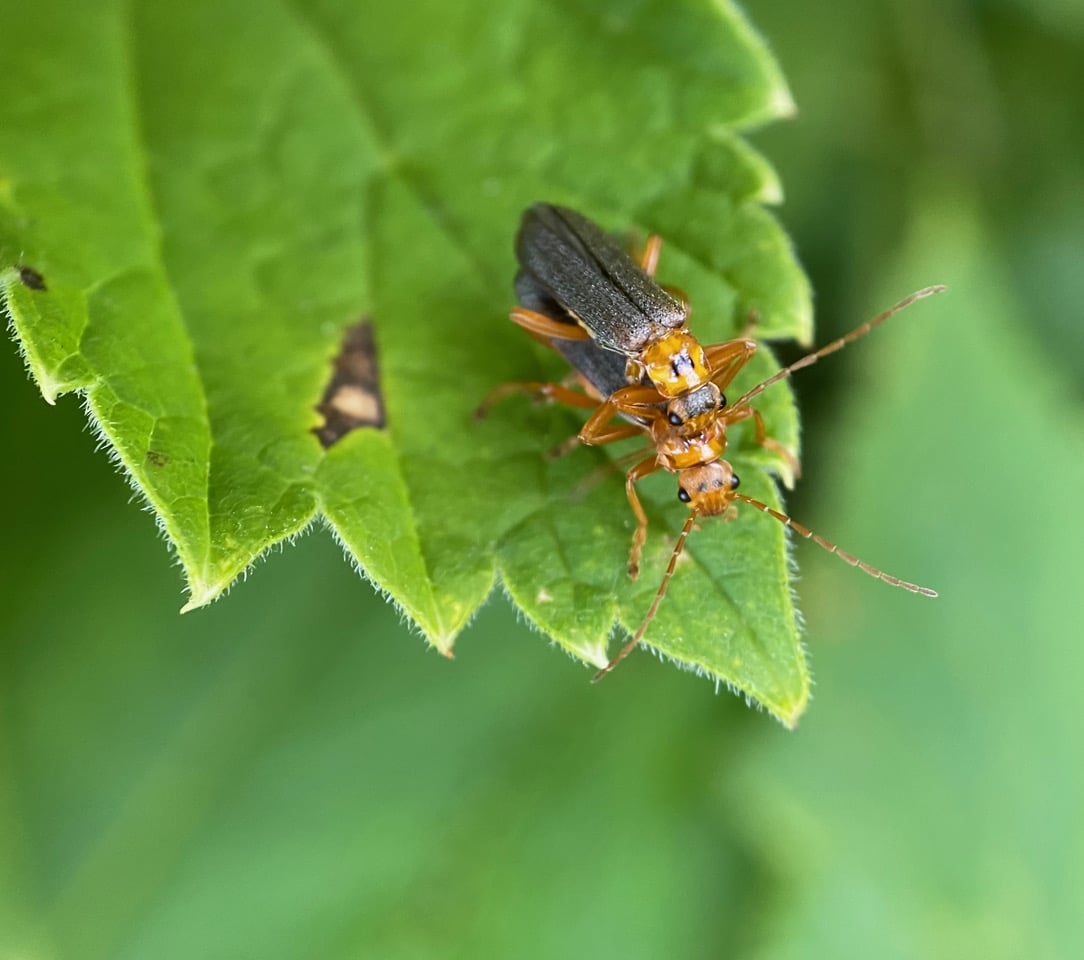
At the edge of the same leaf, another pair of Soldier Beetles is making out in a different position. There are also several single beetles milling around on the leaf. Is this the neighborhood singles bar?
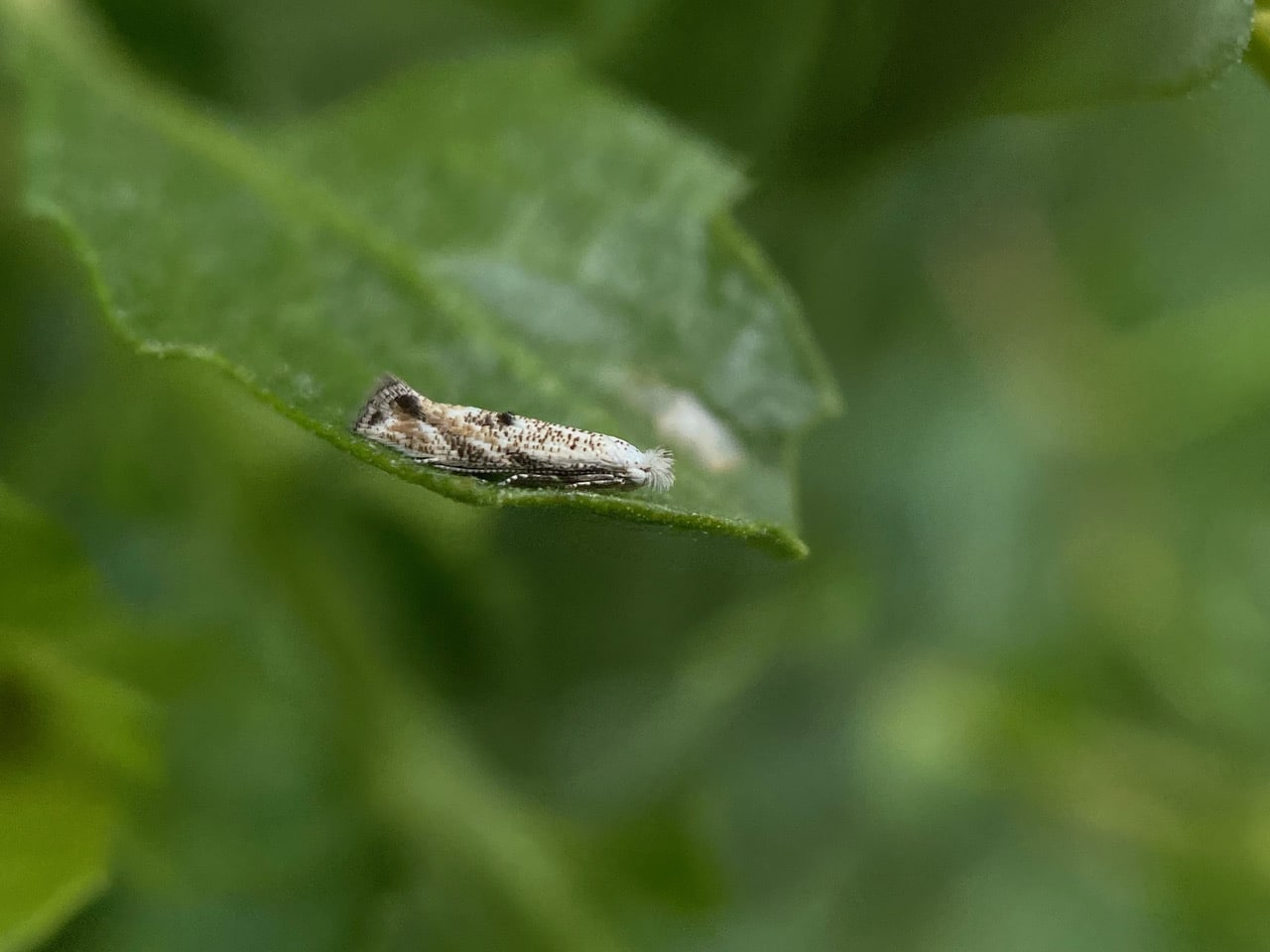 Numerous small pale moths are flying around the Coyote Brush, Baccharis pilularis. They land and run around rapidly on the top foliage. It is a challenge to photograph these tiny active moths (7-9 mm) in low light.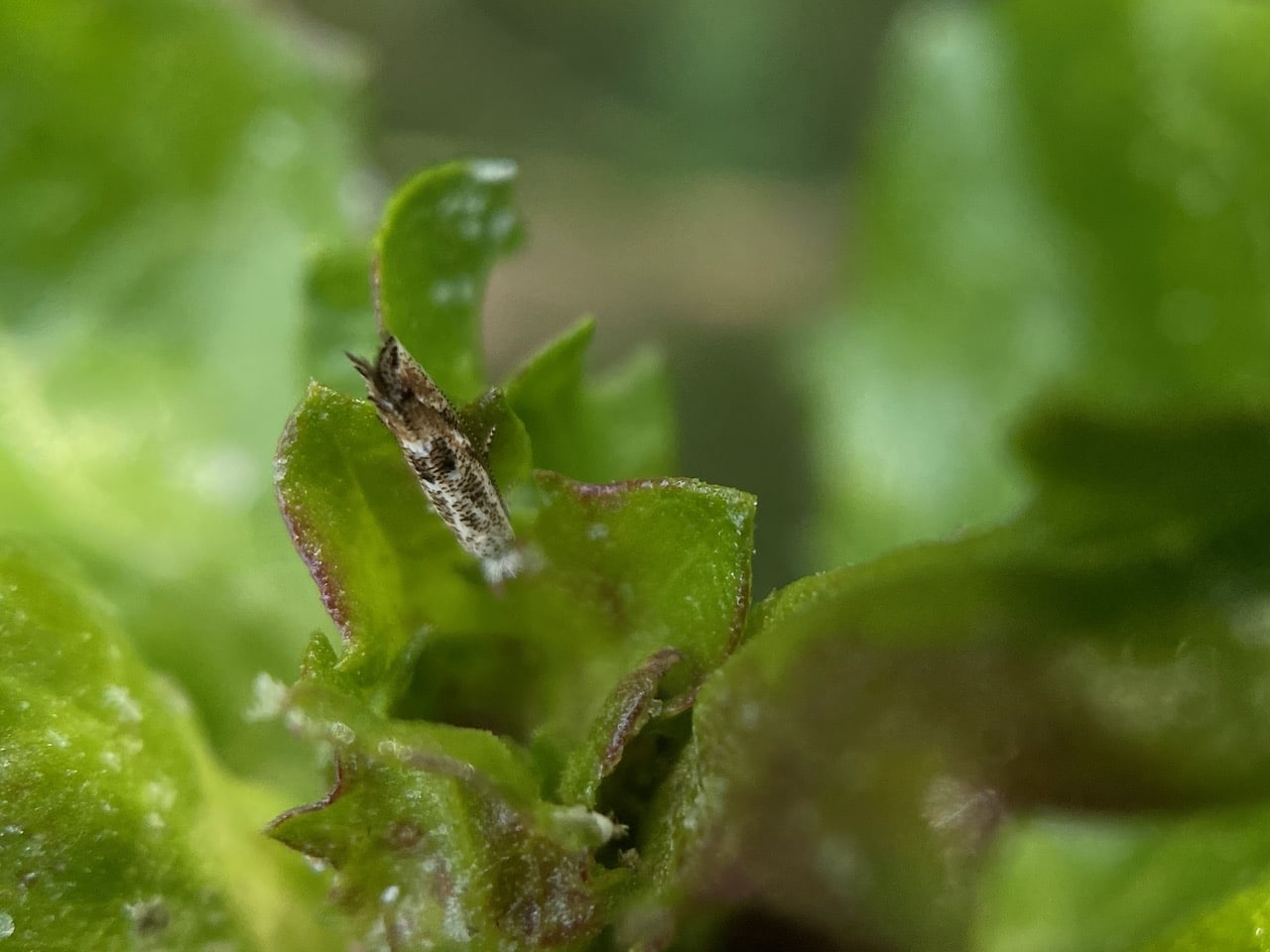
The moths appear to be Twirler Moths in the family Gelechiidae. They are elongate moths with narrow bodies, and they run around with their wings folded. There’s a mob of white hair on top of the head.

The long, filiform (thread-like) black-and-white antennae are folded along the side of the body. There appears to be tibial spurs on the legs.

I observe some interaction between these two moths on the top leaves of the Coyote Brush. Both seem excited, antennae waving as they maneuver around each other.
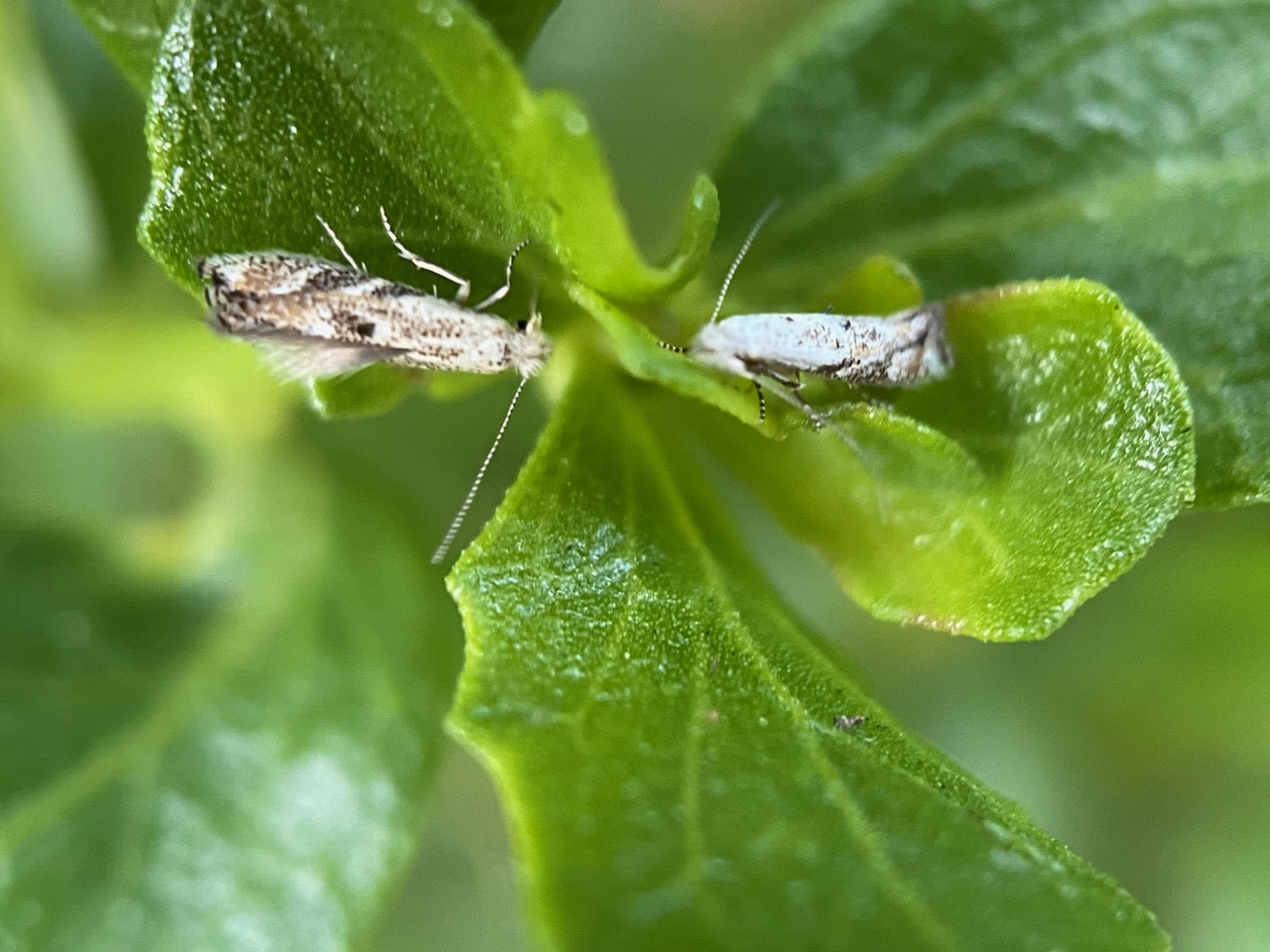
As the evening progresses, more and more of these moths appear on the Coyote Brush, in the hundreds. What are they doing here?
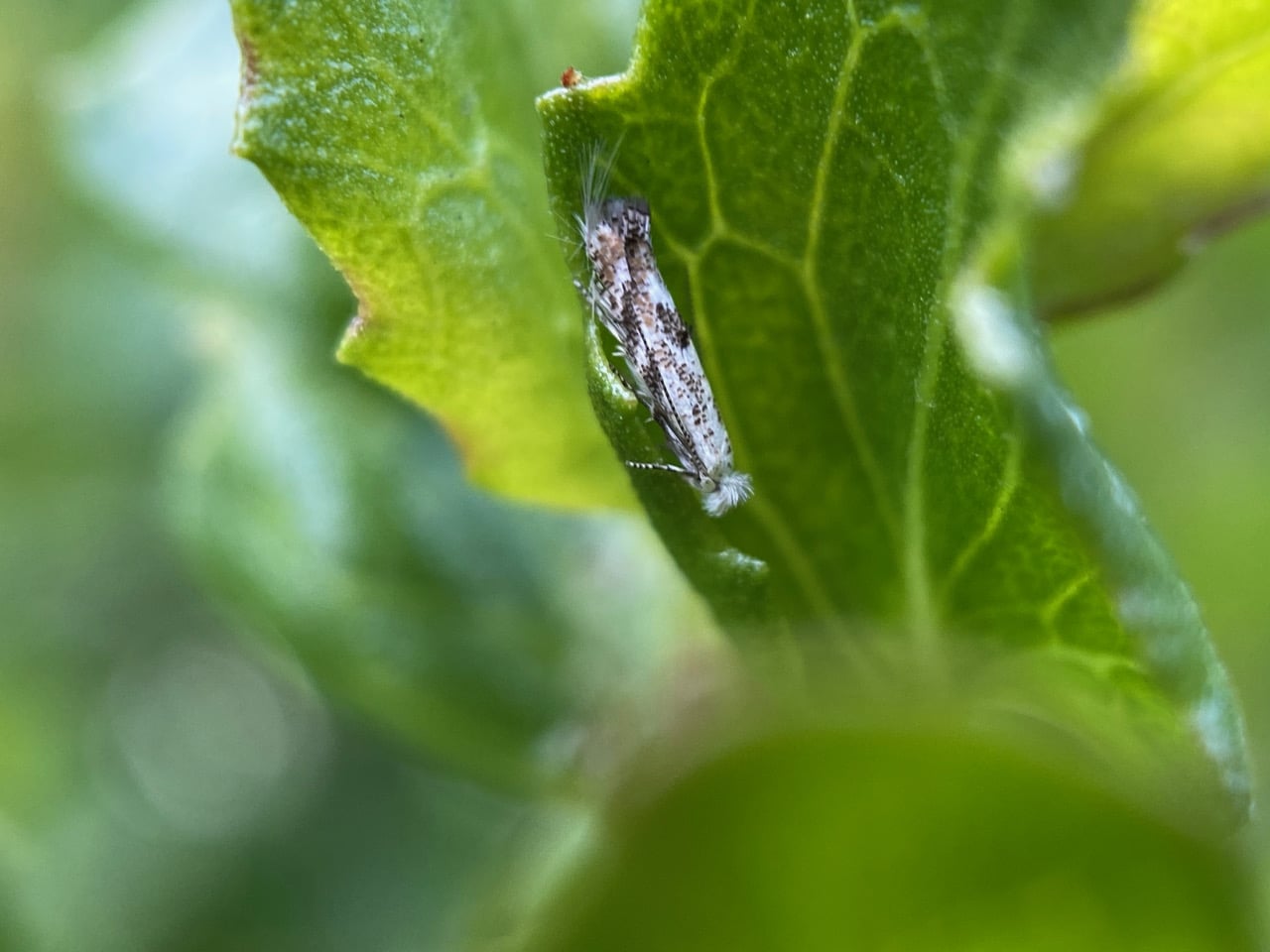
Is this the well-known Coyote Brush Stem Gall Moth, Gnorimoschema baccharisella (family Gelechiidae)? These moths lay eggs and induce the spindle-shaped stem galls near the tips of Baccharis stems. The Coyote Brush along Skyline Trail are studded with these common galls.

A few moths have gathered around a feeding scar on a Baccharis leaf, apparently feeding on the oozing sap or debris.
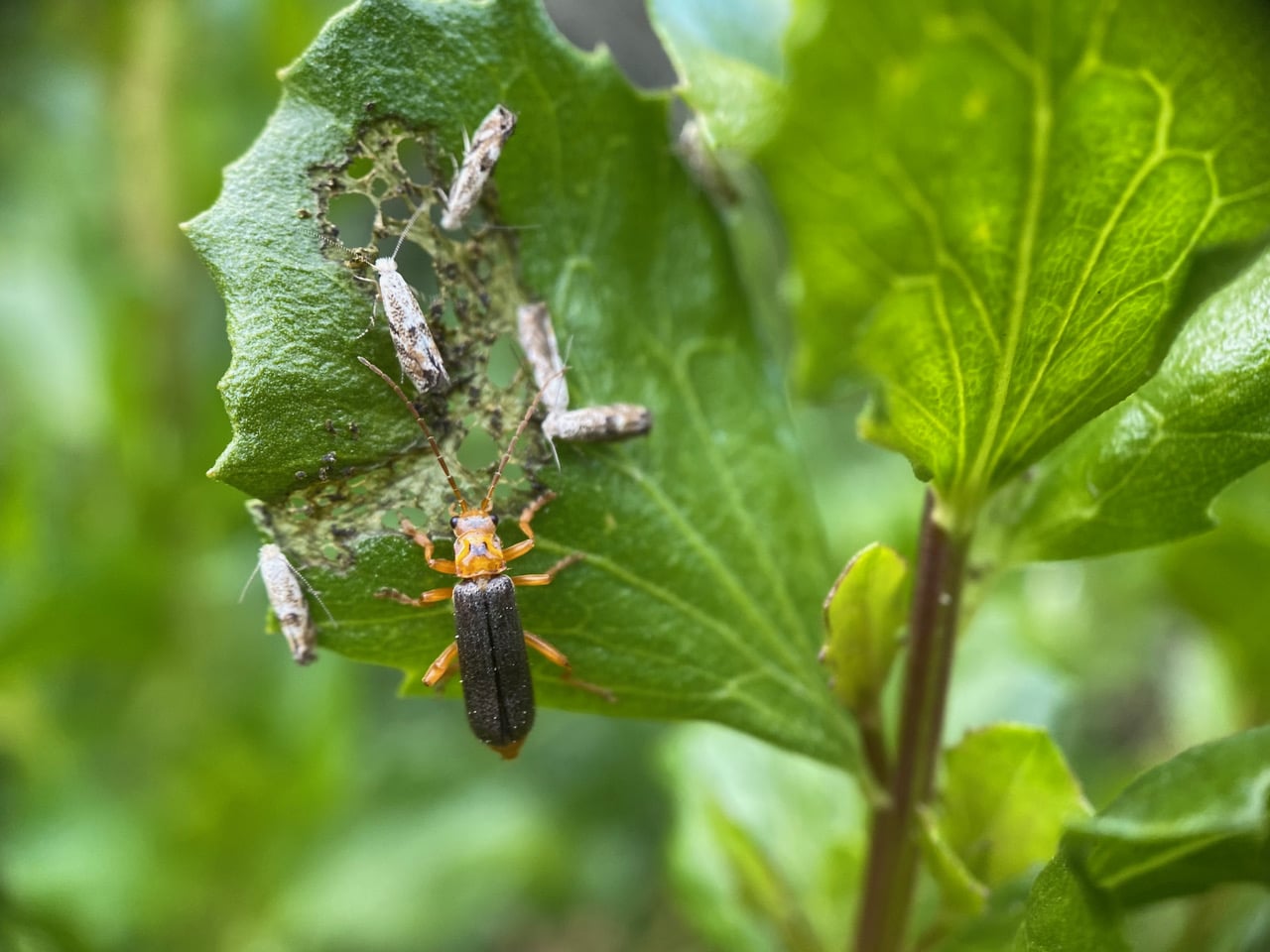
They are soon joined by a Soldier Beetle.
