

Pollinator Post 6/26/24 (1)
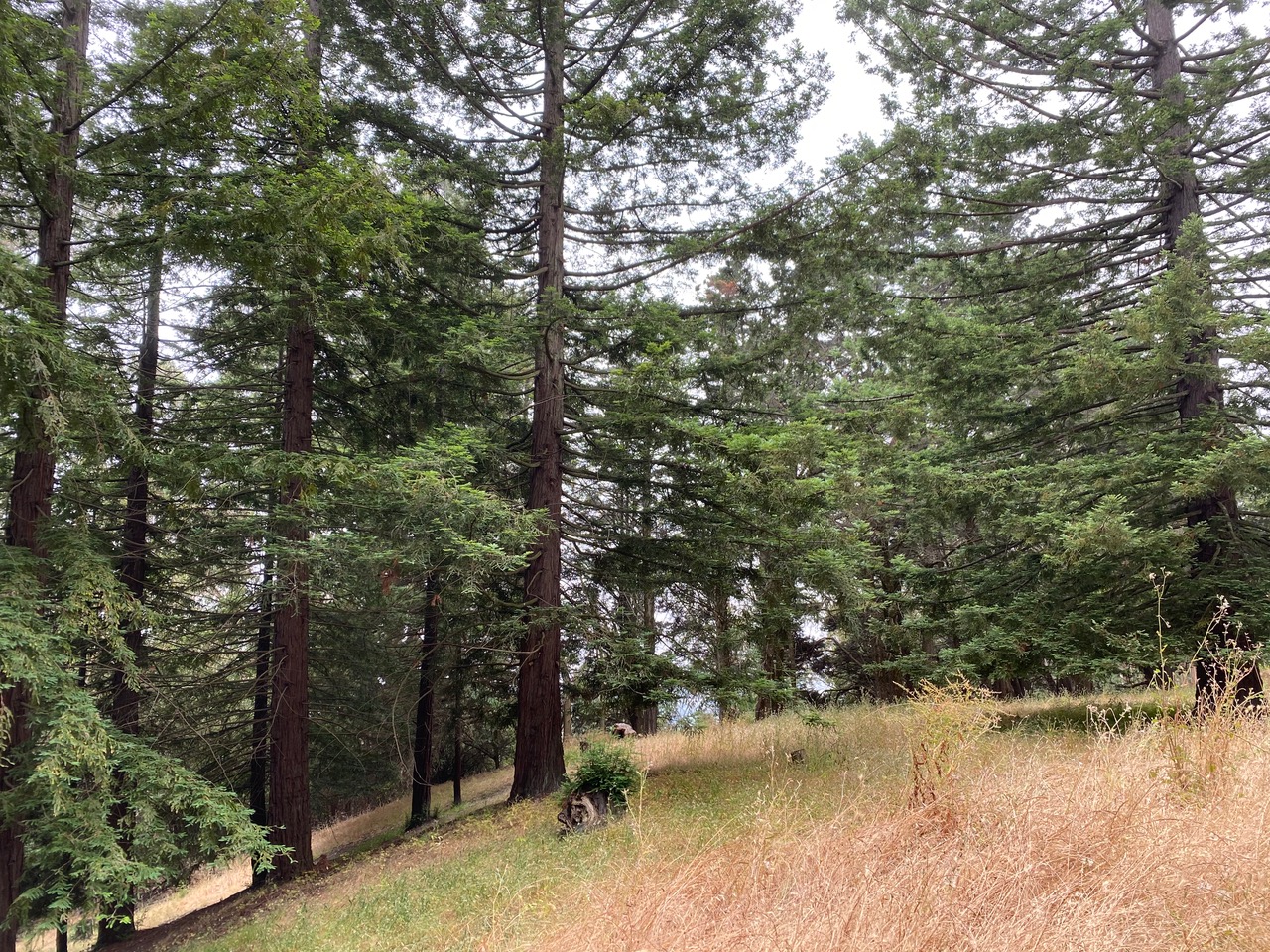
I take a walk along Sanborn Drive in Joaquin Miller Park on this relatively cool morning.
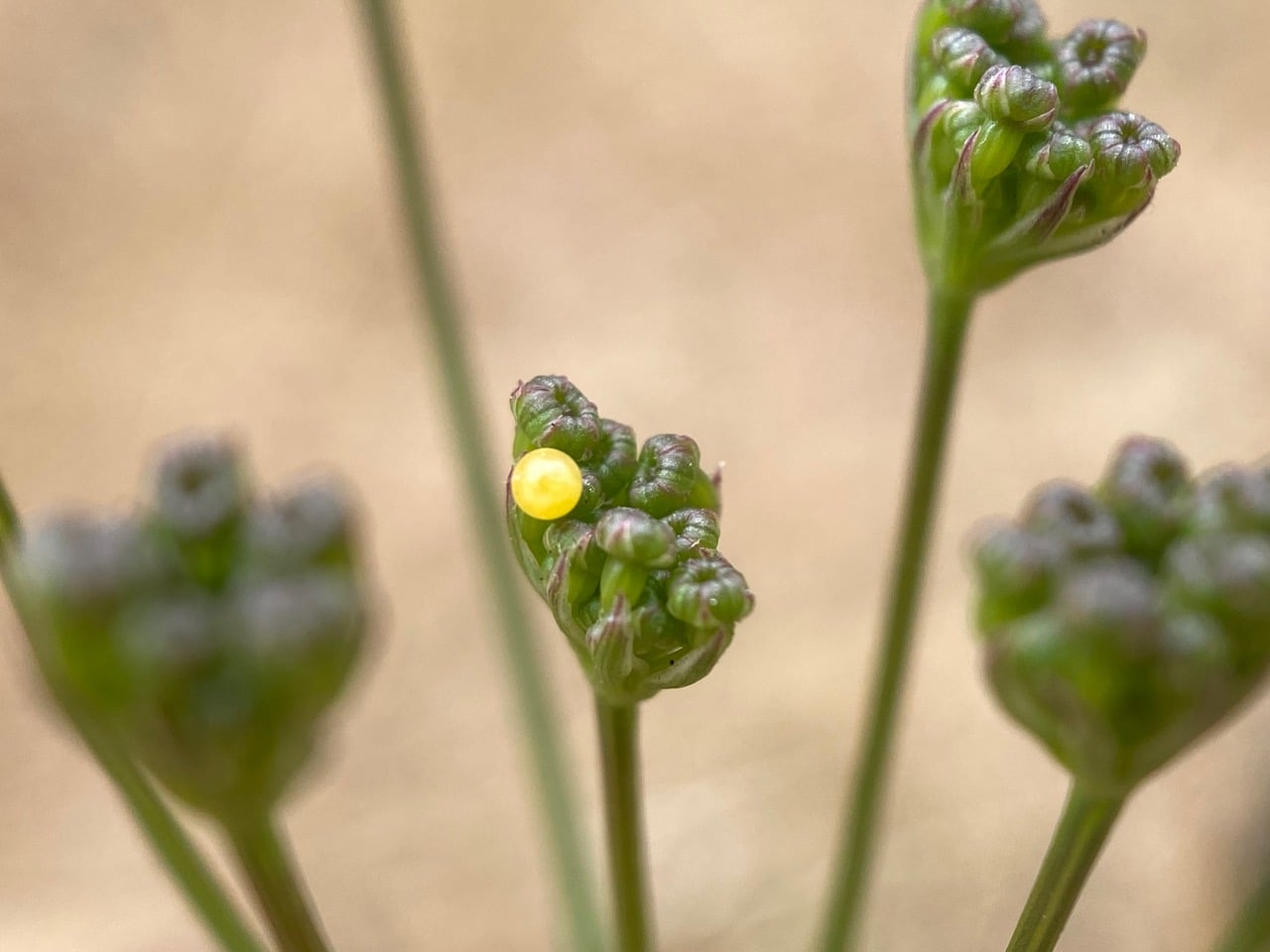
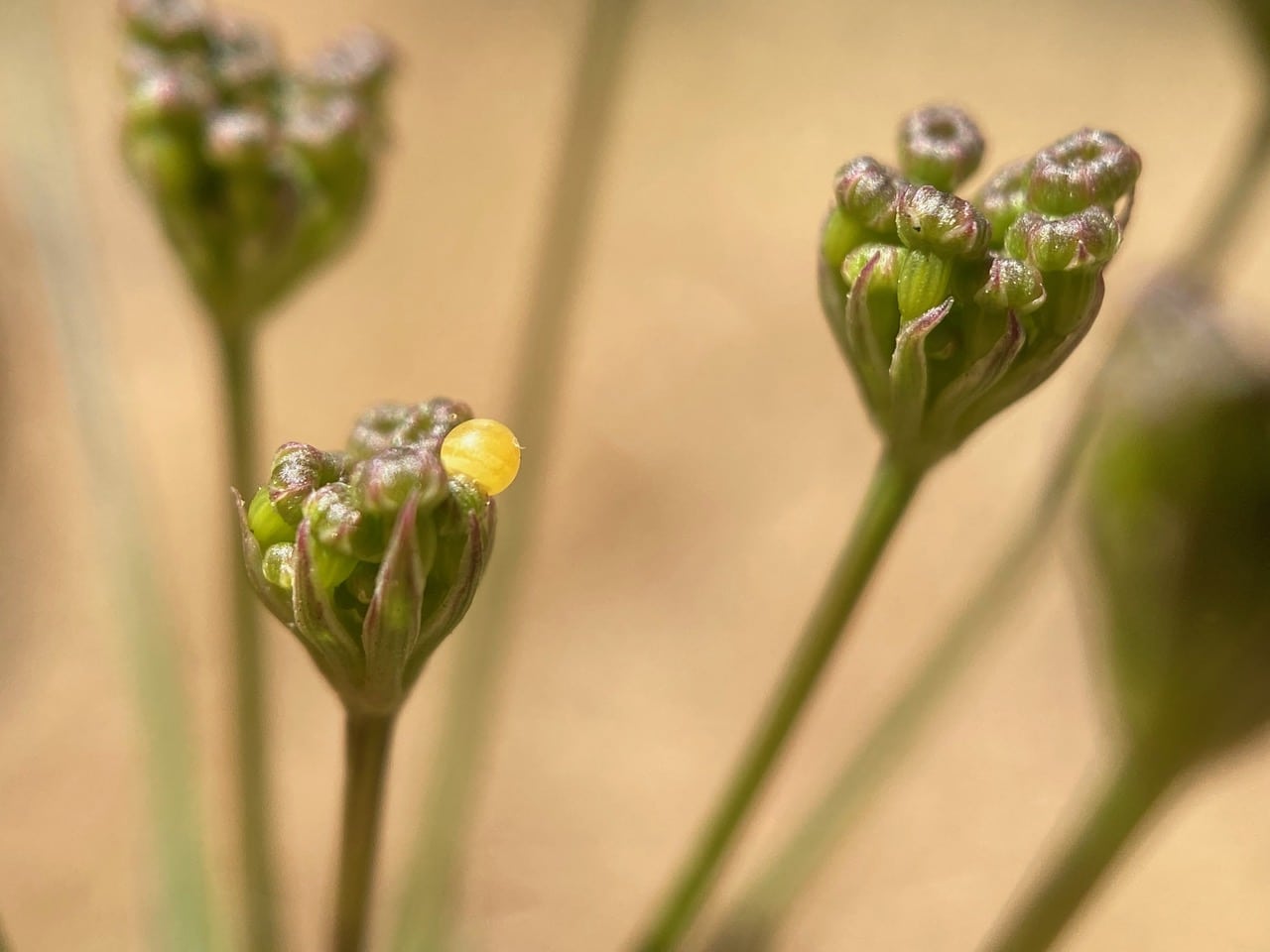
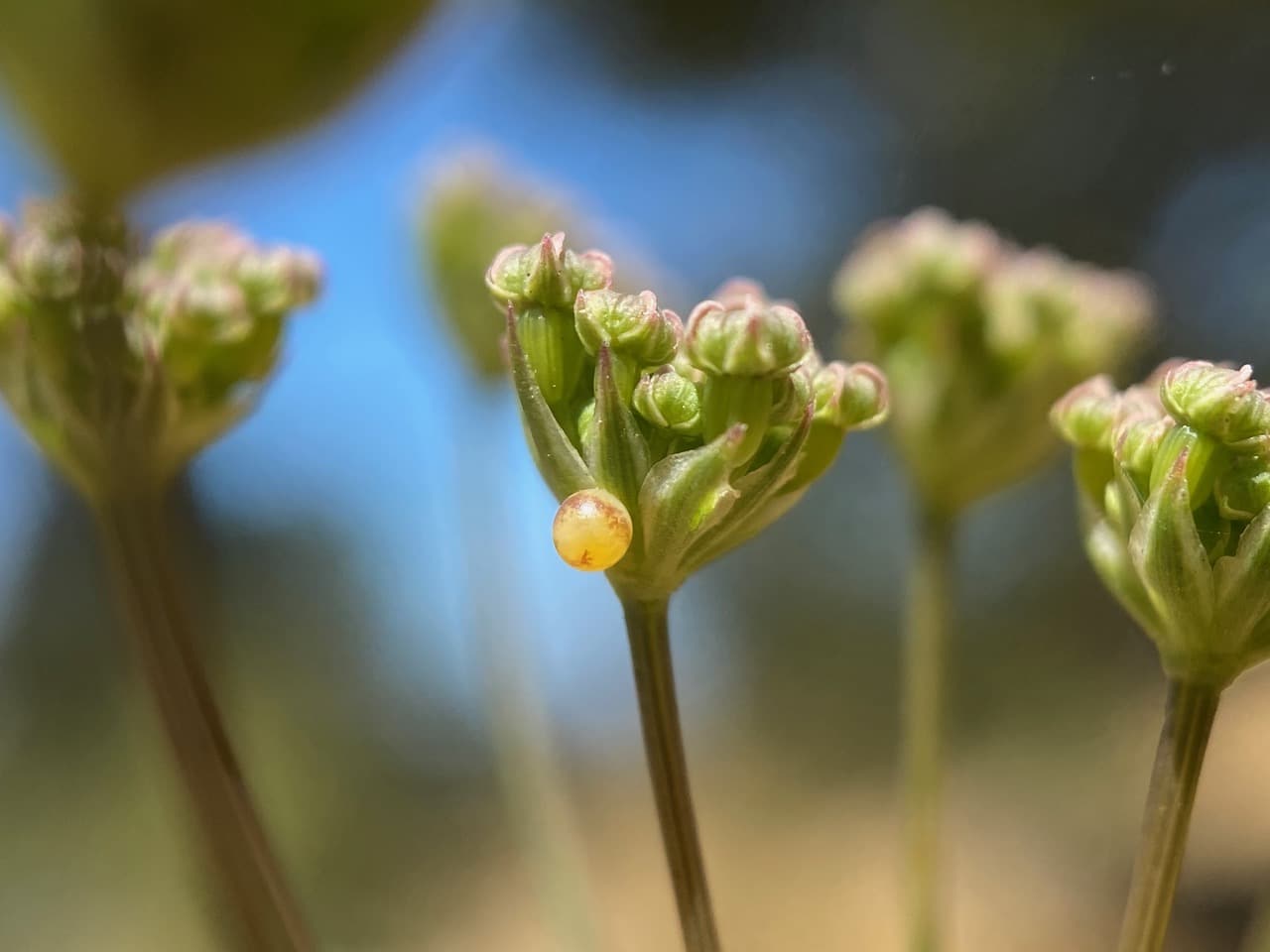
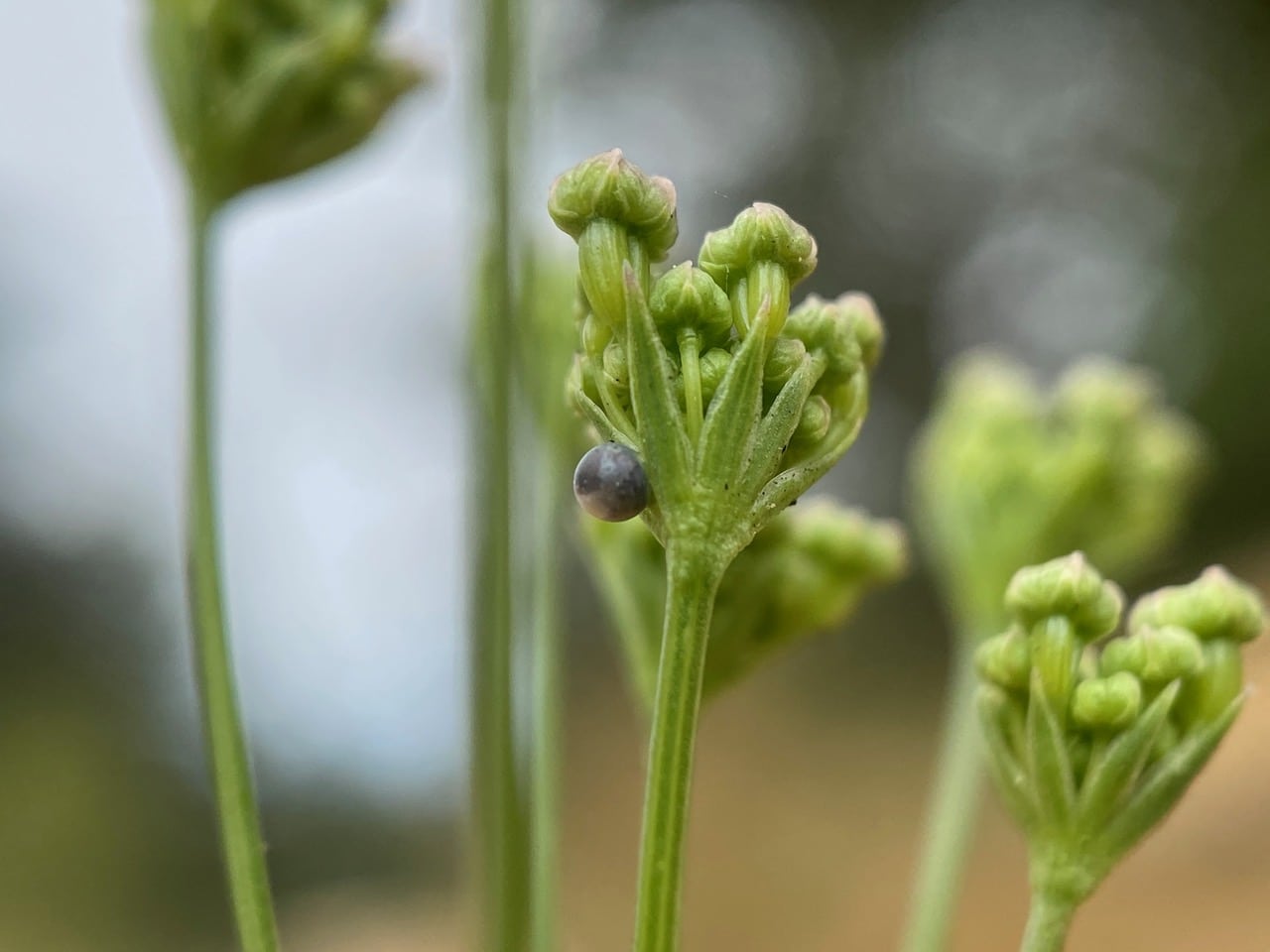


I am glad that the brush clearing along the paved road has spared the nice stand of California Yampah, Perideridia californica (family Apiaceae) among the weedy grasses. Checking the tight flower buds in the umbels on top of the tall stalks, I am delighted to find eggs of the Anise Swallowtail butterflies. Although I have been finding the eggs of this species on Fennel in the park, this is the first time this year that I find them on a native plant. The smooth, globular eggs are laid singly on the host plants which are mostly species in the parsley family (Apiaceae).
I locate about six eggs, and mark the plants so I can follow their development.
As the eggs mature, reddish-brown marks appear.
Ooh, this egg has turned black. Perhaps it is about to hatch?


 I take a closer look at the caterpillar. Each of its stubby, fleshy prolegs under its abdominal segments has a black spot, like a painted toe nail. On the last abdominal segment is another pair of prolegs, called the anal prolegs. Clustered close to its head, under the thoracic segments are three pairs of thoracic legs with claws. These will be retained in the adult butterfly after metamorphosis, while the prolegs will disappear.




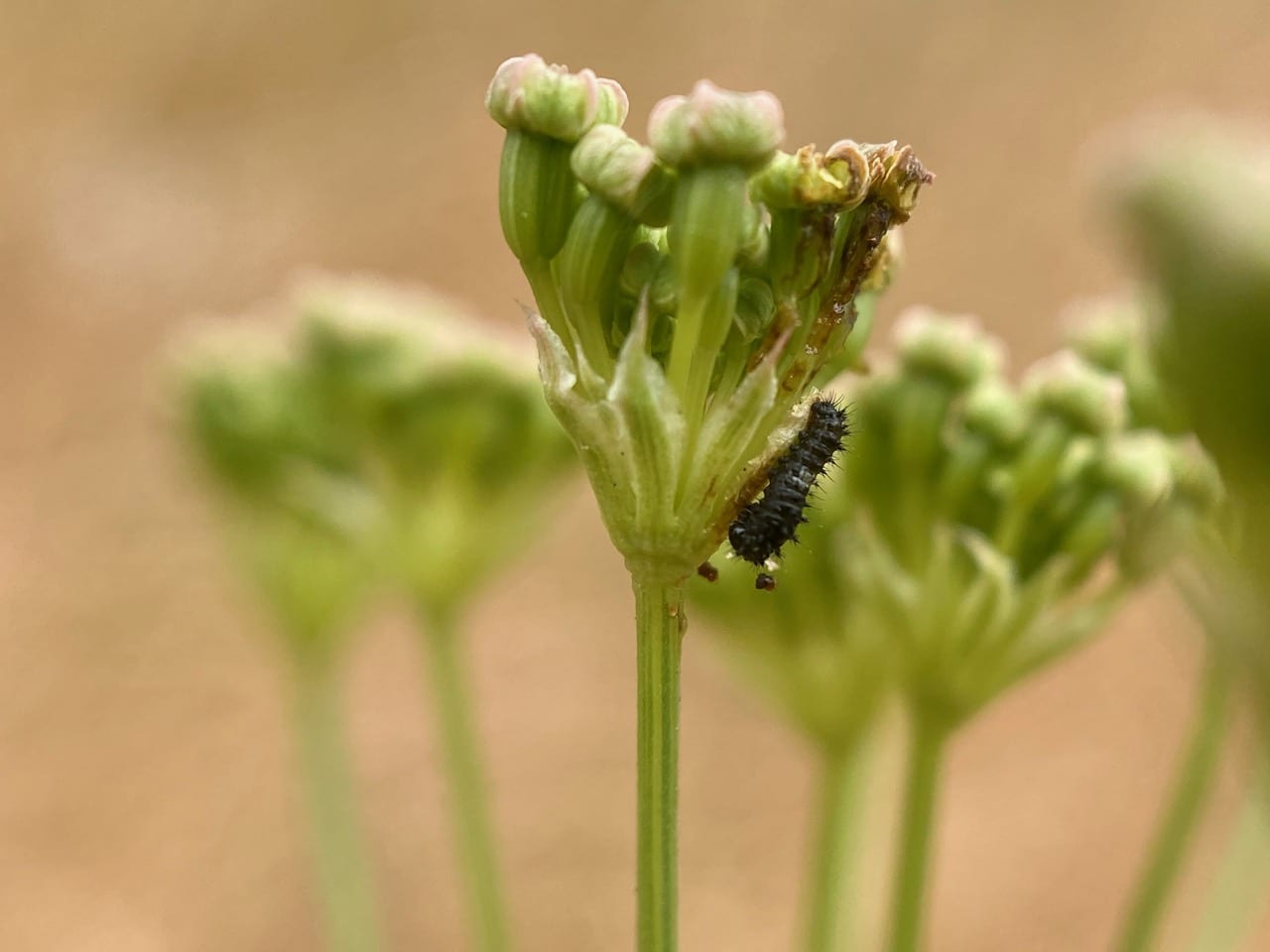
Hey, here’s a little caterpillar! It is probably a second instar, with a patch of white across its mid section, appearing like bird poop. Swallowtail caterpillars are well-known for their bird-poop mimicking larvae in their early instars. The disguise likely keeps the caterpillars safe from hungry birds until they are more mobile.
A male bee seems to be fast asleep atop an umbel of Yampah flower buds. The light is too dim for me to identify the bee.
Male bees do not participate in nest construction or provisioning of the nests. Without a home to return to at the end of the day, they mostly sleep in the open, mostly on vegetation.
Here’s another young caterpillar of Anise Swallowtail.
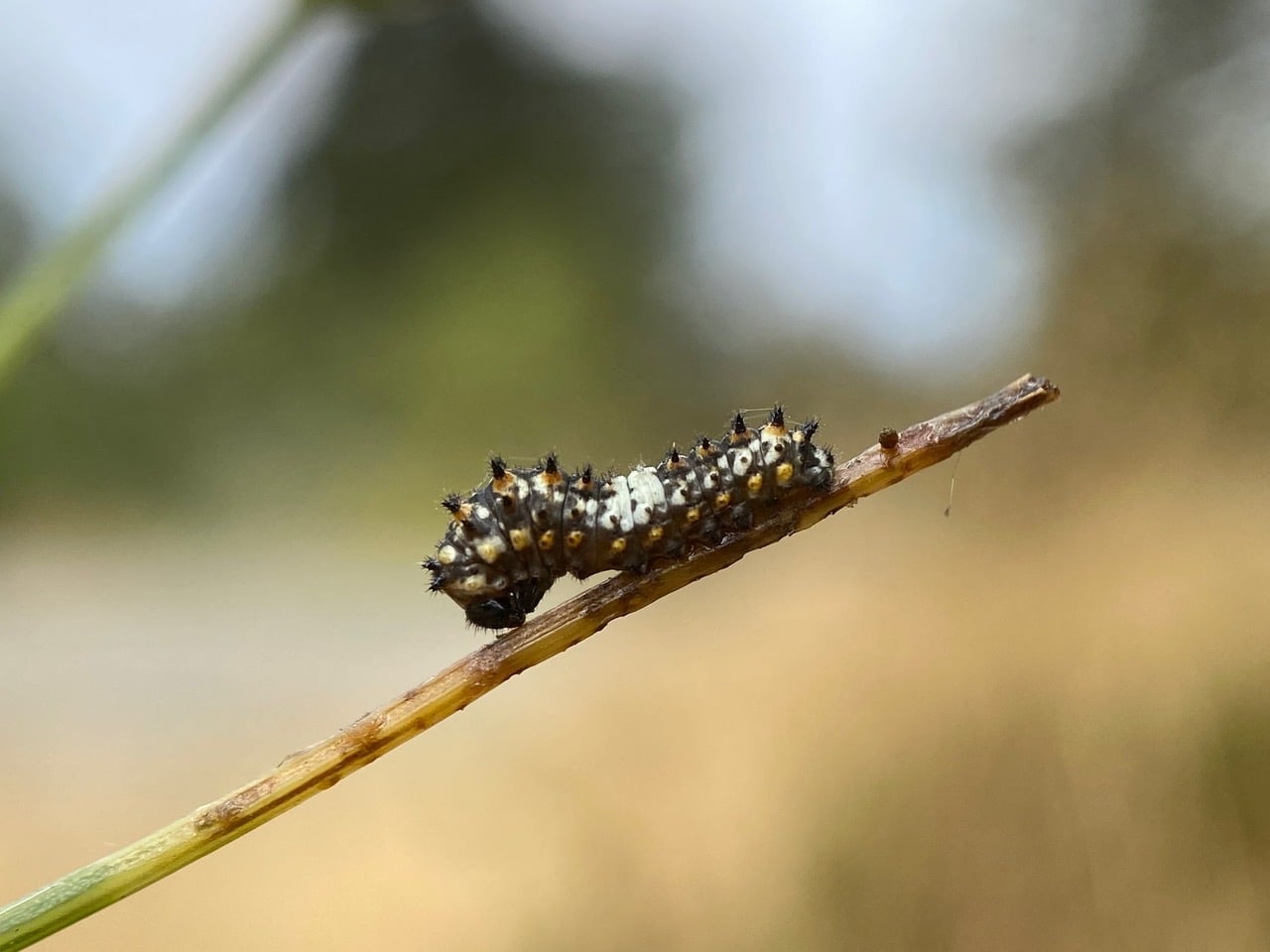
Ooh, this one is already a third instar, I think. The Anise Swallowtail caterpillar will undergo drastic changes in appearance as it grows, eventually acquiring a green camouflage to blend in with its host plant.
Instar is the term given to the developmental stage of an insect between molts. For example, after hatching from the egg an insect is said to be in its first instar. When the insect molts it is then a second instar and so on.
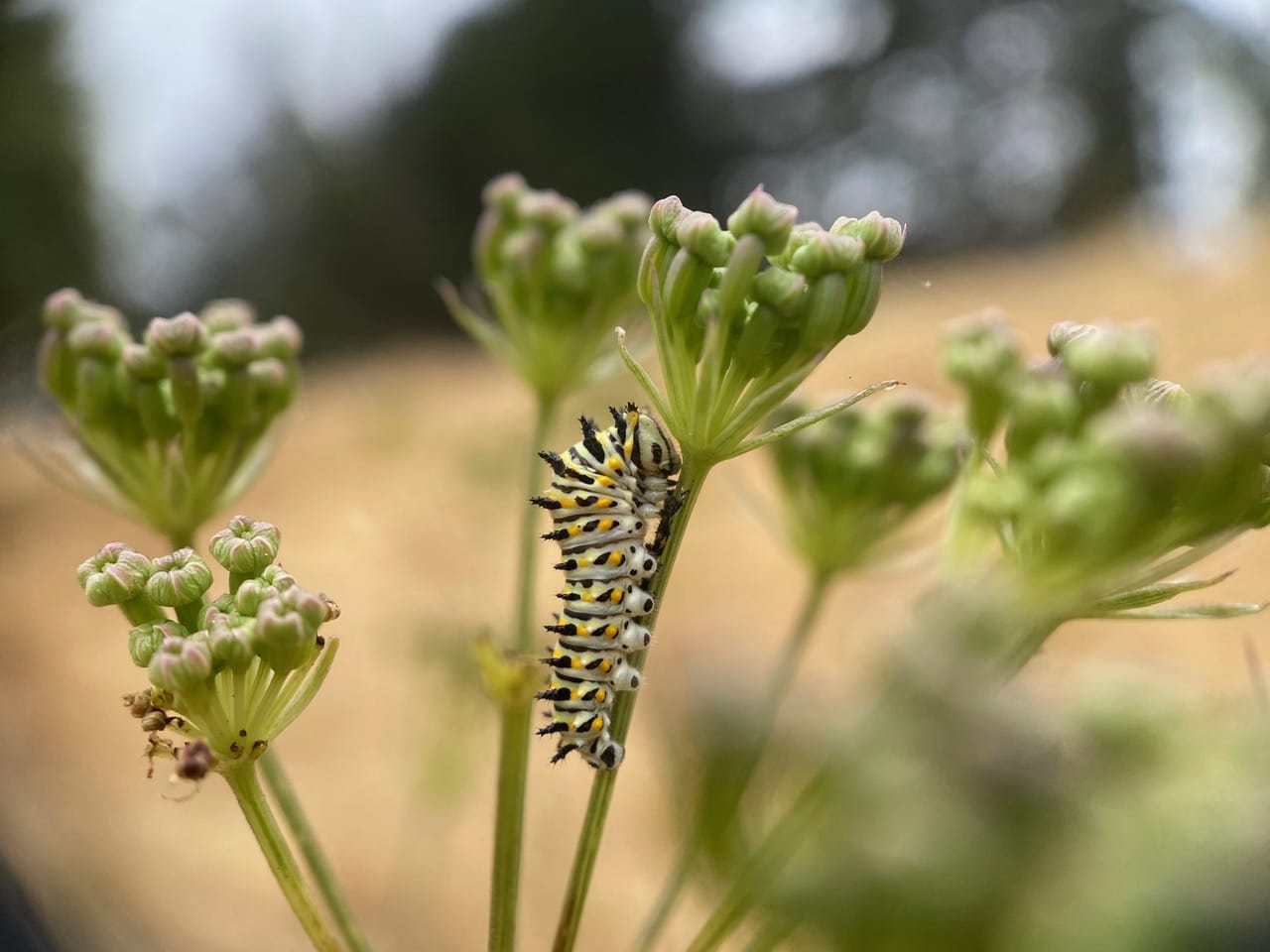
Hey, this might be a fifth instar!
I take a closer look at the caterpillar. Each of its stubby, fleshy prolegs under its abdominal segments has a black spot, like a painted toe nail. On the last abdominal segment is another pair of prolegs, called the anal prolegs. Clustered close to its head, under the thoracic segments are three pairs of thoracic legs with claws. These will be retained in the adult butterfly after metamorphosis, while the prolegs will disappear. _Fausses_pattes.jpg)
A fresh looking Buckeye butterfly flits around me, then lands on the dried grasses.
Named for its conspicuous target-shaped eyespots, the mainly brown Common Buckeye is readily identifiable. The butterfly favors open, sunny areas with low vegetation and some bare ground. Males perch during the day on low plants or bare ground to watch for females, flying periodically to patrol or to chase other flying insects. Females lay eggs singly on leaf buds or on upper side of host plant leaves. Caterpillars feed on a variety of plants including the narrowleaf plantain (Plantago lanceolata).
Narrowleaf Plantain is native to Eurasia, but has been introduced to North America where it now thrives in dry meadows and open, disturbed areas. The plant is a rosette-forming perennial herb that contains the iridoid glycosides aucubin and catalpa. These compounds make the plant inedible to some herbivores, but others are unperturbed by them – for example, the Buckeye butterfly, Junonia coenia (family Nymphalidae) whose larvae eat the leaves and sequester the iridoid glycosides, rendering themselves unpalatable to predators. Females are able to detect the iridoid glycosides and prefer to lay their eggs on leaves that contain higher levels of the chemicals.
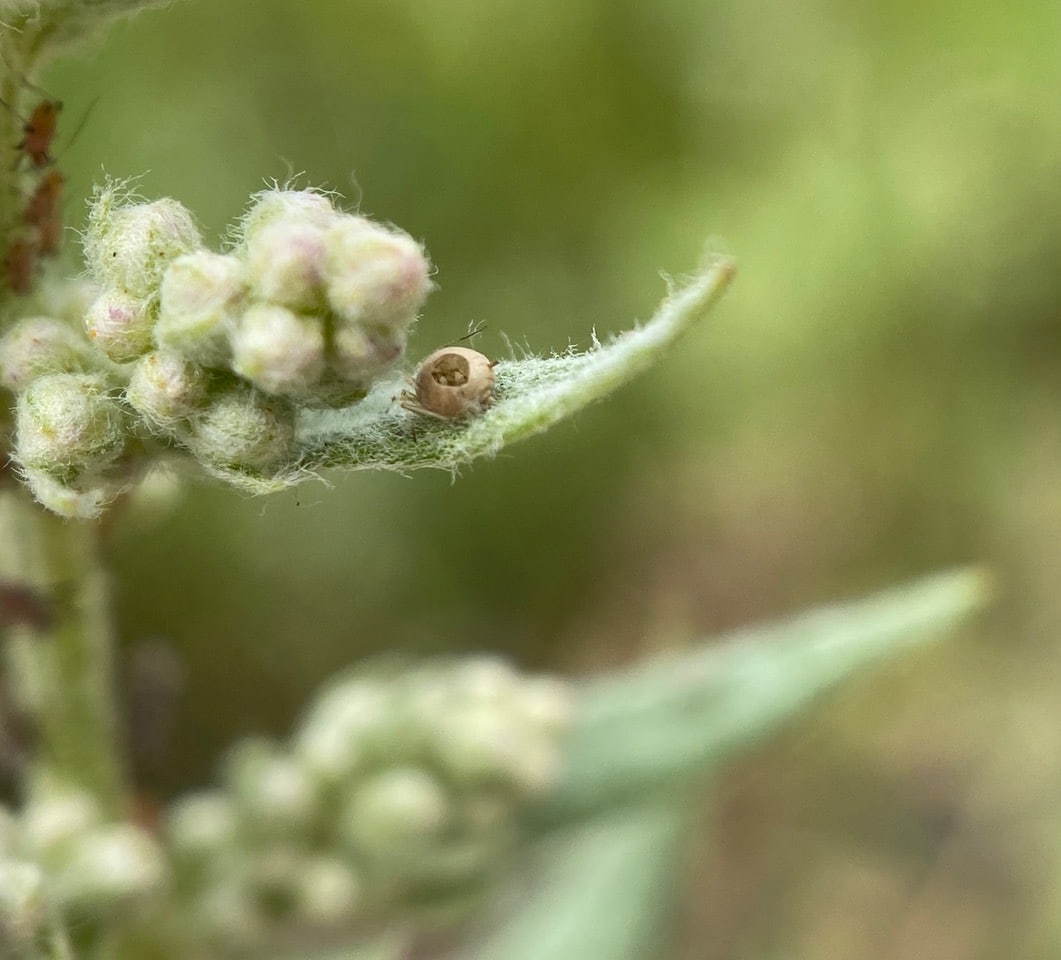
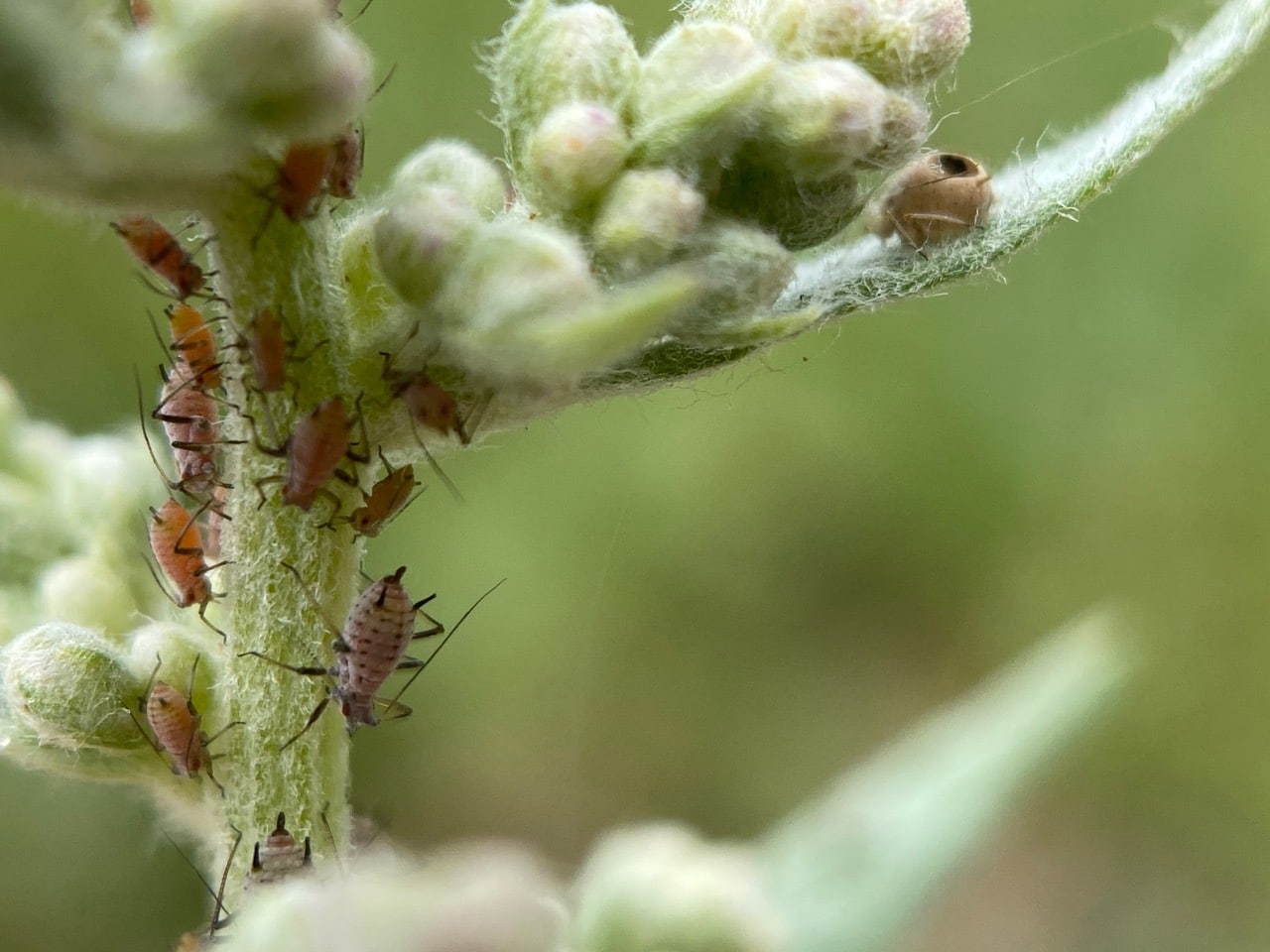
Passing the Mugwort, Artemisia douglasiana, I check on the colony of Anthemid Aphids, Macrosiphoniella sp. (family Aphididae) I found on the plant last time. The aphids are still there, but look at the bloated aphid “mummy” on the leaf. It appears to have company next to it – a thrips?
Members of the genus Macrosiphoniella are green or brown aphids often covered with a thin layer of wax powder over most of the body. The eyes are red. Their siphunculi (“tail pipes”) are rather short, thick and tapered. Their life cycle does not involve host alternation, and all species feed on daisies (Asteraceae), most on species of the division Anthemideae. Many Macrosiphoneilla species feed on just one genus of this group, some on just one species. Sexual forms occur is autumn and eggs hibernate on low parts of plants or on dead leaves. When disturbed the aphids tend to drop off their plant and ‘play dead’.
Thrips (order Thysanoptera) are minute (mostly 1 mm long or less), slender insects with fringed wings and unique asymmetrical mouthparts. They feed mostly on plants by puncturing and sucking up the contents, although a few are predators. Some flower-feeding thrips pollinate the flowers they are feeding on, and some scientists believe that they may have been among the first insects to evolve a pollinating relationship with their host plants. A genus is notable for being the specialist pollinator of cycads. Thrips are likewise the primary pollinators of heathers in the family Ericaceae, and play a significant role in the pollination of pointleaf manzanita. Electron microscopy has shown thrips carrying pollen grains adhering to their backs, and their fringed wings are perfectly capable of allowing them to fly from plant to plant.
BTW, there’s no such thing as a “thrip”. It’s always “thrips”, singular or plural!
When viewed from the other side, the aphid mummy has a gaping hole on its side where a parasitic wasp has emerged.
Aphid Mummy Wasps, Aphidius sp. (family Braconidae) are small wasps, typically less than 1/8 in. long. The female wasp lays a single egg in an aphid. When the egg hatches, the wasp larva feeds inside the aphid. As the larva matures the aphid is killed and becomes bloated and mummified, usually turning tan or golden in color. The adult parasitoid chews its way out of the mummy leaving a hole.
Here’s a view that shows the healthy aphids compared with the aphid mummy.
There are two more aphid mummies on a Mugwort leaf. The parasitoid wasps have yet to break out of these.
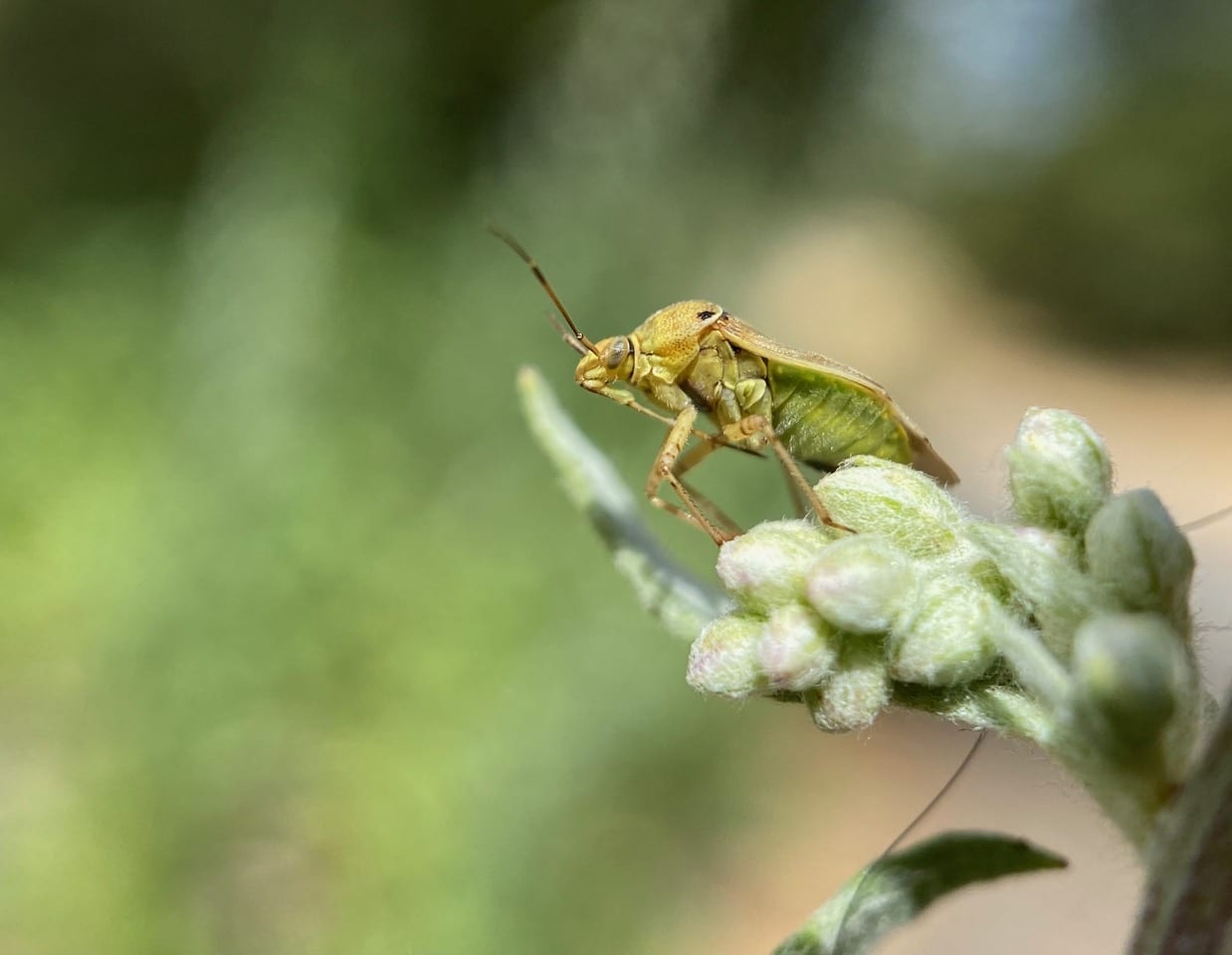
A Lygus Bug, Lygus sp. (family Miridae, order Hemiptera) is standing stock still on a cluster of Mugwort flower buds. Note its needle-like mouthpart, the rostrum that is folded under the body.
The term lygus bug is used for any member of the genus Lygus, in the family of plant bugs, Miridae. Adult lygus are approximately 3 mm wide and 6 mm long, colored from pale green to reddish brown or black. They have a distinctive triangle or V-shape on their backs. Lygus bugs are known for their destructive feeding habits – they puncture plant tissues with their piercing mouthparts, and feed by sucking sap. Both the physical injury and the plant’s own reaction to the bug’s saliva cause damage to the plant. Many lygus bugs are well-known agricultural pests.
The defining feature of Hemipterans or “true bugs” is their “beak” or rostrum in which the modified mandibles and maxillae form a “stylet” which is sheathed within a modified labium. The stylet is capable of piercing tissues and sucking liquids, while the labium supports it. The stylet contains a channel for outward movement of saliva and digestive enzymes, and another channel for the inward movement of pre-digested liquid food. The rostrum is usually folded under the body when not in use.

Two male Forked Globetail, Sphaerophoria sulphuripes (family Syrphidae) are foraging on a flowerhead of Elegant Tarweed, Madia elegans.
The species of hover fly exhibits sexual dimorphism, with the males and females looking quite distinct. The females have no red on their body at all, while the males have reddish abdomen with their genitals curled under to form a bulbous tip.

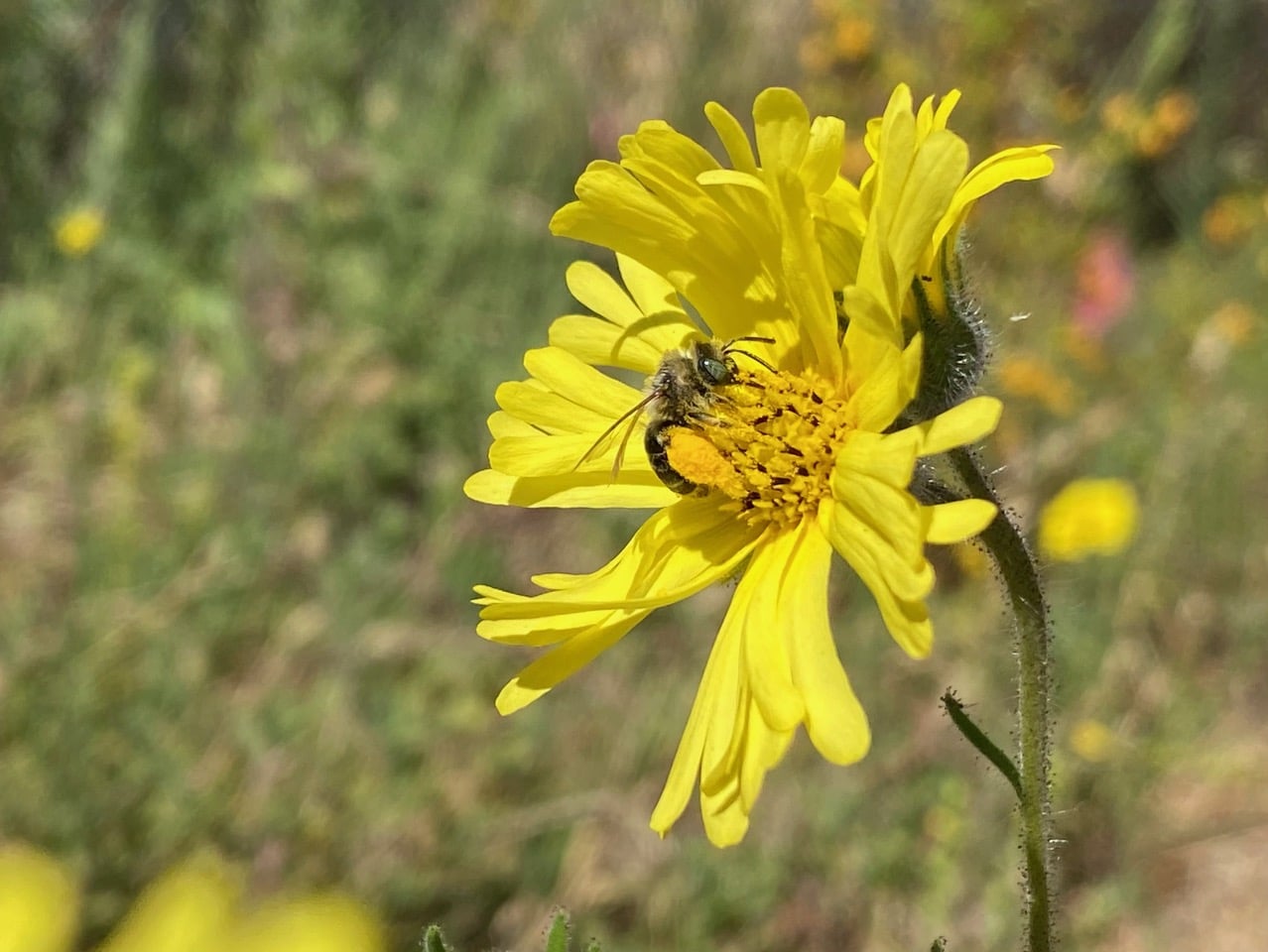
A female Summer Longhorn Bee, Melissodes sp. (family Apidae) is collecting pollen on a flowerhead of Elegant Tarweed, Madia elegans.
The Summer Longhorn Bees, Melissodes sp. (family Apidae) are medium to large bees, stout-bodied, usually with gray hair on the thorax and pale hair bands on the abdomen. Males usually have yellow markings on their faces and have very long antennae from which their common name is derived. They are active May to September, with peak flight in late June to early August. The females prefer flat, bare ground for digging their solitary nests, though they sometimes nest in aggregations. Pollen is transported in scopae on the hind legs. Pollen loads are often copious and brightly colored and thus very distinguishable. Melissodes are specialists on Asteraceae – females gather pollen from flowers of Aster, Bidens, Coreopsis, Cosmos, Encelia, Gaillardia, Helianthus, and Rudbeckia ssp.
The female Melissodes pivots on the spot atop the florets, and with rapid footwork visible as tiny movements, gathers up the pollen into the growing load in the scopae on her hindlegs.
She also takes nectar from the flowers of Madia. Sometimes I wonder how she is going to lift off with that colossal load of pollen.
The bee uses her middle legs to transfer and gently pat the pollen into place on her scopae. I never tire of watching this amazing process.
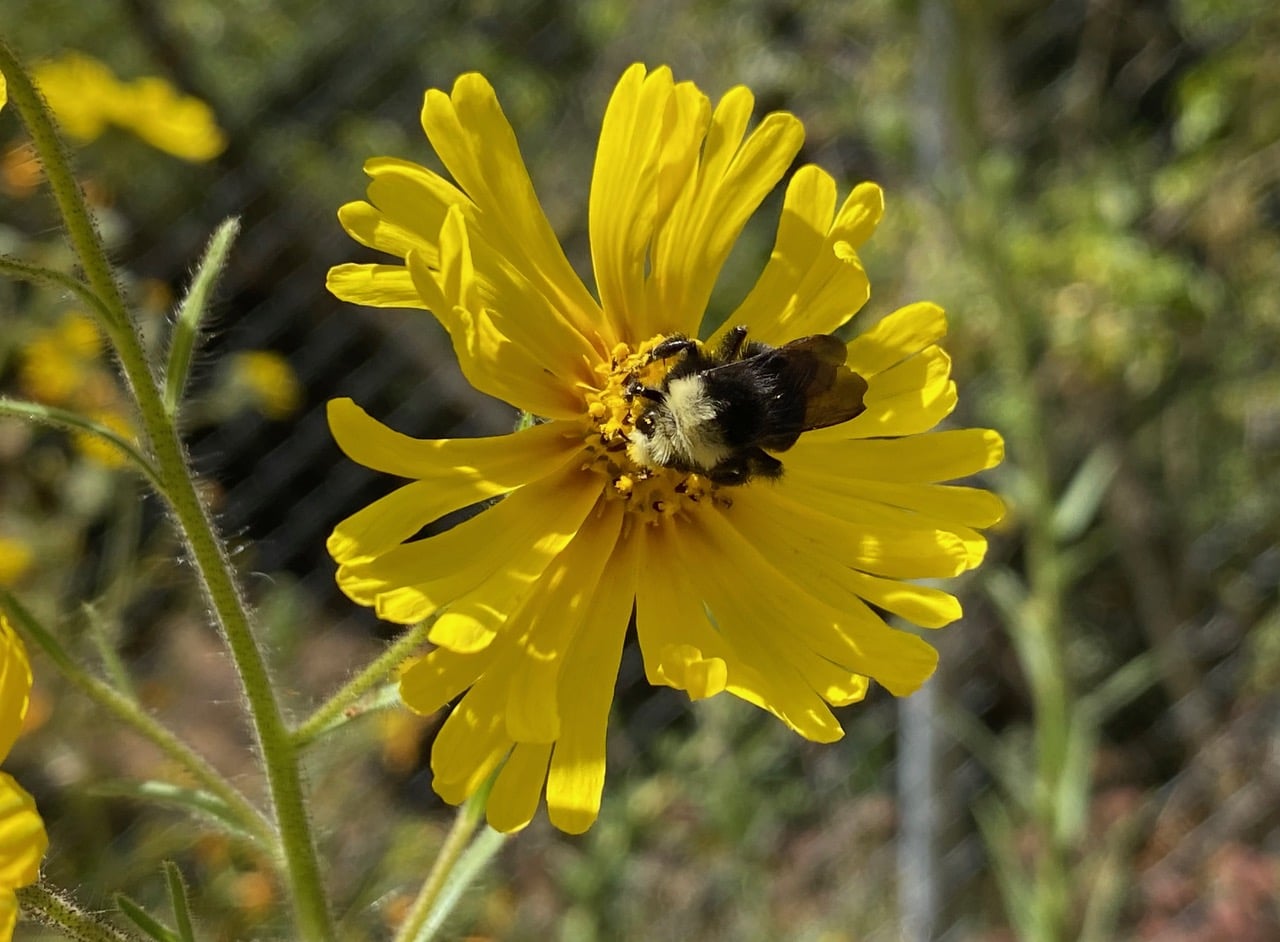
A Yellow-face Bumble Bee, Bombus vosnesenskii (family Apidae) is taking nectar on a flowerhead of Elegant Tarweed.
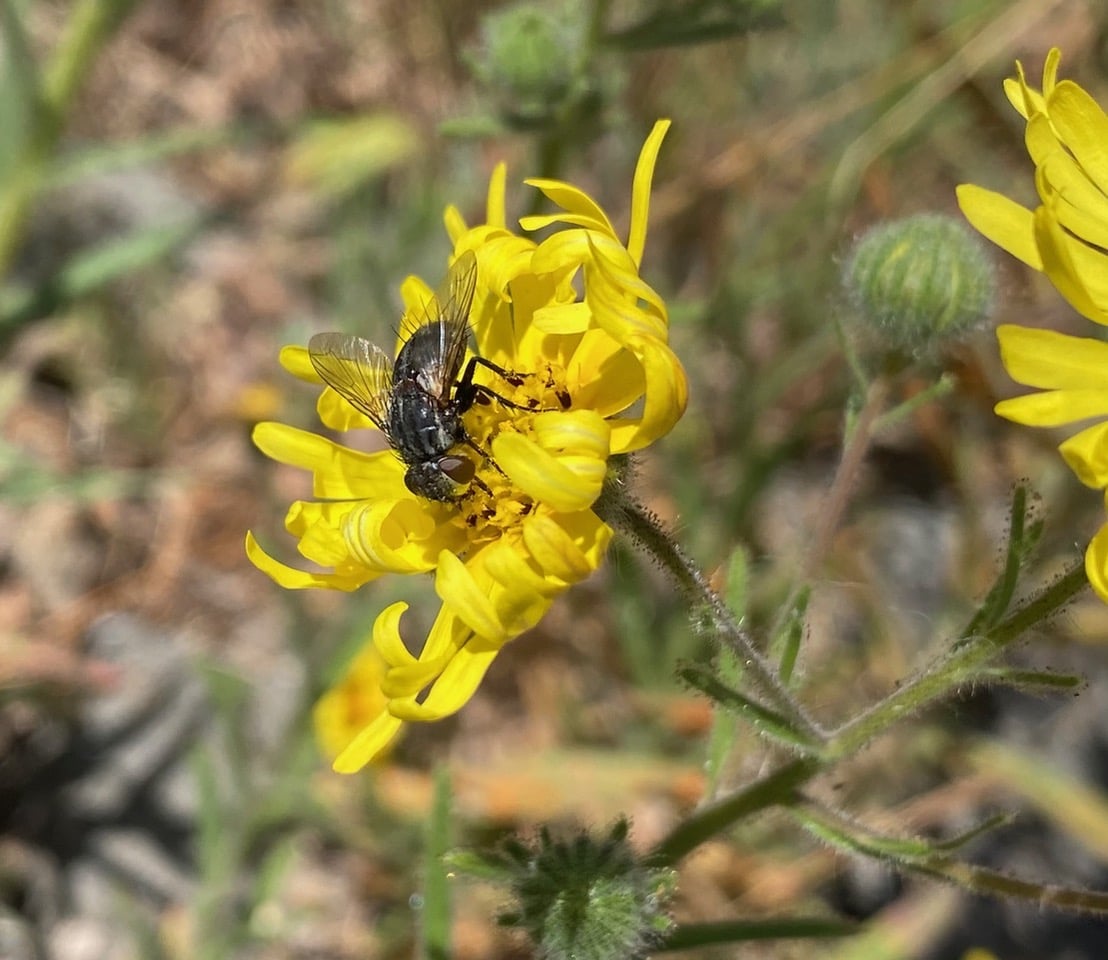
A Bristle Fly (family Tachinidae) is taking nectar from the flowers of Elegant Tarweed.
The family Tachinidae is by far the largest and most important group of parasitoid flies. All species are parasitic in the larval stage. Most adults have distinct abdominal bristles, hence the common name. Adults feed on liquids such as nectar and honeydew. They can be found resting on foliage, feeding at flowers or searching for hosts.
Most tachinids attack caterpillars, adult and larval beetles, true bugs, grasshoppers, and other insects. Females lay eggs in or on the host. Tachinid larvae live as internal parasites, consuming their hosts’ less essential tissues first and not finishing off the vital organs until they are ready to pupate. The larvae leave the host and pupate on the ground. Tachinids are very important in natural control of many pests, and many have been used in biological control programs.
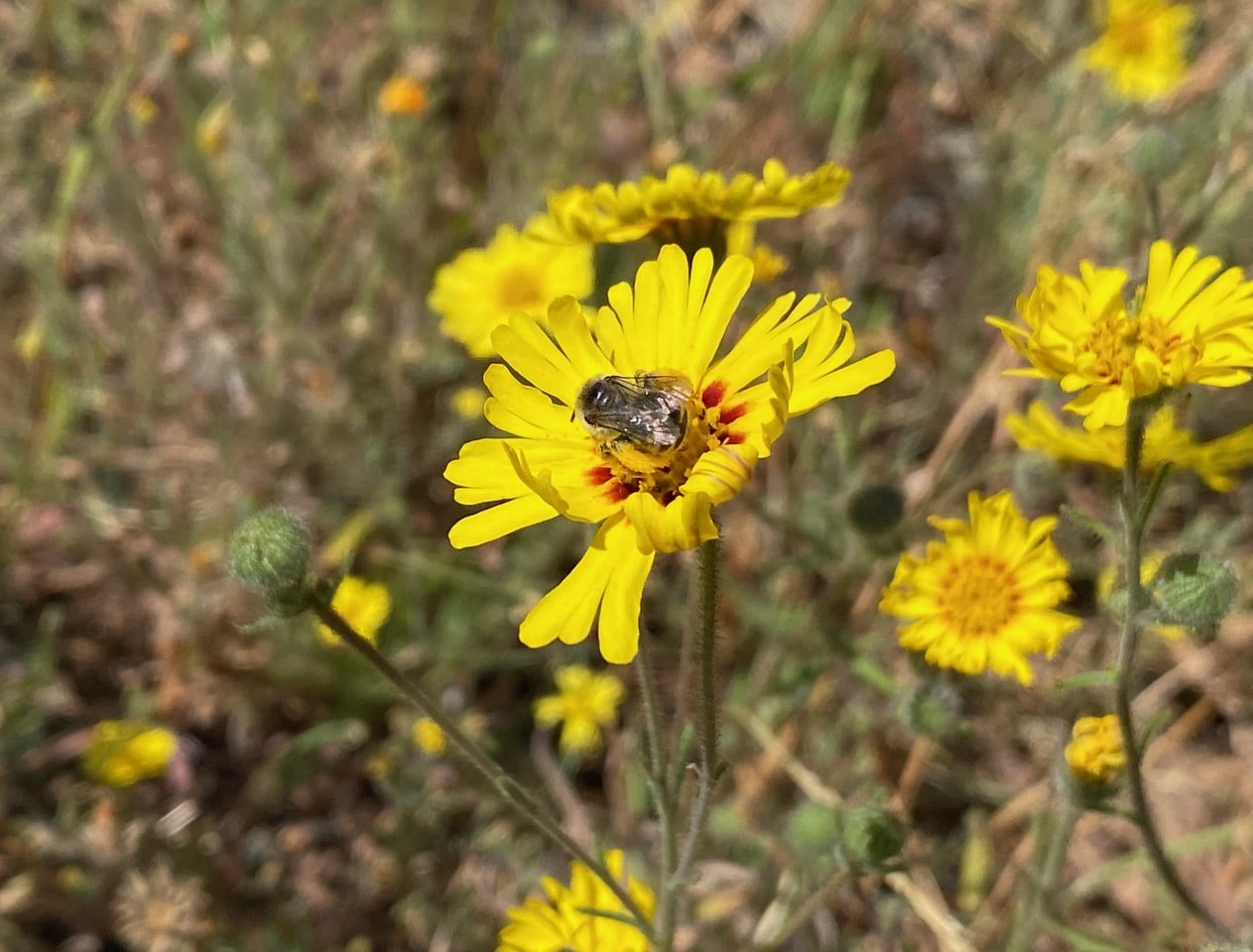
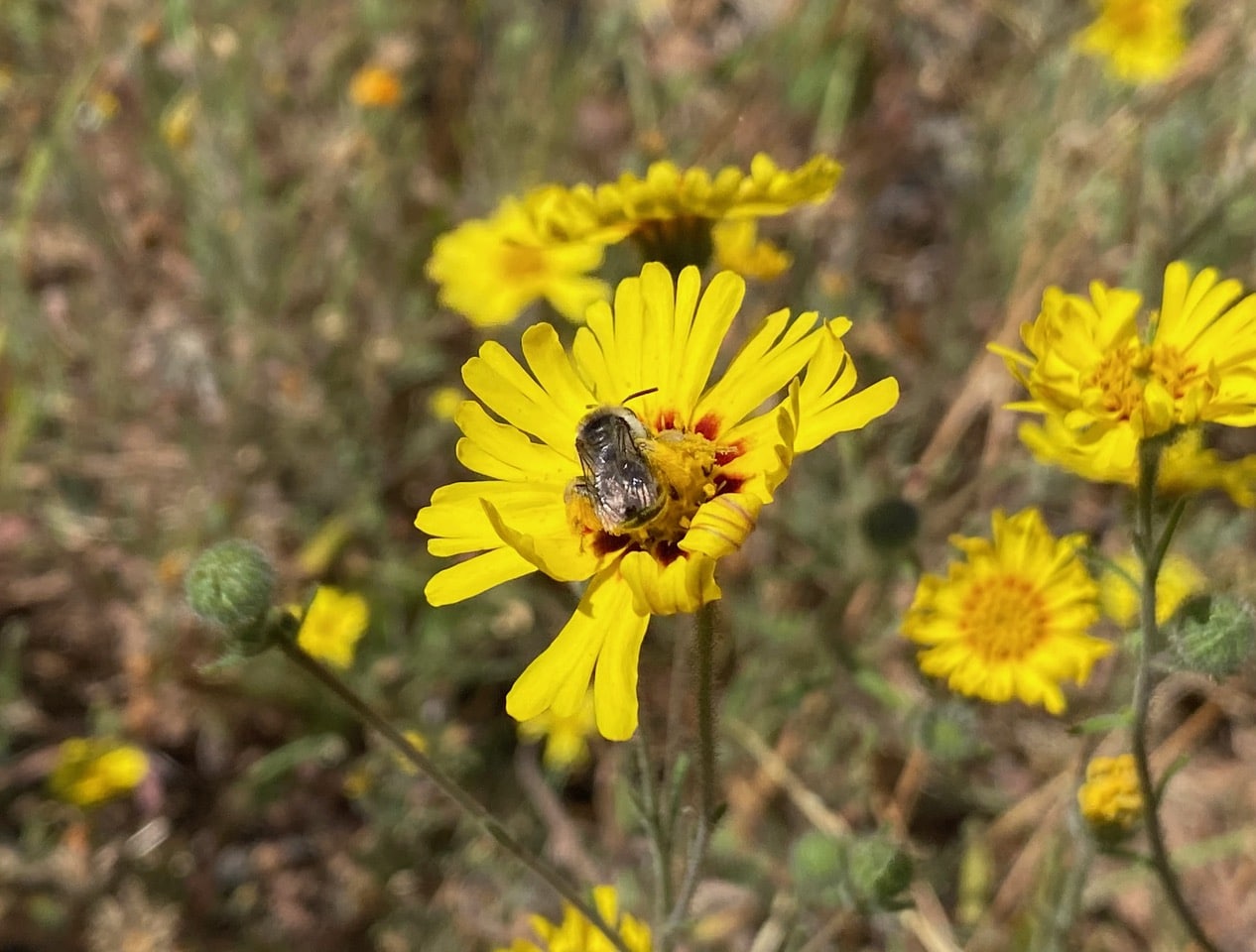
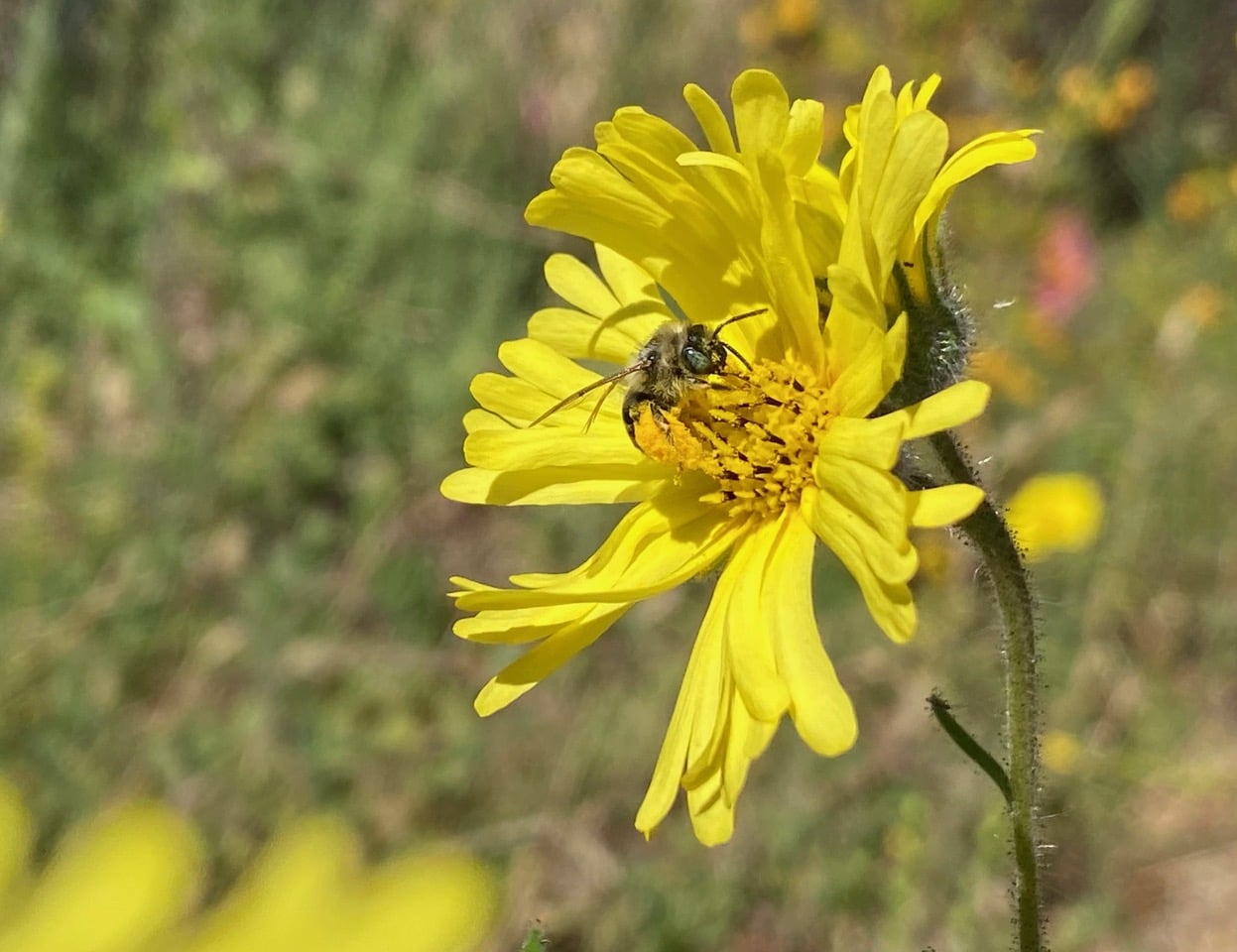
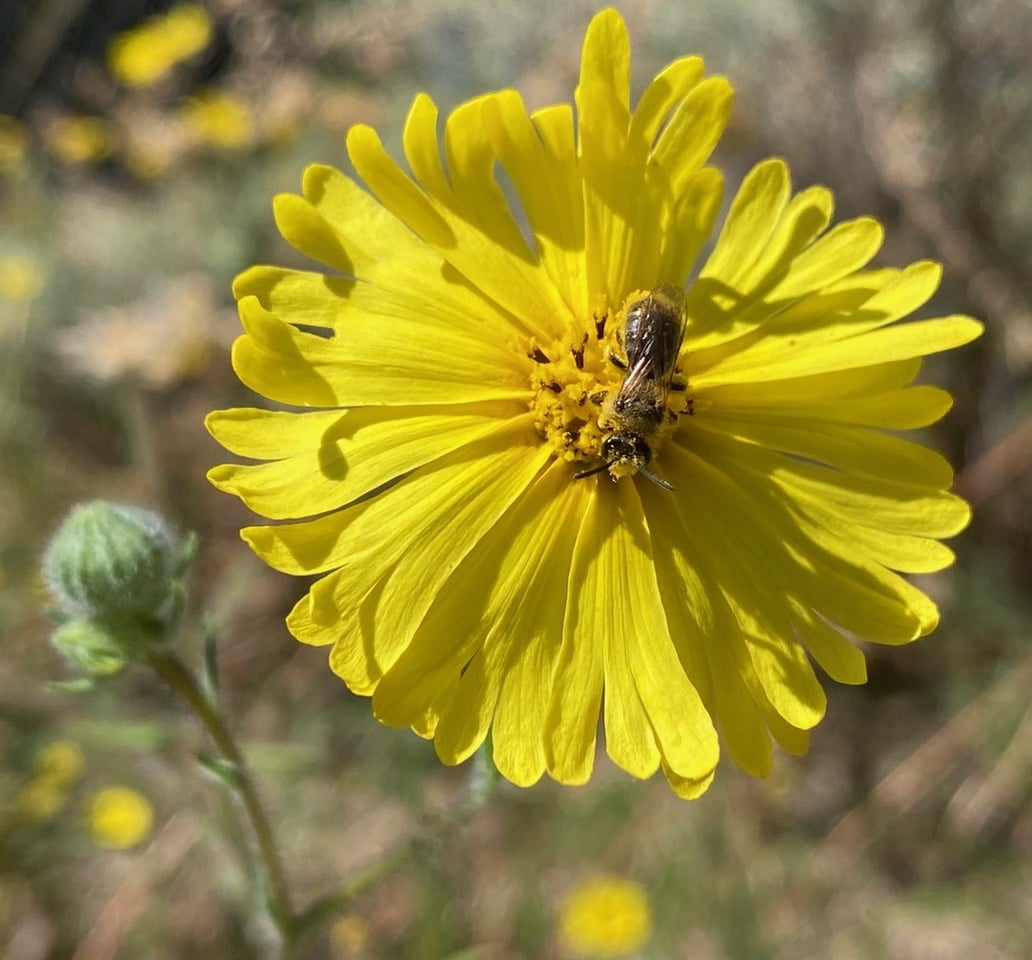
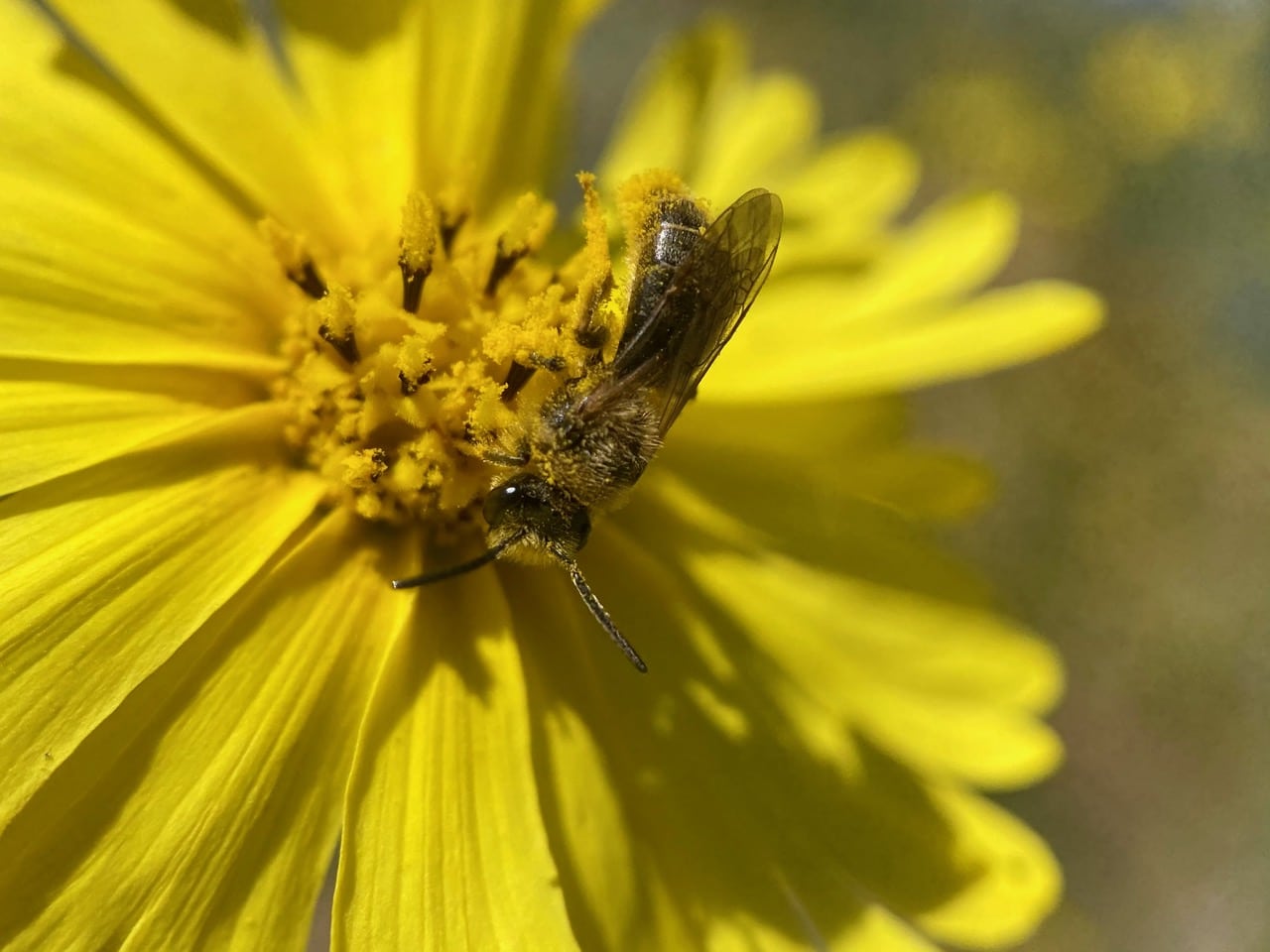
Who’s that bee covered with the sticky pollen of Elegant Tarweed?
iNaturalist has identified it as a Mining Bee, Andrena sp. (family Andrenidae).
Bees in the family Andrenidae, commonly called miner bees or mining bees, are solitary ground-nesters. Andrenids are fairly small bees, usually dark-colored, and often banded. They are identified by the dense bristles (scopae) at the bases of the legs and the shin-like sections (tibias) of the legs, as well as by certain creases and grooves on the face and head and by unique wing venation. Many Andrenids resemble wasps – slender with long abdomen.
Most andrenids are specialist pollinators whose life cycle is timed to correspond precisely to the blooming of specific flowers. Because of this, andrenids are some of the first bees to emerge in spring, and many are active in March and April, as they visit early spring wildflowers. Other andrenid species specialize in summer and fall wildflowers.
All Andrena species share a distinctive facial characteristic: facial depressions call fovea rest alongside the sutures under each antenna. The foveae are covered with hairs that are sometimes described as looking like “sideways eyebrows”. Another distinguishing Andrena trait is that females appear as if they carry pollen under their “armpits”. This is because they have propodeal corbiculae in the space between their thorax and abdomen.