

Pollinator Post 6/25/23 (2)
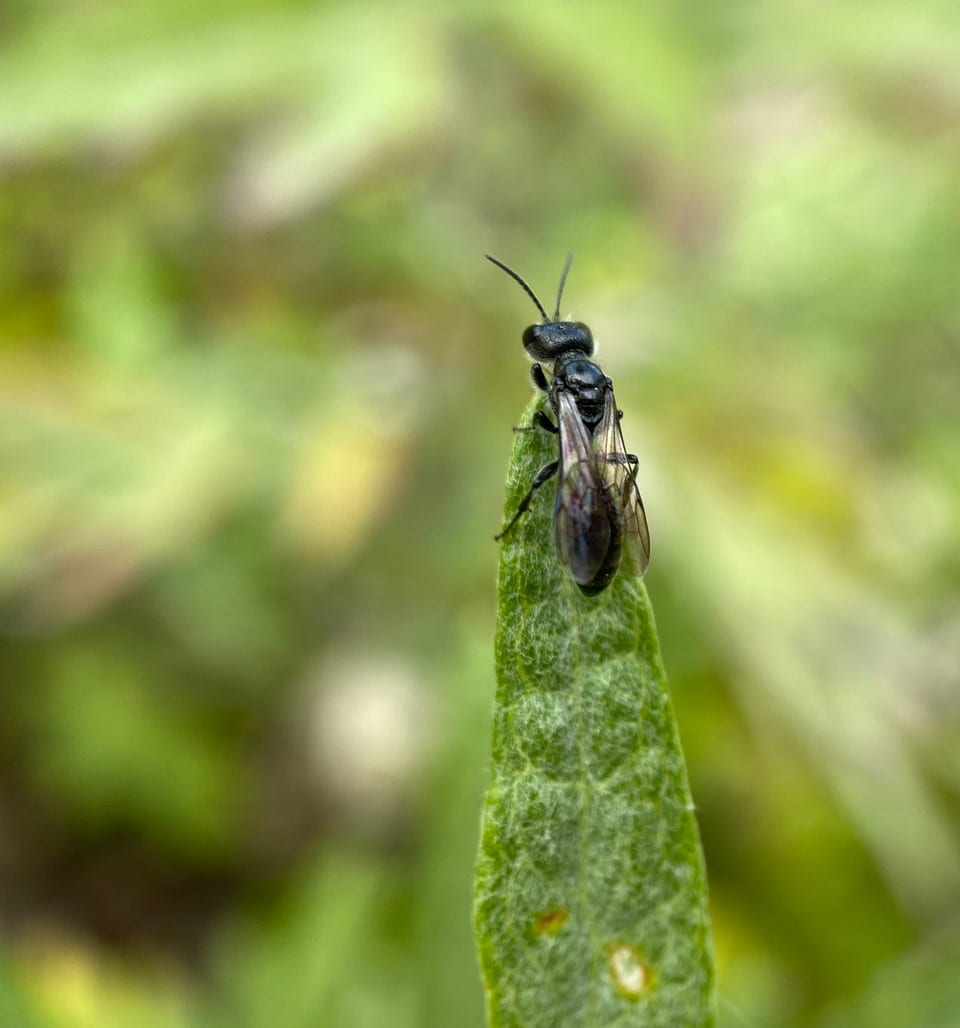
Ooh, I can recognize that square-headed black wasp now – it is an Aphid Wasp, Pomphredon sp. (family Crabronidae). It is in the same patch of California Mugwort, Artemisia douglasiana where I first saw it just three days ago. It might even be the same individual!
 Since I am not familiar with the wasp, and since it is not camera-shy, I snap a series of pictures as it investigates every nook and cranny of the top leaves.
Common names for Crabronids include Square-headed Wasps, Hunting Wasps, Digger Wasps, Sand Wasps. Members of Crabronidae are solitary hunting wasps. The female excavates a nest in soil or other substrates (depending on species) and provisions it with prey (usually other insects or spiders) that have been paralyzed by her sting.

The Pemphredon species are often small and black. They are hunting wasps that use aphids for prey. The females usually build their nests in hollow or pithy stems. Partitions between nest cells are made of chewed pith material. Prey are located by the female wasp who grasps a single aphid, paralyzes it by stinging, and returns to the nest. Each cell is provisioned with about two dozen aphids. She then lays an egg on the aphids and seals the cell with a plug of chewed pith. Larvae that hatch out feed on the aphids, and emerge as adults after pupation in the nest. Adults emerge in reverse order of when eggs were laid. Female eggs are laid first, toward the back of the nest. Pemphredon develops proterandric, which means that the males hatch a few days before the females. The adults feed on honeydew, but sometimes also on the aphids themselves.
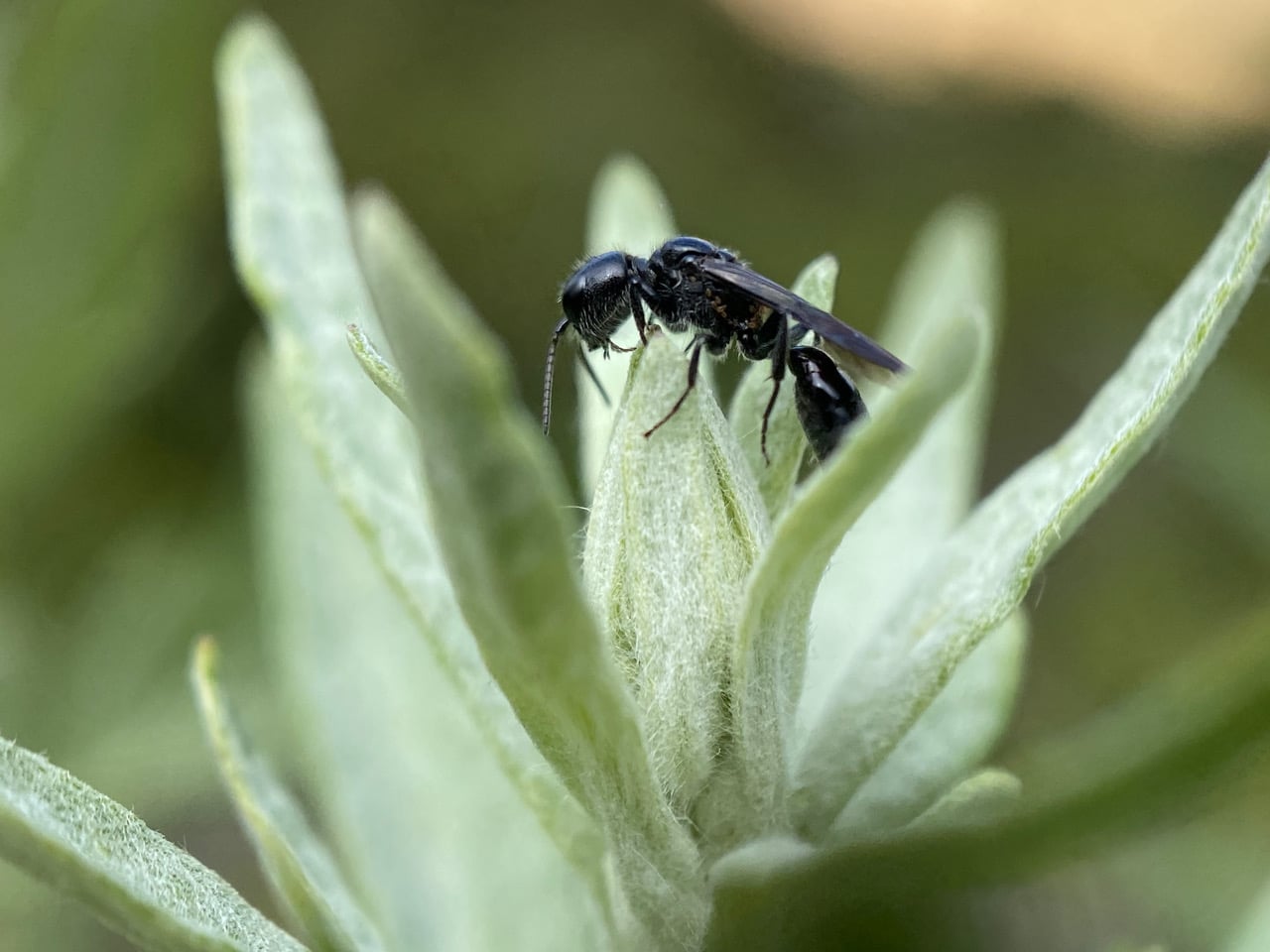


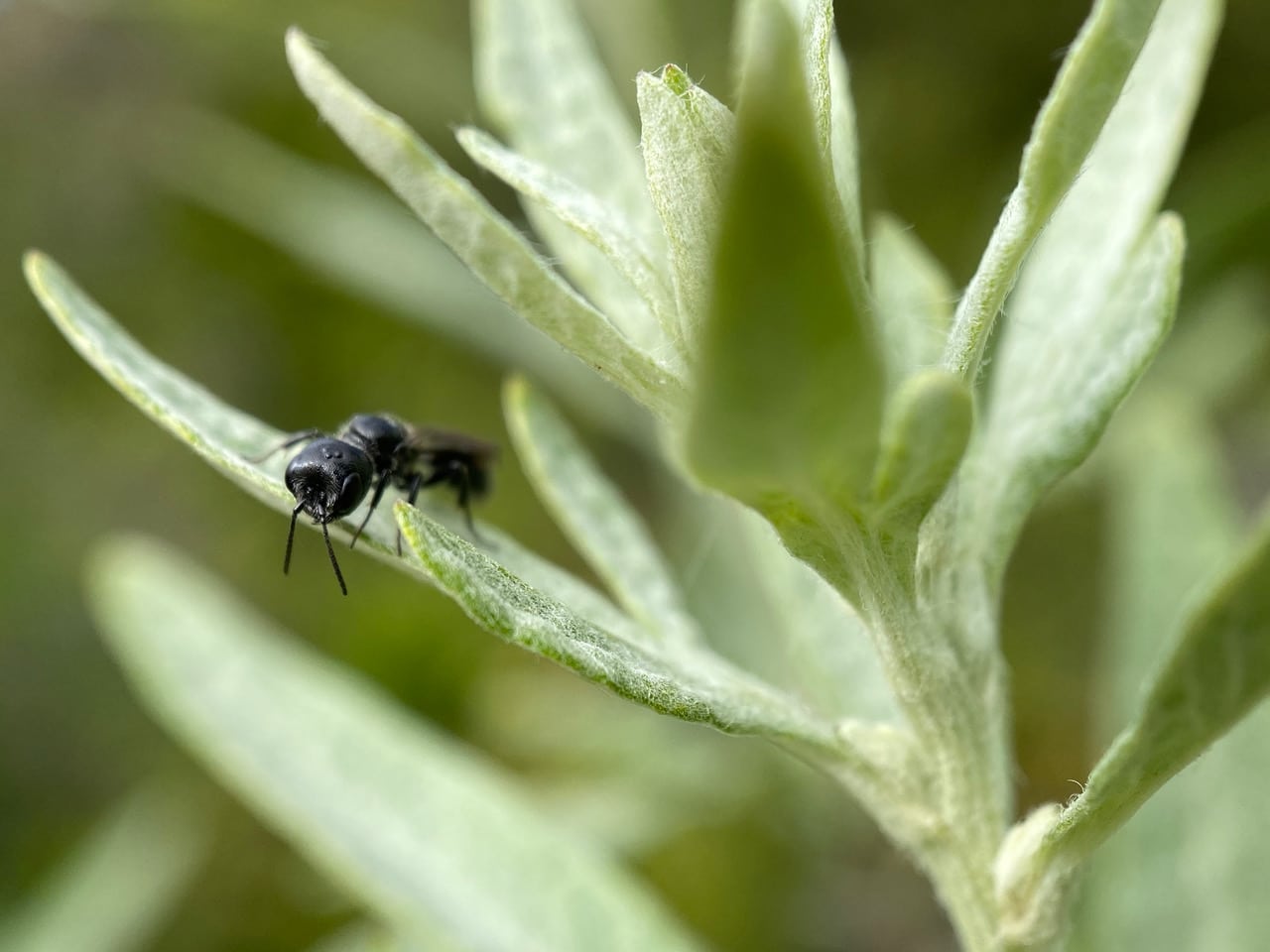
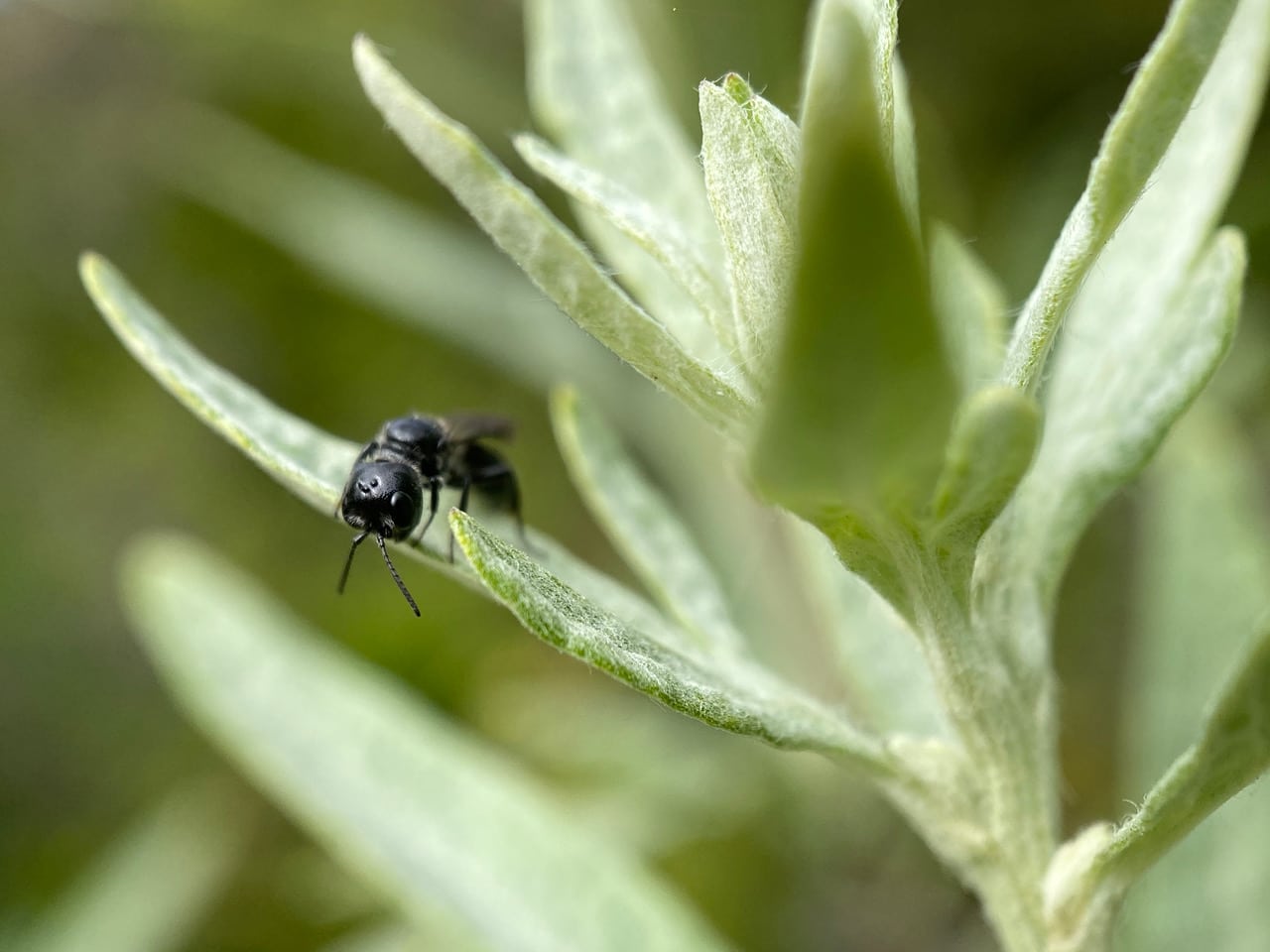

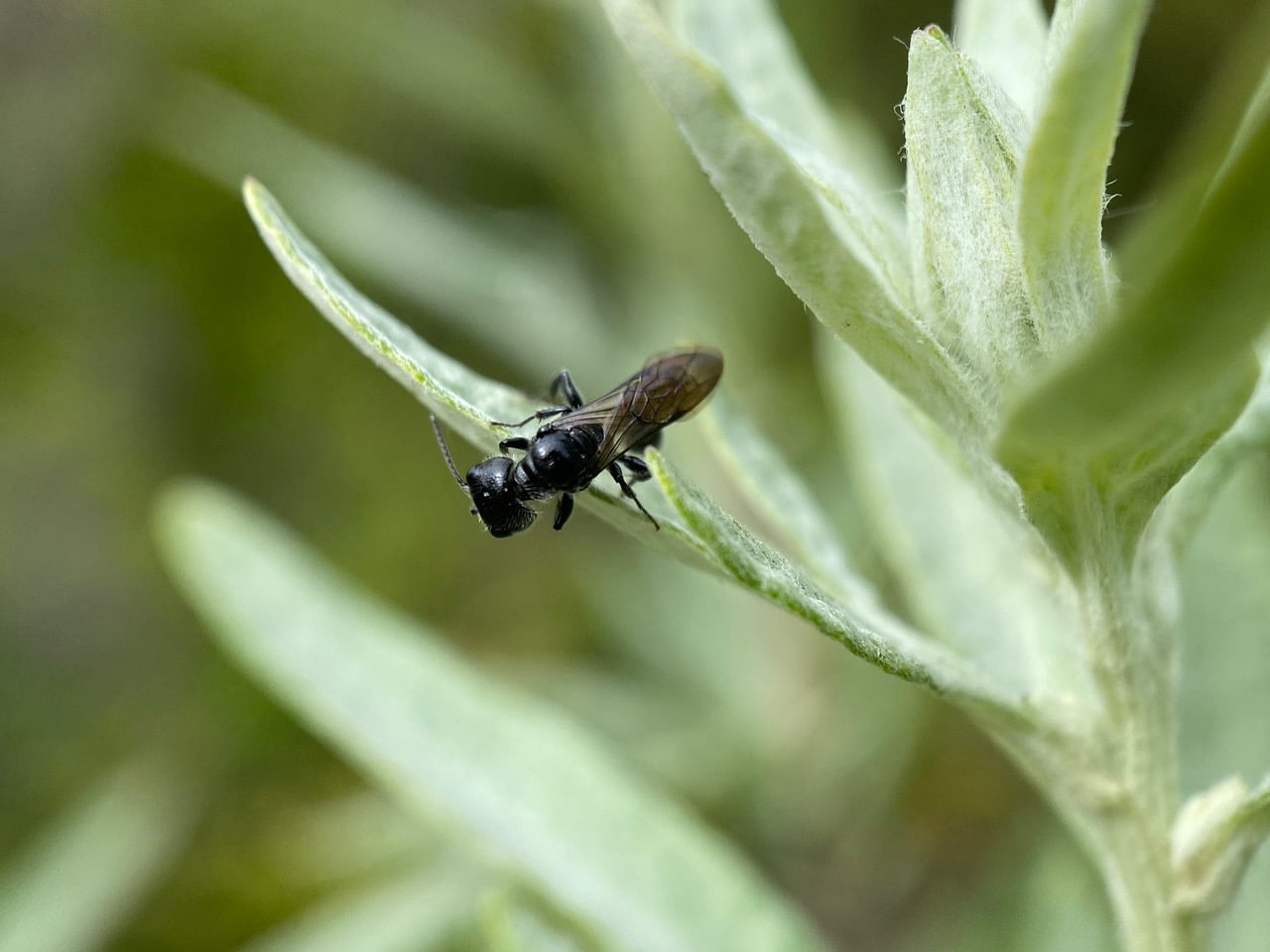
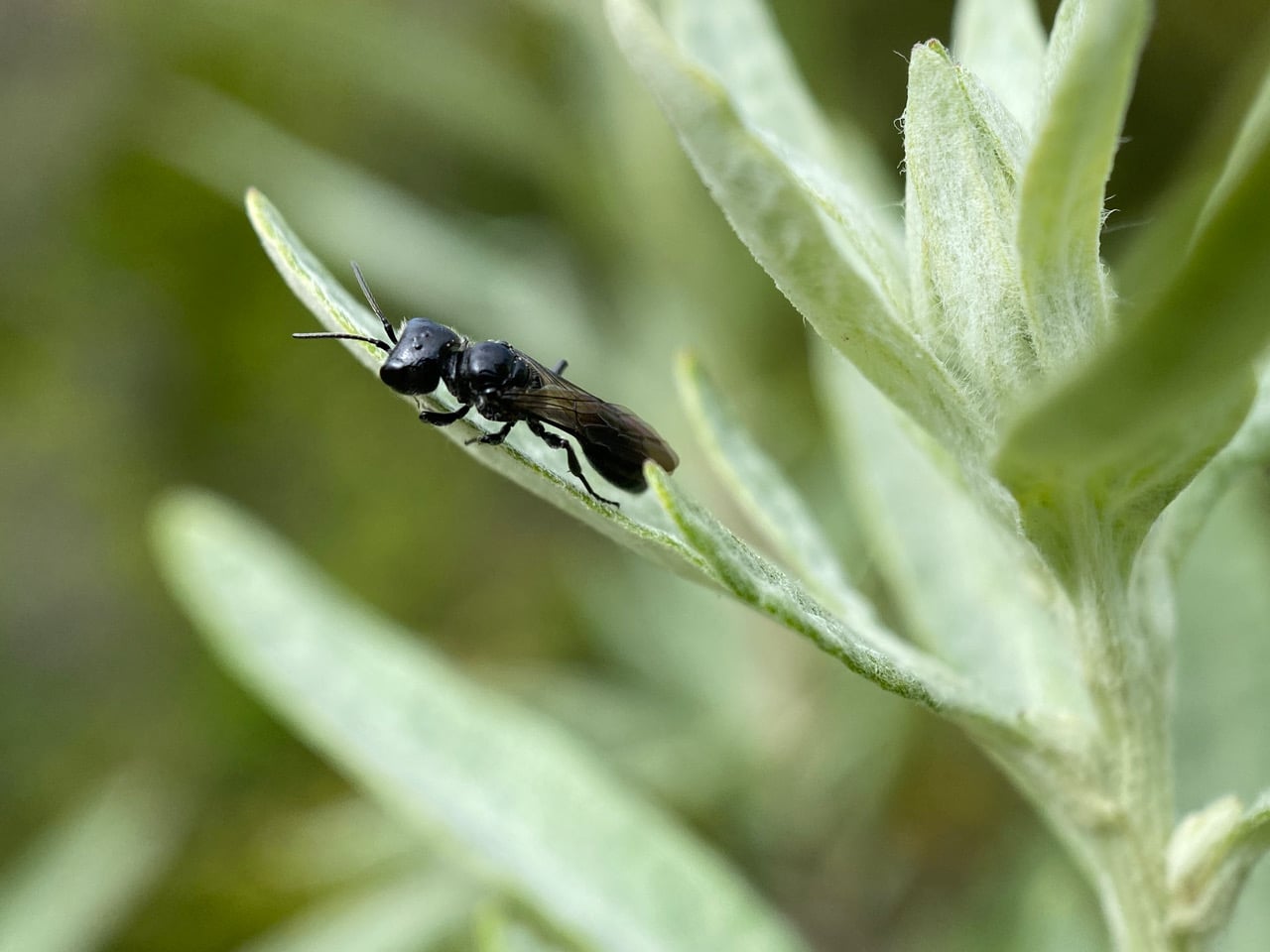
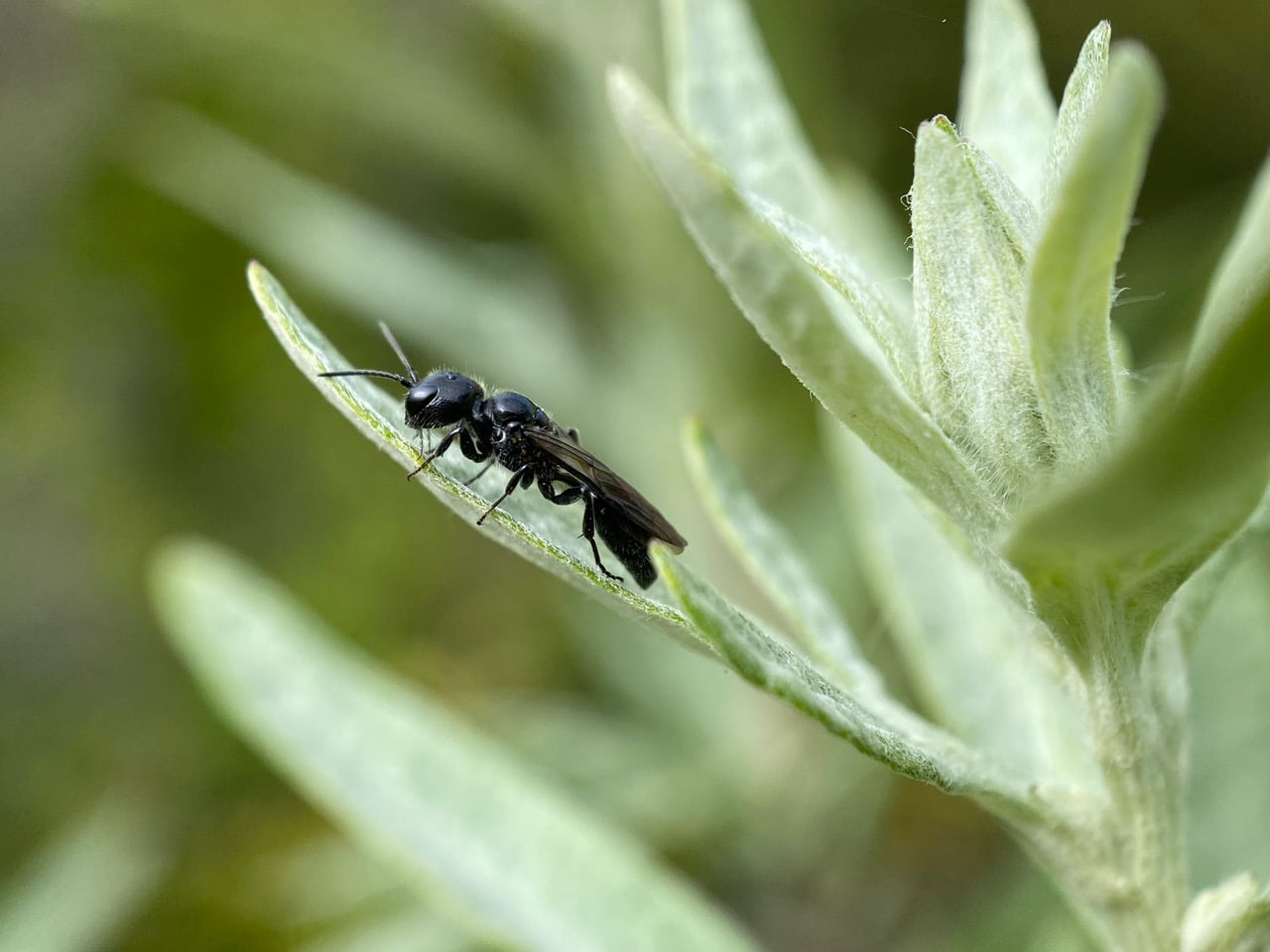
The wasp seems to be hunting for aphids, although the stand of Mugworts seems to be quite healthy, with no visible signs of aphids. A few years ago, I came across a single large aphid that was almost invisible on the Mugwort, being colored exactly like the foliage. Maybe that’s the kind of aphids the wasp is looking for?
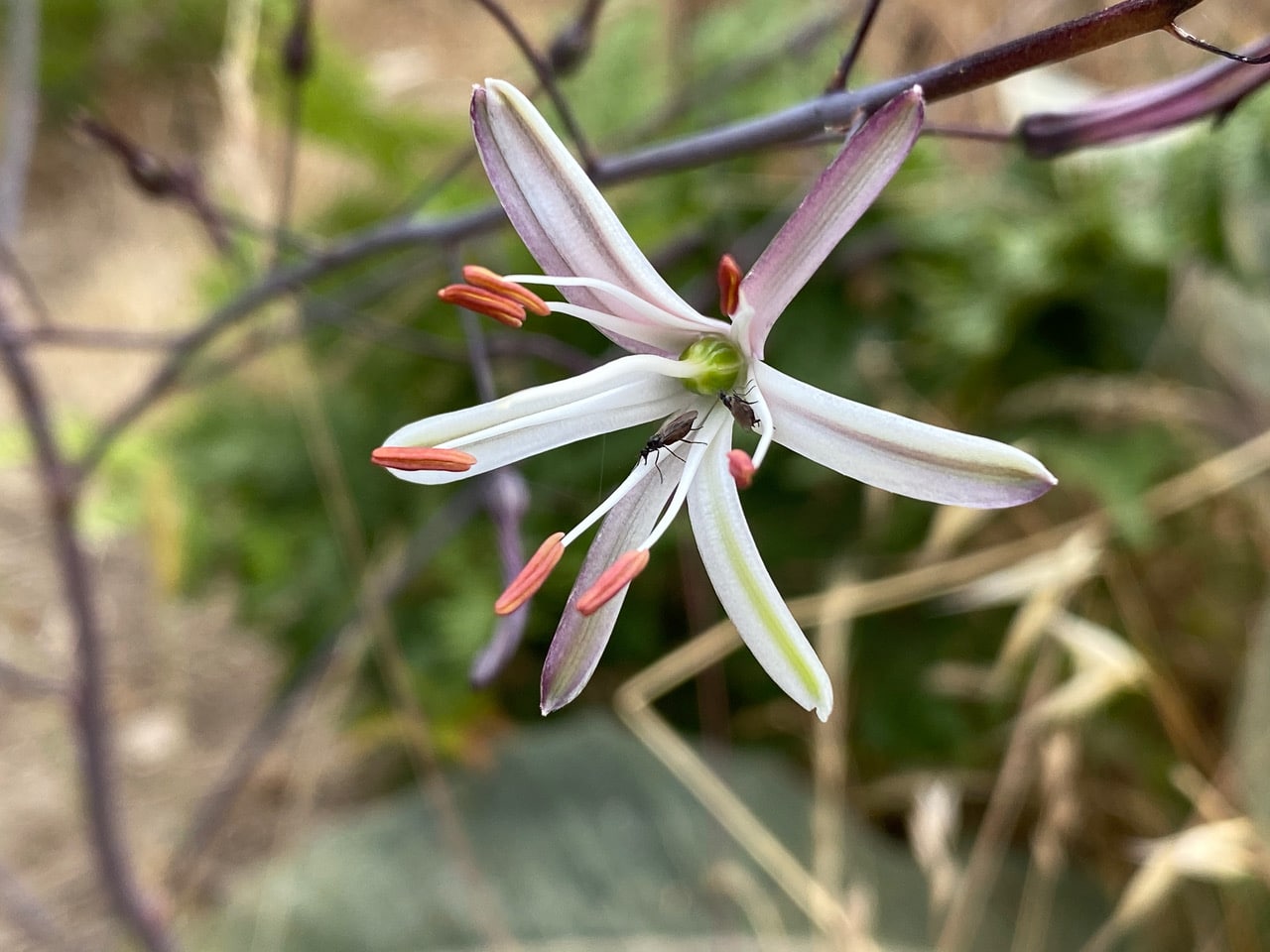 When I return to the lone Soap Plant at 3:30 pm, some fresh flowers have opened up, and the Dance Flies are already on them! They have not been waiting in vain.

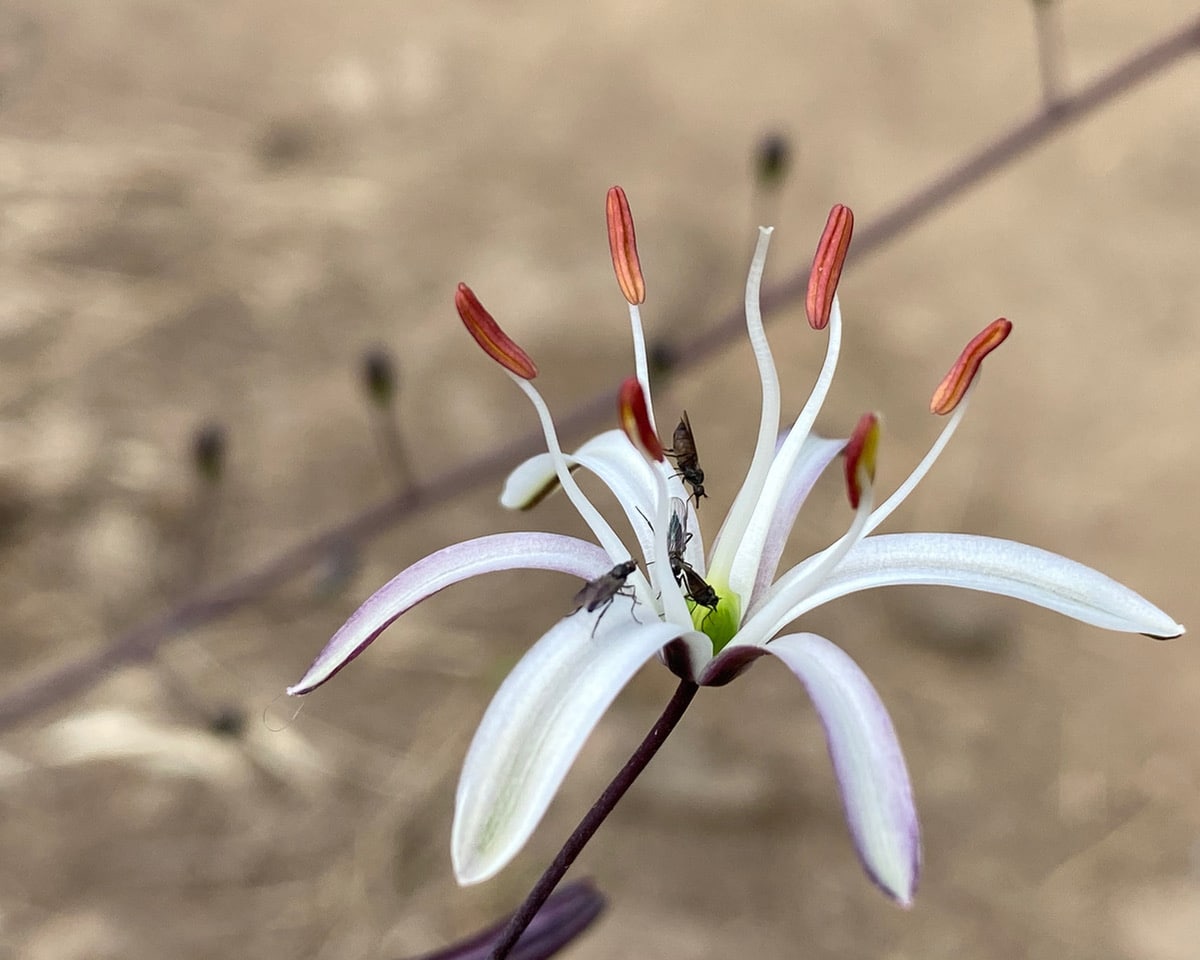
Most of the Dance Flies head for the nectar at the base of the Soap Plant flower.
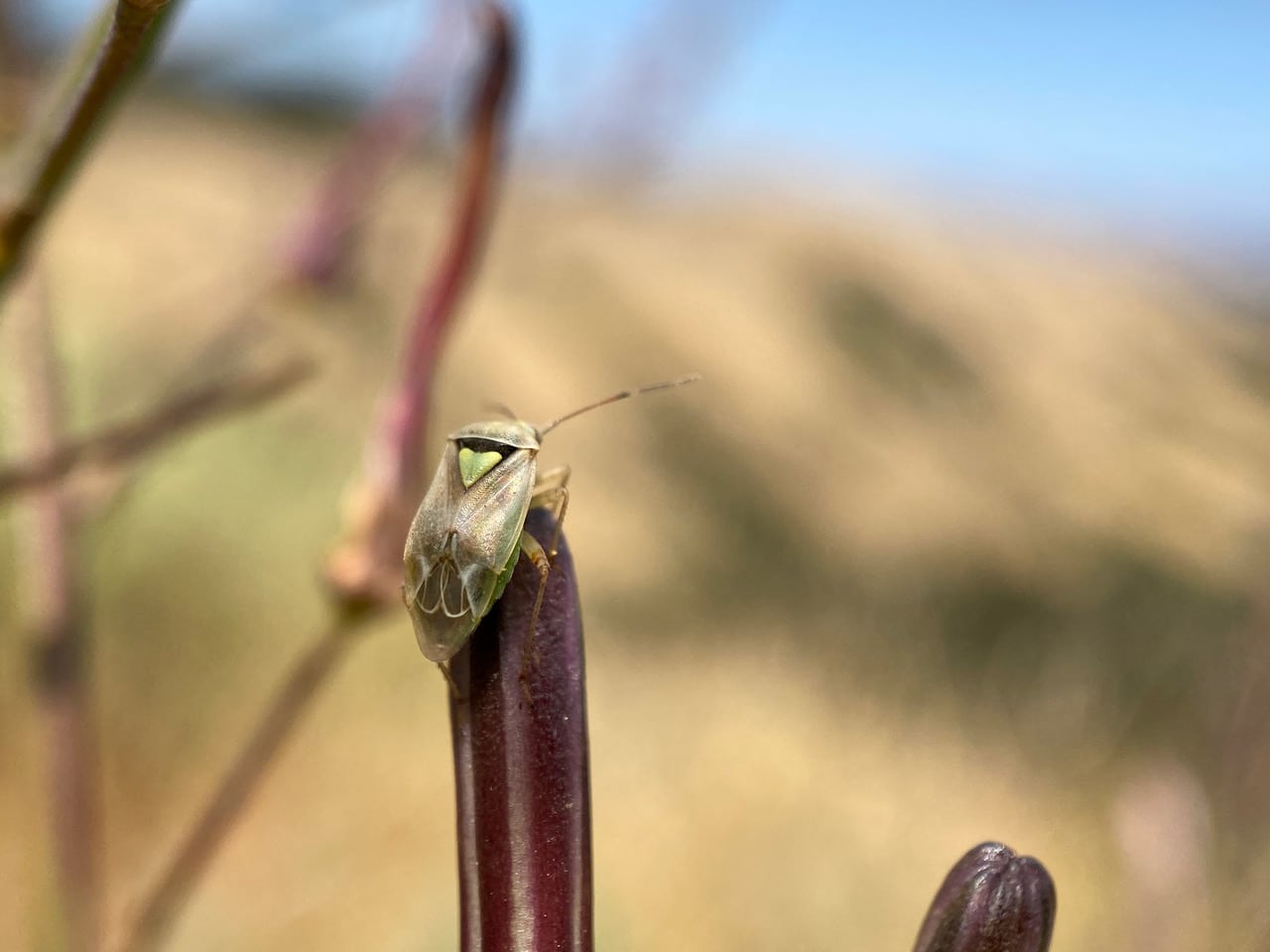
A Lygus Bug (family Miridae) seems to be taking in the view, perched on top of a Soap Plant flower bud.
The term lygus bug is used for any member of the genus Lygus, in the family of plant bugs, Miridae. Adult lygus are approximately 3 mm wide and 6 mm long, colored from pale green to reddish brown or black. They have a distinctive triangle or V-shape on their backs. Lygus bugs are known for their destructive feeding habits – they puncture plant tissues with their piercing mouthparts, and feed by sucking sap. Both the physical injury and the plant’s own reaction to the bug’s saliva cause damage to the plant. Many lygus bugs are well-known agricultural pests.
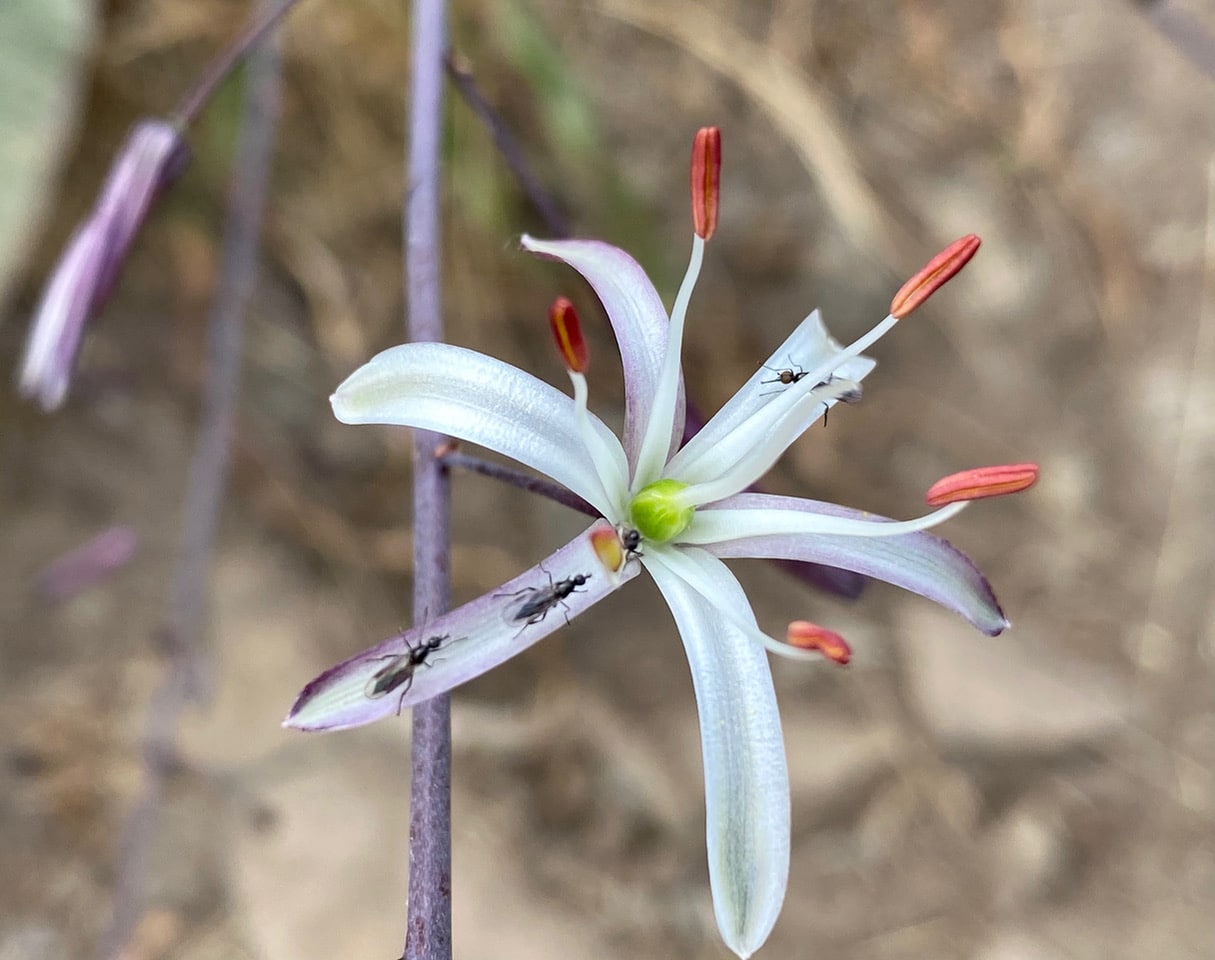
A queque is forming on the petal, each Dance Fly waiting its turn at the nectary under the green ovary in the middle of the flower.
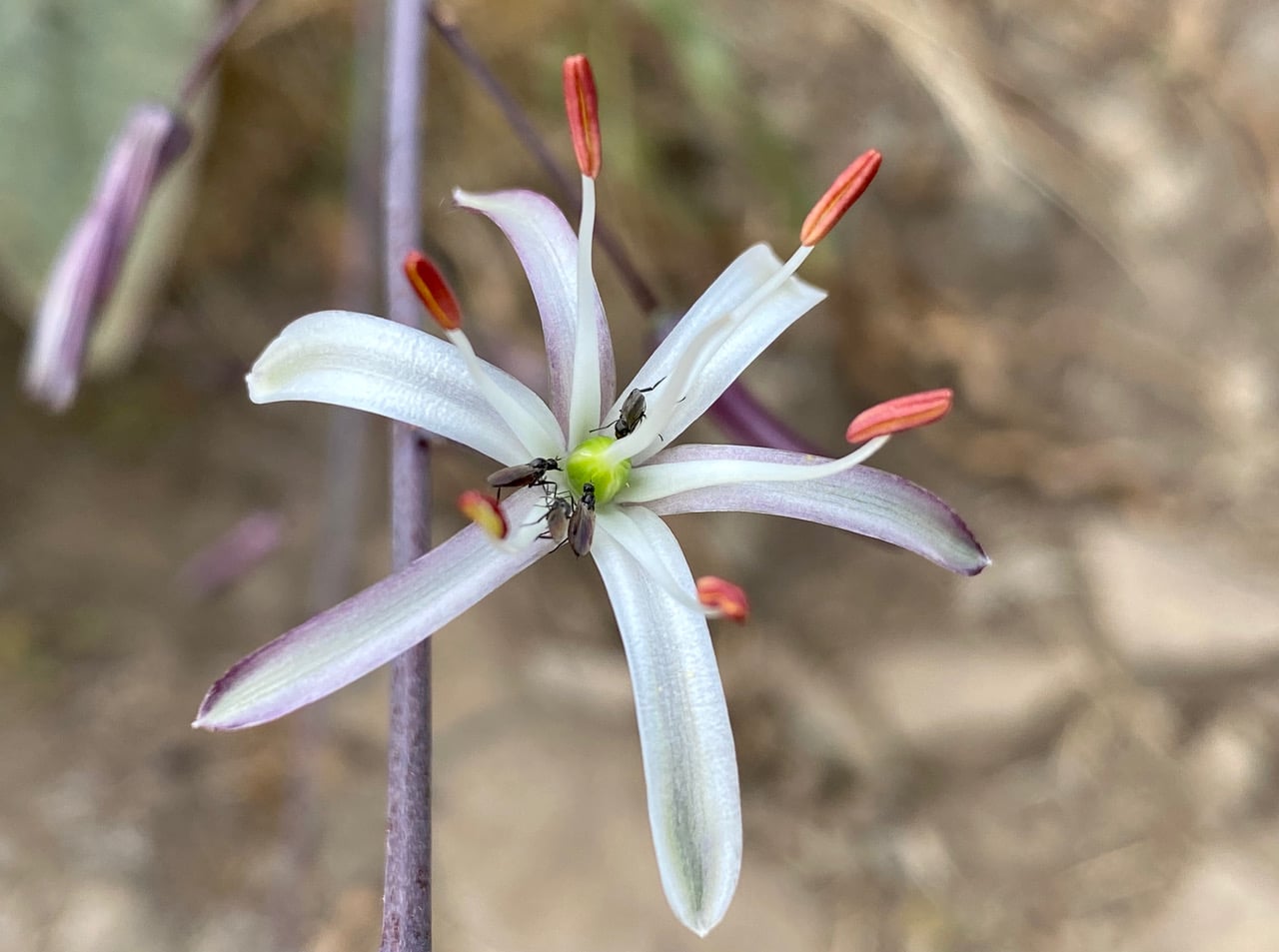
Eventually everybody gets a chance at the nectar. No brawls necessary. Will this nectar feast go on all night in the dark? Are these Dance flies nocturnal?
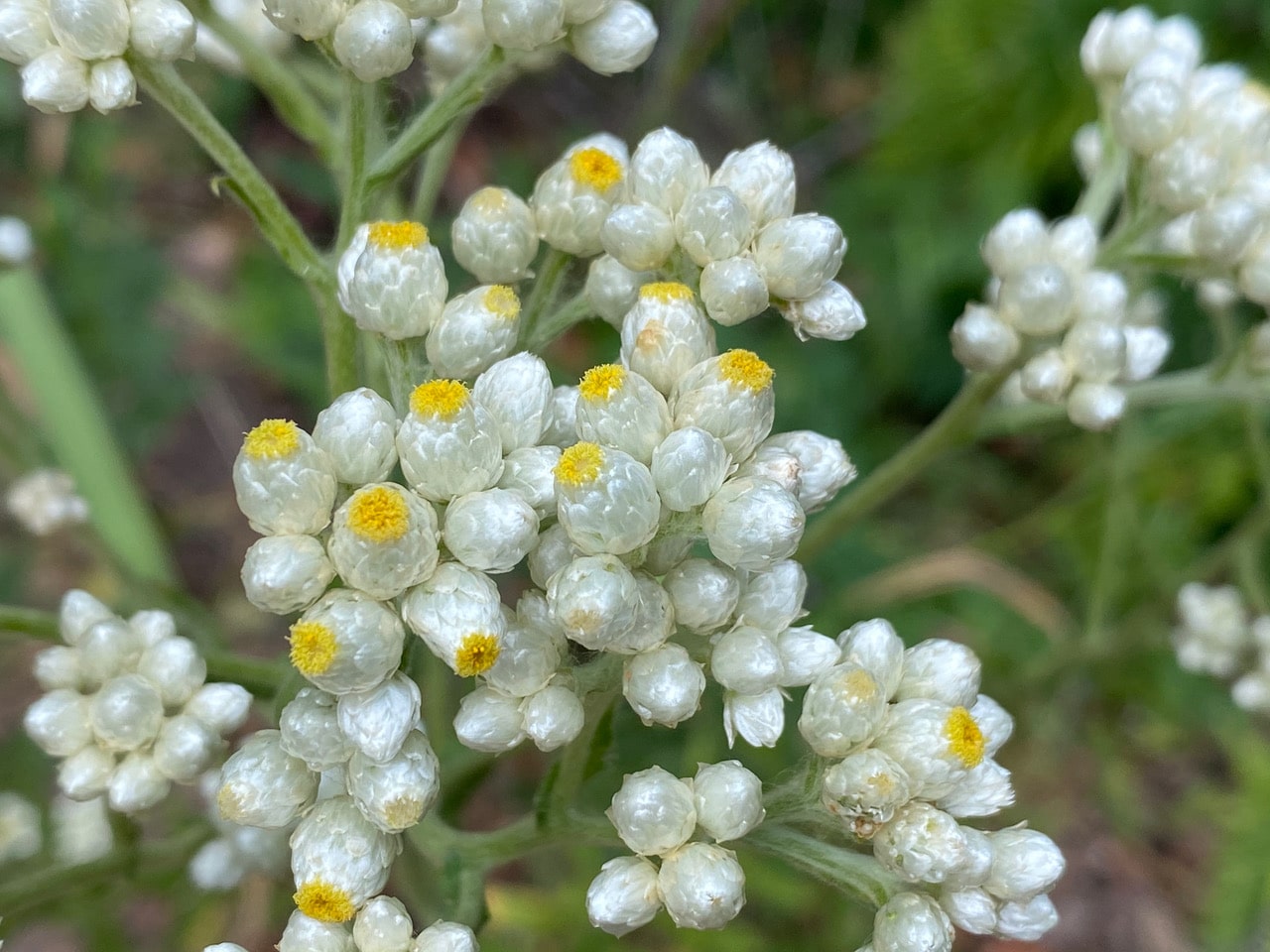
The California Everlasting, Pseudognaphalium californicum along Skyline Trail are beginning to bloom.
The California Everlasting inflorescence is a wide cluster of egg-shaped flowerheads, each enveloped in an involucre of rows of overlapping, papery, shiny white phyllaries. Nestled within the phyllaries are numerous, very small individual florets. The flower parts are indistinct, seen at the tip and are yellow to brownish. On maturity, the phyllaries spread apart to release small seeds which are wind-dispersed by means of pappus.
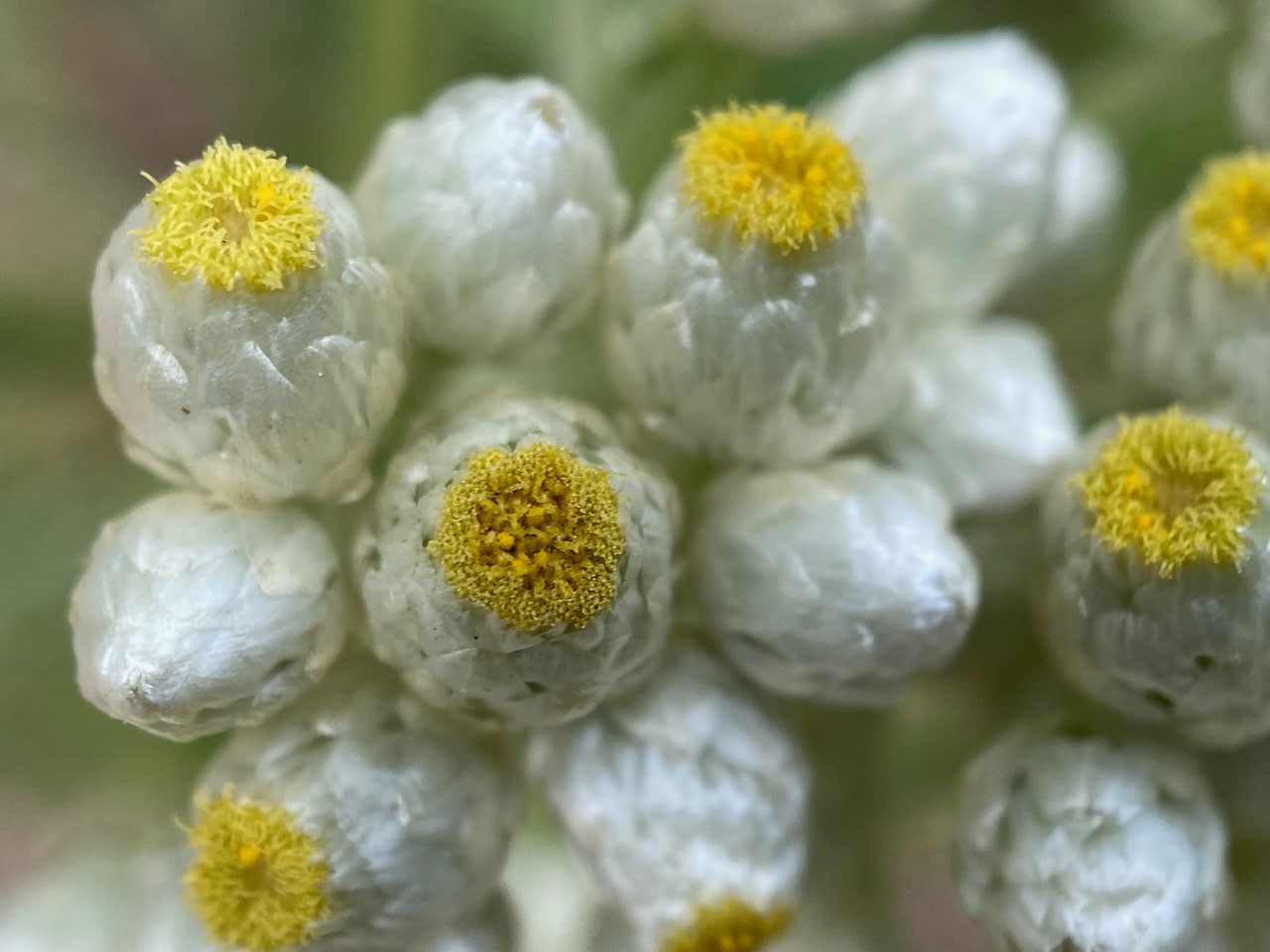
In the everlastings, the phyllaries closely enclose the tiny florets. This would seem to deter many pollinators. According to one authority, many species of everlasting are probably self-pollinated, although the small openings may be visited by small flies, bees and wasps.
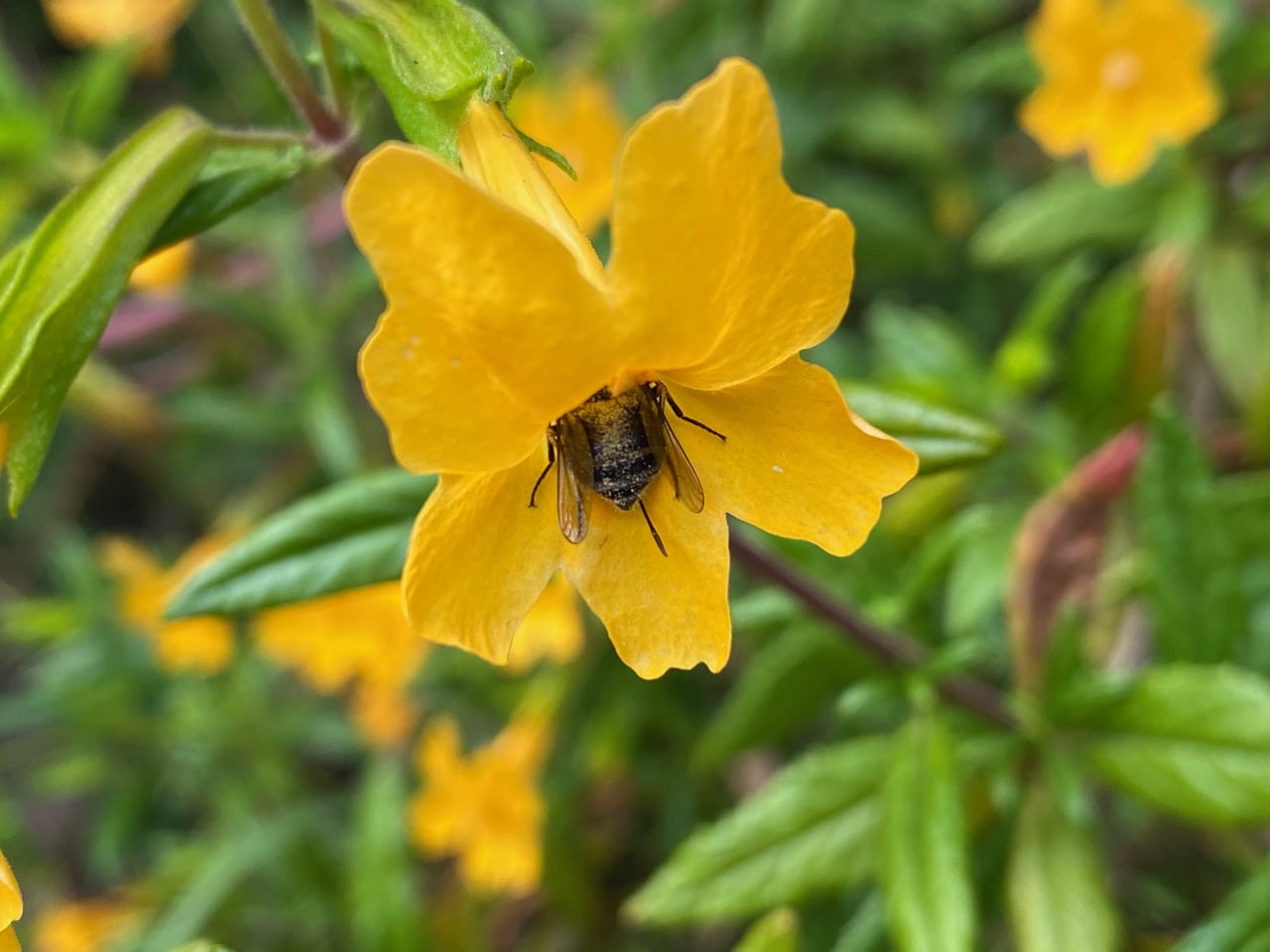
A few minutes before 4 pm. A Small-headed Fly, Eulonchus sp. (family Acroceridae) has already tucked itself in for the night.
As far as is known, all Acroceridae are parasitoids of spiders. Not just any spiders, but the Mygalomorphs of a more ancient lineage. This Acrocerid species, most likely Eulonchus tristis is known to parasitize the California Turret Spiders. Females lay large numbers of eggs near their host nests. After hatching the young larvae, called planidia seek out the spiders. The planidia can move in a looping movement like an inchworm and can leap several millimeters into the air. When a spider contacts an Acrocerid planidium, the planidium grabs hold, crawls up the spider’s legs to its body, and forces its way through the body wall. Often, it lodges near the spider’s book lung, where it may remain for years before completing its development. Mature larvae pupate outside the host. The Acrocerid adults are nectar feeders with exceptionally long probosces which are folded on the underside of the body when not in use. Acrocerids are rare but can be locally abundant. They are believed to be efficient pollinators for some native plants, including the Sticky Monkeyflowers.
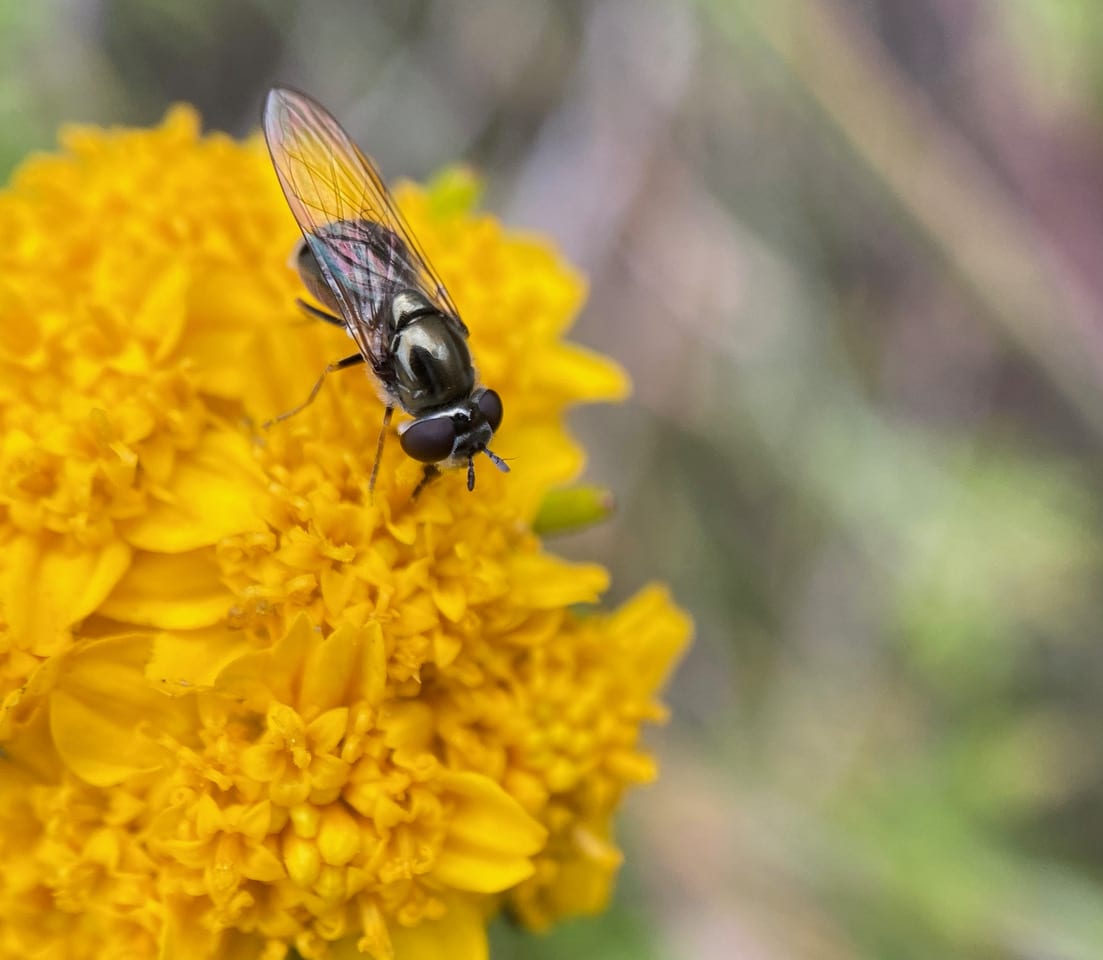
A creature of cool and shady habitats, the metallic Sedgesitter, Platycheirus sp. (family Syrphidae) is out foraging on the flowers of Golden Yarrow.
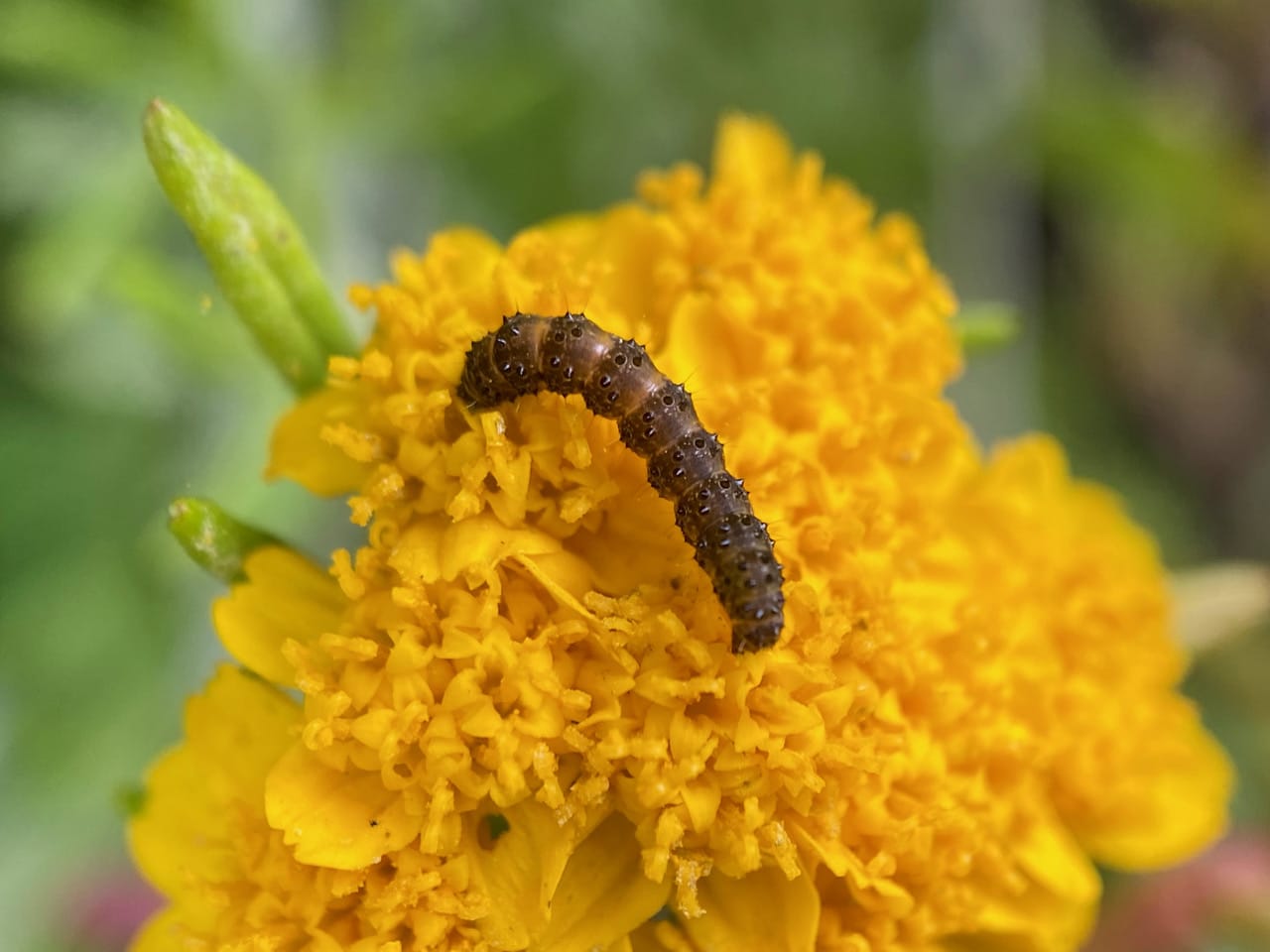
A small brown caterpillar is very conspicuous against the golden yellow flowers. It is in the genus Stiria, a member of the Cutworms Moths and Allies, family Noctuidae.
The Noctuidae, commonly known as owlet moths, cutworms or army worms, are a family of moths. The larvae are commonly green or brown; most are pudgy with rounded, short heads and few hairs. The names “army worms” and “cutworms” are based on the behavior of the larvae of this group, which can occur in destructive swarms and cut the stems of plants. Members of Noctuidae, like other butterflies and moths, perform an important role in plant pollination. Some species have developed a stronger connection with their host plants. Some feed on poisonous plants and are unaffected by their chemical defenses. Like other Lepidoptera, many adult Noctuidae visit flowers for their nectar. They also seek other liquid food resources such as plant juices, honeydew, dung, urea and mud.
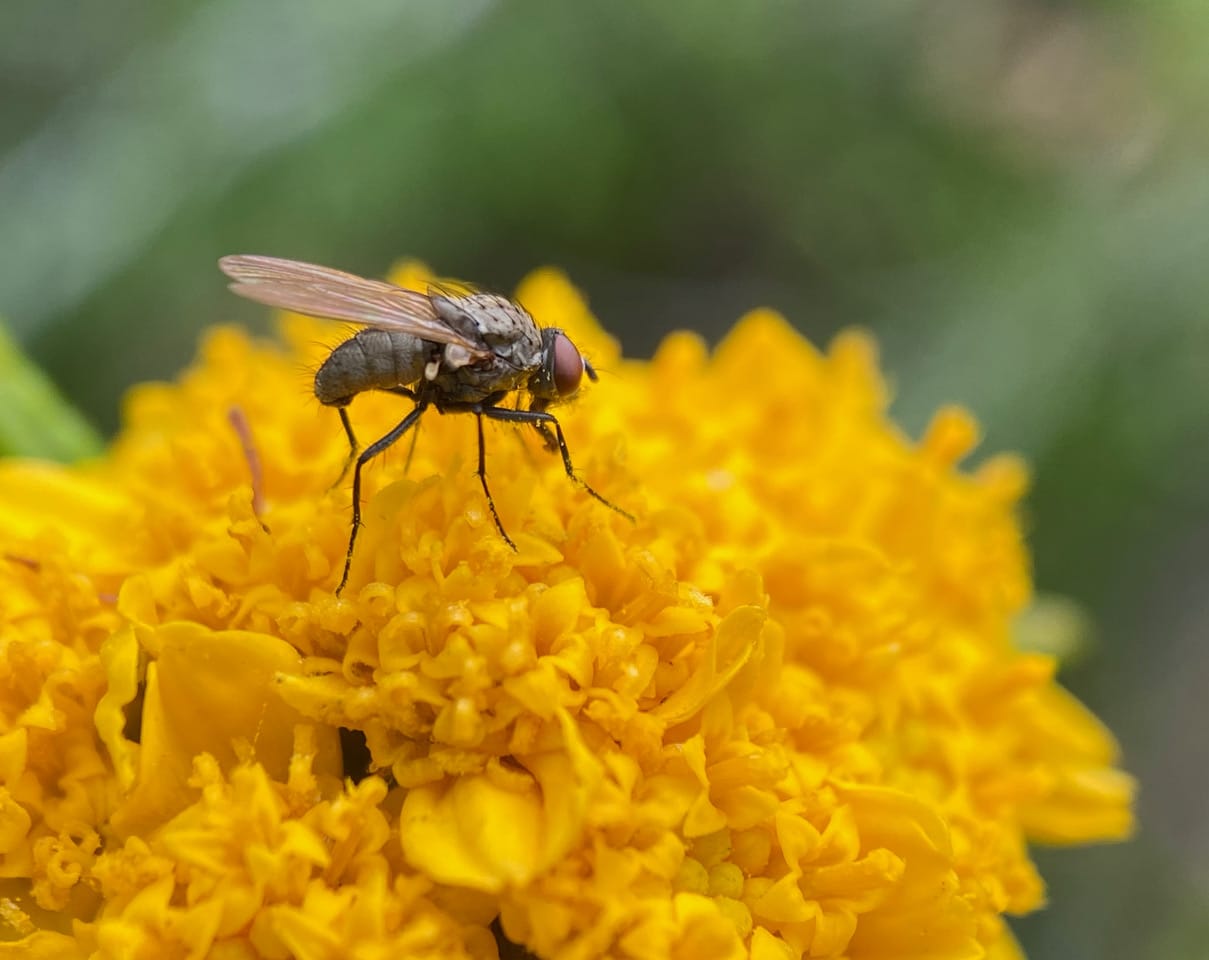
I don’t usually get much response when I submit pictures of flies to iNaturalist for identification. I continue to do it anyway, and this time a Diptera expert responded with an identification of a Root Maggot Fly, family Anthomyiidae. Thank you, Stephen!

Members of the family Anthomyiidae are commonly called Root-maggot Flies. They are small to medium-size flies that resemble house flies but are somewhat more slender. They are usually dull gray or black and silver in color. The larvae typically feed in stems and roots of plants. Many are considered crop pests, and may attack root crops such as onions or rutabagas. Other species may feed on decaying matter, on feces, or are predators of other insects. Adult flies are important pollinators, usually feeding on nectar and pollen.
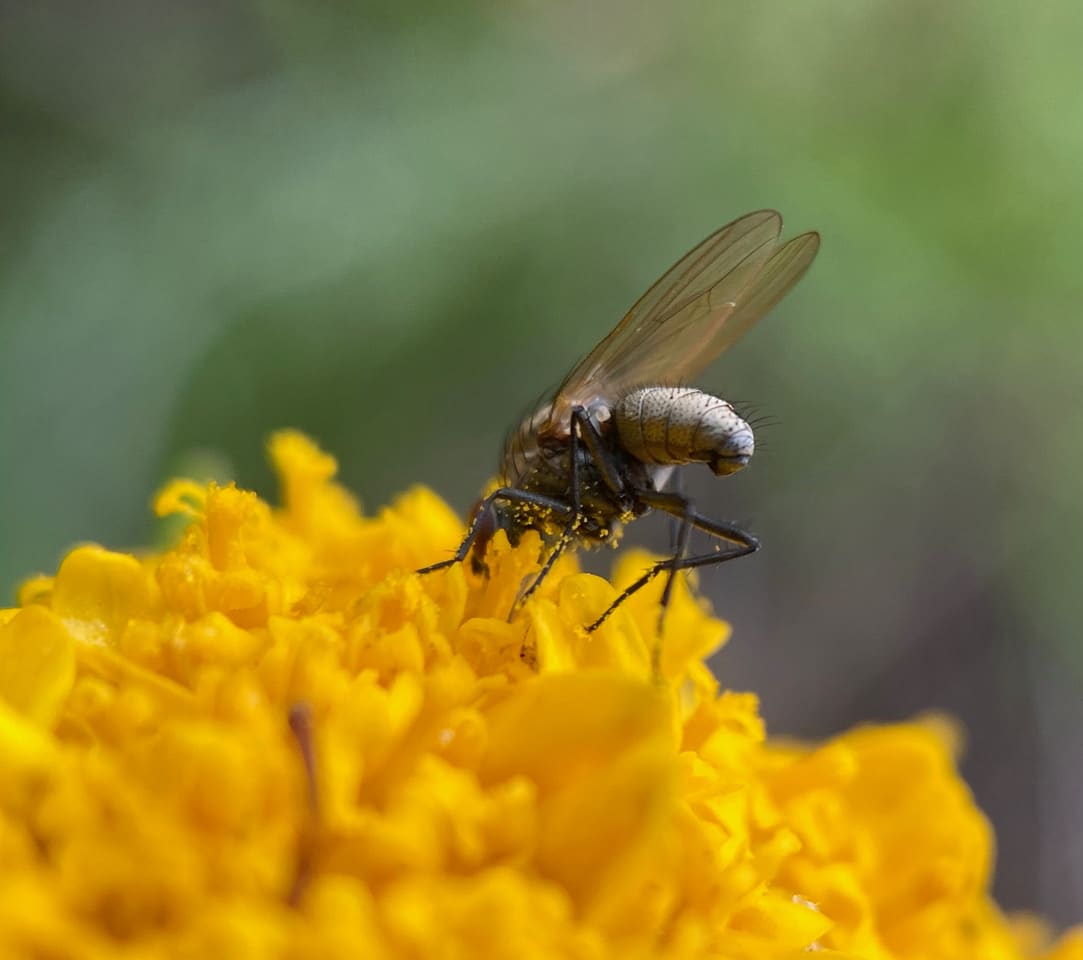
This view of the fly shows pollen grains adhering to the its legs and the underside of its body. A probable pollinator for the Golden Yarrow!
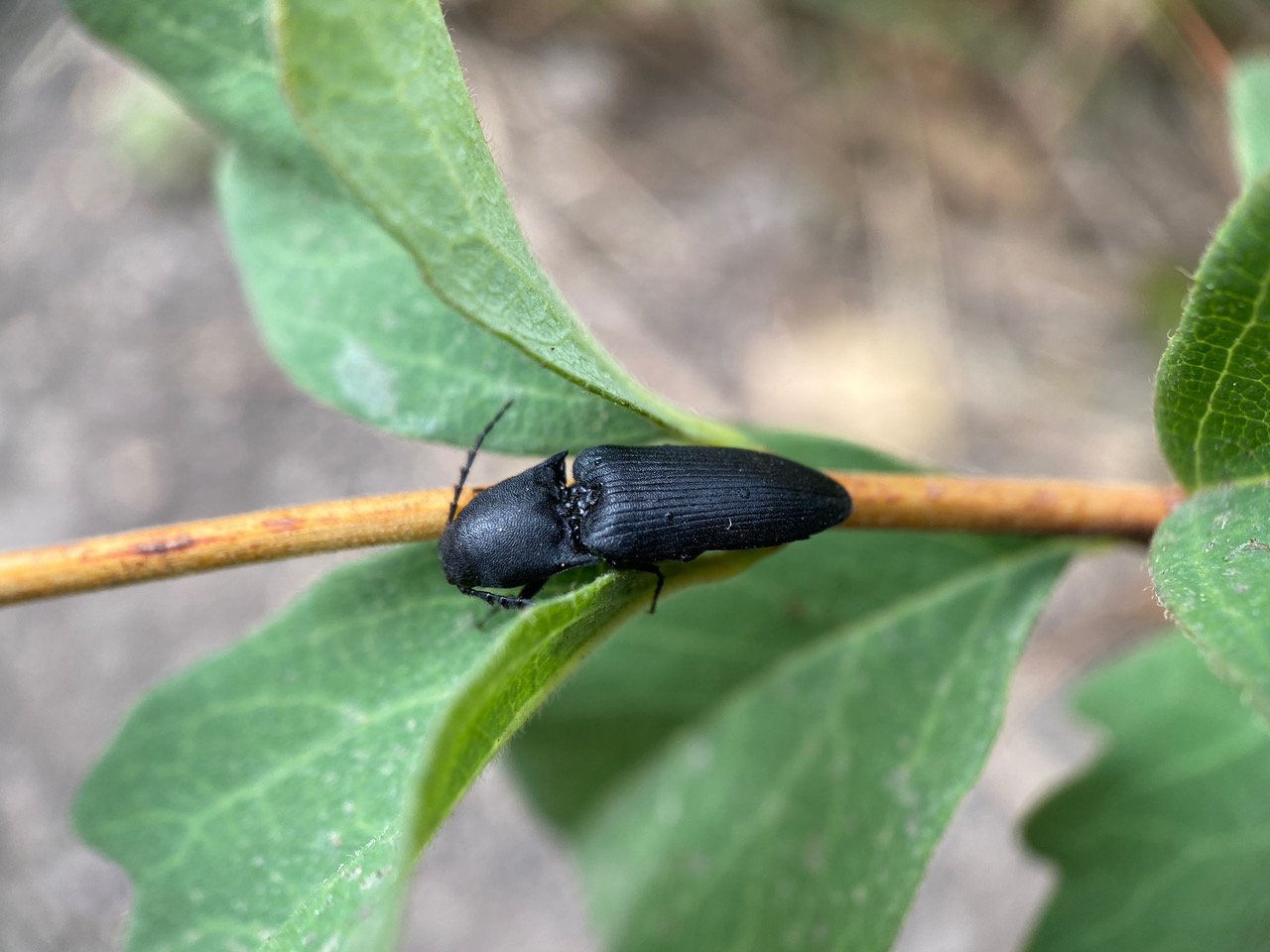
A black Click Beetle (family Elateridae) is perched motionless on the stem of a Snowberry.
Elateridae or Click Beeltes are a cosmopolitan beetle family characterized by the unusual click mechanism they possess. A spine on the prosternum can be snapped into a corresponding notch on the mesosternum, producing a violent “click” that can bounce the beetle into the air. Clicking is mainly used to avoid predation, although it is also useful when the beetle is on its back and needs to right itself. How do click beetles jump? – YouTube
Adult Click Beetles are typically nocturnal and phytophagous (feeding on plants). Their larvae, called wireworms, are usually saprophagous, living on dead organisms, but some species are agricultural pest, and others are active predators of other insect larvae.