

Pollinator Post 6/25/23 (1)
 This afternoon I decide to walk the section of Skyline Trail south of Siesta Gate. There are the usual hover flies foraging on the Golden Yarrow, Eriophyllum confertiflorum.
This one is a female Diamond Spottail, Fazia micrura (family Syrphidae). See those four diamond-shaped yellow markings near the tip of her tail? It’s a female as evidenced by a gap between her compound eyes on top of the head.

Here’s a male Diamond Spottail, Fazia micrura (family Syrphidae). As in most hover flies, the male has holoptic eyes that meet along a line on top of the head. He also has a more slender abdomen with parallel sides.
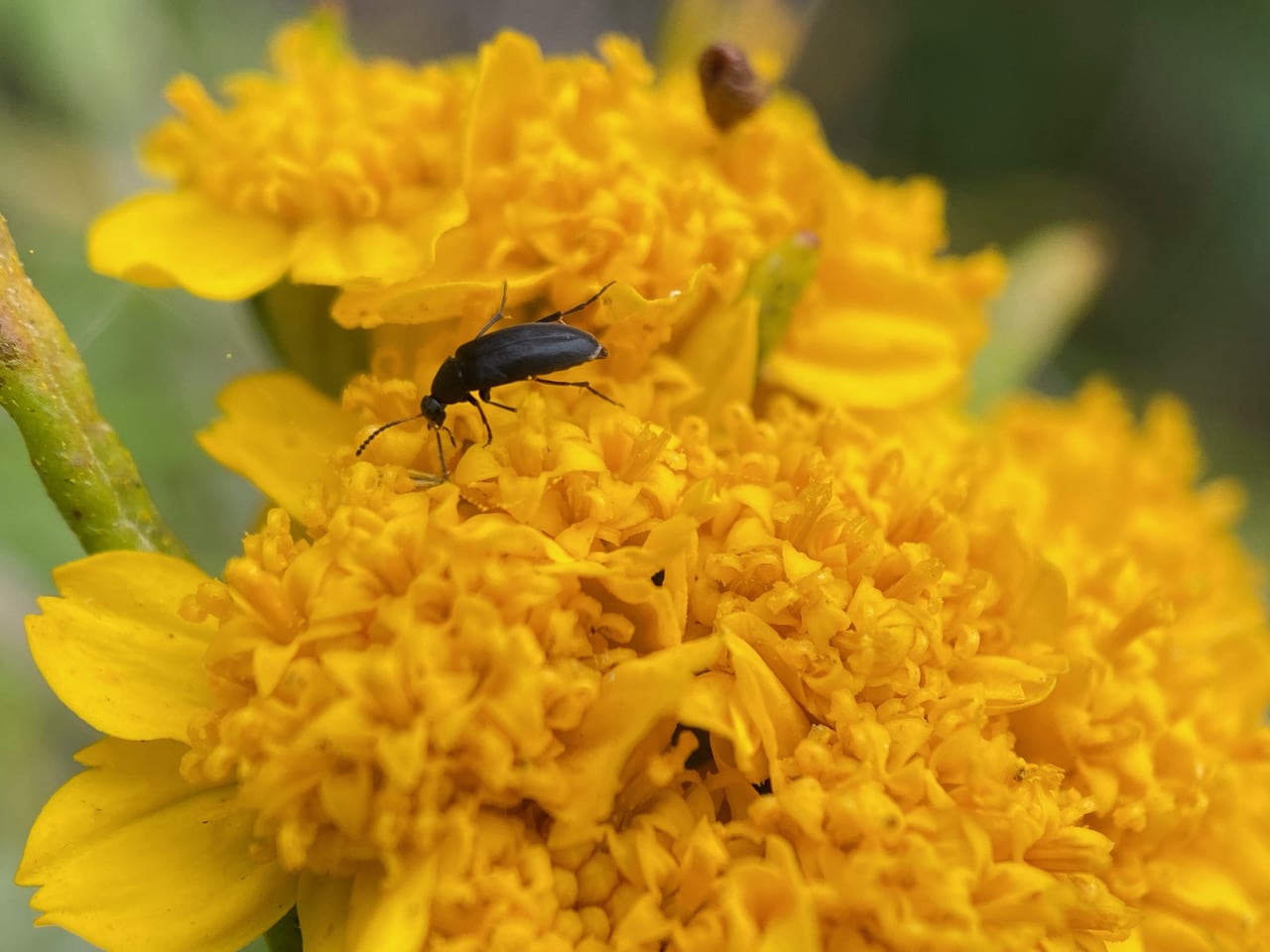 A False Flower Beetle is foraging among the flowers of Golden Yarrow.
 False Flower Beetles, Anaspis atrata (family Scraptiidae) are commonly found in western North America. The adults are found on flowers, sometimes in large numbers, but are also found on foliage. The larvae are typically found under the bark of dead trees.
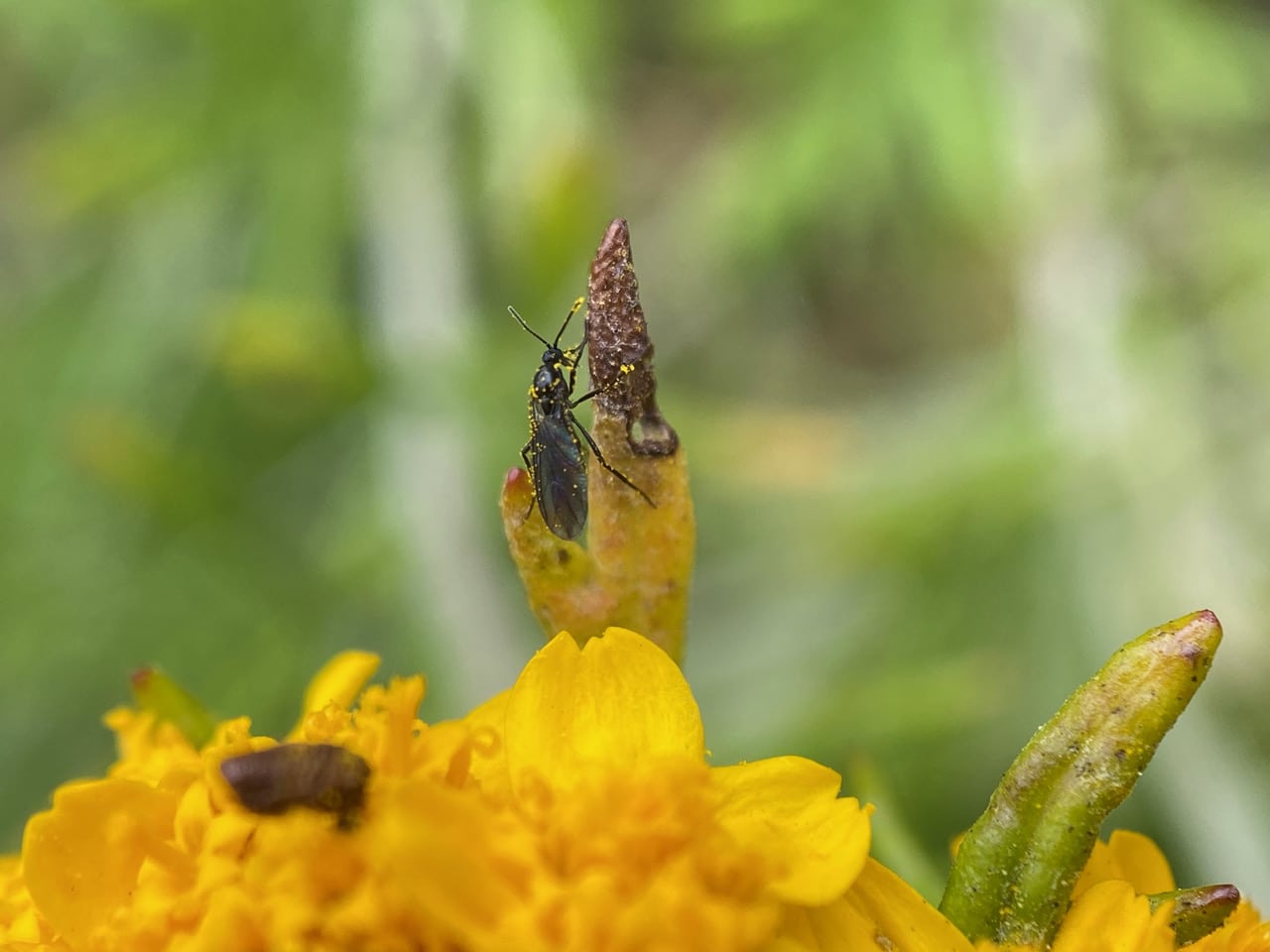
Its body covered with sticky pollen, a Dark-winged Fungus Gnat (family Sciaridae) is grooming itself on a leafy bract that subtends the cluster of Golden Yarrow flowerheads.
Occurring worldwide, the Sciaridae are a family of flies, commonly known as Dark-winged Fungus Gnats. Commonly found in moist environments, they are known to be a pest of mushroom farms and are commonly found in household plant pots. In moist, shadowy areas, up to 70% of all dipteran species can be Sciaridae. Adults are small, dark flies, usually less than 5 mm long. They are distributed through wind and drifting, or by humans through transported soil. Sciarid larvae often occur in decaying plant matter such as rotten wood or under the bark of fallen trees. They play an important role in turning forest leaf litter into soil. The adults with their characteristic dancing flight do not bite. They only ingest liquids and only live long enough to mate and produce eggs. They die after about five days.
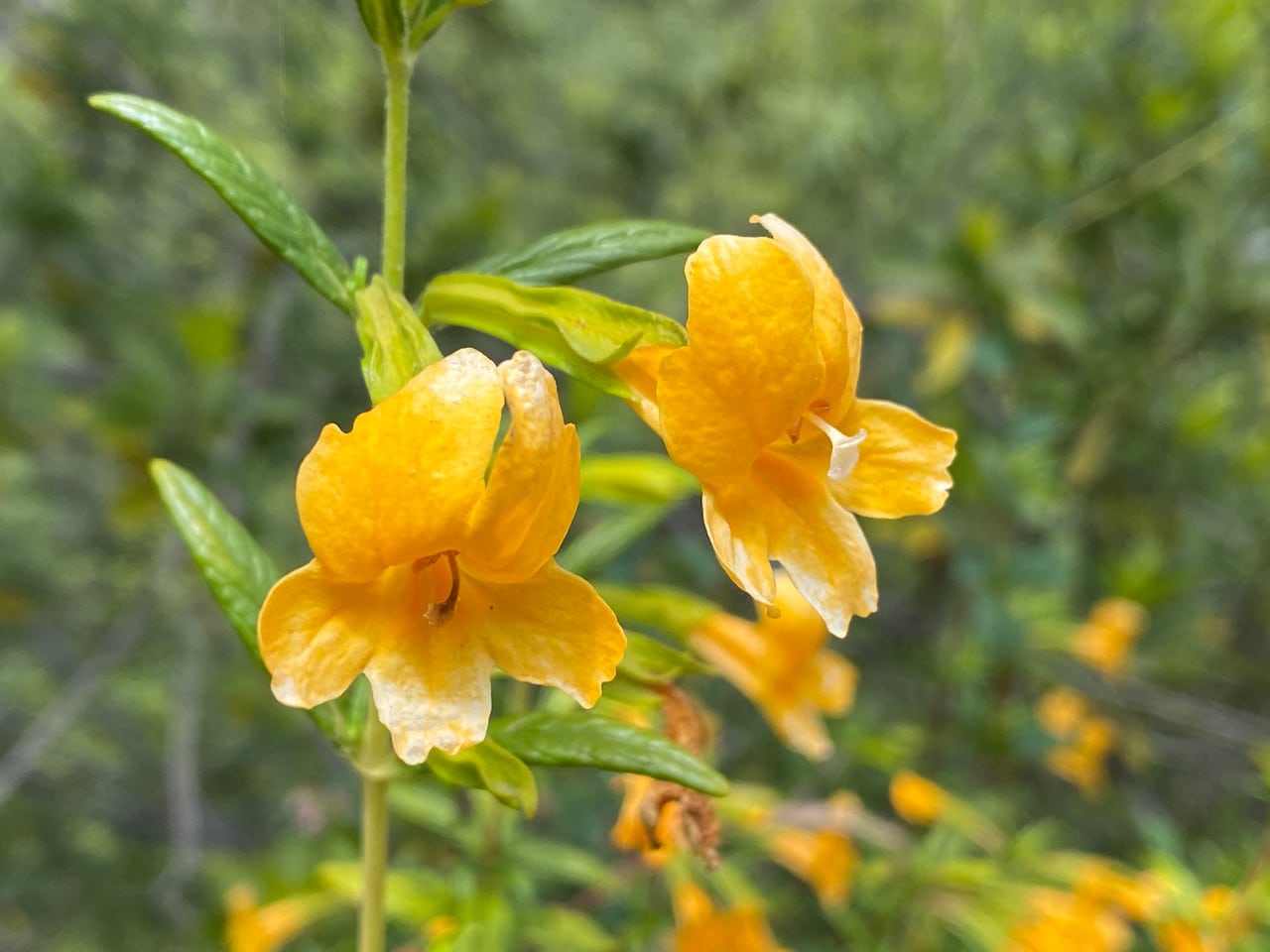
Many of the fresh Sticky Monkeyflowers that are on the top of the branches now have this bleached appearance. The pigments are lost from the edges fo the petals. Wind burn? Flash drought?
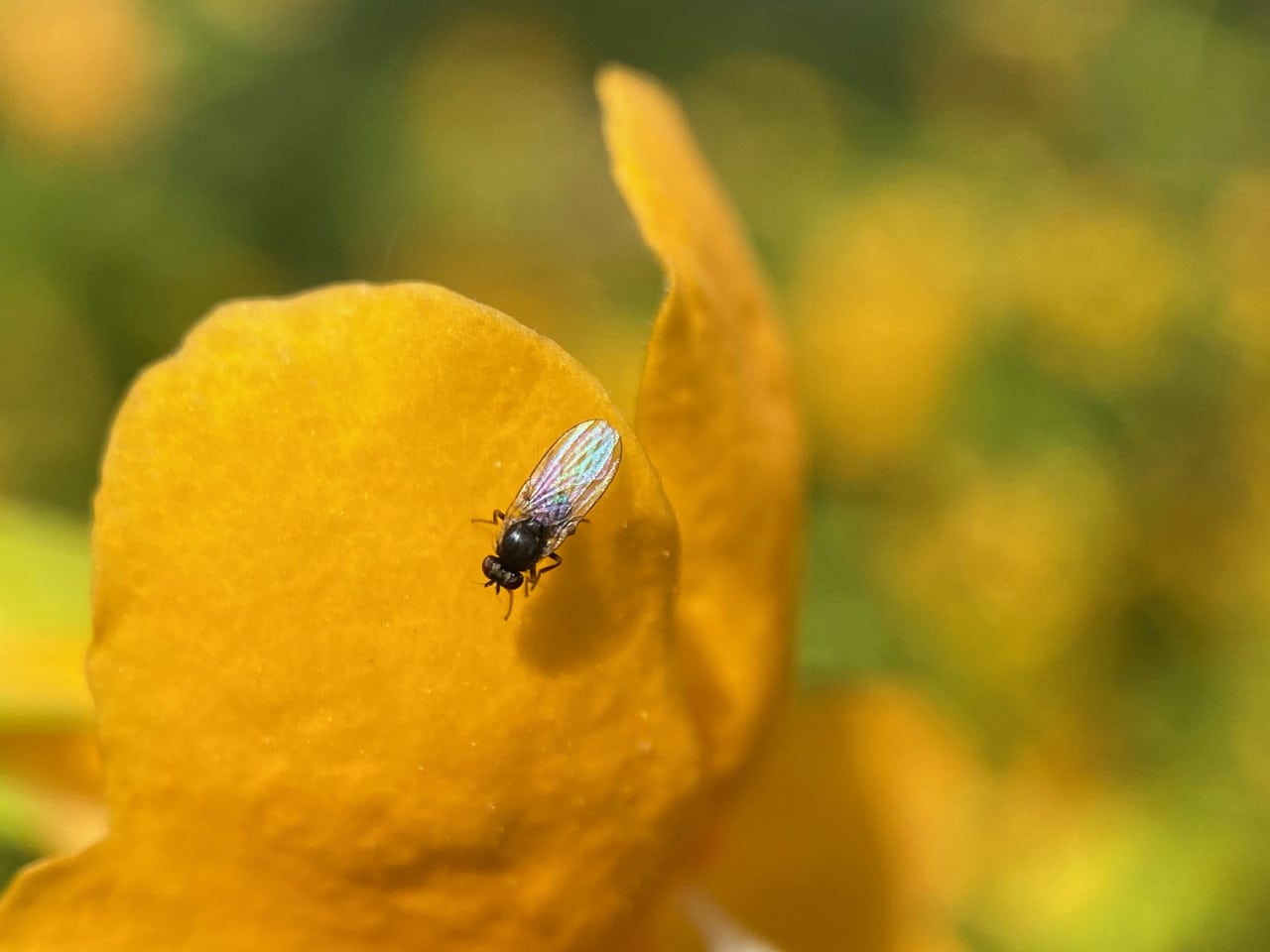
A speck of a fly, under 2 mm long is perched on the upper petal of a Sticky Monkeyflower. Base on its size, I am willing to bet that it is a Leaf-miner Fly (family Agromyzidae).

Ooh, there’s a Scudder’s Bush Katydid nymph feeding in the Sticky Monkeyflower!

The baby Katydid finally makes it way to the top of the plant, and poses for this picture. We are sure seeing a lot of katydid nymphs this year. I hope to see an adult later.
Scudderia is a genus of katydids in the family Tettigoniidae. They are sometimes called bush katydids and are 30-38 mm in length. They are mostly found in North America. Scudder’s Bush Katydids are herbivores, with nymphs feeding primarily on flowers and adults preferring woody deciduous plants.
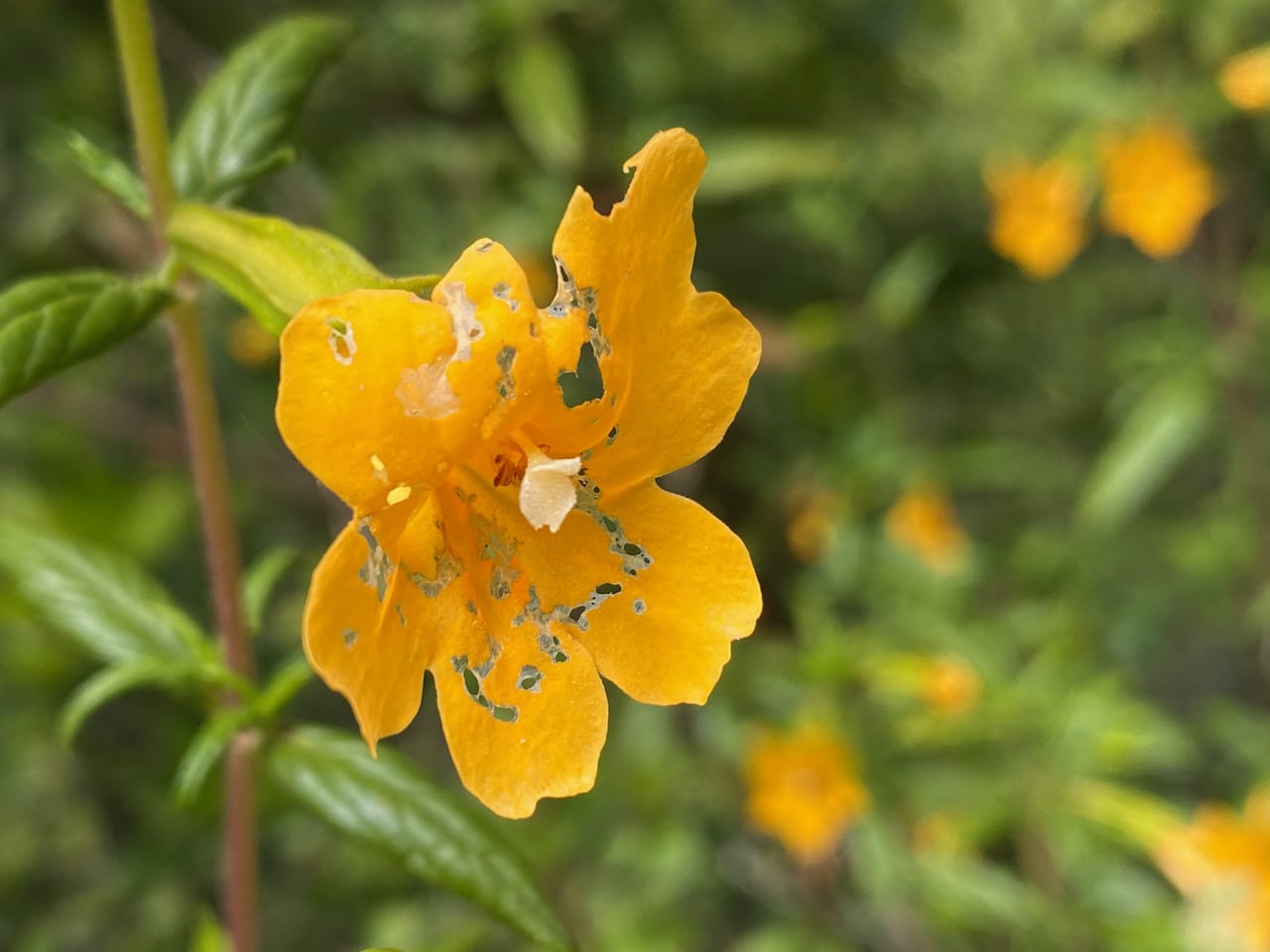
By now I am familiar with the feeding scars left by Bush Katydid nymphs.
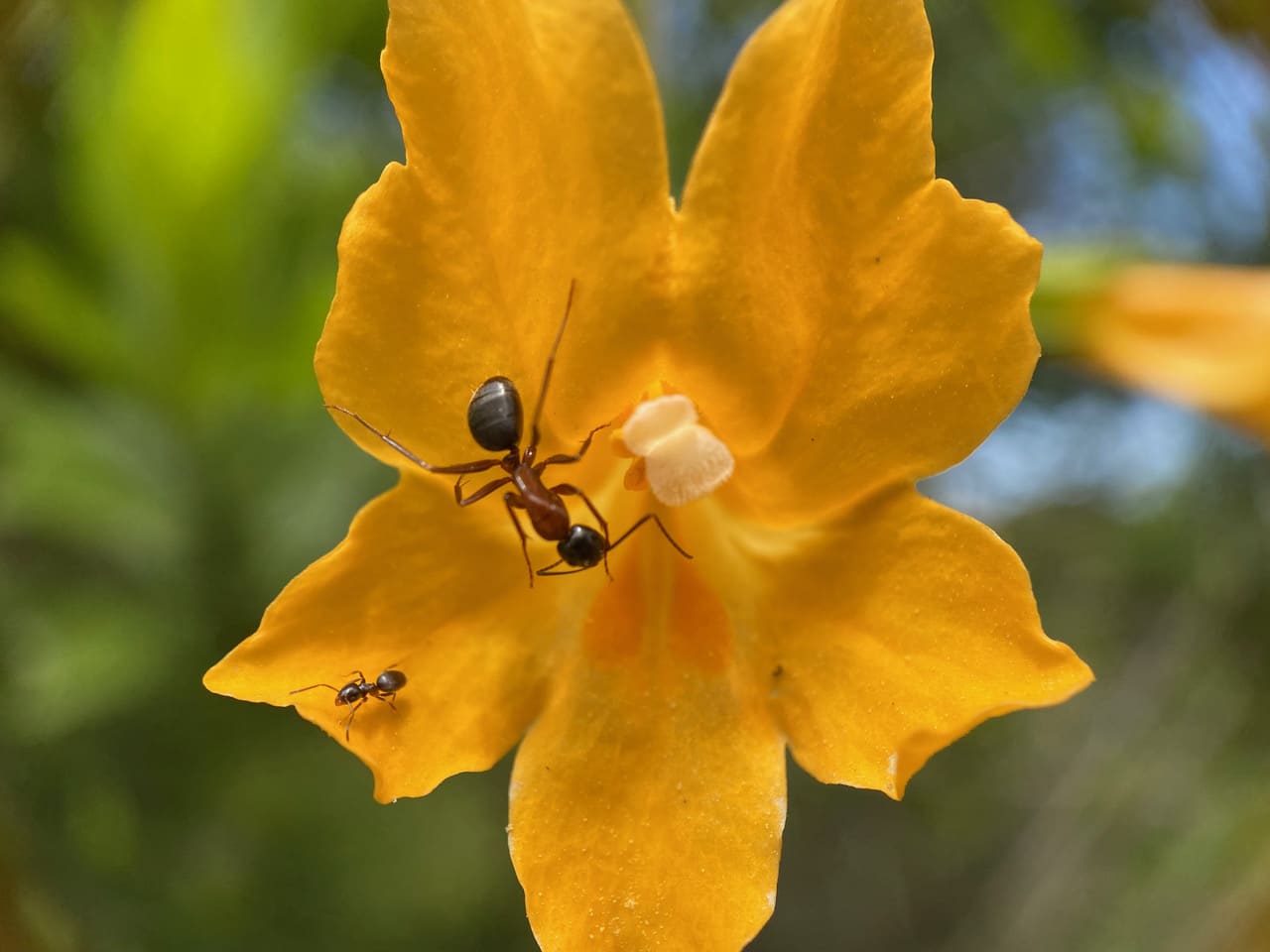
Two ants of vastly different sizes are foraging on the same Sticky Monkeyflower. The large on is probably a Field Ant, Formica sp., while the small one might be an Odorous House Ant, Tapinoma sessile.
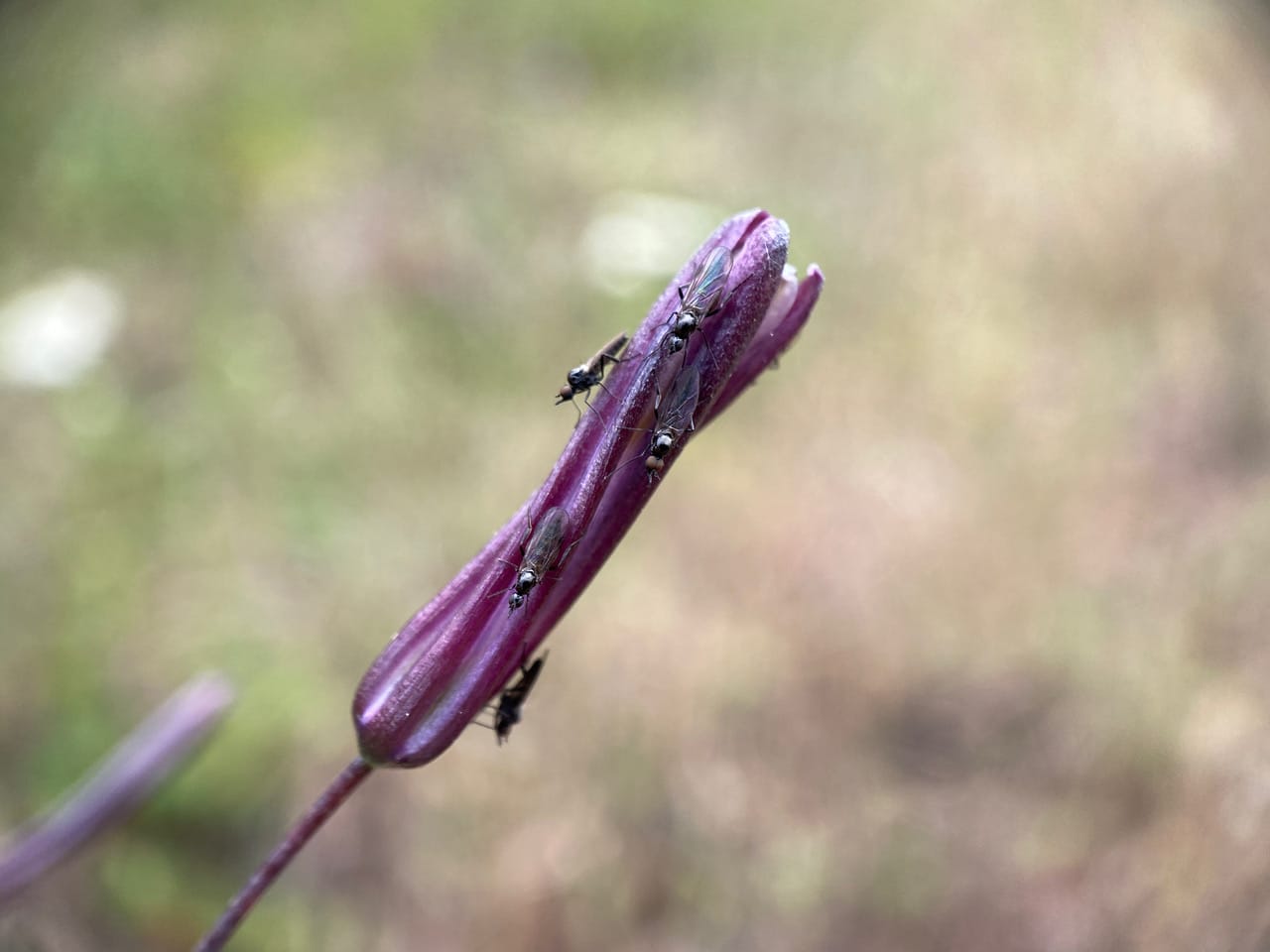 It’s about 2:30 pm when I reach this single Soap Plant, Chlorogalum pomeridianum. along Skyline Trail. It has bloomed well last night, as evidenced by the numerous spent flowers that have twisted close. There are many small Dance Flies (family Empididae) perched on this closed flower. Are they partiers that have lingered from the night before, or are they freshly gathered today in anticipation of tonight’s event when fresh flowers will offer up their nectar? Each Soap Plant flower blooms for only one night, never to open up again.
Here’s another spent Soap Plant flower with numerous Dance flies perched on the twisted petals. The fly at the end here looks like a gravid female.
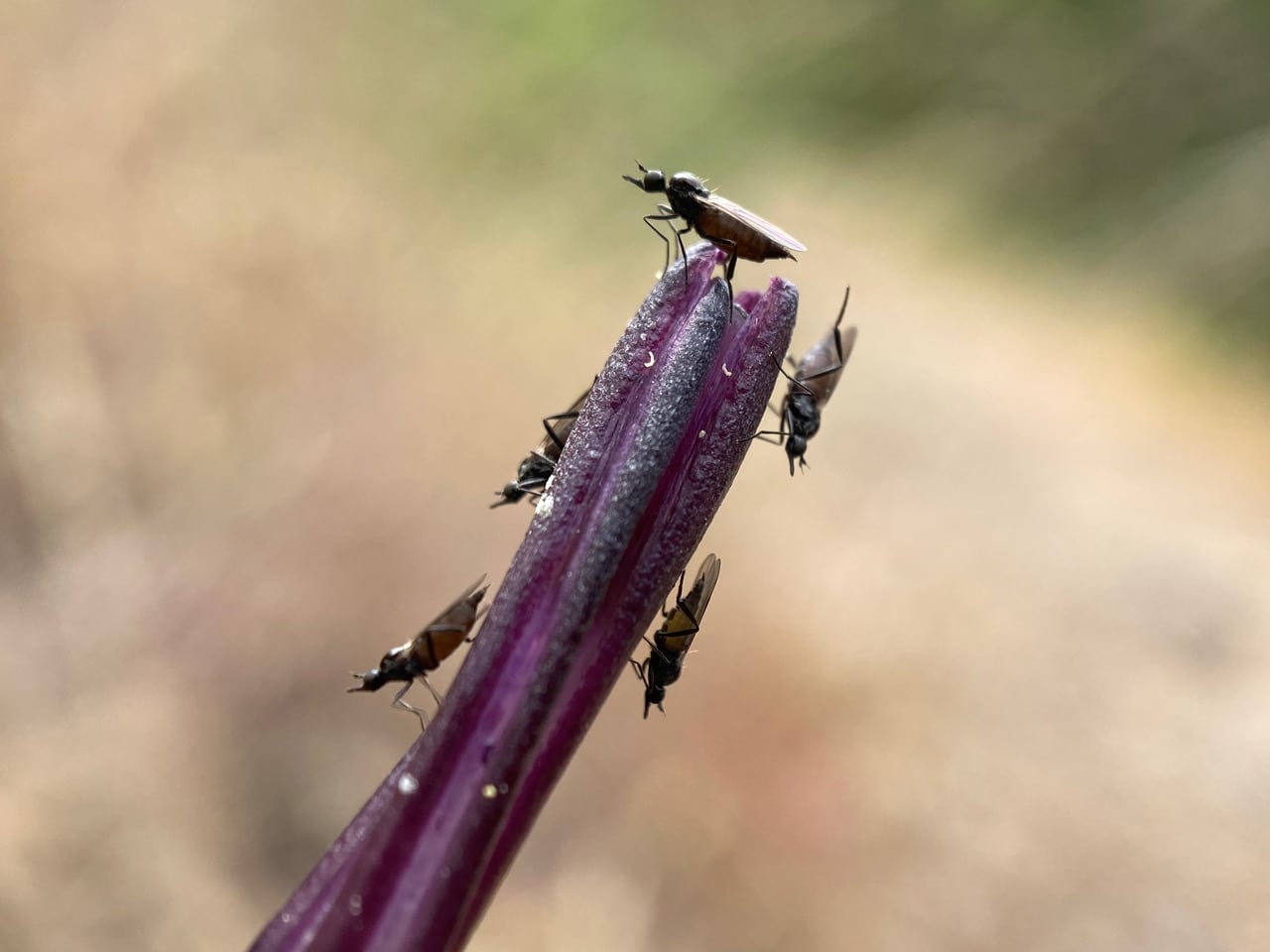
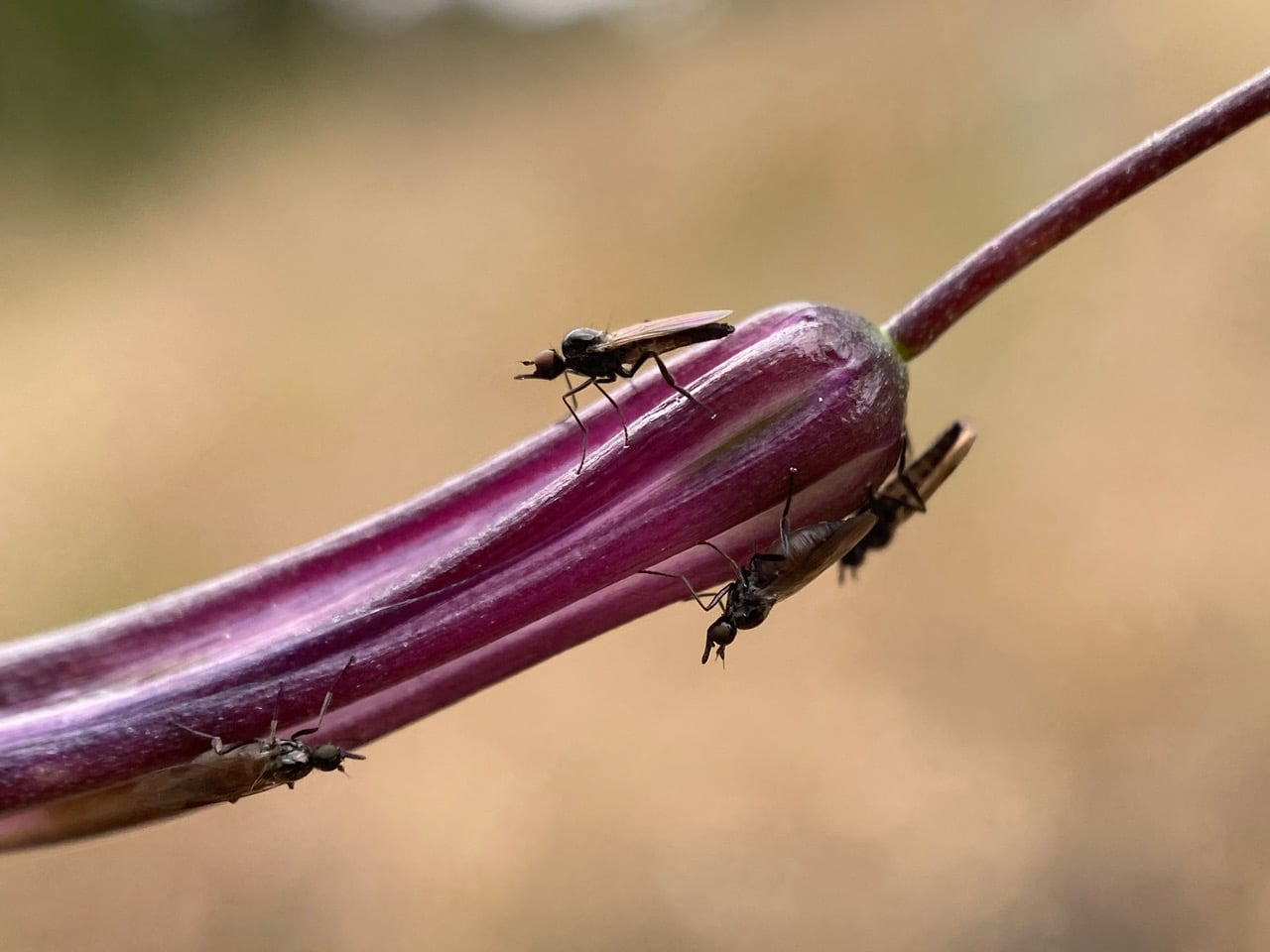
More Dance Flies everywhere on the withered flowers. I will check back later when new flowers open.
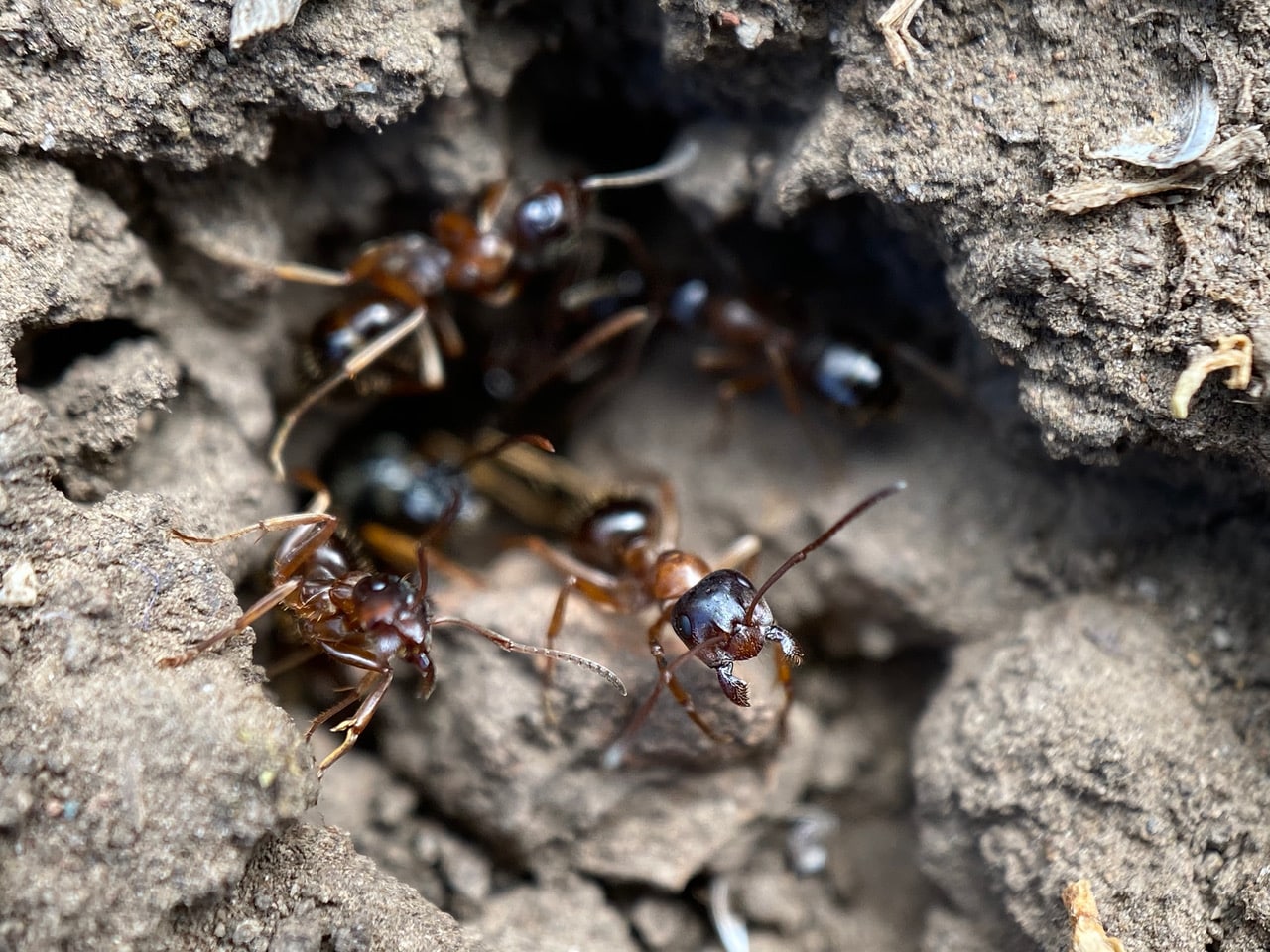
I come across the same nest entrance of the Field Ants, Formica subpolita (family Formicidae) in the middle of the trail. The ants are active and approach my camera with open jaws. I have to be careful not to get bitten while photographing them at such close range (one inch).
Formica ants do not have a stinger. But they can bite, and squirt formic acid from their rear ends into the wound. Ouch!
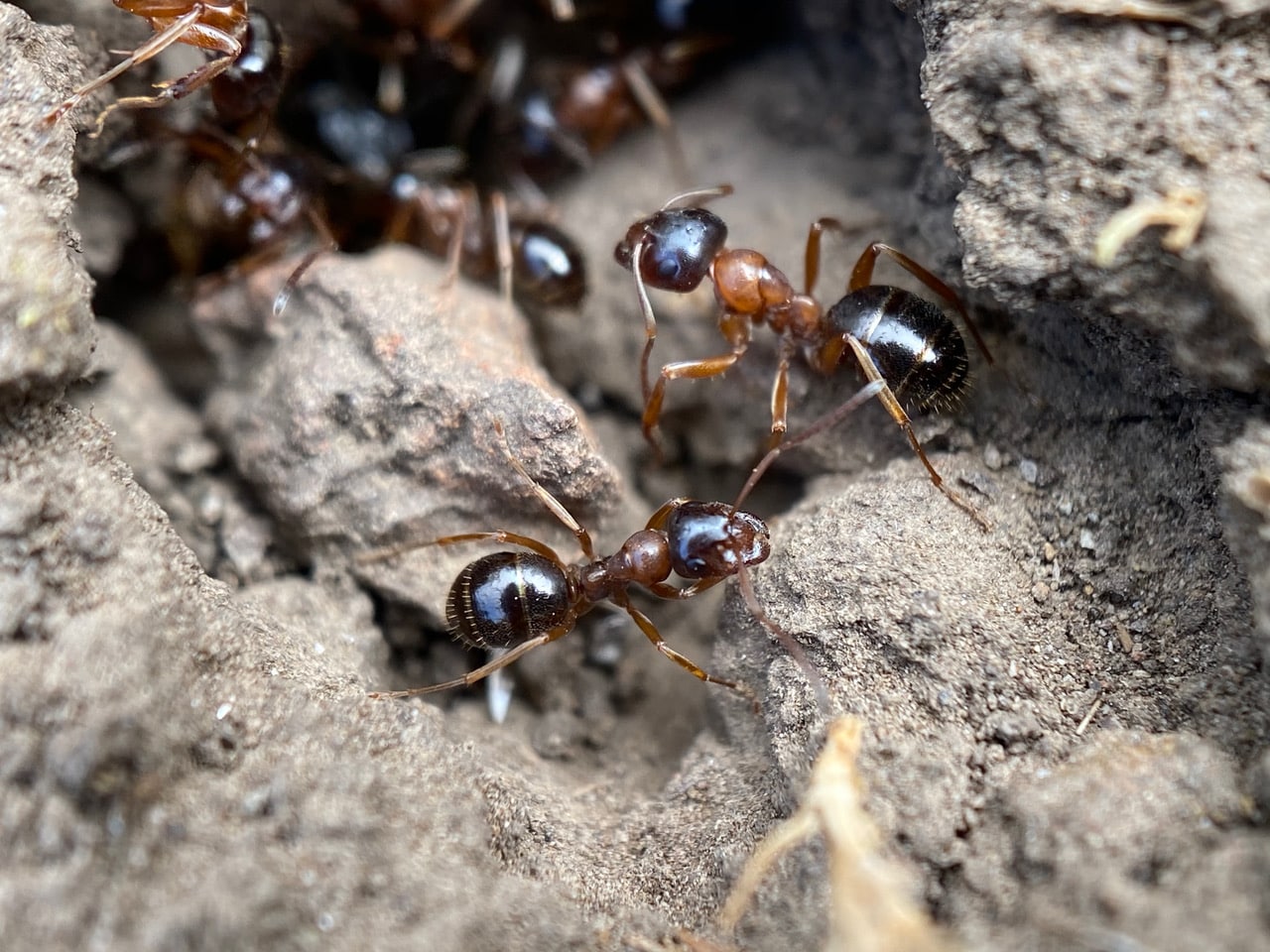
There is a size variation among the Formica worker ants, but they do not belong to separate castes. There’s little morphological distinctions and specialiazation among these workers.
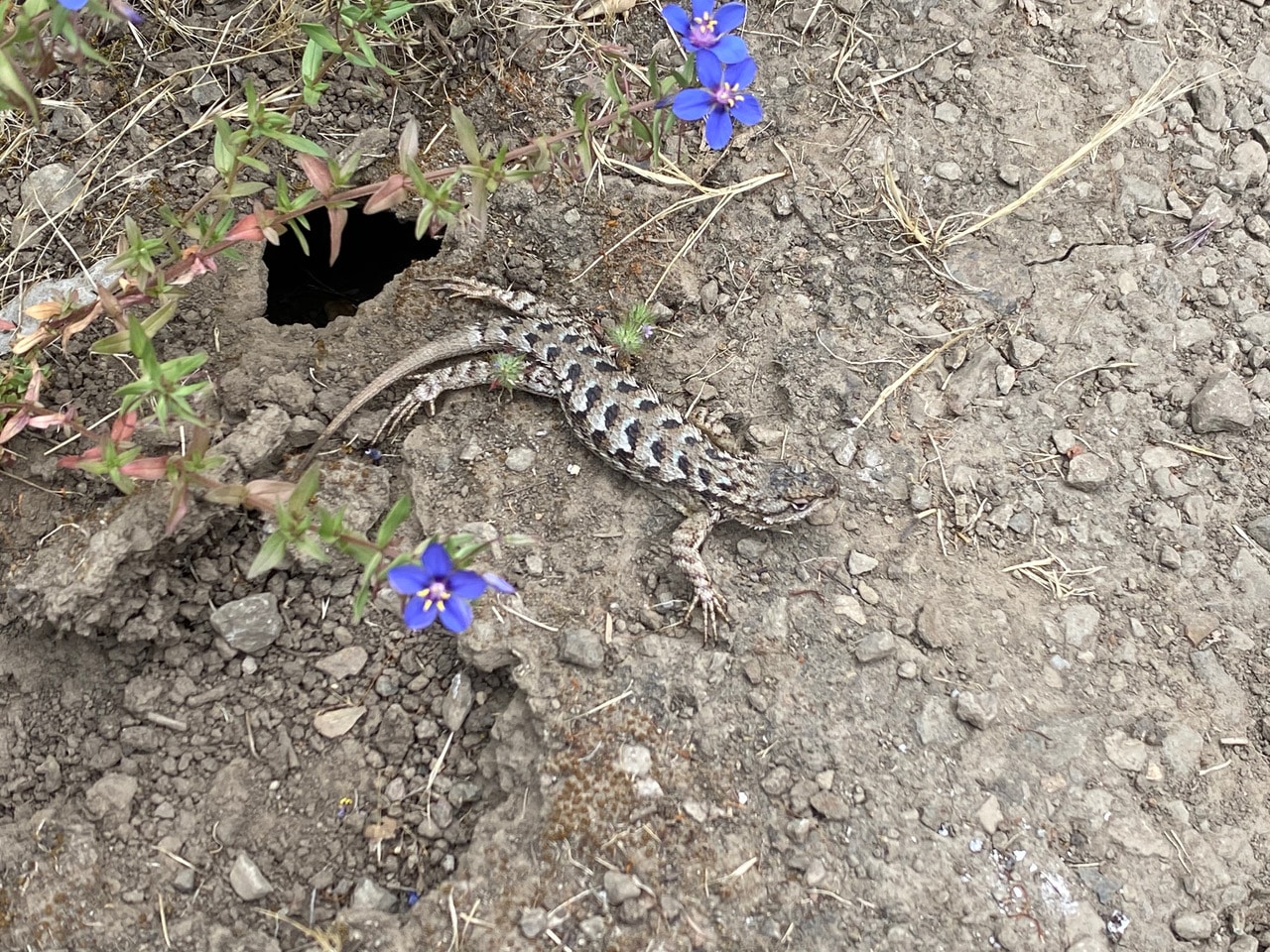
A beautifully marked Western Fence Lizard greets me on the side of the trail. Is it freshly molted?
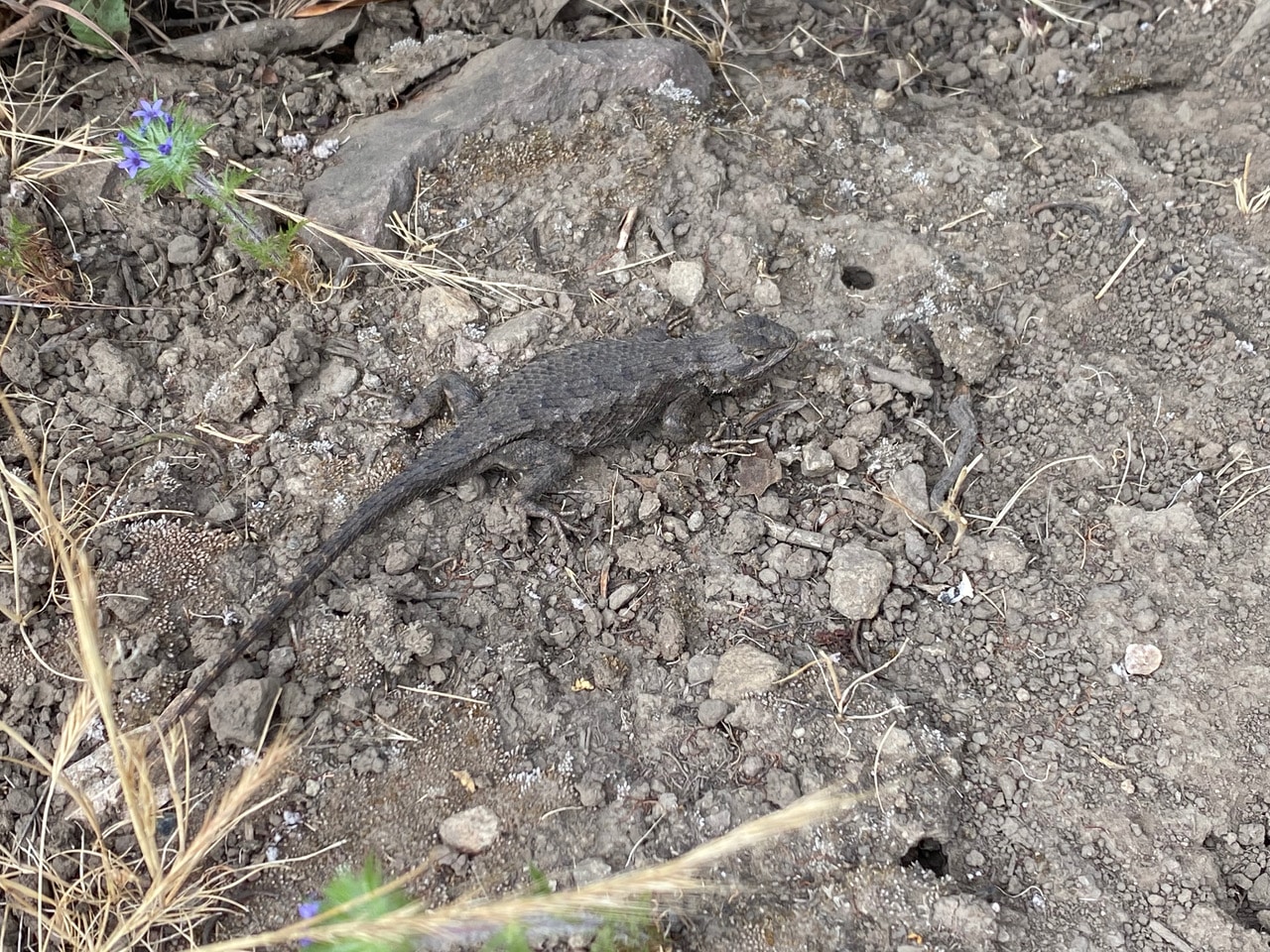
Just a few yards further, a furtive and much darker lizard is hanging out around some holes in the bare ground. Are those holes the nest entrances of ground nesting bees? Do lizards hunt bees? In early spring this year I saw a young lizard make an unsuccessful leap for a Digger Bee, Anthophora sp. that disappeared into its borrow in the nick of time.