

Pollinator Post 6/24/25

Taking a walk at Shoreline Park in Bay Farm this windy afternoon, I don’t expect to take any pictures.
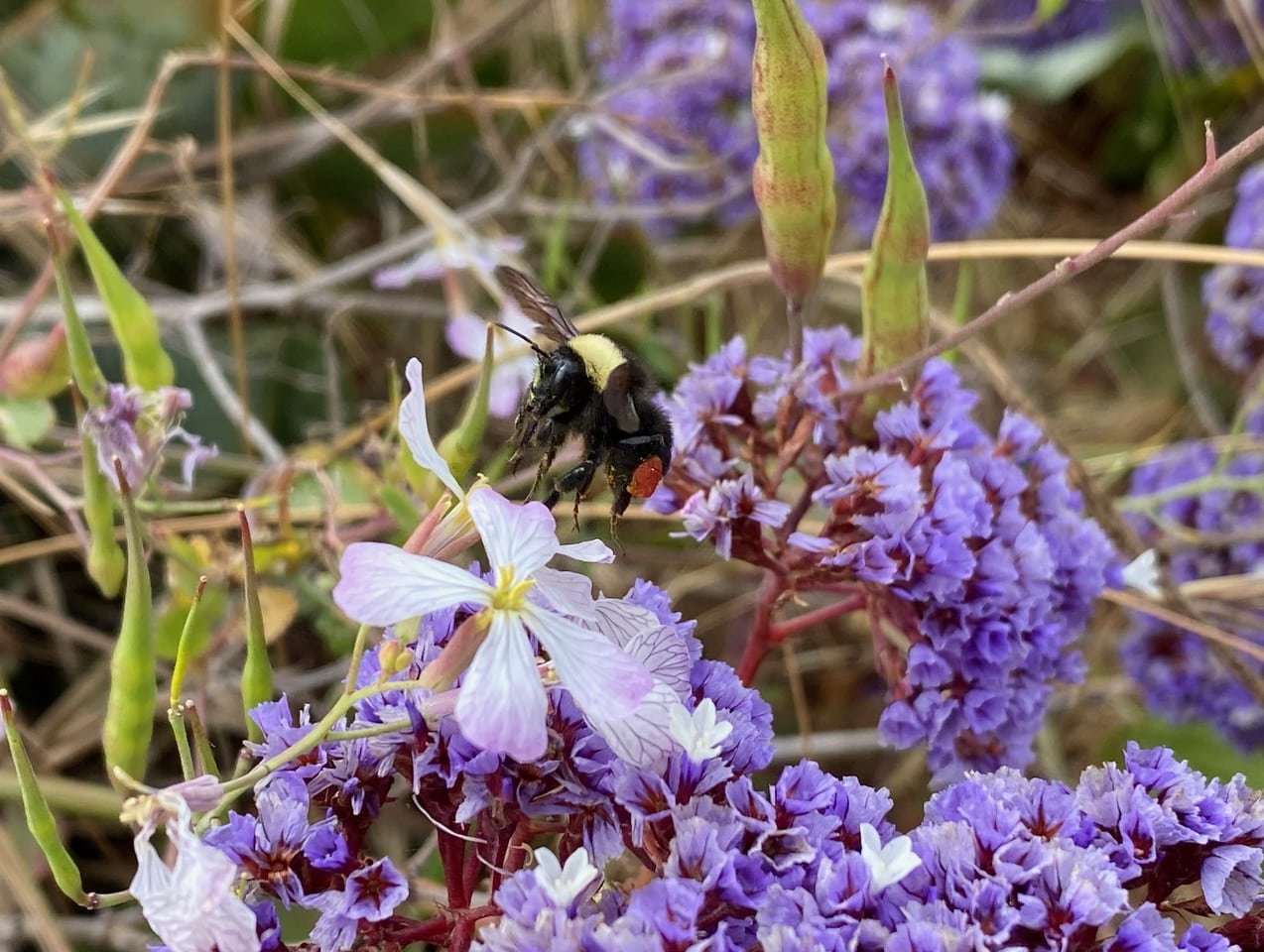
The only insects out foraging seem to be a few hardy bumble bees who can fly in this wind. I take notice of this bumble bee on Perez’s Sea Lavender, Limonium perezii because she has bright orange pollen in her corbiculae (pollen baskets), obviously gathered from other flowers.

As the bee turns to clean her tongue, I notice that she has a black head. She is not a Yellow-faced Bumble Bee!
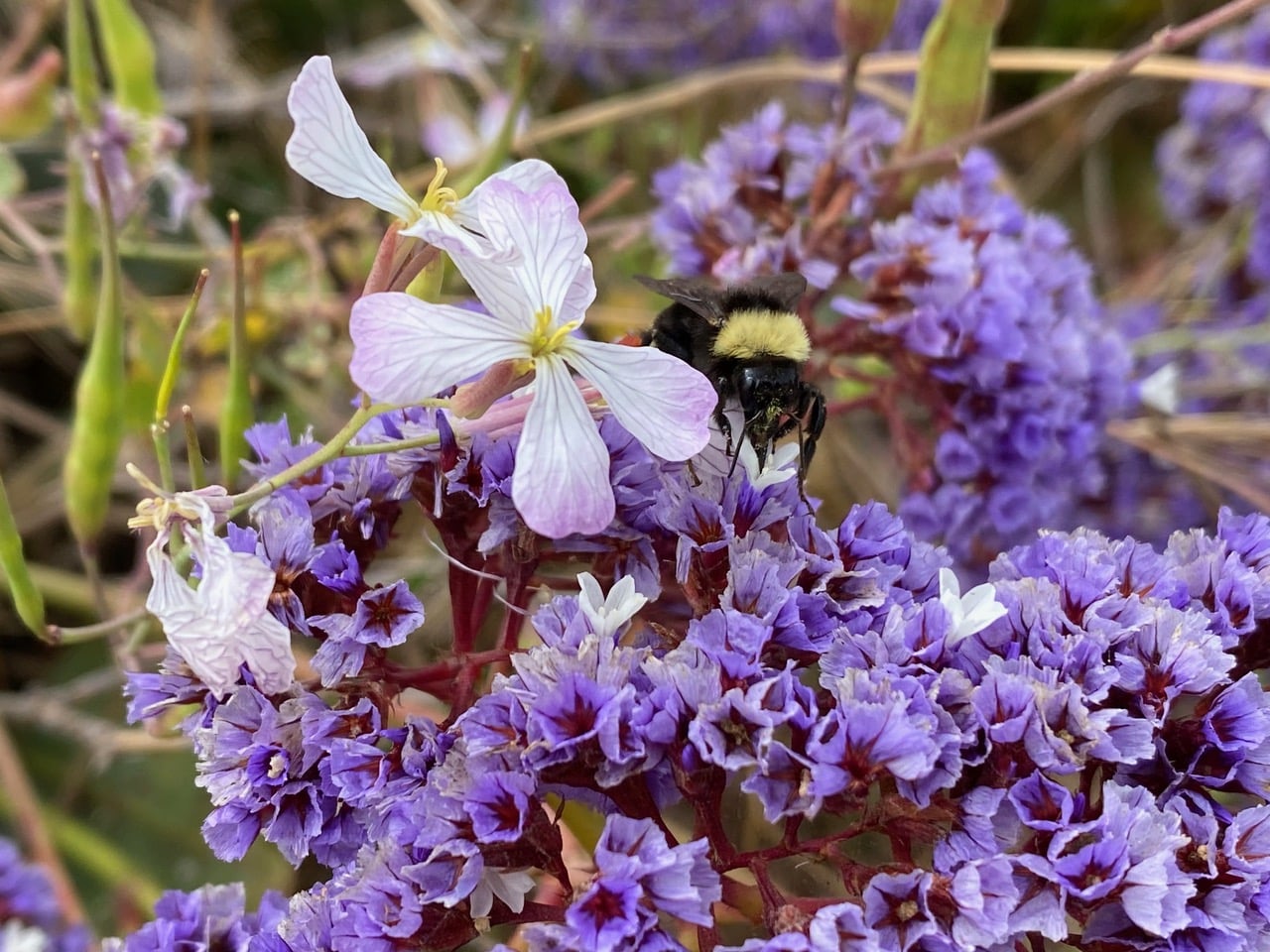
There, definitely black head!
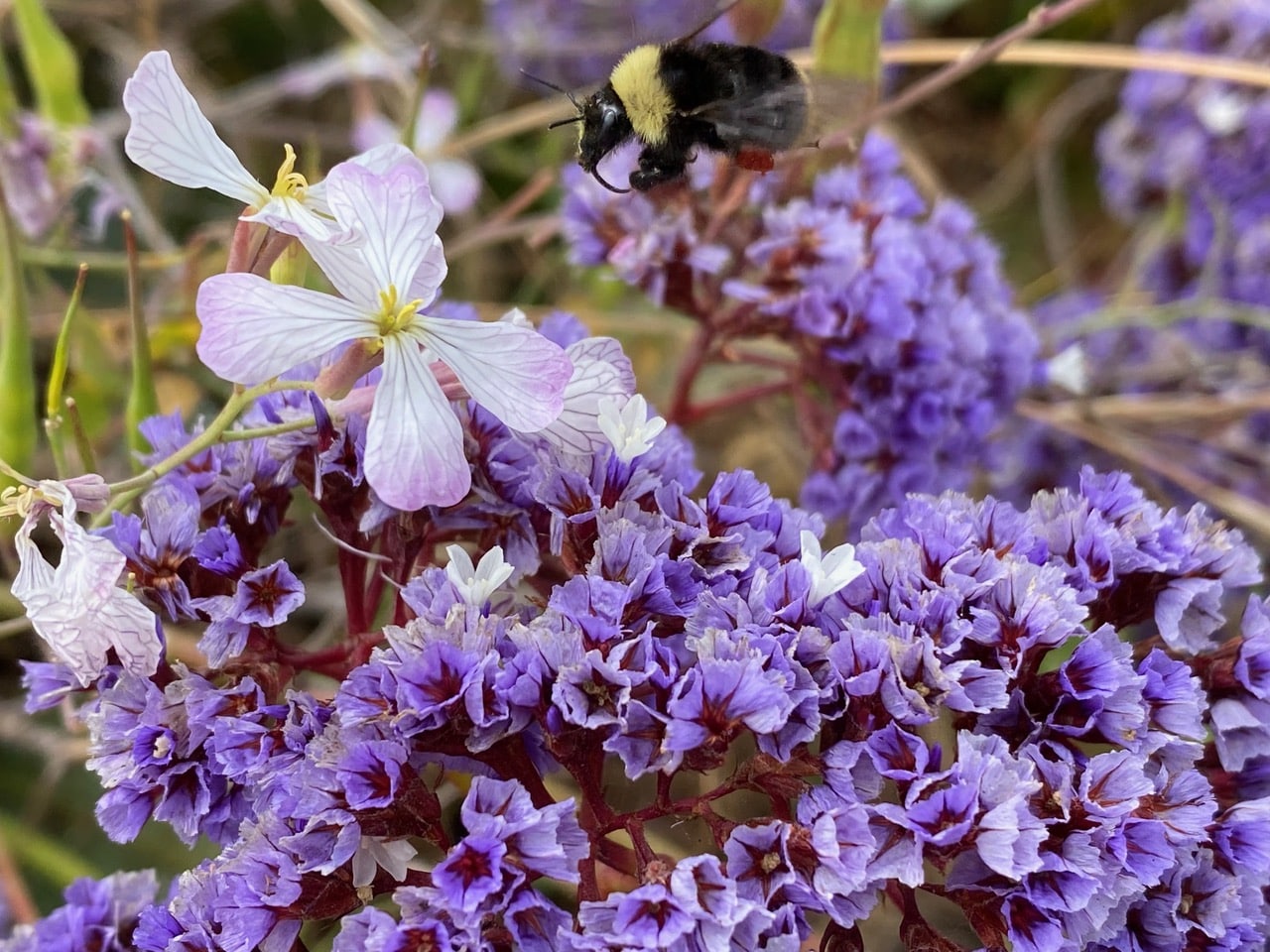
She’s a California Bumble Bee, Bombus californicus (family Apidae).
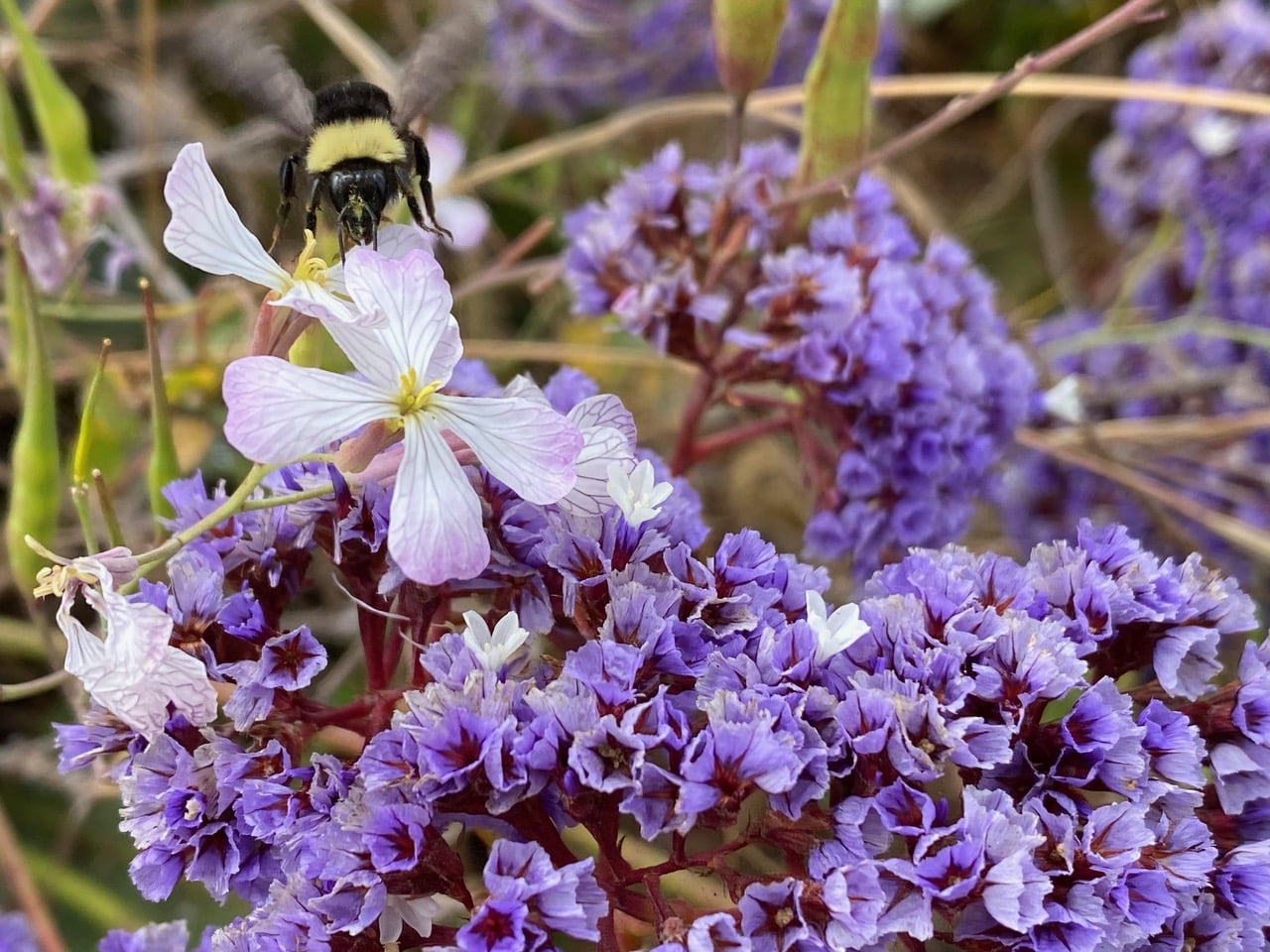
Another lucky frontal head shot.

The bee is now taking nectar from a Wild Radish flower. I have occasionally seen California Bumble Bees around here in Alameda, but they have always been males. This is one of the few females I have ever seen. The pollen in her corbiculae helps identify her gender. Male bees do not collect pollen, neither do they have the pollen baskets for the job.
The pollen collecting apparatus in Apidae bees, which include honey bees and bumble bees, is commonly called a “pollen basket” or corbicula. This region is located on the tibia of the hind legs and consists of hairs surrounding a concave region. After the bee visits a flower, she begins to groom herself and brushes the pollen down toward her hind legs and packs the pollen into her pollen basket. A little nectar mixed with the pollen keeps it all together like putty, and the stiff hairs surrounding the pollen basket hold it in place. Remarkably bees are able to fly while carrying up to a third of their body weight in pollen.
.jpg)
Bombus californicus, the California Bumble Bee, is found in Central and the western half of North America. The species is now classified as Vulnerable by the IUCN. It was the most common bumble bee in California until about the 1990s when its numbers and distribution began to decline. Many factors may have contributed to its decline, including invasive species, pesticide use, commercial bumble bee rearing, habitat destruction, and climate change.
Although morphologically the species is quite variable, the “typical” color pattern of female B. californicus is black with only a single strong yellow band anteriorly on the thorax, and another single yellow band near the apex of the abdomen. Males exhibit considerably more variation.
The California Bumble Bee is an important pollinator in alpine environments in its native range. They are social bees having a queen and workers. Their colonies last for one year. New queens overwinter, usually underground, and found new colonies from scratch the following year. Queens emerge from April through mid July. Workers are present from April to September. The species is known to pollinate sage, blueberry bushes, red clover, California poppies, and many other species of flowers.
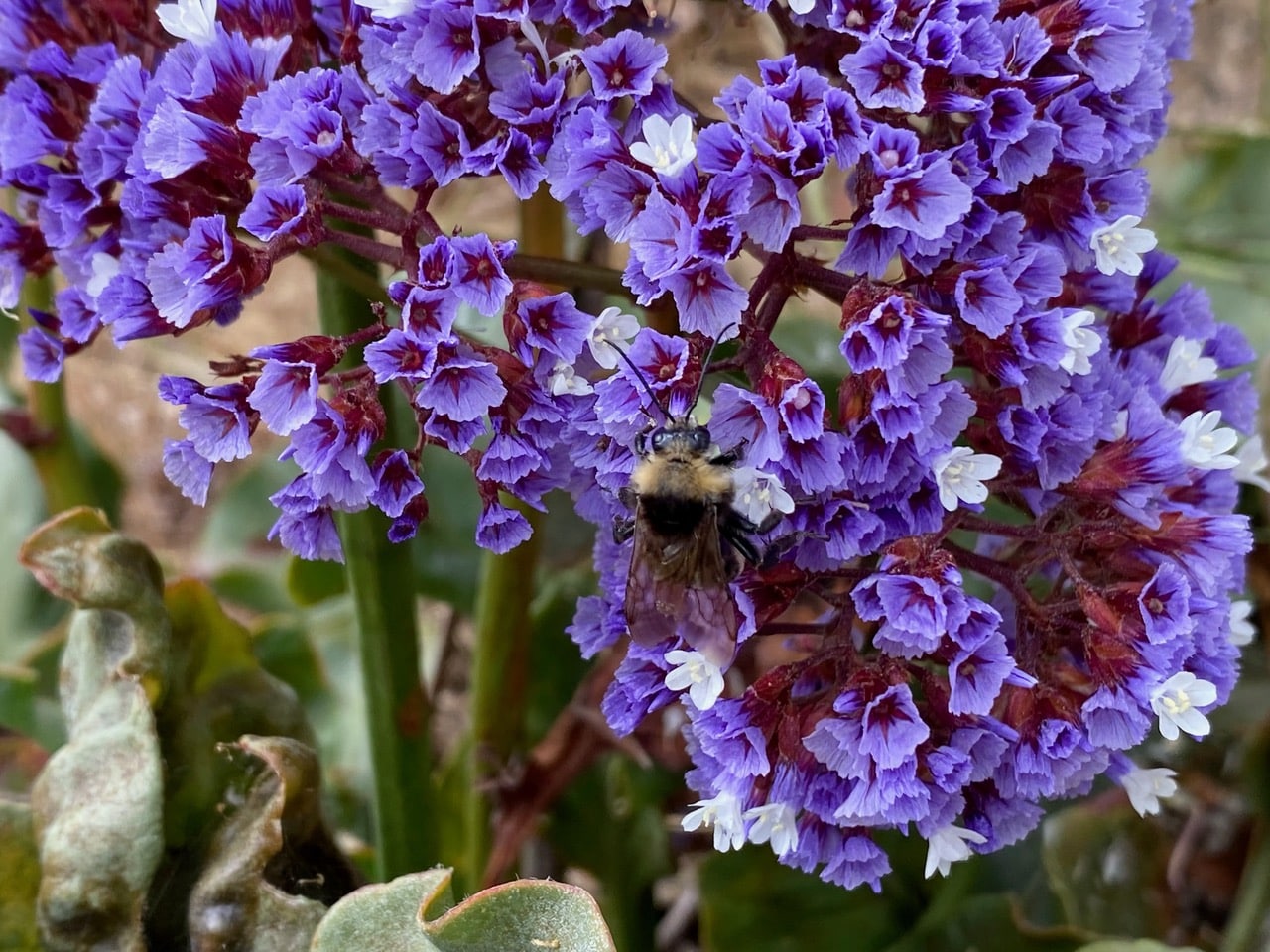
That Bumble Bee has a black head and long antennae. A male California Bumble Bee?
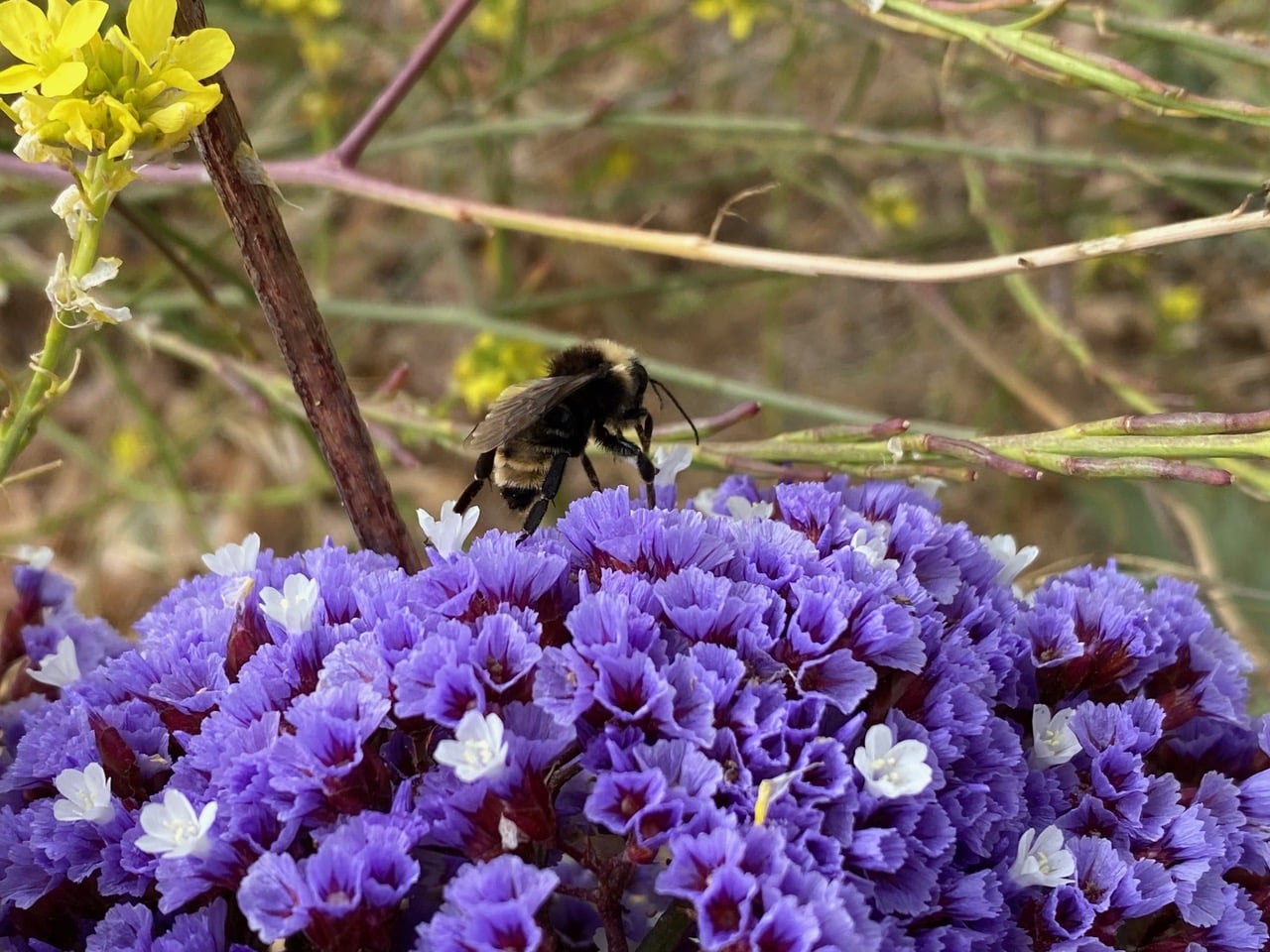
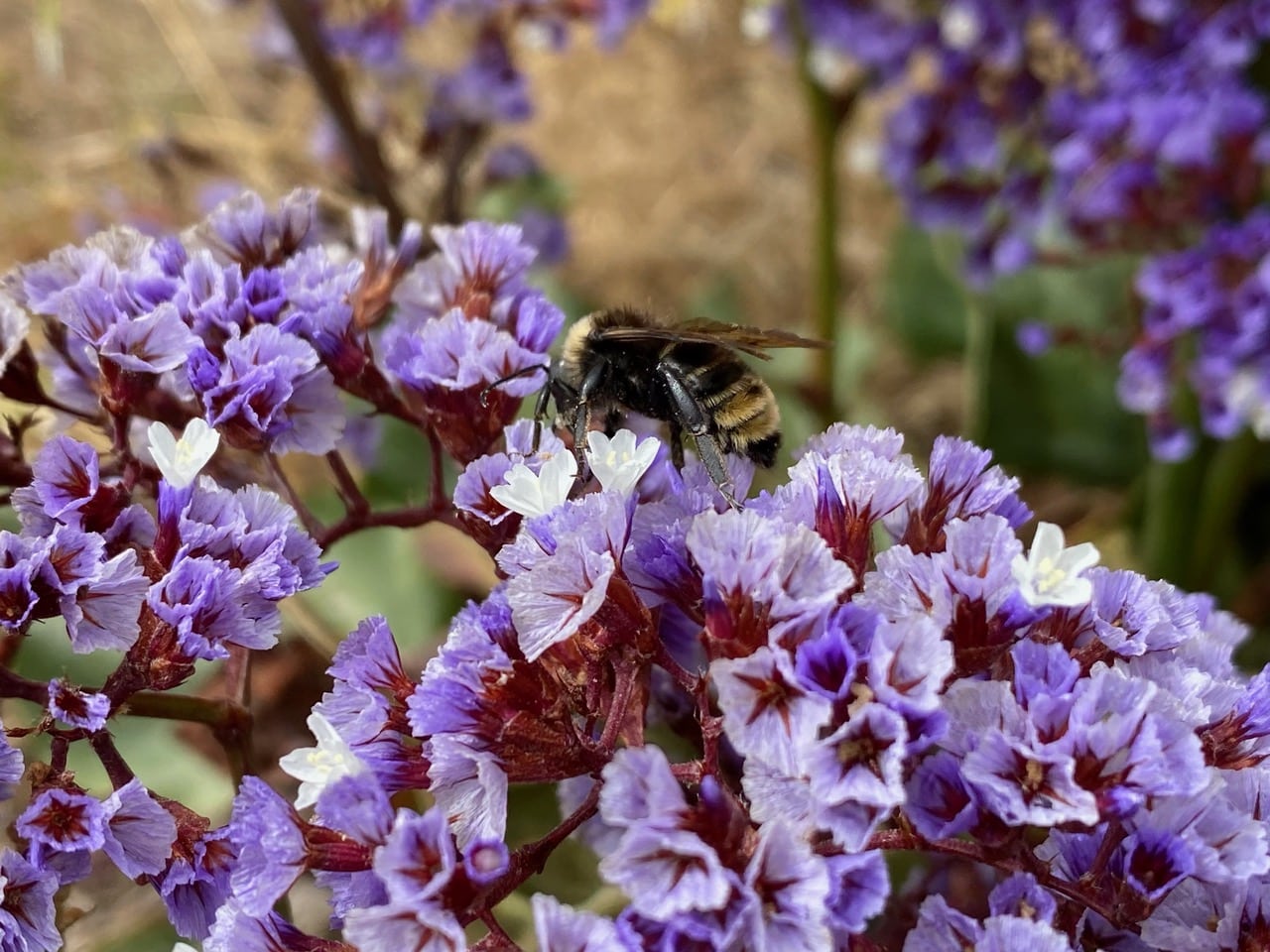
The male California Bumble Bees around here tend to have more yellow bands on their abdomen. Note the absence of pollen basket on the tibia of his hind leg.

While the bee cleans his tongue, we get a good look at his black head. Alameda appears to have a healthy population of California Bumble Bees!