

Pollinator Post 6/24/23 (2)

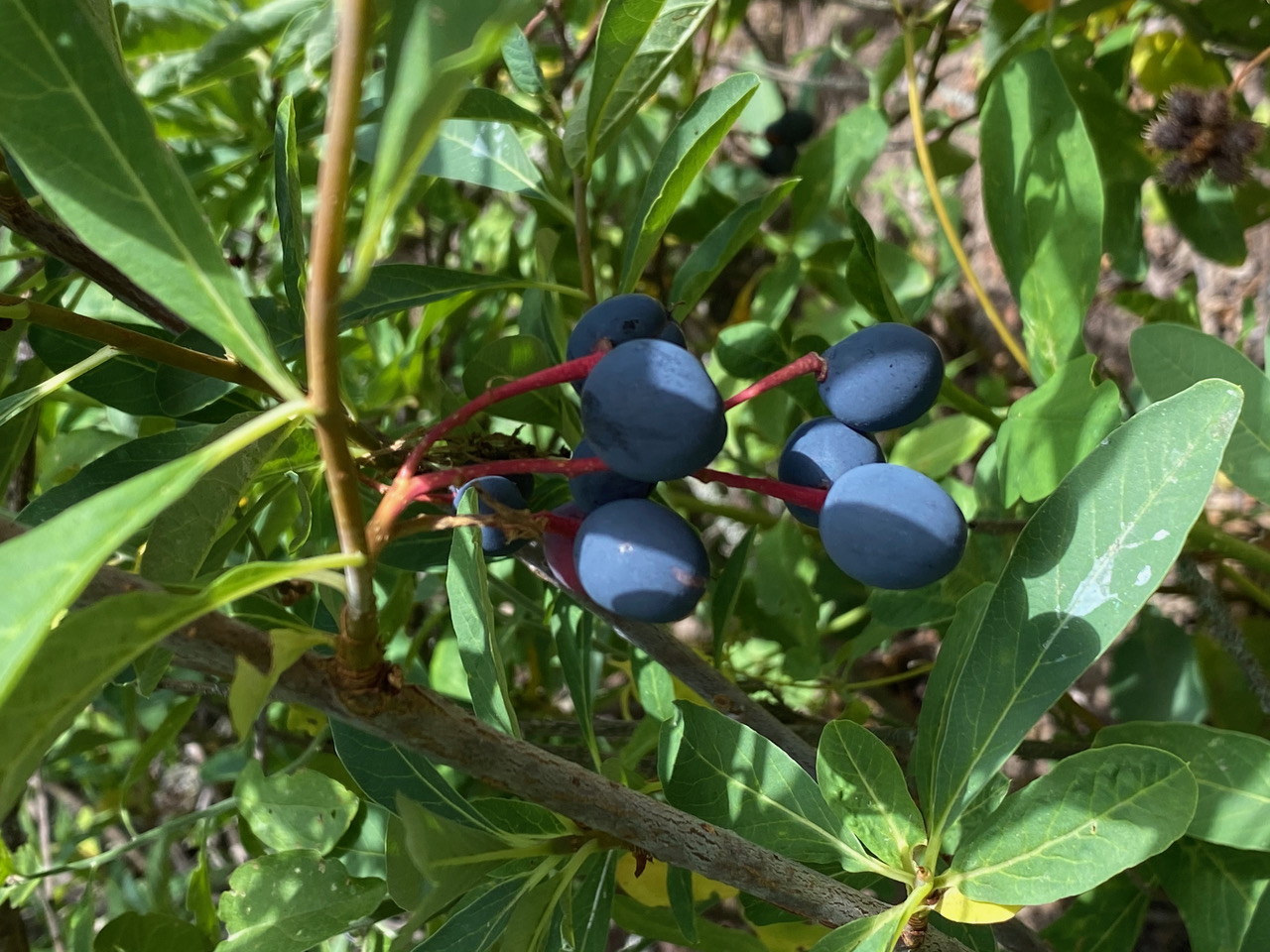
Ooh, all the berries on the Osoberry, Oemleria cerasiformis have fully ripened!
The 1/2 inch fruit of Osoberry, numbering up to 5 per flower, start out tan to pale orange, transition through pink to reddish purple, then ripens bluish black with a thin waxy coat. The seed is a stone, or pit, that contains cyanoglucosides (the bitter, toxic compounds also found in almonds). The fruits are edible and are eaten by birds and small mammals.

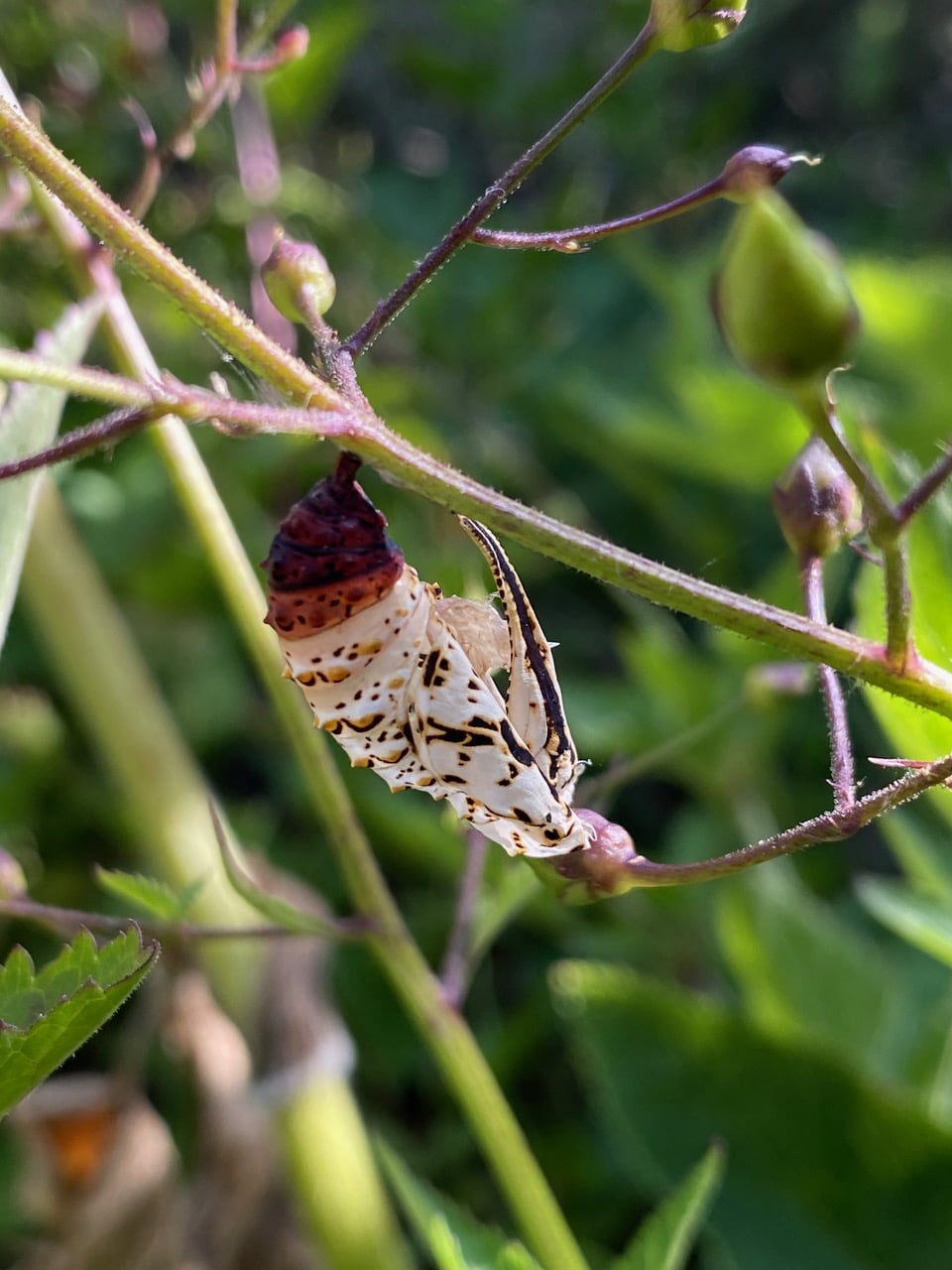
I walk up and down this stretch of Skyline Trail looking for the Variable Checkerspot chrysalis I found on 6/19. I have marked the Coyote Brush next to the chrysalis with a red piece of yarn. After a while I realized that someone has been pruning the poison oak and coyote brush along the trail. I find the spot – indeed some branches have been lopped off, together with the tag on the Coyote Brush. What about the chrysalis?
 This one is waiting on the young flower buds on the top.
 As the afternoon progresses, I begin to pick up wafts of a faint odor. I can’t call it a fragrance, as it does not smell flowery. It rather reminds me of some paint ingredient. I think it emanates from the Soap Plant flowers. I have not detected the smell at the Backbone area where I have gone to see the Soap Plant bloom on 6/15. Maybe it was too windy up there on the ridge for the odor to linger. This spot on Skyline Trail is relatively sheltered from winds, surrounded by tall shrubs. Wow, maybe the scent has summoned the Dance Flies?
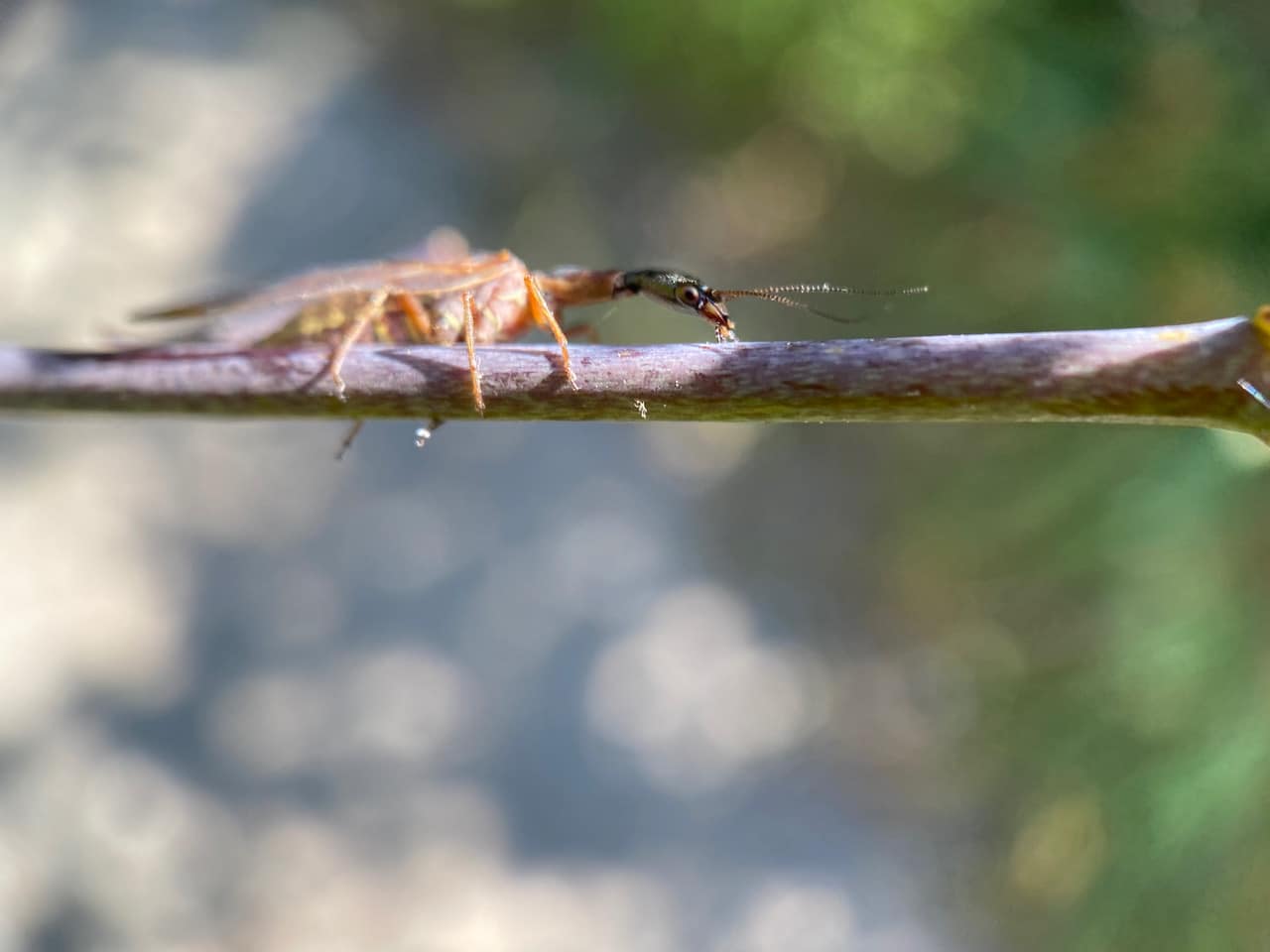 Then the predators begin to appear. The Snakeflies alight one by one, and stake out positions on the Soap Plant, and the adjacent Coyote Brush.
 This chubby female Snakefly has taken a prime position on a Coyote Brush facing the Bee Plant. There must be at least five others on the same plant that I can see in one glance. The air is thick with anticipation. It is hard to leave, knowing that the party is just about to start!
I search nervously through the tangles of Bee Plant branches and spot the chrysalis. The butterfly has apparently emerged successfully from the chrysalis! Oh, what a happy sight!
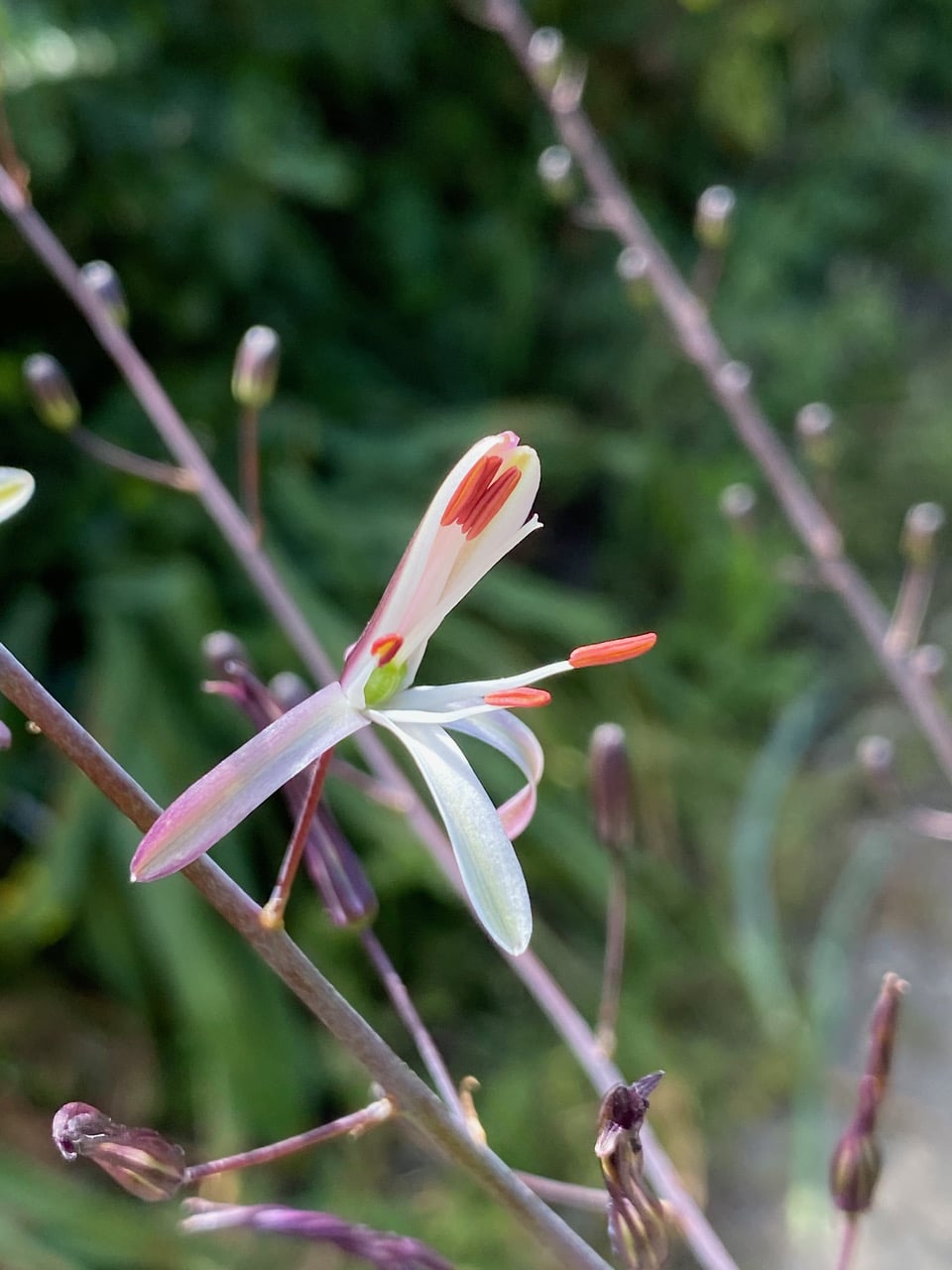
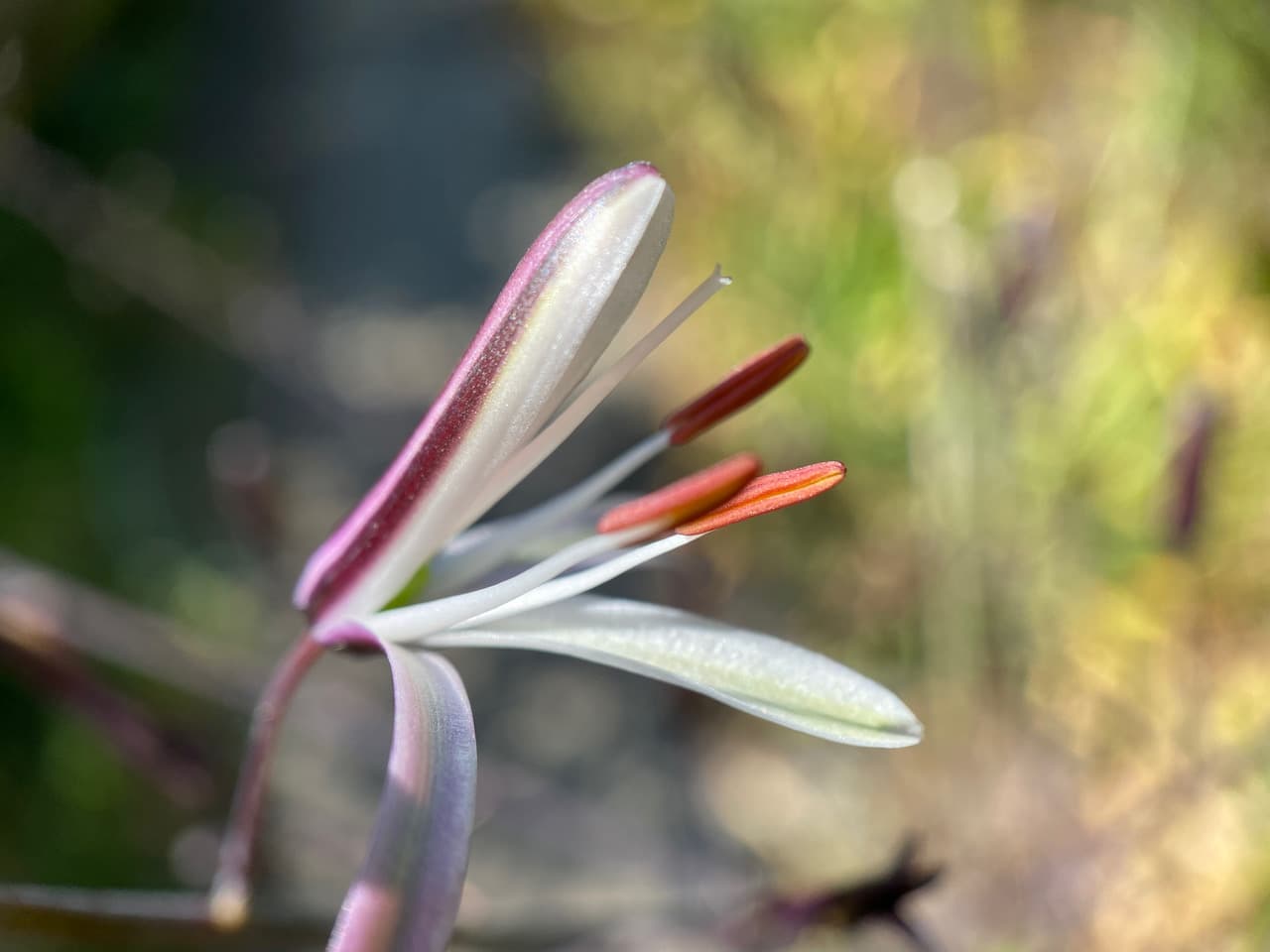
There’s a patch of a dozen robust Soap Plants growing along this stretch of the trail. Little white flowers are just beginning to open up when I walk past at around 3:30 pm!
Soap Plant, Chlorogalum pomeridianum is a perennial that grows from a bulb. The plant is easily recognized by its linear, wavy-edged leaves. The generic name Chlorogalum means “green milk”, referring to the green juice exuded by a broken leaf. The specific epithet pomeridianum, or “past mid-day”, is the Latin phrase which gave rise to our abbreviation “p.m.” This refers to the plant’s trait of opening its flowers late in the day.
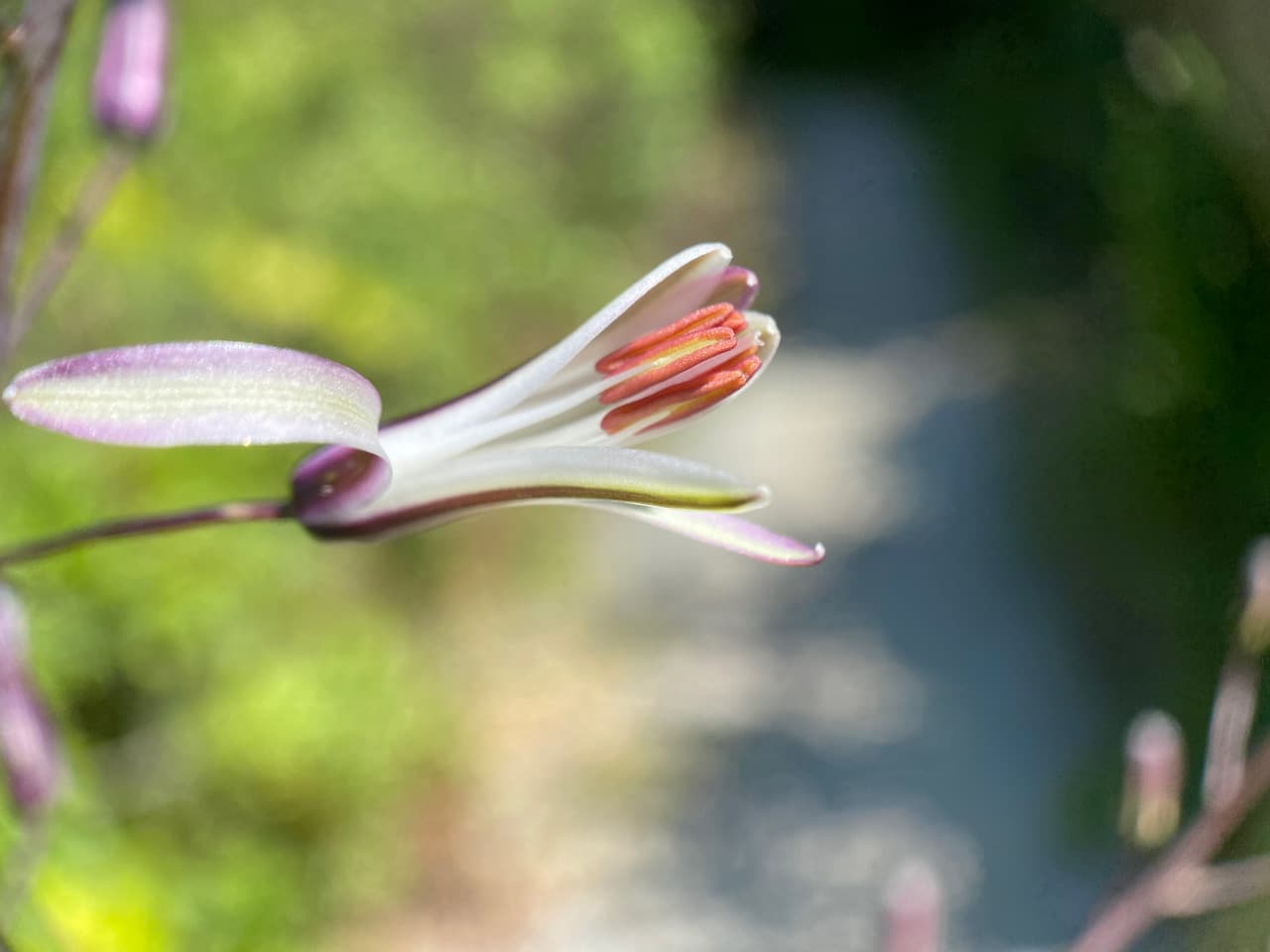
The white star-like flowers have a very short life – in the late afternoon one row of buds opens, starting from the bottom of the long stalk. Each flower remains open through the night, but twists closed (the wilted tepals twist around the fertilized ovary) by the morning and never opens again.
The flowers are known to be pollinated during the afternoon by large bees (honey bees, carpenter bees, and bumble bees), and, after dark, by sphingid moths.
The small flowers open up one petal at a time, freeing the large reproductive structures within.
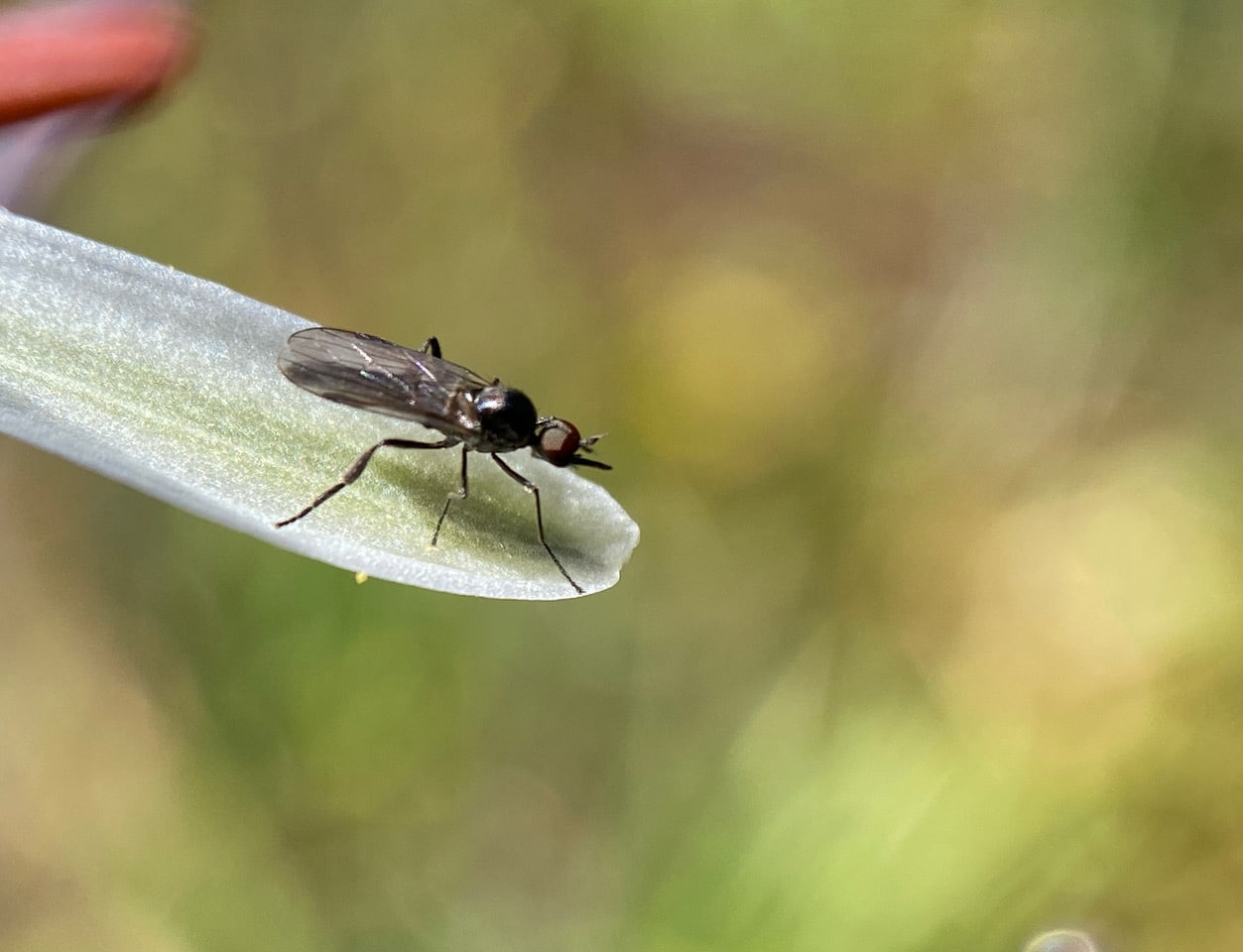
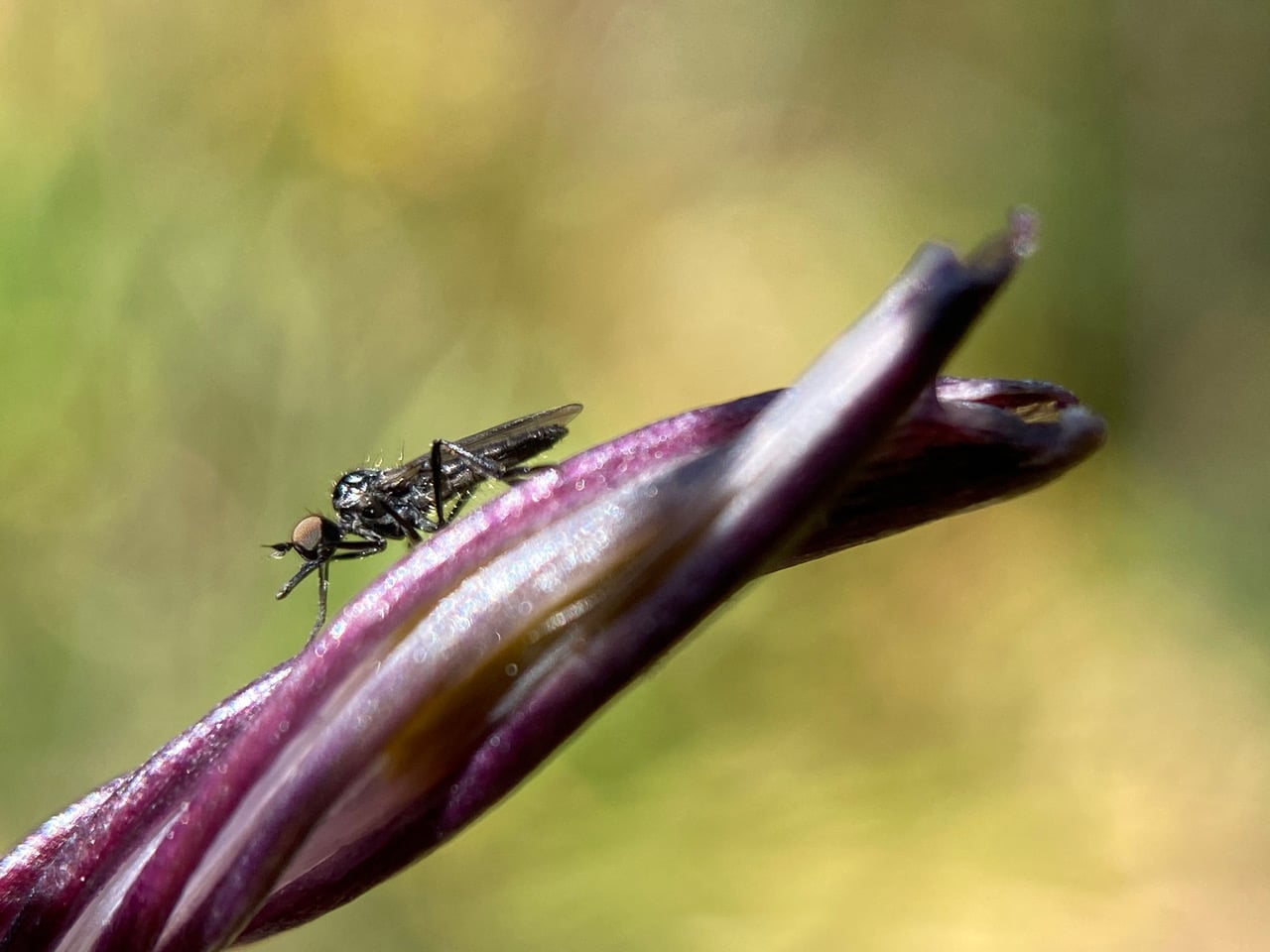
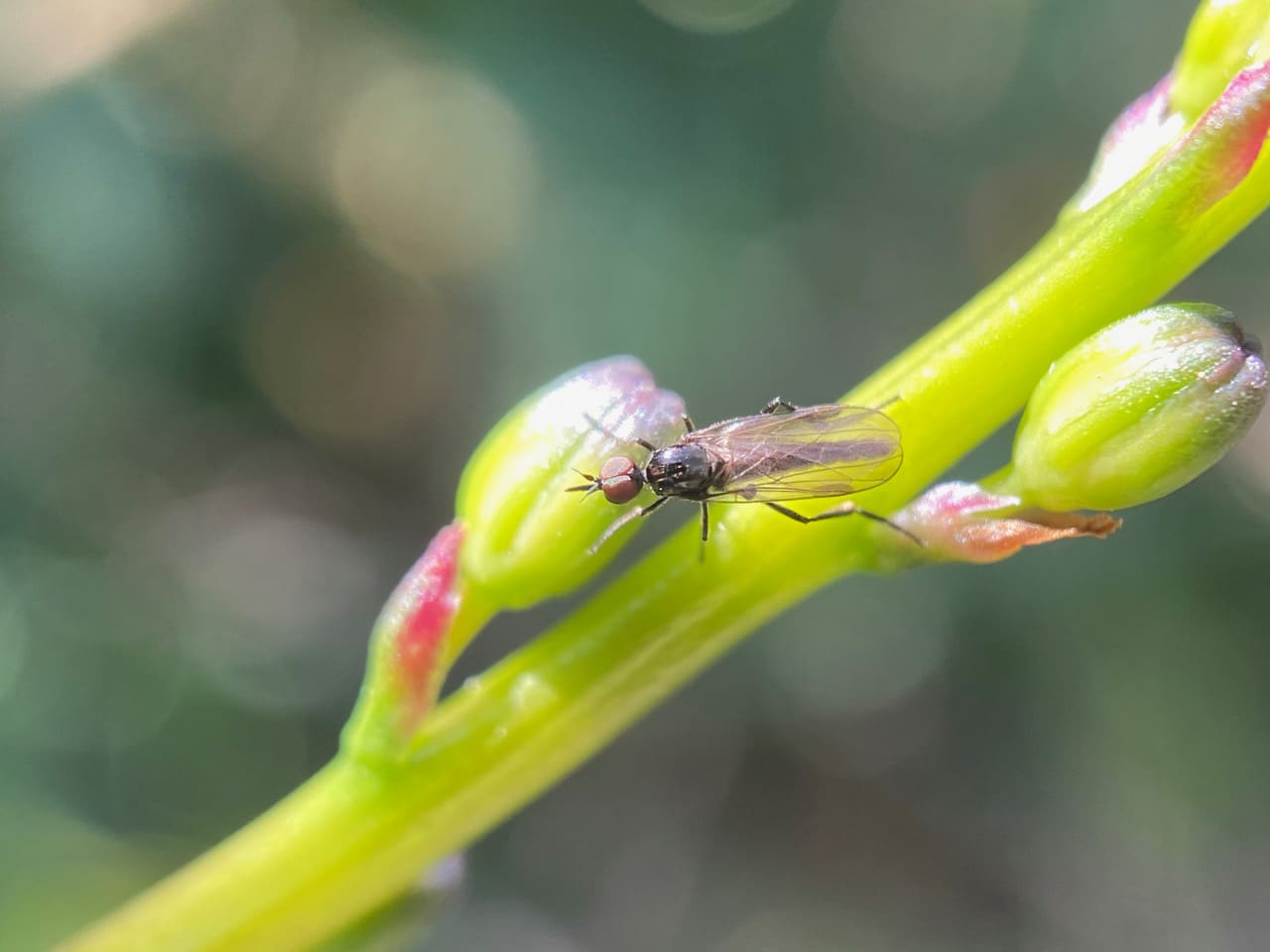
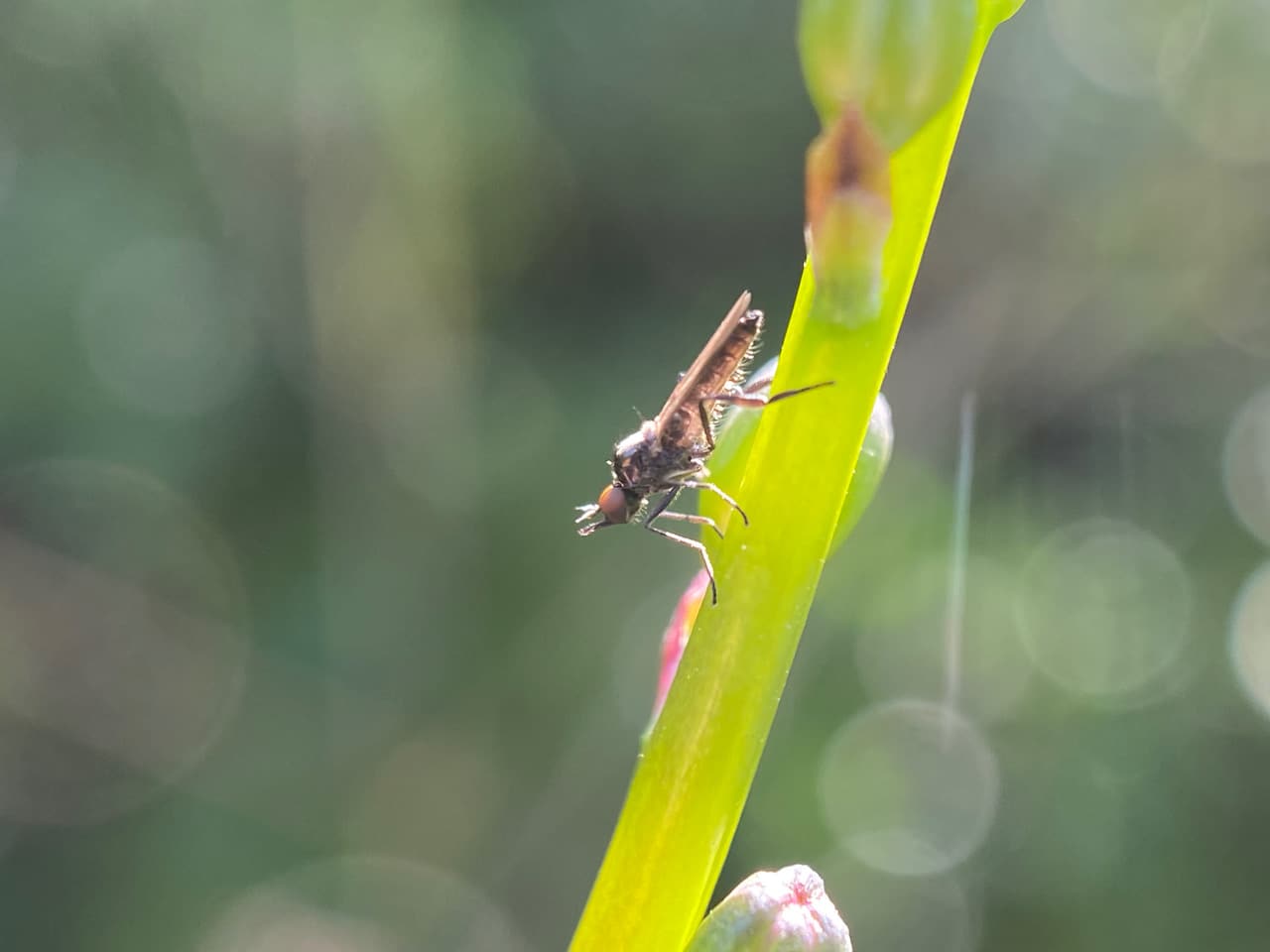
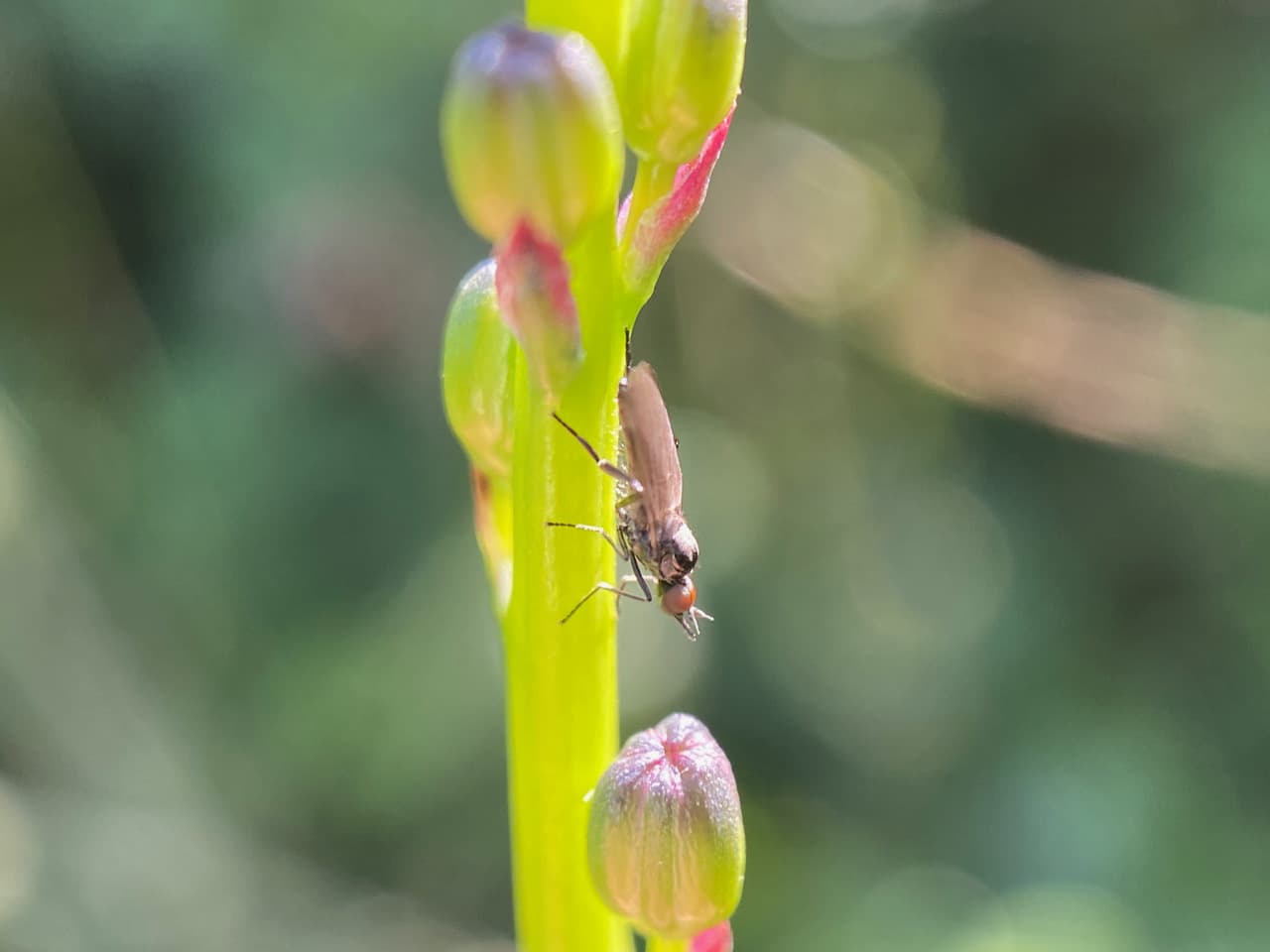
As I linger around the Soap Plants, I begin to see Dance Flies gathering. They bob up and down in the air right over the opening flowers, as if in gleeful anticipation of a nectar feast. A few land on the plant. Are these flies crepuscular? nocturnal?
Dance Flies, in the family Empididae, get their name from the habit of males of some species to gather in large groups and dance up and down in the air in the hopes of attracting females. They are predominantly predatory and they are often found hunting for small insects on and under vegetation in shady areas. Both genders may also drink nectar. Male dance flies give their sweeties a nuptial gift to eat while they mate. The gift is thought to enable her to complete the development of her eggs. Males may wrap their gifts in balloons of silk or spit, hence the other common name of Balloon Flies.
This Dance Fly has landed on a spent, twisted flower from the night before.
This one is waiting on the young flower buds on the top. The low afternoon sun lights up the hairs on the underside of this Dance Fly’s abdomen.
As the afternoon progresses, I begin to pick up wafts of a faint odor. I can’t call it a fragrance, as it does not smell flowery. It rather reminds me of some paint ingredient. I think it emanates from the Soap Plant flowers. I have not detected the smell at the Backbone area where I have gone to see the Soap Plant bloom on 6/15. Maybe it was too windy up there on the ridge for the odor to linger. This spot on Skyline Trail is relatively sheltered from winds, surrounded by tall shrubs. Wow, maybe the scent has summoned the Dance Flies?Then the predators begin to appear. The Snakeflies alight one by one, and stake out positions on the Soap Plant, and the adjacent Coyote Brush. Snakeflies are a group of predatory insects comprising the order Raphidioptera. They are a relict group, having reached their apex of diversity during the Cretaceous before undergoing substantial decline. Adult Snakefly has a notably elongated thorax which, together with the mobile head, gives the group their common name of snakily. The body is long and slender and the two pairs of long membranous wings are prominently veined. The head is long and flattened and heavily sclerotized. The mouthparts are strong and relatively unspecialized, being modified for biting. The large compound eyes are at the sides of the head. Females have a large and sturdy ovipositor which is used to deposit eggs into crevices or under bark. Snakeflies are holometabolous insects with four-stage life cycle consisting of eggs, larvae, pupae and adults. Both adults and larvae are predators of soft-bodied arthropods such as aphids and mites.
This chubby female Snakefly has taken a prime position on a Coyote Brush facing the Bee Plant. There must be at least five others on the same plant that I can see in one glance. The air is thick with anticipation. It is hard to leave, knowing that the party is just about to start!