

Pollinator Post 6/22/23 (3)
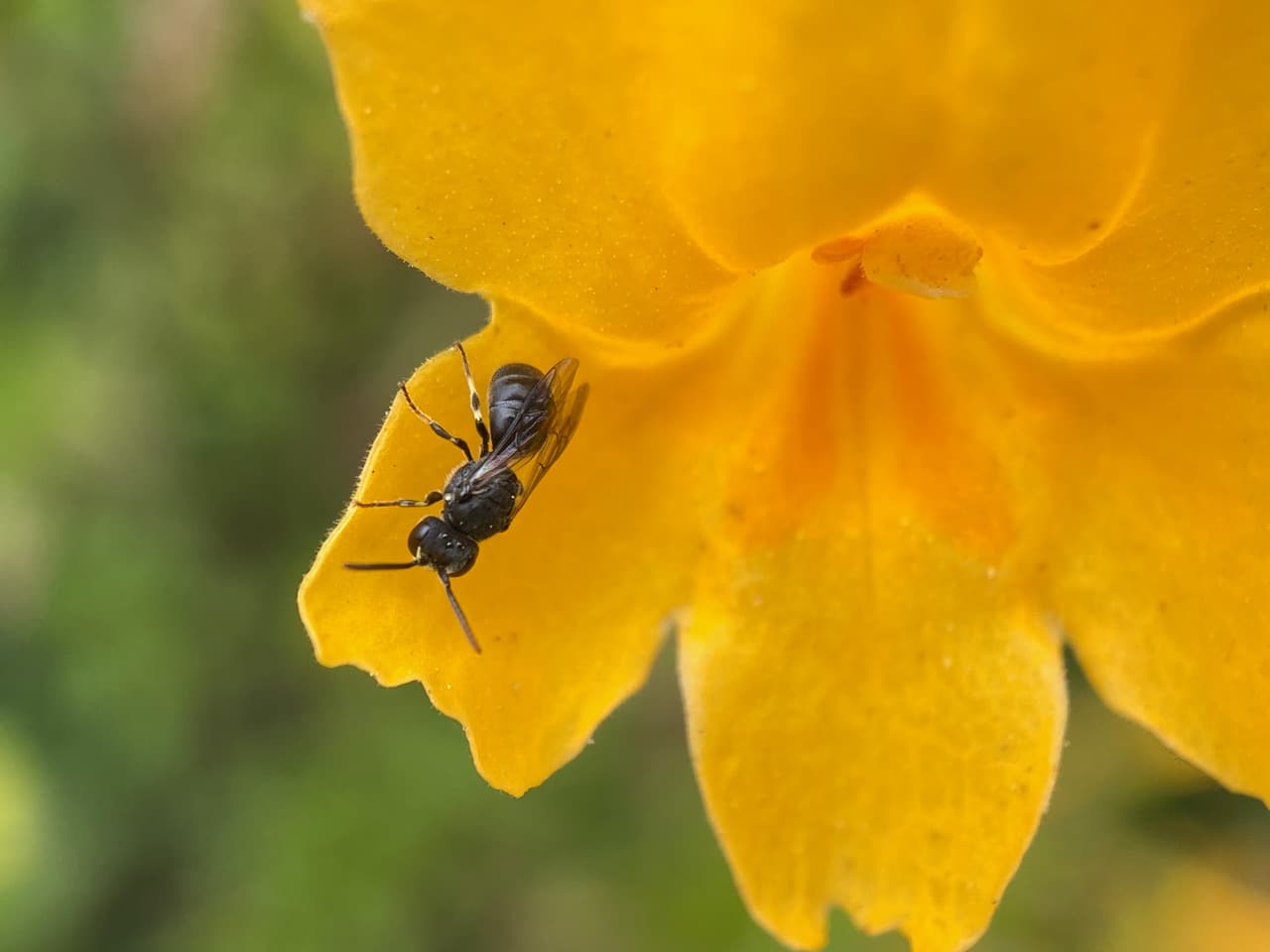 Most of the small insects visiting the Sticky Monkeyflowers, Diplacus aurantiacus today are the Masked Bees, Hylaeus sp. (family Colletidae). These were hardly seen earlier in cooler weather.
 Hylaeus (family Colletidae) are shiny, slender, hairless, and superficially wasp-like bees. They are small, 5 to 7 mm long, usually black with bright yellow or white markings on their face and legs. These markings are more pronounced on the males. Hylaeus do not carry pollen and nectar externally, they instead store their food in the crop and regurgitate it upon returning to their nests. They are primarily generalist foragers. Hylaeus are short-tongued, but their small body size enables them to access deep flowers. Hylaeus nest in stems and twigs, lining their brood cells with self-secreted cellophane-like material. They lack strong mandibles and other adaptations for digging, using instead pre-existing cavities made by other insects.
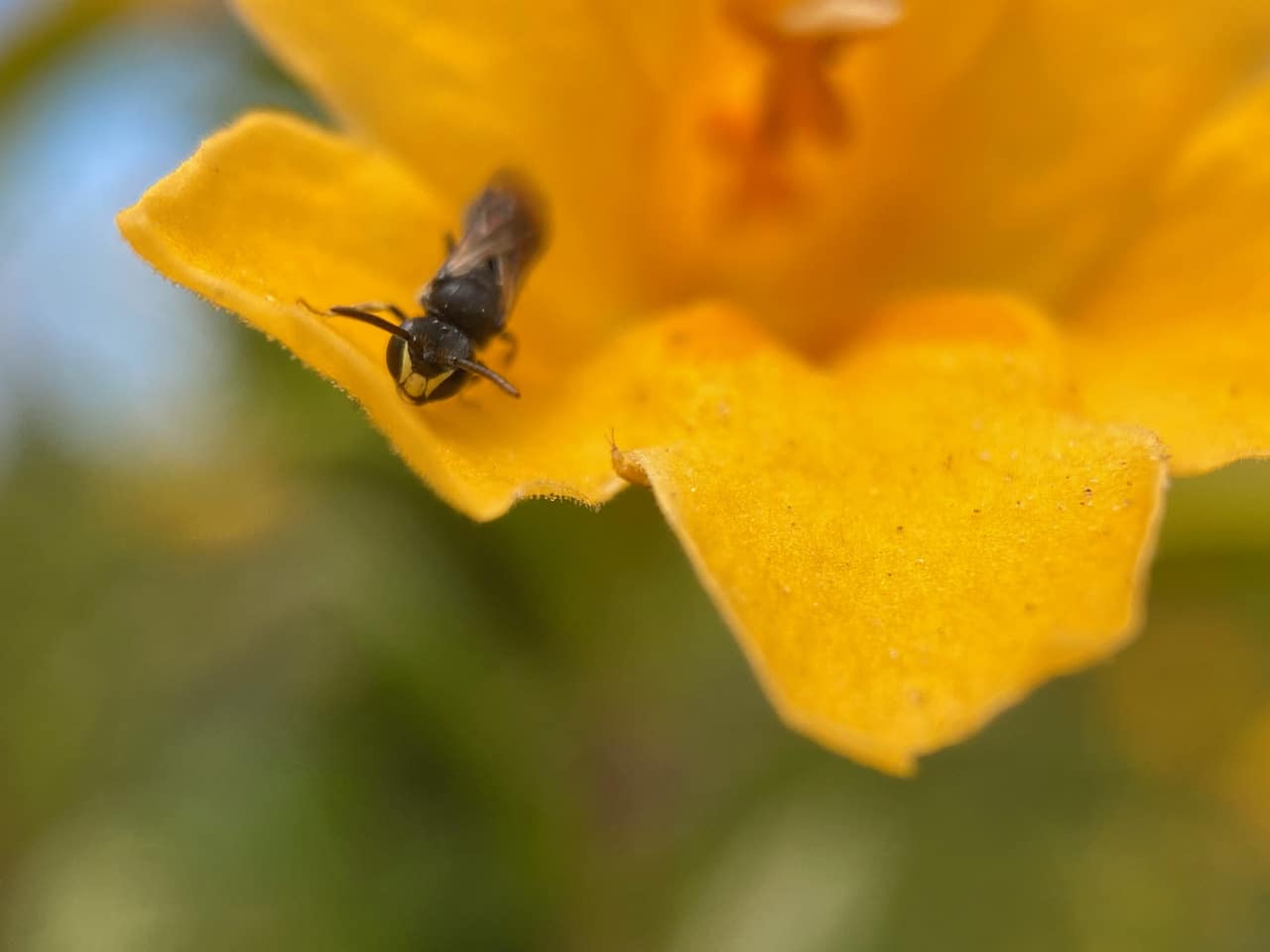
Yet another male!
In many solitary bees, males tend to emerge from their nests before the females. The female is able to determine the sex of her offspring while she’s laying her eggs. The fertilized eggs will develop into females, while those not fertilized with sperm will develop into males. This system of sex determination is termed haplo-diploidy. Female bees tend to lay female eggs first, in the back of the nest, while the male eggs are deposited in the cells closer to the entrance of the nest. The males, usually smaller, develop faster and emerge before the females, conveniently freeing the path for their sisters.
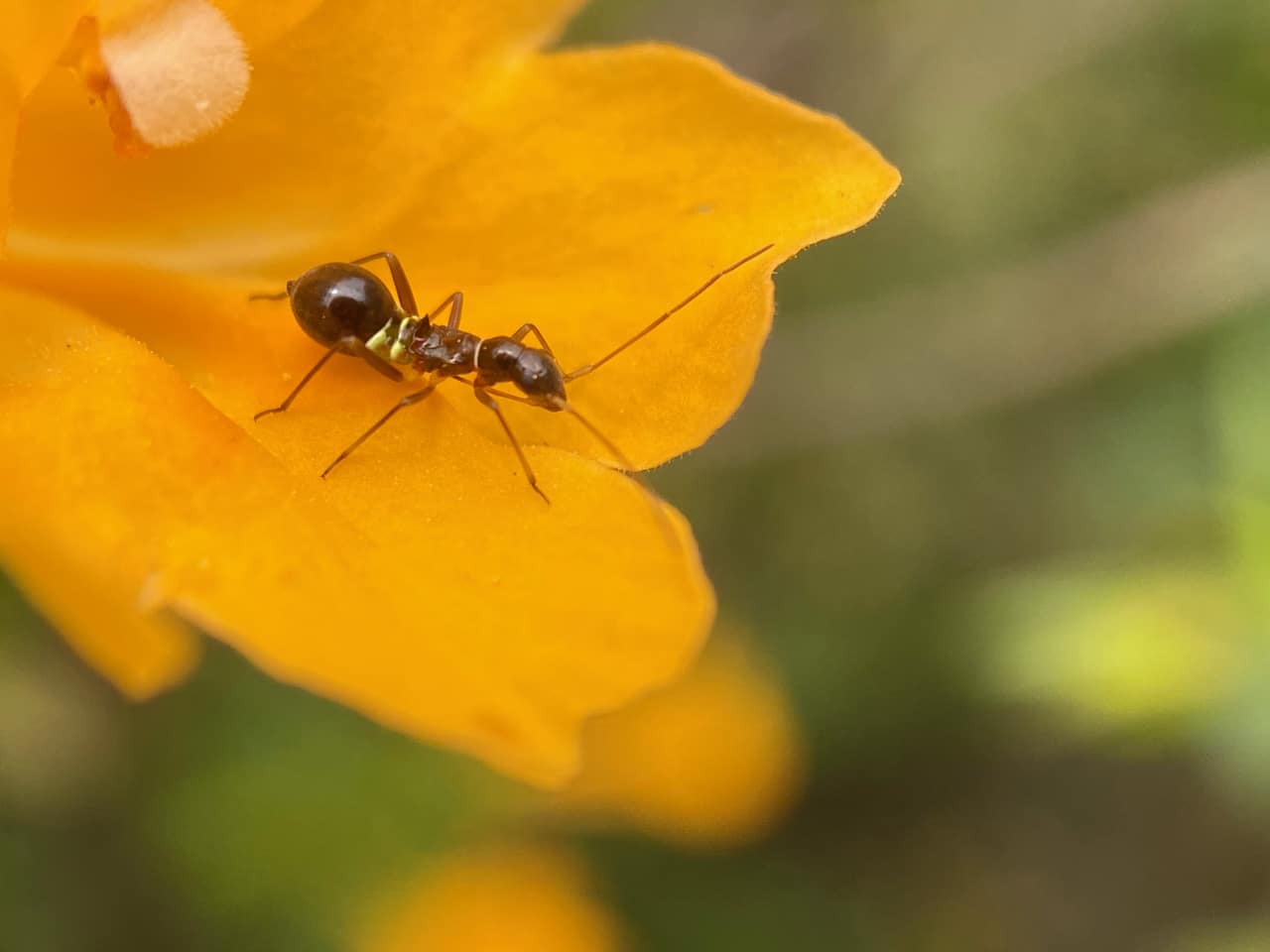
An ant-mimicking nymph of a Plant Bug, Closterocoris amoenus (family Miridae) is basking at the entrance of a Sticky Monkeyflower. Both the adults and nymphs seem to have an affinity for the Sticky Monkeyflower.
Mirid bugs are also referred to as plant bugs or leaf bugs. Miridae is one of the largest family of true bugs in the order Hemiptera. Like other Hemipterans, Mirids have piercing, sucking mouthparts to extract plant sap. Some species are predatory.
Ant mimicry or myrmecomorphy is mimicry of ants by other organisms. Ants are abundant all over the world, and potential predators such as birds and wasps normally avoid them as they are either unpalatable or aggressive. Spiders are the most common ant mimics. Additionally, many insects from a wide range of orders and families mimic ants to escape predation (protective mimicry), while others mimic ants anatomically and behaviorally to hunt ants in aggressive mimicry.
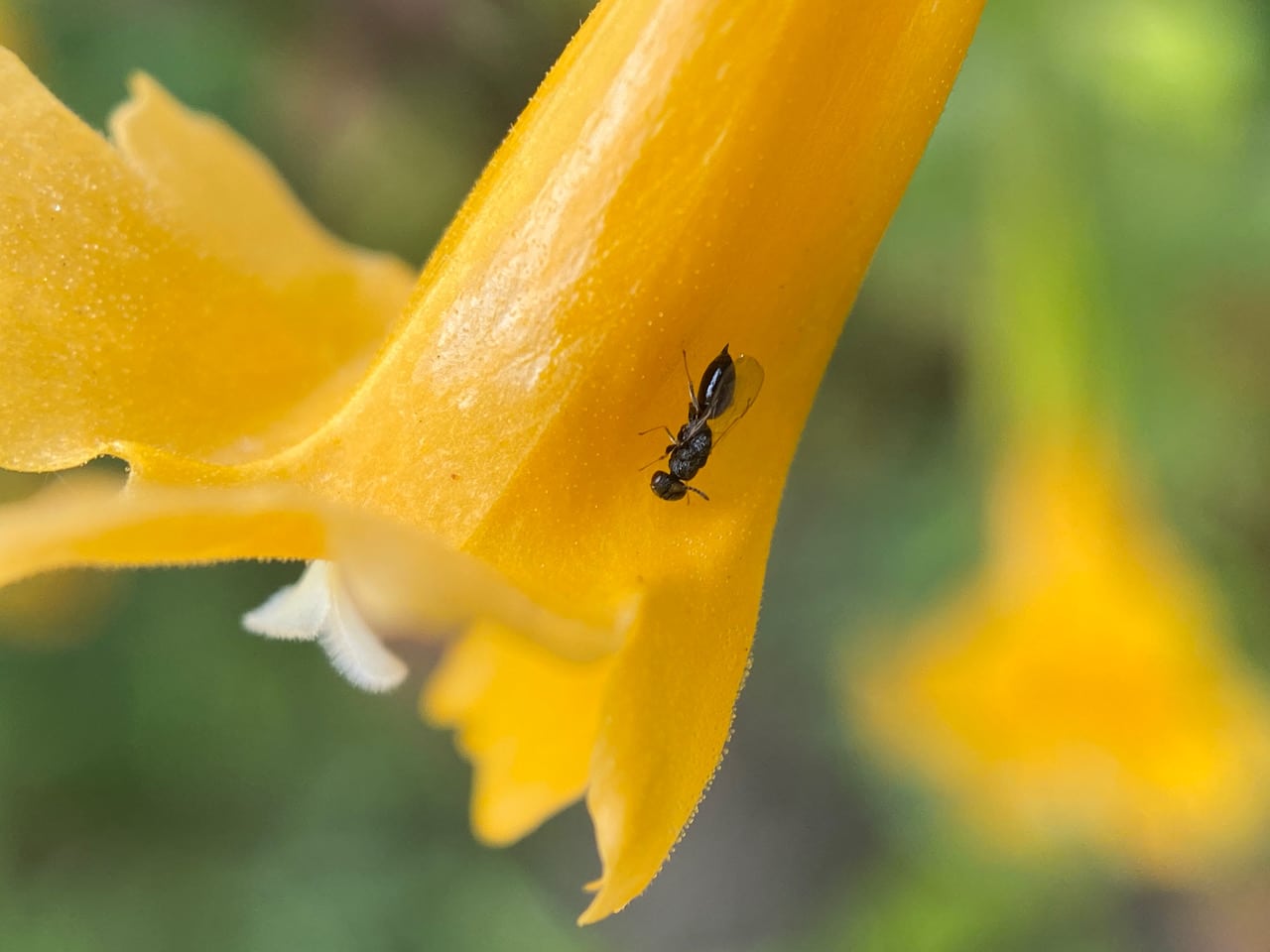
A tiny wasp is roaming the outside of a Sticky Monkeyflower. For a wasp this size, one suspects a parasitoid right away. It is indeed a parasitoid wasp in the genus Eurytoma (family Eurytomidae).
The Eurytomidae are a family within the superfamily Chaldoidea. Unlike most chalcidoids, the larvae of many are phytophagous (feeding in stems, seeds, or galls), while others are more typical parasitoids, with hosts that are usually found within plant tissues. They are found throughout the world in virtually all habitats, and a few are considered pests. The wasps tend to be dull and not metallic, and heavily punctured, with very thick collar-like pronota.
Genus Eurytoma – BugGuide.Net
 This individual seems to be a male, without the long ovipositor of females.

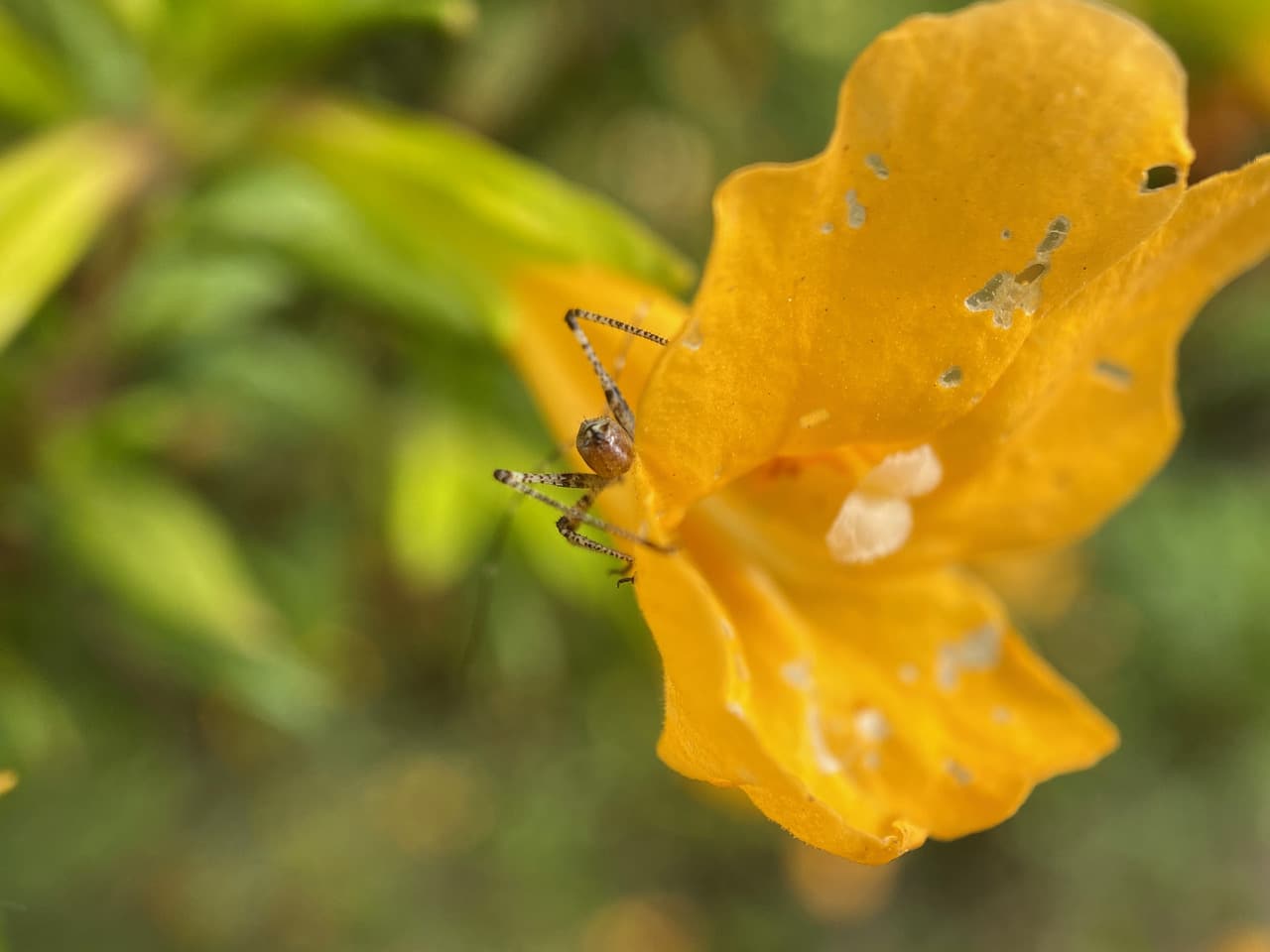
Happily feeding on a Sticky Monkeyflower, a Scudder’s Bush Katydid nymph, Scudderia sp. (family Tettigoniidae) runs for cover at my approach. Look at all the feeding scars on the petals!
Scudderia is a genus of katydids in the family Tettigoniidae. They are sometimes called bush katydids and are 30-38 mm in length. They are mostly found in North America. They are herbivores, with nymphs feeding primarily on flowers and adults preferring woody deciduous plants.
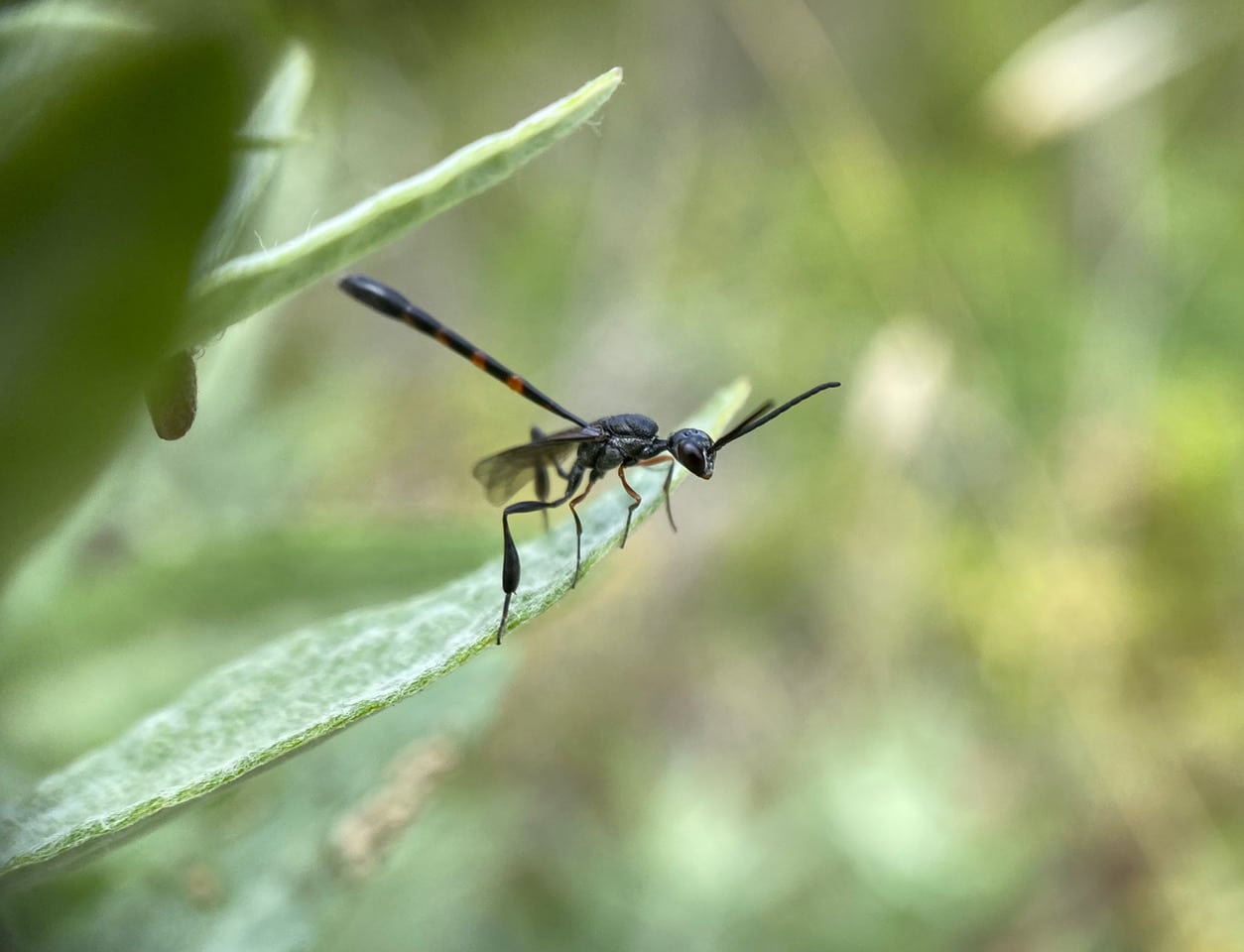
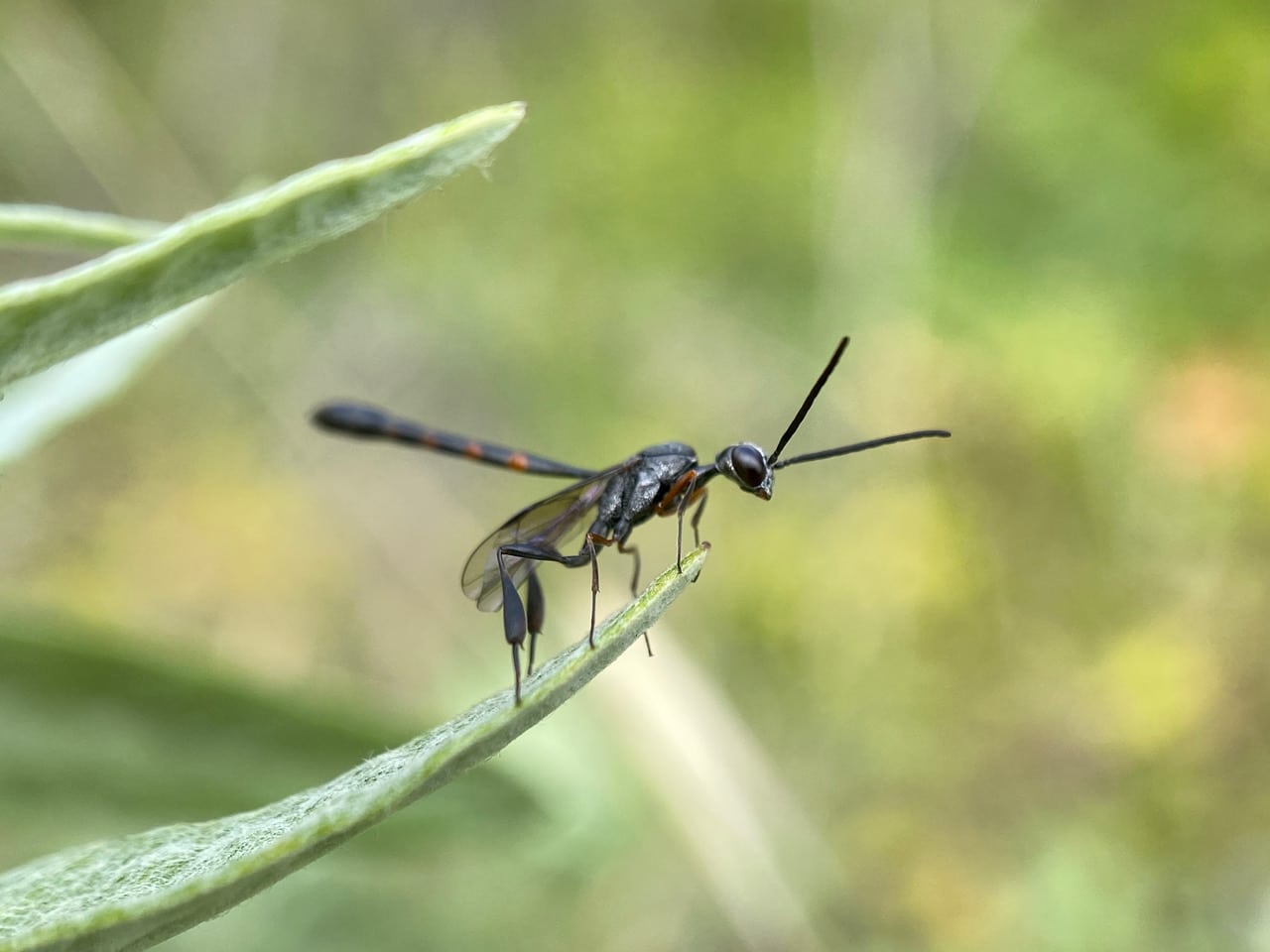
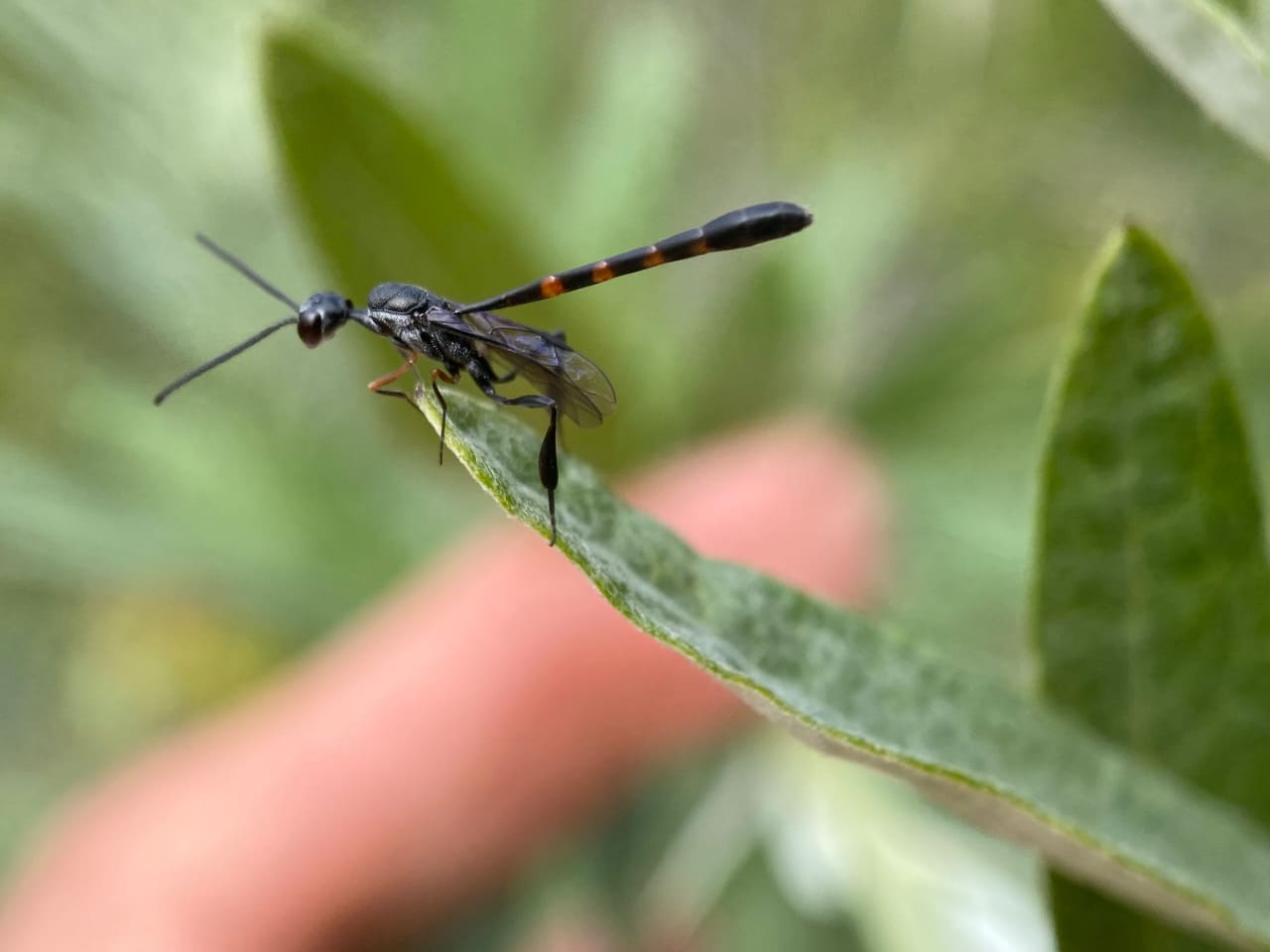
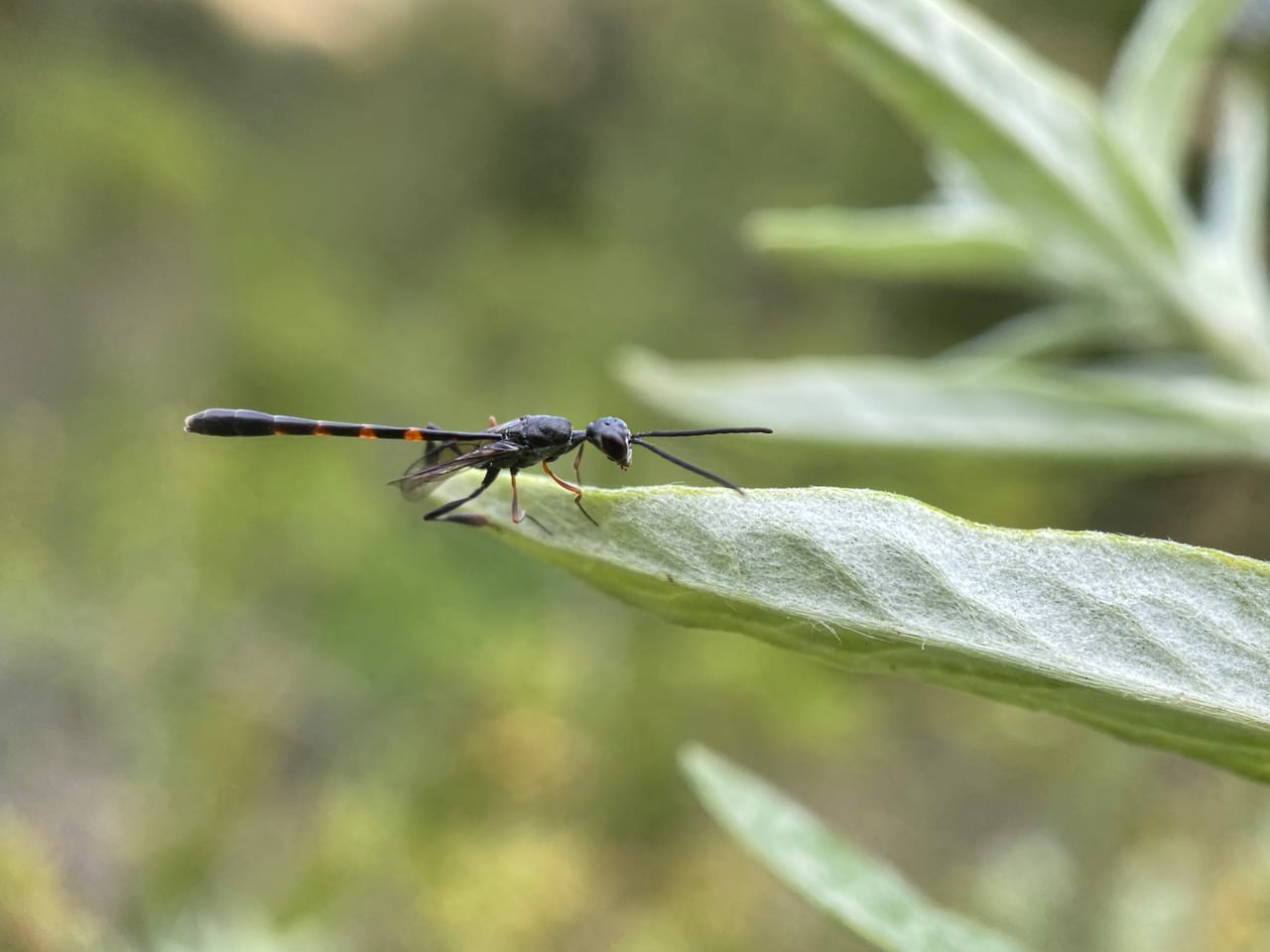
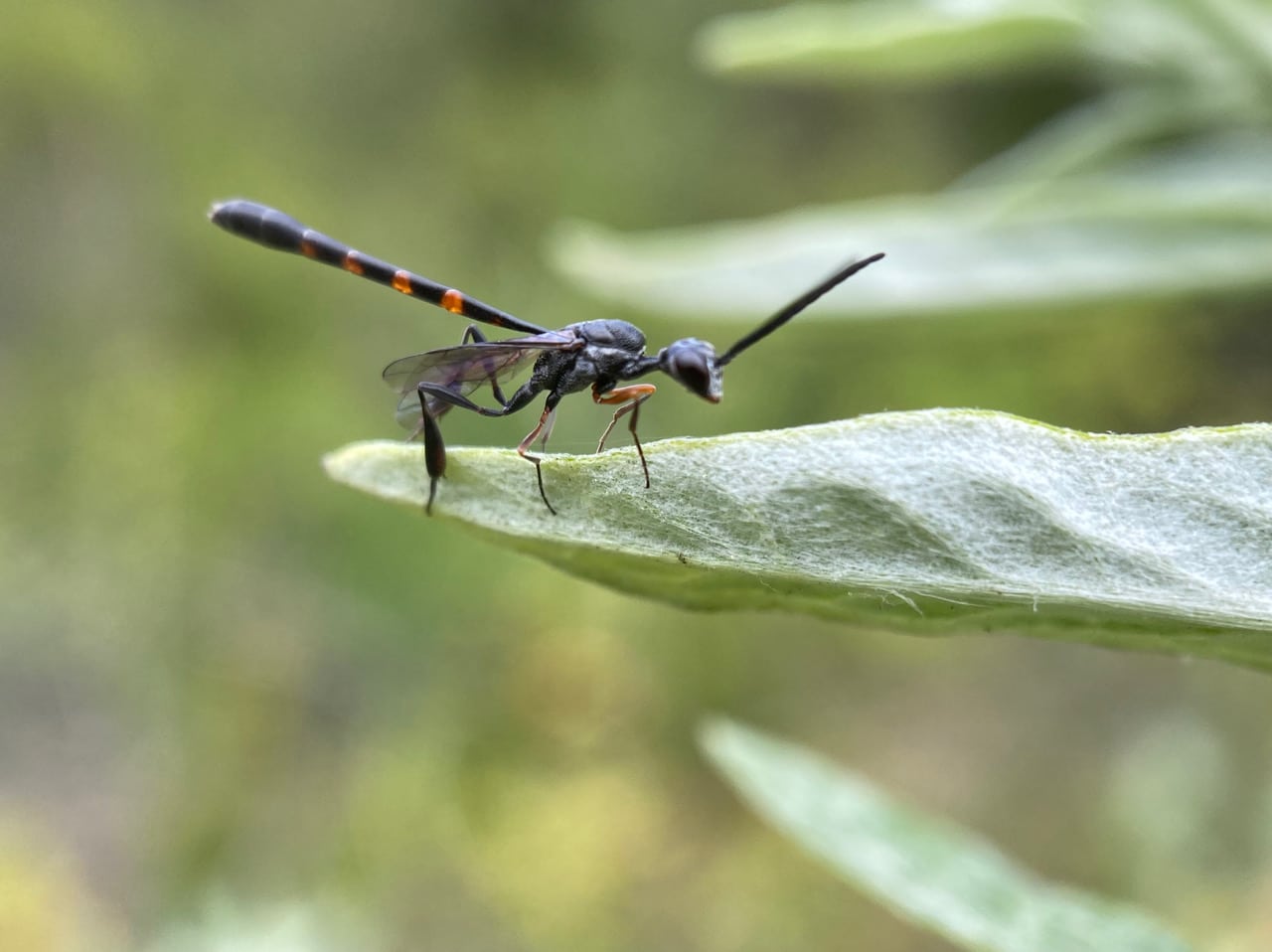
Looking strangely like an alien from outer space, a Carrot Wasp (family Gasteruptiidae) is moving around on the foliage of California Mugwort, Artemisia douglasiana.
The wasp belongs to the family Gasteruptiidae, also known as Carrot Wasps – so-called because the adults are usually found feeding on nectar and pollen on flowers in the carrot family, Apiaceae. The long abdomen is similar to that of an Ichneumon wasp, but a Carrot Wasp also has a noticeable neck, and the tibias on its back legs are enlarged. The long, slender abdomen is attached to the thorax on upper (dorsal) side. Females of some species have ovipositors that are as long as their body, and lay eggs in the nests of solitary bees and wasps that nest in twigs and in wood, where their larvae prey on the host eggs, larvae and provisions.
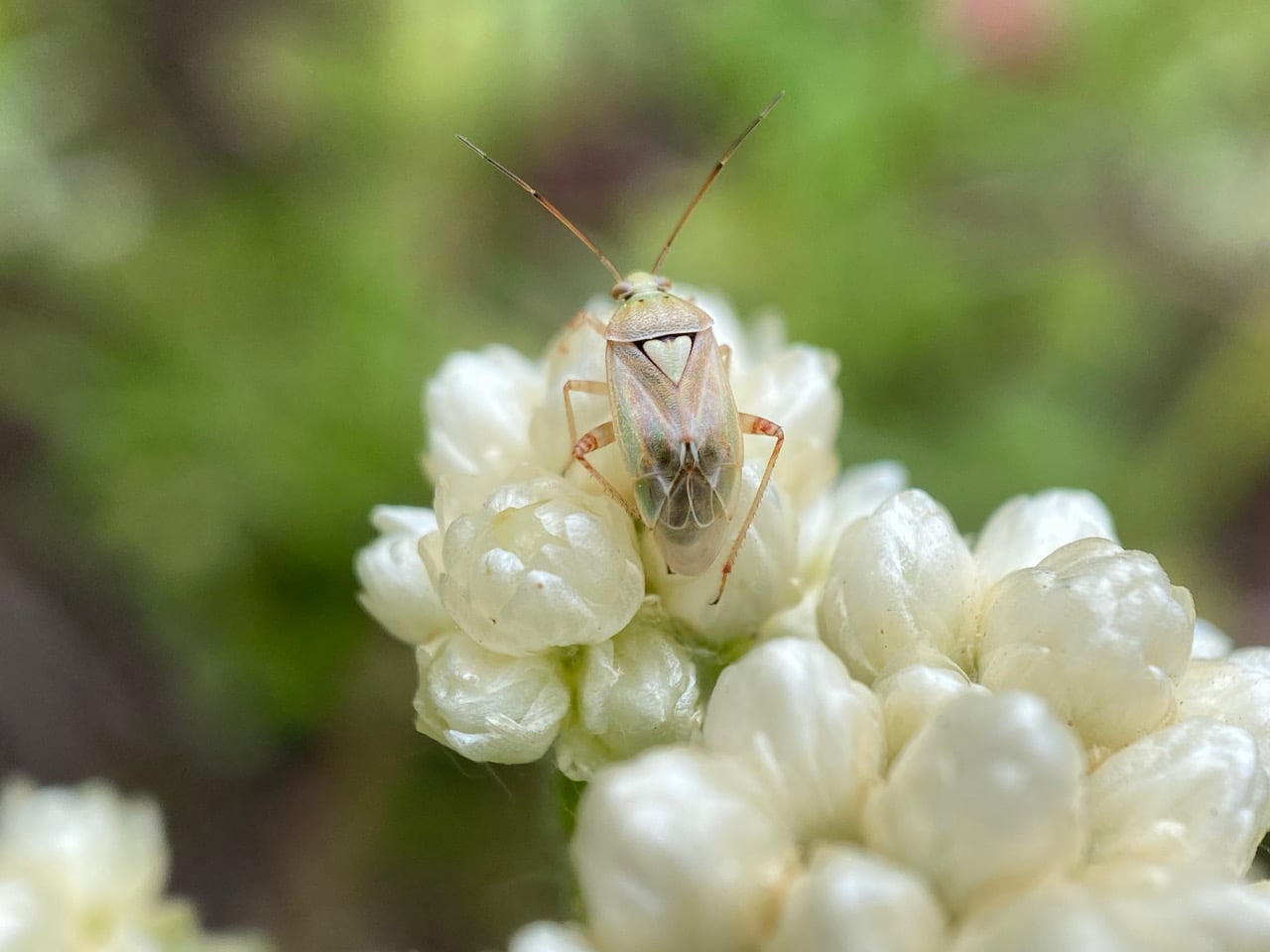
This individual seems to be a male, without the long ovipositor of females.A ghostly pale, almost translucent Lygus Bug (family Miridae) is perched on a cluster of California Everlasting flowerheads. It must have freshly emerged from its last molt. “True bugs” in the order Hemiptera undergo incomplete metamorphosis without a pupal stage. The nymphs, which look like adults, develop through a series of molts, each time getting bigger after shedding their old exoskeleton. At the last molt, they transform into adults with functional wings and reproductive parts. It takes a little time for the new adults to acquire their full coloration.
The term lygus bug is used for any member of the genus Lygus, in the family of plant bugs, Miridae. Adult lygus are approximately 3 mm wide and 6 mm long, colored from pale green to reddish brown or black. They have a distinctive triangle or V-shape on their backs. Lygus bugs are known for their destructive feeding habits – they puncture plant tissues with their piercing mouthparts, and feed by sucking sap. Both the physical injury and the plant’s own reaction to the bug’s saliva cause damage to the plant. Many lygus bugs are well-known agricultural pests.
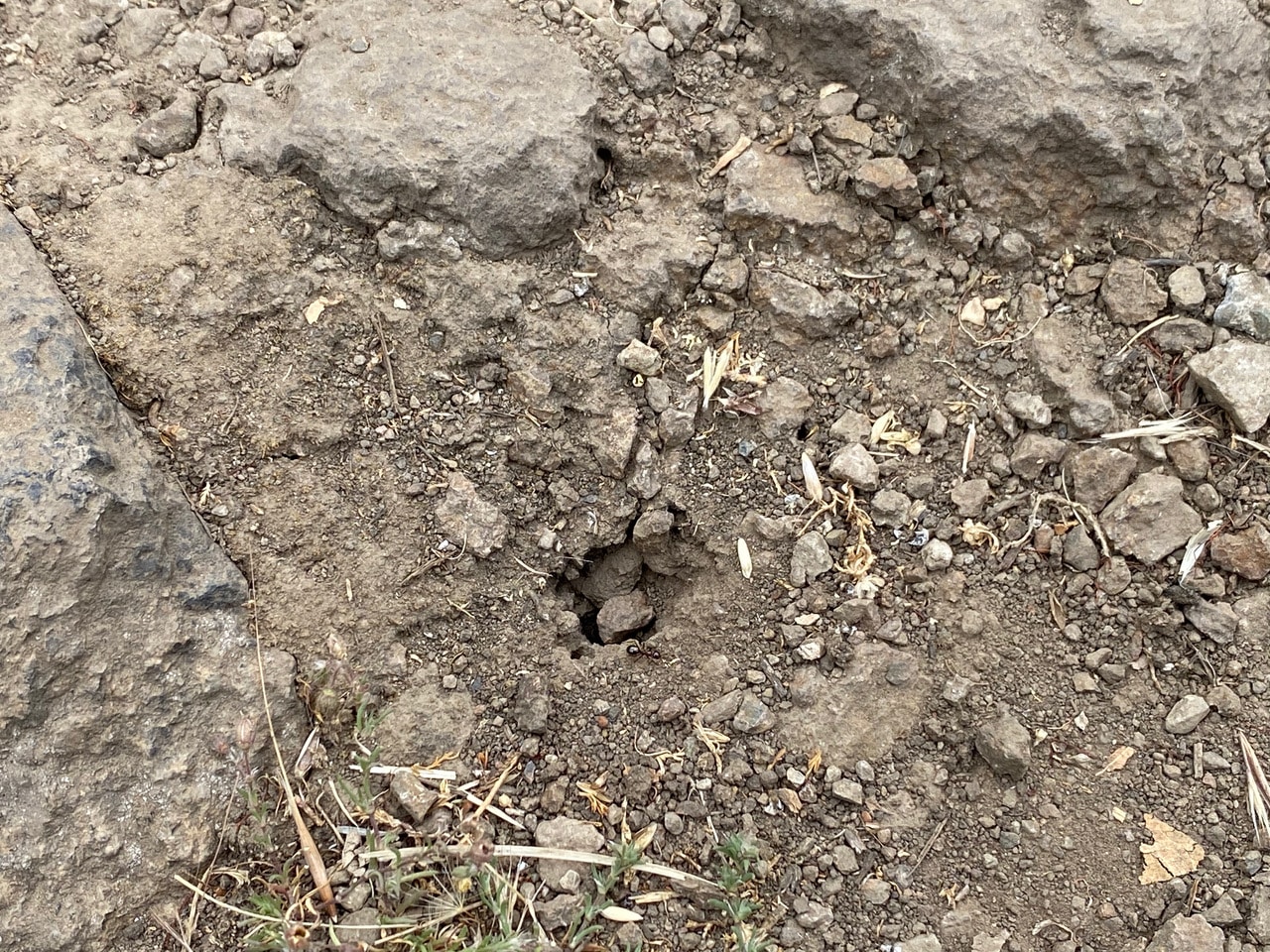
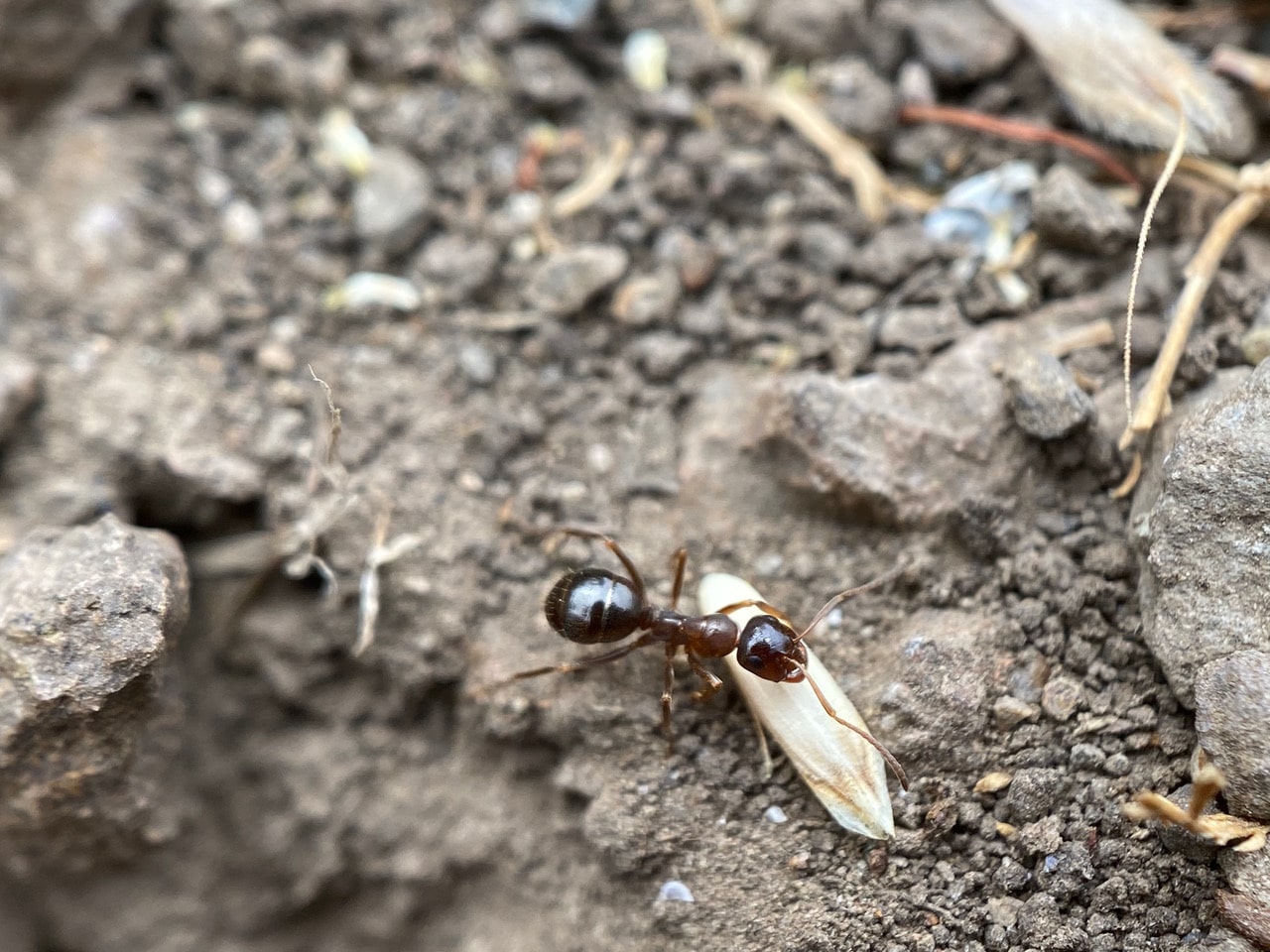
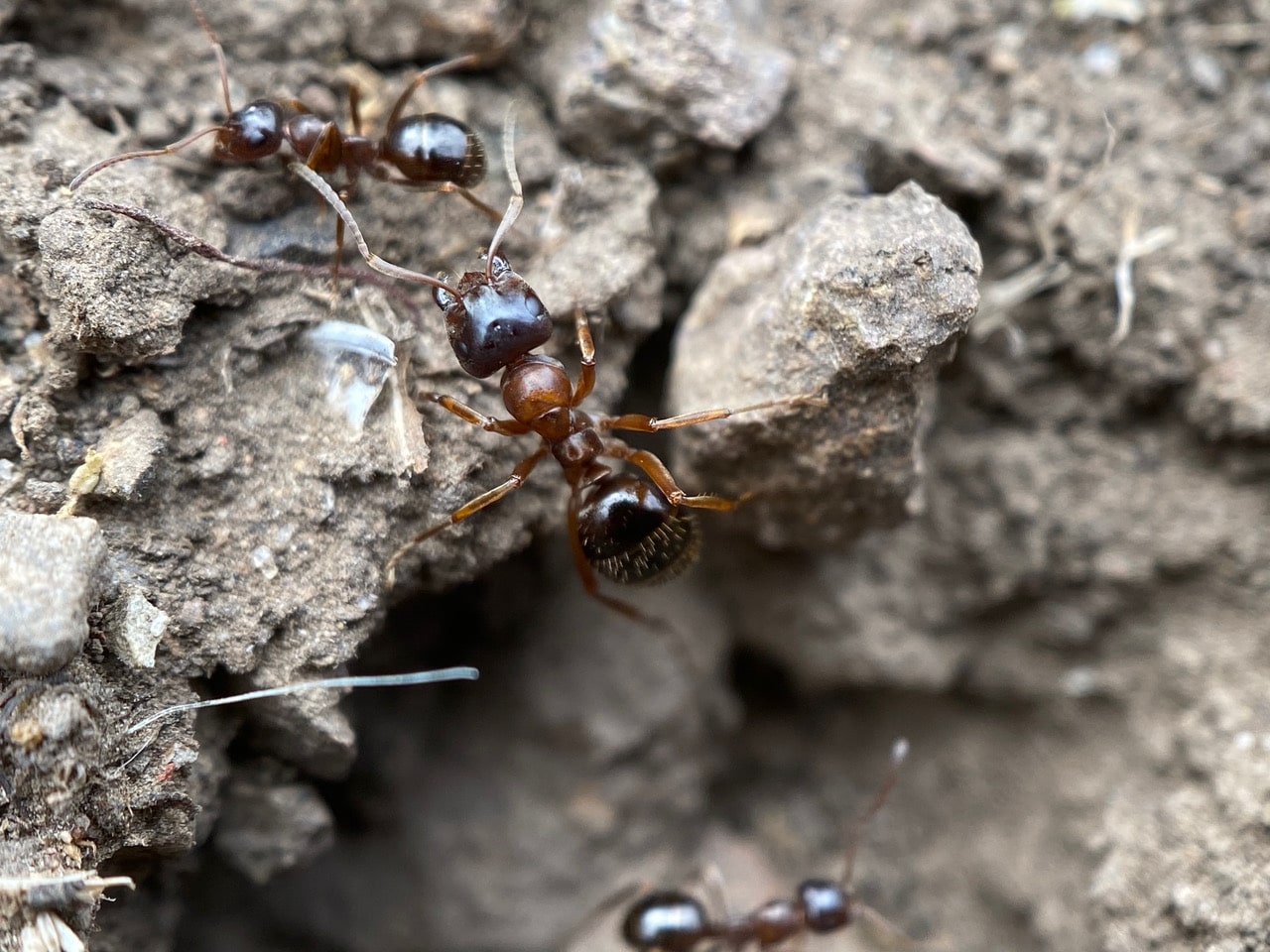
Some ants are crawling in and out of a hole in the ground right in the middle of the trail.
The ants appear to be Field Ants in the genus Formica.
I am surprised to find a few extra large ones among the ants – at least 3 times as large as the others. Are these really Formica ants? Formica ants are not known to have different worker castes!
A couple of ant experts on iNaturalist have helped to identify these ants as Formica subpolita (family Formicidae). Upon further inquiry, the experts have very patiently explained to me the size disparity I have observed. There are indeed no separate castes among the workers of Formica ants. They differ in size but not in anatomical details. And usually there is a whole spectrum of sizes within the colony. In contrast, other ants such as the Carpenter Ants (genus Camponotus) have two worker castes – major and minor workers. Beside size, these ants differ in their anatomy and serve different functions – the larger workers defend the nest and forage for food; minor workers tend to the young and maintain the nest.
There’s so much I have to learn about ants! I am indebted to the members of the iNaturalist community who share their expertise so generously.
Formica is a genus of ants in the family Formicidae, commonly known as wood ants, mound ants, and field ants. Many species live in wooded areas. In more suburban landscapes, they tend to nest near structures such as sidewalks, fences, or building foundations. Most Formica species are polygynous (have multiple queens per colony), and some are polydomous (have multiple nests belonging to the same colony). Unlike other ants, the genus Formica does not have separate castes, which are based on an individual’s specialization and morphology.
Formica ants actively gather honeydew from source insects, and extrafloral nectar. They also prey on insects and spiders; also scavenge small dead invertebrates, honeydew on leaf litter and plant surfaces, etc.
Formica ants lack a stinger, but instead formic acid is expelled as a defense mechanism from the tip of their abdomen. They can also bite. They may pinch skin with their mouthparts, and then squirt formic acid into the wound, which may give the sensation of a sting.
Formica subpolita is distributed in the western North America; often found in coastal forests.