

Pollinator Post 6/22/23 (2)
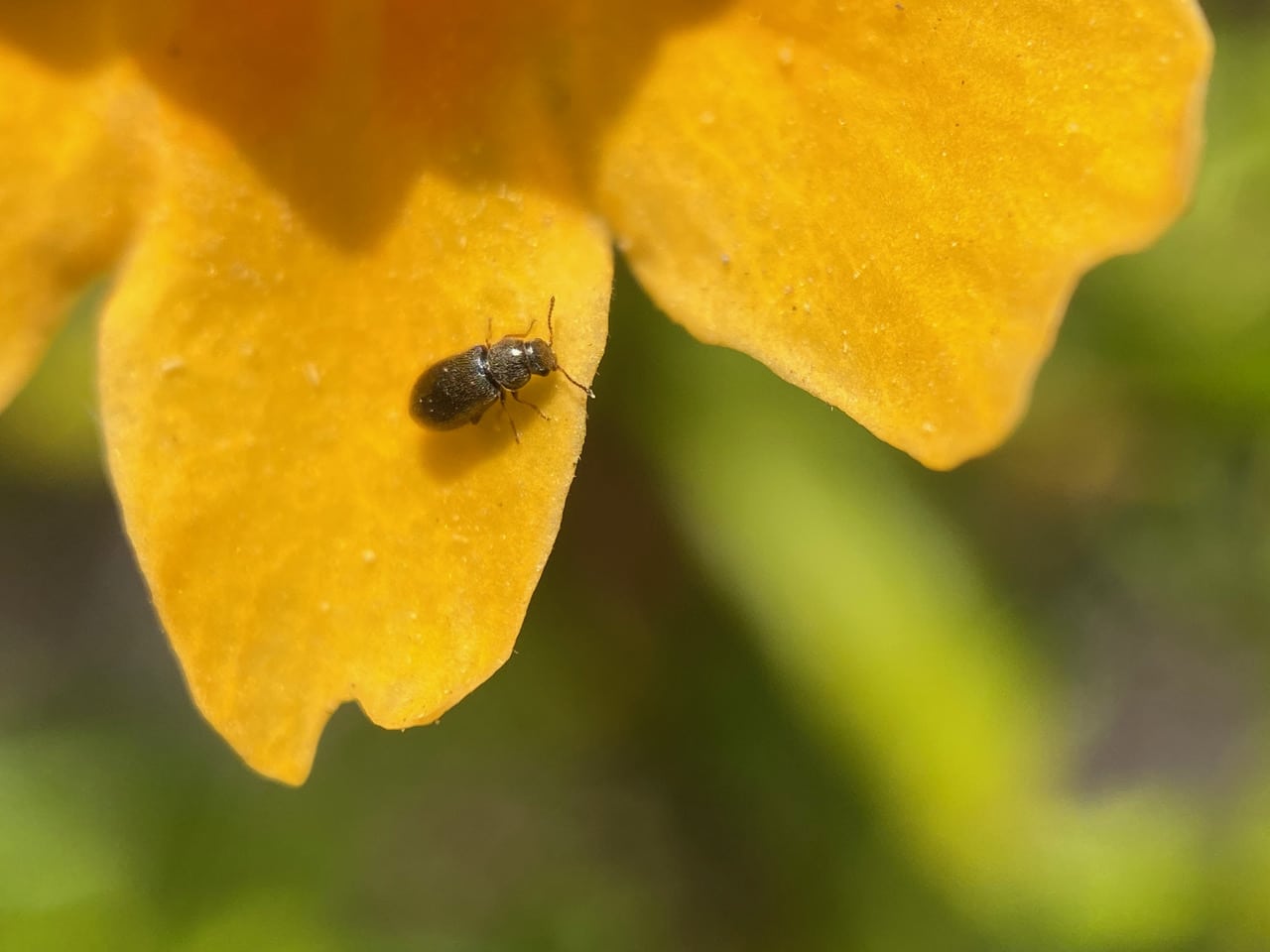
A tiny beetle seems to be scavenging for pollen on a Sticky Monkeyflower, Diplacus aurantiacus.
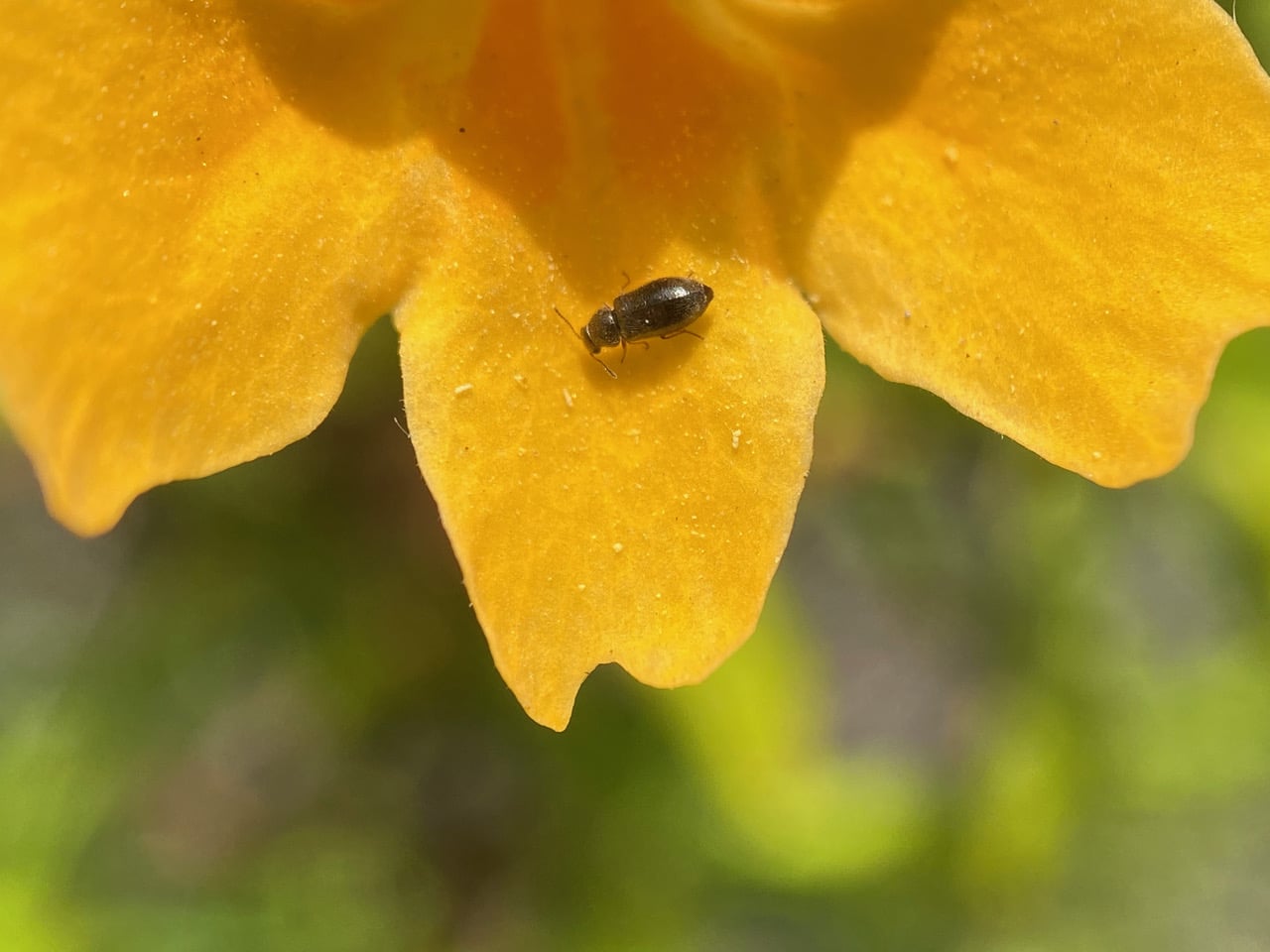
A Soft-wing Flower Beetle (family Melyridae, subfamily Dasytinae)?
Dasytinae is a subfamily of Soft-wing Flower Beetles (family Melyridae), historically treated as a separate family “Dasitidae”. Dasytinae are typically small (less than 8 mm), and parallel-sided, with brownish to blackish integument (rarely metallic), and with or without a covering of short pubescence. They are very diverse in western North America, especially in California.
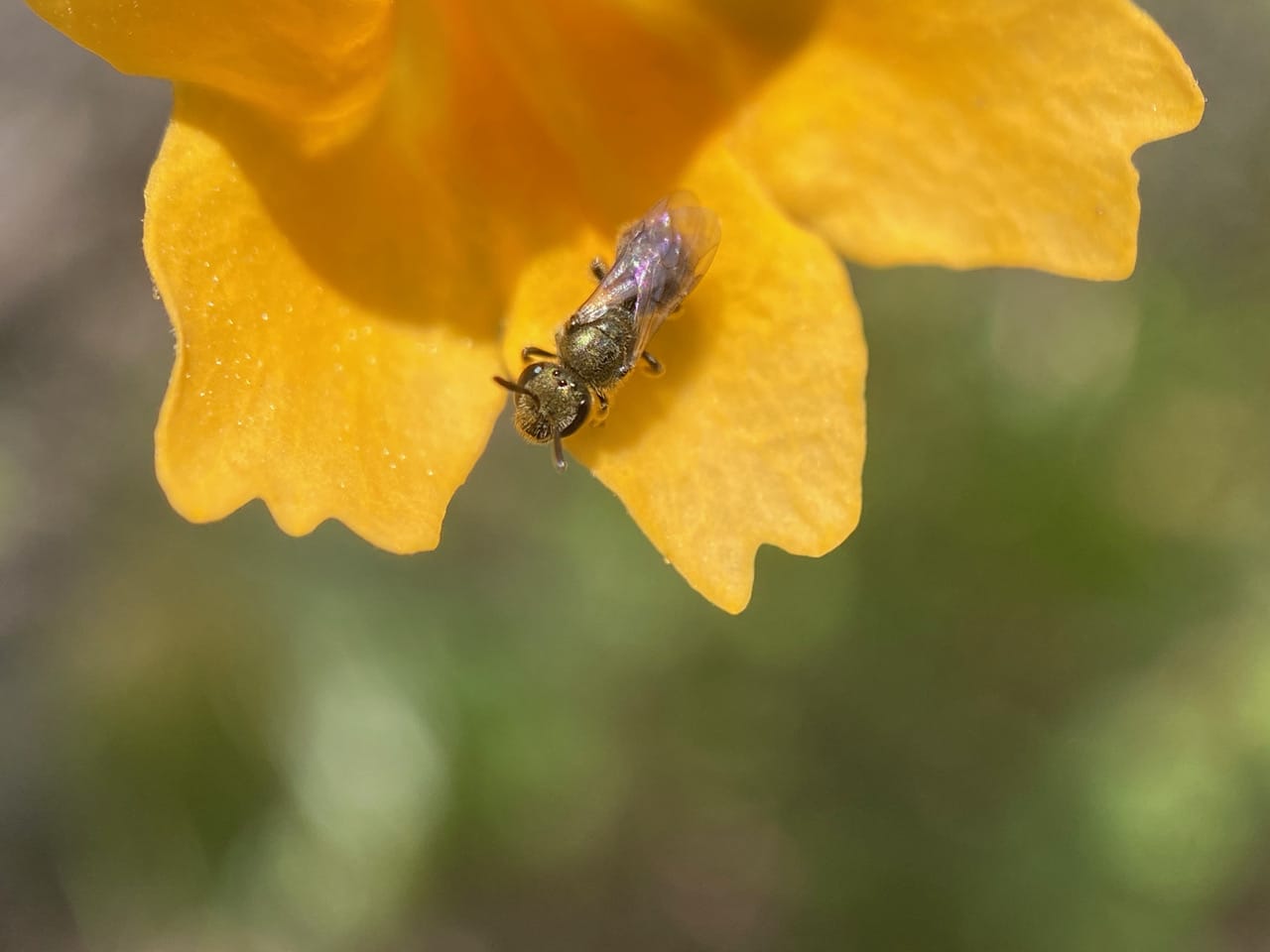 A metallic Sweat Bee, Lasioglossum (Dialictus) sp. (family Halictidae) has just landed on a Sticky Monkeyflower. What a cutie!
Lasioglossum are closely related to the genera Halictus and Agapostemon. These genera are commonly called “sweat bees” because of their attraction to human sweat, which they drink for its salt content. Lasioglossum are dusky black to brown slender bees with bands of hair on their abdomen.
Dialictus is a subgenus of Sweat Bees belonging to the genus Lasioglossum. Most of the members of this subgenus have a subtly metallic appearance, and are small, about 3.4-8.1 mm in size. They are commonly found in Northern Hemisphere and are found in abundance in North America. As in the other members of the family Halictidae, the bees have very diverse forms of social structure, making them model organisms for studying the social behavior of bees.
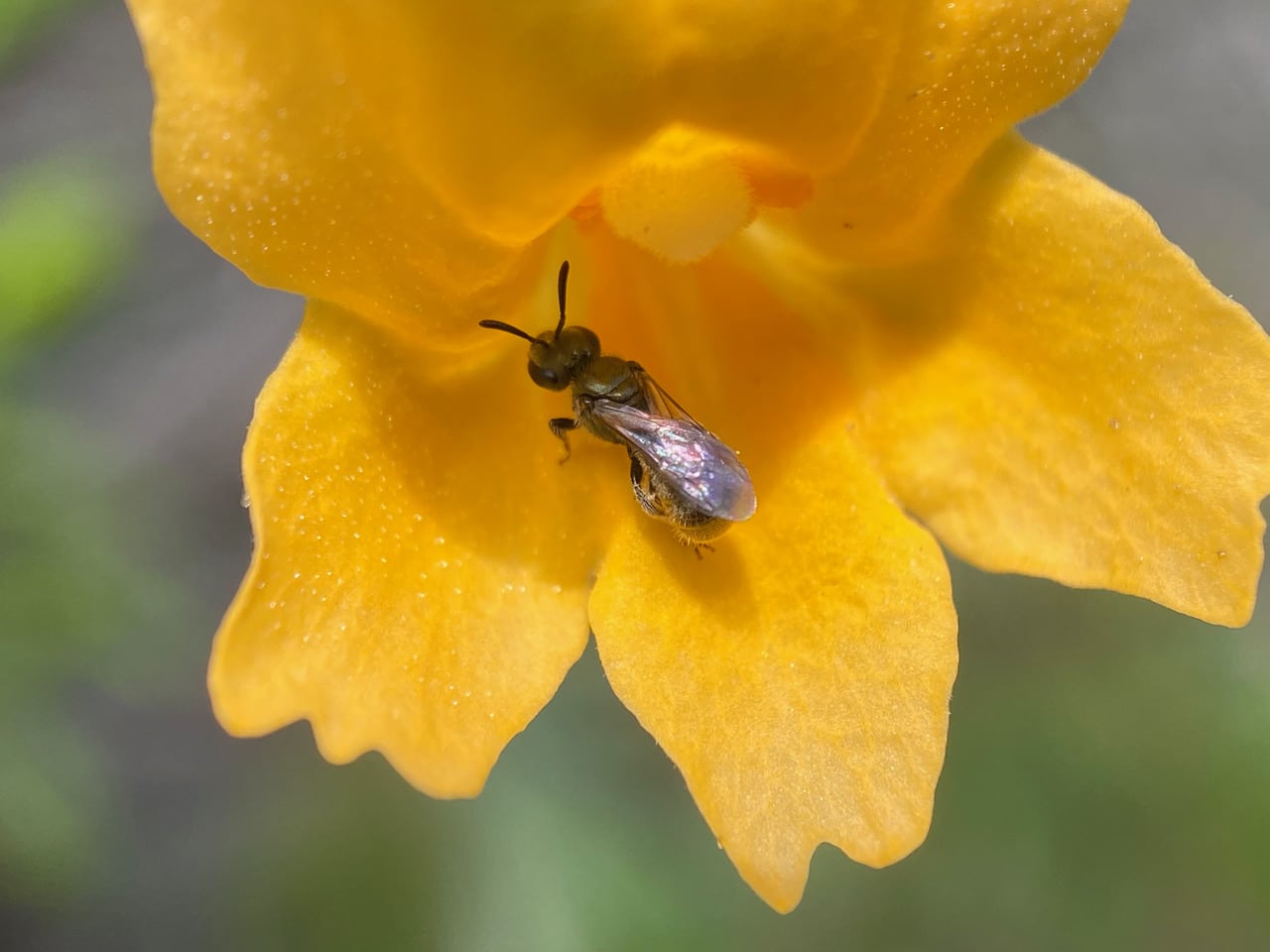
The bee is entering the flower. It has rather long antennae – a male?
The antennae of male bees are often much longer than their female counterparts. Male antennae have an extra segment and the segments themselves are longer. This is because male antennae are specialized to pick up the subtle scent of female pheromones.
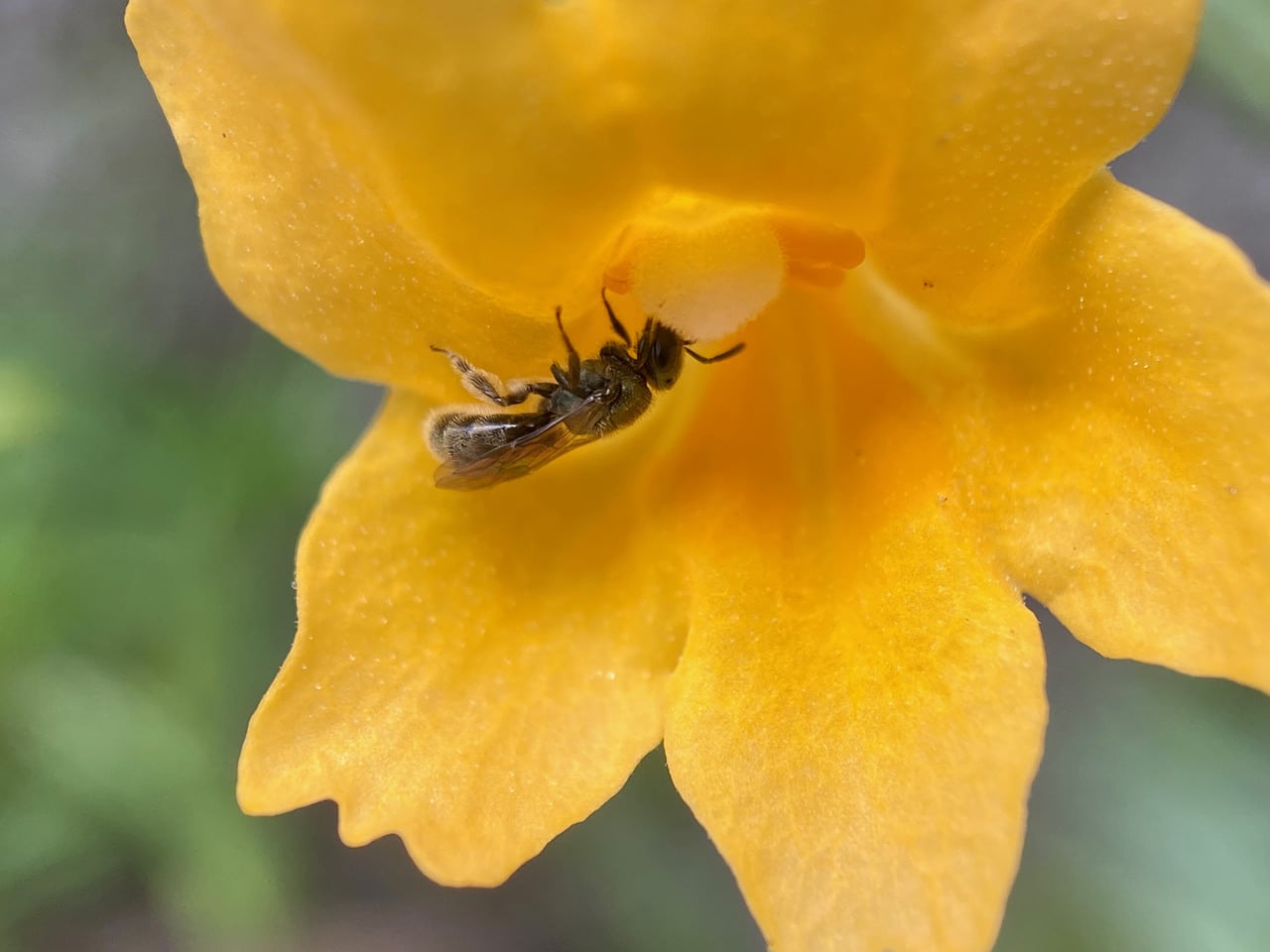
The bee is feeding on pollen from the stamens located on the ceiling of the corolla behind the white stigma.
The bee does not seem to have much of a scopa on its hind legs. Another sign that it might be a male. Male bees do not collect pollen to provision the nest; neither do they have the equipment for the job.
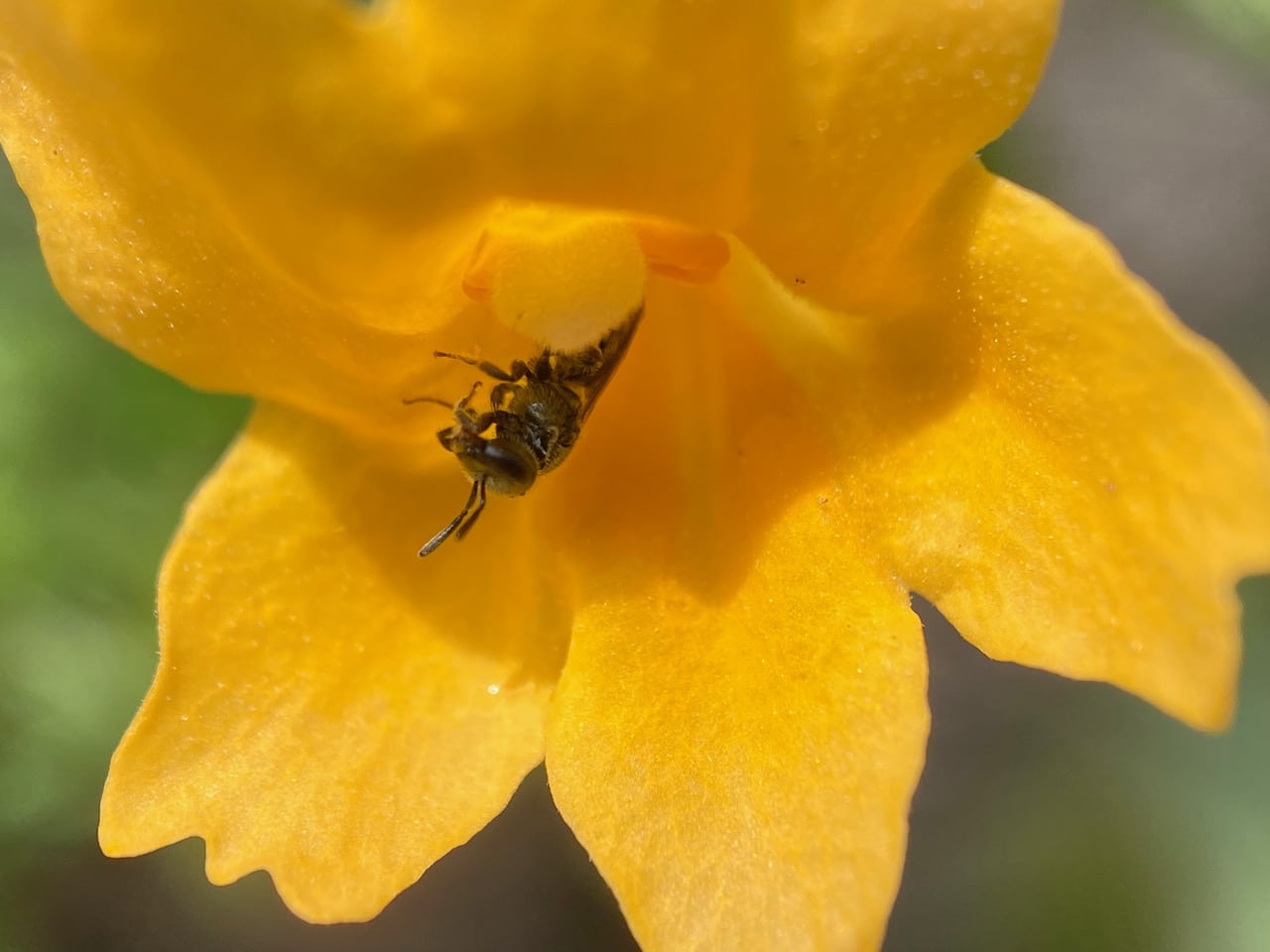
After a while, the bee emerges, vigorously grooming itself.

Here’s another good look at the Lasioglossum (Dialictus) sp. before it flies off. Look, there’s no pollen on its hind legs.
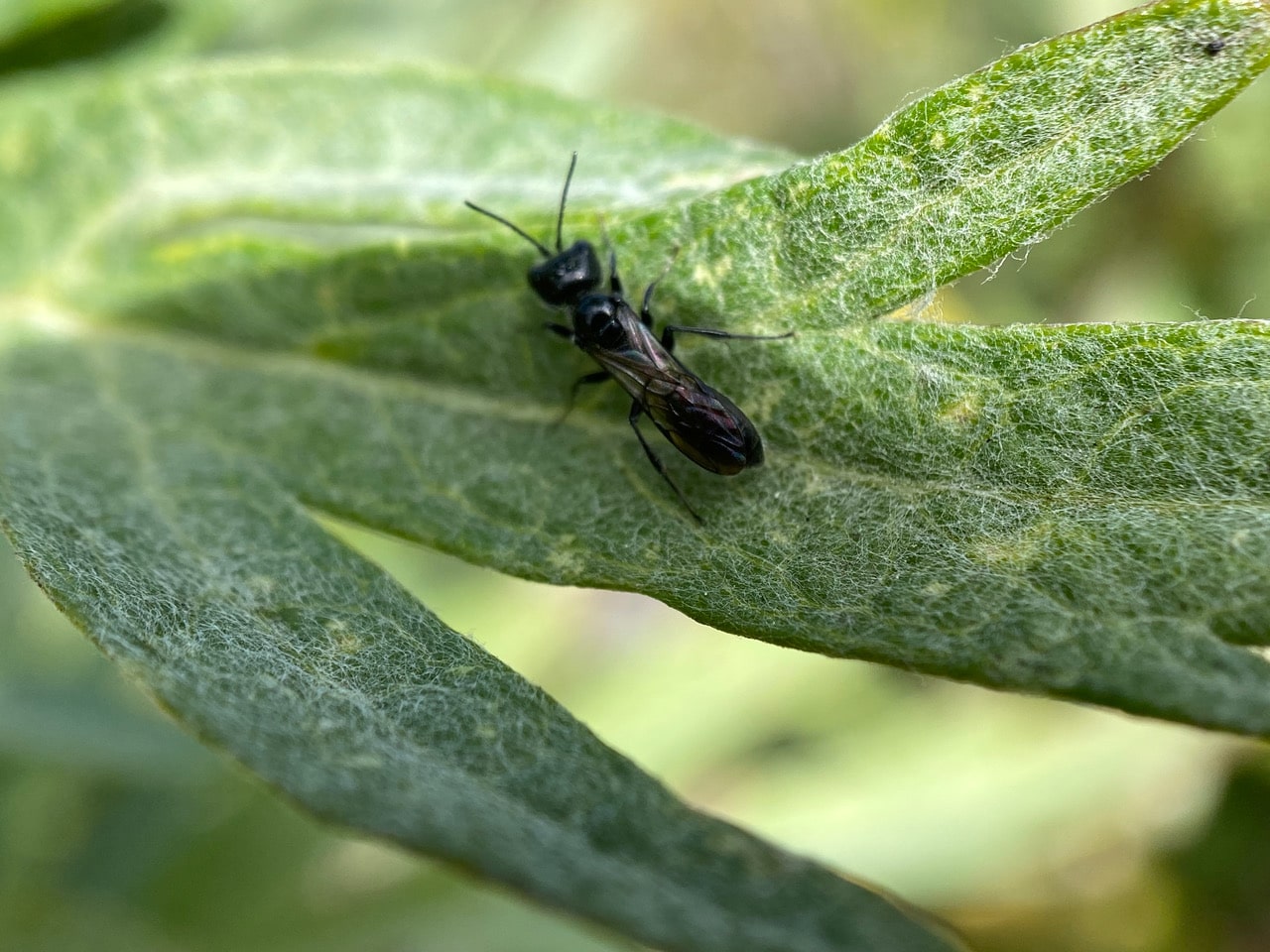
Who’s that lurking in the shadows of a California Mugwort, Artemisia douglasiana? Look at the square head – a Crabronid wasp?
Common names for Crabronids include Square-headed Wasps, Hunting Wasps, Digger Wasps, Sand Wasps. Members of Crabronidae are solitary hunting wasps. The female excavates a nest in soil or other substrates (depending on species) and provisions it with prey (usually other insects or spiders) that have been paralyzed by her sting.
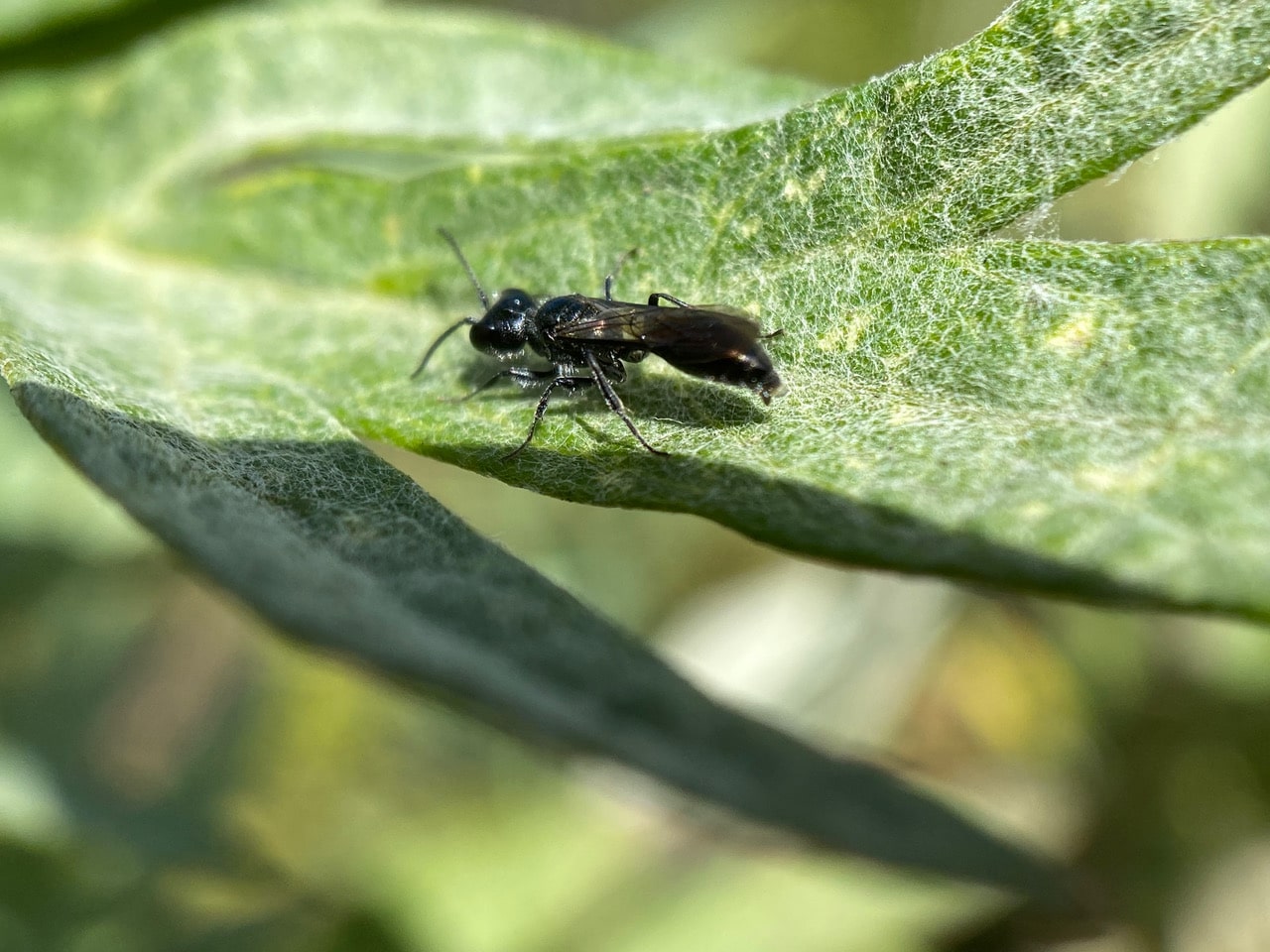
Now that it is in the sunlight, we can see it better. It is an Aphid Wasp, Pemphredon sp. in the family Crabronidae (Square-headed Wasps).
The Pemphredon species are often small and black. They are hunting wasps that use aphids for prey. The females usually build their nests in hollow or pithy stems. Partitions between nest cells are made of chewed pith material. Prey are located by the female wasp who grasps a single aphid, paralyzes it by stinging, and returns to the nest. Each cell is provisioned with about two dozen aphids. She then lays an egg on the aphids and seals the cell with a plug of chewed pith. Larvae that hatch out feed on the aphids, and emerge as adults after pupation in the nest. Adults emerge in reverse order of when eggs were laid. Female eggs are laid first, toward the back of the nest. Pemphredon develops proterandric, which means that the males hatch a few days before the females. The adults feed on honeydew, but sometimes also on the aphids themselves.

A Masked Bee, Hylaeus sp. (family Colletidae) has landed on a Sticky Monkeyflower. Hylaeus do not carry pollen and nectar externally, they instead store their food in the crop and regurgitate it upon returning to their nests. Neither the male nor the female Hylaeus have scopae on their body. But the long antennae are indicative that this individual is a male.

As the bee turns, revealing its prominent facial markings, we have confirmation of its gender – it is a male.
Hylaeus (family Colletidae) are slender, hairless, and superficially wasp-like bees. They are small, 5 to 7 mm long, usually black with bright yellow or white markings on their face and legs. These markings are more pronounced on the males.
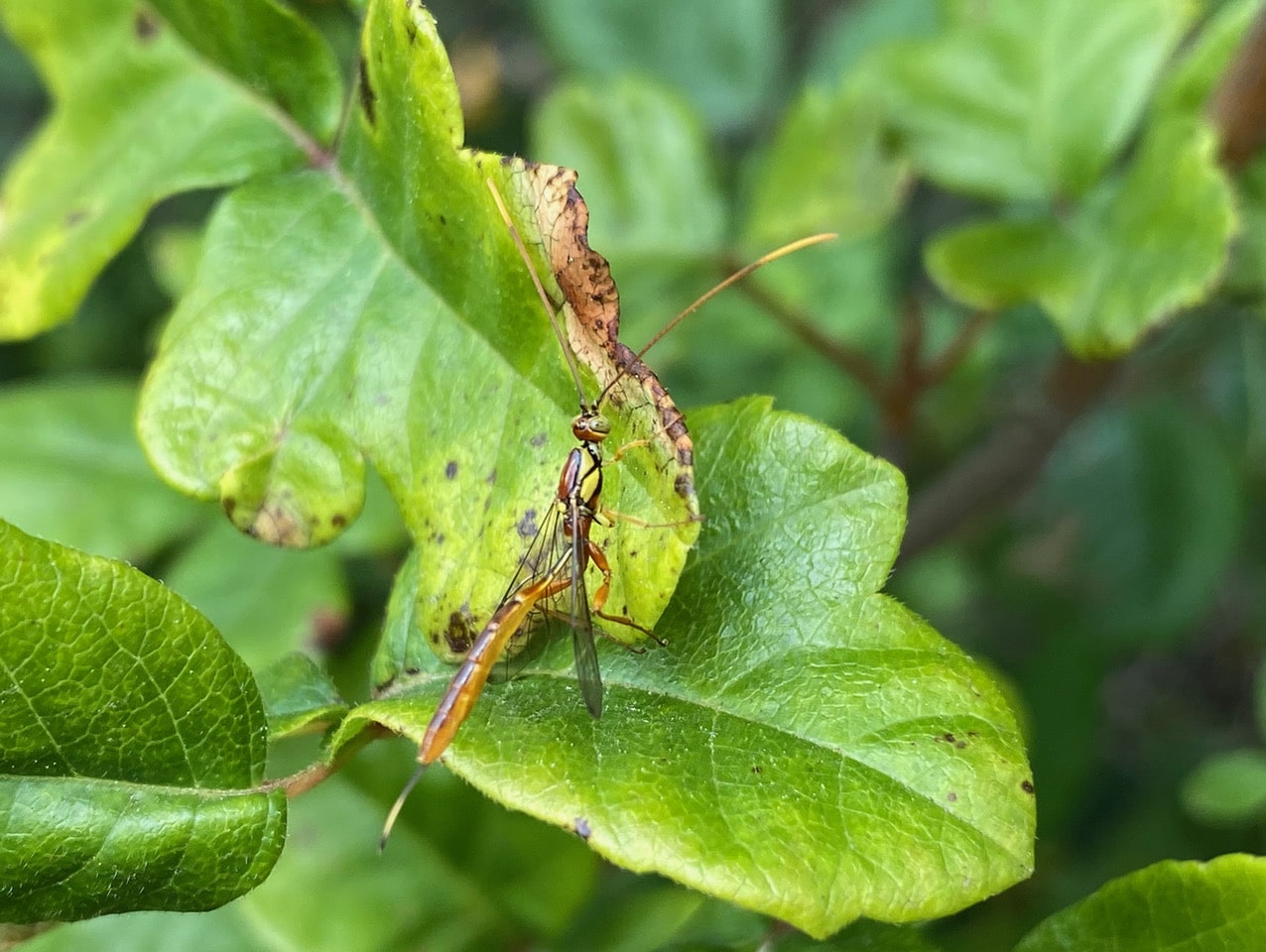
An orange, long-legged, slender wasp is dancing in the air in front of me along Skyline Trail. I know who it might be, but I have to follow it a while before it settles on a Poison Oak leaf. Is it a conscious decision of the wasp to land on that particular leaf, with all the colors that match those of its body so perfectly? As I have guessed, the odd looking wasp is Grotea californica (family Ichneumonidae). It is female, as evidenced by the ovipositor that protrudes from her abdomen.
The Ichneumonidae, also known as the Ichneumon Wasps, or Ichneumonids, are a family of parasitoid wasps. They are one of the most diverse groups within the Hymenoptera (the order that includes the ants, wasps and bees) with about 25,000 species and counting. Ichneumon Wasps attack the immature stages of insects and spiders, eventually killing their hosts. They play an important role in the ecosystem as regulators of insect populations.
The Ichneumon Wasps have longer antennae than typical wasps, with 16 segments or more as opposed to 13 or fewer. Ichneumonid females have an unmodified ovipositor for laying eggs. They generally inject eggs either directly into their host’s body or onto its surface, and the process may require penetration of wood. After hatching, the Ichneumonid larva consumes its still living host. The most common hosts are larvae or pupae of Lepidoptera (butterflies and moths), Coleoptera (beetles) and Hymenoptera. Adult Ichneumonids feed on plant sap and nectar. Females spend much of their active time searching for hosts while the males are constantly on the look out for females. Many Ichneumonids are associated with specific prey, and Ichneumonids are considered effective biological controls of some pest species.
The larvae of Grotea californica are known to parasitize bees in the genus Ceratina (Small Carpenter Bees)! It is noteworthy that this is the same stretch of Skyline Trail where I have first photographed this species on 5/24. At that time many Small Carpenter Bees, Ceratina sp. were visiting the blooming Sticky Cinquefoil, Drymocallis glandulosa here.
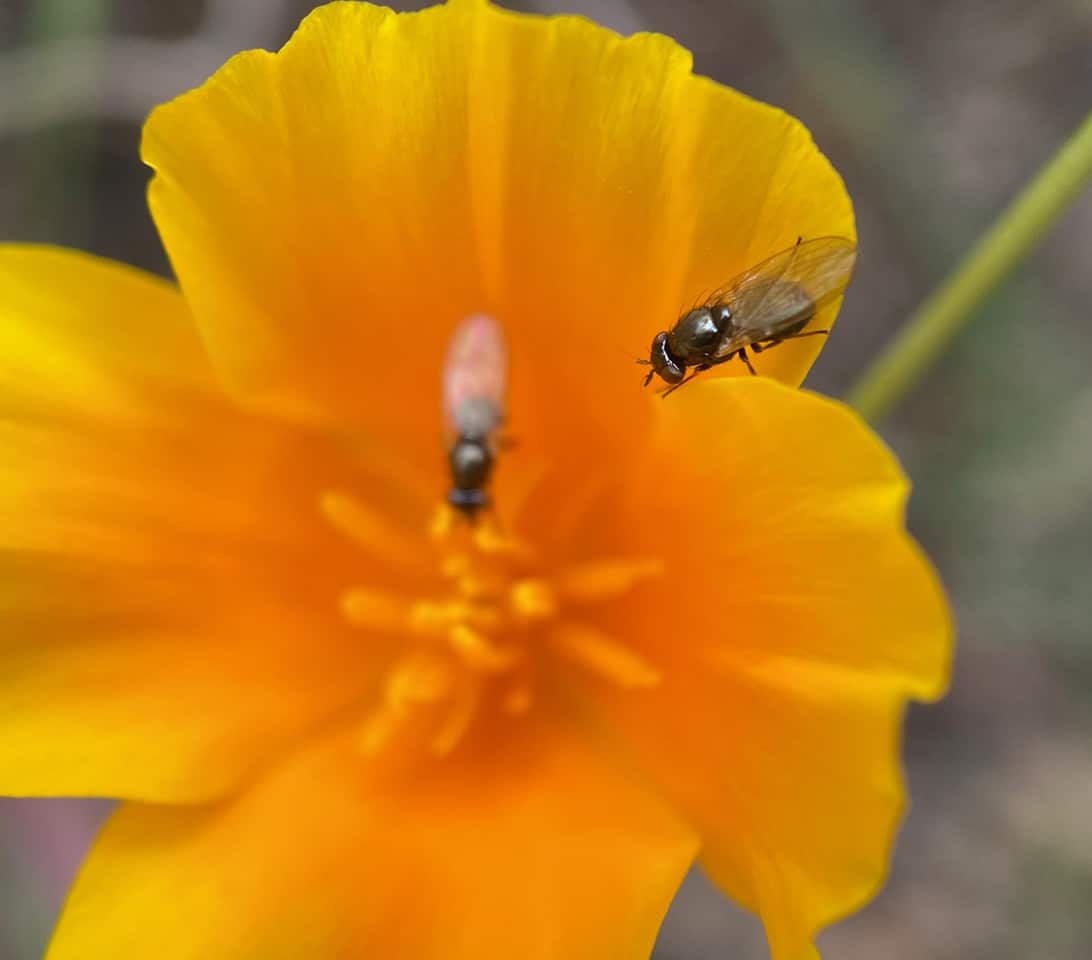
An unidentified fly is watching from the edge of a California Poppy, Eschscholzia californica while a similar fly is feeding on pollen below.
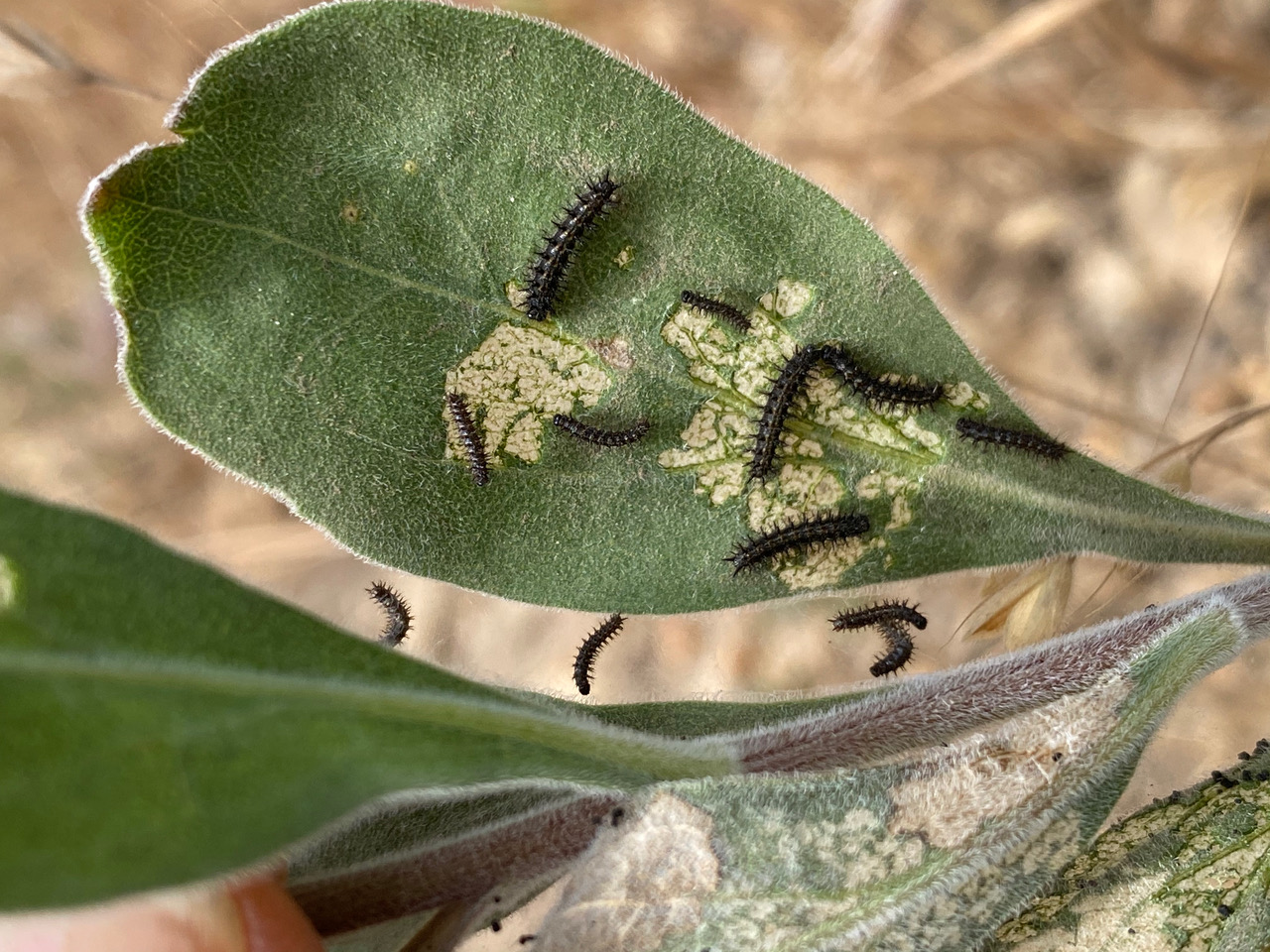
Approaching Diablo Bend, I find a California Goldenrod, Solidago velutina ssp. californica that is riddled with little black caterpillars.
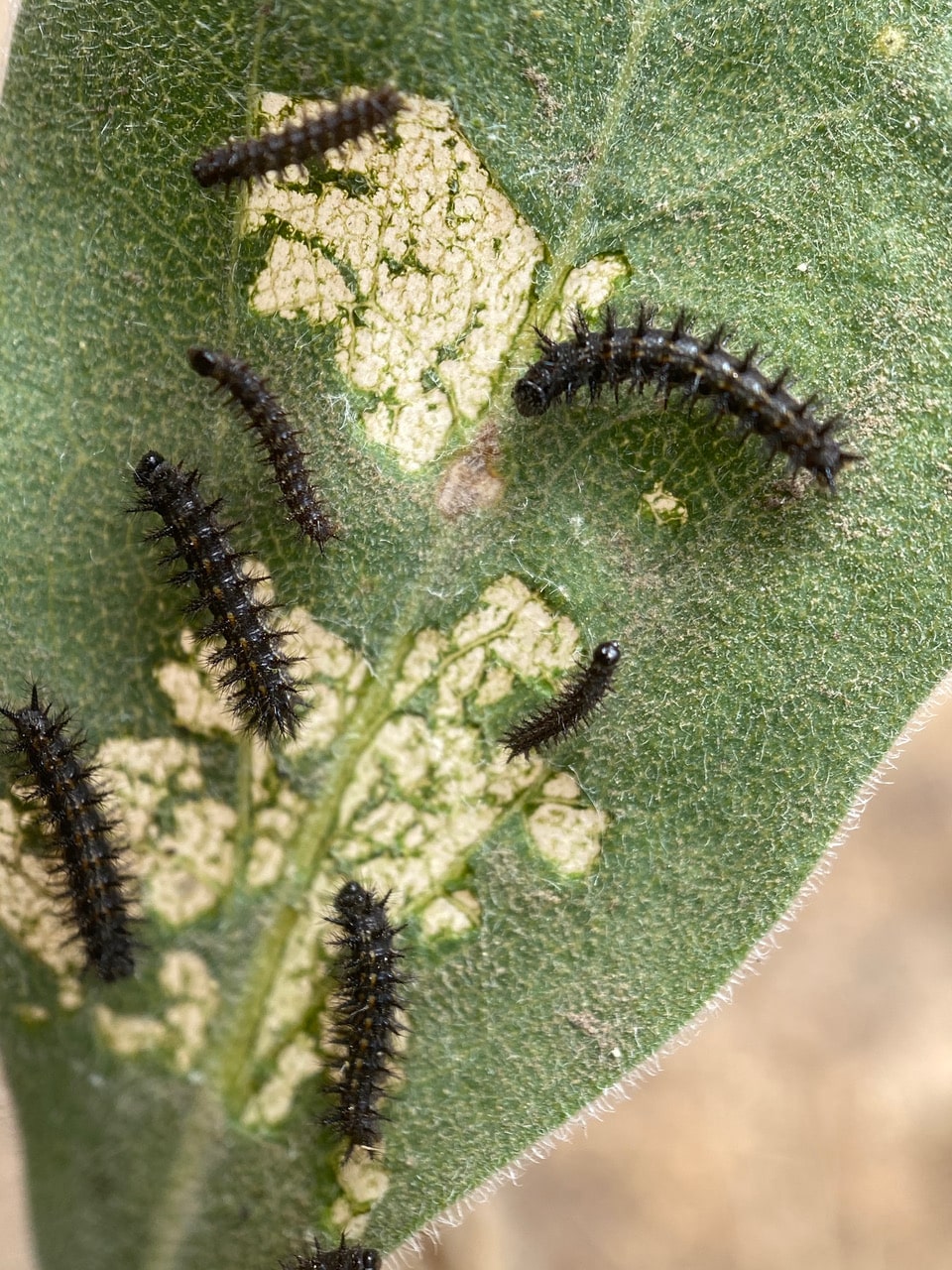
The tiny, spiny black caterpillars are skeletonizing the goldenrod leaves, feeding mostly on the upper surface.

The affected leaves are closed up vertically against the stem by the caterpillar’s silk webbing. The caterpillars feed inside the space, dropping abundant frass below.
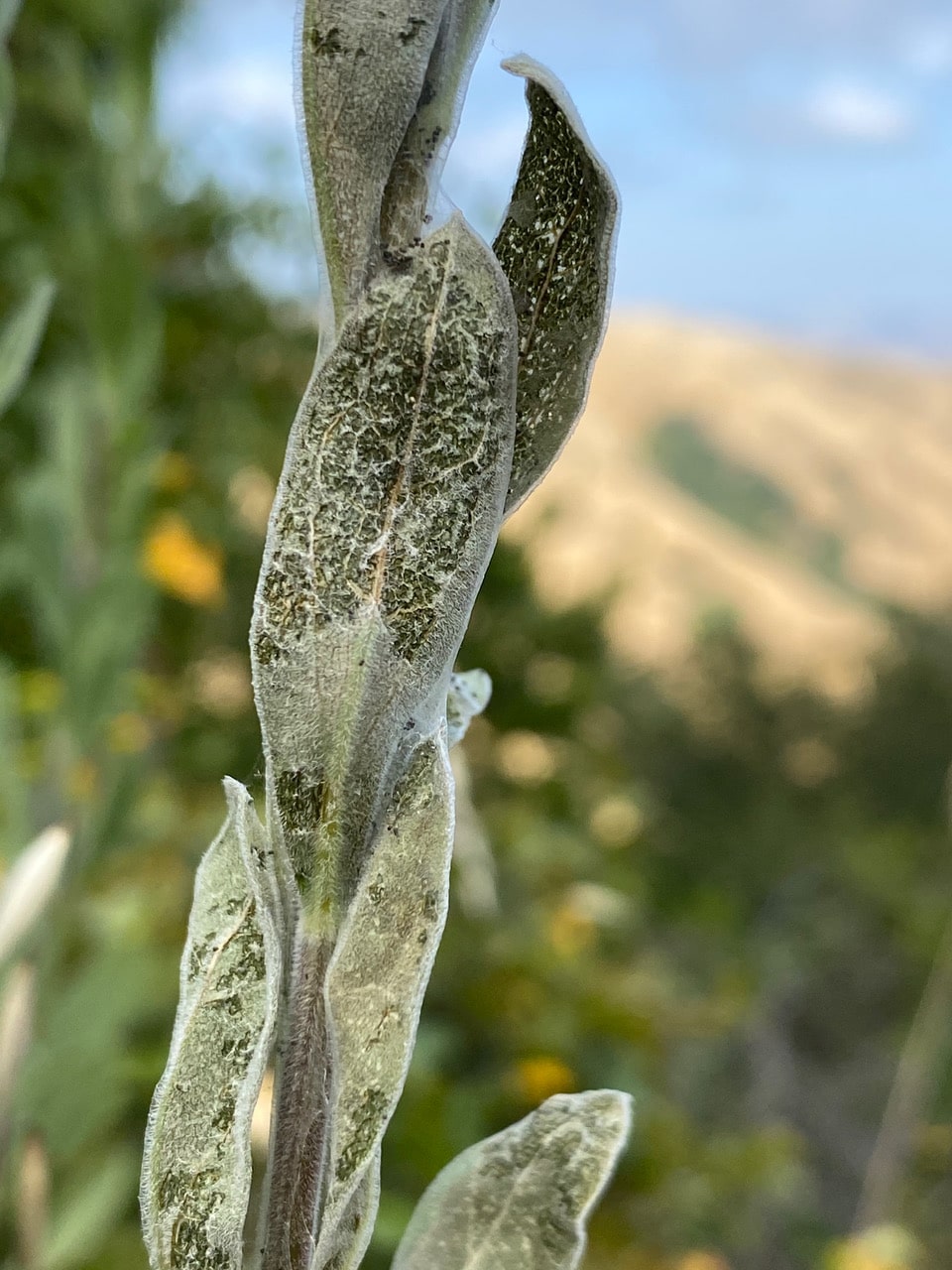
The severely damaged leaves are perforated.
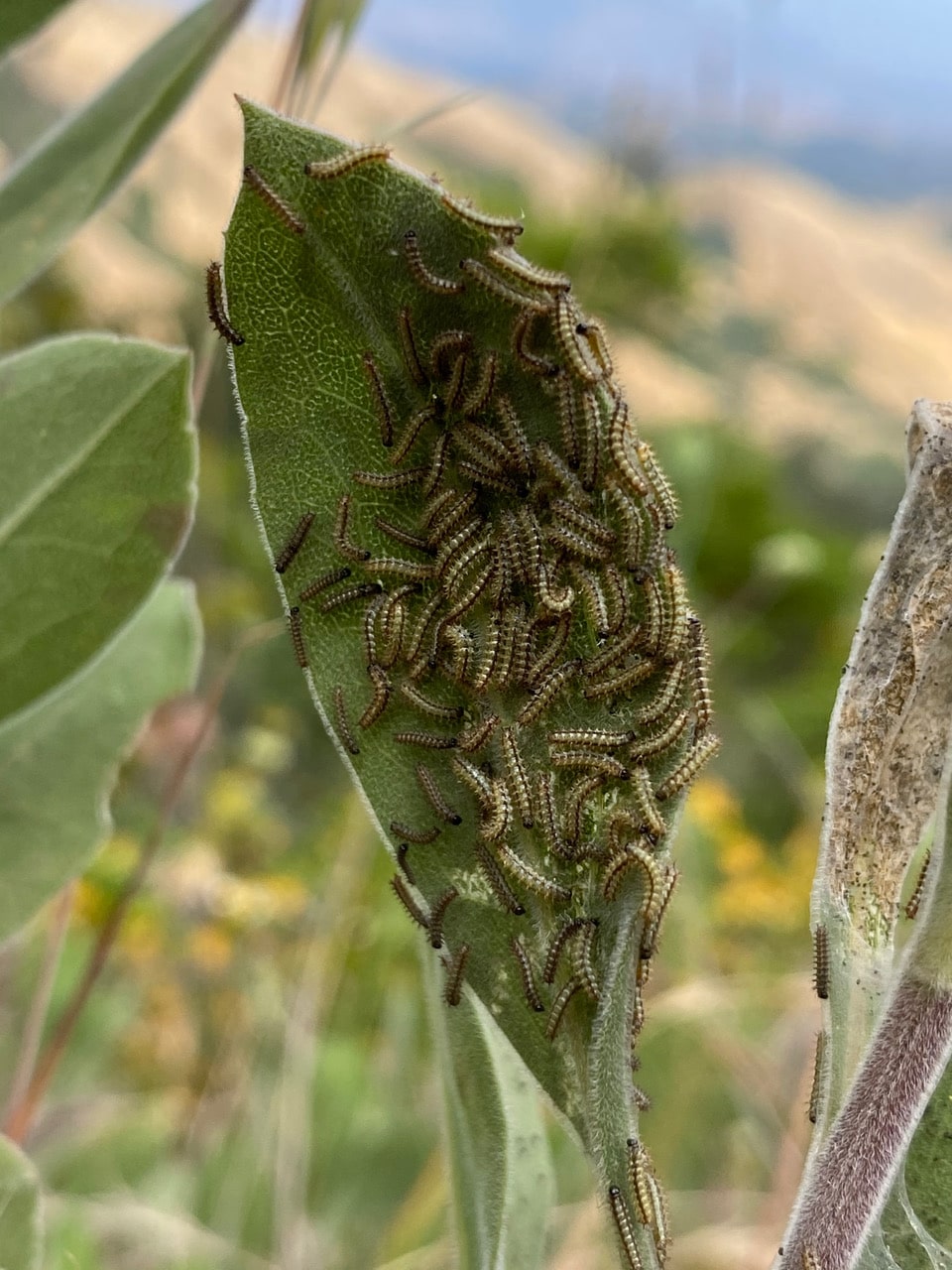
Looking up, I see this leaf on an adjacent California Goldenrod. It is covered with tinier and lighter-colored caterpillars. Might these be the same kind of caterpillars, but younger? They seem to be doing the same damage to the leaf.
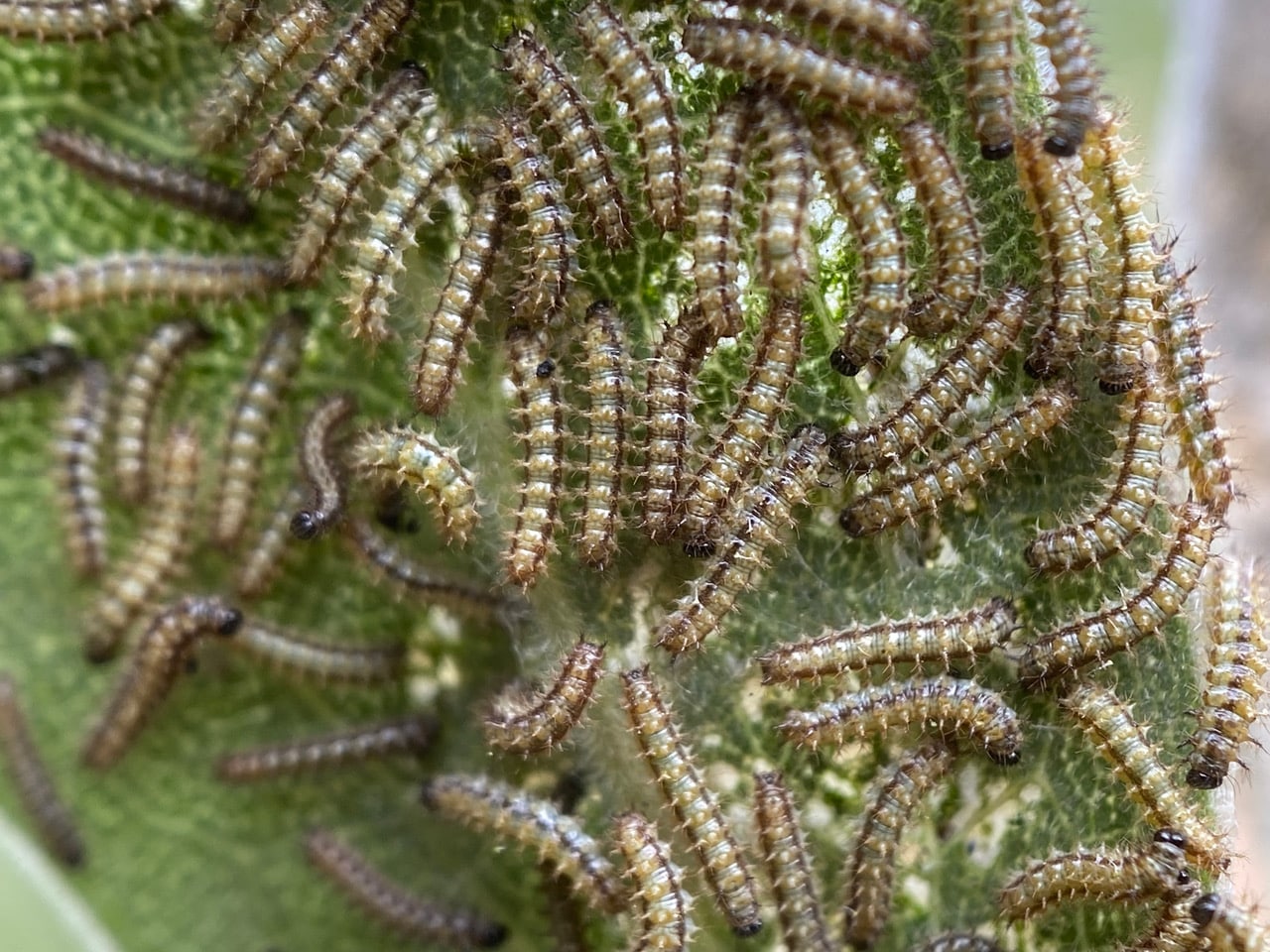
It is itch-inducing to be looking at a mass of caterpillars!

Further in the shade, the California Goldenrods are inflicted with a different kind of insect – leaf miners!
A leaf miner is any one of numerous species of insects in which the larval stage lives in, and eats, the leaf tissue of plants. The vast majority of leaf-mining insects are moths (Lepidoptera), sawflies (Symphyta), and flies (Diptera). Some beetles also exhibit this behavior. Leaf miners are protected from many predators and plant defenses by feeding within the tissues of the leaves, selectively eating only the layers that have the least amount of cellulose, and lowest levels of defensive chemicals.
The Agromyzidae are a family commonly referred to as the Leaf-miner Flies, for the feeding habits of their larvae, most of which are leaf miners on various plants. They are small flies, most species in the range of 2-3 mm. Agromyzidae larvae are phytophagous, feeding as leaf miners, less frequently as stem miners or stem borers. A few live on developing seeds, or produce galls. There is a high degree of host specificity. A number of species attack plants of agricultural or ornamental value, so are considered pests. The shape of the mine is often characteristic of the species and therefore useful for identification. Adults occur in a variety of habitats, depending on the larval host plants.