

Pollinator Post 6/21/25 (3)
Armed with a fully charged cell phone camera, I return to Alameda. First, a quick stop at the Crab Cove visitor center to check on the mating bumble bees. They are no longer there – not surprising, since it’s been 5 hours since I left them. It’s 5:30 pm now – perfect time to watch male Summer Longhorn Bees gather for their slumber party! I head for Naomi’s native plantings on the sidewalk strip on Lincoln Ave.
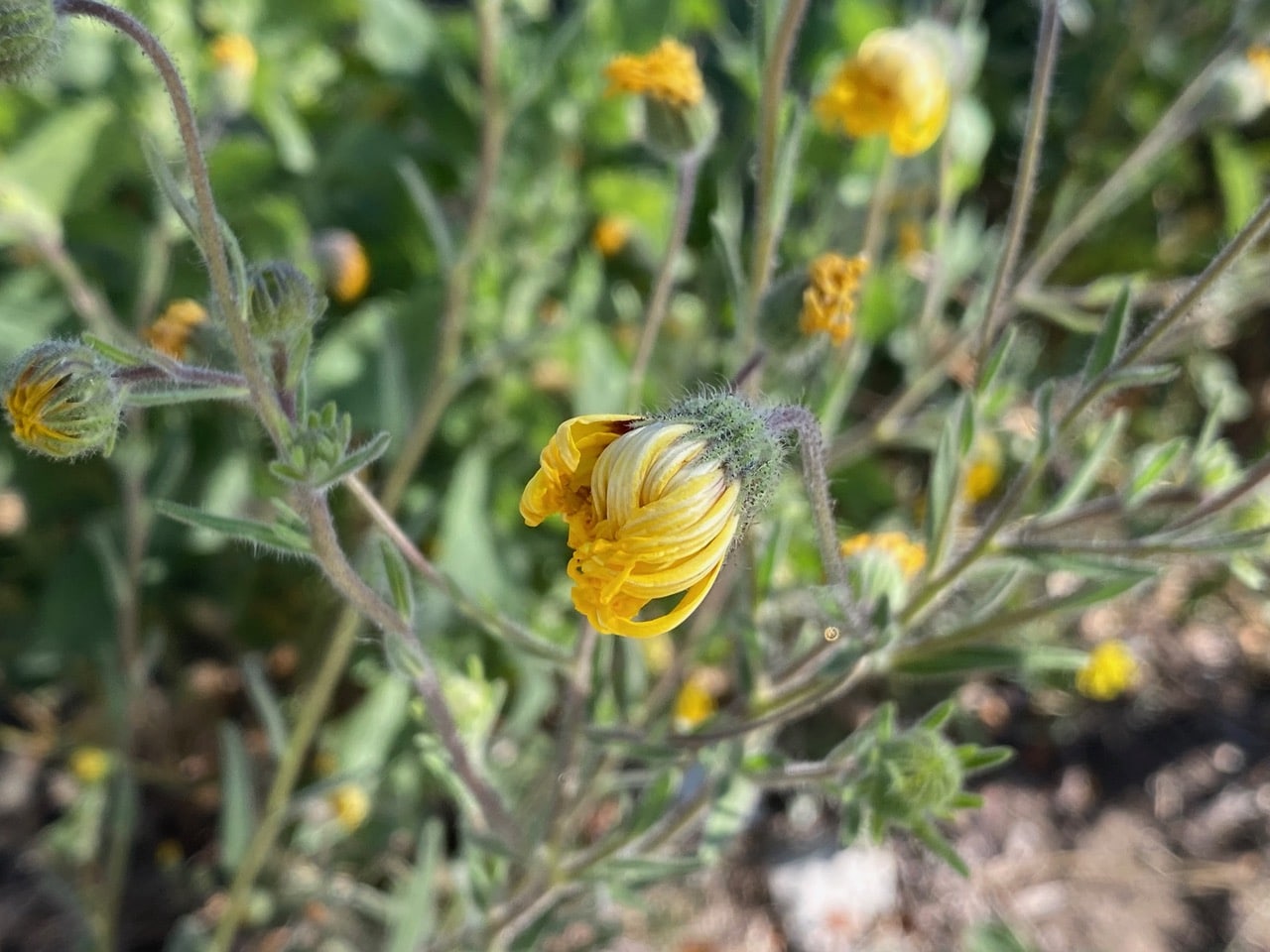
It’s rather quiet here, with little insect activity. It’s been a warm, sunny day. The Elegant Tarweed, Madia elegans flowerheads have been closed since mid morning, and have yet to open up for the night.
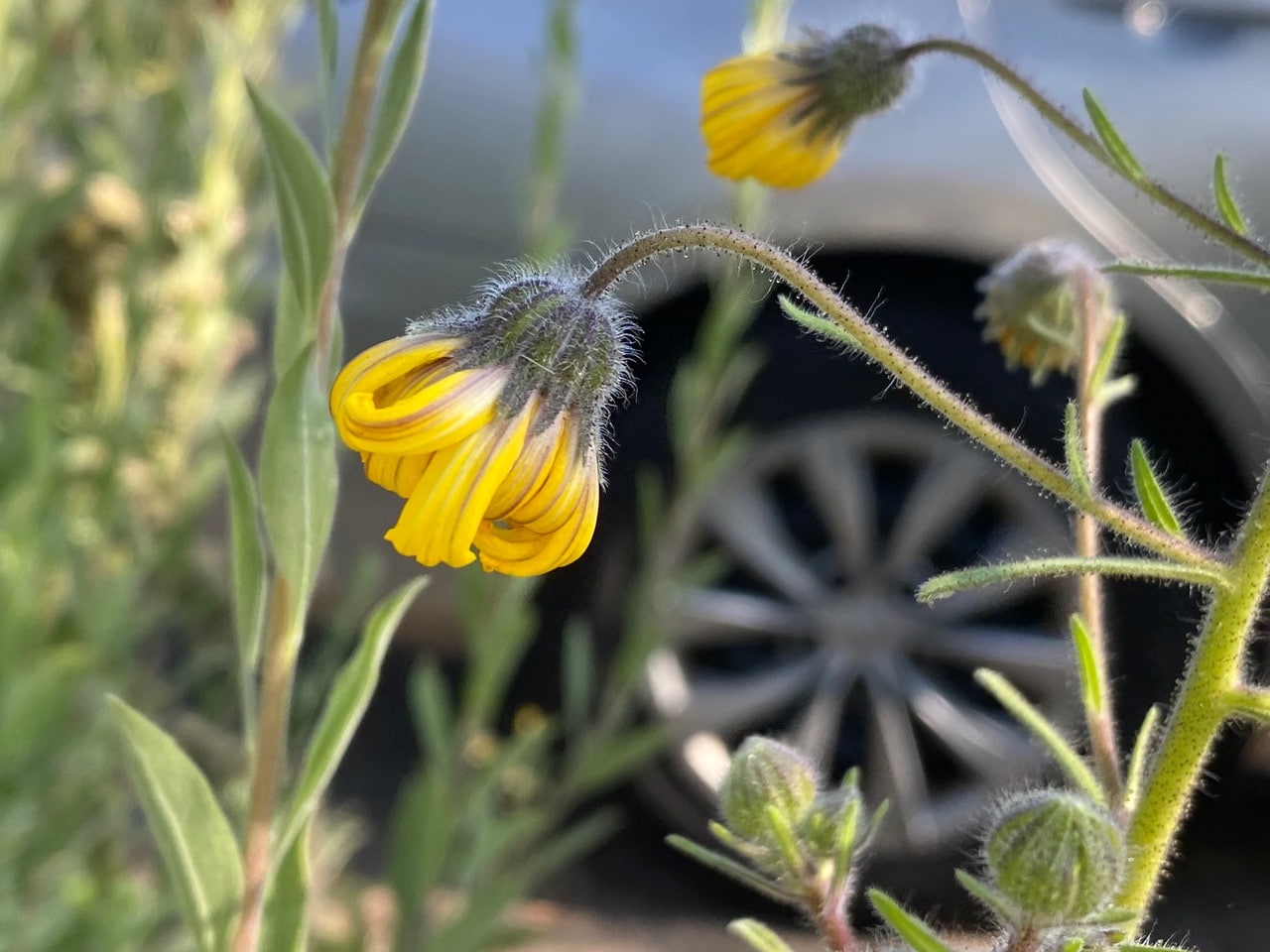
Unusual among plants, Madia starts to close its flowerheads at mid-morning when the day heats up. The flowerheads open up again in the cool of the evening through the next morning. Why does Madia do this?
The Madia flowerhead closes on hot days because it lacks a way to prevent moisture loss. While the closing seems to happen by the clock, it’s really because the drought stress is worse at about the same time each day. The leaves and stems have a very efficient way to avoid wilting – they contain a mucilage (gel-like substance) that holds water tightly. But this material is lacking in the flowers. Closing the flowerheads reduces the surface from which water can evaporate, preventing desiccation. From my own observation, each Madia flowerhead can go through the opening/closing cycles for about 5 days before senescing.
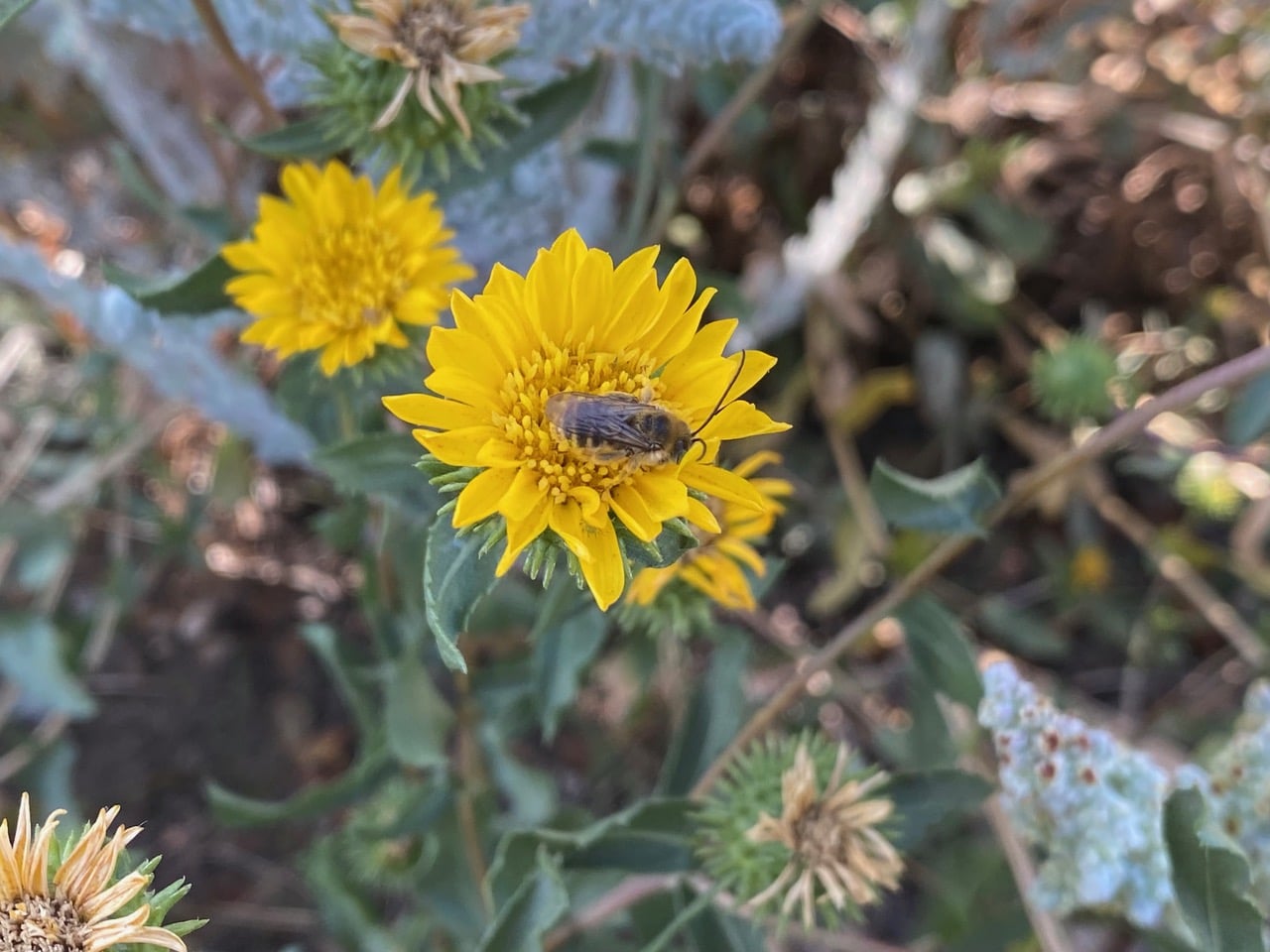
I look around for the male Summer Longhorn Bees, Melissodes sp. (family Apidae). One is resting stock-still on a Grindelia flowerhead. Waving my hand over the bee does not stir it. It’s asleep alright. But where are the rest of them?
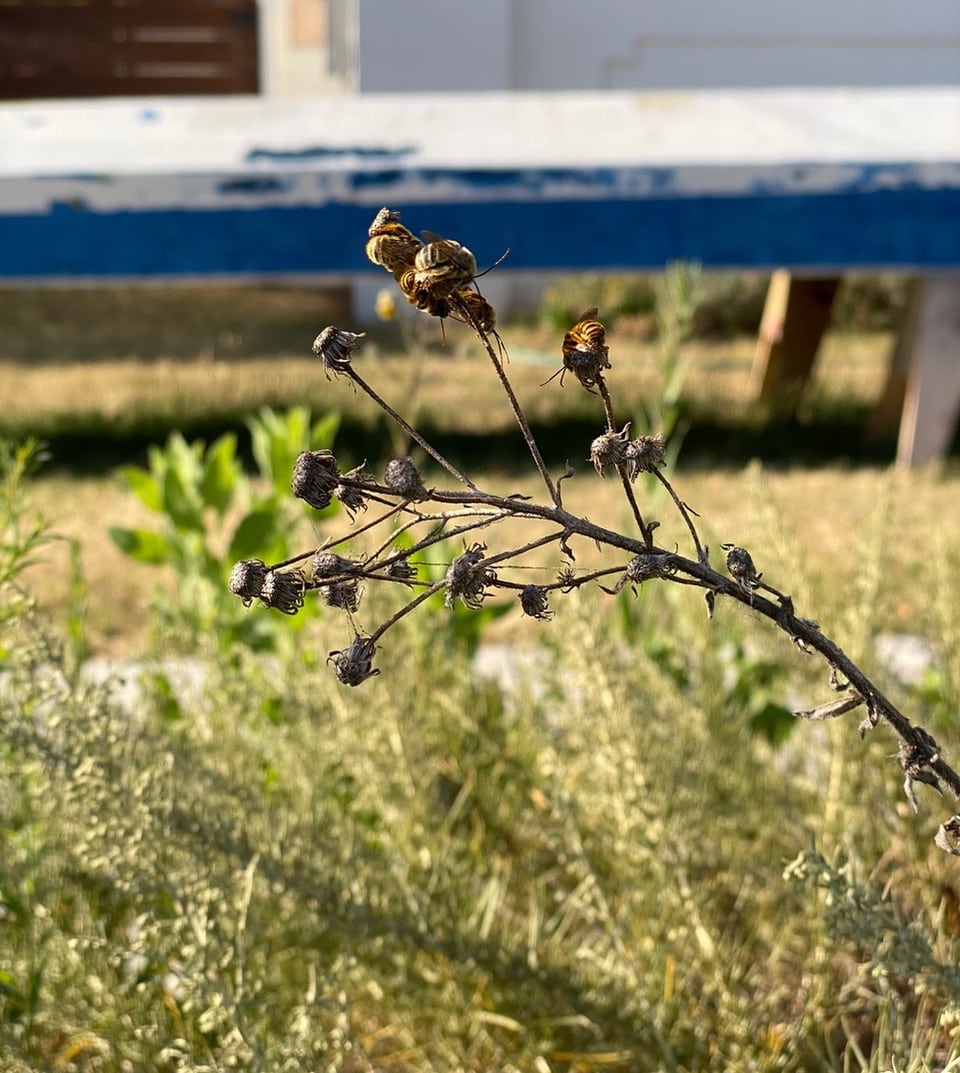
I carefully scan the tarweed seed heads. Last summer’s Longhorn Bees slept on tarweed seed heads here. Hey, there they are! Do you see them? They are really quite cryptic – I only found them when one flew in to join the party. I think this is an old stalk of seed heads from last year. The bees might have chosen it because of some scent or pheromones left by last year’s bees? Some new seed heads have appeared on the tarweeds, but they are in better condition than these.
Male bees do not participate in nest construction, so at the end of the day they don’t have a home to return to. They usually sleep out in the open, mainly on vegetation. In some species, notably the Longhorn Bees, the males sleep in aggregations. Apparently there is safety in numbers – when one is attacked by a predator, the others are alerted right away and are able to escape.
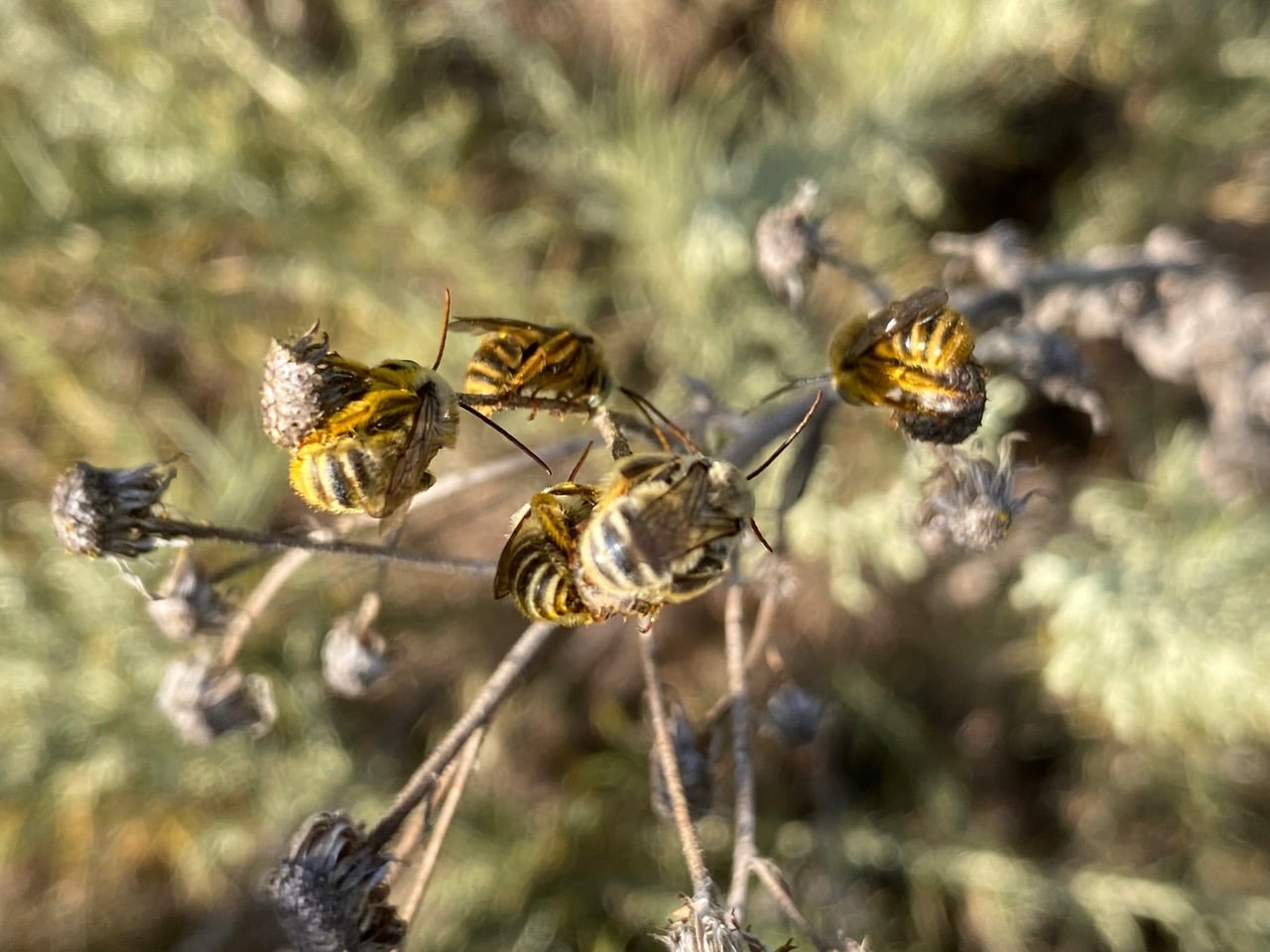
It’s a real challenge to photograph the bees in the low-angle light at this hour. Besides, I am limited by where I can stand, and I can’t touch the stalk without flushing the bees. There are seven male bees on three adjacent seed heads, and more are coming in to join them as I watch. There are minor shifts and adjustments as the bees jostle for position, but there is no brawl. It’s amazing to watch the cosy comradery displayed by these boys who have spent the day competing with each other for the girls.
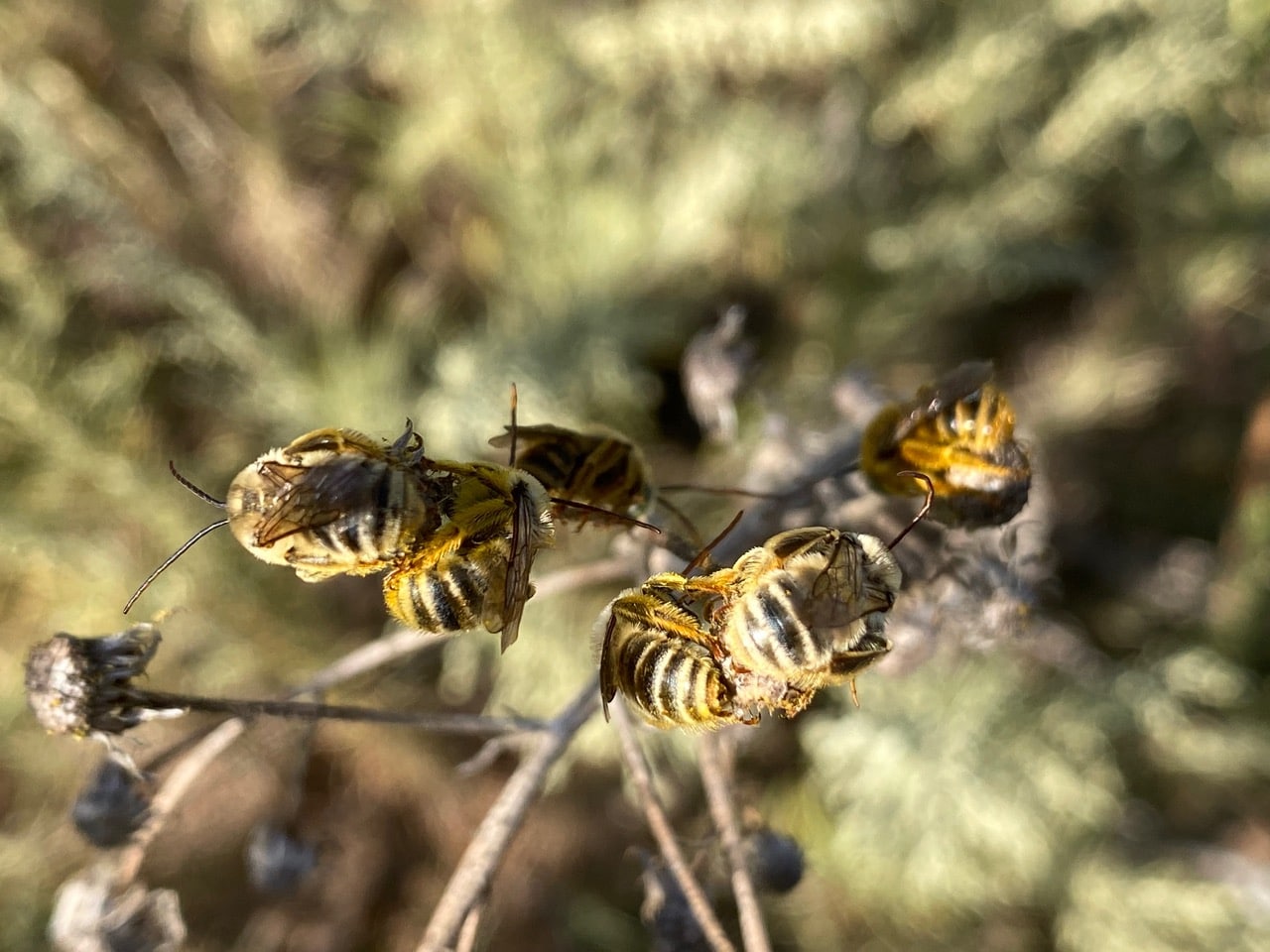
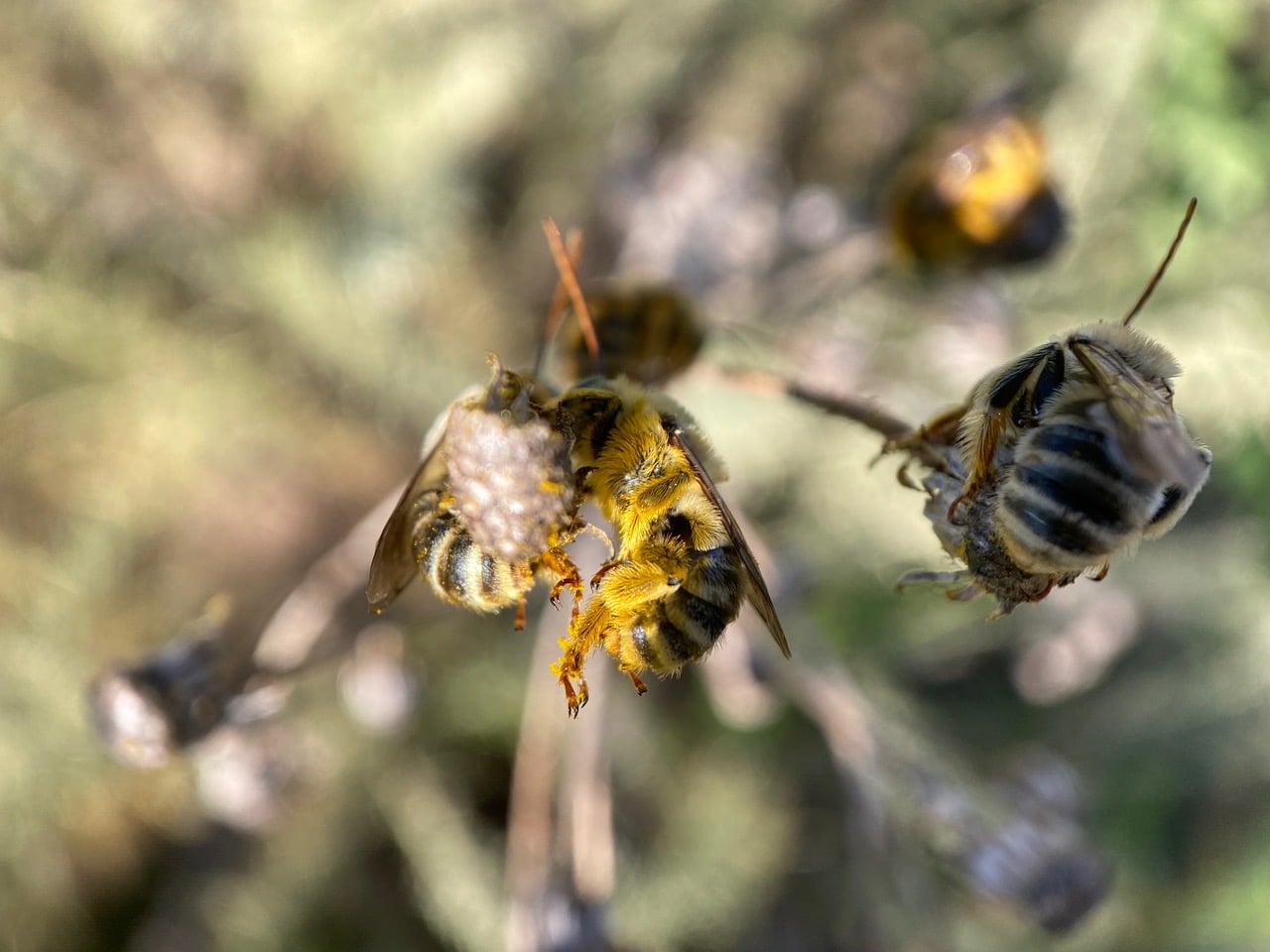
As the bees settle down, clamping their mandibles on the seed heads, they groom themselves meticulously before going to sleep. Nite-nite, Boys!
Several male Longhorn Bees have gathered to groom themselves before going to sleep. – YouTube The sound track is provide by passing cars on the street.
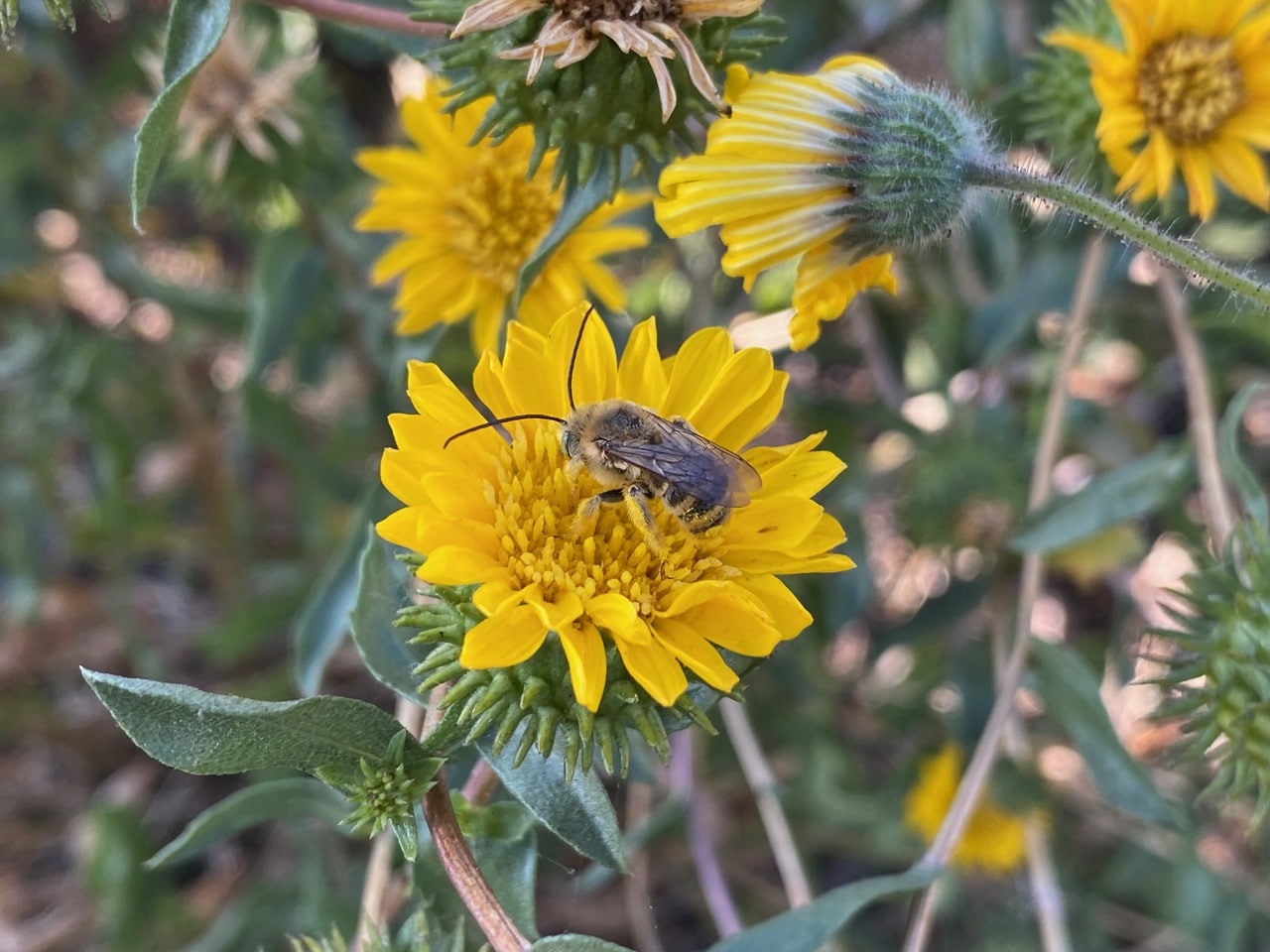
Ah, here’s a straggler. He is still flying around, taking his last sips of nectar from Grindelia flowers before joining the slumber party. Or perhaps he is one of those loners who prefer to sleep by themselves?
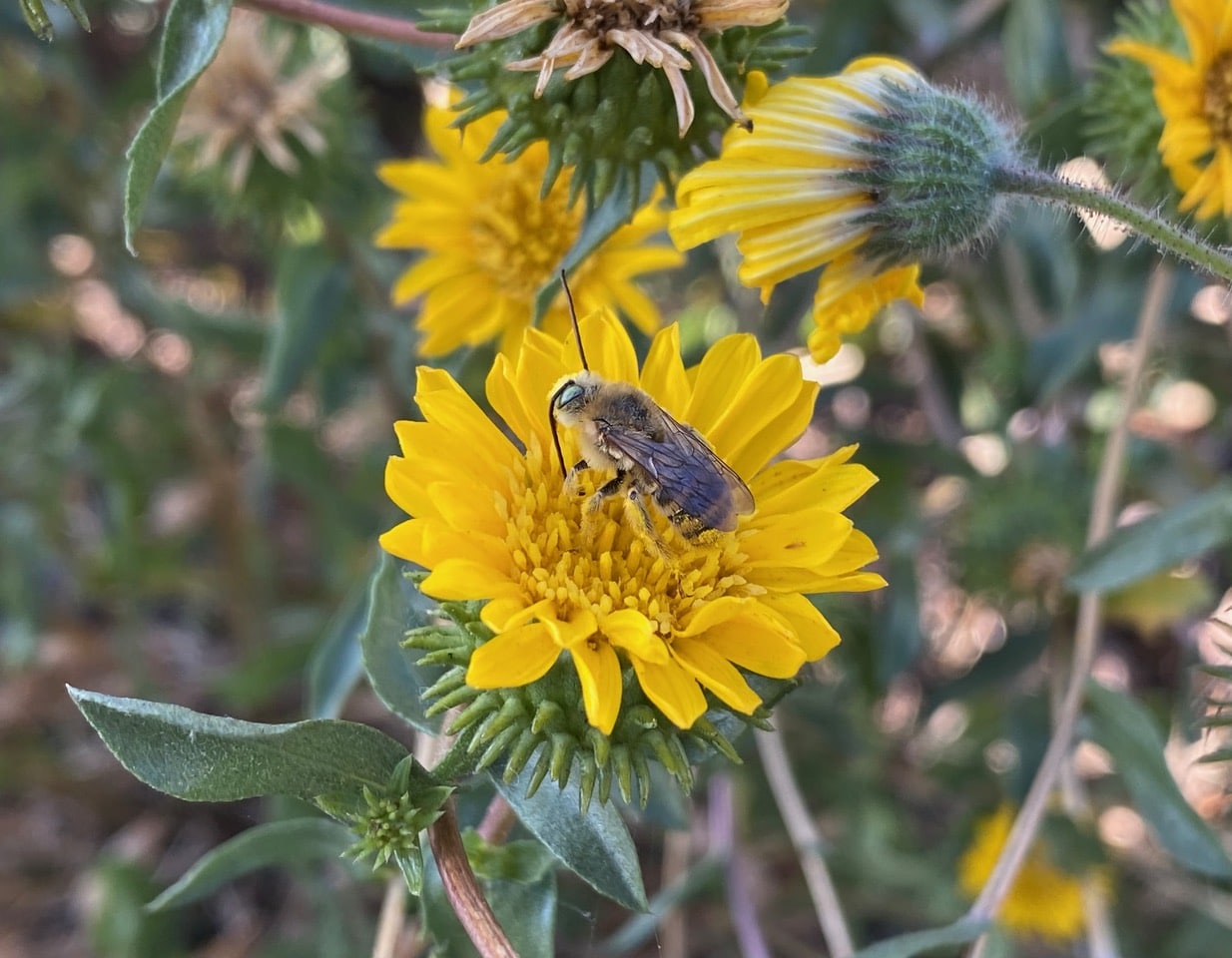
The male cleans his left antenna by pulling it through the antenna cleaner on his left front leg.
All bees have an antenna cleaner on each of their two forelegs. The antenna cleaners consists of two parts: a notch in the basitarsus, which is fitted with stiff hairs, and a corresponding spur on the tibia. To clean its antenna, the bee raises its foreleg over its antenna and then flexes it tarsus. The action allows the spur to close the notch, forming a ring around the antenna. The bee pulls each antenna through the bristles to clean it of debris such as pollen or dust which might interfere with the many sensory organs within the antenna. A bee’s antennae serve numerous functions: smell, taste, perceive humidity and temperature, feel, monitor gravity and flight speed and even detect sound waves to help guide the bee in its daily activities.
There’s an additional, little-known reason why male Longhorn Bees keep their antennae in tip-top condition: