

Pollinator Post 6/21/25 (1)
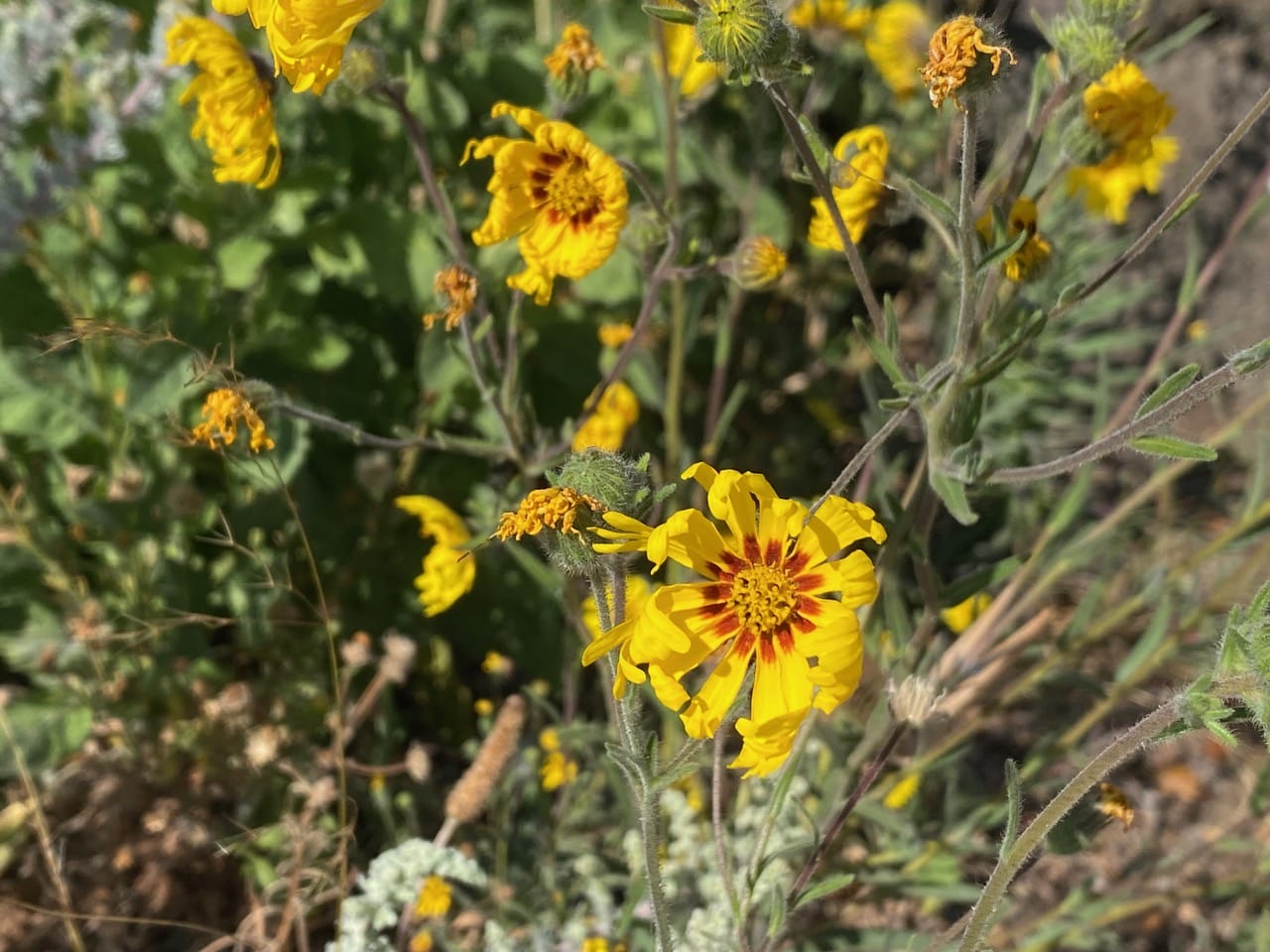
I arrive at Naomi’s native plantings on the Lincoln Ave. sidewalk strip in Alameda a little before 9 am, thinking that I would find some male Summer Longhorn Bees still sleeping. No such luck!
The sun is shining brightly in the sky, and most of the flowerheads of Elegant Tarweed, Madia elegans are already closing, with their ray petals curling in!



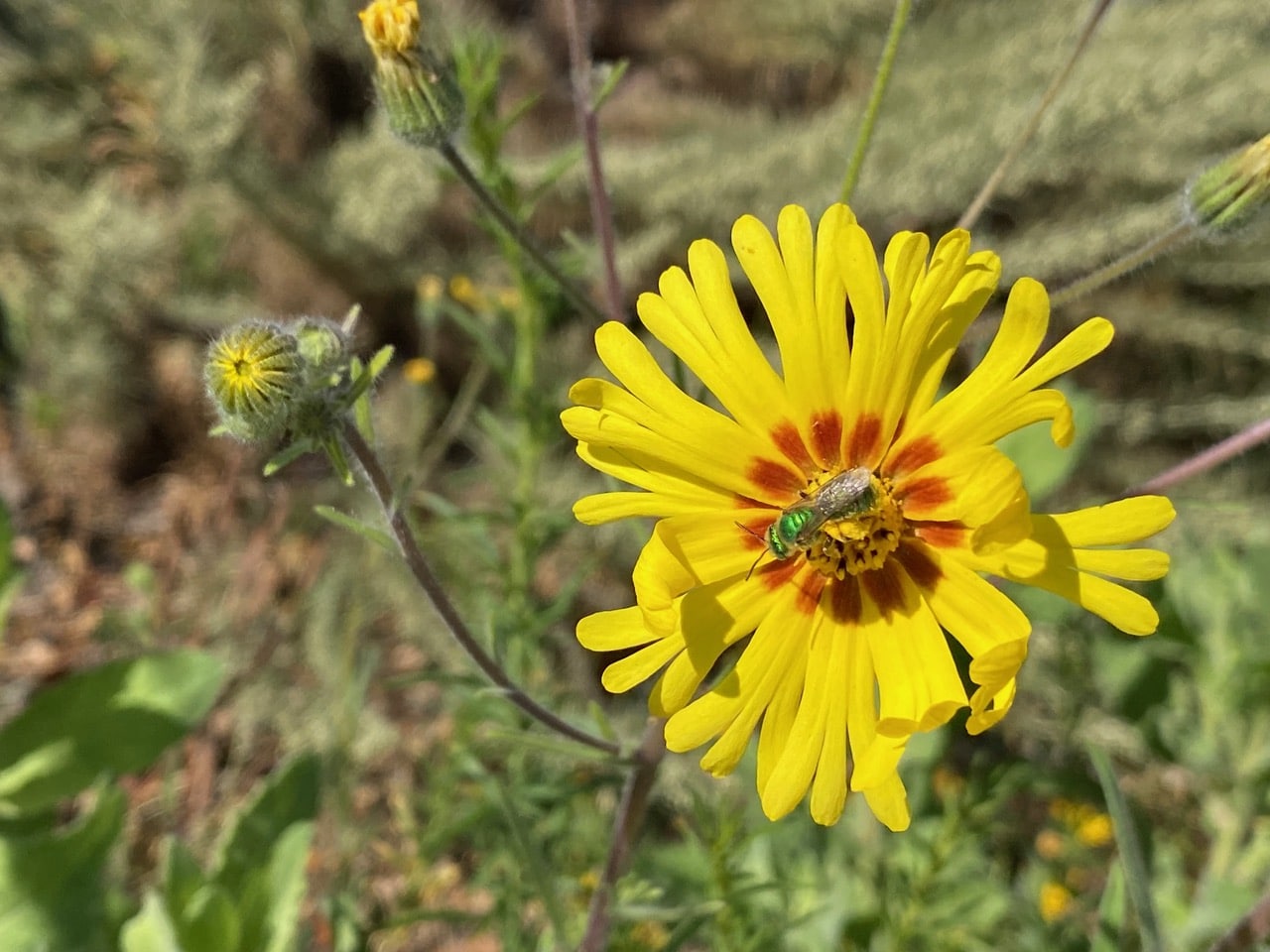
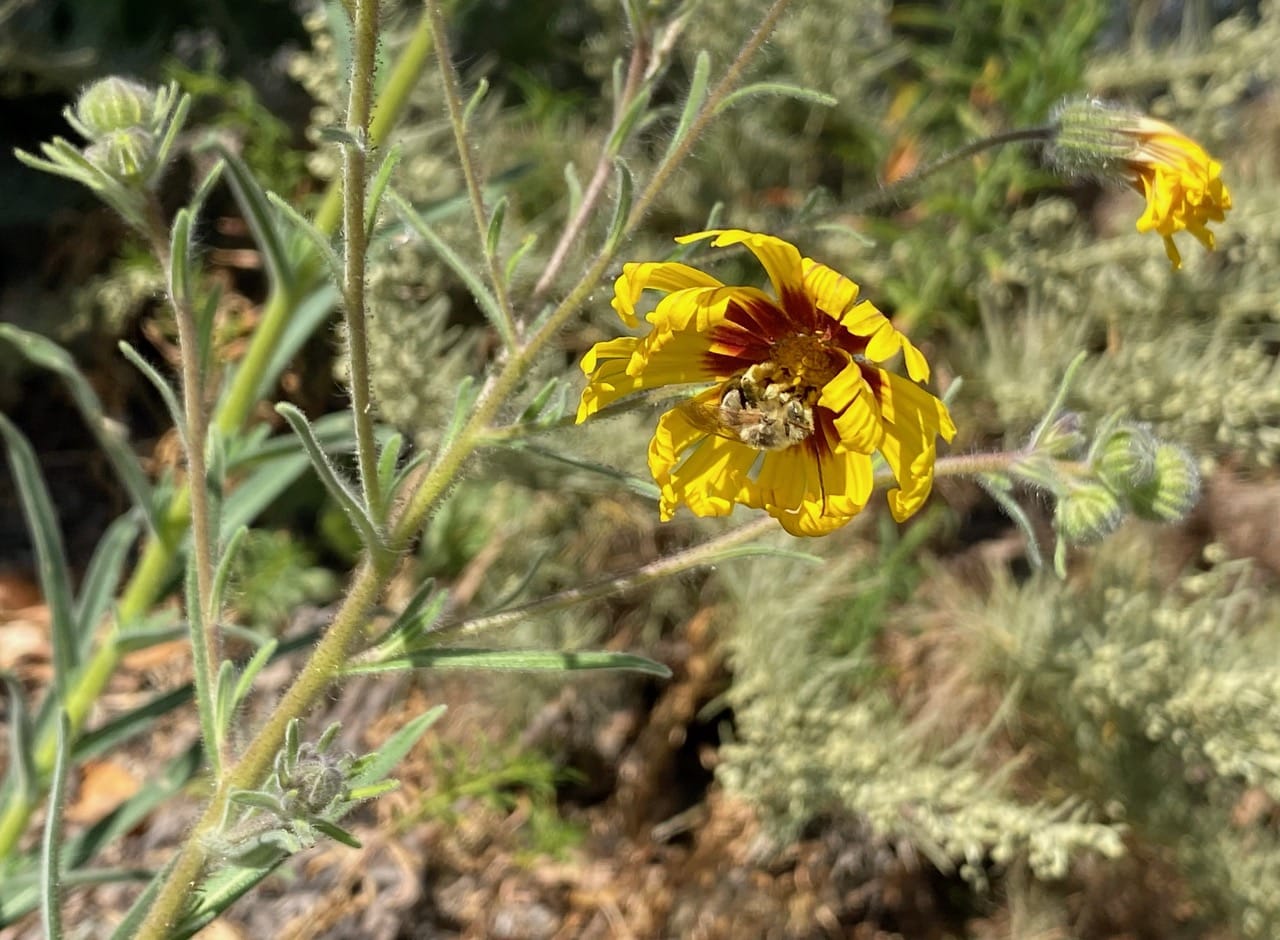
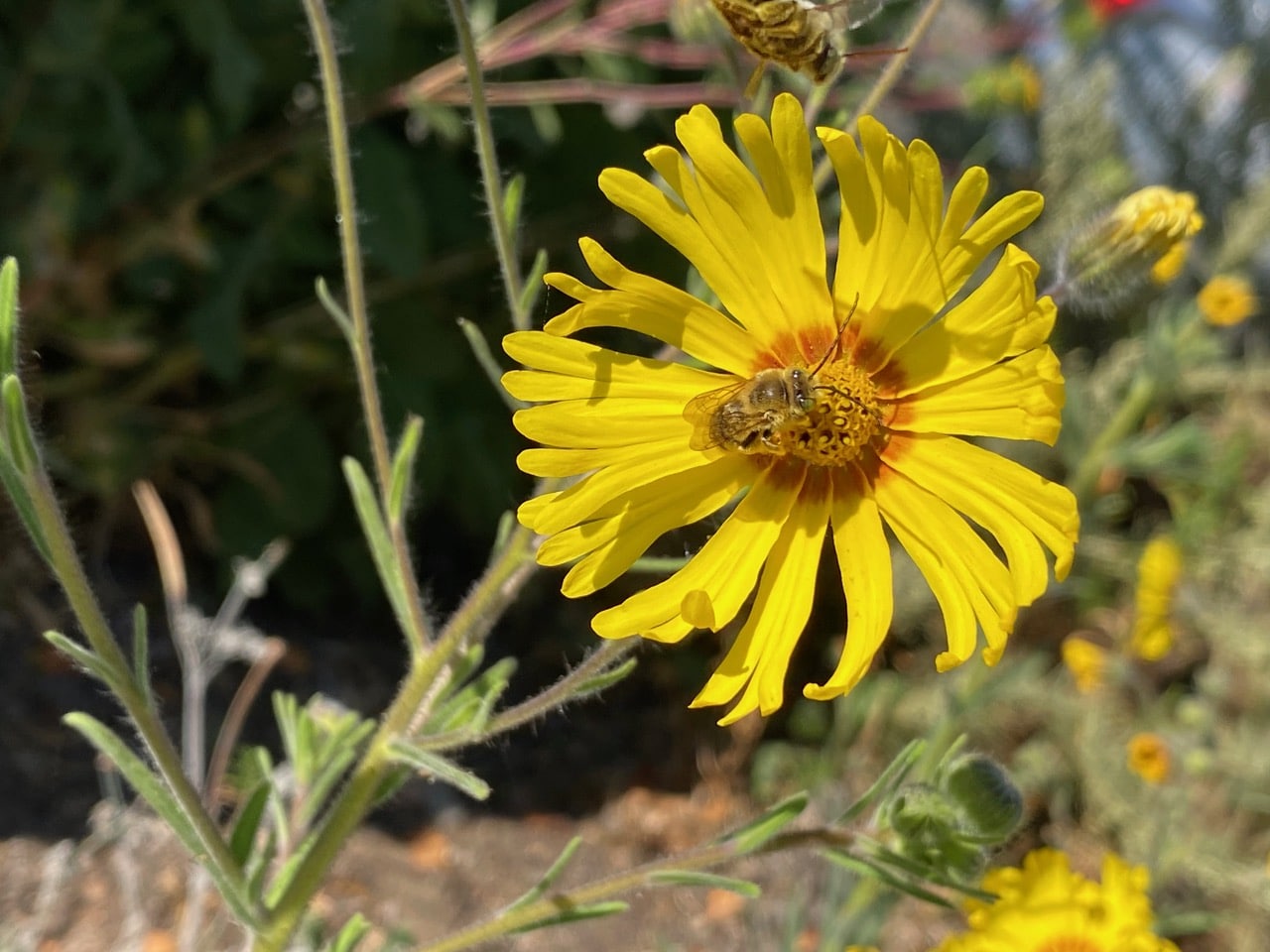
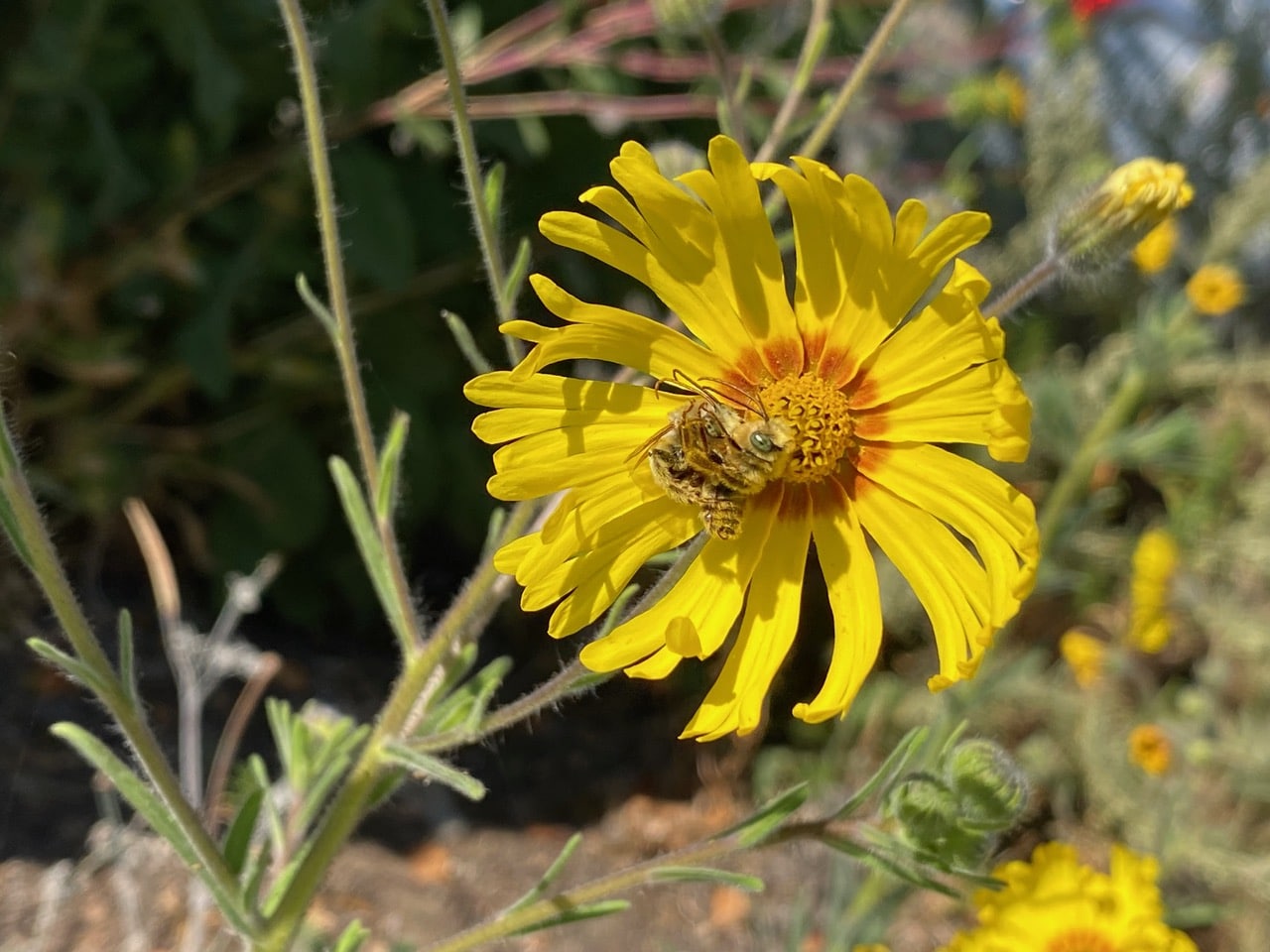
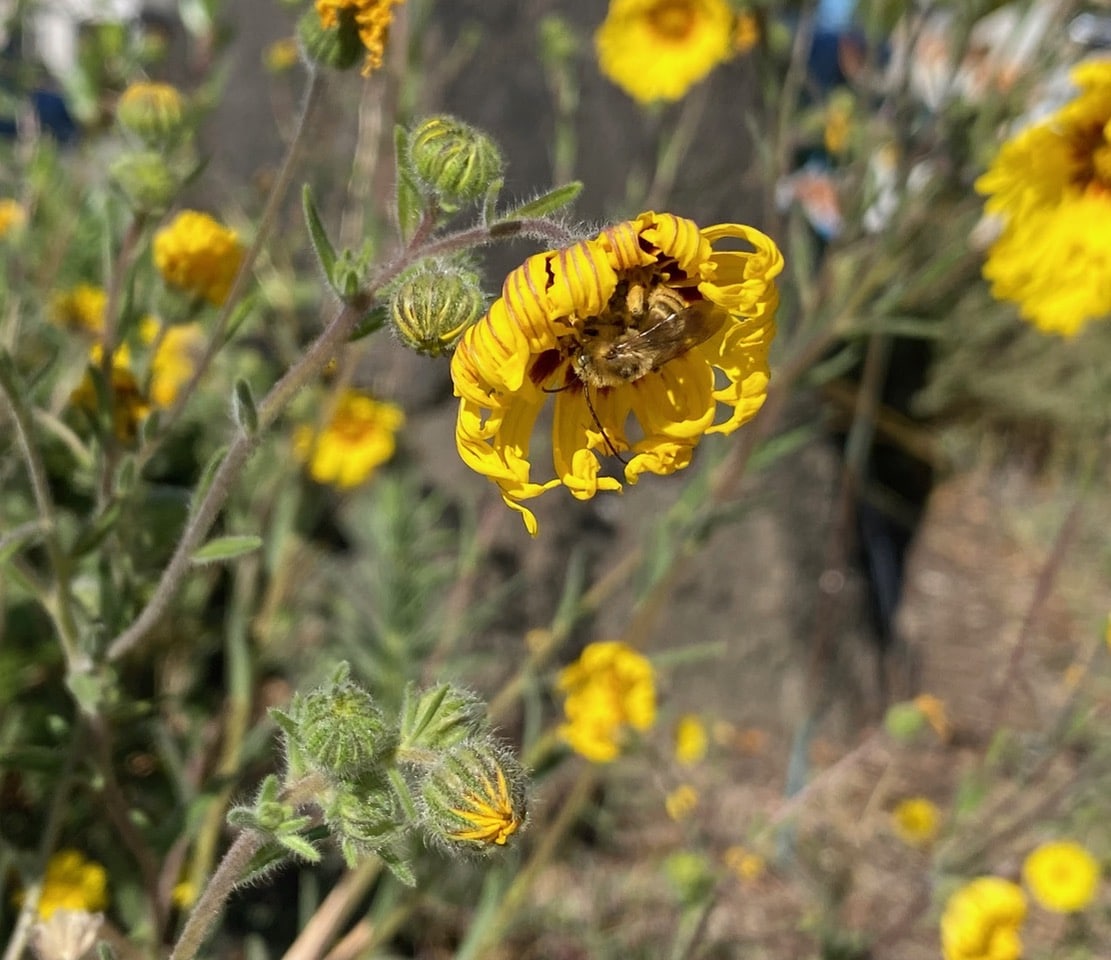


Unusual among plants, Madia starts to close its flowerheads at mid-morning when the day heats up. The flowerheads open up again in the cool of the evening through the next morning. Why does Madia do this?
The Madia flowerhead closes on hot days because it lacks a way to prevent moisture loss. While the closing seems to happen by the clock, it’s really because the drought stress is worse at about the same time each day. The leaves and stems have a very efficient way to avoid wilting – they contain a mucilage (gel-like substance) that holds water tightly. But this material is lacking in the flowers. Closing the flowerheads reduces the surface from which water can evaporate, preventing desiccation. From my own observation, each Madia flowerhead can go through the opening/closing cycles for about 5 days before senescing.
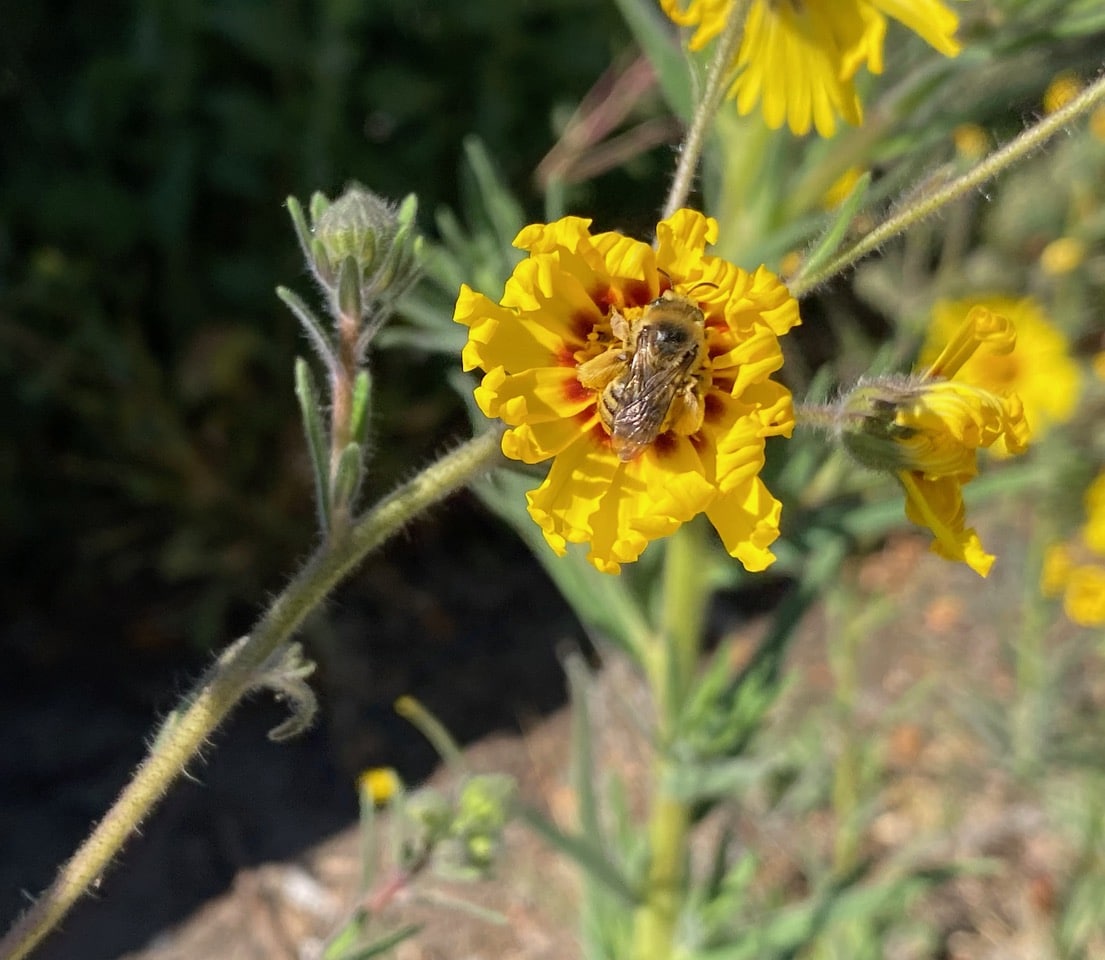
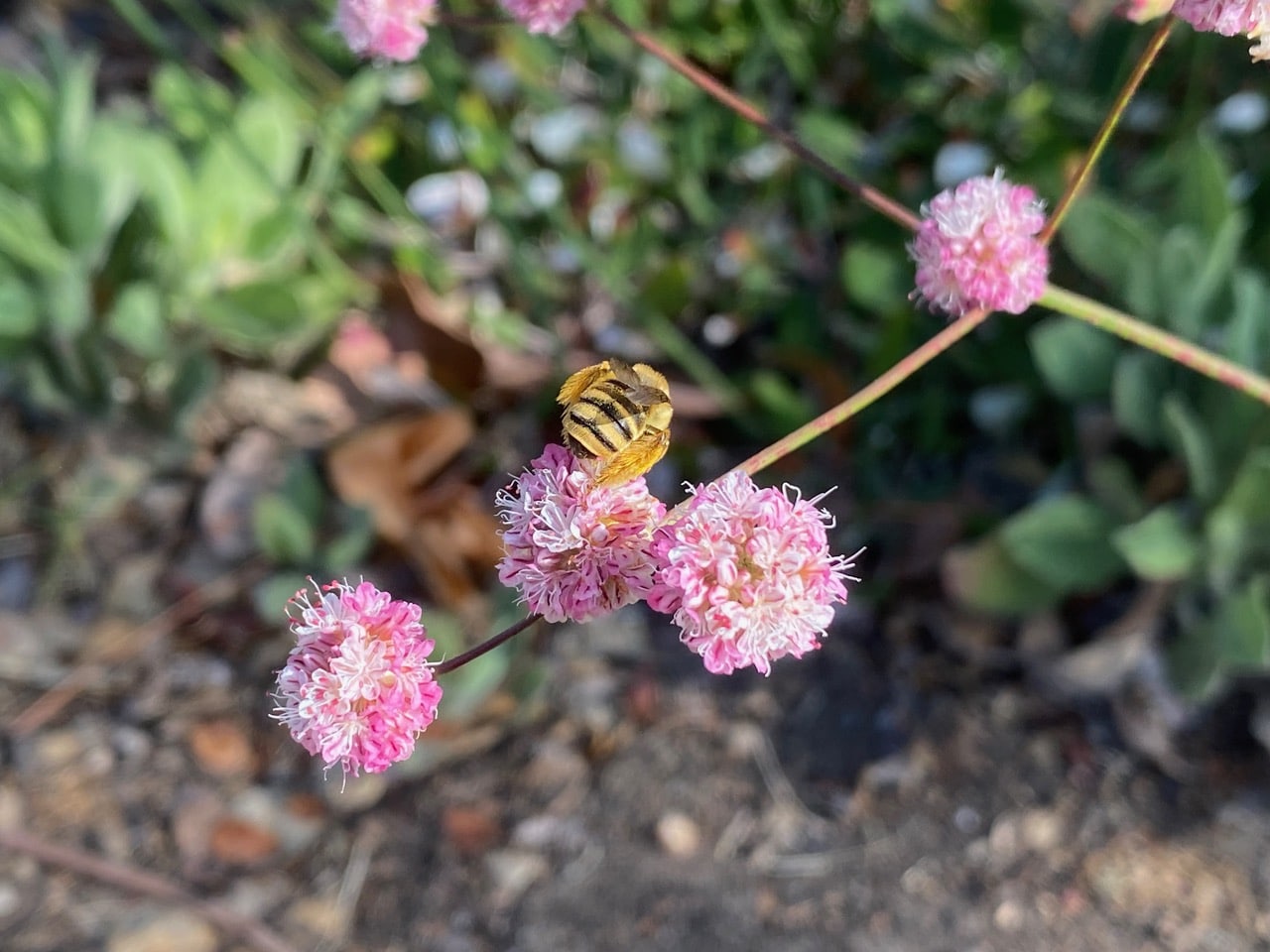
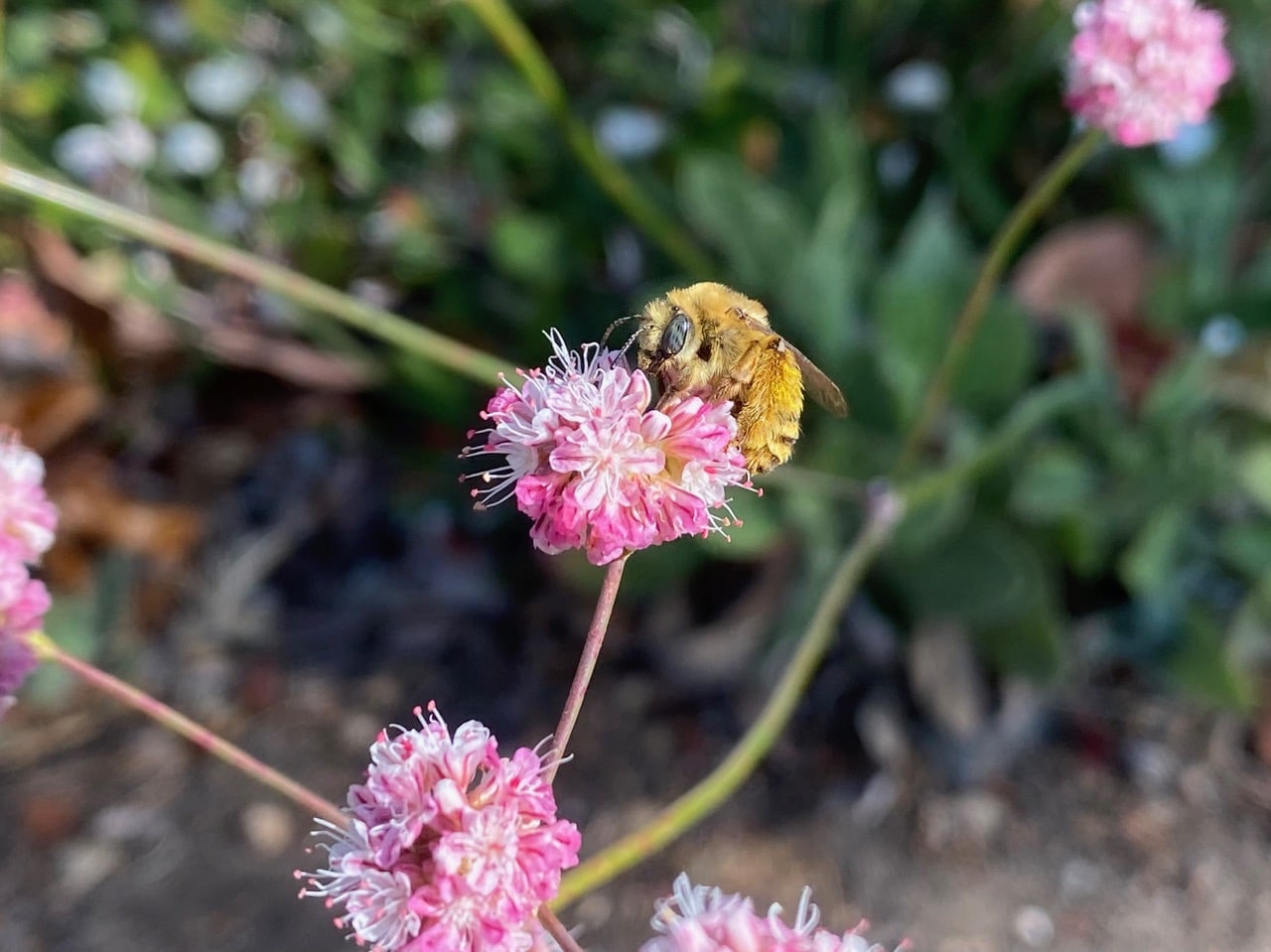
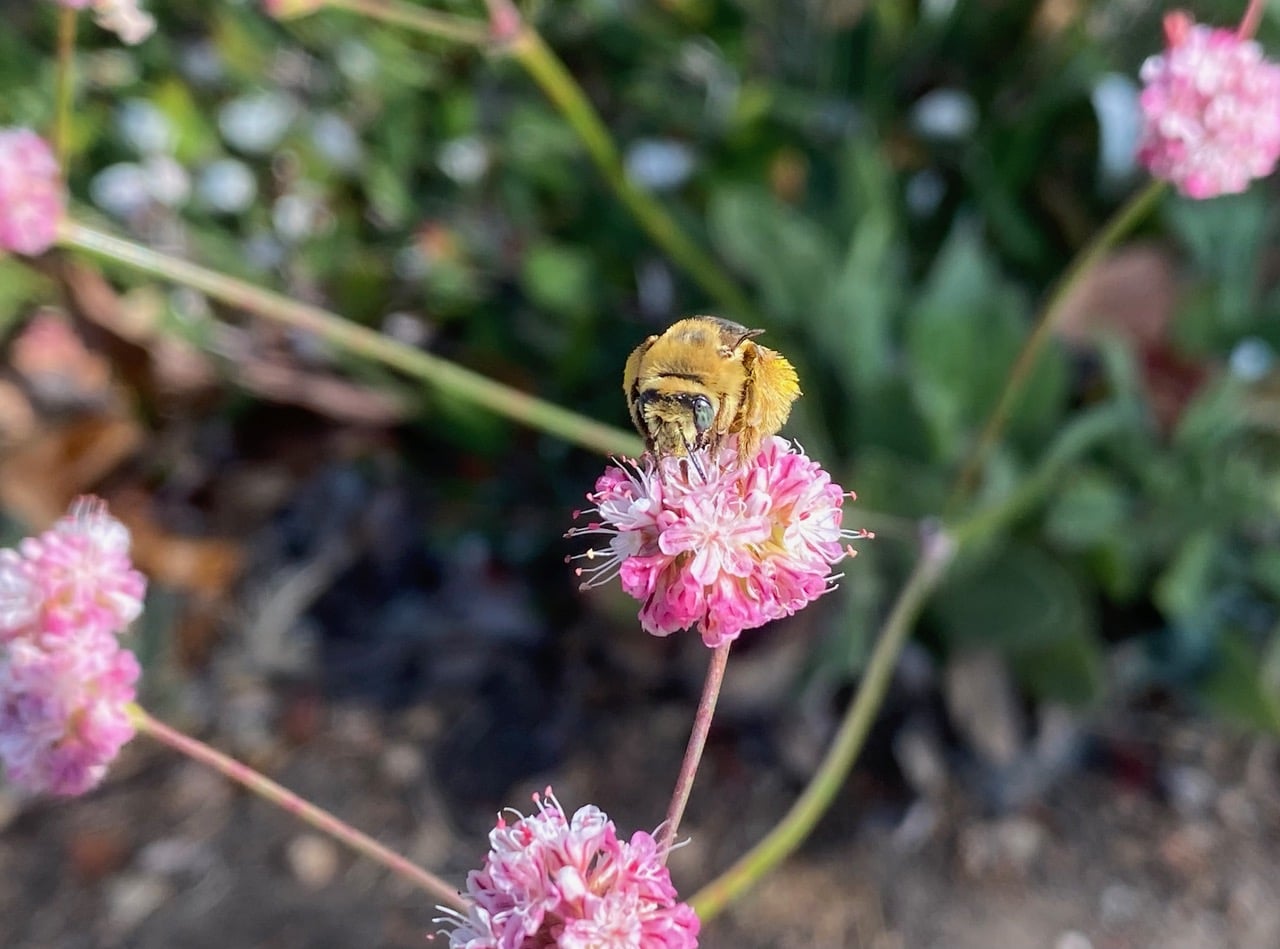
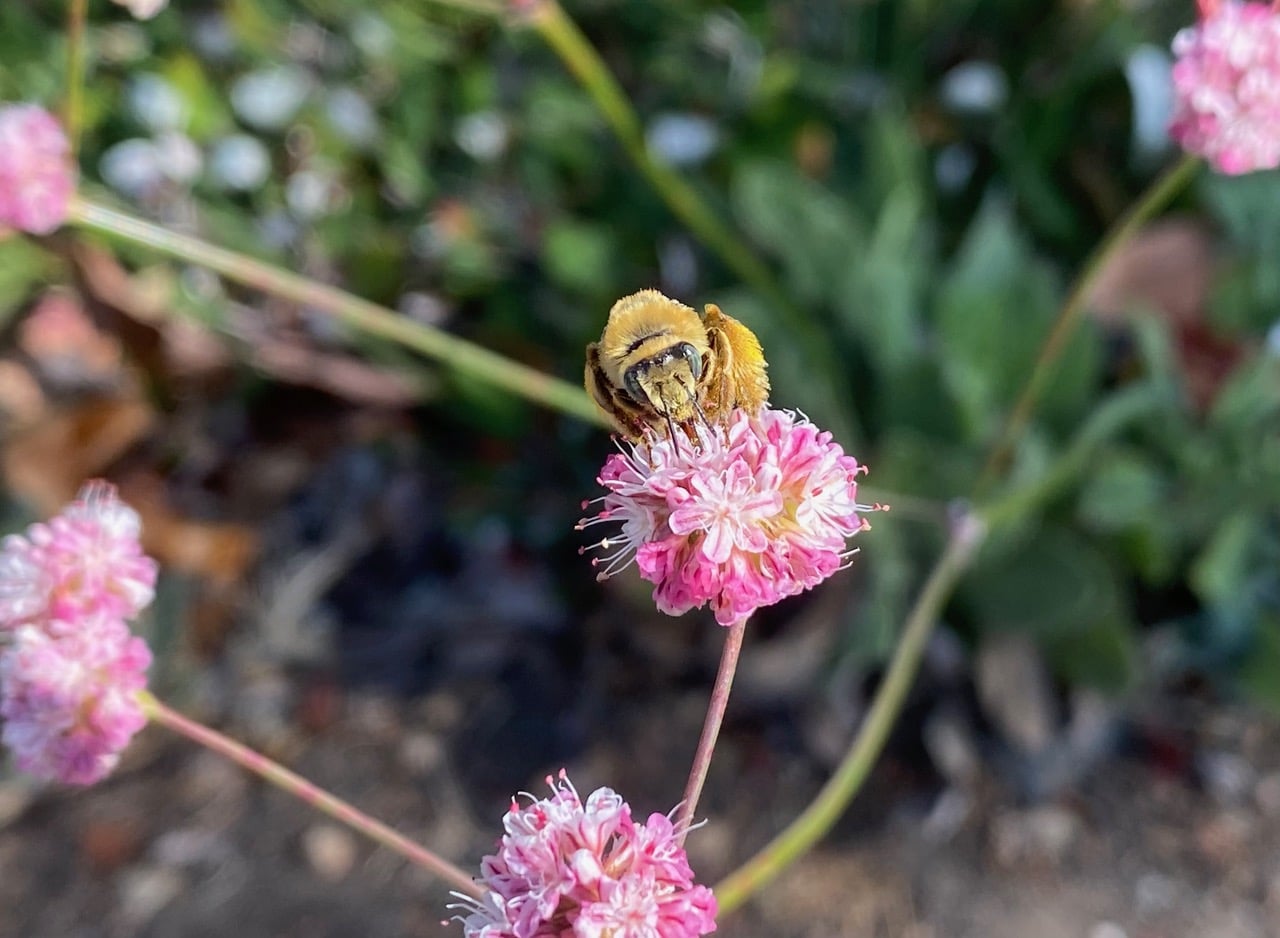
The bees are already zipping around the green patch, foraging. There is an urgency in the air – as if the bees know that they don’t have all day to visit the tarweed flowers. A male Summer Longhorn Bee, Melissodes sp. (family Apidae) has landed on a flowerhead to take nectar.
A few females are out foraging too, busy collecting pollen. There is so much traffic that the bees are literally bumping each other off the flowerheads.
The Summer Longhorn Bees, Melissodes sp. (family Apidae) are medium to large bees, stout-bodied, usually with gray/brown hair on the thorax and pale hair bands on the abdomen. Males usually have yellow markings on their faces and have very long antennae from which their common name is derived. They are active May to September, with peak flight in late June to early August. The females prefer flat, bare ground for digging their solitary nests, though they sometimes nest in aggregations. Pollen is transported in scopae on the hind legs. Pollen loads are often copious and brightly colored and thus very distinguishable. Melissodes are specialists on Asteraceae – females gather pollen from flowers of Aster, Bidens, Coreopsis, Cosmos, Encelia, Gaillardia, Helianthus, and Rudbeckia ssp.
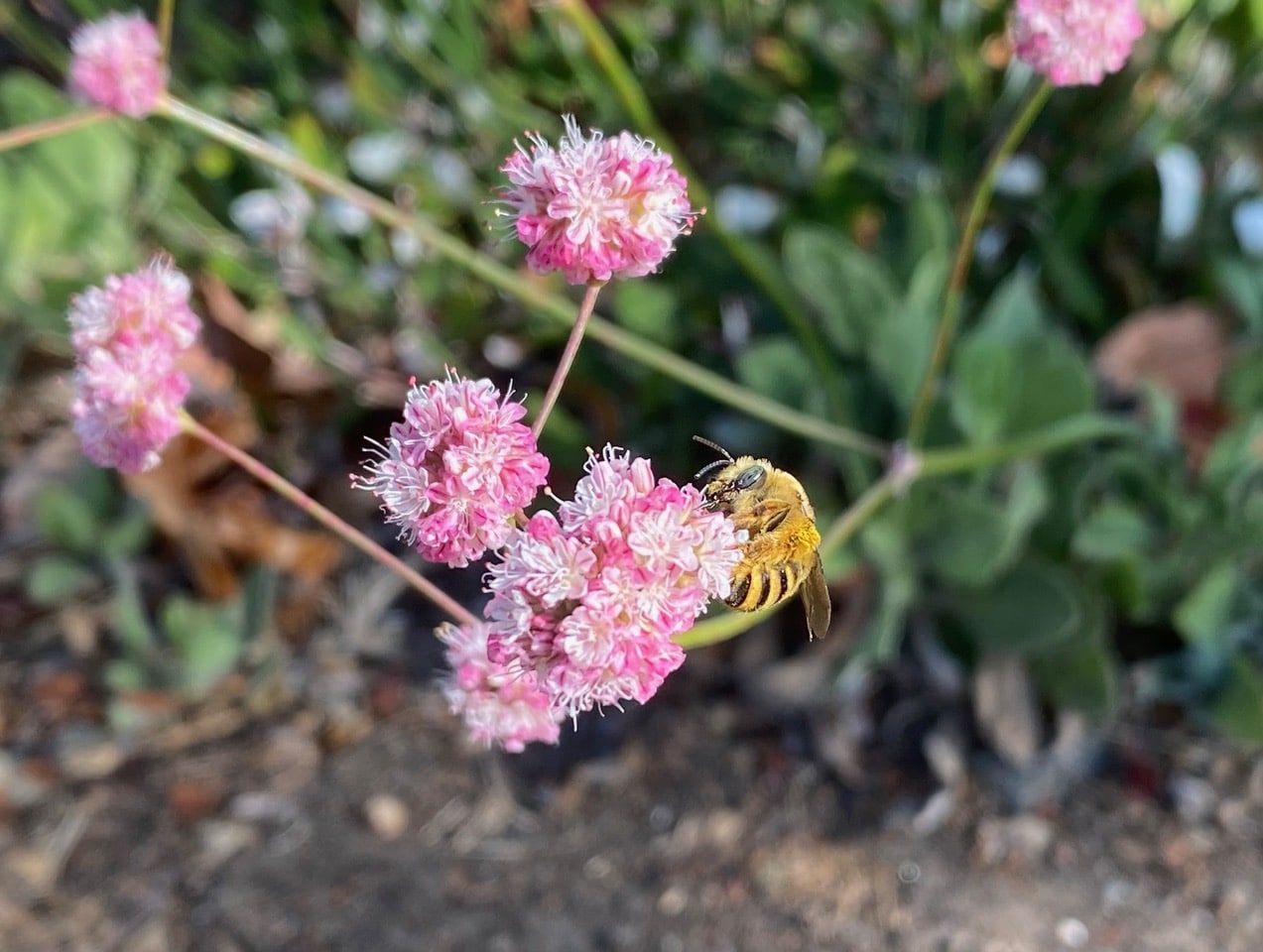
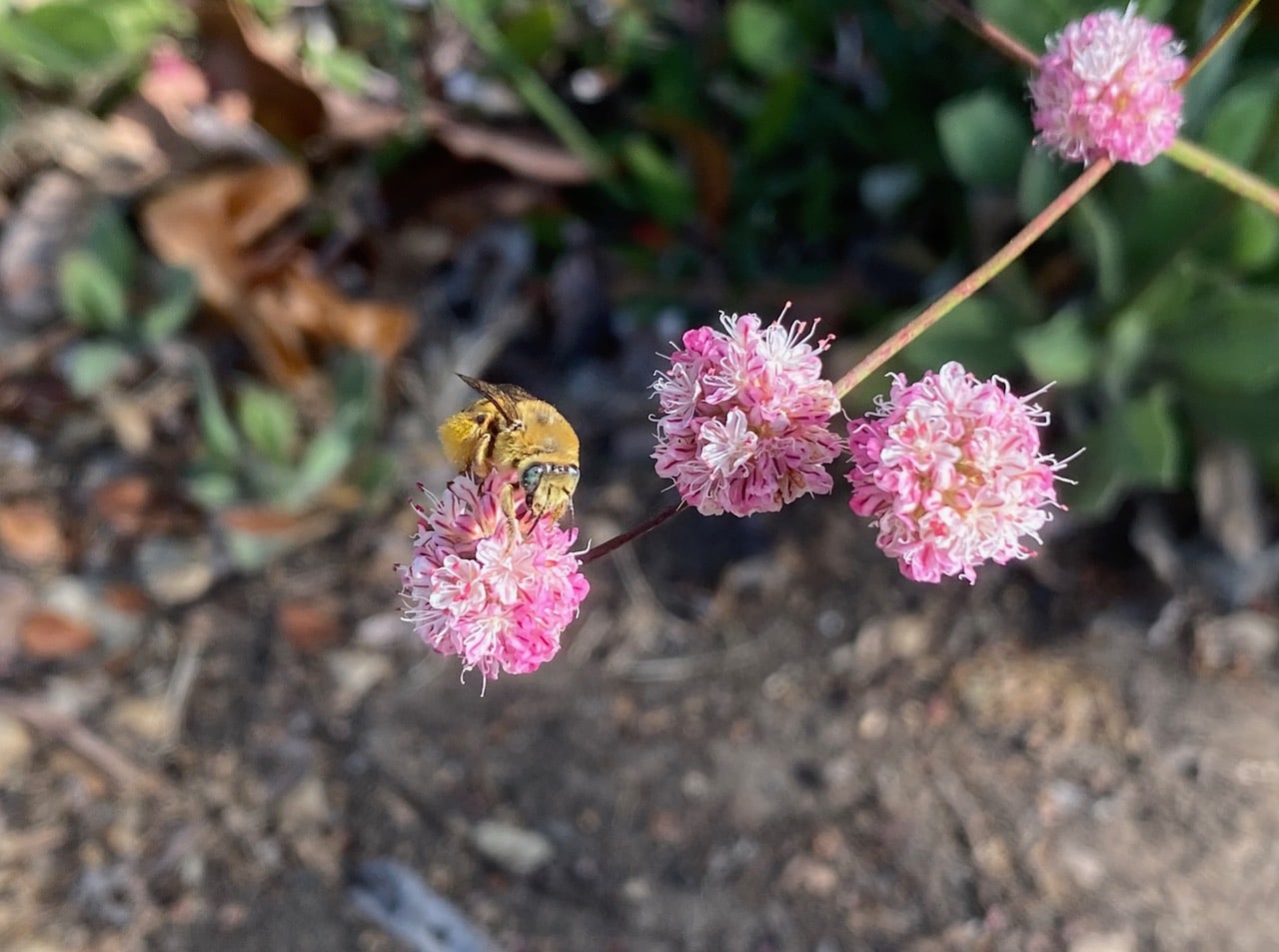
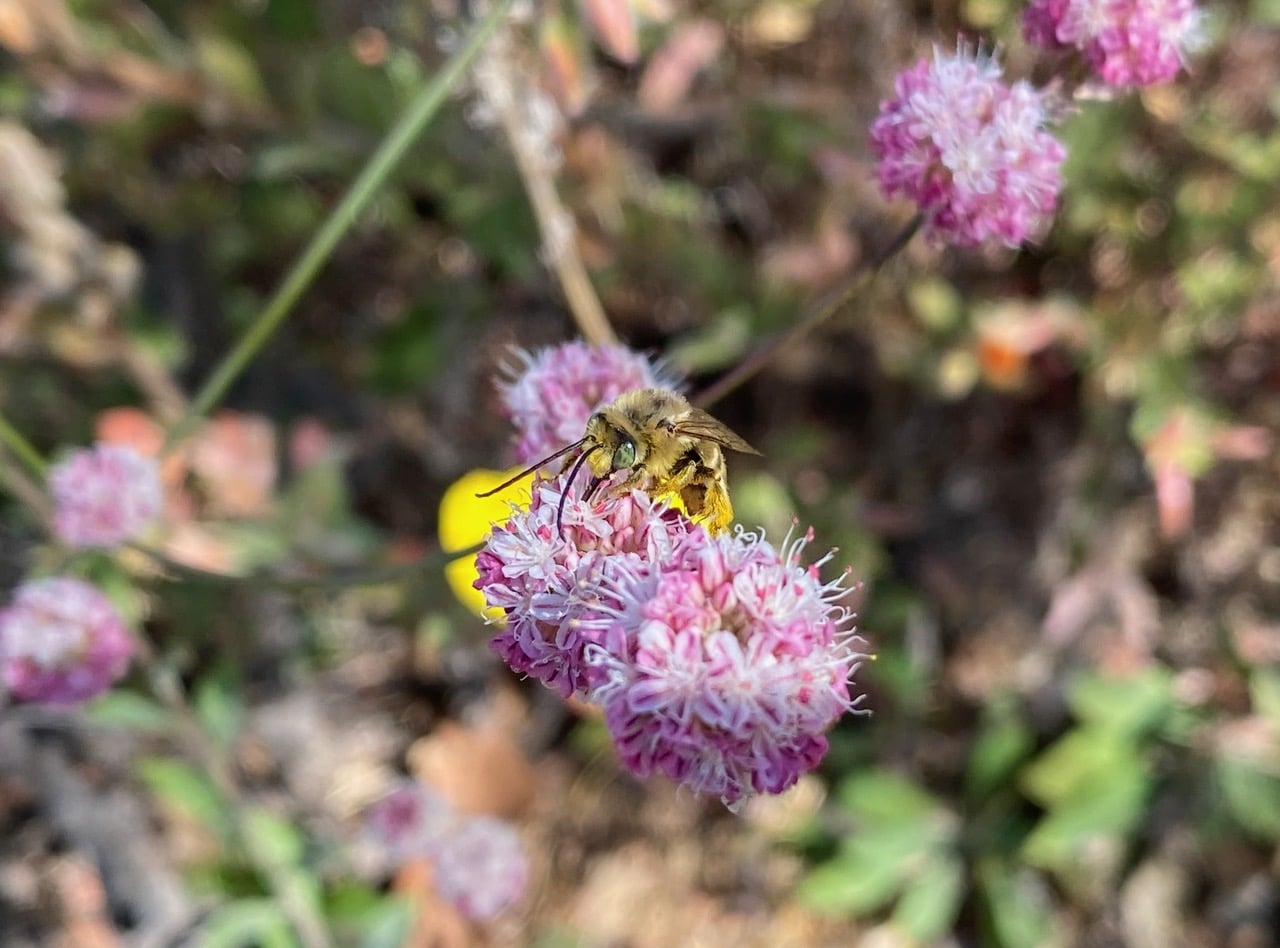
Hey, what’s that female Melissodes doing on an inflorescence of Nude Buckwheat, Eriogonum nudum?! I have been observing these bees every summer, and I have never seen a female on a flower other than an Asteraceae (sunflower family).
I takes me a minute to clear my mind. The female is probably not collecting pollen from the buckwheat flowers; maybe she’s just taking nectar? I observe her closely as she goes from one cluster to the next. Indeed, she’s not doing any of the fancy footwork typical of pollen gathering behavior.
The scopae (special pollen-collecting hairs) on her hind legs remain relatively empty.
And she always has her tongue inserted in the tightly clustered flowers.
Specialist bees, also known as oligolectic bees, often exhibit a preference for pollen from specific plant species but will collect from a wider variety of flowers. The specificity refers to pollen selectivity, and not nectar choice. Nectar is a sugar-rich substance that can be gathered from most flowers, and is readily available energy source to fuel the bee’s activities. In contrast, pollen which is essential for feeding their larvae, is often highly specialized in its digestibility, nutritional content and requires specific flower structures and corresponding skills of the bee for effective collection.
Specialist bees have evolved to efficiently collect pollen from certain plants, often due to unique floral structures that match their body shape and specialized hairs. While pollen collecting is specialized, nectar foraging is often more flexible. Bees may visit various flowers for nectar, even those outside their pollen specialization, as long as the nectar is accessible and provides sufficient energy.
Behold the female Summer Longhorn Bee, Melissodes sp. with her prolific scopae!
A flash of iridescent green lands on an Elegant Tarweed flowerhead. It is a female Fine Striped Sweat Bee, Agapostemon subtilior (family Halictidae). The common name seems a misnomer for the females of the species. Their body is entirely green with no stripes. It’s the males that have a distinctive black-and-yellow striped abdomen.
The genus Agapostemon is widespread and abundant throughout North America. They are most diverse and abundant in temperate regions and southwestern U.S. deserts. Agapostemon are commonly called “sweat bees” because they are closely related to, and resemble bees in the Halictus and Lasioglossum genera. Unlike those bees however, Agapostemon are not attracted to human sweat.
Agapostemon are brightly colored metallic green or blue bees measuring 7 to 14.5 mm long. Most species have a metallic green head and thorax, and black-and-yellow striped abdomen; some females are entirely bright green or blue. Females carry pollen on scopal hairs located on their hind legs. Agapostemon are ground-nesters and generalist foragers. Like other members of the family Halictidae, they are short-tongued and thus have difficulty extracting nectar from deep flowers. Males are often seen flying slowly around flowers looking for females. The bees favor flowers with high densities.
Agapostemon females dig deep vertical burrows in flat or sloping soil, or sometimes in banks. Most species are solitary, but some species nest communally. Up to two dozen females may share a single nest entrance, but each individual builds and provisions its own cluster of brood cells. Where a communal nest gallery shares a single entrance, one bee usually guards the hole, with only her head visible from above ground. Unlike other social bees, in communal bees there is no reproductive division of labor. In cool temperate regions, there is one generation per year, with females active in the early summer and males and pre-diapausing females active in the late summer. Only mated females survive the winter. This is probably because unmated females cannot enter diapause (insect version of hibernation).
The male Melissodes seem to outnumber the females by a wide margin in this patch. Competition is keen both for floral resources and for mates.
I watch a male taking nectar from a tarweed flowerhead…
… when out to the blue, another male Melissodes dive-bombs him. The action was quick and intentional, but both males fly away seemingly unharmed. These shenanigans are a common sight around the tarweeds.
The males are very territorial around the tarweed flowers that attract the females.
There seems to be less competition at the small patch of blooming Nude Buckwheat.
Away from the tarweed frenzy, this male Melissodes is taking his time enjoying a sip of nectar. Male bees do not collect pollen, so they can be seen visiting all sorts of flowers as long as there is accessible nectar.
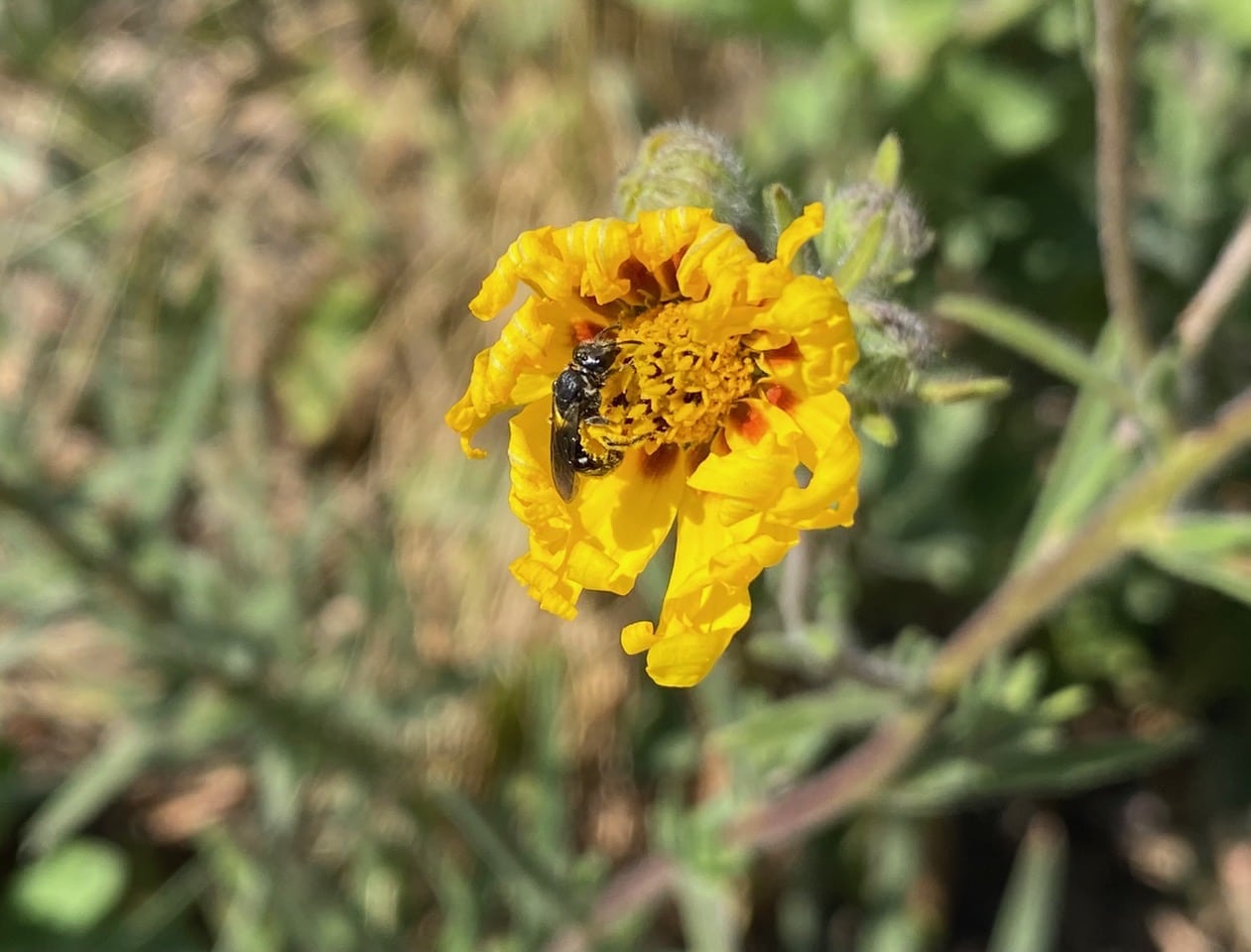
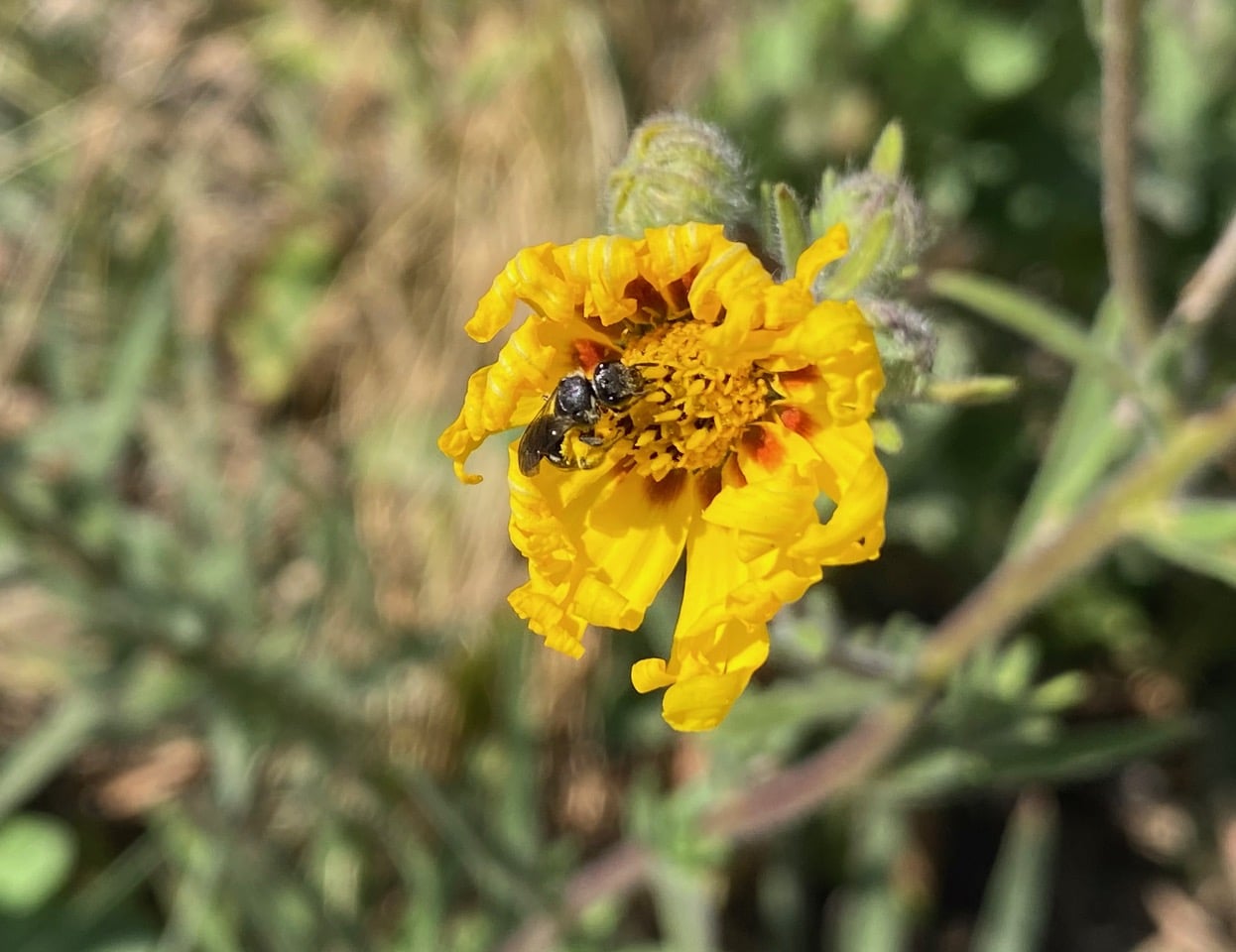
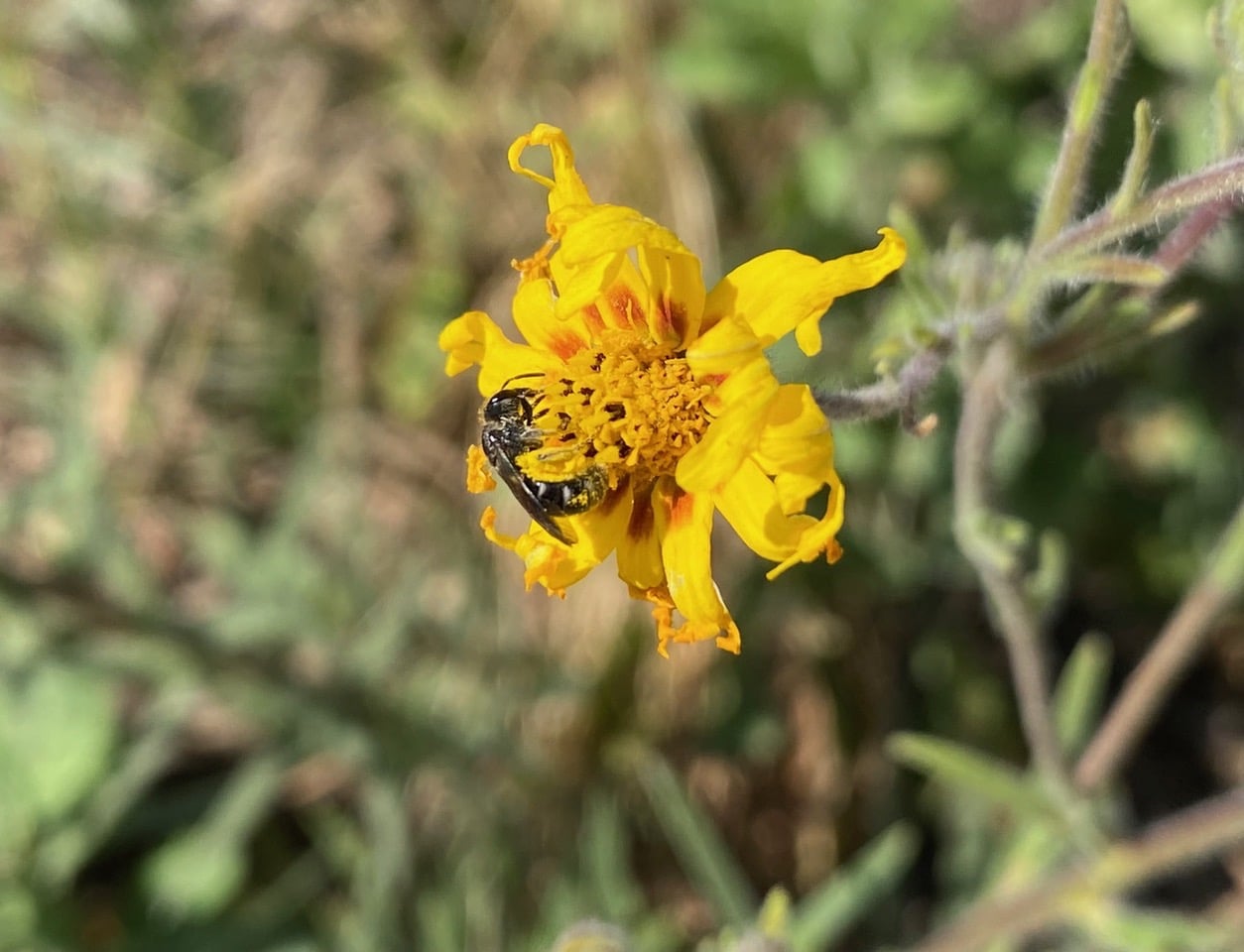
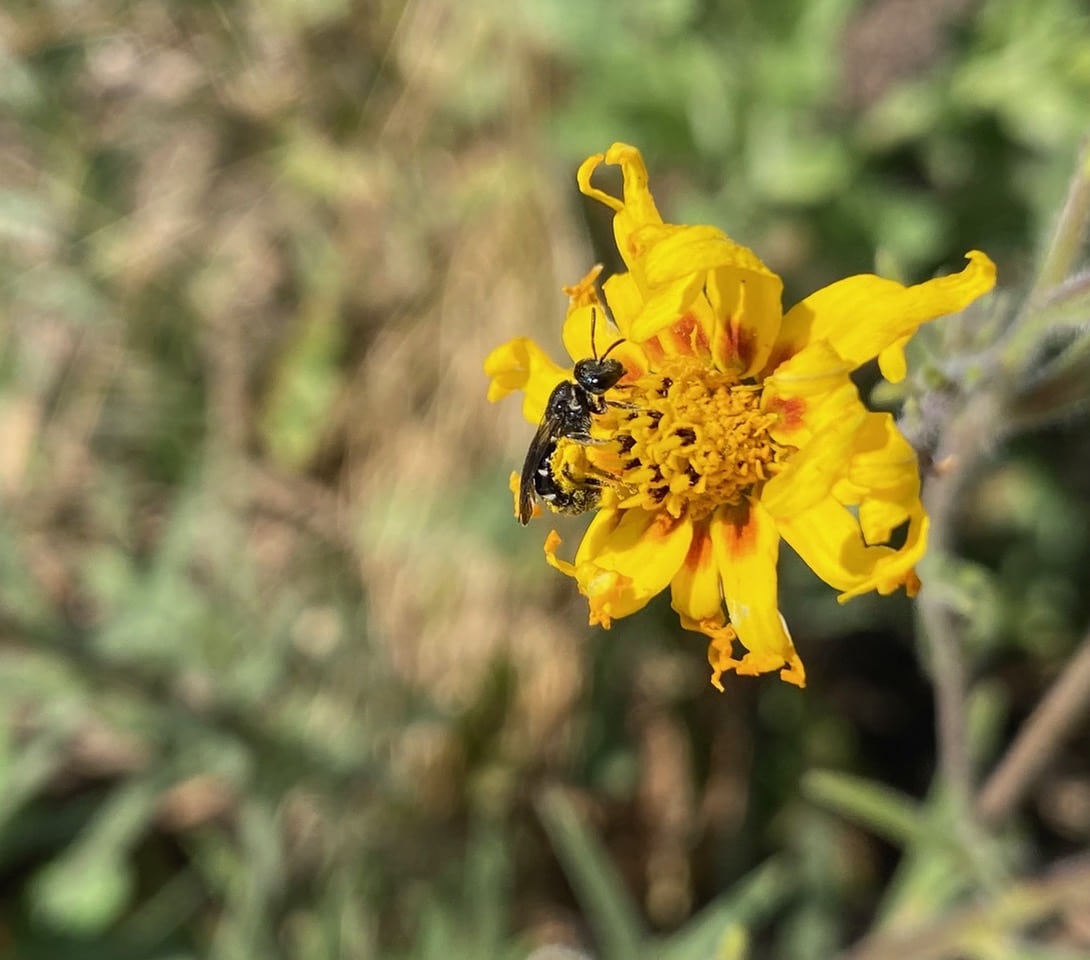
Another bee frequents this patch of flowers on the sidewalk strip. It is a small, black bee that has been identified by iNaturalist as Kincaid’s Sweat Bee, Lasioglossum kincaidii (family Halictidae).
Lasioglossum species are found worldwide, and they constitute the largest bee genus. The majority of Lasioglossum are generalists. Because they are so abundant throughout the flowering season, the bees are often important pollinators. Their sheer numbers are enough to achieve excellent pollination of many wild flowers, especially of plants in the Asteraceae, which have shallow floral tubes that are easily accessed by these minute bees.
Lasioglossum are closely related to the genera Halictus and Agapostemon. These genera are commonly called “sweat bees” because of their attraction to human sweat, which they drink for its salt content. Lasioglossum are dusky black to brown slender bees with bands of hair on their abdomen. Female Sweat Bees (family Halictidae) carry pollen in the scopae on their entire hind legs and underside of their abdomen.
Lasioglossum exhibit a range of social behaviors; the genus includes solitary, communal, semi social, primitively eusocial, and even parasitic species. Almost all Lasioglossum in the U.S. nest in the ground. Generally these nests are built in the spring by fertilized females (called foundresses) that spent the winter in hibernation. In social species, the foundresses behave much like the queen bumble bees – they lay the first batch of eggs that develop into the first generation of female workers. The nest grows with each additional generation of bees. Later broods may consist of both males and females. They mate, and at the end of the season the fertilized females hibernate til the following spring, repeating the life cycle of the colony.
Except for some faint white bands on its abdomen, the Kincaid’s Sweat Bee is jet black, including the wings. The species seems quite common in Alameda. There’s little available information out there on this species.