

Pollinator Post 6/20/24 (2)
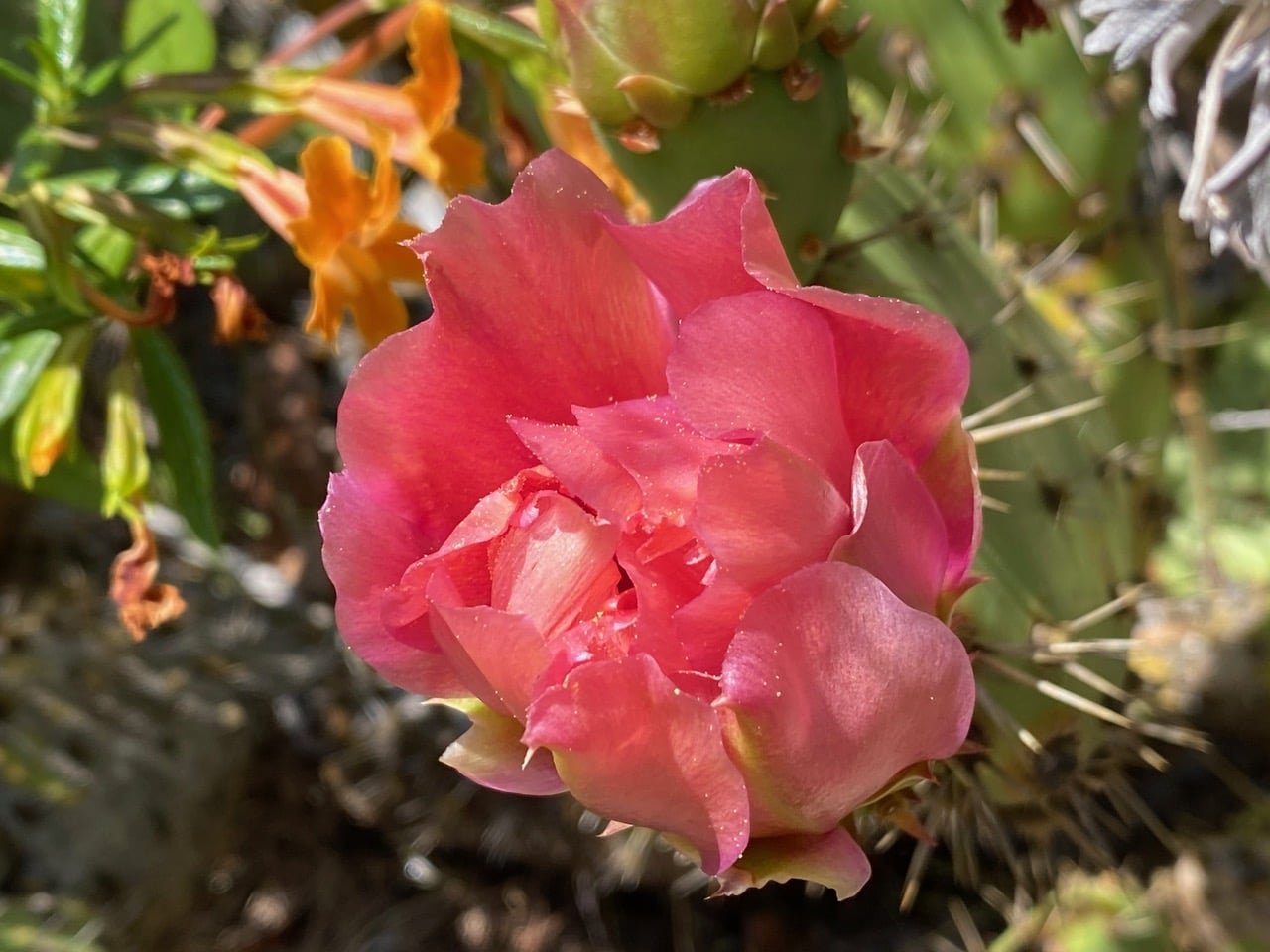
There is a massive Prickly Pear Cactus, Opuntia sp. (family Cactaceae) growing right next to the Morning Glory I am observing. It is past its peak bloom, with only a flower bud and a fully opened flower accessible to me. But these are attracting a lot of attention from some stocky bees. I notice movements in the flower bud.
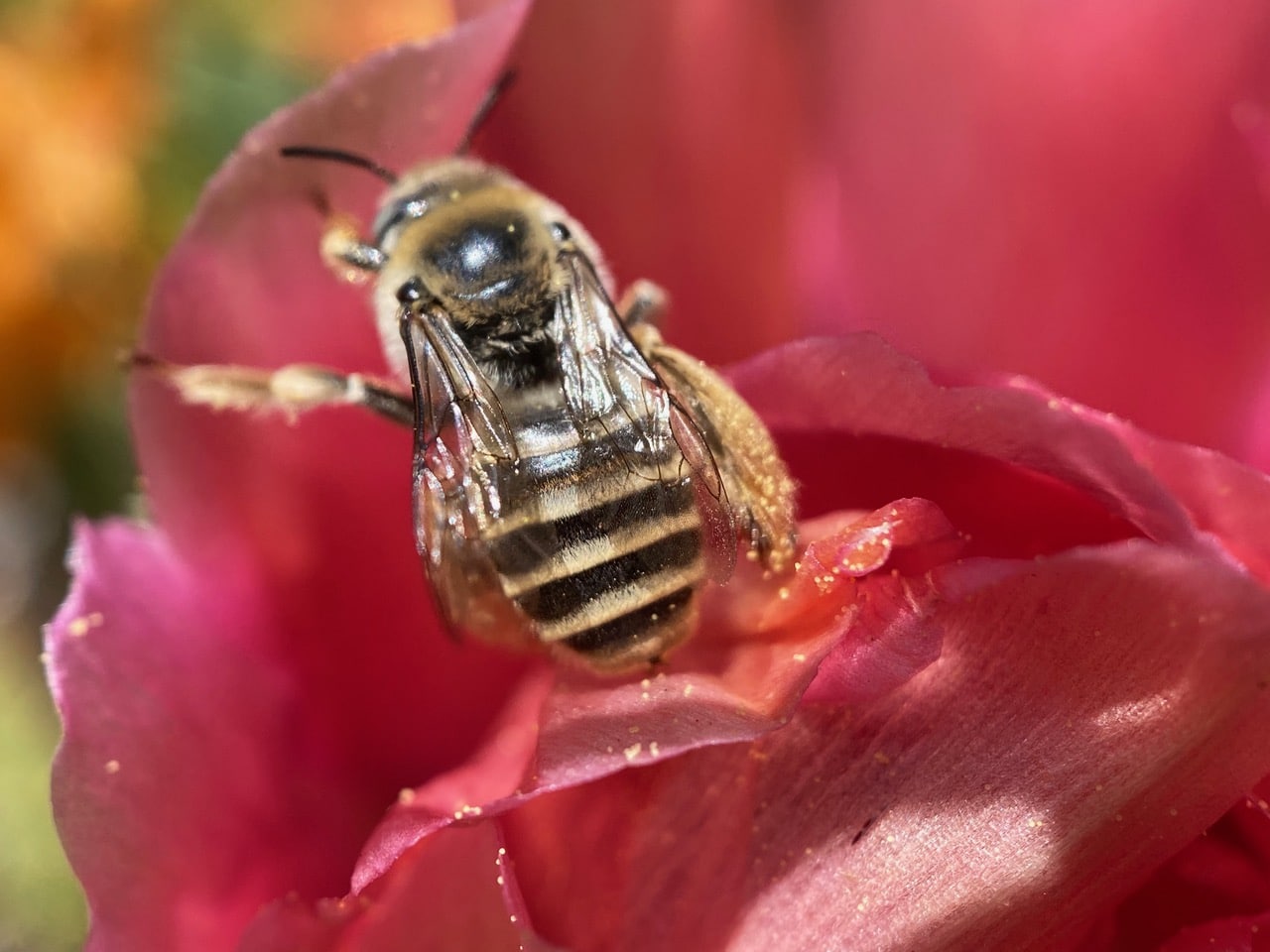
As the bee crawls out of the Opuntia flower bud, I got a close look of it. It is a female Cactus Chimney Bee, Complex Diadasia australis (family Apidae). Note her huge scopa with shaggy long hairs.

Meanwhile, a similar bee has entered the open Opuntia flower close by, and is busy stirring up the stamens. The touch-sensitive stamens begin to move towards the center of the flower, eventually tightly clasping the style and stigma.
The response of stamens to touch has been known for centuries, but recent research is helping us gain a better understanding of how and why this phenomenon occurs. In general, this movement is thought to assist in the process of cross-pollination. In some cases, it may also aid in self-pollination. Additionally, it can protect pollen and nectar from “robbers” (insects that visit flowers to consume these resources without contributing pollination service).
The stamens of Opuntia flowers are thigmotactic – when they are mechanically stimulated the filaments move towards the style. This movement is striking and quite rapid and when complete the anthers and filaments are tightly packed about the style. Stamen movement may have several effects, but the most important one may be to reduce pollen theft from non-pollinators and to guide pollination. Small insects less than 5 mm in size do not trigger stamen movements. The lower anthers, where about 80% of the pollen reward is located, are tightly shielded by the upper anthers after movement is complete. Certain bee species reach the lower layers of anthers by pushing their large body downwards between the style and innermost stamens. After feeding on pollen and nectar, they climb out from the stamens and up to the stigma where they take off, leaving the flower and depositing pollen as they go. Because the bees are visiting numerous flowers in a single flight and the flowers are protandrous (male parts maturing before the female parts), pollen can be transferred from one flower to another and self-pollination can be avoided.
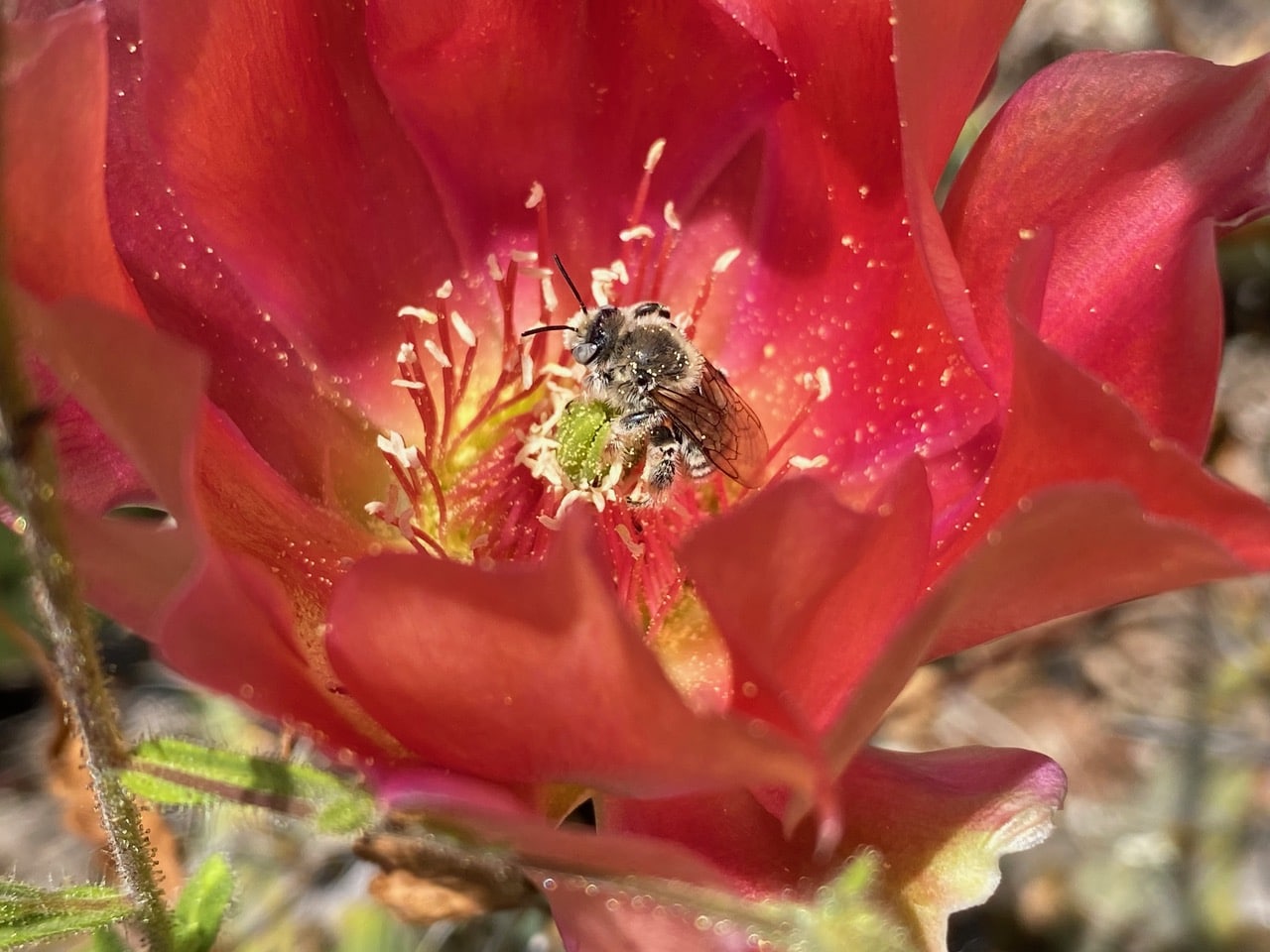
The bee climbs on the stigma…

The bee spends some time on top of the stigma, hunched as it gathering pollen from the clustered anthers.

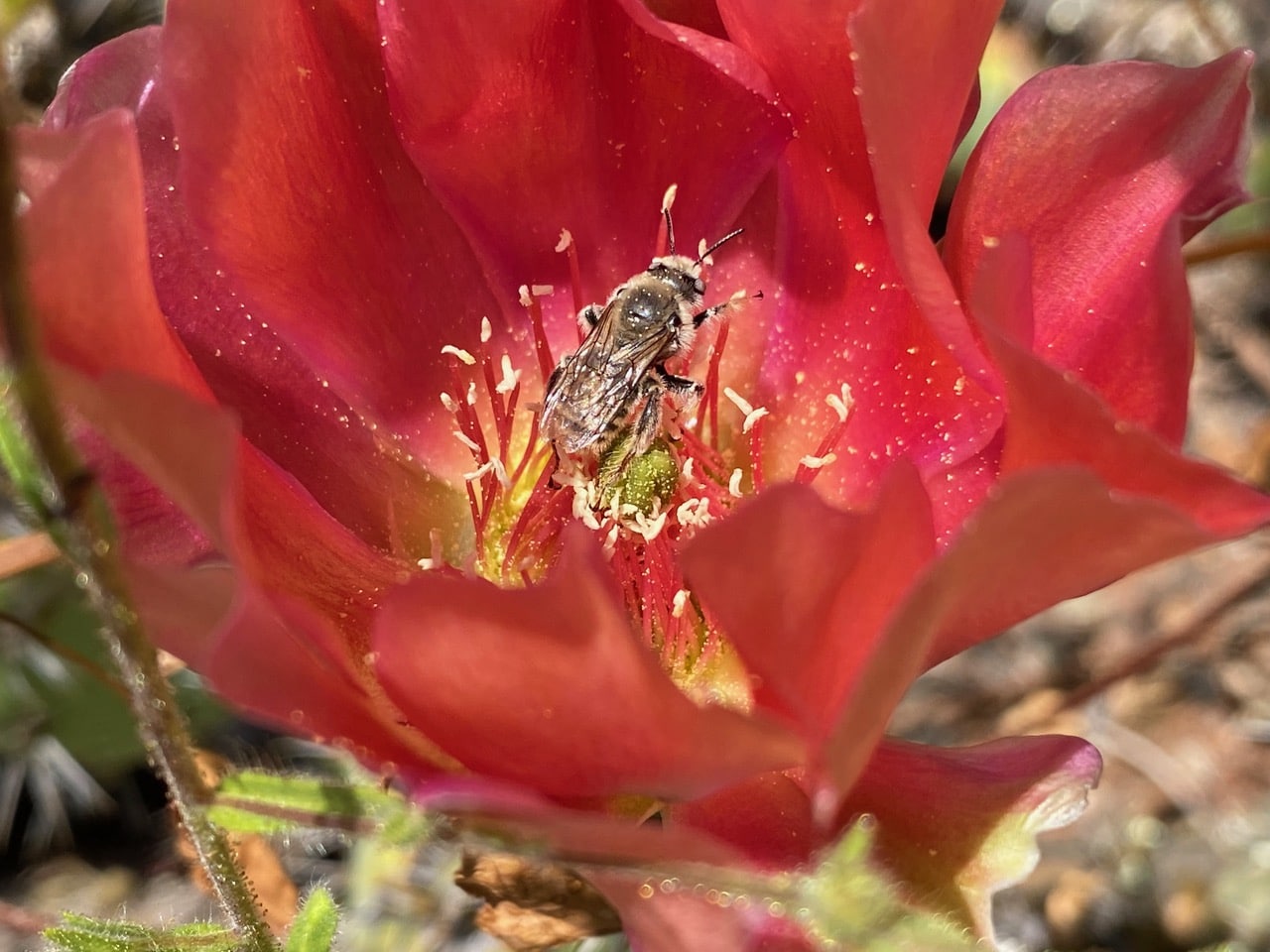

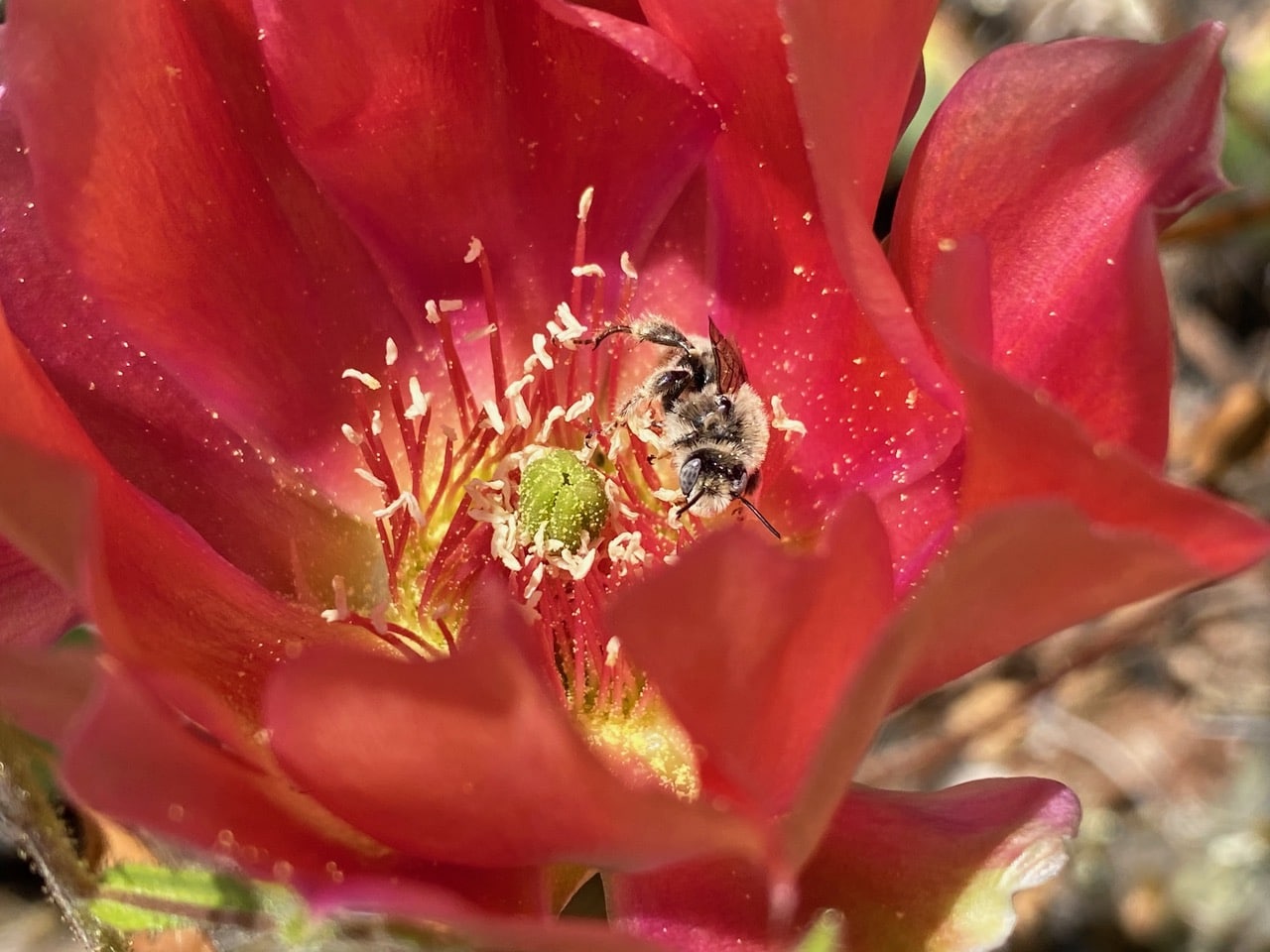
Off to the next flower!
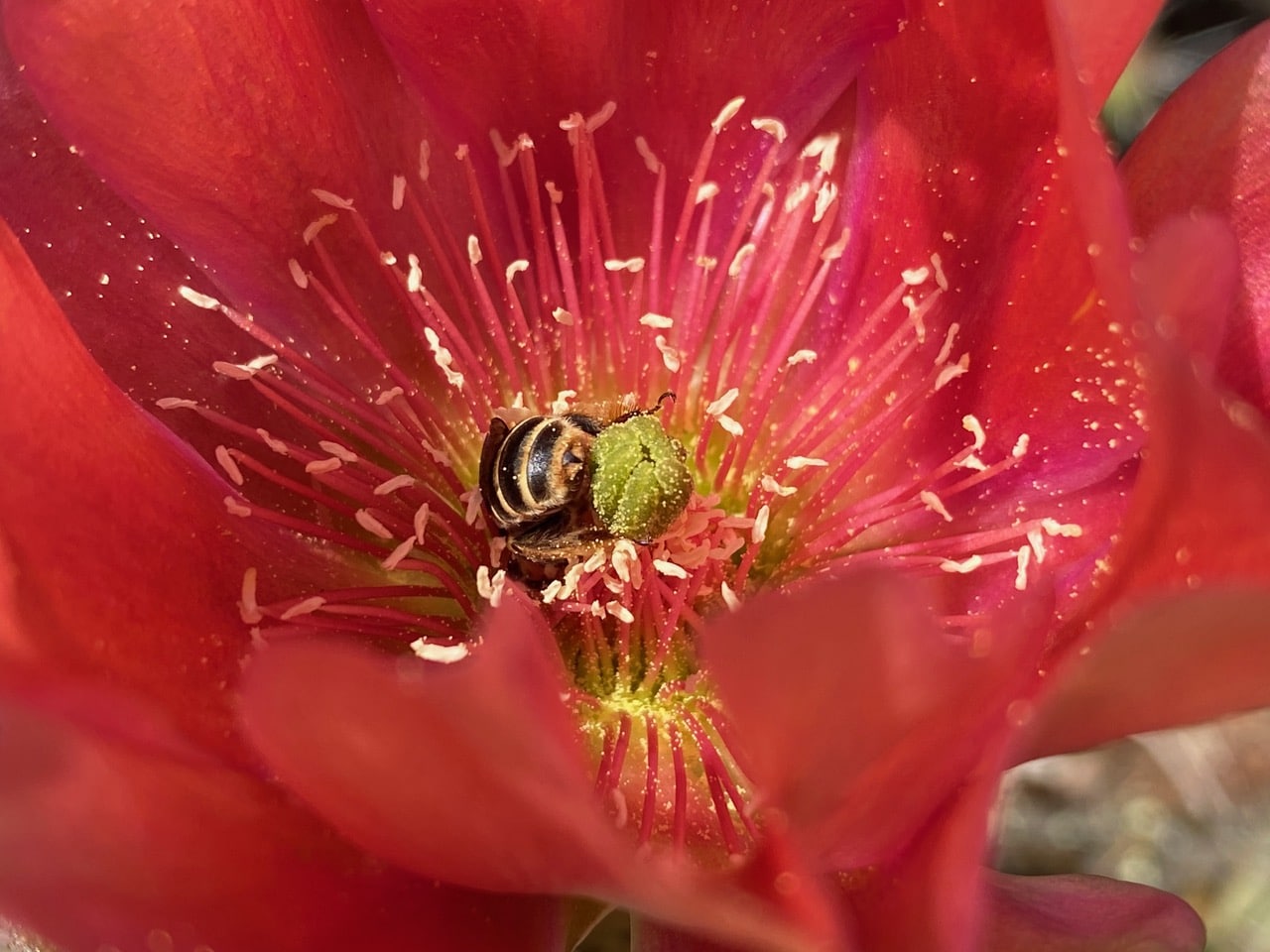
Being one of the very last Opuntia flowers in bloom in the garden, this particular flower is sure getting a lot of bee action! A stocky bee is pushing her way down the Opuntia flower by holding onto the style. Ooh, see the black triangular plate at the tip of the bee’s abdomen? It is the pygidial plate. Note also how the stamens are arranged within the corolla. The lower stamens have quickly clustered around the style.
The pygidial plate is an unusually flat area (a plate) surrounded by a ridge or line and sometimes sticking well off the end of the bee. The pygidial plate is a digging/smoothing tool, used by ground-nesting bees to form and water-proof brood cells.
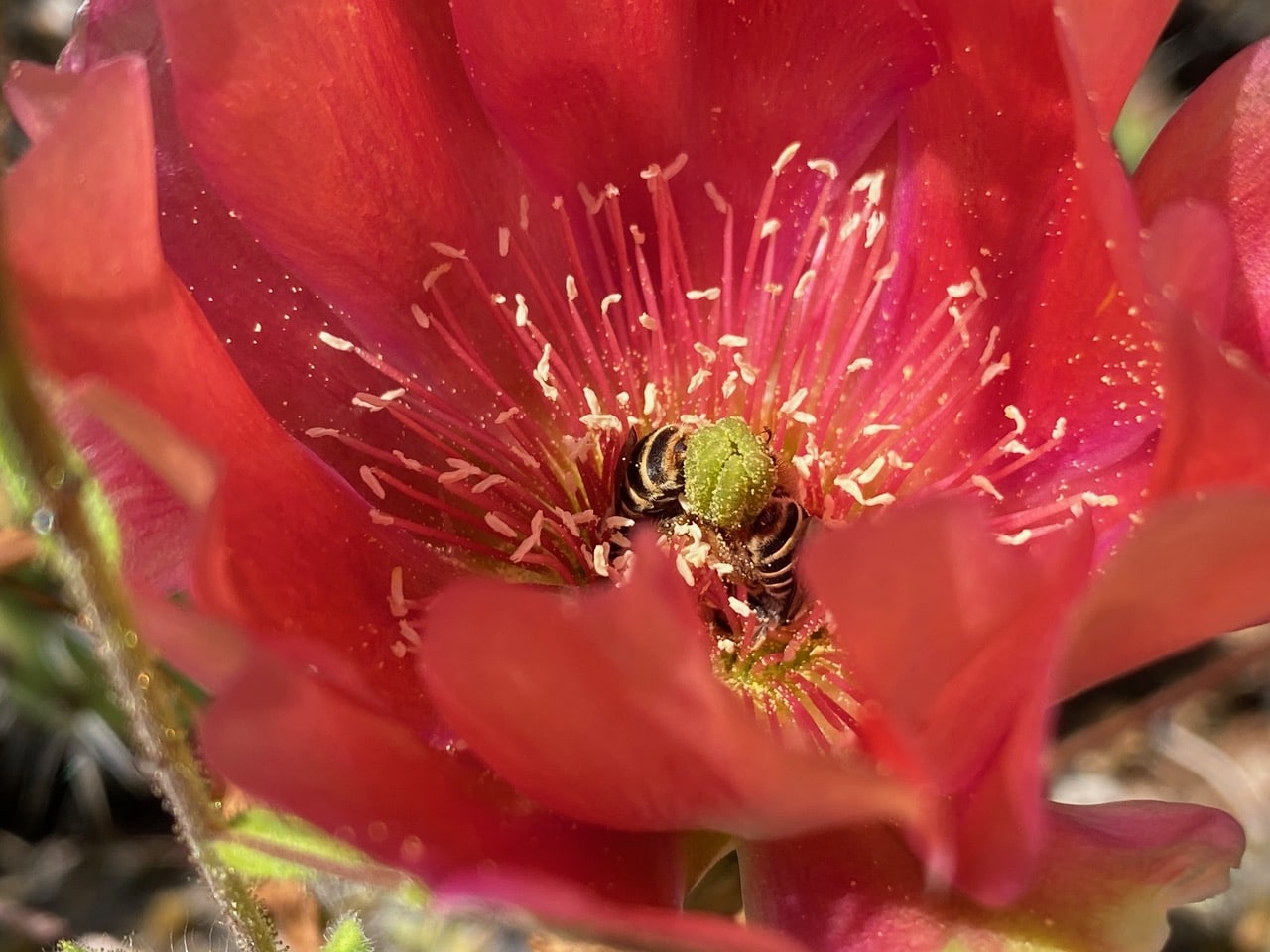
The bee is joined by another. Together they head down the middle of the flower, apparently for the nectar, and perhaps pollen from the conveniently gathered anthers.
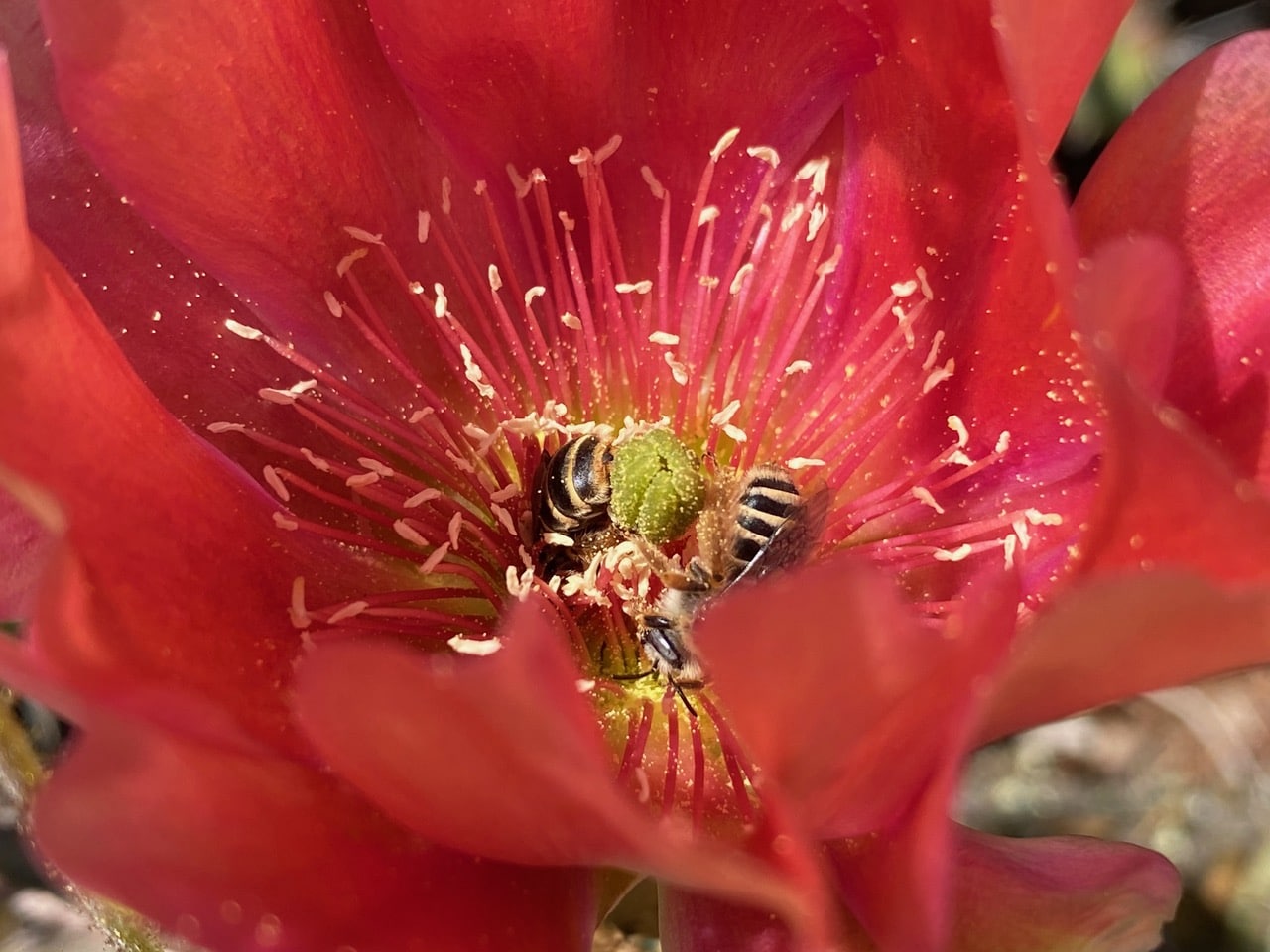
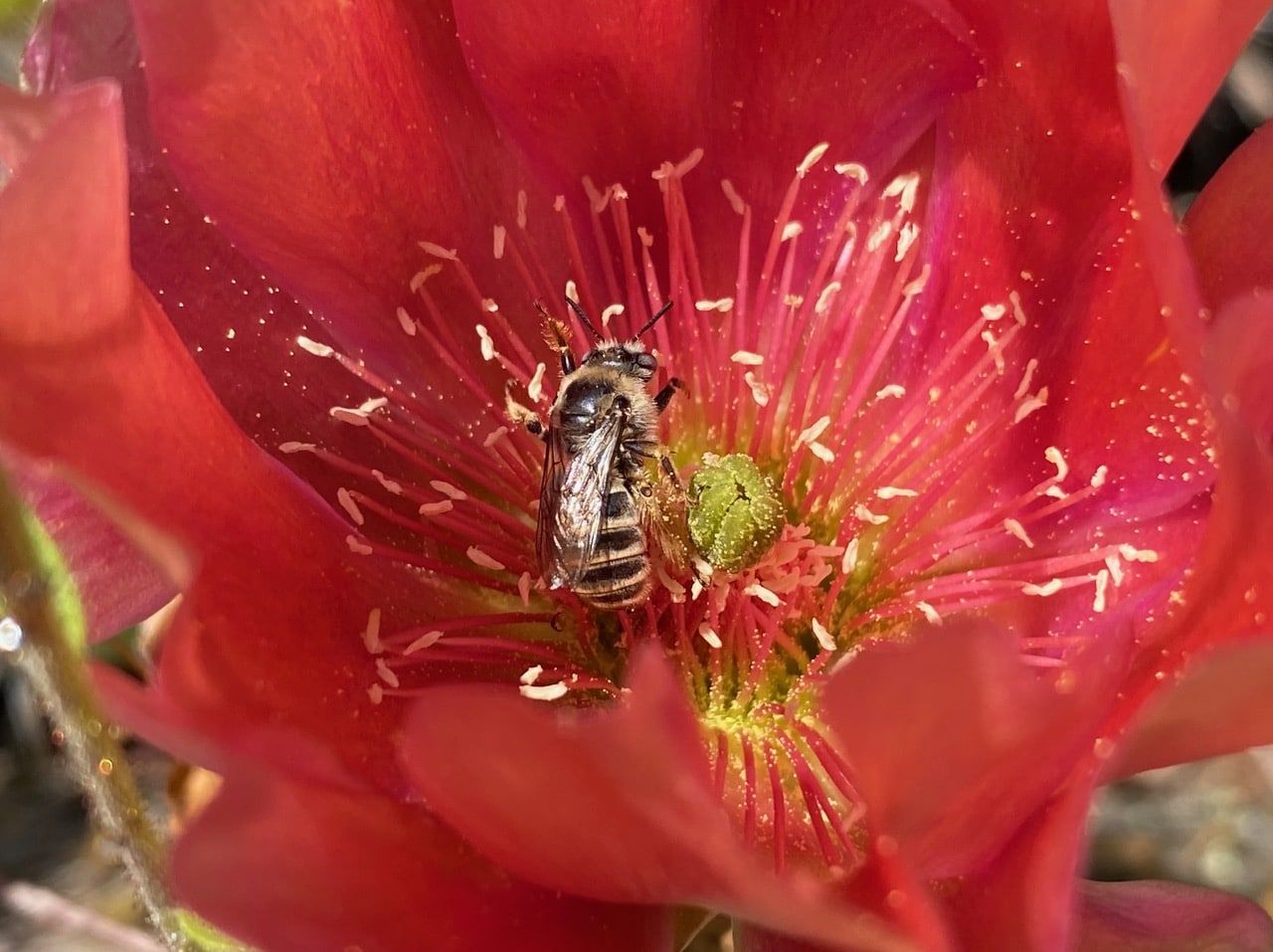
Note the long, shaggy hairs on the scopa on the hind leg of this female Diadasia. I am rather surprised that the scopa hasn’t filled up with pollen after all the efforts.

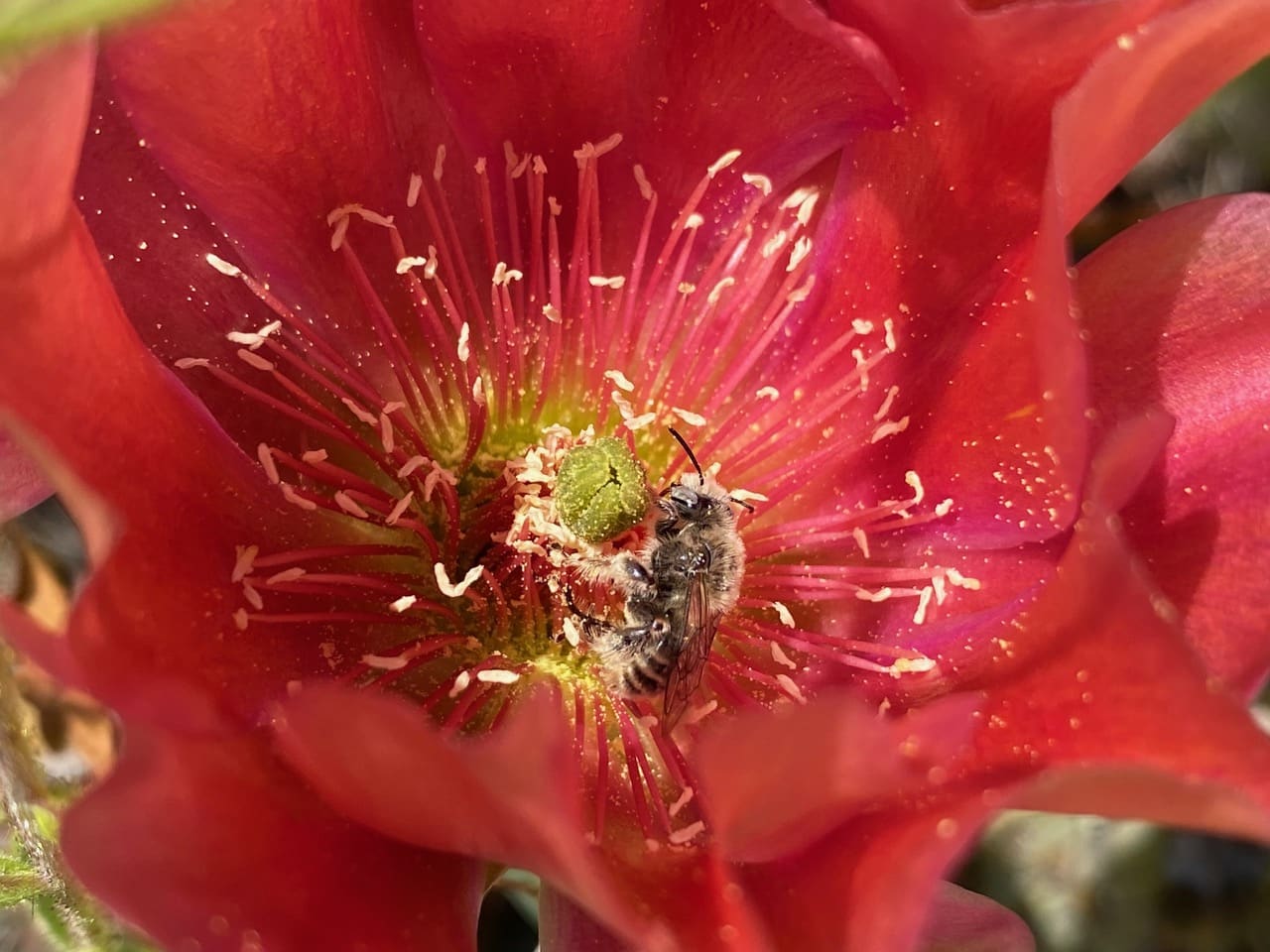
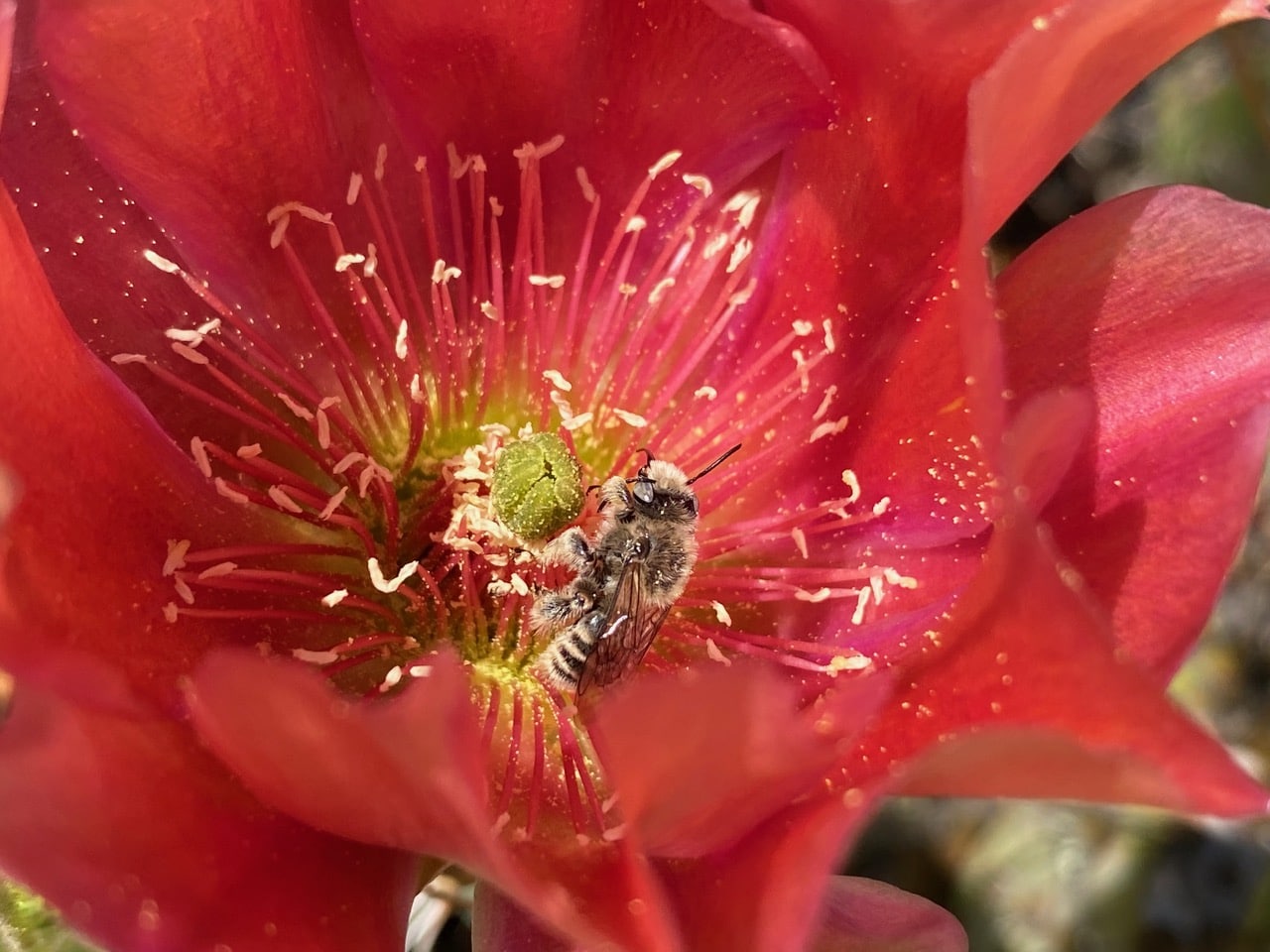
The bee cleans her antenna.
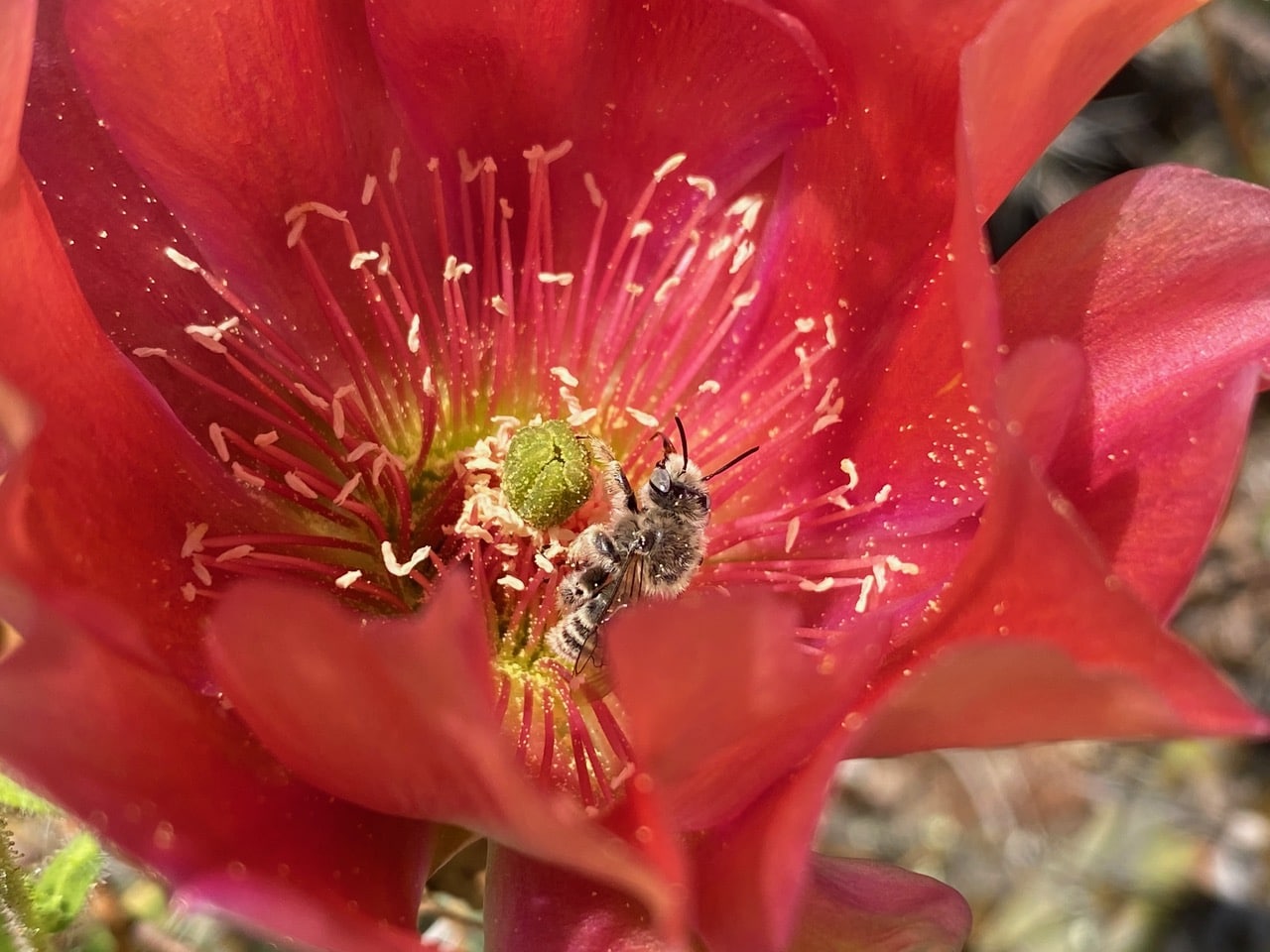
The bee cleans her tongue before flying off.
Diadasia Chimney Bees (genus Diadasia) are small to moderate sized bees. Females have bushy pollen-collecting hairs on the hind legs and distinctive brushes of long hairs on their forelegs. Males often have elongated hind legs. Diadasia are often called “chimney bees” or “turret bees” because they build small chimney-shaped turrets over their burrow entrances. The chimneys may prevent flooding, keep debris out of the bee’s tunnel, and/or to discourage invaders such as velvet ants and bee flies.
Diadasia are solitary – each female builds and provisions its own nest. Many species nest in aggregations. Diadasia nests take the form of shallow vertical burrows in the ground. Some Diadasia soften the earth with nectar to make nest-digging easier.
Diadasia often appear under such common names as “sunflower bee”, “cactus bee” or “mallow bee”. These names reflect the fact that most Diadasia are oligolectic, or pollen specialists that feed on a narrow range of flora. Similar species of cactus specialists such as Diadasia rinconis, Diadasia opuntiae, Diadasia piercei, and Diadasia australis have been grouped together as the “Complex Diadasia australis”.
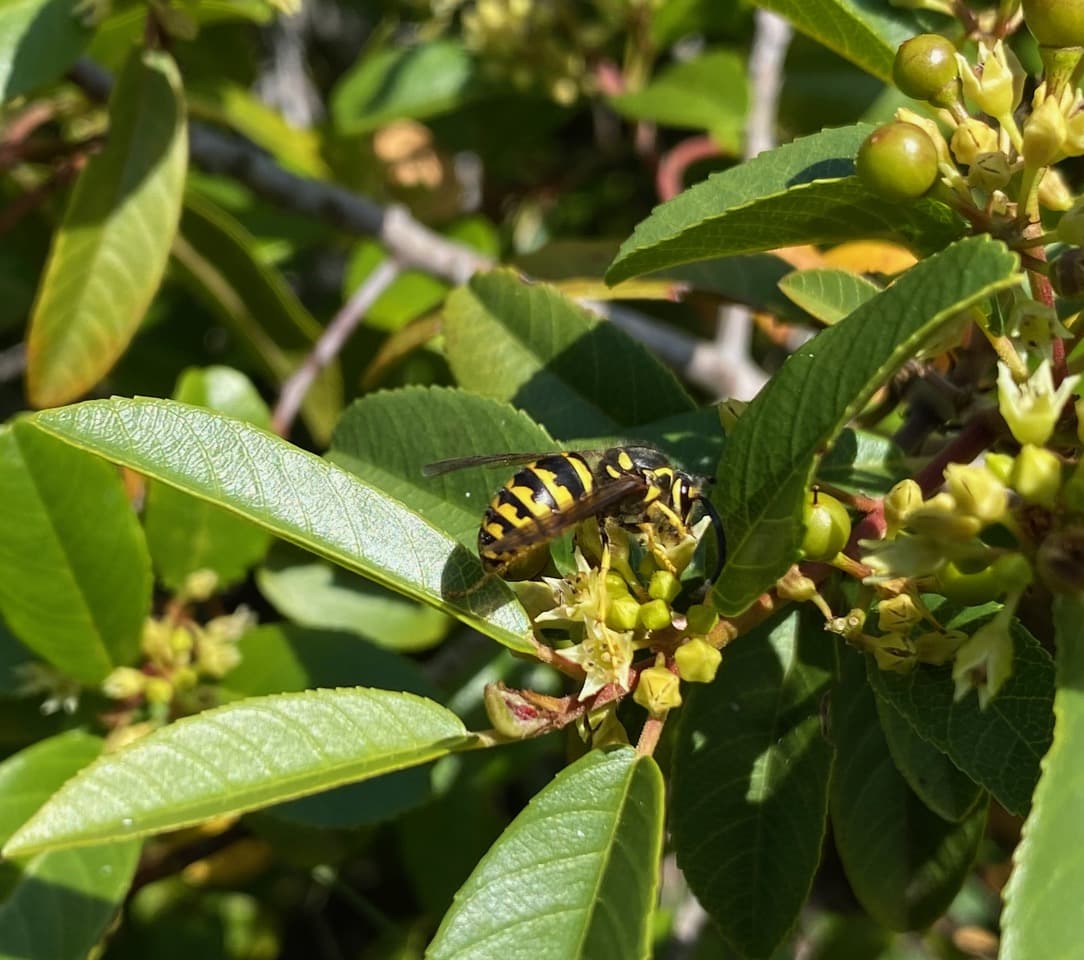
Numerous Yellowjackets are visiting the flowers of Coffeeberry, Frangula californica for nectar.
Yellowjacket is the common name for predatory social wasps of the genera Vespula and Dolicovespula (family Vespidae). Yellowjackets are social hunters living in colonies containing workers, queens, and males (drones). Colonies are annual with only inseminated queens overwintering. Queens emerge during the warm days of late spring or early summer, select a nest site, and build a small paper nest in which they lay eggs. They raise the first brood of workers single-handedly. Henceforth the workers take over caring for the larvae and queen, nest expansion, foraging for food, and colony defense. The queen remains in the nest, laying eggs. Later in the summer, males and queens are produced. They leave the parent colony to mate, after which the males quickly die, while fertilized queens seek protected places to overwinter. Parent colony workers dwindle, usually leaving the nest to die, as does the founding queen. In the spring, the cycle is repeated.
Yellowjackets have lance-like stingers with small barbs, and typically sting repeatedly. Their mouthparts are well-developed with strong mandibles for capturing and chewing insects, with probosces for sucking nectar, fruit, and other juices. Yellowjacket adults feed on foods rich in sugars and carbohydrates such as plant nectar and fruit. They also search for foods high in protein such as insects and fish. These are chewed and conditioned in preparation for larval consumption. The larvae secrete a sugary substance that is eaten by the adults.
The Western Yellowjackets typically build nests underground, often using abandoned rodent burrows. The nests are made from wood fiber that the wasps chew into a paper-like pulp. The nests are completely enclosed except for a small entrance at the bottom. The nests contain multiple, horizontal tiers of combs within. Larvae hang within the combs.
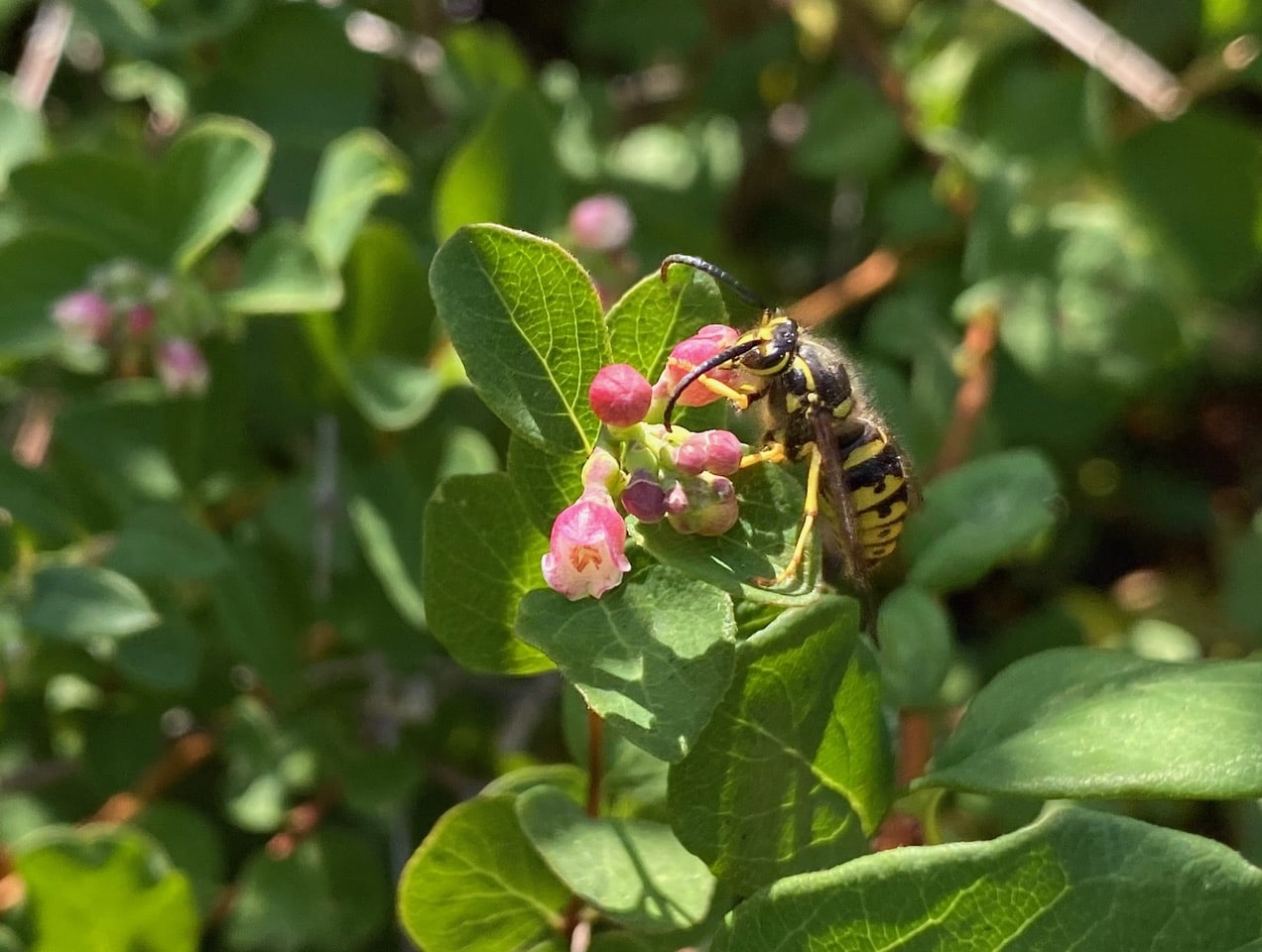 The Yellowjackets are also fond of the nectar of Huckleberry, Vaccinium sp. It takes a bit of an effort to access the nectar from the tiny, drooping flowers.
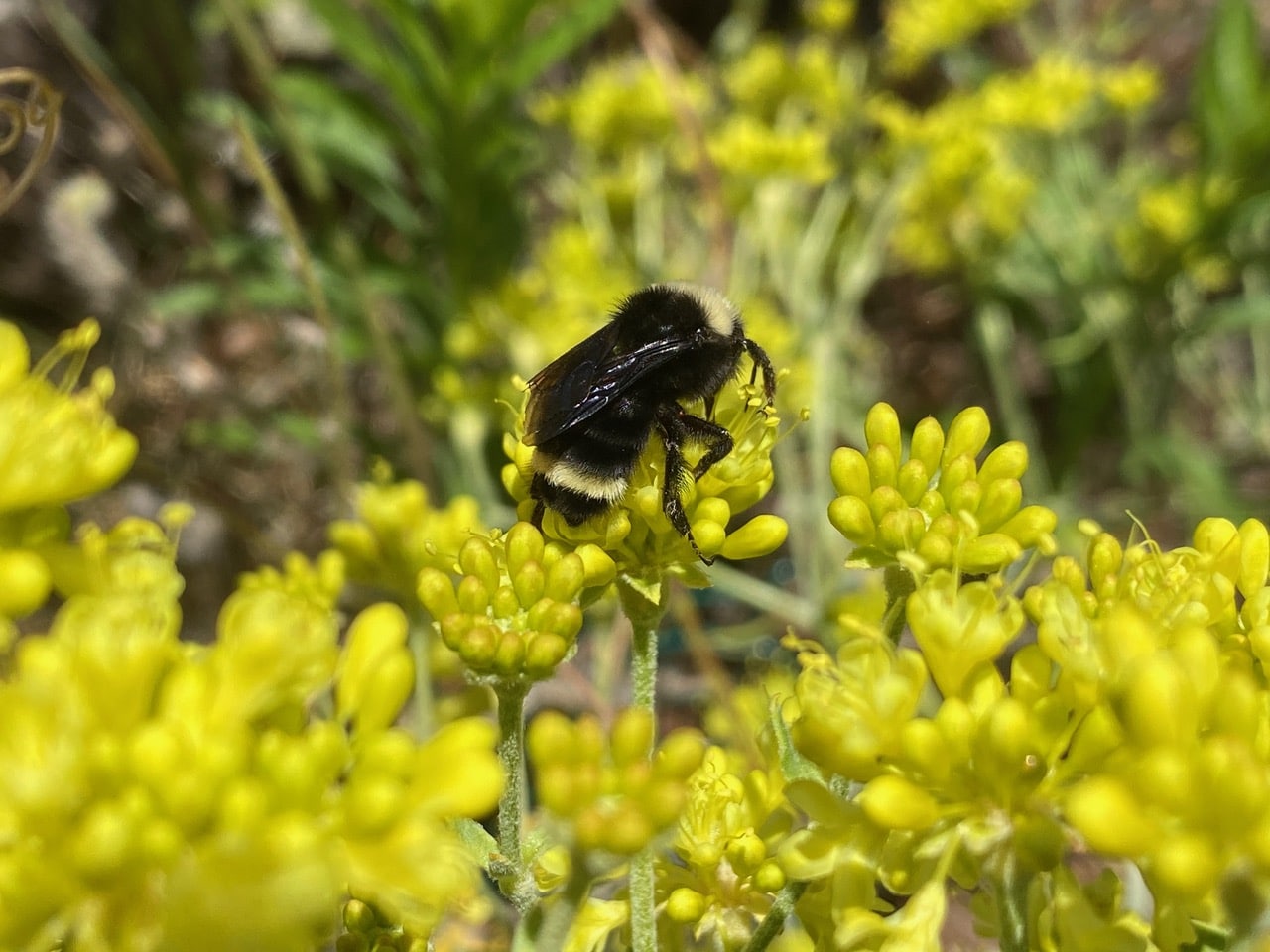 The blooming Sulphur Buckwheat, Eriogonum umbellatum is abuzz with Yellow-faced Bumble Bees, Bombus vosnesenskii (family Apidae). The bees seem to be taking nectar and not collecting pollen from the tightly clustered flowers.
 Sulphur Buckwheat
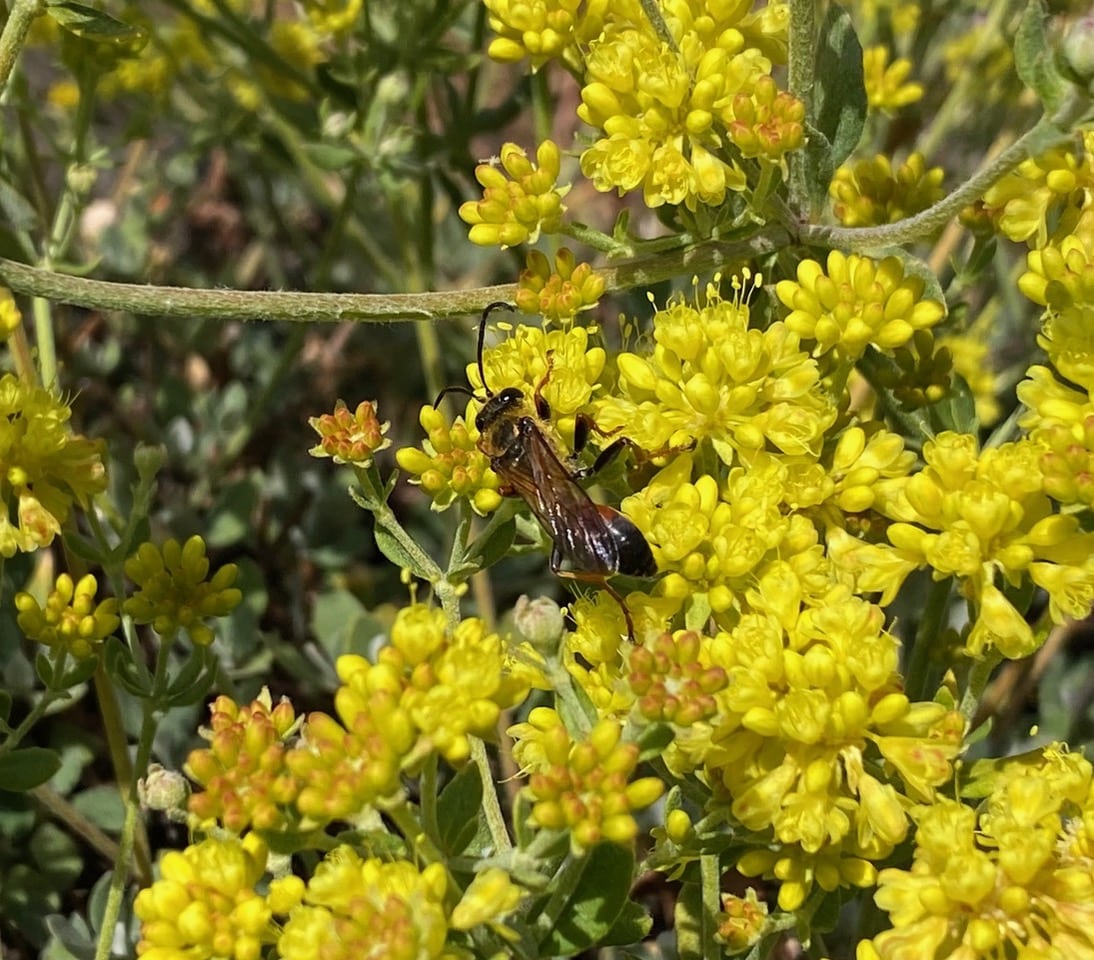
A couple of large wasps are also avidly visiting the buckwheat flowers. They are the Great Golden Digger Wasps, Sphex ichneumoneus, although the orange color on their abdomen does not seem as bright as commonly seen in this species.

Sphex ichneumoneus, known commonly as the Great Golden Digger Wasp is a wasp in the family Sphecidae. It is identified by the golden pubescence on its head and thorax, its reddish orange legs, and partly reddish orange body. Size 15-27 mm. Found in fields, meadows, the wasp is native to the Western Hemisphere, from Canada to South America. The female digs a chambered tunnel in open ground, and proceeds to stock it with food for her young. She hunts for insects from the family of long-horned grasshoppers that include various crickets, katydids and grasshoppers. She stings to paralyze her prey, then flies or drags it back to the nest. A single egg is laid on the prey. The wasp larvae have fresh food to sustain them until they emerge as adults. One tunnel entrance may lead to as many as eight or ten separate larval chambers. The Great Golden Digger Wasps are not aggressive, but do sting if handled.