

Pollinator Post 6/20/ 24 (1)
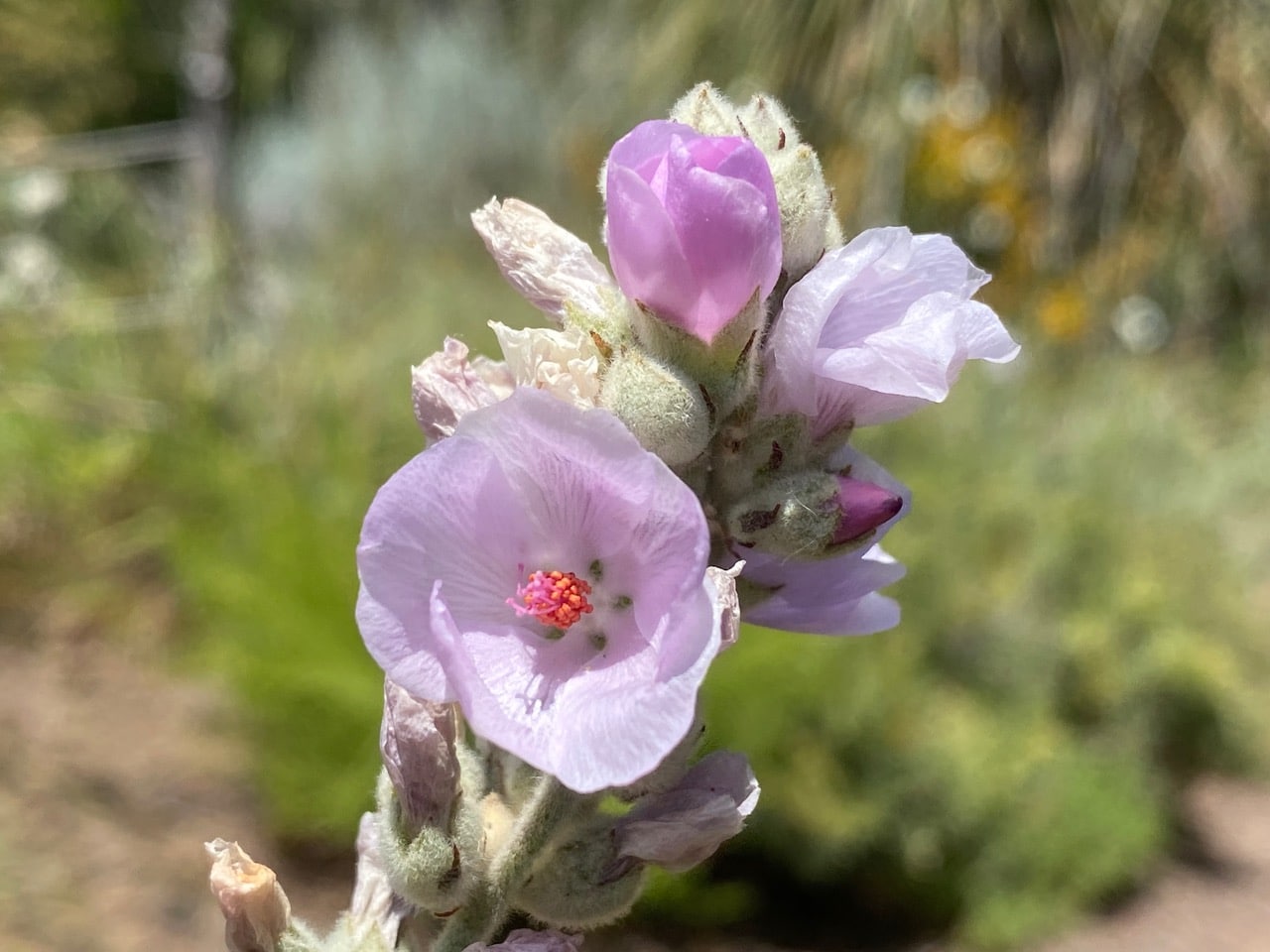
The Tilden Regional Parks Botanic Garden warrants frequent visits while the flowers are cycling through the seasons. You never know what is in store each time you visit.
The Bewildering Bushmallow, Malacothamnus arcuatus is in bloom. The hairy plant bears cup-shaped flowers in the palest of pink. 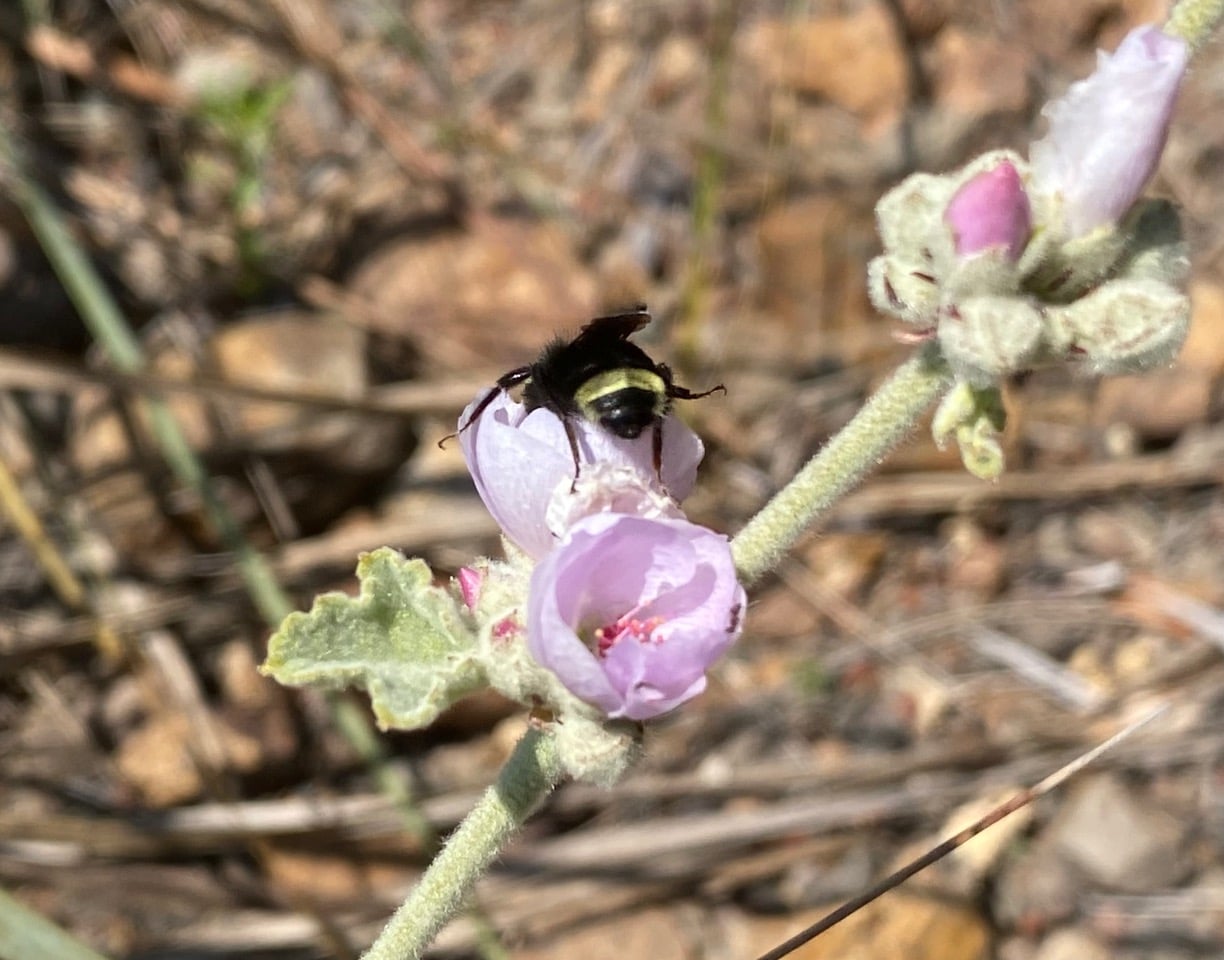
A Yellow-faced Bumble Bee, Bombus vosnesenskii (family Apidae) lands on a bush mallow flower.
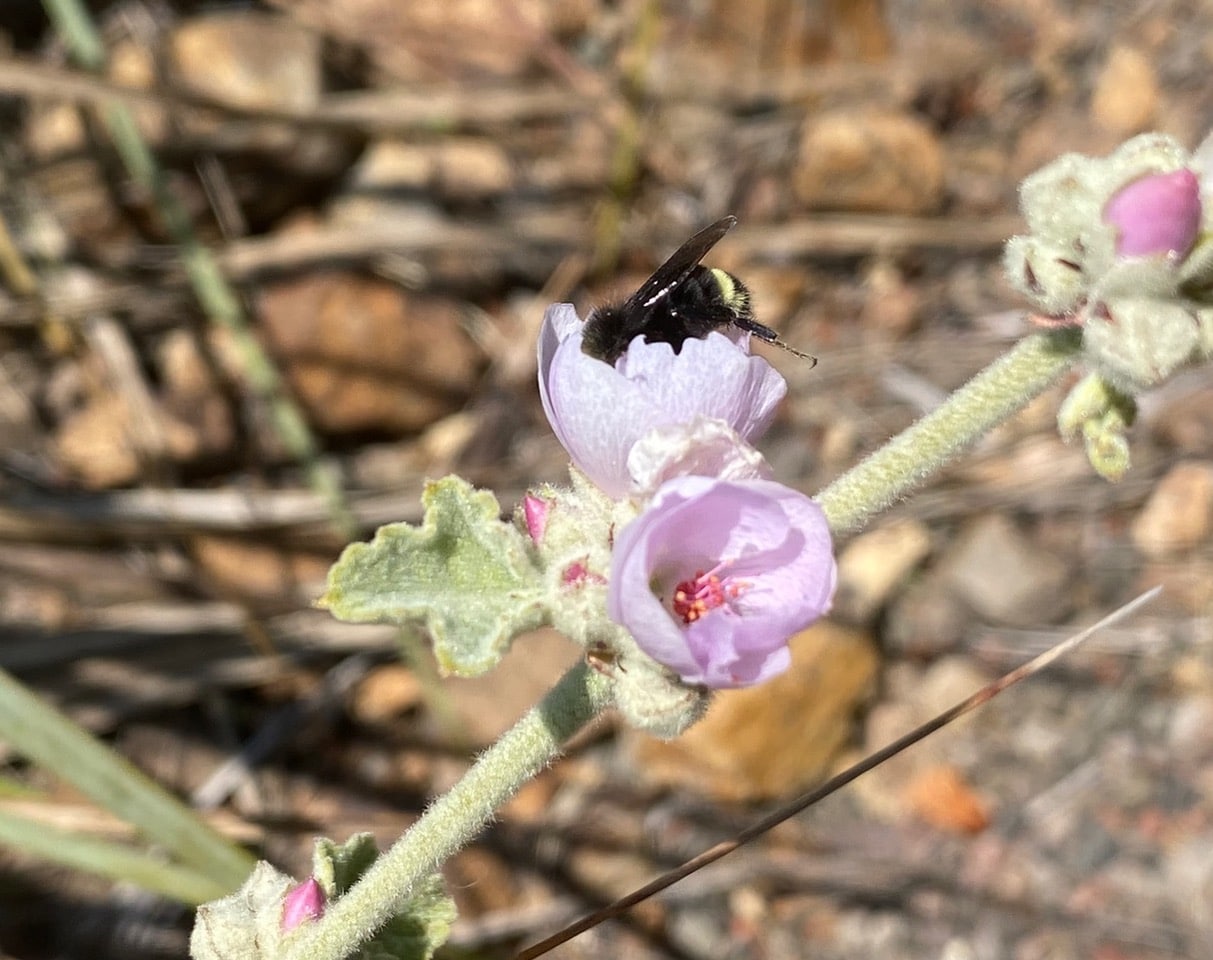
The chunky bee can barely fit into the delicate flower.
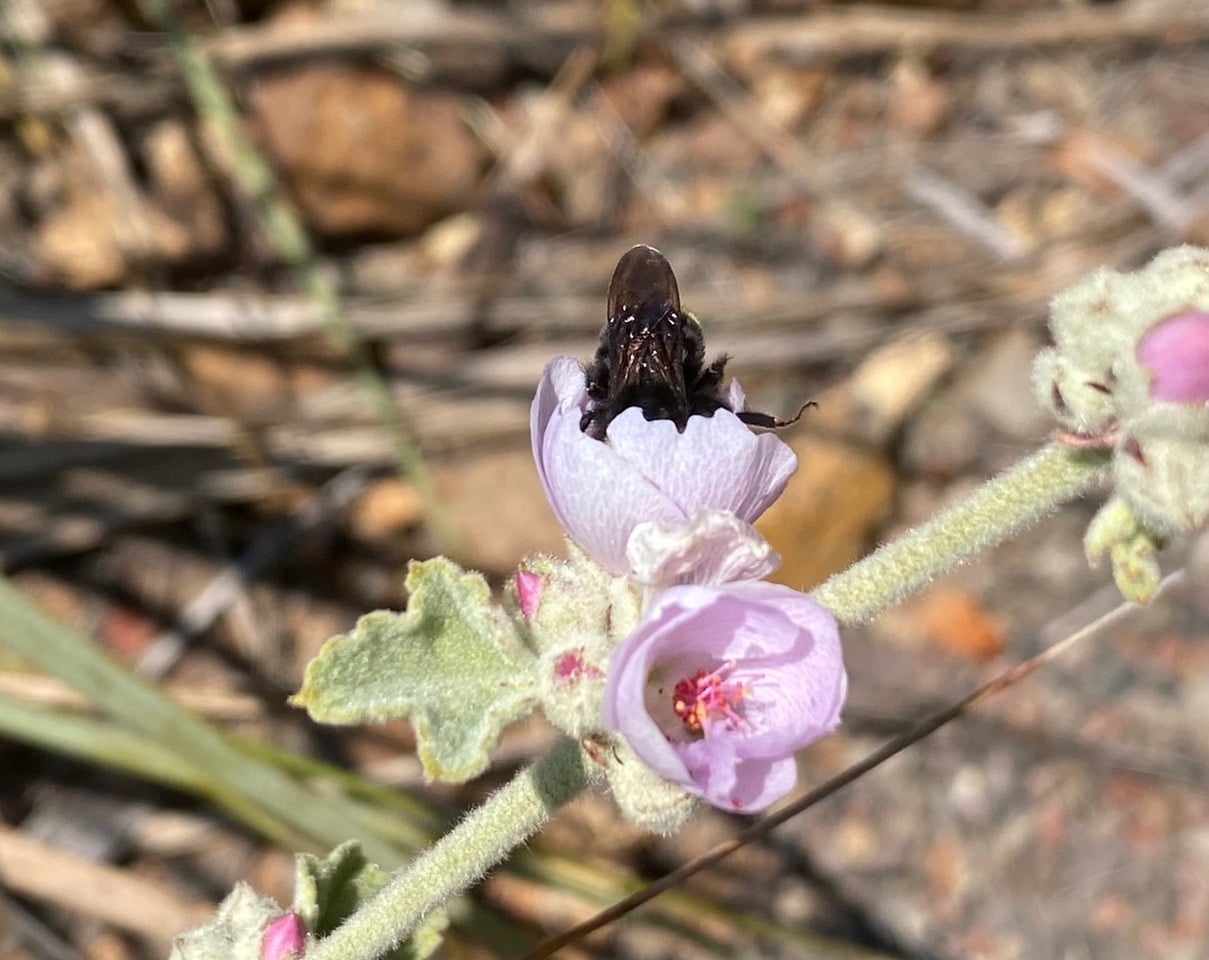
The bee is probably taking nectar held in the calyx by accessing through the spaces between the petals. Its face and body might come in contact with the reproductive parts in the center of the flower. That pollen may be transferred to the next flower she visits. The flowers are probably pollinated by many smaller bees and other insects.
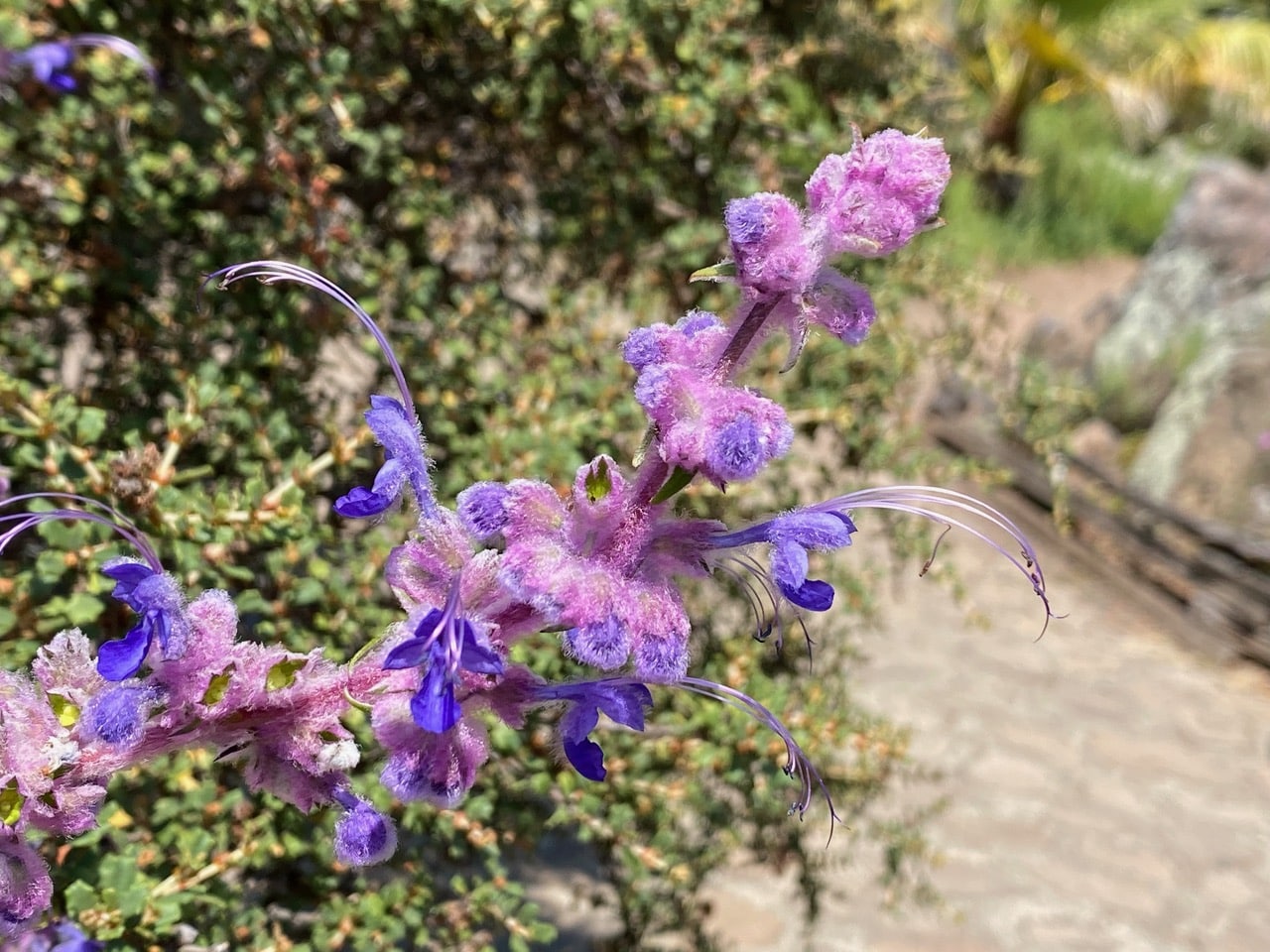
The Woolly Bluecurls, Tichostema lanatum (family Lamiaceae) is in peak bloom. The plant is named for its curled, fuzzy flowers that bloom in brilliant shades of blue and lavender. Note the extremely long stamens and style of the flower that protrude well beyond the corolla.
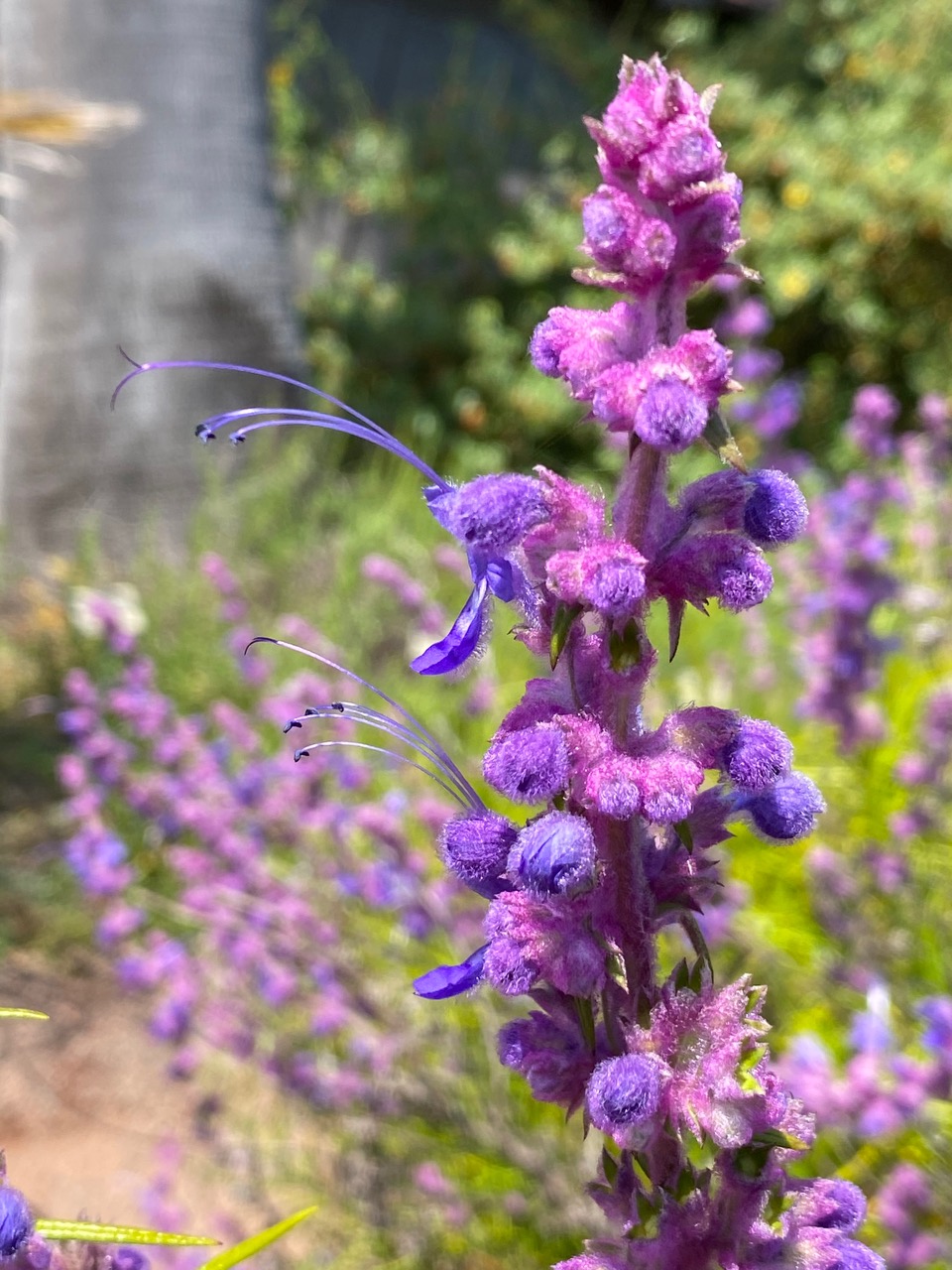
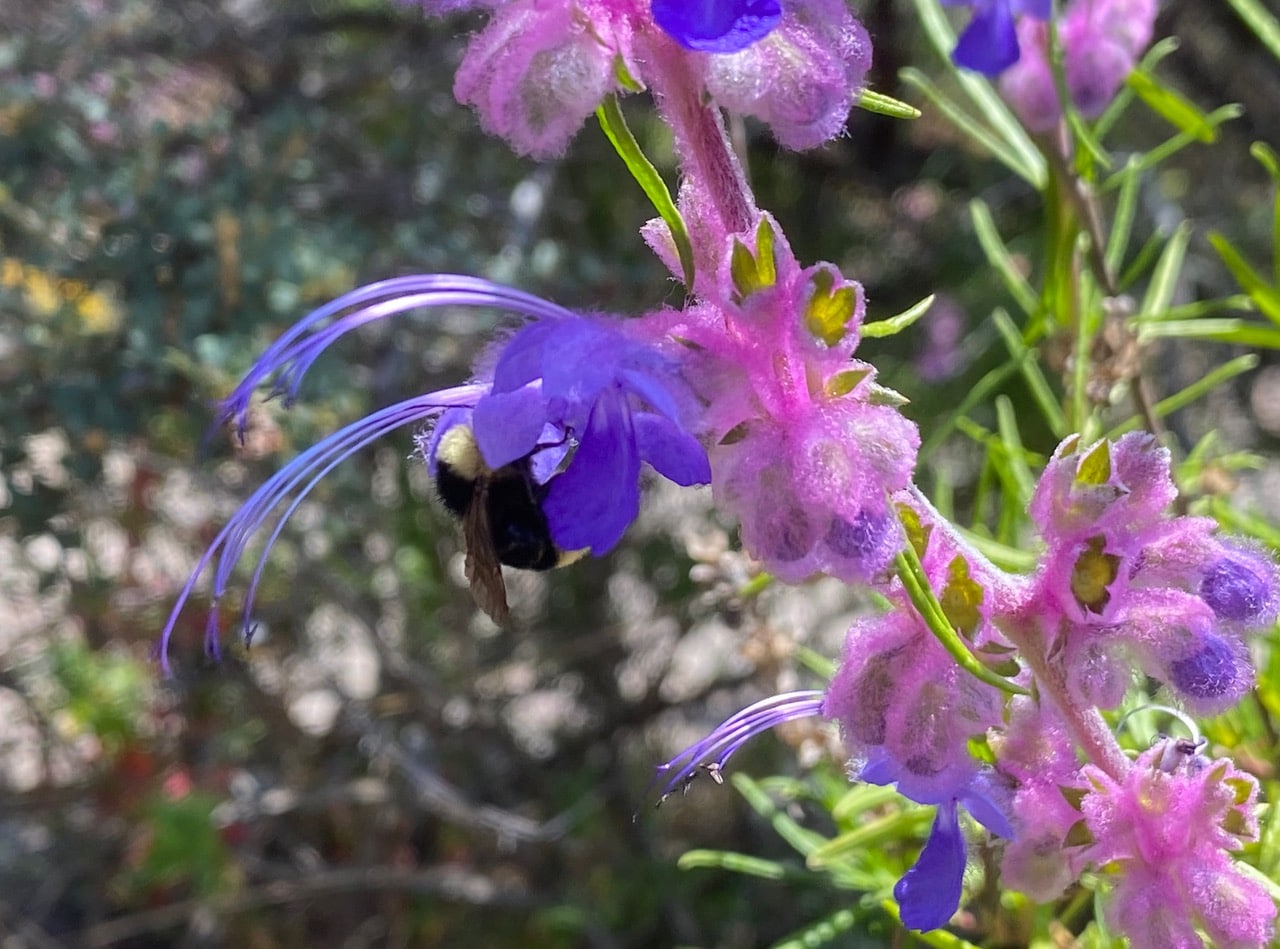 A Yellow-faced Bumble Bee has landed on a flower. Note that its body does not make contact with any of the reproductive parts of the flower.
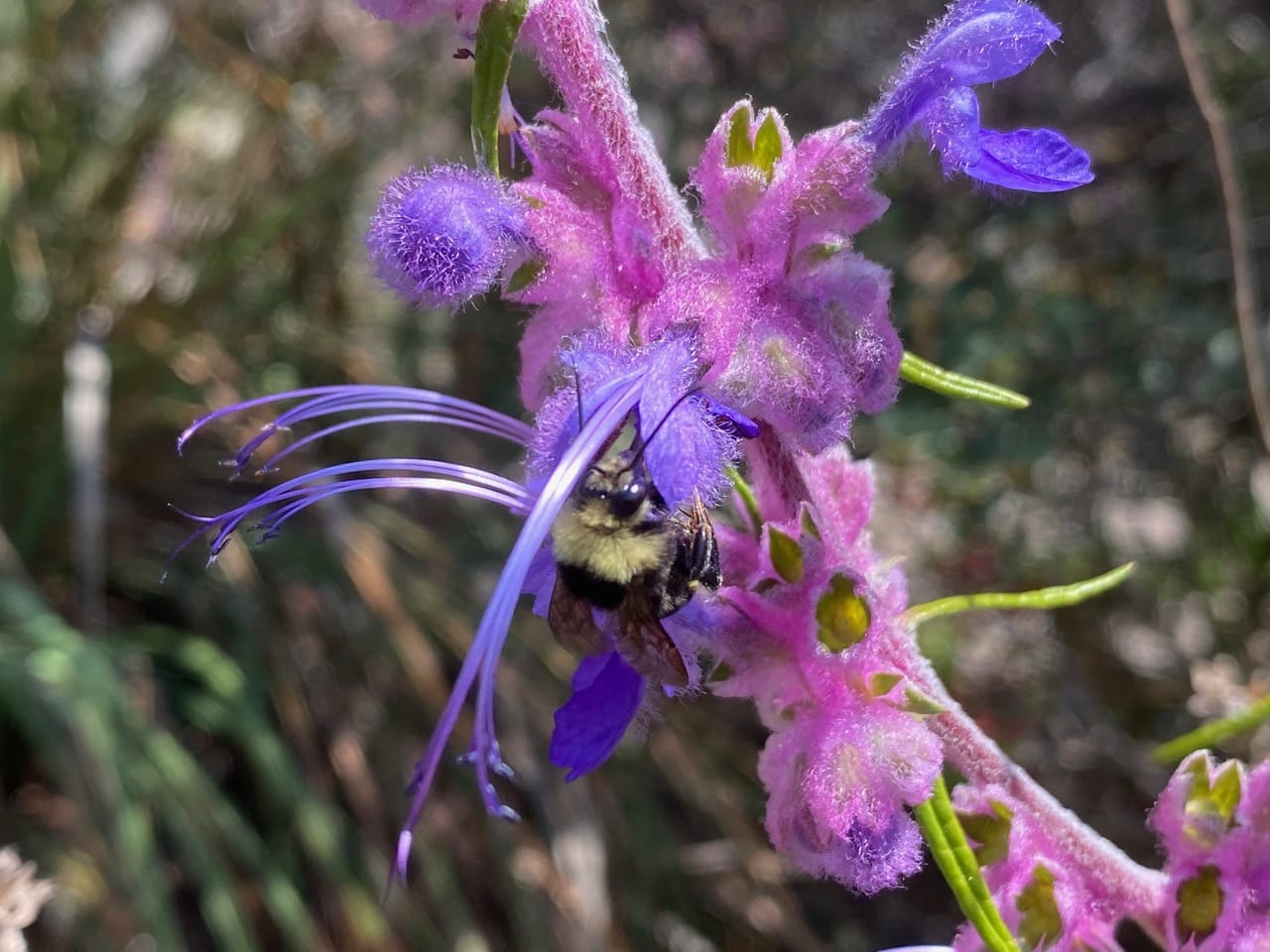
Whoa, that is one large bumble bee! A California Bumble Bee, Bombus californicus (family Apidae)? Despite its size, the bee does not come close to touching the flower’s stamens and style. Bumble Bees are not pollinators for the Woolly Bluecurls. The primary pollinators for these odd flowers are the hummingbirds. While the bird is hovering in front of the flower to probe for nectar with its long tongue, pollen is deposited on its head and back from the arcing stamens, and any existing pollen on the hummingbird can be picked up by the even longer forked stigma.
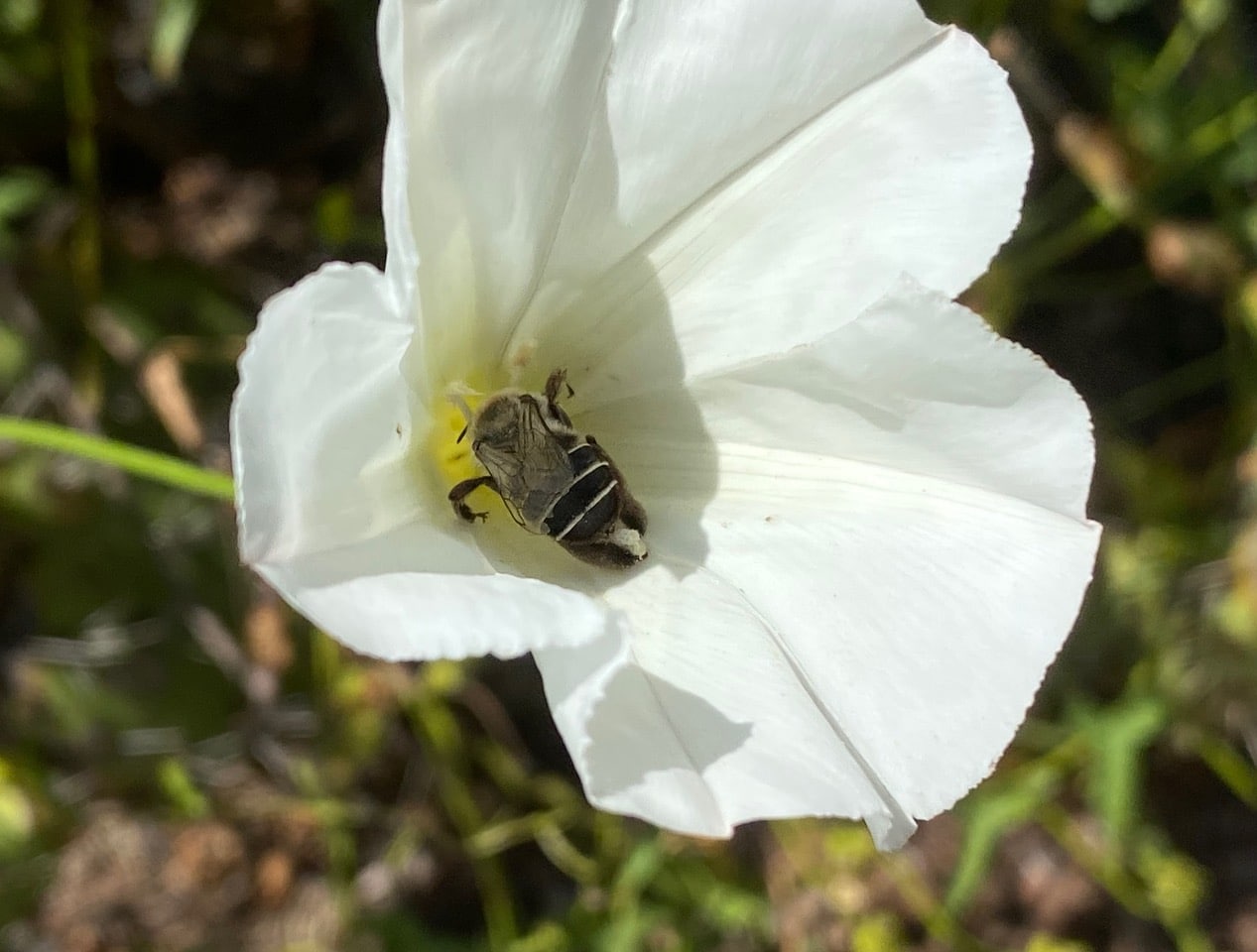
A Bindweed Turret Bee, Diadasia bituberculata (family Apidae) dives into a Morning Glory flower for nectar. Note the puffy black legs clasping the stamens. Females have scopae on their hind legs with shaggy, long, dark hairs.
Diadasia is a genus of bees in the family Apidae. Species of Diadasia are oligolectic, specialized on a relatively small number of plant species. Their host plants include asters, bindweeds, cacti, mallows, and willowherbs. Diadasia bituberculata, also known as digger bees or chimney bees, are specialists on bindweed, commonly known as Morning Glory. The females use pollen only from one plant species and are active through the late spring and early summer. Native to California, the Bindweed Turret Bees dig underground nests, many with structures called turrets at the nest entrance. The females provision the nests with pollen from Bindweed, and then lay their eggs inside.
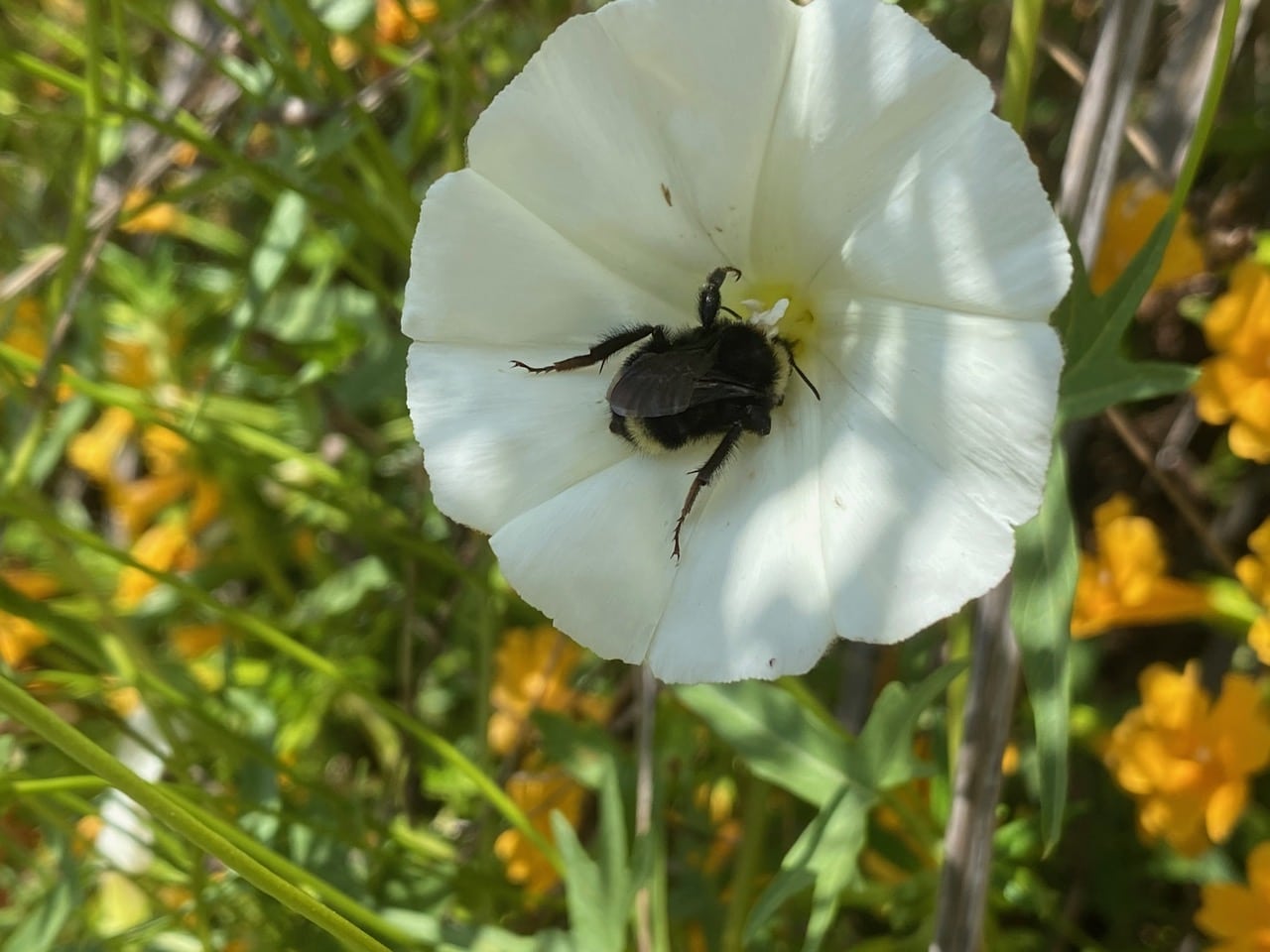
The Yellow-faced Bumble Bees, Bombus vosnesenskii (family Apidae) are also frequent visitors to the Morning Glory flowers.
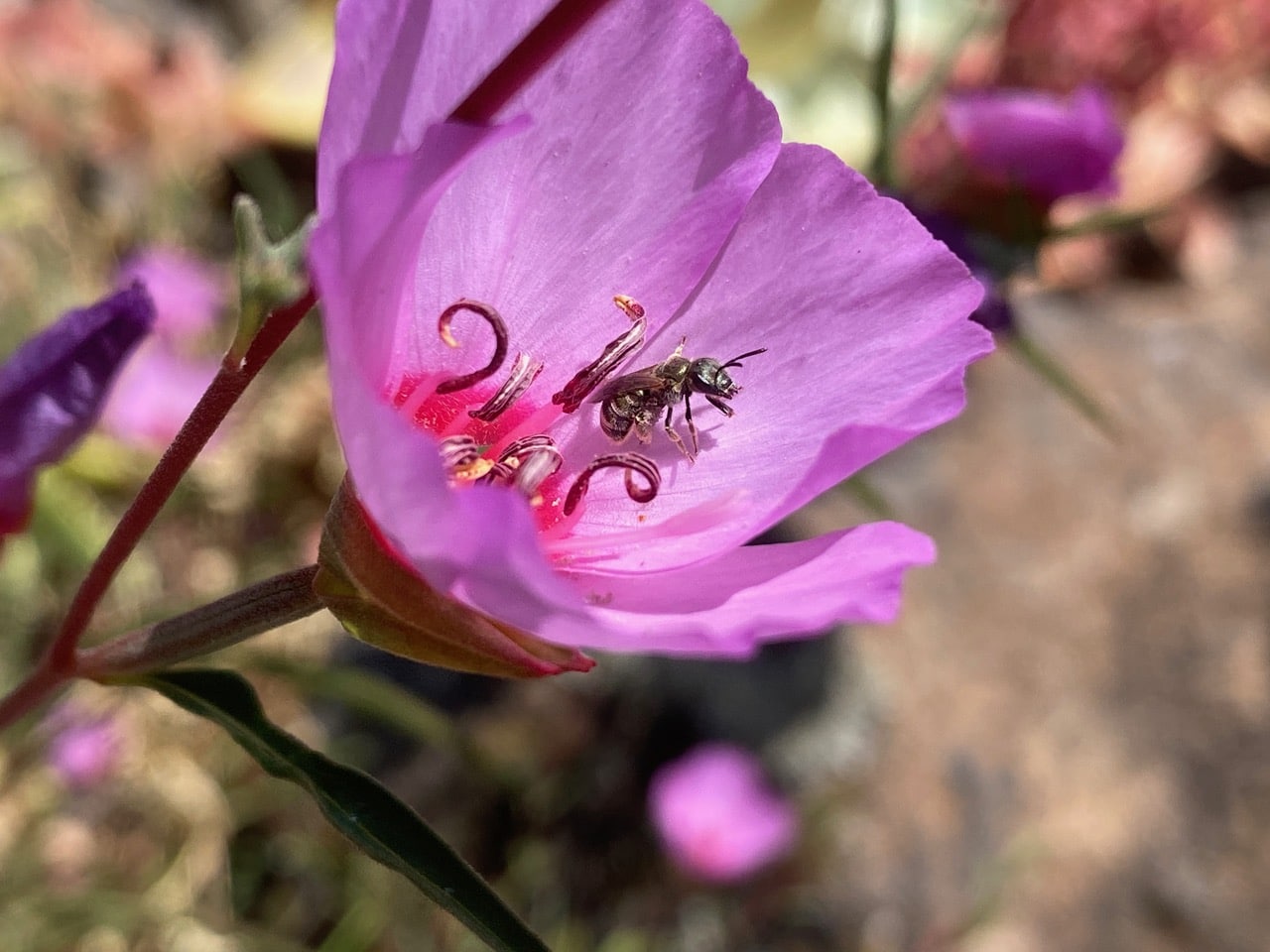
From a distance, I notice a little bee staying unusually still on a flower of Farewell-to-spring, Clarkia rubicunda.
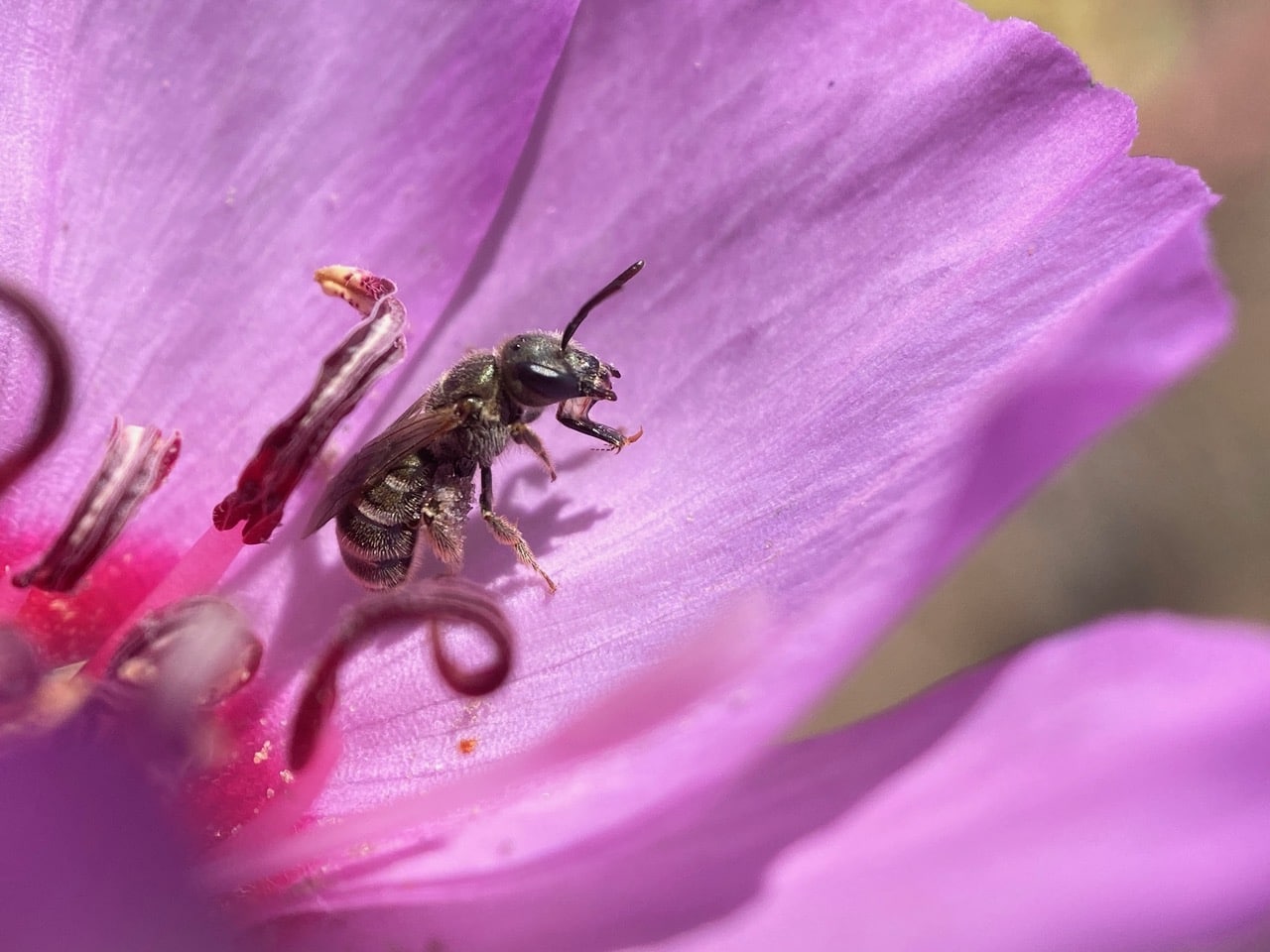
Closing in, I see that the Sweat Bee, Halictus sp. (family Halictidae) is “blowing bubbles”. She is extending her hinged mouthparts back and forth rapidly. The mouthparts appear to be holding a drop of liquid (nectar?)
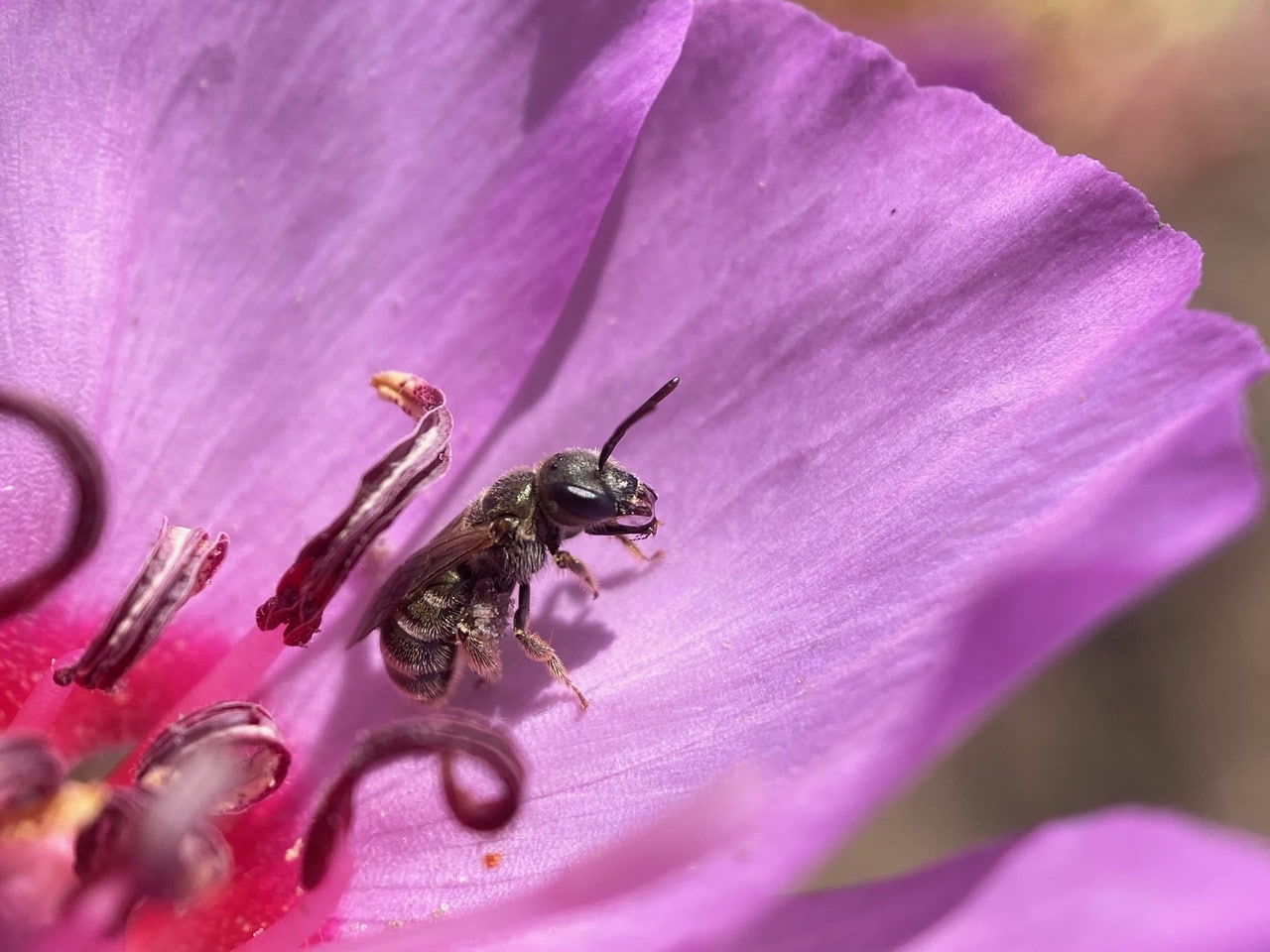
I manage to capture in photos a full cycle of this bubbling activity. The video unfortunately does not turn out well.
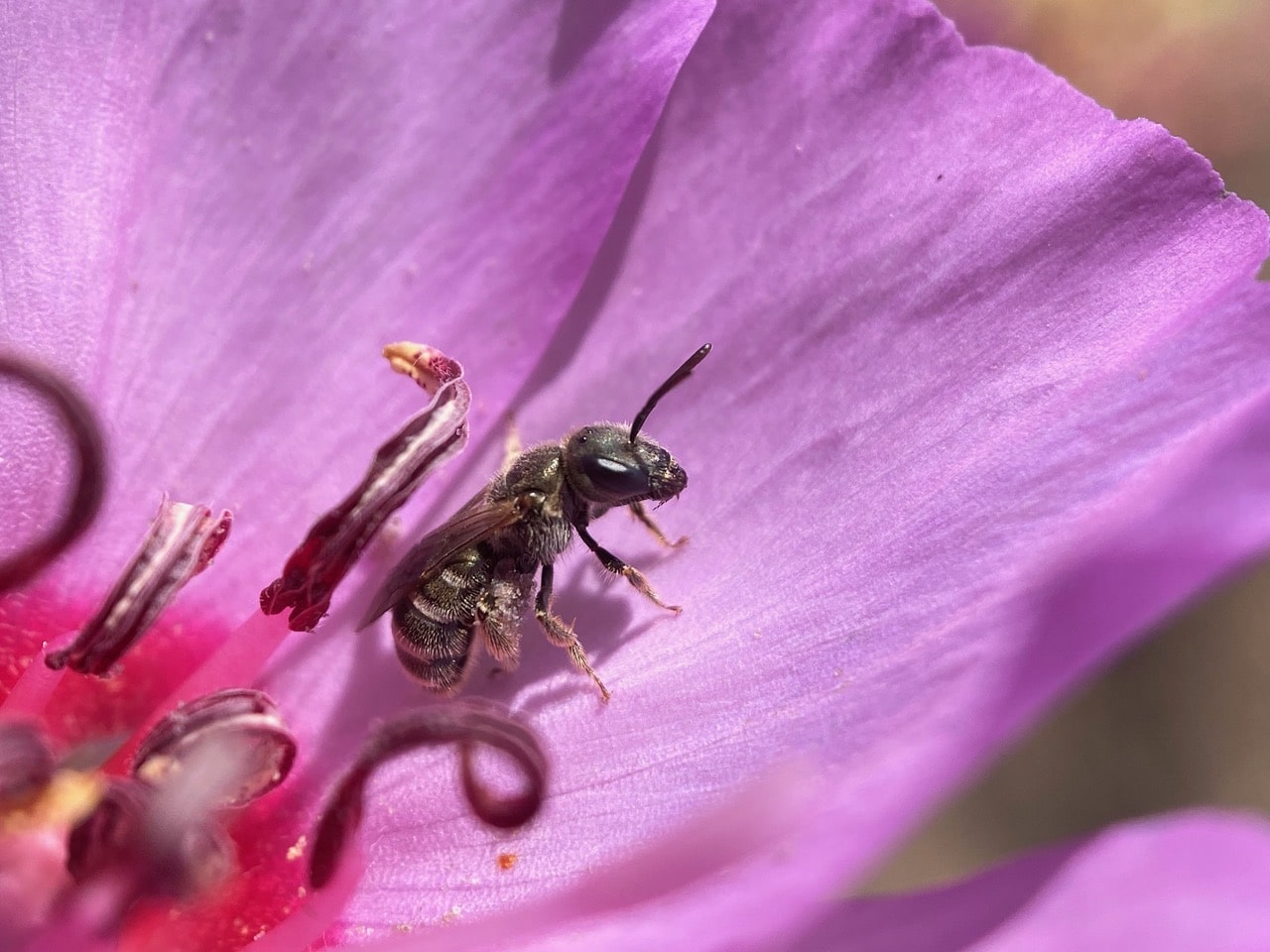
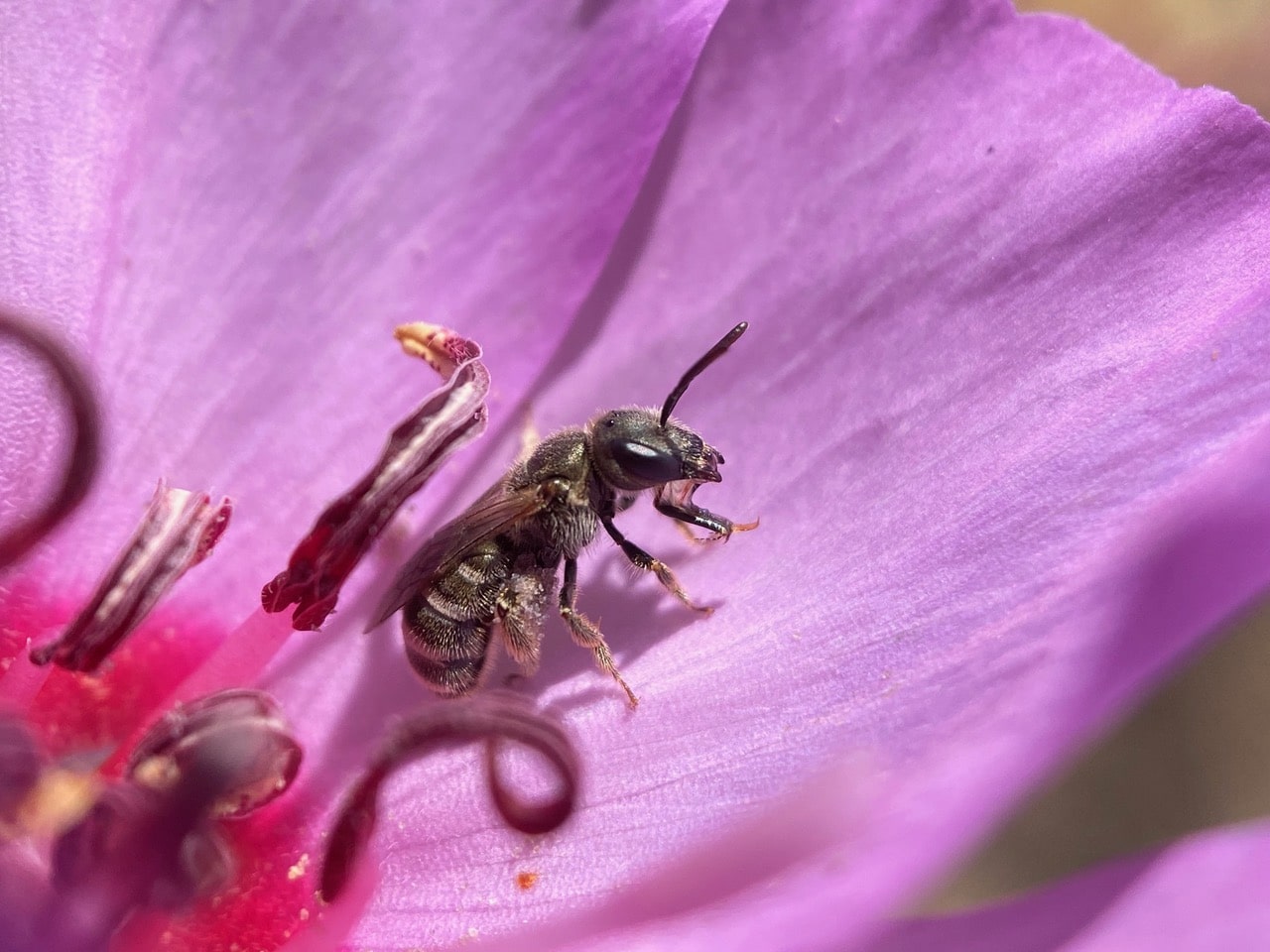
Such bizarre behavior! I have observed the same behavior on 6/10/24, also in a Sweat Bee. What’s the jaw activity about? Is the bee cleaning her mouthparts? There are speculations that bees blow bubbles to concentrate the nectar they have collected by exposing it to the air for evaporation. Another theory is that the bees blow bubbles to expose their stomach contents to the air to aid beneficial bacteria in breaking down what they have ingested. Yet others think that bubble blowing is a way to regulate body temperature when the bee needs to cool down. In short, nobody really knows!
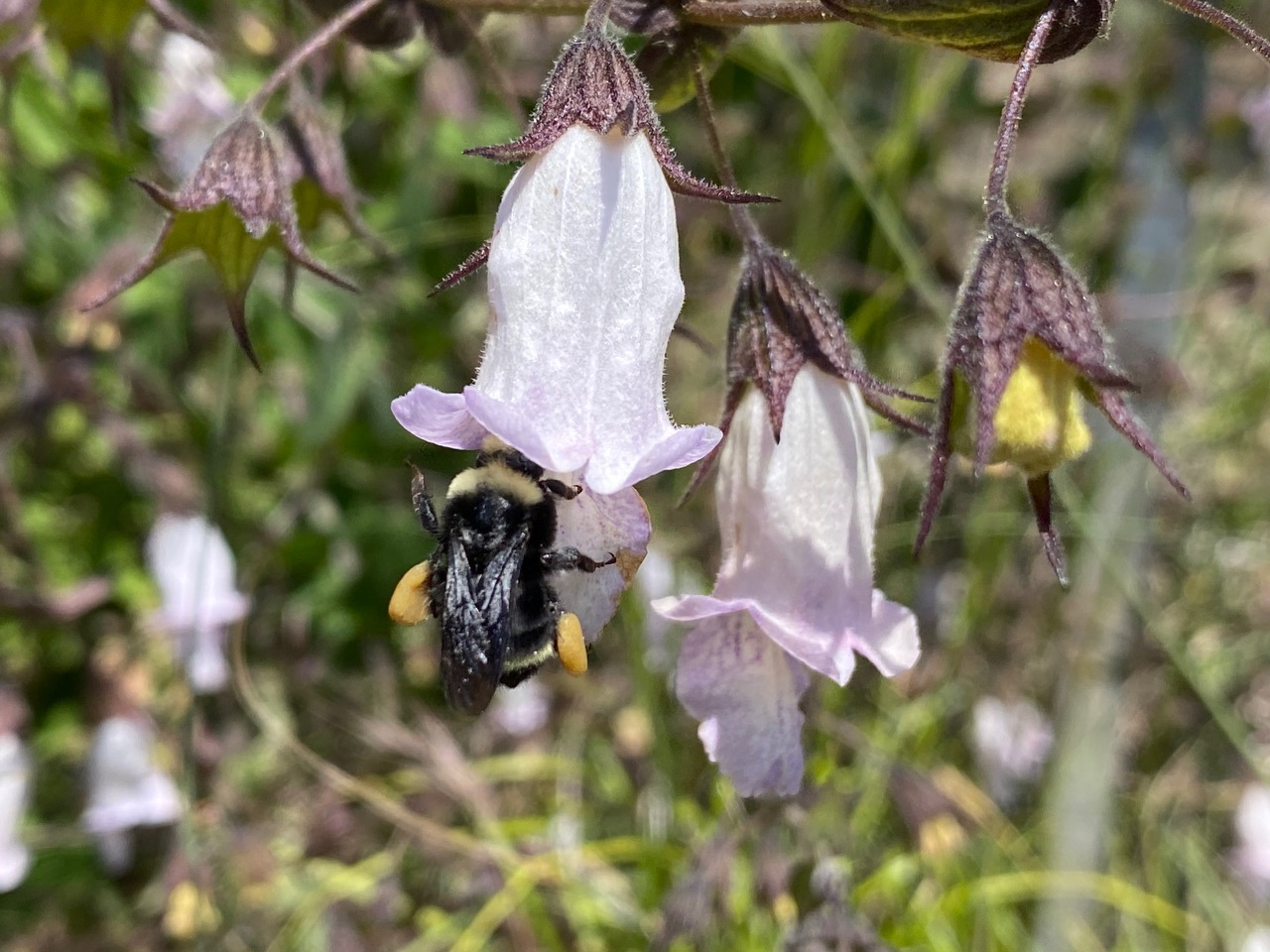
The Fragrant Pitcher Sage, Lepechinia fragrans is past its prime, but its alluring scent is still beckoning bumble bees to visit. The lower lip of the pendant flower provides a convenient landing pad for the bees. Sometimes the bees would disappear completely into the corolla. The large tubular flowers are spacious enough to accommodate them.
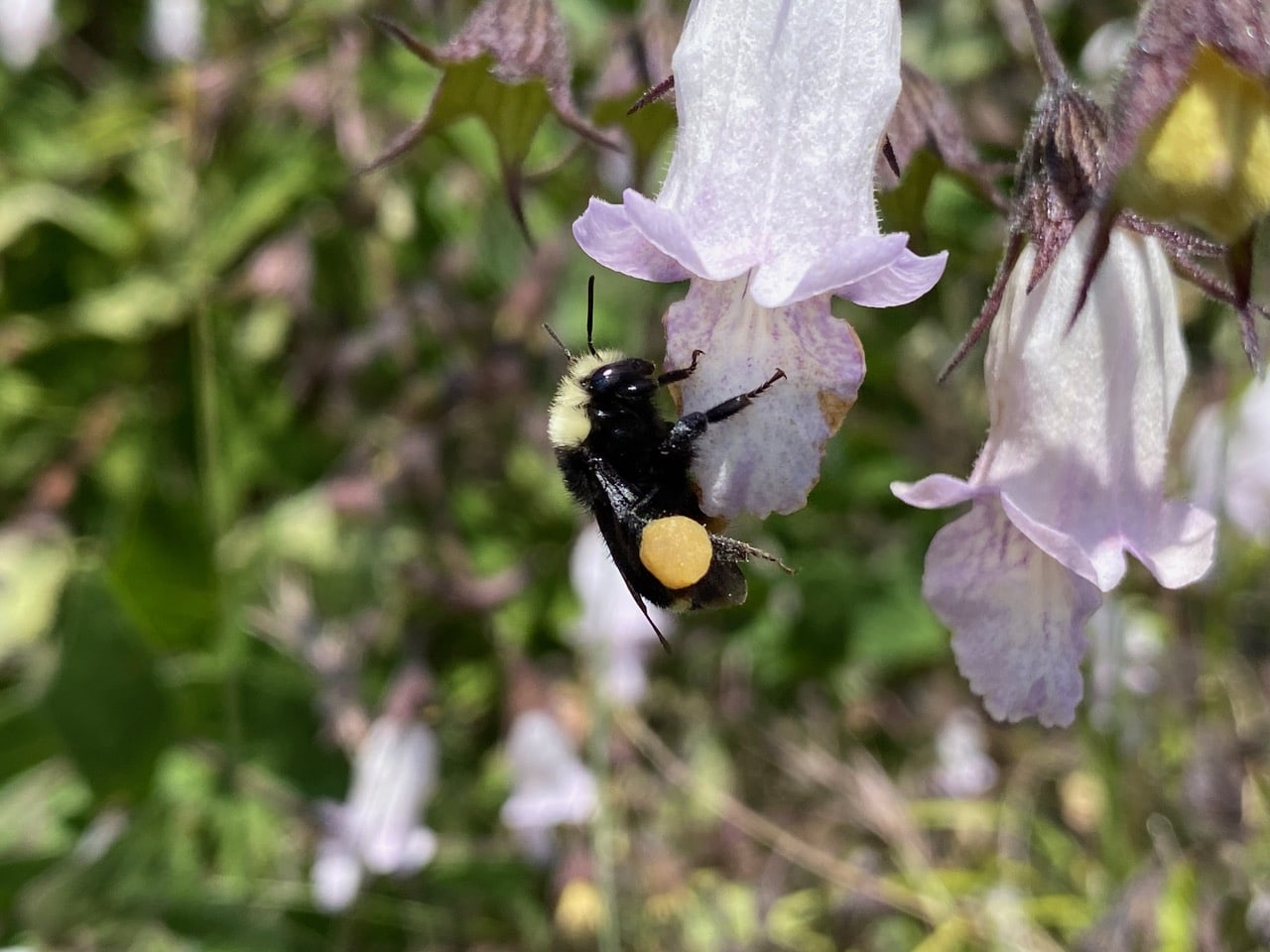
I don’t know the color of the pitcher sage pollen. Did this Yellow-faced Bumble Bee, Bombus vosnesenskii (family Apidae) gather her huge load of pollen from these flowers? I have also seen hummingbirds take nectar from these flowers. Bumble bees and hummingbirds are probably the major pollinators for the Pitcher Sage.

The bee in the Morning Glory has been identified by iNaturalist as the Bindweed Turret Bee, Diadasia bituberculata (family Apidae). But it does not have the huge, shaggy scopae on the hind legs for which the species is well-known. Is this a male?
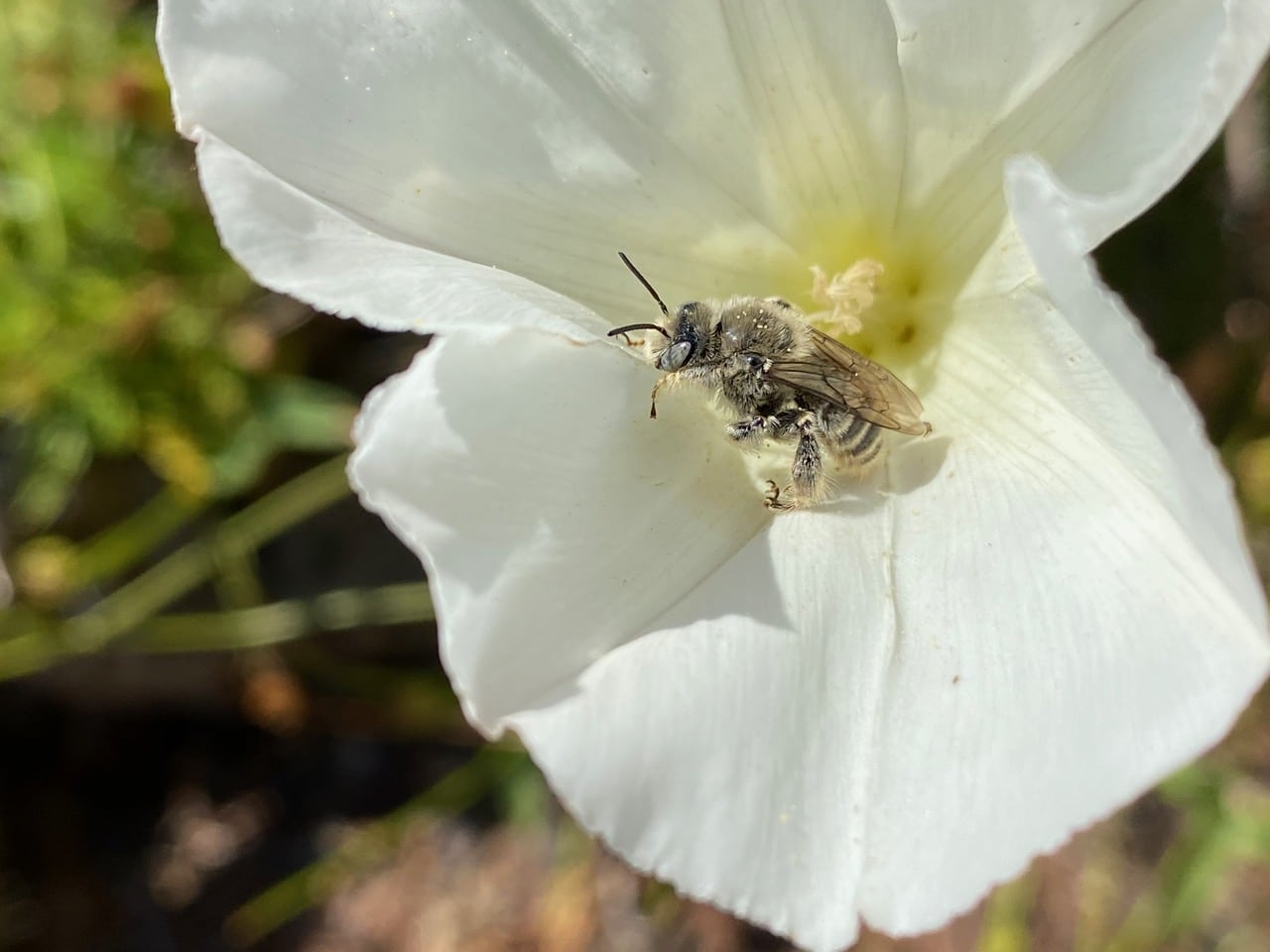
Note no bushy scopae on the hind leg.
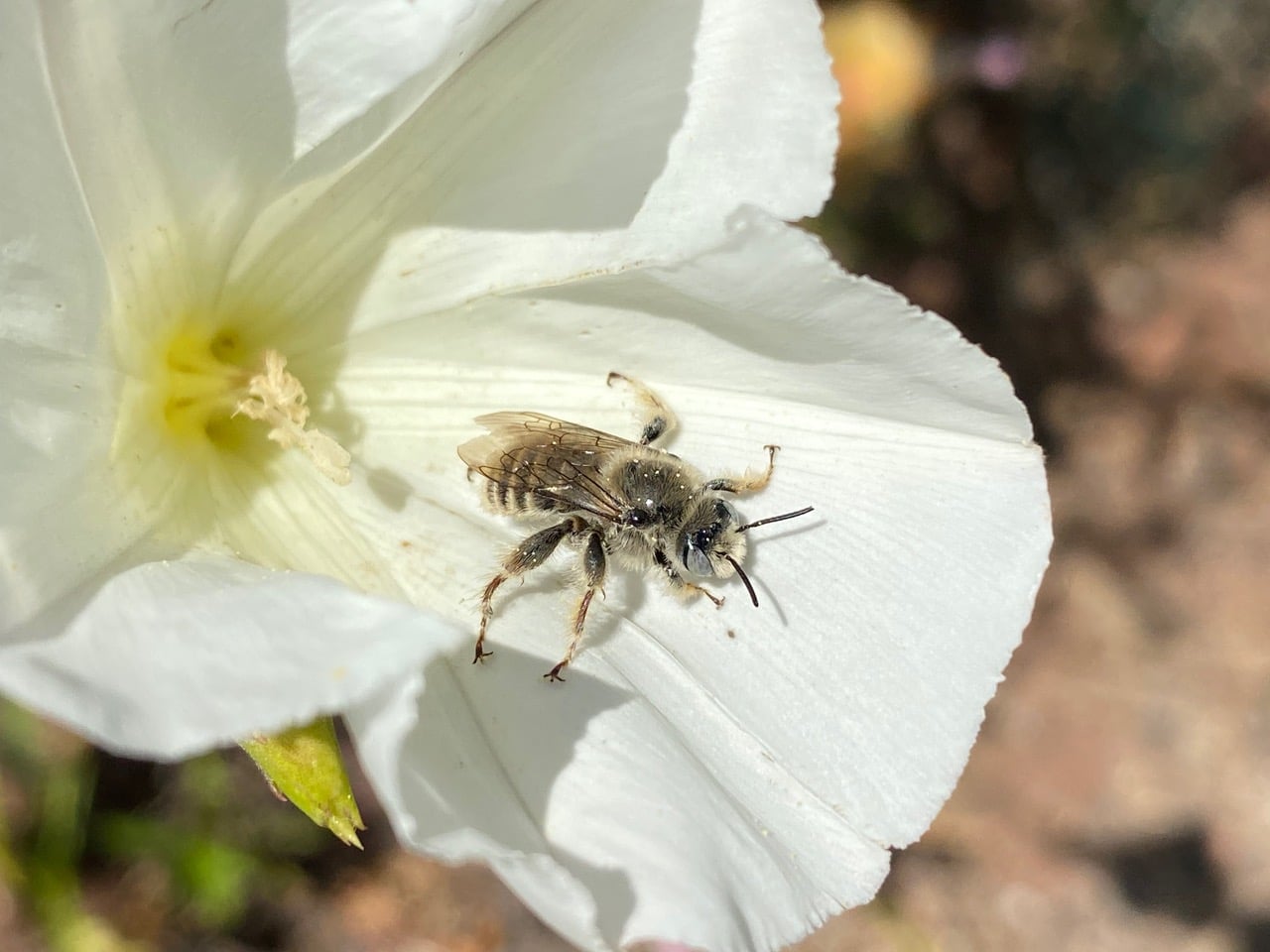
A similar bee crawls out of another Morning Glory flower. A male Bindweed Turret Bee, or some other species all together?
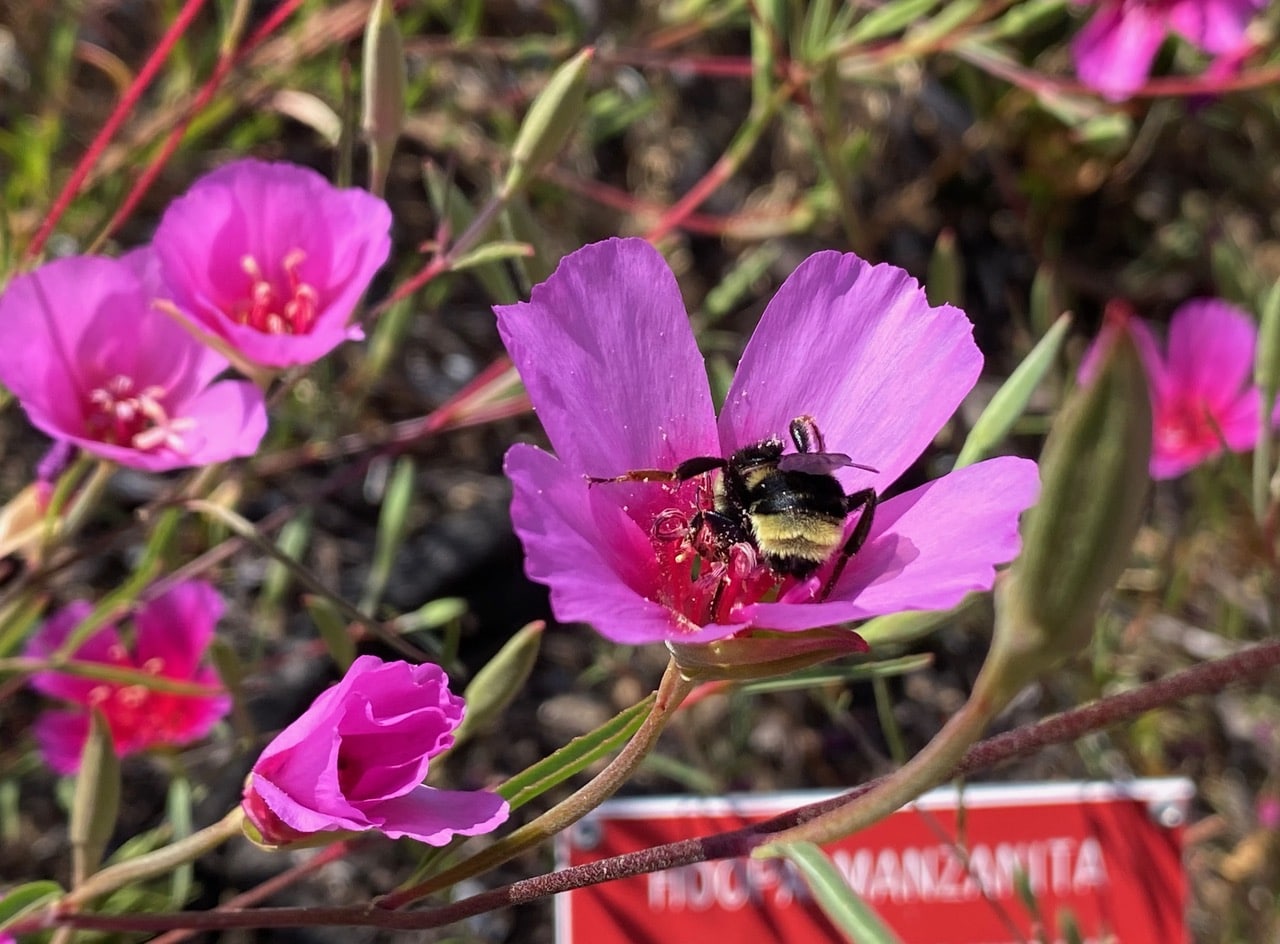
That large bumble bee nectaring on the Clarkia flower seems to have an extra thick yellow band on its abdomen. I have noticed this feature in the California Bumble Bees in the past. I will have to wait and see its head – if it is yellow, it would be a Yellow-faced Bumble Bee, but if it is black, it would be a California Bumble Bee. Those two species are very similar in appearance, and are best distinguished by the color of the head.
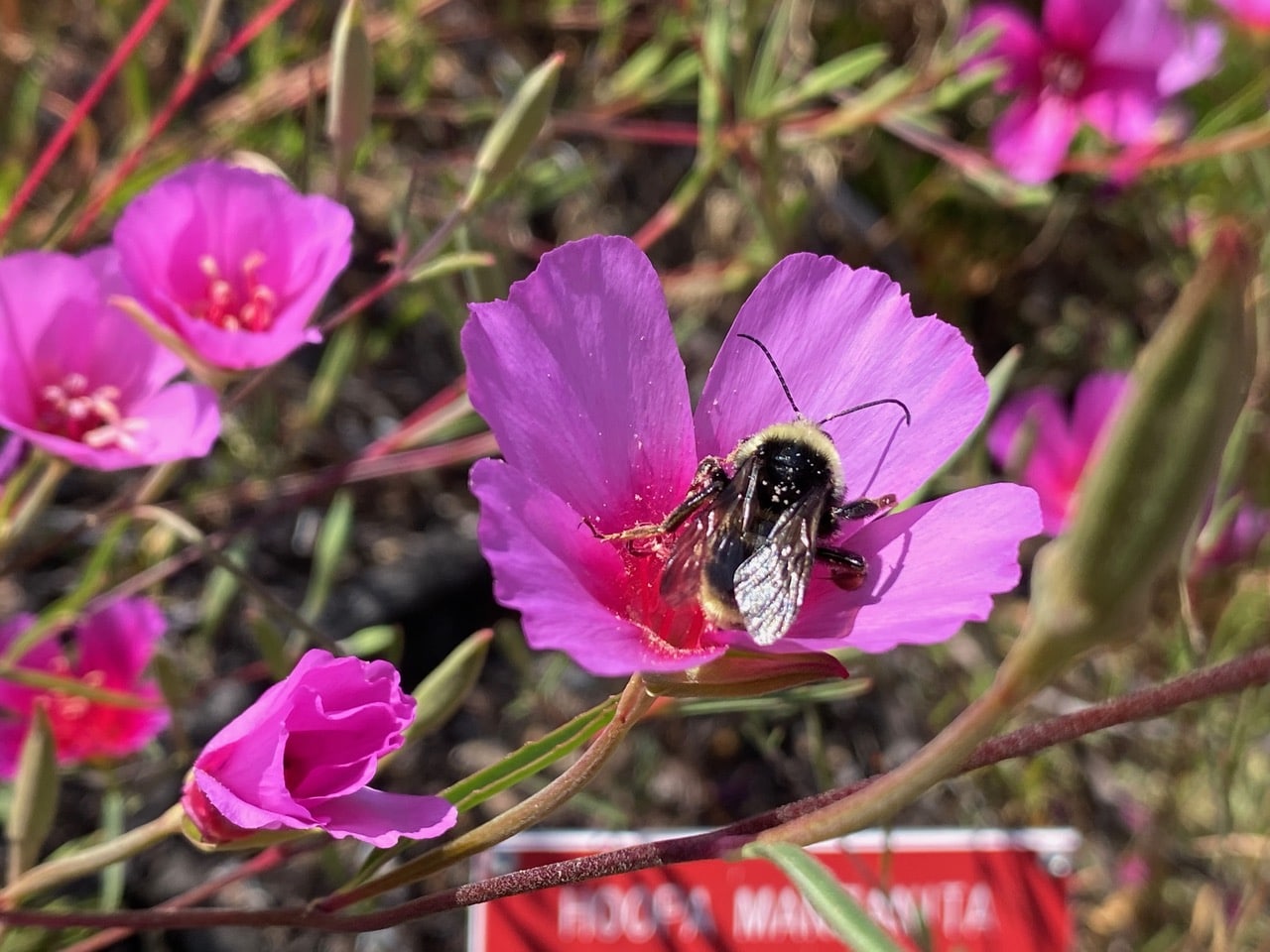
Unfortunately as the bee lifts its head up from the flower, I still can’t see its head. Note the long thin antennae. Whatever species it is, this is a male. Male Yellow-faced Bumble Bees sometimes have slightly more yellow on their abdominal segments. This is the time of year when the bumble bee colonies are producing males for reproduction!
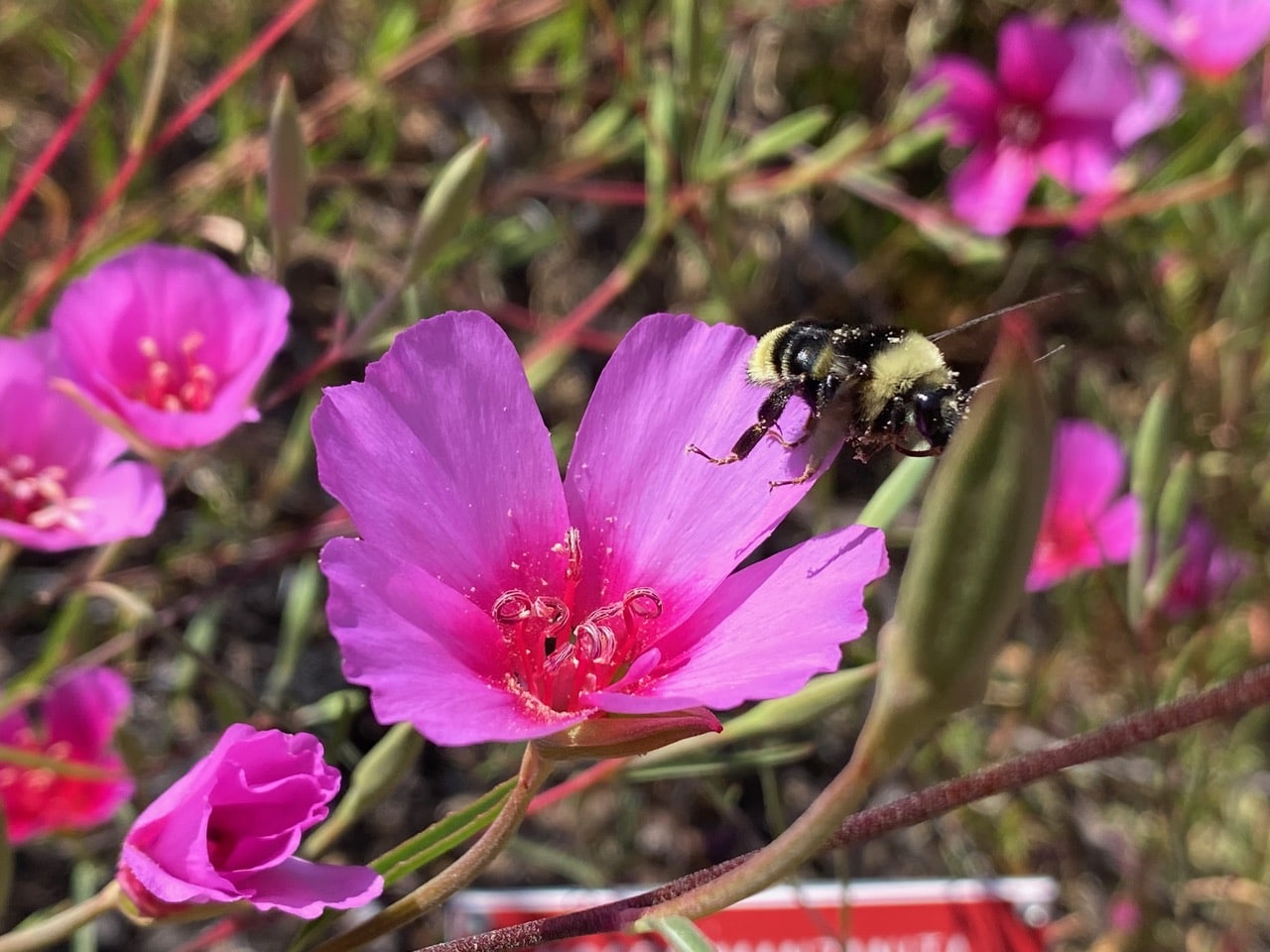
As the bee flies away, it appears to have a dark head, and more yellow bands on its abdomen. Not a Yellow-faced Bumble Bee.

I stand and watch the large bumble bees on the Clarkia flowers for 15 minutes, but because the patch is fenced off, I can’t get close to them. Although blurry, this photo does show that the bee has a black head, and extra yellow bands on the abdomen. It is a California Bumble Bee, Bombus californicus (family Apidae).
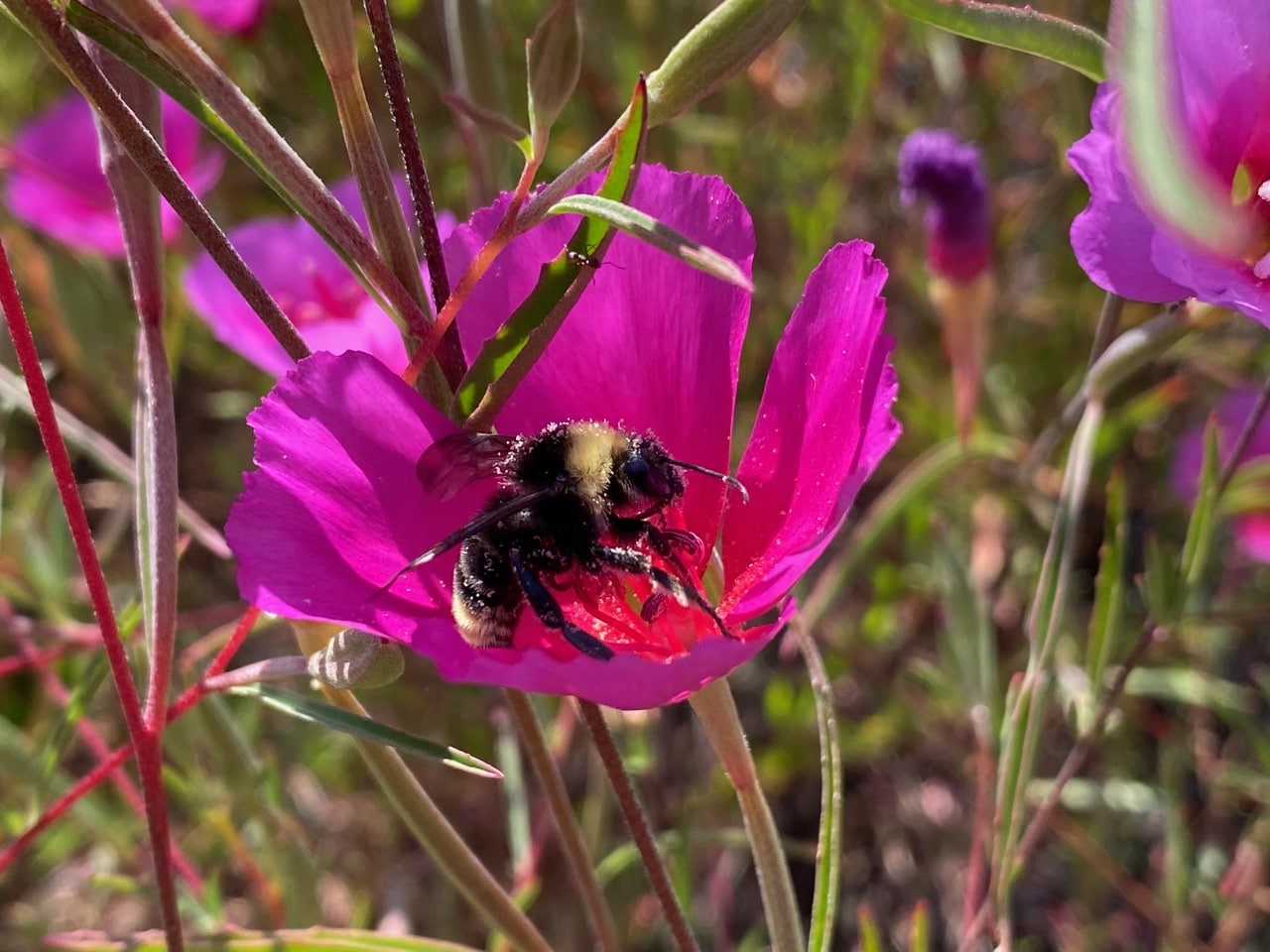
There, a better picture! Note no yellow on the head.
Bombus californicus, the California Bumble Bee, is found in Central and the western half of North America. The species is now classified as Vulnerable by the IUCN. It was the most common bumble bee in California until about the 1990s when its numbers and distribution began to decline. Many factors may have contributed to its decline, including invasive species, pesticide use, commercial bumble bee rearing, habitat destruction, and climate change.
Although morphologically the species is quite variable, the “typical” color pattern of female B. californicus is black with only a single strong yellow band anteriorly on the thorax, and another single yellow band near the apex of the abdomen. Males exhibit considerably more variation.
The California Bumble Bee is an important pollinator in alpine environments in its native range. They are social bees having a queen and workers. Their colonies last for one year. New queens overwinter, usually underground, and found new colonies from scratch the following year. Queens emerge from April through mid July. Workers are present from April to September. The species is known to pollinate sage, blueberry bushes, red clover, California poppies, and many other species of flowers.