

Pollinator Post 6/20/23 (1)
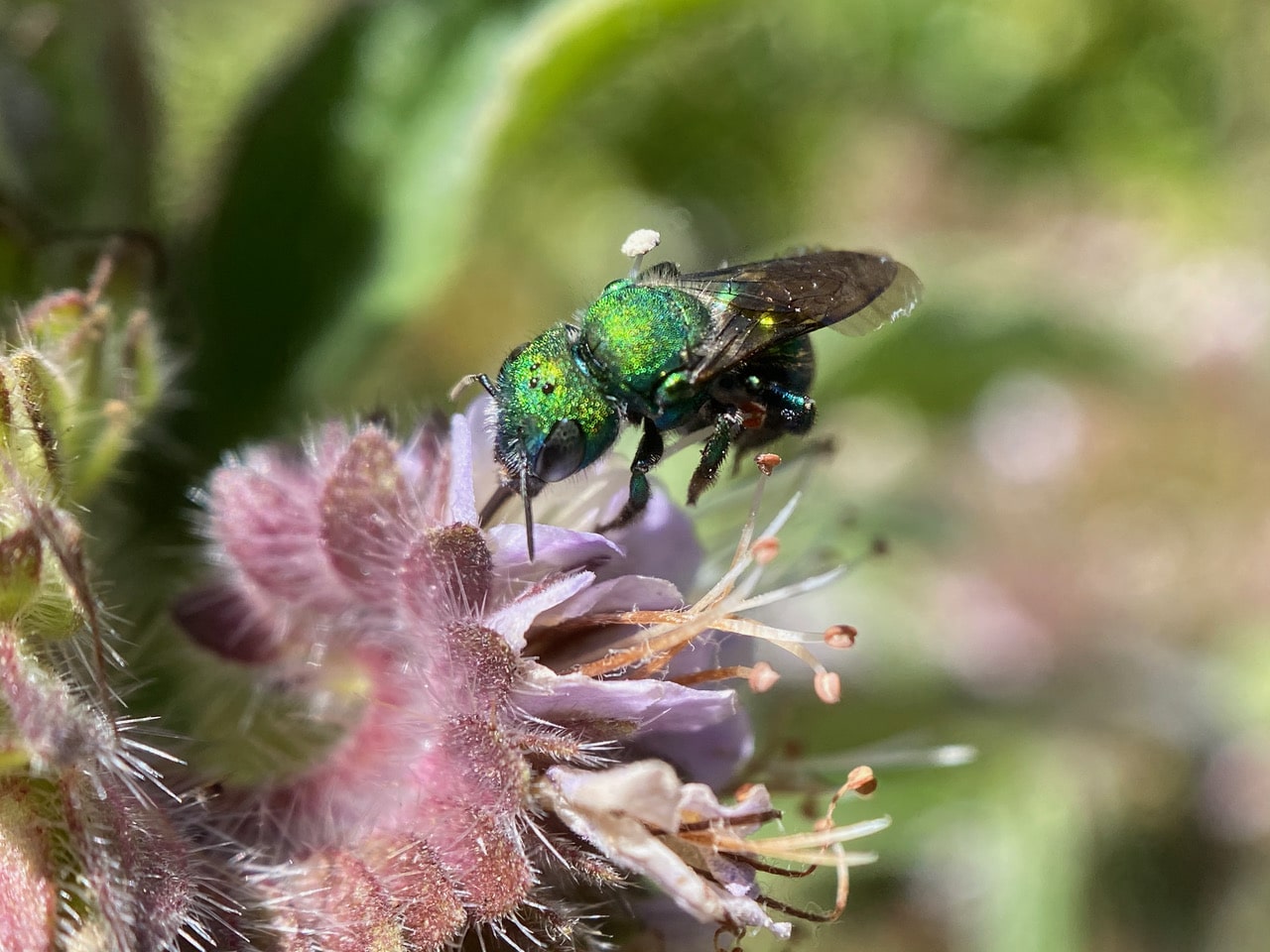
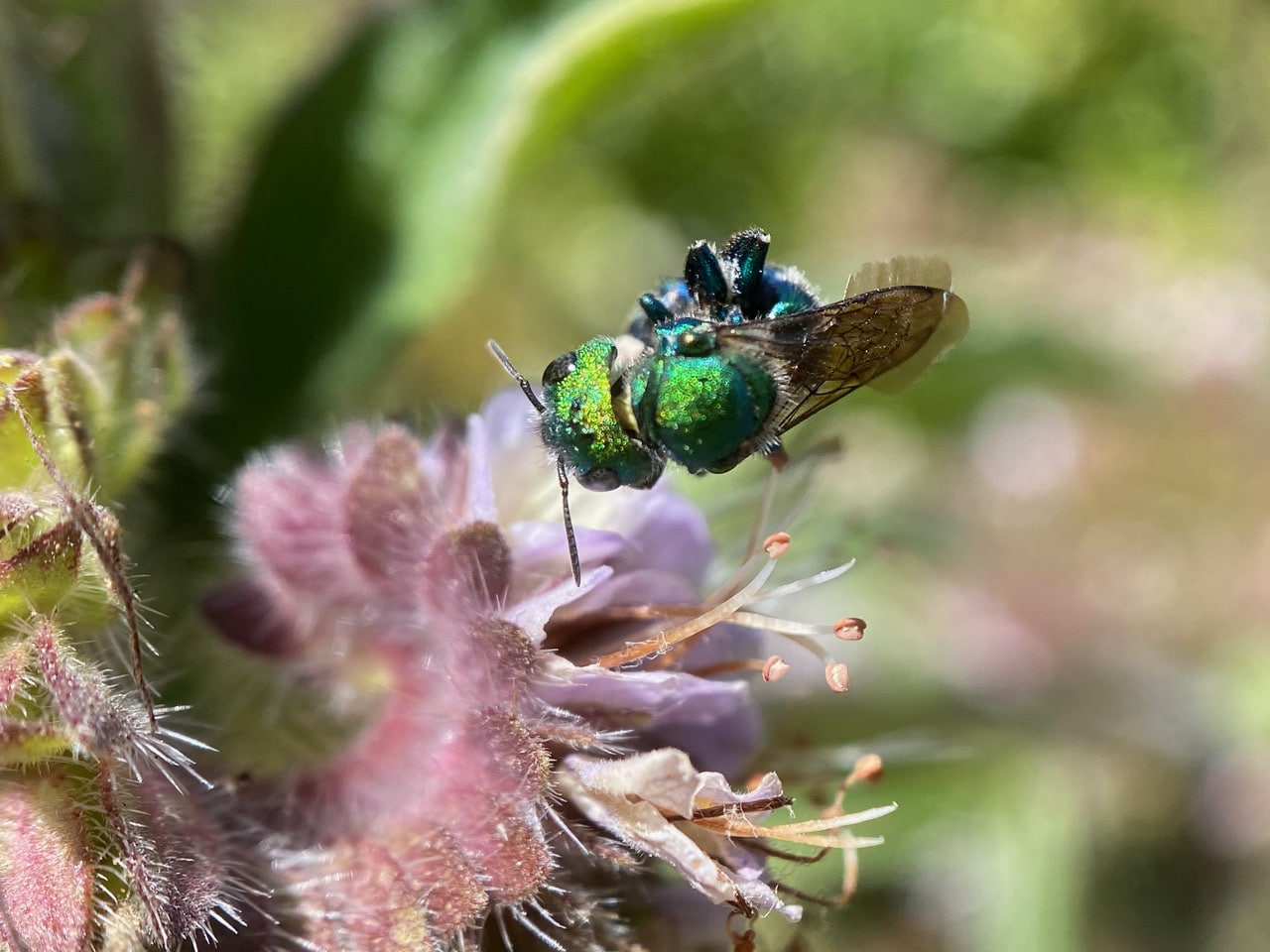
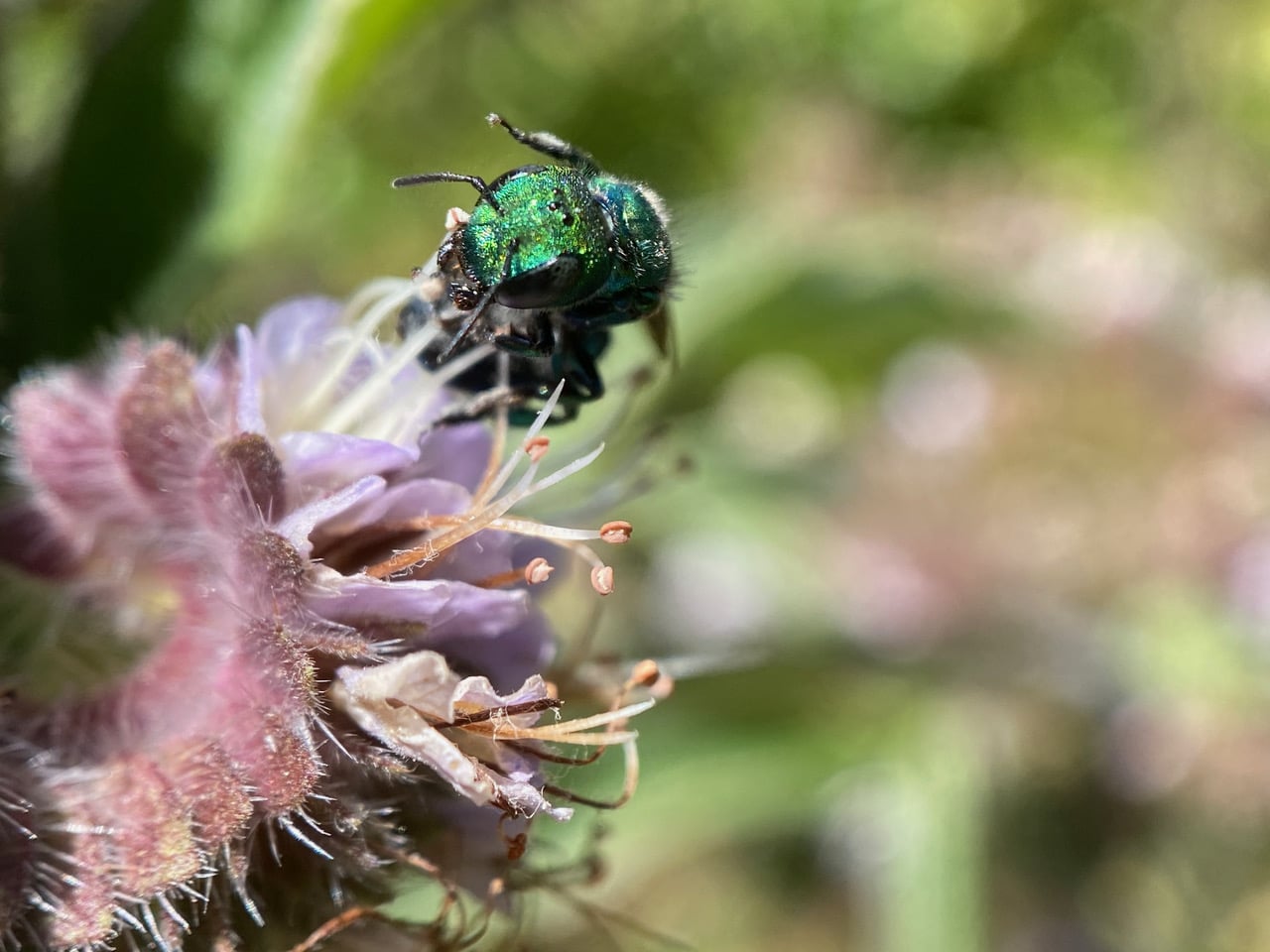
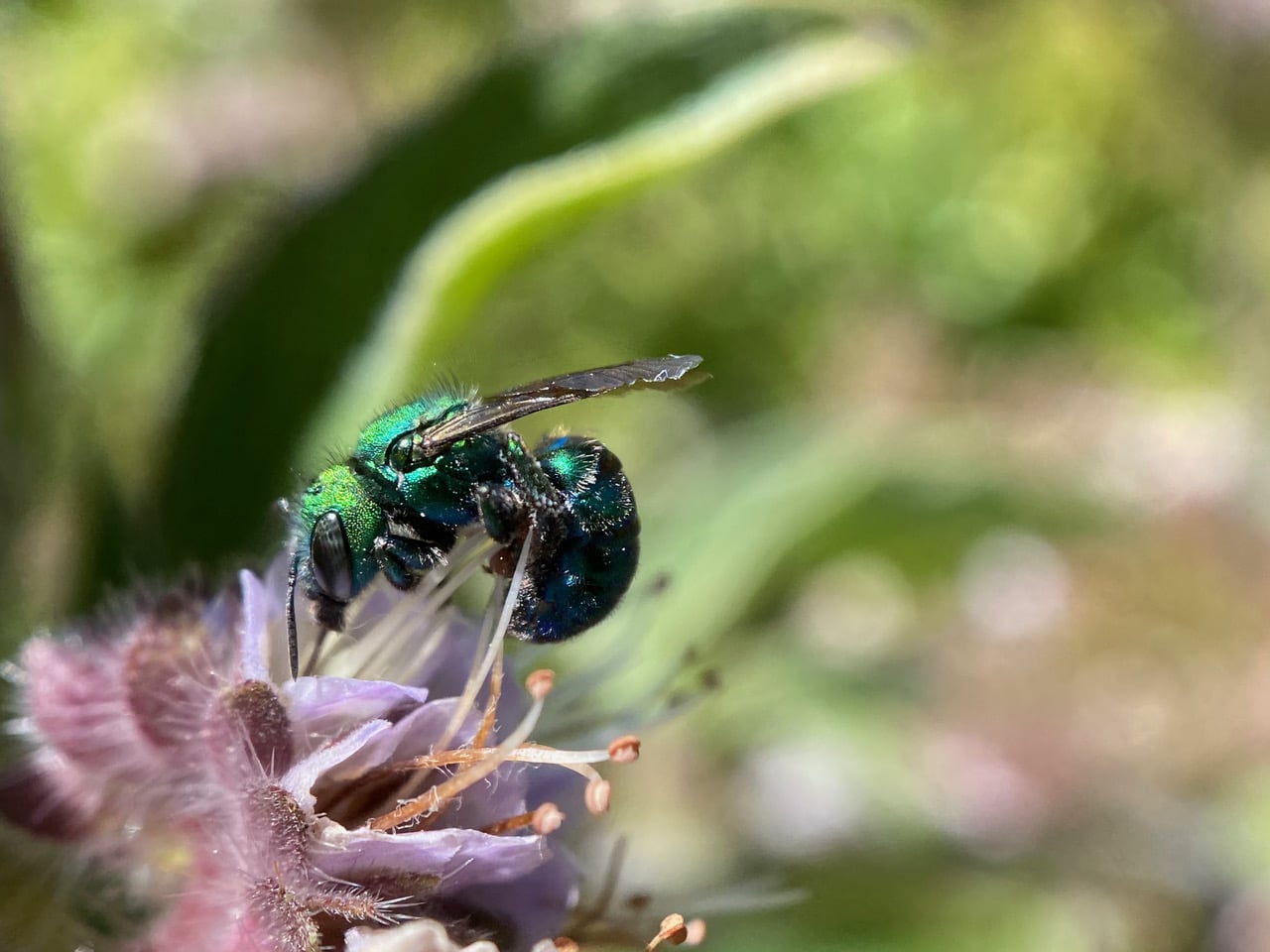
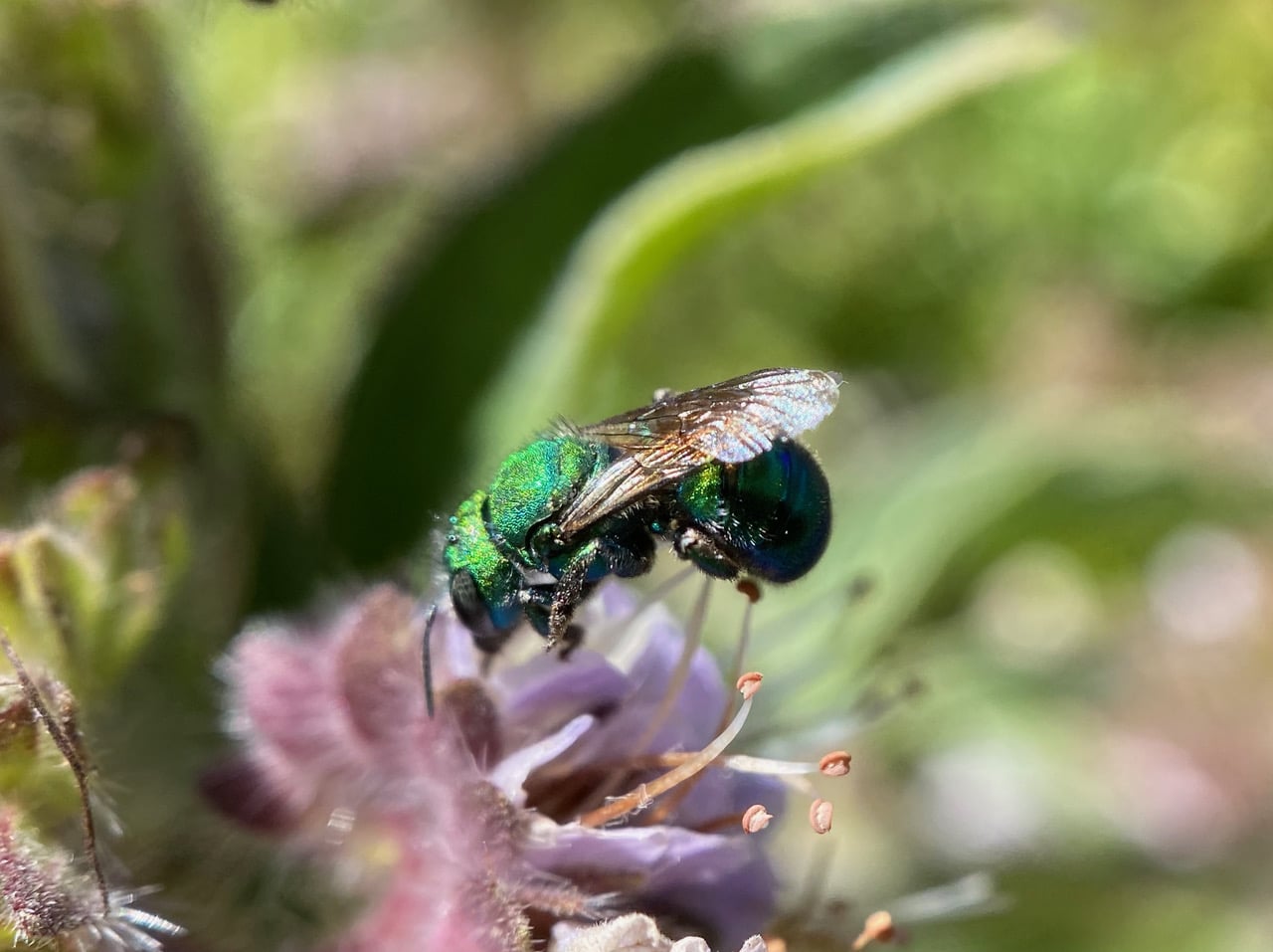
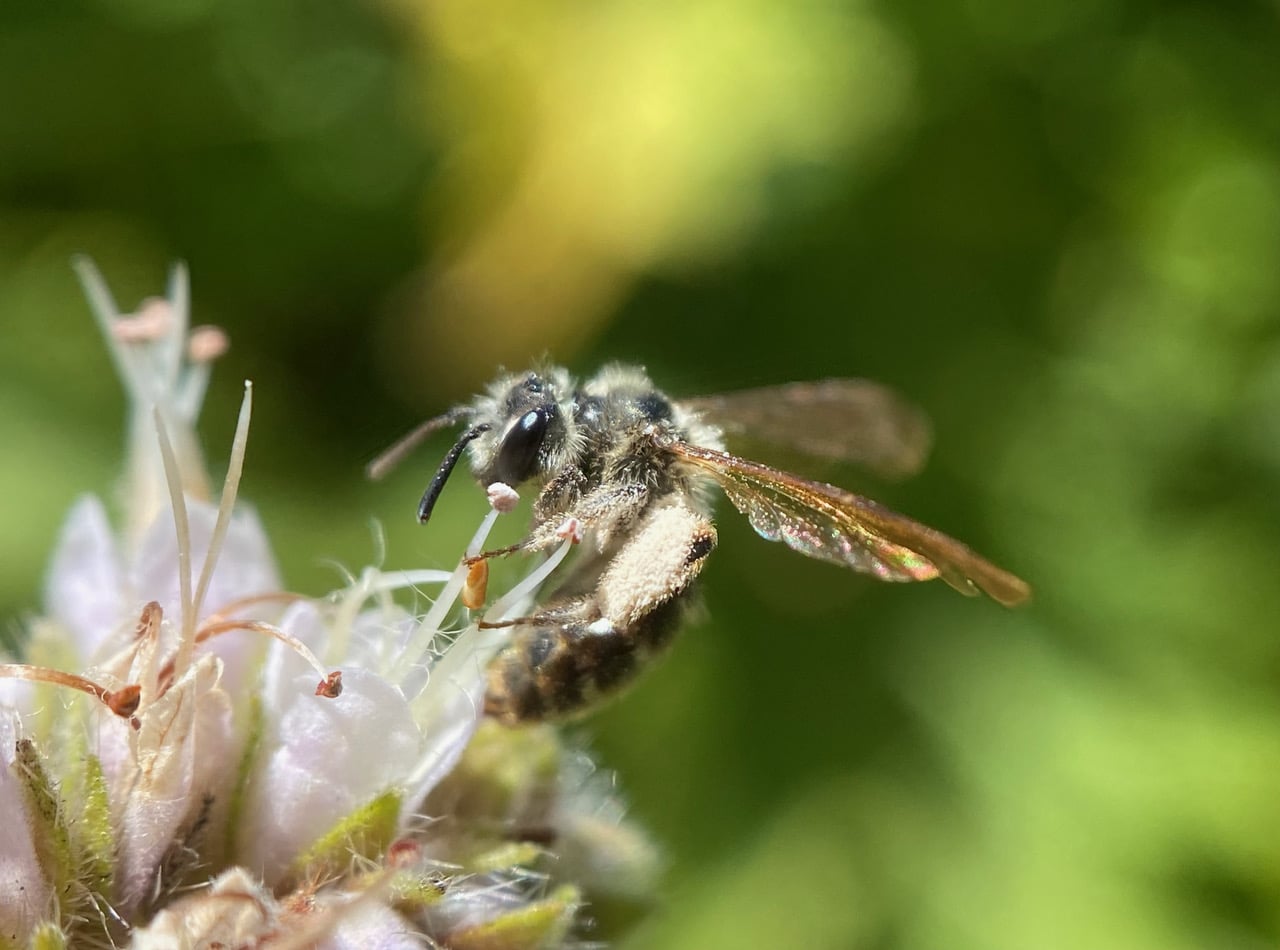
Ooh, what a treat to see a sparkling jewel of a bee foraging on the California Phacelia flowers, Phacelia californica. It is a Mason Bee in the genus Osmia (family Megachilidae). Osmia tends to have chubby, rounded body parts. A friend once described an Osmia as three BB pellets glued together.
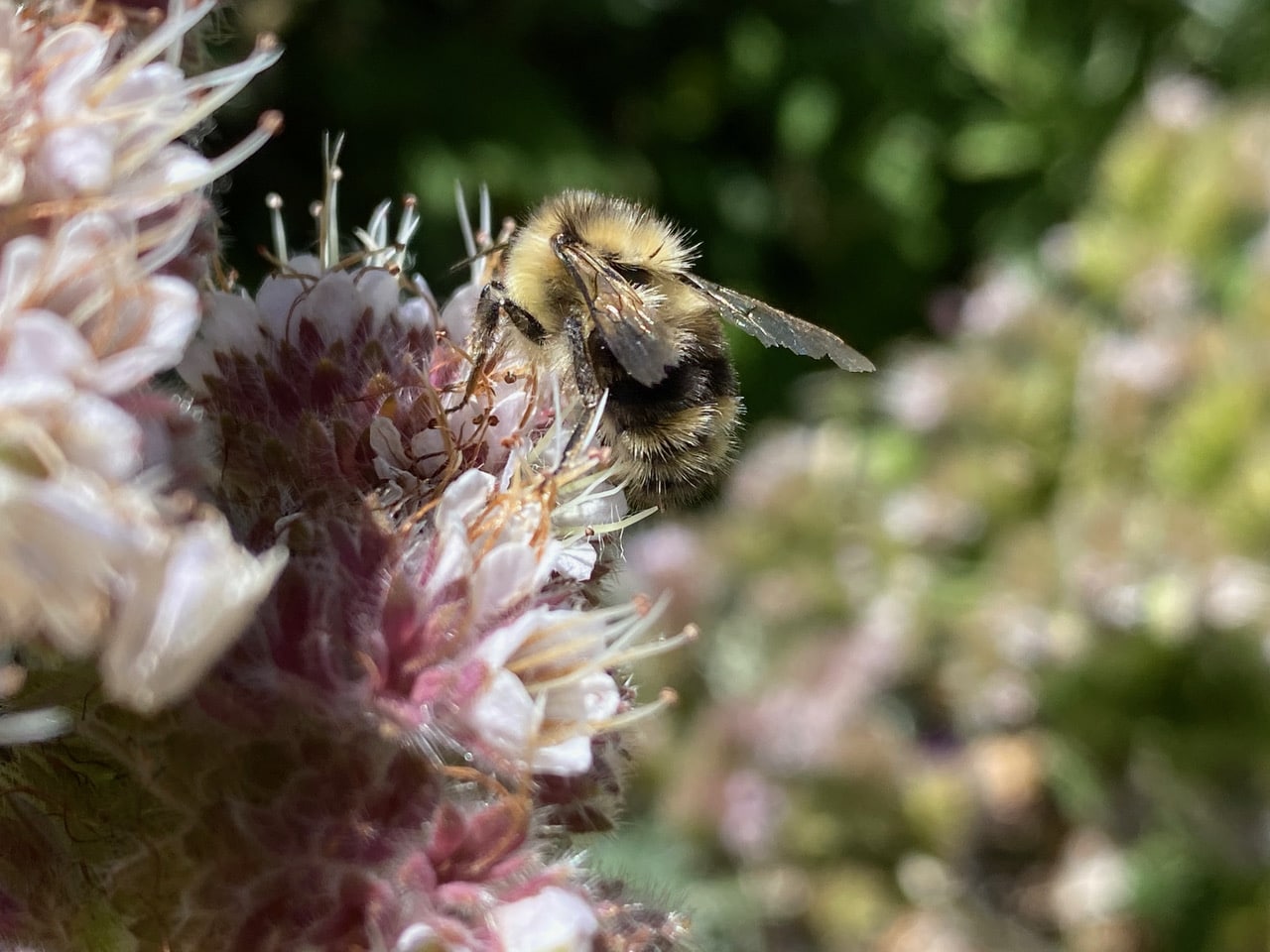 The bee activities at the blooming California Phacelia are still going strong, dominated by the bumble bees. As the season progresses, I see more and more of the older bees out foraging. This Black-tailed Bumble Bee, Bombus melanopygus has tattered wings, and the colors of her hairs are faded. But she is still doing her job valiantly to support her colony.

After sipping nectar, the bee proceeds to collect pollen, embracing the stamens with her whole body, and rubbing pollen onto her abdominal scopa.
Mason Bee is a name commonly used for species of bees in the genus Osmia, of the family Megachilidae. Mason Bees are named for their habit of using mud or other “masonry” products in constructing their nests, which are made in naturally occurring gaps/cavities such as cracks in stones, hollow stems or holes in wood made by wood-boring insects. Osmia means ‘odor’, and refers to a faint lemony scent used by these bees to mark their nest entrances. Osmia species are frequently metallic green or blue. Females have black ventral scopae (special pollen collecting hairs) on the underside of their abdomen, which are difficult to see unless laden with pollen. Ventral abdominal scopae is a feature shared by all members of the Megachilidae family, which include the wool-carder bees (genus Anthidium), and leaf-cutter bees (genus Megachile).
Mason Bees are a solitary species and are non-aggressive. Every female is fertile and makes her own nest. Each nest cell is provisioned with pollen and contains one egg which will develop into a larva. The female creates a partition of mud between the nest cells. The process continues until she has filled the cavity. She plugs the entrance to the cavity, and then may seek another nest location. The larvae that hatch out consume their provisions and begin spinning a cocoon around itself and enters pupal stage. Adults mature in fall or winter, hibernating inside its cocoon.
The bee is working the individual anthers with her mandibles.
Note that the bee has no scopa on her legs. As in all Megachilids, pollen is gathered and carried in the hairs on the underside of the female’s abdomen.
Osmia can pollinate very efficiently, largely due to their anatomy and behavior. While visiting flowers, the dry pollen in their abdominal scopae falls off readily onto the flower’s stigma, facilitating pollination at nearly every visit. The nesting habits of many Osmia species lend themselves to easy cultivation, and a number of Osmia species are commercially propagated to improve pollination in fruit and nut production. The bees are easily attracted to nesting holes – reeds, paper tubes, drilled blocks of wood; in their dormant season, they can be transported as intact nests or as loose cocoons.
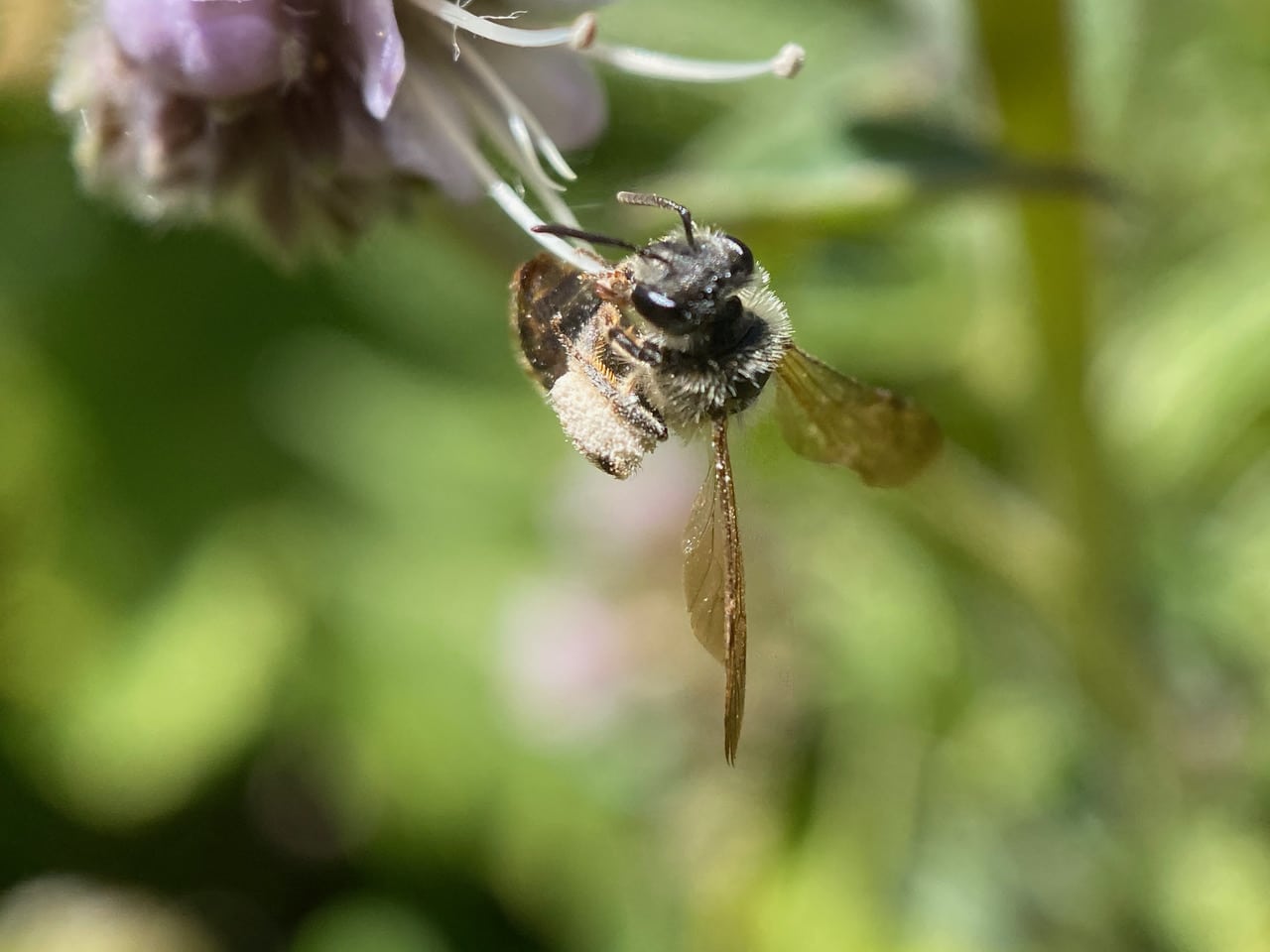
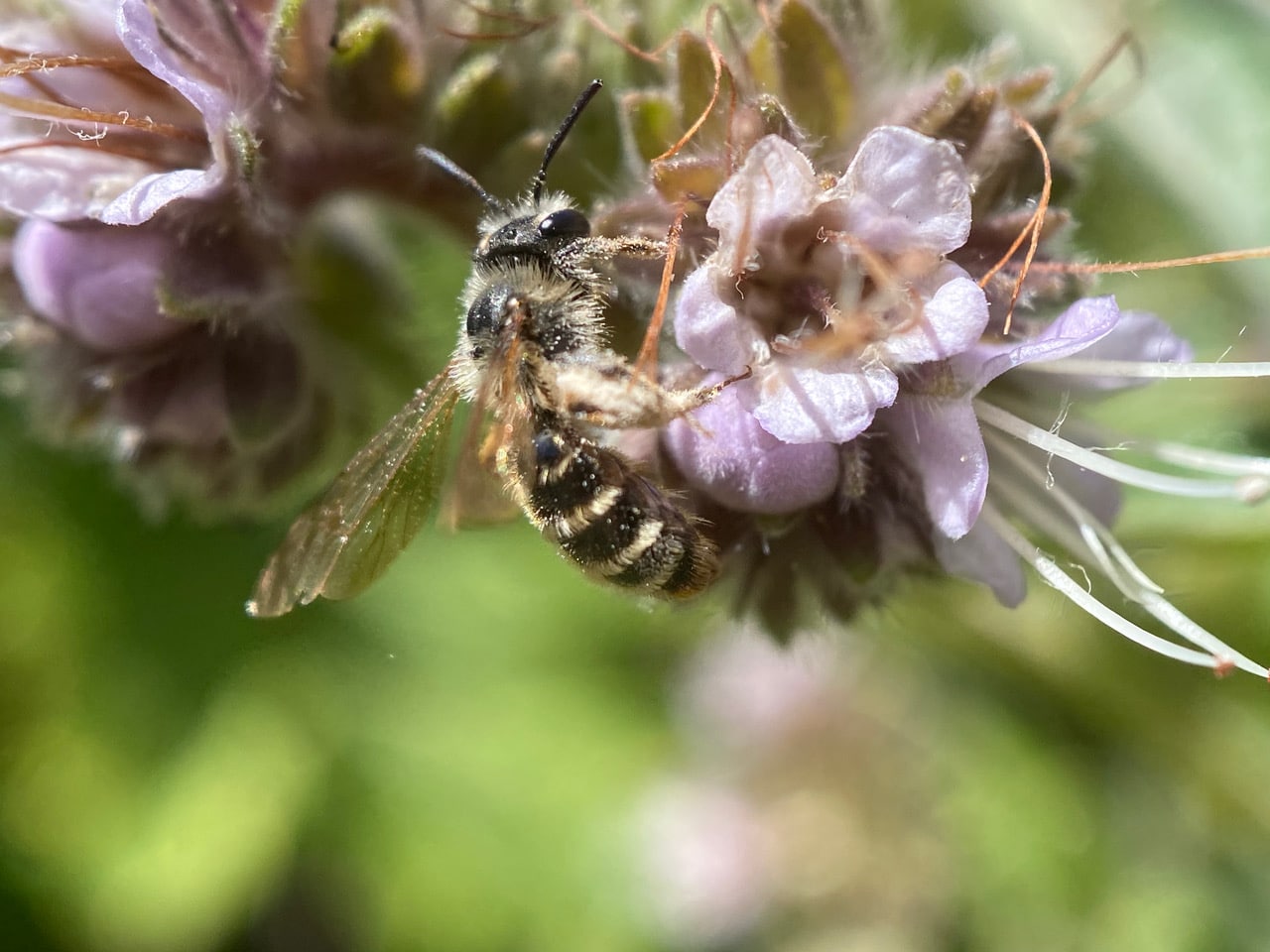
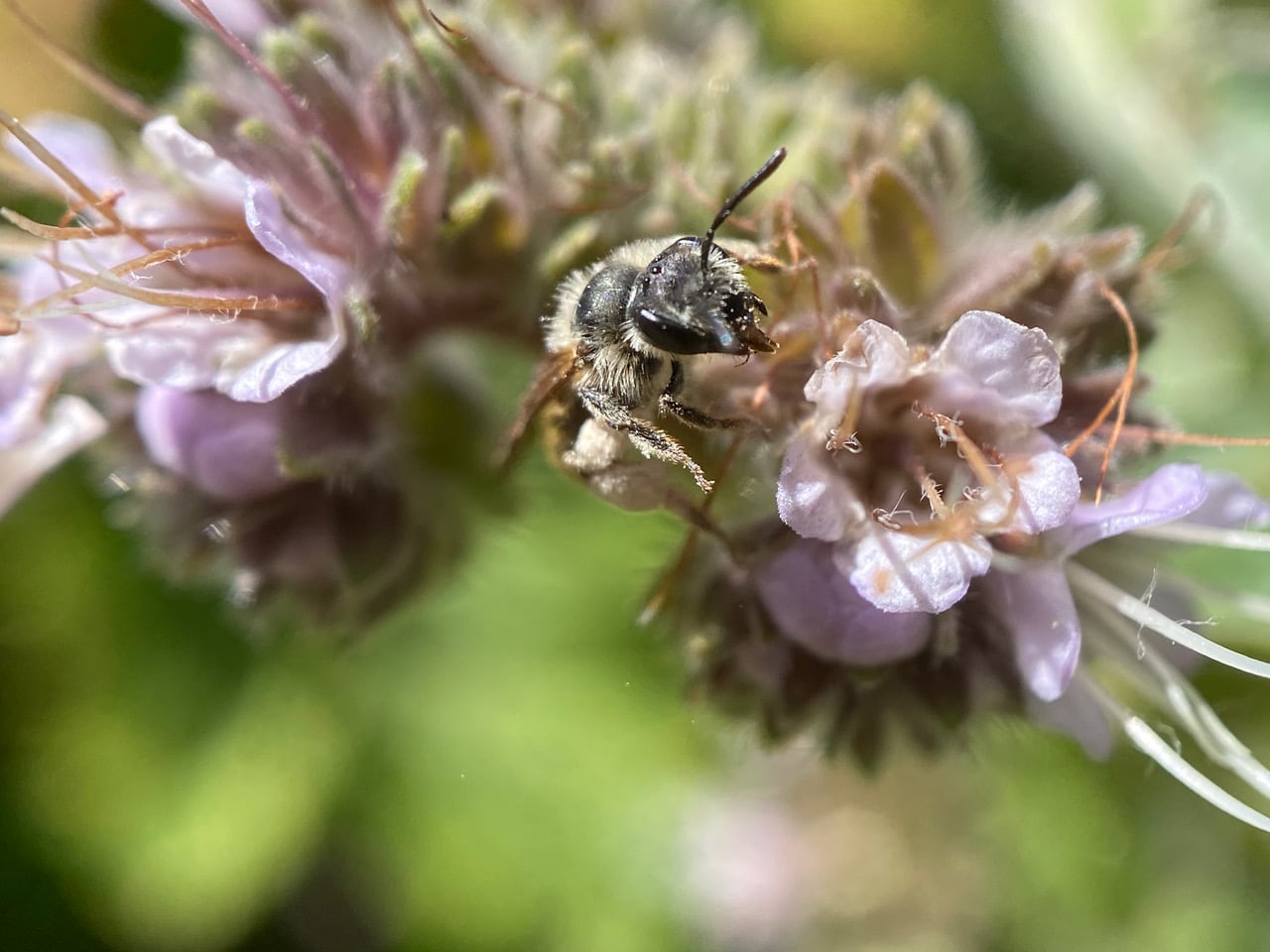
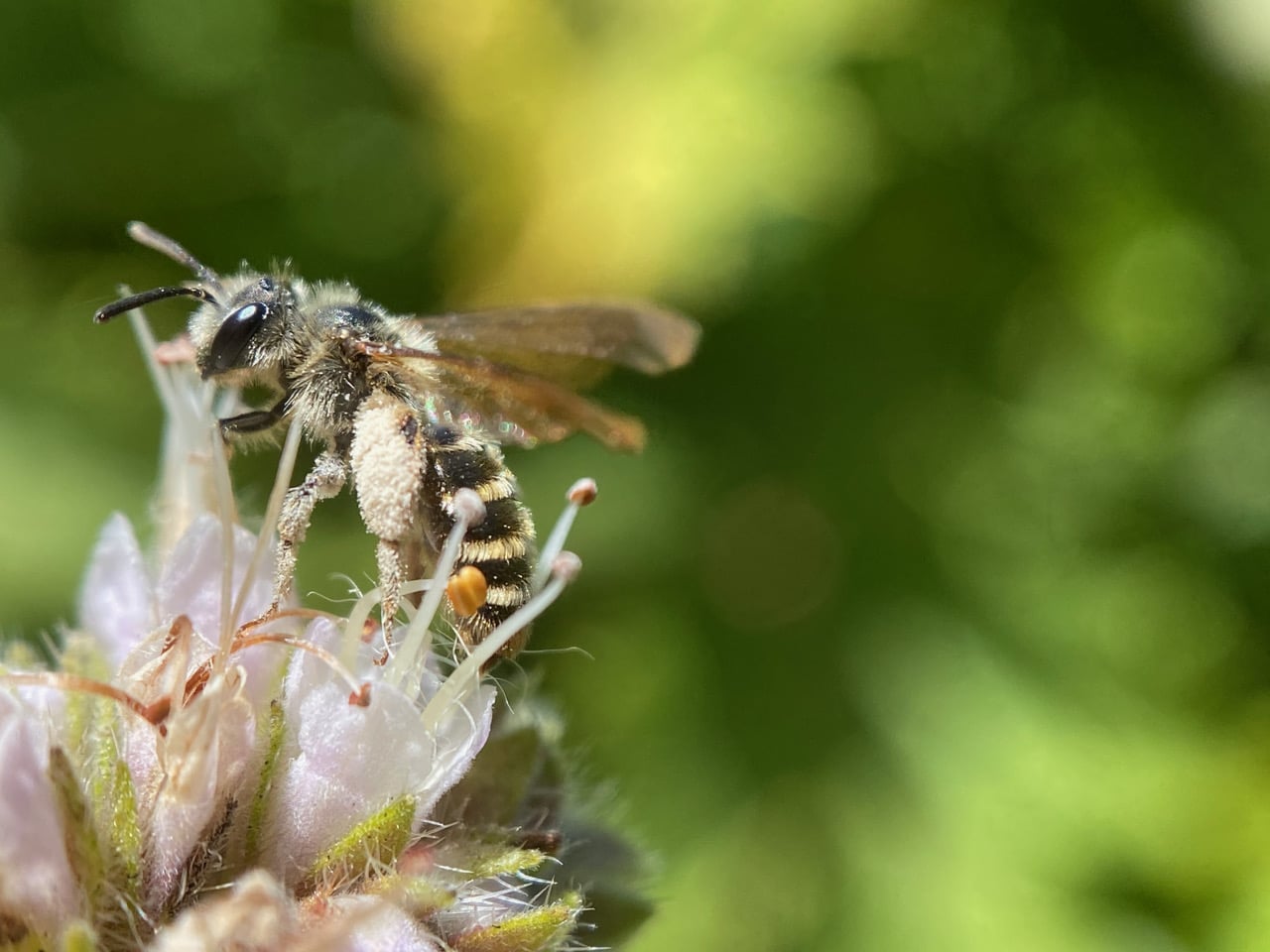
Here’s another little bee collecting pollen from the phacelia stamens. She has scopae on her hind legs.
She is slender with a elongate abdomen…
… a distinct hedgerow of hairs next to her compound eyes indicates the facial fovea, and her scopa extends all way the up to her “armpit”. These are all characteristics of a Mining Bee in the genus Andrena (family Andrenidae).
The bee activities at the blooming California Phacelia are still going strong, dominated by the bumble bees. As the season progresses, I see more and more of the older bees out foraging. This Black-tailed Bumble Bee, Bombus melanopygus has tattered wings, and the colors of her hairs are faded. But she is still doing her job valiantly to support her colony.If it weren’t for the conspicuous pink color, I would not have spotted this caterpillar on an inflorescence of California Phacelia. Slug-shaped, it is easily recognizable as a larva of the Gossamer-winged Butterflies, family Lycaenidae.
The family Lycaenidae comprises the blues, the coppers, the hairstreaks, and the harvesters. Adults are small, under 5 cm usually, sometimes with a metallic gloss. Larvae are often flattened rather than cylindrical, with glands that may produce secretions that attract/appease ants. The larvae are capable of producing vibrations and low sounds that are transmitted through the substrates they inhabit. They use these sounds to communicate with ants. About 75 % of species associate with ants, a relationship called myrmecophily. In some species, larvae are attended and protected by ants while feeding on the host plant, and the ants receive sugar-rich honeydew from the caterpillars in return.
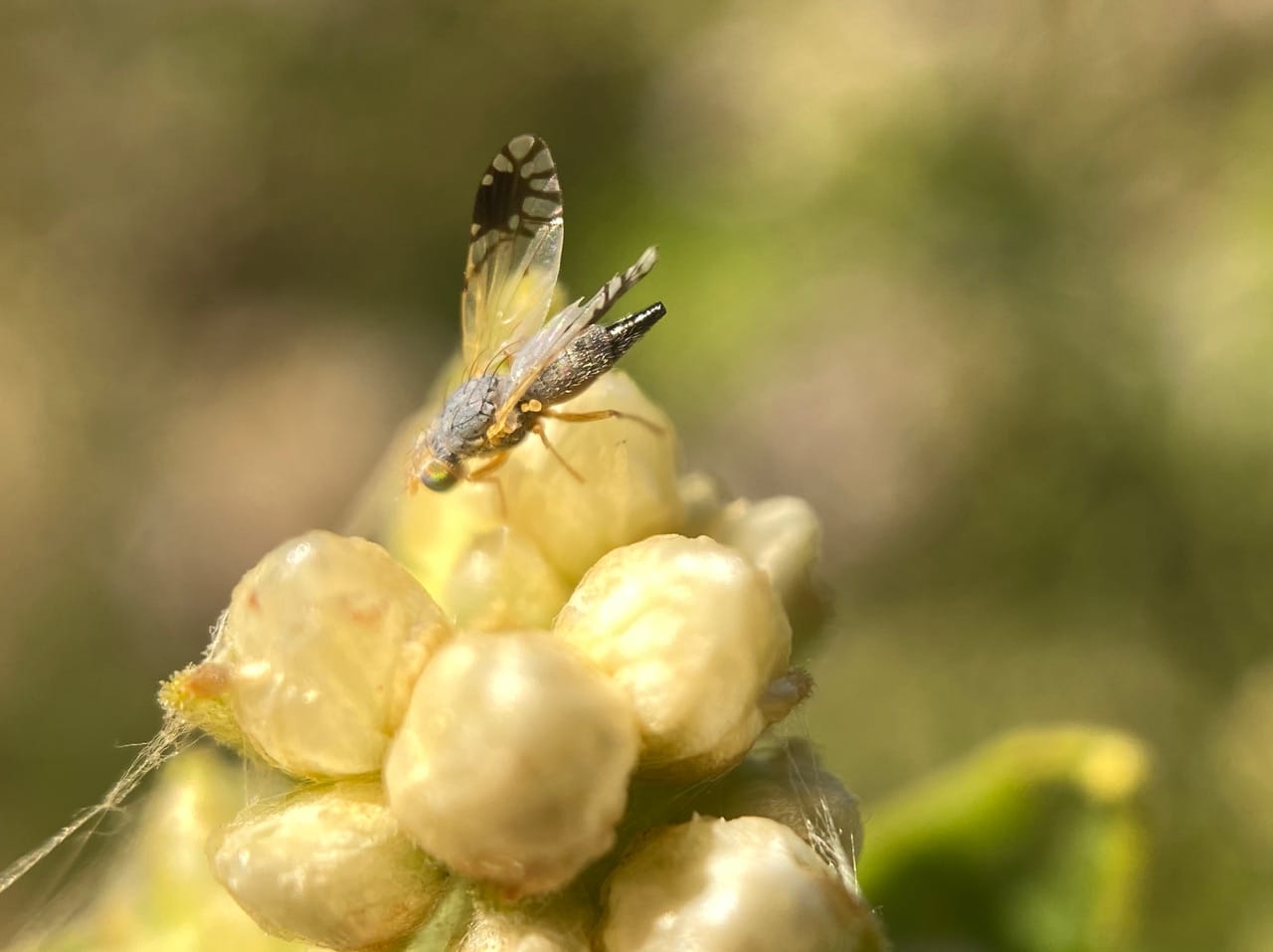
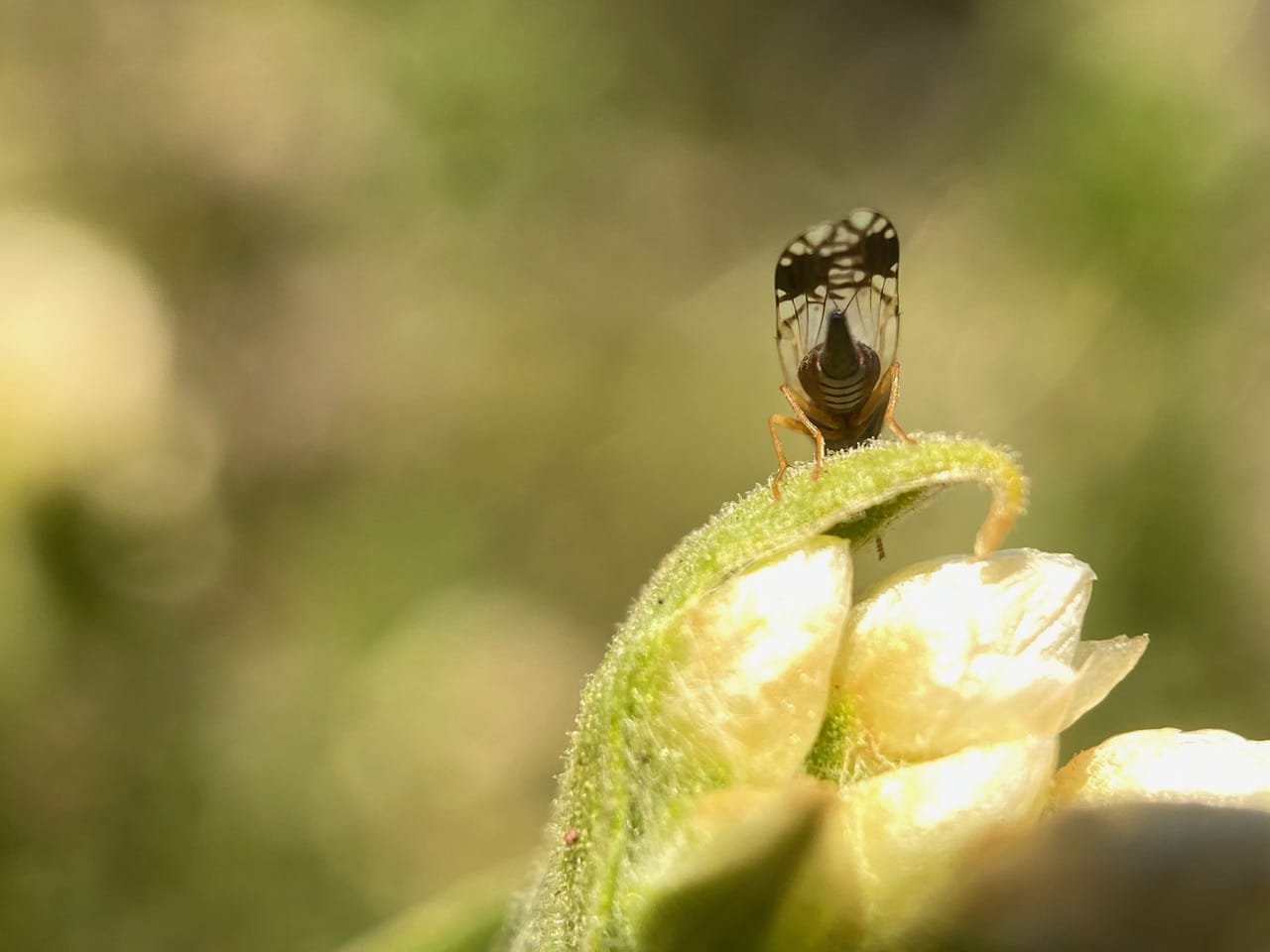
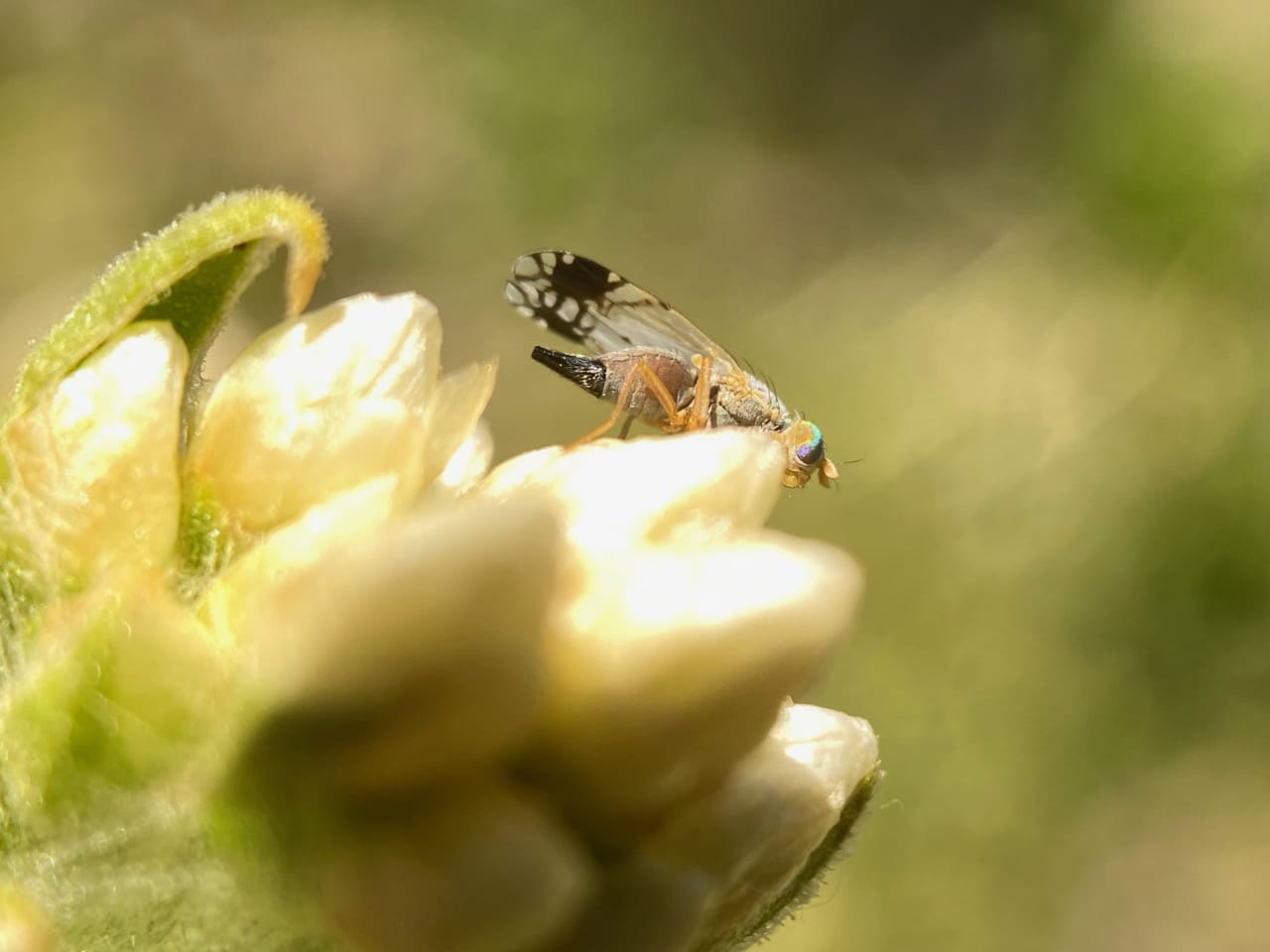
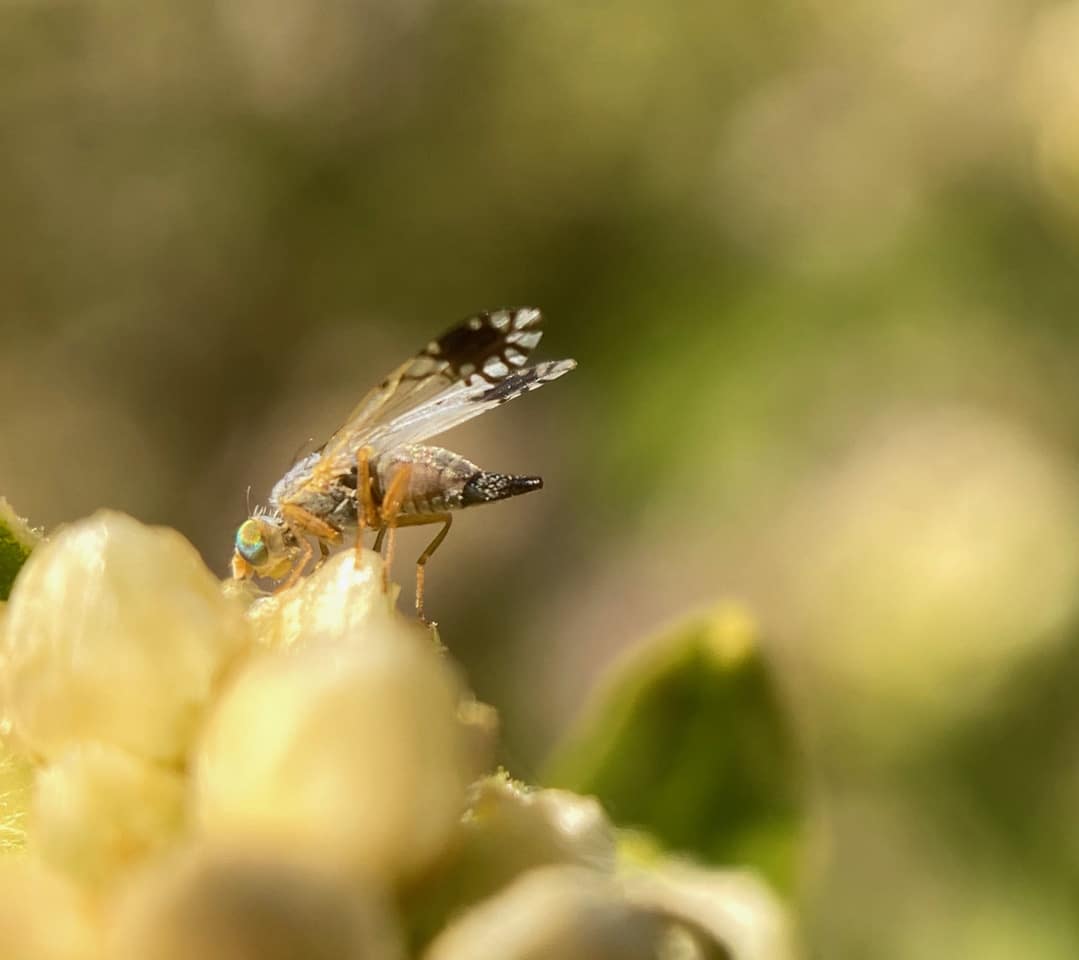
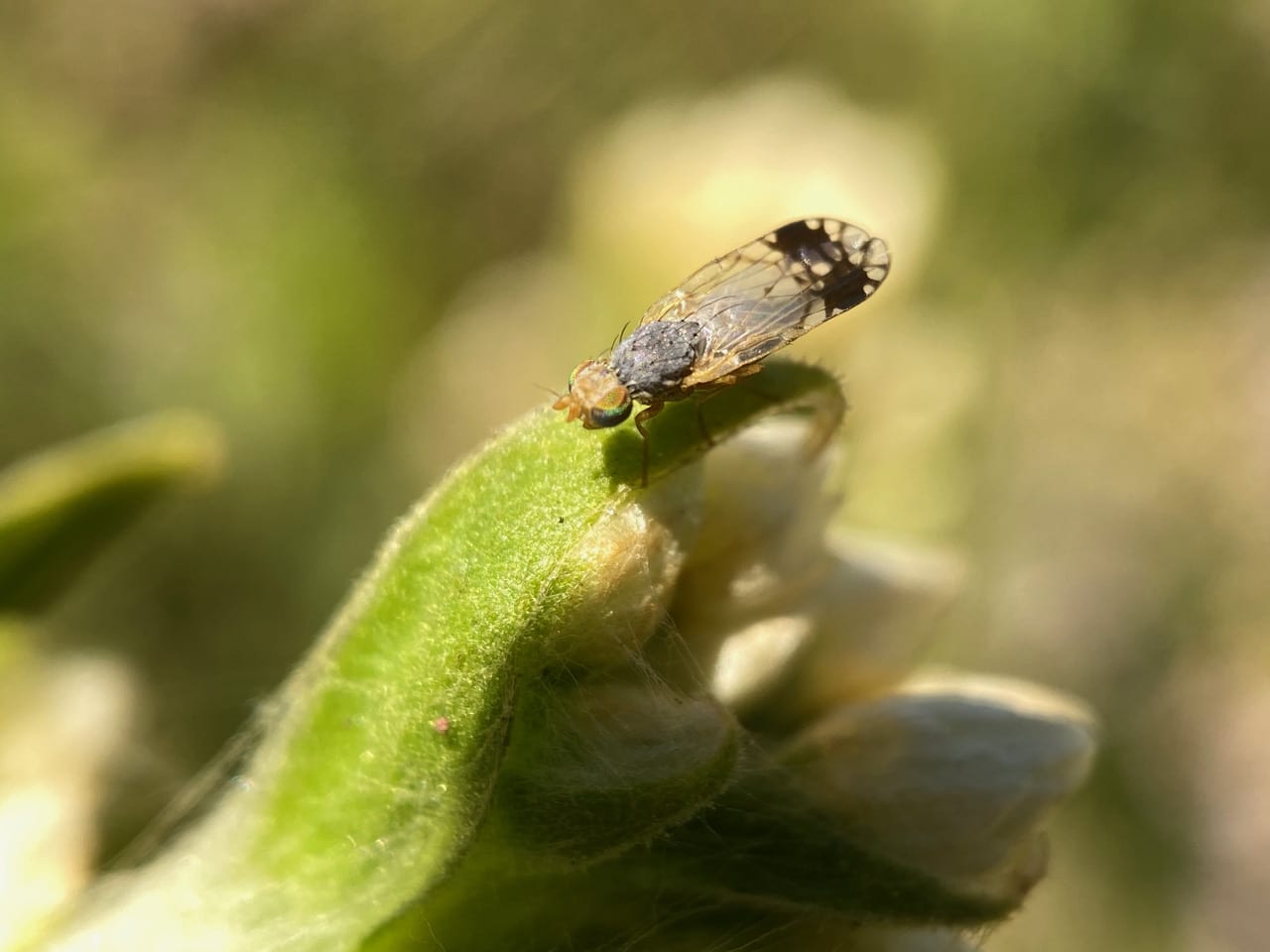
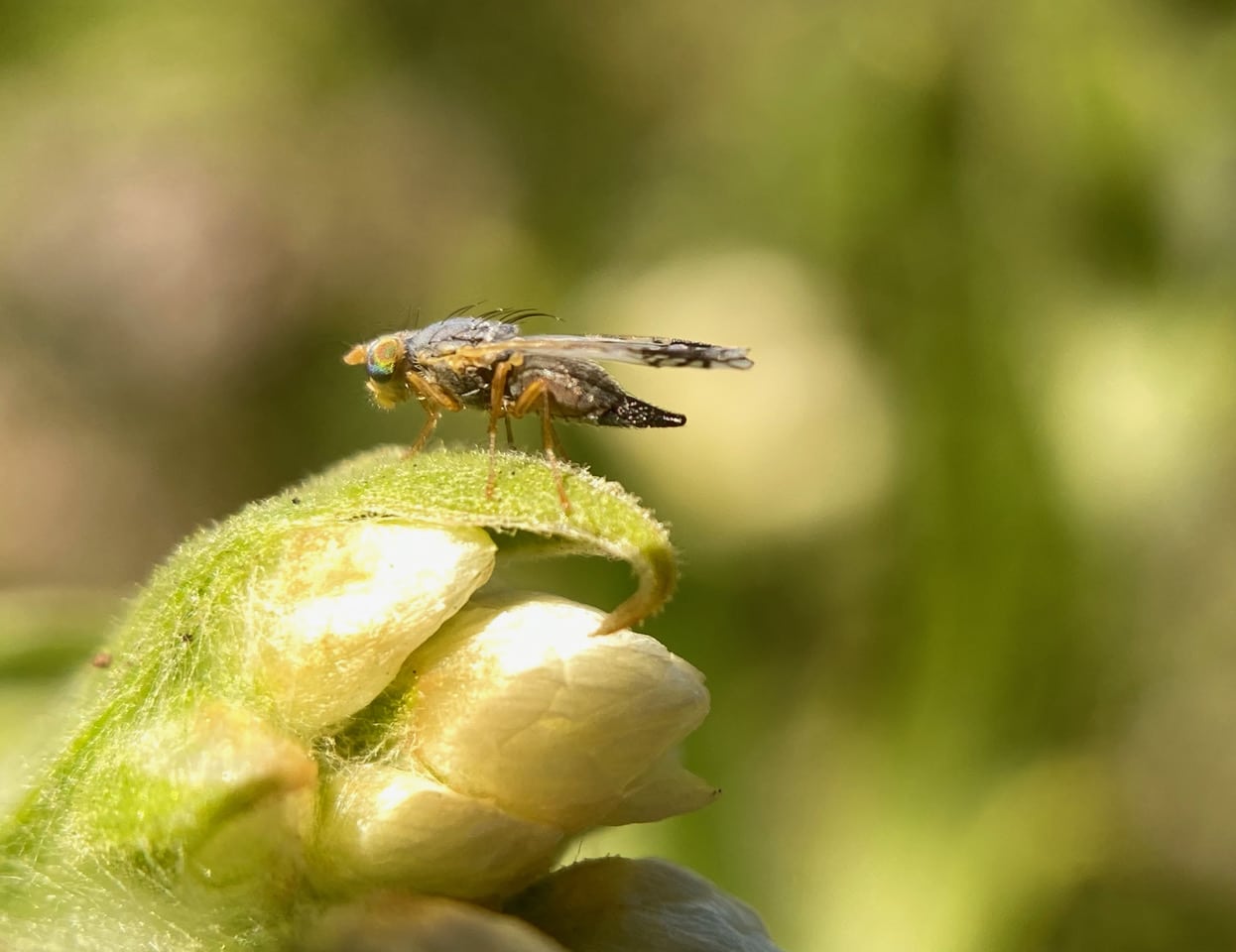
Wow, that’s the smallest Fruit Fly (family Tephritidae) I have ever seen! It is only about 3 mm long. Tephritids are easily recognizable by their picture wings, which they may wave around in courtship and other communications. The fly is running around actively on a cluster of very small immature California Everlasting flowerheads. It has a prominent pointy oviscape on the tip of its abdomen – obviously a female. Is she looking for a place to lay her eggs?
Judging from the pattern on her picture wings, I think she belongs to the genus Trupanea.
Tephritids are small to medium-sized flies that are often colorful, and usually with picture wings. The larvae of almost all Tephritidae are phytophagous. Females deposit eggs in living, healthy plant tissues using their telescopic ovipositors. Here the larvae find their food upon emerging. The larvae develop in leaves, stems, flowers, seeds, fruits, and roots of the host plant, depending on the species. Adults are often found on the host plant and feeding on pollen, nectar, rotting plant debris, or honeydew. Tephritid flies are of major economic importance as they can cause damage to fruit and other plant crops. On the other hand, some Tephritids are used as agents of biological control of noxious weeds.
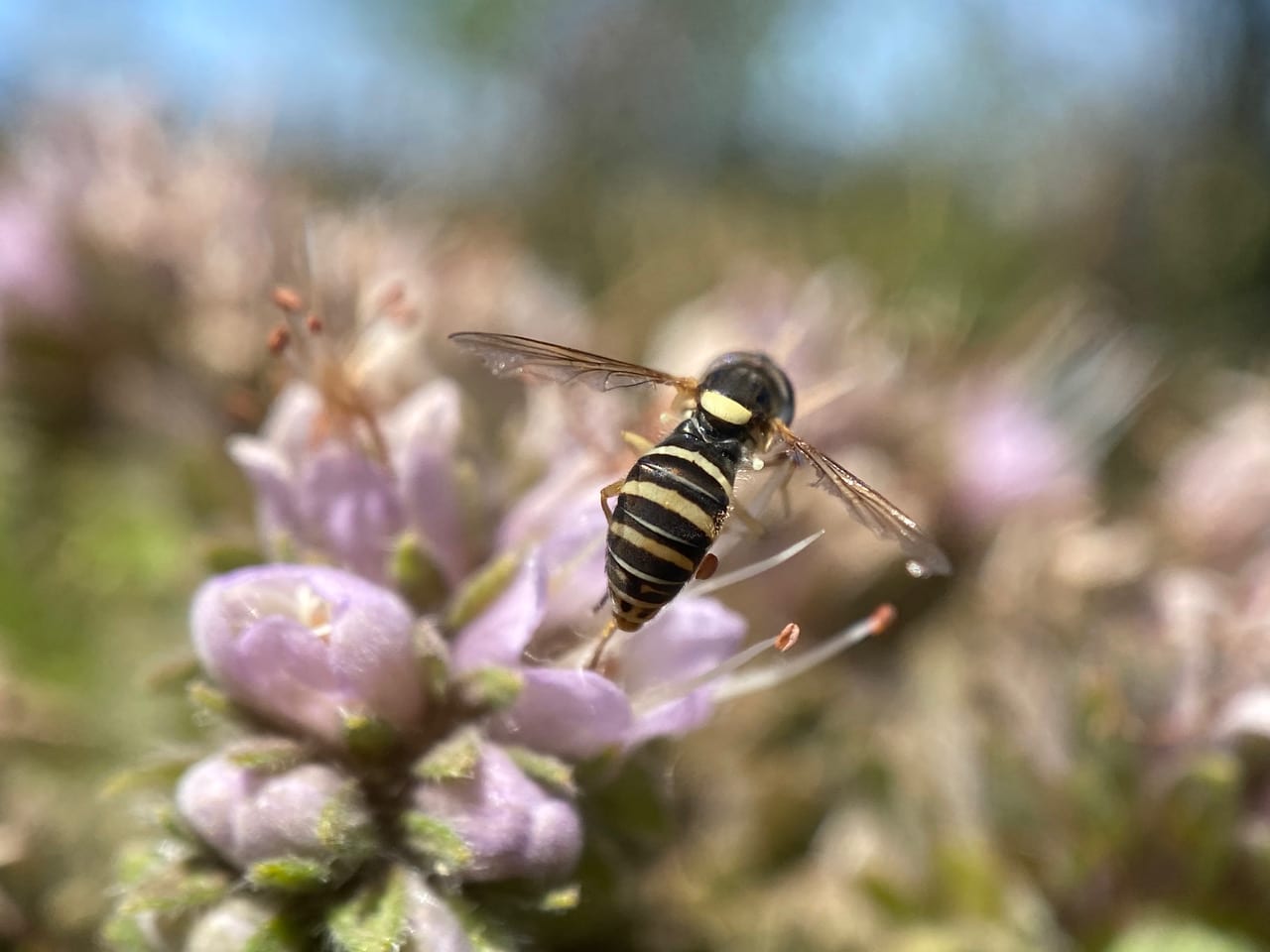
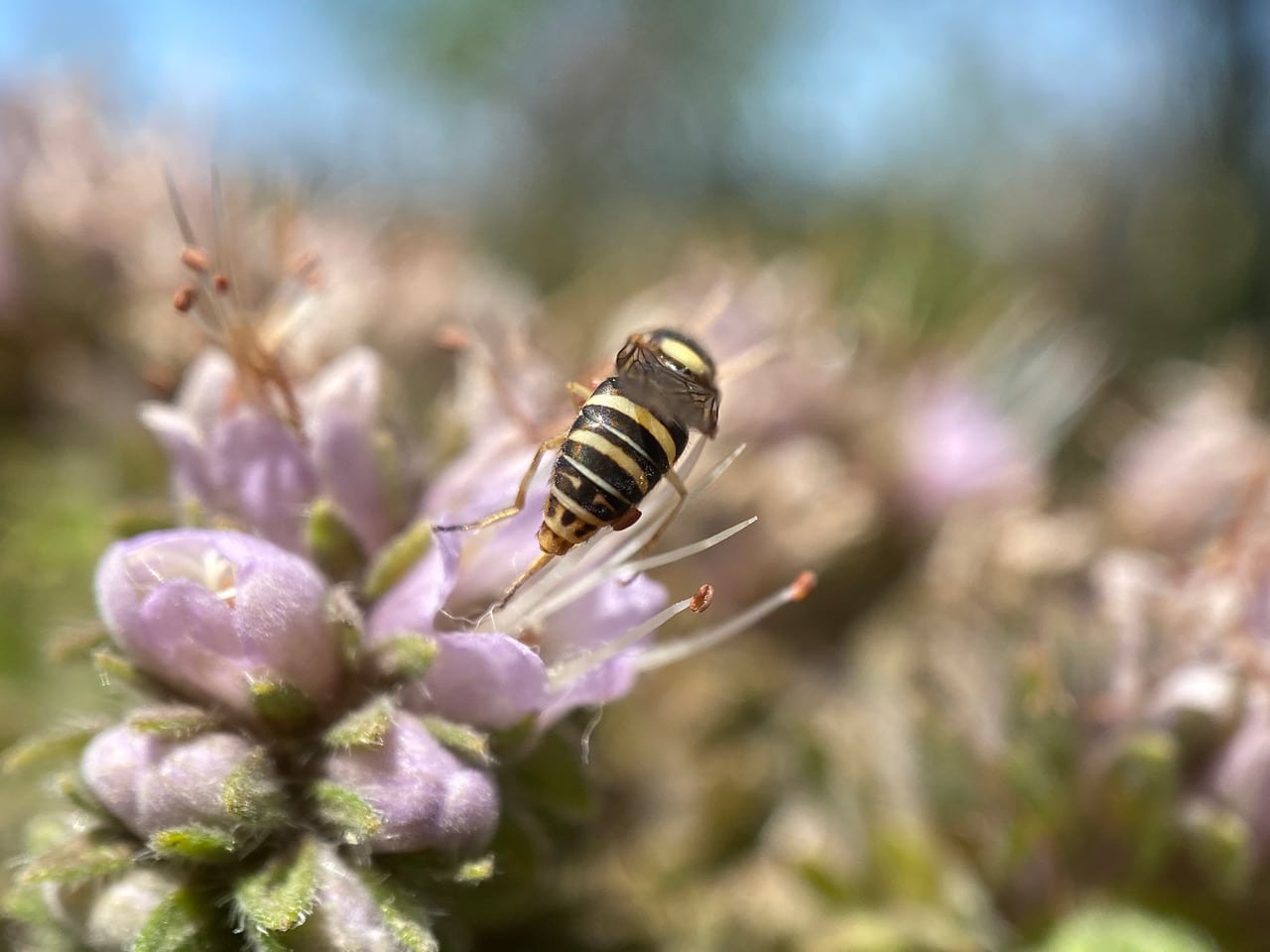
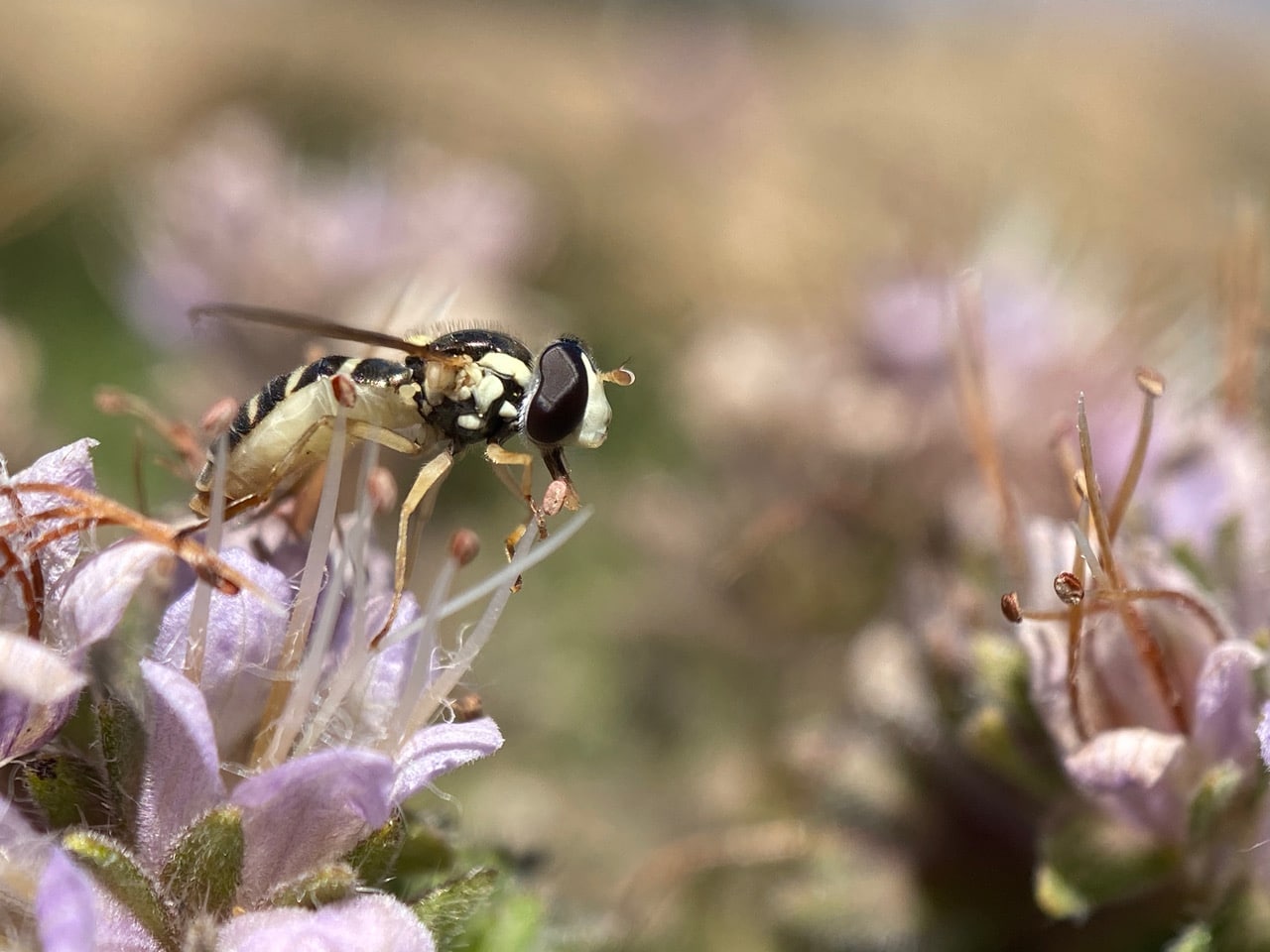
That’s a pretty good imitation of a wasp, don’t you think? It is actually a hover fly (family Syrphidae).
Hover Flies, also called flower flies or Syrphid flies, make up the insect family Syrphidae. The adults of many species feed mainly on nectar and pollen, and are often seen hovering and nectaring at flowers. They are important pollinators of flowering plants in many ecosystems worldwide. The larvae feed on a wide range of foods. In many species, the larvae are insectivores and prey on aphids, thrips, and other plant-sucking insects. In other species, the larvae are saprotrophs, eating decaying plant and animal matter in the soil or in ponds and streams.
Many species of Hover Flies exhibit Batesian mimicry; they are brightly colored, with bands of yellow resembling the bees and wasps. The mimicry provides the fly with some measure of protection from potential predators, although the flies are harmless and lack a sting.
Aah, that pattern on its rear end tells me that the hoverfly is a female Forked Globetail, Sphaerophoria sulphuripes (family Syrphidae).
The Forked Globetail, Sphaerophoria sulphuripes is a hover fly native to western North America. Adults visit flowers for nectar and pollen. Females lay eggs near aphid colonies. The larvae are voracious predators of aphids and other soft-bodied insects.
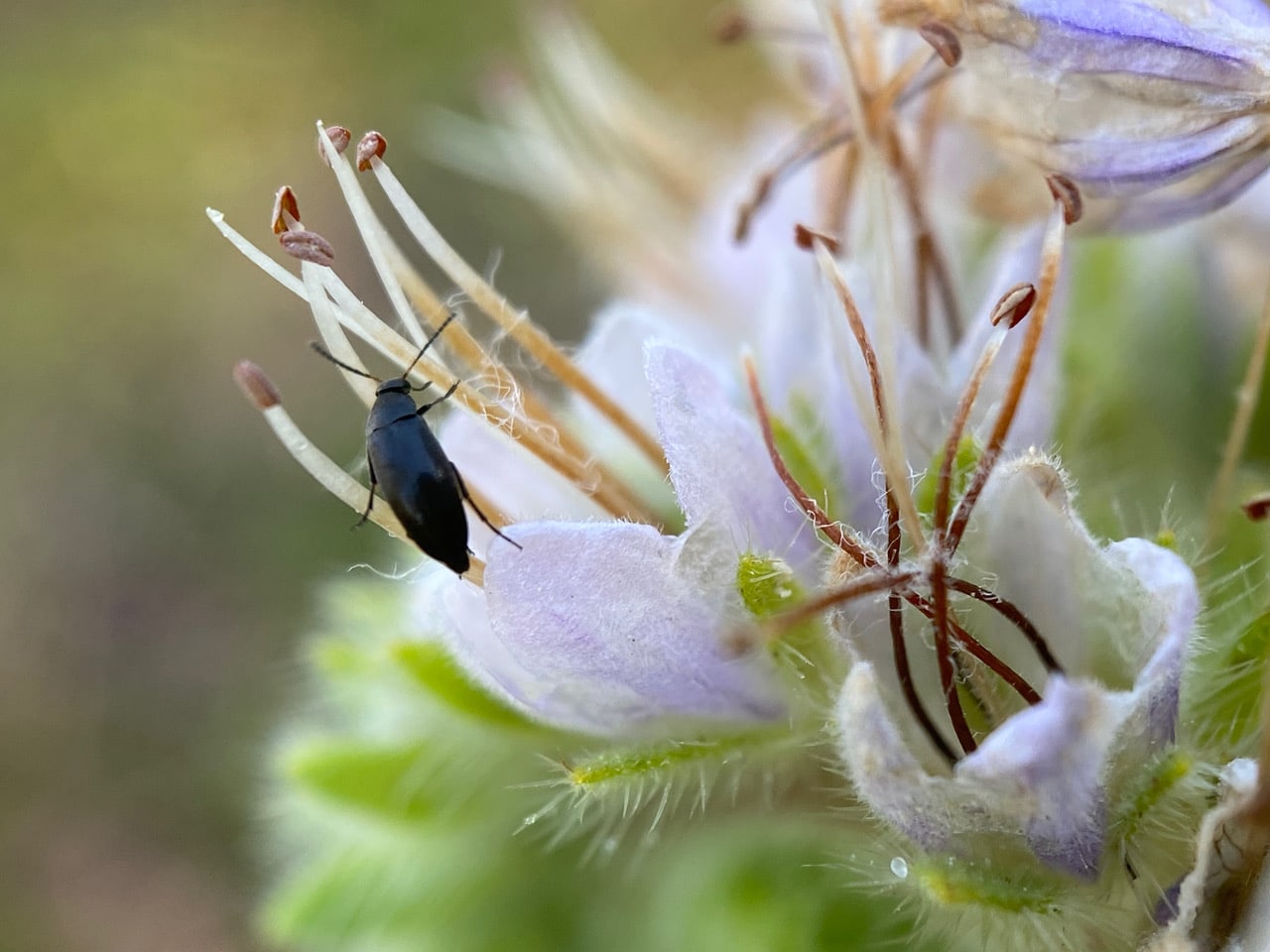
A False Flower Beetle, Anaspis sp. (family Scraptiidae) is navigating the flowers of California Phacelia.
False Flower Beetles, Anaspis atrata (family Scraptiidae) are commonly found in western North America. The adults are found on flowers, sometimes in large numbers, but are also found on foliage. The larvae are typically found under the bark of dead trees.
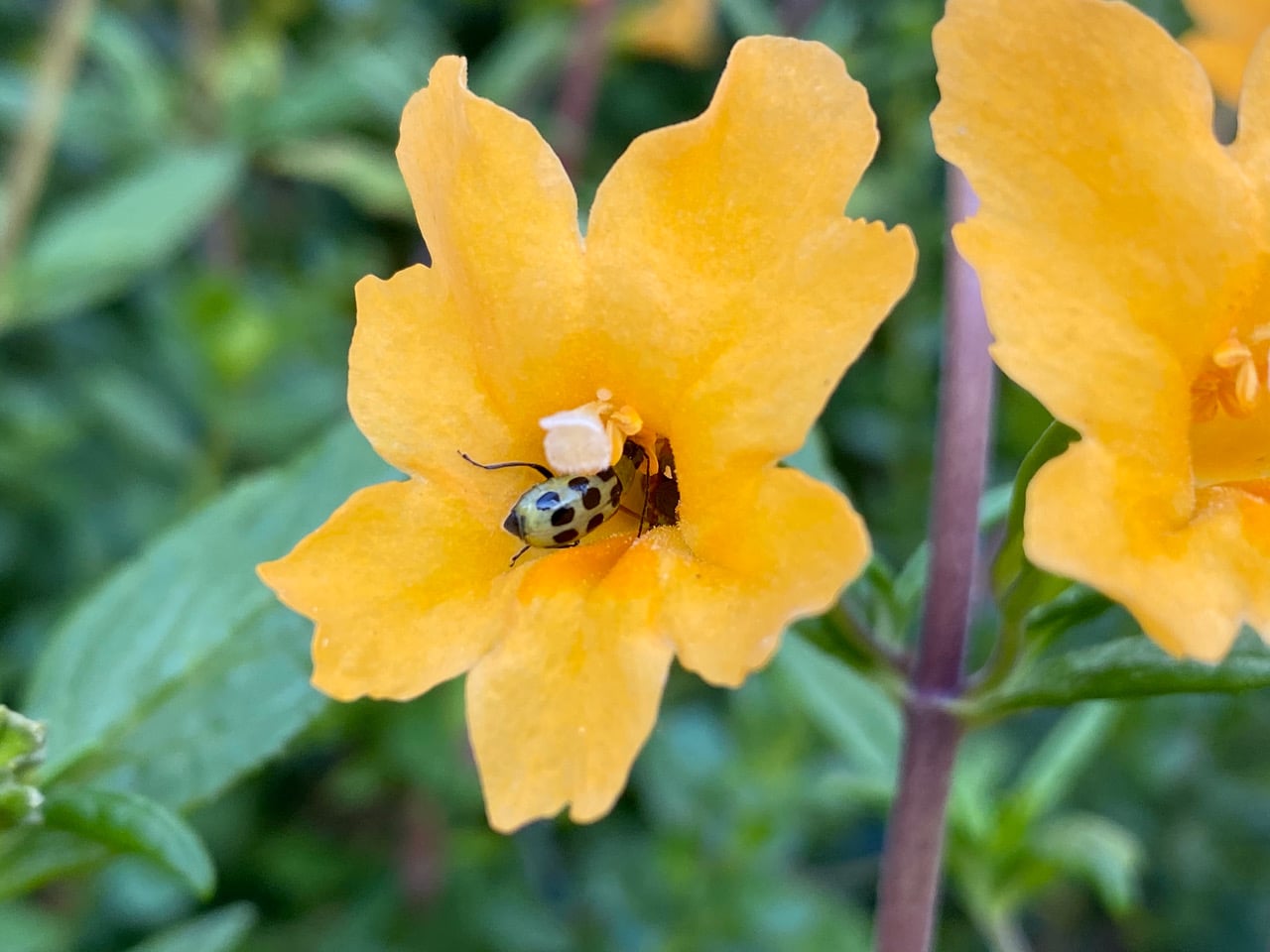
A Spotted Cucumber Beetle, Diabrotica undecimpunctata (family Chrysomelidae) enters the corolla of a Sticky Monkeyflower, only to find that there’s already someone inside.
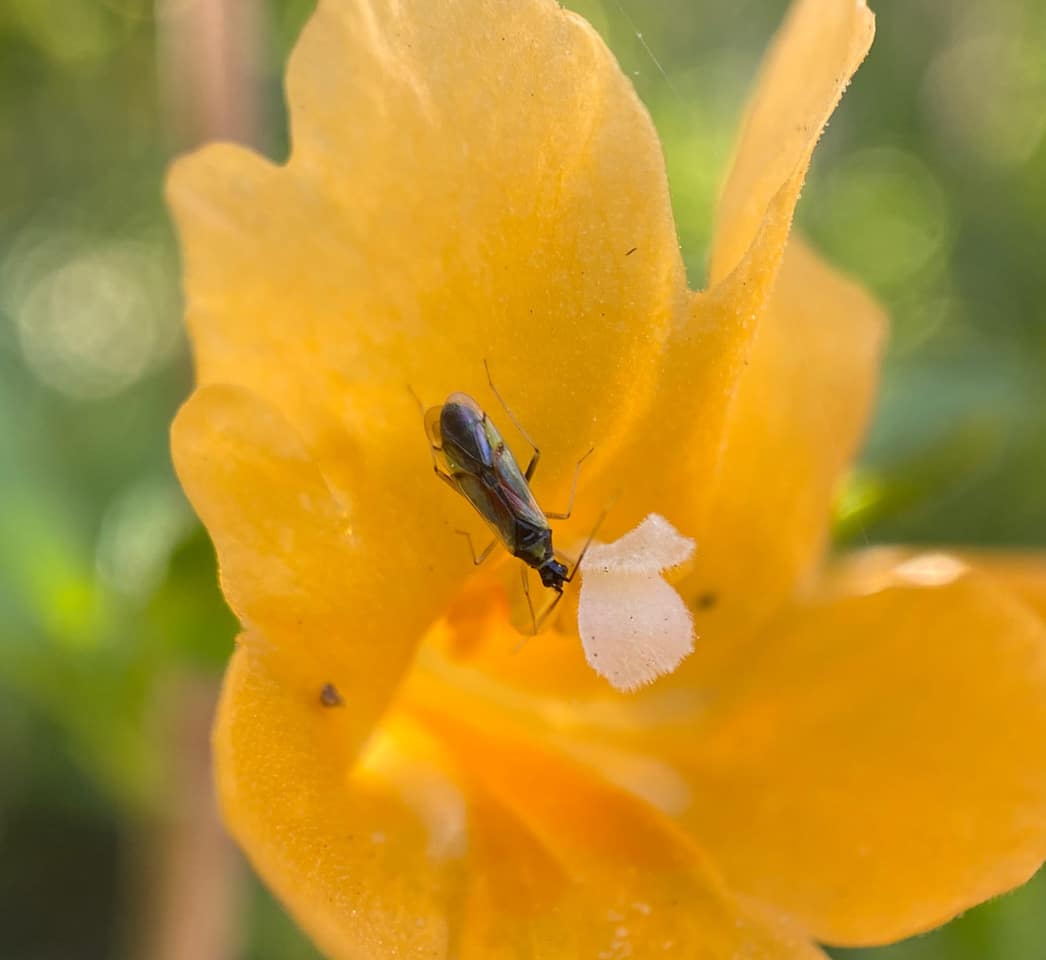
A slender Plant Bug, Dicyphus sp. (family Miridae) is checking out a Sticky Monkeyflower.
Mirid bugs are also referred to as plant bugs or leaf bugs. Miridae is one of the largest family of true bugs in the order Hemiptera. Like other Hemipterans, Mirids have piercing, sucking mouthparts to extract plant sap. Some species are predatory. One useful feature in identifying members of the family is the presence of a cuneus; it is the triangular tip of the corium, the firm, horny part of the forewing, the hemielytron. The cuneus is visible in nearly all Miridae.

Most Dicyphus species feed on plants. One species native to North America, Dicyphus hesperus is a predator and preys on other insects such as whitefly, aphids, mites and caterpillars. It is used in the biological control of insect pests in green houses.