

Pollinator Post 6/2/24 (1)

Andy, Susan and I set out on an adventure today – to visit two of the rarest botanical jewels we are likely to see in our area – the Tiburon Jewelflower and the Tiburon Mariposa Lily. Both are serpentine endemics located on the Tiburon Peninsula in Marin County.
Our first destination is the Old St. Hilary’s Preserve, a 122-acre preserve with rolling grassland and rare serpentine soil. The southern section includes the Old St. Hilary’s Church, perched on a knoll overlooking a breath-taking view of the bay.
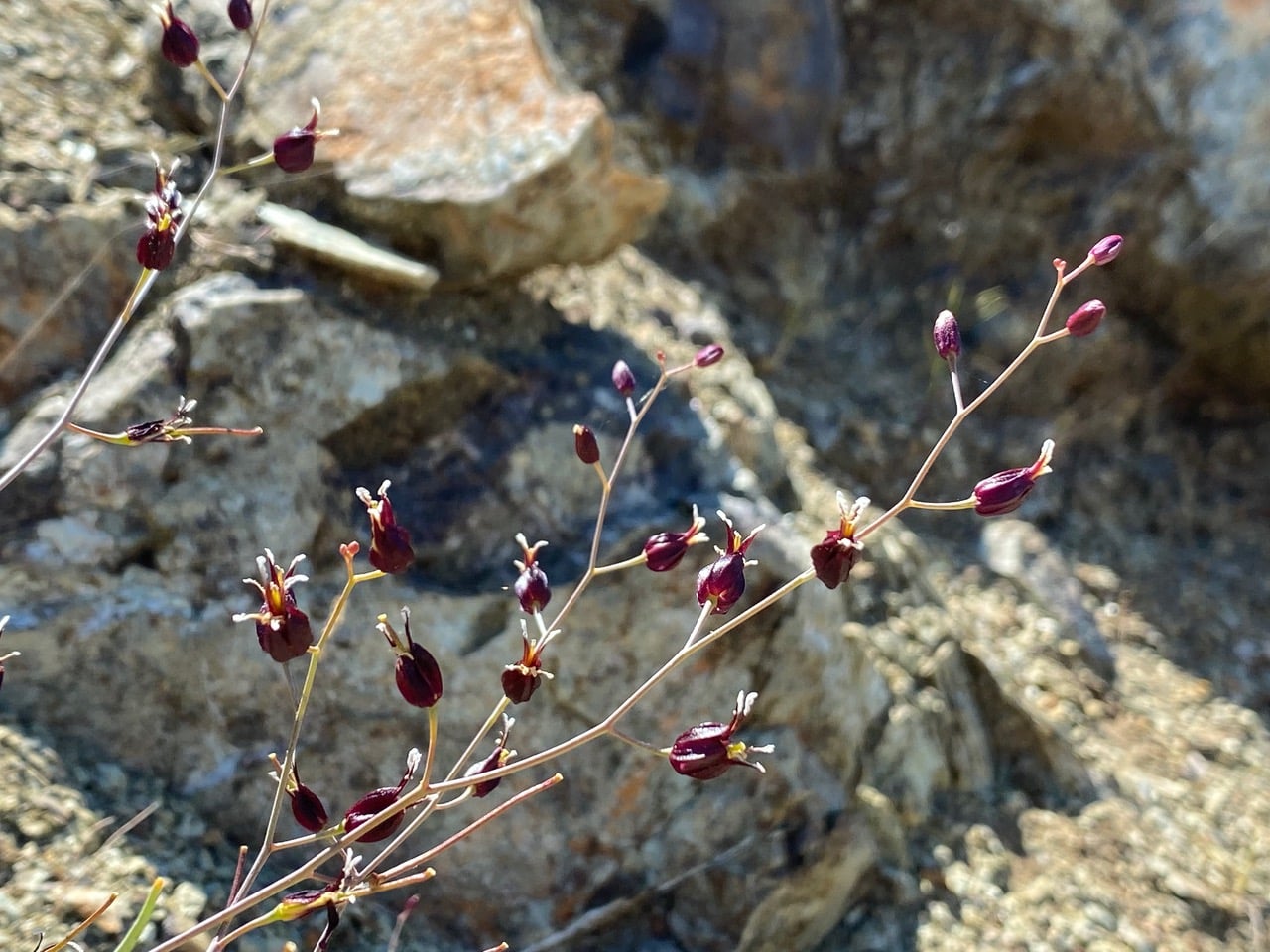
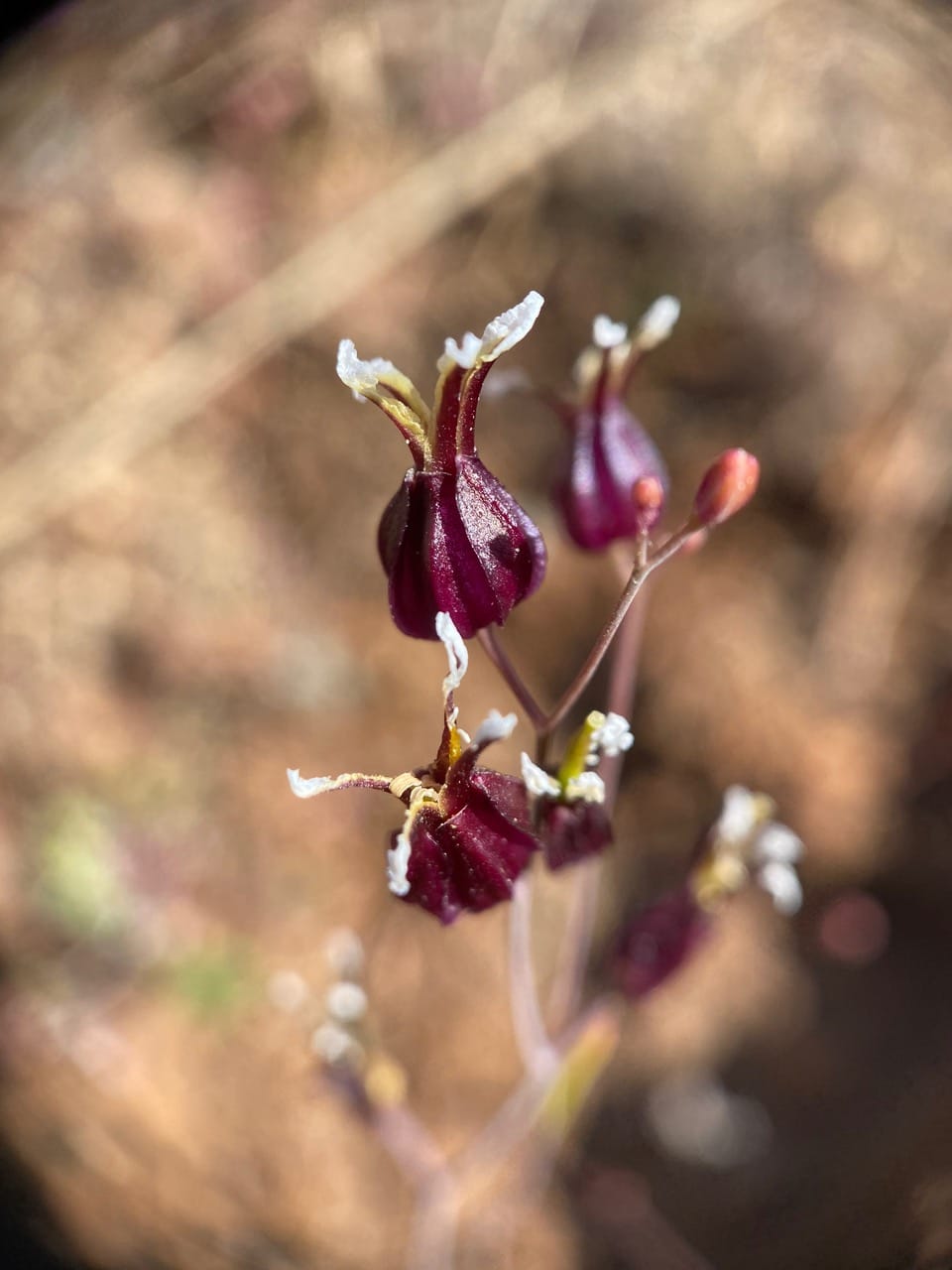
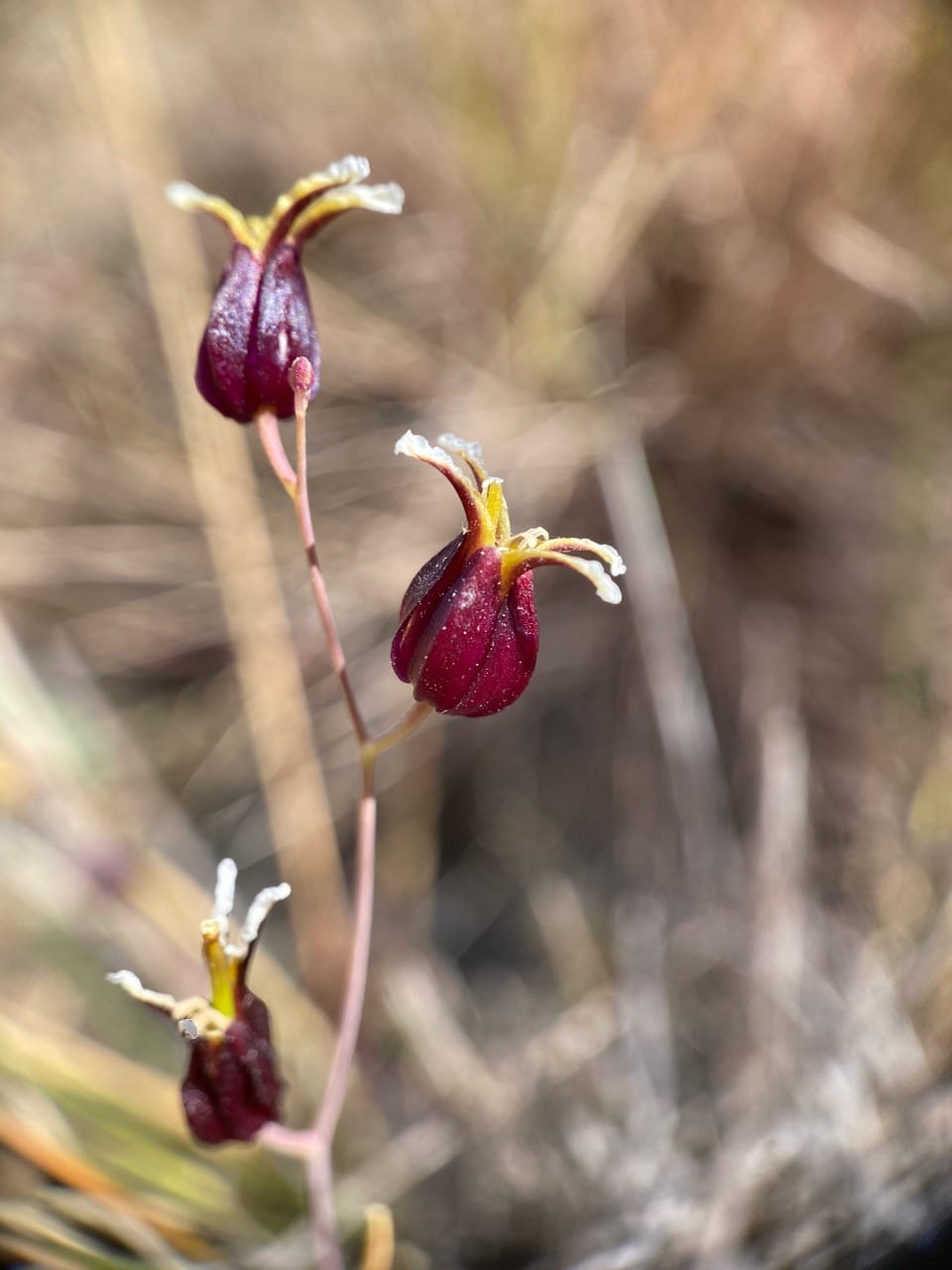
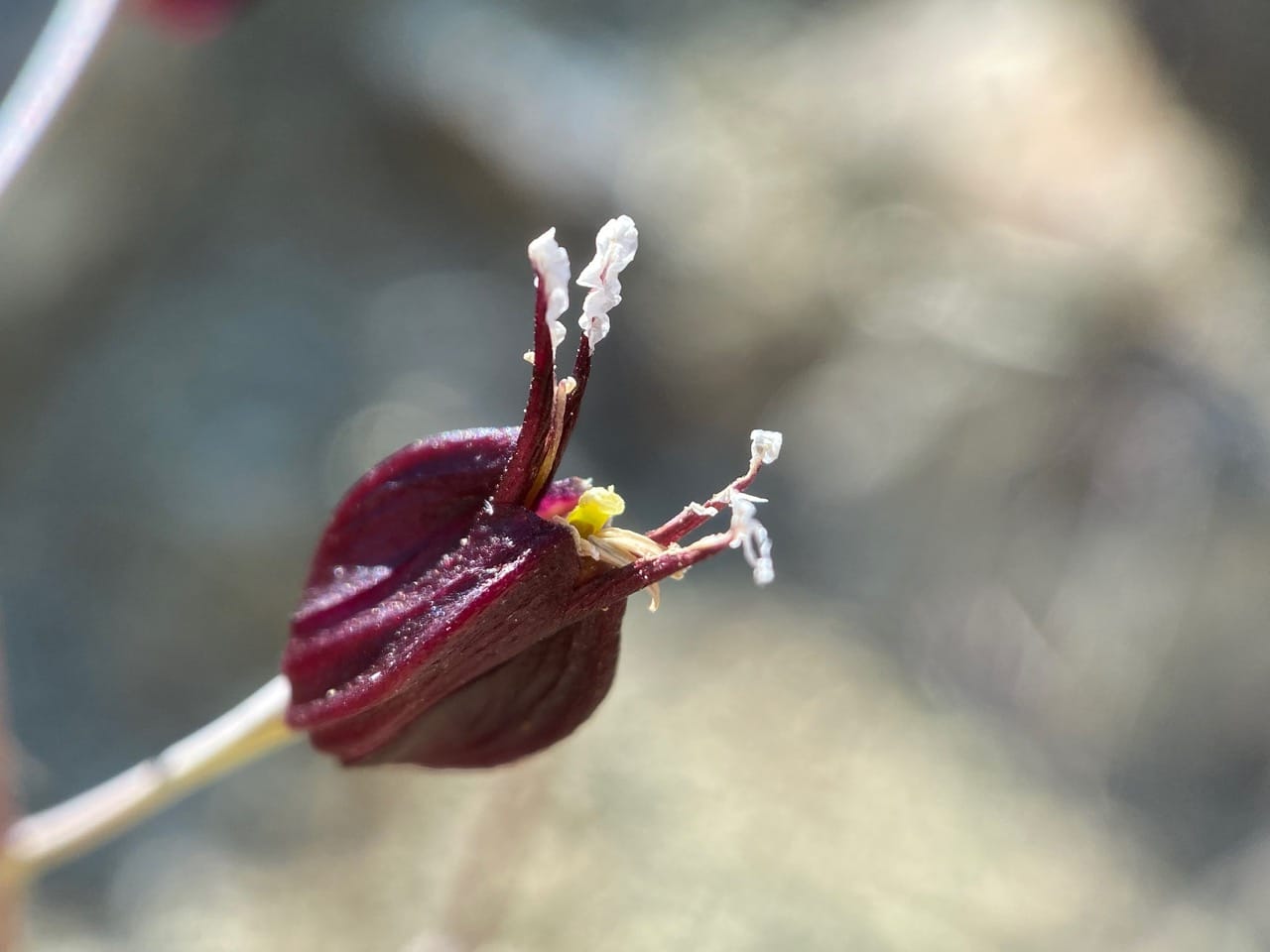
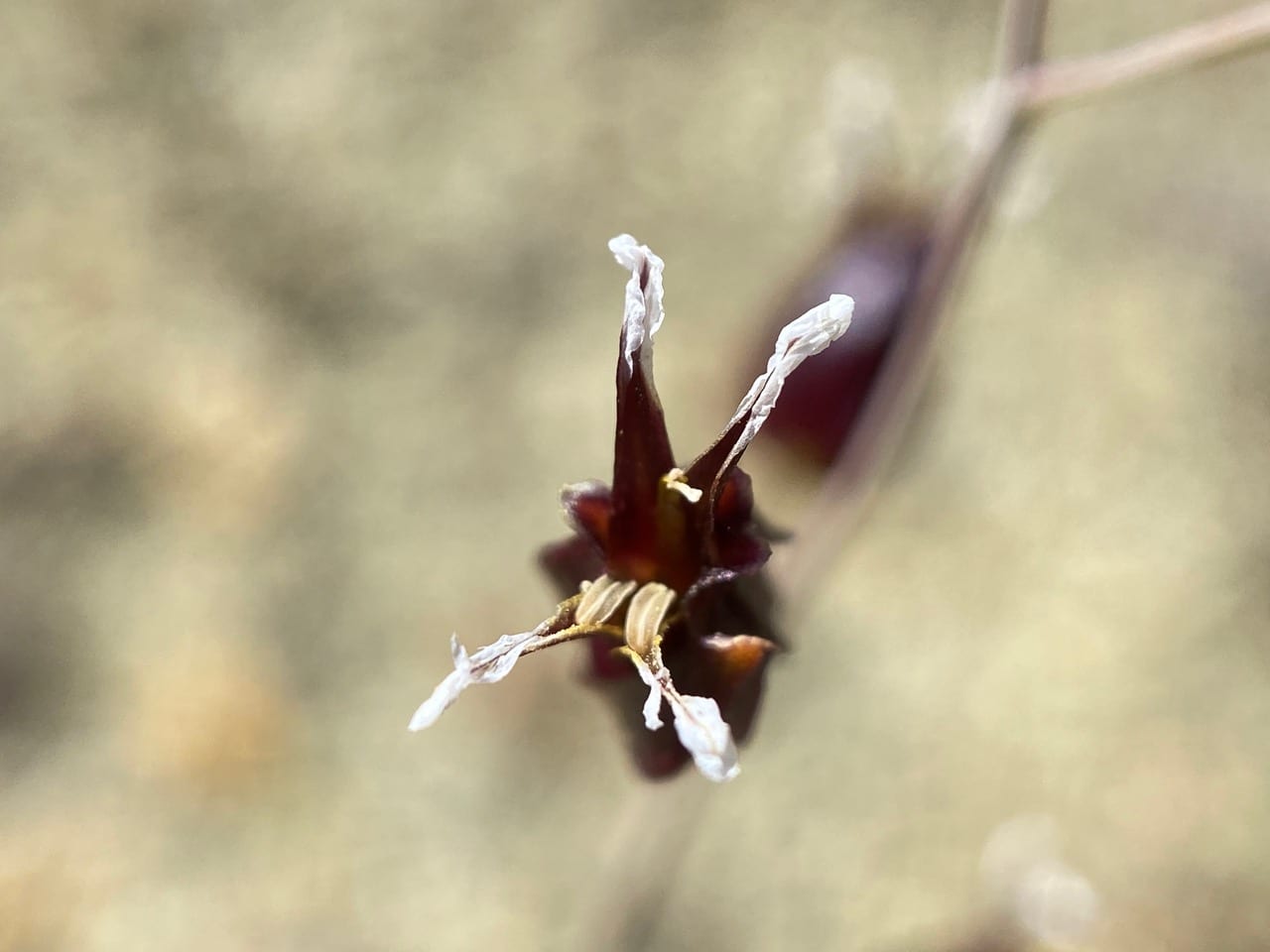
The rare Tiburon Jewelflower, Streptanthus glandulosus ssp. niger (family Brassicaceae), an annual herb (about 2 feet tall) blooms mid-May to mid-June in shallow, rocky serpentine soil on southwest facing slopes along Vistazo Fire Road. The flowers are a challenge to photograph as they are small and are displayed on a loose branching, zig-zag inflorescence.
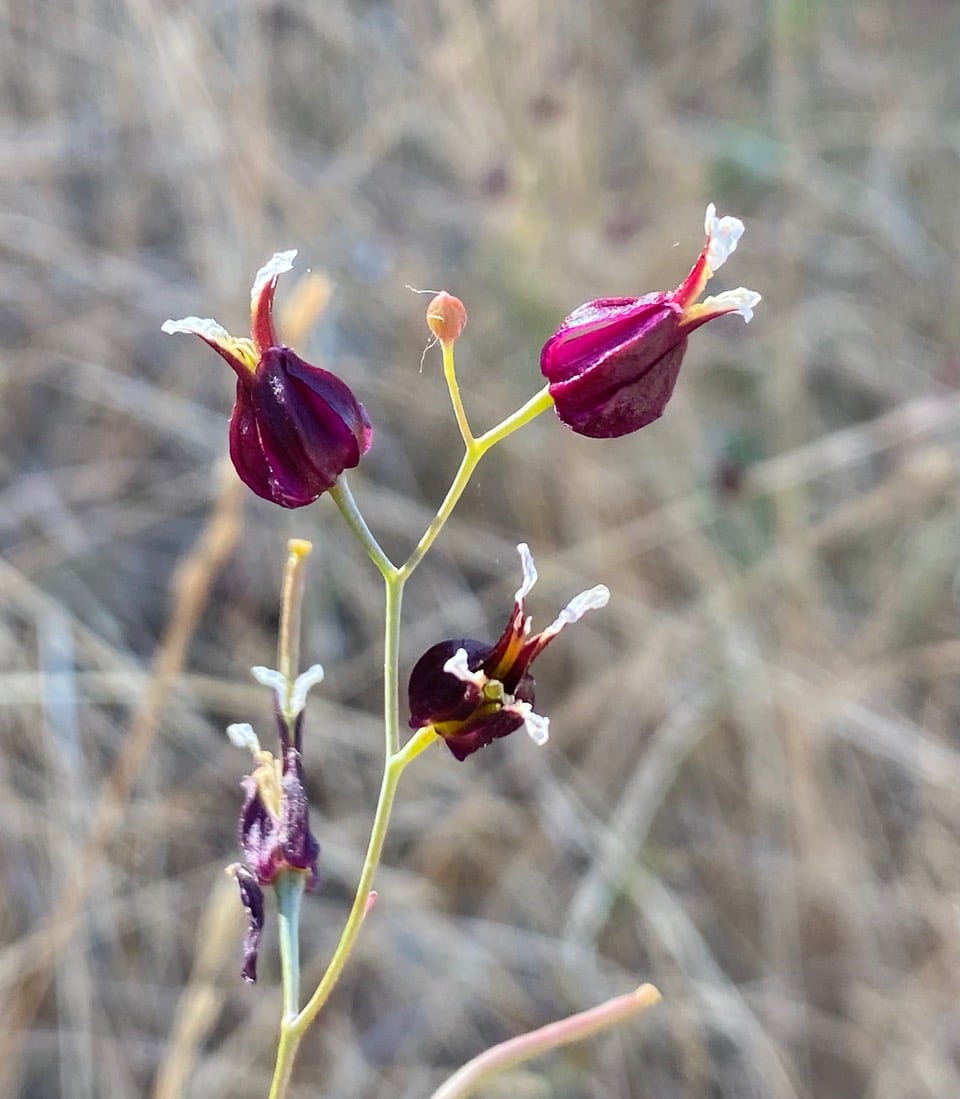
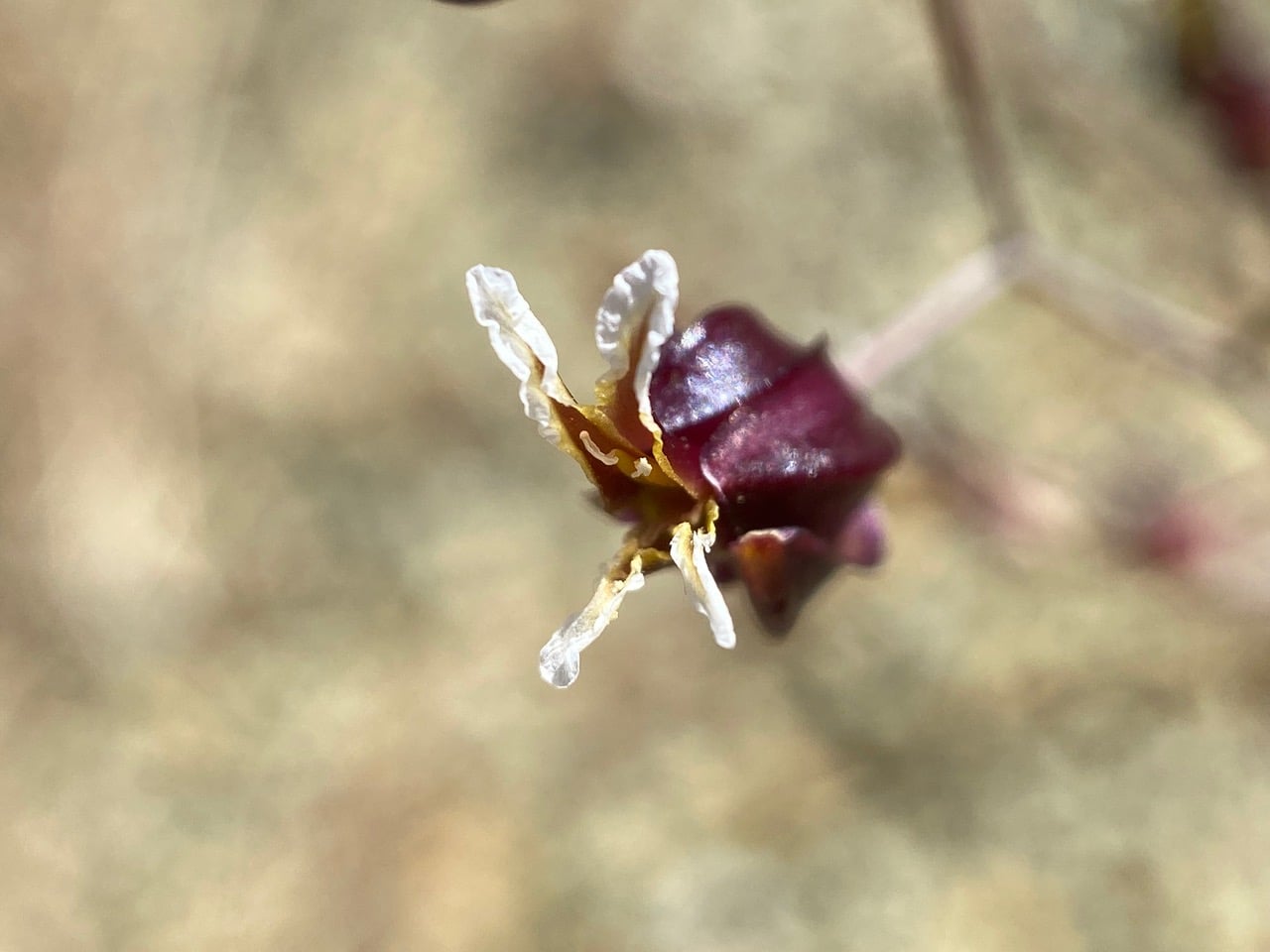
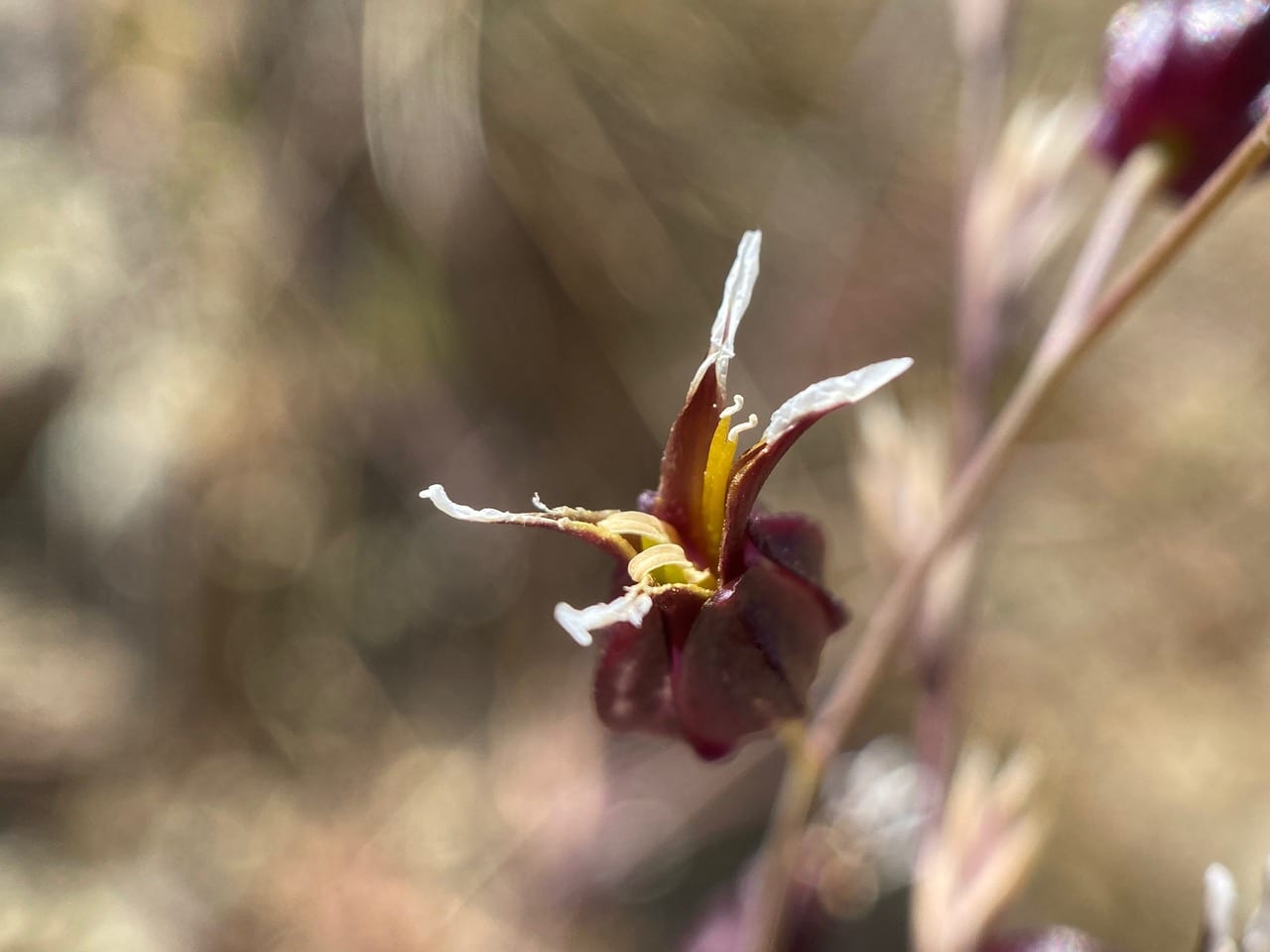
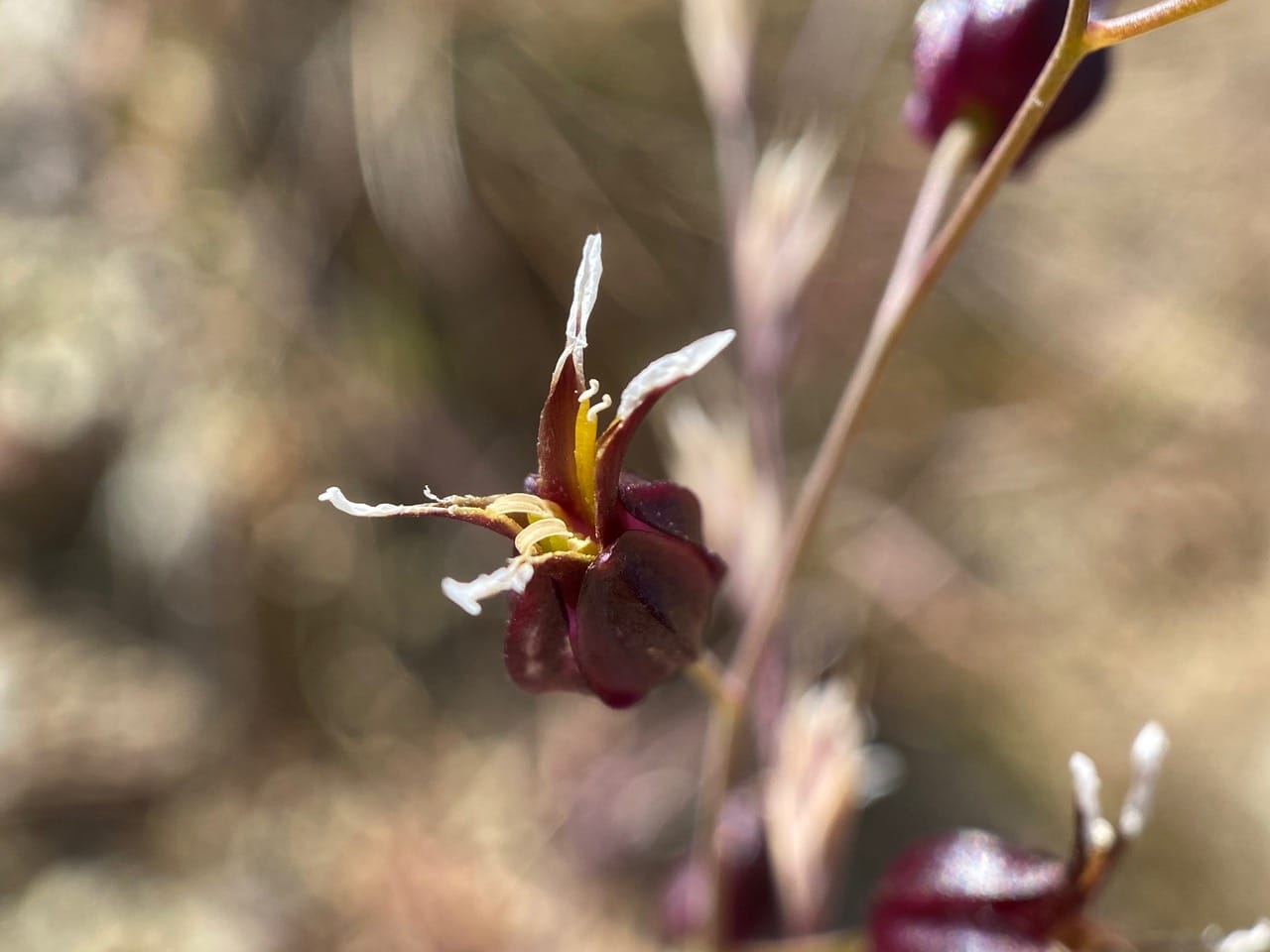
In the sun, the flowers appear as a reddish purple color, but in the shade they may appear almost black, hence the other common name of Black Jewelflower. The main dark purple part of the flower is actually the calyx, composed of the sepals that come together in a narrow throat surrounding the petals. The petals have a purple claw and a white blade with purple midvein. The characteristic wavy petal margins have calluses that inhibit larval herbivory. The Greek word streptanthus, meaning “twisted flower”, refers to the notable wavy margins of the white petals.

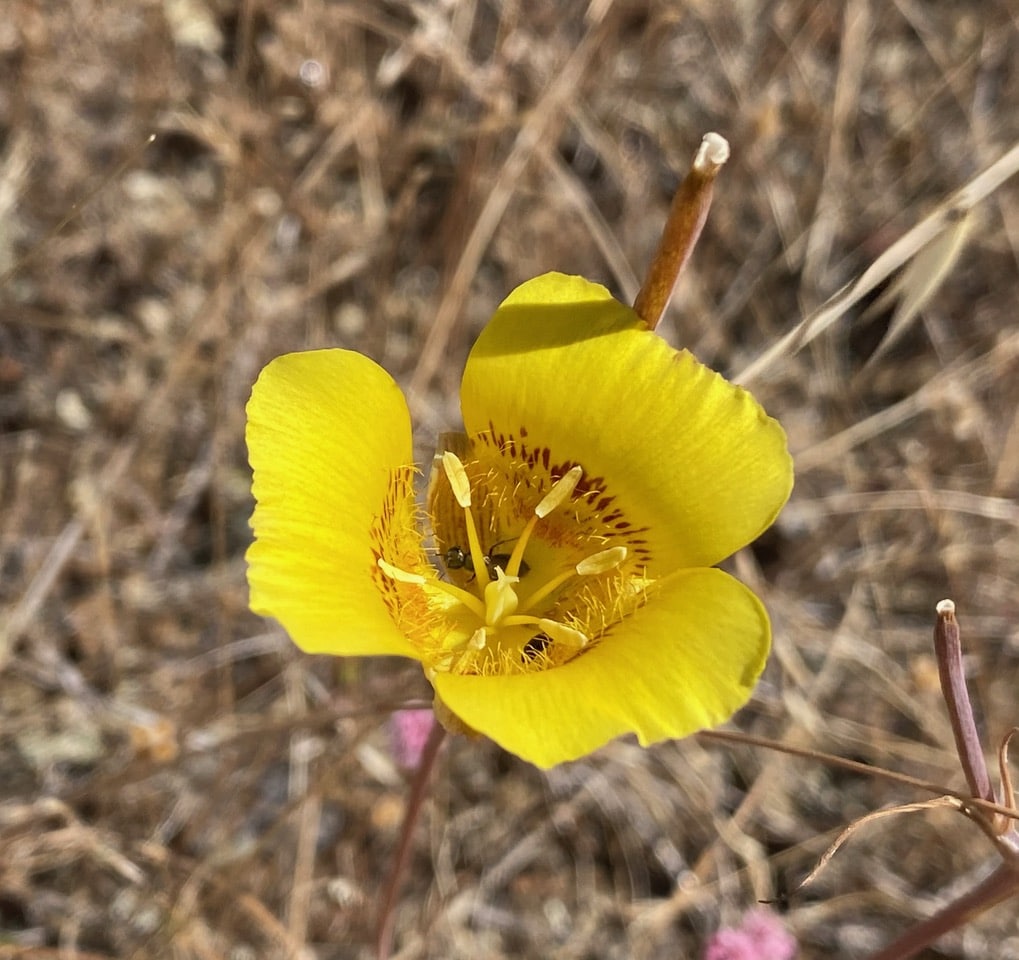
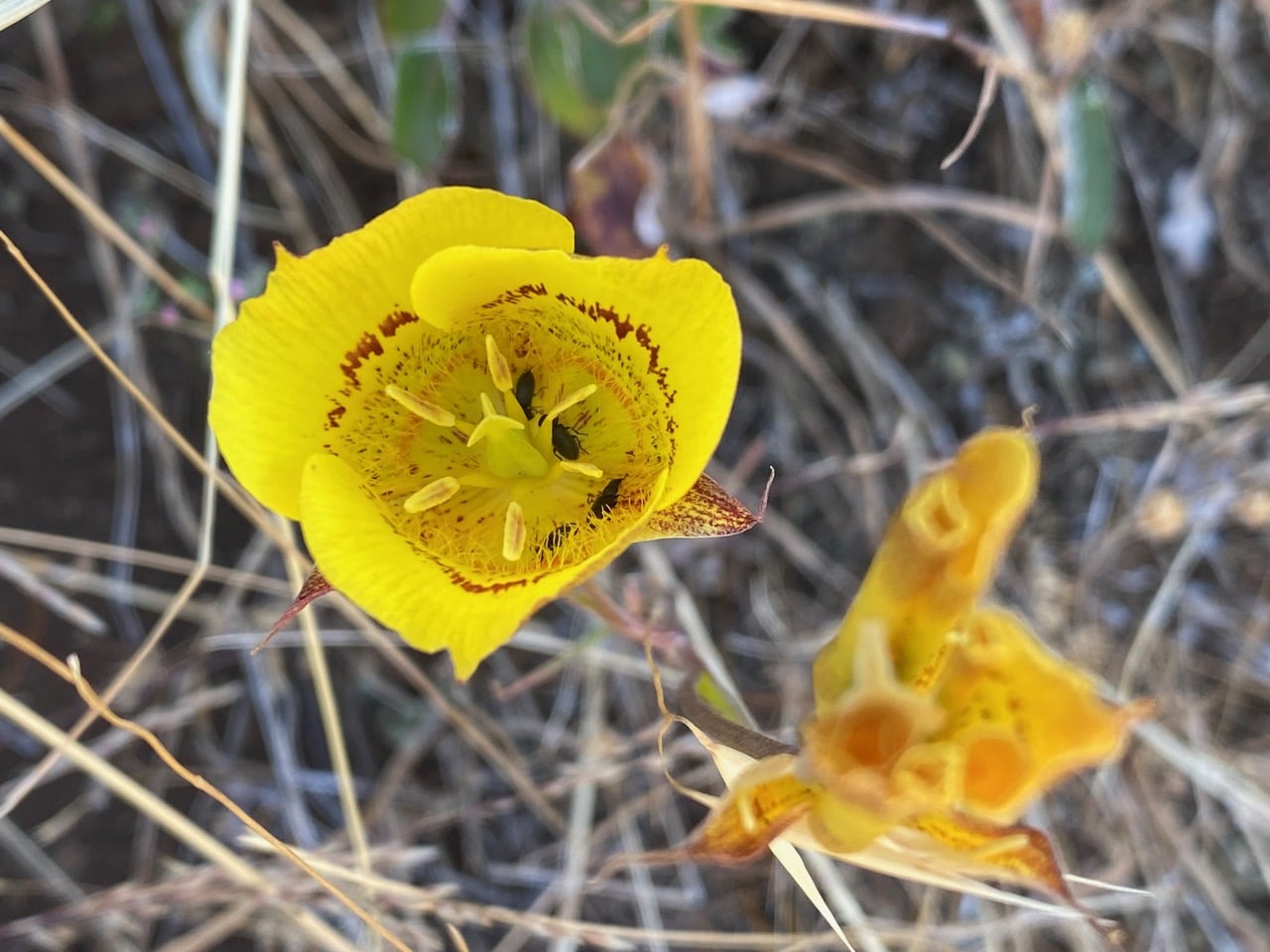 The rolling grassland is dotted with the Yellow Mariposa Lily, Calochortus luteus. A few insects (beetles?) can be seen rummaging at the base of this flower. There are dense matted short yellow/orange hairs on the nectaries near the base of the petals.

In past years, I have observed bumble bees visiting these flowers, but I see no insect visitors today. Wikipedia states that the plant is self-pollinated. I examine the flowers closely, trying to figure out the various reproductive parts.
The flower to the left has a style that has lengthened considerably, developing into a silique, the elongated seed capsules typical of the mustard family Brassicaceae.
The wavy white petals are shown well here.
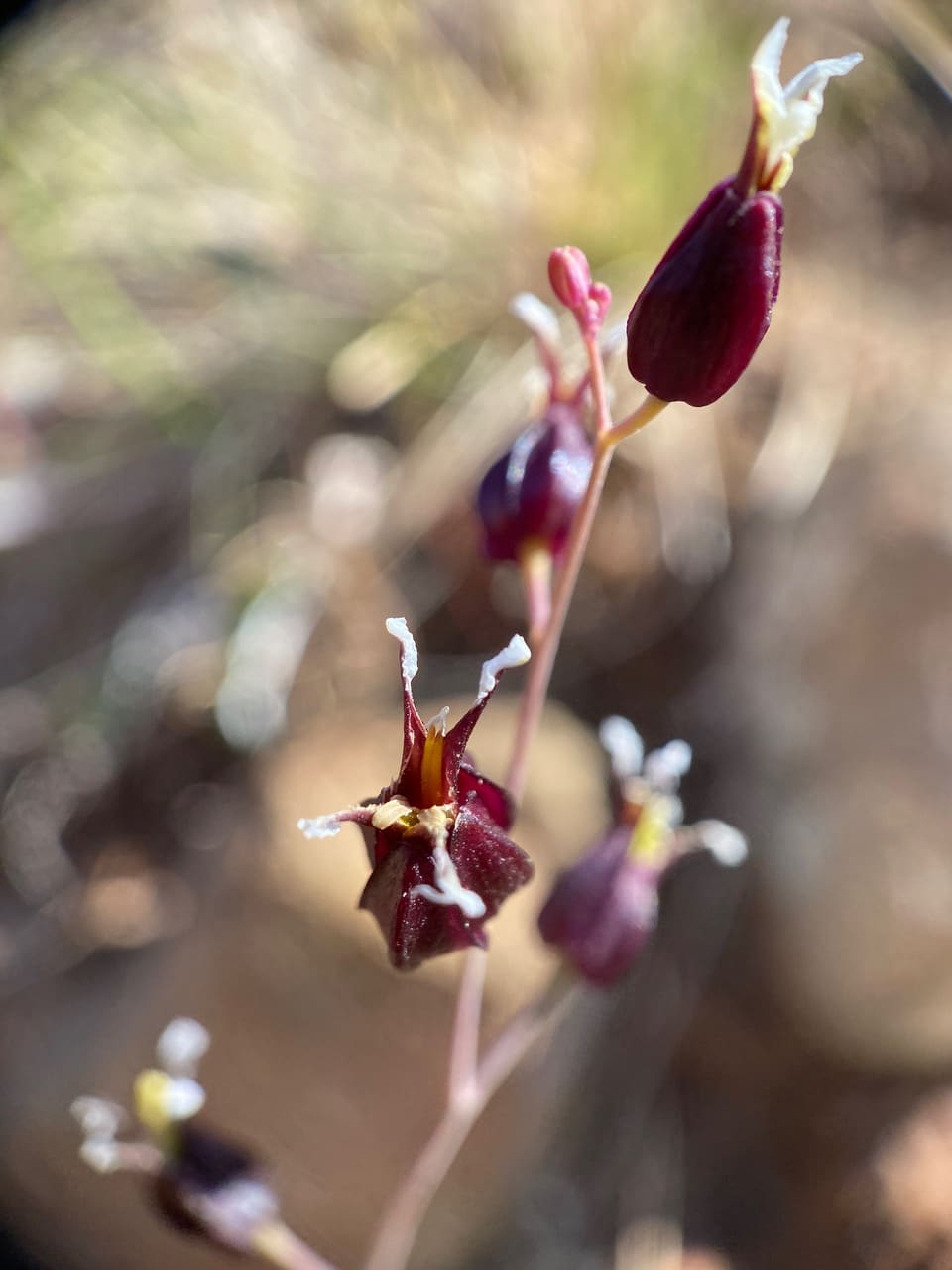
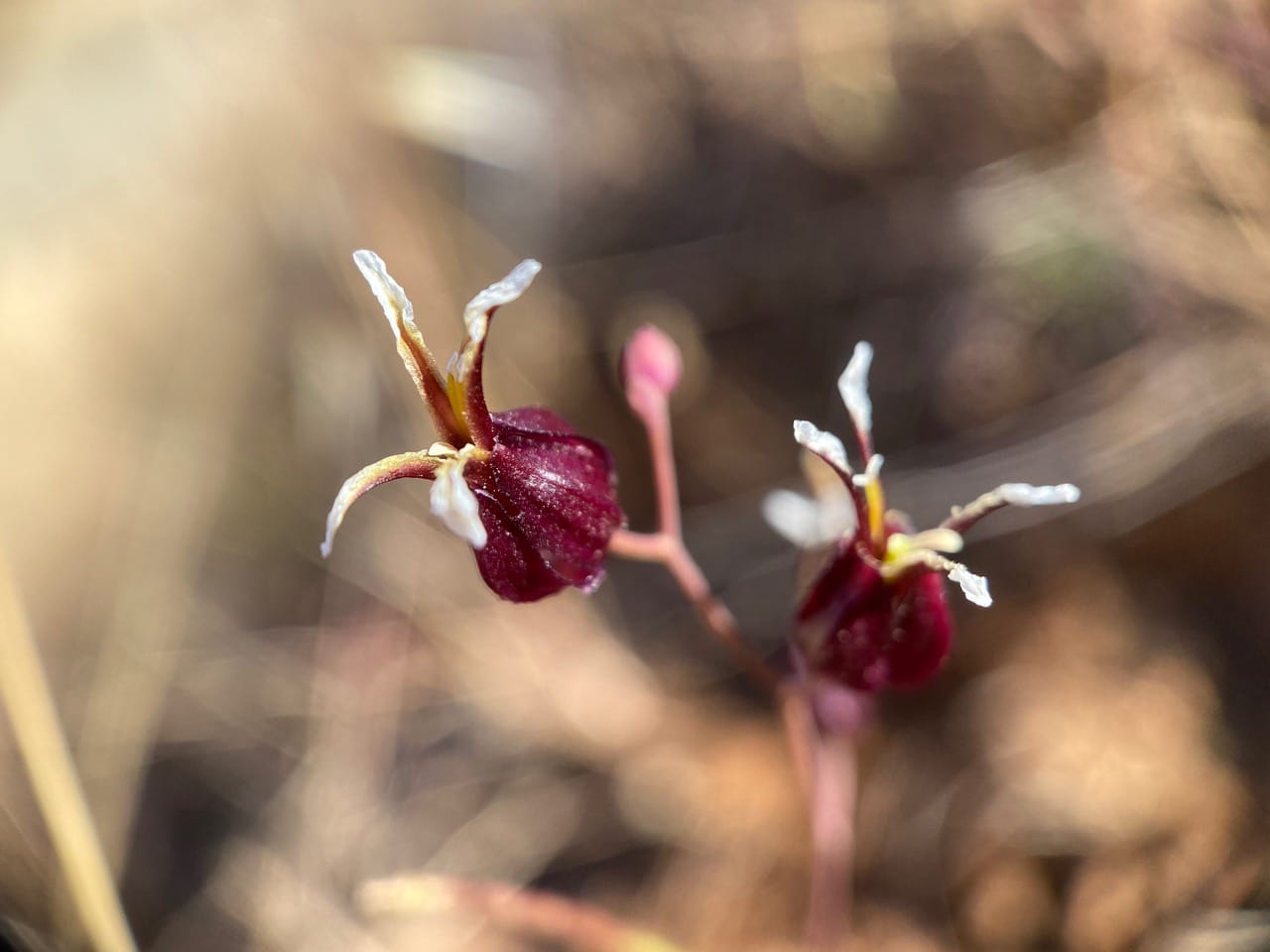
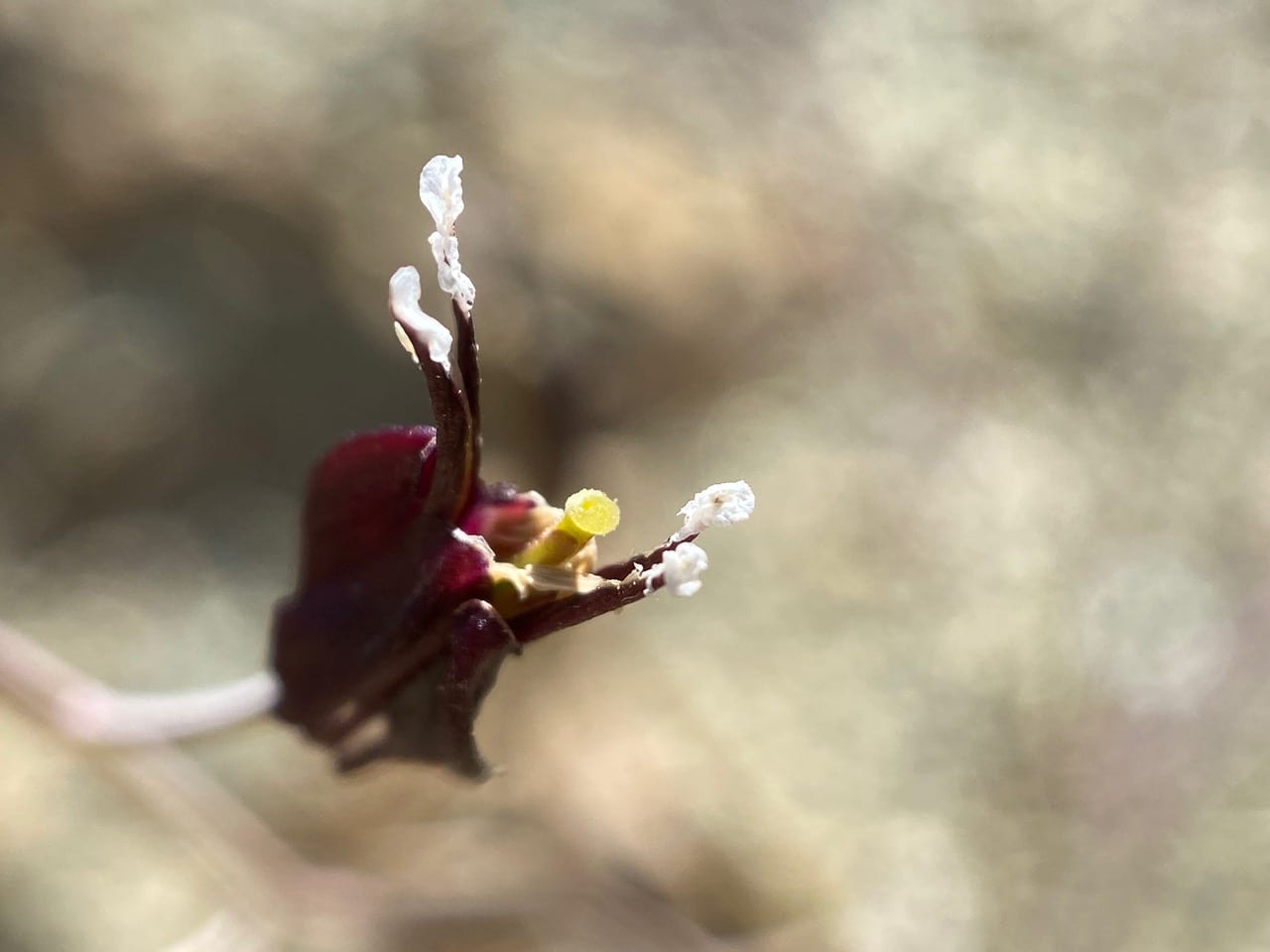
This flower has a large receptive stigma atop a short, growing style. Has the flower been pollinated? By its own pollen?
In this flower, the green stigma seems to appear after the stamens have dehisced and released their pollen.
Withered stamens, but no growing style. Failure in pollination?
There appears to be two types of stamens, the tall, erected pair in the back, and the short pair with large anthers that protrude from the front of the corolla.
The rolling grassland is dotted with the Yellow Mariposa Lily, Calochortus luteus. A few insects (beetles?) can be seen rummaging at the base of this flower. There are dense matted short yellow/orange hairs on the nectaries near the base of the petals. Is that a bee, or a fly? Maripose Lilies are believed to be pollinator “generalists” and attract a variety of insects including bees, wasps, bee flies, in addition to several kinds of beetles.
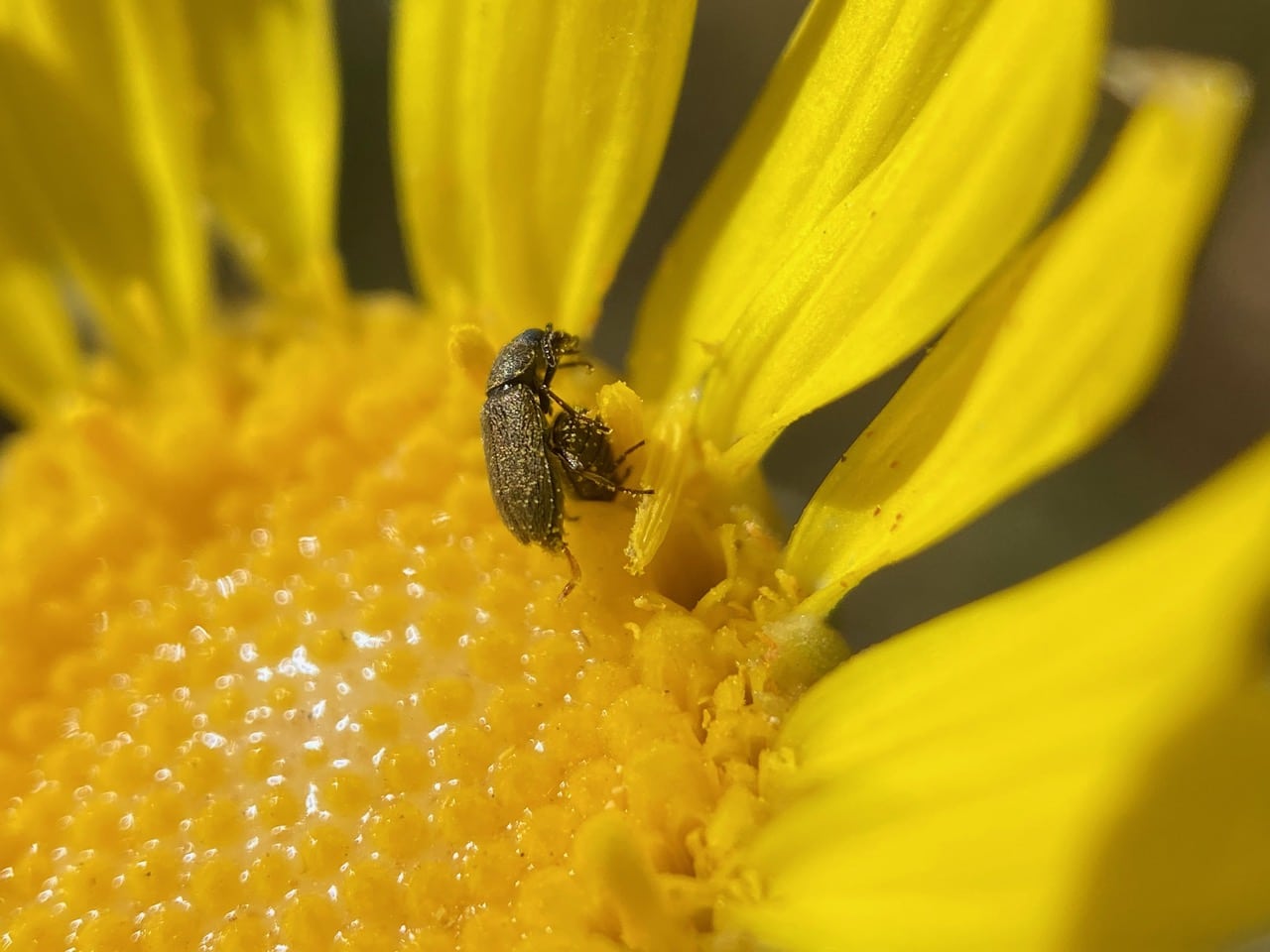
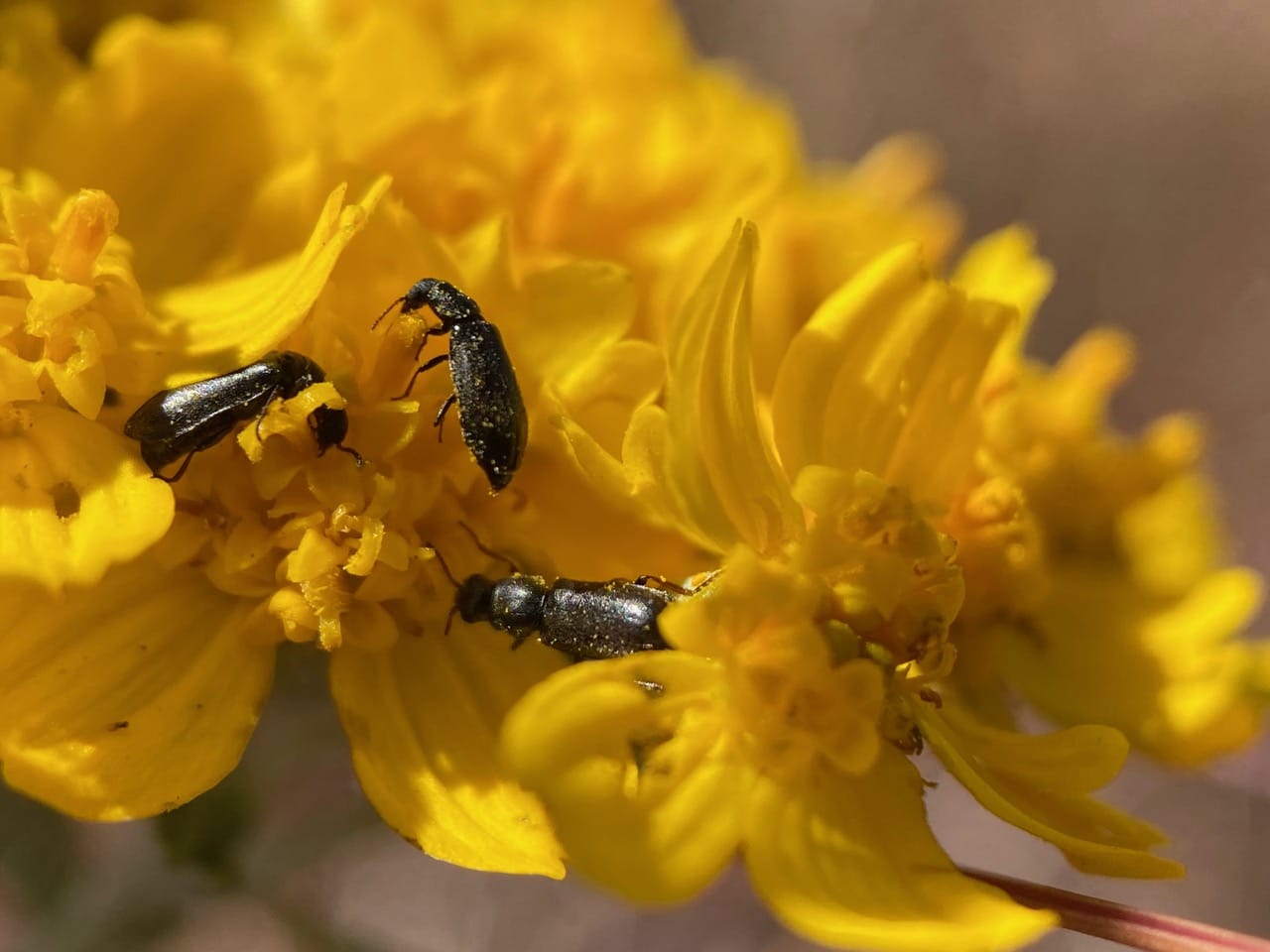
Covered with pollen, a pair of Soft-winged Flower Beetles, Listrus sp. (family Melyridae) are trying to mate on the rim of a Gum Plant flowerhead, Grindelia sp.
Listrus beetles (family Melyridae), only about 2 mm in length, feed on both pollen and nectar. Their elytra (wing covers) are covered with dense setae (little hairs) that pollen easily adheres to. These beetles are recognized as one of the most important pollinators of plants in Western North America.
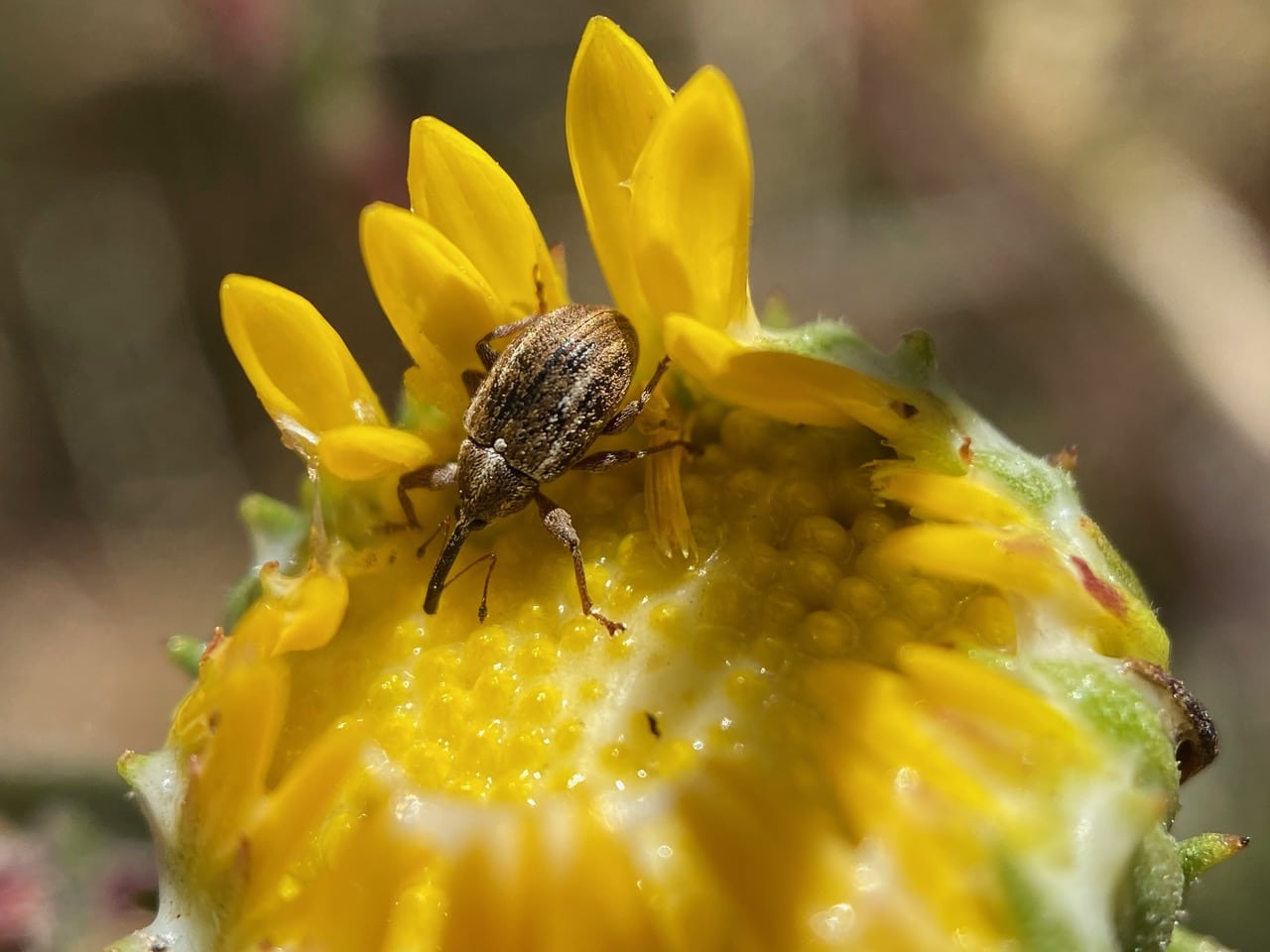
Ooh, a beautiful Weevil (family Curculionidae) is on a young Grindelia flowerhead, still sticky with glue-like latex on the flower buds.
Weevils, family Curculionidae, are also called snout beetles. Curculionidae is one of the largest beetle families (about 40,000 species). Most weevils have long, distinctly elbowed antennae that may fold into special grooves on the snout. The snout is used not only for penetration and feeding but also for boring holes in which to lay eggs. The mouthparts are quite small and located at the end of the rostrum (snout), designed for chewing. Many weevils have no wings, while others are excellent fliers. Most are less than 6 mm in length. The majority of weevils feed exclusively on plants. The fleshy, legless larvae of most species feed only on a certain part of a plant – i.e., the flower head, seeds, fleshy fruits, stems, or roots. Many larvae feed either on a single plant species or on closely related ones. Adult weevils tend to be less specialized in their feeding habits. The family includes some very destructive agricultural pests.
Golden Yarrow, Eriophyllum confertiflorum is blooming gloriously against the serpentine boulders.
Hoards of the Soft-winged Flower Beetles, Listrus sp. (family Melyridae) are feeding on the inflorescences of the Golden Yarrow.
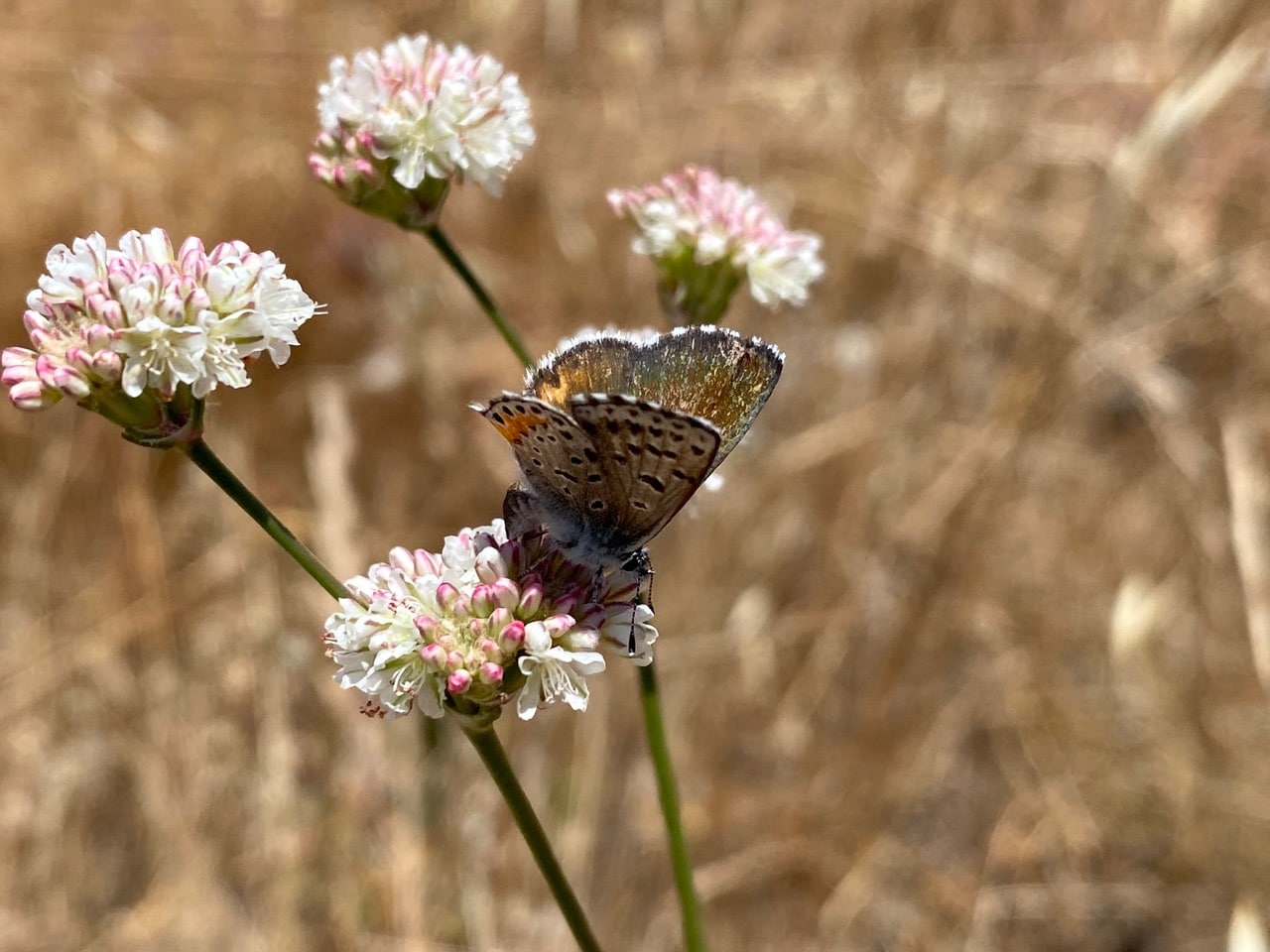
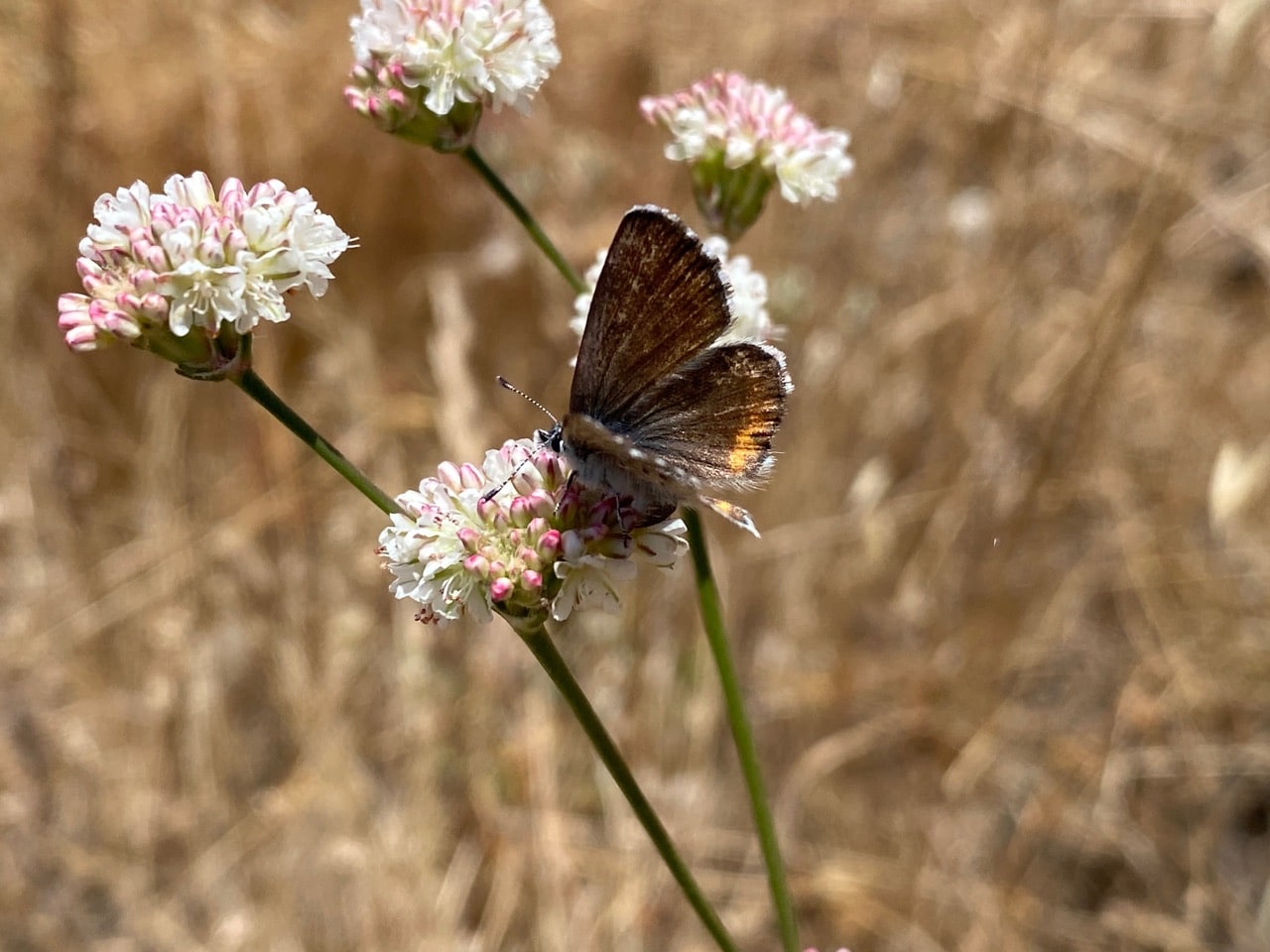
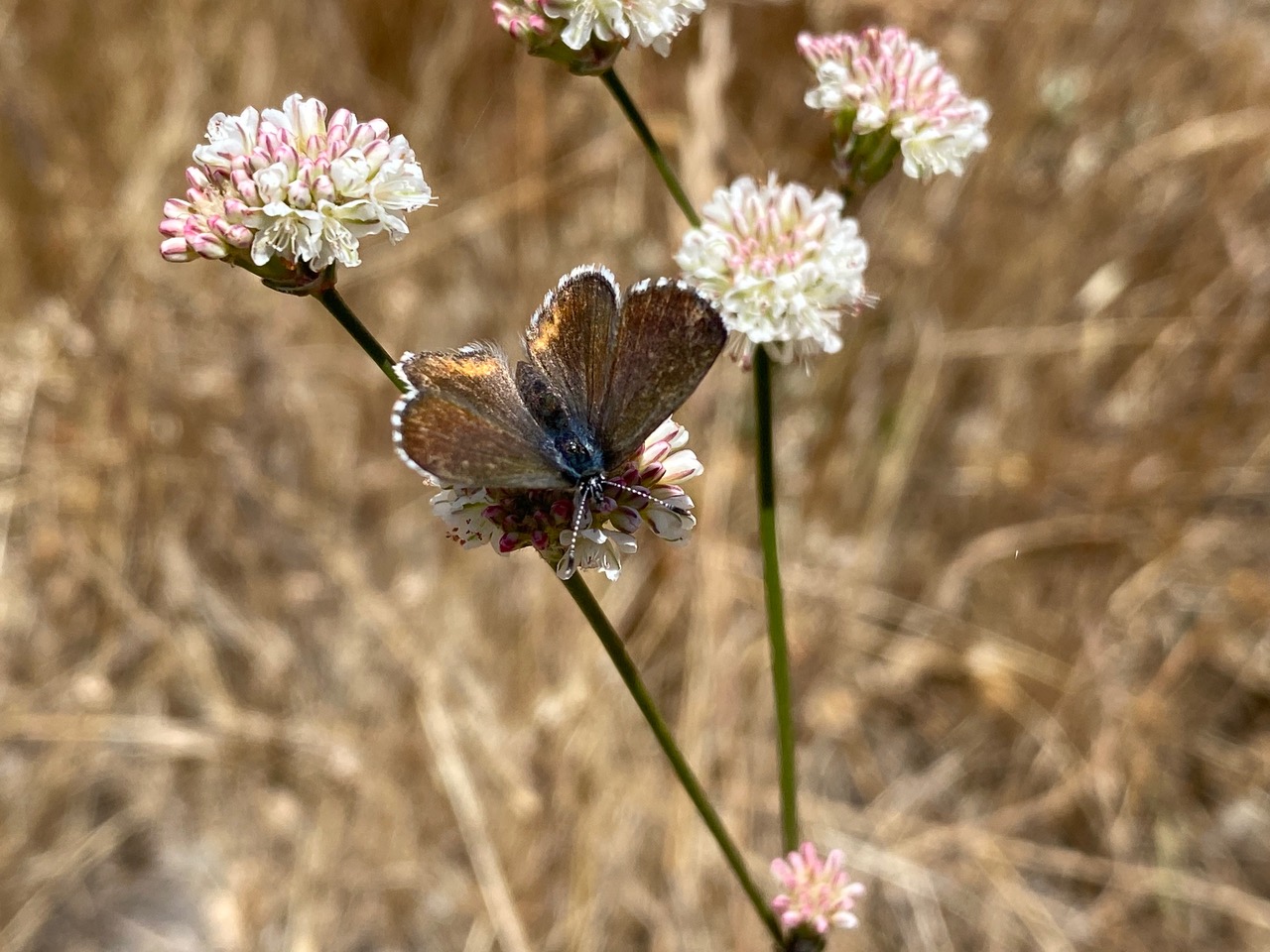
A little butterfly lands on a cluster of Nude Buckwheat flowers, Eriogonum nudum and stays for a while as I take multiple pictures of it. At the moment I thought it was a female Acmon Blue butterfly. Now that I am reviewing the pictures, doubts begin to set in. iNaturalist confirms that it is not an Acmon Blue, but a Pacific Dotted Blue, Euphilotes enoptes (family Lycaenidae). It’s a new species for me! I also discover why it was so cooperative – she is laying eggs! Note that the butterfly has curled her abdomen forward and inserted it among the flower buds.
The Dotted Blue is geographically variable. Upperside of male is lilac blue with dark borders; female is brown usually with an orange patch on the margin of the hindwing. The species has a scattered distribution throughout the western United States. Larval host plants are various buckwheats, including Eriogonum nudum. Females lay eggs singly on flowers or buds. The caterpillars eat flowers and fruits and are tended by ants. Chrysalids hibernate in leaf litter.